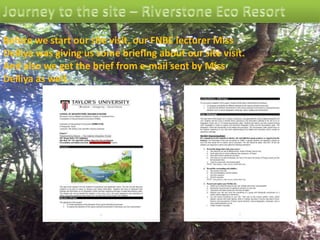
Before we start our site visit, our FNBE lecturer Miss
Delliya was giving us some briefing about our site visit.
And also we get the brief from e-mail sent by Miss
Delliya as well.
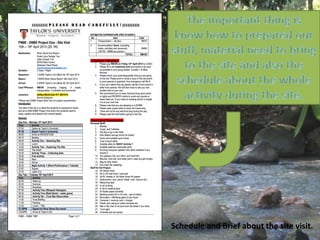
Schedule and Brief about the site visit.
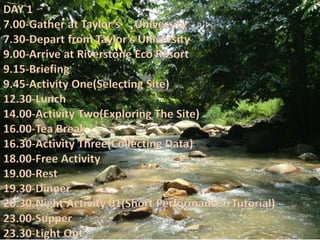
DAY 1
7.00-Gather at Taylor’s University
7.30-Depart from Taylor’s University
9.00-Arrive at Riverstone Eco Resort
9.15-Briefing
9.45-Activity One(Selecting Site)
12.30-Lunch
14.00-Activity Two(Exploring The Site)
16.00-Tea Break
16.30-Activity Three(Collecting Data)
18.00-Free Activity
19.00-Rest
19.30-Dinner
20.30-Night Activity 01(Short Performance +Tutorial)
23.00-Supper
23.30-Light Out
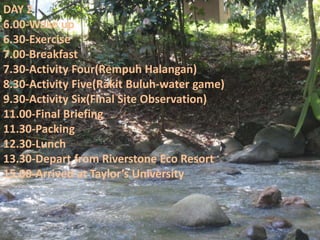
DAY 2
6.00-Wake up
6.30-Exercise
7.00-Breakfast
7.30-Activity Four(Rempuh Halangan)
8.30-Activity Five(Rakit Buluh-water game)
9.30-Activity Six(Final Site Observation)
11.00-Final Briefing
11.30-Packing
12.30-Lunch
13.30-Depart from Riverstone Eco Resort
15.00-Arrived at Taylor’s University
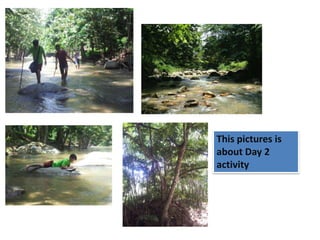
This pictures is
about Day 2
activity
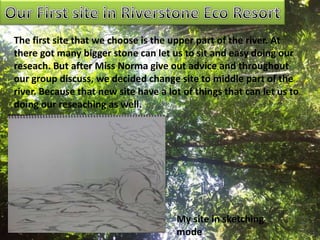
The first site that we choose is the upper part of the river. At
there got many bigger stone can let us to sit and easy doing our
reseach. But after Miss Norma give out advice and throughout
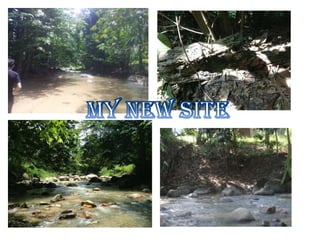
our group discuss, we decided change site to middle part of the
river. Because that new site have a lot of things that can let us to
doing our reseaching as well.
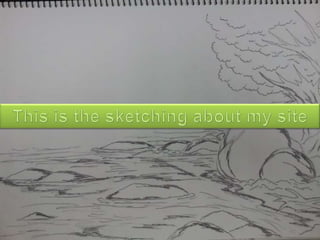
My site in sketching
mode
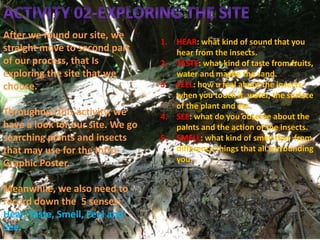
After we found our site, we
straight move to second part
of our process, that Is
exploring the site that we
choose.
Throughout this activity, we
have a look for our site. We go
searching plants and insects
that may use for the Infro-
Graphic Poster.
Meanwhile, we also need to
record down the 5 senses:
Hear, Taste, Smell, Feel and
See.
1. HEAR: what kind of sound that you
hear from the insects.
2. TASTE: what kind of taste from fruits,
water and maybe the sand.
3. FEEL: how u feel about the insects
when you touch it, water, the surface
of the plant and etc.
4. SEE: what do you observe about the
palnts and the action of the insects.
5. SMELL: what kind of smell that from
difference things that all surrounding
you.
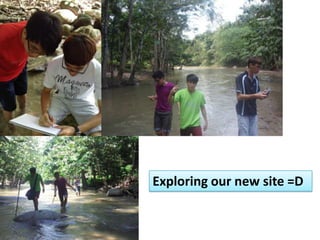
Exploring our new site =D
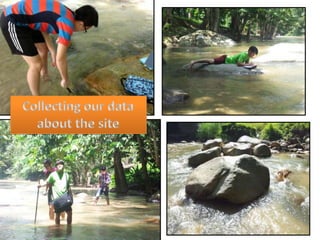
During this activity, we are required to collecting data about the site,
like the water level, type of plants, insects, stone, and etc.
Otherwise, we also take some pictures about the site, record down
the video about the site.
Also, record and measure the site, about the length and the wide. List
down everything that our found inside the site in texture, pattern,
colour and the more important is sketching the site that we choose.
Finally, we also need to collect the sample as well.
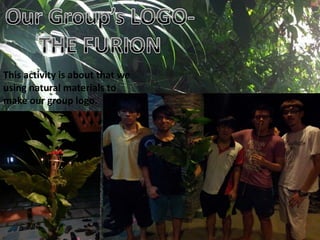
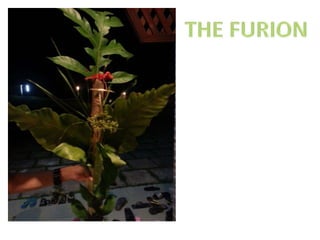
This activity is about that we
using natural materials to
make our group logo.
This topic is about my research from
the insect and plant that is I choosen
from the site.
My researching plant that I choose is
Mangrove tree and the insect is
Dragonfly.
The purpose we I did this is because
let us know about how them survive in
such situation and know about the life
cycle of them. Mainly, knowing about
how them balancing everything in
ecosystem.
INTRODUCTION:
1. Mangroves are various types of trees up to medium height and shrubs that grow
in saline coastal sediment habitats in the tropics and subtropics – mainly
between latitudes 25° N and 25° S.
2. The remaining mangrove forest areas of the world in 2000 was 53,190 square miles
(137,760 km²) spanning 118 countries and territories.
3. The mangrove biome, or mangal, is a distinct saline woodland or shrubland habitat
characterized by depositional coastal environments, where fine sediments (often
with high organic content) collect in areas protected from high-energy wave action.
4. Mangroves dominate three-quarters of tropical coastlines.
5. The saline conditions tolerated by various mangrove species range from brackish
water, through pure seawater (30 to 40 ppt), to water concentrated
by evaporation to over twice the salinity of ocean seawater (up to 90 ppt)
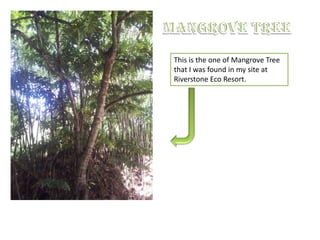
This is the one of Mangrove Tree
that I was found in my site at
Riverstone Eco Resort.
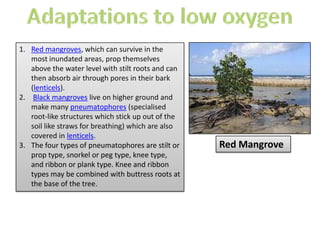
1. Red mangroves, which can survive in the
most inundated areas, prop themselves
above the water level with stilt roots and can
then absorb air through pores in their bark
(lenticels).
2. Black mangroves live on higher ground and
make many pneumatophores (specialised
root-like structures which stick up out of the
soil like straws for breathing) which are also
covered in lenticels.
3. The four types of pneumatophores are stilt or
prop type, snorkel or peg type, knee type,
and ribbon or plank type. Knee and ribbon
types may be combined with buttress roots at
the base of the tree.
Red Mangrove
1. A dragonfly is an insect belonging to the order Odonata, the
suborder Epiprocta or, in the strict sense, the infraorder Anisoptera
2. t is characterized by large multifaceted eyes, two pairs of strong
transparent wings, and an elongated body.
3. ragonflies can sometimes be mistaken for damselflies, which
are morphologically similar; however, adults can be differentiated by the fact
that the wings of most dragonflies are held away from, and perpendicular to,
the body when at rest.
4. Dragonflies possess six legs (like any other insect), but most of them cannot
walk well. Dragonflies are among the fastest flying insects in the world.
5. Dragonflies are important predators that eat mosquitoes, and other small
insects like flies, bees, ants, wasps, and very rarely butterflies.
6. ome 5680 different species of dragonflies (Odonata) are known in the world
today
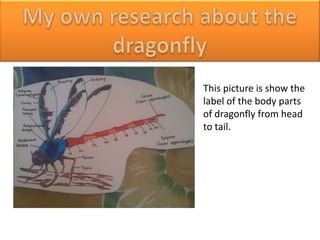
This picture is show the
label of the body parts
of dragonfly from head
to tail.
Enbe power point
Enbe power point

Enbe power point

  • 2.
    Before we startour site visit, our FNBE lecturer Miss Delliya was giving us some briefing about our site visit. And also we get the brief from e-mail sent by Miss Delliya as well.
  • 4.
    Schedule and Briefabout the site visit.
  • 6.
    DAY 1 7.00-Gather atTaylor’s University 7.30-Depart from Taylor’s University 9.00-Arrive at Riverstone Eco Resort 9.15-Briefing 9.45-Activity One(Selecting Site) 12.30-Lunch 14.00-Activity Two(Exploring The Site) 16.00-Tea Break 16.30-Activity Three(Collecting Data) 18.00-Free Activity 19.00-Rest 19.30-Dinner 20.30-Night Activity 01(Short Performance +Tutorial) 23.00-Supper 23.30-Light Out
  • 8.
    DAY 2 6.00-Wake up 6.30-Exercise 7.00-Breakfast 7.30-ActivityFour(Rempuh Halangan) 8.30-Activity Five(Rakit Buluh-water game) 9.30-Activity Six(Final Site Observation) 11.00-Final Briefing 11.30-Packing 12.30-Lunch 13.30-Depart from Riverstone Eco Resort 15.00-Arrived at Taylor’s University
  • 9.
    This pictures is aboutDay 2 activity
  • 10.
    The first sitethat we choose is the upper part of the river. At there got many bigger stone can let us to sit and easy doing our reseach. But after Miss Norma give out advice and throughout our group discuss, we decided change site to middle part of the river. Because that new site have a lot of things that can let us to doing our reseaching as well. My site in sketching mode
  • 12.
    After we foundour site, we straight move to second part of our process, that Is exploring the site that we choose. Throughout this activity, we have a look for our site. We go searching plants and insects that may use for the Infro- Graphic Poster. Meanwhile, we also need to record down the 5 senses: Hear, Taste, Smell, Feel and See. 1. HEAR: what kind of sound that you hear from the insects. 2. TASTE: what kind of taste from fruits, water and maybe the sand. 3. FEEL: how u feel about the insects when you touch it, water, the surface of the plant and etc. 4. SEE: what do you observe about the palnts and the action of the insects. 5. SMELL: what kind of smell that from difference things that all surrounding you.
  • 13.
  • 14.
    During this activity,we are required to collecting data about the site, like the water level, type of plants, insects, stone, and etc. Otherwise, we also take some pictures about the site, record down the video about the site. Also, record and measure the site, about the length and the wide. List down everything that our found inside the site in texture, pattern, colour and the more important is sketching the site that we choose. Finally, we also need to collect the sample as well.
  • 17.
    This activity isabout that we using natural materials to make our group logo.
  • 19.
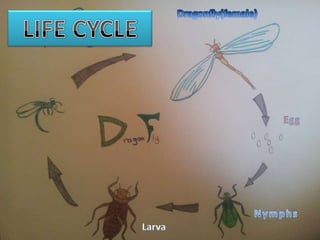
    This topic isabout my research from the insect and plant that is I choosen from the site. My researching plant that I choose is Mangrove tree and the insect is Dragonfly. The purpose we I did this is because let us know about how them survive in such situation and know about the life cycle of them. Mainly, knowing about how them balancing everything in ecosystem.
  • 20.
    INTRODUCTION: 1. Mangroves arevarious types of trees up to medium height and shrubs that grow in saline coastal sediment habitats in the tropics and subtropics – mainly between latitudes 25° N and 25° S. 2. The remaining mangrove forest areas of the world in 2000 was 53,190 square miles (137,760 km²) spanning 118 countries and territories. 3. The mangrove biome, or mangal, is a distinct saline woodland or shrubland habitat characterized by depositional coastal environments, where fine sediments (often with high organic content) collect in areas protected from high-energy wave action. 4. Mangroves dominate three-quarters of tropical coastlines. 5. The saline conditions tolerated by various mangrove species range from brackish water, through pure seawater (30 to 40 ppt), to water concentrated by evaporation to over twice the salinity of ocean seawater (up to 90 ppt)
  • 21.
    This is theone of Mangrove Tree that I was found in my site at Riverstone Eco Resort.
  • 22.
    1. Red mangroves,which can survive in the most inundated areas, prop themselves above the water level with stilt roots and can then absorb air through pores in their bark (lenticels). 2. Black mangroves live on higher ground and make many pneumatophores (specialised root-like structures which stick up out of the soil like straws for breathing) which are also covered in lenticels. 3. The four types of pneumatophores are stilt or prop type, snorkel or peg type, knee type, and ribbon or plank type. Knee and ribbon types may be combined with buttress roots at the base of the tree. Red Mangrove
  • 23.
    1. A dragonflyis an insect belonging to the order Odonata, the suborder Epiprocta or, in the strict sense, the infraorder Anisoptera 2. t is characterized by large multifaceted eyes, two pairs of strong transparent wings, and an elongated body. 3. ragonflies can sometimes be mistaken for damselflies, which are morphologically similar; however, adults can be differentiated by the fact that the wings of most dragonflies are held away from, and perpendicular to, the body when at rest. 4. Dragonflies possess six legs (like any other insect), but most of them cannot walk well. Dragonflies are among the fastest flying insects in the world. 5. Dragonflies are important predators that eat mosquitoes, and other small insects like flies, bees, ants, wasps, and very rarely butterflies. 6. ome 5680 different species of dragonflies (Odonata) are known in the world today
  • 24.
    This picture isshow the label of the body parts of dragonfly from head to tail.