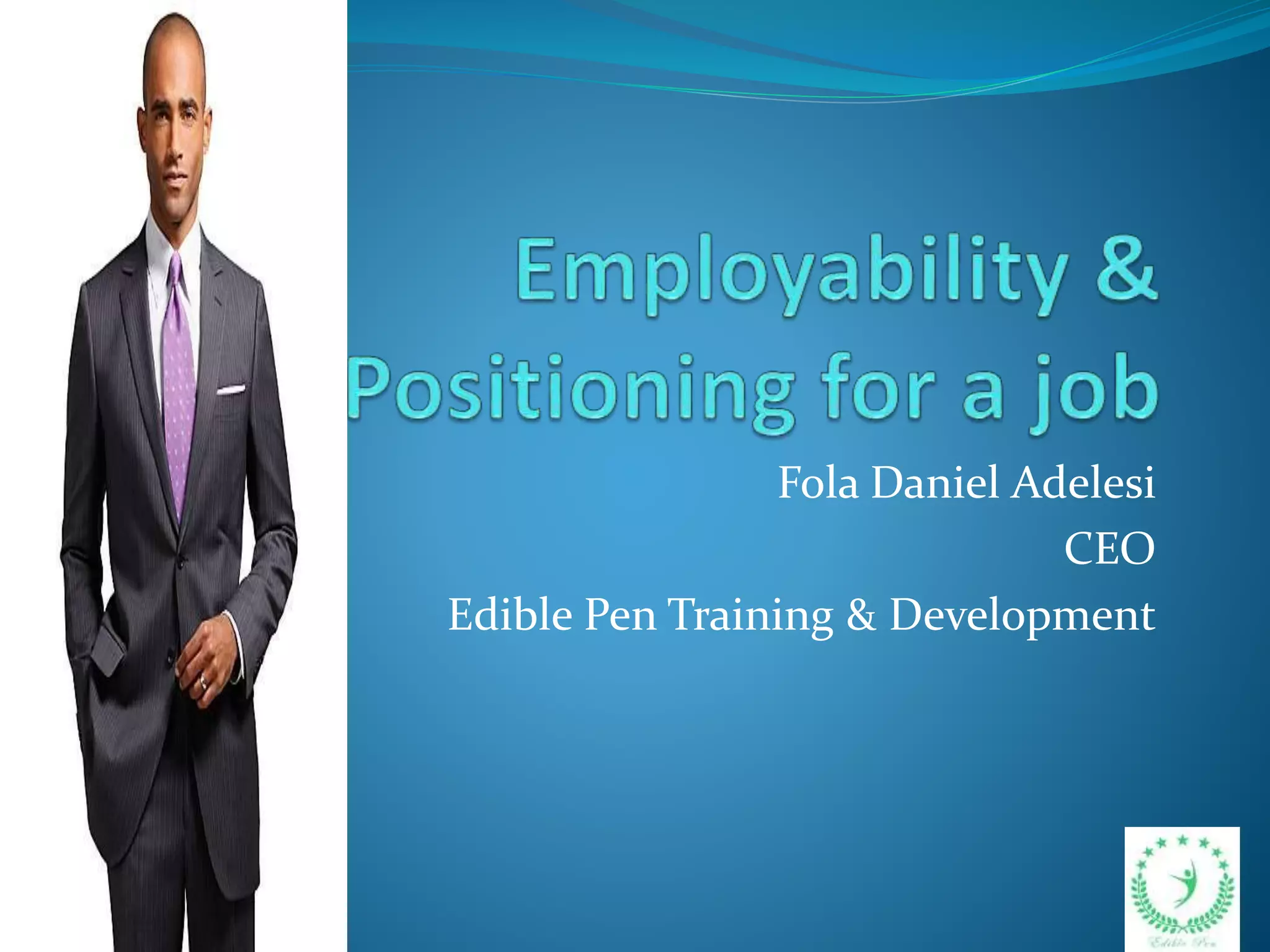

Fola Daniel Adelesi
CEO
Edible Pen Training & Development
Introduction
 This is a crash course on employability skills and
positioning for jobs.
 In the time that we have, we shall look at employability
and how to position yourself for any job.
 We will also look at practical ways to search for jobs
and prepare for interviews in your desired roles.
Objectives
 Every listener or reader of this slide should know the
difference between employability and having a degree
 You will learn that the selection process does not start
in the interview room. In fact, it may have been
concluded before the interview date and you will find
out why as we go on.
 At the end of this short training, you would have seen
other unconventional means that interviewers use to
interview prospective job seekers.
Employability
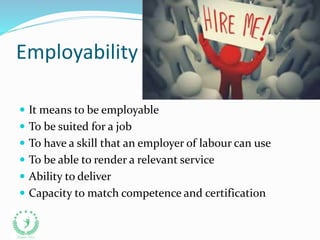
 It means to be employable
 To be suited for a job
 To have a skill that an employer of labour can use
 To be able to render a relevant service
 Ability to deliver
 Capacity to match competence and certification
What employability is not
 It is not your university degree
 Employability has nothing to do with the school you
attended
 It is not all the skills and certifications you list on your
resume
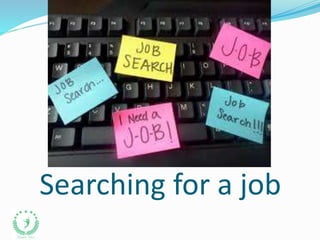
Searching for a job
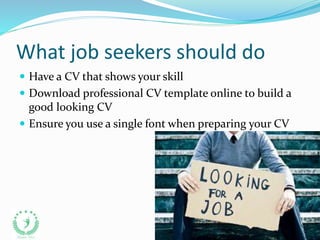
What job seekers should do
 Have a CV that shows your skill
 Download professional CV template online to build a
good looking CV
 Ensure you use a single font when preparing your CV
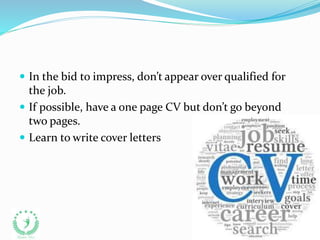
 In the bid to impress, don’t appear over qualified for
the job.
 If possible, have a one page CV but don’t go beyond
two pages.
 Learn to write cover letters
Looking for the job
 Have an online presence
 Create an online profile – LinkedIn.com
 Join professional groups online
 Search jobs in your desired field online
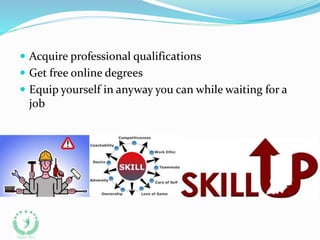
 Acquire professional qualifications
 Get free online degrees
 Equip yourself in anyway you can while waiting for a
job
Practical job search
 Make a list of companies where you will like to work
 Be sure you have some skills that the companies need
 Check the websites of the companies for vacancies
 Apply immediately if they have vacancies
 Some companies receive CVs in advance, you can
submit yours to their CV bank.
 Do some research about the company
 Tell them what value you can add to them if they will
employ you
Preparing for the Interview
• Do your research about the company.
• Have a printed copy of the same CV you submitted to
the company
• Get to know the location in advance or set out very
early to get to the venue of the interview in time.
Volunteer for experience
 Look for companies in the industry where you would
like to work, preferably the big ones.
 Offer to work for free for a couple of months – you will
need the support of some relatives or have some
savings for your upkeep during this period.
 While in the company, put in your best and gain as
much experience as you can
 In return for your free service, ask for referrals or
recommendation from the company.
 As you work, it is also very important for you to
network with people within and outside the company
 While volunteering, don’t act like you have nothing to
lose. Take the job as you will take any other job from
which you can be fired or punished for under
performing.
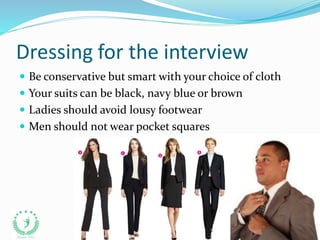
Dressing for the interview
 Be conservative but smart with your choice of cloth
 Your suits can be black, navy blue or brown
 Ladies should avoid lousy footwear
 Men should not wear pocket squares
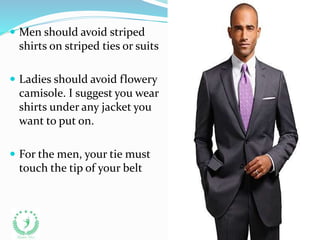
 Men should avoid striped
shirts on striped ties or suits
 Ladies should avoid flowery
camisole. I suggest you wear
shirts under any jacket you
want to put on.
 For the men, your tie must
touch the tip of your belt
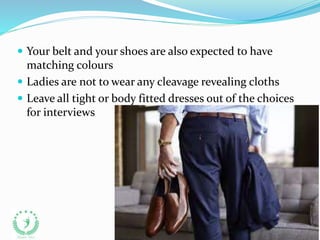
 Your belt and your shoes are also expected to have
matching colours
 Ladies are not to wear any cleavage revealing cloths
 Leave all tight or body fitted dresses out of the choices
for interviews
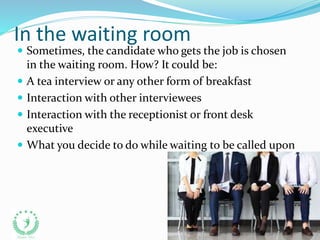
In the waiting room
 Sometimes, the candidate who gets the job is chosen
in the waiting room. How? It could be:
 A tea interview or any other form of breakfast
 Interaction with other interviewees
 Interaction with the receptionist or front desk
executive
 What you decide to do while waiting to be called upon
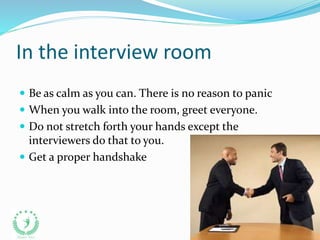
In the interview room
 Be as calm as you can. There is no reason to panic
 When you walk into the room, greet everyone.
 Do not stretch forth your hands except the
interviewers do that to you.
 Get a proper handshake
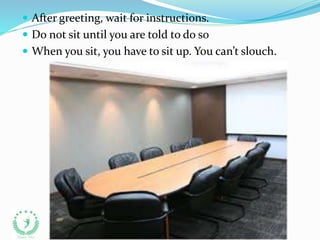
 After greeting, wait for instructions.
 Do not sit until you are told to do so
 When you sit, you have to sit up. You can’t slouch.
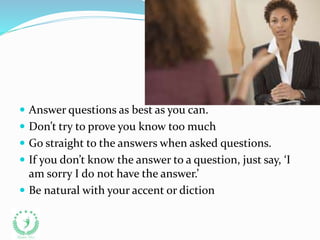
 Answer questions as best as you can.
 Don’t try to prove you know too much
 Go straight to the answers when asked questions.
 If you don’t know the answer to a question, just say, ‘I
am sorry I do not have the answer.’
 Be natural with your accent or diction
The sixty second trailer
 In a lot of interviews, you will be asked to sell yourself
in sixty seconds. Some others may not say, ‘sell
yourself.’ You may be asked to introduce yourself or
someone may say, ‘can we meet you?’
 When this question comes up, don’t just tell them your
name and stop.
 It’s a golden chance to humbly sell your skills
Where others goof!
One common question that makes a lot of people goof
is:
 How much do you want to earn?
Avoid the question in the most professional way possible
but if the interviewers persist, give them a figure.
Don’t be too ridiculous in asking for a salary. Find out
what the average pay is for your level and state that as
your desired pay.
Send appreciation
 Most people don’t do this
 It is not out of place to send an appreciation letter to
the company that interviewed you.
 Don’t try to be smart about this. Just send an
appreciation letter and leave it at that.
Unconventional Interviews
 Your interview may not be the regular one where you
will sit in a room with the interviewers. It could be:
 A video call
 A phone call
 A search into your online activity
That means you have to be ready and versatile.
Constantly update yourself and skills.
Fola Daniel Adelesi
www.foladaniel.com

Employability or positioning for job

  • 1.
    Fola Daniel Adelesi CEO EdiblePen Training & Development
  • 2.
    Introduction  This isa crash course on employability skills and positioning for jobs.  In the time that we have, we shall look at employability and how to position yourself for any job.  We will also look at practical ways to search for jobs and prepare for interviews in your desired roles.
  • 3.
    Objectives  Every listeneror reader of this slide should know the difference between employability and having a degree  You will learn that the selection process does not start in the interview room. In fact, it may have been concluded before the interview date and you will find out why as we go on.  At the end of this short training, you would have seen other unconventional means that interviewers use to interview prospective job seekers.
  • 4.
    Employability  It meansto be employable  To be suited for a job  To have a skill that an employer of labour can use  To be able to render a relevant service  Ability to deliver  Capacity to match competence and certification
  • 5.
    What employability isnot  It is not your university degree  Employability has nothing to do with the school you attended  It is not all the skills and certifications you list on your resume
  • 6.
  • 7.
    What job seekersshould do  Have a CV that shows your skill  Download professional CV template online to build a good looking CV  Ensure you use a single font when preparing your CV
  • 8.
     In thebid to impress, don’t appear over qualified for the job.  If possible, have a one page CV but don’t go beyond two pages.  Learn to write cover letters
  • 9.
    Looking for thejob  Have an online presence  Create an online profile – LinkedIn.com  Join professional groups online  Search jobs in your desired field online
  • 10.
     Acquire professionalqualifications  Get free online degrees  Equip yourself in anyway you can while waiting for a job
  • 11.
    Practical job search Make a list of companies where you will like to work  Be sure you have some skills that the companies need  Check the websites of the companies for vacancies  Apply immediately if they have vacancies
  • 12.
     Some companiesreceive CVs in advance, you can submit yours to their CV bank.  Do some research about the company  Tell them what value you can add to them if they will employ you
  • 13.
    Preparing for theInterview • Do your research about the company. • Have a printed copy of the same CV you submitted to the company • Get to know the location in advance or set out very early to get to the venue of the interview in time.
  • 14.
    Volunteer for experience Look for companies in the industry where you would like to work, preferably the big ones.  Offer to work for free for a couple of months – you will need the support of some relatives or have some savings for your upkeep during this period.  While in the company, put in your best and gain as much experience as you can
  • 15.
     In returnfor your free service, ask for referrals or recommendation from the company.  As you work, it is also very important for you to network with people within and outside the company  While volunteering, don’t act like you have nothing to lose. Take the job as you will take any other job from which you can be fired or punished for under performing.
  • 16.
    Dressing for theinterview  Be conservative but smart with your choice of cloth  Your suits can be black, navy blue or brown  Ladies should avoid lousy footwear  Men should not wear pocket squares
  • 17.
     Men shouldavoid striped shirts on striped ties or suits  Ladies should avoid flowery camisole. I suggest you wear shirts under any jacket you want to put on.  For the men, your tie must touch the tip of your belt
  • 18.
     Your beltand your shoes are also expected to have matching colours  Ladies are not to wear any cleavage revealing cloths  Leave all tight or body fitted dresses out of the choices for interviews
  • 19.
    In the waitingroom  Sometimes, the candidate who gets the job is chosen in the waiting room. How? It could be:  A tea interview or any other form of breakfast  Interaction with other interviewees  Interaction with the receptionist or front desk executive  What you decide to do while waiting to be called upon
  • 20.
    In the interviewroom  Be as calm as you can. There is no reason to panic  When you walk into the room, greet everyone.  Do not stretch forth your hands except the interviewers do that to you.  Get a proper handshake
  • 21.
     After greeting,wait for instructions.  Do not sit until you are told to do so  When you sit, you have to sit up. You can’t slouch.
  • 22.
     Answer questionsas best as you can.  Don’t try to prove you know too much  Go straight to the answers when asked questions.  If you don’t know the answer to a question, just say, ‘I am sorry I do not have the answer.’  Be natural with your accent or diction
  • 23.
    The sixty secondtrailer  In a lot of interviews, you will be asked to sell yourself in sixty seconds. Some others may not say, ‘sell yourself.’ You may be asked to introduce yourself or someone may say, ‘can we meet you?’  When this question comes up, don’t just tell them your name and stop.  It’s a golden chance to humbly sell your skills
  • 24.
    Where others goof! Onecommon question that makes a lot of people goof is:  How much do you want to earn? Avoid the question in the most professional way possible but if the interviewers persist, give them a figure. Don’t be too ridiculous in asking for a salary. Find out what the average pay is for your level and state that as your desired pay.
  • 25.
    Send appreciation  Mostpeople don’t do this  It is not out of place to send an appreciation letter to the company that interviewed you.  Don’t try to be smart about this. Just send an appreciation letter and leave it at that.
  • 26.
    Unconventional Interviews  Yourinterview may not be the regular one where you will sit in a room with the interviewers. It could be:  A video call  A phone call  A search into your online activity That means you have to be ready and versatile. Constantly update yourself and skills.
  • 27.