EMPHASIS IN INTERIOR
DESIGN
PRESENTED BY;
1. NASSANGA MOUREEN
2. SSEGANE HENRY
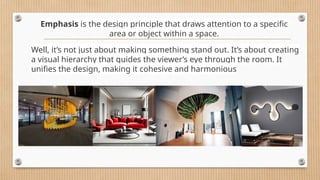
Emphasis is the design principle that draws attention to a specific
area or object within a space.
Well, it’s not just about making something stand out. It’s about creating
a visual hierarchy that guides the viewer’s eye through the room. It
unifies the design, making it cohesive and harmonious
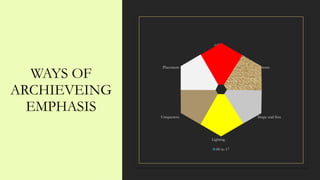
Color
Uniqueness
Scale and Size
Placement
Lighting
Shape
WAYS OF
ARCHIEVEING
EMPHASIS
color
Texture
Shape and Size
Lighting
Uniqueness
Placement
00 to 17
someone@example.com
COLOR EMPHASIS
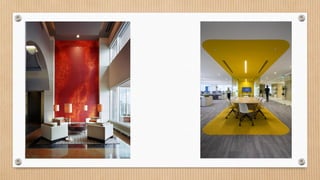
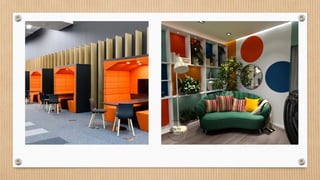
Color emphasis may include use of soft, subtle colors that change gradually.
Alternatively it could include contrasting of color choices used so as to guide the users
eye to a given attribute.
Color Technique Description
Color Palettes and Focal Points
Choose colors that turn a simple wall into a
stunning focal point, such as a bold accent wall in
a room filled with soft neutrals.
Accent Walls and Contrasting Shades
Utilize contrasting shades on accent walls to
create a visual dance that guides the eye where you
want it to go.
Playful Effects with Bright Colors
Add a touch of whimsy with bright colors like
lime green or electric blue, injecting a playful twist
into the space.
THE ROLE OF COLOR IN EMPHASIZING DESIGN
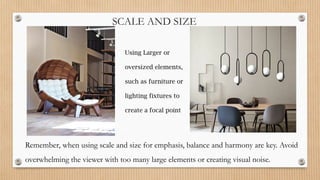
SCALE AND SIZE
Using Larger or
oversized elements,
such as furniture or
lighting fixtures to
create a focal point
Remember, when using scale and size for emphasis, balance and harmony are key. Avoid
overwhelming the viewer with too many large elements or creating visual noise.
LIGHTING
Lighting principles in emphasis include;
1. Contrast:
2. Highlighting
3. Shadowing
4. Color Temperature
Lighting emphasis is a technique used to draw attention to a specific element or area in
a scene, image, or space by manipulating light.
Techniques for Achieving Lighting Emphasis:
1. Directional Lighting:
Using light sources from specific angles to create depth and emphasis
2. Intensity:
Adjusting the brightness of light to create contrast and emphasis.
3. Lighting Ratio:
Controlling the balance between light and dark areas to create emphasis.
4. Lighting Texture
Using light to create texture and interest on surfaces.
FURNITURE & PLACEMENT
Strategically placing furniture or décor to
create a a visual interest and draw attention
to a particular element
TEXTURE
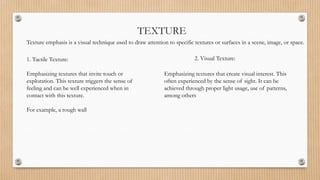
Texture emphasis is a visual technique used to draw attention to specific textures or surfaces in a scene, image, or space.
1. Tactile Texture: 2. Visual Texture:
Emphasizing textures that invite touch or
exploration. This texture triggers the sense of
feeling and can be well experienced when in
contact with this texture.
For example, a rough wall
Emphasizing textures that create visual interest. This
often experienced by the sense of sight. It can be
achieved through proper light usage, use of patterns,
among others
1. Lighting: Using light to accentuate texture, such as highlighting
or shadowing.
2. Camera Angle: Using camera angles to emphasize texture,
such as getting up close or using a low angle.
3. Composition: Using composition to emphasize texture, such
as placing textured elements in the foreground.
4. Post-processing: Using editing techniques to enhance or
emphasize texture.
TECHNIQUES FOR ACHIEVING
TEXTURE EMPHASIS
WHY EMPHASIS
Creates Visual Interest
Guides the eye
Establishes Hierarchy
Enhances mood and atmosphere
HOW TO EFFECTIVELY USE EMPHASIS IN
INTERIOR DESIGN
BALANCE EMPHASIS WITH
RESTRAINT
USE EMPHASIS TO CREATE
CONTRAST
EXPERIMENT AND ADJUST
CONSIDERATION OF ROOM’S
PURPOSE
BALANCE EMPHASIS WITH
RESTRAINT
CONSIDERATION OF ROOM’S
PURPOSE
USE EMPHASIS TO CREATE
CONTRAST
EXPERIMENT AND ADJUST
WHEN TO USE EMPHASIS IN INTERIOR DESIGN
Emphasizing Focal Points in Different Room Types:
For example, In the living room, it might be a fireplace; in the bedroom, a luxurious
headboard.
Creating New Focal Points When Redesigning
Create new focal points with emphasis. A bold piece of art or a unique piece of
furniture can transform a room from drab to fab!
In summary,

Emphasis element in interior designing.pptx

  • 1.
    EMPHASIS IN INTERIOR DESIGN PRESENTEDBY; 1. NASSANGA MOUREEN 2. SSEGANE HENRY
  • 2.
    Emphasis is thedesign principle that draws attention to a specific area or object within a space. Well, it’s not just about making something stand out. It’s about creating a visual hierarchy that guides the viewer’s eye through the room. It unifies the design, making it cohesive and harmonious
  • 3.
  • 4.
    WAYS OF ARCHIEVEING EMPHASIS color Texture Shape andSize Lighting Uniqueness Placement 00 to 17
  • 5.
  • 6.
    COLOR EMPHASIS Color emphasismay include use of soft, subtle colors that change gradually. Alternatively it could include contrasting of color choices used so as to guide the users eye to a given attribute.
  • 7.
    Color Technique Description ColorPalettes and Focal Points Choose colors that turn a simple wall into a stunning focal point, such as a bold accent wall in a room filled with soft neutrals. Accent Walls and Contrasting Shades Utilize contrasting shades on accent walls to create a visual dance that guides the eye where you want it to go. Playful Effects with Bright Colors Add a touch of whimsy with bright colors like lime green or electric blue, injecting a playful twist into the space. THE ROLE OF COLOR IN EMPHASIZING DESIGN
  • 10.
    SCALE AND SIZE UsingLarger or oversized elements, such as furniture or lighting fixtures to create a focal point Remember, when using scale and size for emphasis, balance and harmony are key. Avoid overwhelming the viewer with too many large elements or creating visual noise.
  • 12.
    LIGHTING Lighting principles inemphasis include; 1. Contrast: 2. Highlighting 3. Shadowing 4. Color Temperature Lighting emphasis is a technique used to draw attention to a specific element or area in a scene, image, or space by manipulating light.
  • 13.
    Techniques for AchievingLighting Emphasis: 1. Directional Lighting: Using light sources from specific angles to create depth and emphasis 2. Intensity: Adjusting the brightness of light to create contrast and emphasis. 3. Lighting Ratio: Controlling the balance between light and dark areas to create emphasis. 4. Lighting Texture Using light to create texture and interest on surfaces.
  • 14.
    FURNITURE & PLACEMENT Strategicallyplacing furniture or décor to create a a visual interest and draw attention to a particular element
  • 15.
    TEXTURE Texture emphasis isa visual technique used to draw attention to specific textures or surfaces in a scene, image, or space. 1. Tactile Texture: 2. Visual Texture: Emphasizing textures that invite touch or exploration. This texture triggers the sense of feeling and can be well experienced when in contact with this texture. For example, a rough wall Emphasizing textures that create visual interest. This often experienced by the sense of sight. It can be achieved through proper light usage, use of patterns, among others
  • 16.
    1. Lighting: Usinglight to accentuate texture, such as highlighting or shadowing. 2. Camera Angle: Using camera angles to emphasize texture, such as getting up close or using a low angle. 3. Composition: Using composition to emphasize texture, such as placing textured elements in the foreground. 4. Post-processing: Using editing techniques to enhance or emphasize texture. TECHNIQUES FOR ACHIEVING TEXTURE EMPHASIS
  • 17.
    WHY EMPHASIS Creates VisualInterest Guides the eye Establishes Hierarchy Enhances mood and atmosphere
  • 18.
    HOW TO EFFECTIVELYUSE EMPHASIS IN INTERIOR DESIGN BALANCE EMPHASIS WITH RESTRAINT USE EMPHASIS TO CREATE CONTRAST EXPERIMENT AND ADJUST CONSIDERATION OF ROOM’S PURPOSE
  • 19.
  • 20.
  • 21.
    USE EMPHASIS TOCREATE CONTRAST
  • 22.
  • 23.
    WHEN TO USEEMPHASIS IN INTERIOR DESIGN Emphasizing Focal Points in Different Room Types: For example, In the living room, it might be a fireplace; in the bedroom, a luxurious headboard. Creating New Focal Points When Redesigning Create new focal points with emphasis. A bold piece of art or a unique piece of furniture can transform a room from drab to fab!
  • 24.