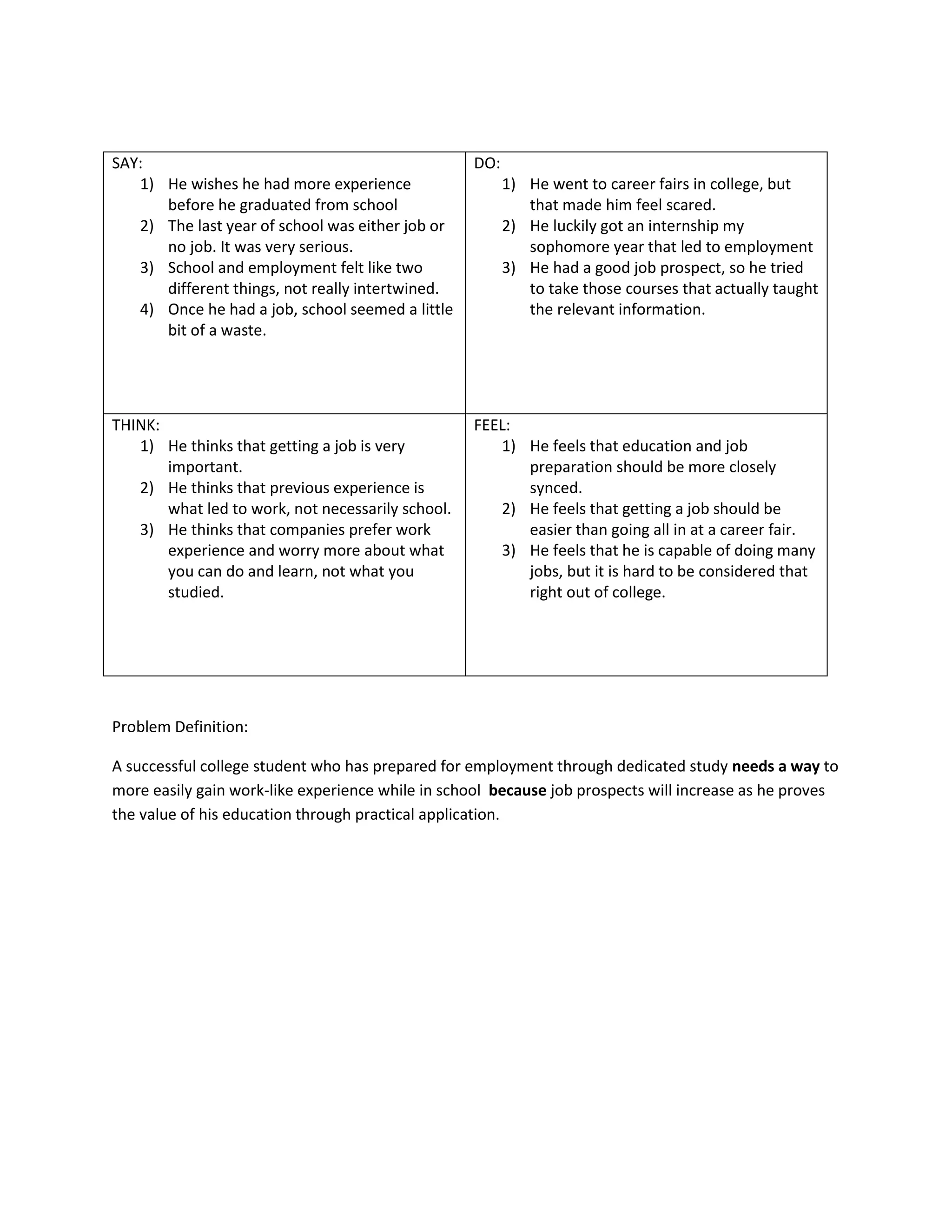
SAY:
1) He wishes he had more experience
before he graduated from school
2) The last year of school was either job or
no job. It was very serious.
3) School and employment felt like two
different things, not really intertwined.
4) Once he had a job, school seemed a little
bit of a waste.
DO:
1) He went to career fairs in college, but
that made him feel scared.
2) He luckily got an internship my
sophomore year that led to employment
3) He had a good job prospect, so he tried
to take those courses that actually taught
the relevant information.
THINK:
1) He thinks that getting a job is very
important.
2) He thinks that previous experience is
what led to work, not necessarily school.
3) He thinks that companies prefer work
experience and worry more about what
you can do and learn, not what you
studied.
FEEL:
1) He feels that education and job
preparation should be more closely
synced.
2) He feels that getting a job should be
easier than going all in at a career fair.
3) He feels that he is capable of doing many
jobs, but it is hard to be considered that
right out of college.
Problem Definition:
A successful college student who has prepared for employment through dedicated study needs a way to
more easily gain work-like experience while in school because job prospects will increase as he proves
the value of his education through practical application.

Empathy define

  • 1.
    SAY: 1) He wisheshe had more experience before he graduated from school 2) The last year of school was either job or no job. It was very serious. 3) School and employment felt like two different things, not really intertwined. 4) Once he had a job, school seemed a little bit of a waste. DO: 1) He went to career fairs in college, but that made him feel scared. 2) He luckily got an internship my sophomore year that led to employment 3) He had a good job prospect, so he tried to take those courses that actually taught the relevant information. THINK: 1) He thinks that getting a job is very important. 2) He thinks that previous experience is what led to work, not necessarily school. 3) He thinks that companies prefer work experience and worry more about what you can do and learn, not what you studied. FEEL: 1) He feels that education and job preparation should be more closely synced. 2) He feels that getting a job should be easier than going all in at a career fair. 3) He feels that he is capable of doing many jobs, but it is hard to be considered that right out of college. Problem Definition: A successful college student who has prepared for employment through dedicated study needs a way to more easily gain work-like experience while in school because job prospects will increase as he proves the value of his education through practical application.