Downloaded 118 times


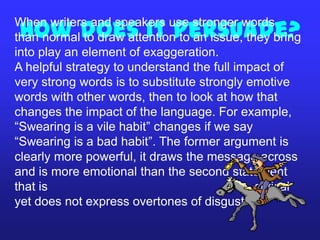
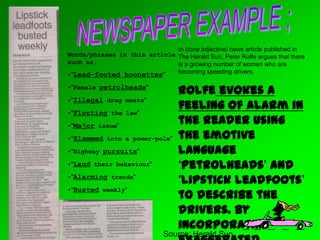





Emotive language is the deliberate use of strong words to evoke an emotional response from readers. When writers use emotive words rather than neutral language, it draws more attention to the issue and makes the argument more powerful. For example, saying "swearing is a vile habit" is more impactful than saying "swearing is a bad habit" because it conveys a sense of disgust. Papers like the Herald Sun often employ emotive language in their articles to take a passionate stance and persuade readers to feel outrage or alarm about an issue.


