By:
Prajakta Thakur
Tata Consultancy Services
MBA, CSM, CSPO, CSP
TCS Internal
Embrace Change & Be Agile
SOURCE: https://www.youtube.com/watch?v=tkpmgOuhR-I
Change is Constant
SOURCE: http://www.slideshare.net/optimaltransformation/collection-of-quotes-from-jack-welch
Forces that Trigger Change: 5Cs
Company
Competition
Customer
Climate
Collaborators
Who wants to Change?
SOURCE: http://acumenglobalpartners.com/wp-content/uploads/2015/06/who-wants-change-.jpg
Resisting Change
Sources of Resistance to Change
 Misunderstanding about the need for change
or when the Reason for the Change is Unclear
 Fear of the Unknown
 Lack of Competence
 Connected to the Old Way
 Low Trust
 Temporary Fad
 Not being Consulted
 Poor Communication
 Change in the Routine
 Lack of Benefits and Rewards
SOURCE: http://www.torbenrick.eu
Approach Used in Situation
Facilitation and Support When individuals want to collaborate but are not able to adjust to
change
Education and
Communication
When lack of information and goal clarity exist
When fear of unknown exists
Participation and Involvement When initiators don’t have adequate skills and complete
information to drive change and need support
When resistance power by others can be high and detrimental to
change
Negotiation and Agreement When change has obvious negative implications on individuals
involved
Manipulation and Co-optation When other methods fail or are expensive
Explicit and Implicit Coercion When speed is important
When initiators possess power
Addressing the Resistance to Change
John Kotter’s 8 Step Change Management Model
#1 - Creating the climate for Change
 Establish a Sense of Urgency
 Form a powerful Guiding Coalition
 Create a Vision
Vision
Build Agile Teams:
 Empowered and Self Organized
 Responsive to Change
 Produce Working Software every Iteration
 Provide Quality deliverables with reduced
Time to market
Sense of Urgency
‼ Business was not satisfied with results
‼ Time to Market was longer than
expected
‼ Change was rampant and painful
‼ Business could not see the product for
months
Coalition and Stakeholder Buy-in
Creating the climate for Change
 Communicate the Vision
 Remove Obstacles
 Create Short-term Wins
#2 - Engaging & Enabling the Organization
Remove ObstaclesCommunicate the Vision
Engaging & Enabling
 Townhalls
 Leadership Address
 Regular Team Connects
Create Short-term Wins
 Successful Pilot Projects can prove to be
great motivators for other teams
 Early Adopters can play pivotal role in
becoming agile ambassadors
Dedicated Coaches per Team
Structure and Role Alignment
Learn the Game – Emergent Design
Focus on Engineering Practices
Enabling Distributed Teams
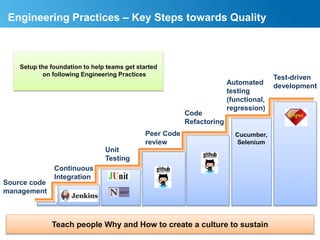
Engineering Practices – Key Steps towards Quality
Continuous
Integration
Source code
management
Automated
testing
(functional,
regression)
Peer Code
review
Unit
Testing
Test-driven
development
Code
Refactoring
Setup the foundation to help teams get started
on following Engineering Practices
Teach people Why and How to create a culture to sustain
Cucumber,
Selenium
Effective Collaboration for Distributed Teams
Teleconference, VOIP, Instant Messenger, Video Conference Facilities
Information Radiators
 Sustaining the Change
 Build on the Change
 Anchor the Changes in Corporate Culture
#3 – Building & Sustaining the Change
Agile Reloaded
Sitting Together
Co-located teams, Team Rooms, HDVC
Setups
Organizational Rhythm
Sprint reviews for a portfolio on the same day
one after the other
Portfolio Teams
Create pool of teams working on a portfolio
to manage transition well
1
2
3
Build over Lessons Learnt
One
Team
Team Involvement & Empowerment
Effective Communication - Radiate Info
Fail FAST Recover Fast
Dare to
Share
Peer Reviews , Pair Programming
SME Reviews
Interest Groups
Plan
Just
Enough
Planning few weeks ahead helps
No changes when sprint in progress
Educate
Business
Educate Business along with IT
Prioritization
Retrospect
Regularly
Organization wide learning and sharing
Retrospectives with all stakeholders
Rigor Continues
Network - Learn - Share
Glad to take any Questions
Thank You!
prajakta.thakur@tcs.com
References:
 TCS Account Agile Case Study
 http://www.kotterinternational.com/the
-8-step-process-for-leading-change/
 Images: Google Images
 contosdunne.com
 http://mymentalgamecoach.com/
 http://www.nahgainsurance.com/
 www.brazoshealth.org
 www.ccd.pitt.edu
 www.hepdata.com
 http://www.collabrus.com/,
 www.startupist.com,
 www.pulsion.co.uk,
 www.lboro.ac.uk,
 www.tekacademy.com
 press.sanushotels.com
 www.cat5comms.com
 www.ibm.com
 sdcqatar.org
 http://www.video-conference.co.in/
 www.junespringcontactsolutions.com
 wallpaperswide.com

Embrace Change & Be Agile

  • 1.
    By: Prajakta Thakur Tata ConsultancyServices MBA, CSM, CSPO, CSP TCS Internal Embrace Change & Be Agile
  • 2.
  • 3.
    Change is Constant SOURCE:http://www.slideshare.net/optimaltransformation/collection-of-quotes-from-jack-welch
  • 4.
    Forces that TriggerChange: 5Cs Company Competition Customer Climate Collaborators
  • 5.
    Who wants toChange? SOURCE: http://acumenglobalpartners.com/wp-content/uploads/2015/06/who-wants-change-.jpg
  • 6.
    Resisting Change Sources ofResistance to Change  Misunderstanding about the need for change or when the Reason for the Change is Unclear  Fear of the Unknown  Lack of Competence  Connected to the Old Way  Low Trust  Temporary Fad  Not being Consulted  Poor Communication  Change in the Routine  Lack of Benefits and Rewards SOURCE: http://www.torbenrick.eu
  • 7.
    Approach Used inSituation Facilitation and Support When individuals want to collaborate but are not able to adjust to change Education and Communication When lack of information and goal clarity exist When fear of unknown exists Participation and Involvement When initiators don’t have adequate skills and complete information to drive change and need support When resistance power by others can be high and detrimental to change Negotiation and Agreement When change has obvious negative implications on individuals involved Manipulation and Co-optation When other methods fail or are expensive Explicit and Implicit Coercion When speed is important When initiators possess power Addressing the Resistance to Change
  • 8.
    John Kotter’s 8Step Change Management Model
  • 9.
    #1 - Creatingthe climate for Change  Establish a Sense of Urgency  Form a powerful Guiding Coalition  Create a Vision
  • 10.
    Vision Build Agile Teams: Empowered and Self Organized  Responsive to Change  Produce Working Software every Iteration  Provide Quality deliverables with reduced Time to market Sense of Urgency ‼ Business was not satisfied with results ‼ Time to Market was longer than expected ‼ Change was rampant and painful ‼ Business could not see the product for months Coalition and Stakeholder Buy-in Creating the climate for Change
  • 11.
     Communicate theVision  Remove Obstacles  Create Short-term Wins #2 - Engaging & Enabling the Organization
  • 12.
    Remove ObstaclesCommunicate theVision Engaging & Enabling  Townhalls  Leadership Address  Regular Team Connects Create Short-term Wins  Successful Pilot Projects can prove to be great motivators for other teams  Early Adopters can play pivotal role in becoming agile ambassadors Dedicated Coaches per Team Structure and Role Alignment Learn the Game – Emergent Design Focus on Engineering Practices Enabling Distributed Teams
  • 13.
    Engineering Practices –Key Steps towards Quality Continuous Integration Source code management Automated testing (functional, regression) Peer Code review Unit Testing Test-driven development Code Refactoring Setup the foundation to help teams get started on following Engineering Practices Teach people Why and How to create a culture to sustain Cucumber, Selenium
  • 14.
    Effective Collaboration forDistributed Teams Teleconference, VOIP, Instant Messenger, Video Conference Facilities Information Radiators
  • 15.
     Sustaining theChange  Build on the Change  Anchor the Changes in Corporate Culture #3 – Building & Sustaining the Change
  • 16.
    Agile Reloaded Sitting Together Co-locatedteams, Team Rooms, HDVC Setups Organizational Rhythm Sprint reviews for a portfolio on the same day one after the other Portfolio Teams Create pool of teams working on a portfolio to manage transition well 1 2 3
  • 17.
    Build over LessonsLearnt One Team Team Involvement & Empowerment Effective Communication - Radiate Info Fail FAST Recover Fast Dare to Share Peer Reviews , Pair Programming SME Reviews Interest Groups Plan Just Enough Planning few weeks ahead helps No changes when sprint in progress Educate Business Educate Business along with IT Prioritization Retrospect Regularly Organization wide learning and sharing Retrospectives with all stakeholders
  • 18.
  • 19.
    Glad to takeany Questions Thank You! prajakta.thakur@tcs.com References:  TCS Account Agile Case Study  http://www.kotterinternational.com/the -8-step-process-for-leading-change/  Images: Google Images  contosdunne.com  http://mymentalgamecoach.com/  http://www.nahgainsurance.com/  www.brazoshealth.org  www.ccd.pitt.edu  www.hepdata.com  http://www.collabrus.com/,  www.startupist.com,  www.pulsion.co.uk,  www.lboro.ac.uk,  www.tekacademy.com  press.sanushotels.com  www.cat5comms.com  www.ibm.com  sdcqatar.org  http://www.video-conference.co.in/  www.junespringcontactsolutions.com  wallpaperswide.com

Editor's Notes

  • #16 press.sanushotels.com