Embedded Systems and IoT – Key Differences
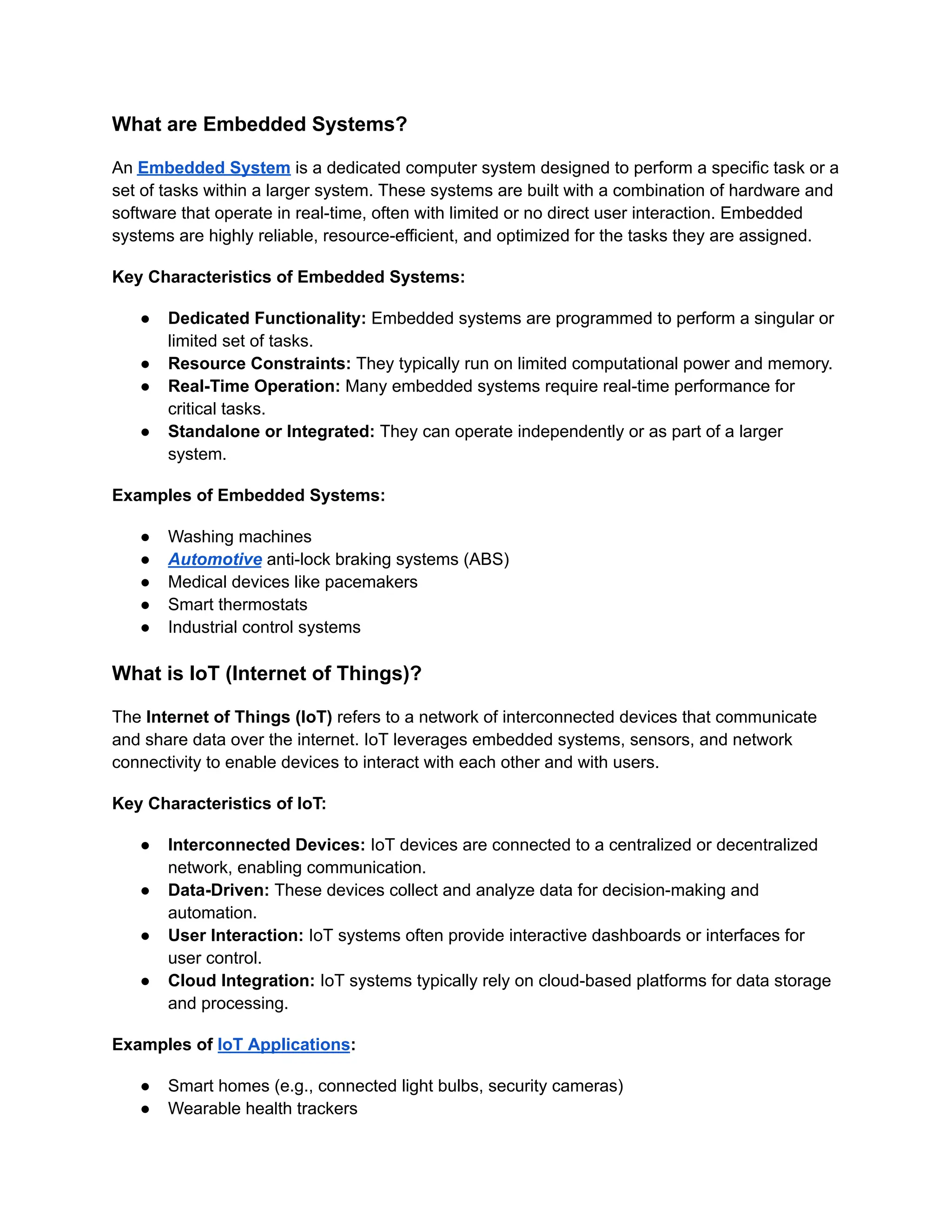
As technology continues to evolve at a rapid pace, two concepts—Embedded Systems and the
Internet of Things (IoT)—have taken center stage in driving innovation across industries.
Though both are foundational to modern technology, they are distinct in their design, purpose,
and applications. This blog will delve deep into the core differences between Embedded
Systems and IoT, shedding light on their unique features, functionalities, and areas of
application.
What are Embedded Systems?
An Embedded System is a dedicated computer system designed to perform a specific task or a
set of tasks within a larger system. These systems are built with a combination of hardware and
software that operate in real-time, often with limited or no direct user interaction. Embedded
systems are highly reliable, resource-efficient, and optimized for the tasks they are assigned.
Key Characteristics of Embedded Systems:
● Dedicated Functionality: Embedded systems are programmed to perform a singular or
limited set of tasks.
● Resource Constraints: They typically run on limited computational power and memory.
● Real-Time Operation: Many embedded systems require real-time performance for
critical tasks.
● Standalone or Integrated: They can operate independently or as part of a larger
system.
Examples of Embedded Systems:
● Washing machines
● Automotive anti-lock braking systems (ABS)
● Medical devices like pacemakers
● Smart thermostats
● Industrial control systems
What is IoT (Internet of Things)?
The Internet of Things (IoT) refers to a network of interconnected devices that communicate
and share data over the internet. IoT leverages embedded systems, sensors, and network
connectivity to enable devices to interact with each other and with users.
Key Characteristics of IoT:
● Interconnected Devices: IoT devices are connected to a centralized or decentralized
network, enabling communication.
● Data-Driven: These devices collect and analyze data for decision-making and
automation.
● User Interaction: IoT systems often provide interactive dashboards or interfaces for
user control.
● Cloud Integration: IoT systems typically rely on cloud-based platforms for data storage
and processing.
Examples of IoT Applications:
● Smart homes (e.g., connected light bulbs, security cameras)
● Wearable health trackers
● Autonomous vehicles
● Smart agriculture (e.g., precision irrigation systems)
● Industrial IoT for predictive maintenance
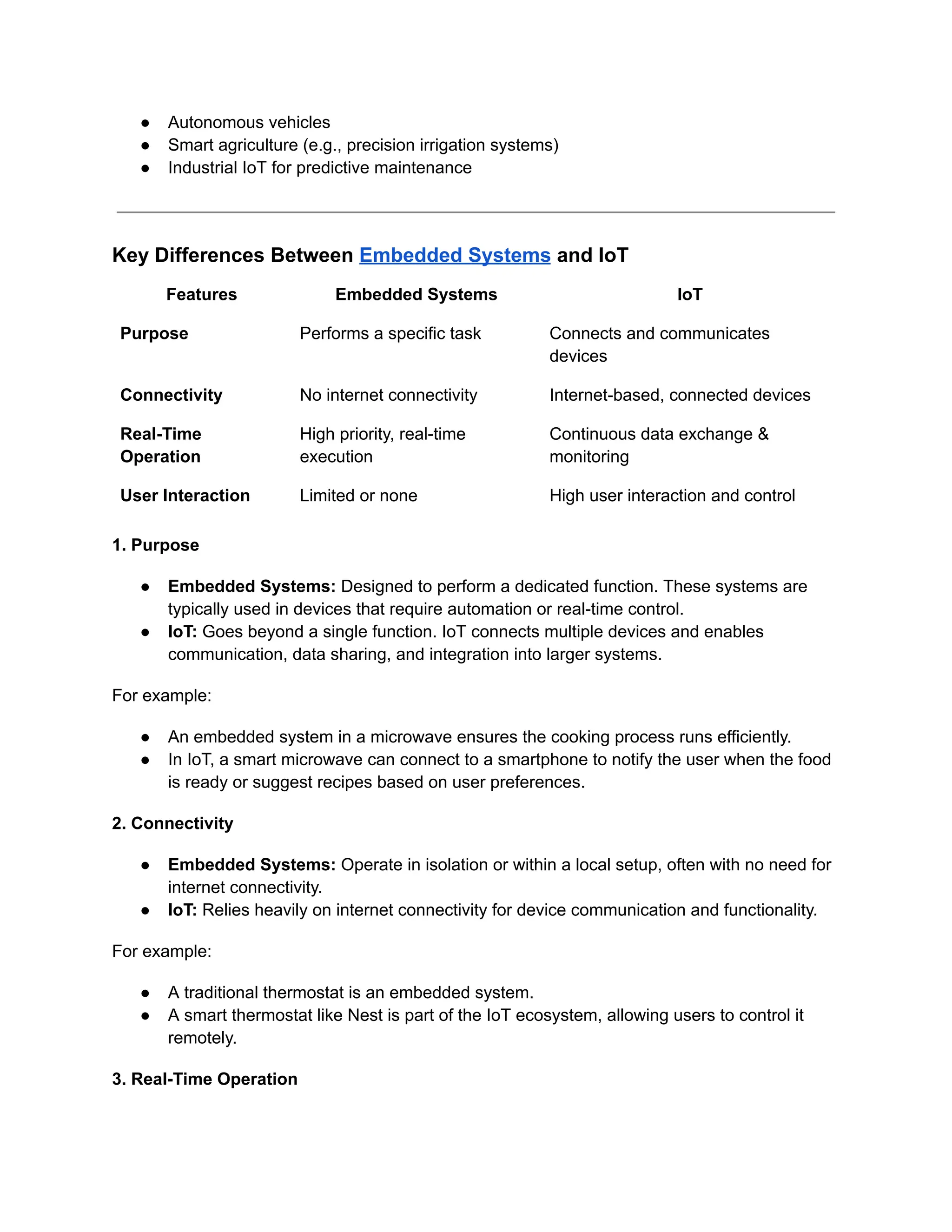
Key Differences Between Embedded Systems and IoT
Features Embedded Systems IoT
Purpose Performs a specific task Connects and communicates
devices
Connectivity No internet connectivity Internet-based, connected devices
Real-Time
Operation
High priority, real-time
execution
Continuous data exchange &
monitoring
User Interaction Limited or none High user interaction and control
1. Purpose
● Embedded Systems: Designed to perform a dedicated function. These systems are
typically used in devices that require automation or real-time control.
● IoT: Goes beyond a single function. IoT connects multiple devices and enables
communication, data sharing, and integration into larger systems.
For example:
● An embedded system in a microwave ensures the cooking process runs efficiently.
● In IoT, a smart microwave can connect to a smartphone to notify the user when the food
is ready or suggest recipes based on user preferences.
2. Connectivity
● Embedded Systems: Operate in isolation or within a local setup, often with no need for
internet connectivity.
● IoT: Relies heavily on internet connectivity for device communication and functionality.
For example:
● A traditional thermostat is an embedded system.
● A smart thermostat like Nest is part of the IoT ecosystem, allowing users to control it
remotely.
3. Real-Time Operation
● Embedded Systems: Real-time operations are crucial, particularly for safety-critical
applications like automotive braking systems or medical devices.
● IoT: While some IoT systems require real-time performance, many prioritize continuous
monitoring and data sharing over strict real-time constraints.
4. User Interaction
● Embedded Systems: Typically require minimal or no user interaction once deployed.
● IoT: Designed for seamless user interaction, offering control via apps, voice commands,
or web dashboards.
For example:
● A washing machine with embedded controls runs preset cycles.
● An IoT-enabled washing machine allows users to start or stop a cycle remotely using a
smartphone app.
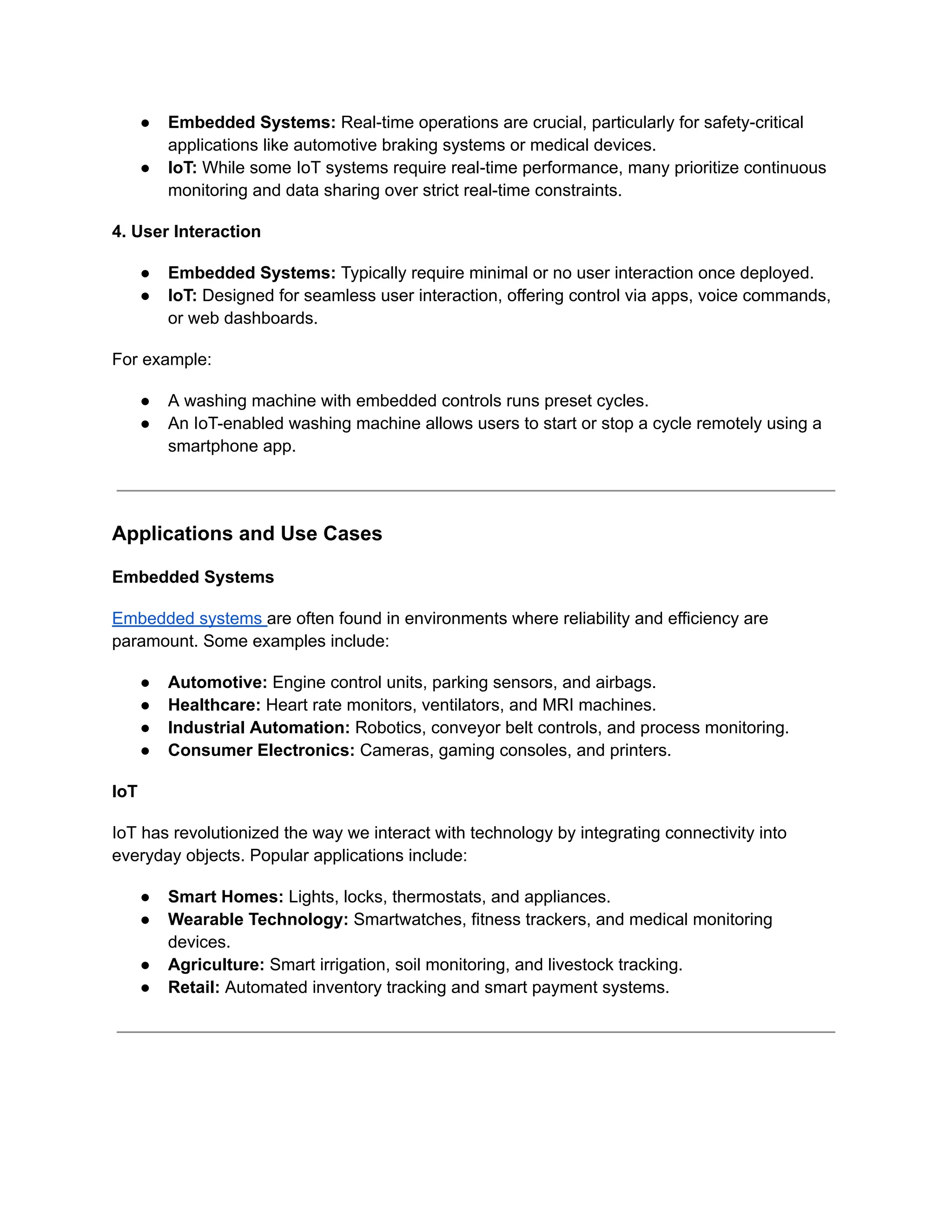
Applications and Use Cases
Embedded Systems
Embedded systems are often found in environments where reliability and efficiency are
paramount. Some examples include:
● Automotive: Engine control units, parking sensors, and airbags.
● Healthcare: Heart rate monitors, ventilators, and MRI machines.
● Industrial Automation: Robotics, conveyor belt controls, and process monitoring.
● Consumer Electronics: Cameras, gaming consoles, and printers.
IoT
IoT has revolutionized the way we interact with technology by integrating connectivity into
everyday objects. Popular applications include:
● Smart Homes: Lights, locks, thermostats, and appliances.
● Wearable Technology: Smartwatches, fitness trackers, and medical monitoring
devices.
● Agriculture: Smart irrigation, soil monitoring, and livestock tracking.
● Retail: Automated inventory tracking and smart payment systems.
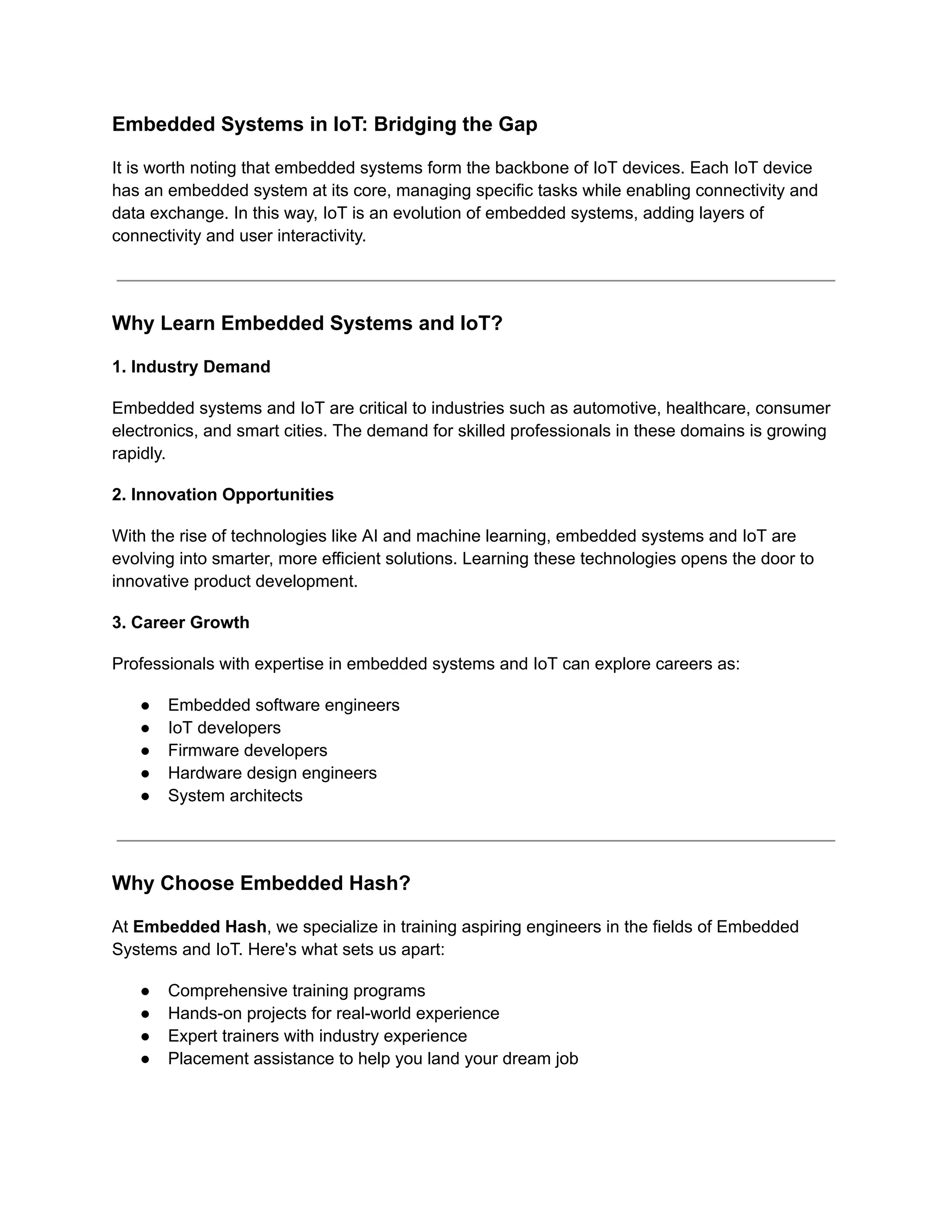
Embedded Systems in IoT: Bridging the Gap
It is worth noting that embedded systems form the backbone of IoT devices. Each IoT device
has an embedded system at its core, managing specific tasks while enabling connectivity and
data exchange. In this way, IoT is an evolution of embedded systems, adding layers of
connectivity and user interactivity.
Why Learn Embedded Systems and IoT?
1. Industry Demand
Embedded systems and IoT are critical to industries such as automotive, healthcare, consumer
electronics, and smart cities. The demand for skilled professionals in these domains is growing
rapidly.
2. Innovation Opportunities
With the rise of technologies like AI and machine learning, embedded systems and IoT are
evolving into smarter, more efficient solutions. Learning these technologies opens the door to
innovative product development.
3. Career Growth
Professionals with expertise in embedded systems and IoT can explore careers as:
● Embedded software engineers
● IoT developers
● Firmware developers
● Hardware design engineers
● System architects
Why Choose Embedded Hash?
At Embedded Hash, we specialize in training aspiring engineers in the fields of Embedded
Systems and IoT. Here's what sets us apart:
● Comprehensive training programs
● Hands-on projects for real-world experience
● Expert trainers with industry experience
● Placement assistance to help you land your dream job
Contact Us:
Embedded Hash – A Subsidiary of Brolly Academy
📍Address:
JNTU Branch Office
Metro Pillar No: A689, JNTU Metro Station,
3rd Floor, Dr. Atmaram Estates, beside Sri Bhramaramba Theatre,
Hyder Nagar, Vasantha Nagar, Hyderabad, Telangana 500072
☎️Phone: +91 7997 00 33 55
📧Email: embeddedhash.in@gmail.com
Enroll Now and Build Your Future
The world of technology is at your fingertips. Whether you’re passionate about designing robust
embedded systems or envision a future where IoT connects everything, Embedded Hash is
here to guide you every step of the way. Don’t wait—start your journey today!

Embedded Systems vs IoT – Key Differences.pdf

  • 1.
    Embedded Systems andIoT – Key Differences As technology continues to evolve at a rapid pace, two concepts—Embedded Systems and the Internet of Things (IoT)—have taken center stage in driving innovation across industries. Though both are foundational to modern technology, they are distinct in their design, purpose, and applications. This blog will delve deep into the core differences between Embedded Systems and IoT, shedding light on their unique features, functionalities, and areas of application.
  • 2.
    What are EmbeddedSystems? An Embedded System is a dedicated computer system designed to perform a specific task or a set of tasks within a larger system. These systems are built with a combination of hardware and software that operate in real-time, often with limited or no direct user interaction. Embedded systems are highly reliable, resource-efficient, and optimized for the tasks they are assigned. Key Characteristics of Embedded Systems: ● Dedicated Functionality: Embedded systems are programmed to perform a singular or limited set of tasks. ● Resource Constraints: They typically run on limited computational power and memory. ● Real-Time Operation: Many embedded systems require real-time performance for critical tasks. ● Standalone or Integrated: They can operate independently or as part of a larger system. Examples of Embedded Systems: ● Washing machines ● Automotive anti-lock braking systems (ABS) ● Medical devices like pacemakers ● Smart thermostats ● Industrial control systems What is IoT (Internet of Things)? The Internet of Things (IoT) refers to a network of interconnected devices that communicate and share data over the internet. IoT leverages embedded systems, sensors, and network connectivity to enable devices to interact with each other and with users. Key Characteristics of IoT: ● Interconnected Devices: IoT devices are connected to a centralized or decentralized network, enabling communication. ● Data-Driven: These devices collect and analyze data for decision-making and automation. ● User Interaction: IoT systems often provide interactive dashboards or interfaces for user control. ● Cloud Integration: IoT systems typically rely on cloud-based platforms for data storage and processing. Examples of IoT Applications: ● Smart homes (e.g., connected light bulbs, security cameras) ● Wearable health trackers
  • 3.
    ● Autonomous vehicles ●Smart agriculture (e.g., precision irrigation systems) ● Industrial IoT for predictive maintenance Key Differences Between Embedded Systems and IoT Features Embedded Systems IoT Purpose Performs a specific task Connects and communicates devices Connectivity No internet connectivity Internet-based, connected devices Real-Time Operation High priority, real-time execution Continuous data exchange & monitoring User Interaction Limited or none High user interaction and control 1. Purpose ● Embedded Systems: Designed to perform a dedicated function. These systems are typically used in devices that require automation or real-time control. ● IoT: Goes beyond a single function. IoT connects multiple devices and enables communication, data sharing, and integration into larger systems. For example: ● An embedded system in a microwave ensures the cooking process runs efficiently. ● In IoT, a smart microwave can connect to a smartphone to notify the user when the food is ready or suggest recipes based on user preferences. 2. Connectivity ● Embedded Systems: Operate in isolation or within a local setup, often with no need for internet connectivity. ● IoT: Relies heavily on internet connectivity for device communication and functionality. For example: ● A traditional thermostat is an embedded system. ● A smart thermostat like Nest is part of the IoT ecosystem, allowing users to control it remotely. 3. Real-Time Operation
  • 4.
    ● Embedded Systems:Real-time operations are crucial, particularly for safety-critical applications like automotive braking systems or medical devices. ● IoT: While some IoT systems require real-time performance, many prioritize continuous monitoring and data sharing over strict real-time constraints. 4. User Interaction ● Embedded Systems: Typically require minimal or no user interaction once deployed. ● IoT: Designed for seamless user interaction, offering control via apps, voice commands, or web dashboards. For example: ● A washing machine with embedded controls runs preset cycles. ● An IoT-enabled washing machine allows users to start or stop a cycle remotely using a smartphone app. Applications and Use Cases Embedded Systems Embedded systems are often found in environments where reliability and efficiency are paramount. Some examples include: ● Automotive: Engine control units, parking sensors, and airbags. ● Healthcare: Heart rate monitors, ventilators, and MRI machines. ● Industrial Automation: Robotics, conveyor belt controls, and process monitoring. ● Consumer Electronics: Cameras, gaming consoles, and printers. IoT IoT has revolutionized the way we interact with technology by integrating connectivity into everyday objects. Popular applications include: ● Smart Homes: Lights, locks, thermostats, and appliances. ● Wearable Technology: Smartwatches, fitness trackers, and medical monitoring devices. ● Agriculture: Smart irrigation, soil monitoring, and livestock tracking. ● Retail: Automated inventory tracking and smart payment systems.
  • 5.
    Embedded Systems inIoT: Bridging the Gap It is worth noting that embedded systems form the backbone of IoT devices. Each IoT device has an embedded system at its core, managing specific tasks while enabling connectivity and data exchange. In this way, IoT is an evolution of embedded systems, adding layers of connectivity and user interactivity. Why Learn Embedded Systems and IoT? 1. Industry Demand Embedded systems and IoT are critical to industries such as automotive, healthcare, consumer electronics, and smart cities. The demand for skilled professionals in these domains is growing rapidly. 2. Innovation Opportunities With the rise of technologies like AI and machine learning, embedded systems and IoT are evolving into smarter, more efficient solutions. Learning these technologies opens the door to innovative product development. 3. Career Growth Professionals with expertise in embedded systems and IoT can explore careers as: ● Embedded software engineers ● IoT developers ● Firmware developers ● Hardware design engineers ● System architects Why Choose Embedded Hash? At Embedded Hash, we specialize in training aspiring engineers in the fields of Embedded Systems and IoT. Here's what sets us apart: ● Comprehensive training programs ● Hands-on projects for real-world experience ● Expert trainers with industry experience ● Placement assistance to help you land your dream job
  • 6.
    Contact Us: Embedded Hash– A Subsidiary of Brolly Academy 📍Address: JNTU Branch Office Metro Pillar No: A689, JNTU Metro Station, 3rd Floor, Dr. Atmaram Estates, beside Sri Bhramaramba Theatre, Hyder Nagar, Vasantha Nagar, Hyderabad, Telangana 500072 ☎️Phone: +91 7997 00 33 55 📧Email: embeddedhash.in@gmail.com Enroll Now and Build Your Future The world of technology is at your fingertips. Whether you’re passionate about designing robust embedded systems or envision a future where IoT connects everything, Embedded Hash is here to guide you every step of the way. Don’t wait—start your journey today!