




Prof. Arshi Zaveri
Price Elasticity of Demand
+
           -
-   It Depends       +
+                -
           +
       +
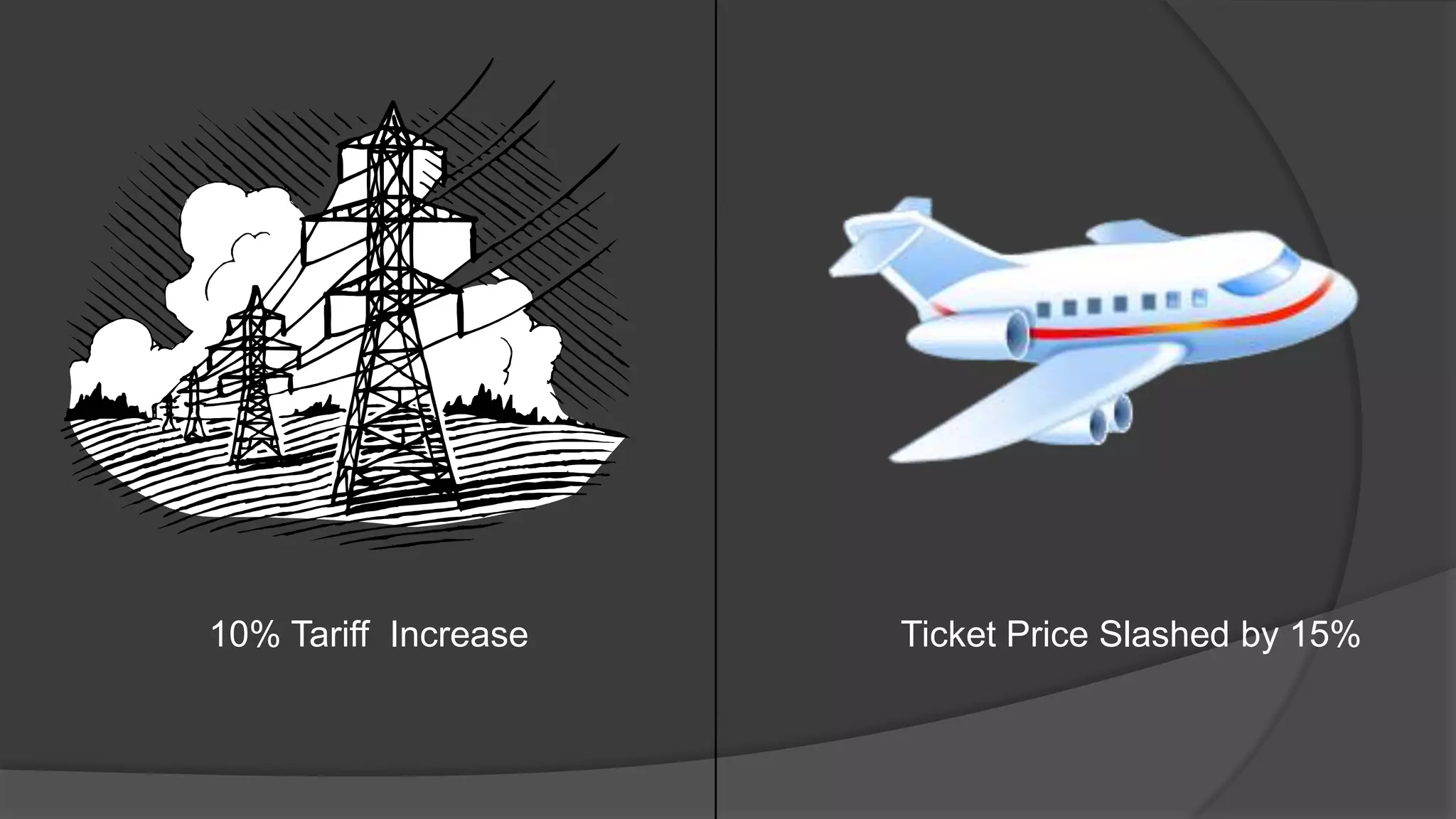
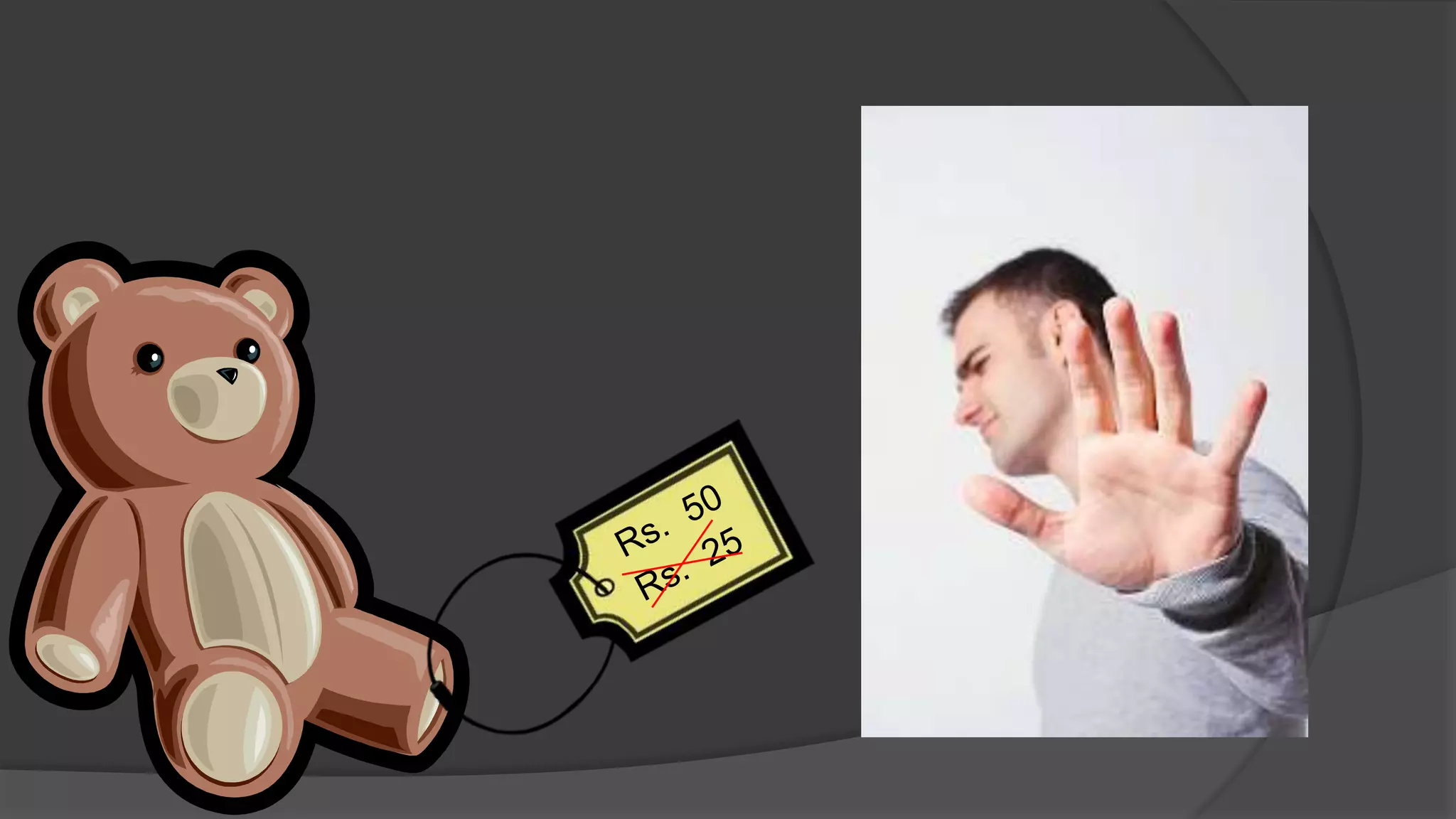
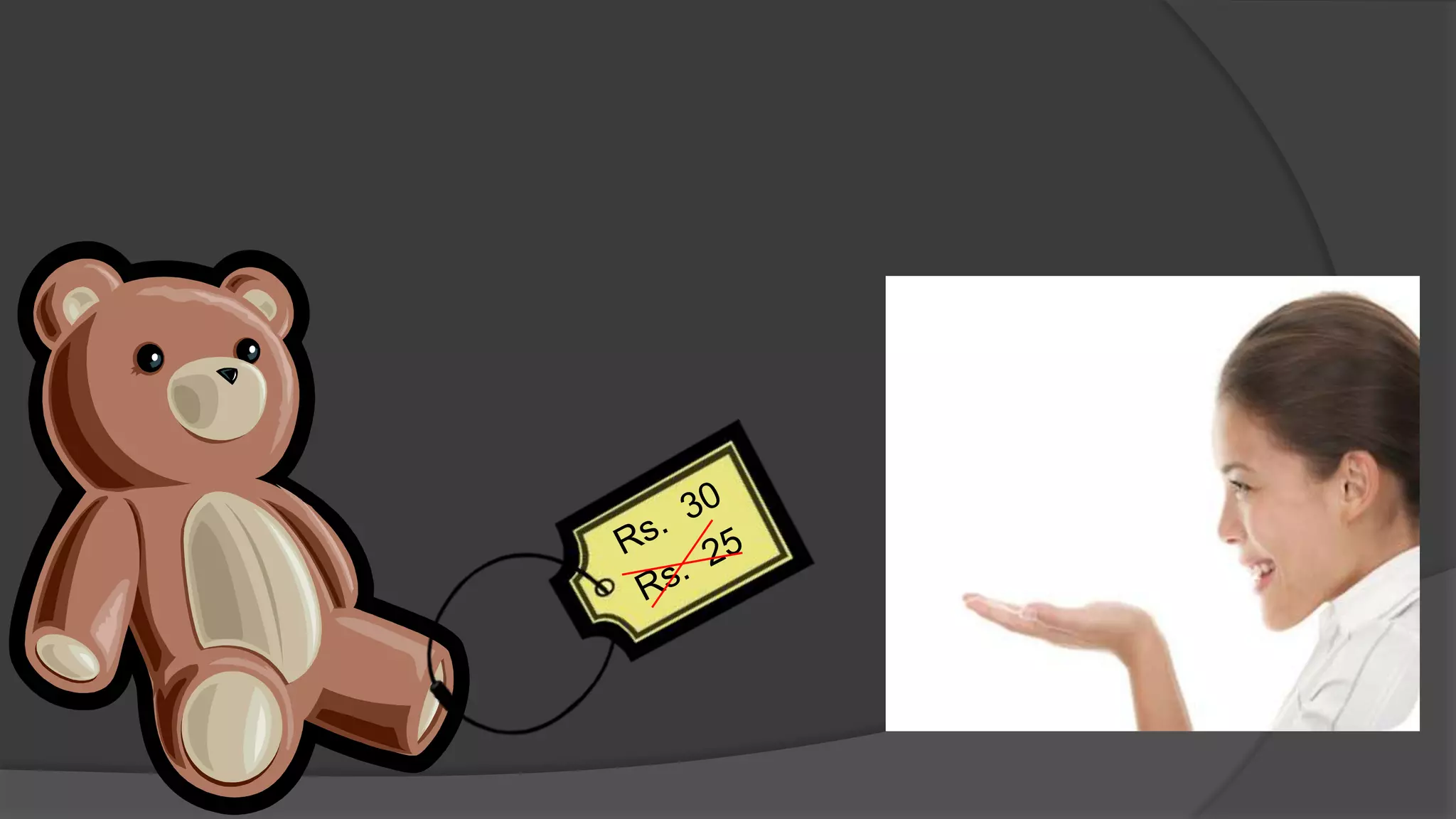
10% Tariff Increase   Ticket Price Slashed by 15%
Law of Demand :
   More of a good will be bought the lower
    its price, Less will be bought the higher
    its price
Hence, You can say that :
Elasticity of Demand measures the
responsiveness of Quantity Demanded
to a Change in the Product Price
Definitions of Price Elasticity :

“Elasticity of demand may be defined as the percentage change in quantity
demanded to the percentage change in price.”
                                                     - Alfred Marshall

“The Elasticity of demand for a commodity is the rate at which quantity
bought changes as the price changes.”
                                                     - A. K. Cairncross

“Elasticity of demand is a technical term used by the economist to describe
the degree of responsiveness of demand to a commodity to a change in
its price”
                                                       - Stonier and Hague
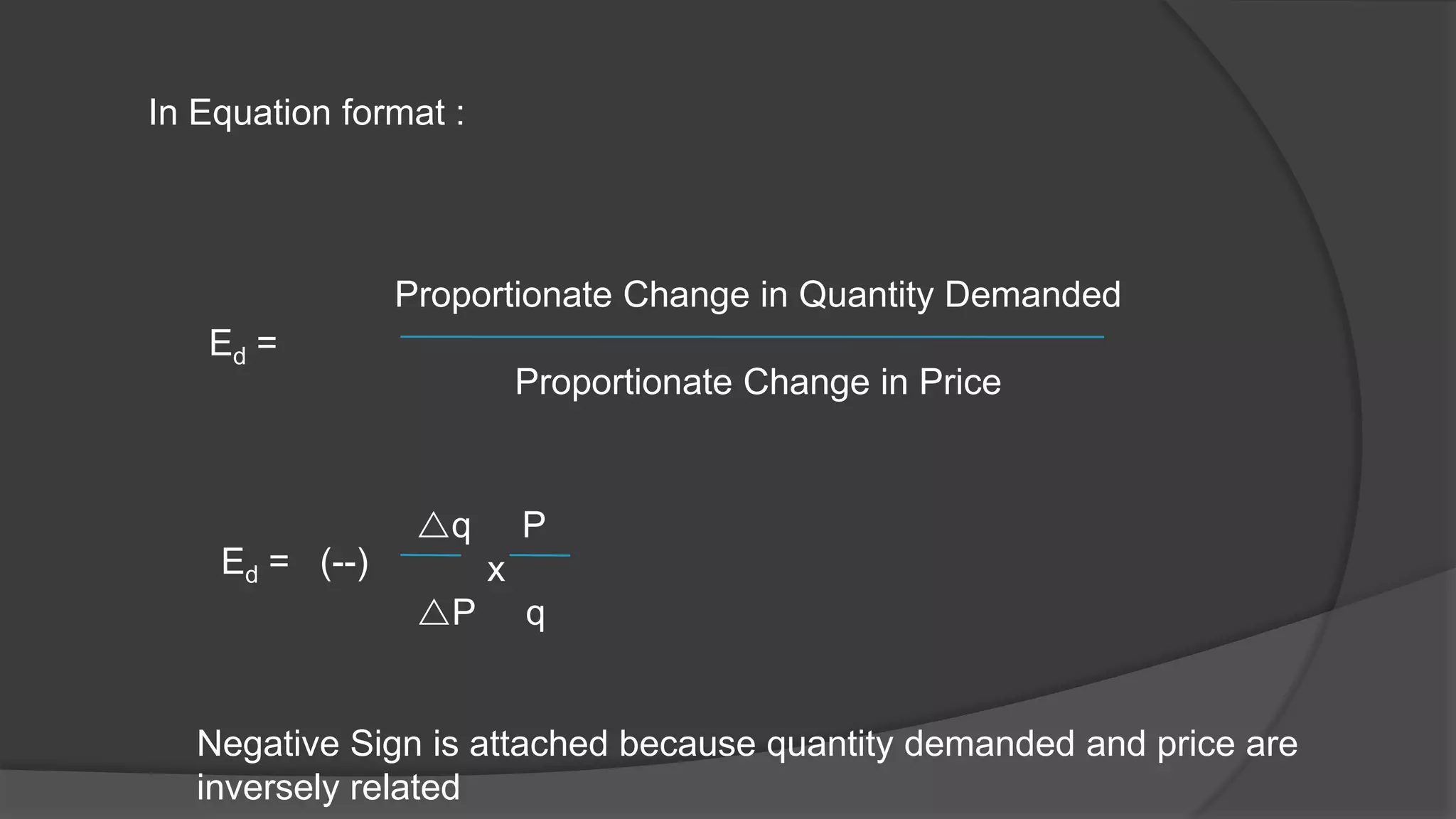
In Equation format :


                Proportionate Change in Quantity Demanded
   Ed =
                           Proportionate Change in Price


                 q        P
    Ed = (--)          x
                 P        q


   Negative Sign is attached because quantity demanded and price are
   inversely related
Factors Determining Price Elasticity of Demand :

1. Nature of Commodity [Necessary, Conventional Necessaries, Luxuries]
2. Substitutes [e.g. Tea / Coffee- Elastic]
3. Number of Uses [e.g. Coal]
4. Postponement [e.g. Silk – Elastic / Medicine – Inelastic]
5. Raw Materials and Finished Goods [e.g. Raw Cotton – Inelastic, Cloth - Elastic]
6. Price Level [e.g. Moderate Price – Elastic, Lower and Higher Price - Inelastic]
7. Income Level [e.g. Middle Income– Elastic, Lower and Higher Income - Inelastic]
8. Habits [e.g. Cigarettes / Tobacco - Inelastic]
9. Nature of Expenditure [e.g. Boot polish, Newspapers - Inelastic]
10. Distribution of Income [e.g. Uniformly Distributed – Elastic , Unequal Distribution – Inelastic]
11. Influence of Diminishing Marginal Utility
12. Joint Demand [e.g. Car – Inelastic then Petrol -Inelastic]
13. Time [e.g. Long Period – Elastic / Short Period - Inelastic]
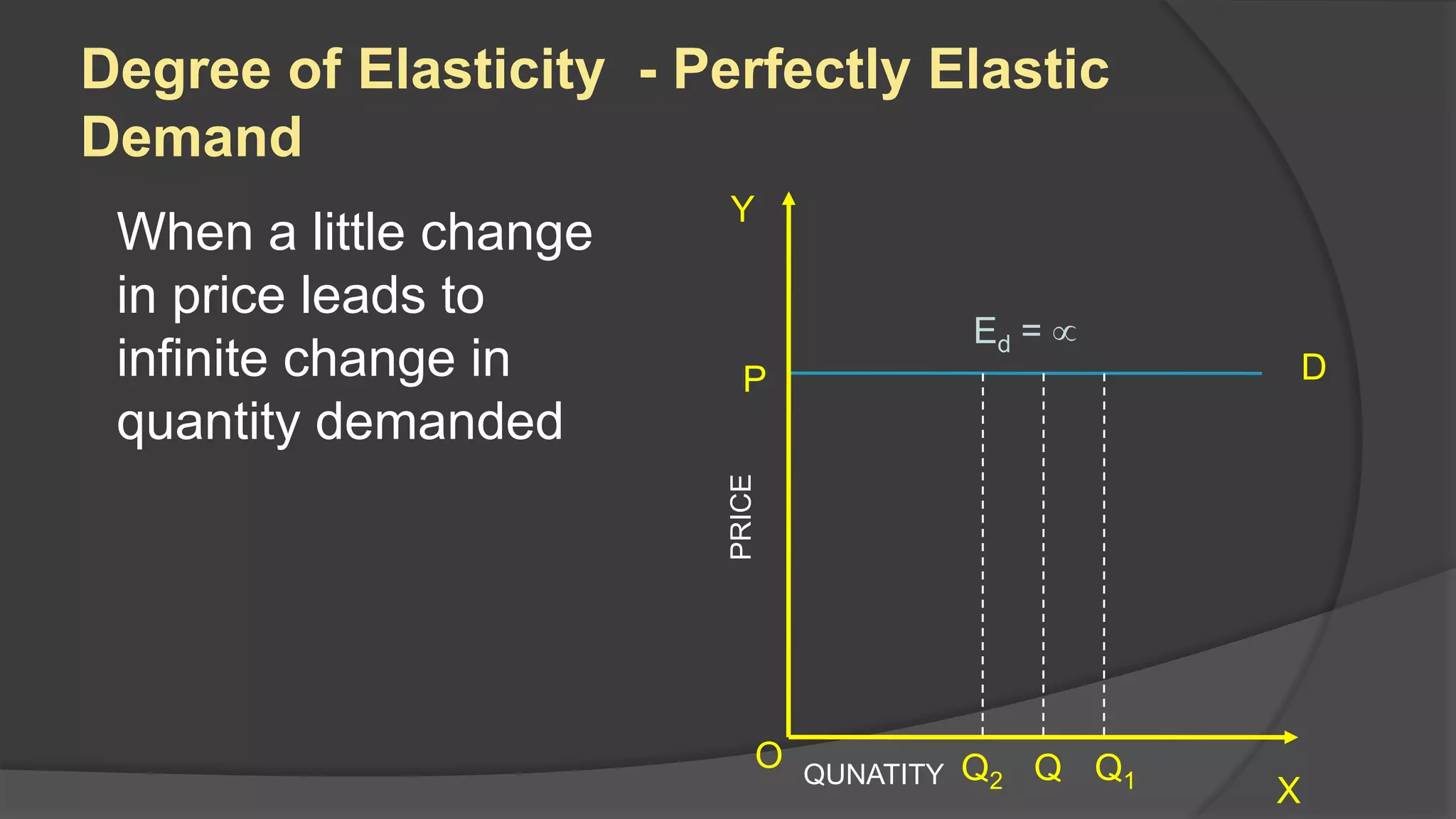
Degree of Elasticity - Perfectly Elastic
Demand
                         Y
 When a little change
 in price leads to
                                            Ed =
 infinite change in        P                          D
 quantity demanded


                         PRICE
                             O   QUNATITY   Q2 Q Q1
                                                      X
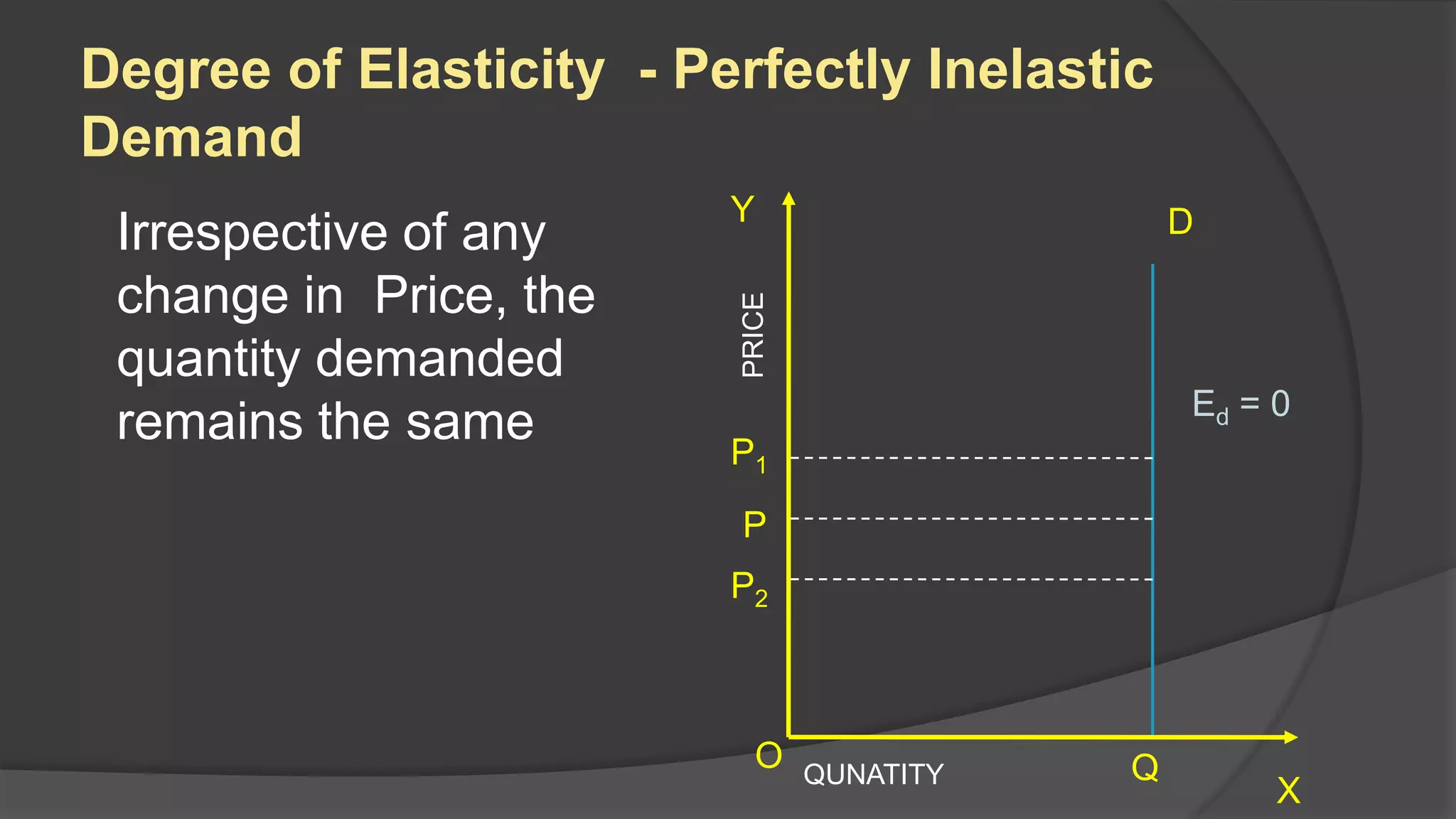
Degree of Elasticity - Perfectly Inelastic
Demand
                         Y                      D
 Irrespective of any
 change in Price, the


                         PRICE
 quantity demanded
                                                Ed = 0
 remains the same        P1

                         P
                         P2


                           O     QUNATITY   Q
                                                     X
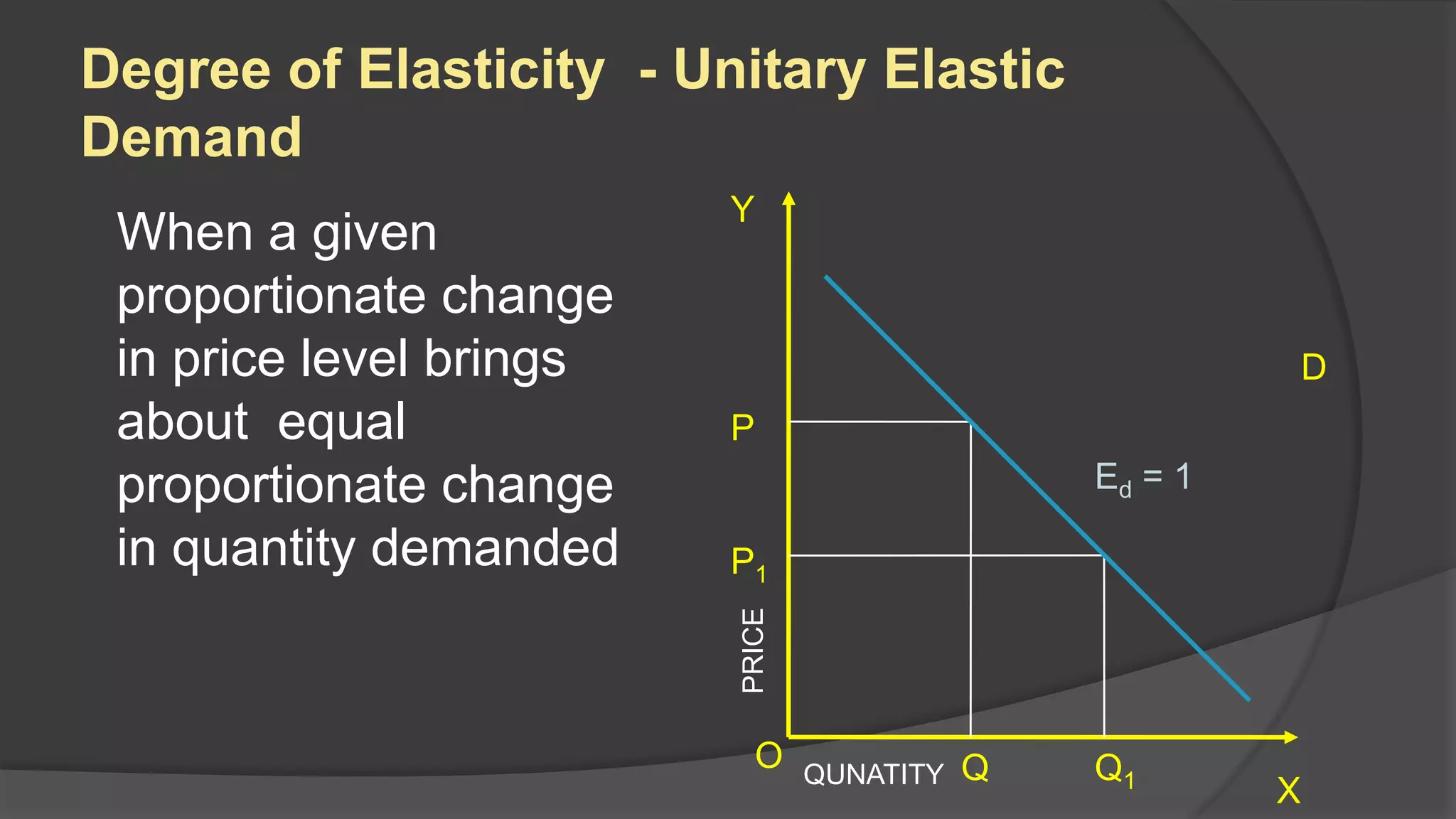
Degree of Elasticity - Unitary Elastic
Demand
                         Y
 When a given
 proportionate change
 in price level brings                                   D
 about equal             P
 proportionate change                           Ed = 1

 in quantity demanded    P1


                         PRICE
                           O     QUNATITY   Q   Q1
                                                         X
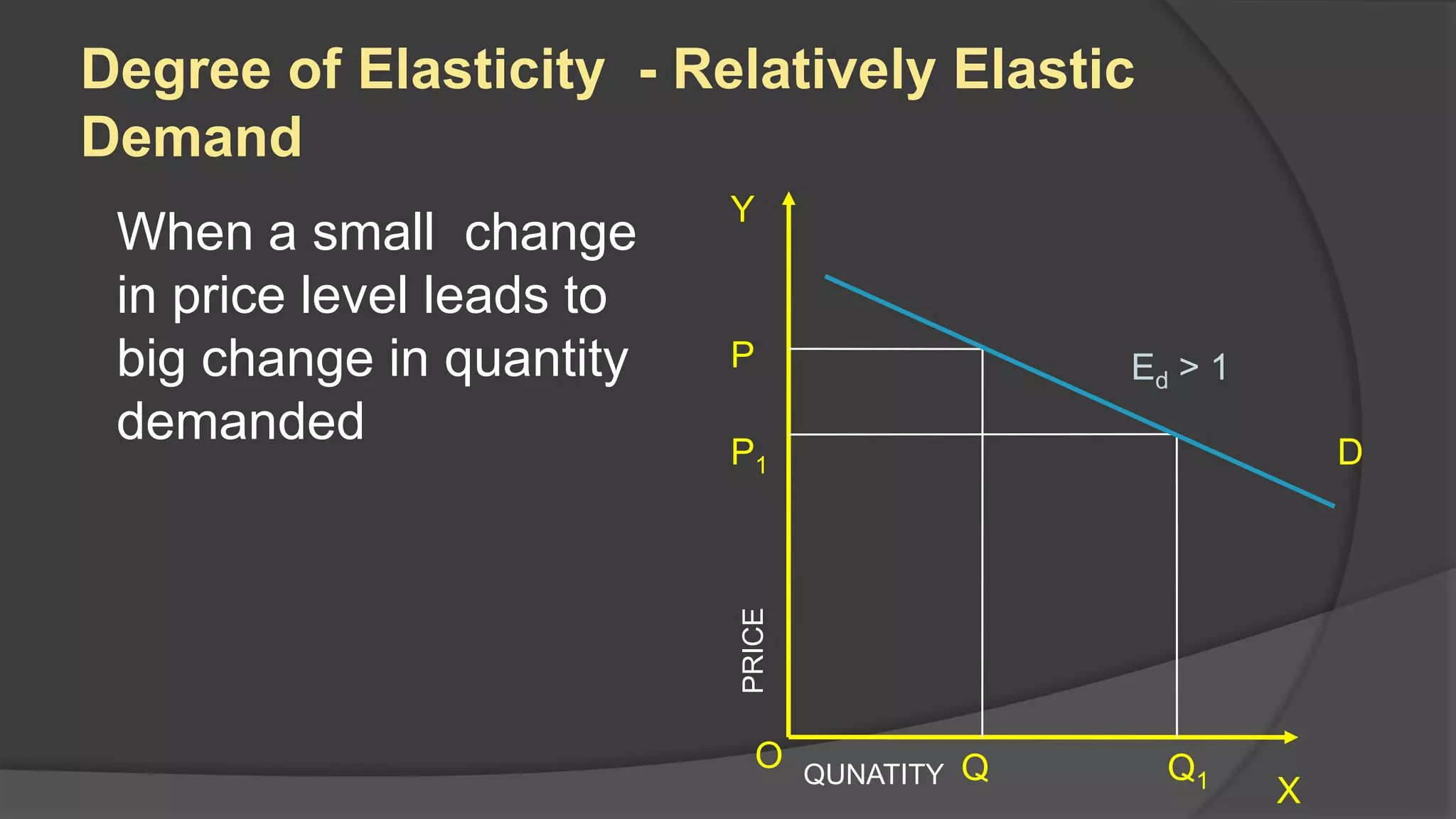
Degree of Elasticity - Relatively Elastic
Demand
                           Y
 When a small change
 in price level leads to
 big change in quantity    P                      Ed > 1
 demanded                  P1                                  D


                           PRICE
                             O     QUNATITY   Q     Q1
                                                           X
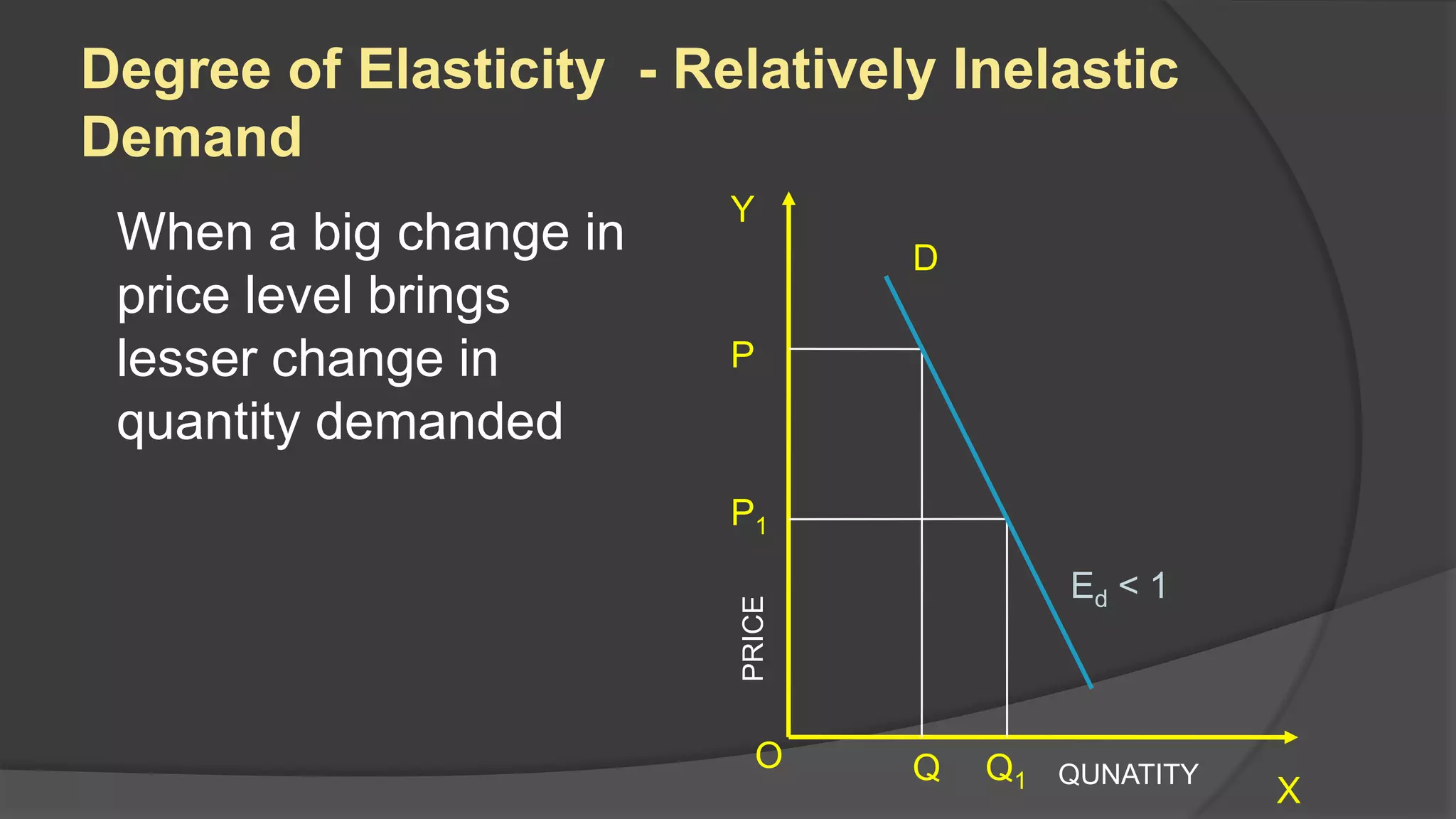
Degree of Elasticity - Relatively Inelastic
Demand
                         Y
 When a big change in            D
 price level brings
 lesser change in        P
 quantity demanded
                         P1
                                          Ed < 1


                         PRICE
                           O     Q   Q1   QUNATITY
                                                     X

Elasticity of Demand

  • 1.
  • 2.
  • 5.
    + - - It Depends + + - + +
  • 6.
    10% Tariff Increase Ticket Price Slashed by 15%
  • 7.
    Law of Demand:  More of a good will be bought the lower its price, Less will be bought the higher its price
  • 11.
    Hence, You cansay that : Elasticity of Demand measures the responsiveness of Quantity Demanded to a Change in the Product Price
  • 12.
    Definitions of PriceElasticity : “Elasticity of demand may be defined as the percentage change in quantity demanded to the percentage change in price.” - Alfred Marshall “The Elasticity of demand for a commodity is the rate at which quantity bought changes as the price changes.” - A. K. Cairncross “Elasticity of demand is a technical term used by the economist to describe the degree of responsiveness of demand to a commodity to a change in its price” - Stonier and Hague
  • 13.
    In Equation format: Proportionate Change in Quantity Demanded Ed = Proportionate Change in Price q P Ed = (--) x P q Negative Sign is attached because quantity demanded and price are inversely related
  • 17.
    Factors Determining PriceElasticity of Demand : 1. Nature of Commodity [Necessary, Conventional Necessaries, Luxuries] 2. Substitutes [e.g. Tea / Coffee- Elastic] 3. Number of Uses [e.g. Coal] 4. Postponement [e.g. Silk – Elastic / Medicine – Inelastic] 5. Raw Materials and Finished Goods [e.g. Raw Cotton – Inelastic, Cloth - Elastic] 6. Price Level [e.g. Moderate Price – Elastic, Lower and Higher Price - Inelastic] 7. Income Level [e.g. Middle Income– Elastic, Lower and Higher Income - Inelastic] 8. Habits [e.g. Cigarettes / Tobacco - Inelastic] 9. Nature of Expenditure [e.g. Boot polish, Newspapers - Inelastic] 10. Distribution of Income [e.g. Uniformly Distributed – Elastic , Unequal Distribution – Inelastic] 11. Influence of Diminishing Marginal Utility 12. Joint Demand [e.g. Car – Inelastic then Petrol -Inelastic] 13. Time [e.g. Long Period – Elastic / Short Period - Inelastic]
  • 18.
    Degree of Elasticity- Perfectly Elastic Demand Y When a little change in price leads to Ed = infinite change in P D quantity demanded PRICE O QUNATITY Q2 Q Q1 X
  • 19.
    Degree of Elasticity- Perfectly Inelastic Demand Y D Irrespective of any change in Price, the PRICE quantity demanded Ed = 0 remains the same P1 P P2 O QUNATITY Q X
  • 20.
    Degree of Elasticity- Unitary Elastic Demand Y When a given proportionate change in price level brings D about equal P proportionate change Ed = 1 in quantity demanded P1 PRICE O QUNATITY Q Q1 X
  • 21.
    Degree of Elasticity- Relatively Elastic Demand Y When a small change in price level leads to big change in quantity P Ed > 1 demanded P1 D PRICE O QUNATITY Q Q1 X
  • 22.
    Degree of Elasticity- Relatively Inelastic Demand Y When a big change in D price level brings lesser change in P quantity demanded P1 Ed < 1 PRICE O Q Q1 QUNATITY X

Editor's Notes

  • #2 There are many types of Elasticity but let us focus on Price Elasticity of Demand.(event -1-This ppt gains attention of the students on the topic elasticity of demand in economics.)
  • #3 What is price elasticity of demand.{this slide informs the learner of the objective that is to learn the concept of price elasticity of demand.}
  • #4 What should a Business do If Business wants to Generate MORE Money ??
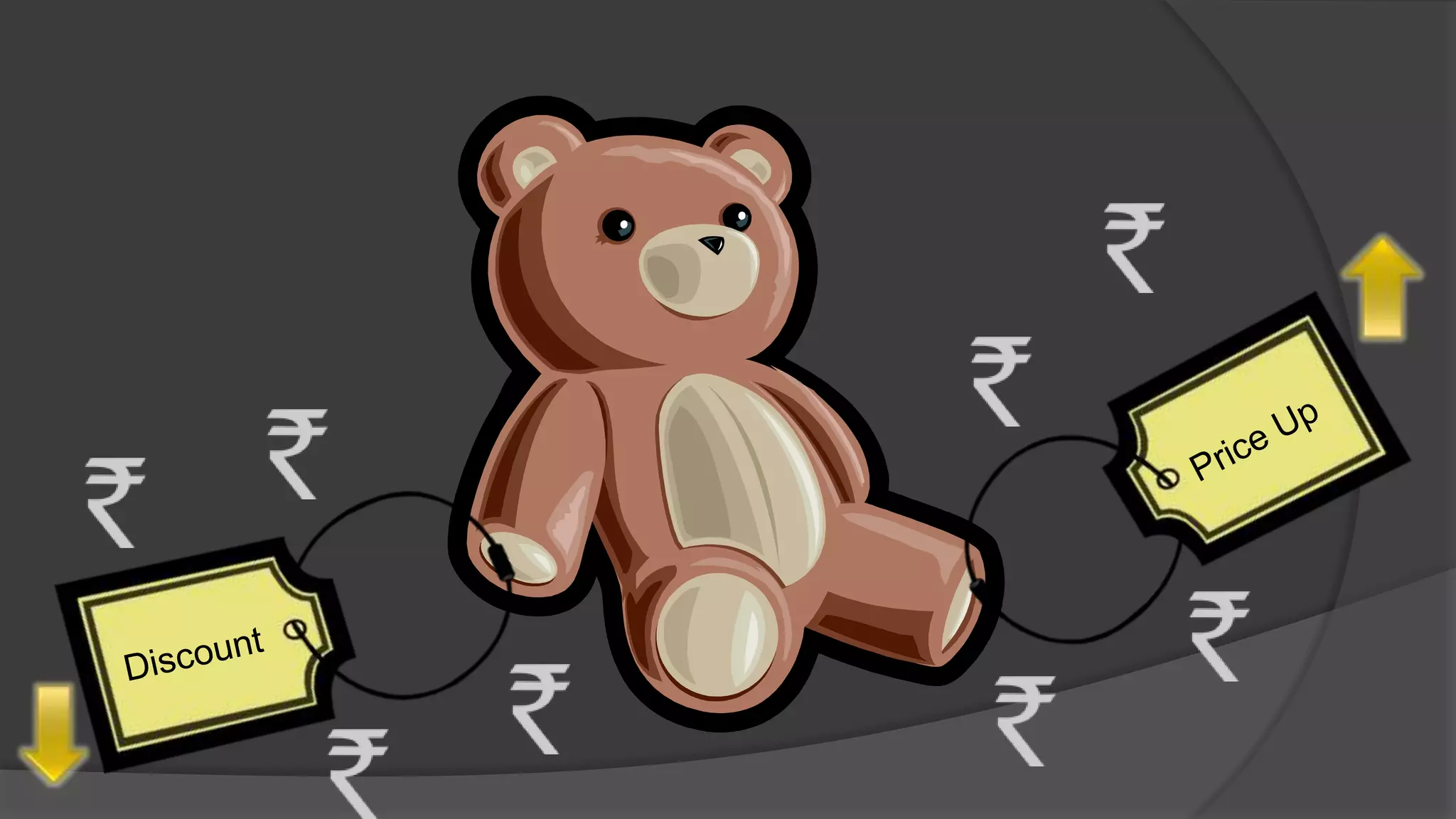
  • #5 To be more specific Lets take an Example.... So a Store like Archies, Where you get all these cute Gifts,, will it raise the price of its product or give a Discount on this cute product.
  • #6 So as we see,Whether a Business to generate more revenue should increase price or decrease price ? The Correct Answer would be “It Depends”
  • #7 Lets Think About it.. So if Local Electricity Company which for us could be Relinace Infra or Tata, wants to increase their revenue, they would increase the price, But If Airline wants to generate more revenue, They would slash the ticket price.. We are talking about some Airlines like SpiceJet or Jet Airways and not Kingfisher which is not generating any revenue at all these days. So Both approaches are correct..So here is the Issue. By Raising my Prices, We know that willingness to Purchase or Quantity Demanded by my Consumers will Drop..which exactly is Law Of Demand (The last four slides stimulates the learner of prior learning knowledge of law of demand.)
  • #8 But What Law of Demand does not tell us is that how much would my Demand change when price changes.
  • #9 Ok, Lets go back to old Archie’s store Example and lets say If they Raise their product price from 25 Rupees to 50 Rupees, Will this make their customers Very Sensitive to Price Increase and turn it off.. Then this will be bad, Because They will lose lot of Revenue
  • #10 But lets us assume that Price change is marginal enough to turn off few Customers but still Revenue generated from sales exceeds otherwise because customers are not reacting too much to the price increase then its good
  • #11 Because Store will end up making more money…So crucial issue here, is “How sensitive is the customer to Price change ?”
  • #12 Hence You can say that Elasticity of Demand measures the responsiveness of Quantity Demanded to Change in the Product Price.(These earlier slides present stimulus material and provide learner guidance about the concept of elasticity.)
  • #15 Please note, we are using Proportionate change and not and Absolute change..Let us illustrate Why ? If I tell you that product price is gone up one Rupee which is absolute change .. Is it big change or small change.. Well It Depends.. What was the product..What was the original price,,
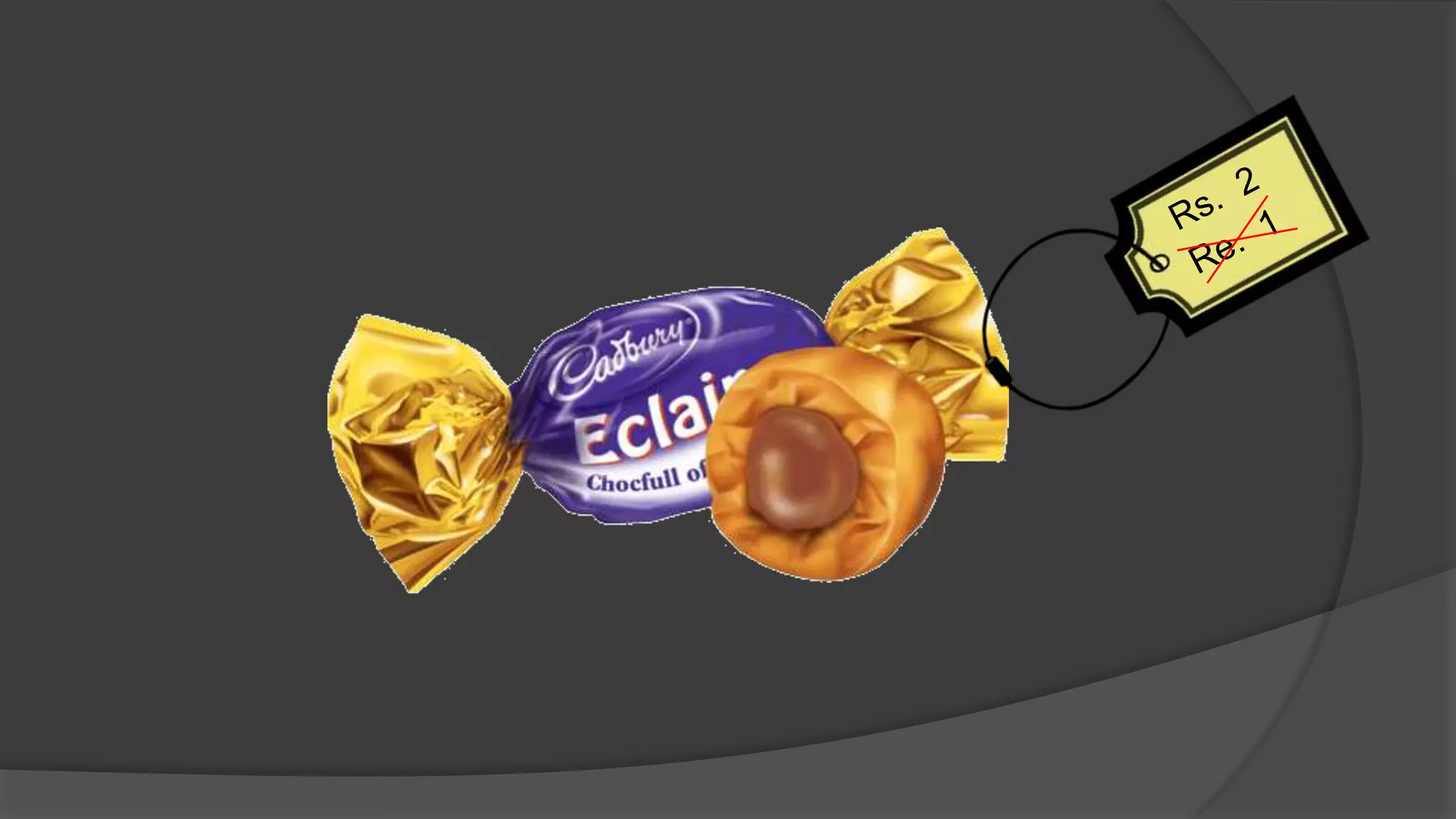
  • #16 Say we are talking about Cadbury Eclairs whose original price is Re. 1 and now with 1 Rupee increase, it has become 2 Rupees which is actually doubled and hence Big change
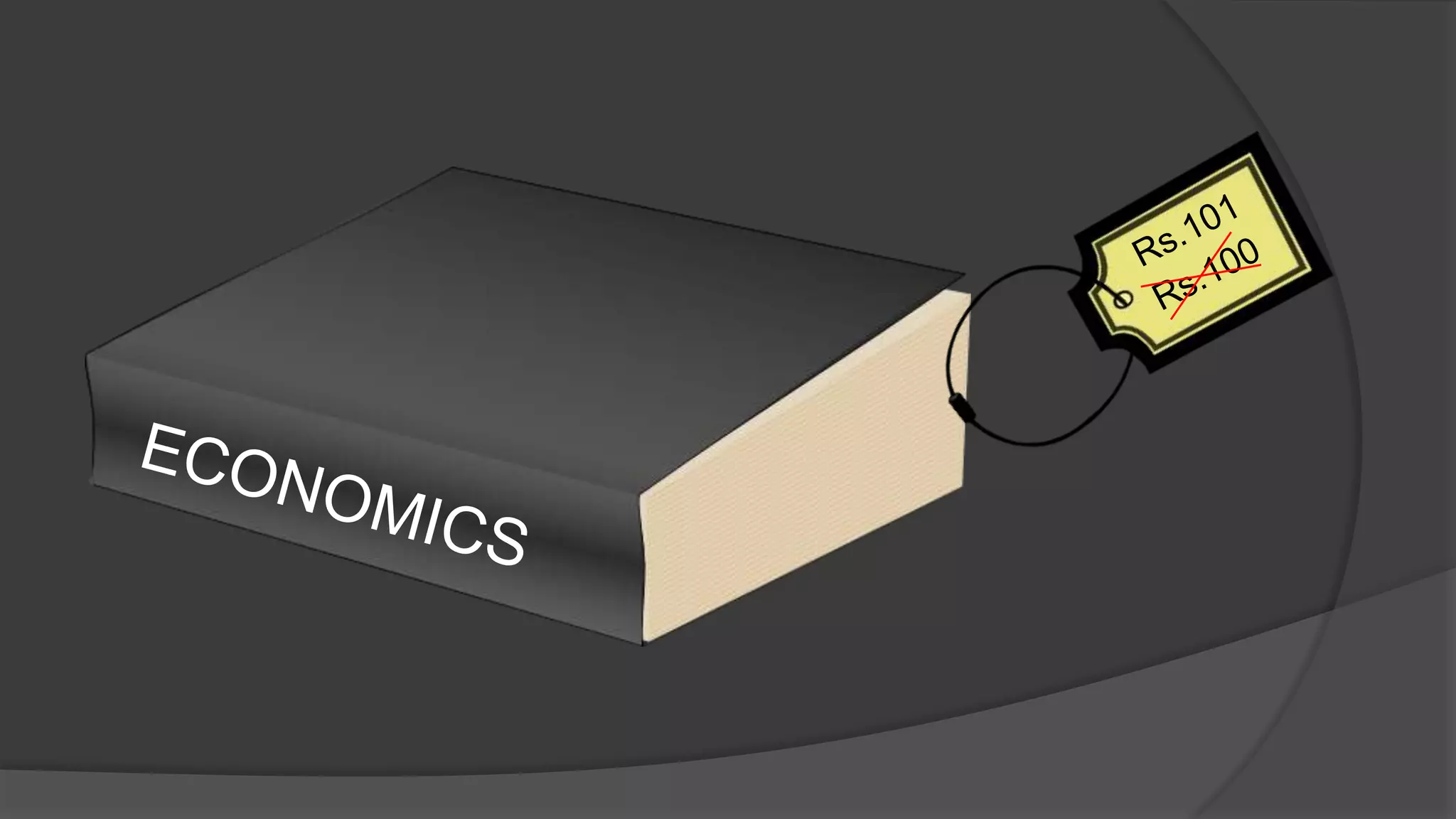
  • #17 Say we are talking about Economics Text Book whose original price is Rs. 100 and now with 1 Rupee increase, it has become 101 Rupees which is actually a very small change,, Hence we always take propionate change and not absolute change
  • #18 These are the factors of elasticity of demand.(The above slides give information of the various factors supporting elasticity.The teacher asks the students the various factors of elasticity.The students remember the presented information and answer the questions.)
  • #19 (The teacher explains various degrees of elasticity through various diagrams in the next four slides)
  • #22 (Throughvisualisation students understand and draw diagrams themselves in their books.)
  • #23 (The students draw the above diagrams in their books and understand the concept of elasticity.The teacher verifies the diagrams and assesses their performance.Thus through all the above slides and explanation and interaction knowledge of the subject is enhanced.)