Effective Writing
Exploring the key elements that contribute to successful
writing.
Effective writing is a critical skill in both personal
and professional settings. This presentation
explores key elements such as clarity, structure,
and coherence that contribute to successful
written communication.
Introduction
Clarity
01
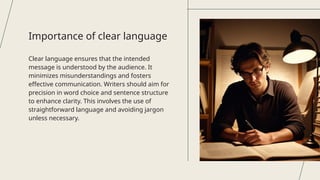
Clear language ensures that the intended
message is understood by the audience. It
minimizes misunderstandings and fosters
effective communication. Writers should aim for
precision in word choice and sentence structure
to enhance clarity. This involves the use of
straightforward language and avoiding jargon
unless necessary.
Importance of clear language
Ambiguity can lead to confusion and misinterpretation. Writers should strive to
eliminate vague terms and phrases that can distort meaning. Using specific examples
and providing context can help clarify the message. It's crucial to anticipate potential
areas of confusion and address them proactively.
Avoiding ambiguity
Effective sentence structure is essential for conveying complex ideas clearly and
persuasively. Writers should vary sentence length and complexity to maintain reader
engagement. Simple sentences can convey strong points, while compound and
complex sentences help in articulating nuanced arguments. Additionally, proper
punctuation and grammar enhance readability and prevent misinterpretation.
Effective sentence structure
Structure
02
A logical organization of ideas is crucial in guiding the reader through the text. Writers
should outline their main points and arrange them in a coherent order, often
employing chronological or thematic structures. This organization helps to build
arguments progressively and enhances the overall flow of the document.
Organizing ideas logically
Paragraph
development
Each paragraph should focus on a single main idea, supported by evidence
and examples. A well-developed paragraph typically starts with a topic
sentence that defines its main point, followed by supporting sentences that
elaborate on this idea. Concluding sentences can summarize the paragraph's
key points and link it to the next section, maintaining a seamless narrative.
Transitions are integral to maintaining the coherence of a written piece. Using
transitional words and phrases effectively can guide the reader through the flow of
ideas, indicating relationships between sentences and paragraphs. This ensures that
the writing does not feel disjointed, allowing for a smoother reading experience and
more persuasive arguments.
Use of transitions
Conclusions
In conclusion, effective writing encompasses clarity and a structured
approach. By utilizing clear language, logical organization, and coherent
flow throughout the text, writers can significantly enhance their
communication skills. Mastering these elements is essential not just for
conveying messages but also for ensuring that they resonate with readers.
CREDITS: This presentation template was created by
Slidesgo, including icons, infographics & images by
Freepik
Thank you!
Do you have any questions?
Effective Writing.pptx professional communication

  • 1.
    Effective Writing Exploring thekey elements that contribute to successful writing.
  • 2.
    Effective writing isa critical skill in both personal and professional settings. This presentation explores key elements such as clarity, structure, and coherence that contribute to successful written communication. Introduction
  • 3.
  • 4.
    Clear language ensuresthat the intended message is understood by the audience. It minimizes misunderstandings and fosters effective communication. Writers should aim for precision in word choice and sentence structure to enhance clarity. This involves the use of straightforward language and avoiding jargon unless necessary. Importance of clear language
  • 5.
    Ambiguity can leadto confusion and misinterpretation. Writers should strive to eliminate vague terms and phrases that can distort meaning. Using specific examples and providing context can help clarify the message. It's crucial to anticipate potential areas of confusion and address them proactively. Avoiding ambiguity
  • 6.
    Effective sentence structureis essential for conveying complex ideas clearly and persuasively. Writers should vary sentence length and complexity to maintain reader engagement. Simple sentences can convey strong points, while compound and complex sentences help in articulating nuanced arguments. Additionally, proper punctuation and grammar enhance readability and prevent misinterpretation. Effective sentence structure
  • 7.
  • 8.
    A logical organizationof ideas is crucial in guiding the reader through the text. Writers should outline their main points and arrange them in a coherent order, often employing chronological or thematic structures. This organization helps to build arguments progressively and enhances the overall flow of the document. Organizing ideas logically
  • 9.
    Paragraph development Each paragraph shouldfocus on a single main idea, supported by evidence and examples. A well-developed paragraph typically starts with a topic sentence that defines its main point, followed by supporting sentences that elaborate on this idea. Concluding sentences can summarize the paragraph's key points and link it to the next section, maintaining a seamless narrative.
  • 10.
    Transitions are integralto maintaining the coherence of a written piece. Using transitional words and phrases effectively can guide the reader through the flow of ideas, indicating relationships between sentences and paragraphs. This ensures that the writing does not feel disjointed, allowing for a smoother reading experience and more persuasive arguments. Use of transitions
  • 11.
    Conclusions In conclusion, effectivewriting encompasses clarity and a structured approach. By utilizing clear language, logical organization, and coherent flow throughout the text, writers can significantly enhance their communication skills. Mastering these elements is essential not just for conveying messages but also for ensuring that they resonate with readers.
  • 12.
    CREDITS: This presentationtemplate was created by Slidesgo, including icons, infographics & images by Freepik Thank you! Do you have any questions?