CREATING A BRIDGE BETWEEN
      EFFECTIVE DISCUSSION
              AND
          WEB 2.0 TOOLS
Wendy Grojean
College of Education
IDEAS Room Coordinator
wgrojean@unomaha.edu
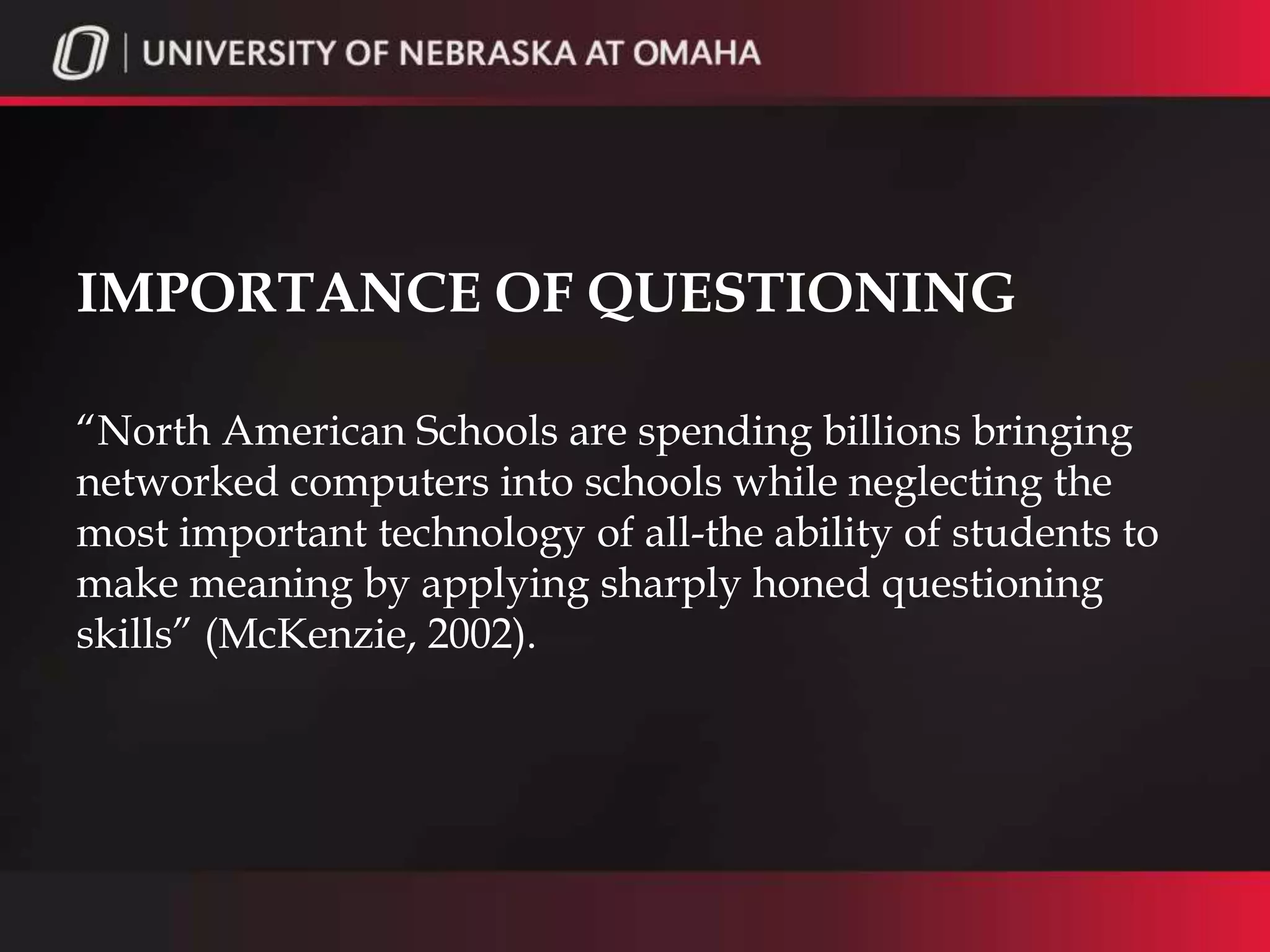
“Replace a paper and pencil with a laptop and
online discussion and you may find that even the
most reserved students are strong writing
contributors. It is not the student. It is the tool.
Find the right technological tool and writing now
becomes fun, rather than a chore” (Rosen, 2010).
GOALS OF ONLINE DISCUSSION

-Add depth to in-class discussion
-Give voice to quiet students
-Engage students throughout reading and writing
process
-Others?
ONLINE DISCUSSION TOOLS

Blog
Wiki
Others?
GOALS VS. TOOL

-Your goals need to stay at the forefront.
-The tool must not be BIGGER than your goals
-If the tool or assessment is too
complicated, students spend more time navigating
the tool than the content.
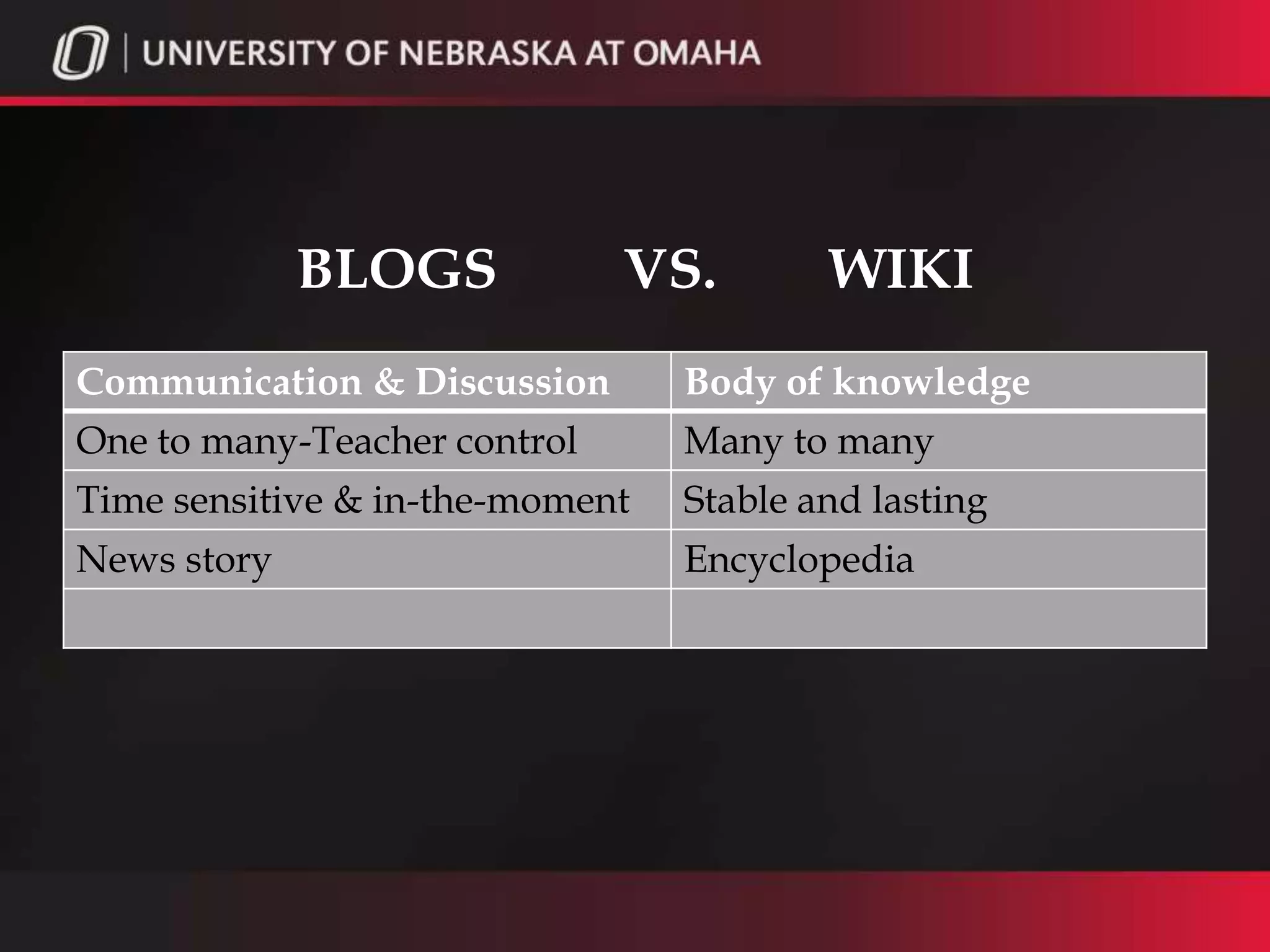
BLOGS            VS.        WIKI
Communication & Discussion       Body of knowledge
One to many-Teacher control      Many to many
Time sensitive & in-the-moment   Stable and lasting
News story                       Encyclopedia
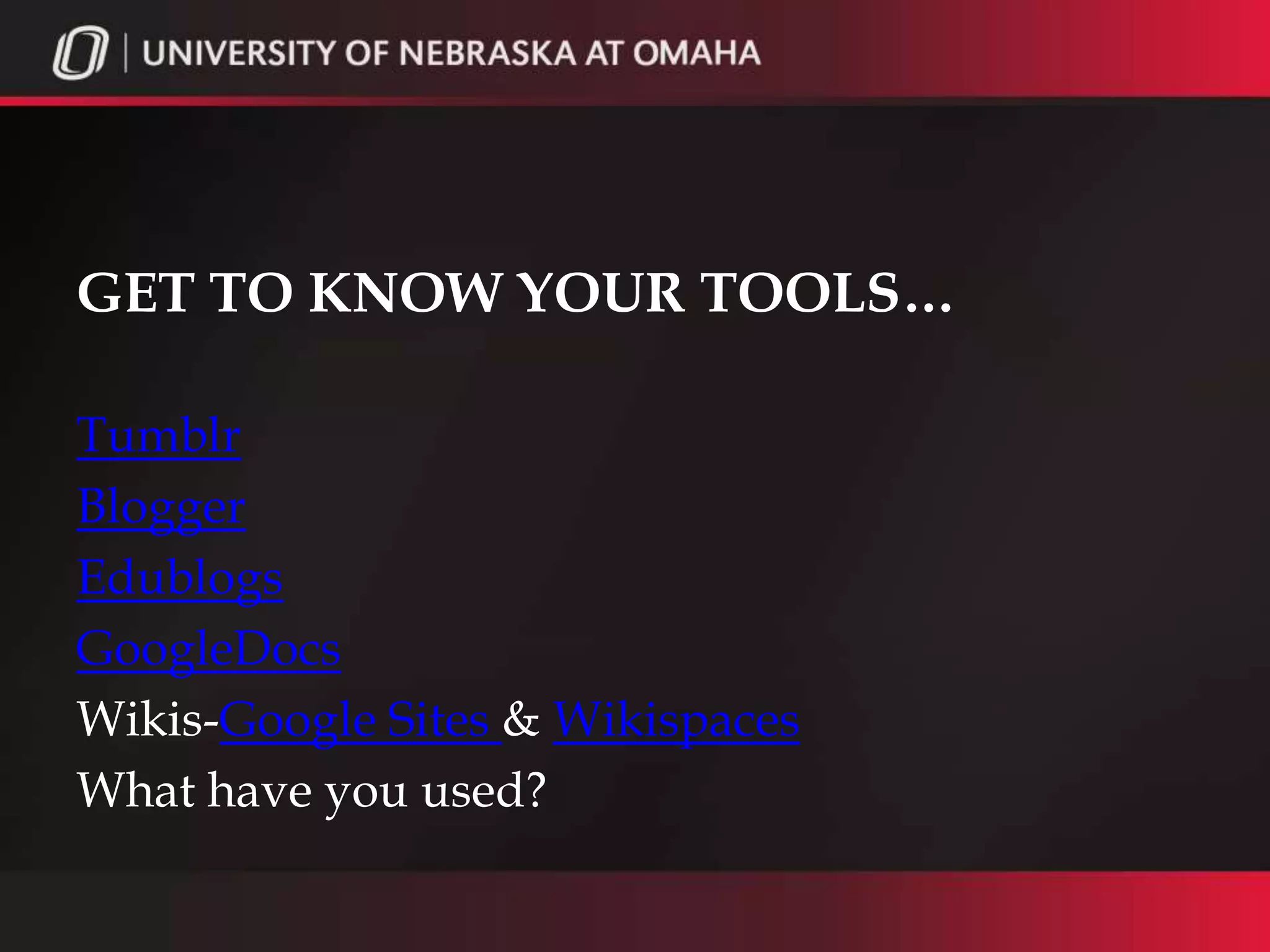
GET TO KNOW YOUR TOOLS…

Tumblr
Blogger
Edublogs
GoogleDocs
Wikis-Google Sites & Wikispaces
What have you used?
TOOLS & PEDAGOGY

Tools are not effective without good pedagogy.
Eight Tips for Facilitating Effective Online
Discussion Forums
EXAMPLES OF EXPECTATIONS

1. The Do’s and Don’t of Online Communication –
Collaborize Classroom
2. The Core Rules of Netiquette-Albion.com
3. Netiquette Guidelines-Paradigm Publishing

4. What expectations do you communicate with
students?
GOOD QUESTIONING

 -Eliminates plagiarism
 -Facilitates good discussion
 -Leads to Higher-Order thinking and analysis
QUESTIONING RESOURCES

McKenzie “Questioning Tool Kit”
  Jamie Mckenzie questioning research article:
  "Questioning as Technology”

  New Blooms Taxonomy
    “Bloom’s Taxonomy Blooms Digitally”
    Kathy Schrock’s Bloomin’ Google
ASSESSMENT OF DISCUSSIONS

Rubrics
Participation Points
What have you done? What works for you?
RUBRIC RESOURCES

Sample Rubric –University of Pittsburgh
Tips and Rubrics-Middle Tennessee State
University
Rubric example-University of Wisconsin-Stout
What type/style of rubrics work for you?
REFERENCES
Christopher, M., Thomas, J., & Tallent-Runnels, M. (2004, Spring). Raising the bar:
          Encouraging high level thinking in online discussion forums. Roeper
          Review, 26(3), 166-171. Retrieved from Teacher Reference Center database.
Discussion board tips and pedagogy [Information Sheet]. (n.d.). Retrieved September 7,
          2011, from Middle Tennessee State University website:
          http://frank.mtsu.edu/~webctsup/faculty/manual/
          WebCT_DiscussionBoard_Tips-Pedagogy.pdf
Frey, B. (n.d.). Rubric for asynchronous discussion participation [Rubric]. Retrieved
          September 9, 2011, from http://www.udel.edu/janet/MARC2006/
          ric.html
Im, Y., & Lee, O. (2003-2004, Winter). Pedagogical implications of online discussion
          for preservice teacher training. Journal of Research Technology in Education,
          36(2), 155-170. Retrieved from Teacher Reference Center database.
McKenzie, J. (1997, November/December). A questioning tookit. From Now On: The
          Educational Technology Journal, 7(3). Retrieved from http://fno.org/nov97/
          toolkit.html
McKenzie, J. (2003, April). Questioning as technology. From Now On: The
Educational         Technology Journal. Retrieved from
http://questioning.org/qtech.html
REFERENCES (CONT’D)
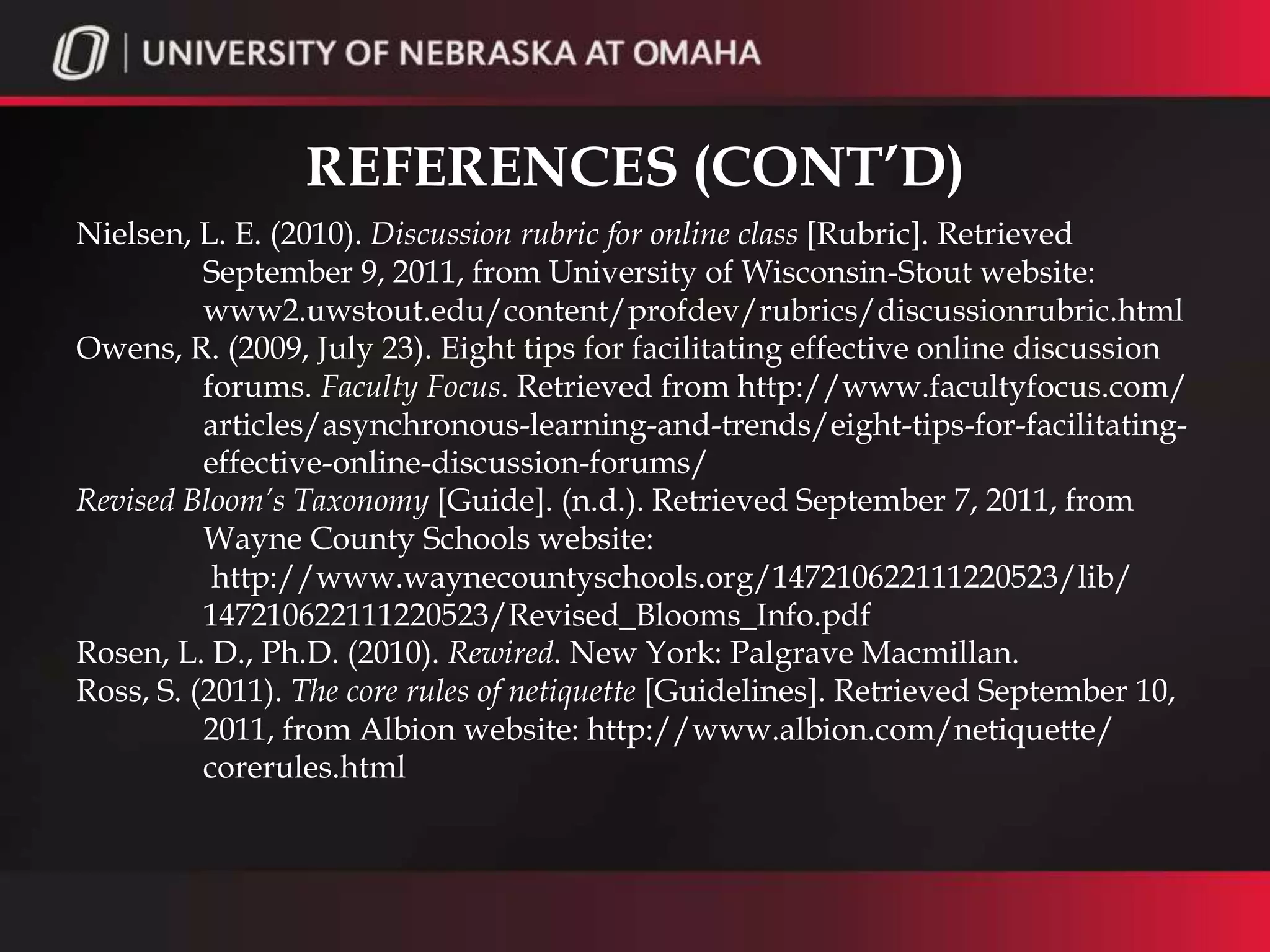
Nielsen, L. E. (2010). Discussion rubric for online class [Rubric]. Retrieved
          September 9, 2011, from University of Wisconsin-Stout website:
          www2.uwstout.edu/content/profdev/rubrics/discussionrubric.html
Owens, R. (2009, July 23). Eight tips for facilitating effective online discussion
          forums. Faculty Focus. Retrieved from http://www.facultyfocus.com/
          articles/asynchronous-learning-and-trends/eight-tips-for-facilitating-
          effective-online-discussion-forums/
Revised Bloom’s Taxonomy [Guide]. (n.d.). Retrieved September 7, 2011, from
          Wayne County Schools website:
           http://www.waynecountyschools.org/147210622111220523/lib/
          147210622111220523/Revised_Blooms_Info.pdf
Rosen, L. D., Ph.D. (2010). Rewired. New York: Palgrave Macmillan.
Ross, S. (2011). The core rules of netiquette [Guidelines]. Retrieved September 10,
          2011, from Albion website: http://www.albion.com/netiquette/
          corerules.html
REFERENCES (CONT’D)
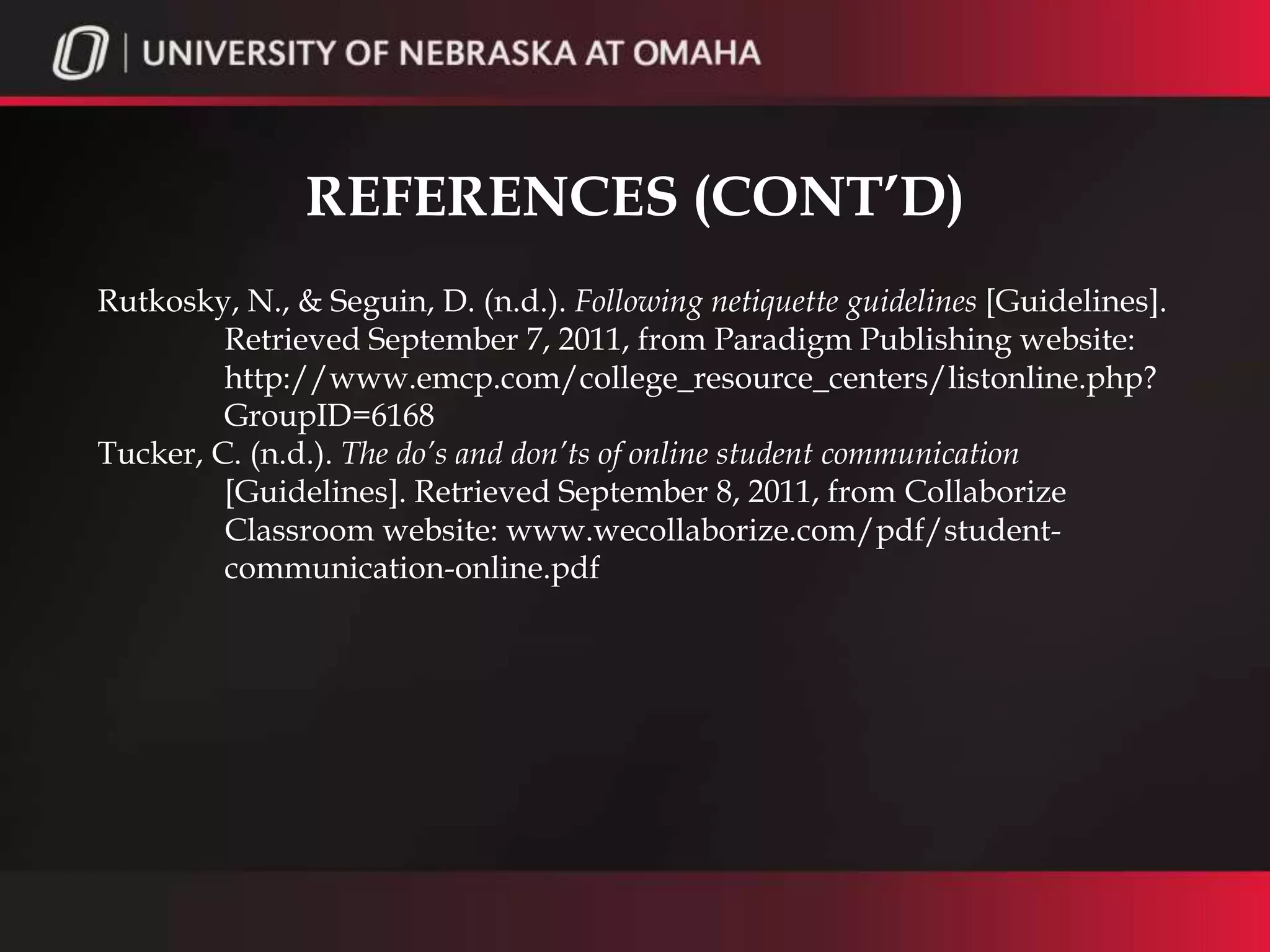
Rutkosky, N., & Seguin, D. (n.d.). Following netiquette guidelines [Guidelines].
         Retrieved September 7, 2011, from Paradigm Publishing website:
         http://www.emcp.com/college_resource_centers/listonline.php?
         GroupID=6168
Tucker, C. (n.d.). The do’s and don’ts of online student communication
         [Guidelines]. Retrieved September 8, 2011, from Collaborize
         Classroom website: www.wecollaborize.com/pdf/student-
         communication-online.pdf
Effective Discussion and web 2.0 tools

Effective Discussion and web 2.0 tools

  • 1.
    CREATING A BRIDGEBETWEEN EFFECTIVE DISCUSSION AND WEB 2.0 TOOLS Wendy Grojean College of Education IDEAS Room Coordinator wgrojean@unomaha.edu
  • 2.
    “Replace a paperand pencil with a laptop and online discussion and you may find that even the most reserved students are strong writing contributors. It is not the student. It is the tool. Find the right technological tool and writing now becomes fun, rather than a chore” (Rosen, 2010).
  • 3.
    GOALS OF ONLINEDISCUSSION -Add depth to in-class discussion -Give voice to quiet students -Engage students throughout reading and writing process -Others?
  • 4.
  • 5.
    GOALS VS. TOOL -Yourgoals need to stay at the forefront. -The tool must not be BIGGER than your goals -If the tool or assessment is too complicated, students spend more time navigating the tool than the content.
  • 6.
    BLOGS VS. WIKI Communication & Discussion Body of knowledge One to many-Teacher control Many to many Time sensitive & in-the-moment Stable and lasting News story Encyclopedia
  • 7.
    GET TO KNOWYOUR TOOLS… Tumblr Blogger Edublogs GoogleDocs Wikis-Google Sites & Wikispaces What have you used?
  • 8.
    TOOLS & PEDAGOGY Toolsare not effective without good pedagogy. Eight Tips for Facilitating Effective Online Discussion Forums
  • 9.
    EXAMPLES OF EXPECTATIONS 1.The Do’s and Don’t of Online Communication – Collaborize Classroom 2. The Core Rules of Netiquette-Albion.com 3. Netiquette Guidelines-Paradigm Publishing 4. What expectations do you communicate with students?
  • 10.
    GOOD QUESTIONING -Eliminatesplagiarism -Facilitates good discussion -Leads to Higher-Order thinking and analysis
  • 11.
    QUESTIONING RESOURCES McKenzie “QuestioningTool Kit” Jamie Mckenzie questioning research article: "Questioning as Technology” New Blooms Taxonomy “Bloom’s Taxonomy Blooms Digitally” Kathy Schrock’s Bloomin’ Google
  • 12.
    ASSESSMENT OF DISCUSSIONS Rubrics ParticipationPoints What have you done? What works for you?
  • 13.
    RUBRIC RESOURCES Sample Rubric–University of Pittsburgh Tips and Rubrics-Middle Tennessee State University Rubric example-University of Wisconsin-Stout What type/style of rubrics work for you?
  • 14.
    REFERENCES Christopher, M., Thomas,J., & Tallent-Runnels, M. (2004, Spring). Raising the bar: Encouraging high level thinking in online discussion forums. Roeper Review, 26(3), 166-171. Retrieved from Teacher Reference Center database. Discussion board tips and pedagogy [Information Sheet]. (n.d.). Retrieved September 7, 2011, from Middle Tennessee State University website: http://frank.mtsu.edu/~webctsup/faculty/manual/ WebCT_DiscussionBoard_Tips-Pedagogy.pdf Frey, B. (n.d.). Rubric for asynchronous discussion participation [Rubric]. Retrieved September 9, 2011, from http://www.udel.edu/janet/MARC2006/ ric.html Im, Y., & Lee, O. (2003-2004, Winter). Pedagogical implications of online discussion for preservice teacher training. Journal of Research Technology in Education, 36(2), 155-170. Retrieved from Teacher Reference Center database. McKenzie, J. (1997, November/December). A questioning tookit. From Now On: The Educational Technology Journal, 7(3). Retrieved from http://fno.org/nov97/ toolkit.html McKenzie, J. (2003, April). Questioning as technology. From Now On: The Educational Technology Journal. Retrieved from http://questioning.org/qtech.html
  • 15.
    REFERENCES (CONT’D) Nielsen, L.E. (2010). Discussion rubric for online class [Rubric]. Retrieved September 9, 2011, from University of Wisconsin-Stout website: www2.uwstout.edu/content/profdev/rubrics/discussionrubric.html Owens, R. (2009, July 23). Eight tips for facilitating effective online discussion forums. Faculty Focus. Retrieved from http://www.facultyfocus.com/ articles/asynchronous-learning-and-trends/eight-tips-for-facilitating- effective-online-discussion-forums/ Revised Bloom’s Taxonomy [Guide]. (n.d.). Retrieved September 7, 2011, from Wayne County Schools website: http://www.waynecountyschools.org/147210622111220523/lib/ 147210622111220523/Revised_Blooms_Info.pdf Rosen, L. D., Ph.D. (2010). Rewired. New York: Palgrave Macmillan. Ross, S. (2011). The core rules of netiquette [Guidelines]. Retrieved September 10, 2011, from Albion website: http://www.albion.com/netiquette/ corerules.html
  • 16.
    REFERENCES (CONT’D) Rutkosky, N.,& Seguin, D. (n.d.). Following netiquette guidelines [Guidelines]. Retrieved September 7, 2011, from Paradigm Publishing website: http://www.emcp.com/college_resource_centers/listonline.php? GroupID=6168 Tucker, C. (n.d.). The do’s and don’ts of online student communication [Guidelines]. Retrieved September 8, 2011, from Collaborize Classroom website: www.wecollaborize.com/pdf/student- communication-online.pdf