Effective Code Review
21 / 01 / 2020
What is code review?
Code review is systematic examination of computer source code. It is intended to
find mistakes overlooked in the initial development phase, improving the overall
quality of software.
Code Review is the most
important tool we have
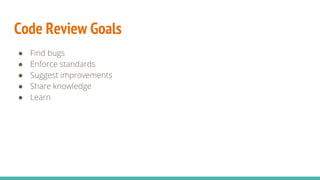
Code Review Goals
● Find bugs
● Enforce standards
● Suggest improvements
● Share knowledge
● Learn
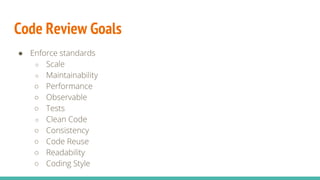
Code Review Goals
● Enforce standards
○ Scale
○ Maintainability
○ Performance
○ Observable
○ Tests
○ Clean Code
○ Consistency
○ Code Reuse
○ Readability
○ Coding Style
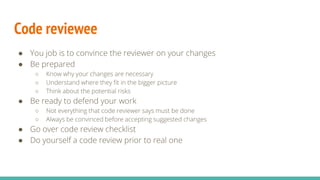
Code reviewee
● You job is to convince the reviewer on your changes
● Be prepared
○ Know why your changes are necessary
○ Understand where they fit in the bigger picture
○ Think about the potential risks
● Be ready to defend your work
○ Not everything that code reviewer says must be done
○ Always be convinced before accepting suggested changes
● Go over code review checklist
● Do yourself a code review prior to real one
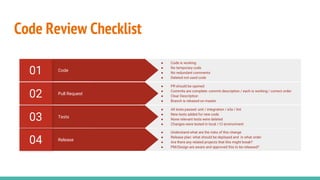
Code Review Checklist
Release
04
● Understand what are the risks of this change
● Release plan: what should be deployed and in what order
● Are there any related projects that this might break?
● PM/Design are aware and approved this to be released?
Tests
03
● All tests passed: unit / integration / e2e / lint
● New tests added for new code
● None relevant tests were deleted
● Changes were tested in local / CI environment
Code
01
● Code is working
● No temporary code
● No redundant comments
● Deleted not used code
Pull Request
02
● PR should be opened
● Commits are complete: commit description / each is working / correct order
● Clear Description
● Branch is rebased on master
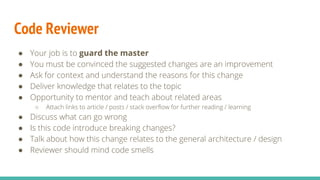
Code Reviewer
● Your job is to guard the master
● You must be convinced the suggested changes are an improvement
● Ask for context and understand the reasons for this change
● Deliver knowledge that relates to the topic
● Opportunity to mentor and teach about related areas
○ Attach links to article / posts / stack overflow for further reading / learning
● Discuss what can go wrong
● Is this code introduce breaking changes?
● Talk about how this change relates to the general architecture / design
● Reviewer should mind code smells
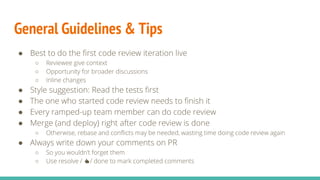
General Guidelines & Tips
● Best to do the first code review iteration live
○ Reviewee give context
○ Opportunity for broader discussions
○ Inline changes
● Style suggestion: Read the tests first
● The one who started code review needs to finish it
● Every ramped-up team member can do code review
● Merge (and deploy) right after code review is done
○ Otherwise, rebase and conflicts may be needed, wasting time doing code review again
● Always write down your comments on PR
○ So you wouldn’t forget them
○ Use resolve / 👍/ done to mark completed comments
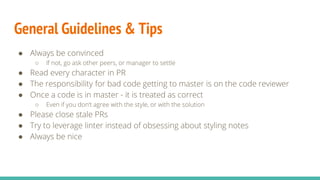
General Guidelines & Tips
● Always be convinced
○ If not, go ask other peers, or manager to settle
● Read every character in PR
● The responsibility for bad code getting to master is on the code reviewer
● Once a code is in master - it is treated as correct
○ Even if you don’t agree with the style, or with the solution
● Please close stale PRs
● Try to leverage linter instead of obsessing about styling notes
● Always be nice
Thanks!

Effective Code Review

  • 1.
  • 2.
    What is codereview? Code review is systematic examination of computer source code. It is intended to find mistakes overlooked in the initial development phase, improving the overall quality of software.
  • 3.
    Code Review isthe most important tool we have
  • 4.
    Code Review Goals ●Find bugs ● Enforce standards ● Suggest improvements ● Share knowledge ● Learn
  • 5.
    Code Review Goals ●Enforce standards ○ Scale ○ Maintainability ○ Performance ○ Observable ○ Tests ○ Clean Code ○ Consistency ○ Code Reuse ○ Readability ○ Coding Style
  • 6.
    Code reviewee ● Youjob is to convince the reviewer on your changes ● Be prepared ○ Know why your changes are necessary ○ Understand where they fit in the bigger picture ○ Think about the potential risks ● Be ready to defend your work ○ Not everything that code reviewer says must be done ○ Always be convinced before accepting suggested changes ● Go over code review checklist ● Do yourself a code review prior to real one
  • 7.
    Code Review Checklist Release 04 ●Understand what are the risks of this change ● Release plan: what should be deployed and in what order ● Are there any related projects that this might break? ● PM/Design are aware and approved this to be released? Tests 03 ● All tests passed: unit / integration / e2e / lint ● New tests added for new code ● None relevant tests were deleted ● Changes were tested in local / CI environment Code 01 ● Code is working ● No temporary code ● No redundant comments ● Deleted not used code Pull Request 02 ● PR should be opened ● Commits are complete: commit description / each is working / correct order ● Clear Description ● Branch is rebased on master
  • 8.
    Code Reviewer ● Yourjob is to guard the master ● You must be convinced the suggested changes are an improvement ● Ask for context and understand the reasons for this change ● Deliver knowledge that relates to the topic ● Opportunity to mentor and teach about related areas ○ Attach links to article / posts / stack overflow for further reading / learning ● Discuss what can go wrong ● Is this code introduce breaking changes? ● Talk about how this change relates to the general architecture / design ● Reviewer should mind code smells
  • 9.
    General Guidelines &Tips ● Best to do the first code review iteration live ○ Reviewee give context ○ Opportunity for broader discussions ○ Inline changes ● Style suggestion: Read the tests first ● The one who started code review needs to finish it ● Every ramped-up team member can do code review ● Merge (and deploy) right after code review is done ○ Otherwise, rebase and conflicts may be needed, wasting time doing code review again ● Always write down your comments on PR ○ So you wouldn’t forget them ○ Use resolve / 👍/ done to mark completed comments
  • 10.
    General Guidelines &Tips ● Always be convinced ○ If not, go ask other peers, or manager to settle ● Read every character in PR ● The responsibility for bad code getting to master is on the code reviewer ● Once a code is in master - it is treated as correct ○ Even if you don’t agree with the style, or with the solution ● Please close stale PRs ● Try to leverage linter instead of obsessing about styling notes ● Always be nice
  • 11.

Editor's Notes

  • #9 a code smell is “a hint that something has gone wrong somewhere in your code. Use the smell to track down the problem.”