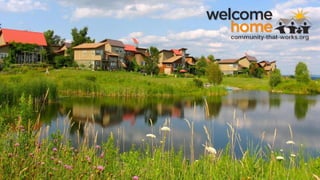
Building a Community That WorksBuilding a Community That Works
An EPA Climate Showcase Communities Project
Presented by Liz Walker & Ed MarxPresented by Liz Walker & Ed Marx
This presentation was developed under Assistant Agreement No.83495201 awarded by the U.S. Environmental Protection Agency. It has
not been formally reviewed by EPA. The views expressed are solely those of the Tompkins County Planning Department and the
EcoVillage at Ithaca Center for Sustainability Education and EPA does not endorse any products or commercial services mentioned.
“
”
We shouldn't build any community,We shouldn't build any community,
neighborhood or home today thatneighborhood or home today that
will be functionally obsolete in 20will be functionally obsolete in 20
years.years.
ED MARX, TOMPKINS COUNTY COMMISSIONER OF PLANNINGED MARX, TOMPKINS COUNTY COMMISSIONER OF PLANNING
Conventional homes
Conventional homes
Rethinking Our Homes, Rethinking Our CommunitiesRethinking Our Homes, Rethinking Our Communities
Where We Stand NowWhere We Stand Now
Environmental Impacts
Physical Health
Physical Health
Emotional HealthEmotional Health
Cluster housingCluster housing
Support transitSupport transit
SustainabilitySustainability
Economy, Health & EnvironmentEconomy, Health & Environment
green buildinggreen building
Reduce, reuse, recycleReduce, reuse, recycleReduce, reuse, recycleReduce, reuse, recycle
Local foodLocal foodLocal foodLocal food
Social support systemsSocial support systemsSocial support systemsSocial support systems
Increase densityIncrease density
Alternative energyAlternative energyAlternative energyAlternative energy
preserve landpreserve land
Car and ride sharingCar and ride sharing
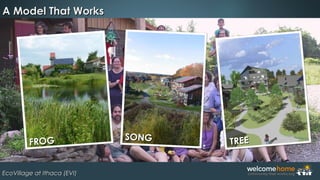
A Model That WorksA Model That Works
FROGFROG SONGSONG TREETREE
EcoVillage at Ithaca (EVI)EcoVillage at Ithaca (EVI)
“
”
We want to reduce our own carbon footprintWe want to reduce our own carbon footprint
and also be part of injecting the idea ofand also be part of injecting the idea of
sustainable, affordable, co-housing into thesustainable, affordable, co-housing into the
public consciousness.public consciousness.
MARK PIECHOTA AND PAT EVANS, EXCITED NEW MEMBERS OFMARK PIECHOTA AND PAT EVANS, EXCITED NEW MEMBERS OF
TREE AT EVITREE AT EVI
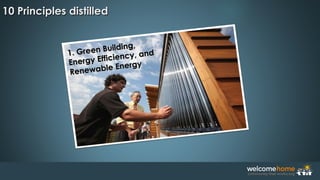
1. Green Building,
1. Green Building,
Energy Efficiency, and
Renewable Energy
Renewable Energy
10 Principles distilled10 Principles distilled
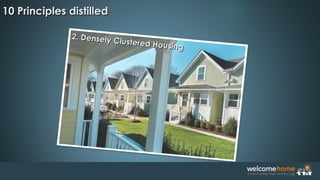
2. Densely Clustered Housing
10 Principles distilled10 Principles distilled
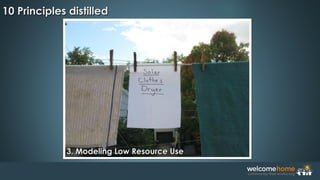
3. Modeling Low Resource Use3. Modeling Low Resource Use
10 Principles distilled10 Principles distilled
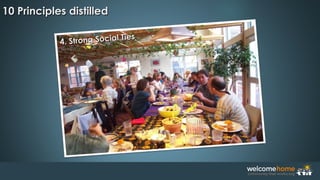
4. Strong Social Ties
10 Principles distilled10 Principles distilled
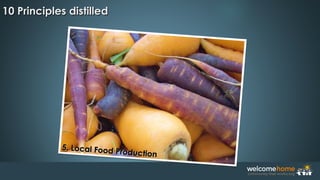
5. Local Food Production
10 Principles distilled10 Principles distilled
6. On-Site Businesses6. On-Site Businesses
10 Principles distilled10 Principles distilled
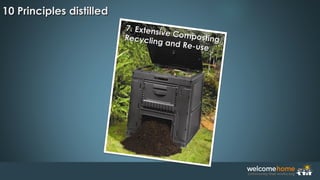
7. Extensive Composting,
7. Extensive Composting,Recycling and Re-use
Recycling and Re-use
10 Principles distilled10 Principles distilled
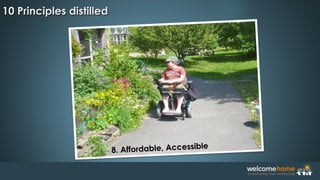
8. Affordable, Accessible8. Affordable, Accessible
10 Principles distilled10 Principles distilled
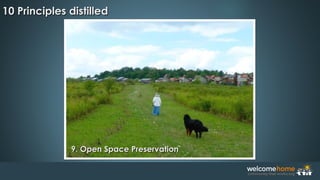
9. Open Space Preservation9. Open Space Preservation
10 Principles distilled10 Principles distilled
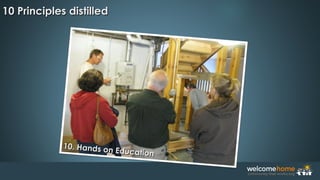
10. Hands on Education
10 Principles distilled10 Principles distilled
Success Story #1Success Story #1
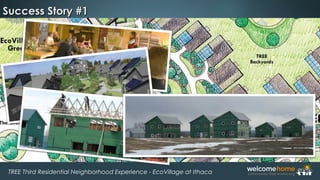
TREE Third Residential Neighborhood Experience - EcoVillage at Ithaca
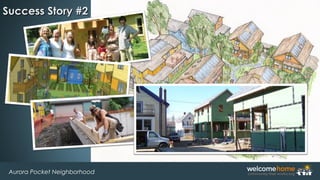
Success Story #2Success Story #2
Aurora Pocket Neighborhood
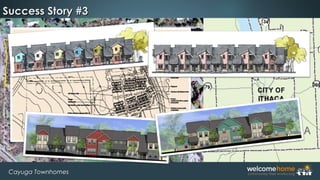
Success Story #3Success Story #3
Cayuga Townhomes
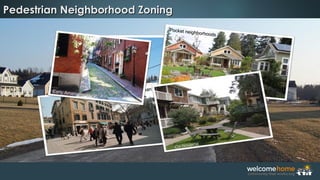
Pocket neighborhoods
Pedestrian Neighborhood ZoningPedestrian Neighborhood Zoning
Pre-18Pre-18thth century European cities
century European cities
Early American cities
Co-housing
Co-housing
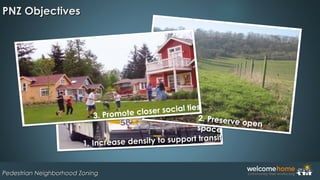
PNZ ObjectivesPNZ Objectives
Pedestrian Neighborhood ZoningPedestrian Neighborhood Zoning
1. Increase density to support transit
2. Preserve openspace
3. Promote closer social ties
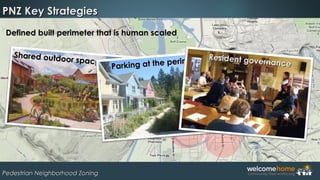
PNZ Key StrategiesPNZ Key Strategies
Pedestrian Neighborhood ZoningPedestrian Neighborhood Zoning
Defined built perimeter that is human scaledDefined built perimeter that is human scaled
Shared outdoor space
Parking at the perimeter
Parking at the perimeter Resident governance
Resident governance
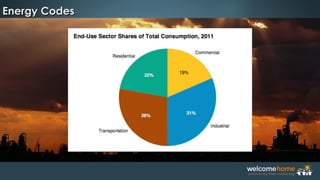
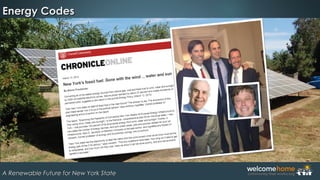
Energy CodesEnergy Codes
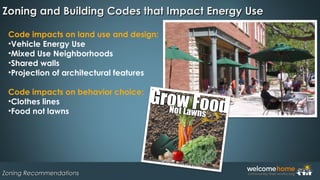
Zoning and Building Codes that Impact Energy UseZoning and Building Codes that Impact Energy Use
Zoning RecommendationsZoning Recommendations
Code impacts on land use and design:
•Vehicle Energy Use
•Mixed Use Neighborhoods 
•Shared walls 
•Projection of architectural features
Code impacts on behavior choice:
•Clothes lines
•Food not lawns 
 
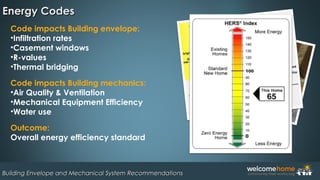
Energy CodesEnergy Codes
Building Envelope and Mechanical System RecommendationsBuilding Envelope and Mechanical System Recommendations
Code impacts Building envelope:
•Infiltration rates
•Casement windows 
•R-values
•Thermal bridging
Code impacts Building mechanics:
•Air Quality & Ventilation 
•Mechanical Equipment Efficiency 
•Water use
Outcome:
Overall energy efficiency standard
Energy CodesEnergy Codes
A Renewable Future for New York StateA Renewable Future for New York State
“
”
It's not too late at all.  You just don't
yet know what you are capable
of.
MAHATMA GANDHI
Project TeamProject Team
www.community-that-works.orgwww.community-that-works.org
Liz Walker -Liz Walker - liz@ecovillage.ithaca.ny.us
Ed Marx -Ed Marx - emarx@tompkins-co.org
Katie BorgellaKatie Borgella
Rob MoracheRob Morache
Sue CosentiniSue Cosentini
Linda CopmanLinda Copman
Consultant:Consultant:
STREAM CollaborativeSTREAM Collaborative
CSCR Government #4: Climate Showcase Communities.  Ed Marx, TCPD.

CSCR Government #4: Climate Showcase Communities. Ed Marx, TCPD.

  • 1.
    Building a CommunityThat WorksBuilding a Community That Works An EPA Climate Showcase Communities Project Presented by Liz Walker & Ed MarxPresented by Liz Walker & Ed Marx This presentation was developed under Assistant Agreement No.83495201 awarded by the U.S. Environmental Protection Agency. It has not been formally reviewed by EPA. The views expressed are solely those of the Tompkins County Planning Department and the EcoVillage at Ithaca Center for Sustainability Education and EPA does not endorse any products or commercial services mentioned.
  • 2.
    “ ” We shouldn't buildany community,We shouldn't build any community, neighborhood or home today thatneighborhood or home today that will be functionally obsolete in 20will be functionally obsolete in 20 years.years. ED MARX, TOMPKINS COUNTY COMMISSIONER OF PLANNINGED MARX, TOMPKINS COUNTY COMMISSIONER OF PLANNING
  • 3.
    Conventional homes Conventional homes RethinkingOur Homes, Rethinking Our CommunitiesRethinking Our Homes, Rethinking Our Communities Where We Stand NowWhere We Stand Now Environmental Impacts Environmental Impacts Physical Health Physical Health Emotional HealthEmotional Health
  • 4.
    Cluster housingCluster housing SupporttransitSupport transit SustainabilitySustainability Economy, Health & EnvironmentEconomy, Health & Environment green buildinggreen building Reduce, reuse, recycleReduce, reuse, recycleReduce, reuse, recycleReduce, reuse, recycle Local foodLocal foodLocal foodLocal food Social support systemsSocial support systemsSocial support systemsSocial support systems Increase densityIncrease density Alternative energyAlternative energyAlternative energyAlternative energy preserve landpreserve land Car and ride sharingCar and ride sharing
  • 5.
    A Model ThatWorksA Model That Works FROGFROG SONGSONG TREETREE EcoVillage at Ithaca (EVI)EcoVillage at Ithaca (EVI)
  • 6.
    “ ” We want toreduce our own carbon footprintWe want to reduce our own carbon footprint and also be part of injecting the idea ofand also be part of injecting the idea of sustainable, affordable, co-housing into thesustainable, affordable, co-housing into the public consciousness.public consciousness. MARK PIECHOTA AND PAT EVANS, EXCITED NEW MEMBERS OFMARK PIECHOTA AND PAT EVANS, EXCITED NEW MEMBERS OF TREE AT EVITREE AT EVI
  • 7.
    1. Green Building, 1.Green Building, Energy Efficiency, and Energy Efficiency, and Renewable Energy Renewable Energy 10 Principles distilled10 Principles distilled
  • 8.
    2. Densely ClusteredHousing 2. Densely Clustered Housing 10 Principles distilled10 Principles distilled
  • 9.
    3. Modeling LowResource Use3. Modeling Low Resource Use 10 Principles distilled10 Principles distilled
  • 10.
    4. Strong SocialTies 4. Strong Social Ties 10 Principles distilled10 Principles distilled
  • 11.
    5. Local FoodProduction 5. Local Food Production 10 Principles distilled10 Principles distilled
  • 12.
    6. On-Site Businesses6.On-Site Businesses 10 Principles distilled10 Principles distilled
  • 13.
    7. Extensive Composting, 7.Extensive Composting,Recycling and Re-use Recycling and Re-use 10 Principles distilled10 Principles distilled
  • 14.
    8. Affordable, Accessible8.Affordable, Accessible 10 Principles distilled10 Principles distilled
  • 15.
    9. Open SpacePreservation9. Open Space Preservation 10 Principles distilled10 Principles distilled
  • 16.
    10. Hands onEducation 10. Hands on Education 10 Principles distilled10 Principles distilled
  • 17.
    Success Story #1SuccessStory #1 TREE Third Residential Neighborhood Experience - EcoVillage at Ithaca
  • 18.
    Success Story #2SuccessStory #2 Aurora Pocket Neighborhood
  • 19.
    Success Story #3SuccessStory #3 Cayuga Townhomes
  • 20.
    Pocket neighborhoods Pocket neighborhoods PedestrianNeighborhood ZoningPedestrian Neighborhood Zoning Pre-18Pre-18thth century European cities century European cities Early American cities Early American cities Co-housing Co-housing
  • 21.
    PNZ ObjectivesPNZ Objectives PedestrianNeighborhood ZoningPedestrian Neighborhood Zoning 1. Increase density to support transit 1. Increase density to support transit 2. Preserve openspace 3. Promote closer social ties
  • 22.
    PNZ Key StrategiesPNZKey Strategies Pedestrian Neighborhood ZoningPedestrian Neighborhood Zoning Defined built perimeter that is human scaledDefined built perimeter that is human scaled Shared outdoor space Shared outdoor space Parking at the perimeter Parking at the perimeter Resident governance Resident governance
  • 23.
  • 24.
    Zoning and BuildingCodes that Impact Energy UseZoning and Building Codes that Impact Energy Use Zoning RecommendationsZoning Recommendations Code impacts on land use and design: •Vehicle Energy Use •Mixed Use Neighborhoods  •Shared walls  •Projection of architectural features Code impacts on behavior choice: •Clothes lines •Food not lawns   
  • 25.
    Energy CodesEnergy Codes BuildingEnvelope and Mechanical System RecommendationsBuilding Envelope and Mechanical System Recommendations Code impacts Building envelope: •Infiltration rates •Casement windows  •R-values •Thermal bridging Code impacts Building mechanics: •Air Quality & Ventilation  •Mechanical Equipment Efficiency  •Water use Outcome: Overall energy efficiency standard
  • 26.
    Energy CodesEnergy Codes ARenewable Future for New York StateA Renewable Future for New York State
  • 27.
    “ ” It's not toolate at all.  You just don't yet know what you are capable of. MAHATMA GANDHI
  • 28.
    Project TeamProject Team www.community-that-works.orgwww.community-that-works.org LizWalker -Liz Walker - liz@ecovillage.ithaca.ny.us Ed Marx -Ed Marx - emarx@tompkins-co.org Katie BorgellaKatie Borgella Rob MoracheRob Morache Sue CosentiniSue Cosentini Linda CopmanLinda Copman Consultant:Consultant: STREAM CollaborativeSTREAM Collaborative

Editor's Notes

  • #3 Kick off message.: We want to demonstrate how governments, developers, and consumers can all be part of building a sustainable community that works. We are aiming for a high quality of life w/ extremely efficient resource use There is a model that includes all of these features and we have it now. Through 20 years of experience at EVI, the community has developed core principles that can be adopted in any community. There are two storylines - Tompkins County (government planning) and EVI (a sustainable community) coming together for a shared vision.
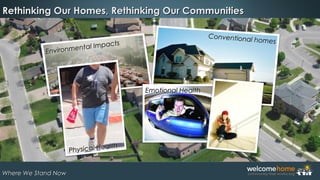
  • #4 This is where we are today. The paradigm is shifting. Can we continue to live in the state of isolation and insatiable - desire for MORE - that we have fostered? “ Green costs too much” “ I want my privacy and control” These disconnected perceptions and desires drive our unsustainable lifestyles devoid of community. Following the path of where we stand now is fundamentally unsustainable for the planet and the people.
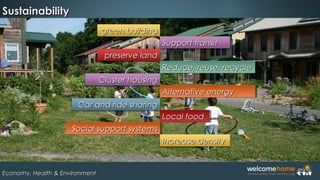
  • #5 People Planet Profit OR Economy Equity Ecology OR Economy Health Environment – different ways of saying the same thing…SUSTAINABILITY! We are choosing the terms Economy Health and Environment to keep the message simple and mainstream. How do these principles, demonstrated at EVI, affect our economic bottom line, our physical and mental health, and our local environment. This Welcome Home project started thinking about some of the core ideas surrounding the sustainability movement. We are brining together the key stakeholders to invest in the process of developing actionable steps toward building a community that works.
  • #6 What is the model and How does it work? The model we are promoting is based largely on the research that has come out of 20 years of studying EcoVillage at Ithaca. Let’s discover the lessons learned and then try to distill those into the core principles of creating a Community That Works! These are folks from FROG, the original neighborhood at EVI. Since that time the community has grown with the addition of a second neighborhood and now a third which is under construction.
  • #18 Verbally describe some of the features of TREE.
  • #21 Philosophical framework If a person experiences a built environment as a coherent whole, then the sense of place, feeling of belonging and experience of community is enhanced. Zoning is one major obstacle – our laws mandate some of the ugly and inefficient housing we have today. We are writing new policies which can be adopted by local municipalities These policies include a new pedestrian neighborhood zoning overlay and enhanced energy code which will allow developers to build sustainably.
  • #22 The PNZ supports the emergence of Communities that Work by offering municipalities a zoning structure that promotes: Increasing  density in urban areas so as to support transit and walkable communities Focusing  density in rural/sub-urban areas so as to preserve land and promote closer social ties
  • #23 Key strategies: Defined, yet permeable built perimeter that reinforces a welcoming sense of place but does not encourage sprawl A PNZ begins with planning around the 5 minute walk or approximately a ¼ mile distance. Most of our existing neighborhoods (in the Northeast) were planned around this concept and these are typically our most vibrant neighborhoods today. Human scaled walking distances, lot sizes and building sizes Shared outdoor space that is not disrupted by vehicles (pedestrian oriented space slide) Parking at the perimeter (on-street in urban locations) Resident governance and/or some kind of creative control Overall goal as a result of using these strategies: The goal is to promote higher density, energy-conscious, people-centered developments within the existing framework of predominantly automobile-centered zoning. The PNZ is a “floating zone” to be overlaid onto parcels within existing zones where focused density is deemed appropriate by a municipality The PNZ covers core principles, key definitions and standards. If a PNZ is applied we can achieve results like the ones demonstrated today and shown here. All of which would be illegal under our current zoning.
  • #24 Our buildings use about 41% of all energy in the US. Residential buildings account for 22% plus a significant portion of the energy used for transportation. How can we take the principles of EVI and develop an energy code that takes us beyond minimum state building code requirements?
  • #25 What are the impacts of existing codes on the physical infrastructure of communities? Mixed Use Neighborhoods: If all the needs of daily life are accessible within a 10 minute walk, vehicle use will further diminish. It is recommended that all neighborhoods be zoned so as to encourage the development of mixed uses. What are the impacts of existing codes on behavior choices that are available to us? Food not Lawns: EVI and APN best practices include provisions for on-site food production. This saves energy involved in agriculture and food distribution, and makes households more resilient. However, many communities restrict vegetable gardening to rear yards and mandate lawns and certain styles of landscaping in front yards
  • #26 What are the code impacts on our building envelopes? Infiltration Rates: Current code allows 7 air changes per hour at a pressure of 50 Pascals (7ACH50). Climate Showcase homes are striving for the Passivhaus target of .6ACH50, and APN homes have reached .41ACH50, though at a cost that may be prohibitive for the mainstream. INHS uses more mainstream construction techniques and regularly achieves an infiltration rate of 2ACH50, which seems like a reasonable compromise. It is recommended that the maximum air infiltration rate be set at 2ACH50 for new construction. Thermal Bridging: Climate Showcase homes pay close attention to thermal bridging within the wall. Because of the wide variety of materials and wall systems available to builders, it is difficult to make a specific recommendation, other than that guidelines similar to those proposed for windows be introduced. What are the code impacts on the mechanical systems of our built homes? Air quality & ventilation: making our buildings too tight requires mechanical ventilation but this must be done carefully in order to be energy efficient. Desired outcome: Overall Efficiency: Though this requires actual testing which can increase cost, it could be a recommendation that new buildings achieve a HERS rating of 55 or less. INHS construction regularly tests at 50-52, so this is achievable at reasonable cost.
  • #27 An exciting and very encouraging study just released in March by Cornell and Stanford outlines a path toward a 100% Renewable Energy Future for NY State by 2030. The plan could be possible across the country. Thanks to the three Marks - Mark Jacobson, Mark Ruffalo and Marco Krapels.
  • #29 urls, contact info