ECSS-Q-ST-70-38C
                                         31 July 2008


Space product
assurance
High-reliability soldering for
surface-mount and mixed
technology


                                   ECSS Secretariat
                                        ESA-ESTEC
                  Requirements & Standards Division
                         Noordwijk, The Netherlands
ECSS‐Q‐ST‐70‐38C 
                                                                                                 31 July 2008 


Foreword
This  Standard  is  one  of  the  series  of  ECSS  Standards  intended  to  be  applied  together  for  the 
management,  engineering  and  product  assurance  in  space  projects  and  applications.  ECSS  is  a 
cooperative  effort  of  the  European  Space  Agency,  national  space  agencies  and  European  industry 
associations for the purpose of developing and maintaining common standards. Requirements in this 
Standard are defined in terms of what shall be accomplished, rather than in terms of how to organize 
and  perform  the  necessary  work.  This  allows  existing  organizational  structures  and  methods  to  be 
applied where they are effective, and for the structures and methods to evolve as necessary without 
rewriting the standards. 
This Standard has been prepared by the ECSS Executive Secretariat, reviewed by the Document and 
Discipline Focal point, and approved by the ECSS Technical Authority. 


Disclaimer
ECSS does not provide any warranty whatsoever, whether expressed, implied, or statutory, including, 
but not limited to, any warranty of merchantability or fitness for a particular purpose or any warranty 
that  the  contents  of  the  item  are  error‐free.  In  no  respect  shall  ECSS  incur  any  liability  for  any 
damages, including, but not limited to, direct, indirect, special, or consequential damages arising out 
of,  resulting  from,  or  in  any  way  connected  to  the  use  of  this  Standard,  whether  or  not  based  upon 
warranty, business agreement, tort, or otherwise; whether or not injury was sustained by persons or 
property or otherwise; and whether or not loss was sustained from, or arose out of, the results of, the 
item, or any services that may be provided by ECSS. 


Published by:     ESA Requirements and Standards Division 
                  ESTEC, P.O. Box 299,
                  2200 AG Noordwijk
                  The Netherlands
Copyright:        2008 © by the European Space Agency for the members of ECSS 


                                                                                                                  2 
ECSS‐Q‐ST‐70‐38C 
                                                            31 July 2008 


                                                      Change log


ECSS‐Q‐70‐38A          First issue 
26 October 2007 
ECSS‐Q‐70‐38A rev.1    Second issue 
5 December 2006        Requirement 14.9.2 d. added 
ECSS‐Q‐70‐38B          Never issued 
 
ECSS‐Q‐ST‐70‐38C       Third issue 
31 July 2008           Editorial changes. 


                                                                       3 
ECSS‐Q‐ST‐70‐38C 
                                                                                                                     31 July 2008 


                                                                                        Table of contents

Change log .................................................................................................................. 3

Introduction............................................................................................................... 13

1 Scope ...................................................................................................................... 15

2 Normative references............................................................................................ 17

3 Terms, definitions and abbreviated terms .......................................................... 18
    3.1     Terms from other standards ..................................................................................... 18
    3.2     Terms specific to the present standard .................................................................... 18
    3.3     Abbreviated terms .................................................................................................... 19

4 Principles of reliable soldered connections....................................................... 21

5 Process identification document (PID) ............................................................... 22
    5.1     General..................................................................................................................... 22
            5.1.1        Purpose ...................................................................................................... 22
            5.1.2        Document preparation ................................................................................ 22
            5.1.3        Content ....................................................................................................... 22
            5.1.4        Approval ..................................................................................................... 22
    5.2     Production control .................................................................................................... 23
    5.3     Process identification document updating ................................................................ 23

6 Preparatory conditions ......................................................................................... 24
    6.1     Calibration ................................................................................................................ 24
    6.2     Facility cleanliness ................................................................................................... 24
    6.3     Environmental conditions ......................................................................................... 24
    6.4     Precautions against static charges........................................................................... 24
    6.5     Lighting requirements ............................................................................................... 24
    6.6     Equipment and tools................................................................................................. 24
            6.6.1        Brushes ...................................................................................................... 24
            6.6.2        Pliers........................................................................................................... 24
            6.6.3        Bending tools.............................................................................................. 24


                                                                                                                                           4 
ECSS‐Q‐ST‐70‐38C 
                                                                                                                    31 July 2008 
           6.6.4        Clinching tools ............................................................................................ 25
           6.6.5        Insulation strippers ..................................................................................... 25
           6.6.6        Soldering tools............................................................................................ 25
           6.6.7        Soldering irons and resistance soldering equipment.................................. 25
           6.6.8        Non-contact heat sources........................................................................... 25
           6.6.9        Solder pots and baths................................................................................. 25
   6.7     Soldering machines and equipment ......................................................................... 25
           6.7.1        General....................................................................................................... 25
           6.7.2        Dynamic wave-solder machines................................................................. 26
           6.7.3        Condensation (vapour phase) reflow machines ......................................... 26
           6.7.4        Hot gas reflow machines ............................................................................ 27
           6.7.5        Shorted bar and parallel gap resistance reflow machines.......................... 27
           6.7.6        Convection and radiation reflow systems ................................................... 27
           6.7.7        Other equipment for reflow soldering ......................................................... 28
   6.8     Ancillary equipment .................................................................................................. 28
           6.8.1        General....................................................................................................... 28
           6.8.2        Solder deposition equipment ...................................................................... 28
           6.8.3        Automatic device placement equipment..................................................... 28
           6.8.4        Cleaning equipment and systems .............................................................. 28
           6.8.5        Cleanliness testing equipment.................................................................... 29
           6.8.6        Magnification aids....................................................................................... 29
           6.8.7        X-ray inspection equipment ........................................................................ 29
           6.8.8        Metallographic equipment .......................................................................... 29

7 Material selection .................................................................................................. 30
   7.1     General..................................................................................................................... 30
   7.2     Solder ....................................................................................................................... 30
           7.2.1        Form ........................................................................................................... 30
           7.2.2        Composition................................................................................................ 30
           7.2.3        Solder paste ............................................................................................... 30
           7.2.4        Maintenance of paste purity ....................................................................... 31
   7.3     Flux...........................................................................................................................32
           7.3.1        Rosin based flux ......................................................................................... 32
           7.3.2        Corrosive acid flux ...................................................................................... 32
           7.3.3        Flux controls for wave-soldering equipment ............................................... 32
   7.4     Solvents.................................................................................................................... 32
   7.5     Flexible insulation materials ..................................................................................... 32
   7.6     Terminals.................................................................................................................. 32


                                                                                                                                          5 
ECSS‐Q‐ST‐70‐38C 
                                                                                                                    31 July 2008 
   7.7     Wires ........................................................................................................................ 32
   7.8     Printed circuit substrates .......................................................................................... 32
           7.8.1        Selection..................................................................................................... 32
           7.8.2        Class 1 - Non-compensated printed circuit board ...................................... 33
           7.8.3        Class 2 - Ceramic substrates ..................................................................... 33
           7.8.4        Class 3 - Compensated printed circuit board ............................................. 33
           7.8.5        Class 4 - Compensated printed circuit board ............................................. 33
           7.8.6        Class 5 - Compensated printed circuit board ............................................. 34
   7.9     Components ............................................................................................................. 34
           7.9.1        General....................................................................................................... 34
           7.9.2        Active components ..................................................................................... 35
           7.9.3        Moisture sensitive components .................................................................. 35
           7.9.4        Passive components .................................................................................. 35
   7.10 Adhesives (staking compounds and heat sinking), encapsulants and
        conformal coatings ................................................................................................... 36

8 Preparation for soldering...................................................................................... 37
   8.1     Preparation of devices and terminals ....................................................................... 37
           8.1.1        Preparation of wires and terminals ............................................................. 37
           8.1.2        Preparation of surfaces to be soldered....................................................... 37
           8.1.3        Degolding and pretinning of conductors ..................................................... 37
           8.1.4        Alloying of pure tin finish............................................................................. 37
   8.2     Preparation of solder bit ........................................................................................... 37
   8.3     Handling ................................................................................................................... 37
   8.4     Storage..................................................................................................................... 38
   8.5     Baking of PCBs and moisture sensitive components ............................................... 38

9 Mounting of devices prior to soldering............................................................... 39
   9.1     General requirements............................................................................................... 39
   9.2     Lead bending and cutting requirements ................................................................... 39
   9.3     Mounting of terminals to PCBs ................................................................................. 39
   9.4     Lead attachment to through holes ............................................................................ 39
   9.5     Mounting of components to terminals ...................................................................... 39
   9.6     Mounting of connectors to PCBs.............................................................................. 39
   9.7     Surface mount requirements .................................................................................... 39
           9.7.1        General....................................................................................................... 39
           9.7.2        Stress relief................................................................................................. 40
           9.7.3        Registration of devices and pads ............................................................... 40
           9.7.4        Lead forming............................................................................................... 40


                                                                                                                                          6 
ECSS‐Q‐ST‐70‐38C 
                                                                                                                 31 July 2008 
           9.7.5        Mounting devices in solder paste ............................................................... 41
           9.7.6        Leadless devices ........................................................................................ 41
           9.7.7        Leaded devices .......................................................................................... 42
           9.7.8        Area array devices...................................................................................... 42
           9.7.9        Staking of heavy devices............................................................................ 42

10 Attachment of conductors to terminals, solder cups and cables.................. 43

11 Soldering to terminals and printed circuit boards........................................... 44
   11.1 General..................................................................................................................... 44
   11.2 Solder application to terminals ................................................................................. 44
   11.3 Solder applications to PCBs ..................................................................................... 44
   11.4 Wicking ..................................................................................................................... 44
   11.5 Soldering of SMDs ................................................................................................... 44
           11.5.1       General requirements................................................................................. 44
           11.5.2       End-capped and end-metallized devices.................................................... 45
           11.5.3       Bottom terminated chip devices ................................................................. 46
           11.5.4       Cylindrical end-capped devices.................................................................. 46
           11.5.5       Castellated chip carrier devices.................................................................. 47
           11.5.6       Devices with round, flattened, ribbon, “L” and gull-wing leads ................... 48
           11.5.7       Devices with “J” leads................................................................................. 49
           11.5.8       Area array devices...................................................................................... 49
   11.6 Tall profile devices.................................................................................................... 51
   11.7 Staking of solder assembly ...................................................................................... 52
   11.8 Underfill .................................................................................................................... 52

12 Cleaning of PCB assemblies .............................................................................. 53
   12.1 General..................................................................................................................... 53
   12.2 Ultrasonic cleaning ................................................................................................... 53
   12.3 Monitoring for cleanliness......................................................................................... 53

13 Final inspection ................................................................................................... 54
   13.1 General..................................................................................................................... 54
   13.2 Acceptance criteria ................................................................................................... 54
   13.3 Visual rejection criteria ............................................................................................. 55
   13.4 X-ray rejection criteria for area array devices........................................................... 55
   13.5 Warp and twist of populated boards......................................................................... 56
   13.6 Inspection records .................................................................................................... 56

14 Verification procedure ........................................................................................ 57


                                                                                                                                       7 
ECSS‐Q‐ST‐70‐38C 
                                                                                                                  31 July 2008 
   14.1 General..................................................................................................................... 57
   14.2 Verification by similarity ............................................................................................ 58
   14.3 Verification test programme ..................................................................................... 58
   14.4 Electrical testing of passive components ................................................................. 61
   14.5 Vibration ................................................................................................................... 61
   14.6 Temperature cycling test .......................................................................................... 61
   14.7 Microsection ............................................................................................................. 61
   14.8 Dye penetrant test .................................................................................................... 62
   14.9 Special verification testing for conformally coated area array packages.................. 62
           14.9.1       Introduction................................................................................................. 62
           14.9.2       Provisions ................................................................................................... 62
   14.10 Failures after verification testing............................................................................... 63
   14.11 Approval of verification ............................................................................................. 64
   14.12 Withdrawal of approval status .................................................................................. 65

15 Quality assurance................................................................................................ 66
   15.1 General..................................................................................................................... 66
   15.2 Data.......................................................................................................................... 66
   15.3 Nonconformance ...................................................................................................... 66
   15.4 Calibration ................................................................................................................ 66
   15.5 Traceability ............................................................................................................... 66
   15.6 Workmanship standards........................................................................................... 66
   15.7 Inspection ................................................................................................................. 66
   15.8 Operator and inspector training and certification...................................................... 67
   15.9 Quality records ......................................................................................................... 67

16 Visual and X-ray workmanship standards........................................................ 68
   16.1 Workmanship illustrations for standard SMDs.......................................................... 68
           16.1.1       Chip components........................................................................................ 68
           16.1.2       MELF components ..................................................................................... 70
           16.1.3       Ribbon, “L” and Gull-wing leaded devices.................................................. 71
           16.1.4       Miscellaneous soldering defects................................................................. 72
   16.2 Workmanship illustrations for ball grid array devices ............................................... 73
   16.3 Workmanship illustrations for column grid array devices ......................................... 77
   16.4 Microsection examples ............................................................................................. 84
   16.5 Accept and reject criteria after environmental testing............................................... 87

Annex A (informative) Verification approval ......................................................... 93
   A.1     General..................................................................................................................... 93


                                                                                                                                        8 
ECSS‐Q‐ST‐70‐38C 
                                                                                                                  31 July 2008 
   A.2     Methodology of approval .......................................................................................... 93
           A.2.1        Request for verification............................................................................... 93
           A.2.2        Technology sample .................................................................................... 94
           A.2.3        Audit of assembly processing..................................................................... 94
           A.2.4        Verification programme .............................................................................. 94
           A.2.5        Verification by similarity .............................................................................. 95

Annex B (informative) Examples of SMT summary tables .................................. 96

Annex C (informative) Soldering of area array devices ..................................... 101
   C.1     General................................................................................................................... 101
   C.2     Solder joint ............................................................................................................. 101
           C.2.1        General..................................................................................................... 101
           C.2.2        Voids......................................................................................................... 101
           C.2.3        Solder fillets to high temperature balls ..................................................... 102
           C.2.4        Solder fillets to solder columns................................................................. 102
           C.2.5        Increase of the melting point of solder...................................................... 103
           C.2.6        Cold solder ............................................................................................... 103
           C.2.7        Brittle fractures ......................................................................................... 103
   C.3     Removal and replacement of area array devices ................................................... 104
           C.3.1        General..................................................................................................... 104
           C.3.2        PCB design guidelines for facilitating removal and replacement.............. 104
           C.3.3        Pre-baking assemblies and devices ......................................................... 104
           C.3.4        Device removal......................................................................................... 105
           C.3.5        Device replacement.................................................................................. 105
   C.4     Inspection techniques............................................................................................. 106
           C.4.1        Overview................................................................................................... 106
           C.4.2        Visual inspection....................................................................................... 106
           C.4.3        X-ray inspection........................................................................................ 106
           C.4.4        Microsectioning of solder joints ................................................................ 107
           C.4.5        Dye penetrant analysis ............................................................................. 108
   C.5     Verification testing .................................................................................................. 108

Annex D Example of an SMT audit report............................................................ 109

Annex E (informative) Additional information..................................................... 115
   E.1     X-Ray inspection equipment (to 6.8.7) ................................................................... 115
   E.2     Melting temperatures and choice ........................................................................... 115

Bibliography............................................................................................................ 116


                                                                                                                                        9 
ECSS‐Q‐ST‐70‐38C 
                                                                                                                 31 July 2008 


Figures
Figure 9-1: Exposed element ................................................................................................. 41
Figure 11-1: Mounting of rectangular and square end-capped and end-metallized
           devices................................................................................................................. 46
Figure 11-2: Mounting of bottom terminated chip devices ..................................................... 46
Figure 11-3: Mounting of cylindrical end-capped devices ...................................................... 47
Figure 11-4: Mounting of castellated chip carrier devices ...................................................... 48
Figure 11-5: Mounting of devices with round, flattened, ribbon, “L” and gull-wing leads ....... 48
Figure 11-6: Mounting of devices with “J” leads..................................................................... 49
Figure 11-7: Typical plastic ball grid array (PBGA) ................................................................ 50
Figure 11-8: Typical ceramic area array showing ball grid array configuration on left
           and column grid array on right (CBGA & CCGA)................................................. 51
Figure 11-9: Typical assembled CCGA device ...................................................................... 51
Figure 11-10: Dimensions of tall profile components ............................................................. 51
Figure 14-1: Verification programme flow chart ..................................................................... 60
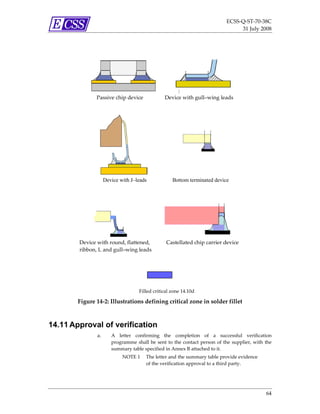
Figure 14-2: Illustrations defining critical zone in solder fillet ................................................. 64
Figure 16-1: Preferred solder (see also Table 11-1) .............................................................. 68
Figure 16-2: Acceptable, maximum solder (see also Table 11-1).......................................... 68
Figure 16-3: Unacceptable, poor wetting (see also Table 11-1) ............................................ 69
Figure 16-4: Unacceptable - Less than 75 % wetting of terminal edges (see also Table
           11-1) .................................................................................................................... 69
Figure 16-5: Acceptable, minimum solder -- Terminal wetted along end, face and sides
           (see also Table 11-1)........................................................................................... 70
Figure 16-6: Preferred solder (see also Table 11-3) .............................................................. 70
Figure 16-7: Unacceptable -- Excessive solder (see also Table 11-3)................................... 70
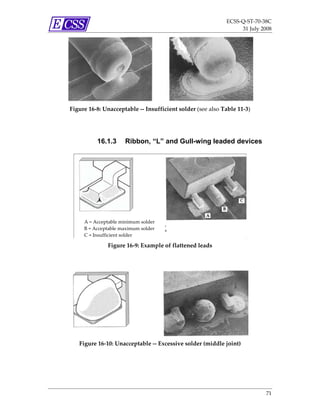
Figure 16-8: Unacceptable -- Insufficient solder (see also Table 11-3).................................. 71
Figure 16-9: Example of flattened leads................................................................................. 71
Figure 16-10: Unacceptable -- Excessive solder (middle joint) .............................................. 71
Figure 16-11: Examples of unacceptable soldering ............................................................... 72
Figure 16-12: Angled-transmission X-radiograph showing solder paste shadow due to
           partial reflow: Reject ............................................................................................ 73
Figure 16-13: Micrograph showing......................................................................................... 73
Figure 16-14: Microsection showing partial reflow of solder paste: Reject ............................ 74
Figure 16-15: Perpendicular transmission X-radiograph showing unacceptable defects....... 74
Figure 16-16: Perpendicular transmission X-radiograph showing non-wetted pad................ 75
Figure 16-17: Angled transmission X-radiograph showing non-wetted pad: Reject............... 75
Figure 16-18: Microsection through a ball showing non-wetting of solder to pad: Reject ...... 76
Figure 16-19: Microsection through ball showing partial wetting of solder to pad: Reject...... 76


                                                                                                                                    10 
ECSS‐Q‐ST‐70‐38C 
                                                                                                              31 July 2008 
Figure 16-20: Microsection through ball showing solder bridge: Reject................................. 76
Figure 16-21: X-radiograph showing many small voids and solder balls: Reject ................... 77
Figure 16-22: Underside view showing missing column ........................................................ 77
Figure 16-23: Side view showing column; column by more than 5°: Reject........................... 78
Figure 16-24: CGA mounted on PCB showing perpendicular columns centrally placed
           on pads: Target condition .................................................................................... 78
Figure 16-25: CGA mounted on PCB showing columns tilted < 5°: Accept ........................... 79
Figure 16-26: X-radiograph of CGA mounted on PCB ........................................................... 79
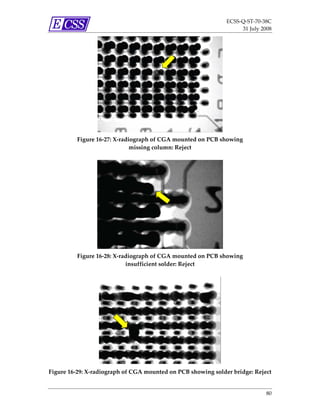
Figure 16-27: X-radiograph of CGA mounted on PCB showing missing column: Reject ....... 80
Figure 16-28: X-radiograph of CGA mounted on PCB showing
           insufficient solder: Reject..................................................................................... 80
Figure 16-29: X-radiograph of CGA mounted on PCB showing solder bridge: Reject ........... 80
Figure 16-30: X-radiograph of CGA showing excessive voiding in solder fillets at base
           of columns: Reject ............................................................................................... 81
Figure 16-31: Microsection of CGA mounted on PCB............................................................ 81
Figure 16-32: Micrograph of CGA mounted on PCB.............................................................. 82
Figure 16-33: Micrograph of CGA mounted on PCB.............................................................. 82
Figure 16-34: Microsection of CGA mounted on PCB showing
           minimum solder: Acceptable................................................................................ 82
Figure 16-35: Microsection of CGA mounted on PCB showing maximum solder:
           Acceptable ........................................................................................................... 83
Figure 16-36: Sample after verification sample testing: Microsection of CGA mounted
           on PCB showing crack in the solder fillet............................................................. 87
Figure 16-37: Microsection of a CGA showing a crack .......................................................... 87
Figure 16-38: Microsection of CGA showing cracks .............................................................. 88
Figure 16-39: Microsection of CGA showing cracks .............................................................. 89
Figure 16-40Microsection of CGA showing cracks ................................................................ 90
Figure 16-41: Micrography of CBGA after dye penetration testing ........................................ 91
Figure 16-42: Micrography of CBGA after dye penetration testing ........................................ 91
Figure 16-43: Micrography of a column of CBGA after dye penetration testing ..................... 92


Figure C-1 : Typical CBGA solder joint (high melting point balls) ........................................ 102
Figure C-2 : Tilted columns to a CBGA ................................................................................ 103


Tables
Table 7-1: Chemical composition of spacecraft solders......................................................... 31
Table 7-2: Guide for choice of printed circuit boards and substrates ..................................... 33
Table 11-1: Dimensional and solder fillet requirements for rectangular and square end
           capped devices.................................................................................................... 45


                                                                                                                                11 
ECSS‐Q‐ST‐70‐38C 
                                                                                                               31 July 2008 
Table 11-2: Dimensional and solder fillet requirements for bottom terminated chip
           devices................................................................................................................. 46
Table 11-3: Dimensional and solder fillet requirements for cylindrical end-capped
           devices................................................................................................................. 47
Table 11-4: Dimensional and solder fillet requirements for castellated chip carrier
           devices................................................................................................................. 47
Table 11-5: Dimensional and solder fillet requirements for devices with round, flattened,
           ribbon, “L” and gull-wing leads............................................................................. 48
Table 11-6: Dimensional and solder fillet requirements for devices with “J” leads................. 49
Table 11-7: Dimensional and solder fillet requirements for area array devices ..................... 50


Table E-1 : Guide for choice of solder type .......................................................................... 115


                                                                                                                                  12 
ECSS‐Q‐ST‐70‐38C 
                                                                                          31 July 2008 


                                                                              Introduction

                     This Standard prescribes requirements for electrical connections of leadless and 
                     leaded  surface  mounted  devices  (SMD)  on  spacecraft  and  associated 
                     equipment,  utilising  a  range  of  substrate  assemblies  and  employing  solder  as 
                     the interconnection media. The principal types of SMDs can be gathered in the 
                     following families: 
                      
Rectangular and square end‐capped or end‐metallized device 
with rectangular body 
e.g. end capped chip resistors and end capped chip capacitors. 
                                                                                                     
Bottom terminated chip device 
This type of device has metallised terminations on the bottom side only. 

                                                                                                     
Cylindrical or square end‐‐capped devices with cylindrical body 
e.g. MELF. 
                                                                                                 
Castellated chip carrier device 
The main component of this type is leadless ceramic chip carrier (LCCC). 


Device with round, flattened, ribbon “L” and gull‐wing leads 
e.g. small‐outline transistor (SOT), small—outline package (SO), flat pack 
and quad flat pack (QFP). 
This family also comprises devices for through‐hole mounting that have 
been reconfigured to surface mounting.                                                                           
“J” leaded device 
e.g. ceramic leaded chip carriers (CLCC) and plastic 
leaded chip carriers (PLCC). 


                                                                                                                13 
ECSS‐Q‐ST‐70‐38C 
                                                                                   31 July 2008 

Area array devices 
These devices are leadless (no leads). The interconnections between solder 
pads on the devices and solder pads on the PCB consist entirely of solder. 
The devices have either solder balls (Ball Grid Array ‐ BGA) or solder 
columns (Column Grid Array ‐ CGA) applied to the solder pads on the 
devices prior to mounting on a PCB (normally done by the device                                        
manufacturer). The solder balls on the BGAs can consist of either eutectic 
solder or high temperature solder (5  ‐ 10 % Sn) whereas the solder 
columns on the CGAs always consist of high temperature solder. 
Although BGAs are usually presented as a device family, there exist a 
large number of BGA devices with wide‐ranging properties. The vast 
majority of BGA devices are nonhermetic. 
Device with Inward formed L‐‐shaped leads 
e.g. moulded tantalum chip capacitors. 


Device with flat lug leads 
This package has flat leads extending from the sides. 


Leaded device with thermal plane termination 
e.g. Diode PAcKage (DPAK). 


Leadless device with thermal plane termination 
This SMD package consists of three terminal pads, ceramic housing, and 
lid brazed together to form a hermetic semiconductor die carrier. 


                                                                                                  14 
ECSS‐Q‐ST‐70‐38C 
                                                                     31 July 2008 


                                                                          1
                                                                      Scope

This  Standard  defines  the  technical  requirements  and  quality 
assurance provisions  for  the  manufacture  and  verification  of  high‐reliability 
electronic  circuits  based  on  surface  mounted  device (SMD)  and  mixed 
technology.  
The  Standard  defines  acceptance  and  rejection  criteria  for  high‐reliability 
manufacture  of  surface‐mount  and  mixed‐technology  circuit  assemblies 
intended  to  withstanding  normal  terrestrial  conditions  and  the  vibrational 
g‐loads and environment imposed by space flight. 
The  proper  tools,  correct  materials,  design  and  workmanship  are  covered  by 
this document. Workmanship standards are included to permit discrimination 
between proper and improper work. 
The  assembly  of  leaded  devices  to  through‐hole  terminations  and  general 
soldering principles are covered in ECSS‐Q‐ST‐Q‐70‐08.  
Requirements  related  to  printed  circuit  boards  are  contained  in 
ECSS‐Q‐ST‐Q‐70‐10  and  ECSS‐Q‐ST‐Q‐70‐11.  The  substrates  covered  by  this 
document are divided into five classes in accordance with their average X and Y 
coefficient of thermal expansion (CTE). 
The  mounting  and  supporting  of  components,  terminals  and  conductors 
prescribed  herein  applies  to  assemblies  designed  to  operate  within  the 
temperature limits of ‐55 °C to +85 °C. 
For  temperatures  outside  this  normal  range,  special  design,  verification  and 
qualification  testing  is  performed  to  ensure  the  necessary  environmental 
survival capability. 
Special  thermal  heat  sinks  are  applied  to  devices  having  high  thermal 
dissipation (e.g. junction temperatures of 110 °C, power transistors) in order to 
ensure that solder joints do not exceed 85 °C. 
Verification  of  SMD  assembly  processes  is  made  on  test  vehicles  (surface 
mount verification  samples).  Temperature  cycling  ensures  the  operational 
lifetime  for  spacecraft.  However,  mechanical  testing  only  indicates  SMD 
reliability  as  it  is  unlikely  that  the  test  vehicle  represents  every  flight 
configuration. 
Examples  of  the  method  for  achieving  SMD  verification  approval  and  
guidelines for the soldering of area array devices are given in the Annexes. 
This Standard does not cover the qualification and acceptance of the EQM and 
FM equipment with surface‐mount and mixed‐technology. 


                                                                                   15 
ECSS‐Q‐ST‐70‐38C 
                                                                  31 July 2008 
The  qualification  and  acceptance  tests  of  equipment  manufactured  in 
accordance with this Standard are covered by ECSS‐E‐ST‐10‐03. 
This standard may be tailored for the specific characteristics and constraints of a 
space project, in accordance with ECSS‐S‐ST‐00. 


                                                                                16 
ECSS‐Q‐ST‐70‐38C 
                                                                       31 July 2008 


                                                   2
                                Normative references

The  following  normative  documents  contain  provisions  which,  through 
reference  in  this  text,  constitute  provisions  of  this  ECSS  Standard.  For  dated 
references, subsequent amendments to, or revisions of any of these publications 
do not apply. However, parties to agreements based on this ECSS Standard are 
encouraged to investigate the possibility of applying the most recent editions of 
the  normative  documents  indicated  below.  For  undated  references  the  latest 
edition of the publication referred to applies. 
 
    ECSS‐S‐ST‐00‐01       ECSS system — Glossary of terms 
    ECSS‐M‐ST‐40          Space project management — Configuration and 
                          information management 
    ECSS‐Q‐ST‐10‐09       Space product assurance — Nonconformance control 
                          system 
    ECSS‐Q‐ST‐20          Space product assurance — Quality assurance 
    ECSS‐Q‐ST‐60          Space product assurance — Electrical, electronic and 
                          electromechanical (EEE) components 
    ECSS‐Q‐ST‐60‐05       Space product assurance — Generic requirements for 
                          hybrids 
    ECSS‐Q‐ST‐70          Space product assurance — Materials, mechanical 
                          parts and processes 
    ECSS‐Q‐ST‐70‐01       Space product assurance — Cleanliness and 
                          contamination control 
    ECSS‐Q‐ST‐70‐02       Space product assurance — Thermal vacuum 
                          outgassing test for the screening of space materials 
    ECSS‐Q‐ST‐70‐08       Space product assurance — Manual soldering of high–
                          reliability electrical connections 
    ECSS‐Q‐ST‐70‐10       Space product assurance — Qualification of printed 
                          circuit boards 
    ECSS‐Q‐ST‐70‐11       Space product assurance — Procurement of printed 
                          circuit boards 
    ECSS‐Q‐ST‐70‐71       Space product assurance — Data for selection of space 
                          materials 
    MIL‐STD‐883           Test Method Standard, Microcircuits 
    Method 2009.8 


                                                                                      17 
ECSS‐Q‐ST‐70‐38C 
                                                                                    31 July 2008 


                                             3
      Terms, definitions and abbreviated terms

3.1    Terms from other standards
                      For  the  purpose  of  this  Standard,  the  terms  and  definitions  from 
                      ECSS‐S‐ST‐00‐01C apply. 


3.2    Terms specific to the present standard
              3.2.1         approval authority
              entity that reviews and accepts the verification programme, evaluating the test  
              results and grants the final approval 

              3.2.2         co-planarity
              maximum distance between lowest and highest termination when device rests 
              on flat surface 

              3.2.3         electrical clearance
              spacing  between  non‐common  electrical  conductors  on  external  layers  of  a 
              printed circuit board assembly 
                           NOTE       The  distance  between  conductors  depends  on  the 
                                      design voltage and DC or AC peaks. Any violation 
                                      of  minimum  electrical  clearance  as  a  result  of  a 
                                      nonconformance is a defect condition. 

              3.2.4         scavenging (leaching)
              basis metal or metallization partly or wholly dissolved in melted solder during 
              a soldering operation 

              3.2.5         selective plating
              tin‐lead plated solder pads connected to gold plated copper tracks 
                           NOTE       It is usually related to RF circuits. 

              3.2.6         solder balling (solder balls)
              numerous spheres of solder having not melted in with the joint form and being 
              scattered around the joint area normally attached by flux residues  
                           NOTE       Can  be  caused  by  incorrect  preheating  or  poor 
                                      quality solder. 


                                                                                                  18 
ECSS‐Q‐ST‐70‐38C 
                                                                                  31 July 2008 
            3.2.7         tombstoning
            chip  components lifting off one  of  their  two  terminal pads  causing  the  chip  to 
            stand up like a tombstone 
                        NOTE        Normally caused by:  
                                    • bad  design  where  one  pad  reaches  solder 
                                      reflow temperature before the other; 
                                    • different quantities of solder paste on each pad; 
                                    • different  solderability  of  one  pad  or  one 
                                      termination with respect to the other. 

            3.2.8         underfill
            encapsulant material deposited between a device and substrate used to reduce 
            the  mechanical  stress  resulting  from  a  mismatch  in  the  coefficient  of  thermal 
            expansion (CTE) between the device and the substrate 

            3.2.9         dynamic wave soldering machine
            system that achieves wave soldering and which consists of stations for fluxing, 
            preheating, and soldering by means of a conveyer 


3.3   Abbreviated terms
            For the purpose of this Standard, the abbreviated terms from ECSS‐S‐ST‐00‐01 
            and the following apply: 
             Abbreviation           Meaning 
             BGA                    ball grid array 
             CBGA                   ceramic ball grid array 
             CGA                    column grid array 
             CCGA                   ceramic column grid array 
             CLCC                   ceramic leaded chip carrier 
             CTE                    coefficient of thermal expansion 
             JEDEC                  Joint Electron Device Engineering Council 
             LCCC                   leadless ceramic chip carrier  
             MELF                   metal electrode face bonded 
                                    NOTE: Also known as minimelf or micromelf 
             MCGA                   multichip column grid array 
             PCB                    printed circuit board 
             PLCC                   plastic leaded chip carrier 
             PID                    process identification document 
             QFP                    quad flat pack 
             r.m.s.                 root‐mean‐square 
             SMD                    surface mounted device 


                                                                                                 19 
ECSS‐Q‐ST‐70‐38C 
                                            31 July 2008 

    SMT    surface‐mount technology 
    SO     small outline 
    SOD    small outline device 
    SOT    small outline transistor 
    TO     transistor outline 


                                                      20 
ECSS‐Q‐ST‐70‐38C 
                                                                                31 July 2008 


                                          4
Principles of reliable soldered connections

         The following are the general principles to ensure reliable soldered connections: 
         •     Reliable  soldered  connections  are  the  result  of  proper  design,  control  of 
               tools,  materials,  processes  and  work  environments,  and  workmanship 
               performed  in  accordance  to  verified  and  approved  procedures, 
               inspection control and precautions. 
         •     The  basic  design  concepts  to  ensure  reliable  connections  and  to  avoid 
               solder joint failure are as follows: 
               ⎯      Stress  relief  is  an  inherent  part  of  the  design,  which  reduces 
                      detrimental  thermal  and  mechanical  stresses  on  the  solder 
                      connections.  
               ⎯      Where  adequate  stress  relief  is  not  possible  materials  are  so 
                      selected  that  the  mismatch  of  thermal  expansion  coefficients  is  a 
                      minimum  at  the  constraint  points  in  the  device  mounting 
                      configuration. 
         •     The assembled substrates are designed to allow easy inspection.  
         •     Since  only  the  outer  row  of  solder  joints  to  area  array  packages  can  be 
               visually  inspected,  inner  rows  are  inspected  using  X‐ray  techniques.  To 
               facilitate  X‐ray  inspection  of  the  solder  joints  to  BGAs,  the  solder  pads 
               have a teardrop design. 
         •     Circuit  designs  for  area  array  devices,  (e.g.  BGA,  CGA)  have  clearance 
               around the perimeter of these packages to ensure that reflow nozzles can 
               perform  rework  or  repair  operations  (see  ECSS‐Q‐ST‐70‐28  [12]).  The 
               clearance depends on the equipment used for reworking and the  height 
               of adjacent components.  
                    NOTE         Unpopulated  areas  on  the  underside  of  the 
                                 substrate  assist  indirect  heating  for  removal  of 
                                 these packages. See also Annex C.3. 
         •     Soldering to gold using tin‐lead alloy can cause failure. 


                                                                                                21 
ECSS‐Q‐ST‐70‐38C 
                                                                                31 July 2008 


                                           5
       Process identification document (PID)

5.1   General

            5.1.1        Purpose
            The purpose of the PID is to ensure that a precise reference is established for the 
            assembly processes approved in accordance with this Standard.  
            The PID provides a standard reference against which any anomalies occurring 
            after the approval can be examined and resolved. 


            5.1.2        Document preparation
            a.    The supplier shall prepare the PID in conformance with clause 5.1.3. 


            5.1.3        Content
            a.    The PID shall comprise  
                  1.     the assembly design configuration; 
                  2.     materials and components used in manufacture; 
                  3.     all manufacturing assembly processes and production controls; 
                  4.     all inspection steps with associated methods.  
                        NOTE       This ensures that all future assemblies supplied by 
                                   the  manufacturer  are  manufactured  in 
                                   conformance with  procedures  that  are  identical  to 
                                   those for which approval was granted.  
            b.    All processes and procedures shall be verified and approved. 


            5.1.4        Approval
            a.    The PID shall be submitted to the approval authority 
            b.    The Approval authority shall approve the PID. 


                                                                                             22 
ECSS‐Q‐ST‐70‐38C 
                                                                                  31 July 2008 

5.2   Production control
             a.   The  PID  shall  contain  a  production  flow  chart  which  identifies  all 
                  individual  processes,  inspections  and a summary table  that  compiles all 
                  verified surface mount components and materials  
                       NOTE        See Annex B for examples. 
             b.   The points of application of quality controls shall be identified.  
             c.   The  flow  chart  shall  present  the  processes,  inspections  and  quality 
                  controls  schematically  in  their  correct  sequence  and,  for  each  operation, 
                  make reference to the corresponding documents.  
             d.   The  issue  number  and  date  of  documents  applicable  at  the  time  of 
                  preparation of the flow chart shall be stated. 
             e.   The following symbols shall be used to prepare the chart: 
                                           
                                          for process and assembly operations 
                                           
                                           
                                          for inspection and test operations 
                                           
                                          for quality control operations 


5.3   Process identification document updating
             a.   The PID shall be managed in accordance with ECSS‐ST‐M‐40. 
             b.   A  PID  shall  represent  the  current  verified  manufacturing  processes  and 
                  production controls.  
             c.   Any  proposed  changes  to  the  PID  shall  be  agreed  by  the  Approval 
                  authority. 
             d.   The supplier shall identify the need for additional testing to be approved 
                  by the Approval authority. 
             e.   The PID, the summary table and the relevant applicable documents shall 
                  be re‐issued and agreed by the approval authority.  


                                                                                                 23 
ECSS‐Q‐ST‐70‐38C 
                                                                               31 July 2008 


                                                            6
                                       Preparatory conditions

6.1   Calibration
             a.     Records of tool calibration and verification shall be maintained. 


6.2   Facility cleanliness
             a.     ECSS‐Q‐ST‐70‐08 shall apply for “Facility cleanliness”. 


6.3   Environmental conditions
             a.     ECSS‐Q‐ST‐70‐08 shall apply for “Environmental conditions”. 


6.4   Precautions against static charges
             a.     ECSS‐Q‐ST‐70‐08 shall apply for “Precautions against static charges”. 


6.5   Lighting requirements
             a.     ECSS‐Q‐ST‐70‐08 shall apply for “Lighting requirements”. 


6.6   Equipment and tools

             6.6.1        Brushes
             a.     ECSS‐Q‐ST‐70‐08 shall apply for ʺBrushesʺ. 


             6.6.2        Pliers
             a.     ECSS‐Q‐ST‐70‐08, shall apply for ʺPliersʺ. 


             6.6.3        Bending tools
             a.     ECSS‐Q‐ST‐70‐08 shall apply for ʺBending toolsʺ. 


                                                                                             24 
ECSS‐Q‐ST‐70‐38C 
                                                                                31 July 2008 

            6.6.4       Clinching tools
            a.   ECSS‐Q‐ST‐70‐08 shall apply ʺClinching toolsʺ. 


            6.6.5       Insulation strippers
            a.   ECSS‐Q‐ST‐70‐08 shall apply for ʺInsulation strippersʺ. 


            6.6.6       Soldering tools
            a.   ECSS‐Q‐ST‐70‐08 shall apply for ʺSoldering toolsʺ. 


            6.6.7       Soldering irons and resistance soldering
                        equipment
            a.   ECSS‐Q‐ST‐70‐08  shall  apply  for  “Soldering  irons  and  resistance 
                 soldering equipment”. 
            b.   For surface mounted devices, the soldering tip shall not exceed 340 °C. 
                      NOTE        Based  on  the  component  manufacturer’s 
                                  recommendations,  solder  iron  can  be  substituted 
                                  by applying, for instance, hot air in order to avoid 
                                  thermal shock. 


            6.6.8       Non-contact heat sources
            a.   ECSS‐Q‐ST‐70‐08 shall apply for ʺNon‐contact heat sourcesʺ. 


            6.6.9       Solder pots and baths
            a.   ECSS‐Q‐ST‐70‐08 shall apply for ʺSolder pots and bathsʺ. 


6.7   Soldering machines and equipment

            6.7.1       General
            a.   Machines and equipment used to solder surface mount devices: 
                 1.     leadless  and  leaded  devices  specifically  designed  for  surface 
                        mounting, 
                 2.     components initially designed for insertion mounting,  
                 shall either be a type incorporating dynamic single or dual solder wave, 
                 or be of the solder reflow type. 
            b.   The  soldering  machine  shall  be  grounded  in  order  to  avoid  electrostatic 
                 discharge. 


                                                                                               25 
ECSS‐Q‐ST‐70‐38C 
                                                                   31 July 2008 
c.   The supplier shall ensure that the soldering conditions do not exceed the 
     values  given  by  the  individual  component  data  sheets  (e.g.  maximum 
     temperature  to  avoid  internal  melting,  removal  of  marking  ink, 
     degradation of encapsulating plastic). 
d.   Temperature  and  time  profiles  for  assembly  shall  be  identified  by  the 
     supplier and approved by the approval authority. 


6.7.2      Dynamic wave-solder machines
a.   Dynamic  soldering machines  shall  be of automatic type  and of a  design 
     offering the following: 
     1.    Controllable preheating to drive off volatile solvents and to avoid 
           thermal shock damage to the PCB and component packages. 
     2.    The  capacity  to  maintain  the  solder  temperature  at  the  printed 
           circuit  board  assembly  to  within  5 °C  of  the  established  bath 
           temperature throughout the duration of any continuous soldering 
           run when measured 3,0 mm below the surface of the wave. 
     3.    A  wave  system  that  limits  shadowing  and  allows  solder  fillet 
           formation.  
     4.    Carriers made from a material that cannot contaminate, degrade or 
           damage  the  printed  circuit  board  or  substrate  nor  transmit 
           vibrations  or  shock  stress  from  the  conveyors  to  a  degree 
           permitting physical,  functional or electrostatic  damage  to  devices, 
           board or substrate during transport through preheating, soldering 
           and cooling stages. 
     5.    An extraction system, either integral or separate, conforming to the 
           requirements of clauses 6.2a and 6.3a. 


6.7.3      Condensation (vapour phase) reflow
           machines
a.   Condensation  reflow  machines  shall  conform  to  the  following 
     requirements: 
     1.    Not  transmit  a  movement  or  vibration  into  the  assemblies  being 
           soldered  that  result  in  misalignment  of  parts  or  disturbed  solder 
           joints. 
     2.    Be  capable  of  preheating  an  assembly  with  solder  paste  to  the 
           temperature recommended by the solder paste manufacturer prior 
           to soldering. 
     3.    Use  a  reflow  fluid  whose  boiling  point  is  a  minimum  of  12 °C 
           above the melting point of the solder being used. 
     4.    Maintain the preselected temperature to within ±5 °C in the reflow 
           zone during soldering. 
     5.    Include  an  extraction  system  that  conforms  to  clauses  6.2a 
           and 6.3a. 


                                                                                  26 
ECSS‐Q‐ST‐70‐38C 
                                                                   31 July 2008 

6.7.4      Hot gas reflow machines
a.   Hot gas reflow machines shall conform to the following requirements: 
     1.    Does  not transmit  movement  or  vibration  to  the  assemblies being 
           soldered which result in misalignment of parts or disturbed solder 
           joints.  
     2.    Preheats  an  assembly  with  solder  paste  to  the  temperature 
           recommended by the solder paste manufacturer prior to soldering. 
     3.    Heats  the  area  of  the  assembly  to  be  soldered  to  a  preselected 
           temperature  between  220 °C  and  250 °C  as  measured  on  the 
           substrate surface.  
     4.    Prevents the reflow of adjacent components. 
     5.    Maintains  the  preselected  reflow  temperature  within  ±5 °C  as 
           measured at the substrate surface. 


6.7.5      Shorted bar and parallel gap resistance
           reflow machines
a.   Resistance  reflow  machines  shall  be  of  a  design  such  that  the  system 
     meets the following requirements: 
     1.    Does not impart mechanical damage to the component leads. 
     2.    Provides “time at temperature” control type of power supply. 
     3.    Maintains  the  shorted  bar  or  component  lead  to  a  preselected 
           temperature that is a minimum of 12 °C above the melting point of 
           the solder being used. 
     4.    Maintains the dwell time at temperature to within 5 % of the preset 
           value. 
     5.    Provides  a  repeatable  down  force  to  within  15 %  of  the  preset 
           value. 
     6.    Provides  a  system  (e.g.  an  optical  feature)  to  ensure  that  the 
           shorted bar or electrode alignment with the component lead foot is 
           within 20 % of the nominal lead foot length. 


6.7.6      Convection and radiation reflow systems
a.   Convection  and  radiation  reflow  machines  shall  be  of  design  such  that 
     the system meets the following requirements: 
     1.    Provides  a  controlled  temperature  profile  and  does  not  transmit 
           movement or vibration into the assembly being soldered.  
     2.    Preheats  an  assembly  with  solder  paste  to  the  temperature 
           recommended by the solder paste manufacturer prior to soldering. 
     3.    Heats  the  area  of  the  assembly  to  be  soldered  using  focused  or 
           unfocussed  energy,  to  a  preselected  temperature  that  is  a 


                                                                                 27 
ECSS‐Q‐ST‐70‐38C 
                                                                                 31 July 2008 
                         minimum  of  12 °C  above  the  melting  point  of  the  solder  being 
                         used as measured at laminate or substrate surface. 
                  4.     Maintains the preselected temperature to within 6 °C in the reflow 
                         zone during soldering. 


             6.7.7       Other equipment for reflow soldering
             a.   Other  solder  reflow  systems  can  be    approved  for  use  by  the  Approval 
                  authority. This approval shall be subject to compliance with clauses 6.7.1 
                  to 6.7.6a. 


6.8   Ancillary equipment

             6.8.1       General
             a.   Equipment shall not generate, induce or transmit electrostatic charges to 
                  devices being placed. 


             6.8.2       Solder deposition equipment
             a.   Equipment  used  to  deposit  solder  pastes  shall  be  of  a  screening, 
                  stencilling, dispensing, roller coating or dotting type.  
             b.   Equipment  shall  apply  pastes  of  a  viscosity  and  quantity  such  that  the 
                  positioned  device  is  retained  on  the  board  before  and  during  soldering 
                  operations, ensuring self‐centring and solder fillet formation. 
             c.   Equipment used  to  apply  solder preforms  shall  ensure alignment  of  the 
                  preform with the land or device lead and termination. 


             6.8.3       Automatic device placement equipment
             a.   Automatic or computer controlled equipment used for device placement 
                  shall  be  of  the  coordinate‐driven  pick‐and‐place  type  or  of  the  robotic 
                  type. 
             b.   The placement equipment used shall be of a type that: 
                  1.     prevents device or board damages 
                  2.     indexes devices with respect to the circuit 
                  3.     aligns  the  device  leads  or  castellations  with  the  board  terminal 
                         areas. 


             6.8.4       Cleaning equipment and systems
             a.   ECSS‐Q‐ST‐70‐08  requirements  on  “Cleaning  of  PCB  assemblies  – 
                  General”  and  “Cleaning  of  PCB  assemblies  –  Ultrasonic  cleaning”  shall 
                  apply. 


                                                                                                28 
ECSS‐Q‐ST‐70‐38C 
                                                                     31 July 2008 

6.8.5       Cleanliness testing equipment
a.   ECSS‐Q‐ST‐70‐08 shall apply for “Cleanliness testing”. 


6.8.6       Magnification aids
a.   Clause 13.1 shall apply. 


6.8.7       X-ray inspection equipment
a.   X‐ray inspection shall not damage the components.  
b.   X‐ray  equipment  shall  be  calibrated  in  order  to  evaluate  the  total  dose 
     received by the components during the inspection. 
          NOTE         In  order  to  minimize  the  dose  given  to  the 
                       component, it is good practice to: 
                       • Record the total dose received. 
                       • Use off‐line image analysis as much as possible. 
                       • Use filters, optimizing the direction of the X‐ray 
                         beam and masking sensitive areas. 
c.   The resolution of the X‐ray equipment shall be able to detect solder balls 
     having a diameter of 0,03 m.  
d.   The  sensitivity  shall  be  demonstrated  by  means  of  actual  0,03 mm 
     diameter  solder  balls,  stuck  to  adhesive  tape,  attached  to  the  multilayer 
     board assembly being inspected. 
          NOTE         For  guidelines,  see  C.4.3  and  E.1  for  X‐ray 
                       inspection. 


6.8.8       Metallographic equipment
a.   The  metallographic  equipment  shall  enable  mounting,  cross‐sectioning 
     and polishing of the solder interconnections. 


                                                                                     29 
ECSS‐Q‐ST‐70‐38C 
                                                                                       31 July 2008 


                                                                         7
                                                        Material selection

7.1   General
               a.   Material  selection       shall    be    performed      in     accordance     with 
                    ECSS‐Q‐ST‐70‐71. 


7.2   Solder

               7.2.1       Form
               a.   Solder paste, ribbon, wire and preforms shall be used provided that the 
                    alloy and flux meet the requirements in clause 7.2.2. 
               b.   Alloy for use in solder baths shall be supplied as ingots (without flux). 


               7.2.2       Composition
               a.   The  solder  alloy  shall  have  a  composition  specified  in  Table  7‐1,  unless 
                    approved by the Approval authority. 
                         NOTE 1  See ISO 9453 [13] for further details. 
                         NOTE 2  The  solder  alloy  used  depends  upon  the 
                                 application. See Annex E.2 for Guide for choice of 
                                 solder type. 


               7.2.3       Solder paste
               a.   Solder paste shall conform to the requirements of clause 7.2.1. 
                         NOTE         The  solder  ball  size  and  flux  percentage  are 
                                      selected  depending  on  the  process  employed,  i.e. 
                                      screen, stencil or needle application. 
               b.   The metal purity shall be as specified in Table 7‐1. 


                                                                                                    30 
ECSS‐Q‐ST‐70‐38C 
                                                                                                                 31 July 2008 

                       Table 7‐1: Chemical composition of spacecraft solders 
 ESA        Sn        Pb             In          Sb       Ag      Bi      Cu      Fe       Zn       Al         As      Cd      Other 
desig     min % ‐    max %          min %        max     min %    max     max     max     max %    max %      max     max      max % 
nation    max %                       –           %        –       %       %       %                           %       % 
                                    max %                max % 

63 tin     62,5‐     remain           ‐          0,05      ‐      0,10    0,05    0,02    0,001    0,001      0,03    0,002    0,08 
solder     63,5 

62 tin     61,5‐     remain           ‐          0,05     1,8‐    0,10    0,05    0,02    0,001    0,001      0,03    0,002    0,08 
silver     62,5                                           2,2 
loade
   d 

60 tin     59,5‐     remain           ‐          0,05      ‐      0,10    0,05    0,02    0,001    0,001      0,03    0,002    0,08 
solder     61,5 

96 tin    remai       0,10            ‐          0,05     3,5‐    0,10    0,05    0,02    0,001    0,001      0,03    0,002    0,08 
solder      n                                             4,0 

  75       max       remain         74,0‐        0,05      ‐      0,10    0,05    0,02    0,001    0,001      0,03    0,002    0,08 
indiu      0,25                     76,0 
m lead 

  70       0,00‐     remain         69,3‐        0,05      ‐      0,10    0,05    0,02    0,001    0,001      0,03    0,002    0,08 
indiu      0,10                     70,7 
m lead 

  50       0,00‐     remain         49,5‐        0,05      ‐      0,10    0,05    0,02    0,001    0,001      0,03    0,002    0,08 
indiu      0,10                     50,5 
m lead 

10 tin     9,0‐      remain           ‐          0,05      ‐      0,10    0,05    0,02    0,001    0,001      0,03    0,002    0,08 
 lead      10,5 


                               7.2.4                Maintenance of paste purity
                               a.           When purchased premixed or mixed in house, the purity of solder paste 
                                            shall be maintained. 
                               b.           Manufacturers’ instructions shall be applied for the handling and storage 
                                            of containers of solder paste purchased premixed. 
                               c.           Refrigerated  solder  paste  shall  reach  room  temperature  before  opening 
                                            the container. 
                               d.           Neither  paste  purchased  premixed  nor  paste  mixed  in‐house  shall  be 
                                            used if the use‐by date or shelf life recommended by the manufacturer of 
                                            the paste or paste constituents has expired. 
                               e.           When the solder paste’s shelf life has expired (see ECSS‐Q‐ST‐70‐22 [11]), 
                                            it shall not be used unless:  
                                            1.      relifing is performed  
                                            2.      tests  that  include  visual  inspection  and  viscosity  measurements 
                                                    (according  to  the  manufacturer’s  recommendations)  are  passed 
                                                    successfully.  
                               f.           When  relifing  is  performed,  and  the  material  passes  the  specified  tests, 
                                            the new shelf life shall be half the initial shelf life. 
                               g.           Tools  used  for  removing  solder  paste  from  the  container  shall  not 
                                            contaminate the paste dispensed or that remaining within. 


                                                                                                                               31 
ECSS‐Q‐ST‐70‐38C 
                                                                                   31 July 2008 

7.3   Flux

              7.3.1       Rosin based flux
              a.   ECSS‐Q‐ST‐70‐08 shall apply for ʺRosin based fluxʺ. 


              7.3.2       Corrosive acid flux
              a.   ECSS‐Q‐ST‐70‐08 shall apply for ʺINH1 Corrosive acid fluxʺ. 


              7.3.3       Flux controls for wave-soldering equipment
              a.   A  controlled  method  shall  be  established  and  implemented  for  wave‐
                   soldering  machines  such  that  the  flux  is  not  contaminated  with 
                   remaining residues from previous non‐space works.  


7.4   Solvents
              a.   ECSS‐Q‐ST‐70‐08 shall apply for ʺSolventsʺ. 


7.5   Flexible insulation materials
              a.   ECSS‐Q‐ST‐70‐08 shall apply for ʺFlexible insulation materialsʺ. 


7.6   Terminals
              a.   ECSS‐Q‐ST‐70‐08 shall apply for ʺTerminalsʺ. 


7.7   Wires
              a.   ECSS‐Q‐ST‐70‐08 shall apply for ʺWiresʺ. 


7.8   Printed circuit substrates

              7.8.1       Selection
              a.   Printed  circuit  boards  and  substrates  shall  be  selected  from  the  classes 
                   given in Table 7‐2. 
              b.   The  class  of  board  selected  shall  have  a  CTE  characteristic  compatible 
                   with the CTE of the devices.  
                        NOTE 1  The objective is that the impact of stresses from the 
                                environment is minimized. 


                                                                                                  32 
ECSS‐Q‐ST‐70‐38C 
                                                                              31 July 2008 
                   NOTE 2  The warp and twist of multilayer boards can affect 
                           the geometry of the solder joints. 
     c.       The  warp  and  twist  of  the  printed  circuit  multilayer  board  shall  be  in 
              accordance with ECSS‐Q‐ST‐70‐11. 
                   NOTE        Symmetrical board design reduces warp and twist 
                               of the printed circuit board. 


Table 7‐2: Guide for choice of printed circuit boards and substrates 
    Class                       Description                           CTE (10-6/°C)
          1       Non-compensated printed board                           14 – 17
          2       Ceramic                                                   5 –7
          3       Compensated printed board                               11 – 13
          4       Compensated printed board                               9 – 11
          5       Compensated printed board                                5–9


     7.8.2           Class 1 - Non-compensated printed circuit
                     board
     a.       Boards  shall  be  made  of  materials  and  manufactured  in  conformance 
              with  the  requirements  of  ECSS‐Q‐ST‐70‐10  and  procured  to 
              ECSS‐Q‐ST‐70‐11.  
                   NOTE        Typical  substrates  are  epoxy‐woven  glass  and 
                               polyimide‐woven glass. 


     7.8.3           Class 2 - Ceramic substrates
     a.       Hybrid microcircuits shall meet the requirements of ECSS‐Q‐ST‐60‐05. 
                   NOTE        Typical  PCB  ceramic  substrates  are  alumina  and 
                               aluminium nitride. 


     7.8.4           Class 3 - Compensated printed circuit board
     a.       Boards  shall  be  made  of  materials  and  manufactured  in  conformance 
              with the requirements of ECSS‐Q‐ST‐70‐10 and procured in conformance 
              with ECSS‐Q‐ST‐70‐11.  
                   NOTE        These  boards  can  be  reinforced  with  low  CTE 
                               fibres such as aramid, quartz or carbon. 


     7.8.5           Class 4 - Compensated printed circuit board
     a.       Boards  shall  be  made  of  materials  and  manufactured  in  conformance 
              with the requirements of ECSS‐Q‐ST‐70‐10 and procured in conformance 
              with ECSS‐Q‐ST‐70‐11.  


                                                                                             33 
ECSS‐Q‐ST‐70‐38C 
                                                                                  31 July 2008 
                     NOTE        CTE  compensated  boards  use  standard 
                                 construction  and  are  compensated  with  materials 
                                 such as a distributed plane consisting of a low CTE 
                                 material. 


           7.8.6      Class 5 - Compensated printed circuit board
           a.   Boards  shall  be  made  of  materials  and  manufactured  in  conformance 
                with the requirements of ECSS‐Q‐ST‐70‐10 and procured in conformance 
                with ECSS‐Q‐ST‐70‐11.  
                     NOTE        CTE  compensated  boards  use  a  standard 
                                 construction  with  compensated  materials  such  as 
                                 low  CTE  substrate  or  cores.  Typical  cores  are 
                                 copper‐plated      invar    and      copper‐plated 
                                 molybdenum.  


7.9   Components

           7.9.1      General
           a.   Components and their finishes shall be selected from those approved in 
                conformance  with  ECSS‐Q‐ST‐60,  for  “manufacturer  and  component 
                evaluation” and “Procurement control”. 
           b.   Device leads and terminations shall be solder coated with a tin/lead alloy 
                in accordance with Table E‐1.  
                     NOTE        It  is  good  practice  to  select  the  device  with  solder 
                                 finish  applied  over  sintered  metal  on  ceramic 
                                 terminations  having  a  diffusion  barrier  (nickel  or 
                                 equivalient  diffusion  layer)  layer  between  the 
                                 metallization and the solder finish. 
           c.   Solder  may be  applied  to  the  leads by hot dipping or by plating  from  a 
                solution.  
           d.   Plated  solder  terminations  shall  be  subjected  to  a  post  plating  reflow 
                operation to fuse the solder. 
           e.   The  incoming  inspection  of  each  component  batch  shall  include  the 
                verification of the termination composition (to avoid assembly of pure tin 
                finish). 
           f.   Pure tin finish with more than 97 % purity shall not be used. 
                     NOTE        This  is  due  to  the  possibility  of  whisker  growth 
                                 and  transformation  to  grey  tin  powder  at  low 
                                 temperatures. 
           g.   Where condensation reflow (vapour phase) is used for assembly, devices 
                shall be  capable  of  withstanding three cycles  through the reflow system 
                at  its  operating  temperature  (e.g.  215 °C),  each  cycle  consisting  of  a 
                minimum of 60 seconds of exposure. 


                                                                                                  34 
ECSS‐Q‐ST‐70‐38C 
                                                                     31 July 2008 
h.   Where wave soldering is used for surface‐mount soldering, devices shall 
     be  capable  of  withstanding  a  minimum  of  10 seconds  immersion  in 
     molten solder at 260 °C. 
i.   Devices  shall  be  capable  of  withstanding  cleaning  processes  currently 
     used in space projects. 


7.9.2       Active components
a.   Active leadless devices (e.g. transistors, thyristors, diodes, and integrated 
     circuit  devices)  shall  be  of  a  configuration  incorporating  sintered  metal‐
     on‐ceramic terminations, solid‐reflow termination pads integrated to the 
     device body. 
b.   Axial leads, wire or ribbon non‐axial leads shall be hermetically sealed. 
c.   Castellated  chip  carrier  components  shall  have  no  discontinuities  in  the 
     metallized terminal areas on the mounting pattern of the device.  


7.9.3       Moisture sensitive components
a.   Moisture  sensitive  components  shall  be  stored  and  handled  in 
     conformance with the component manufacturer’s recommendations. See 
     also clause 8.5b. 
          NOTE        Many  types  of  plastic  encapsulated  components, 
                      particularly  some  plastic  BGAs,  are  moisture 
                      sensitive. 
b.   When  moisture  sensitive  components  are  used,  bakeout  shall  be 
     performed  in accordance with clause 8.5b. 


7.9.4       Passive components
a.   If passive components initially designed for insertion‐mount application 
     are used for surface mounting, they shall be of a style that can be surface‐
     mount adapted to provide conformance with the requirements of clause 
     7.9.1. 
b.   The  adaptation  as  in  7.9.4a  shall  not  functionally  or  physically  degrade 
     the component or the substrate to which the adapted component is to be 
     attached. 
c.   End‐capped  and  end‐metallized  devices  shall  have  no  discontinuities  in 
     the terminal areas.  
d.   The body of the devices shall not be cracked, scored, chipped, broken or 
     otherwise  damaged  to  an  extent  greater  than  specified  in  the  applicable 
     procurement specification. 
e.   Connectors  shall  be  of  a  configuration  incorporating  either  male  or 
     female  quick‐disconnect  contacts  and  stress  relief  provision  for  the 
     soldered  connection  of  each  individual  contact  when  such  connections 
     are completed. 


                                                                                    35 
ECSS‐Q‐ST‐70‐38C 
                                                                                   31 July 2008 

7.10 Adhesives (staking compounds and heat sinking),
     encapsulants and conformal coatings
            a.   Adhesives  shall  be  dispensable,  non‐stringing,  and  shall  have  a 
                 reproducible dot profile after application.  
            b.   Adhesives,  encapsulant  and conformal coating  shall  be non‐corrosive  to 
                 devices and substrates. 
            c.   The  uncured  strength  shall  be  capable  of  holding  devices  during 
                 handling prior to curing.  
            d.   Adhesives,  encapsulants  and  conformal  coatings  shall  conform  to  the 
                 outgassing requirements of ECSS‐Q‐ST‐70‐02. 
            e.   Adhesives,  encapsulants  and  conformal  coatings  shall  have  no  adverse 
                 effects upon materials used on the substrate, or devices attached thereon. 
                      NOTE         The  effects  of  some  conformal  coatings  on  the 
                                   reliability  of  mounted  SMDs  are  described  in 
                                   ESA SP‐1173 [3]. 
            f.   Adhesives, encapsulants and conformal coatings shall be selected based on 
                 their thermal conductivity and dielectric properties (see ESA STM 265 [2]). 
                      NOTE         Some  thermally  conductive  adhesives  used  to 
                                   dissipate  Joule  heating  are  listed  in  ESA  STM‐265 
                                   “Evaluation  of  Thermally  Conductive  Adhesives 
                                   as  Staking  Compounds  during  the  Assembly  of 
                                   Spacecraft Electronics” [2]. 
            g.   The  capability  of  the  adhesives  to  meet  their  requirements  shall  be 
                 demonstrated by means of a verification test programme in conformance 
                 with clause 14. 
                      NOTE         Adhesion  to  fused  tin/lead  finishes  is  poor  (see 
                                   also ECSS‐Q‐ST‐70‐28). 
            h.   Stress  relief  of  device  leads  shall  not  be  negated  by  the  encapsulants  or 
                 conformal coatings. 
                      NOTE 1  This  is  particularly  important  at  low  service 
                              temperatures. 
                      NOTE 2  The  coefficient  of  expansion,  glass  transition 
                              temperature and modulus of adhesives used under 
                              devices  for  thermal  reasons,  for  achieving  stand‐
                              off  heights  or  mechanical  support  during 
                              vibration,  can  be  considered  to  ensure  that  the 
                              additional  stress  put  on  the  solder  joints  does  not 
                              degrade the solder joint reliability. 


                                                                                                   36 
ECSS‐Q‐ST‐70‐38C 
                                                                             31 July 2008 


                                                        8
                                Preparation for soldering

8.1   Preparation of devices and terminals

             8.1.1      Preparation of wires and terminals
             a.   ECSS‐Q‐ST‐70‐08,  clause  “Preparation  of  conductors,  terminals  and 
                  solder cups” shall apply. 


             8.1.2      Preparation of surfaces to be soldered
             a.   ECSS‐Q‐ST‐70‐08, clause “Surfaces to be soldered” shall apply. 


             8.1.3      Degolding and pretinning of conductors
             a.   ECSS‐Q‐ST‐70‐08  shall  apply  for  ʺDegolding  and  pretinning  of 
                  conductorsʺ. 


             8.1.4      Alloying of pure tin finish
             a.   Tin finish with more than 97 % tin purity shall not be used. 
                       NOTE 1  This  is  due  to  the  possibility  of  whisker  growth 
                               and  transformation  to  grey  tin  powder  at  low 
                               temperature. 
                       NOTE 2  Pure  tin  terminations  can  be  dipped  into  liquid 
                               solder  as  described  in  ECSS‐Q‐ST‐70‐08,  clause 
                               7.1.6 in order to replace the tin with tin‐lead alloy.  


8.2   Preparation of solder bit
             a.   ECSS‐Q‐ST‐70‐08 shall apply for ʺPreparation of solder bitʺ. 


8.3   Handling
             a.   ECSS‐Q‐ST‐70‐08 shall apply for ʺHandlingʺ. 


                                                                                           37 
ECSS‐Q‐ST‐70‐38C 
                                                                             31 July 2008 

8.4   Storage
            a.   ECSS‐Q‐ST‐70‐08 shall apply for ʺStorageʺ. 


8.5   Baking of PCBs and moisture sensitive components
            a.   ECSS‐Q‐ST‐70‐08,  clause  “Baking  of  PCB’s”,  shall  apply  for  PCBs, 
                 partially assembled PCBs and assemblies going through reworking. 
            b.   Baking of moisture sensitive devices before an assembly process shall be 
                 implemented. 
                      NOTE       This  is  to  counteract  the  “popcorn”  effect  in 
                                 soldering  using  oven  or  vapour  phase  reflow 
                                 techniques.  
            c.   Baking times and temperatures shall be documented. 
                      NOTE 1  Typical  baking  conditions  are  from  6 h  to  24 h  at 
                              125 °C  depending  on  the  JEDEC  classification, 
                              except for components delivered in reels for which 
                              a lower temperature and longer time are used.  
                      NOTE 2  It  is  good  practice  to  store  components  under 
                              nitrogen,  dry  air  (20 %  RH  maximum)  or  partial 
                              vacuum. 


                                                                                           38 
ECSS‐Q‐ST‐70‐38C 
                                                                                31 July 2008 


                                            9
       Mounting of devices prior to soldering

9.1   General requirements
             a.   ECSS‐Q‐ST‐70‐08, “Mounting of components – General” shall apply. 


9.2   Lead bending and cutting requirements
             a.   ECSS‐Q‐ST‐70‐08, clause “Lead bending requirements” shall apply. 


9.3   Mounting of terminals to PCBs
             a.   ECSS‐Q‐ST‐70‐08 shall apply for ʺMounting of terminals to PCBsʺ. 


9.4   Lead attachment to through holes
             a.   ECSS‐Q‐ST‐70‐08 shall apply for ʺLead attachment to through holesʺ. 


9.5   Mounting of components to terminals
             a.   ECSS‐Q‐ST‐70‐08 shall apply for ʺMounting of components to terminalsʺ. 


9.6   Mounting of connectors to PCBs
             a.   ECSS‐Q‐ST‐70‐08 shall apply for ʺMounting of connectors to PCBsʺ. 


9.7   Surface mount requirements

             9.7.1      General
             a.   Devices  to  be  mounted  shall  be  designed  for,  and  be  capable  of 
                  withstanding  the  soldering  temperatures  of  the  particular  process  being 
                  used for fabrication of the assembly. 


                                                                                              39 
ECSS‐Q‐ST‐70‐38C 
                                                                     31 July 2008 
b.   Surface  mounted  devices  may  be  mounted  on  either  one  side  or  both 
     sides of a printed circuit assembly. 
c.   Devices incapable of withstanding machine soldering temperatures shall 
     be hand soldered in a subsequent operation.  


9.7.2       Stress relief
a.   When  Class  1  boards  are  employed  (i.e.  glass  fibre  epoxy  or  glass  fibre 
     polyimide  resins  with  no  CTE  compensation),  the  supplier  shall 
     accommodate CTE mismatch by the mounting technology.  
          NOTE 1  Pure eutectic tin‐lead solder or indium‐lead solder 
                  provide  better  stress  relief  (due  to  their  ductility) 
                  than  those  with  additional  elements,  e.g. 
                  antimony, gold. 
          NOTE 2  Leadless  devices  with  e.g.  end‐cap  terminations, 
                  metallizations, can have some stress relief (such as 
                  additional  foil  or  wire  leads,  possibly  attached  by 
                  welding or high melting point solder). 
          NOTE 3  A solder stand‐off (see Figure 11‐1, dimension “X”) 
                  can  assist  stress  relief;  in  this  situation,  the  CTE 
                  mismatch strain is taken up by the ductile solder. 
          NOTE 4  CTE  compensated  substrates  or  laminates  of 
                  Classes 2 ‐ 5 (listed in clause 7.8) can be selected to 
                  match the CTE of large leadless packages. 


9.7.3       Registration of devices and pads
a.   Devices shall be mounted on their associated terminal pads (lands). 
b.   The spacing between conductive elements shall not be reduced below the 
     minimum  electrical  spacing  specified  in  ECSS‐Q‐ST‐70‐11,  Tables  1,  2,  4 
     and 5. 
          NOTE         Some  surface  mounted  components  that  are  not 
                       bonded  to  the  PCB  can  self‐align  during  the 
                       soldering  process.  It  is  the  registration  after 
                       soldering that is important. 


9.7.4       Lead forming
a.   The leads of leaded surface mount devices shall be formed to their final 
     configuration prior to mounting. 
b.   Forming  shall  not  degrade  the  solderability  or  cause  loss  of  plating 
     adhesion to the leads. 
c.   Forming  shall  not  cause  mechanical  damage  to  the  leads  or  attachment 
     seals. 


                                                                                     40 
ECSS‐Q‐ST‐70‐38C 
                                                                     31 July 2008 
d.   Leads  of  dual‐in‐line  and  gull‐wing  packages,  flat‐packs  and  other 
     multileaded devices shall be dressed (mechanically re‐aligned) to ensure 
     co‐planarity. 


9.7.5      Mounting devices in solder paste
a.   Both  leaded  and  leadless  surface  mounted  devices  shall  be  mounted  in 
     solder paste prior to reflow soldering.  
          NOTE        It  is  good  practice  to  optimize  the  pick  and  place 
                      mounting force on the device lead, ball or column.  
b.   The  solder  paste  deposited  on  each  solder  land  shall  be  visually 
     inspected for registration and coverage by the operator prior to mounting 
     the devices. 
          NOTE        After device mounting, the solder paste can extend 
                      beyond  the  edge  of  the  pad  by  up  to  40 %  of  the 
                      conductor separation. 


9.7.6      Leadless devices
a.   Devices shall not be stacked. 
b.   Devices shall not bridge the spacing between other parts or components 
     such as terminals or other properly mounted devices.  
c.   Except for RF applications, devices with electrical elements deposited on 
     an external surface (such as resistors) shall be mounted with that surface 
     facing away from the printed circuit board or substrate.  
          NOTE        See Figure 9‐1 for details. 
d.   Devices  that  are  bonded  to  the  PCB  prior  to  wave‐  or  reflow‐soldering 
     shall be placed so that the requirements after soldering given in clause 11 
     are met. 
e.   The adhesive shall not extend onto the solder pads. 
f.   Artificial  stand‐off  (e.g.  elevation  as  seen  in  clause  11.5.5)  may  be 
     achieved by removable spacers or other techniques in conformance with 
     fully documented procedures. 


          Figure 9‐1: Exposed element 


                                                                                     41 
ECSS‐Q‐ST‐70‐38C 
                                                                   31 July 2008 

9.7.7      Leaded devices
a.   Surface  mounting  of  leaded  (round  or  flattened  cross  section)  devices 
     shall be parallel to the board surface. 


9.7.8      Area array devices
a.   There shall be no more than three reflow operations on a single device. 
          NOTE        Any  reworking  constitutes  one  reflow  operation 
                      (see also Error! Reference source not found.).  


9.7.9      Staking of heavy devices
a.   Staking compounds shall be selected in conformance with clause 7.10. 
b.   Contamination shall be removed prior to staking.  
          NOTE        Some  surfaces  can  be  prepared  to  enhance  the 
                      adhesion (e.g. by mechanical abrasion). 
c.   Staking  compounds  shall  be  mixed  and  cured  in  accordance  with  the 
     manufacturer’s procedures.  
d.   The  process  of  applying  the  staking  compound  shall  be  controlled  by  a 
     written  procedure  which  defines  the  location  of  the  staking  compound, 
     the  volume  and  the  spread  area  (between  device  bottom  surface  and 
     substrate upper surface).  
e.   The staking compound shall not negate the stress relief of the device, nor 
     come into contact with surrounding devices. 
f.   All devices except area arrays weighing more than 5 g shall be staked.  
          NOTE 1  This is to minimize shock and vibration loading on 
                  the leads 
          NOTE 2  The  staking  compound  can  be  applied  either 
                  before  or  after  soldering  in  conformance  with  the 
                  supplier’s process identification document. 


                                                                                  42 
ECSS‐Q‐ST‐70‐38C 
                                                                  31 July 2008 


                                   10
Attachment of conductors to terminals,
               solder cups and cables

     a.   ECSS‐Q‐ST‐70‐08 shall apply for “Attachment of conductors to terminals, 
          solder cups and cables”. 


                                                                               43 
ECSS‐Q‐ST‐70‐38C 
                                                                                 31 July 2008 


                                          11
   Soldering to terminals and printed circuit
                                     boards

11.1 General
            a.   ECSS‐Q‐ST‐70‐08,  clause  “Soldering  to  terminals  and  printed  circuit 
                 boards – General” shall apply. 


11.2 Solder application to terminals
            a.   ECSS‐Q‐ST‐70‐08 shall apply for ʺSolder application to terminalsʺ. 


11.3 Solder applications to PCBs
            a.   ECSS‐Q‐ST‐70‐08 shall apply for ʺSolder applications to PCBsʺ. 


11.4 Wicking
            a.   ECSS‐Q‐ST‐70‐08 shall apply for ʺWickingʺ. 


11.5 Soldering of SMDs

            11.5.1      General requirements
            a.   Devices  shall  not  be  mounted  on  flexible  substrates  as  defined  “flexible 
                 printed boards” in ECSS‐Q‐ST‐70‐10.  
            b.   Soldering  to  gold  with  tin/lead  alloys  shall  not  be  performed  (see  also 
                 clause 8.1.3). 
            c.   Devices shall not be stacked nor bridge the space between other parts or 
                 components (e.g. as terminals or other properly mounted devices). 
            d.   Mispositioning  of  devices  shall  not  reduce  the  specified  minimum 
                 electrical clearance to adjacent tracks or other metallized elements. 
            e.   Non‐axial‐leaded  devices  (e.g.  small  outline,  flat‐packs  and  similar 
                 devices)  shall  be  mounted  with  all  leads  seated  on  a  terminal  area  to 
                 ensure mechanical strength.  


                                                                                                44 
ECSS‐Q‐ST‐70‐38C 
                                                                     31 July 2008 
f.    Solder  shall  cover and wet  the solderable  surfaces as specified  in clause 
      13.2. 


11.5.2      End-capped and end-metallized devices
a.    There shall be no discernible discontinuities in the solder coverage of the 
      terminal areas of devices. 
b.    Solder  shall  not  encase  any  non‐metallized  portion  of  the  body  of  the 
      device following reflow. 
c.    The solder joints to these devices shall meet the dimensional and solder 
      fillet requirements of Table 11‐1 and Figure 11‐1. 
           NOTE          End‐capped  and  end‐metallized  devices  having 
                         terminations  of  a  square  or  rectangular 
                         configuration  (such  as  chip  resistors,  chip 
                         capacitors,  MELFs  and  similar  leadless  discrete 
                         components)  can  have  three  or  five  face 
                         terminations,  as  shown  in  “a”  and  “b”  in  Figure 
                         11‐1. 


     Table 11‐1: Dimensional and solder fillet requirements for 
            rectangular and square end capped devices 
            Parameter                        Dimension             Dimension limits 
Maximum side overhang                              A              0,1 × W 
End overhang                                       B              Not permitted 
Minimum lap contact                                L              0,13 mm 
Minimum fillet height                              M              X + 0,3 × H or 
                                                                  X + 0,5 mm whichever 
                                                                  is less 
Stand‐off (elevation)                              X              Present up to 0,4 mm 
Maximum tilt limit                                 C              10°
Minimum solder coverage of                          ‐             75 % 
edges on terminal pad                                             (see Annex E.1) 


                                                                                     45 
ECSS‐Q‐ST‐70‐38C 
                                                                                     31 July 2008 


Figure 11‐1: Mounting of rectangular and square end‐capped and end‐metallized 
                                    devices 


                11.5.3       Bottom terminated chip devices
                a.    Devices  having  metallized  terminations  on  the  bottom  side  only  (e.g. 
                      discrete  chip  components,  ceramic  leadless  chip  carriers)  shall  meet  the 
                      dimensional and solder fillet requirements of Table 11‐2 and Figure 11‐2. 


                     Table 11‐2: Dimensional and solder fillet requirements for 
                                  bottom terminated chip devices 
                            Parameter                      Dimension             Dimension limits 
                Maximum side overhang                            A           0,1 × W 
                End overhang                                     B           Not permitted 
                Minimum lap contact                              L           0,75 × W 
                Stand‐off (elevation)                            X           0,1 mm to 0,4 mm 


           Figure 11‐2: Mounting of bottom terminated chip devices 


                11.5.4       Cylindrical end-capped devices
                a.    Solder  joints  to  components  having  cylindrical  terminations  (such  as 
                      MELF and SOD components) shall meet the dimensional and solder fillet 
                      requirements of Table 11‐3 and Figure 11‐3. 


                                                                                                    46 
ECSS‐Q‐ST‐70‐38C 
                                                                          31 July 2008 

         Table 11‐3: Dimensional and solder fillet requirements for 
                       cylindrical end‐capped devices 
                 Parameter                       Dimension              Dimension limits 
     Maximum side overhang                             A              0,25 × D 
     End overhang                                       B             Not permitted 
     Minimum fillet width                               E             0,5 × D 
     Minimum fillet height                             M              X + 0,3 × D or 
                                                                      X + 1,0 mm whichever 
                                                                      is less 
     Minimum side fillet length                         L             0,5 × T 
     Stand‐off (elevation)                              X             Present up to 0,75 mm


Figure 11‐3: Mounting of cylindrical end‐capped devices 


    11.5.5        Castellated chip carrier devices
    a.     Joints  to  castellated  device  terminations  shall  meet  the  dimensional  and 
           solder fillet requirements of Table 11‐4 and Figure 11‐4. 
                NOTE 1  The  stand‐off  enables  adequate  cleaning  beneath 
                        the  assembled  LCCC  and  also  to  enhance  solder 
                        fatigue life (see also clause 9.7.6f) 
                NOTE 2  Devices  bigger  than  LCCC 16  are  not  expected  to 
                        be  used  for  space  applications  when  mounted  on 
                        Class 1 substrates. 


         Table 11‐4: Dimensional and solder fillet requirements for 
                       castellated chip carrier devices 
                 Parameter                       Dimension              Dimension limits 
     Maximum side overhang                             A              Zero 
     Maximum fillet length                              E             P 
     Minimum fillet height                             M              0,25 × H 
     Stand‐off (elevation)                              X             0,1 mm to 0,4 mm 


                                                                                         47 
ECSS‐Q‐ST‐70‐38C 
                                                                                    31 July 2008 


            Figure 11‐4: Mounting of castellated chip carrier devices 


                 11.5.6        Devices with round, flattened, ribbon, “L”
                               and gull-wing leads
                 a.      Solder  joints  formed  to  round,  flattened,  ribbon,  “L”  and  gull‐wing 
                         shaped leads shall meet the dimensional and solder fillet requirements of 
                         Table 11‐5 and Figure 11‐5. 


                       Table 11‐5: Dimensional and solder fillet requirements for 
                     devices with round, flattened, ribbon, “L” and gull‐wing leads 
                               Parameter                     Dimension            Dimension limits 
                  Maximum side overhang                            A             0,1 × W 
                  Minimum distance to pad edge at                  B             0,20 mm 
                  toe 
                  Minimum distance to pad edge at                  L             0,5 × W 
                  heel 
                  Minimum side joint length                        D             1,5 × W 
                  Minimum heel fillet height                       E             X + T 


Figure 11‐5: Mounting of devices with round, flattened, ribbon, “L” and gull‐wing 
                                      leads 


                                                                                                  48 
ECSS‐Q‐ST‐70‐38C 
                                                                         31 July 2008 

11.5.7       Devices with “J” leads
a.    Solder  joints  formed  to  “J”  and  “V”  shaped  leads  shall  meet  the 
      dimensional and solder fillet requirements of Table 11‐6 and Figure 11‐6. 


     Table 11‐6: Dimensional and solder fillet requirements for 
                      devices with “J” leads 
            Parameter                          Dimension               Dimension limits 
Maximum side overhang                                A               0,1 × W 
Minimum side joint length                            L               1,5 × W 
Minimum heel fillet height                           M               X + T 
Maximum stand‐off                                    X               0,75 mm 


Figure 11‐6: Mounting of devices with “J” leads 


11.5.8       Area array devices
a.    The  outer  row  of  solder  joints  to  area  array  devices  shall  be  visually 
      inspected by looking from the side in accordance with the requirements 
      in  11.5.1  and  Table  11‐7  and  with  the  rejection  criteria  specified  in  13.3 
      and 13.4. 
b.    Inner  rows  of  solder  joints  shall  be  inspected  using  X‐ray  techniques  in 
      accordance with clause 6.8.7 and Table 11‐7. 
           NOTE 1  Annex  C,  clause  C.4.3  and  the  workmanship 
                   standard  shown  in  clauses  16.2  and  16.3  can  be 
                   used as guidelines for such an inspection. 
           NOTE 2  As it is impossible to visually inspect solder joints 
                   to  area  array  devices,  reliability  of  these  devices 
                   cannot be assured by inspection and rework. Even 
                   using  X‐ray  techniques,  some  types  of  defect  are 
                   difficult  to  detect.  Therefore,  reliability  of  these 
                   solder joints can only be assured by robust process 
                   control. Quality assurance guidance for these types 
                   of devices is given in Annex C. 
           NOTE 3  Examples  of  typical  area  array  devices  are  shown 
                   in Figure 11‐7, Figure 11‐8 and Figure 11‐9. 


                                                                                         49 
ECSS‐Q‐ST‐70‐38C 
                                                                                               31 July 2008 

Table 11‐7: Dimensional and solder fillet requirements for area array devices 
              Parameter                                          Dimension limits 
     Misplacement                        0,15 × D (for outer edge) 
     BGA ball                            Collapse of BGA ball spacing does not violate minimum 
                                         electrical clearance or become less than 0,10 mm. 
     Maximum component                   Overall height of component does not exceed maximum 
     height                              specified. 
     Soldered connection                 a.  BGA balls contact and wet to the land forming a 
                                             continuous elliptical connection consistent with the 
                                             tear drop. 
                                         b.  CGA solder columns contact and wet to the land 
                                             forming a continuous connection 
     Voids in the solder region          Voids to the solder‐to‐package interface or solder‐to‐
     (see C.2.2)                         PCB interface:  
                                         a.  max. 25 % of the BGA ball cross section. 
                                         b.  max. 25 % of the column cross section diameter, by 
                                             X‐ray or microsection or alternative technique. 
     Solder balls                        Any solder ball having a diameter greater than 0,1 mm 
                                         shall be rejected.  
                                         The total number of solder balls having a diameter 
                                         greater than 0,03 mm shall not exceed 10 per device. 
     Maximum CGA column tilt             5 degrees 
     D = pad diameter (not including any teardrop extension)  


           Epoxy 
                           Bond wire       Silicon die         Die attach 
           overmold 


                  BT/Glass PCB                                    Eutectic solder ball 


            Figure 11‐7: Typical plastic ball grid array (PBGA) 


                                                                                                         50 
ECSS‐Q‐ST‐70‐38C 
                                                                                            31 July 2008 


                          Underfill           Silicon die         Thermal grease 

              Aluminium lid                                                         Sealing adhesive


                                                                                    Aluminium 
                      10/90 Sn/Pb             Eutectic                              substrate 
                       solder ball             solder            10/90 Sn/Pb 
                                                                solder column
                                                                                                         
 Figure 11‐8: Typical ceramic area array showing ball grid array configuration on 
               left and column grid array on right (CBGA & CCGA) 


                  Figure 11‐9: Typical assembled CCGA device 


11.6 Tall profile devices
                 a.      Tall  profile  components  having  bottom  only  terminations,  as  illustrated 
                         in  Figure  11‐10,  shall  not  be  used  if  the  height  (V)  is  greater  than  the 
                         width or breadth (T). 
                 b.      Devices  taller  than  12  mm  in  height  shall  be  bonded  or  secured  to  the 
                         board without reducing the existing lead stress relief. 
                              NOTE         This is to minimize shock and vibration loading on 
                                           the part leads 


              Figure 11‐10: Dimensions of tall profile components 


                                                                                                            51 
ECSS‐Q‐ST‐70‐38C 
                                                                                  31 July 2008 

11.7 Staking of solder assembly
            a.   When devices, except area arrays, weighing more than 5 g are not staked 
                 or secured to the board prior to soldering, they shall be staked or secured 
                 after soldering in conformance with clause 9.7.9. 


11.8 Underfill
            a.   Underfill  beneath  area  arrays  may  be  applied  if  it  does  not  restrict  the 
                 possibility of device removal. 
                      NOTE 1  For  power  dissipation  thermal  adhesive  can  be 
                              used  provided  that  it  does  not  contravene  the 
                              requirement of this standard (see ESA STM‐265 for 
                              suitable silicone product) [2]. 
                      NOTE 2  Underfill  has  been  observed  to  promote  thermal 
                              fatigue  of  soldered  connections  during  thermal 
                              cycling (see ESA STM‐266 [4]). 


                                                                                                  52 
ECSS‐Q‐ST‐70‐38C 
                                                                            31 July 2008 


                                               12
                       Cleaning of PCB assemblies

12.1 General
            a.   ECSS‐Q‐ST‐70‐08,  clause  “Cleaning  of  PCB  assemblies  –  General”  shall 
                 apply. 


12.2 Ultrasonic cleaning
            a.   ECSS‐Q‐ST‐70‐08 shall apply for ʺUltrasonic cleaningʺ. 


12.3 Monitoring for cleanliness
            a.   ECSS‐Q‐ST‐70‐08 shall apply for ʺMonitoring for cleanlinessʺ. 


                                                                                          53 
ECSS‐Q‐ST‐70‐38C 
                                                                              31 July 2008 


                                                                     13
                                                       Final inspection

13.1 General
            a.   Each soldered connection shall be visually inspected in accordance with 
                 the criteria specified in the clauses below. 
            b.   Inspection shall be aided by magnification appropriate to the size of the 
                 connections between 4× and 10×.  
            c.   Additional magnification shall be used to resolve suspected anomalies or 
                 defects. 
            d.   Parts and conductors shall not be physically moved to aid inspection. 
            e.   The  substrate,  components  and  component  position,  as  well  as  the 
                 fasteners  and  the  mounting  hardware,  shall  be  inspected  in  accordance 
                 with the requirements in clause 11.5. 
                      NOTE        Clause  16  includes  examples  of  acceptable  and 
                                  unacceptable workmanship. 


13.2 Acceptance criteria
            a.   Acceptable solder connections shall be characterised by:  
                 1.    clean, smooth, satin to bright undisturbed surface, 
                 2.    solder  fillets  between  conductor  and  termination  areas  as 
                       described and illustrated in clause 16, 
                 3.    visible  contour  of  wires  and  leads  such  that  their  presence, 
                       direction of bend and termination end can be determined, 
                 4.    complete wetting as evidenced by a low contact angle between the 
                       solder and the joined surfaces, 
                 5.    acceptable  amount  and  distribution  of  solder  in  accordance  with 
                       clause 11.5, 
                 6.    absence of any of the defects mentioned in clauses 13.3 and 13.4. 


                                                                                            54 
ECSS‐Q‐ST‐70‐38C 
                                                                                31 July 2008 

13.3 Visual rejection criteria
             a.   The  following  are  some  characteristics  of  unsatisfactory  conditions,  any 
                  of which shall be cause for rejection: 
                  1.    charred, burned or melted insulation of parts, 
                  2.    conductor pattern separation from circuit board, 
                  3.    burns on base materials, 
                  4.    continuous  discolouration  between  two  conductor  patterns  (e.g. 
                        measling, delamination, halo effect), 
                  5.    excessive  solder  (including  peaks,  icicles  and  bridging),  see 
                        clause 16, 
                  6.    flux residue, solder splatter, solder balls, or other foreign matter on 
                        circuitry, beneath components or on adjacent areas, 
                  7.    dewetting, 
                  8.    insufficient solder, see clause 16, 
                  9.    pits, holes  or voids, or  exposed base metal  (excluding  the  ends of 
                        cut leads) in the soldered connection, 
                  10.   granular or disturbed solder joints, 
                  11.   fractured or cracked solder connection, 
                  12.   cut, nicked, gouged or scraped conductors or conductor pattern, 
                  13.   incorrect conductor length, 
                  14.   incorrect direction of clinch or lap termination on a PCB 
                  15.   damaged conductor pattern, 
                  16.   bare copper or base metal, excluding the ends of cut wire or leads 
                        or sides of tracks and soldering pads on substrate, 
                  17.   soldered  joints  made  directly  to  gold‐plated  terminals  or  gold‐
                        plated conductors using tin‐lead solders, 
                  18.   cold solder joints, 
                  19.   component body embedded within solder fillet, 
                  20.   open solder joints (e.g. tombstoning), 
                  21.   probe marks present on the metallization of chip devices caused by 
                        electrical testing after assembly. 
                  22.   Glass seal does not conform to MIL‐STD‐883 Method 2009.8. 


13.4 X-ray rejection criteria for area array devices
             a.   The following are some characteristics of not acceptable conditions from 
                  X‐ray  inspection,  utilizing  equipment  defined  in  clause  6.8.7,  any  of 
                  which shall be cause for rejection: 
                  1.    criteria and dimensions outside the limits given in Table 11‐7, 


                                                                                               55 
ECSS‐Q‐ST‐70‐38C 
                                                                             31 July 2008 
                 2.    bridges, 
                 3.    for BGA: non‐wetting of the solder on the teardrop pad. 


13.5 Warp and twist of populated boards
            a.   Warp and twist exceeding the requirement of ECSS‐Q‐ST‐70‐11 Table 1, 4 
                 and 5, shall not be reduced after solder operation. 
                      NOTE         Shims can be used to accommodate warp and twist 
                                   during integration. 


13.6 Inspection records
            a.   The result of the final inspection shall be recorded on the shop traveller. 


                                                                                           56 
ECSS‐Q‐ST‐70‐38C 
                                                                                 31 July 2008 


                                                            14
                                        Verification procedure

14.1 General
           a.   The supplier shall establish a verification programme to be approved by 
                the Approval authority. 
                     NOTE         Annex  A  presents  an  example  of  such  a 
                                  programme  
           b.   The  supplier  shall  demonstrate  verification  for  each  combination  of 
                substrate  class,  SMD  type,  soldering  technique  applied,  staking 
                compound and conformal coating as used on flight models. 
           c.   Both,  the  verification  of  the  assembly  by  hand  and  machine    soldering 
                shall be made in accordance with this clause 14. 
           d.   The  supplier  shall  design  surface  mount  verification  samples  (test 
                vehicles)  using  printed  circuit  board  substrates  (e.g.  basic  materials, 
                number of layers, thickness). 
           e.   The range of surface mounted components and associated materials shall 
                be documented in the verification programme, including  
                1.     For passive components: nature, types, sizes, termination finishes. 
                2.     For active components: type of package, sizes, number of I/0, pitch, 
                       termination finishes. 
                3.     Solder  alloy  composition,  adhesives,  conformal  coating  and 
                       printed circuit boards. 
           f.   The  verification  test  boards  shall  support  at  least  three  devices  of  each 
                type  and  size  of  component  which  are  assembled  in  conformance  with 
                the PID specified in clause 5. 
           g.   The supplier’s repair process including removing and replacing of one of 
                each type of mounted device shall be submitted to verification testing. 
           h.   The configuration shall be submitted to a verification test programme as 
                specified in clause 14.3. 
           i.   Any  mounted  package  that  has  been  verified  on  one  class  of  substrate 
                shall be considered verified on another substrate material that belongs to 
                the same class as shown in Table 7‐2 and has the same surface finish. 
           j.   Verification  by  similarity  shall  not  be  used  for  moisture  sensitive 
                components. 


                                                                                                 57 
ECSS‐Q‐ST‐70‐38C 
                                                                                   31 July 2008 
             k.   Verification  testing  of  plastic  encapsulated  components  shall  be 
                  performed for each batch in conformance with this clause. 
             l.   A  repair,  not  included  in  ECSS‐Q‐ST‐70‐28,  shall  be  submitted  to  a 
                  verificiation test programme. 


14.2 Verification by similarity
             a.   The assembly of intermediate sizes of SMD, of a same package type, shall 
                  be  considered  approved  when  the  smallest  and  largest  devices  pass  the 
                  environmental test programmes made in accordance with this Standard. 
                       NOTE        SMD  size  is  defined  by  the  greatest  distance 
                                   between  soldering  points,  which  is  the  diagonal 
                                   dimension, usually between corner leads. A square 
                                   package  is  considered  the  same  family  as  a 
                                   rectangular package. 
             b.   When the weight of the intermediate size of the device is not between the 
                  weight  of  the  smallest  and  biggest  device  the  verification  by  similarity 
                  shall not apply. 
             c.   Packages  belonging  to  the  same  family  shall  be  constructed  from  the 
                  same materials. 
             d.   The lead pitch and materials composition shall be identical. 
             e.   The coated layers on the termination shall be identical. 
             f.   The  metallization  of  the  termination  and  the  barrier  layers  on  leadless 
                  devices shall be identical. 
             g.   Different lead forms (e.g. gullwing, J‐leads, and LCC) shall be considered 
                  as different families. 
             h.   Side‐brazed, top‐brazed and bottom‐brazed packages shall be considered 
                  as different families. 
             i.   Dual  and  quad‐side  pin  arrangements  shall  be  considered  as  different 
                  families. 
             j.   Within a family the bending dimensions and shape shall be identical. 
             k.   Verification by similarity shall not apply to plastic components. 


14.3 Verification test programme
             a.   The verification test programme as shown in Figure 14‐1 shall consist of: 
                  1.     Visual inspection in conformance with clause 13. 
                  2.     Vibration testing in conformance with clause 14.5. 
                       NOTE        Mechanical  testing  according  to  this  standard 
                                   gives an indication of the reliability of the product 
                                   in  actual  applications.  It  is  unlikely  that  the  test 
                                   vehicle  represents  every  flight  configuration  (size 
                                   of  the  board,  damping  of  the  board,  stiffening  of 


                                                                                                   58 
ECSS‐Q‐ST‐70‐38C 
                                                                  31 July 2008 
                     board,  number  of  board  layers).  The  deflections, 
                     amplitudes,  transmissibilities,  radii  of  curvature 
                     experienced  by  SMDs  under  shock  and  vibration 
                     are  totally  dependant  on  the  board  to  which  they 
                     are  mounted.  Because  each  space  project  has  its 
                     own unique shock and vibration requirements it is 
                     impossible  to  determine  appropriate  test  levels 
                     without testing actual electronic boxes. 
     3.    Temperature  cycling  in  conformance  with  clause  14.6  except  for 
           area  array  devices  where  temperature  cycling  is  in  conformance 
           with clause 14.9.2. 
          NOTE       Temperature  cycling  is  performed  to  ensure  that 
                     the SMDs, substrates, solder alloys and associated 
                     staking  compounds  and  conformal  coatings  are 
                     suitable  for  the  operational  lifetime  of  the 
                     spacecraft.  
     4.    Microsectioning  and  dye‐penetrant  testing  in  conformance  with 
           clauses 14.7 and 14.8. 
b.   The supplier shall present a verification programme for approval. 
          NOTE       Owing  to  the  different  modes  of  failure  resulting 
                     from  vibration  and  temperature  cycling,  the 
                     supplier  can  use  any  sequence  of  environmental 
                     testing. 


                                                                                 59 
ECSS‐Q‐ST‐70‐38C 
                                                                                                   31 July 2008 
                       
         Surface–mount verification samples (Test vehicles)

      Assembly by soldering                  Assembly by hand–
      machine (including e.g.             soldering (including e.g. 
       cleaning, and gluing)                cleaning, and gluing) 
      (Device to be removed                (Device to be removed 
          and replaced) a                      and replaced) a 


                            Visual inspection 
                                (see 13) 


                      Conformal coating if used                                200 Thermal cycles (see 14.6)


                            Electrical testing b                                      Electrical testing b 
                                (see 14.4)                                                (see 14.4) 


                            Visual inspection                                         Visual inspection 
                                (see 13)                                                  (see 13) 


                          Vibration (see 14.5)                                 300 Thermal cycles (see 14.6)


                           Electrical testing b 
                                                                                      Electrical testing b 
                               (see 14.4) 
                                                                                          (see 14.4) 


                            Visual inspection                                         Visual inspection 
                                (see 13)                                              (see 13, 14.9 and 
                                                                                            14.10) 


                                                                                 Microsectioning (see 14.7)
a    This validates the repair of each type of device removed and replaced. 
b    Electrical testing is recommended. It is good practice to perform the vibration and thermal cycling testing 
     under electrical monitoring 

                          Figure 14‐1: Verification programme flow chart 


                                                                                                                    60 
ECSS‐Q‐ST‐70‐38C 
                                                                                  31 July 2008 

14.4 Electrical testing of passive components
            a.   When  passive  components  are  functionally  tested,  and  when  continuity 
                 tests  on  series‐connected  packages  are  made  using  internal  wiring  of 
                 packages (daisy‐chain): 
                 1.    No signal loss shall be accepted. 
                          NOTE 1  When  performed,  electrical  testing  can  best  be 
                                  conducted during the complete thermal cycle. 
                          NOTE 2  Devices  can  be  interconnected  to  multilayered 
                                  circuit boards.  
                 2.    A  drift  of  less  than  10 %  of  resistance  shall  be  accepted  when  the 
                       continuity tests are performed at room temperature. 
                          NOTE       Devices  having  soldered  connections  that 
                                     cannot be inspected (due to access, small size or 
                                     opaque  conformal  coating)  are  expected  to  be 
                                     monitored  during  environmental  testing  by 
                                     electrical test. 


14.5 Vibration
            a.   ECSS‐Q‐ST‐70‐08 shall apply for ʺVibrationʺ. 


14.6 Temperature cycling test
            a.   ECSS‐Q‐ST‐70‐08,  clause  “Temperature  cycling  test”  shall  apply  for  the 
                 thermal profile. 
            b.   The total number of temperature cycles shall be 500, except for area array 
                 devices with conformal coating when clause 14.9.2 is applicable. 
            c.   The  monitoring  thermocouple  shall  be  attached  to  the  surface  of  the 
                 printed circuit board. 
            d.   Temperature  cycling  may  be  performed  before  the  vibration  testing. 
                 Vibration  testing  may  be  performed  after  any  number  of  temperature 
                 cycles.  


14.7 Microsection
            a.   At  least  one  microsection  shall  be  made  after  environmental  testing  on 
                 each  type  of  device,  size  and  process  (machine  assembly  and  manual 
                 soldering).  
                      NOTE        Examples  of  microsections  are  shown  in  clause 
                                  16.4. 
            b.   The  microsection  shall  be  done  on  the  device  having  the  worst  solder 
                 joint appearance.  


                                                                                                  61 
ECSS‐Q‐ST‐70‐38C 
                                                                                31 July 2008 
                         NOTE       Generally this is on the interconnections closest to 
                                    the corners of the device. 
             c.    The  microsection  shall  be  made  even  if  all  similar  devices  have  no 
                   indication of surface cracks. 
                         NOTE       The  reason  is  that  there  can  be  cracks  in  the 
                                    interconnection. 
             d.    The Approval authority shall have access to the microsection. 
             e.    The microsections shall be stored for a period of at least 10 years. 
                         NOTE       Stored samples can assist the analysis of in‐service 
                                    failures. 


14.8 Dye penetrant test
             a.    At least one BGA or CGA shall be submitted to a dye penetrant test. 
                         NOTE       A typical dye penetrant test is described inC.4.5. 
             b.    The dye penetrant test results and samples shall be stored for a period of 
                   at least 10 years. 
                         NOTE       Stored samples can assist the analysis of in‐service 
                                    failures. 


14.9 Special verification testing for conformally coated
     area array packages

             14.9.1       Introduction
             BGA and CGA packages are generally assembled and then conformally coated. 
             When  the  conformal  coating  cannot  be  removed  it  prevents  the  use  of  dye 
             penetrant testing.  
             When the device is conformally coated, as no other test can evaluate all the I/O 
             connections after environmental testing, a special programme is developed.  
                         NOTE       Conformal coatings and underfills can lead to non‐
                                    inspectability and difficulties for rework or repair. 


             14.9.2       Provisions
             a.    When a device is conformally coated, the supplier shall submit a special 
                   programme for approval. 
             b.    The  special  programme  specified  in  14.9.2a  shall  consist  of  vibration 
                   testing in accordance with clause 14.5 and at least 1 500 thermal cycles in 
                   accordance with clause 14.6. 
             c.    For  devices  other  than  MCGA,  a  data  acquisition  system  applying  5 V 
                   with monitoring current limited to 1 mA shall continuously monitor the 


                                                                                              62 
ECSS‐Q‐ST‐70‐38C 
                                                                                      31 July 2008 
                   electrical continuity of all I/O and for at least 10 cycles every 100 thermal 
                   cycles and the results recorded.  
              d.   For  MCGA,  a  data  acquisition  system  applying  0,1 A  with  monitoring 
                   current limited to 1 mA shall continuously monitor the voltage and thus 
                   the  electrical  continuity  of  all  I/O  and  for  at  least  10  cycles  every  100 
                   thermal cycles and the results recorded. 
              e.   The system shall be capable of detecting open circuit durations exceeding 
                   200 ms. 


14.10 Failures after verification testing
              a.   Any  electrical  failures  during  or  after  testing  shall  invalidate  the  SMD 
                   verification. 
              b.   In  the  case  of  visual  failures,  an  analysis  shall  be  performed  to  identify 
                   the cause: component or soldering process. 
              c.   In the case of cracked joints, microsections shall be made to evaluate their 
                   depth and origin. 
              d.   Surface  and  internal  cracks  that  penetrate  less  than  25 %  of  the  solder 
                   fillet  critical  zone  (as  defined  in  Figure  14‐2),  ball  or  column,  shall  be 
                   considered acceptable. 
              e.   Cracks present outside the critical zone shall be considered acceptable. 
              f.   Cracks in the intermetallic layer in solder joints to area array devices shall 
                   be considered as not acceptable. 
              g.   After  removing  the  area  array  device  during  the  dye  penetrant  test  the 
                   dye penetrant shall not cover more than 25 % of the ruptured solder joint 
                   area.  
                        NOTE 1  See C.4.5 for an example of dye penetrant test. 
                        NOTE 2  For details see also Figure 16‐41 to Figure 16‐43 in 
                                clause 16. 


                                                                                                      63 
ECSS‐Q‐ST‐70‐38C 
                                                                                         31 July 2008 


                     Passive chip device                Device with gull–wing leads 


                      Device with J–leads               Bottom terminated device


         Device with round, flattened,            Castellated chip carrier device 
         ribbon, L and gull–wing leads 


                                       Filled critical zone 14.10d 

        Figure 14‐2: Illustrations defining critical zone in solder fillet  


14.11 Approval of verification
                 a.      A  letter  confirming  the  completion  of  a  successful  verification 
                         programme  shall  be  sent  to  the  contact  person  of  the  supplier,  with  the 
                         summary table specified in Annex B attached to it.  
                              NOTE 1  The letter and the summary table provide evidence 
                                      of the verification approval to a third party. 


                                                                                                         64 
ECSS‐Q‐ST‐70‐38C 
                                                                                31 July 2008 
                      NOTE 2  The  approval  of  verification  applies  to  all  space 
                              projects    from  the  date  of  the  approval  until 
                              withdrawn.  
            b.   Every  two  years  the  supplier  shall  submit  an  updating  of  the  SMT 
                 approval status. 
            c.   When  the  materials used, or component  types  or processing  parameters 
                 change, the supplier shall submit for approval to the Approval authority, 
                 a delta‐verification programme. 
            d.   Reference  to  the  summary  table  number  shall  be  made  on  each  space 
                 project  declared  processes  list  in  order  to  assist  in  achieving  project 
                 approval.  
                      NOTE        See ECSS‐Q‐ST‐70, Table D‐3. 


14.12 Withdrawal of approval status
            a.   The approval status of the supplier shall be withdrawn when any of the 
                 following status justify its withdrawal: 
                 1.     Repetitive supply problems and manufacturing defects. 
                 2.     Undeclared changes to the PID. 
                 3.     Continuous non‐compliance with the PID. 


                                                                                               65 
ECSS‐Q‐ST‐70‐38C 
                                                                                   31 July 2008 


                                                                    15
                                                     Quality assurance

15.1 General
            a.     ECSS‐Q‐ST‐20 shall apply. 


15.2 Data
            a.     ECSS‐Q‐ST‐70‐08 shall apply for ʺDataʺ. 


15.3 Nonconformance
            a.     ECSS‐Q‐ST‐10‐09 shall apply. 


15.4 Calibration
            a.     ECSS‐Q‐ST‐70‐08 shall apply for ʺCalibrationʺ. 


15.5 Traceability
            a.     ECSS‐Q‐ST‐70‐08 shall apply for ʺTraceabilityʺ. 


15.6 Workmanship standards
            a.     ECSS‐Q‐ST‐70‐08 shall apply for ʺWorkmanship standardsʺ. 
            b.     Visual standards consisting of work samples or visual aids that illustrate 
                   the  quality  characteristics  of  all  soldered  connections  involved  shall  be 
                   prepared and be available to each operator and inspector.  
                        NOTE        The  illustrations  presented  in  clause  16  of  this 
                                    Standard can be included as part of the examples. 


15.7 Inspection
            a.     During  all  stages  of  the  process,  the  inspection  points  defined  in  the 
                   manufacturing flow chart shall be carried out.  


                                                                                                  66 
ECSS‐Q‐ST‐70‐38C 
                                                                               31 July 2008 
             b.    The inspection shall be performed in conformance with clause 13 of this 
                   Standard. 
             c.    The  inspection  shall  also  include  the  substrate,  components  and 
                   component position in accordance with clauses 11.5.1 to 11.5.8. 


15.8 Operator and inspector training and certification
             a.    ECSS‐Q‐ST‐70‐08  shall  apply  for  ʺOperator  and  inspector  training  and 
                   certificationʺ. 
             b.    A training programme for operators performing machine soldering shall 
                   be  developed,  maintained  and  implemented  by  the  supplier  to  provide 
                   excellence of workmanship and personal skill in SMTs.  
                        NOTE       Records of training, testing and certification status 
                                   of  the  soldering  operators  are  maintained  for  at 
                                   least 10 years. 
             c.    Operators  performing  hand  soldering  of  SMDs,  and  inspectors  of  SMD 
                   and  mixed‐technology  assemblies  shall  be  trained  and  certified  at  a 
                   school authorised by the final customer. 


15.9 Quality records
             The quality records shall be made of, as a minimum, the following: 
             a.    PID (including the summary tables and workmanship standards). 
             b.    Audit report established by the approval authority. 
             c.    Verification report, as output of the verification test programme. 


                                                                                              67 
ECSS‐Q‐ST‐70‐38C 
                                                                     31 July 2008 


                                      16
  Visual and X-ray workmanship standards

16.1 Workmanship illustrations for standard SMDs

              16.1.1     Chip components


             Figure 16‐1: Preferred solder (see also Table 11‐1) 


       Figure 16‐2: Acceptable, maximum solder (see also Table 11‐1) 


                                                                               68 
ECSS‐Q‐ST‐70‐38C 
                                                                  31 July 2008 


      Figure 16‐3: Unacceptable, poor wetting (see also Table 11‐1) 


Figure 16‐4: Unacceptable ‐ Less than 75 % wetting of terminal edges (see also 
                                  Table 11‐1) 


                                                                            69 
ECSS‐Q‐ST‐70‐38C 
                                                                       31 July 2008 


                16.1.2     MELF components


Figure 16‐5: Acceptable, minimum solder ‐‐ Terminal wetted along end, face and 
                           sides (see also Table 11‐1) 


               Figure 16‐6: Preferred solder (see also Table 11‐3) 


       Figure 16‐7: Unacceptable ‐‐ Excessive solder (see also Table 11‐3) 


                                                                                 70 
ECSS‐Q‐ST‐70‐38C 
                                                                  31 July 2008 


Figure 16‐8: Unacceptable ‐‐ Insufficient solder (see also Table 11‐3) 


          16.1.3      Ribbon, “L” and Gull-wing leaded devices


     A = Acceptable minimum solder 
     B = Acceptable maximum solder 
     C = Insufficient solder 

              Figure 16‐9: Example of flattened leads 


   Figure 16‐10: Unacceptable ‐‐ Excessive solder (middle joint) 


                                                                            71 
ECSS‐Q‐ST‐70‐38C 
                                                     31 July 2008 

 16.1.4    Miscellaneous soldering defects


Figure 16‐11: Examples of unacceptable soldering 


                                                               72 
ECSS‐Q‐ST‐70‐38C 
                                                                     31 July 2008 

16.2 Workmanship illustrations for ball grid array devices


Figure 16‐12: Angled‐transmission X‐radiograph showing solder paste shadow due 
                            to partial reflow: Reject 


             ‐  non‐reflow of solder paste: Reject 
             ‐  maximum misplacement (15 % of pad ∅): Accept 


                        Figure 16‐13: Micrograph showing 


                                                                               73 
ECSS‐Q‐ST‐70‐38C 
                                                                      31 July 2008 


    Figure 16‐14: Microsection showing partial reflow of solder paste: Reject 


             1. missing balls: Reject 
             2. bridges: Reject 
             3. non‐wetted pads: Reject 


        Figure 16‐15: Perpendicular transmission X‐radiograph showing 
                             unacceptable defects 


                                                                                 74 
ECSS‐Q‐ST‐70‐38C 
                                                                                31 July 2008 


                 Solder has not flowed to extent of teardrop pad: Reject

Figure 16‐16: Perpendicular transmission X‐radiograph showing non‐wetted pad 


Figure 16‐17: Angled transmission X‐radiograph showing non‐wetted pad: Reject 


                                                                                          75 
ECSS‐Q‐ST‐70‐38C 
                                                                  31 July 2008 


Figure 16‐18: Microsection through a ball showing non‐wetting of solder 
                              to pad: Reject 


Figure 16‐19: Microsection through ball showing partial wetting of solder 
                              to pad: Reject 


 Figure 16‐20: Microsection through ball showing solder bridge: Reject 


                                                                             76 
ECSS‐Q‐ST‐70‐38C 
                                                                                       31 July 2008 


      Sum of voids in some BGA balls exceeds 25 % of ball’s cross section diameter: Reject 

 Figure 16‐21: X‐radiograph showing many small voids and solder balls: Reject 


16.3 Workmanship illustrations for column grid array
     devices


    Good consistency of column alignment: Accept                Missing column: Reject. 

              Figure 16‐22: Underside view showing missing column 


                                                                                                 77 
ECSS‐Q‐ST‐70‐38C 
                                                                  31 July 2008 


  Figure 16‐23: Side view showing column; column by more than 5°: Reject 


Figure 16‐24: CGA mounted on PCB showing perpendicular columns centrally 
                     placed on pads: Target condition 


                                                                            78 
ECSS‐Q‐ST‐70‐38C 
                                                                                31 July 2008 

            T25                           R25                             P25 


        Pre‐testing 
Note: Asymmetry of solder fillets at PCB is consequence of teardrop pads and is acceptable 

Figure 16‐25: CGA mounted on PCB showing columns tilted < 5°: Accept 


                     Bent columns (pins): Reject 
                     Solder balls: Reject 

             Figure 16‐26: X‐radiograph of CGA mounted on PCB 


                                                                                              79 
ECSS‐Q‐ST‐70‐38C 
                                                                   31 July 2008 


          Figure 16‐27: X‐radiograph of CGA mounted on PCB showing 
                              missing column: Reject 


          Figure 16‐28: X‐radiograph of CGA mounted on PCB showing 
                            insufficient solder: Reject 


Figure 16‐29: X‐radiograph of CGA mounted on PCB showing solder bridge: Reject 


                                                                             80 
ECSS‐Q‐ST‐70‐38C 
                                                                                              31 July 2008 


Figure 16‐30: X‐radiograph of CGA showing excessive voiding in solder fillets at 
                            base of columns: Reject 

                        AD13                   AC13                    AB13


                  Good solder fillets at PCB: Accept 
                  Note: Asymmetry of solder fillets at PCB is consequence of teardrop pads and is acceptable. 
                  Solder fillets at package undisturbed by reflow process: Accept. 

              Figure 16‐31: Microsection of CGA mounted on PCB 


                                                                                                                 81 
ECSS‐Q‐ST‐70‐38C 
                                                       31 July 2008 


                     Bent column: Reject 

    Figure 16‐32: Micrograph of CGA mounted on PCB 


                  Unsoldered column: Reject. 

    Figure 16‐33: Micrograph of CGA mounted on PCB 


Figure 16‐34: Microsection of CGA mounted on PCB showing 
                minimum solder: Acceptable 


                                                                 82 
ECSS‐Q‐ST‐70‐38C 
                                                               31 July 2008 


Figure 16‐35: Microsection of CGA mounted on PCB showing maximum solder: 
                                 Acceptable 


                                                                         83 
ECSS‐Q‐ST‐70‐38C 
                                  31 July 2008 

16.4 Microsection examples


                                            84 
ECSS‐Q‐ST‐70‐38C 
     31 July 2008 


               85 
ECSS‐Q‐ST‐70‐38C 
     31 July 2008 


               86 
ECSS‐Q‐ST‐70‐38C 
                                                                                     31 July 2008 

16.5 Accept and reject criteria after environmental testing


  Figure 16‐36: Sample after verification sample testing: Microsection of CGA 
               mounted on PCB showing crack in the solder fillet 


  A fatal crack located in the solder joint between the column and the pad. The crack goes through the 
                                          whole solder joint: Reject 


                Figure 16‐37: Microsection of a CGA showing a crack 


                                                                                                  87 
ECSS‐Q‐ST‐70‐38C 
                                                                                        31 July 2008 


Two micro cracks are located in the column insertion to the cartridge. 
The extension of the two micro cracks is estimated at 30 % and 10 % of the column diameter, respectively.
The total length of the micro cracks in the column is 40 % of the column diameter (which is more than the 
accepted 25 % diametrical crack): Reject 
 

                     Figure 16‐38: Microsection of CGA showing cracks 


                                                                                                     88 
ECSS‐Q‐ST‐70‐38C 
                                                                                     31 July 2008 


Two micro cracks are located in each column insertion to the cartridge. The extents of the micro 
cracks are estimated at 15 % of column diameter A, 17 % of column diameter B, and 23 % of 
column diameter C. The crack extensions are lower than the accepted 25 % diametrical crack. 
Column A‐C: ACCEPT 
Note that the largest cracks are located at the column sides closest to the package corner. 


                 Figure 16‐39: Microsection of CGA showing cracks 


                                                                                                    89 
ECSS‐Q‐ST‐70‐38C 
                                                                                                31 July 2008 


(a) (b) Micro sections where cracks are located at the solder joint between solder ball and component pad on the 
package side. The extent of the cracks is above 50% of the ball diameter: REJECT 
(c) Micro section after verification test without any micro cracks: ACCEPT 
(The arrows show the direction to the neutral point at the centre of the CBGA) 

                       Figure 16‐40Microsection of CGA showing cracks 


                                                                                                                90 
ECSS‐Q‐ST‐70‐38C 
                                                                                           31 July 2008 


                                                                                    Area darkened by dye 
                                                                                    penetrant, i.e. crack 


The figure shows dye penetration on the component pads on a CBGA package. The interconnections remain 
on the PCB. The penetrant dye has darkened the area where cracks have been localised after verification 
testing. 
The darkened area is less than 25 % of the total cross sectional area of the original solder joint area: ACCEPT
(The arrow shows the direction to the neutral point (NP) at the centre of the CBGA) 


              Figure 16‐41: Micrography of CBGA after dye penetration testing 


        (a)   The figure shows remaining interconnections on the PCB after the dye penetrant test. 
              The majority of solder joints were severely cracked close to the component pads after the 
              verification test. 
        (b)  The close‐up figure clearly reveals the cracks, which extend more than 25 % of the solder 
              balls: REJECT 
        (The arrow shows the direction to the neutral point (NP) at the centre of the CBGA) 

              Figure 16‐42: Micrography of CBGA after dye penetration testing 


                                                                                                           91 
ECSS‐Q‐ST‐70‐38C 
                                                                         31 July 2008 


Dye penetrant on a ruptured column. The rupture of the column is 
localised in the solder joint between the component pad and the column. 
The dye penetrant has darkened the area where a crack has been localized 
after verification test. The darkened area is more than 25% of the total 
cross section area of the column: REJECT 

Figure 16‐43: Micrography of a column of CBGA after dye penetration testing 


                                                                                   92 
ECSS‐Q‐ST‐70‐38C 
                                                                               31 July 2008 


                                        Annex A (informative)
                                         Verification approval

A.1   General
            a.   The final customer makes the final decision to grant verification status to 
                 the supplier of surface mount technology on the basis of examination and 
                 acceptance of the fully documented verification test report.  
            b.   The verification test results are compiled by the supplier into a test report 
                 data  package  and  contains  the  results  for  all  the  tests  specified  in 
                 clause 14.  
            c.   At this point the surface mount manufacturing processes are established 
                 and  frozen  and  documented  in  a  process  identification  document  (PID) 
                 in accordance with clause 5. 


A.2   Methodology of approval

            A.2.1      Request for verification
            a.   The verification of any SMT assembly is restricted to those suppliers that 
                 have been selected to supply equipment for space projects.  
            b.   Each  supplier  assigns a  contact  person to  be the  single  point contact for 
                 all SMT matters. 
            c.   The following items are submitted to the approval authority. 
                 1.    A  letter  from  the  supplier  addressed  to  the  approval  authority, 
                       describing  his  experience  in  SMT  and  making  the  request  for 
                       verification.  The  letter  is  signed  by  the  contact  person  and  the 
                       quality assurance organization of the supplier. 
                 2.    A  process  identification  document  and  product  control  record 
                       relating to the technology sample. 
                 3.    One  technology  sample  of  SMT  of  the  highest  possible  quality, 
                       taken from the assembly line to be verified, not carrying conformal 
                       coating  (even  if  the  assembly  line  normally  applies  conformal 
                       coating)  is  submitted  to  the  approval  authority  for  inspection 
                       purposes.  
                      NOTE        The  reason  for  not  carrying  conformal  coating  is 
                                  that the sample is inspected. 


                                                                                              93 
ECSS‐Q‐ST‐70‐38C 
                                                                       31 July 2008 

A.2.2       Technology sample
a.   The  technology  sample  is  inspected  at  by  the  approval  authority  based 
     on the criteria set out in clause 13.  
          NOTE        For  example,  visual  inspection  can  determine  the 
                      cleanliness     and      workmanship         standard. 
                      Metallography  can  be  used  to  evaluate  the  SMT 
                      connections. 


A.2.3       Audit of assembly processing
a.   The  approval  authority  informs  the  supplier  of  the  result  of  this 
     examination  and  advises  either  acceptance  or  rejection  with  the  start  of 
     the next stages of the approval process. 
b.   The  audit  assembly  process  is  organized  during  operation  of  the  SMT 
     processes.  
c.   The  contact  person  submits  the  following  documents  to  the  approval 
     authority, prior to or during the audit: 
     1.     Organigram  of  the  company  related  to  the  SMT  and  the  quality 
            control functions. 
     2.     A  list  of  SMT  components  and  connection  types,  printed  circuit 
            board  type,  staking  compounds  and  conformal  coating  to  be 
            verified. 
     3.     A description  of  test capabilities,  for  example for thermal  cycling, 
            vibration, cleanliness testing and metallographic inspection. 
     4.     A list of personnel who are trained and certified for SMT soldering 
            processes. 
d.   The  findings  of  the  audit  remain  confidential  to  the  approval  authority, 
     but a summary report may be issued.  
          NOTE        A  typical  Audit  Report  questionnaire  is  shown  in 
                      Annex D.  


A.2.4       Verification programme
a.   A  verification  programme  is  submitted  to  the  approval  authority  for 
     acceptance prior to the start of assembly of the test SMT. 
          NOTE        At  the  time  of  the  audit  specified  in  A.2.3,  details 
                      of  the  verification  programme  can  be  discussed. 
                      See also clause 14.  
b.   The number of devices per SMT configuration is at least 3, of which one 
     or more is a repaired configuration.  
c.   The  devices  are  assembled  to  the  Surface  Mount  Verification  board  as 
     specified in clause 14.1.  
          NOTE        The number of test samples per SMT configuration 
                      can  be  reduced  if  justification  exists.  Such 


                                                                                       94 
ECSS‐Q‐ST‐70‐38C 
                                                                       31 July 2008 
                        justification  can  be,  for  example,  that  the  supplier 
                        demonstrates  that  certain  devices  can  be  verified 
                        by similarity (see clause A.2.5). 
d.     During  the  environmental  test  programme,  continuous  monitoring,  by 
       means of an event detector able to detect events of 1 µs (during the last 5 
       thermal  cyclings),  of  the  connections  by  electrical  continuity 
       measurements is preferably applied.  
e.     After  the  environmental  test  programme,  analysis  of  the  SMT 
       configurations includes metallography of the worst case connections. 
            NOTE        A.2.4d.  and  A.2.4e.  are  due  to  the  fact  that  some 
                        induced cracks and failures in connections are not 
                        apparent visually. 
f.     A  comprehensive  qualification  test  report  is  compiled  and  submitted  to 
       the approval authority by the supplier. 
g.     An SMT summary table is submitted with the report. 
            NOTE        Self explanatory examples are presented in Annex B. 


A.2.5         Verification by similarity
Several  families  of  SMDs  are  produced  having  a  wide  variation  in  outline 
dimensions.  The  selection  of  SMDs  that  is  submitted  for  assembly  to  printed 
circuit boards and later to the environmental testing prescribed in clause 14 of 
this standard does not mean that every size variant is verification tested. 
As  a  result  of  the  large  amount  of  data  obtained  during  past  surface  mount 
technology  verification  programmes,  it  is  proposed  that  only  the  largest  and 
smallest  SMDs  belonging  to  individual  families  be  selected  for  testing.  The 
smallest  devices  ensure  that  the  processing  methods  are  sufficiently  dextrous 
(i.e. their small size can cause handling or soldering problems). The largest sizes 
ensure that thermal fatigue and vibration fatigue do not cause failures. 
Due  to  the  very  high  cost  of  some  space  qualified  SMDs  consideration  can  be 
given to using commercial quality devices and empty packages (specially with 
internal “daisy‐chained” electrical continuity). 


                                                                                       95 
ECSS‐Q‐ST‐70‐38C 
                                                                     31 July 2008 


           Annex B (informative)
Examples of SMT summary tables

The  following  Figures  present  examples  of  summary  tables  for  different  types 
of components verified against the requirements of this Standard. 


                                                                                   96 
ECSS‐Q‐ST‐70‐38C 
                                                                                  31 July 2008 

                Summary table for SMD components verified to ECSS‐Q‐ST‐70‐38 
                                   by “Name of company” 
1) Assembly Processes: Vapour phase (VP) and Hand Soldering (HS) 
2) Process Identification Document (PID): _____________ 
3) Solder type: Wire Sn63 (HS) and Solder paste Sn62 (VP) 
4) Conformal coating: _____________       
 
        SMD class         SMD type       Body           Diagonal      Board class      Company 
                                       dimension       dimension      (ΔT=155 °C)     verification 
                                         (mm)            (mm)                            report 
                                                                                       reference 
     Resistor ceramic      RM1005       2,8 × 1,4         3,1         Polyimide              
                           RM2512      6,35 × 3,18        7,1          Class 1 

    Capacitor ceramic      CC0805       2,3 × 1,45        2,7         Polyimide              
                           CC1812       5,0 × 3,6         6,1          Class 1 
                           CC2220       6,2 × 5,5         8,3 
        Tantalum          CWR09 D        3,8 × 2,5        4,5         Polyimide              
        capacitor         CWR09 H        7,2 × 3,8        8,1          Class 1 

        Tantalum           CTC‐1B        4,2 × 1,7        4,5         Polyimide              
        capacitor          CTC‐1F         6 × 3,8         7,1          Class 1 

          Diode           MELF A       5,05 × 2,62        5,7         Polyimide              
                                                                       Class 1 
          Diode           DO213AB        5,2 × 2,7        5,8         Polyimide              
                                                                       Class 1 
    Ceramic transistor     SMD0.5       10,3x7,64         12,6        Polyimide              
                                                                       Class 1 
           LCC              3 I/O      3,25 × 2,75        4,3         Polyimide              
                                                                       Class 1 

          J LCC             28 I/O     11,7 × 11,7        16,5        Polyimide              
                            68 I/O     24,4 × 24,4        34,5         Class 1 

    CQFP(1)Pitch 1,27       24 I/O       9,4 × 9,4        13,3        Polyimide              
      Top brazed                                                       Class 1 

        Flat‐pack(2)        36 I/O     16,2 × 16,2       22,63        Polyimide              
         Pitch 0,65         48 I/O     16,3 × 10,2       19,17         Class 1 

    Plastic component      TSOP54      22,6 × 10,2        24,8        Polyimide              
     manufacturer X                                                    Class 1 

        Connector          MHD 300                                    Polyimide              
                                                                       Class 1 
 
(1) Bonded on corner with: ____________ 
(2) Bonded on side with: ____________ 
Name of the Company person responsible: ____________ Date: ____________ Signature ____________ 
Name of the Final Customer responsible: ____________  Date: ____________ Signature ____________ 


                                                                                                97 
ECSS‐Q‐ST‐70‐38C 
                                                                                    31 July 2008 

                Summary table for SMD components verified to ECSS‐Q‐ST‐70‐38 
                                  by “Name of the company” 
1)     Assembly Processes: Vapour phase (VP) and Hand Soldering (HS) 
2)     Process Identification Document (PID): _______________ 
3)     Solder type: Wire Sn63 (HS) and Solder paste Sn62 (VP) 
4)     Conformal coating: _______________ 
 
        SMD class         SMD type        Body           Diagonal       Board class      Company 
                                        dimension       dimension       (ΔT=155 °C)     verification 
                                          (mm)            (mm)                             report 
                                                                                         reference 
      Resistor ceramic     RM1005         2,8 × 1,4        3,1          Polyimide              
                           RM2512        6,35 × 3,18       7,1            with 
                                                                        Cu/Mo/Cu 
                                                                         Class 5 
    Capacitor ceramic      CC0805        2,3 × 1,45        2,7          Polyimide              
                           CC2220        6,2 × 5,5         8,3            with 
                                                                        Cu/Mo/Cu 
                                                                         Class 5 
         Tantalum          CTC‐1B         4,2 × 1,7        4,5          Polyimide              
         capacitor         CTC‐1F          6 × 3,8         7,1            with 
                                                                        Cu/Mo/Cu 
                                                                         Class 5 
           LCC              3 I/O       3,25 × 2,75        4,3          Polyimide              
                            20 I/O      10,94 × 7,52      13,27           with 
                                                                        Cu/Mo/Cu 
                                                                         Class 5 
           J LCC            28 I/O       11,7 × 11,7       16,5         Polyimide              
                            68 I/O       24,4 × 24,4       34,5           with 
                                                                        Cu/Mo/Cu 
                                                                         Class 5 


Name of the Company person responsible: ____________ Date: ____________ Signature ____________ 
 
 
Name of the Final Customer responsible: ____________  Date: ____________ Signature ____________ 


                                                                                                  98 
ECSS‐Q‐ST‐70‐38C 
                                                                                  31 July 2008 

                 Summary table for SMD components verified to ECSS‐Q‐ST‐70‐38 
                                   by “Name of the company” 
1) Assembly Processes: Hand Soldering (HS) 
2) Process Identification Document (PID): _______________ 
3) Solder type: Wire Sn63 (HS)  
4) Conformal coating: None 
 
    SMD class         SMD type         Body            Diagonal        Board          Company 
                                     dimension        dimension        class         verification 
                                       (mm)             (mm)        (ΔT=155 °C)         report 
                                                                                      reference 
    Transistor        CFY67‐08         4,2 × 4,2             6,9       Duroid               
                                                                        6002 
                                                                       Class 1 
    Schottky         BAS70‐71(ES)    12,15 × 1,45        12,2          Duroid               
     Diode               T1                                             6002 
                                                                       Class 1 
     Resistor          RM0805        2,03 × 1,27             2,5       Duroid               
     ceramic           RM1010        2,54 × 2,54             3,6        6002 
                                                                       Class 1 
       Chip          MPCI‐10000      2,67 × 2,79             3,9       Duroid               
     inductor        MPCI‐20000       4,2 × 3,94             5,6        6002 
                                                                       Class 1 


Name of the Company person responsible: ____________ Date: ____________ Signature ____________ 
 
 
Name of the Final Customer responsible: ____________  Date: ____________ Signature ____________ 


                                                                                               99 
ECSS‐Q‐ST‐70‐38C 
                                                                                  31 July 2008 

                  Summary table for SMD components verified to ECSS‐Q‐ST‐70‐38 
                                    by “Name of the company” 
1) Assembly Processes: Hand Soldering (HS) 
2) Process Identification Document (PID): _______________ 
3) Solder type: Wire Sn63 (HS)  
4) Conformal coating: _______________  
 
    SMD class          SMD type       Body            Diagonal       Board class       Company 
                                    dimension        dimension       (ΔT=155 °C)      verification 
                                      (mm)             (mm)                              report 
                                                                                       reference 
     Resistor          RM1005         2,8 × 1,4          3,1        Thermount®               
     ceramic           RM2512        6,35 × 3,18         7,1         polyimide 
                                                                      Class 3 
    Capacitor           CC0805       2,3 × 1,45          2,7        Thermount®               
     ceramic            CC2220        6,2 × 5,5          8,3         polyimide 
                                                                      Class 3 
    Tantalum            CTC‐1B        4,2 × 1,7          4,5        Thermount®               
    capacitor           CTC‐1F         6 × 3,8           7,1         polyimide 
                                                                      Class 3 
      J LCC              28 I/O      11,7 × 11,7        16,5        Thermount®               
                         68 I/O      24,4 × 24,4        34,5         polyimide 
                        100 I/O      34,5 × 34,5        48,8          Class 3 
       Chip           MPCI‐10000     2,67 × 2,79         3,9        Thermount®               
     inductor         MPCI‐20000     4,2 × 3,94          5,6         polyimide 
                                                                      Class 3 
      INDU              SESI 9.1     10,1 × 10,4        14,5        Thermount®               
     cer/plast                                                       polyimide 
                                                                      Class 3 
     Capacitor         PM94S‐4       18,3 × 16,9        24,9        Thermount®               
    Tantalum(1)                                                      polyimide 
                                                                      Class 3 
    Area Grid          CCGA 472       29 × 29           41,0        Thermount®               
     Array              50 mil                                       polyimide 
                                                                      Class 3 
 
(1) Bonded on side with: ______________ 
 
 
Name of the Company person responsible: ____________ Date: ____________ Signature ____________ 
 
 
Name of the Final Customer responsible: ____________  Date: ____________ Signature ____________ 


                                                                                                100 
ECSS‐Q‐ST‐70‐38C 
                                                                                         31 July 2008 


                             Annex C (informative)
                    Soldering of area array devices

C.1   General
             Only  the  outer  row  of  solder  joints  to  area  array  devices  can  be  visually 
             inspected. Inner rows of solder joints cannot be inspected unless X‐ray or X‐ray‐
             like  techniques  are used  but,  even  using  such  techniques,  it  can  be  difficult  to 
             assure  the  quality  of  the  solder  joints.  Reliability  of  solder  joints  to  area  array 
             devices can only be assured by good process control. 
             Since  it  is  difficult  to  rework  a  single  solder  joint  to  an  area  array  device, 
             reworking  of  solder  joints  generally  necessitates  that  the  whole  component  is 
             removed. 


C.2   Solder joint

             C.2.1          General
             Requirements in clauses 11.5.1 and 13.2 apply to area array devices. 
             The rejection criteria specified in 13.3 apply to area array devices. 
                          NOTE         The general requirements of solder joints to reflow 
                                       soldered components specified in clause 11.5.1 and 
                                       13.2,  and  the  rejection  criteria  specified  in  clause 
                                       13.3,  also  apply  to  area  array  devices,  although  it 
                                       can  be  difficult  to  verify  through  inspection  that 
                                       the requirements are met.  


             C.2.2          Voids
             Voids are often found to varying extents in solder joints to area array devices. 
             They can be found adjacent to the PCB solder pad and to the device solder pad. 
             For  BGAs  with  eutectic  solder  balls,  they  can  also  be  found  within  the  main 
             body  of  the  solder  joint.  Voids  can  impact  reliability  by  weakening  the  solder 
             balls  and  by  reducing  the  heat  transfer  and  current‐carrying  capability. 
             However, there are no industry data indicating that voids in the solder joint are 
             a  reliability  concern  unless  the  voids  are  very  large.  In  fact,  moderately  sized 
             voids  can  cause  a  slight  increase  in  the  solder  joint  fatigue  life.  Still,  the 
             presence  of  voids  is  an  indication  of  the  necessity  of  adjusting  the 
             manufacturing parameters. 
             For voids within the ball refer to Table 11‐7 of clause 11.5.8.  


                                                                                                        101 
ECSS‐Q‐ST‐70‐38C 
                                                                          31 July 2008 
For voids at a solder pad interface refer to Table 11‐7 of clause 11.5.8.  


C.2.3         Solder fillets to high temperature balls
Eutectic  solder  balls  to  BGAs  completely  reflow  during  the  soldering  process. 
That  is,  the  solder  in  the  solder  paste  and  the  solder  in  the  ball  are  blended 
making up the final joint. This is in contrast to high temperature balls, which do 
not reflow during the soldering process; see Figure C‐1. For this reason, solder 
joints  with  eutectic  balls  have  a  very  different  structure  compared  to  solder 
joints with high temperature balls. Whereas the solder paste volume printed on 
the  solder  pads  on  the  PCB  has  little  influence  on  the  geometry  of  the  solder 
joints for eutectic solder balls, as long as proper wetting occurs, it does have a 
large  impact  on  the  geometry  of  the  solder  joints  for  high  temperature  solder 
balls.  Too  much  solder  paste  increases  the  risk  of  bridging between the  solder 
joints,  whereas  too  little  solder  paste  results  in  meagre  solder  joints  having  a 
reduced  fillet  diameter  between  the  solder  pad  and  the  solder  ball.  Even  a 
slightly reduced fillet diameter can have a large impact on the fatigue life of the 
solder joint [6].  
a.     The  maximum  and  minimum  solder  paste  volume  to  be  printed  on  the 
       solder pads for a BGA device is specified. 
b.     The volume of solder paste printed on the solder pads is verified before 
       the BGA device is mounted on the PCB. 
             NOTE         This is because it is very difficult to detect meagre 
                          solder  joints  even  using  X‐ray  inspection 
                          techniques. 


     Figure C‐1: Typical CBGA solder joint (high melting point balls) 


C.2.4         Solder fillets to solder columns
a.     The solder completely fills under the column and forms a fillet that wets 
       at least 180 degrees of the column circumference.  
b.     Avoid excess solder paste  since it can increase the fillet height and make 
       the column stiffer resulting in a shorter fatigue life.  
             NOTE         The final solder joint to a solder column often has 
                          an asymmetrical fillet with the columns aligned to 
                          the  edge  of  the  solder  pads.  This  also  causes  the 
                          columns  to  be  tilted  (Figure  C‐2),  sometimes  in 
                          different directions. This is normal and acceptable. 


                                                                                         102 
ECSS‐Q‐ST‐70‐38C 
                                                                          31 July 2008 
                          It  occurs  even  if  the  columns  are  centred  in  the 
                          paste prior to the reflow, and it does not affect the 
                          reliability of the solder joint.  


                     Figure C‐2: Tilted columns to a CBGA 


C.2.5         Increase of the melting point of solder
During soldering of area array devices with high temperature balls or columns, 
the  eutectic  solder  used  to  solder  the  devices  is  enriched  with  lead.  This 
increases  the  effective  melting  point  of  the  once  eutectic  solder.  The  increased 
melting point renders reworking more difficult.  
It  is  good  practice  to  have  a  solder  joint  peak  temperature  of  220 °C  with  a 
maximum of 235 °C. The duration of the solder temperature higher than 183 °C
is limited to 145 seconds. 


C.2.6         Cold solder
The reflow profile used for soldering area array devices is:  
a.     specified, and  
b.     assures that the solder reaches high enough temperature that it wets the 
       pad surfaces for all solder joints and does not leave any cold solder joint. 


C.2.7         Brittle fractures
The solder pads on area array devices often have a plating consisting of either 
electrolytic  nickel  or  electrolytic  gold  or  electroless  nickel  or  immersion  gold 
(ENIG).  In  both  cases,  the  gold  is  completely  dissolved  in  the  solder  during 
attachment  of  the  balls  or  columns  to  the  devices.  That  is,  the  solder  joint  is 
formed towards a nickel surface. Solder joints to electroless nickel surfaces have 
been  found  to  be  much  more  susceptible  to  catastrophic,  brittle  fractures  than 
solder  joints  to  electrolytic  nickel  and  copper  surfaces  [5].  Analysis  indicates 
that brittle solder joint fracture occurs under a high level of both applied strain 
and  strain  rate.  The  fracture  occurs  between  the  nickel  surface  and  the  solder, 


                                                                                         103 
ECSS‐Q‐ST‐70‐38C 
                                                                                    31 July 2008 
             i.e. in the intermetallic layer. Fractures can occur due to thermal shock (too fast 
             cooling  after  soldering),  bending,  mechanical  shock  or  thermal  cycling 
             (premature failures). This can be related to the black pad embrittlement. 


C.3   Removal and replacement of area array devices

             C.3.1         General
             Removal  and  replacement  are  more  complicated  for  grid  array  devices  than  for 
             conventional devices because touch‐up of individual joints is not feasible [7], [8].  
             When  removing  and  replacing  area  array  devices,  the  whole  package  is 
             removed and replaced with a new one. 
                         NOTE        For  this  removal,  special  tooling  is  used.  Most 
                                     removal  and  replacement  systems  are  based  on  a 
                                     hot‐gas  reflow  tool,  although  there  are  also  some 
                                     infrared systems available.  


             C.3.2         PCB design guidelines for facilitating removal
                           and replacement
             a.     A  clearance  of  2 mm  to  5 mm  for  reflow  nozzles  is  left  around  the 
                    perimeter  of  area  array  devices  to  facilitate  removal  and  replacement  of 
                    the devices.  
                         NOTE        The clearance to be left depends on the equipment 
                                     used for removal and replacement, and the height 
                                     of  adjacent  components.  The  given  values  are 
                                     generally  used.  A  large  clearance  also  decreases 
                                     the  risk  for  reflow  of  solder  joints  to  adjacent 
                                     components.  
             b.     If a stencil is used for printing new solder paste, a clearance of 3 mm to 
                    5 mm is used.  
             c.     The assembly is preheated before the hot‐gas reflow tool is used.  
                         NOTE 1  This  is  in  order  to  minimize  warpage  of  the  PCB 
                                 and decrease the stress on the components.  
                         NOTE 2  If  a  bottom  PCB  heater  is  used,  it  can  restrict  the 
                                 type  and  sizes  of  components  (if  any)  that  can  be 
                                 placed  on  the  corresponding  area  on  the  opposite 
                                 side of the PCB. 
             d.    Capacitors  and  resistors  within  the  clearance  zone  are  removed  and 
                   replaced during BGA reworking. 


             C.3.3         Pre-baking assemblies and devices
             a.     Assemblies  are  demoisturized  prior  to  removal  and  replacement  in 
                    conformance with ECSS‐Q‐ST‐70‐08, clause 7.6.  


                                                                                                  104 
ECSS‐Q‐ST‐70‐38C 
                                                                       31 July 2008 
b.    If  moisture‐sensitive  devices  are  used,  these  are  stored  and  handled  in 
      conformance with clause 8.5. 


C.3.4        Device removal
a.    Preheating is performed prior to the application of hot gas from the top 
      heater,  to  a  maximum  temperature  of  10 °C  below  the  Tg  for  the  PCB 
      material.  
           NOTE         This  is  crucial  for  minimizing  PCB  warpage  and 
                        thermal shock. The higher this temperature is, the 
                        better,  but  without  surpassing  the  limit  given  in 
                        C.3.4a above.  
b.    Each  area  array  device  site  to  be  reworked  is  individually  profiled  by 
      monitoring  the  following  points:  centre  and  edge  joints  of  the  package, 
      adjacent packages, and the PCB. 
           NOTE         Thermal profiling is essential for package removal. 
                        Individual profiling is performed due to variations 
                        in  adjacent  packages  and  the  heat‐sinking 
                        properties of the PCB internal layers.  
c.    The hot‐gas top heater is used to reflow the solder joints.  
d.    The joints are profiled to 190 °C minimum (220 °C maximum if the device 
      has  high  temperature  balls  or  columns)  prior  to  applying  the  vacuum 
      pick‐up force.  
           NOTE         By  ensuring  that  all  solder  joints  are  reflowed, 
                        lifted PCB pads can be avoided.  
e.    The temperature of solder joints to adjacent area array devices is limited 
      to less than 150 °C.  
f.    The flow of hot gas is directed onto to the top of the package.  
           NOTE         Deflection of the gas flow underneath the package 
                        tends  to  create  non‐uniform  solder  temperatures 
                        across the array pattern. 
g.    After  removal  of  the  package,  solder  balls  remaining  on  the  board  and 
      the remaining solder are removed. 
           NOTE         The  latter  has  a  high  lead  content  if  the  devices 
                        have  high  temperature  balls  or  columns  and  can 
                        increase the melting point of new solder paste.  
h.    It  is  good  practice  to  limit  the  growth  of  copper‐tin  intermetallics  and 
      warping during this process.  
           NOTE         This is the process that presents the greatest risk to 
                        the PCB. 


C.3.5        Device replacement
For soldering a new package to the board, there are several ways to apply the 
solder paste, including: 


                                                                                      105 
ECSS‐Q‐ST‐70‐38C 
                                                                                       31 July 2008 
             •      screen solder paste onto the balls on the area array device, 
             •      screen solder paste onto PCB site, 
             •      solder preforms or decals, and 
             •      dispense solder paste onto PCB site. 
             The same solder paste volume criteria that apply to initial assembly also apply 
             to  replacement  processes.  For  area  array  devices  having  eutectic  balls,  it  is 
             possible  to  just  apply  a  flux  to  the  PCB.  However,  it  is  expected  to  use  solder 
             paste, since it increases the stand‐off height of the device and thereby also the 
             reliability. 
             The tooling for reflow soldering of the new package is the same as for package 
             removal.  The  rework  thermal  profile  has  the  same  limitations  as  in  initial 
             assembly. Too much heat applied causes damage to adjacent packages.  


C.4   Inspection techniques

             C.4.1          Overview
             Inspection methods can be split into non‐destructive and destructive methods. 
             Examples of non‐destructive methods are visual and X‐ray inspections, whereas 
             microsectioning  and  dye  penetrant  analysis  are  examples  of  destructive 
             methods.  Obviously,  destructive  methods  can  only  be  used  for  qualifying 
             processes, not for quality verification of the final product.  


             C.4.2          Visual inspection
             The  traditional  method  for  inspecting  solder  joints  is  visual  inspection  using 
             magnification  aids  (see  clause  13.1).  Although  the  solder  joints  to  area  array 
             components  are  located  beneath  the  component,  visual  inspection  is  still  a 
             useful  tool  for  assessing  the  quality.  Basic  process  control  techniques  such  as 
             PCB  artwork  lines  around  the  periphery  of  the  device  site  indicate  accurate 
             placement,  and  measurement  of  component  height  can  indicate  successful 
             reflow for BGAs with melting balls. 
             By looking from the side, at least the outer row of solder joints can be inspected. 
             If  other  components  are  soldered  close  to  the  area  array  device,  it  can  be 
             necessary to use fibre optics or mirrors (endoscopy) to enable visual inspection 
             of all solder joints in the outer row. Usually, it is possible to see some parts of 
             the solder joints in the rows just inside the outer row and gross defects such as 
             bridges.  


             C.4.3          X-ray inspection
             The most useful non‐destructive methods for inspection of solder joints to area 
             array devices are X‐ray techniques. X‐ray techniques can be split into two main 
             groups:  transmission  and  cross‐sectional  (laminographic)  X‐ray  techniques.  In 
             transmission  X‐ray,  all  features  in  the  vertical  “line  of  sight”  are  viewed 
             concurrently  without  distinguishing  front  or  back.  Differences  in  material 


                                                                                                      106 
ECSS‐Q‐ST‐70‐38C 
                                                                           31 July 2008 
thickness  or  density  result  in  different  transmitted  signal  attenuations  at  the 
detector.  With  laminography,  the  X‐ray  source  and  the  X‐ray  image  plane  are 
moved  in  a  coordinated  way  with  respect  to  the  electronic  device  being 
inspected.  A  clear  image  of  only  one  layer  of  the  device  can  thereby  be 
obtained. 
Gross  defects  such  as  missing  solder  ball  or  bridges  are  easily  detected  using 
transmission X‐ray techniques. Inadequate reflow of the solder paste and open 
joints  are more  difficult  to  detect,  but inspecting  the  device  from an angle  can 
facilitate  it.  This  allows  the  operator  to  inspect  the  shape  of  the  solder 
connection as it forms onto the pad to verify that the pad is in contact with the 
solder  ball  and  that  the  solder  is  completely  wetted  to  the  pad.  Inadequate 
reflow of the solder paste may be seen as a jaggedness around the perimeter of 
the solder balls.  
For BGAs having eutectic solder balls, a tear‐drop pad design can improve the 
identification  of  open  joints  or  inadequate  reflow  [9].  If  the  solder  paste  is 
properly  reflowed  and  joined  with  the  solder  ball,  the  solder  ball  have  a 
distorted shape, which is easily seen in the X‐ray image. A tear‐drop pad design 
can be useful also for the inspection of BGAs having high temperature balls and 
for  CGAs,  but  that  has  not  been  verified.  Since  the  balls  and  columns  do  not 
reflow for these components, the distortion of the solder joints can be expected 
to be less pronounced. 
Still, for thick ceramic  devices,  boards with  a very large  number of layers and 
components on both side of the board, it can be impossible to inspect all solder 
joints using transmission X‐ray techniques. Laminography techniques can then 
be a useful tool.  
X‐ray  analysis  is  the  only  available  non‐destructive  method  for  the  inspection 
and  detection  of  void  in  solder  joints  to  area  array  devices.  However,  it  is 
important  to use  this technique  with  caution. Many real time  X‐ray  inspection 
systems  have  an  X‐ray  imaging  device  that  exhibits  an  aberration  called 
“Voltage  Blooming”  [5].  The  result  is  that  the  size  of  a  void  is  affected  by  the 
voltage applied to the X‐ray source. If the system has this type of aberration, a 
calibration is done by taking images of solder joints with voids having known 
sizes. 


C.4.4          Microsectioning of solder joints
a.     Destructive  methods  are  used  to  verify  the  integrity  of  solder  joints  to 
       these devices after verification testing. 
             NOTE         Cracks  in  solder  joints  to  area  array  devices  are 
                          usually very difficult to detect using visual and X‐
                          ray inspection techniques. 
b.     The sample is moulded in a resin to alleviate chipping or destruction of 
       the sample during microsectioning.  
c.     The resin has an added fluorescent agent.  
             NOTE         This facilitates the detection of fine cracks in solder 
                          joints, but also in the PCB laminate. 


                                                                                          107 
ECSS‐Q‐ST‐70‐38C 
                                                                                       31 July 2008 

             C.4.5         Dye penetrant analysis
             a.     Dye  penetrant  analysis  is  used  as  follows  to  analyse  the  integrity  of  the 
                    solder joints after verification testing.  
                    1.     A low viscosity dye is applied to the sample, which penetrates any 
                           cracks or delaminated areas.  
                    2.     The dye is dried and the device is then removed, either by prying 
                           it  away  or  by  applying  a  pulling  force  at  room  temperature  or 
                           higher.  
                    3.     The presence of dye on a solder pad indicates that a crack has been 
                           formed  prior  to  the  application  of  the  dye.  Cracks  present  in  the 
                           PCB  laminate  beneath  solder  pads  are  also  be  coloured  with  the 
                           dye.  Thus,  coloured  surfaces  beneath  solder  pads  that  are  ripped 
                           off  during  the  removal  of  the  device  indicate  the  presence  of 
                           laminate cracks after the verification testing.  
                              NOTE        For further details, see reference [5]. 


C.5   Verification testing
             Due to the lack of stress relief on area array devices, thermo‐mechanical stresses 
             are more effectively transferred into the device and the PCB laminate. This can 
             cause  cracking  of  conductors  connecting  the  solder  pads,  of  the  PCB  laminate 
             and within the device. Such cracking can be cause for rejection. Cracking of the 
             PCB laminate beneath solder pads improves the fatigue life of the solder joints 
             since it makes the joint more flexible. Therefore, it can lead to an overestimation 
             of  the  fatigue  life.  That  is,  the  fatigue  life  can  be  shorter  under  more  benign 
             conditions that do not cause cracking of the PCB laminate. 


                                                                                                      108 
ECSS‐Q‐ST‐70‐38C 
                                                                     31 July 2008 


                                                    Annex D
                               Example of an SMT audit report

                                CONFIDENTIAL once completed             page 1(6) 
ECSS‐Q‐ST‐70‐38: SURFACE MOUNT TECHNOLOGY PROCESS AUDIT REPORT 
 
SECTION 1             COMPANY DETAILS 
                       
1. NAME                     
2. ADDRESS             
3. TEL                 
4. FAX                 
                       
5. MANAGING            
    DIRECTOR 
6. QUALITY             
    
ORGANIZATIO
N 
7. PRODUCTION          
    
ORGANIZATIO
N 
8. SMT                 
CONTACT 
    PERSON 
                       
9. SMT                 
PRODUCT 
    RANGE AND 
    HISTORY (brief 
    summary) 
                       
10. Numbers of                         Design                   QA   
     SMT operators                   Engineers 


                                                                              109 
ECSS‐Q‐ST‐70‐38C 
                                                                                                  31 July 2008 


                                    CONFIDENTIAL once completed                                           page 2 (6) 

ECSS‐Q‐ST‐70‐38: SURFACE MOUNT TECHNOLOGY PROCESS AUDIT REPORT 
 
    SECTION 2              QUALITY SYSTEM 
                            

    1. QUALITY              
    MANUAL*  
     
    Reference: 
    Issue:                  
    Date:                                                                                     Viewed:      Y     N  

    2. ORGANISATION         
    OF THE QUALITY 
    DEPARTMENT FOR 
    SMT 

    3. INTERNAL             
    QUALITY AUDIT 
    SYSTEM  
     
    Reference: 
    Date of last audit:     
    Comments:                                                                                 Viewed:      Y    N  

    4. NON‐                      
    CONFORMANCE 
    SYSTEM  
    Reference: 
                           No. of NCRs                      No. open at                       Viewed:      Y     N  
                           in previous                      audit date: 
                           12 months: 


    5. CURRENT                   
    QUALITY 
    APPROVALS 
    Date of last 
    assessment 
    6 COMMENT ON            
    COMMITMENT TO 
    ECSS‐Q‐ST‐70‐38 
    7. REFERENCE TO         
    GENERAL ESA 
    AUDIT 

    DATE:                   
                            

* Note: Request that a copy of the Contents List of the Quality Manual be appended to this report (See Attachment 1). 


                                                                                                                 110 
ECSS‐Q‐ST‐70‐38C 
                                                                                          31 July 2008 

                                     CONFIDENTIAL once completed                                 page 3 (6) 

ECSS‐Q‐ST‐70‐38: SURFACE MOUNT TECHNOLOGY PROCESS AUDIT REPORT 
 
    SECTION 3                  PROCESS CONTROL 
                                
    1. SMT APPROVED             
    (if any)  
     
    Make reference to an 
    existing list of SMT 
    configurations 
    considered already 
    tested. 
     
    Identify how the SMT 
    was tested. 
 
    2. Make reference to the procedures that have the following functions and identify current issue and 
    date: 
    1. Process instructions     
                                                                                      Viewed:    Y     N  
    2. Workmanship               
    acceptance/rejection 
    criteria 
                                                                                      Viewed:    Y     N  
    3. Calibration of SMT       
    tooling 
                                                                                      Viewed:    Y    N  
    4. Control of  limited      
    shelf‐life materials 
                                                                                      Viewed:    Y    N  
    5. Material                 
    procurement control 
    with CofC or CofTest 
                                                                                      Viewed:    Y     N  
 
    3. TRAINING           
    Make reference to 
    the procedure for 
    operator and 
    inspector training. 
     
    Identify the number 
    of certificated 
    operators and 
    inspectors. 
                               Viewed:       Y     N                 Certificates           Y     N  
                                                                     viewed: 


                                                                                                         111 
ECSS‐Q‐ST‐70‐38C 
                                                                                                31 July 2008 


                                            CONFIDENTIAL once completed                               page 4 (6) 

ECSS‐Q‐ST‐70‐38: SURFACE MOUNT TECHNOLOGY PROCESS AUDIT REPORT 
 
    CHECK LIST                           

    1.  Components storage and                             2.  Solder paste dispensers        
    kitting area. 

    3.  Cleanliness in assembly                            4.  Hand Soldering iron            
    areas                                                  (280 °C to 340 °C max) 

    5.  Calibration                                        6.  Degolding  bath                
                                                           (250 °C ‐ 280 °C) 
                                                           Pretinning (210 °C ‐ 260 °C) 

    7.  Lighting                                           8.  Is the soldering               
    (min 1080 lux)                                         equipment well controlled 
                                                           (temperature‐time profile, 
                                                           speed control ) 

    9.  ESD protection and control                         10.  SMT Assembly Traveller        
                                                           (operator activities, 
                                                           inspector stamps) 

    11.  Humidity and temperature                          12.  Cleaning Equipment            
                                                    
    control 

    13.  Magnification aids                                14.  Cleaning Solvent is:          

    15.  Fume exhaust facilities                           16.  Cleanliness Testing           
                                                           (< 1,6  μg/cm2) 

    17.  PCB drying ovens and                              18.  Conformal Coating used        
    procedure 

    19.  Cleanliness in conformal                          20.  Staking compounds/            
    coating facilities                                     Adhesives used: 

    21.  Refrigerators: check                              22.  Bending tools                 
    expiration dates for staking 
    compounds, conformal coatings 

    23.  Solder alloys used                                24.  Areas for                          
                                                           Nonconforming Items 
                                                           (Quarantine) 
    25.  Solder fluxes (internal and                       26.  Laboratories exist for:       
    external) used                                              Temperature cycling 
                                                                Vibration 
                                                                Electrical testing 
                                                                Metallography 

END OF SECTION 4 


                                                                                                            112 
ECSS‐Q‐ST‐70‐38C 
                                                                                        31 July 2008 

                                     CONFIDENTIAL once completed                             page 5 (6) 

ECSS‐Q‐ST‐70‐38: SURFACE MOUNT TECHNOLOGY PROCESS AUDIT REPORT 
 
    SECTION 5               DRAFT SUMMARY TABLE (see also Annex B) 
 
1) Assembly Processes: _______________ 
2) Process Identification Document (PID): _______________ 
3) Solder type: _______________ 
4) Conformal coating: _______________ 
 
        SMD class        SMD type            Body            Diagonal      Board         Company 
                                           dimension        dimension       class       verification 
                                             (mm)             (mm)       (ΔT=155 °C)       report 
                                                                                         reference 


* Adhesive 


                                                                                                   113 
ECSS‐Q‐ST‐70‐38C 
                                                                    31 July 2008 

                        CONFIDENTIAL once completed                     page 6 (6) 

ECSS‐Q‐ST‐70‐38: SURFACE MOUNT TECHNOLOGY PROCESS AUDIT REPORT 
 
SECTION 6          FINAL ASSESSMENT 

AN ASSESSMENT OF THE SURFACE MOUNT TECHNOLOGY LINE AT THE 
FOLLOWING SUPPLIER’S FACILITY HAS BEEN UNDERTAKEN AND THE FOLLOWING 
CONCLUSIONS MADE: 

Supplier:       

Address:        


THE FACILITIES FOR THE ASSEMBLY OF SURFACE MOUNT TECHNOLOGY 
(ACCORDING TO ECSS Q‐ST‐70‐38 AT THE ABOVE SUPPLIER’S SITE ARE 
CONSIDERED: 

SUITABLE                CONDITIONALLY SUITABLE              NOT SUITABLE 


SUMMARY OF FINDINGS/CONDITIONS OF APPROVAL/SUMMARY OF CORRECTIVE 
ACTIONS NECESSARY: 


                                            NAME    SIGN 


PROCESS ASSESSMENT CARRIED OUT BY APROVAL AUTHORITY:  
IN PRESENCE OF (SUPPLIER):  
DATE: 
                                       END OF SECTION 6 


                                                                              114 
ECSS‐Q‐ST‐70‐38C 
                                                                                          31 July 2008 


                                                   Annex E (informative)
                                                   Additional information

E.1       X-Ray inspection equipment (to 6.8.7)
                        Various  X‐ray  inspection  equipment  is  available  for  the  non‐destructible 
                        inspection  of  SMD  joints  that  are  hidden  beneath  packages.  This  includes 
                        perpendicular  transmission,  angled  transmission  and  automatic  X‐ray 
                        laminography systems. 
                        X‐ray  inspection  techniques  and  detectable  defects  are  described  in 
                        ESA STM‐261 [1]. 


E.2       Melting temperatures and choice
                             Table E‐1: Guide for choice of solder type 
    Solder type           Melting range (°C)                                   Uses 
                          Solidus     Liquidus 
63 tin solder               183          183       Soldering printed circuit boards where temperature 
(eutectic)                                         limitations are critical and in applications with an 
                                                   extremely short melting range. Preferred solder for surface 
                                                   mount devices. 
62 tin silver loaded        179          190       Soldering of terminations having silver and or silver 
                                                   palladium metallization. This solder composition decreases 
                                                   the scavenging of silver surfaces. 
60 tin solder               183          188       Soldering electrical wire/cable harnesses or terminal 
                                                   connections and for coating or pretinning metals. 
96 tin silver               221          221       Can be used for special applications, such as soldering 
(eutectic)                                         terminal posts. 
75 indium lead              145          162       Special solder used for low temperature soldering process 
                                                   when soldering gold and gold‐plated finishes. Can be used 
                                                   for cryogenic applications. 
70 indium lead              165          175       For use when soldering gold and gold‐plated finishes 
                                                   when impractical to degold. 
50 indium lead              184          210       This solder has low gold leaching characteristic. 
10 tin lead                 268          290       For use in step‐soldering operations where the initial 
                                                   solder joint must not be reflowed on making the second 
                                                   joint (e.g. CGA columns, connections internal to devices) 
 

                                                                                                        115 
ECSS‐Q‐ST‐70‐38C 
                                                                     31 July 2008 


                                                         Bibliography

 
     [1]    ESA STM‐261, An Investigation into Ball Grid Array Inspection 
            Techniques. 
    [2]     ESA STM‐265, Evaluation of Thermally Conductive Staking Compounds 
            during the Assembly of Spacecraft Electronics. 
    [3]     ESA SP‐1173, Evaluation of Conformal Coating for Future Spacecraft 
            Applications. 
    [4]     ESA STM‐266, Assessment of the Reliability of Solder Joints to Ball and 
            Column Array Packages for Space Applications 
    [5]     IPC‐7095, Design and Assembly Process Implementation for BGAs, IPC, 
            August 2000. 
    [6]     P.‐E. Tegehall and B. D. Dunn, Impact of Cracking Beneath Solder Pads in 
            Printed Board Laminate on Reliability of Solder Joints to Ceramic Ball 
            Grid Array Packages, ESA STM‐267, ESA Publications Division, 
            Noordwijk, 2003. 
    [7]     P.‐E. Tegehall And B.D Dunn, Assessment of the Reliability of Solder 
            Joints to Ball And Column Grid Array Packages for Space Applications, 
            ESA STM‐266, ESA Publications Divisions, Noordwijk, 2003. 
    [8]     P. Wood and H. Rupprecht, BGA and CSP Rework: What is involved? K. 
            Gilleo (Ed.) Area Array Packaging Handbook, McGraw‐Hill, Inc., 2001, 
            Chapter 19. 
    [9]     M. Wickham, C. Hunt, D.M. Adams and B.D. Dunn, An Investigation into 
            Ball Grid Array Inspection Techniques, ESA STM‐261, ESA Publications 
            Divisions, Noordwijk, 1999. 
    [10]  ECSS‐E‐ST‐10‐03, Space engineering — Testing. 
    [11]  ECSS‐Q‐ST‐70‐22, Space product assurance — Control of limited shelf‐
          life materials. 
    [12]  ECSS‐Q‐ST‐70‐28, Space product assurance — Repair and modification 
          of printed circuit board assemblies for space use. 
    [13]  ISO 9453, Soft solder alloys ‐ Chemical compositions and forms 


                                                                                 116 

Ecss q-st-70-38c

  • 1.
    ECSS-Q-ST-70-38C 31 July 2008 Space product assurance High-reliability soldering for surface-mount and mixed technology   ECSS Secretariat ESA-ESTEC Requirements & Standards Division Noordwijk, The Netherlands
  • 2.
    ECSS‐Q‐ST‐70‐38C  31 July 2008  Foreword This  Standard  is  one  of  the  series  of  ECSS  Standards  intended  to  be  applied  together  for  the  management,  engineering  and  product  assurance  in  space  projects  and  applications.  ECSS  is  a  cooperative  effort  of  the  European  Space  Agency,  national  space  agencies  and  European  industry  associations for the purpose of developing and maintaining common standards. Requirements in this  Standard are defined in terms of what shall be accomplished, rather than in terms of how to organize  and  perform  the  necessary  work.  This  allows  existing  organizational  structures  and  methods  to  be  applied where they are effective, and for the structures and methods to evolve as necessary without  rewriting the standards.  This Standard has been prepared by the ECSS Executive Secretariat, reviewed by the Document and  Discipline Focal point, and approved by the ECSS Technical Authority.  Disclaimer ECSS does not provide any warranty whatsoever, whether expressed, implied, or statutory, including,  but not limited to, any warranty of merchantability or fitness for a particular purpose or any warranty  that  the  contents  of  the  item  are  error‐free.  In  no  respect  shall  ECSS  incur  any  liability  for  any  damages, including, but not limited to, direct, indirect, special, or consequential damages arising out  of,  resulting  from,  or  in  any  way  connected  to  the  use  of  this  Standard,  whether  or  not  based  upon  warranty, business agreement, tort, or otherwise; whether or not injury was sustained by persons or  property or otherwise; and whether or not loss was sustained from, or arose out of, the results of, the  item, or any services that may be provided by ECSS.  Published by:   ESA Requirements and Standards Division  ESTEC, P.O. Box 299, 2200 AG Noordwijk The Netherlands Copyright: 2008 © by the European Space Agency for the members of ECSS  2 
  • 3.
    ECSS‐Q‐ST‐70‐38C  31 July 2008  Change log ECSS‐Q‐70‐38A  First issue  26 October 2007  ECSS‐Q‐70‐38A rev.1  Second issue  5 December 2006  Requirement 14.9.2 d. added  ECSS‐Q‐70‐38B  Never issued    ECSS‐Q‐ST‐70‐38C  Third issue  31 July 2008  Editorial changes.  3 
  • 4.
    ECSS‐Q‐ST‐70‐38C  31 July 2008  Table of contents Change log .................................................................................................................. 3 Introduction............................................................................................................... 13 1 Scope ...................................................................................................................... 15 2 Normative references............................................................................................ 17 3 Terms, definitions and abbreviated terms .......................................................... 18 3.1 Terms from other standards ..................................................................................... 18 3.2 Terms specific to the present standard .................................................................... 18 3.3 Abbreviated terms .................................................................................................... 19 4 Principles of reliable soldered connections....................................................... 21 5 Process identification document (PID) ............................................................... 22 5.1 General..................................................................................................................... 22 5.1.1 Purpose ...................................................................................................... 22 5.1.2 Document preparation ................................................................................ 22 5.1.3 Content ....................................................................................................... 22 5.1.4 Approval ..................................................................................................... 22 5.2 Production control .................................................................................................... 23 5.3 Process identification document updating ................................................................ 23 6 Preparatory conditions ......................................................................................... 24 6.1 Calibration ................................................................................................................ 24 6.2 Facility cleanliness ................................................................................................... 24 6.3 Environmental conditions ......................................................................................... 24 6.4 Precautions against static charges........................................................................... 24 6.5 Lighting requirements ............................................................................................... 24 6.6 Equipment and tools................................................................................................. 24 6.6.1 Brushes ...................................................................................................... 24 6.6.2 Pliers........................................................................................................... 24 6.6.3 Bending tools.............................................................................................. 24 4 
  • 5.
    ECSS‐Q‐ST‐70‐38C  31 July 2008  6.6.4 Clinching tools ............................................................................................ 25 6.6.5 Insulation strippers ..................................................................................... 25 6.6.6 Soldering tools............................................................................................ 25 6.6.7 Soldering irons and resistance soldering equipment.................................. 25 6.6.8 Non-contact heat sources........................................................................... 25 6.6.9 Solder pots and baths................................................................................. 25 6.7 Soldering machines and equipment ......................................................................... 25 6.7.1 General....................................................................................................... 25 6.7.2 Dynamic wave-solder machines................................................................. 26 6.7.3 Condensation (vapour phase) reflow machines ......................................... 26 6.7.4 Hot gas reflow machines ............................................................................ 27 6.7.5 Shorted bar and parallel gap resistance reflow machines.......................... 27 6.7.6 Convection and radiation reflow systems ................................................... 27 6.7.7 Other equipment for reflow soldering ......................................................... 28 6.8 Ancillary equipment .................................................................................................. 28 6.8.1 General....................................................................................................... 28 6.8.2 Solder deposition equipment ...................................................................... 28 6.8.3 Automatic device placement equipment..................................................... 28 6.8.4 Cleaning equipment and systems .............................................................. 28 6.8.5 Cleanliness testing equipment.................................................................... 29 6.8.6 Magnification aids....................................................................................... 29 6.8.7 X-ray inspection equipment ........................................................................ 29 6.8.8 Metallographic equipment .......................................................................... 29 7 Material selection .................................................................................................. 30 7.1 General..................................................................................................................... 30 7.2 Solder ....................................................................................................................... 30 7.2.1 Form ........................................................................................................... 30 7.2.2 Composition................................................................................................ 30 7.2.3 Solder paste ............................................................................................... 30 7.2.4 Maintenance of paste purity ....................................................................... 31 7.3 Flux...........................................................................................................................32 7.3.1 Rosin based flux ......................................................................................... 32 7.3.2 Corrosive acid flux ...................................................................................... 32 7.3.3 Flux controls for wave-soldering equipment ............................................... 32 7.4 Solvents.................................................................................................................... 32 7.5 Flexible insulation materials ..................................................................................... 32 7.6 Terminals.................................................................................................................. 32 5 
  • 6.
    ECSS‐Q‐ST‐70‐38C  31 July 2008  7.7 Wires ........................................................................................................................ 32 7.8 Printed circuit substrates .......................................................................................... 32 7.8.1 Selection..................................................................................................... 32 7.8.2 Class 1 - Non-compensated printed circuit board ...................................... 33 7.8.3 Class 2 - Ceramic substrates ..................................................................... 33 7.8.4 Class 3 - Compensated printed circuit board ............................................. 33 7.8.5 Class 4 - Compensated printed circuit board ............................................. 33 7.8.6 Class 5 - Compensated printed circuit board ............................................. 34 7.9 Components ............................................................................................................. 34 7.9.1 General....................................................................................................... 34 7.9.2 Active components ..................................................................................... 35 7.9.3 Moisture sensitive components .................................................................. 35 7.9.4 Passive components .................................................................................. 35 7.10 Adhesives (staking compounds and heat sinking), encapsulants and conformal coatings ................................................................................................... 36 8 Preparation for soldering...................................................................................... 37 8.1 Preparation of devices and terminals ....................................................................... 37 8.1.1 Preparation of wires and terminals ............................................................. 37 8.1.2 Preparation of surfaces to be soldered....................................................... 37 8.1.3 Degolding and pretinning of conductors ..................................................... 37 8.1.4 Alloying of pure tin finish............................................................................. 37 8.2 Preparation of solder bit ........................................................................................... 37 8.3 Handling ................................................................................................................... 37 8.4 Storage..................................................................................................................... 38 8.5 Baking of PCBs and moisture sensitive components ............................................... 38 9 Mounting of devices prior to soldering............................................................... 39 9.1 General requirements............................................................................................... 39 9.2 Lead bending and cutting requirements ................................................................... 39 9.3 Mounting of terminals to PCBs ................................................................................. 39 9.4 Lead attachment to through holes ............................................................................ 39 9.5 Mounting of components to terminals ...................................................................... 39 9.6 Mounting of connectors to PCBs.............................................................................. 39 9.7 Surface mount requirements .................................................................................... 39 9.7.1 General....................................................................................................... 39 9.7.2 Stress relief................................................................................................. 40 9.7.3 Registration of devices and pads ............................................................... 40 9.7.4 Lead forming............................................................................................... 40 6 
  • 7.
    ECSS‐Q‐ST‐70‐38C  31 July 2008  9.7.5 Mounting devices in solder paste ............................................................... 41 9.7.6 Leadless devices ........................................................................................ 41 9.7.7 Leaded devices .......................................................................................... 42 9.7.8 Area array devices...................................................................................... 42 9.7.9 Staking of heavy devices............................................................................ 42 10 Attachment of conductors to terminals, solder cups and cables.................. 43 11 Soldering to terminals and printed circuit boards........................................... 44 11.1 General..................................................................................................................... 44 11.2 Solder application to terminals ................................................................................. 44 11.3 Solder applications to PCBs ..................................................................................... 44 11.4 Wicking ..................................................................................................................... 44 11.5 Soldering of SMDs ................................................................................................... 44 11.5.1 General requirements................................................................................. 44 11.5.2 End-capped and end-metallized devices.................................................... 45 11.5.3 Bottom terminated chip devices ................................................................. 46 11.5.4 Cylindrical end-capped devices.................................................................. 46 11.5.5 Castellated chip carrier devices.................................................................. 47 11.5.6 Devices with round, flattened, ribbon, “L” and gull-wing leads ................... 48 11.5.7 Devices with “J” leads................................................................................. 49 11.5.8 Area array devices...................................................................................... 49 11.6 Tall profile devices.................................................................................................... 51 11.7 Staking of solder assembly ...................................................................................... 52 11.8 Underfill .................................................................................................................... 52 12 Cleaning of PCB assemblies .............................................................................. 53 12.1 General..................................................................................................................... 53 12.2 Ultrasonic cleaning ................................................................................................... 53 12.3 Monitoring for cleanliness......................................................................................... 53 13 Final inspection ................................................................................................... 54 13.1 General..................................................................................................................... 54 13.2 Acceptance criteria ................................................................................................... 54 13.3 Visual rejection criteria ............................................................................................. 55 13.4 X-ray rejection criteria for area array devices........................................................... 55 13.5 Warp and twist of populated boards......................................................................... 56 13.6 Inspection records .................................................................................................... 56 14 Verification procedure ........................................................................................ 57 7 
  • 8.
    ECSS‐Q‐ST‐70‐38C  31 July 2008  14.1 General..................................................................................................................... 57 14.2 Verification by similarity ............................................................................................ 58 14.3 Verification test programme ..................................................................................... 58 14.4 Electrical testing of passive components ................................................................. 61 14.5 Vibration ................................................................................................................... 61 14.6 Temperature cycling test .......................................................................................... 61 14.7 Microsection ............................................................................................................. 61 14.8 Dye penetrant test .................................................................................................... 62 14.9 Special verification testing for conformally coated area array packages.................. 62 14.9.1 Introduction................................................................................................. 62 14.9.2 Provisions ................................................................................................... 62 14.10 Failures after verification testing............................................................................... 63 14.11 Approval of verification ............................................................................................. 64 14.12 Withdrawal of approval status .................................................................................. 65 15 Quality assurance................................................................................................ 66 15.1 General..................................................................................................................... 66 15.2 Data.......................................................................................................................... 66 15.3 Nonconformance ...................................................................................................... 66 15.4 Calibration ................................................................................................................ 66 15.5 Traceability ............................................................................................................... 66 15.6 Workmanship standards........................................................................................... 66 15.7 Inspection ................................................................................................................. 66 15.8 Operator and inspector training and certification...................................................... 67 15.9 Quality records ......................................................................................................... 67 16 Visual and X-ray workmanship standards........................................................ 68 16.1 Workmanship illustrations for standard SMDs.......................................................... 68 16.1.1 Chip components........................................................................................ 68 16.1.2 MELF components ..................................................................................... 70 16.1.3 Ribbon, “L” and Gull-wing leaded devices.................................................. 71 16.1.4 Miscellaneous soldering defects................................................................. 72 16.2 Workmanship illustrations for ball grid array devices ............................................... 73 16.3 Workmanship illustrations for column grid array devices ......................................... 77 16.4 Microsection examples ............................................................................................. 84 16.5 Accept and reject criteria after environmental testing............................................... 87 Annex A (informative) Verification approval ......................................................... 93 A.1 General..................................................................................................................... 93 8 
  • 9.
    ECSS‐Q‐ST‐70‐38C  31 July 2008  A.2 Methodology of approval .......................................................................................... 93 A.2.1 Request for verification............................................................................... 93 A.2.2 Technology sample .................................................................................... 94 A.2.3 Audit of assembly processing..................................................................... 94 A.2.4 Verification programme .............................................................................. 94 A.2.5 Verification by similarity .............................................................................. 95 Annex B (informative) Examples of SMT summary tables .................................. 96 Annex C (informative) Soldering of area array devices ..................................... 101 C.1 General................................................................................................................... 101 C.2 Solder joint ............................................................................................................. 101 C.2.1 General..................................................................................................... 101 C.2.2 Voids......................................................................................................... 101 C.2.3 Solder fillets to high temperature balls ..................................................... 102 C.2.4 Solder fillets to solder columns................................................................. 102 C.2.5 Increase of the melting point of solder...................................................... 103 C.2.6 Cold solder ............................................................................................... 103 C.2.7 Brittle fractures ......................................................................................... 103 C.3 Removal and replacement of area array devices ................................................... 104 C.3.1 General..................................................................................................... 104 C.3.2 PCB design guidelines for facilitating removal and replacement.............. 104 C.3.3 Pre-baking assemblies and devices ......................................................... 104 C.3.4 Device removal......................................................................................... 105 C.3.5 Device replacement.................................................................................. 105 C.4 Inspection techniques............................................................................................. 106 C.4.1 Overview................................................................................................... 106 C.4.2 Visual inspection....................................................................................... 106 C.4.3 X-ray inspection........................................................................................ 106 C.4.4 Microsectioning of solder joints ................................................................ 107 C.4.5 Dye penetrant analysis ............................................................................. 108 C.5 Verification testing .................................................................................................. 108 Annex D Example of an SMT audit report............................................................ 109 Annex E (informative) Additional information..................................................... 115 E.1 X-Ray inspection equipment (to 6.8.7) ................................................................... 115 E.2 Melting temperatures and choice ........................................................................... 115 Bibliography............................................................................................................ 116 9 
  • 10.
    ECSS‐Q‐ST‐70‐38C  31 July 2008  Figures Figure 9-1: Exposed element ................................................................................................. 41 Figure 11-1: Mounting of rectangular and square end-capped and end-metallized devices................................................................................................................. 46 Figure 11-2: Mounting of bottom terminated chip devices ..................................................... 46 Figure 11-3: Mounting of cylindrical end-capped devices ...................................................... 47 Figure 11-4: Mounting of castellated chip carrier devices ...................................................... 48 Figure 11-5: Mounting of devices with round, flattened, ribbon, “L” and gull-wing leads ....... 48 Figure 11-6: Mounting of devices with “J” leads..................................................................... 49 Figure 11-7: Typical plastic ball grid array (PBGA) ................................................................ 50 Figure 11-8: Typical ceramic area array showing ball grid array configuration on left and column grid array on right (CBGA & CCGA)................................................. 51 Figure 11-9: Typical assembled CCGA device ...................................................................... 51 Figure 11-10: Dimensions of tall profile components ............................................................. 51 Figure 14-1: Verification programme flow chart ..................................................................... 60 Figure 14-2: Illustrations defining critical zone in solder fillet ................................................. 64 Figure 16-1: Preferred solder (see also Table 11-1) .............................................................. 68 Figure 16-2: Acceptable, maximum solder (see also Table 11-1).......................................... 68 Figure 16-3: Unacceptable, poor wetting (see also Table 11-1) ............................................ 69 Figure 16-4: Unacceptable - Less than 75 % wetting of terminal edges (see also Table 11-1) .................................................................................................................... 69 Figure 16-5: Acceptable, minimum solder -- Terminal wetted along end, face and sides (see also Table 11-1)........................................................................................... 70 Figure 16-6: Preferred solder (see also Table 11-3) .............................................................. 70 Figure 16-7: Unacceptable -- Excessive solder (see also Table 11-3)................................... 70 Figure 16-8: Unacceptable -- Insufficient solder (see also Table 11-3).................................. 71 Figure 16-9: Example of flattened leads................................................................................. 71 Figure 16-10: Unacceptable -- Excessive solder (middle joint) .............................................. 71 Figure 16-11: Examples of unacceptable soldering ............................................................... 72 Figure 16-12: Angled-transmission X-radiograph showing solder paste shadow due to partial reflow: Reject ............................................................................................ 73 Figure 16-13: Micrograph showing......................................................................................... 73 Figure 16-14: Microsection showing partial reflow of solder paste: Reject ............................ 74 Figure 16-15: Perpendicular transmission X-radiograph showing unacceptable defects....... 74 Figure 16-16: Perpendicular transmission X-radiograph showing non-wetted pad................ 75 Figure 16-17: Angled transmission X-radiograph showing non-wetted pad: Reject............... 75 Figure 16-18: Microsection through a ball showing non-wetting of solder to pad: Reject ...... 76 Figure 16-19: Microsection through ball showing partial wetting of solder to pad: Reject...... 76 10 
  • 11.
    ECSS‐Q‐ST‐70‐38C  31 July 2008  Figure 16-20: Microsection through ball showing solder bridge: Reject................................. 76 Figure 16-21: X-radiograph showing many small voids and solder balls: Reject ................... 77 Figure 16-22: Underside view showing missing column ........................................................ 77 Figure 16-23: Side view showing column; column by more than 5°: Reject........................... 78 Figure 16-24: CGA mounted on PCB showing perpendicular columns centrally placed on pads: Target condition .................................................................................... 78 Figure 16-25: CGA mounted on PCB showing columns tilted < 5°: Accept ........................... 79 Figure 16-26: X-radiograph of CGA mounted on PCB ........................................................... 79 Figure 16-27: X-radiograph of CGA mounted on PCB showing missing column: Reject ....... 80 Figure 16-28: X-radiograph of CGA mounted on PCB showing insufficient solder: Reject..................................................................................... 80 Figure 16-29: X-radiograph of CGA mounted on PCB showing solder bridge: Reject ........... 80 Figure 16-30: X-radiograph of CGA showing excessive voiding in solder fillets at base of columns: Reject ............................................................................................... 81 Figure 16-31: Microsection of CGA mounted on PCB............................................................ 81 Figure 16-32: Micrograph of CGA mounted on PCB.............................................................. 82 Figure 16-33: Micrograph of CGA mounted on PCB.............................................................. 82 Figure 16-34: Microsection of CGA mounted on PCB showing minimum solder: Acceptable................................................................................ 82 Figure 16-35: Microsection of CGA mounted on PCB showing maximum solder: Acceptable ........................................................................................................... 83 Figure 16-36: Sample after verification sample testing: Microsection of CGA mounted on PCB showing crack in the solder fillet............................................................. 87 Figure 16-37: Microsection of a CGA showing a crack .......................................................... 87 Figure 16-38: Microsection of CGA showing cracks .............................................................. 88 Figure 16-39: Microsection of CGA showing cracks .............................................................. 89 Figure 16-40Microsection of CGA showing cracks ................................................................ 90 Figure 16-41: Micrography of CBGA after dye penetration testing ........................................ 91 Figure 16-42: Micrography of CBGA after dye penetration testing ........................................ 91 Figure 16-43: Micrography of a column of CBGA after dye penetration testing ..................... 92 Figure C-1 : Typical CBGA solder joint (high melting point balls) ........................................ 102 Figure C-2 : Tilted columns to a CBGA ................................................................................ 103 Tables Table 7-1: Chemical composition of spacecraft solders......................................................... 31 Table 7-2: Guide for choice of printed circuit boards and substrates ..................................... 33 Table 11-1: Dimensional and solder fillet requirements for rectangular and square end capped devices.................................................................................................... 45 11 
  • 12.
    ECSS‐Q‐ST‐70‐38C  31 July 2008  Table 11-2: Dimensional and solder fillet requirements for bottom terminated chip devices................................................................................................................. 46 Table 11-3: Dimensional and solder fillet requirements for cylindrical end-capped devices................................................................................................................. 47 Table 11-4: Dimensional and solder fillet requirements for castellated chip carrier devices................................................................................................................. 47 Table 11-5: Dimensional and solder fillet requirements for devices with round, flattened, ribbon, “L” and gull-wing leads............................................................................. 48 Table 11-6: Dimensional and solder fillet requirements for devices with “J” leads................. 49 Table 11-7: Dimensional and solder fillet requirements for area array devices ..................... 50 Table E-1 : Guide for choice of solder type .......................................................................... 115   12 
  • 13.
    ECSS‐Q‐ST‐70‐38C  31 July 2008  Introduction This Standard prescribes requirements for electrical connections of leadless and  leaded  surface  mounted  devices  (SMD)  on  spacecraft  and  associated  equipment,  utilising  a  range  of  substrate  assemblies  and  employing  solder  as  the interconnection media. The principal types of SMDs can be gathered in the  following families:    Rectangular and square end‐capped or end‐metallized device  with rectangular body  e.g. end capped chip resistors and end capped chip capacitors.    Bottom terminated chip device  This type of device has metallised terminations on the bottom side only.    Cylindrical or square end‐‐capped devices with cylindrical body  e.g. MELF.    Castellated chip carrier device  The main component of this type is leadless ceramic chip carrier (LCCC).    Device with round, flattened, ribbon “L” and gull‐wing leads  e.g. small‐outline transistor (SOT), small—outline package (SO), flat pack  and quad flat pack (QFP).  This family also comprises devices for through‐hole mounting that have  been reconfigured to surface mounting.    “J” leaded device  e.g. ceramic leaded chip carriers (CLCC) and plastic  leaded chip carriers (PLCC).    13 
  • 14.
    ECSS‐Q‐ST‐70‐38C  31 July 2008  Area array devices  These devices are leadless (no leads). The interconnections between solder  pads on the devices and solder pads on the PCB consist entirely of solder.  The devices have either solder balls (Ball Grid Array ‐ BGA) or solder  columns (Column Grid Array ‐ CGA) applied to the solder pads on the  devices prior to mounting on a PCB (normally done by the device    manufacturer). The solder balls on the BGAs can consist of either eutectic  solder or high temperature solder (5  ‐ 10 % Sn) whereas the solder  columns on the CGAs always consist of high temperature solder.  Although BGAs are usually presented as a device family, there exist a  large number of BGA devices with wide‐ranging properties. The vast  majority of BGA devices are nonhermetic.  Device with Inward formed L‐‐shaped leads  e.g. moulded tantalum chip capacitors.    Device with flat lug leads  This package has flat leads extending from the sides.    Leaded device with thermal plane termination  e.g. Diode PAcKage (DPAK).    Leadless device with thermal plane termination  This SMD package consists of three terminal pads, ceramic housing, and  lid brazed together to form a hermetic semiconductor die carrier.        14 
  • 15.
    ECSS‐Q‐ST‐70‐38C  31 July 2008  1 Scope This  Standard  defines  the  technical  requirements  and  quality  assurance provisions  for  the  manufacture  and  verification  of  high‐reliability  electronic  circuits  based  on  surface  mounted  device (SMD)  and  mixed  technology.   The  Standard  defines  acceptance  and  rejection  criteria  for  high‐reliability  manufacture  of  surface‐mount  and  mixed‐technology  circuit  assemblies  intended  to  withstanding  normal  terrestrial  conditions  and  the  vibrational  g‐loads and environment imposed by space flight.  The  proper  tools,  correct  materials,  design  and  workmanship  are  covered  by  this document. Workmanship standards are included to permit discrimination  between proper and improper work.  The  assembly  of  leaded  devices  to  through‐hole  terminations  and  general  soldering principles are covered in ECSS‐Q‐ST‐Q‐70‐08.   Requirements  related  to  printed  circuit  boards  are  contained  in  ECSS‐Q‐ST‐Q‐70‐10  and  ECSS‐Q‐ST‐Q‐70‐11.  The  substrates  covered  by  this  document are divided into five classes in accordance with their average X and Y  coefficient of thermal expansion (CTE).  The  mounting  and  supporting  of  components,  terminals  and  conductors  prescribed  herein  applies  to  assemblies  designed  to  operate  within  the  temperature limits of ‐55 °C to +85 °C.  For  temperatures  outside  this  normal  range,  special  design,  verification  and  qualification  testing  is  performed  to  ensure  the  necessary  environmental  survival capability.  Special  thermal  heat  sinks  are  applied  to  devices  having  high  thermal  dissipation (e.g. junction temperatures of 110 °C, power transistors) in order to  ensure that solder joints do not exceed 85 °C.  Verification  of  SMD  assembly  processes  is  made  on  test  vehicles  (surface  mount verification  samples).  Temperature  cycling  ensures  the  operational  lifetime  for  spacecraft.  However,  mechanical  testing  only  indicates  SMD  reliability  as  it  is  unlikely  that  the  test  vehicle  represents  every  flight  configuration.  Examples  of  the  method  for  achieving  SMD  verification  approval  and   guidelines for the soldering of area array devices are given in the Annexes.  This Standard does not cover the qualification and acceptance of the EQM and  FM equipment with surface‐mount and mixed‐technology.  15 
  • 16.
    ECSS‐Q‐ST‐70‐38C  31 July 2008  The  qualification  and  acceptance  tests  of  equipment  manufactured  in  accordance with this Standard are covered by ECSS‐E‐ST‐10‐03.  This standard may be tailored for the specific characteristics and constraints of a  space project, in accordance with ECSS‐S‐ST‐00.  16 
  • 17.
    ECSS‐Q‐ST‐70‐38C  31 July 2008  2 Normative references The  following  normative  documents  contain  provisions  which,  through  reference  in  this  text,  constitute  provisions  of  this  ECSS  Standard.  For  dated  references, subsequent amendments to, or revisions of any of these publications  do not apply. However, parties to agreements based on this ECSS Standard are  encouraged to investigate the possibility of applying the most recent editions of  the  normative  documents  indicated  below.  For  undated  references  the  latest  edition of the publication referred to applies.    ECSS‐S‐ST‐00‐01  ECSS system — Glossary of terms  ECSS‐M‐ST‐40  Space project management — Configuration and  information management  ECSS‐Q‐ST‐10‐09  Space product assurance — Nonconformance control  system  ECSS‐Q‐ST‐20  Space product assurance — Quality assurance  ECSS‐Q‐ST‐60  Space product assurance — Electrical, electronic and  electromechanical (EEE) components  ECSS‐Q‐ST‐60‐05  Space product assurance — Generic requirements for  hybrids  ECSS‐Q‐ST‐70  Space product assurance — Materials, mechanical  parts and processes  ECSS‐Q‐ST‐70‐01  Space product assurance — Cleanliness and  contamination control  ECSS‐Q‐ST‐70‐02  Space product assurance — Thermal vacuum  outgassing test for the screening of space materials  ECSS‐Q‐ST‐70‐08  Space product assurance — Manual soldering of high– reliability electrical connections  ECSS‐Q‐ST‐70‐10  Space product assurance — Qualification of printed  circuit boards  ECSS‐Q‐ST‐70‐11  Space product assurance — Procurement of printed  circuit boards  ECSS‐Q‐ST‐70‐71  Space product assurance — Data for selection of space  materials  MIL‐STD‐883  Test Method Standard, Microcircuits  Method 2009.8    17 
  • 18.
    ECSS‐Q‐ST‐70‐38C  31 July 2008  3 Terms, definitions and abbreviated terms 3.1 Terms from other standards For  the  purpose  of  this  Standard,  the  terms  and  definitions  from  ECSS‐S‐ST‐00‐01C apply.  3.2 Terms specific to the present standard 3.2.1 approval authority entity that reviews and accepts the verification programme, evaluating the test   results and grants the final approval  3.2.2 co-planarity maximum distance between lowest and highest termination when device rests  on flat surface  3.2.3 electrical clearance spacing  between  non‐common  electrical  conductors  on  external  layers  of  a  printed circuit board assembly  NOTE  The  distance  between  conductors  depends  on  the  design voltage and DC or AC peaks. Any violation  of  minimum  electrical  clearance  as  a  result  of  a  nonconformance is a defect condition.  3.2.4 scavenging (leaching) basis metal or metallization partly or wholly dissolved in melted solder during  a soldering operation  3.2.5 selective plating tin‐lead plated solder pads connected to gold plated copper tracks  NOTE  It is usually related to RF circuits.  3.2.6 solder balling (solder balls) numerous spheres of solder having not melted in with the joint form and being  scattered around the joint area normally attached by flux residues   NOTE  Can  be  caused  by  incorrect  preheating  or  poor  quality solder.  18 
  • 19.
    ECSS‐Q‐ST‐70‐38C  31 July 2008  3.2.7 tombstoning chip  components lifting off one  of  their  two  terminal pads  causing  the  chip  to  stand up like a tombstone  NOTE  Normally caused by:   • bad  design  where  one  pad  reaches  solder  reflow temperature before the other;  • different quantities of solder paste on each pad;  • different  solderability  of  one  pad  or  one  termination with respect to the other.  3.2.8 underfill encapsulant material deposited between a device and substrate used to reduce  the  mechanical  stress  resulting  from  a  mismatch  in  the  coefficient  of  thermal  expansion (CTE) between the device and the substrate  3.2.9 dynamic wave soldering machine system that achieves wave soldering and which consists of stations for fluxing,  preheating, and soldering by means of a conveyer  3.3 Abbreviated terms For the purpose of this Standard, the abbreviated terms from ECSS‐S‐ST‐00‐01  and the following apply:  Abbreviation  Meaning  BGA  ball grid array  CBGA  ceramic ball grid array  CGA  column grid array  CCGA  ceramic column grid array  CLCC  ceramic leaded chip carrier  CTE  coefficient of thermal expansion  JEDEC  Joint Electron Device Engineering Council  LCCC  leadless ceramic chip carrier   MELF  metal electrode face bonded  NOTE: Also known as minimelf or micromelf  MCGA  multichip column grid array  PCB  printed circuit board  PLCC  plastic leaded chip carrier  PID  process identification document  QFP  quad flat pack  r.m.s.  root‐mean‐square  SMD  surface mounted device  19 
  • 20.
    ECSS‐Q‐ST‐70‐38C  31 July 2008  SMT  surface‐mount technology  SO  small outline  SOD  small outline device  SOT  small outline transistor  TO  transistor outline    20 
  • 21.
    ECSS‐Q‐ST‐70‐38C  31 July 2008  4 Principles of reliable soldered connections The following are the general principles to ensure reliable soldered connections:  • Reliable  soldered  connections  are  the  result  of  proper  design,  control  of  tools,  materials,  processes  and  work  environments,  and  workmanship  performed  in  accordance  to  verified  and  approved  procedures,  inspection control and precautions.  • The  basic  design  concepts  to  ensure  reliable  connections  and  to  avoid  solder joint failure are as follows:  ⎯ Stress  relief  is  an  inherent  part  of  the  design,  which  reduces  detrimental  thermal  and  mechanical  stresses  on  the  solder  connections.   ⎯ Where  adequate  stress  relief  is  not  possible  materials  are  so  selected  that  the  mismatch  of  thermal  expansion  coefficients  is  a  minimum  at  the  constraint  points  in  the  device  mounting  configuration.  • The assembled substrates are designed to allow easy inspection.   • Since  only  the  outer  row  of  solder  joints  to  area  array  packages  can  be  visually  inspected,  inner  rows  are  inspected  using  X‐ray  techniques.  To  facilitate  X‐ray  inspection  of  the  solder  joints  to  BGAs,  the  solder  pads  have a teardrop design.  • Circuit  designs  for  area  array  devices,  (e.g.  BGA,  CGA)  have  clearance  around the perimeter of these packages to ensure that reflow nozzles can  perform  rework  or  repair  operations  (see  ECSS‐Q‐ST‐70‐28  [12]).  The  clearance depends on the equipment used for reworking and the  height  of adjacent components.   NOTE  Unpopulated  areas  on  the  underside  of  the  substrate  assist  indirect  heating  for  removal  of  these packages. See also Annex C.3.  • Soldering to gold using tin‐lead alloy can cause failure.  21 
  • 22.
    ECSS‐Q‐ST‐70‐38C  31 July 2008  5 Process identification document (PID) 5.1 General 5.1.1 Purpose The purpose of the PID is to ensure that a precise reference is established for the  assembly processes approved in accordance with this Standard.   The PID provides a standard reference against which any anomalies occurring  after the approval can be examined and resolved.  5.1.2 Document preparation a. The supplier shall prepare the PID in conformance with clause 5.1.3.  5.1.3 Content a. The PID shall comprise   1. the assembly design configuration;  2. materials and components used in manufacture;  3. all manufacturing assembly processes and production controls;  4. all inspection steps with associated methods.   NOTE  This ensures that all future assemblies supplied by  the  manufacturer  are  manufactured  in  conformance with  procedures  that  are  identical  to  those for which approval was granted.   b. All processes and procedures shall be verified and approved.  5.1.4 Approval a. The PID shall be submitted to the approval authority  b. The Approval authority shall approve the PID.  22 
  • 23.
    ECSS‐Q‐ST‐70‐38C  31 July 2008  5.2 Production control a. The  PID  shall  contain  a  production  flow  chart  which  identifies  all  individual  processes,  inspections  and a summary table  that  compiles all  verified surface mount components and materials   NOTE  See Annex B for examples.  b. The points of application of quality controls shall be identified.   c. The  flow  chart  shall  present  the  processes,  inspections  and  quality  controls  schematically  in  their  correct  sequence  and,  for  each  operation,  make reference to the corresponding documents.   d. The  issue  number  and  date  of  documents  applicable  at  the  time  of  preparation of the flow chart shall be stated.  e. The following symbols shall be used to prepare the chart:    for process and assembly operations      for inspection and test operations    for quality control operations    5.3 Process identification document updating a. The PID shall be managed in accordance with ECSS‐ST‐M‐40.  b. A  PID  shall  represent  the  current  verified  manufacturing  processes  and  production controls.   c. Any  proposed  changes  to  the  PID  shall  be  agreed  by  the  Approval  authority.  d. The supplier shall identify the need for additional testing to be approved  by the Approval authority.  e. The PID, the summary table and the relevant applicable documents shall  be re‐issued and agreed by the approval authority.   23 
  • 24.
    ECSS‐Q‐ST‐70‐38C  31 July 2008  6 Preparatory conditions 6.1 Calibration a. Records of tool calibration and verification shall be maintained.  6.2 Facility cleanliness a. ECSS‐Q‐ST‐70‐08 shall apply for “Facility cleanliness”.  6.3 Environmental conditions a. ECSS‐Q‐ST‐70‐08 shall apply for “Environmental conditions”.  6.4 Precautions against static charges a. ECSS‐Q‐ST‐70‐08 shall apply for “Precautions against static charges”.  6.5 Lighting requirements a. ECSS‐Q‐ST‐70‐08 shall apply for “Lighting requirements”.  6.6 Equipment and tools 6.6.1 Brushes a. ECSS‐Q‐ST‐70‐08 shall apply for ʺBrushesʺ.  6.6.2 Pliers a. ECSS‐Q‐ST‐70‐08, shall apply for ʺPliersʺ.  6.6.3 Bending tools a. ECSS‐Q‐ST‐70‐08 shall apply for ʺBending toolsʺ.  24 
  • 25.
    ECSS‐Q‐ST‐70‐38C  31 July 2008  6.6.4 Clinching tools a. ECSS‐Q‐ST‐70‐08 shall apply ʺClinching toolsʺ.  6.6.5 Insulation strippers a. ECSS‐Q‐ST‐70‐08 shall apply for ʺInsulation strippersʺ.  6.6.6 Soldering tools a. ECSS‐Q‐ST‐70‐08 shall apply for ʺSoldering toolsʺ.  6.6.7 Soldering irons and resistance soldering equipment a. ECSS‐Q‐ST‐70‐08  shall  apply  for  “Soldering  irons  and  resistance  soldering equipment”.  b. For surface mounted devices, the soldering tip shall not exceed 340 °C.  NOTE  Based  on  the  component  manufacturer’s  recommendations,  solder  iron  can  be  substituted  by applying, for instance, hot air in order to avoid  thermal shock.  6.6.8 Non-contact heat sources a. ECSS‐Q‐ST‐70‐08 shall apply for ʺNon‐contact heat sourcesʺ.  6.6.9 Solder pots and baths a. ECSS‐Q‐ST‐70‐08 shall apply for ʺSolder pots and bathsʺ.  6.7 Soldering machines and equipment 6.7.1 General a. Machines and equipment used to solder surface mount devices:  1. leadless  and  leaded  devices  specifically  designed  for  surface  mounting,  2. components initially designed for insertion mounting,   shall either be a type incorporating dynamic single or dual solder wave,  or be of the solder reflow type.  b. The  soldering  machine  shall  be  grounded  in  order  to  avoid  electrostatic  discharge.  25 
  • 26.
    ECSS‐Q‐ST‐70‐38C  31 July 2008  c. The supplier shall ensure that the soldering conditions do not exceed the  values  given  by  the  individual  component  data  sheets  (e.g.  maximum  temperature  to  avoid  internal  melting,  removal  of  marking  ink,  degradation of encapsulating plastic).  d. Temperature  and  time  profiles  for  assembly  shall  be  identified  by  the  supplier and approved by the approval authority.  6.7.2 Dynamic wave-solder machines a. Dynamic  soldering machines  shall  be of automatic type  and of a  design  offering the following:  1. Controllable preheating to drive off volatile solvents and to avoid  thermal shock damage to the PCB and component packages.  2. The  capacity  to  maintain  the  solder  temperature  at  the  printed  circuit  board  assembly  to  within  5 °C  of  the  established  bath  temperature throughout the duration of any continuous soldering  run when measured 3,0 mm below the surface of the wave.  3. A  wave  system  that  limits  shadowing  and  allows  solder  fillet  formation.   4. Carriers made from a material that cannot contaminate, degrade or  damage  the  printed  circuit  board  or  substrate  nor  transmit  vibrations  or  shock  stress  from  the  conveyors  to  a  degree  permitting physical,  functional or electrostatic  damage  to  devices,  board or substrate during transport through preheating, soldering  and cooling stages.  5. An extraction system, either integral or separate, conforming to the  requirements of clauses 6.2a and 6.3a.  6.7.3 Condensation (vapour phase) reflow machines a. Condensation  reflow  machines  shall  conform  to  the  following  requirements:  1. Not  transmit  a  movement  or  vibration  into  the  assemblies  being  soldered  that  result  in  misalignment  of  parts  or  disturbed  solder  joints.  2. Be  capable  of  preheating  an  assembly  with  solder  paste  to  the  temperature recommended by the solder paste manufacturer prior  to soldering.  3. Use  a  reflow  fluid  whose  boiling  point  is  a  minimum  of  12 °C  above the melting point of the solder being used.  4. Maintain the preselected temperature to within ±5 °C in the reflow  zone during soldering.  5. Include  an  extraction  system  that  conforms  to  clauses  6.2a  and 6.3a.  26 
  • 27.
    ECSS‐Q‐ST‐70‐38C  31 July 2008  6.7.4 Hot gas reflow machines a. Hot gas reflow machines shall conform to the following requirements:  1. Does  not transmit  movement  or  vibration  to  the  assemblies being  soldered which result in misalignment of parts or disturbed solder  joints.   2. Preheats  an  assembly  with  solder  paste  to  the  temperature  recommended by the solder paste manufacturer prior to soldering.  3. Heats  the  area  of  the  assembly  to  be  soldered  to  a  preselected  temperature  between  220 °C  and  250 °C  as  measured  on  the  substrate surface.   4. Prevents the reflow of adjacent components.  5. Maintains  the  preselected  reflow  temperature  within  ±5 °C  as  measured at the substrate surface.  6.7.5 Shorted bar and parallel gap resistance reflow machines a. Resistance  reflow  machines  shall  be  of  a  design  such  that  the  system  meets the following requirements:  1. Does not impart mechanical damage to the component leads.  2. Provides “time at temperature” control type of power supply.  3. Maintains  the  shorted  bar  or  component  lead  to  a  preselected  temperature that is a minimum of 12 °C above the melting point of  the solder being used.  4. Maintains the dwell time at temperature to within 5 % of the preset  value.  5. Provides  a  repeatable  down  force  to  within  15 %  of  the  preset  value.  6. Provides  a  system  (e.g.  an  optical  feature)  to  ensure  that  the  shorted bar or electrode alignment with the component lead foot is  within 20 % of the nominal lead foot length.  6.7.6 Convection and radiation reflow systems a. Convection  and  radiation  reflow  machines  shall  be  of  design  such  that  the system meets the following requirements:  1. Provides  a  controlled  temperature  profile  and  does  not  transmit  movement or vibration into the assembly being soldered.   2. Preheats  an  assembly  with  solder  paste  to  the  temperature  recommended by the solder paste manufacturer prior to soldering.  3. Heats  the  area  of  the  assembly  to  be  soldered  using  focused  or  unfocussed  energy,  to  a  preselected  temperature  that  is  a  27 
  • 28.
    ECSS‐Q‐ST‐70‐38C  31 July 2008  minimum  of  12 °C  above  the  melting  point  of  the  solder  being  used as measured at laminate or substrate surface.  4. Maintains the preselected temperature to within 6 °C in the reflow  zone during soldering.  6.7.7 Other equipment for reflow soldering a. Other  solder  reflow  systems  can  be    approved  for  use  by  the  Approval  authority. This approval shall be subject to compliance with clauses 6.7.1  to 6.7.6a.  6.8 Ancillary equipment 6.8.1 General a. Equipment shall not generate, induce or transmit electrostatic charges to  devices being placed.  6.8.2 Solder deposition equipment a. Equipment  used  to  deposit  solder  pastes  shall  be  of  a  screening,  stencilling, dispensing, roller coating or dotting type.   b. Equipment  shall  apply  pastes  of  a  viscosity  and  quantity  such  that  the  positioned  device  is  retained  on  the  board  before  and  during  soldering  operations, ensuring self‐centring and solder fillet formation.  c. Equipment used  to  apply  solder preforms  shall  ensure alignment  of  the  preform with the land or device lead and termination.  6.8.3 Automatic device placement equipment a. Automatic or computer controlled equipment used for device placement  shall  be  of  the  coordinate‐driven  pick‐and‐place  type  or  of  the  robotic  type.  b. The placement equipment used shall be of a type that:  1. prevents device or board damages  2. indexes devices with respect to the circuit  3. aligns  the  device  leads  or  castellations  with  the  board  terminal  areas.  6.8.4 Cleaning equipment and systems a. ECSS‐Q‐ST‐70‐08  requirements  on  “Cleaning  of  PCB  assemblies  –  General”  and  “Cleaning  of  PCB  assemblies  –  Ultrasonic  cleaning”  shall  apply.  28 
  • 29.
    ECSS‐Q‐ST‐70‐38C  31 July 2008  6.8.5 Cleanliness testing equipment a. ECSS‐Q‐ST‐70‐08 shall apply for “Cleanliness testing”.  6.8.6 Magnification aids a. Clause 13.1 shall apply.  6.8.7 X-ray inspection equipment a. X‐ray inspection shall not damage the components.   b. X‐ray  equipment  shall  be  calibrated  in  order  to  evaluate  the  total  dose  received by the components during the inspection.  NOTE  In  order  to  minimize  the  dose  given  to  the  component, it is good practice to:  • Record the total dose received.  • Use off‐line image analysis as much as possible.  • Use filters, optimizing the direction of the X‐ray  beam and masking sensitive areas.  c. The resolution of the X‐ray equipment shall be able to detect solder balls  having a diameter of 0,03 m.   d. The  sensitivity  shall  be  demonstrated  by  means  of  actual  0,03 mm  diameter  solder  balls,  stuck  to  adhesive  tape,  attached  to  the  multilayer  board assembly being inspected.  NOTE  For  guidelines,  see  C.4.3  and  E.1  for  X‐ray  inspection.  6.8.8 Metallographic equipment a. The  metallographic  equipment  shall  enable  mounting,  cross‐sectioning  and polishing of the solder interconnections.  29 
  • 30.
    ECSS‐Q‐ST‐70‐38C  31 July 2008  7 Material selection 7.1 General a. Material  selection  shall  be  performed  in  accordance  with  ECSS‐Q‐ST‐70‐71.  7.2 Solder 7.2.1 Form a. Solder paste, ribbon, wire and preforms shall be used provided that the  alloy and flux meet the requirements in clause 7.2.2.  b. Alloy for use in solder baths shall be supplied as ingots (without flux).  7.2.2 Composition a. The  solder  alloy  shall  have  a  composition  specified  in  Table  7‐1,  unless  approved by the Approval authority.  NOTE 1  See ISO 9453 [13] for further details.  NOTE 2  The  solder  alloy  used  depends  upon  the  application. See Annex E.2 for Guide for choice of  solder type.  7.2.3 Solder paste a. Solder paste shall conform to the requirements of clause 7.2.1.  NOTE  The  solder  ball  size  and  flux  percentage  are  selected  depending  on  the  process  employed,  i.e.  screen, stencil or needle application.  b. The metal purity shall be as specified in Table 7‐1.  30 
  • 31.
    ECSS‐Q‐ST‐70‐38C  31 July 2008  Table 7‐1: Chemical composition of spacecraft solders  ESA  Sn  Pb  In  Sb  Ag  Bi  Cu  Fe  Zn  Al  As  Cd  Other  desig min % ‐  max %  min %  max  min %  max  max  max  max %  max %  max  max  max %  nation  max %  –  %  –  %  %  %  %  %    max %  max %  63 tin  62,5‐ remain  ‐  0,05  ‐  0,10  0,05  0,02  0,001  0,001  0,03  0,002  0,08  solder  63,5  62 tin  61,5‐ remain  ‐  0,05  1,8‐ 0,10  0,05  0,02  0,001  0,001  0,03  0,002  0,08  silver  62,5  2,2  loade d  60 tin  59,5‐ remain  ‐  0,05  ‐  0,10  0,05  0,02  0,001  0,001  0,03  0,002  0,08  solder  61,5  96 tin  remai 0,10  ‐  0,05  3,5‐ 0,10  0,05  0,02  0,001  0,001  0,03  0,002  0,08  solder  n  4,0  75  max  remain  74,0‐ 0,05  ‐  0,10  0,05  0,02  0,001  0,001  0,03  0,002  0,08  indiu 0,25  76,0  m lead  70  0,00‐ remain  69,3‐ 0,05  ‐  0,10  0,05  0,02  0,001  0,001  0,03  0,002  0,08  indiu 0,10  70,7  m lead  50  0,00‐ remain  49,5‐ 0,05  ‐  0,10  0,05  0,02  0,001  0,001  0,03  0,002  0,08  indiu 0,10  50,5  m lead  10 tin  9,0‐ remain  ‐  0,05  ‐  0,10  0,05  0,02  0,001  0,001  0,03  0,002  0,08  lead  10,5    7.2.4 Maintenance of paste purity a. When purchased premixed or mixed in house, the purity of solder paste  shall be maintained.  b. Manufacturers’ instructions shall be applied for the handling and storage  of containers of solder paste purchased premixed.  c. Refrigerated  solder  paste  shall  reach  room  temperature  before  opening  the container.  d. Neither  paste  purchased  premixed  nor  paste  mixed  in‐house  shall  be  used if the use‐by date or shelf life recommended by the manufacturer of  the paste or paste constituents has expired.  e. When the solder paste’s shelf life has expired (see ECSS‐Q‐ST‐70‐22 [11]),  it shall not be used unless:   1. relifing is performed   2. tests  that  include  visual  inspection  and  viscosity  measurements  (according  to  the  manufacturer’s  recommendations)  are  passed  successfully.   f. When  relifing  is  performed,  and  the  material  passes  the  specified  tests,  the new shelf life shall be half the initial shelf life.  g. Tools  used  for  removing  solder  paste  from  the  container  shall  not  contaminate the paste dispensed or that remaining within.  31 
  • 32.
    ECSS‐Q‐ST‐70‐38C  31 July 2008  7.3 Flux 7.3.1 Rosin based flux a. ECSS‐Q‐ST‐70‐08 shall apply for ʺRosin based fluxʺ.  7.3.2 Corrosive acid flux a. ECSS‐Q‐ST‐70‐08 shall apply for ʺINH1 Corrosive acid fluxʺ.  7.3.3 Flux controls for wave-soldering equipment a. A  controlled  method  shall  be  established  and  implemented  for  wave‐ soldering  machines  such  that  the  flux  is  not  contaminated  with  remaining residues from previous non‐space works.   7.4 Solvents a. ECSS‐Q‐ST‐70‐08 shall apply for ʺSolventsʺ.  7.5 Flexible insulation materials a. ECSS‐Q‐ST‐70‐08 shall apply for ʺFlexible insulation materialsʺ.  7.6 Terminals a. ECSS‐Q‐ST‐70‐08 shall apply for ʺTerminalsʺ.  7.7 Wires a. ECSS‐Q‐ST‐70‐08 shall apply for ʺWiresʺ.  7.8 Printed circuit substrates 7.8.1 Selection a. Printed  circuit  boards  and  substrates  shall  be  selected  from  the  classes  given in Table 7‐2.  b. The  class  of  board  selected  shall  have  a  CTE  characteristic  compatible  with the CTE of the devices.   NOTE 1  The objective is that the impact of stresses from the  environment is minimized.  32 
  • 33.
    ECSS‐Q‐ST‐70‐38C  31 July 2008  NOTE 2  The warp and twist of multilayer boards can affect  the geometry of the solder joints.  c. The  warp  and  twist  of  the  printed  circuit  multilayer  board  shall  be  in  accordance with ECSS‐Q‐ST‐70‐11.  NOTE  Symmetrical board design reduces warp and twist  of the printed circuit board.  Table 7‐2: Guide for choice of printed circuit boards and substrates  Class Description CTE (10-6/°C) 1 Non-compensated printed board 14 – 17 2 Ceramic 5 –7 3 Compensated printed board 11 – 13 4 Compensated printed board 9 – 11 5 Compensated printed board 5–9   7.8.2 Class 1 - Non-compensated printed circuit board a. Boards  shall  be  made  of  materials  and  manufactured  in  conformance  with  the  requirements  of  ECSS‐Q‐ST‐70‐10  and  procured  to  ECSS‐Q‐ST‐70‐11.   NOTE  Typical  substrates  are  epoxy‐woven  glass  and  polyimide‐woven glass.  7.8.3 Class 2 - Ceramic substrates a. Hybrid microcircuits shall meet the requirements of ECSS‐Q‐ST‐60‐05.  NOTE  Typical  PCB  ceramic  substrates  are  alumina  and  aluminium nitride.  7.8.4 Class 3 - Compensated printed circuit board a. Boards  shall  be  made  of  materials  and  manufactured  in  conformance  with the requirements of ECSS‐Q‐ST‐70‐10 and procured in conformance  with ECSS‐Q‐ST‐70‐11.   NOTE  These  boards  can  be  reinforced  with  low  CTE  fibres such as aramid, quartz or carbon.  7.8.5 Class 4 - Compensated printed circuit board a. Boards  shall  be  made  of  materials  and  manufactured  in  conformance  with the requirements of ECSS‐Q‐ST‐70‐10 and procured in conformance  with ECSS‐Q‐ST‐70‐11.   33 
  • 34.
    ECSS‐Q‐ST‐70‐38C  31 July 2008  NOTE  CTE  compensated  boards  use  standard  construction  and  are  compensated  with  materials  such as a distributed plane consisting of a low CTE  material.  7.8.6 Class 5 - Compensated printed circuit board a. Boards  shall  be  made  of  materials  and  manufactured  in  conformance  with the requirements of ECSS‐Q‐ST‐70‐10 and procured in conformance  with ECSS‐Q‐ST‐70‐11.   NOTE  CTE  compensated  boards  use  a  standard  construction  with  compensated  materials  such  as  low  CTE  substrate  or  cores.  Typical  cores  are  copper‐plated  invar  and  copper‐plated  molybdenum.   7.9 Components 7.9.1 General a. Components and their finishes shall be selected from those approved in  conformance  with  ECSS‐Q‐ST‐60,  for  “manufacturer  and  component  evaluation” and “Procurement control”.  b. Device leads and terminations shall be solder coated with a tin/lead alloy  in accordance with Table E‐1.   NOTE  It  is  good  practice  to  select  the  device  with  solder  finish  applied  over  sintered  metal  on  ceramic  terminations  having  a  diffusion  barrier  (nickel  or  equivalient  diffusion  layer)  layer  between  the  metallization and the solder finish.  c. Solder  may be  applied  to  the  leads by hot dipping or by plating  from  a  solution.   d. Plated  solder  terminations  shall  be  subjected  to  a  post  plating  reflow  operation to fuse the solder.  e. The  incoming  inspection  of  each  component  batch  shall  include  the  verification of the termination composition (to avoid assembly of pure tin  finish).  f. Pure tin finish with more than 97 % purity shall not be used.  NOTE  This  is  due  to  the  possibility  of  whisker  growth  and  transformation  to  grey  tin  powder  at  low  temperatures.  g. Where condensation reflow (vapour phase) is used for assembly, devices  shall be  capable  of  withstanding three cycles  through the reflow system  at  its  operating  temperature  (e.g.  215 °C),  each  cycle  consisting  of  a  minimum of 60 seconds of exposure.  34 
  • 35.
    ECSS‐Q‐ST‐70‐38C  31 July 2008  h. Where wave soldering is used for surface‐mount soldering, devices shall  be  capable  of  withstanding  a  minimum  of  10 seconds  immersion  in  molten solder at 260 °C.  i. Devices  shall  be  capable  of  withstanding  cleaning  processes  currently  used in space projects.  7.9.2 Active components a. Active leadless devices (e.g. transistors, thyristors, diodes, and integrated  circuit  devices)  shall  be  of  a  configuration  incorporating  sintered  metal‐ on‐ceramic terminations, solid‐reflow termination pads integrated to the  device body.  b. Axial leads, wire or ribbon non‐axial leads shall be hermetically sealed.  c. Castellated  chip  carrier  components  shall  have  no  discontinuities  in  the  metallized terminal areas on the mounting pattern of the device.   7.9.3 Moisture sensitive components a. Moisture  sensitive  components  shall  be  stored  and  handled  in  conformance with the component manufacturer’s recommendations. See  also clause 8.5b.  NOTE  Many  types  of  plastic  encapsulated  components,  particularly  some  plastic  BGAs,  are  moisture  sensitive.  b. When  moisture  sensitive  components  are  used,  bakeout  shall  be  performed  in accordance with clause 8.5b.  7.9.4 Passive components a. If passive components initially designed for insertion‐mount application  are used for surface mounting, they shall be of a style that can be surface‐ mount adapted to provide conformance with the requirements of clause  7.9.1.  b. The  adaptation  as  in  7.9.4a  shall  not  functionally  or  physically  degrade  the component or the substrate to which the adapted component is to be  attached.  c. End‐capped  and  end‐metallized  devices  shall  have  no  discontinuities  in  the terminal areas.   d. The body of the devices shall not be cracked, scored, chipped, broken or  otherwise  damaged  to  an  extent  greater  than  specified  in  the  applicable  procurement specification.  e. Connectors  shall  be  of  a  configuration  incorporating  either  male  or  female  quick‐disconnect  contacts  and  stress  relief  provision  for  the  soldered  connection  of  each  individual  contact  when  such  connections  are completed.  35 
  • 36.
    ECSS‐Q‐ST‐70‐38C  31 July 2008  7.10 Adhesives (staking compounds and heat sinking), encapsulants and conformal coatings a. Adhesives  shall  be  dispensable,  non‐stringing,  and  shall  have  a  reproducible dot profile after application.   b. Adhesives,  encapsulant  and conformal coating  shall  be non‐corrosive  to  devices and substrates.  c. The  uncured  strength  shall  be  capable  of  holding  devices  during  handling prior to curing.   d. Adhesives,  encapsulants  and  conformal  coatings  shall  conform  to  the  outgassing requirements of ECSS‐Q‐ST‐70‐02.  e. Adhesives,  encapsulants  and  conformal  coatings  shall  have  no  adverse  effects upon materials used on the substrate, or devices attached thereon.  NOTE  The  effects  of  some  conformal  coatings  on  the  reliability  of  mounted  SMDs  are  described  in  ESA SP‐1173 [3].  f. Adhesives, encapsulants and conformal coatings shall be selected based on  their thermal conductivity and dielectric properties (see ESA STM 265 [2]).  NOTE  Some  thermally  conductive  adhesives  used  to  dissipate  Joule  heating  are  listed  in  ESA  STM‐265  “Evaluation  of  Thermally  Conductive  Adhesives  as  Staking  Compounds  during  the  Assembly  of  Spacecraft Electronics” [2].  g. The  capability  of  the  adhesives  to  meet  their  requirements  shall  be  demonstrated by means of a verification test programme in conformance  with clause 14.  NOTE  Adhesion  to  fused  tin/lead  finishes  is  poor  (see  also ECSS‐Q‐ST‐70‐28).  h. Stress  relief  of  device  leads  shall  not  be  negated  by  the  encapsulants  or  conformal coatings.  NOTE 1  This  is  particularly  important  at  low  service  temperatures.  NOTE 2  The  coefficient  of  expansion,  glass  transition  temperature and modulus of adhesives used under  devices  for  thermal  reasons,  for  achieving  stand‐ off  heights  or  mechanical  support  during  vibration,  can  be  considered  to  ensure  that  the  additional  stress  put  on  the  solder  joints  does  not  degrade the solder joint reliability.  36 
  • 37.
    ECSS‐Q‐ST‐70‐38C  31 July 2008  8 Preparation for soldering 8.1 Preparation of devices and terminals 8.1.1 Preparation of wires and terminals a. ECSS‐Q‐ST‐70‐08,  clause  “Preparation  of  conductors,  terminals  and  solder cups” shall apply.  8.1.2 Preparation of surfaces to be soldered a. ECSS‐Q‐ST‐70‐08, clause “Surfaces to be soldered” shall apply.  8.1.3 Degolding and pretinning of conductors a. ECSS‐Q‐ST‐70‐08  shall  apply  for  ʺDegolding  and  pretinning  of  conductorsʺ.  8.1.4 Alloying of pure tin finish a. Tin finish with more than 97 % tin purity shall not be used.  NOTE 1  This  is  due  to  the  possibility  of  whisker  growth  and  transformation  to  grey  tin  powder  at  low  temperature.  NOTE 2  Pure  tin  terminations  can  be  dipped  into  liquid  solder  as  described  in  ECSS‐Q‐ST‐70‐08,  clause  7.1.6 in order to replace the tin with tin‐lead alloy.   8.2 Preparation of solder bit a. ECSS‐Q‐ST‐70‐08 shall apply for ʺPreparation of solder bitʺ.  8.3 Handling a. ECSS‐Q‐ST‐70‐08 shall apply for ʺHandlingʺ.  37 
  • 38.
    ECSS‐Q‐ST‐70‐38C  31 July 2008  8.4 Storage a. ECSS‐Q‐ST‐70‐08 shall apply for ʺStorageʺ.  8.5 Baking of PCBs and moisture sensitive components a. ECSS‐Q‐ST‐70‐08,  clause  “Baking  of  PCB’s”,  shall  apply  for  PCBs,  partially assembled PCBs and assemblies going through reworking.  b. Baking of moisture sensitive devices before an assembly process shall be  implemented.  NOTE  This  is  to  counteract  the  “popcorn”  effect  in  soldering  using  oven  or  vapour  phase  reflow  techniques.   c. Baking times and temperatures shall be documented.  NOTE 1  Typical  baking  conditions  are  from  6 h  to  24 h  at  125 °C  depending  on  the  JEDEC  classification,  except for components delivered in reels for which  a lower temperature and longer time are used.   NOTE 2  It  is  good  practice  to  store  components  under  nitrogen,  dry  air  (20 %  RH  maximum)  or  partial  vacuum.  38 
  • 39.
    ECSS‐Q‐ST‐70‐38C  31 July 2008  9 Mounting of devices prior to soldering 9.1 General requirements a. ECSS‐Q‐ST‐70‐08, “Mounting of components – General” shall apply.  9.2 Lead bending and cutting requirements a. ECSS‐Q‐ST‐70‐08, clause “Lead bending requirements” shall apply.  9.3 Mounting of terminals to PCBs a. ECSS‐Q‐ST‐70‐08 shall apply for ʺMounting of terminals to PCBsʺ.  9.4 Lead attachment to through holes a. ECSS‐Q‐ST‐70‐08 shall apply for ʺLead attachment to through holesʺ.  9.5 Mounting of components to terminals a. ECSS‐Q‐ST‐70‐08 shall apply for ʺMounting of components to terminalsʺ.  9.6 Mounting of connectors to PCBs a. ECSS‐Q‐ST‐70‐08 shall apply for ʺMounting of connectors to PCBsʺ.  9.7 Surface mount requirements 9.7.1 General a. Devices  to  be  mounted  shall  be  designed  for,  and  be  capable  of  withstanding  the  soldering  temperatures  of  the  particular  process  being  used for fabrication of the assembly.  39 
  • 40.
    ECSS‐Q‐ST‐70‐38C  31 July 2008  b. Surface  mounted  devices  may  be  mounted  on  either  one  side  or  both  sides of a printed circuit assembly.  c. Devices incapable of withstanding machine soldering temperatures shall  be hand soldered in a subsequent operation.   9.7.2 Stress relief a. When  Class  1  boards  are  employed  (i.e.  glass  fibre  epoxy  or  glass  fibre  polyimide  resins  with  no  CTE  compensation),  the  supplier  shall  accommodate CTE mismatch by the mounting technology.   NOTE 1  Pure eutectic tin‐lead solder or indium‐lead solder  provide  better  stress  relief  (due  to  their  ductility)  than  those  with  additional  elements,  e.g.  antimony, gold.  NOTE 2  Leadless  devices  with  e.g.  end‐cap  terminations,  metallizations, can have some stress relief (such as  additional  foil  or  wire  leads,  possibly  attached  by  welding or high melting point solder).  NOTE 3  A solder stand‐off (see Figure 11‐1, dimension “X”)  can  assist  stress  relief;  in  this  situation,  the  CTE  mismatch strain is taken up by the ductile solder.  NOTE 4  CTE  compensated  substrates  or  laminates  of  Classes 2 ‐ 5 (listed in clause 7.8) can be selected to  match the CTE of large leadless packages.  9.7.3 Registration of devices and pads a. Devices shall be mounted on their associated terminal pads (lands).  b. The spacing between conductive elements shall not be reduced below the  minimum  electrical  spacing  specified  in  ECSS‐Q‐ST‐70‐11,  Tables  1,  2,  4  and 5.  NOTE  Some  surface  mounted  components  that  are  not  bonded  to  the  PCB  can  self‐align  during  the  soldering  process.  It  is  the  registration  after  soldering that is important.  9.7.4 Lead forming a. The leads of leaded surface mount devices shall be formed to their final  configuration prior to mounting.  b. Forming  shall  not  degrade  the  solderability  or  cause  loss  of  plating  adhesion to the leads.  c. Forming  shall  not  cause  mechanical  damage  to  the  leads  or  attachment  seals.  40 
  • 41.
    ECSS‐Q‐ST‐70‐38C  31 July 2008  d. Leads  of  dual‐in‐line  and  gull‐wing  packages,  flat‐packs  and  other  multileaded devices shall be dressed (mechanically re‐aligned) to ensure  co‐planarity.  9.7.5 Mounting devices in solder paste a. Both  leaded  and  leadless  surface  mounted  devices  shall  be  mounted  in  solder paste prior to reflow soldering.   NOTE  It  is  good  practice  to  optimize  the  pick  and  place  mounting force on the device lead, ball or column.   b. The  solder  paste  deposited  on  each  solder  land  shall  be  visually  inspected for registration and coverage by the operator prior to mounting  the devices.  NOTE  After device mounting, the solder paste can extend  beyond  the  edge  of  the  pad  by  up  to  40 %  of  the  conductor separation.  9.7.6 Leadless devices a. Devices shall not be stacked.  b. Devices shall not bridge the spacing between other parts or components  such as terminals or other properly mounted devices.   c. Except for RF applications, devices with electrical elements deposited on  an external surface (such as resistors) shall be mounted with that surface  facing away from the printed circuit board or substrate.   NOTE  See Figure 9‐1 for details.  d. Devices  that  are  bonded  to  the  PCB  prior  to  wave‐  or  reflow‐soldering  shall be placed so that the requirements after soldering given in clause 11  are met.  e. The adhesive shall not extend onto the solder pads.  f. Artificial  stand‐off  (e.g.  elevation  as  seen  in  clause  11.5.5)  may  be  achieved by removable spacers or other techniques in conformance with  fully documented procedures.  Figure 9‐1: Exposed element  41 
  • 42.
    ECSS‐Q‐ST‐70‐38C  31 July 2008  9.7.7 Leaded devices a. Surface  mounting  of  leaded  (round  or  flattened  cross  section)  devices  shall be parallel to the board surface.  9.7.8 Area array devices a. There shall be no more than three reflow operations on a single device.  NOTE  Any  reworking  constitutes  one  reflow  operation  (see also Error! Reference source not found.).   9.7.9 Staking of heavy devices a. Staking compounds shall be selected in conformance with clause 7.10.  b. Contamination shall be removed prior to staking.   NOTE  Some  surfaces  can  be  prepared  to  enhance  the  adhesion (e.g. by mechanical abrasion).  c. Staking  compounds  shall  be  mixed  and  cured  in  accordance  with  the  manufacturer’s procedures.   d. The  process  of  applying  the  staking  compound  shall  be  controlled  by  a  written  procedure  which  defines  the  location  of  the  staking  compound,  the  volume  and  the  spread  area  (between  device  bottom  surface  and  substrate upper surface).   e. The staking compound shall not negate the stress relief of the device, nor  come into contact with surrounding devices.  f. All devices except area arrays weighing more than 5 g shall be staked.   NOTE 1  This is to minimize shock and vibration loading on  the leads  NOTE 2  The  staking  compound  can  be  applied  either  before  or  after  soldering  in  conformance  with  the  supplier’s process identification document.  42 
  • 43.
    ECSS‐Q‐ST‐70‐38C  31 July 2008  10 Attachment of conductors to terminals, solder cups and cables a. ECSS‐Q‐ST‐70‐08 shall apply for “Attachment of conductors to terminals,  solder cups and cables”.  43 
  • 44.
    ECSS‐Q‐ST‐70‐38C  31 July 2008  11 Soldering to terminals and printed circuit boards 11.1 General a. ECSS‐Q‐ST‐70‐08,  clause  “Soldering  to  terminals  and  printed  circuit  boards – General” shall apply.  11.2 Solder application to terminals a. ECSS‐Q‐ST‐70‐08 shall apply for ʺSolder application to terminalsʺ.  11.3 Solder applications to PCBs a. ECSS‐Q‐ST‐70‐08 shall apply for ʺSolder applications to PCBsʺ.  11.4 Wicking a. ECSS‐Q‐ST‐70‐08 shall apply for ʺWickingʺ.  11.5 Soldering of SMDs 11.5.1 General requirements a. Devices  shall  not  be  mounted  on  flexible  substrates  as  defined  “flexible  printed boards” in ECSS‐Q‐ST‐70‐10.   b. Soldering  to  gold  with  tin/lead  alloys  shall  not  be  performed  (see  also  clause 8.1.3).  c. Devices shall not be stacked nor bridge the space between other parts or  components (e.g. as terminals or other properly mounted devices).  d. Mispositioning  of  devices  shall  not  reduce  the  specified  minimum  electrical clearance to adjacent tracks or other metallized elements.  e. Non‐axial‐leaded  devices  (e.g.  small  outline,  flat‐packs  and  similar  devices)  shall  be  mounted  with  all  leads  seated  on  a  terminal  area  to  ensure mechanical strength.   44 
  • 45.
    ECSS‐Q‐ST‐70‐38C  31 July 2008  f. Solder  shall  cover and wet  the solderable  surfaces as specified  in clause  13.2.  11.5.2 End-capped and end-metallized devices a. There shall be no discernible discontinuities in the solder coverage of the  terminal areas of devices.  b. Solder  shall  not  encase  any  non‐metallized  portion  of  the  body  of  the  device following reflow.  c. The solder joints to these devices shall meet the dimensional and solder  fillet requirements of Table 11‐1 and Figure 11‐1.  NOTE  End‐capped  and  end‐metallized  devices  having  terminations  of  a  square  or  rectangular  configuration  (such  as  chip  resistors,  chip  capacitors,  MELFs  and  similar  leadless  discrete  components)  can  have  three  or  five  face  terminations,  as  shown  in  “a”  and  “b”  in  Figure  11‐1.  Table 11‐1: Dimensional and solder fillet requirements for  rectangular and square end capped devices  Parameter  Dimension  Dimension limits  Maximum side overhang  A  0,1 × W  End overhang  B  Not permitted  Minimum lap contact  L  0,13 mm  Minimum fillet height  M  X + 0,3 × H or  X + 0,5 mm whichever  is less  Stand‐off (elevation)  X  Present up to 0,4 mm  Maximum tilt limit  C  10° Minimum solder coverage of  ‐  75 %  edges on terminal pad  (see Annex E.1)    45 
  • 46.
    ECSS‐Q‐ST‐70‐38C  31 July 2008  Figure 11‐1: Mounting of rectangular and square end‐capped and end‐metallized  devices  11.5.3 Bottom terminated chip devices a. Devices  having  metallized  terminations  on  the  bottom  side  only  (e.g.  discrete  chip  components,  ceramic  leadless  chip  carriers)  shall  meet  the  dimensional and solder fillet requirements of Table 11‐2 and Figure 11‐2.  Table 11‐2: Dimensional and solder fillet requirements for  bottom terminated chip devices  Parameter  Dimension  Dimension limits  Maximum side overhang  A  0,1 × W  End overhang  B  Not permitted  Minimum lap contact  L  0,75 × W  Stand‐off (elevation)  X  0,1 mm to 0,4 mm    Figure 11‐2: Mounting of bottom terminated chip devices  11.5.4 Cylindrical end-capped devices a. Solder  joints  to  components  having  cylindrical  terminations  (such  as  MELF and SOD components) shall meet the dimensional and solder fillet  requirements of Table 11‐3 and Figure 11‐3.  46 
  • 47.
    ECSS‐Q‐ST‐70‐38C  31 July 2008  Table 11‐3: Dimensional and solder fillet requirements for  cylindrical end‐capped devices  Parameter  Dimension  Dimension limits  Maximum side overhang  A  0,25 × D  End overhang  B  Not permitted  Minimum fillet width  E  0,5 × D  Minimum fillet height  M  X + 0,3 × D or  X + 1,0 mm whichever  is less  Minimum side fillet length  L  0,5 × T  Stand‐off (elevation)  X  Present up to 0,75 mm   Figure 11‐3: Mounting of cylindrical end‐capped devices  11.5.5 Castellated chip carrier devices a. Joints  to  castellated  device  terminations  shall  meet  the  dimensional  and  solder fillet requirements of Table 11‐4 and Figure 11‐4.  NOTE 1  The  stand‐off  enables  adequate  cleaning  beneath  the  assembled  LCCC  and  also  to  enhance  solder  fatigue life (see also clause 9.7.6f)  NOTE 2  Devices  bigger  than  LCCC 16  are  not  expected  to  be  used  for  space  applications  when  mounted  on  Class 1 substrates.  Table 11‐4: Dimensional and solder fillet requirements for  castellated chip carrier devices  Parameter  Dimension  Dimension limits  Maximum side overhang  A  Zero  Maximum fillet length  E  P  Minimum fillet height  M  0,25 × H  Stand‐off (elevation)  X  0,1 mm to 0,4 mm    47 
  • 48.
    ECSS‐Q‐ST‐70‐38C  31 July 2008  Figure 11‐4: Mounting of castellated chip carrier devices  11.5.6 Devices with round, flattened, ribbon, “L” and gull-wing leads a. Solder  joints  formed  to  round,  flattened,  ribbon,  “L”  and  gull‐wing  shaped leads shall meet the dimensional and solder fillet requirements of  Table 11‐5 and Figure 11‐5.  Table 11‐5: Dimensional and solder fillet requirements for  devices with round, flattened, ribbon, “L” and gull‐wing leads  Parameter  Dimension  Dimension limits  Maximum side overhang  A  0,1 × W  Minimum distance to pad edge at  B  0,20 mm  toe  Minimum distance to pad edge at  L  0,5 × W  heel  Minimum side joint length  D  1,5 × W  Minimum heel fillet height  E  X + T    Figure 11‐5: Mounting of devices with round, flattened, ribbon, “L” and gull‐wing  leads  48 
  • 49.
    ECSS‐Q‐ST‐70‐38C  31 July 2008  11.5.7 Devices with “J” leads a. Solder  joints  formed  to  “J”  and  “V”  shaped  leads  shall  meet  the  dimensional and solder fillet requirements of Table 11‐6 and Figure 11‐6.  Table 11‐6: Dimensional and solder fillet requirements for  devices with “J” leads  Parameter  Dimension  Dimension limits  Maximum side overhang  A  0,1 × W  Minimum side joint length  L  1,5 × W  Minimum heel fillet height  M  X + T  Maximum stand‐off  X  0,75 mm      Figure 11‐6: Mounting of devices with “J” leads  11.5.8 Area array devices a. The  outer  row  of  solder  joints  to  area  array  devices  shall  be  visually  inspected by looking from the side in accordance with the requirements  in  11.5.1  and  Table  11‐7  and  with  the  rejection  criteria  specified  in  13.3  and 13.4.  b. Inner  rows  of  solder  joints  shall  be  inspected  using  X‐ray  techniques  in  accordance with clause 6.8.7 and Table 11‐7.  NOTE 1  Annex  C,  clause  C.4.3  and  the  workmanship  standard  shown  in  clauses  16.2  and  16.3  can  be  used as guidelines for such an inspection.  NOTE 2  As it is impossible to visually inspect solder joints  to  area  array  devices,  reliability  of  these  devices  cannot be assured by inspection and rework. Even  using  X‐ray  techniques,  some  types  of  defect  are  difficult  to  detect.  Therefore,  reliability  of  these  solder joints can only be assured by robust process  control. Quality assurance guidance for these types  of devices is given in Annex C.  NOTE 3  Examples  of  typical  area  array  devices  are  shown  in Figure 11‐7, Figure 11‐8 and Figure 11‐9.  49 
  • 50.
    ECSS‐Q‐ST‐70‐38C  31 July 2008  Table 11‐7: Dimensional and solder fillet requirements for area array devices  Parameter  Dimension limits  Misplacement  0,15 × D (for outer edge)  BGA ball  Collapse of BGA ball spacing does not violate minimum  electrical clearance or become less than 0,10 mm.  Maximum component  Overall height of component does not exceed maximum  height  specified.  Soldered connection  a.  BGA balls contact and wet to the land forming a    continuous elliptical connection consistent with the  tear drop.  b.  CGA solder columns contact and wet to the land  forming a continuous connection  Voids in the solder region  Voids to the solder‐to‐package interface or solder‐to‐ (see C.2.2)  PCB interface:   a.  max. 25 % of the BGA ball cross section.  b.  max. 25 % of the column cross section diameter, by  X‐ray or microsection or alternative technique.  Solder balls  Any solder ball having a diameter greater than 0,1 mm  shall be rejected.   The total number of solder balls having a diameter  greater than 0,03 mm shall not exceed 10 per device.  Maximum CGA column tilt  5 degrees  D = pad diameter (not including any teardrop extension)     Epoxy  Bond wire       Silicon die         Die attach  overmold  BT/Glass PCB                                    Eutectic solder ball  Figure 11‐7: Typical plastic ball grid array (PBGA)    50 
  • 51.
    ECSS‐Q‐ST‐70‐38C  31 July 2008  Underfill           Silicon die         Thermal grease  Aluminium lid  Sealing adhesive Aluminium  10/90 Sn/Pb  Eutectic  substrate  solder ball  solder  10/90 Sn/Pb  solder column   Figure 11‐8: Typical ceramic area array showing ball grid array configuration on  left and column grid array on right (CBGA & CCGA)  Figure 11‐9: Typical assembled CCGA device  11.6 Tall profile devices a. Tall  profile  components  having  bottom  only  terminations,  as  illustrated  in  Figure  11‐10,  shall  not  be  used  if  the  height  (V)  is  greater  than  the  width or breadth (T).  b. Devices  taller  than  12  mm  in  height  shall  be  bonded  or  secured  to  the  board without reducing the existing lead stress relief.  NOTE  This is to minimize shock and vibration loading on  the part leads    Figure 11‐10: Dimensions of tall profile components  51 
  • 52.
    ECSS‐Q‐ST‐70‐38C  31 July 2008  11.7 Staking of solder assembly a. When devices, except area arrays, weighing more than 5 g are not staked  or secured to the board prior to soldering, they shall be staked or secured  after soldering in conformance with clause 9.7.9.  11.8 Underfill a. Underfill  beneath  area  arrays  may  be  applied  if  it  does  not  restrict  the  possibility of device removal.  NOTE 1  For  power  dissipation  thermal  adhesive  can  be  used  provided  that  it  does  not  contravene  the  requirement of this standard (see ESA STM‐265 for  suitable silicone product) [2].  NOTE 2  Underfill  has  been  observed  to  promote  thermal  fatigue  of  soldered  connections  during  thermal  cycling (see ESA STM‐266 [4]).  52 
  • 53.
    ECSS‐Q‐ST‐70‐38C  31 July 2008  12 Cleaning of PCB assemblies 12.1 General a. ECSS‐Q‐ST‐70‐08,  clause  “Cleaning  of  PCB  assemblies  –  General”  shall  apply.  12.2 Ultrasonic cleaning a. ECSS‐Q‐ST‐70‐08 shall apply for ʺUltrasonic cleaningʺ.  12.3 Monitoring for cleanliness a. ECSS‐Q‐ST‐70‐08 shall apply for ʺMonitoring for cleanlinessʺ.  53 
  • 54.
    ECSS‐Q‐ST‐70‐38C  31 July 2008  13 Final inspection 13.1 General a. Each soldered connection shall be visually inspected in accordance with  the criteria specified in the clauses below.  b. Inspection shall be aided by magnification appropriate to the size of the  connections between 4× and 10×.   c. Additional magnification shall be used to resolve suspected anomalies or  defects.  d. Parts and conductors shall not be physically moved to aid inspection.  e. The  substrate,  components  and  component  position,  as  well  as  the  fasteners  and  the  mounting  hardware,  shall  be  inspected  in  accordance  with the requirements in clause 11.5.  NOTE  Clause  16  includes  examples  of  acceptable  and  unacceptable workmanship.  13.2 Acceptance criteria a. Acceptable solder connections shall be characterised by:   1. clean, smooth, satin to bright undisturbed surface,  2. solder  fillets  between  conductor  and  termination  areas  as  described and illustrated in clause 16,  3. visible  contour  of  wires  and  leads  such  that  their  presence,  direction of bend and termination end can be determined,  4. complete wetting as evidenced by a low contact angle between the  solder and the joined surfaces,  5. acceptable  amount  and  distribution  of  solder  in  accordance  with  clause 11.5,  6. absence of any of the defects mentioned in clauses 13.3 and 13.4.  54 
  • 55.
    ECSS‐Q‐ST‐70‐38C  31 July 2008  13.3 Visual rejection criteria a. The  following  are  some  characteristics  of  unsatisfactory  conditions,  any  of which shall be cause for rejection:  1. charred, burned or melted insulation of parts,  2. conductor pattern separation from circuit board,  3. burns on base materials,  4. continuous  discolouration  between  two  conductor  patterns  (e.g.  measling, delamination, halo effect),  5. excessive  solder  (including  peaks,  icicles  and  bridging),  see  clause 16,  6. flux residue, solder splatter, solder balls, or other foreign matter on  circuitry, beneath components or on adjacent areas,  7. dewetting,  8. insufficient solder, see clause 16,  9. pits, holes  or voids, or  exposed base metal  (excluding  the  ends of  cut leads) in the soldered connection,  10. granular or disturbed solder joints,  11. fractured or cracked solder connection,  12. cut, nicked, gouged or scraped conductors or conductor pattern,  13. incorrect conductor length,  14. incorrect direction of clinch or lap termination on a PCB  15. damaged conductor pattern,  16. bare copper or base metal, excluding the ends of cut wire or leads  or sides of tracks and soldering pads on substrate,  17. soldered  joints  made  directly  to  gold‐plated  terminals  or  gold‐ plated conductors using tin‐lead solders,  18. cold solder joints,  19. component body embedded within solder fillet,  20. open solder joints (e.g. tombstoning),  21. probe marks present on the metallization of chip devices caused by  electrical testing after assembly.  22. Glass seal does not conform to MIL‐STD‐883 Method 2009.8.  13.4 X-ray rejection criteria for area array devices a. The following are some characteristics of not acceptable conditions from  X‐ray  inspection,  utilizing  equipment  defined  in  clause  6.8.7,  any  of  which shall be cause for rejection:  1. criteria and dimensions outside the limits given in Table 11‐7,  55 
  • 56.
    ECSS‐Q‐ST‐70‐38C  31 July 2008  2. bridges,  3. for BGA: non‐wetting of the solder on the teardrop pad.  13.5 Warp and twist of populated boards a. Warp and twist exceeding the requirement of ECSS‐Q‐ST‐70‐11 Table 1, 4  and 5, shall not be reduced after solder operation.  NOTE  Shims can be used to accommodate warp and twist  during integration.  13.6 Inspection records a. The result of the final inspection shall be recorded on the shop traveller.  56 
  • 57.
    ECSS‐Q‐ST‐70‐38C  31 July 2008  14 Verification procedure 14.1 General a. The supplier shall establish a verification programme to be approved by  the Approval authority.  NOTE  Annex  A  presents  an  example  of  such  a  programme   b. The  supplier  shall  demonstrate  verification  for  each  combination  of  substrate  class,  SMD  type,  soldering  technique  applied,  staking  compound and conformal coating as used on flight models.  c. Both,  the  verification  of  the  assembly  by  hand  and  machine    soldering  shall be made in accordance with this clause 14.  d. The  supplier  shall  design  surface  mount  verification  samples  (test  vehicles)  using  printed  circuit  board  substrates  (e.g.  basic  materials,  number of layers, thickness).  e. The range of surface mounted components and associated materials shall  be documented in the verification programme, including   1. For passive components: nature, types, sizes, termination finishes.  2. For active components: type of package, sizes, number of I/0, pitch,  termination finishes.  3. Solder  alloy  composition,  adhesives,  conformal  coating  and  printed circuit boards.  f. The  verification  test  boards  shall  support  at  least  three  devices  of  each  type  and  size  of  component  which  are  assembled  in  conformance  with  the PID specified in clause 5.  g. The supplier’s repair process including removing and replacing of one of  each type of mounted device shall be submitted to verification testing.  h. The configuration shall be submitted to a verification test programme as  specified in clause 14.3.  i. Any  mounted  package  that  has  been  verified  on  one  class  of  substrate  shall be considered verified on another substrate material that belongs to  the same class as shown in Table 7‐2 and has the same surface finish.  j. Verification  by  similarity  shall  not  be  used  for  moisture  sensitive  components.  57 
  • 58.
    ECSS‐Q‐ST‐70‐38C  31 July 2008  k. Verification  testing  of  plastic  encapsulated  components  shall  be  performed for each batch in conformance with this clause.  l. A  repair,  not  included  in  ECSS‐Q‐ST‐70‐28,  shall  be  submitted  to  a  verificiation test programme.  14.2 Verification by similarity a. The assembly of intermediate sizes of SMD, of a same package type, shall  be  considered  approved  when  the  smallest  and  largest  devices  pass  the  environmental test programmes made in accordance with this Standard.  NOTE  SMD  size  is  defined  by  the  greatest  distance  between  soldering  points,  which  is  the  diagonal  dimension, usually between corner leads. A square  package  is  considered  the  same  family  as  a  rectangular package.  b. When the weight of the intermediate size of the device is not between the  weight  of  the  smallest  and  biggest  device  the  verification  by  similarity  shall not apply.  c. Packages  belonging  to  the  same  family  shall  be  constructed  from  the  same materials.  d. The lead pitch and materials composition shall be identical.  e. The coated layers on the termination shall be identical.  f. The  metallization  of  the  termination  and  the  barrier  layers  on  leadless  devices shall be identical.  g. Different lead forms (e.g. gullwing, J‐leads, and LCC) shall be considered  as different families.  h. Side‐brazed, top‐brazed and bottom‐brazed packages shall be considered  as different families.  i. Dual  and  quad‐side  pin  arrangements  shall  be  considered  as  different  families.  j. Within a family the bending dimensions and shape shall be identical.  k. Verification by similarity shall not apply to plastic components.  14.3 Verification test programme a. The verification test programme as shown in Figure 14‐1 shall consist of:  1. Visual inspection in conformance with clause 13.  2. Vibration testing in conformance with clause 14.5.  NOTE  Mechanical  testing  according  to  this  standard  gives an indication of the reliability of the product  in  actual  applications.  It  is  unlikely  that  the  test  vehicle  represents  every  flight  configuration  (size  of  the  board,  damping  of  the  board,  stiffening  of  58 
  • 59.
    ECSS‐Q‐ST‐70‐38C  31 July 2008  board,  number  of  board  layers).  The  deflections,  amplitudes,  transmissibilities,  radii  of  curvature  experienced  by  SMDs  under  shock  and  vibration  are  totally  dependant  on  the  board  to  which  they  are  mounted.  Because  each  space  project  has  its  own unique shock and vibration requirements it is  impossible  to  determine  appropriate  test  levels  without testing actual electronic boxes.  3. Temperature  cycling  in  conformance  with  clause  14.6  except  for  area  array  devices  where  temperature  cycling  is  in  conformance  with clause 14.9.2.  NOTE  Temperature  cycling  is  performed  to  ensure  that  the SMDs, substrates, solder alloys and associated  staking  compounds  and  conformal  coatings  are  suitable  for  the  operational  lifetime  of  the  spacecraft.   4. Microsectioning  and  dye‐penetrant  testing  in  conformance  with  clauses 14.7 and 14.8.  b. The supplier shall present a verification programme for approval.  NOTE  Owing  to  the  different  modes  of  failure  resulting  from  vibration  and  temperature  cycling,  the  supplier  can  use  any  sequence  of  environmental  testing.  59 
  • 60.
    ECSS‐Q‐ST‐70‐38C  31 July 2008    Surface–mount verification samples (Test vehicles) Assembly by soldering  Assembly by hand– machine (including e.g.  soldering (including e.g.  cleaning, and gluing)  cleaning, and gluing)  (Device to be removed  (Device to be removed  and replaced) a  and replaced) a  Visual inspection  (see 13)  Conformal coating if used 200 Thermal cycles (see 14.6) Electrical testing b  Electrical testing b  (see 14.4)  (see 14.4)  Visual inspection  Visual inspection  (see 13)  (see 13)  Vibration (see 14.5) 300 Thermal cycles (see 14.6) Electrical testing b  Electrical testing b  (see 14.4)  (see 14.4)  Visual inspection  Visual inspection  (see 13)  (see 13, 14.9 and  14.10)  Microsectioning (see 14.7) a  This validates the repair of each type of device removed and replaced.  b  Electrical testing is recommended. It is good practice to perform the vibration and thermal cycling testing  under electrical monitoring  Figure 14‐1: Verification programme flow chart  60 
  • 61.
    ECSS‐Q‐ST‐70‐38C  31 July 2008  14.4 Electrical testing of passive components a. When  passive  components  are  functionally  tested,  and  when  continuity  tests  on  series‐connected  packages  are  made  using  internal  wiring  of  packages (daisy‐chain):  1. No signal loss shall be accepted.  NOTE 1  When  performed,  electrical  testing  can  best  be  conducted during the complete thermal cycle.  NOTE 2  Devices  can  be  interconnected  to  multilayered  circuit boards.   2. A  drift  of  less  than  10 %  of  resistance  shall  be  accepted  when  the  continuity tests are performed at room temperature.  NOTE  Devices  having  soldered  connections  that  cannot be inspected (due to access, small size or  opaque  conformal  coating)  are  expected  to  be  monitored  during  environmental  testing  by  electrical test.  14.5 Vibration a. ECSS‐Q‐ST‐70‐08 shall apply for ʺVibrationʺ.  14.6 Temperature cycling test a. ECSS‐Q‐ST‐70‐08,  clause  “Temperature  cycling  test”  shall  apply  for  the  thermal profile.  b. The total number of temperature cycles shall be 500, except for area array  devices with conformal coating when clause 14.9.2 is applicable.  c. The  monitoring  thermocouple  shall  be  attached  to  the  surface  of  the  printed circuit board.  d. Temperature  cycling  may  be  performed  before  the  vibration  testing.  Vibration  testing  may  be  performed  after  any  number  of  temperature  cycles.   14.7 Microsection a. At  least  one  microsection  shall  be  made  after  environmental  testing  on  each  type  of  device,  size  and  process  (machine  assembly  and  manual  soldering).   NOTE  Examples  of  microsections  are  shown  in  clause  16.4.  b. The  microsection  shall  be  done  on  the  device  having  the  worst  solder  joint appearance.   61 
  • 62.
    ECSS‐Q‐ST‐70‐38C  31 July 2008  NOTE  Generally this is on the interconnections closest to  the corners of the device.  c. The  microsection  shall  be  made  even  if  all  similar  devices  have  no  indication of surface cracks.  NOTE  The  reason  is  that  there  can  be  cracks  in  the  interconnection.  d. The Approval authority shall have access to the microsection.  e. The microsections shall be stored for a period of at least 10 years.  NOTE  Stored samples can assist the analysis of in‐service  failures.  14.8 Dye penetrant test a. At least one BGA or CGA shall be submitted to a dye penetrant test.  NOTE  A typical dye penetrant test is described inC.4.5.  b. The dye penetrant test results and samples shall be stored for a period of  at least 10 years.  NOTE  Stored samples can assist the analysis of in‐service  failures.  14.9 Special verification testing for conformally coated area array packages 14.9.1 Introduction BGA and CGA packages are generally assembled and then conformally coated.  When  the  conformal  coating  cannot  be  removed  it  prevents  the  use  of  dye  penetrant testing.   When the device is conformally coated, as no other test can evaluate all the I/O  connections after environmental testing, a special programme is developed.   NOTE  Conformal coatings and underfills can lead to non‐ inspectability and difficulties for rework or repair.  14.9.2 Provisions a. When a device is conformally coated, the supplier shall submit a special  programme for approval.  b. The  special  programme  specified  in  14.9.2a  shall  consist  of  vibration  testing in accordance with clause 14.5 and at least 1 500 thermal cycles in  accordance with clause 14.6.  c. For  devices  other  than  MCGA,  a  data  acquisition  system  applying  5 V  with monitoring current limited to 1 mA shall continuously monitor the  62 
  • 63.
    ECSS‐Q‐ST‐70‐38C  31 July 2008  electrical continuity of all I/O and for at least 10 cycles every 100 thermal  cycles and the results recorded.   d. For  MCGA,  a  data  acquisition  system  applying  0,1 A  with  monitoring  current limited to 1 mA shall continuously monitor the voltage and thus  the  electrical  continuity  of  all  I/O  and  for  at  least  10  cycles  every  100  thermal cycles and the results recorded.  e. The system shall be capable of detecting open circuit durations exceeding  200 ms.  14.10 Failures after verification testing a. Any  electrical  failures  during  or  after  testing  shall  invalidate  the  SMD  verification.  b. In  the  case  of  visual  failures,  an  analysis  shall  be  performed  to  identify  the cause: component or soldering process.  c. In the case of cracked joints, microsections shall be made to evaluate their  depth and origin.  d. Surface  and  internal  cracks  that  penetrate  less  than  25 %  of  the  solder  fillet  critical  zone  (as  defined  in  Figure  14‐2),  ball  or  column,  shall  be  considered acceptable.  e. Cracks present outside the critical zone shall be considered acceptable.  f. Cracks in the intermetallic layer in solder joints to area array devices shall  be considered as not acceptable.  g. After  removing  the  area  array  device  during  the  dye  penetrant  test  the  dye penetrant shall not cover more than 25 % of the ruptured solder joint  area.   NOTE 1  See C.4.5 for an example of dye penetrant test.  NOTE 2  For details see also Figure 16‐41 to Figure 16‐43 in  clause 16.  63 
  • 64.
    ECSS‐Q‐ST‐70‐38C  31 July 2008                Passive chip device                Device with gull–wing leads  Device with J–leads Bottom terminated device  Device with round, flattened,            Castellated chip carrier device   ribbon, L and gull–wing leads  Filled critical zone 14.10d  Figure 14‐2: Illustrations defining critical zone in solder fillet   14.11 Approval of verification a. A  letter  confirming  the  completion  of  a  successful  verification  programme  shall  be  sent  to  the  contact  person  of  the  supplier,  with  the  summary table specified in Annex B attached to it.   NOTE 1  The letter and the summary table provide evidence  of the verification approval to a third party.  64 
  • 65.
    ECSS‐Q‐ST‐70‐38C  31 July 2008  NOTE 2  The  approval  of  verification  applies  to  all  space  projects    from  the  date  of  the  approval  until  withdrawn.   b. Every  two  years  the  supplier  shall  submit  an  updating  of  the  SMT  approval status.  c. When  the  materials used, or component  types  or processing  parameters  change, the supplier shall submit for approval to the Approval authority,  a delta‐verification programme.  d. Reference  to  the  summary  table  number  shall  be  made  on  each  space  project  declared  processes  list  in  order  to  assist  in  achieving  project  approval.   NOTE  See ECSS‐Q‐ST‐70, Table D‐3.  14.12 Withdrawal of approval status a. The approval status of the supplier shall be withdrawn when any of the  following status justify its withdrawal:  1. Repetitive supply problems and manufacturing defects.  2. Undeclared changes to the PID.  3. Continuous non‐compliance with the PID.  65 
  • 66.
    ECSS‐Q‐ST‐70‐38C  31 July 2008  15 Quality assurance 15.1 General a. ECSS‐Q‐ST‐20 shall apply.  15.2 Data a. ECSS‐Q‐ST‐70‐08 shall apply for ʺDataʺ.  15.3 Nonconformance a. ECSS‐Q‐ST‐10‐09 shall apply.  15.4 Calibration a. ECSS‐Q‐ST‐70‐08 shall apply for ʺCalibrationʺ.  15.5 Traceability a. ECSS‐Q‐ST‐70‐08 shall apply for ʺTraceabilityʺ.  15.6 Workmanship standards a. ECSS‐Q‐ST‐70‐08 shall apply for ʺWorkmanship standardsʺ.  b. Visual standards consisting of work samples or visual aids that illustrate  the  quality  characteristics  of  all  soldered  connections  involved  shall  be  prepared and be available to each operator and inspector.   NOTE  The  illustrations  presented  in  clause  16  of  this  Standard can be included as part of the examples.  15.7 Inspection a. During  all  stages  of  the  process,  the  inspection  points  defined  in  the  manufacturing flow chart shall be carried out.   66 
  • 67.
    ECSS‐Q‐ST‐70‐38C  31 July 2008  b. The inspection shall be performed in conformance with clause 13 of this  Standard.  c. The  inspection  shall  also  include  the  substrate,  components  and  component position in accordance with clauses 11.5.1 to 11.5.8.  15.8 Operator and inspector training and certification a. ECSS‐Q‐ST‐70‐08  shall  apply  for  ʺOperator  and  inspector  training  and  certificationʺ.  b. A training programme for operators performing machine soldering shall  be  developed,  maintained  and  implemented  by  the  supplier  to  provide  excellence of workmanship and personal skill in SMTs.   NOTE  Records of training, testing and certification status  of  the  soldering  operators  are  maintained  for  at  least 10 years.  c. Operators  performing  hand  soldering  of  SMDs,  and  inspectors  of  SMD  and  mixed‐technology  assemblies  shall  be  trained  and  certified  at  a  school authorised by the final customer.  15.9 Quality records The quality records shall be made of, as a minimum, the following:  a. PID (including the summary tables and workmanship standards).  b. Audit report established by the approval authority.  c. Verification report, as output of the verification test programme.  67 
  • 68.
    ECSS‐Q‐ST‐70‐38C  31 July 2008  16 Visual and X-ray workmanship standards 16.1 Workmanship illustrations for standard SMDs 16.1.1 Chip components Figure 16‐1: Preferred solder (see also Table 11‐1)    Figure 16‐2: Acceptable, maximum solder (see also Table 11‐1)  68 
  • 69.
    ECSS‐Q‐ST‐70‐38C  31 July 2008  Figure 16‐3: Unacceptable, poor wetting (see also Table 11‐1)    Figure 16‐4: Unacceptable ‐ Less than 75 % wetting of terminal edges (see also  Table 11‐1)  69 
  • 70.
    ECSS‐Q‐ST‐70‐38C  31 July 2008  16.1.2 MELF components Figure 16‐5: Acceptable, minimum solder ‐‐ Terminal wetted along end, face and  sides (see also Table 11‐1)    Figure 16‐6: Preferred solder (see also Table 11‐3)    Figure 16‐7: Unacceptable ‐‐ Excessive solder (see also Table 11‐3)    70 
  • 71.
    ECSS‐Q‐ST‐70‐38C  31 July 2008  Figure 16‐8: Unacceptable ‐‐ Insufficient solder (see also Table 11‐3)    16.1.3 Ribbon, “L” and Gull-wing leaded devices A = Acceptable minimum solder  B = Acceptable maximum solder  C = Insufficient solder  Figure 16‐9: Example of flattened leads    Figure 16‐10: Unacceptable ‐‐ Excessive solder (middle joint)    71 
  • 72.
    ECSS‐Q‐ST‐70‐38C  31 July 2008  16.1.4 Miscellaneous soldering defects Figure 16‐11: Examples of unacceptable soldering  72 
  • 73.
    ECSS‐Q‐ST‐70‐38C  31 July 2008  16.2 Workmanship illustrations for ball grid array devices Figure 16‐12: Angled‐transmission X‐radiograph showing solder paste shadow due  to partial reflow: Reject    ‐  non‐reflow of solder paste: Reject  ‐  maximum misplacement (15 % of pad ∅): Accept  Figure 16‐13: Micrograph showing    73 
  • 74.
    ECSS‐Q‐ST‐70‐38C  31 July 2008  Figure 16‐14: Microsection showing partial reflow of solder paste: Reject    1. missing balls: Reject  2. bridges: Reject  3. non‐wetted pads: Reject  Figure 16‐15: Perpendicular transmission X‐radiograph showing  unacceptable defects    74 
  • 75.
    ECSS‐Q‐ST‐70‐38C  31 July 2008  Solder has not flowed to extent of teardrop pad: Reject Figure 16‐16: Perpendicular transmission X‐radiograph showing non‐wetted pad  Figure 16‐17: Angled transmission X‐radiograph showing non‐wetted pad: Reject  75 
  • 76.
    ECSS‐Q‐ST‐70‐38C  31 July 2008  Figure 16‐18: Microsection through a ball showing non‐wetting of solder  to pad: Reject  Figure 16‐19: Microsection through ball showing partial wetting of solder  to pad: Reject  Figure 16‐20: Microsection through ball showing solder bridge: Reject  76 
  • 77.
    ECSS‐Q‐ST‐70‐38C  31 July 2008  Sum of voids in some BGA balls exceeds 25 % of ball’s cross section diameter: Reject  Figure 16‐21: X‐radiograph showing many small voids and solder balls: Reject  16.3 Workmanship illustrations for column grid array devices  Good consistency of column alignment: Accept                Missing column: Reject.  Figure 16‐22: Underside view showing missing column  77 
  • 78.
    ECSS‐Q‐ST‐70‐38C  31 July 2008  Figure 16‐23: Side view showing column; column by more than 5°: Reject  Figure 16‐24: CGA mounted on PCB showing perpendicular columns centrally  placed on pads: Target condition  78 
  • 79.
    ECSS‐Q‐ST‐70‐38C  31 July 2008  T25  R25 P25  Pre‐testing  Note: Asymmetry of solder fillets at PCB is consequence of teardrop pads and is acceptable  Figure 16‐25: CGA mounted on PCB showing columns tilted < 5°: Accept  Bent columns (pins): Reject  Solder balls: Reject  Figure 16‐26: X‐radiograph of CGA mounted on PCB  79 
  • 80.
    ECSS‐Q‐ST‐70‐38C  31 July 2008  Figure 16‐27: X‐radiograph of CGA mounted on PCB showing  missing column: Reject  Figure 16‐28: X‐radiograph of CGA mounted on PCB showing  insufficient solder: Reject  Figure 16‐29: X‐radiograph of CGA mounted on PCB showing solder bridge: Reject  80 
  • 81.
    ECSS‐Q‐ST‐70‐38C  31 July 2008  Figure 16‐30: X‐radiograph of CGA showing excessive voiding in solder fillets at  base of columns: Reject  AD13 AC13 AB13 Good solder fillets at PCB: Accept  Note: Asymmetry of solder fillets at PCB is consequence of teardrop pads and is acceptable.  Solder fillets at package undisturbed by reflow process: Accept.  Figure 16‐31: Microsection of CGA mounted on PCB  81 
  • 82.
    ECSS‐Q‐ST‐70‐38C  31 July 2008  Bent column: Reject  Figure 16‐32: Micrograph of CGA mounted on PCB  Unsoldered column: Reject.  Figure 16‐33: Micrograph of CGA mounted on PCB  Figure 16‐34: Microsection of CGA mounted on PCB showing  minimum solder: Acceptable  82 
  • 83.
    ECSS‐Q‐ST‐70‐38C  31 July 2008  Figure 16‐35: Microsection of CGA mounted on PCB showing maximum solder:  Acceptable  83 
  • 84.
    ECSS‐Q‐ST‐70‐38C  31 July 2008  16.4 Microsection examples 84 
  • 85.
    ECSS‐Q‐ST‐70‐38C  31 July 2008  85 
  • 86.
    ECSS‐Q‐ST‐70‐38C  31 July 2008  86 
  • 87.
    ECSS‐Q‐ST‐70‐38C  31 July 2008  16.5 Accept and reject criteria after environmental testing Figure 16‐36: Sample after verification sample testing: Microsection of CGA  mounted on PCB showing crack in the solder fillet  A fatal crack located in the solder joint between the column and the pad. The crack goes through the  whole solder joint: Reject  Figure 16‐37: Microsection of a CGA showing a crack  87 
  • 88.
    ECSS‐Q‐ST‐70‐38C  31 July 2008  Two micro cracks are located in the column insertion to the cartridge.  The extension of the two micro cracks is estimated at 30 % and 10 % of the column diameter, respectively. The total length of the micro cracks in the column is 40 % of the column diameter (which is more than the  accepted 25 % diametrical crack): Reject    Figure 16‐38: Microsection of CGA showing cracks  88 
  • 89.
    ECSS‐Q‐ST‐70‐38C  31 July 2008  Two micro cracks are located in each column insertion to the cartridge. The extents of the micro  cracks are estimated at 15 % of column diameter A, 17 % of column diameter B, and 23 % of  column diameter C. The crack extensions are lower than the accepted 25 % diametrical crack.  Column A‐C: ACCEPT  Note that the largest cracks are located at the column sides closest to the package corner.  Figure 16‐39: Microsection of CGA showing cracks  89 
  • 90.
    ECSS‐Q‐ST‐70‐38C  31 July 2008  (a) (b) Micro sections where cracks are located at the solder joint between solder ball and component pad on the  package side. The extent of the cracks is above 50% of the ball diameter: REJECT  (c) Micro section after verification test without any micro cracks: ACCEPT  (The arrows show the direction to the neutral point at the centre of the CBGA)  Figure 16‐40Microsection of CGA showing cracks  90 
  • 91.
    ECSS‐Q‐ST‐70‐38C  31 July 2008  Area darkened by dye  penetrant, i.e. crack  The figure shows dye penetration on the component pads on a CBGA package. The interconnections remain  on the PCB. The penetrant dye has darkened the area where cracks have been localised after verification  testing.  The darkened area is less than 25 % of the total cross sectional area of the original solder joint area: ACCEPT (The arrow shows the direction to the neutral point (NP) at the centre of the CBGA)  Figure 16‐41: Micrography of CBGA after dye penetration testing  (a)   The figure shows remaining interconnections on the PCB after the dye penetrant test.  The majority of solder joints were severely cracked close to the component pads after the  verification test.  (b)  The close‐up figure clearly reveals the cracks, which extend more than 25 % of the solder  balls: REJECT  (The arrow shows the direction to the neutral point (NP) at the centre of the CBGA)  Figure 16‐42: Micrography of CBGA after dye penetration testing  91 
  • 92.
    ECSS‐Q‐ST‐70‐38C  31 July 2008  Dye penetrant on a ruptured column. The rupture of the column is  localised in the solder joint between the component pad and the column.  The dye penetrant has darkened the area where a crack has been localized  after verification test. The darkened area is more than 25% of the total  cross section area of the column: REJECT  Figure 16‐43: Micrography of a column of CBGA after dye penetration testing    92 
  • 93.
    ECSS‐Q‐ST‐70‐38C  31 July 2008  Annex A (informative) Verification approval A.1 General a. The final customer makes the final decision to grant verification status to  the supplier of surface mount technology on the basis of examination and  acceptance of the fully documented verification test report.   b. The verification test results are compiled by the supplier into a test report  data  package  and  contains  the  results  for  all  the  tests  specified  in  clause 14.   c. At this point the surface mount manufacturing processes are established  and  frozen  and  documented  in  a  process  identification  document  (PID)  in accordance with clause 5.  A.2 Methodology of approval A.2.1 Request for verification a. The verification of any SMT assembly is restricted to those suppliers that  have been selected to supply equipment for space projects.   b. Each  supplier  assigns a  contact  person to  be the  single  point contact for  all SMT matters.  c. The following items are submitted to the approval authority.  1. A  letter  from  the  supplier  addressed  to  the  approval  authority,  describing  his  experience  in  SMT  and  making  the  request  for  verification.  The  letter  is  signed  by  the  contact  person  and  the  quality assurance organization of the supplier.  2. A  process  identification  document  and  product  control  record  relating to the technology sample.  3. One  technology  sample  of  SMT  of  the  highest  possible  quality,  taken from the assembly line to be verified, not carrying conformal  coating  (even  if  the  assembly  line  normally  applies  conformal  coating)  is  submitted  to  the  approval  authority  for  inspection  purposes.   NOTE  The  reason  for  not  carrying  conformal  coating  is  that the sample is inspected.  93 
  • 94.
    ECSS‐Q‐ST‐70‐38C  31 July 2008  A.2.2 Technology sample a. The  technology  sample  is  inspected  at  by  the  approval  authority  based  on the criteria set out in clause 13.   NOTE  For  example,  visual  inspection  can  determine  the  cleanliness  and  workmanship  standard.  Metallography  can  be  used  to  evaluate  the  SMT  connections.  A.2.3 Audit of assembly processing a. The  approval  authority  informs  the  supplier  of  the  result  of  this  examination  and  advises  either  acceptance  or  rejection  with  the  start  of  the next stages of the approval process.  b. The  audit  assembly  process  is  organized  during  operation  of  the  SMT  processes.   c. The  contact  person  submits  the  following  documents  to  the  approval  authority, prior to or during the audit:  1. Organigram  of  the  company  related  to  the  SMT  and  the  quality  control functions.  2. A  list  of  SMT  components  and  connection  types,  printed  circuit  board  type,  staking  compounds  and  conformal  coating  to  be  verified.  3. A description  of  test capabilities,  for  example for thermal  cycling,  vibration, cleanliness testing and metallographic inspection.  4. A list of personnel who are trained and certified for SMT soldering  processes.  d. The  findings  of  the  audit  remain  confidential  to  the  approval  authority,  but a summary report may be issued.   NOTE  A  typical  Audit  Report  questionnaire  is  shown  in  Annex D.   A.2.4 Verification programme a. A  verification  programme  is  submitted  to  the  approval  authority  for  acceptance prior to the start of assembly of the test SMT.  NOTE  At  the  time  of  the  audit  specified  in  A.2.3,  details  of  the  verification  programme  can  be  discussed.  See also clause 14.   b. The number of devices per SMT configuration is at least 3, of which one  or more is a repaired configuration.   c. The  devices  are  assembled  to  the  Surface  Mount  Verification  board  as  specified in clause 14.1.   NOTE  The number of test samples per SMT configuration  can  be  reduced  if  justification  exists.  Such  94 
  • 95.
    ECSS‐Q‐ST‐70‐38C  31 July 2008  justification  can  be,  for  example,  that  the  supplier  demonstrates  that  certain  devices  can  be  verified  by similarity (see clause A.2.5).  d. During  the  environmental  test  programme,  continuous  monitoring,  by  means of an event detector able to detect events of 1 µs (during the last 5  thermal  cyclings),  of  the  connections  by  electrical  continuity  measurements is preferably applied.   e. After  the  environmental  test  programme,  analysis  of  the  SMT  configurations includes metallography of the worst case connections.  NOTE  A.2.4d.  and  A.2.4e.  are  due  to  the  fact  that  some  induced cracks and failures in connections are not  apparent visually.  f. A  comprehensive  qualification  test  report  is  compiled  and  submitted  to  the approval authority by the supplier.  g. An SMT summary table is submitted with the report.  NOTE  Self explanatory examples are presented in Annex B.  A.2.5 Verification by similarity Several  families  of  SMDs  are  produced  having  a  wide  variation  in  outline  dimensions.  The  selection  of  SMDs  that  is  submitted  for  assembly  to  printed  circuit boards and later to the environmental testing prescribed in clause 14 of  this standard does not mean that every size variant is verification tested.  As  a  result  of  the  large  amount  of  data  obtained  during  past  surface  mount  technology  verification  programmes,  it  is  proposed  that  only  the  largest  and  smallest  SMDs  belonging  to  individual  families  be  selected  for  testing.  The  smallest  devices  ensure  that  the  processing  methods  are  sufficiently  dextrous  (i.e. their small size can cause handling or soldering problems). The largest sizes  ensure that thermal fatigue and vibration fatigue do not cause failures.  Due  to  the  very  high  cost  of  some  space  qualified  SMDs  consideration  can  be  given to using commercial quality devices and empty packages (specially with  internal “daisy‐chained” electrical continuity).  95 
  • 96.
    ECSS‐Q‐ST‐70‐38C  31 July 2008  Annex B (informative) Examples of SMT summary tables The  following  Figures  present  examples  of  summary  tables  for  different  types  of components verified against the requirements of this Standard.  96 
  • 97.
    ECSS‐Q‐ST‐70‐38C  31 July 2008  Summary table for SMD components verified to ECSS‐Q‐ST‐70‐38  by “Name of company”  1) Assembly Processes: Vapour phase (VP) and Hand Soldering (HS)  2) Process Identification Document (PID): _____________  3) Solder type: Wire Sn63 (HS) and Solder paste Sn62 (VP)  4) Conformal coating: _____________          SMD class  SMD type  Body  Diagonal  Board class   Company  dimension  dimension  (ΔT=155 °C)  verification  (mm)  (mm)  report  reference  Resistor ceramic  RM1005  2,8 × 1,4  3,1  Polyimide    RM2512  6,35 × 3,18  7,1  Class 1  Capacitor ceramic  CC0805  2,3 × 1,45  2,7  Polyimide    CC1812  5,0 × 3,6  6,1  Class 1  CC2220  6,2 × 5,5  8,3  Tantalum  CWR09 D  3,8 × 2,5  4,5  Polyimide    capacitor  CWR09 H  7,2 × 3,8  8,1  Class 1  Tantalum  CTC‐1B  4,2 × 1,7  4,5  Polyimide    capacitor  CTC‐1F  6 × 3,8  7,1  Class 1  Diode  MELF A  5,05 × 2,62  5,7  Polyimide    Class 1  Diode  DO213AB  5,2 × 2,7  5,8  Polyimide    Class 1  Ceramic transistor  SMD0.5  10,3x7,64  12,6  Polyimide    Class 1  LCC  3 I/O  3,25 × 2,75  4,3  Polyimide          Class 1  J LCC  28 I/O  11,7 × 11,7  16,5  Polyimide    68 I/O  24,4 × 24,4  34,5  Class 1  CQFP(1)Pitch 1,27  24 I/O  9,4 × 9,4  13,3  Polyimide    Top brazed  Class 1  Flat‐pack(2)  36 I/O  16,2 × 16,2  22,63  Polyimide    Pitch 0,65  48 I/O  16,3 × 10,2  19,17  Class 1  Plastic component  TSOP54  22,6 × 10,2  24,8  Polyimide    manufacturer X  Class 1  Connector  MHD 300      Polyimide    Class 1    (1) Bonded on corner with: ____________  (2) Bonded on side with: ____________  Name of the Company person responsible: ____________ Date: ____________ Signature ____________  Name of the Final Customer responsible: ____________  Date: ____________ Signature ____________  97 
  • 98.
    ECSS‐Q‐ST‐70‐38C  31 July 2008  Summary table for SMD components verified to ECSS‐Q‐ST‐70‐38  by “Name of the company”  1)  Assembly Processes: Vapour phase (VP) and Hand Soldering (HS)  2)  Process Identification Document (PID): _______________  3)  Solder type: Wire Sn63 (HS) and Solder paste Sn62 (VP)  4)  Conformal coating: _______________    SMD class  SMD type  Body  Diagonal  Board class   Company  dimension  dimension  (ΔT=155 °C)  verification  (mm)  (mm)  report  reference  Resistor ceramic  RM1005  2,8 × 1,4  3,1  Polyimide    RM2512  6,35 × 3,18  7,1  with  Cu/Mo/Cu  Class 5  Capacitor ceramic  CC0805  2,3 × 1,45  2,7  Polyimide    CC2220  6,2 × 5,5  8,3  with  Cu/Mo/Cu  Class 5  Tantalum  CTC‐1B  4,2 × 1,7  4,5  Polyimide     capacitor  CTC‐1F  6 × 3,8  7,1  with  Cu/Mo/Cu  Class 5  LCC  3 I/O  3,25 × 2,75  4,3  Polyimide     20 I/O  10,94 × 7,52  13,27  with  Cu/Mo/Cu  Class 5  J LCC  28 I/O  11,7 × 11,7  16,5  Polyimide     68 I/O  24,4 × 24,4  34,5  with  Cu/Mo/Cu  Class 5        Name of the Company person responsible: ____________ Date: ____________ Signature ____________      Name of the Final Customer responsible: ____________  Date: ____________ Signature ____________  98 
  • 99.
    ECSS‐Q‐ST‐70‐38C  31 July 2008  Summary table for SMD components verified to ECSS‐Q‐ST‐70‐38  by “Name of the company”  1) Assembly Processes: Hand Soldering (HS)  2) Process Identification Document (PID): _______________  3) Solder type: Wire Sn63 (HS)   4) Conformal coating: None    SMD class  SMD type  Body  Diagonal  Board  Company  dimension  dimension  class  verification  (mm)  (mm)  (ΔT=155 °C)  report  reference  Transistor  CFY67‐08  4,2 × 4,2  6,9  Duroid    6002  Class 1  Schottky  BAS70‐71(ES)  12,15 × 1,45  12,2  Duroid    Diode  T1  6002  Class 1  Resistor  RM0805  2,03 × 1,27  2,5  Duroid    ceramic  RM1010  2,54 × 2,54  3,6  6002  Class 1  Chip  MPCI‐10000  2,67 × 2,79  3,9  Duroid    inductor  MPCI‐20000  4,2 × 3,94  5,6  6002  Class 1        Name of the Company person responsible: ____________ Date: ____________ Signature ____________      Name of the Final Customer responsible: ____________  Date: ____________ Signature ____________  99 
  • 100.
    ECSS‐Q‐ST‐70‐38C  31 July 2008  Summary table for SMD components verified to ECSS‐Q‐ST‐70‐38  by “Name of the company”  1) Assembly Processes: Hand Soldering (HS)  2) Process Identification Document (PID): _______________  3) Solder type: Wire Sn63 (HS)   4) Conformal coating: _______________     SMD class  SMD type  Body  Diagonal  Board class  Company  dimension  dimension  (ΔT=155 °C)  verification  (mm)  (mm)  report  reference  Resistor  RM1005  2,8 × 1,4  3,1  Thermount®    ceramic  RM2512  6,35 × 3,18  7,1  polyimide  Class 3  Capacitor  CC0805  2,3 × 1,45  2,7  Thermount®    ceramic  CC2220  6,2 × 5,5  8,3  polyimide  Class 3  Tantalum  CTC‐1B  4,2 × 1,7  4,5  Thermount®    capacitor  CTC‐1F  6 × 3,8  7,1  polyimide  Class 3  J LCC  28 I/O  11,7 × 11,7  16,5  Thermount®    68 I/O  24,4 × 24,4  34,5  polyimide  100 I/O  34,5 × 34,5  48,8  Class 3  Chip  MPCI‐10000  2,67 × 2,79  3,9  Thermount®    inductor  MPCI‐20000  4,2 × 3,94  5,6  polyimide  Class 3  INDU  SESI 9.1  10,1 × 10,4  14,5  Thermount®    cer/plast  polyimide  Class 3  Capacitor  PM94S‐4  18,3 × 16,9  24,9  Thermount®    Tantalum(1)  polyimide  Class 3  Area Grid  CCGA 472  29 × 29  41,0  Thermount®    Array  50 mil  polyimide  Class 3    (1) Bonded on side with: ______________      Name of the Company person responsible: ____________ Date: ____________ Signature ____________      Name of the Final Customer responsible: ____________  Date: ____________ Signature ____________  100 
  • 101.
    ECSS‐Q‐ST‐70‐38C  31 July 2008  Annex C (informative) Soldering of area array devices C.1 General Only  the  outer  row  of  solder  joints  to  area  array  devices  can  be  visually  inspected. Inner rows of solder joints cannot be inspected unless X‐ray or X‐ray‐ like  techniques  are used  but,  even  using  such  techniques,  it  can  be  difficult  to  assure  the  quality  of  the  solder  joints.  Reliability  of  solder  joints  to  area  array  devices can only be assured by good process control.  Since  it  is  difficult  to  rework  a  single  solder  joint  to  an  area  array  device,  reworking  of  solder  joints  generally  necessitates  that  the  whole  component  is  removed.  C.2 Solder joint C.2.1 General Requirements in clauses 11.5.1 and 13.2 apply to area array devices.  The rejection criteria specified in 13.3 apply to area array devices.  NOTE  The general requirements of solder joints to reflow  soldered components specified in clause 11.5.1 and  13.2,  and  the  rejection  criteria  specified  in  clause  13.3,  also  apply  to  area  array  devices,  although  it  can  be  difficult  to  verify  through  inspection  that  the requirements are met.   C.2.2 Voids Voids are often found to varying extents in solder joints to area array devices.  They can be found adjacent to the PCB solder pad and to the device solder pad.  For  BGAs  with  eutectic  solder  balls,  they  can  also  be  found  within  the  main  body  of  the  solder  joint.  Voids  can  impact  reliability  by  weakening  the  solder  balls  and  by  reducing  the  heat  transfer  and  current‐carrying  capability.  However, there are no industry data indicating that voids in the solder joint are  a  reliability  concern  unless  the  voids  are  very  large.  In  fact,  moderately  sized  voids  can  cause  a  slight  increase  in  the  solder  joint  fatigue  life.  Still,  the  presence  of  voids  is  an  indication  of  the  necessity  of  adjusting  the  manufacturing parameters.  For voids within the ball refer to Table 11‐7 of clause 11.5.8.   101 
  • 102.
    ECSS‐Q‐ST‐70‐38C  31 July 2008  For voids at a solder pad interface refer to Table 11‐7 of clause 11.5.8.   C.2.3 Solder fillets to high temperature balls Eutectic  solder  balls  to  BGAs  completely  reflow  during  the  soldering  process.  That  is,  the  solder  in  the  solder  paste  and  the  solder  in  the  ball  are  blended  making up the final joint. This is in contrast to high temperature balls, which do  not reflow during the soldering process; see Figure C‐1. For this reason, solder  joints  with  eutectic  balls  have  a  very  different  structure  compared  to  solder  joints with high temperature balls. Whereas the solder paste volume printed on  the  solder  pads  on  the  PCB  has  little  influence  on  the  geometry  of  the  solder  joints for eutectic solder balls, as long as proper wetting occurs, it does have a  large  impact  on  the  geometry  of  the  solder  joints  for  high  temperature  solder  balls.  Too  much  solder  paste  increases  the  risk  of  bridging between the  solder  joints,  whereas  too  little  solder  paste  results  in  meagre  solder  joints  having  a  reduced  fillet  diameter  between  the  solder  pad  and  the  solder  ball.  Even  a  slightly reduced fillet diameter can have a large impact on the fatigue life of the  solder joint [6].   a. The  maximum  and  minimum  solder  paste  volume  to  be  printed  on  the  solder pads for a BGA device is specified.  b. The volume of solder paste printed on the solder pads is verified before  the BGA device is mounted on the PCB.  NOTE  This is because it is very difficult to detect meagre  solder  joints  even  using  X‐ray  inspection  techniques.  Figure C‐1: Typical CBGA solder joint (high melting point balls)  C.2.4 Solder fillets to solder columns a. The solder completely fills under the column and forms a fillet that wets  at least 180 degrees of the column circumference.   b. Avoid excess solder paste  since it can increase the fillet height and make  the column stiffer resulting in a shorter fatigue life.   NOTE  The final solder joint to a solder column often has  an asymmetrical fillet with the columns aligned to  the  edge  of  the  solder  pads.  This  also  causes  the  columns  to  be  tilted  (Figure  C‐2),  sometimes  in  different directions. This is normal and acceptable.  102 
  • 103.
    ECSS‐Q‐ST‐70‐38C  31 July 2008  It  occurs  even  if  the  columns  are  centred  in  the  paste prior to the reflow, and it does not affect the  reliability of the solder joint.   Figure C‐2: Tilted columns to a CBGA  C.2.5 Increase of the melting point of solder During soldering of area array devices with high temperature balls or columns,  the  eutectic  solder  used  to  solder  the  devices  is  enriched  with  lead.  This  increases  the  effective  melting  point  of  the  once  eutectic  solder.  The  increased  melting point renders reworking more difficult.   It  is  good  practice  to  have  a  solder  joint  peak  temperature  of  220 °C  with  a  maximum of 235 °C. The duration of the solder temperature higher than 183 °C is limited to 145 seconds.  C.2.6 Cold solder The reflow profile used for soldering area array devices is:   a. specified, and   b. assures that the solder reaches high enough temperature that it wets the  pad surfaces for all solder joints and does not leave any cold solder joint.  C.2.7 Brittle fractures The solder pads on area array devices often have a plating consisting of either  electrolytic  nickel  or  electrolytic  gold  or  electroless  nickel  or  immersion  gold  (ENIG).  In  both  cases,  the  gold  is  completely  dissolved  in  the  solder  during  attachment  of  the  balls  or  columns  to  the  devices.  That  is,  the  solder  joint  is  formed towards a nickel surface. Solder joints to electroless nickel surfaces have  been  found  to  be  much  more  susceptible  to  catastrophic,  brittle  fractures  than  solder  joints  to  electrolytic  nickel  and  copper  surfaces  [5].  Analysis  indicates  that brittle solder joint fracture occurs under a high level of both applied strain  and  strain  rate.  The  fracture  occurs  between  the  nickel  surface  and  the  solder,  103 
  • 104.
    ECSS‐Q‐ST‐70‐38C  31 July 2008  i.e. in the intermetallic layer. Fractures can occur due to thermal shock (too fast  cooling  after  soldering),  bending,  mechanical  shock  or  thermal  cycling  (premature failures). This can be related to the black pad embrittlement.  C.3 Removal and replacement of area array devices C.3.1 General Removal  and  replacement  are  more  complicated  for  grid  array  devices  than  for  conventional devices because touch‐up of individual joints is not feasible [7], [8].   When  removing  and  replacing  area  array  devices,  the  whole  package  is  removed and replaced with a new one.  NOTE  For  this  removal,  special  tooling  is  used.  Most  removal  and  replacement  systems  are  based  on  a  hot‐gas  reflow  tool,  although  there  are  also  some  infrared systems available.   C.3.2 PCB design guidelines for facilitating removal and replacement a. A  clearance  of  2 mm  to  5 mm  for  reflow  nozzles  is  left  around  the  perimeter  of  area  array  devices  to  facilitate  removal  and  replacement  of  the devices.   NOTE  The clearance to be left depends on the equipment  used for removal and replacement, and the height  of  adjacent  components.  The  given  values  are  generally  used.  A  large  clearance  also  decreases  the  risk  for  reflow  of  solder  joints  to  adjacent  components.   b. If a stencil is used for printing new solder paste, a clearance of 3 mm to  5 mm is used.   c. The assembly is preheated before the hot‐gas reflow tool is used.   NOTE 1  This  is  in  order  to  minimize  warpage  of  the  PCB  and decrease the stress on the components.   NOTE 2  If  a  bottom  PCB  heater  is  used,  it  can  restrict  the  type  and  sizes  of  components  (if  any)  that  can  be  placed  on  the  corresponding  area  on  the  opposite  side of the PCB.  d. Capacitors  and  resistors  within  the  clearance  zone  are  removed  and  replaced during BGA reworking.  C.3.3 Pre-baking assemblies and devices a. Assemblies  are  demoisturized  prior  to  removal  and  replacement  in  conformance with ECSS‐Q‐ST‐70‐08, clause 7.6.   104 
  • 105.
    ECSS‐Q‐ST‐70‐38C  31 July 2008  b. If  moisture‐sensitive  devices  are  used,  these  are  stored  and  handled  in  conformance with clause 8.5.  C.3.4 Device removal a. Preheating is performed prior to the application of hot gas from the top  heater,  to  a  maximum  temperature  of  10 °C  below  the  Tg  for  the  PCB  material.   NOTE  This  is  crucial  for  minimizing  PCB  warpage  and  thermal shock. The higher this temperature is, the  better,  but  without  surpassing  the  limit  given  in  C.3.4a above.   b. Each  area  array  device  site  to  be  reworked  is  individually  profiled  by  monitoring  the  following  points:  centre  and  edge  joints  of  the  package,  adjacent packages, and the PCB.  NOTE  Thermal profiling is essential for package removal.  Individual profiling is performed due to variations  in  adjacent  packages  and  the  heat‐sinking  properties of the PCB internal layers.   c. The hot‐gas top heater is used to reflow the solder joints.   d. The joints are profiled to 190 °C minimum (220 °C maximum if the device  has  high  temperature  balls  or  columns)  prior  to  applying  the  vacuum  pick‐up force.   NOTE  By  ensuring  that  all  solder  joints  are  reflowed,  lifted PCB pads can be avoided.   e. The temperature of solder joints to adjacent area array devices is limited  to less than 150 °C.   f. The flow of hot gas is directed onto to the top of the package.   NOTE  Deflection of the gas flow underneath the package  tends  to  create  non‐uniform  solder  temperatures  across the array pattern.  g. After  removal  of  the  package,  solder  balls  remaining  on  the  board  and  the remaining solder are removed.  NOTE  The  latter  has  a  high  lead  content  if  the  devices  have  high  temperature  balls  or  columns  and  can  increase the melting point of new solder paste.   h. It  is  good  practice  to  limit  the  growth  of  copper‐tin  intermetallics  and  warping during this process.   NOTE  This is the process that presents the greatest risk to  the PCB.  C.3.5 Device replacement For soldering a new package to the board, there are several ways to apply the  solder paste, including:  105 
  • 106.
    ECSS‐Q‐ST‐70‐38C  31 July 2008  • screen solder paste onto the balls on the area array device,  • screen solder paste onto PCB site,  • solder preforms or decals, and  • dispense solder paste onto PCB site.  The same solder paste volume criteria that apply to initial assembly also apply  to  replacement  processes.  For  area  array  devices  having  eutectic  balls,  it  is  possible  to  just  apply  a  flux  to  the  PCB.  However,  it  is  expected  to  use  solder  paste, since it increases the stand‐off height of the device and thereby also the  reliability.  The tooling for reflow soldering of the new package is the same as for package  removal.  The  rework  thermal  profile  has  the  same  limitations  as  in  initial  assembly. Too much heat applied causes damage to adjacent packages.   C.4 Inspection techniques C.4.1 Overview Inspection methods can be split into non‐destructive and destructive methods.  Examples of non‐destructive methods are visual and X‐ray inspections, whereas  microsectioning  and  dye  penetrant  analysis  are  examples  of  destructive  methods.  Obviously,  destructive  methods  can  only  be  used  for  qualifying  processes, not for quality verification of the final product.   C.4.2 Visual inspection The  traditional  method  for  inspecting  solder  joints  is  visual  inspection  using  magnification  aids  (see  clause  13.1).  Although  the  solder  joints  to  area  array  components  are  located  beneath  the  component,  visual  inspection  is  still  a  useful  tool  for  assessing  the  quality.  Basic  process  control  techniques  such  as  PCB  artwork  lines  around  the  periphery  of  the  device  site  indicate  accurate  placement,  and  measurement  of  component  height  can  indicate  successful  reflow for BGAs with melting balls.  By looking from the side, at least the outer row of solder joints can be inspected.  If  other  components  are  soldered  close  to  the  area  array  device,  it  can  be  necessary to use fibre optics or mirrors (endoscopy) to enable visual inspection  of all solder joints in the outer row. Usually, it is possible to see some parts of  the solder joints in the rows just inside the outer row and gross defects such as  bridges.   C.4.3 X-ray inspection The most useful non‐destructive methods for inspection of solder joints to area  array devices are X‐ray techniques. X‐ray techniques can be split into two main  groups:  transmission  and  cross‐sectional  (laminographic)  X‐ray  techniques.  In  transmission  X‐ray,  all  features  in  the  vertical  “line  of  sight”  are  viewed  concurrently  without  distinguishing  front  or  back.  Differences  in  material  106 
  • 107.
    ECSS‐Q‐ST‐70‐38C  31 July 2008  thickness  or  density  result  in  different  transmitted  signal  attenuations  at  the  detector.  With  laminography,  the  X‐ray  source  and  the  X‐ray  image  plane  are  moved  in  a  coordinated  way  with  respect  to  the  electronic  device  being  inspected.  A  clear  image  of  only  one  layer  of  the  device  can  thereby  be  obtained.  Gross  defects  such  as  missing  solder  ball  or  bridges  are  easily  detected  using  transmission X‐ray techniques. Inadequate reflow of the solder paste and open  joints  are more  difficult  to  detect,  but inspecting  the  device  from an angle  can  facilitate  it.  This  allows  the  operator  to  inspect  the  shape  of  the  solder  connection as it forms onto the pad to verify that the pad is in contact with the  solder  ball  and  that  the  solder  is  completely  wetted  to  the  pad.  Inadequate  reflow of the solder paste may be seen as a jaggedness around the perimeter of  the solder balls.   For BGAs having eutectic solder balls, a tear‐drop pad design can improve the  identification  of  open  joints  or  inadequate  reflow  [9].  If  the  solder  paste  is  properly  reflowed  and  joined  with  the  solder  ball,  the  solder  ball  have  a  distorted shape, which is easily seen in the X‐ray image. A tear‐drop pad design  can be useful also for the inspection of BGAs having high temperature balls and  for  CGAs,  but  that  has  not  been  verified.  Since  the  balls  and  columns  do  not  reflow for these components, the distortion of the solder joints can be expected  to be less pronounced.  Still, for thick ceramic  devices,  boards with  a very large  number of layers and  components on both side of the board, it can be impossible to inspect all solder  joints using transmission X‐ray techniques. Laminography techniques can then  be a useful tool.   X‐ray  analysis  is  the  only  available  non‐destructive  method  for  the  inspection  and  detection  of  void  in  solder  joints  to  area  array  devices.  However,  it  is  important  to use  this technique  with  caution. Many real time  X‐ray  inspection  systems  have  an  X‐ray  imaging  device  that  exhibits  an  aberration  called  “Voltage  Blooming”  [5].  The  result  is  that  the  size  of  a  void  is  affected  by  the  voltage applied to the X‐ray source. If the system has this type of aberration, a  calibration is done by taking images of solder joints with voids having known  sizes.  C.4.4 Microsectioning of solder joints a. Destructive  methods  are  used  to  verify  the  integrity  of  solder  joints  to  these devices after verification testing.  NOTE  Cracks  in  solder  joints  to  area  array  devices  are  usually very difficult to detect using visual and X‐ ray inspection techniques.  b. The sample is moulded in a resin to alleviate chipping or destruction of  the sample during microsectioning.   c. The resin has an added fluorescent agent.   NOTE  This facilitates the detection of fine cracks in solder  joints, but also in the PCB laminate.  107 
  • 108.
    ECSS‐Q‐ST‐70‐38C  31 July 2008  C.4.5 Dye penetrant analysis a. Dye  penetrant  analysis  is  used  as  follows  to  analyse  the  integrity  of  the  solder joints after verification testing.   1. A low viscosity dye is applied to the sample, which penetrates any  cracks or delaminated areas.   2. The dye is dried and the device is then removed, either by prying  it  away  or  by  applying  a  pulling  force  at  room  temperature  or  higher.   3. The presence of dye on a solder pad indicates that a crack has been  formed  prior  to  the  application  of  the  dye.  Cracks  present  in  the  PCB  laminate  beneath  solder  pads  are  also  be  coloured  with  the  dye.  Thus,  coloured  surfaces  beneath  solder  pads  that  are  ripped  off  during  the  removal  of  the  device  indicate  the  presence  of  laminate cracks after the verification testing.   NOTE  For further details, see reference [5].  C.5 Verification testing Due to the lack of stress relief on area array devices, thermo‐mechanical stresses  are more effectively transferred into the device and the PCB laminate. This can  cause  cracking  of  conductors  connecting  the  solder  pads,  of  the  PCB  laminate  and within the device. Such cracking can be cause for rejection. Cracking of the  PCB laminate beneath solder pads improves the fatigue life of the solder joints  since it makes the joint more flexible. Therefore, it can lead to an overestimation  of  the  fatigue  life.  That  is,  the  fatigue  life  can  be  shorter  under  more  benign  conditions that do not cause cracking of the PCB laminate.  108 
  • 109.
    ECSS‐Q‐ST‐70‐38C  31 July 2008  Annex D Example of an SMT audit report   CONFIDENTIAL once completed   page 1(6)  ECSS‐Q‐ST‐70‐38: SURFACE MOUNT TECHNOLOGY PROCESS AUDIT REPORT    SECTION 1  COMPANY DETAILS      1. NAME         2. ADDRESS    3. TEL    4. FAX        5. MANAGING        DIRECTOR  6. QUALITY         ORGANIZATIO N  7. PRODUCTION         ORGANIZATIO N  8. SMT    CONTACT      PERSON      9. SMT    PRODUCT      RANGE AND      HISTORY (brief      summary)      10. Numbers of    Design   QA         SMT operators  Engineers  109 
  • 110.
    ECSS‐Q‐ST‐70‐38C  31 July 2008    CONFIDENTIAL once completed  page 2 (6)  ECSS‐Q‐ST‐70‐38: SURFACE MOUNT TECHNOLOGY PROCESS AUDIT REPORT    SECTION 2  QUALITY SYSTEM      1. QUALITY    MANUAL*     Reference:  Issue:    Date:    Viewed:  Y     N   2. ORGANISATION    OF THE QUALITY  DEPARTMENT FOR  SMT  3. INTERNAL    QUALITY AUDIT  SYSTEM     Reference:  Date of last audit:    Comments:    Viewed:  Y    N   4. NON‐        CONFORMANCE  SYSTEM   Reference:    No. of NCRs    No. open at    Viewed:  Y     N   in previous  audit date:  12 months:      5. CURRENT         QUALITY  APPROVALS  Date of last  assessment  6 COMMENT ON    COMMITMENT TO  ECSS‐Q‐ST‐70‐38  7. REFERENCE TO    GENERAL ESA  AUDIT  DATE:      * Note: Request that a copy of the Contents List of the Quality Manual be appended to this report (See Attachment 1).  110 
  • 111.
    ECSS‐Q‐ST‐70‐38C  31 July 2008    CONFIDENTIAL once completed  page 3 (6)  ECSS‐Q‐ST‐70‐38: SURFACE MOUNT TECHNOLOGY PROCESS AUDIT REPORT    SECTION 3  PROCESS CONTROL      1. SMT APPROVED    (if any)     Make reference to an  existing list of SMT  configurations  considered already  tested.    Identify how the SMT  was tested.    2. Make reference to the procedures that have the following functions and identify current issue and  date:  1. Process instructions        Viewed:  Y     N   2. Workmanship     acceptance/rejection  criteria      Viewed:  Y     N   3. Calibration of SMT    tooling      Viewed:  Y    N   4. Control of  limited    shelf‐life materials      Viewed:  Y    N   5. Material    procurement control  with CofC or CofTest      Viewed:  Y     N     3. TRAINING    Make reference to  the procedure for  operator and  inspector training.    Identify the number  of certificated  operators and  inspectors.    Viewed:  Y     N   Certificates  Y     N   viewed:  111 
  • 112.
    ECSS‐Q‐ST‐70‐38C  31 July 2008    CONFIDENTIAL once completed  page 4 (6)  ECSS‐Q‐ST‐70‐38: SURFACE MOUNT TECHNOLOGY PROCESS AUDIT REPORT    CHECK LIST    1.  Components storage and    2.  Solder paste dispensers    kitting area.  3.  Cleanliness in assembly    4.  Hand Soldering iron    areas  (280 °C to 340 °C max)  5.  Calibration    6.  Degolding  bath    (250 °C ‐ 280 °C)  Pretinning (210 °C ‐ 260 °C)  7.  Lighting     8.  Is the soldering    (min 1080 lux)  equipment well controlled  (temperature‐time profile,  speed control )  9.  ESD protection and control    10.  SMT Assembly Traveller    (operator activities,  inspector stamps)  11.  Humidity and temperature  12.  Cleaning Equipment      control  13.  Magnification aids    14.  Cleaning Solvent is:    15.  Fume exhaust facilities    16.  Cleanliness Testing    (< 1,6  μg/cm2)  17.  PCB drying ovens and    18.  Conformal Coating used    procedure  19.  Cleanliness in conformal    20.  Staking compounds/    coating facilities  Adhesives used:  21.  Refrigerators: check    22.  Bending tools    expiration dates for staking  compounds, conformal coatings  23.  Solder alloys used    24.  Areas for         Nonconforming Items  (Quarantine)  25.  Solder fluxes (internal and    26.  Laboratories exist for:    external) used       Temperature cycling       Vibration       Electrical testing       Metallography  END OF SECTION 4  112 
  • 113.
    ECSS‐Q‐ST‐70‐38C  31 July 2008    CONFIDENTIAL once completed  page 5 (6)  ECSS‐Q‐ST‐70‐38: SURFACE MOUNT TECHNOLOGY PROCESS AUDIT REPORT    SECTION 5  DRAFT SUMMARY TABLE (see also Annex B)    1) Assembly Processes: _______________  2) Process Identification Document (PID): _______________  3) Solder type: _______________  4) Conformal coating: _______________    SMD class  SMD type  Body  Diagonal  Board  Company  dimension  dimension  class  verification  (mm)  (mm)  (ΔT=155 °C)  report  reference                                                                                        * Adhesive  113 
  • 114.
    ECSS‐Q‐ST‐70‐38C  31 July 2008  CONFIDENTIAL once completed  page 6 (6)  ECSS‐Q‐ST‐70‐38: SURFACE MOUNT TECHNOLOGY PROCESS AUDIT REPORT    SECTION 6  FINAL ASSESSMENT  AN ASSESSMENT OF THE SURFACE MOUNT TECHNOLOGY LINE AT THE  FOLLOWING SUPPLIER’S FACILITY HAS BEEN UNDERTAKEN AND THE FOLLOWING  CONCLUSIONS MADE:  Supplier:        Address:         THE FACILITIES FOR THE ASSEMBLY OF SURFACE MOUNT TECHNOLOGY  (ACCORDING TO ECSS Q‐ST‐70‐38 AT THE ABOVE SUPPLIER’S SITE ARE  CONSIDERED:  SUITABLE  CONDITIONALLY SUITABLE  NOT SUITABLE  SUMMARY OF FINDINGS/CONDITIONS OF APPROVAL/SUMMARY OF CORRECTIVE  ACTIONS NECESSARY:    NAME  SIGN  PROCESS ASSESSMENT CARRIED OUT BY APROVAL AUTHORITY:   IN PRESENCE OF (SUPPLIER):   DATE:  END OF SECTION 6  114 
  • 115.
    ECSS‐Q‐ST‐70‐38C  31 July 2008  Annex E (informative) Additional information E.1 X-Ray inspection equipment (to 6.8.7) Various  X‐ray  inspection  equipment  is  available  for  the  non‐destructible  inspection  of  SMD  joints  that  are  hidden  beneath  packages.  This  includes  perpendicular  transmission,  angled  transmission  and  automatic  X‐ray  laminography systems.  X‐ray  inspection  techniques  and  detectable  defects  are  described  in  ESA STM‐261 [1].  E.2 Melting temperatures and choice Table E‐1: Guide for choice of solder type  Solder type  Melting range (°C)  Uses  Solidus  Liquidus  63 tin solder  183  183  Soldering printed circuit boards where temperature  (eutectic)  limitations are critical and in applications with an  extremely short melting range. Preferred solder for surface  mount devices.  62 tin silver loaded  179  190  Soldering of terminations having silver and or silver  palladium metallization. This solder composition decreases  the scavenging of silver surfaces.  60 tin solder  183  188  Soldering electrical wire/cable harnesses or terminal  connections and for coating or pretinning metals.  96 tin silver  221  221  Can be used for special applications, such as soldering  (eutectic)  terminal posts.  75 indium lead  145  162  Special solder used for low temperature soldering process  when soldering gold and gold‐plated finishes. Can be used  for cryogenic applications.  70 indium lead  165  175  For use when soldering gold and gold‐plated finishes  when impractical to degold.  50 indium lead  184  210  This solder has low gold leaching characteristic.  10 tin lead  268  290  For use in step‐soldering operations where the initial  solder joint must not be reflowed on making the second  joint (e.g. CGA columns, connections internal to devices)    115 
  • 116.
    ECSS‐Q‐ST‐70‐38C  31 July 2008  Bibliography    [1]  ESA STM‐261, An Investigation into Ball Grid Array Inspection  Techniques.  [2]  ESA STM‐265, Evaluation of Thermally Conductive Staking Compounds  during the Assembly of Spacecraft Electronics.  [3]  ESA SP‐1173, Evaluation of Conformal Coating for Future Spacecraft  Applications.  [4]  ESA STM‐266, Assessment of the Reliability of Solder Joints to Ball and  Column Array Packages for Space Applications  [5]  IPC‐7095, Design and Assembly Process Implementation for BGAs, IPC,  August 2000.  [6]  P.‐E. Tegehall and B. D. Dunn, Impact of Cracking Beneath Solder Pads in  Printed Board Laminate on Reliability of Solder Joints to Ceramic Ball  Grid Array Packages, ESA STM‐267, ESA Publications Division,  Noordwijk, 2003.  [7]  P.‐E. Tegehall And B.D Dunn, Assessment of the Reliability of Solder  Joints to Ball And Column Grid Array Packages for Space Applications,  ESA STM‐266, ESA Publications Divisions, Noordwijk, 2003.  [8]  P. Wood and H. Rupprecht, BGA and CSP Rework: What is involved? K.  Gilleo (Ed.) Area Array Packaging Handbook, McGraw‐Hill, Inc., 2001,  Chapter 19.  [9]  M. Wickham, C. Hunt, D.M. Adams and B.D. Dunn, An Investigation into  Ball Grid Array Inspection Techniques, ESA STM‐261, ESA Publications  Divisions, Noordwijk, 1999.  [10]  ECSS‐E‐ST‐10‐03, Space engineering — Testing.  [11]  ECSS‐Q‐ST‐70‐22, Space product assurance — Control of limited shelf‐ life materials.  [12]  ECSS‐Q‐ST‐70‐28, Space product assurance — Repair and modification  of printed circuit board assemblies for space use.  [13]  ISO 9453, Soft solder alloys ‐ Chemical compositions and forms      116