Ecosystem services and the 
importance of plant conservation 
static.wix.com
Overview 
 What are ecosystem services? 
 Economic value and current trends of 
ecosystem services 
 Importance of plants 
 Conservation effort and ways forward
Ecosystem services 
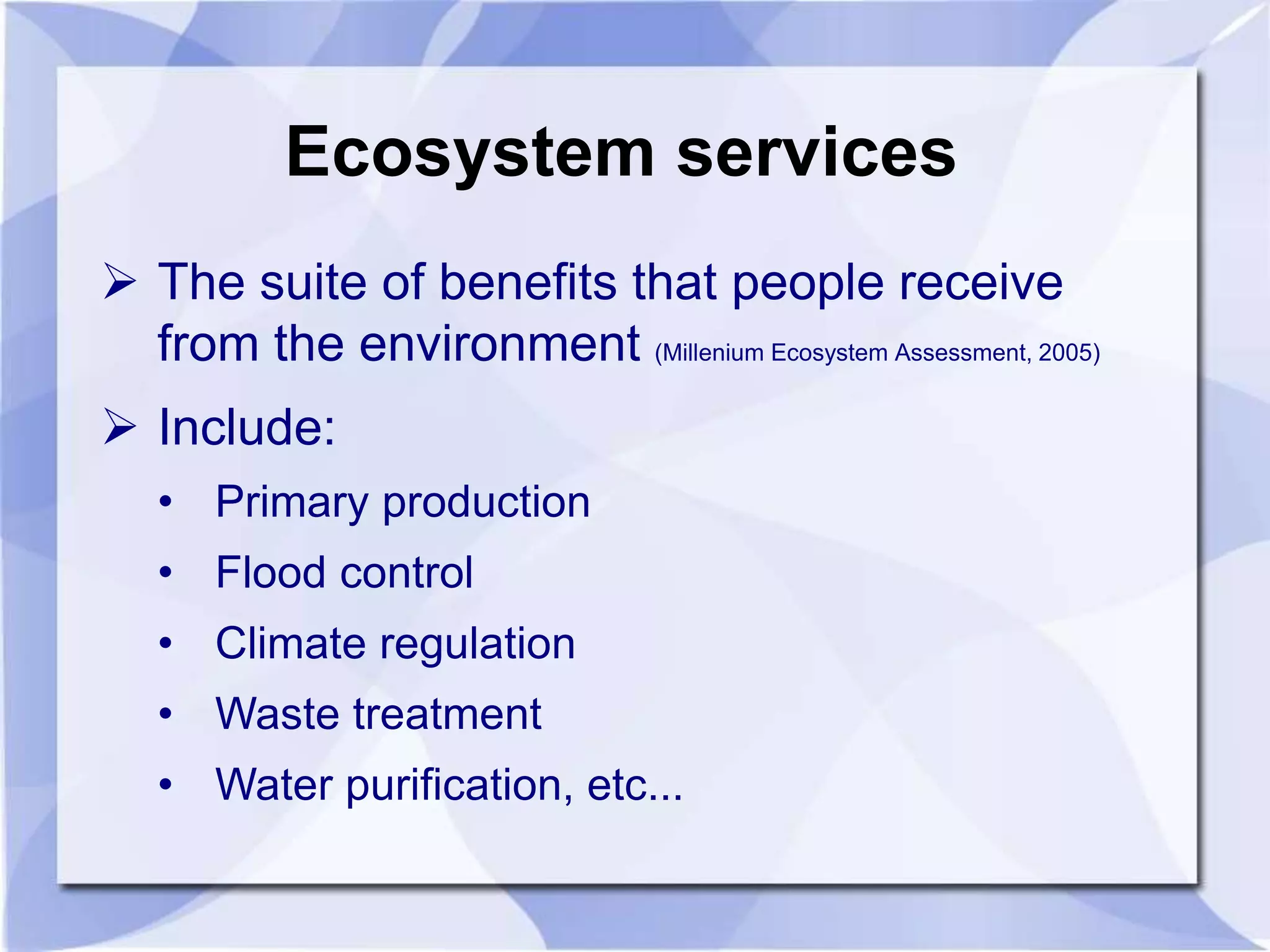
 The suite of benefits that people receive 
from the environment (Millenium Ecosystem Assessment, 2005) 
 Include: 
• Primary production 
• Flood control 
• Climate regulation 
• Waste treatment 
• Water purification, etc...
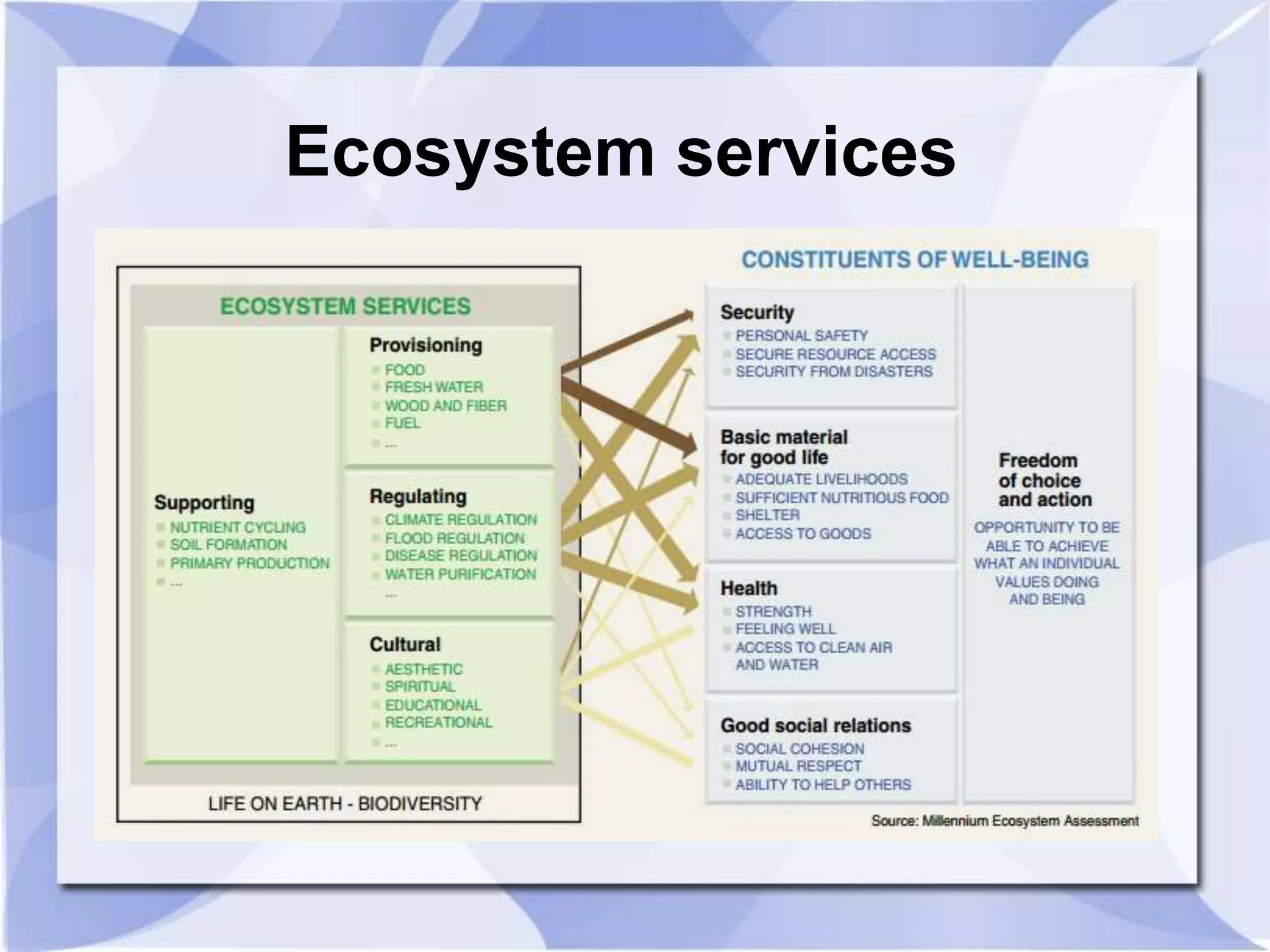
Ecosystem services 
Provisioning 
 Food 
 Wood 
 Fibre 
 Fuel 
Regulation 
 Climate regulation 
 Flood regulation 
 Disease regulation 
 Water purification 
Cultural 
 Aesthetic 
 Spiritual 
 Educational 
 Recreational 
Supporting 
 Nutrient cycling 
 Soil formation 
 Primary 
production 
Security 
 Personal safety 
 Secure resource access 
 Security from disasters 
Basic material for 
good life 
 Adequate livelihood 
 Sufficient nutrients 
 Shelter 
Health 
 Strength 
 Feeling well 
 Clean water 
Social relations 
 Social cohesion 
 Mutual respect 
 Ability to help others 
Freedom of 
choice and 
action 
Opportunity to be 
able to achieve 
what an individual 
values doing and 
being
Economic value of global 
ecosystem services 
 Global value estimated between US$125-145 
trillion per year. 
 Terrestrial ecosystems ~US$75.1 trillion 
• Forests ~US$16.2 trillion 
• Wetlands ~US$26.4 trillion 
• Grasslands ~US$18.4 billion 
Constanza et al., 2014
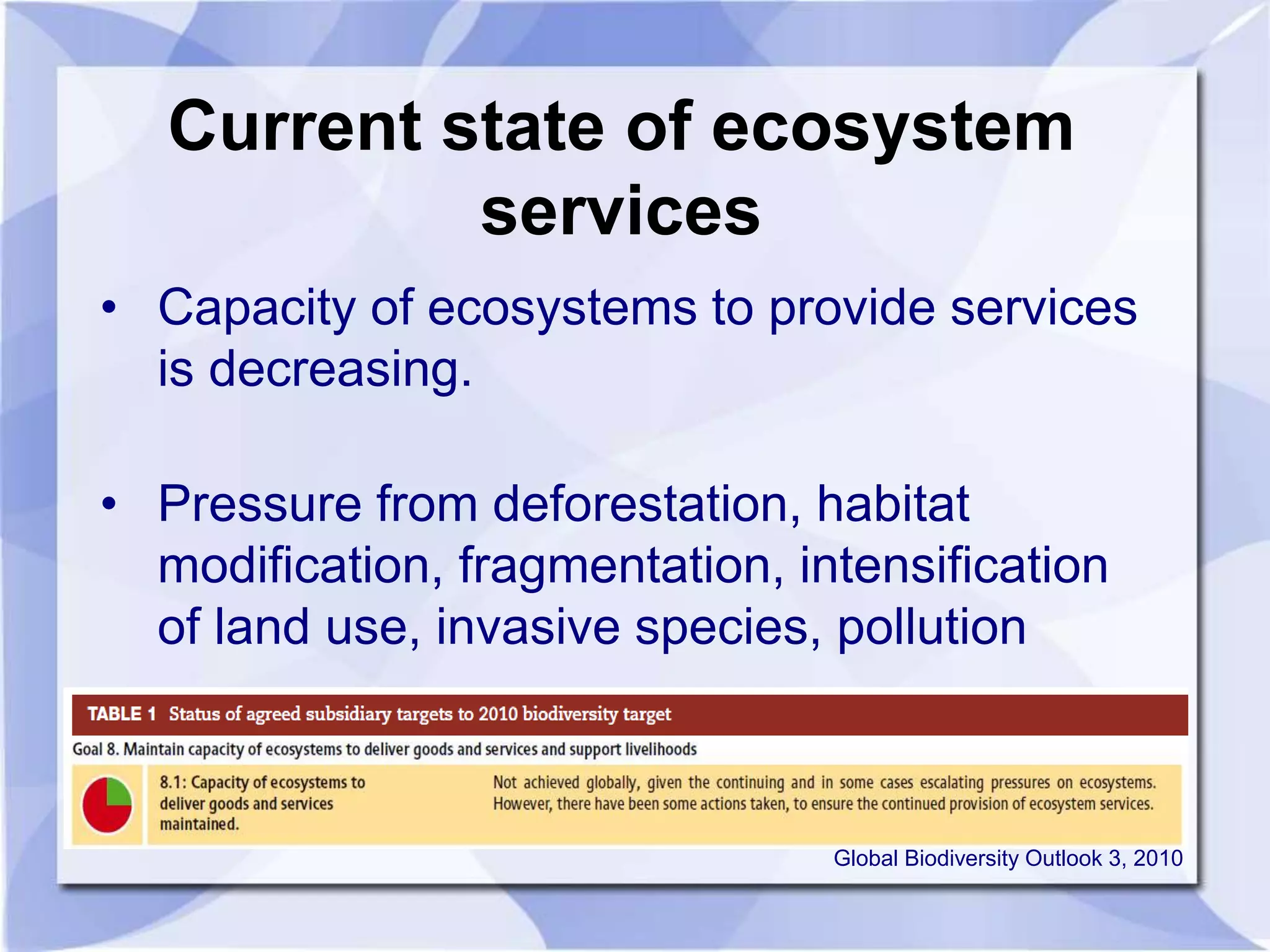
Current state of ecosystem 
services 
• Capacity of ecosystems to provide services 
is decreasing. 
• Pressure from deforestation, habitat 
modification, fragmentation, intensification 
of land use, invasive species, pollution 
Global Biodiversity Outlook 3, 2010
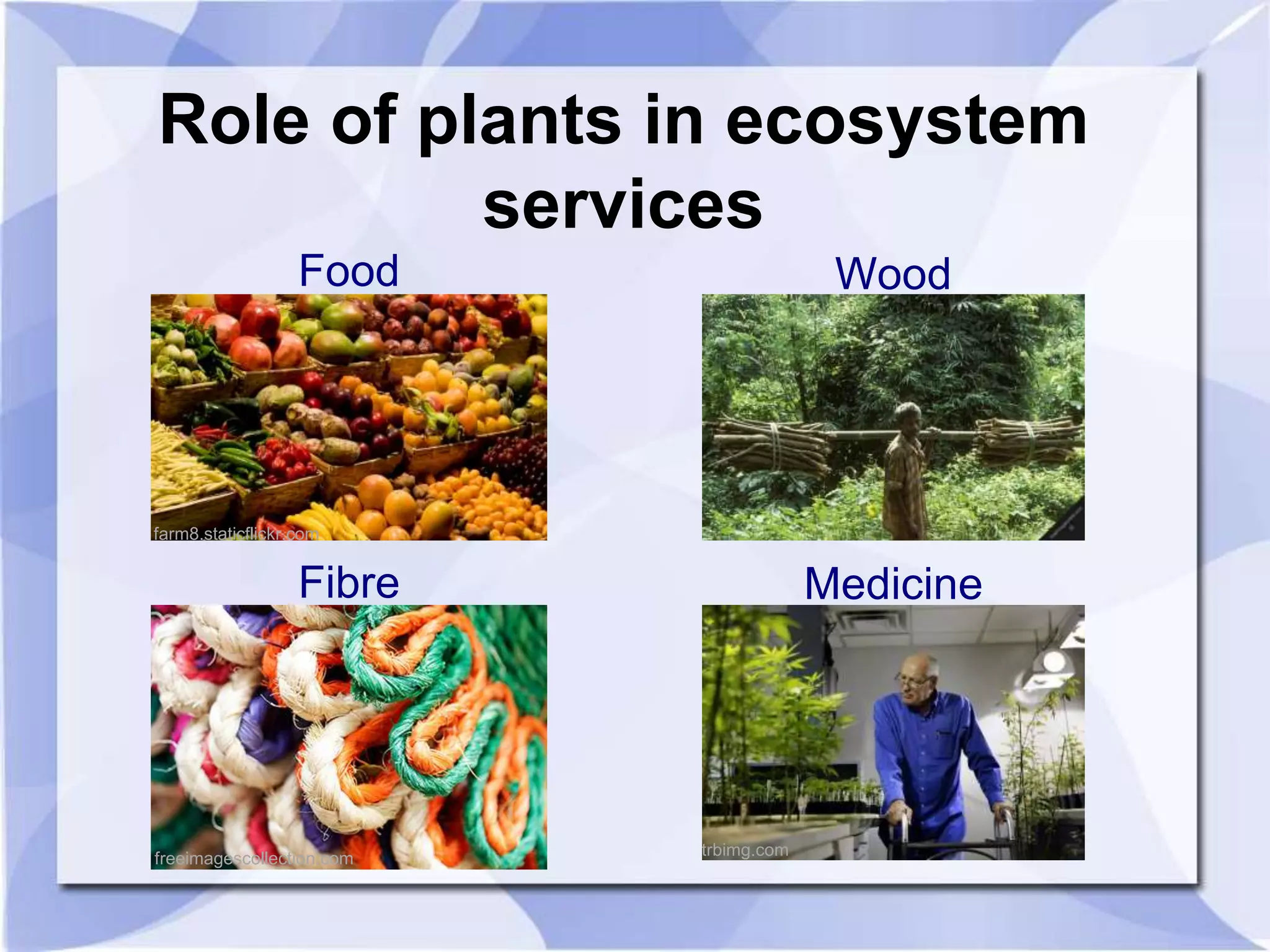
Role of plants in ecosystem 
services 
Food 
farm8.staticflickr.com 
Fibre 
freeimagescollection.com 
Medicine 
trbimg.com 
Wood
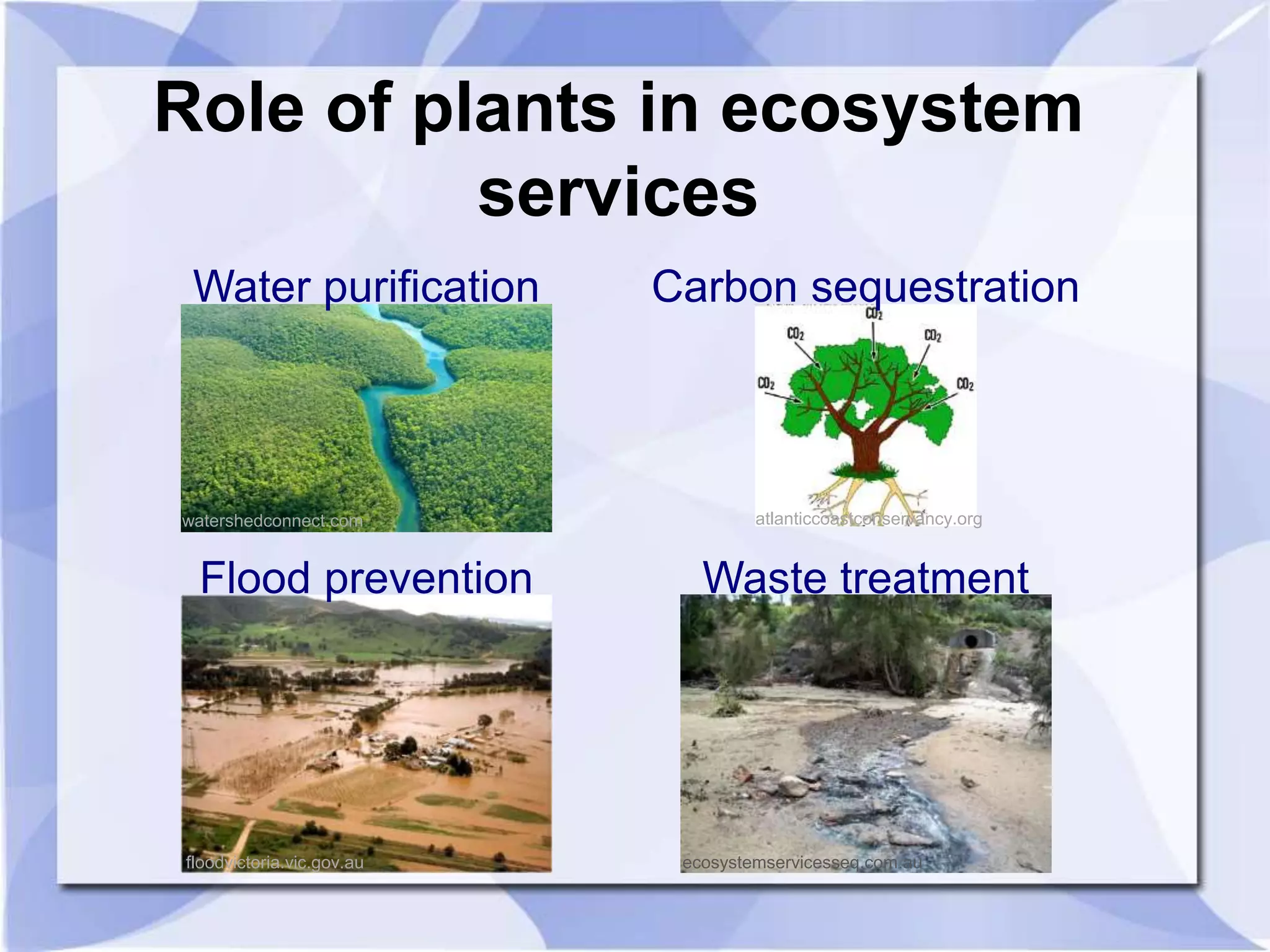
Role of plants in ecosystem 
services 
Water purification Carbon sequestration 
watershedconnect.com atlanticcoastconservancy.org 
Flood prevention Waste treatment 
floodvictoria.vic.gov.au ecosystemservicesseq.com.au
Removal of plant biomass 
 Reduced capacity for: 
• Flood regulation 
• Water purification 
• Carbon uptake 
• Waste treatment 
 Potential for decrease in production of: 
• Wood 
• Food
Reduction in plant diversity 
 Over 10,000 threatened plant species. 
 Ecosystem productivity decreases with decreased 
biodiversity. 
 Loss of biodiversity reduces the stability of an 
ecosystem. 
 Carbon sequestration increases with diversity.
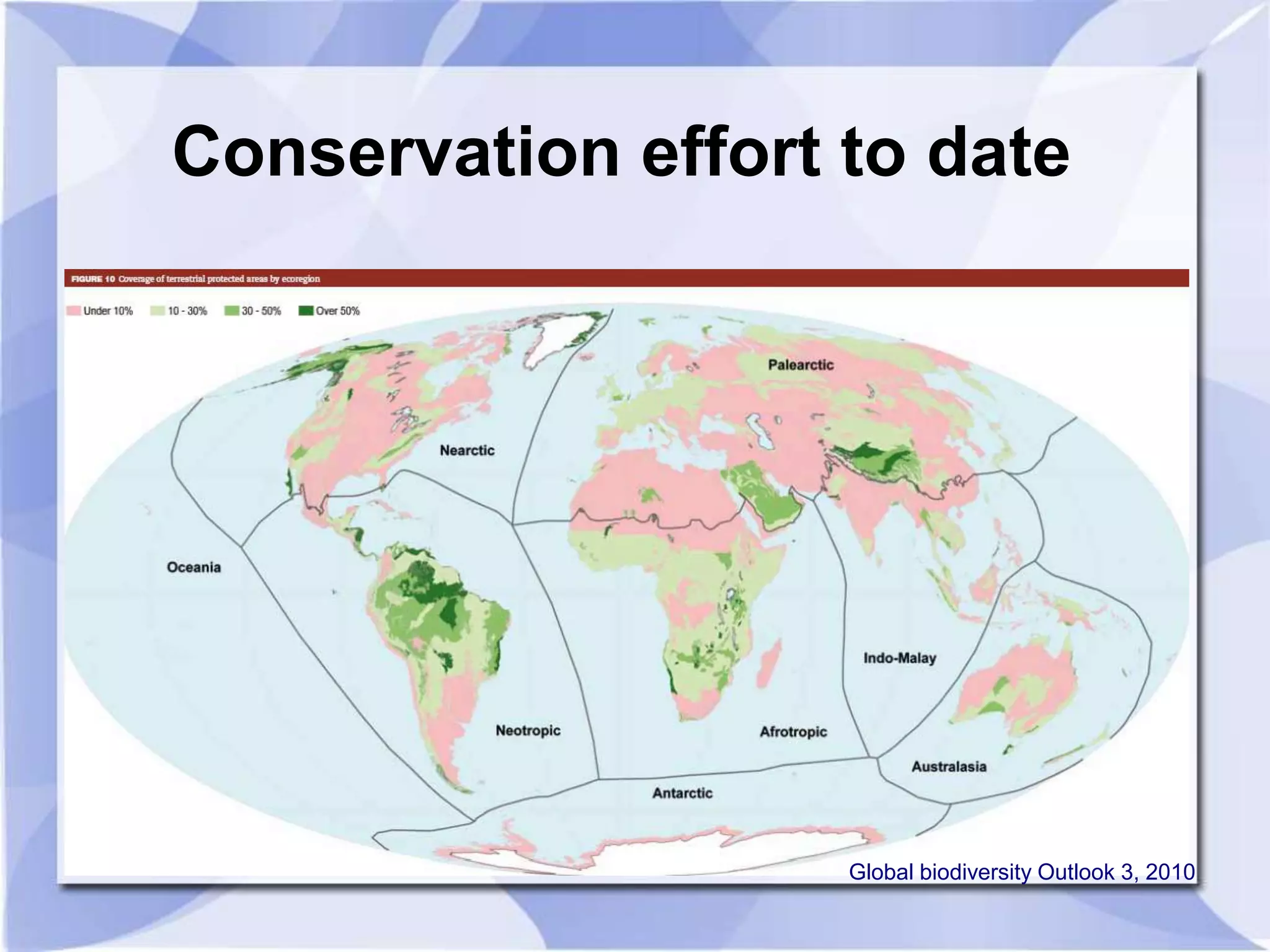
Conservation effort to date 
 More than 10% of land is now protected in more than half of 
the world's ecoregions. 
 Many areas of particular importance are protected. 
 Reduction in rate of deforestation in tropical forest in many 
countries. 
 Europe and Asia had an increase in forest cover from 2000- 
2010. 
 Over 170 countries have biodiversity strategies and action 
plans. Global Biodiversity Outlook 3, 2010
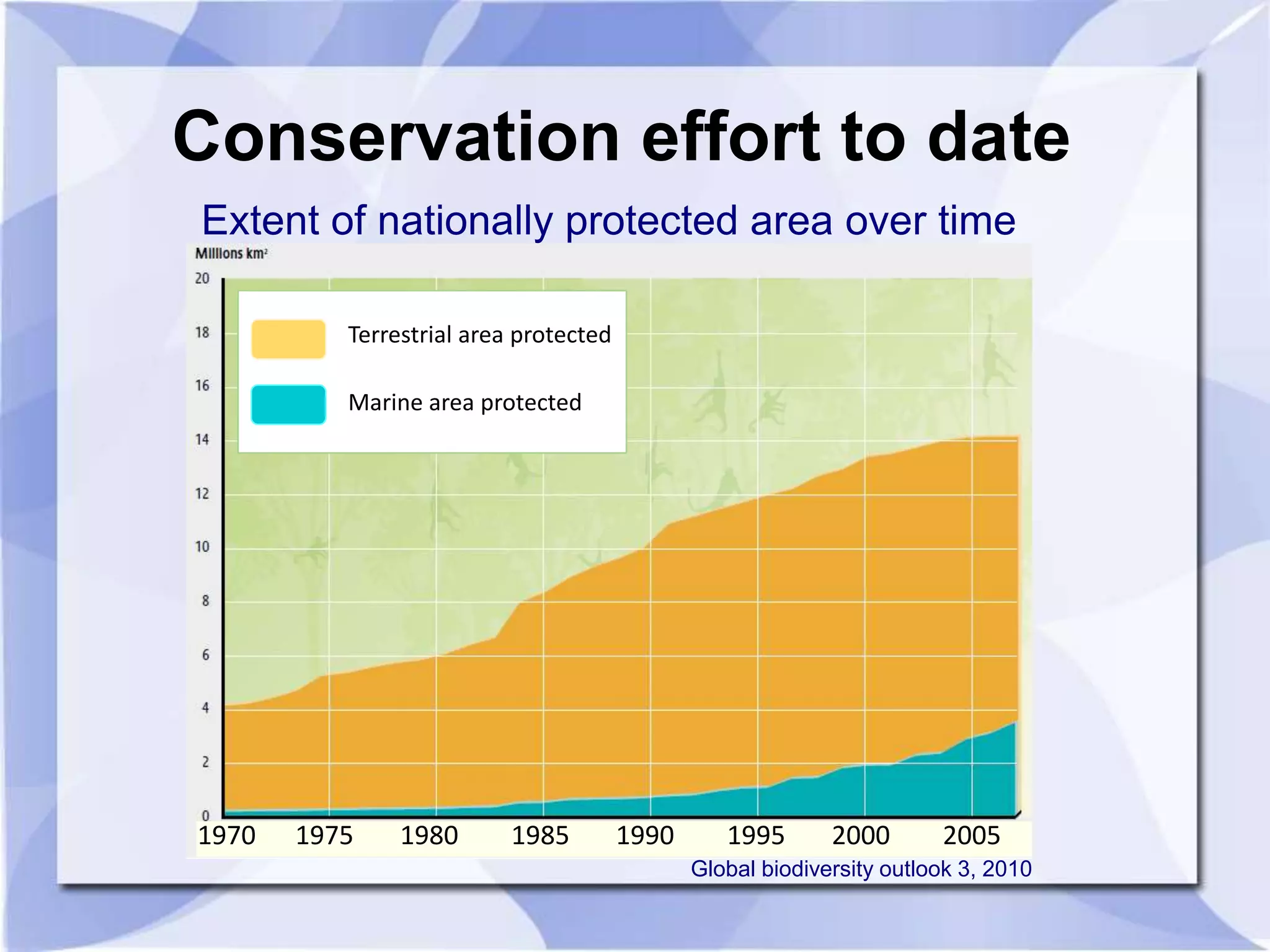
Conservation effort to date 
Extent of nationally protected area over time 
Global biodiversity outlook 3, 2010 
Million km² 
Terrestrial area protected 
Marine area protected 
20 
18 
16 
14 
12 
10 
8 
6 
4 
2 
0 
1970 1975 1980 1985 1990 1995 2000 2005
Conservation effort to date 
Global biodiversity Outlook 3, 2010
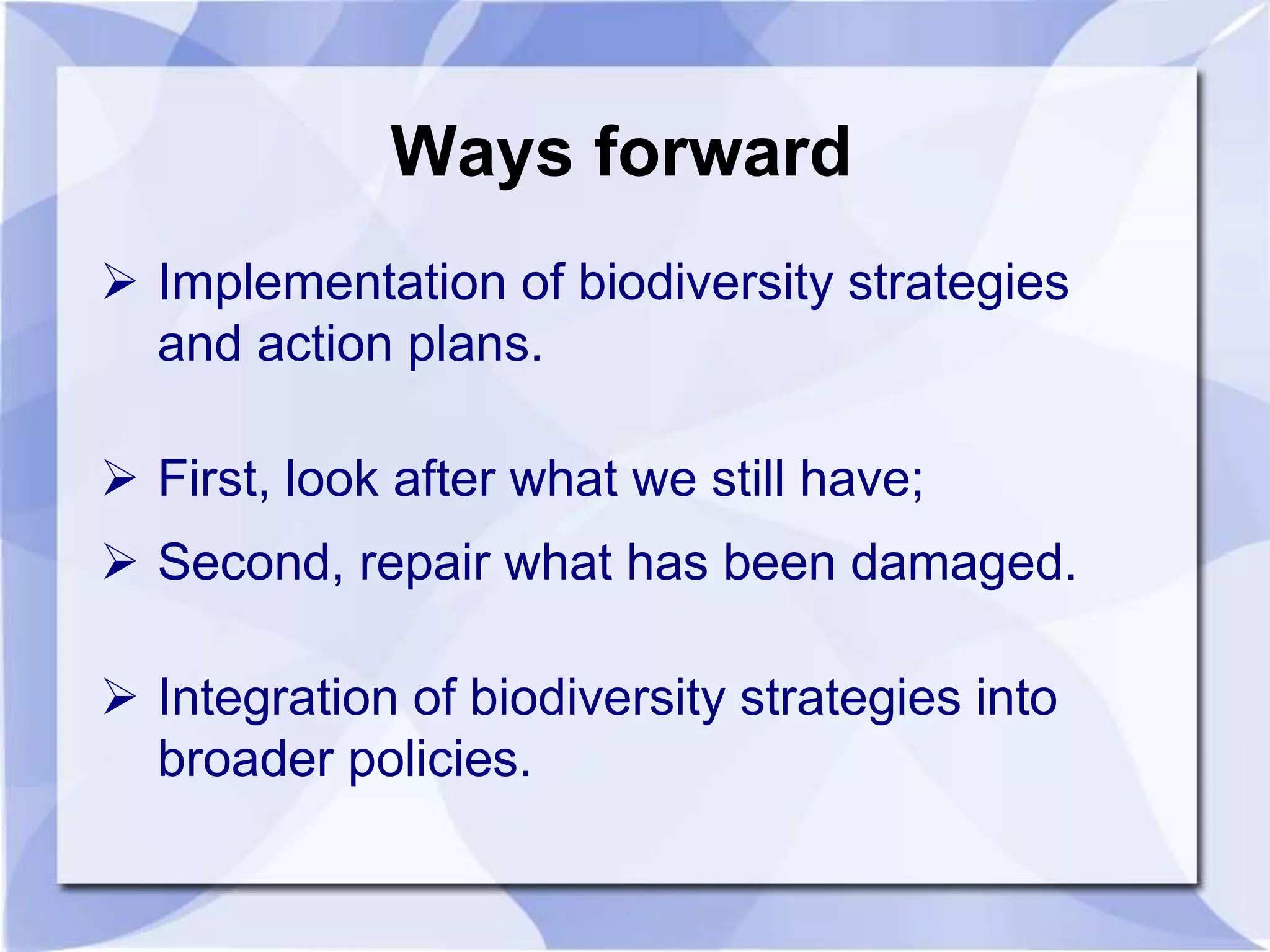
Ways forward 
 Implementation of biodiversity strategies 
and action plans. 
 First, look after what we still have; 
 Second, repair what has been damaged. 
 Integration of biodiversity strategies into 
broader policies.
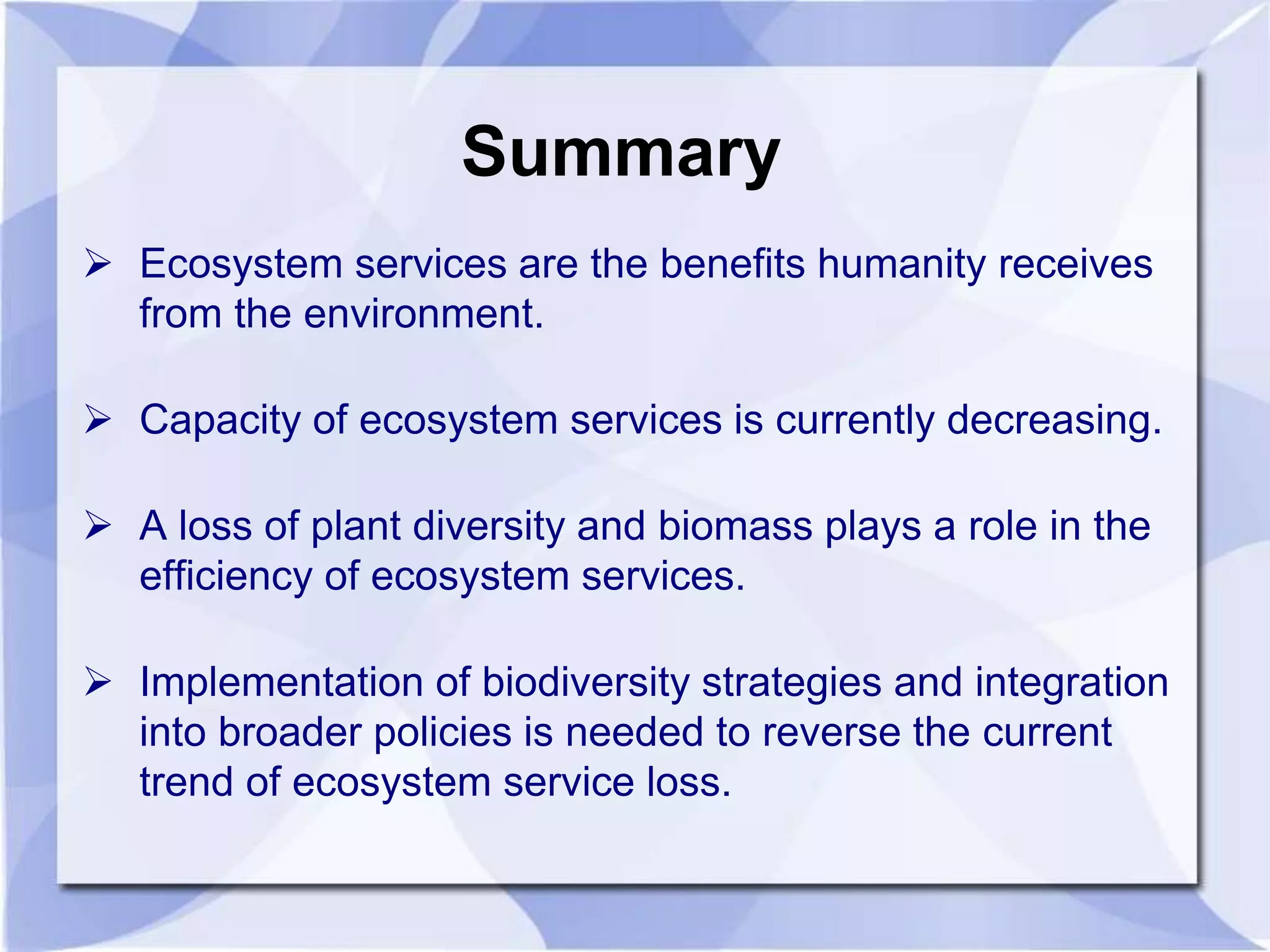
Summary 
 Ecosystem services are the benefits humanity receives 
from the environment. 
 Capacity of ecosystem services is currently decreasing. 
 A loss of plant diversity and biomass plays a role in the 
efficiency of ecosystem services. 
 Implementation of biodiversity strategies and integration 
into broader policies is needed to reverse the current 
trend of ecosystem service loss.
References 
de Groot, R. S., Wilson, M. A., Boumans, R. M. J. (1992). A typology for the classification, 
description and valuation of ecosystem functions, goods and services. Ecological economics, 
41(3): 393-408. 
Cardinale, B. J., Duffy, J. E., Gonzales, A., Hooper, D. U. (2012). Biodiversity loss and its impacts 
on humanity. Nature, 486: 59-67. 
Costanza, R., de Groot, R., Sutton, P., van der Ploeg, S., et al. (2014). Changes in the global 
value of ecosystem services. Global Environment Change, 26: 152-158. 
Millennium Ecosystem Assessment, (2005). Ecosystems and Human Well-being: Synthesis. 
Washington, DC: Island Press. 
Santos, J. E., Nogueira, F., Pires, J. S., Obara, A. T., Pires, A. M. (2001). The Value of the 
Ecological Station of Jatai's Ecosystem Services and Natural Capital. Revista Brasileira de 
Biologia, 61(2): 171-190. 
Secretariat of the Convention on Biological Diversity. (2010). Global Biodiversity Outlook 3. 
Montréal, Canada: Author. 
Tilman, D., Wedin, D., Knops, J. (1996). Productivity and sustainability influenced by diversity in 
grassland ecosystems. Nature, 379: 718-720.

Ecosystem services and conservation

  • 1.
    Ecosystem services andthe importance of plant conservation static.wix.com
  • 2.
    Overview  Whatare ecosystem services?  Economic value and current trends of ecosystem services  Importance of plants  Conservation effort and ways forward
  • 3.
    Ecosystem services The suite of benefits that people receive from the environment (Millenium Ecosystem Assessment, 2005)  Include: • Primary production • Flood control • Climate regulation • Waste treatment • Water purification, etc...
  • 4.
    Ecosystem services Provisioning  Food  Wood  Fibre  Fuel Regulation  Climate regulation  Flood regulation  Disease regulation  Water purification Cultural  Aesthetic  Spiritual  Educational  Recreational Supporting  Nutrient cycling  Soil formation  Primary production Security  Personal safety  Secure resource access  Security from disasters Basic material for good life  Adequate livelihood  Sufficient nutrients  Shelter Health  Strength  Feeling well  Clean water Social relations  Social cohesion  Mutual respect  Ability to help others Freedom of choice and action Opportunity to be able to achieve what an individual values doing and being
  • 5.
    Economic value ofglobal ecosystem services  Global value estimated between US$125-145 trillion per year.  Terrestrial ecosystems ~US$75.1 trillion • Forests ~US$16.2 trillion • Wetlands ~US$26.4 trillion • Grasslands ~US$18.4 billion Constanza et al., 2014
  • 6.
    Current state ofecosystem services • Capacity of ecosystems to provide services is decreasing. • Pressure from deforestation, habitat modification, fragmentation, intensification of land use, invasive species, pollution Global Biodiversity Outlook 3, 2010
  • 7.
    Role of plantsin ecosystem services Food farm8.staticflickr.com Fibre freeimagescollection.com Medicine trbimg.com Wood
  • 8.
    Role of plantsin ecosystem services Water purification Carbon sequestration watershedconnect.com atlanticcoastconservancy.org Flood prevention Waste treatment floodvictoria.vic.gov.au ecosystemservicesseq.com.au
  • 9.
    Removal of plantbiomass  Reduced capacity for: • Flood regulation • Water purification • Carbon uptake • Waste treatment  Potential for decrease in production of: • Wood • Food
  • 10.
    Reduction in plantdiversity  Over 10,000 threatened plant species.  Ecosystem productivity decreases with decreased biodiversity.  Loss of biodiversity reduces the stability of an ecosystem.  Carbon sequestration increases with diversity.
  • 11.
    Conservation effort todate  More than 10% of land is now protected in more than half of the world's ecoregions.  Many areas of particular importance are protected.  Reduction in rate of deforestation in tropical forest in many countries.  Europe and Asia had an increase in forest cover from 2000- 2010.  Over 170 countries have biodiversity strategies and action plans. Global Biodiversity Outlook 3, 2010
  • 12.
    Conservation effort todate Extent of nationally protected area over time Global biodiversity outlook 3, 2010 Million km² Terrestrial area protected Marine area protected 20 18 16 14 12 10 8 6 4 2 0 1970 1975 1980 1985 1990 1995 2000 2005
  • 13.
    Conservation effort todate Global biodiversity Outlook 3, 2010
  • 14.
    Ways forward Implementation of biodiversity strategies and action plans.  First, look after what we still have;  Second, repair what has been damaged.  Integration of biodiversity strategies into broader policies.
  • 15.
    Summary  Ecosystemservices are the benefits humanity receives from the environment.  Capacity of ecosystem services is currently decreasing.  A loss of plant diversity and biomass plays a role in the efficiency of ecosystem services.  Implementation of biodiversity strategies and integration into broader policies is needed to reverse the current trend of ecosystem service loss.
  • 16.
    References de Groot,R. S., Wilson, M. A., Boumans, R. M. J. (1992). A typology for the classification, description and valuation of ecosystem functions, goods and services. Ecological economics, 41(3): 393-408. Cardinale, B. J., Duffy, J. E., Gonzales, A., Hooper, D. U. (2012). Biodiversity loss and its impacts on humanity. Nature, 486: 59-67. Costanza, R., de Groot, R., Sutton, P., van der Ploeg, S., et al. (2014). Changes in the global value of ecosystem services. Global Environment Change, 26: 152-158. Millennium Ecosystem Assessment, (2005). Ecosystems and Human Well-being: Synthesis. Washington, DC: Island Press. Santos, J. E., Nogueira, F., Pires, J. S., Obara, A. T., Pires, A. M. (2001). The Value of the Ecological Station of Jatai's Ecosystem Services and Natural Capital. Revista Brasileira de Biologia, 61(2): 171-190. Secretariat of the Convention on Biological Diversity. (2010). Global Biodiversity Outlook 3. Montréal, Canada: Author. Tilman, D., Wedin, D., Knops, J. (1996). Productivity and sustainability influenced by diversity in grassland ecosystems. Nature, 379: 718-720.