ECOSYSTEM
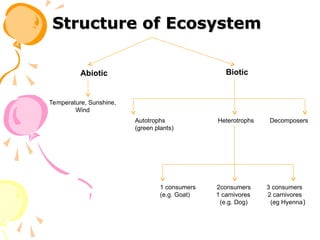
Structure of Ecosystem
Biotic
Abiotic
Temperature, Sunshine,
Wind
Autotrophs Heterotrophs Decomposers
(green plants)
1 consumers 2consumers 3 consumers
(e.g. Goat) 1 carnivores 2 carnivores
(e.g. Dog) (eg Hyenna)
Components of the ecosystem
There are 2 basic elements in a given ecosystem
1. Living or biotic element
2. Non-living or abiotic element
Biotic component
Living parts of ecosystem can be sub-divided into
(a) Autotrophs: - are the green plants which are the primary
producers because they are able to convert the atmospheric
sunlight through photosynthesis to manufacture their own
food
b) Heterotrophs: - they cannot synthesize their own food
from sunlight and then depend on the primary producers
(green plants). They are thus consumers. There are 3 levels
of consumers:-
1. Primary consumers: - are the herbivores that feed
directly on the primary producers. E.g Sheep, Goat.
2. Secondary consumers: - feed on the primary consumers.
They are the carnivores e.g Dog, Cat.
3. Tertiary consumers:- are various carnivores that feeds
on other carnivores e.g Hyena,
4. Decomposers: - These break down the producers and
the consumers to micro part for reservation back into the
systems e.g Microorganisms
• Abiotic component
Comprises the non-living, in-animate parts called physical
environment.
The physical and chemical components of an
ecosystem constitute its abiotic structure.
It include
• Climate (Temperature, Humidity, Rainfall, Sunshine,
Wind and Evapotranspiration)
• Geographical factors
• Energy
• Nutrients
• Toxic substance
Physical factors
Physical factors
• Sunlight and shade
• Intensity of solar flux
• Duration of sun hours
• Latitude and altitude
• Annual rainfall
• Wind
• Water availability
• Water current
• Soil type
• Average temperature
• Maximum and minimum temperature
Chemical factors
Chemical factors
• Carbon
• Nitrogen
• Phosphorus
• Potassium
• Hydrogen
• Oxygen
• Levels of toxic substances
• Salt causing salinity
• Sulphur
• Various organic substance present in the soil or water
largely influenced the functioning of the ecosystem
Functional Attributes
• Food chain
• Food web
• Energy flow
• Biogeochemical cycle
• Primary and secondary production
• Ecosystem development and regulation
The Earth
1. The hydrosphere is the zone of water that covers over three-quarters
of the earth.
a. Sunlight drives the water cycle.
b. The ability of water to absorb and release great quantities of heat
keeps climate within livable range.
2. The atmosphere is the gaseous layer near earth.
a. The atmosphere is concentrated in lowest 10 kilometers; extends
thinly out to 1,000
b. Major gases are nitrogen, oxygen and carbon dioxide.
c. Carbon dioxide is necessary for photosynthesis.
Atmosphere has 4 layers
• Troposphere
• Stratosphere
• Mesosphere
• Thermosphere
Troposphere
Troposphere
• Starts from earth and extend across 18 km
• Lowest part of atmosphere
• Dense atmosphere
• As altitude increases temperature decreases
• All weather change took place here
• Clouds are formed here
• Tropopause separates troposphere from stratosphere
Stratosphere
Stratosphere
• Starts just above troposphere
• It extends upto 50 km
• Here atmosphere is dry and dense
• Temperature increases due to absorption of
u.v.radiation
• Ozone layer is present here
• Strato pause separates stratosphere from
mesosphere.
Mesosphere
Mesosphere
• Starts just above stratosphere
• It extends upto 85km
• Temperature again decreases as altitude
increases
• Meteorites burns and disintegrates here
• Mesopause separates mesosphere from
thermosphere
• Stratosphere &stratopause
• Mesosphere & mesopause
• Are middle layer of the atmosphere
Thermosphere
Thermosphere
• Starts just above mesosphere
• It extends upto 600 km high
• Temp increases with altitude due to sun
energy.
• Thermosphere is subdivided into 2 layers
ionosphere and exosphere
3. The lithosphere is a rocky substratum that extends about 100 kilometers deep.
a.Weathering of rocks supplies minerals to plants and eventually forms soil.
b. Soil contains decayed organic material (humus) that recycles nutrients to plants.
4. The biosphere is the thin layer where life is possible between the outer
atmosphere and the lithosphere

ECOSYSTEM.ppt for students environment a

  • 1.
  • 2.
    Structure of Ecosystem Structureof Ecosystem Biotic Abiotic Temperature, Sunshine, Wind Autotrophs Heterotrophs Decomposers (green plants) 1 consumers 2consumers 3 consumers (e.g. Goat) 1 carnivores 2 carnivores (e.g. Dog) (eg Hyenna)
  • 3.
    Components of theecosystem There are 2 basic elements in a given ecosystem 1. Living or biotic element 2. Non-living or abiotic element Biotic component Living parts of ecosystem can be sub-divided into (a) Autotrophs: - are the green plants which are the primary producers because they are able to convert the atmospheric sunlight through photosynthesis to manufacture their own food
  • 4.
    b) Heterotrophs: -they cannot synthesize their own food from sunlight and then depend on the primary producers (green plants). They are thus consumers. There are 3 levels of consumers:- 1. Primary consumers: - are the herbivores that feed directly on the primary producers. E.g Sheep, Goat. 2. Secondary consumers: - feed on the primary consumers. They are the carnivores e.g Dog, Cat. 3. Tertiary consumers:- are various carnivores that feeds on other carnivores e.g Hyena, 4. Decomposers: - These break down the producers and the consumers to micro part for reservation back into the systems e.g Microorganisms
  • 5.
    • Abiotic component Comprisesthe non-living, in-animate parts called physical environment. The physical and chemical components of an ecosystem constitute its abiotic structure. It include • Climate (Temperature, Humidity, Rainfall, Sunshine, Wind and Evapotranspiration) • Geographical factors • Energy • Nutrients • Toxic substance
  • 6.
    Physical factors Physical factors •Sunlight and shade • Intensity of solar flux • Duration of sun hours • Latitude and altitude • Annual rainfall • Wind • Water availability • Water current • Soil type • Average temperature • Maximum and minimum temperature
  • 7.
    Chemical factors Chemical factors •Carbon • Nitrogen • Phosphorus • Potassium • Hydrogen • Oxygen • Levels of toxic substances • Salt causing salinity • Sulphur • Various organic substance present in the soil or water largely influenced the functioning of the ecosystem
  • 8.
    Functional Attributes Functional Attributes •Food chain • Food web • Energy flow • Biogeochemical cycle • Primary and secondary production • Ecosystem development and regulation
  • 9.
    The Earth 1. Thehydrosphere is the zone of water that covers over three-quarters of the earth. a. Sunlight drives the water cycle. b. The ability of water to absorb and release great quantities of heat keeps climate within livable range. 2. The atmosphere is the gaseous layer near earth. a. The atmosphere is concentrated in lowest 10 kilometers; extends thinly out to 1,000 b. Major gases are nitrogen, oxygen and carbon dioxide. c. Carbon dioxide is necessary for photosynthesis.
  • 10.
    Atmosphere has 4layers Atmosphere has 4 layers • Troposphere • Stratosphere • Mesosphere • Thermosphere
  • 11.
    Troposphere Troposphere • Starts fromearth and extend across 18 km • Lowest part of atmosphere • Dense atmosphere • As altitude increases temperature decreases • All weather change took place here • Clouds are formed here • Tropopause separates troposphere from stratosphere
  • 12.
    Stratosphere Stratosphere • Starts justabove troposphere • It extends upto 50 km • Here atmosphere is dry and dense • Temperature increases due to absorption of u.v.radiation • Ozone layer is present here • Strato pause separates stratosphere from mesosphere.
  • 13.
    Mesosphere Mesosphere • Starts justabove stratosphere • It extends upto 85km • Temperature again decreases as altitude increases • Meteorites burns and disintegrates here • Mesopause separates mesosphere from thermosphere
  • 14.
    • Stratosphere &stratopause •Mesosphere & mesopause • Are middle layer of the atmosphere
  • 15.
    Thermosphere Thermosphere • Starts justabove mesosphere • It extends upto 600 km high • Temp increases with altitude due to sun energy. • Thermosphere is subdivided into 2 layers ionosphere and exosphere
  • 16.
    3. The lithosphereis a rocky substratum that extends about 100 kilometers deep. a.Weathering of rocks supplies minerals to plants and eventually forms soil. b. Soil contains decayed organic material (humus) that recycles nutrients to plants. 4. The biosphere is the thin layer where life is possible between the outer atmosphere and the lithosphere