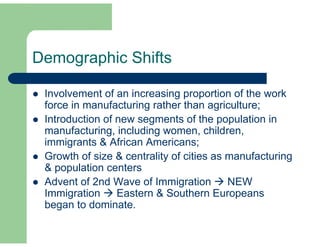
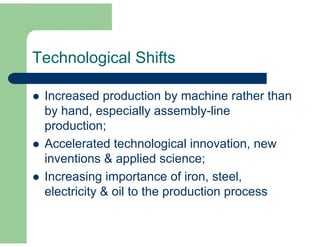
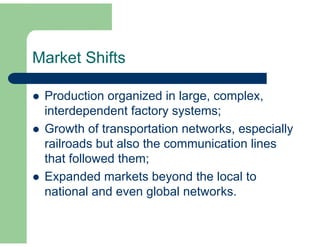
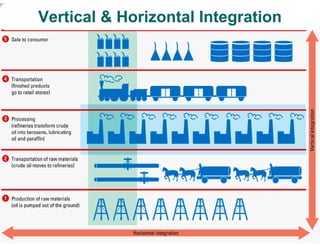
During the Gilded Age, the US economy underwent a revolution characterized by demographic, technological, market, business, and government shifts. There was a movement from agriculture to manufacturing, and new groups like women, immigrants, and African Americans joined the workforce. Cities grew as manufacturing and population centers. New technologies like the assembly line increased production, while expanded transportation and communication networks created national and global markets. Large enterprises specialized and took advantage of economies of scale, with increased capital accumulation through banking and corporations vertically and horizontally integrating. The federal government subsidized economic programs and infrastructure development while also seeking to regulate some corporate abuses.