75
ÝÄÈÉÍ ÇÀÑÀÃ: îíîë,ïðàêòèê
Introduction
In our daily lives we have many uncertainties facing us which creates an
understating of a risk. The risk can be talked not only in people’s
individuals’ lives but also in business and government organizations and
other institutions’ operations and it is one of the primary things that have to
be managed. The company needs to monitor not only its daily operations
but also make projections for the future possible risks.
It is important in market economy for companies to be competitive as never
before and handle many changes that are associated with market
economies. Especially, for former social countries the transition to market
economy involves many challenging process and learning experiences. In
addition to market instability and uncertainty, there is no sufficient
infrastructure for these companies. These same problems can be seen in
the government sector of these former socialist countries in their ministries
and agencies’ operations and legislature.
Transition from central planned economy to market economy requires
legislative systems and adequate laws, sound financial market regulation,
good business ethics, protection of copyright and trademarks. Also special
laws need to be created for arbitrary, anti-corruption. The legal institutions
need to be fair and just, independent and provide efficient operations2
. The
government organizations will serve primarily not in a central planning and
regulatory roles as before but more of a coordinator and regulator role.
What is Risk?
In September 11th
, 2001 there was a terrorist attack in United States of America on two
World Trade Centers, were many people had lost their lives and much physical and
intellectual damage had occurred.
We also have risk in our daily lives and the same holds true for companies and
government organizations and different type of risks needs to be managed through special
risk management methodologies.
How organizations overcome problems and risk associated with risk will largely depend on
preparedness of the organization, proper risk management plan and prior risk
management experience. Therefore, risk management should be studied on scientific
basis and each organization needs to implement risk management plan and strategies.
There are basic two types of risk: we participate in risky activities voluntarily and risk that
could happen without our knowledge and acceptance. The example of voluntarily risk is
participating in car racing. Example of unpredictable risk is different natural disasters such
as flood, electrical, air pollution risks.
This is also defined as objective and subjective risk. Objective risk is not related to human
cognition, desire and will contain unforeseen things such as earthquake, flood. Subjective
2
Friedman, L. Thomas. Lexus and the Olive Tree, Anchor Books, 2000
72.
76
ÝÄÈÉÍ ÇÀÑÀÃ: îíîë,ïðàêòèê
risks happen from not properly assessing the issue, taking preventive measures and not
giving needed attention
3
When we identify risks we assign monetary value but not all risks are easy to be identified
in monetary terms. The risk of organizational reputation falling or customer being
dissatisfied with our product or service quality is difficult to be put into monetary units of
measure.
Any individual, organization is susceptible to both objective and subjective risk. For
example, organization can be under objective risk of different types of natural disasters
such as flood, earthquake and hurricane as well as under subjective risk such as market
competition, loosing its reputation or valued customers. Therefore, organizations need to
take into consideration both objective and subjective types of risks and create its risk
management plan accordingly.
In relation to risk there are four concepts. These are hazard, vulnerability, risk and
disaster
4
(UNEP 3, Vulnerability Indices). Hazard is the possibility of dangerous incident
happening, vulnerability is damage level, classification in relation to possible hazard, risk is
the probability that certain hazard occurs, disaster is when many people are involved in
disastrous event, much damage is caused and normal social condition is disturbed and
situation is beyond internal resource affordability and capacity of organization
5
Types of Risks
There are seven general classifications of risk:
1. Physical
2. Social risk
3. Political risk
4. Legal risk
5. Operational risk
6. Economic risk
7. Management capacity risk
Physical risk will include risks that are possible from natural environment. These natural
risks can have financial and other types of negative consequences to the organization.
Social risk is related to social traditions, changes in social trends. For example, Japanese
market is known for its traditionalistic approach, which is related to the fact that their
society is much traditionalist and this causes difficulties for foreign companies to enter
Japanese market. For different types of organizations social risk can be considered from
different perspectives. For business organizations social risk is primarily related to
customers’ product, services choices that are due to social trends and preferences. For
government organizations, this on the other hand means taking into account how do
changes in society influence the whole country’s affairs and government organizations’ and
agencies’ operations. As for Mongolia, as the country moved to market economy the
3
D. Boldbaatar, Ts Molom “Insurance”, Ulaanbaatar, 2000.
4
UNEP 3, Vulnerability Indices, Climate Change Impacts and Adaptation, UNEP Policy
Series, 2001
5
N. Sonintamir, Hazard, Vulnerability, Risk Assessment General Methodology.
Ulaanbaatar, 2004
73.
77
ÝÄÈÉÍ ÇÀÑÀÃ: îíîë,ïðàêòèê
government needs to be as much flexible, intelligent as never before in order to regulate,
coordinate all the changes that are happening as a result of the market economy.
Political risk relates to the involvement of domestic and international politics into
operations of organization. In countries were there are no laws to protect the rights of
private companies, governments sometimes do not compensate for business
nationalization process. Mongolian government had increased its taxes on imported beer
in order to support its domestic beer production companies. This caused many foreign
beer importing companies to close their businesses.
Legal risk can be the risk that there are new laws and regulations implemented that do not
service the company or that the company breaches law and can be called to court. The
internal operations without proper controls and policies often cause companies
unnecessary legal problems and risks. Especially, in market economy companies need to
have competent lawyers, who are consistently up-to-date on any modifications to existing
laws and are well aware of the new laws.
Operational risk is associated with external and internal influences on organizational
operations of organization. Operational risk is the risk of not conducting operations
economically, efficiently, effectively and not meeting its operational targets. All divisions of
the business should work in coordination to reduce organization’s overall operational risk.
Organizations develop operational plans, proper structures and regulations to monitor and
manage their operational risk
6
.
Proper internal monitoring within organizations ensures that operational risk is properly
managed. These management controls provide guidance and direction for organization as
a whole. These controls include policy and standards that are applied to everyone in the
organization. Also they include management’s way of doing business as well as the culture
of organization.
Management controls that are well thought-out will provide for better processes, optimal
use of resource and will reduce the risk that something with operations could go wrong.
Organization’s operational risk controls can be: risk controls, preventive controls, detective
controls, corrective controls, automated or programmed controls and manual controls
7
Economic risk is the risk that country’s local or regional, world economy can have much
impact on that organization. When the economy is not good this creates tough times for
both businesses and government organizations. Citizens have low consumption rates,
government collects less in tax revenue and investment rates fall.
Management capacity risk studies ability of the organization to manage when the risk
happens. The same type of political, legal, economic or any other type of risk can happen
to many organizations but organizations will have different degree of damage to their
businesses based on their management capacity to manage these risks. Therefore, we
have to study risk management methodologies that organizations can implement when
managing their risks.
Risk Management
6
Internet.www.searchCIO.com, Types of organizational risk, 2004
7
Business Process Evaluation and Risk Management, England National Audit Office
Guidance, 2004.
74.
78
ÝÄÈÉÍ ÇÀÑÀÃ: îíîë,ïðàêòèê
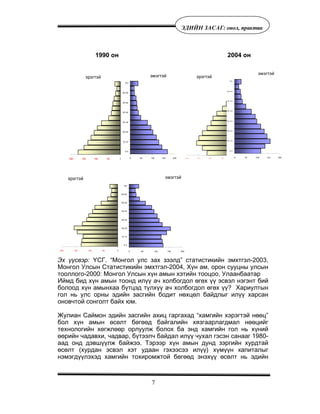
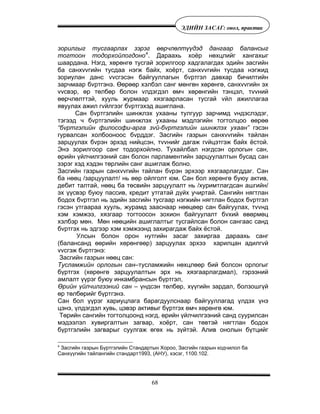
Organizations have three types of management. Strategic, operational and risk
management
8
(Figure 1).
Figure 1: Three Types of Organizational Management
From Figure 2 we see the importance of risk management in organization is of equal
importance as strategic and operational management. Each organization should have its
strategic, operational and risk management plan and related monitoring and reporting
procedures.
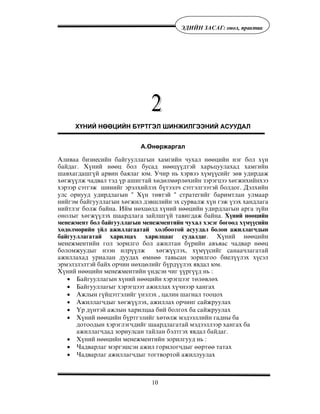
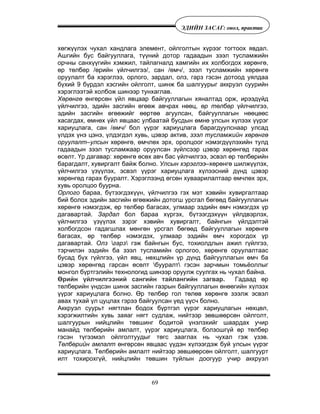
In order to reduce any risk and its negative impacts, scientific risk management
methodology should be used by organizations
9
(Figure 2).
Figure 2: Risk Management Methodology
8
Williams, A and others. “Risk Management and Insurance”, 1995.
9
NASA, Risk Management Office, Internet.2004.
Strategic
Management
Operational
Manageme
Risk
Manageme
Risk Identification
Risk Assessment
Risk Management Plan
Risk Reduction
Risk Monitoring
75.
79
ÝÄÈÉÍ ÇÀÑÀÃ: îíîë,ïðàêòèê
Risk Identification. Organization needs to identify its risks according to six classifications:
Physical, Social, Political, Legal risk, Operational, Economic and Management capacity
risk.
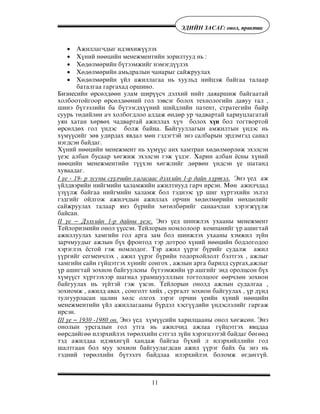
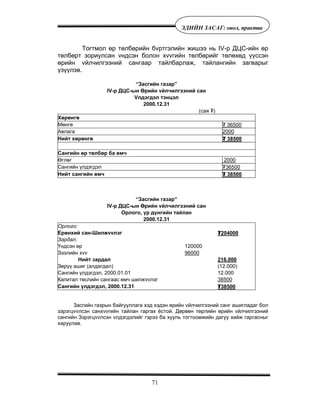
Risk Assessment. All identified risks need to be assessed and classified
10
Figure 3: Risk Assessment Model
Impact
Probability
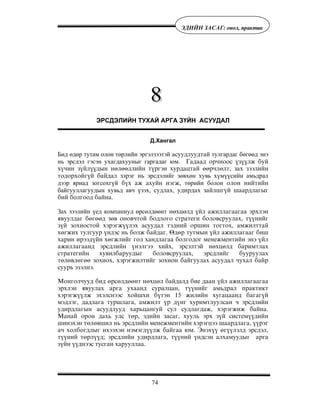
The risks are identified as low, medium and high based on Figure 3 evaluation. For easy
reference we can denote risk with traffic colors. Green being a low risk, yellow as a
medium risk and red as a high risk.
Impact
Probability
Risk Management Plan. After risks are classified as being low, medium and high,
organization is now ready to create its Risk Management Plan. This plan has to definitely
address both high and medium risk and some of the low risks can be left out. Risk
Management Plan has to be up-dated on consistent basis as some new risks might
emerge and some of the low risks might become medium or high risks. Management
should give its attention to the risk management issues, review and participate in Risk
Management Plan development.
Risk Reduction. This is a stage when risks are reduced according to the Risk
management Plan. During any emerging issues and risks that are not included in the plan,
proper changes are needed to be made to the plan. All the staff of organization needs to
be following set procedures and regulations of Risk management plan, report on instances
when plan is impractical or insufficient to ensure is success in reduction of risks.
Risk Monitoring. Once proper procedures are set that will keep risks to be low or once an
apparent risk had been reduced, the risk has to be monitored. Regular motoring and
10
Alastair L.Day, “Mastering Risk Management”, Prentice Hall, 2003.
IMPACT HIGH /
PROBABILITY LOW
IMPACT HIGH /
PROBABILITY HIGH
IMPACT LOW /
PROBABILITY LOW
IMPACT LOW/
PROBABILITY HIGH
MEDIUM RISK HIGH RISK
LOW RISK MEDIUM RISK
76.
80
ÝÄÈÉÍ ÇÀÑÀÃ: îíîë,ïðàêòèê
check-up set of procedures should be developed to check on the main risks of organization
on a constant basis.
Conclusion
The success of risk management depends to the extent senior management of
organization gives importance to risk management. The above mentioned risk
management methodology allows companies to run their businesses successfully and
manage their risks without incurring much costs and wasting their time and resources
trying to manage every risk. Classification of risk and developing risk management plan
allows organizations to allocate appropriate time and resources to risks as needed and by
their degree of imposed threat to stable continuous operations of business.
Citations
Alastair L.Day, “Mastering Risk Management”, Prentice Hall, 2003
Business Process Evaluation and Risk Management, England National Audit Office
Guidance, 2004
D. Boldbaatar, Ts Molom “Insurance”, Ulaanbaatar, 2000
Friedman, L. Thomas, “Lexus and the Olive Tree”, Anchor Books, 2000
Internet.www.searchCIO.com, Types of organizational risk, 2004
NASA, Risk Management Office, Internet.2004
N. Sonintamir, Hazard, Vulnerability, Risk Assessment General Methodology. Ulaanbaatar,
2004
UNEP 3, Vulnerability Indices, Climate Change Impacts and Adaptation, UNEP Policy
Series, 2001
Williams, A and others. “Risk Management and Insurance, 1995





































![94
ÝÄÈÉÍ ÇÀÑÀÃ: îíîë, ïðàêòèê
Øóãàìàí áóñ ìàòåìàòèê çàãâàð: G(rï
) øóãàìàí áóñ ôóíêöûí õóâüä ¿ð
àøèãèéã rï
õ¿¿ãèéí ò¿âøèíã òîäîðõîéëíî.
( ) ( ){ }
( )
0
max ,
n
n
n a n n
G r SK
r
F G r r G r r
μ≤ ⋅
≥
⎡ ⎤ − ⋅⎣ ⎦
(3)
G(rï
) - ÒÒÕ-ûí õýìæýý
ra
– çýýëèéí õ¿¿ãèéí ò¿âøèí /àêòèâûí äóíäàæ õ¿¿/
SC- ººðèéí õºðºíãèéí õýìæýý
μ - ººðèéí õºðºíãèéí õýìæýýíä íîãäîõ òàòàí òºâëºð¿¿ëñýí
õºðºíãèéí êîýôôèöèåíò
Ýíý F[G(rï
),ra
] ôóíêö íü áàíêíû õ¿¿ãèéí îðëîãûã íýìýãä¿¿ëäýã.
Ò¿ðýìãèé ñòðàòåãèéã ÿâóóëàõ ººð íýãýí íü õýëáýð ýäèéí çàñãèéí öàð
õ¿ðýýã íýìýãä¿¿ëýõ áóþó øèíýýð ñàëáàð íýýõ ÿâäàë þì. Ýíý
òîõèîëäîëä áàíêíû çàðäàë íýìýãäýõ ó÷èð ¿¿íä òîõèðñîí ýäèéí
çàñàã ìàòåìàòèêèéí çàãâàðûã àøèãëàõ íü ç¿éòýé.
Á¯À-íû çàãâàð÷ëàëä òºðèéí çîõèöóóëàëòûí ¿¿ðãèéã òóñãàõ íü
çàéëøã¿é. Òºð áîëîí áàíê íü ñàíõ¿¿ãèéí ñåêòîðò õàðèëöàí àøèãòàé
ò¿íø¿¿ä áàéæ ÷àääàã. Òºð íü òàòàí òºâëºð¿¿ëñýí õºðºíãºä
áàòàëãàà ãàðãàõ, õºíãºëºëòòýé çýýë îëãîõ, íºõºí îëãîâîð îëãîõ
çýðýã íü áàíêèíä àøèãòàé ¿éëäë¿¿äèéã õýðýãæ¿¿ëäýã.
Áàíêíû ¿éë àæèëëàãààíû èæ á¿ðýí çàãâàð
Õýðýâ õýñýã÷èëñýí çàãâàðóóä íü áàíêíû ¿éë àæèëàãàíû òîäîðõîé
íýã õýñã¿¿äèéã /àêòèâûí á¿òýö, ÒÒÕ-ûí óäèðäëàãà/ øèíæèëäýã áîë
èæ á¿ðýí çàãâàðóóä íü á¿õýëä íü àâ÷ ¿çäýã. Å.Áàëòåíñïåðãåðàãèéí
¿çýæ áàéãààãààð èæ á¿ðýí çàãâàð íü íýãä¿ãýýðò: Áàíêíû àêòèâ áîëîí
ïàññèâûí /õàðèëöàí õàìààðàë/ øèéäâýð, õî¸ðäóãààðò: Áàíêíû
ººðèéí õºðºíãèéí òóõàé øèéäâýðèéí ¿íäýñëýë áîëîõ ¸ñòîé.
Å.Áàëòåíñïåðãåðàãèéí á¿òýýëä áàíêíû àøãèéí ìàõ áàéëãàõ àêòèâ
áîëîí ïàññèâûí õýìæýýã òîäîðõîéëñîí áàéäàã.
Áàíêíû ¿éë àæèëëàãààíû çàãâàð áîëîâñðóóëàõ îíîëûí àñóóäàëä
Ê.Ñèëèãèéí õóâü íýìýð èõ áàéäàã. Òýð íü äýýð äóðäñàí 2 ÷èãëýëèéã
íýãòãýí èæ á¿ðýí çàãâàðûã áèé áîëãîõîä ººðèéí ñóäàëãàà,](https://image.slidesharecdn.com/econ15-130902045739-phpapp01/85/Econ-15-90-320.jpg)