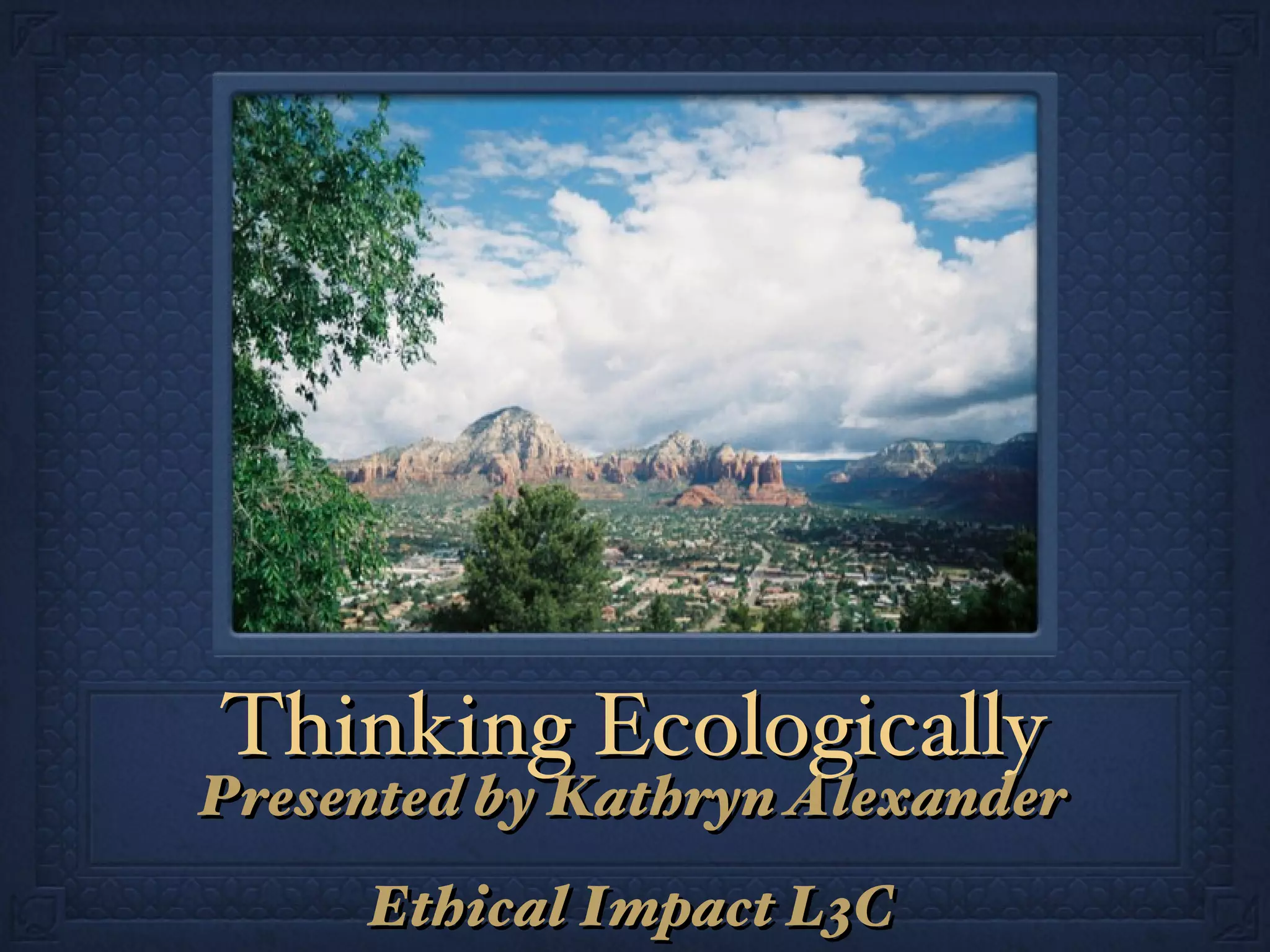
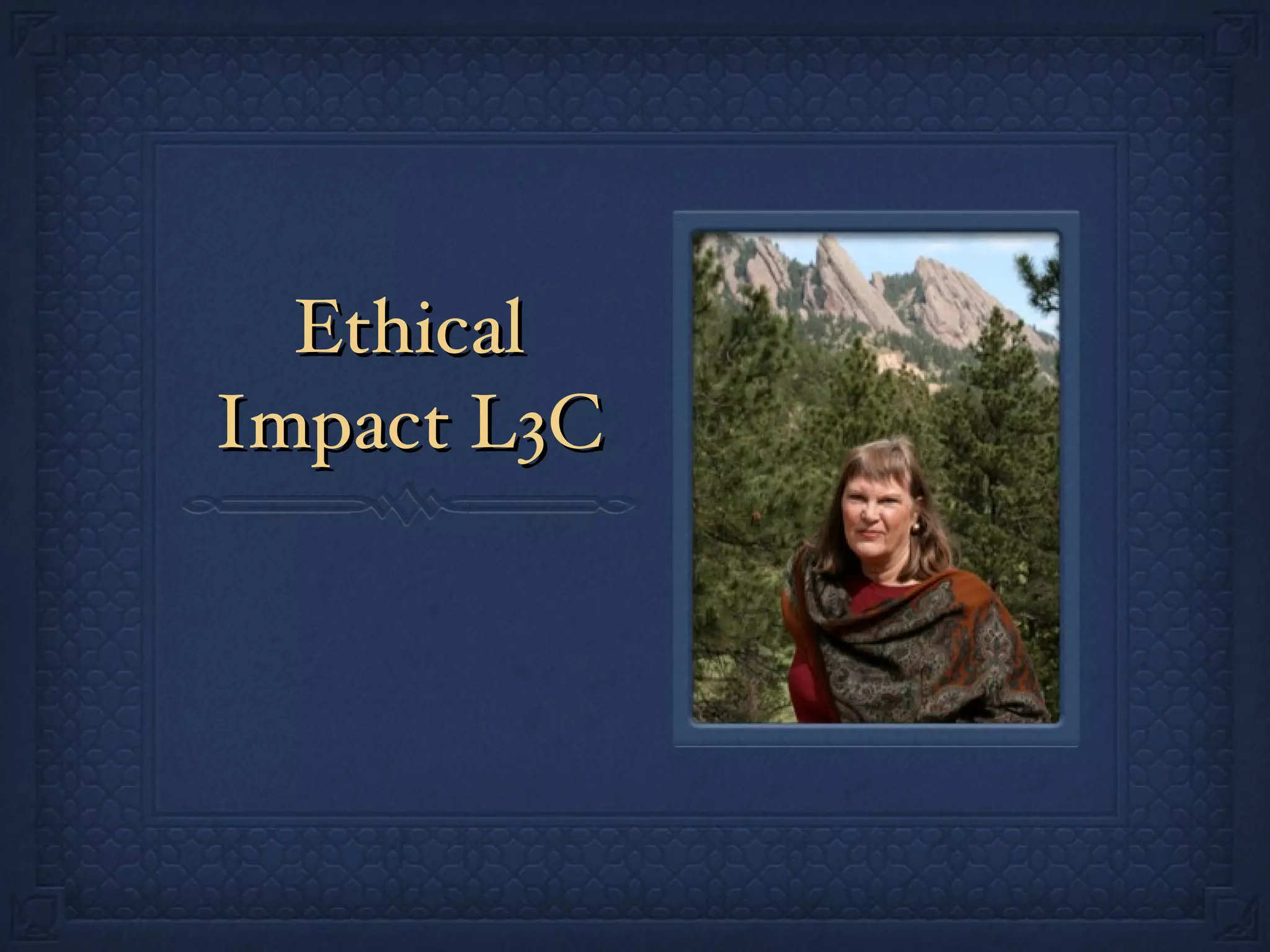
Thinking Ecologically Presented by Kathryn Alexander Ethical Impact L3C
Th e point of achieving sustainability is to mimic nature & therefore ensure the ability of the human race & all life on the planet survive and thrive for the next 10,000 years.
Life has existed for 3.7 billion years - humans for 5 million. Can we make another 5 million?
Changing How We Think
Ecological Thinking Parts vs. Wholes Objects vs. Relationship Hierarchies vs. Networks Structure vs. Process Time: Destination vs. Journey
Some Sustainable Values that Support this Shift:
Nature creates the conditions that support life Interdependence Diversity Reciprocity Integrity of the Whole
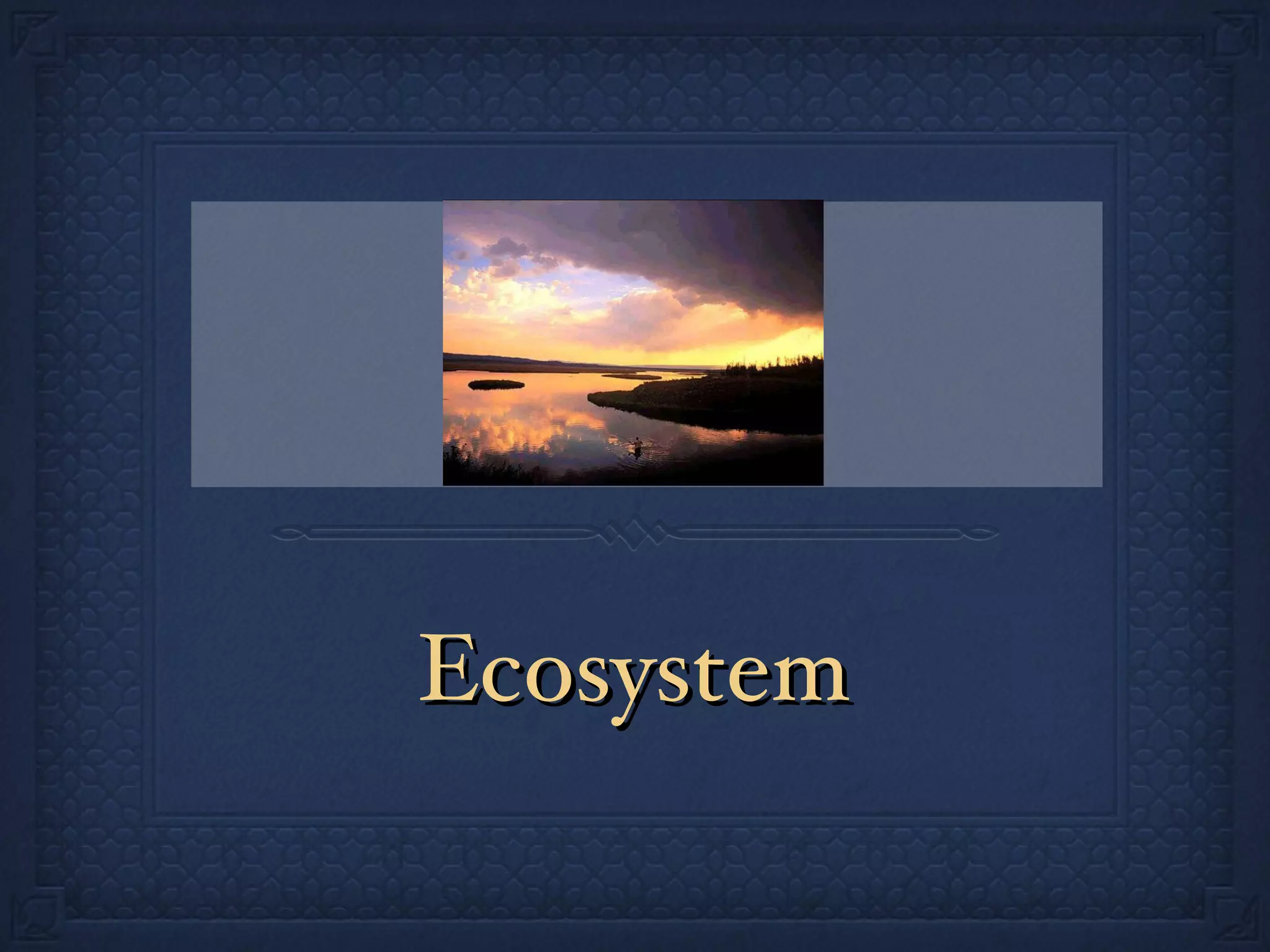
Ecosystem
A defined area that includes a diverse collection of living entities that interact in an interdependent way that allows for the flow of energy & material to cascade through the system ~
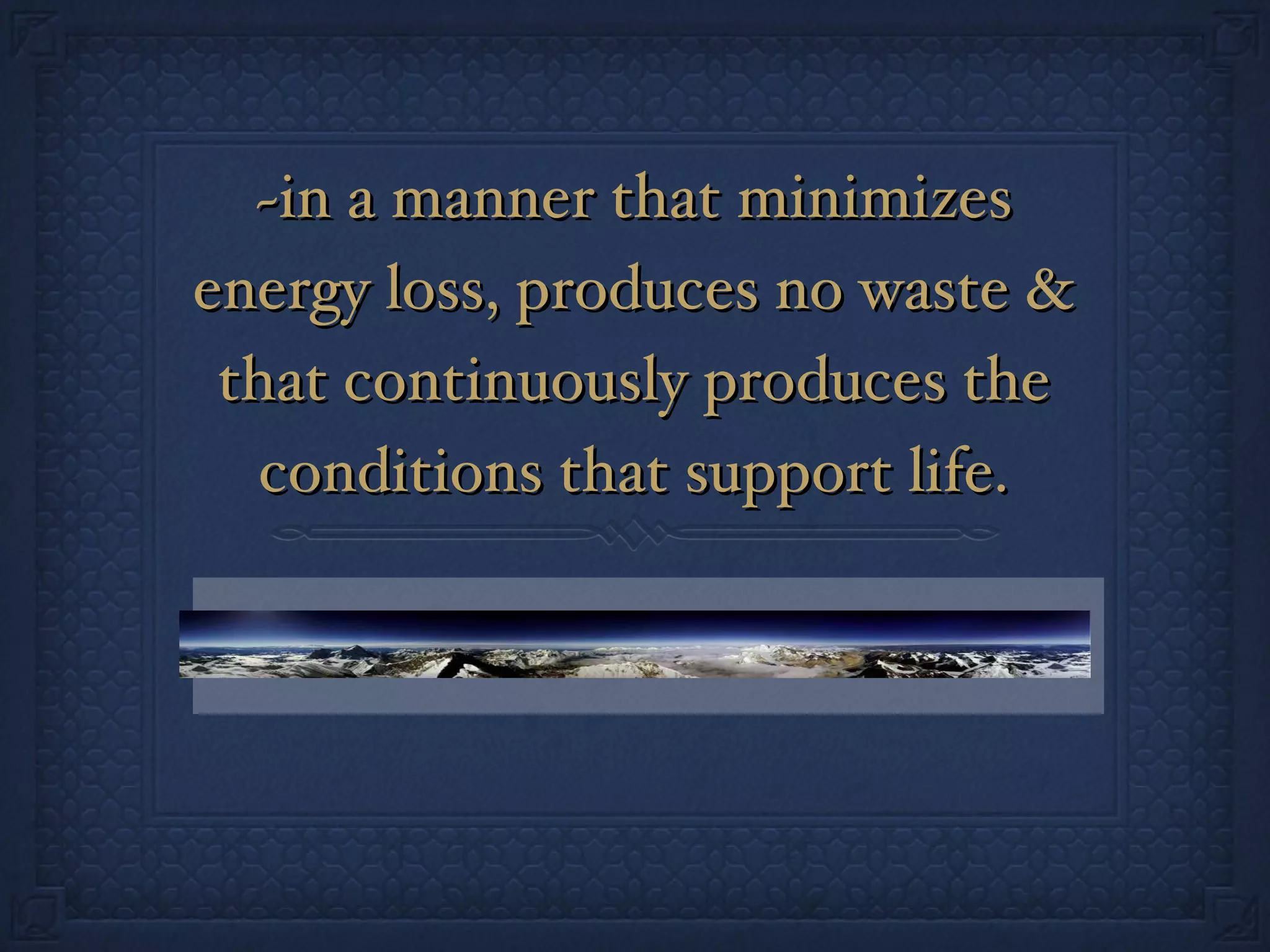
~in a manner that minimizes energy loss, produces no waste & that continuously produces the conditions that support life.
Characterized by: Dynamic Structure - flexible & responsive to continuous small changes Dynamic Balance – resilience
Characterized by: Interdependence Free Flow of Information Self-Organization
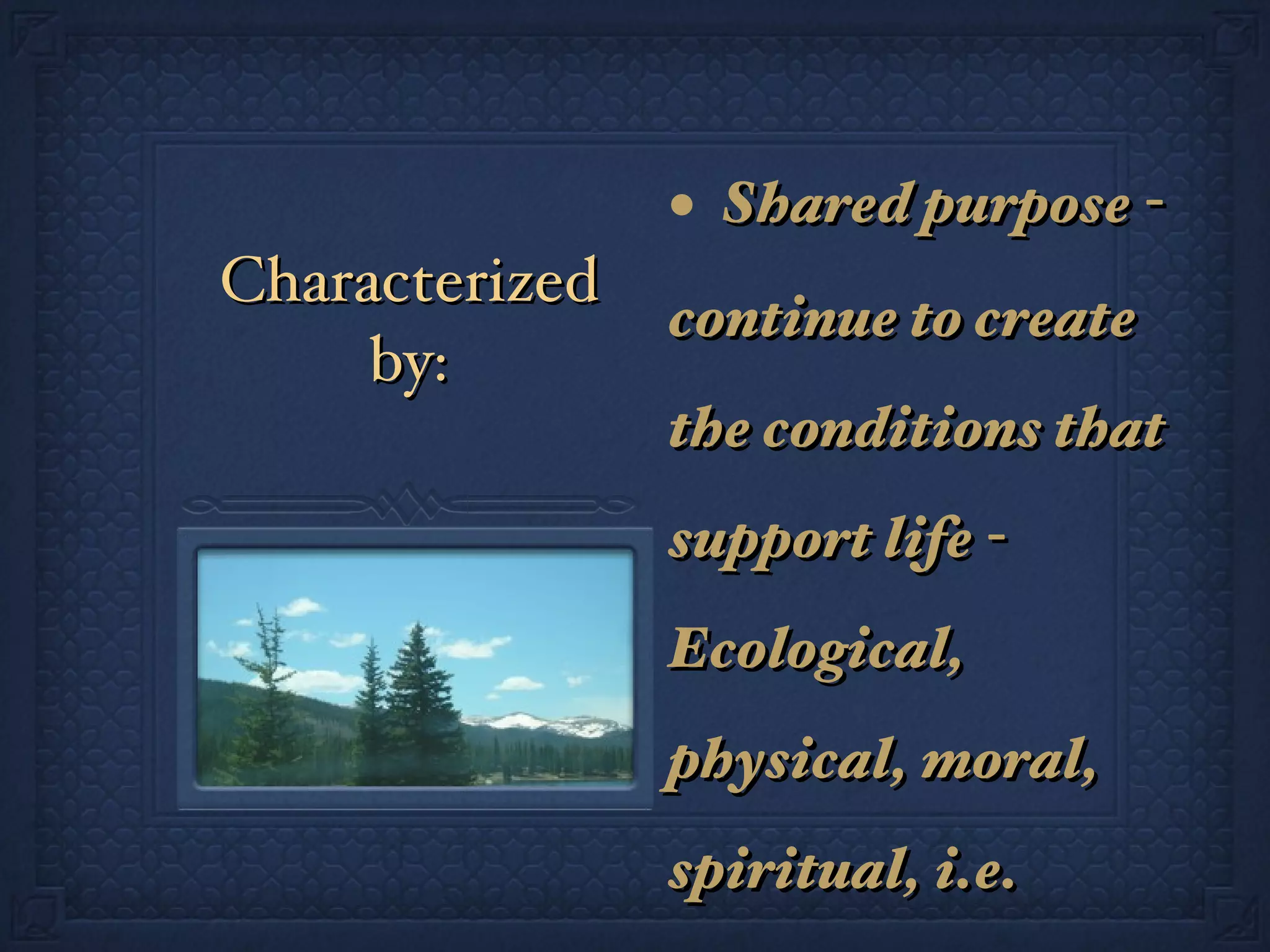
Characterized by: Shared purpose - continue to create the conditions that support life - Ecological, physical, moral, spiritual, i.e. sustainable
Walking Tree
Can move up to 7 feet a year Responsive to local conditions Adaptive to changing conditions (small continuous contributions & interactions among many entities)
Simple Rules - applied constantly and consistently Test, Evaluate, Select, Repeat
Test, experiment  - choose those results closest to the desired outcome & expand on them. No territory to protect, focus on shared value & be mutually supportive.
Having the whole system in the room supports:
Relationships Communication & information flow Being mutually supportive & interdependent Shared purpose & vision - bringing back the integrity of work & Creating the conditions that support Life!
Your company CAN make this shift! Contact us to discover new options, find improvement possibilities and reduce costs!
Ethical Impact L3C
888-331-7492 [email_address] www.ethicalimpact.com

Ecological thinking

  • 1.
    Thinking Ecologically Presentedby Kathryn Alexander Ethical Impact L3C
  • 2.
    Th e pointof achieving sustainability is to mimic nature & therefore ensure the ability of the human race & all life on the planet survive and thrive for the next 10,000 years.
  • 3.
    Life has existedfor 3.7 billion years - humans for 5 million. Can we make another 5 million?
  • 4.
  • 5.
    Ecological Thinking Partsvs. Wholes Objects vs. Relationship Hierarchies vs. Networks Structure vs. Process Time: Destination vs. Journey
  • 6.
    Some Sustainable Valuesthat Support this Shift:
  • 7.
    Nature creates theconditions that support life Interdependence Diversity Reciprocity Integrity of the Whole
  • 8.
  • 9.
    A defined areathat includes a diverse collection of living entities that interact in an interdependent way that allows for the flow of energy & material to cascade through the system ~
  • 10.
    ~in a mannerthat minimizes energy loss, produces no waste & that continuously produces the conditions that support life.
  • 11.
    Characterized by: DynamicStructure - flexible & responsive to continuous small changes Dynamic Balance – resilience
  • 12.
    Characterized by: InterdependenceFree Flow of Information Self-Organization
  • 13.
    Characterized by: Sharedpurpose - continue to create the conditions that support life - Ecological, physical, moral, spiritual, i.e. sustainable
  • 14.
  • 15.
    Can move upto 7 feet a year Responsive to local conditions Adaptive to changing conditions (small continuous contributions & interactions among many entities)
  • 16.
    Simple Rules -applied constantly and consistently Test, Evaluate, Select, Repeat
  • 17.
    Test, experiment - choose those results closest to the desired outcome & expand on them. No territory to protect, focus on shared value & be mutually supportive.
  • 18.
    Having the wholesystem in the room supports:
  • 19.
    Relationships Communication &information flow Being mutually supportive & interdependent Shared purpose & vision - bringing back the integrity of work & Creating the conditions that support Life!
  • 20.
    Your company CANmake this shift! Contact us to discover new options, find improvement possibilities and reduce costs!
  • 21.
  • 22.