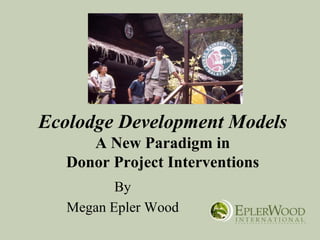
Ecolodge Development Models
      A New Paradigm in
   Donor Project Interventions
          By
   Megan Epler Wood
CONTEXT
  Private Sector’s Pivotal Role in the
   implementation of ecotourism in
                 LDCs
                  Based on:
• World Bank/IFC Study on Business, Market, &
  Technical Assistance Models for Ecolodges
• Competitiveness US AID Model Ecolodge project
  in Sri Lanka
OBJECTIVES
Improving the Financial Sustainability
      of Donor Interventions in
             Ecotourism:
• Channeling Funds Through Local Socially and
  Environmentally Responsible Companies
• Performing Advance Business & Market Due
  Diligence
• Funding Monitoring & Evaluation
• Triple Bottom Line Cost-Sharing
Key Findings IFC Study
• Determinants of Demand
  – Wildlife, Access, Quality of Information,
    Destination Image
• Ecolodge Business Fundamentals
  – Long break even period of 4-5 years
  – Emerging business sector with 10% annual growth
    potential
  – Low marketing costs of 10%, high expertise required
  – Need for patient investment, mix of loans and grants
Results of IFC Study
• Ecolodge Technical Assistance Needs
  – Market & Business Systems
  – Technical Systems to reduce waste, water,
    energy
  – Guide & Business Training
  – Triple Bottom Line Approaches
• Recommended Approach
  – Business Mentorships
  – Support from Senior Ecotourism Businesses
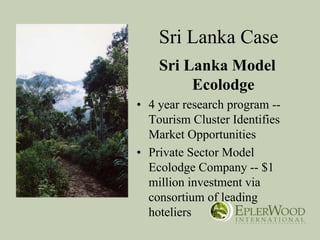
Sri Lanka Case
    Sri Lanka Model
         Ecolodge
• 4 year research program --
  Tourism Cluster Identifies
  Market Opportunities
• Private Sector Model
  Ecolodge Company -- $1
  million investment via
  consortium of leading
  hoteliers
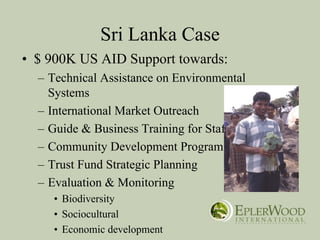
Sri Lanka Case
• $ 900K US AID Support towards:
  – Technical Assistance on Environmental
    Systems
  – International Market Outreach
  – Guide & Business Training for Staff
  – Community Development Program
  – Trust Fund Strategic Planning
  – Evaluation & Monitoring
     • Biodiversity
     • Sociocultural
     • Economic development
Strategic Recommendations
     Ecolodge Business Models
• Develop competence, awareness, & create
  alliances within business community
• Develop strategic market approach
• Fund triple-bottom line costs - do not shift this
  burden onto private sector until there are adequate
  profits - this is an emerging economy
• Develop long-term plan for replication of model
• Work towards a profitable model that will fund
  triple bottom line in long-term
For more information:
 EplerWood International
  www.eplerwood.com

Ecolodge

  • 1.
    Ecolodge Development Models A New Paradigm in Donor Project Interventions By Megan Epler Wood
  • 2.
    CONTEXT PrivateSector’s Pivotal Role in the implementation of ecotourism in LDCs Based on: • World Bank/IFC Study on Business, Market, & Technical Assistance Models for Ecolodges • Competitiveness US AID Model Ecolodge project in Sri Lanka
  • 3.
    OBJECTIVES Improving the FinancialSustainability of Donor Interventions in Ecotourism: • Channeling Funds Through Local Socially and Environmentally Responsible Companies • Performing Advance Business & Market Due Diligence • Funding Monitoring & Evaluation • Triple Bottom Line Cost-Sharing
  • 4.
    Key Findings IFCStudy • Determinants of Demand – Wildlife, Access, Quality of Information, Destination Image • Ecolodge Business Fundamentals – Long break even period of 4-5 years – Emerging business sector with 10% annual growth potential – Low marketing costs of 10%, high expertise required – Need for patient investment, mix of loans and grants
  • 5.
    Results of IFCStudy • Ecolodge Technical Assistance Needs – Market & Business Systems – Technical Systems to reduce waste, water, energy – Guide & Business Training – Triple Bottom Line Approaches • Recommended Approach – Business Mentorships – Support from Senior Ecotourism Businesses
  • 6.
    Sri Lanka Case Sri Lanka Model Ecolodge • 4 year research program -- Tourism Cluster Identifies Market Opportunities • Private Sector Model Ecolodge Company -- $1 million investment via consortium of leading hoteliers
  • 7.
    Sri Lanka Case •$ 900K US AID Support towards: – Technical Assistance on Environmental Systems – International Market Outreach – Guide & Business Training for Staff – Community Development Program – Trust Fund Strategic Planning – Evaluation & Monitoring • Biodiversity • Sociocultural • Economic development
  • 8.
    Strategic Recommendations Ecolodge Business Models • Develop competence, awareness, & create alliances within business community • Develop strategic market approach • Fund triple-bottom line costs - do not shift this burden onto private sector until there are adequate profits - this is an emerging economy • Develop long-term plan for replication of model • Work towards a profitable model that will fund triple bottom line in long-term
  • 9.
    For more information: EplerWood International www.eplerwood.com