HEALTH SYSTEM IN BHUTAN
GROUP THREE
MEMBERS:
 Jamyang Choden (Group Leader)
 Kuenzang
 Tandin Tshewang
 Dechen Tamang
 Ugyen Tenzin Wangmo
 Tshering Yangchen
VISION AND MISSION
Vision
 “A Nation With the Best Health.”
Mission
 To provide quality health care services in both traditional and modern
medicines.
 To prevent, control, and eradicate diseases
 To rehabilitate and promote healthy living
 To ensure sustainable, responsive, equitable, accessible and affordable
health services.
Health system in Bhutan
 The first agents of change that brought western (allopathic) medicine
to Bhutan were British medical doctors who accompanied the British
political mission.
 1961- Modern health care in Bhutan began in with two hospitals, two
doctors, and two nurses .
 Bhutan has offered free universal healthcare for all citizens.
 32 hospitals across Bhutan .
 Most of the district hospitals are 20-bedded and have facilities for
basic diagnostic tests including X-ray.
 Jigme Dorji Wangchuck National Referral Hospital is the apex hospital
in the country and has 350 beds.
 There are two regional referral hospitals located at Mongar in the east
and Gelephu in the central region.
 . Most districts, have at least one hospital, except Gasa. Thimphu have
5 hospitals, while Chukha, Samtse, and Trashigang Districts have 3
hospital each.
 The community level, health care services are delivered through Basic
Health Units (BHUs), Out-Reach Clinics (ORCs) and Sub posts.
 Treatment for more complicated illnesses and procedures such as
cancer and neurosurgery are not available in Bhutan. Patients will have
to be transported to better medical facilities in India and Thailand if
they wish to receive treatment.
 1967 -traditional medicines are integrated into the national health
system and housed under one roof to maximize public health care
services.
 54 traditional medicine units are attached to district hospitals and
BHUs in the country .
 1982-Bhutan became a member of the World Health Organization
(WHO).
CHALLENGES TO THE HEALTH SYSTEM
Health Human Resources
 A major challenge faced by the Ministry of Health is the shortage of
human resources, especially medical doctors. Production of health
human resources is an expensive and long process, particularly when
there are inadequate medical training facilities in the country.
Rising Expectations for Higher Quality and More Sophisticated
Health Care
 With increase in numbers of literate population and access to internet
facilities public demand for higher quality and more advanced health
care.
The Ability of the State to Fund Free Health Care
 Over the years, the issue of the sustainability of providing free health
care, in view of escalating health care expenditure, has been a
challenge for the health sector.
CONCEPT OF PUBLIC HEALTH
Definition
 Public health is defined as the art and science of preventing disease,
prolonging life and promoting health through the organized effort of
society.
IMPORTANCE
 Aims to improve the heath of the people and their communities
 This work is achieved by promoting healthy lifestyles, researching
disease and injury.
 It also prevent and detect diseases thus, respond to infectious diseases.
EXAMPLE OF PUBLIC HEALTH
 Creating awareness on healthier choices
 Promoting physical activity and fitness
 Preventing disease outbreaks and the spread of emergencies
 Preventing injury
 Treating water with fluoride
DIFFERENCES IN HEALTH SYSTEM
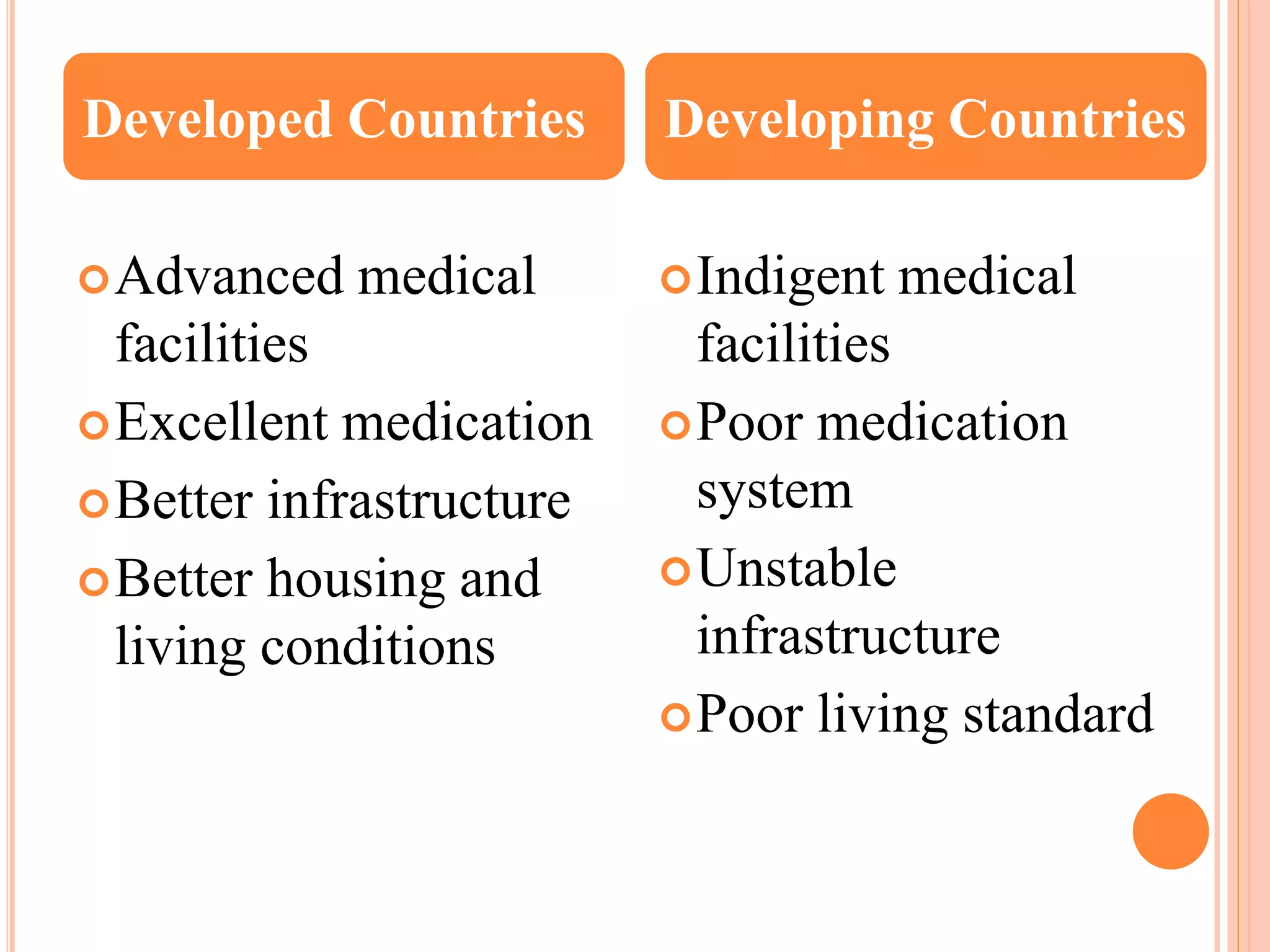
Developed Countries Developing Countries
Advanced medical
facilities
Excellent medication
Better infrastructure
Better housing and
living conditions
Indigent medical
facilities
Poor medication
system
Unstable
infrastructure
Poor living standard
Developed Countries Developing Countries
Role of Health in development
 Better health is central to human happiness and well-being.
 Improve human resources with better health facilities [ make better use
of their ideas and knowledge ]
 Increase country’s infrastructure
 Healthy population live longer and are more productive
 Save the countries expenses .
ECN Presentation.pptx

ECN Presentation.pptx

  • 2.
  • 3.
    GROUP THREE MEMBERS:  JamyangChoden (Group Leader)  Kuenzang  Tandin Tshewang  Dechen Tamang  Ugyen Tenzin Wangmo  Tshering Yangchen
  • 4.
    VISION AND MISSION Vision “A Nation With the Best Health.” Mission  To provide quality health care services in both traditional and modern medicines.  To prevent, control, and eradicate diseases  To rehabilitate and promote healthy living  To ensure sustainable, responsive, equitable, accessible and affordable health services.
  • 5.
    Health system inBhutan  The first agents of change that brought western (allopathic) medicine to Bhutan were British medical doctors who accompanied the British political mission.  1961- Modern health care in Bhutan began in with two hospitals, two doctors, and two nurses .  Bhutan has offered free universal healthcare for all citizens.  32 hospitals across Bhutan .  Most of the district hospitals are 20-bedded and have facilities for basic diagnostic tests including X-ray.
  • 6.
     Jigme DorjiWangchuck National Referral Hospital is the apex hospital in the country and has 350 beds.  There are two regional referral hospitals located at Mongar in the east and Gelephu in the central region.  . Most districts, have at least one hospital, except Gasa. Thimphu have 5 hospitals, while Chukha, Samtse, and Trashigang Districts have 3 hospital each.  The community level, health care services are delivered through Basic Health Units (BHUs), Out-Reach Clinics (ORCs) and Sub posts.
  • 7.
     Treatment formore complicated illnesses and procedures such as cancer and neurosurgery are not available in Bhutan. Patients will have to be transported to better medical facilities in India and Thailand if they wish to receive treatment.  1967 -traditional medicines are integrated into the national health system and housed under one roof to maximize public health care services.  54 traditional medicine units are attached to district hospitals and BHUs in the country .  1982-Bhutan became a member of the World Health Organization (WHO).
  • 8.
    CHALLENGES TO THEHEALTH SYSTEM Health Human Resources  A major challenge faced by the Ministry of Health is the shortage of human resources, especially medical doctors. Production of health human resources is an expensive and long process, particularly when there are inadequate medical training facilities in the country. Rising Expectations for Higher Quality and More Sophisticated Health Care  With increase in numbers of literate population and access to internet facilities public demand for higher quality and more advanced health care. The Ability of the State to Fund Free Health Care  Over the years, the issue of the sustainability of providing free health care, in view of escalating health care expenditure, has been a challenge for the health sector.
  • 9.
    CONCEPT OF PUBLICHEALTH Definition  Public health is defined as the art and science of preventing disease, prolonging life and promoting health through the organized effort of society.
  • 10.
    IMPORTANCE  Aims toimprove the heath of the people and their communities  This work is achieved by promoting healthy lifestyles, researching disease and injury.  It also prevent and detect diseases thus, respond to infectious diseases.
  • 11.
    EXAMPLE OF PUBLICHEALTH  Creating awareness on healthier choices  Promoting physical activity and fitness  Preventing disease outbreaks and the spread of emergencies  Preventing injury  Treating water with fluoride
  • 13.
    DIFFERENCES IN HEALTHSYSTEM Developed Countries Developing Countries
  • 14.
    Advanced medical facilities Excellent medication Betterinfrastructure Better housing and living conditions Indigent medical facilities Poor medication system Unstable infrastructure Poor living standard Developed Countries Developing Countries
  • 15.
    Role of Healthin development  Better health is central to human happiness and well-being.  Improve human resources with better health facilities [ make better use of their ideas and knowledge ]  Increase country’s infrastructure  Healthy population live longer and are more productive  Save the countries expenses .