(eBook PDF) Modern Digital and Analog Communication Systems 4th
(eBook PDF) Modern Digital and Analog Communication Systems 4th
(eBook PDF) Modern Digital and Analog Communication Systems 4th
(eBook PDF) Modern Digital and Analog Communication Systems 4th
(eBook PDF) Modern Digital and Analog Communication Systems 4th
1.
(eBook PDF) ModernDigital and Analog
Communication Systems 4th download
https://ebookluna.com/product/ebook-pdf-modern-digital-and-
analog-communication-systems-4th/
Download full version ebook from https://ebookluna.com
2.
We believe theseproducts will be a great fit for you. Click
the link to download now, or visit ebookluna.com
to discover even more!
Analog and Digital Electronics, 1st edition Raghunandan G. H. Charles H.
Roth - eBook PDF
https://ebookluna.com/download/analog-and-digital-electronics-1st-edition-
ebook-pdf/
(eBook PDF) Fiber-Optic Communication Systems 4th Edition
https://ebookluna.com/product/ebook-pdf-fiber-optic-communication-
systems-4th-edition/
(eBook PDF) Digital Systems Engineering
https://ebookluna.com/product/ebook-pdf-digital-systems-engineering/
(eBook PDF) Accounting Information Systems 4th Edition by Robert Hurt -
Digital Ebook
https://ebookluna.com/product/ebook-pdf-accounting-information-systems-4th-
edition-by-robert-hurt/
3.
(eBook PDF) ModernSystems Analysis and Design 8th Valacich
https://ebookluna.com/product/ebook-pdf-modern-systems-analysis-and-
design-8th-valacich/
(eBook PDF) Modern Systems Analysis and Design 9th Edition
https://ebookluna.com/product/ebook-pdf-modern-systems-analysis-and-
design-9th-edition/
(eBook PDF) Digital Design: Principles and Practices 4th
https://ebookluna.com/product/ebook-pdf-digital-design-principles-and-
practices-4th/
(eBook PDF) Advanced Optical Communication Systems and Networks
https://ebookluna.com/product/ebook-pdf-advanced-optical-communication-
systems-and-networks/
Modern Control Systems 13th Edition (eBook PDF)
https://ebookluna.com/product/modern-control-systems-13th-edition-ebook-
pdf/
viii CONTENTS
3 ANALYSISAND TRANSMISSION
OF SIGNALS 91
3.1 APERIODIC SIGNAL REPRESENTATION BY FOURIER INTEGRAL 91
3.2 TRANSFORMS OF SOME USEFUL FUNCTIONS 99
3.3 SOME PROPERTIES OF THE FOURIER TRANSFORM 106
3.4 SIGNAL TRANSMISSION THROUGH A LINEAR SYSTEM 123
3.5 IDEAL VERSUS PRACTICAL FILTERS 129
3.6 SIGNAL DISTORTION OVER A COMMUNICATION
CHANNEL 133
3.7 SIGNAL ENERGY AND ENERGY SPECTRAL DENSITY 139
3.8 SIGNAL POWER AND POWER SPECTRAL DENSITY 148
3.9 NUMERICAL COMPUTATION OF FOURIER TRANSFORM:
THE DFT 155
3.10 MATLAB EXERCISES 160
4 AMPLITUDE MODULATIONS
AND DEMODULATIONS 178
4.1 BASEBAND VERSUS CARRIER COMMUNICATIONS 178
4.2 DOUBLE-SIDEBAND AMPLITUDE MODULATION 180
4.3 AMPLITUDE MODULATION (AM) 190
4.4 BANDWIDTH-EFFICIENT AMPLITUDE MODULATIONS 197
4.5 AMPLITUDE MODULATIONS: VESTIGIAL SIDEBAND (VSB) 206
4.6 LOCAL CARRIER SYNCHRONIZATION 210
4.7 FREQUENCY DIVISION MULTIPLEXING (FDM) 211
4.8 PHASE-LOCKED LOOP AND APPLICATIONS 212
4.9 NTSC TELEVISION BROADCASTING SYSTEM 220
4.10 MATLAB EXERCISES 230
5 ANGLE MODULATION
AND DEMODULATION 252
5.1 NONLINEAR MODULATION 252
5.2 BANDWIDTH OF ANGLE-MODULATED WAVES 259
7.
Contents ix
5.3 GENERATINGFM WAVES 272
5.4 DEMODULATION OF FM SIGNALS 281
5.5 EFFECTS OF NONLINEAR DISTORTION AND INTERFERENCE 284
5.6 SUPERHETERODYNE ANALOG AM/FM RECEIVERS 289
5.7 FM BROADCASTING SYSTEM 291
5.8 MATLAB EXERCISES 292
6 SAMPLING AND ANALOG-TO-DIGITAL
CONVERSION 302
6.1 SAMPLING THEOREM 302
6.2 PULSE CODE MODULATION (PCM) 319
6.3 DIGITAL TELEPHONY: PCM IN T1 CARRIER SYSTEMS 332
6.4 DIGITAL MULTIPLEXING 336
6.5 DIFFERENTIAL PULSE CODE MODULATION (DPCM) 341
6.6 ADAPTIVE DIFFERENTIAL PCM (ADPCM) 345
6.7 DELTA MODULATION 346
6.8 VOCODERS AND VIDEO COMPRESSION 351
6.9 MATLAB EXERCISES 361
7 PRINCIPLES OF DIGITAL DATA
TRANSMISSION 377
7.1 DIGITAL COMMUNICATION SYSTEMS 377
7.2 LINE CODING 380
7.3 PULSE SHAPING 394
7.4 SCRAMBLING 406
7.5 DIGITAL RECEIVERS AND REGENERATIVE REPEATERS 409
7.6 EYE DIAGRAMS: AN IMPORTANT TOOL 417
7.7 PAM: M -ARY BASEBAND SIGNALING FOR HIGHER
DATA RATE 420
7.8 DIGITAL CARRIER SYSTEMS 423
7.9 M -ARY DIGITAL CARRIER MODULATION 431
7.10 MATLAB EXERCISES 437
8.
x CONTENTS
8 FUNDAMENTALSOF PROBABILITY
THEORY 447
8.1 CONCEPT OF PROBABILITY 447
8.2 RANDOM VARIABLES 462
8.3 STATISTICAL AVERAGES (MEANS) 481
8.4 CORRELATION 490
8.5 LINEAR MEAN SQUARE ESTIMATION 494
8.6 SUM OF RANDOM VARIABLES 497
8.7 CENTRAL LIMIT THEOREM 500
9 RANDOM PROCESSES AND SPECTRAL
ANALYSIS 511
9.1 FROM RANDOM VARIABLE TO RANDOM PROCESS 511
9.2 CLASSIFICATION OF RANDOM PROCESSES 516
9.3 POWER SPECTRAL DENSITY 520
9.4 MULTIPLE RANDOM PROCESSES 534
9.5 TRANSMISSION OF RANDOM PROCESSES THROUGH LINEAR
SYSTEMS 535
9.6 APPLICATION: OPTIMUM FILTERING (WIENER-HOPF FILTER) 539
9.7 APPLICATION: PERFORMANCE ANALYSIS OF BASEBAND ANALOG
SYSTEMS 542
9.8 APPLICATION: OPTIMUM PREEMPHASIS-DEEMPHASIS
SYSTEMS 544
9.9 BANDPASS RANDOM PROCESSES 547
10 PERFORMANCE ANALYSIS OF MODULATED
COMMUNICATION SYSTEMS
UNDER NOISE 564
10.1 ANALYTICAL FIGURE OF MERIT 564
10.2 AMPLITUDE-MODULATED SYSTEMS 565
9.
Contents xi
10.3 ANGLE-MODULATEDSYSTEMS 574
10.4 PULSE-MODULATED SYSTEMS 591
11 PERFORMANCE ANALYSIS OF DIGITAL
COMMUNICATION SYSTEMS 605
11.1 OPTIMUM LINEAR DETECTOR FOR BINARY POLAR
SIGNALING 605
11.2 GENERAL BINARY SIGNALING 611
11.3 COHERENT RECEIVERS FOR DIGITAL CARRIER
MODULATIONS 619
11.4 SIGNAL SPACE ANALYSIS OF OPTIMUM DETECTION 624
11.5 VECTOR DECOMPOSITION OF WHITE NOISE RANDOM
PROCESSES 629
11.6 OPTIMUM RECEIVER FOR WHITE GAUSSIAN NOISE
CHANNELS 635
11.7 GENERAL EXPRESSION FOR ERROR PROBABILITY OF OPTIMUM
RECEIVERS 660
11.8 EQUIVALENT SIGNAL SETS 668
11.9 NONWHITE (COLORED) CHANNEL NOISE 676
11.10 OTHER USEFUL PERFORMANCE CRITERIA 677
11.11 NONCOHERENT DETECTION 680
11.12 MATLAB EXERCISES 688
12 SPREAD SPECTRUM
COMMUNICATIONS 714
12.1 FREQUENCY HOPPING SPREAD SPECTRUM (FHSS)
SYSTEMS 714
12.2 MULTIPLE FHSS USER SYSTEMS AND PERFORMANCE 718
12.3 APPLICATIONS OF FHSS 721
12.4 DIRECT SEQUENCE SPREAD SPECTRUM 724
12.5 RESILIENT FEATURES OF DSSS 728
10.
xii CONTENTS
12.6 CODEDIVISION MULTIPLE-ACCESS (CDMA) OF DSSS 730
12.7 MULTIUSER DETECTION (MUD) 737
12.8 MODERN PRACTICAL DSSS CDMA SYSTEMS 743
12.9 MATLAB EXERCISES 751
13 DIGITAL COMMUNICATIONS UNDER
LINEARLY DISTORTIVE CHANNELS 767
13.1 LINEAR DISTORTIONS OF WIRELESS MULTIPATH CHANNELS 767
13.2 RECEIVER CHANNEL EQUALIZATION 771
13.3 LINEAR T-SPACED EQUALIZATION (TSE) 777
13.4 LINEAR FRACTIONALLY SPACED EQUALIZERS (FSE) 785
13.5 CHANNEL ESTIMATION 789
13.6 DECISION FEEDBACK EQUALIZER 790
13.7 OFDM (MULTICARRIER) COMMUNICATIONS 793
13.8 DISCRETE MULTITONE (DMT) MODULATIONS 803
13.9 REAL-LIFE APPLICATIONS Of OFDM AND DMT 808
13.10 BLIND EQUALIZATION AND IDENTIFICATION 812
13.11 TIME-VARYING CHANNEL DISTORTIONS DUE TO MOBILITY 813
13.12 MATLAB EXERCISES 816
14 INTRODUCTION TO INFORMATION
THEORY 836
14.1 MEASURE OF INFORMATION 836
14.2 SOURCE ENCODING 841
14.3 ERROR-FREE COMMUNICATION OVER A NOISY CHANNEL 847
14.4 CHANNEL CAPACITY OF A DISCRETE MEMORYLESS
CHANNEL 850
14.5 CHANNEL CAPACITY OF A CONTINUOUS MEMORYLESS
CHANNEL 858
14.6 PRACTICAL COMMUNICATION SYSTEMS IN LIGHT OF SHANNON'S
EQUATION 875
11.
Contents xiii
14.7 FREQUENCY-SELECTIVECHANNEL CAPACITY 880
14.8 MULTIPLE-INPUT–MULTIPLE-OUTPUT COMMUNICATION
SYSTEMS 884
14.9 MATLAB EXERCISES 893
15 ERROR CORRECTING CODES 907
15.1 OVERVIEW 907
15.2 REDUNDANCY FOR ERROR CORRECTION 908
15.3 LINEAR BLOCK CODES 911
15.4 CYCLIC CODES 918
15.5 THE EFFECTS OF ERROR CORRECTION 927
15.6 CONVOLUTIONAL CODES 932
15.7 TRELLIS DIAGRAM OF BLOCK CODES 942
15.8 CODE COMBINING AND INTERLEAVING 944
15.9 SOFT DECODING 946
15.10 SOFT-OUTPUT VITERBI ALGORITHM (SOVA) 949
15.11 TURBO CODES 951
15.12 LOW-DENSITY PARITY CHECK (LDPC) CODES 959
15.13 MATLAB EXERCISES 966
A ORTHOGONALITY OF SOME SIGNAL SETS 978
A.1 ORTHOGONALITY OF THE TRIGONOMETRIC AND
EXPONENTIAL SIGNAL SET 978
A.2 ORTHOGONALITY OF THE EXPONENTIAL
SIGNAL SET 979
B CAUCHY-SCHWARZ INEQUALITY 980
C GRAM-SCHMIDT ORTHOGONALIZATION OF A
VECTOR SET 982
12.
xiv CONTENTS
D BASICMATRIX PROPERTIES
AND OPERATIONS 985
D.1 NOTATIONS 985
D.2 MATRIX PRODUCT AND PROPERTIES 986
D.3 IDENTITY AND DIAGONAL MATRICES 987
D.4 DETERMINANT OF SQUARE MATRICES 987
D.5 TRACE 988
D.6 EIGENDECOMPOSITION 988
D.7 SPECIAL HERMITIAN SQUARE MATRICES 989
E MISCELLANEOUS 990
E.1 L'HÔPITAL'S RULE 990
E.2 TAYLOR AND MACLAURIN SERIES 990
E.3 POWER SERIES 990
E.4 SUMS 991
E.5 COMPLEX NUMBERS 991
E.6 TRIGONOMETRIC IDENTITIES 991
E.7 INDEFINITE INTEGRALS 992
INDEX 995
13.
PREFACE
The chief objectiveof the fourth edition is to respond to the tremendous amount of tech-
nological progress in communication systems we have witnessed over the decade since
the third edition was published. At the same time, newer software and teaching tools have
also become available, making it much easier to provide solid and illustrative examples as
well as more experimental opportunities for students. In this new edition, major changes are
implemented to incorporate recent technological advances of telecommunications.To captivate
students’ attention and make it easier for students to relate the course materials to their daily
experience with communication tools, we will provide relevant information on the operation
and features of cellular systems, wireless local area networks (LANs), and wire-line (digital
subscriber loop or DSL) internet services, among others.
Major Revision
A number of critical changes are motivated by the need to emphasize the fundamentals of
digital communication systems that have permeated our daily lives. Specifically, in light of the
widespreadapplicationsofnewtechnologiessuchasspreadspectrumandorthogonalfrequency
division multiplexing (OFDM), we present two new chapters: Chapter 12 on spread spectrum
communications and Chapter 13 on frequency-selective channels and OFDM systems. As
practical examples of such systems, we provide a basic introduction of current wireless commu-
nication standards including cellular systems and IEEE 802.11a/b/g/n wireless LAN systems.
In addition, we summarize the latest in DSL modem technology and services. At the funda-
mental level, information theory and coding have also been transformed by several important
new progresses. In this edition, we include the basic principles of multiple-input–multiple-
output (MIMO) technology, which has just begun to see broad commercial applications. We
also cover several notable breakthroughs in error correction coding, including soft decoding,
turbo codes, and low-density parity check (LDPC) codes.
To enhance the learning experience and to give students opportunities for computer-based
experimental practices, relevant MATLAB examples and exercises have been provided in
chapters that can be enhanced by these hands-on experiments.
Organization
With respect to organization, we begin the fourth edition with a traditional review of signal and
systemfundamentalsbeforeproceedingtothecorecommunicationtopicsofanalogmodulation
anddigitalpulse-codedmodulation.Wethenpresentthefundamentaltoolsofprobabilitytheory
and random processes to be used in the design and analysis of digital communications in the rest
of this text. After the fundamentals of digital communication systems have been covered, the
last two chapters provide an overview of information theory and the fundamentals of forward
error correction codes.
xv
14.
xvi PREFACE
Ideally, thecommunications subjects germane to this text should be covered in two
courses: one on the basic operations of communication systems and one on the analysis of
modern communication systems under noise and other distortions. The former relies heav-
ily on deterministic analytical tools such as Fourier series, the Fourier transform, and the
sampling theorem, while the latter relies on tools from probability and random processes to
tackle the unpredictability of message signals and noises. In today’s academic environment,
however, with so many competing courses, it may be difficult to squeeze two basic courses
on communications into a typical electrical engineering curriculum. Some universities do
require a course in probability and random processes as a prerequisite. In that case, it is pos-
sible to cover both areas reasonably well in a one-semester course. This book is designed for
adoption in both cases. It can be used as a one-semester course in which the deterministic
aspects of communication systems are emphasized with little consideration of the effects of
noise and interference. It can also be used for a course that deals with both the deterministic
and the probabilistic aspects of communication systems. The book is self-contained, since
it provides all the necessary background in probabilities and random processes. As stated
earlier, however, if both deterministic and probabilistic aspects of communications are to be
covered in one semester, it is highly desirable for students to have a good background in
probabilities.
Chapter 1 introduces a panoramic view of communication systems. Important concepts of
communication theory are explained qualitatively in a heuristic way. This attracts the students
to the topics of communications. With this momentum, students are motivated to study the
tools of signal analysis in Chapters 2 and 3, which encourage them to see a signal as a vector,
and to think of the Fourier spectrum as a way of representing a signal in terms of its vector
components. Chapters 4 and 5 discuss amplitude (linear) and angle (nonlinear) modulations,
respectively. Many instructors feel that in this digital age, modulation should be deemphasized
with a minimal presence. We hold the view that modulation is not so much a method of com-
munication as a basic tool of signal processing; it will always be needed, not only in the area
of communication (digital or analog), but also in many other areas of electrical engineering.
Hence, neglecting modulation may prove to be rather shortsighted. Chapter 6 serves as the
fundamental link between analog-and-digital communications by describing the process of
analog-to-digital conversion (ADC). It provides the details of sampling, pulse code modula-
tion (including DPCM), delta modulation, speech coding (vocoder), image/video coding, and
compression. Chapter 7 discusses the principles and techniques used in digital modulations. It
introduces the concept of channel distortion and presents equalization as an effective means
of compensating for distortion.
Chapters 8 and 9 provide the essential background on theories of probability and random
processes, which comprise the second tool required for the study of communication systems.
Every attempt is made to motivate students and to elevate their interest through these chapters
by providing applications to communications problems wherever possible. Chapters 10 and
11 present the analysis of analog and digital communication systems in the presence of noise.
Optimum signal detection in digital communication is thoroughly presented in Chapter 11.
Chapter 12 focuses on spread spectrum communications. Chapter 13 presents various practical
techniques that can be used to combat practical channel distortions. This chapter will capture
both channel equalization and the broadly applied technology of OFDM. Chapter 14 provides
an overview of information theory. Finally, the principle and key practical aspects of error
control coding are given in Chapter 15.
One of the aims of writing this book has been to make learning a pleasant or at least a less
intimidating experience for students by presenting the subject in a clear, understandable, and
logically organized manner. Every effort has been made to deliver an insight—rather than just
an understanding—as well as heuristic explanations of theoretical results wherever possible.
15.
Preface xvii
Many examplesare provided for further clarification of abstract results. Even a partial success
in achieving this stated goal would make all our efforts worthwhile.
A Whole New World
There have been a number of major technology developments since the publication of the third
edition in 1998. First of all, the cellular telephone has deeply penetrated the daily lives of urban
and suburban households in most developed and even developing nations. In 1998 there were
very few students with beepers and cellphones in the classrooms. Now, nearly every college
student has a cellphone. Second, in 1998 most of the household internet connections were
linked via low-speed (of approximately 28.8 kbit/s) voice modems. Today, a majority of our
students are connected to cyberspace through high speed DSL or cable services. In addition,
wireless LAN has turned esoteric terms such as IEEE 802.11 into household names. Most
students in the classroom have explored these technologies to some extent.
Vast technological advances have produced a new generation of students extremely inter-
ested in learning about the new technologies and their implementations. These students are
eager to understand how and where they may be able to make contributions in the future. Such
strong motivation must be encouraged and taken advantage of. This new edition will enable
instructors either to cover the topics themselves or to assign reading materials that will allow
the students to acquire relevant information. The new edition achieves these goals by stressing
the digital aspects of the text and by incorporating the most commonly known wireless and
wire-line digital technologies.
Course Adoption
With a combined teaching experience of over 50 years, we have taught communication classes
under both quarter and semester systems in several major universities. On the other hand, the
students’personal experiences with communication systems have continuously been multiply-
ing, from a simple radio set in the 1960s, to the turn of the twenty-first century, with its easy
access to wireless LAN, cellular devices, satellite radio, and home internet services. Hence,
more and more students are interested in learning how familiar electronic gadgets work. With
this important need and our past experiences in mind, we revised the fourth edition of this
text to fit well within several different curriculum configurations. In all cases, basic coverage
should teach the fundamentals of analog and digital communications (Chapters 1–7).
One-Semester Course (without strong probability background)
In many existing curricula, undergraduate students are not exposed to simple probability tools
until they begin to take communications. This occurs often because the students were required
to take an introductory statistical course disconnected from engineering science. This text is
well suited to students of such a background. The first seven chapters form a comprehensive
coverage of modern digital and analog communication systems for average ECE undergraduate
students. Such a course can be taught within one semester (40–45 instructional hours). Under
the premise that each student has built a solid background in Fourier analysis via a prerequisite
class on signals and systems, most of the first three chapters can be treated as a review in a
single week. The rest of the semester can be fully devoted to teaching Chapters 4 to 7, with
partial coverage on the practical systems of Chapters 12 and 13 to enhance students interest.
One-Semester Course (with a strong probability background)
For curricula that have strengthened the background coverage of probability theory, a much
more extensive coverage of digital communications can be achieved within one semester.
A rigorous probability class can be taught within the context of signal and system analysis
16.
xviii PREFACE
(cf. Cooperand McGillem, Probabilistic Methods of Signal and System Analysis, Oxford
University Press, 1999, ISBN: 0195123549). For this scenario, in addition to Chapters 1 to 7,
Chapter 11 and part of Chapter 13 on equalization can also be taught in one semester, provided
the students have a solid probability background that permits the coverage of Chapter 8 and
Chapter 9 in a few hours. Students completing this course would be well prepared to enter the
telecommunications industry or to continue in a program of graduate studies.
Two-Semester Series (without a separate probability course)
The entire text can be thoroughly covered in two semesters for a curriculum that does not
have any prior probability course. In other words, for a two-course series, the goal is to teach
both communication systems and fundamentals of probabilities. In an era of many competing
courses in the ECE curriculum, it is hard to set aside two semester courses for communications
alone. On the other hand, most universities do have a probability course that is separately
taught by nonengineering professors. In this scenario it would be desirable to fold probability
theory into the two communication courses. Thus, for two semester courses, the coverage can
be as follows:
•
1st semester: Chapters 1–7 (Signals and Communication Systems)
•
2nd semester: Chapters 8–13 (Modern Digital Communication Systems)
One-Quarter Course (with a strong probability background)
In a quarter system, students must have prior exposure to probability and statistics at a rigorous
level (cf. Cooper and McGillem, Probabilistic Methods of Signal and System Analysis, Oxford
University Press, 1999, ISBN: 0195123549). They must also have solid knowledge of Fourier
analysis. Within a quarter, the class can teach the basics of analog and digital communication
systems (Chapters 3–7), analysis of digital communication systems (Chapter 11), and spread
spectrum communications (Chapter 12).
One-Quarter Course (without a strong probability background)
In the rare case of students who come in without much probability knowledge, it is important to
impart basic knowledge of communication systems. It is wise not to attempt to analyze digital
communication systems. Instead, the basic coverage without prior knowledge of probability
can be achieved by teaching the operations of analog and digital systems (Chapters 1–7) and
a high-level discussion of spread spectrum wireless systems (Chapter 12).
Two-Quarter Series (with basic probability background)
Unlike a one-quarter course, a two-quarter series can be well designed to teach most of the
important materials on communication systems and their analysis. The entire text can be
extensively taught in two quarters for a curriculum that has some preliminary coverage of
Fourier analysis and probabilities. Essentially using Chapters 1 to 3 and Chapter 8 as partly
new and partly review, the coverage can be as follows:
•
1st quarter: Chapters 1–10 (Communication Systems and Analysis)
•
2nd quarter: Chapters 11–15 (Digital Communication Systems)
MATLAB and Laboratory Experience
Sincemanyuniversitiesnolongerhavehardwarecommunicationlaboratories,MATLABbased
communication system exercises will be made available to enhance the learning experience.
17.
Preface xix
Students willbe able to design systems and modify their parameters to evaluate the overall
effects on the performance of communication systems through computer displays and bit error
rate measurement.The students will acquire first-hand knowledge of how to design and perform
simulations of communication systems.
Acknowledgments
First, the authors would like to thank all the students they have had over the years. This edition
would not have been possible without much feedback from, and many discussions with, our
students. The authors thank all the reviewers for providing invaluable inputs to improve the
text. Finally, the authors also wish to thank Professor Norman Morrison, University of Cape
Town, for suggesting a new problem P8-2.3 in this edition.
B.P. Lathi
Zhi Ding
1 INTRODUCTION
O
ver thepast decade, the rapid expansion of digital communication technologies has
been simply astounding. Internet, a word and concept once familiar only to technolo-
gists and the scientific community, has permeated every aspect of people’s daily lives.
It is quite difficult to find any individual in a modern society that has not been touched by new
communication technologies ranging from cellular phones to Bluetooth. This book examines
the basic principles of communication by electric signals. Before modern times, messages
were carried by runners, carrier pigeons, lights, and fires. These schemes were adequate for the
distances and “data rates” of the age. In most parts of the world, these modes of communication
have been superseded by electrical communication systems,∗ which can transmit signals over
much longer distances (even to distant planets and galaxies) and at the speed of light.
Electrical communication is dependable and economical; communication technologies
improve productivity and energy conservation. Increasingly, business meetings are conducted
through teleconferences, saving the time and energy formerly expended on travel. Ubiqui-
tous communication allows real-time management and coordination of project participants
from around the globe. E-mail is rapidly replacing the more costly and slower “snail mails.”
E-commerce has also drastically reduced some costs and delays associated with marketing,
while customers are also much better informed about new products and product information.
Traditional media outlets such as television, radio, and newspapers have been rapidly evolving
in the past few years to cope with, and better utilize, the new communication and networking
technologies. The goal of this textbook is to provide the fundamental technical knowledge
needed by next-generation communication engineers and technologists for designing even
better communication systems of the future.
1.1 COMMUNICATION SYSTEMS
Figure 1.1 presents three typical communication systems: a wire-line telephone–cellular phone
connection, a TV broadcasting system, and a wireless computer network. Because of the
numerous examples of communication systems in existence, it would be unwise to attempt
to study the details of all kinds of communication systems in this book. Instead, the most
efficient and effective way to learn about communication is by studying the major func-
tional blocks common to practically all communication systems. This way, students are not
∗ With the exception of the postal service.
1
20.
2 INTRODUCTION
Figure 1.1
Someexamples
of communi-
cations sys-
tems.
Wire-line
network
Wireless
computers
Wireless access
point
merely learning the operations of those existing systems they have studied; More impor-
tantly, they can acquire the basic knowledge needed to design and analyze new systems never
encountered in a textbook. To begin, it is essential to establish a typical communication sys-
tem model as shown in Fig. 1.2. The key components of a communication system are as
follows.
The source originates a message, such as a human voice, a television picture, an e-mail
message, or data. If the data is nonelectric (e.g., human voice, e-mail text, television video),
it must be converted by an input transducer into an electric waveform referred to as the
baseband signal or message signal through physical devices such as a microphone, a computer
keyboard, or a CCD camera.
The transmitter modifies the baseband signal for efficient transmission. The transmitter
may consist of one or more subsystems: an A/D converter, an encoder, and a modulator.
Similarly, the receiver may consist of a demodulator, a decoder, and a D/A converter.
21.
1.1 Communication Systems3
Figure 1.2
Communication
system.
The channel is a medium of choice that can convey the electric signals at the transmitter
output over a distance. A typical channel can be a pair of twisted copper wires (telephone and
DSL), coaxial cable (television and internet), an optical fiber, or a radio link. Additionally, a
channel can also be a point-to-point connection in a mesh of interconnected channels that form
a communication network.
The receiver reprocesses the signal received from the channel by reversing the signal
modifications made at the transmitter and removing the distortions made by the channel. The
receiver output is fed to the output transducer, which converts the electric signal to its original
form—the message.
The destination is the unit to which the message is communicated.
A channel is a physical medium that behaves partly like a filter that generally attenuates
the signal and distorts the transmitted waveforms. The signal attenuation increases with the
length of the channel, varying from a few percent for short distances to orders of magni-
tude in interplanetary communications. Signal waveforms are distorted because of physical
phenomena such as frequency-dependent gains, multipath effects, and Doppler shift. For
example, a frequency-selective channel causes different amounts of attenuation and phase
shift to different frequency components of the signal. A square pulse is rounded or “spread
out” during transmission over a low-pass channel. These types of distortion, called linear
distortion, can be partly corrected at the receiver by an equalizer with gain and phase
characteristics complementary to those of the channel. Channels may also cause nonlin-
ear distortion through attenuation that varies with the signal amplitude. Such distortions
can also be partly corrected by a complementary equalizer at the receiver. Channel distor-
tions, if known, can also be precompensated by transmitters by applying channel-dependent
predistortions.
In a practical environment, signals passing through communication channels not only
experience channel distortions but also are corrupted along the path by undesirable inter-
ferences and disturbances lumped under the broad term noise. These interfering signals are
random and are unpredictable from sources both external and internal. External noise includes
interference signals transmitted on nearby channels, human-made noise generated by faulty
contact switches of electrical equipment, automobile ignition radiation, fluorescent lights or
natural noise from lightning, microwave ovens, and cellphone emissions, as well as elec-
tric storms and solar and intergalactic radiation. With proper care in system design, external
noise can be minimized or even eliminated in some cases. Internal noise results from thermal
motion of charged particles in conductors, random emission, and diffusion or recombina-
tion of charged carriers in electronic devices. Proper care can reduce the effect of internal
noise but can never eliminate it. Noise is one of the underlying factors that limit the rate of
telecommunications.
Thus in practical communication systems, the channel distorts the signal, and noise accu-
mulates along the path. Worse yet, the signal strength decreases while the noise level remains
22.
4 INTRODUCTION
steady regardlessof the distance from the transmitter. Thus, the signal quality is continuously
worsening along the length of the channel. Amplification of the received signal to make up for
the attenuation is to no avail because the noise will be amplified by the same proportion, and
the quality remains, at best, unchanged.∗ These are the key challenges that we must face in
designing modern communication systems.
1.2 ANALOG AND DIGITAL MESSAGES
Messages are digital or analog. Digital messages are ordered combinations of finite symbols or
codewords. For example, printed English consists of 26 letters, 10 numbers, a space, and several
punctuation marks. Thus, a text document written in English is a digital message constructed
from theASCII keyboard of 128 symbols. Human speech is also a digital message, because it is
made up from a finite vocabulary in a language.† Music notes are also digital, even though the
music sound itself is analog. Similarly, a Morse-coded telegraph message is a digital message
constructed from a set of only two symbols—dash and dot. It is therefore a binary message,
implying only two symbols.Adigital message constructed with M symbols is called an M -ary
message.
Analog messages, on the other hand, are characterized by data whose values vary over a
continuous range and are defined for a continuous range of time. For example, the temperature
or the atmospheric pressure of a certain location over time can vary over a continuous range and
can assume an (uncountable) infinite number of possible values. A piece of music recorded by
a pianist is also an analog signal. Similarly, a particular speech waveform has amplitudes that
varyoveracontinuousrange.Overagiventimeinterval,aninfinitenumberofpossibledifferent
speech waveforms exist, in contrast to only a finite number of possible digital messages.
1.2.1 Noise Immunity of Digital Signals
It is no secret to even a casual observer that every time one looks at the latest electronic
communication products, newer and better “digital technology” is replacing the old analog
technology. Within the past decade, cellular phones have completed their transformation from
the first-generation analog AMPS to the current second-generation (e.g., GSM, CDMA) and
third-generation (e.g., WCDMA) digital offspring. More visibly in every household, digital
video technology (DVD) has made the analog VHS cassette systems almost obsolete. Digital
television continues the digital assault on analog video technology by driving out the last
analog holdout of color television. There is every reason to ask: Why are digital technologies
better? The answer has to do with both economics and quality. The case for economics is
made by noting the ease of adopting versatile, powerful, and inexpensive high-speed digital
microprocessors. But more importantly at the quality level, one prominent feature of digital
communications is the enhanced immunity of digital signals to noise and interferences.
Digital messages are transmitted as a finite set of electrical waveforms. In other words,
a digital message is generated from a finite alphabet, while each character in the alphabet
can be represented by one waveform or a sequential combination of such waveforms. For
example, in sending messages via Morse code, a dash can be transmitted by an electri-
cal pulse of amplitude A/2 and a dot can be transmitted by a pulse of negative amplitude
∗ Actually, amplification may further deteriorate the signal because of additional amplifier noise.
† Here we imply the information contained in the speech rather than its details such as the pronunciation of words
and varying inflections, pitch, and emphasis. The speech signal from a microphone contains all these details and is
therefore an analog signal, and its information content is more than a thousand times greater than the information
accessible from the written text of the same speech.
23.
1.2 Analog andDigital Messages 5
Figure 1.3
(a) Transmitted
signal.
(b) Received
distorted signal
(without noise).
(c) Received
distorted signal
(with noise).
(d) Regenerated
signal (delayed).
A/2
–A/2
t
(a)
(b)
(c)
(d)
t
t
t
−A/2 (Fig 1.3a). In an M -ary case, M distinct electrical pulses (or waveforms) are used;
each of the M pulses represents one of the M possible symbols. Once transmitted, the
receiver must extract the message from a distorted and noisy signal at the channel output.
Message extraction is often easier from digital signals than from analog signals because
the digital decision must belong to the finite-sized alphabet. Consider a binary case: two
symbols are encoded as rectangular pulses of amplitudes A/2 and −A/2. The only deci-
sion at the receiver is to select between two possible pulses received; the fine details of
the pulse shape are not an issue. A finite alphabet leads to noise and interference immu-
nity. The receiver’s decision can be made with reasonable certainty even if the pulses
have suffered modest distortion and noise (Fig. 1.3). The digital message in Fig. 1.3a is dis-
torted by the channel, as shown in Fig. 1.3b. Yet, if the distortion is not too large, we can
recover the data without error because we need make only a simple binary decision: Is the
received pulse positive or negative? Figure 1.3c shows the same data with channel distortion
and noise. Here again, the data can be recovered correctly as long as the distortion and the
noise are within limits. In contrast, the waveform shape itself in an analog message carries the
needed information, and even a slight distortion or interference in the waveform will show up
in the received signal. Clearly, a digital communication system is more rugged than an analog
communication system in the sense that it can better withstand noise and distortion (as long
as they are within a limit).
1.2.2 Viability of Distortionless Regenerative Repeaters
One main reason for the superior quality of digital systems over analog ones is the viability
of regenerative repeaters and network nodes in the former. Repeater stations are placed along
the communication path of a digital system at distances short enough to ensure that noise
and distortion remain within a limit. This allows pulse detection with high accuracy. At each
repeaterstation,ornetworknode,theincomingpulsesaredetectedsuchthatnew,“clean”pulses
are retransmitted to the next repeater station or node. This process prevents the accumulation
of noise and distortion along the path by cleaning the pulses at regular repeater intervals.
We can thus transmit messages over longer distances with greater accuracy. There has been
widespread application of distortionless regeneration by repeaters in long-haul communication
systems and by nodes in a large (possibly heterogeneous) network.
For analog systems, signals and noise within the same bandwidth cannot be separated.
Repeaters in analog systems are basically filters plus amplifiers and are not “regenerative.”
to himself anew friend—a friend who was bound to prove of infinite
service to him in untangling some of the threads which had caused
him so much anxious thought of late. That new friend was lying in
the cot next to him, silently watching him through a pair of sharp
blue eyes.
Skinny the Swiper was a child of the New York streets, one of those
boys who could not remember having had any home or kindred, and
who, from his earliest recollection, had been living as best he could
by selling papers, blacking boots, or doing anything that he could
turn his hand to. His wits, naturally sharp, had been developed to a
remarkable degree of precocity by his rough contact with the world
until they had made him more than a match for any of the lads with
whom he consorted. He had known very little kindness in his dozen
years of life, and possibly it was for that reason that his heart went
out in gratitude to the boy who had saved him, but Skinny was a lad
of few words, and although he looked searchingly at the other and
probably thought a great deal, it was not until late in the afternoon
that he ventured to speak of what was uppermost in his thoughts.
Then he raised himself slightly on his elbow and said: “Hay, boss, I
seen dat young lady before, onct.”
Bruce did not like the idea of discussing such a superior being as
Laura Van Kuren with a grimy little boy of the streets, and besides he
did not believe that Skinny had ever seen her, so he answered rather
curtly, “No, I guess you’re mistaken; that young lady doesn’t live in
the same street with you.”
“Who said she did?” demanded the boy. “But I seen her all de
same. Besides I don’t live in no street at all.”
“Well, where did you see her then?”
“I seen her way up near de Harlem. Her folks has got a big house
dere, an’ one day when I was walkin’ by I stopped ter look troo de
railin’ and she come up and gimme some grapes. She’s a jim dandy,
dat young lady is.”
“But how came you away up there?” inquired Bruce, in some
amazement.
“I went up dere fer a man wot useter git me to run errands onct in
a while, and dat’s de way I seen her,” replied Skinny.
“What sort of errands did you have to do up there? I should think
that would be pretty far out of your beat,” continued Bruce, with an
idle curiosity to learn something of his new friend.
26.
“Oh! I wentup dere lots o’ times on most partick’ler business,”
responded Skinny. “Dere was a bloke useter send me ter carry letters
to a big house dat had evergreens in front of it and a porch over de
door. Deres was an’ old gent lived dere, but now he’s gone ter Yurrup
or Africky or some place or nudder.”
And now it was Bruce’s turn to be interested. “Was there a side
door to the house, with vines hanging over it?” he asked.
“Cert,” replied Skinny, “an’ an old gent dat giv me a quarter two or
tree times. An’ twict he sent me in de kitchen an’ de lady wot cooked
dere gimme a steak an’ pertaters an’ coffee. Dey never watched me
needer, an’ I mighter swiped some spoons on’y dey used me so
white.”
Bruce’s head, which had been lifted slightly from the pillow during
this conversation, now fell back from sheer weariness, and for a few
moments the boy remained absolutely quiet, wondering if it could be
possible that he had found in this street Arab someone who could
enlighten him in regard to the mystery which had puzzled him so
much and awakened such a deep interest in the heart of Laura Van
Kuren.
“Who was the man who used to send you up there on errands?”
inquired Bruce, after a brief silence.
“I never knowed his name. He was a bloke dat useter hang out at a
place in Eldridge street, and he seen me around dere an’ gimme a job
now an’ den. We useter call him Scar-Faced Charley.”
“Well, what sort of a looking man was he?” persisted Bruce, trying
not to betray the deep interest that he felt.
“He was a tall feller, an’ had a black beard an’ a scar acrost his
face,” said Skinny.
Bruce asked no more questions, and the young newsboy soon after
fell into a doze, leaving the other free to pursue his thought. It
seemed to him now that he had at last found a clue to the identity of
the man who had known his father, and whom he never doubted for
a moment was the same one who had sent Skinny on errands to Mr.
Dexter’s house. The more he thought of it the more excited he
became, and in his weak condition the excitement soon made itself
manifest in his face, so that Miss Ingraham, pausing for a moment
beside his cot, noticed the condition of her patient, felt of his pulse,
and then called the doctor to see if any change for the worse had
taken place. The boy seemed to be on the verge of a fever, so the
27.
doctor gave hima quieting draught and bade him compose his mind,
if possible, and go to sleep.
The next day Bruce awoke feeling calmer and refreshed. The fever
of the day before had left him, and when Miss Ingraham made her
morning rounds she found him looking so much better that she
smiled encouragingly upon him, and told him that he was on the
high road to recovery.
“Is there anything you would like me to do for you?” said the
nurse, kindly.
“Yes,” replied the boy timidly, “if it is not too much trouble for you,
I would like to have you write me a letter. I can’t use my hands yet
and there’s a friend of mine to whom I wish to write.”
The nurse, who was accustomed to requests of this sort, brought
pen and paper to his bedside, sat down and said: “Well, what shall I
write?”
“You may begin with Dear Miss Laura,” said Bruce and Miss
Ingraham smiled to herself as she wrote it. The letter, which was
concocted between them, read as follows:
“Dear Miss Laura:
Something happened just after you went away yesterday that I thought would
interest you. In the bed next to mine is a small boy whom I pulled out of the
building that was on fire. As soon as you had gone he told me that he had seen you
before, but I did not believe him. I asked him where and he said up near the
Harlem river where you live. Then I asked him how he came to be up there, and he
said that a man used to send him on errands to a house which I am sure from his
description is Mr. Dexter’s. I asked him who the man was but he did not know. All
he could tell me was that he was a tall, dark man with a black beard and a scar
across his face. What do you think of that? It looks to me as if I could run him
down with the help of Skinny, the boy who told me that, and as soon as I get well
again I will start after him.
Thanking you for your great kindness in coming to see me, I am,
Yours very respectfully,
Bruce Decker.”
Then, having cautioned Miss Ingraham not to reveal to anybody
the contents of his letter, he begged her to stamp and mail it to the
address which he gave her, and this she readily promised to do.
28.
M
Chapter XXII.
r. VanKuren was seated at the breakfast table when the
morning mail arrived and the servant placed the letters and
papers in his hand. Glancing hurriedly at them, he noticed that one
envelope bore the inscription of the New York hospital and was
addressed to Miss Laura Van Kuren. The children had told him about
Bruce’s misfortune and he guessed at once that the letter was from
him. A cloud came across his face at once for he rightly considered
his daughter too young to write to and receive letters from young
boys, especially those of whom he knew as little as he did of Bruce.
He said nothing at the time but slipped the letter into his pocket and
as soon as breakfast was over bade Laura follow him into the library.
“Here is a letter for you, my daughter,” he said quietly, “and you
may read it now.”
The young girl colored up to the roots of her hair as she opened the
letter and hastily read it. Then she handed it to her father to read and
she knew from the expression of his face that its contents were
anything but pleasing to him. When he had finished it he said to her
sternly: “I am surprised indeed, Laura, that you should discuss
family secrets which you do not yourself comprehend, with a boy
who is a complete stranger to us all, and I am grieved to learn that
you went down to the hospital to visit him without saying anything
about it to me or to your aunt. How did you ever come to mention
the name of Mr. Dexter to this boy and how did he ever learn
anything about this dark bearded man with the scar? Years ago, as
you and Harry know perfectly well, you were both forbidden to go
near the Dexter house or ask any questions concerning him or his
family. I had excellent reasons for not discussing with you matters
which you are still too young to understand. Now tell me how you
came to seek information from this young rascal with whom you are
carrying on a secret correspondence.”
29.
Laura, who hadlistened to her father’s words with downcast eyes,
bit her lips angrily when she heard Bruce called “a young rascal.” She
did not wish to tell her father the secret which she felt belonged by
right not to her but to Bruce, and yet she knew that she must make
some sort of reply, so she answered after a moment’s hesitation: “He
knew Mr. Dexter because he was sent up there on an errand that day
that he found Harry with his sprained ankle and brought him home.
So we got to talking about him and I told him that Harry and I had
been forbidden to go near the house.”
Then Laura began to cry.—Page
203.
Then Laura began to cry and her father, having peremptorily
ordered her not to reply to Bruce’s letter, started for his office,
stopping a moment to tell Mr. Reed what had happened, and to bid
him put a stop at once to the intimacy with the young fireman who
had, as he imagined, transgressed the law of hospitality by writing
letters to the young girl.
It was a dreary day for the brother and sister when they learned
from the lips of the tutor that their father had forbidden them to
have anything further to do with their new friend whom they both
liked so much. Harry was particularly displeased because he declared
30.
that it wasall Laura’s fault for sneaking off by herself to visit him and
then getting him to write letters to her, which she should have known
was altogether improper. Laura on her part declared that if Harry
had not been so hateful she would never have thought of doing
anything to spite him and ended the discussion by declaring angrily,
that she thought boys a nuisance and she was never going to have
anything more to do with any of them so long as she lived. That
afternoon Kitty Harriott came to see her, and on learning the
dreadful news, proceeded to console her as well as she could,
assuring her friend that it would all come out right after all just as it
did in the story books of which they were so fond.
During the first few days of his confinement in the hospital, Bruce
found that the time hung very heavy on his hands, that his wounds
were painful, his spirits low, and if it had not been for the occasional
visits of his friends from the quarters, it is possible that he would
have come to the conclusion that after all a fireman’s life was not a
happy one. He was rather surprised that the Van Kuren children
neither came to see him again nor wrote to him, but the truth was
that Harry and Laura who were, in spite of their many faults, tactful
children and thoughtful of the feelings of others, had decided that it
would be best to keep their friend in ignorance of their father’s
commands. “Because,” they argued, “he has a hard enough time of it
now, lying there all day in the hospital, and if he learns that our
father has put a stop to our friendship with him, it may make him
worse, and it will certainly not make him any happier than he is.”
Bruce, of course, knew nothing about this, but imagined that the
children would come to see him or write him again at the first
opportunity. As he grew better he found himself taking an interest in
the events of the ward in which he lay, and it was not long before he
had made the acquaintance of a few of the patients who were well
enough to walk about and gossip with the occupants of the different
beds. Most of the people in the casualty ward were working men who
had met with accidents, and he noticed to his surprise that some of
them seemed in no hurry to get well, and always limped in the most
grievous fashion when any of the doctors were about.
It was Skinny the Swiper who explained this phenomenon to him
by remarking that these invalids lived better in the hospital than they
did at home and at much less expense, and were therefore perfectly
31.
willing to staythere all winter and board at the expense of the city
without doing any hard work.
There were other men, however, who took their confinement much
to heart and had no anxiety save to get out again and go to work for
their wives and families. Bruce noticed, also, that the most intelligent
men about him always yielded to the wishes of the physicians, took
the medicines that were given them, and reposed faith in the wisdom
of the medical practitioners, while the more ignorant ones did not
hesitate to affirm that the doctors did not know their business, and
that they themselves were capable of determining what medicine
they should take and how their wounds should be treated. Having
very little to do but lie on his back, and notice what went on about
him, the boy acquired no small knowledge of human life and nature
by his observations in the hospital ward.
As to Skinny the Swiper, he proved an uncomplaining patient and,
although rather taciturn from force of habit, was at times very
entertaining in his accounts of life in what he called “de Fort’ ward”
where he lived, and his comments on the people about him.
It was Skinny who awakened a burst of laughter one morning by
suddenly calling out to one of the patients who had no desire to leave
the hospital and return to his work, “Cheese it, Welch, you’re limpin’
on de wrong leg this morning! De doctor’ll drop to yer.” And it was
Skinny who learned to imitate the voices of the other men and would
often break the silence of the early night with his monkey-like
drollery. He regarded Bruce as his preserver, and although he said
but little in token of his gratitude, the other soon began to feel that
he could rely upon the tough little news boy to render him any
service that he might ask of him. And as day succeeded day, he
carefully studied the character of his new friend, in order to
determine whether it would be safe to trust him with the secret
which as yet he had shared with no one but Laura. Then he
remembered his promise to the young girl and determined that no
matter what might happen he would say nothing without first
obtaining her permission.
At last the day came when the house surgeon, pausing in front of
the boys’ beds, remarked: “Well, you two young men seem to be
doing quite nicely, so I think you can get ready to leave here at the
end of the week.” By this time both boys had progressed so far that
they were able to walk about the ward and eat their meals in the
32.
dining room insteadof having them brought to their bedside. They
were not strong by any means, but it was no longer necessary for
them to remain in the hospital and their beds were needed for other
patients. Bruce was delighted at the prospect of going and instantly
wrote to Chief Trask to tell him the news. But Skinny heard the
doctor’s words with passive indifference and did not seem to care
much whether he went or stayed.
“Where are you going to when you leave here?” said Bruce to his
companion as he folded up his letter and addressed the envelope.
“Dunno,” was the laconic reply.
Bruce paused in his work and looked at the other with surprise.
“Do you mean to tell me that you haven’t any place to go to after you
leave here?” he demanded.
“No place in partick’lar,” answered Skinny. “Mebbe I’ll go down to
der Newsboy’s Home an’ brace de boss for a week’s lodgins, an’ a
couple of dimes fer ter buy extrys wid.”
The boy announced his intentions in a matter-of-fact way that
showed plainly what his manner of life had been, but Bruce was
amazed to think that anyone could leave a sick bed and go out
without friends to face the world as coolly and calmly as if he were
going to a comfortable home. All this time the boys had been sitting
in extension chairs beside their beds and when Bruce had sealed his
letter he went out to the closet in which his clothes and a few things
that Chief Trask had sent him were kept, took from an inside vest
pocket his pocket-book and found that it contained just eight dollars
and forty-four cents. Taking exactly half of his fortune, he went back
to where Skinny was seated and placed it in his lap.
“There,” he remarked, “that’s just half my pile, Skinny, and
perhaps the time will come when I shall want you to divide your pile
with me.”
Skinny looked at the money in his lap and then picked it up,
carefully counted it, and rung one of the silver dollars with his teeth
as if in doubt of its being genuine. Then he fixed his keen little blue
eyes on Bruce and seemed to be trying to find some ulterior motive
for his generosity. It was seldom, indeed, that anyone had reposed
confidence in Skinny to the extent of lending him nearly five dollars,
and he could not understand why anyone should do such a thing
unless he had some object to gain. But his scrutiny of the boy’s clear,
honest face failed to reveal to him any secret or sinister design, and
33.
so, after amoment’s hesitation, he said cautiously “Is dis on de
level?”
“That’s all right,” remarked Bruce, who had winced perceptibly
under the boy’s squirrel like gaze, “You’re welcome to that as long as
you choose to keep it.”
“Say, boss,” continued Skinny after another pause, during which
he carefully thumbed over his suddenly acquired wealth, “dat’s de
white ting ter do, and I’ll hump meself when I gets well to pay it off.”
Bruce had winced under the boy’s sharp look because he felt that
he suspected him of some ulterior motive, and he knew that he had
an ulterior motive, which was to place Skinny under still further
obligations to him in order that he might be depended upon to aid
him in his search for the man who had once known his father. Never
since the morning when the newsboy recognized Laura Van Kuren
had Bruce referred in any way to the mysterious scarred and bearded
stranger by whom the boy had been employed. He did not wish to
exhibit any interest in him. The time would come for that, he said to
himself, when he had left the hospital, and it was with this object in
view that he had devoted a great deal of his time during his
convalescence to cultivating an intimacy with Skinny and deepening
in the heart of that young vagabond the feelings of gratitude and
regard which he already felt for the gallant young fire laddie who had
carried him from the burning building.
It was Saturday morning when the boys said good-bye to Miss
Ingraham and their fellow patients in the casualty ward, and went
out once more into the open street. Together they trudged along
Fifteenth Street to Broadway where Bruce took a car for the quarters,
not feeling strong enough to walk any further, and Skinny kept on
toward Third Avenue, intending to go down to the Newsboys’ Home.
Just before they parted, Skinny surprised his friend by saying in a
careless way, “Boss, you reck’lect that party I was speakin’ of as sent
me on de errands? Well, I kin fin’ him any time yer want him. Dat’s
all.” Then he nodded his head and slouched across the street, a
grotesque, ragged figure, while Bruce climbed into the horse-car and
wondered how on earth the boy could ever have discovered that he
felt any interest whatever in the man of whom they had spoken but
once. But Bruce did not know how contact with the rough side of city
life sharpens the senses of the young, nor did he know that, during
34.
those long daysin the hospital ward, he had been very closely
watched and studied by the little vagabond beside him.
35.
M
Chapter XXIII.
eantime thingshad not been going on smoothly at the home of
the Van Kuren children. Mr. Van Kuren, although a devoted
and careful father, was so much engrossed in his business that he
had comparatively little time to devote to his children, and since the
death of their mother, their education had necessarily been left
largely in the hands of tutors, governesses and instructors of all
sorts. The discovery that the young boy from the fire department
whom he had been inclined to regard with so much favor had taken
advantage of his intimacy with the children to conduct a clandestine
correspondence with the daughter of the house, annoyed Mr. Van
Kuren excessively, and he determined to take immediate steps to
prevent any repetition of the offense or continuance of the
friendship. It was chiefly for this purpose that he finally made up his
mind to do what he had long contemplated, and one morning he
summoned both children to his study, and threw them into a fever of
excitement and delight by bidding them prepare at once for a trip to
Europe.
“But must we start to-morrow?” demanded Laura. “Why, I never
can get ready in the world.”
“Very well,” replied her father with a smile. “If you’re not ready,
you may remain at home while Harry, your aunt, Mr. Reed and I will
take the trip. Shall I send word to the steamship office that we only
need tickets for four?”
“No, no, no,” cried Laura, jumping up and down excitedly, “don’t
do that. I’ll go right away now and get ready. I’d die if I had to stay
home while you and Harry went off.”
Then both children set about the work of packing up their things
and of writing one or two good-bye letters to the friends whom they
where leaving behind.
36.
“Did papa sayhow long we were to remain away?” asked Laura as
she paused in the middle of a letter.
“No,” answered her brother carelessly, “but probably quite a while.
I don’t care how long we stay. It will be lots of fun over there, and
ever so much better than learning stupid lessons and staying in one
place all the time. I guess I’ll write a letter to Bruce and tell him that
we’re going to Europe to-morrow. I won’t say anything about papa
getting hold of that letter, and when we come back maybe we’ll be
allowed to ask him up here again.”
So Bruce learned the next day, at the very moment when the
steamer was leaving her dock, that his friends had sailed away across
the ocean and did not know when they would see him again. Europe
seemed so far away to the young boy, and a trip across the ocean
such a formidable undertaking, that it seemed to him that he had
said good-bye to them forever, and that if they did come back at all,
they would never be the same.
Now Mr. Van Kuren had purposely said nothing to his children
about the probable length of their stay, but he had really determined
to remain with them abroad for at least a year, with the intention of
carrying on their education, at the same time giving them the
advantages of travel in foreign lands. Once across the ocean, he was
satisfied that his daughter would forget the young fireman for whom
he feared she cherished a childish liking, and so, as soon as the
steamer had passed Sandy Hook, he dismissed Bruce altogether from
his mind, and busied himself with thoughts of the days that lay
before him.
Harry’s letter to his young friend proved a genuine shock, and for
fully twenty-four hours after receiving it, Bruce walked about the
quarters, or sat in his accustomed seat in the corner, in a condition of
dejection that did not escape the notice of Tom Brophy or the chief,
for they both spoke of it, and both of them hoped that after
distinguishing himself as he had, the boy would not allow himself to
fall back into the state of discontent and indifference that had
previously annoyed them.
At the end of twenty-four hours, however, the boy suddenly
regained his good spirits. During his period of gloom he had argued
with and succeeded in convincing himself that, after all, the
departure of his two cherished friends for Europe was the very best
thing that could have happened to him. “It made me sore,” he
37.
acknowledged to himself,“to go up there to their big house and see
all the nice things they had, and then come back to my work again. If
a fellow has got to work for his living as I have, he’d much better
keep away from rich folks, and not have any friends who can spend a
dollar where he can spend a cent. Everybody says I’ve made a good
beginning, and now I am going to keep right on. If I have any spare
time, I’ll spend it with that Skinny, working up what Laura calls the
mystery of my birth.”
He smiled as he thought of the deep interest with which she used
to discuss his affairs, and then a shade of sadness crossed his face as
he remembered that she was at that moment out on the ocean, and
that he might never see her again. Then his good sense acted as a
tonic to his resolution, and he went about his duties determined that
when she did return, she would find him changed and improved
almost beyond recognition.
His confinement in the hospital had left him in no condition to do
a full day’s work, and so at the chief’s suggestion he spent a good part
of his time out-of-doors, either walking about the streets near the
quarters, or else riding up to Central Park, and strolling about in its
pleasant paths, where he could enjoy the bright sunshine and the
clear, fresh air to his heart’s content.
It was during one of these rambles that he determined to devote
some of his leisure time, and he had a great deal of it now owing to
his state of health, to seek out his new boy friend and asking him to
aid him in his work of investigation. Bruce was by nature a
deliberate, slow-thinking boy, who seldom acted on the impulse of
the moment, and had a habit of devoting a great deal of thought to
whatever he went about. He was naturally secretive, too, and up to
this time, he had made a confidant of nobody except Laura Van
Kuren; not even to Chief Trask or Tom Brophy had he spoken a
single word in regard to the important matter which had taken up
such a large share of his thoughts.
Having once made up his mind that Skinny was a boy to be
depended on, he did not start off at the very instant of his decision to
seek him out, but with characteristic reserve waited until the next
morning, and then, having obtained a leave of absence until the
afternoon, started for the lower part of the city. In front of a tall brick
building, not far from what was once Chatham Street, but is now
Park Row, he paused and looked up. It was the Newsboys’ Lodging
38.
House, and thegentleman who stood in the doorway and asked him
what he wanted, was the superintendent.
Bruce made known his errand, and the superintendent shook his
head doubtfully. “I don’t know where you’ll find that boy Skinny,” he
replied, “he turned up here some time ago with a story about having
been in the hospital, and I must say he looked as if he’d been through
some trouble or other, put up here for a while and then disappeared,
and I haven’t seen him since.”
“Well, he told the truth about being in the hospital,” rejoined the
visitor stoutly, “for I was there with him, and now I’d like to find him
for a very particular reason.”
“I guess,” replied the superintendent, “there are a good many
people would like to find him for some particular reason, but I don’t
know where he is, unless he’s selling papers around City Hall Square.
I’ll ask the other boys to-night if they know anything about him, and
then if you can drop around to-morrow, I may be able to tell you
something.”
Bruce turned away dejected and distrustful. He was afraid that
Skinny would drift out of his ken. “I was foolish to let him have that
money,” he said to himself, “because he’ll never show up again for
fear of being asked for it.”
39.
A
Chapter XXIV.
nd nowlet us return to the newsboy, and trace his footsteps from
the time he left his benefactor on the corner of Broadway. He
stood on the street corner watching with his small, sharp eyes the
street car until it was out of sight, then he turned and trudged on to
Third Avenue, where he swung himself on board another car and was
carried down to the lower part of the city. He went direct to the
lodging-house, and, as the superintendent had said, told what was
regarded at the time as an invention of his own, about his mishap at
the fire, and his experience in the hospital, and was finally allowed to
become a lodger for a short time on credit. He said nothing about the
four dollars and twenty-two cents that Bruce had loaned him, and
which he still had in his pocket. He had already determined to devote
that sum to a special purpose, and to depend upon what he could
pick up by selling newspapers or running errands to defray his
expenses. He had often slept and eaten in the lodging house before,
and, when the boys came trooping in just before supper time, there
were many among them who knew him and came over to ask him
where he had been. The general opinion among the boys, and it was
shared by the superintendent also, was that Skinny had been sent to
Blackwell’s Island for some misdemeanor, and had simply invented
the hospital and fire story to shield his good name.
“Dat’s what happens to me fer goin’ ter work reg’lar,” said the boy
to himself. “Before I was in dat factory a day it took fire, an’ I hadn’t
even had de time to learn de way out.” That night the boy sat down to
supper with a hundred or more lads representing a dozen races and
nationalities and innumerable callings, though the bulk of them
made their living by selling newspapers and blacking boots. Supper
over, they repaired to a big schoolroom on the floor above, and there,
with slates and pencils and spelling books, endeavored to master the
rudiments of an education. Skinny sat down at his desk with the
40.
others, and foran hour worked diligently. But every once in a while
the remembrance of his friend, the fireman, would come into his
mind. He knew intuitively that Bruce was interested in the young girl
who had come to see him, and the tall, dark man who must be, the
boy reasoned, connected with her in some way. He would make it his
business to seek out this man, and all that he could learn about him
he would place at the service of his new friend.
Born and brought up in the slums, having learned his trade in the
streets and in the face of the sharp, juvenile competition which goes
on there, Skinny was well suited to prosecute a search of the kind
that now engrossed his attention. The next morning he was up at
daybreak with the rest of the boys, and after breakfast betook himself
to the big newspaper buildings where the presses were turning out
the damp, freshly printed sheets by the thousands. Withdrawing
from his hoarded capital half a dollar, Skinny invested it in a stock of
morning papers, and then stationed himself near the entrance to the
Bridge. By nine o’clock his stock was exhausted, and he had also
secured about twenty papers which he had begged from passers-by
who had read and were about to discard them. These he had also
disposed of, and he was now more than half a dollar richer than he
had been the night before. Satisfied with his morning’s work, he
returned to the lodging house and rested there until it was time to
resume business with the afternoon papers as his stock in trade. The
various editions of these kept him busy during the afternoon, and
netted him half a dollar. Then he went home, exhausted with his
hard work, ate his supper, spent an hour in the schoolroom, and then
went to bed.
For several weeks he labored industriously, and then beginning to
tire of newspaper selling, he determined to find some other job.
Early one morning he bent his steps in the direction of Chatham
Square, whence he walked along the Bowery till he came to Grand
Street, and then, turning to the east, walked on until he found
himself in the Jewish quarter of the town. As he walked he cast
furtive and suspicious glances about him from time to time, for the
exigencies of his life had taught him to be sharp and cunning, and
distrustful of other people. It was seven o’clock by this time, and the
street was full of girls hurrying toward the factories in which they
worked. Turning into a side street the boy slunk along the pavement,
and finally stopped and fixed his eyes on an old ramshackle building,
41.
the upper storiesof which were occupied as a tenement house, while
the ground floor was used as a sort of office. For some time the boy
stood looking intently at this building from the opposite side of the
street, and then seeing no sign of life in the office on the ground
floor, he walked away, made a circuit of the neighborhood, and at the
end of an hour returned once more; this time he found the office
open and within it a small, dried up old man, who was writing in a
big leather-bound book. To him the boy addressed himself:
“Want any errands run to-day, boss?” he inquired.
“No!” replied the old man, shortly.
“Hey, boss,” went on Skinny, “I used ter do odd jobs for dat bloke
wid de black whiskers dat wuz here before, and I always done right
by him.” The old bookkeeper fixed his spectacles on his nose, and
looked sharply down at the lad who stood before him with upturned
face and with his hat on the back of his head.
“Are you the boy that he used to send up town last winter?”
demanded the clerk, suspiciously.
“Yes, I used ter take letters fer him way up above de bridge,”
replied the other.
“Where have you been keeping yourself of late? If you’d been here
a few days ago you might have earned a dollar or so, but you boys are
never around when you are wanted,” continued the bookkeeper,
speaking in sharp, stern tones.
“Well, ain’t dere no chance for me now, boss? I wuz burned out of
a factory, carried down de ladder by a mug dat found me burnin’ up,
and den dey took me to de hospital, and here I am. But where’s his
nibs gone ter?”
“Yes,” said the bookkeeper, scornfully, “you’ve been to the hospital,
no doubt, but I guess it was a judge sent you there. But you come in
here at twelve o’clock, and perhaps there’ll be a little work for you.”
“Dat’s it all de time,” said Skinny to himself, as he walked away.
“Wot’s de use of doin’ de right ting when nobody won’t believe yer,
and tinks all de time yer been up to der Island? Dat’s wot comes of
goin’ to work reg’lar,” he added, and he shook his head with a
determination never to do any business in the future except on his
own account.
Twelve o’clock found him standing once more in the little office on
the side street, and when he entered, the old bookkeeper, who was
still making entries in the big leather-bound volume as if he had been
42.
at it withouta second’s interruption all the morning, scarcely raised
his eyes, while he said to him: “Do you remember going up to a house
above the Harlem river, one day, to take a letter to an old gentleman
who lived there?”
“So you’ve been in the hospital,
have you?”—Page 225.
“A big, square house, wid evergreens around it? Yes, I could find it
again in de dark.”
“Very well,” continued the bookkeeper, whose pen did not cease
scratching for a single moment, “you’d better go up now and find it,
for there’s a gentleman up there who may give you a job; but let me
give you a bit of advice, young man. Don’t remember too much or see
too much when you’re sent on errands. It’s the boys who forget what
they see, and the places that they’re sent to, who make the most
money nowadays. Here’s twenty-five cents for car fare, and now you
go up there, and you’ll find the gentleman whom you politely refer to
as ‘the bloke with the black whiskers’ waiting for you.”
Skinny made haste to obey, and within an hour was entering the
dark, shady grounds of Mr. Dexter’s house with the same furtive,
cautious way of looking about him that he had shown further down
town. His old acquaintance, the man with the black beard and the
43.
deeply-scarred face, waswalking up and down the roadway in front
of the house, smoking a cigar.
“So you’ve been in the hospital, have you?” was his salutation.
“What sort of a hospital was it? One with bars to the window?”
“Naw, der wan’t no bars to de windows. I wuz in de New York
hospital, and I’ll leave it to de nurse, a dinky lady wot sat up all night
wid us, and wore a white cap. Dat’s on de level, boss.”
The tall man regarded him suspiciously for a moment, and the boy
squinted up at him with a defiant look in his sharp eyes that caused
the other to smile and say to him in more conciliatory tones: “Well,
I’ve got one or two errands for you to do, and if you do them
properly, you’ll be well paid for them. If not, you’ll come to grief.
How would you like to take a little trip into the country, to be gone
two or three days? I hope that you have no pressing business
engagements in the city that will interfere with the project.”
Skinny replied with perfect gravity that he had intended to take
dinner with Mr. Vanderbilt that night, but that he would try and get
him to excuse him, in which case he observed in his picturesque
slang that it would be necessary for him to eat elsewhere, and at an
early moment. The tall man was laughing broadly now—he always
found a great deal of amusement in Skinny—and so he bade him go
into the kitchen and tell the cook to let him have something to eat.
“When you are through, come into the library, I want to talk to you.”
44.
T
Chapter XXV.
he boypartook of a hearty meal in the kitchen of the great house,
and while he was eating it, entertained the cook and the other
servants with his droll comments on the food that was set before
him. Having finished, he washed his face and hands at the sink,
bowed politely to those who were in the room, and went up to the
library where the master of the house was awaiting him.
“Do you think,” said the tall man, “that you could find your way to
a place two or three hundred miles from here, do an errand for me
without telling everything you know, and then come back?”
“I kin,” was Skinny’s answer.
“Very well,” rejoined the other producing a paper on which was
written a number of names, “Can you read writing?”
Yes, thanks to the night school in the lodging house, Skinny could
read, and he said so in accents of just pride mingled with contempt
for those who were his inferiors in that point of education.
“All right then,” continued the other. “Take this paper and listen to
what I tell you. Go up to the village of Rocky Point and try to get
work there with some farmer or shopkeeper. That’s just for a blind,
you know, so that nobody will guess that you’ve come up there all the
way from New York. Perhaps it would be better for you to stop off the
train at some other village and walk in on foot. As soon as you get a
chance, take a walk out to the cemetery and look around for a grave
marked Decker. I think it’s the grave of Mary Decker. When you find
it, copy the inscription, every word of it, mind, dates and all, and
stick it away somewhere where nobody will find it. Then see if there
are any other graves in the same plot with the same name. See if
there is the grave of a young boy, the son of this Mary Decker there,
and if there is a grave without any headstone over it, find out who
lies buried there. If there is no other grave, find out from some of the
village folks whether this Mary Decker left any children, and if so
45.
what has becomeof them. It may take you a week, or it may take you
only a day to do all this, but as soon as you get the information, come
back to me and let me know about it. Here is money enough for your
fare and other expenses, and perhaps you had better write me a letter
as soon as you get settled there. Here is my address, Robert J.
Korwein,—Eldridge Street.”
Skinny had listened with close attention to all that had been said to
him and now, taking the paper with the different names marked on
it, he carefully went over it, making a few scratches of his own from
time to time which should serve him as memoranda. Then without a
word, he took the roll of bills which lay on the table before him,
counted them carefully and hid them away in the inner pocket of his
ragged jacket.
“I understand, boss,” he simply said, “wot time does de train
start?”
“To-night at eight,” was the reply, “here’s a time table and
remember to change cars at Syracuse for Oswego. There you will take
another train for Rocky Point. Be careful not to attract any attention
or set those village fools to gossiping and cackling. Above all, don’t
let anybody find out that I sent you, or that there’s anybody alive who
takes any interest in the grave of Mary Decker or in the whereabouts
of her son. If you get through this trip all right and find out what I
want to know, I’ll give you more money than you ever had before in
your life.”
“Dere won’t be no slip-up, nor funny business wid me, boss,” said
Skinny as he buttoned his coat over the roll of greenbacks. “I’ll git
you dere names and all and I’ll probably write yer in two or tree
days.”
Mr. Korwein accompanied the boy to the gate and, having repeated
his caution to observe secrecy and dispatch in his mission, bade him
good-bye, and watched him as he walked down the road and finally
disappeared from view; then he returned to the front porch of the
house, seated himself on the steps, and for some time sat there
smoking and thinking. After awhile, he threw away his cigar, pulled a
letter from his pocket and read it carefully through. It was dated
Paris, and read as follows:
“My Dear Nephew:
46.
It is agreat pleasure to me to hear from you as frequently as I do, and I sincerely
hope that you are living up to all that you promised me at our last meeting. I think
on the whole, that it is a fortunate thing for me, that you are living in the old
homestead, and I am glad that you find the house comfortable. As the years roll by,
each one leaves its weight on my shoulders and as I draw nearer to the end I find
myself thinking more of the few of my blood who remain. As I told you long ago I
have never made a will, fearing that it would bring about an unseemly contest after
I had gone. As next of kin you will be my principal heir, and I charge you once
more to carefully carry out all the wishes which I have made known to you
concerning the small bequests to my faithful servants and others whom I wish to
reward.
I have not yet determined when to return to my own country, but it is not
improbable that you will see me before the end of the year. Meantime see that the
house and grounds are suitably maintained, and write me from time to time
concerning your welfare.
Hoping this will find you in good health, I remain,
Your affectionate kinsman,
Samuel Dexter.”
When Mr. Korwein had finished reading this letter he replaced it
carefully in his pocket, lit another cigar, and resumed his
meditations, and if anyone could have looked into his heart at that
moment he would have been heard to say to himself something like
the following:
“I think that after all I have played my cards wonderfully well and
unless some brat turns up with a claim on it nothing can prevent me
from inheriting the bulk of the estate. So far he knows nothing about
the shop down town, but if he ever finds out about it I shall be
ruined. I’ll take care that he doesn’t though, and, after all, the city is
so big, and there are so many people in it, that the chances of his or
anybody else’s connecting me with that shop are very small indeed.
The boy has got some stuff in him and under my tuition he’ll amount
to something. I think I’ll take hold of him if he does this business in
the country all right, and give him a steady job, looking after my
affairs. He’s a smart little brute and knows enough to keep his mouth
shut. It’s easy enough to get some lawyer to go up there and find out
what I want to know but a lawyer would be too smart to suit me; he’d
suspect something at once, whereas this kid will think of nothing
except the money he’s going to get, besides if he did want to blab he’d
find no one but some youngster of his own age and class to talk to. I
47.
guess I didthe best thing I could in sending him up there, but all the
same I shall be anxious until he gets back.”
At this point in his reflections, the tall, dark bearded man rose to
his feet, walked swiftly down the winding path, passed through the
front gate, and then went on down below it till he reached the station
of the east side of the Elevated railroad. Three quarters of an hour
later he entered the little office on Eldridge Street where the
bookkeeper was still diligently at work on his big ledger.
“How is business to-day?” he asked of his assistant.
“Pretty fair,” replied the other, as he handed his chief a batch of
letters that had arrived in the morning’s mail, and which he had
opened and perused. Mr. Korwein took the letters in his hand,
pushed open a small swinging door behind the bookkeeper’s desk
and disappeared into the room beyond, leaving the old bookkeeper
toiling away with his scratching pen as if he had been at it all his life
and never expected to stop.
When Skinny the Swiper parted from his employer he walked
rapidly down the road which led to the Elevated station, took the
train and proceeded to Forty-second Street, and then to the Grand
Central Depot. Here he purchased a ticket for Rocky Point, and,
finding that he still had an hour to wait, determined to employ his
time to good advantage in eating another dinner. The fact that he
had partaken of a hasty repast in Mr. Korwein’s kitchen two hours
before, made no difference to him. Hearty repasts did not come in
Skinny’s way every day, and he believed in availing himself of every
opportunity of the sort that presented itself. He was capable of eating
three or four dinners in one day, and nothing at all for two days after,
and as he was going into the interior of the country, to a point more
distant from the city than any that he had ever previously visited, he
determined to fortify himself for the journey with a good, square
New York meal, the last, he said to himself, that he might have for
many a day.
Therefore he strolled languidly along, with his hands in his
pockets, until he reached Third Avenue, and not half a block away he
found a small oyster house, in which he thought he could be well fed.
In taking a seat at one of the small tables, he called the waiter to him
in a lordly manner, that caused the other diners in the room to smile
broadly, and bade him bring him a beefsteak, potatoes, a piece of
apple pie, and “be quick about it.”
48.
“Which will youhave first, sir, the pie or the steak,” said the waiter
with perfect gravity.
“You can bring me de pie, an’ I’ll eat it while de steak is cookin’,”
replied Skinny, and was astonished to notice that his remarks were
greeted with a general roar of laughter, in which the waiter and
cashier, as well as the guests, joined heartily.
Having eaten his dinner, he returned to the depot, easily found his
train, and in a very short time was being whirled along over the
smooth road that leads to Albany. He had never been twenty miles
from the city in his life, and as the train sped on, affording him
continual glimpses of the broad Hudson, he wondered how much
further the country extended, and whether the whole of the United
States was like that part of it which he saw from his car window. The
train was still many miles from Albany when the darkness succeeded
the twilight, the moon and stars came out, and the little street boy
looked down upon the great river that was bathed in moonlight and
saw it at its best. After awhile he felt himself growing drowsy, then he
stirred himself up on the red plush seat, closed his eyes, and did not
open them again until the next morning. When he awoke the car was
passing slowly through the street of a town, and Skinny wondered if
it could be possible that they were back again in New York, after
having completed the circuit of the earth. It was some minutes before
he could collect his scattered senses, and then the train stopped, the
passengers streamed out, and Skinny learned that they were in
Syracuse, and that everybody was going out for breakfast.
Thrusting his hand in his inner pocket he found that his money
was still there, and as he entered the big dining-room in the railroad
depot, he chuckled to think of the meal that he was going to enjoy at
somebody else’s expense. It was an ordinary railroad restaurant, and
a great many of the well-dressed passengers were turning up their
nose at the coffee, which was served in thick china cups, and at the
sandwiches, triangles of pie, bits of cold chicken that were displayed
on the counter under glass cases, like curiosities in a museum, but
the little street boy from New York thought it one of the finest places
he had ever been in, and the breakfast which he consumed was
certainly superior to anything that he had been accustomed to.
Breakfast over, he strolled out on the platform, and, with his hands
in his pockets and his sharp eyes noting everything and everybody
that came within their range of vision, he walked up and down
49.
whistling in ashrill manner, and creating no small amount of
amusement. Having entertained the depot loungers for a few
moments, he sought out the Oswego train, climbed aboard it, and
just as it was on the point of starting, waved his hand cheerfully to
the group who were watching him from the depot. At Oswego he ate
another breakfast, and then boarded the train for Rocky Point, a
small village on the shore of Lake Ontario.
50.
A
Chapter XXVI.
s soonas the train had left Oswego, Skinny took from his pocket
the written instructions that Mr. Korwein had given him and
devoted a quarter of an hour to a close study of it. Then he put it back
in his pocket, consulted a time table of the road and found that there
was a station next to Rocky Point and not more than three miles
distant from it. At this station the boy determined to alight and
perform the remainder of his journey on foot. It would look
suspicious, he thought, for a boy of his size and raggedness to arrive
in a village by any such luxurious mode of travel as a railroad train.
He felt that he would be expected to go at once from the depot to the
best hotel in the town and if he started out in quest of a job he would
instantly be looked upon by the authorities as a suspicious character.
It would be more in keeping with his appearance as well as his
purpose to arrive on foot by way of the high road.
Therefore he left the train at the station next the one he was
journeying to, and started to finish the distance on foot. It was a cool
autumn morning with just enough warmth in the sun’s rays to make
walking enjoyable. The road which he took afforded him a view of
Lake Ontario, as it ran parallel with the shore of that great inland
sea. Skinny thought it was salt water; in fact he thought all large
bodies of water were salt, and although he soon found himself very
thirsty it never occurred to him to go down to the beach which in
some places was within fifty yards of the road and take a drink. So he
trudged patiently along, hoping to find some well or spring, and
while he was walking and whistling he was surprised to see lying by
the roadside a new red shawl which had evidently been dropped
from some passing vehicle. He picked it up instantly for it was his
habit to pick up whatever he could find in his way. It was a good
shawl of a bright pattern and apparently had not been worn much.
Skinny examined it carefully, wondering what use he could make of
51.
it. Then heshook his head doubtfully, tucked the shawl under his
arm and trudged on as before. He had not gone far before he saw a
carriage approaching, and as it drew near he noticed that it was
driven by a lady who looked anxiously about her on both sides of the
road while she urged her horse rapidly forward. Skinny, who at this
moment was enjoying a short rest on a big stone under an oak tree,
remarked the lady’s appearance and said to himself “Dat must be de
one dat lost de shawl.”
His first impulse was to conceal it behind the stone upon which he
sat, but another idea—one that was more honest and more politic as
well—came into his head, and as she was about to drive past him he
started up from his seat and called to her, at the same time
displaying the red garment in his hand. The lady stopped her horse
suddenly and Skinny stepped over to the carriage and said “I found
dat shawl up de road, but I guess it’s yours.”
As he said this he found that he was speaking to a young buxom
and healthy woman who looked as if she might be the wife of some
prosperous farmer. He saw also that she had been driving very fast,
for her horse was panting and wheezing very much after the manner
of the horses of New York that were used to bring the afternoon
papers from Park Row to the upper part of the city. She looked down
at the ragged boy who stood by her wheel with the red shawl thrown
over his arm and then she smiled in what the little newsboy thought
was a wonderfully sweet and winning way, and still smiling, she said:
“Yes that is my shawl. I lost it about three quarters of an hour ago
and I was so afraid that somebody would pick it up and make off
with it that I just drove back as fast as I could, to get it. Where did
you find it?”
“Along dere a little ways,” replied the boy indicating with his right
hand the direction from which he had come.
“And who are you little boy, and where do you come from?”
continued the lady still smiling pleasantly.
“Oh I was just out for a walk,” replied Skinny with his accustomed
air of careless bravado, but just then he happened to remember the
role that he was assuming, and he added with great haste “I taut
mebbe I could get a job some’rs around here. I want work, dat’s wot I
want.”
Having said this he politely handed his new acquaintance her
shawl and stood regarding her critically through his keen blue eyes.
52.
The young ladyin her turn subjected the boy to a scrutiny that was as
careful as that with which he regarded her and in a moment or two
she said “If you will get into the carriage with me I will take you
down to my house and perhaps my husband will find something for
you to do. At any rate, he will give you something for finding the
shawl.”
“I don’t want nuthin’ for lettin’ go de shawl. I wanter get a job of
some kind ernuther. I tink I’d like ter try a little country life.”
“Well, jump in with me and I’ll see what can be done for you”
rejoined his new acquaintance, and Skinny accepted her invitation
without another word. He climbed up to the seat beside her and
waited quietly while she turned her horse around and started in the
direction of Rocky Point. The boy enjoyed the ride very much, but
although it was full of wonderful surprises to him, he did not show by
his face or manner that it was the first time in his life that he had
ever been more than twenty miles away from New York. As for the
broad expanse of water that lay stretched out before him he was sure
it was either the Atlantic Ocean or the Gulf of Mexico or the Pacific,
he did not know which and he did not care enough to ask. As they
rode along they passed field after field of ripened corn and wide
orchards in which men were busy shaking the fruit from the trees
and gathering it in great heaps on the grass ready for packing in
barrels. Occasionally they passed bits of woodland in which the trees,
touched by the early frosts, were brilliant in red, yellow and scarlet.
Farmers passed them on the road, riding in wagons piled high with
corn and apples, and once Skinny saw a load of yellow pumpkins, the
like of which he had never set eyes on before. It was all very new and
strange to the city boy, and his keen eyes took in everything about
him, but not a word escaped his lips that betrayed his utter ignorance
of country life.
He made up his mind, however, that it would be best for him to tell
his companion that he had come from New York, because, he argued,
she would be sure to find it out herself even if she had not already
noticed the difference between a boy from the city and the
“jayhawkers,” as he denominated them whom he judged constituted
the bulk of the population of the neighborhood. Therefore he told her
that he had made his way from New York by easy stages—“dey wuz
easy too” he said to himself with a chuckle—and that he wanted to
get work on a farm or in a country hotel. To the lady who rode beside
53.
him, the boy’sdesire to get out of the city into the country seemed
but a natural one, while his honesty in restoring her lost shawl and
his avowed purpose to get work of some kind commended him
strongly to her, and she determined to give him whatever help she
could. On the outskirts of the village of Rocky Point she drew up in
front of a large, comfortable looking farm house and bade her
companion descend and open the gate. A tall, sunburned and
bearded man who was standing in his shirt sleeves by the barn door
now came forward to greet his wife.
“I’ve brought a boy home for you Silas,” she remarked pointing to
Skinny who was standing holding the gate open for her to enter,
“what do you think of him?” The husband smiled pleasantly in
response but the glance which he bestowed on the new arrival was
one of curiosity blended with a degree of suspicion.
“Where did you pick him up,” he said as he helped his wife to
alight.
It was a strange thing to the newsboy, whose life had been spent in
the streets of the great city, to find himself awaking the next morning
in a clean, wholesome bed in a room which, if not elegant, was at
least comfortable, neat and redolent of old fashioned country herbs.
Of course he did not question the honesty of his host or hostess but
from sheer force of habit and as a precautionary measure, too, he
examined the roll of bills in his inside pocket and assured himself
that they were all there. Then he dressed himself, stole quietly down
stairs and found Mrs. Wolcott busy in her big kitchen.
Her husband was out in the barn, and there Skinny found him,
giving the horses and cattle their morning meal. There was plenty
about the farm for a boy to turn his hand to, and Skinny’s first job
was driving the cows out to the pasture where there was still to be
found a good deal of grass that had defied the cold weather. It was an
easy and not unpleasant task strolling along the road, letting down
the bars of the pasture lot, watching the cattle as they streamed
through, and then putting up the bars and walking back to the farm
house where Mrs. Wolcott had just put the breakfast on the table.
The boy found, too, that his walk had given him an excellent appetite
and he consumed such an amount of country luxuries as fairly
surprised himself. Breakfast over he helped the farmer put the two
horses in the big wagon, then climbed in and accompanied him to
the corn field a mile away.
54.
By the exerciseof his customary and habitual silence, and by
carefully watching the farmer and the hired man, Skinny managed
not only to acquit himself with credit in their eyes but to impress
them with the idea, that it might be a handy thing to have a boy of his
sort about the farm all the time, or at least until the harvesting was
over.
During that day Skinny did more solid work, ate more good food,
and breathed more pure air than in any other one day of his career,
and when night came he fell asleep and did not stir again until he
was aroused by the farmer early in the morning. Then he repeated
his experience of the day before, and by the time Sunday came
around he had come to the conclusion that country life was not so
bad, after all, and that there were worse people in the world than
“jayhawkers,” as he called them. On Sunday morning, Mr. and Mrs.
Wolcott started, in their best clothes, for church, a proceeding which
seemed so remarkable to Skinny that he inquired why they went
there. They would have taken him with them, too, if his clothes had
been more presentable, but although Mrs. Wolcott had made some
repairs in his torn jacket, and provided him with a new and clean
shirt, he was still unmistakably a ragged New York street boy, and
would have been out of place in the village church, where all the
country lads were taken, neatly washed and combed, and with their
boots well greased and their clothes carefully brushed.
So Skinny remained at home with the hired man, who promptly
went to sleep on the hay in the barn, after the fashion of all hired
men, leaving the strange boy to his own devices. That was exactly
what he wanted, and taking a piece of paper and a pencil from the
parlor table, he seated himself in a corner of the kitchen, and
addressed the following letter to his employer, at the same time
congratulating himself on the diligence which he had displayed at the
night school in the Newsboys’ lodging-house, which had enabled him
to write so freely and elegantly. This was what he had to say:
“Mr. Korwein—
Sir:—I have got a job on a farm, and will do what you told me when I get the
chance. No more at present, from
Skinny.”
55.
The chance whichhe had been looking for came to him rather
unexpectedly that very afternoon, when Mrs. Wolcott asked him to
take a letter to the post-office for her, and suggested at the same time
that he should take a little walk around the village.
“Wot sort uv tings is dere ter see in dis place?” asked the boy.
“Well,” replied the other, smiling, “the usual afternoon walk is
down over the bridge to the cemetery, and if you keep up along that
road a mile further, you’ll find some very pretty woods that go down
to the shore.”
“All right,” replied the boy, “I’ll take in all de sights.”
Stopping at the post-office, he mailed his own letter as well as the
other, and then kept on down the village street, across the bridge and
up the hill to the old burying-ground, in which a number of rustic
couples were enjoying their regular Sunday afternoon stroll. These
looked with some surprise and a little amusement, at the ragged boy,
who was prowling about from one headstone to the other, reading
the panegyrics and inscriptions, and evidently hunting for some
particular grave. But although he searched diligently for nearly an
hour, he could find no grave-stone that answered the description
given him by Mr. Korwein, and, fearing that he was attracting more
attention than he desired, he started to leave, with the intention of
returning at some future day, when to his intense surprise, he heard
his name called in a familiar voice, and on looking up saw some one
whom he knew rapidly approaching him.
Like other boys of his class, born and brought up in the streets of
New York, and accustomed from the earliest period of infancy to take
part in the great struggle of life, Skinny possessed a degree of
stoicism that would have done credit to an Indian warrior, and it was
seldom, indeed, that he was taken off his guard, no matter what
happened. But this time his surprise was so great that he forgot
himself, and standing stark still in the path, exclaimed “Hully gee!”
The next moment Bruce Decker was wringing him by the hand,
and saying: “What in the world brings you up here?”
Skinny grinned broadly, and replied: “I’m a haymaker now,
workin’ on a farm here. Dere’s lots to eat, and a good place to sleep. I
tink I’ll stay here all winter. But I taut you wuz in New York.”
“This is the town I used to live in when I was a small boy,” replied
Bruce, “and I’ve just come back here for a short visit. This is the first
time I’ve been here since I went into the fire department, and it’s
56.
great to getout in the country again. But when did you leave the city?
I wanted to see you, and I went down to that lodging-house, but you
were not there. I was afraid I wouldn’t run across you again.”
“I s’pose yer taut that I wuz goin’ ter sneak wid dat money, but I
wa’nt. I’m earnin’ it up here.”
“My mother is buried here.”—
Page 248.
“Never mind about that money,” rejoined Bruce hastily. “I wanted
to see you about some other things. I wanted to find out some more
about that man with the scarred face you told me about who sent you
on the errands up to Harlem. Have you seen him since we parted?”
For a moment the other boy hesitated, remembering his
instructions to observe secrecy. Then he remembered that he owed
his life to Bruce, and that, according to his code, he was bound to
him, rather than to a man who was nothing more than his employer.
“Yes,” he said, hesitatingly, “I seen him de odder day, but he didn’t
say nuthin’ about you.”
“No, of course he wouldn’t,” answered Bruce, “and I don’t want
you to say anything to him about me, either, but for all that, I want to
get on his track and find out who he is, just for reasons of my own,
57.
and as soonas I get back to the city I want you to take me where I
can find him.”
Skinny made no reply, but continued to regard the other with his
keen, light-blue eyes, and then Bruce went on in softer tones: “My
mother is buried here, and I came out to see her grave. Come over
here, and I’ll show it to you.” Leading the way, across an empty bit of
grass, he stopped in front of a small gray headstone, and there the
New York street boy read a name which caused him to forget himself
for the second time that afternoon, and to exclaim once more “Hully
gee!”
Never, up to that moment, had he in any way connected Bruce,
whom he knew only by his first name, with the mission on which he
had been sent, but now a sudden gleam of comprehension lit up his
mind, for he saw on the grave-stone before him the inscription:
SACRED TO THE MEMORY
OF
Mary, Wife of Frank Decker,
BORN DEC. 1ST, 1855,
DIED SEPT. 5TH, 1877.
58.
L
Chapter XXVII.
et usreturn now to the Van Kuren family, whom we last saw at
the moment of their departure for Europe. Mr. Van Kuren having
determined to give himself a long rest and his children opportunities
for travel in foreign lands and study under the most competent
instructors, journeyed at once to Paris and there established himself
in a great hotel intending to take a place in the suburbs of the French
capital. Laura and her brother amused themselves by walking and
riding through the city, sometimes with their aunt and sometimes
with Mr. Reed, their tutor, but there were many hours which they
were compelled to spend in their rooms engaged in study, for their
lessons went on under the supervision of their tutor just exactly as
they had at home.
One morning they were sitting together in the parlor of Mr. Van
Kuren’s apartment talking about America and their many friends
there, as they frequently did, and Bruce’s name came up with the
others.
“I wish,” said Laura, “that papa would let us write to him, because
he must think it very strange that he has heard nothing from us since
we went away. You see he knows nothing about us or why we had to
break off our friendship so suddenly.”
“Oh I’ll get around papa all right one of these days,” said Harry
carelessly, “and I’ve no doubt he’ll let me send him a letter when I
ask him to.”
They were still talking about Bruce and wondering whether he had
completely recovered from his injuries, when the door opened and
their father entered in company with a white haired gentleman
whom they recognized at once as the one who had occupied the big
house near their own and whose name they had long since been
forbidden to mention. They looked up now with their eyes wide open
with surprise, as their father called to them by name and said,
59.
“Samuel, these aremy children. You haven’t seen them since they
were very small.” Mr. Dexter extended his hand and said with an
extremely pleasant smile on his pale face, “Yes I remember them very
well. This is Laura and this is Harry. You don’t remember me,
children, I suppose?”
Laura made no reply, but Harry spoke up in his impulsive, boyish
way and said, “why you’re the gentleman who lives in that, big square
house, and used to come and see us ever so many years ago. I
remember you well but papa told us long ago that we mustn’t—”
“That will do Harry,” said his father hastily and in a stern tone of
voice which his son was thoroughly familiar with. Then he turned to
Mr. Dexter and said, “It’s some years since we’ve seen you and I
didn’t think the boy had such a good memory.”
“Yes,” replied the other, who had been amused at Harry’s
interrupted remark, “a fatally good memory, I see. But how long do
you intend to stay in Paris?”
“A month or so,” said Mr. Van Kuren, and then the children were
sent out of the room and he and Mr. Dexter seated themselves and
entered into a long talk which lasted until the time came for dinner.
During that meal, of which Mr. Dexter partook also, he asked both
Harry and Laura a great many questions about their studies and
amusements, and evinced an interest in them which neither could
quite understand. Laura was burning to tell him all about Bruce and
his strange recollection of the old house, but no opportunity offered
itself, and soon after dinner Mr. Dexter went out with her father,
leaving the brother and sister to amuse themselves until bedtime.
That night Laura made up her mind to speak to Mr. Dexter as soon
as possible about the subject that was uppermost in her mind. She
longed to ask her father or her aunt why it was that this old
gentleman, whom they had been brought up to avoid, should
suddenly appear before them in Paris as her father’s friend and
guest, but when on the following day she ventured to broach the
subject, she was told so peremptorily that little children should not
ask questions, that she did not venture to repeat her attempt, but
determined to await an opportunity to speak to Mr. Dexter himself.
That opportunity soon offered itself, for the old gentleman became a
frequent visitor at the hotel, calling upon her father almost every day
and either going out with him or else remaining for long and close
conversations. Miss Van Kuren went with them in their journeys or
60.
Welcome to ourwebsite – the ideal destination for book lovers and
knowledge seekers. With a mission to inspire endlessly, we offer a
vast collection of books, ranging from classic literary works to
specialized publications, self-development books, and children's
literature. Each book is a new journey of discovery, expanding
knowledge and enriching the soul of the reade
Our website is not just a platform for buying books, but a bridge
connecting readers to the timeless values of culture and wisdom. With
an elegant, user-friendly interface and an intelligent search system,
we are committed to providing a quick and convenient shopping
experience. Additionally, our special promotions and home delivery
services ensure that you save time and fully enjoy the joy of reading.
Let us accompany you on the journey of exploring knowledge and
personal growth!
ebookluna.com










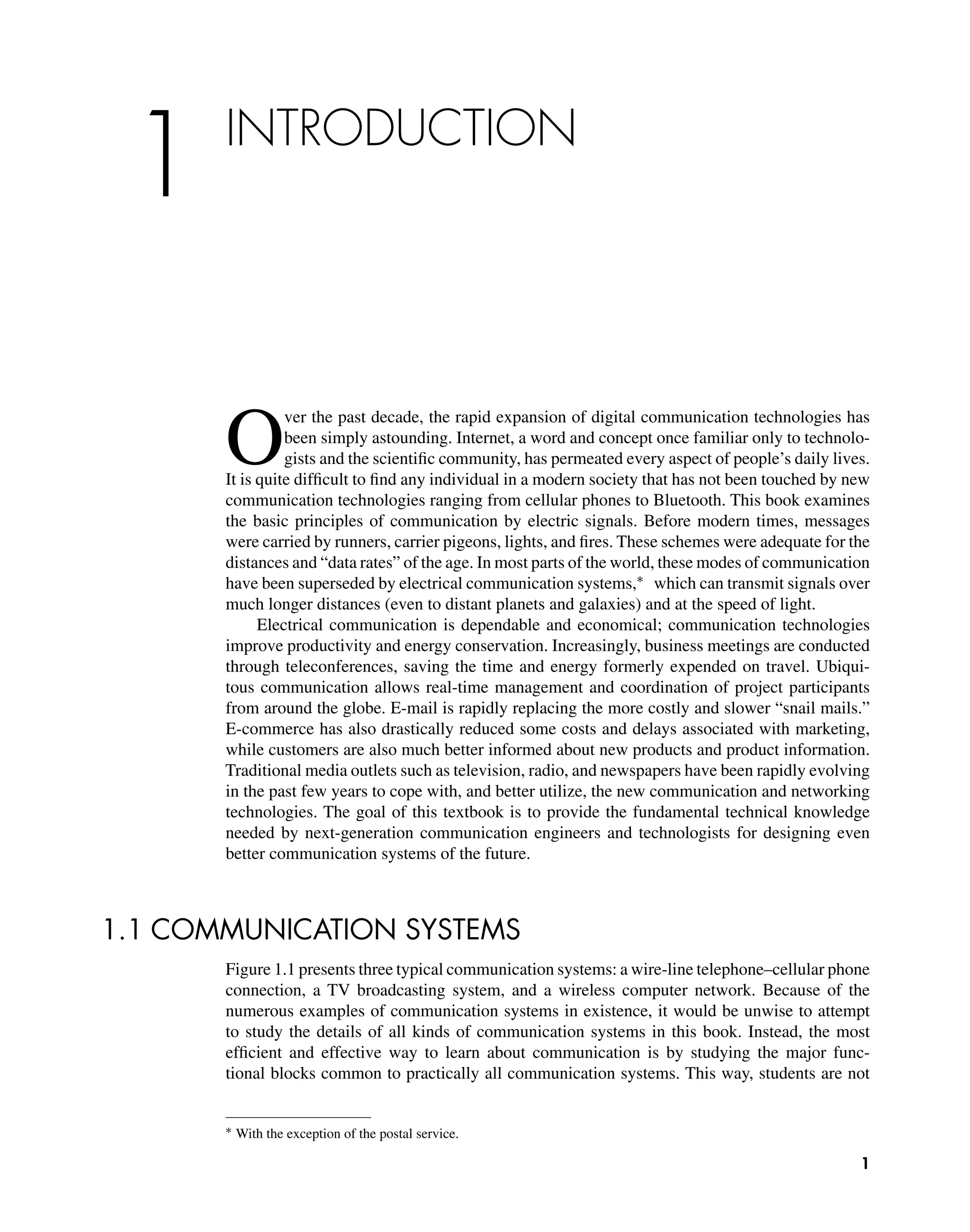
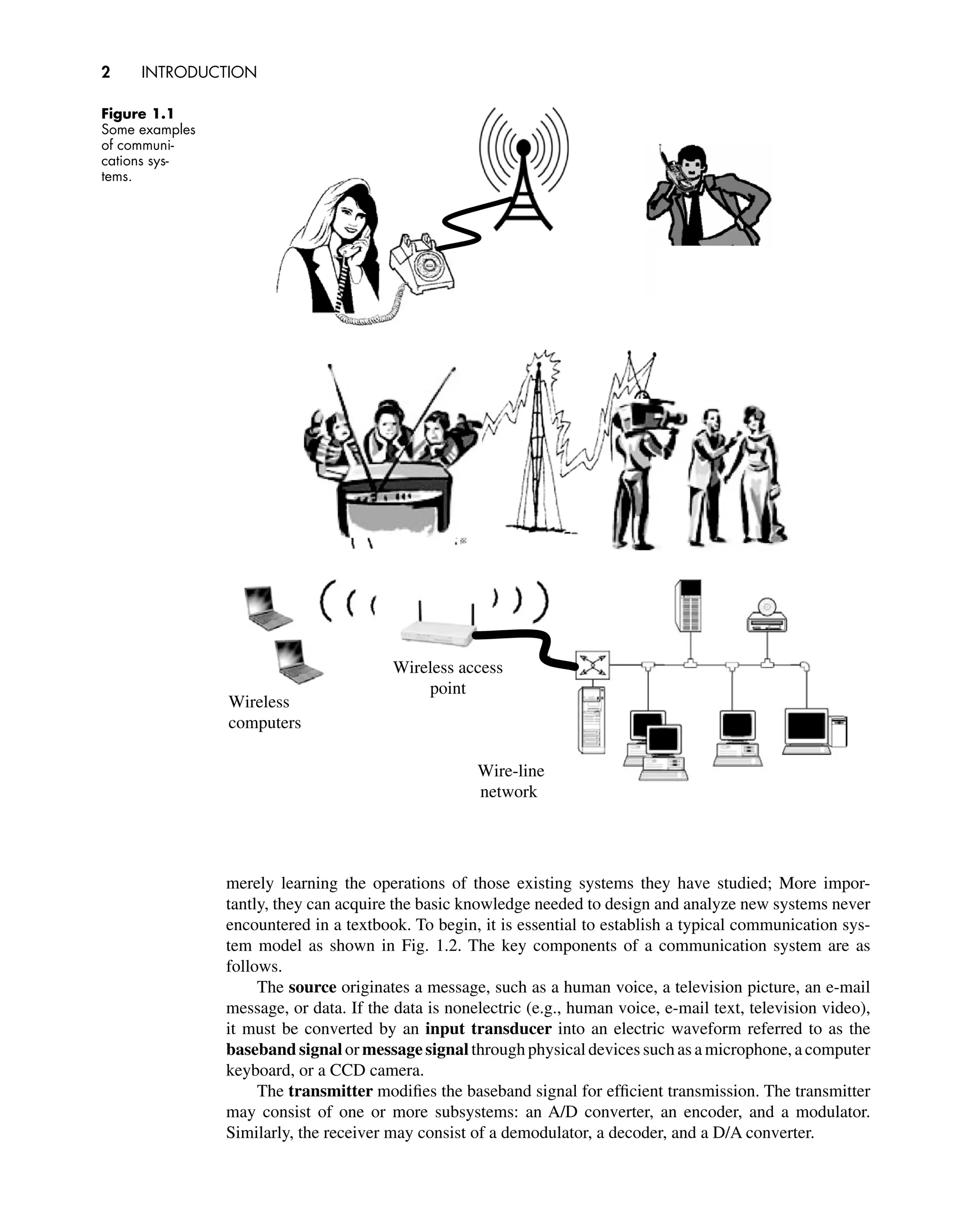
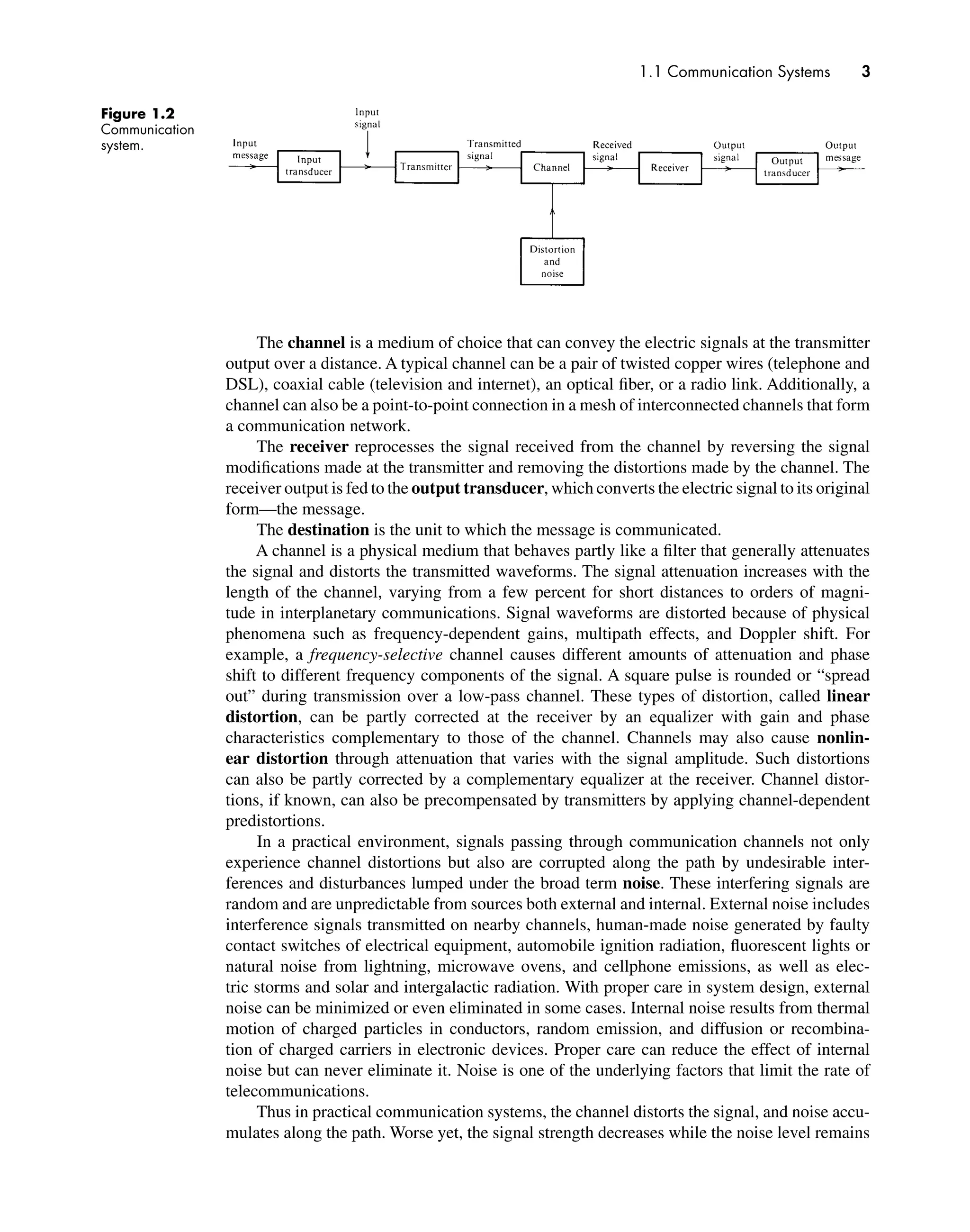
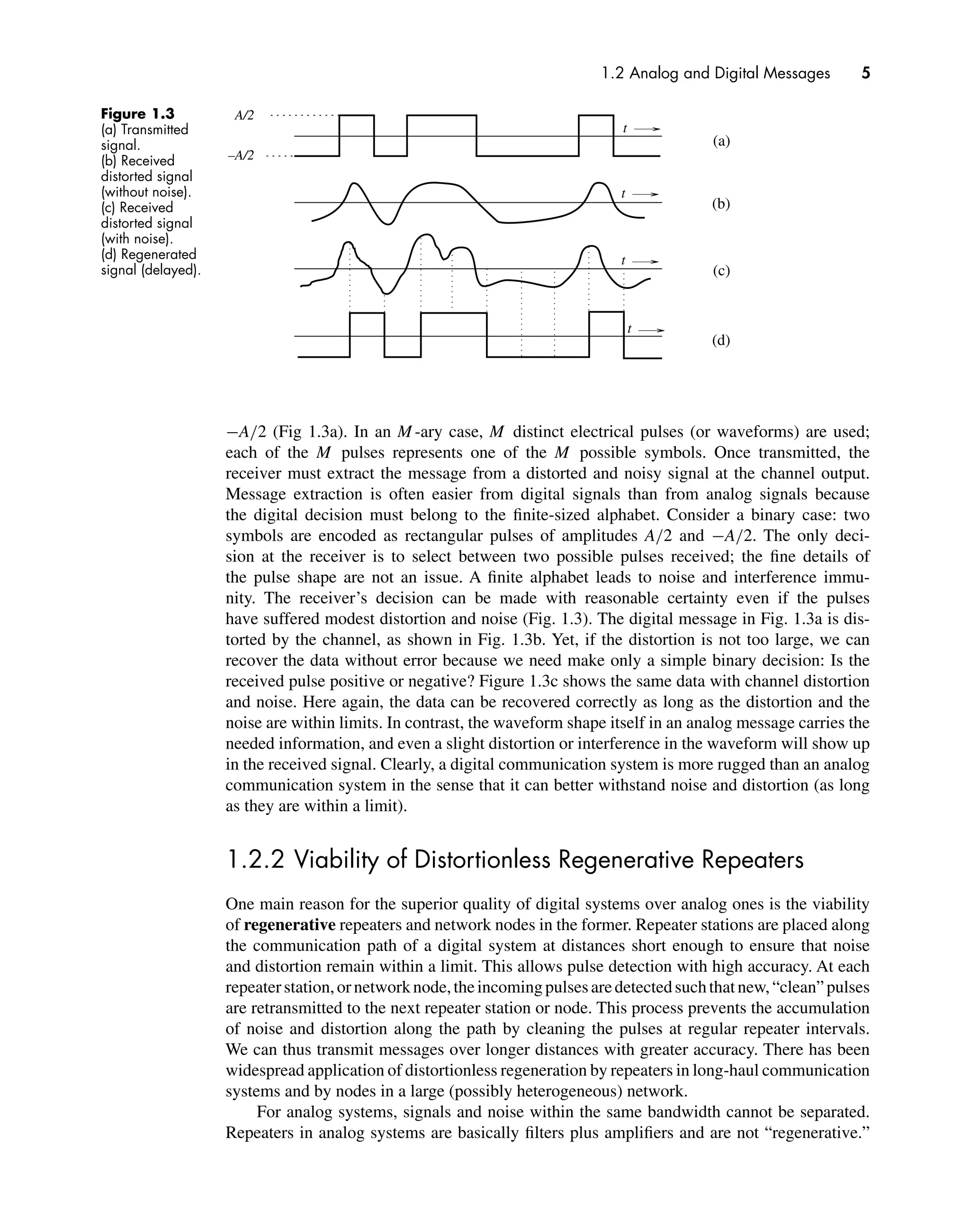

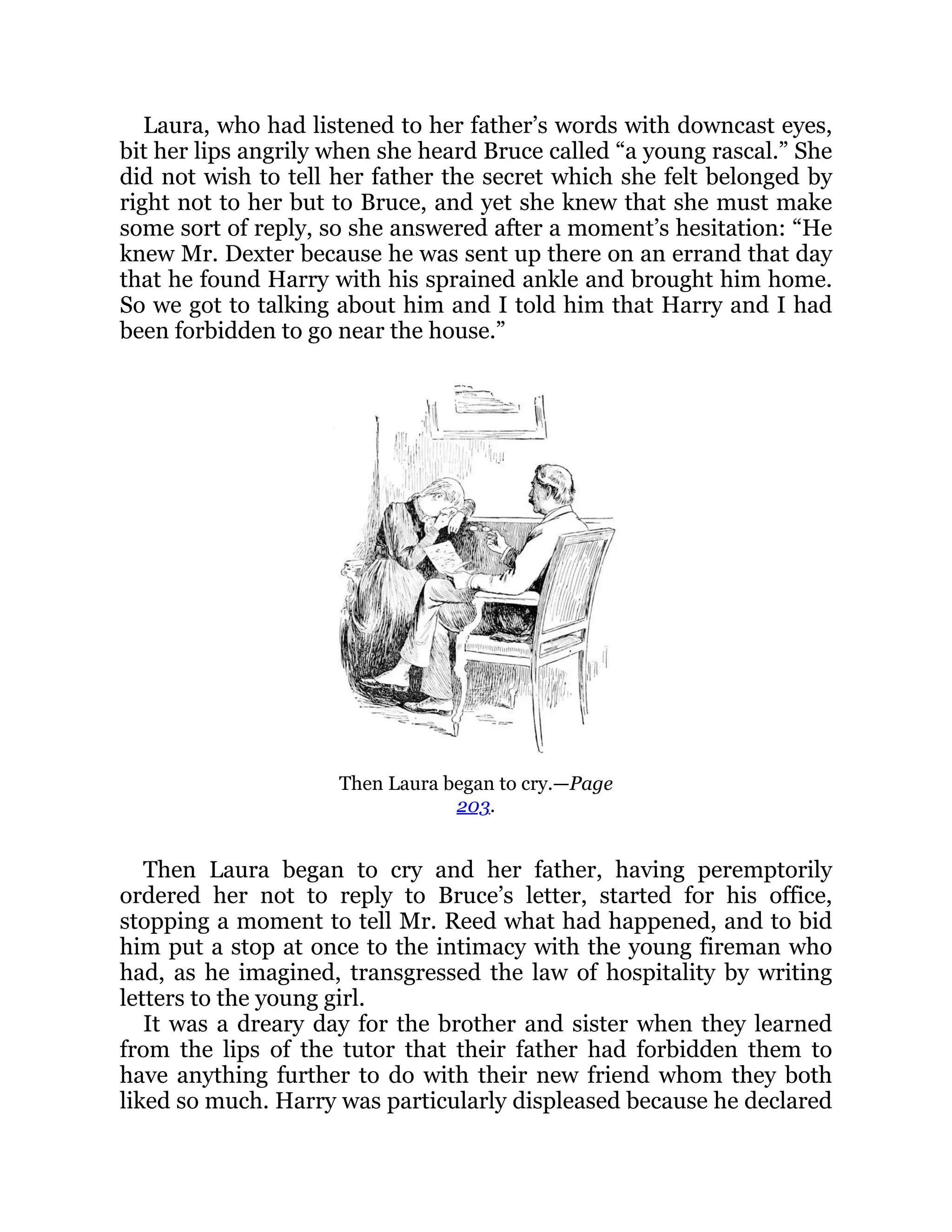

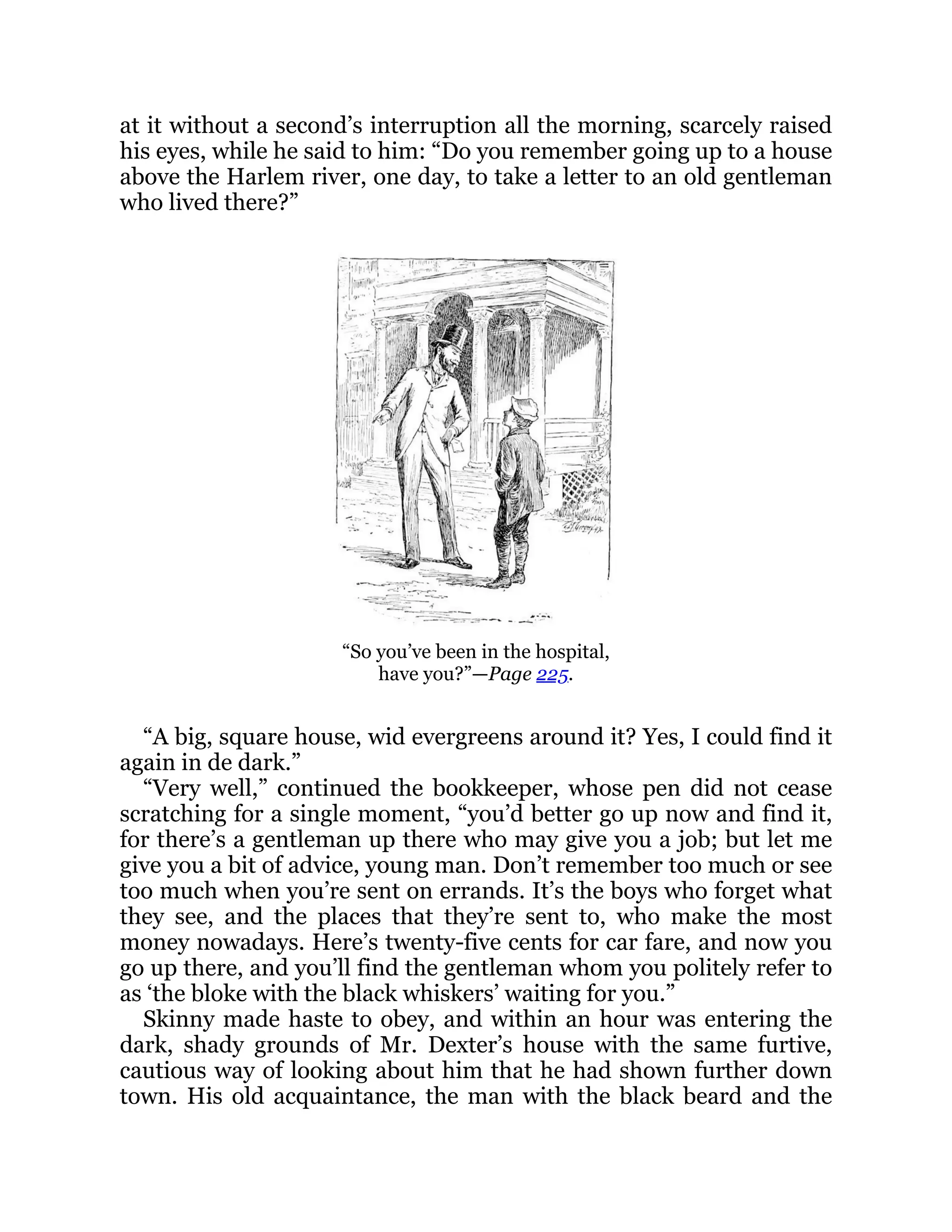

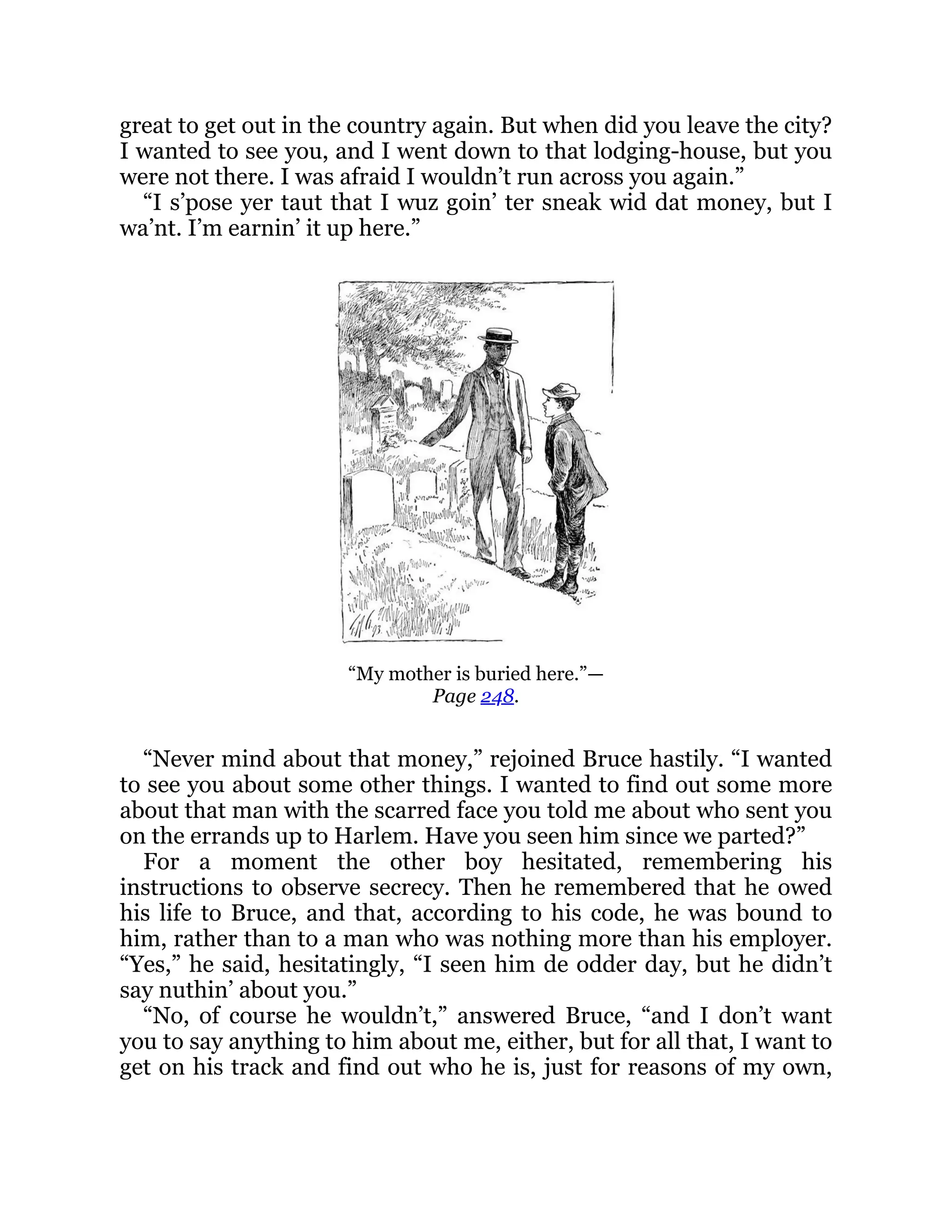
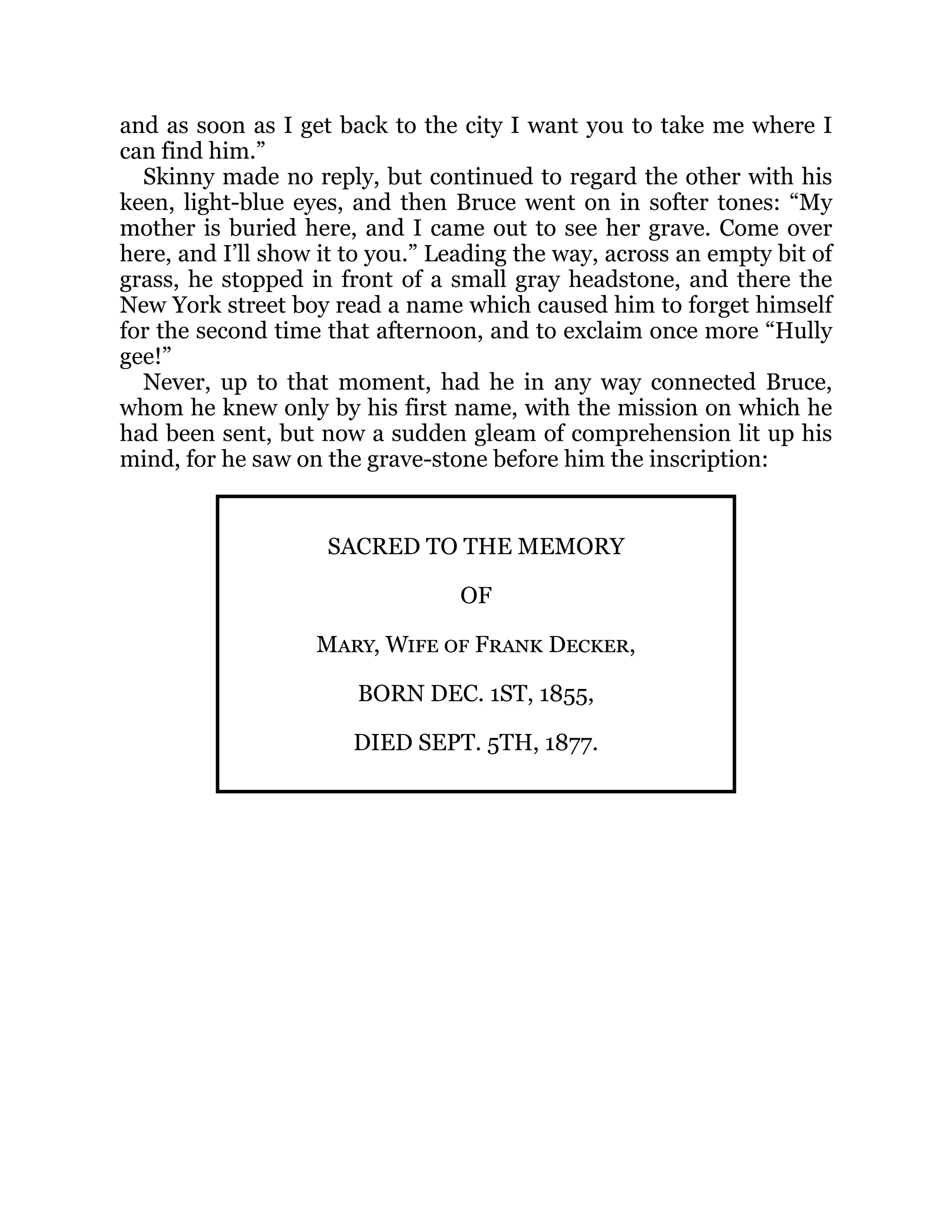



![[Signals and Communication Technology ] Joachim Speidel - Introduction to Dig...](https://cdn.slidesharecdn.com/ss_thumbnails/signalsandcommunicationtechnologyjoachimspeidel-introductiontodigitalcommunications2019springer10-230125181149-9706aeb5-thumbnail.jpg?width=640&height=640&fit=bounds)


