CHILDREN AND CLIMATECHANGE
Children and Climate Change
INTRODUCTORY LEARNING MODULE
2.
CHILDREN AND CLIMATECHANGE
How to Use this Module
Take a look at these icons to find out how to navigate throughout the module. Familiarity
with this visual language will make information easier to understand. Throughout the
module, it is advised to click on the icons from left to right.
Click for
further information
Click to read
the explanatory text
Click to enlarge pictures or
reveal more information
Click on the photo to access
specific children’s experiences
Click to access
complementary reading
Click to access an
interactive activity
Click to go to the previous
or the next slide
Click to go back
CHILDREN AND CLIMATECHANGE
Explain how climate change can affect children
Illustrate key instruments and good practices for
empowering children to act on climate change
Identify opportunities for protecting children’s rights
in a changing climate
After completing the module participants will be able to:
Describe how measures to build climate resilience
and mitigate climate change can benefit children
Learning Objectives
5.
Sections
OVERVIEW
SECTION 1
The Impactof
Climate Change
on Children
SECTION 2
Strengthening
Children’s
Resilience to
Climate Change
SECTION 3
The Benefits of
Climate Change
Mitigation for
Children
SECTION 4
Empowering
Children to Act
on Climate
Change through
Education
SECTION 5
A Climate
Change Agenda
for Children
CHILDREN AND CLIMATECHANGE
There may be no greater,
growing threat facing the
world’s children – and their
children – than climate
change.
9.
CHILDREN AND CLIMATECHANGE
The World’s Distribution of
Children and Climate Risks
Population under 18 years of age per sq km in 2015
10.
CHILDREN AND CLIMATECHANGE
The World’s Distribution of
Children and Climate Scenarios
The extent of GHG emission cuts will determine how
many children will live in areas particularly affected by
climate change. Taking ambitious action to limit emissions
is therefore crucial for children’s future well-being.
11.
CHILDREN AND CLIMATECHANGE
Climate Change
Impacts on Children
Explore more by clicking on the circles, hover over them to see which one to click first.
12.
CHILDREN AND CLIMATECHANGE
Nearly 160 million
children live in areas of
high or extremely high
drought severity.
13.
CHILDREN AND CLIMATECHANGE
Children and Drought Severity Map
Examples of drought prone areas with high concentrations of children
14.
CHILDREN AND CLIMATECHANGE
Potential Impacts of Droughts
and Water Stress on Children
Development of
diseases
Lack of clean water
and undernutrition
Exploitation and
emotional disruption
15.
CHILDREN AND CLIMATECHANGE
Over half a billion
children live in
extremely high flood
occurrence zones.
16.
CHILDREN AND CLIMATECHANGE
Children and Flood Occurrence Map
Examples of flood occurrence areas with high concentrations of
children
17.
CHILDREN AND CLIMATECHANGE
Potential Impacts of Floods
and Severe Storms on Children
Injuries and drowning
Diseases due to
food/water
contamination
Malnutrition
18.
CHILDREN AND CLIMATECHANGE
Extreme heat will become
a growing and a regular
problem for children in
many parts of the world.
19.
CHILDREN AND CLIMATECHANGE
Potential Impact
of Heat Stress on Children
Heat stroke/
heat cramps
Dehydration
Vulnerability
to other diseases
CHILDREN AND CLIMATECHANGE
Air pollution led to
661,000 deaths of
children under 5 years
of age in 2012.
22.
CHILDREN AND CLIMATECHANGE
Potential Impact of Air
Pollution on Children
Prenatal health
effect
Pneumonia Asthma
23.
CHILDREN AND CLIMATECHANGE
Lethal and debilitating
diseases, particularly
dangerous for children, are
highly susceptible to changes
in the climate
24.
CHILDREN AND CLIMATECHANGE
Diseases/Malaria & Dengue
Temperature suitability for the transmission of malaria
Raising global temperatures have made
many regions suitable for transmission of malaria
25.
CHILDREN AND CLIMATECHANGE
Diseases/Diarrhea,
Cholera & Meningitis
The graph shows that meningitis cases increase in dry, hot and dusty seasons
26.
CHILDREN AND CLIMATECHANGE
Exacerbated Inequities
• Different gender roles and norms mean that women, men, girls and boys
are likely to be affected in different ways by climate change
• Social limitations prevent the capacity of women and girls to learn useful
skills and expose them to higher risks of disaster-related mortality
• Girls are more exposed to violence and abuse following disasters
• Girls are more likely to be withdrawn from school
27.
CHILDREN AND CLIMATECHANGE
Indigenous Children
and Climate Change
370 million
indigenous adults
and children in 90
countries are at risk
of facing the direct
consequences of
climate change
Climate change
poses an existential
threat due to the
dependent
relationship with the
environment and its
resources
Indigenous people
represent 15% of
the world’s poor
and are located in
areas of high
biological diversity
Indigenous people
make up ⅓ of the
900 million people
living in extreme
poverty in rural
areas
28.
CHILDREN AND CLIMATECHANGE
Climate change will increase
the frequency of extreme
weather events. Experiencing
cumulative shocks will be
detrimental for children.
29.
CHILDREN AND CLIMATECHANGE
Activity: Crossword Puzzle
R A U G H T
F
L
O
O
D
S
Nearly 160 million children live in areas
characterized by this phenomenon.
Over half a billion children live in areas
extremely prone to this phenomenon.
It caused 661,000 deaths of children
under 5 years of age in 2012.
P O L L U T N
It is the most rapidly spreading mosquito-
borne viral disease in the world.
D
E
N
G
E
1
2
3
4
D
1
2
3
4
CHILDREN AND CLIMATECHANGE
In the face of unavoidable
impacts for the next
generation, child-centred
adaptation is a necessary
element of the global
response to climate change.
33.
CHILDREN AND CLIMATECHANGE
A Child-centred Approach to
Climate Change Adaptation Means…
Focusing on the specific risks faced by children in a
changing climate
Ensuring that children’s needs and capacities are
central to adaptation planning and implementation
Increasing the voice and agency* of children in
adaptation decision-making processes
Therefore, protecting children’s rights, such as the rights to
life, safety, participation and development
*the ability of children to reflect, make their own choices and decisions on issues affecting them, and have control of their lives
34.
CHILDREN AND CLIMATECHANGE
Disaster Risk Reduction
(DRR) & Children
!
Climate
change impacts
are projected to
increase the numbers
of children affected
by disasters to 175
million per year in the
coming decade
DRR aims to minimise
vulnerabilities and
disaster risks in order
to avoid or to limit the
adverse impacts of
natural hazards
While also
covering non climate-
related disasters
(e.g. earthquakes),
DRR is recognised as
a key climate change
adaptation
strategy
35.
CHILDREN AND CLIMATECHANGE
Mainstreaming Child-centred
Adaptation into Development
Children are a key part in the
identification of risks and
resilience-building options for
development programmes
Children’s specific needs and
capacities are included in the
vulnerability assessments and
planning processes for
climate-smart development
Children are included in the
processes of monitoring and
evaluation of programmes
and initiatives that affect
them
CHILDREN AND CLIMATECHANGE
Case Study – Developing a
Climate Change Response in
Collaboration with Children
38.
CHILDREN AND CLIMATECHANGE
Benefits of Child-Centred
Climate Change Adaptation
Effective child-centred adaptation measures exist for all priority areas for children
Explore more by clicking on the circles
Health WASH Education Nutrition Protection Inclusion
39.
CHILDREN AND CLIMATECHANGE
Improved access to anti-
malaria treatment and
mosquito nets limit the
spread of vector-born
diseases
Focus on Health
Heatwave early warning
systems* and appropriate
advice help reduce the
incidence of heat-related
illnesses
Improved access to
emergency health services
decreases deaths and
injuries from disasters
*Surveillance systems that collect information on epidemic-prone diseases in order to trigger prompt interventions
40.
CHILDREN AND CLIMATECHANGE
Focus on WASH
Water quality
- Integrate climate resilience into
water safety planning
- Strengthen household treatment
in flood prone areas
Sanitation and hygiene
Strengthen community
understanding of climate risk
within community approaches
to sanitation and hygiene
Water quantity
- Increase water storage in
drought prone areas
- Diversify water supply options
- Use climate smart technologies
Enabling environments
Integrate climate resilience into
WASH policies, strategies
and plans
41.
CHILDREN AND CLIMATECHANGE
Case Study – Improving Water
Access for Conflict Survivors in the
Central African Republic
Strong climate change impacts in the Central African
Republic exacerbate the dangers from protracted
armed conflict for 2.14 million children. Widespread
violence and large scale human rights abuses have led
to the displacement of 850,000 people. In this context,
UNICEF is implementing an innovative climate-sensitive
manual drilling programme to provide access to clean
water for internally displaced people, offering
multiple social, economic and environmental benefits.
42.
CHILDREN AND CLIMATECHANGE
Focus on Education
School-based
programmes on early
warning systems enhance
disaster preparedness
Youth-led community risk
mapping enhance their
involvement and
awareness
Structural measures for
schools to withstand
impacts of disasters can
protect children and their
right to education
43.
CHILDREN AND CLIMATECHANGE
Focus on Nutrition
Crop diversification
increases food security
and livelihoods
Distribution of fortified
food and promotion of
breastfeeding are key
sources of nutrition for
children in emergency
and disaster situations
Community gardens
ensure that children
have nutritious food
and a better
balanced diet
44.
CHILDREN AND CLIMATECHANGE
Case Study – Diversifying
Agriculture in Nepal
Children in Julma,
Nepal suffer from acute malnutrition.
Increasingly irregular rainfall, extended
droughts and flooding have contributed
to crop failures. Since 2003, World
Vision Nepal has been working with
local communities to help increase food
security and nutrition outcomes for
children. Interventions are intended to
improve land management, maximise
agricultural diversity, change
consumption patterns and develop
surplus management programmes.
45.
CHILDREN AND CLIMATECHANGE
Focus on Child Protection
Safety net interventions help to
prevent dislocation and
exploitation of children
Psychological and social support
can help children to recover from
disasters and cumulative shocks
Providing water closer to homes
keeps girls safe from abuse and
boosts their school attendance
46.
CHILDREN AND CLIMATECHANGE
Focus on Social Inclusion
Cash transfers after
natural disasters
strengthen social
protection systems
Child sensitive
climate budgeting
and programming
Education and health
service fee waivers
ensure wider access
to key services for
poor girls and boys
CHILDREN AND CLIMATECHANGE
The Benefits of Climate Change
Mitigation for Children
3
50.
CHILDREN AND CLIMATECHANGE
CHILDREN AND CLIMATE CHANGE
Ambitious action to cut
greenhouse gases will
benefit the lives of
hundreds of millions of
children.
51.
CHILDREN AND CLIMATECHANGE
Reminder: Mitigation
GHG Emissions by Economic Sectors
Climate change mitigation is
a human intervention to
reduce the sources or
enhance the sinks of
greenhouse gases (GHGs)
Climate Change Mitigation
*Agriculture, Forestry and Other Land Use
**Direct emissions are defined at the point in the energy chain where they are released.
***Indirect emissions refer to the energy use in end-use sectors
*
** ***
Graph: IPCC Fifth Assessment report, 2014
52.
Energy & ClimateChange
CHILDREN AND CLIMATE CHANGE
Energy related CO2
Energy related CO2 is the most
important GHG, responsible in
2015 for about 63% of
emissions
Energy services
are essential for human
activity as the world’s energy
demand is expected to
increase
Sustainable energy
is crucial for our future and
plays a key role in children’s
development and well-being
Sustainable Energy for
Cooking:Protecting Girls
CHILDREN AND CLIMATE CHANGE
• In many places, gender roles dictate that girls and women are responsible
for collecting cooking fuel, typically firewood
• Firewood collection presents large physical and time burdens
• In emergency contexts, girls are also at great risk of sexual violence
• Sustainable energy solutions can contribute to girls’ well-being and safety
55.
Case study –Improved Cook Stove
Programme in Zimbabwe
CHILDREN AND CLIMATE CHANGE
Issue
Action
Impact
?
56.
CHILDREN AND CLIMATECHANGE
Case study – Reducing
Emissions and Improving
Children’s Health in Mongolia
Using more
efficient
heating stoves
Developing
policies
to tackle GHG
emissions
and air pollution
Capacity
building
and awareness
raising
57.
CHILDREN AND CLIMATECHANGE
CHILDREN AND CLIMATE CHANGE
Actions undertaken to
reduce greenhouse gas
emissions can positively
or negatively affect
children.
58.
Reducing Emissions fromForests
– REDD+’s Impact on Children
CHILDREN AND CLIMATE CHANGE
Safeguards
59.
CHILDREN AND CLIMATECHANGE
CHILDREN AND CLIMATE CHANGE
Including children’s considerations
in climate mitigation planning can
maximise the benefits and
minimise the negative impacts on
children and other vulnerable
populations.
60.
Education as aKey Climate
Change Mitigation Strategy
CHILDREN AND CLIMATE CHANGE
Educating children about climate
change can be seen as a mitigation
activity as children are the world’s
future decision makers and consumers
CHILDREN AND CLIMATECHANGE
Empowering Children to Act
on Climate Change through Education
4
63.
CHILDREN AND CLIMATECHANGE
“Education is the most
powerful weapon which
you can use to change the
world.”
Nelson Mandela
64.
Climate Change Education(CCE)
Promotes learning about the causes and effects of
climate change, as well as possible responses
Enhances resilience, encourages changes in
behaviour and promotes critical-thinking
Advances the realisation of children’s rights
Aims to promote climate-resilient development and
reduce vulnerability of communities
CHILDREN AND CLIMATE CHANGE
65.
Integrating Climate Changein Education
Education
Formal
Education
Non-Formal
Education
Informal
Education
CHILDREN AND CLIMATE CHANGE
66.
Climate Change inFormal Education
Climate change integrated in:
Education legislation and policies, sector plans and
budgets
School curricula and examinations
Training and teaching materials for teachers
Learning environments
School governance and infrastructure
CHILDREN AND CLIMATE CHANGE
Leaving No OneBehind in
Climate Change Education
Equality
of
opportunity
Promoting girls’ access to education
Incorporating indigenous knowledge
and learning systems
Providing young refugees with
livelihood skills in a changing climate
Taking into account the learning
needs of people with disabilities
CHILDREN AND CLIMATE CHANGE
CHILDREN AND CLIMATECHANGE
As children better
understand the causes and
impacts of climate change,
they will be better able to
plan for, and respond to,
climate change.
72.
Children & YouthAct on
Climate Change/Adaptation
Young people
build barriers
to limit soil
erosion in Xai-
Xai City,
Mozambique
CHILDREN AND CLIMATE CHANGE
73.
Children & YouthAct on
Climate Change/Mitigation
High school students
promote biodiesel
produced from used
vegetable oil in
Barbados
CHILDREN AND CLIMATE CHANGE
74.
Children & YouthAct on Climate
Change/Sharing the Message
Amerindian
children in
Guyana sensitize
children abroad to
rainforest
protection
CHILDREN AND CLIMATE CHANGE
75.
Children & YouthAct on Climate
Change/Taking the Lead
Young climate
ambassadors in Zambia
reach out to
1 million children,
young people and
community members
CHILDREN AND CLIMATE CHANGE
76.
To Learn More…
CHILDRENAND CLIMATE CHANGE
United Nations
Joint
Framework
Initiative on
Children, Youth
and Climate
Change
77.
Activity: Blue FactHunt!
1. The importance of
Climate Change
Education has
been included in
international climate
agreements such as…
(Multiple choice)
UNFCCC
Rotterdam Convention
Basel Treaty
Paris Agreement
CHILDREN AND CLIMATECHANGE
The Convention on the
Rights of the Child (CRC)
The Convention sets out the rights that must be realized for children to develop
their full potential, free from hunger and want, neglect and abuse.
80.
CHILDREN AND CLIMATECHANGE
Children & Climate Change
in Post-2015 Agreements
Sendai Framework for
Disaster Risk Reduction
2030 Agenda for
Sustainable Development
Addis Ababa Action
Agenda
Paris Agreement
81.
CHILDREN AND CLIMATECHANGE
Young People’s Voices in
Climate Change Negotiations
CHILDREN AND CLIMATE CHANGE
YOUNGO
COY
YOUNG
AND FUTURE
GENERATION
DAY
82.
CHILDREN AND CLIMATECHANGE
Governments & Children’s Protection
CHILDREN AND CLIMATE CHANGE
Governments have the
responsibility to protect
children from the impacts of
a changing climate
Governments need to
mobilise long-term
climate finance and
distribute it to benefit
the most vulnerable,
including women
and children
83.
CHILDREN AND CLIMATECHANGE
CHILDREN AND CLIMATE CHANGE
There are concrete steps
that the world can take
now to safeguard our
children’s future and
their rights.
84.
CHILDREN AND CLIMATECHANGE
1. Cut greenhouse gas emissions so that global
temperature increases are limited to a
maximum of 2 , and ideally to 1.5
℃ ℃.
2. Make the needs of the most vulnerable, including
children, central to climate change adaptation.
3. Reduce inequality among children now to promote
their future resilience to climate change.
4. Listen to and act on children’s
perspectives on climate change.
5. Provide children and young people with
climate change education, awareness raising
and training.
A Climate Change
Agenda for Children
85.
CHILDREN AND CLIMATECHANGE
A Climate Change
Agenda for Children
6. Scale-up proven approaches to address
the changing needs of children.
7. Align and coordinate work on climate change
adaptation, preparedness and disaster
risk reduction.
8. Put in place measures to protect children who
have been displaced, migrate or are refugees
as a result of climate change or
climate-related impacts.
9. Invest in children when implementing
national climate plans on mitigation
and adaptation.
10. Everyone should get involved.
CHILDREN AND CLIMATECHANGE
CHILDREN AND CLIMATE CHANGE
Protecting the planet
and protecting our
children go
hand-in-hand and both
can be achieved if we
all act now.
88.
CHILDREN AND CLIMATECHANGE
Module Summary
Children represent the largest group of people affected by climate change and one of
the most vulnerable.
Climate change affects children both directly and indirectly, exacerbating existing
inequities.
Child-centred adaptation as well as mitigation policies and measures can greatly benefit
children.
Education is key to empowering children. It provides them with knowledge, skills and tools
for addressing climate change.
While being victims of climate change, children are at the same time powerful actors of
change. They can promote transformation at the local, national and international level.
It is important to involve children in the decision-making processes affecting them.
International instruments exist for governments to ensure the protection of children and
their rights in a changing climate.
Taking action now is crucial to ensure a better future for our children and our planet.
89.
CHILDREN AND CLIMATECHANGE
Credits
• Photos: UN Photo
• Resting icon, by Freepic from flaticon.com
• Brain Genius Icon by freepik.com
• Navigation icons (chat, hand click, picture,
book, information, gear) by flaticon.com
and thenounproject.com
• Pollution photo by unsplash.com
• Climate change impact illustration icons by
flaticon.com and thenounproject.com
• Heart icon, by Freepik from flaticon.com
• Shower icon, by Freepic from flaticon.com
• Graduation cap icon, by Freepik from flaticon.com
• Cereal box and bawl icon, by Freepik from flaticon.com
• Resting icon, by Freepic from flaticon.com
• Man with umbrella icon, by Freepik from flaticon.com
• Hands and people icon, by Freepik from flaticon.com
• Map by mapmaker.nationalgeographic.org
• Political map by freepik.com
• Flag icon by Freepik from flaticon.com
• Balance icon by freepik.com
• Rubik’s cube icon by freepik.com
• Tree icon by freepik.com
• Infographic by freepik.com
• World map by freepik.com
• Infographic circles by freepik.com
90.
CHILDREN AND CLIMATECHANGE
Disclaimer
The designations employed and the presentation of the material in this module do not imply the expression of any opinion
whatsoever on the part of UN CC:Learn, nor its partner organizations, concerning the legal status of any country, territory,
city or area or of its authorities, or concerning the delimitation of its frontiers or boundaries. Dotted and dashed lines on
maps represent approximate border lines for which there may not yet be full agreement.
The resources presented in this module are drawn primarily from within the UN and partners to UN CC:Learn. This module
includes limited selected information from recognized Non-UN organizations. UN CC:Learn is not responsible for the content
of third-party resources and their mention does not imply that these have been endorsed or recommended by UN
CC:Learn.
Editor's Notes
#1 This specialized module introduces the theme of children and climate change, with the aim to provide a children’s perspective to the discussions on how to deal with this global crisis. Through the module, you will learn how children are and can be impacted by climate change, how children's resilience could be strengthened, and how measures to reduce greenhouse gas (GHG) emissions could lead to a wide range of benefits. You will also be reflecting on solutions, focusing on the empowerment of children as actors of change and on the key role of governments in children’s protection. Several examples, interactive exercises and links to external resources are made available to support the content.
#3 Did you really check each of these icons? It is worth spending a few moments here to test your navigation skills.
#5 Click on the rectangles to access the sections.
#6 Section 1 provides an introduction to the vulnerability of children to climate change. While playing a key role in shaping the future of human society, children are disproportionately affected by climate change. This section looks at different climate-related risks that threaten children, highlighting that their expected impacts will be distributed inequitably.
Picture: UN Photo/UNICEF/Marco Dormino
#7 This UNICEF video presents the views of various children around the world on climate change. They note the impacts they observe in their daily lives and the fears for their future, calling on world leaders to take ambitious action. The video shows that children are exposed to the effects of climate change. It also shows that they are willing to speak up and become important actors in protecting a more sustainable future. Watch the video to learn more.
Click to watch the video
[Video courtesy of UNICEF: https://www.youtube.com/watch?v=h7Vs0x9QM-s]
#8 There are 2.3 billion children in the world, representing 30% of the world’s population, and this number is increasing. This makes them the largest group of people affected by climate change. Children are also more vulnerable than adults to its harmful effects.
Many children born today will enjoy vast opportunities unavailable 25 years ago. However, despite the advances observed in the last decades, the global crisis posed by climate change has the potential to undermine all the gains that have been achieved in child survival and development, and to even promote greater dangers for the future.
Further information: Climate change refers to changes in climate characteristics, including temperature, humidity, rainfall, wind and severe weather events over long-term periods. For a refresher on the basics of climate change science, please access the UN CC:Learn Introductory Module on Climate Change Science: http://unccelearn.org/mod/scorm/view.php?id=43.
Sources:
UNICEF, Unless We Act Now, 2015.
UNICEF, The Challenges of Climate Change: Children on the Front Line, 2014.
UNICEF, Executive Directive, 2016.
UNICEF, The State of the World’s Children 2015: Reimagine the Future, 2015.
IPCC, Frequently Asked Questions - What is the Greenhouse Effect? 2017.
#9 The risks and impacts of climate change are, and will be, different across the planet. Therefore, the distribution of the world’s population under 18 years of age has important implications for assessing how children will be affected.
This map shows that there is a correspondence between high concentrations of children and tropical regions with developing economies, which are especially vulnerable to climate change. This is particularly the case in sub-Saharan Africa and South-East Asia. Key climate risks in Africa derive from water stress, drought and floods; in Asia, from flooding, heat-waves and drought.
Click on the triangles to see examples of key climate risks.
Africa: Key climate risks in Africa derived from drought and floods involve:
Compounded stress on water resources from current over-exploitation and degradation, and anticipated increases in demand for water;
Due to increased variability of temperature and precipitation, particularly along the edges of their distribution, the incidence and geographic range of vector and waterborne diseases also increasingly vary.
Asia: Key climate risks in Asia derived from flooding, heat-waves and drought involve:
Increased riverine, coastal and urban flooding leading to widespread damage to infrastructure, livelihoods and settlements;
Increased risk of heat-related mortality;
Increased risk of drought-related water and food shortage causing malnutrition.
Complementary reading: Unless We Act Now, p. 14-19
Further information: Globally, children make up almost half of the population in developing countries and increasingly grow up in urban environments. For further information on climate change and the urban environment, including vulnerable groups, please access the UN CC:Learn Introductory Module on Cities and Climate Change: http://unccelearn.org/course/view.php?id=21.
Sources:
UNICEF, Unless We Act Now, 2015.
UNICEF, The Challenges of Climate Change: Children on the Front Line, 2014.
UN-Habitat website: http://unhabitat.org/urban-themes/youth/
Map: Adapted from UNICEF, Unless We Act Now, 2015.
#10 Taking a forward look, scientists expect that the impacts of climate change will become much stronger. This would be the case even if all emissions of greenhouse gases (GHG) stopped immediately, because of the large quantities already present in the atmosphere. If emissions continue, the impacts would be even worse.
In order to understand how the climate will likely change in the future, and its consequences, scientists have developed climate projections. These simulate the response of the climate system to estimated future GHG emissions into the atmosphere based on a series of assumptions, such as future socioeconomic and technological developments.
The figures, combining three climate scenarios for different levels of potential global action on climate change, with projected child population data, show the difference in the number of children who will be living in areas with important changes in average surface temperatures. Children not living in the zone outlined in the maps will still be affected by climate change.
Click on each scenario to enlarge.
Complementary reading: Unless We Act Now, p. 58-61
Source: UNICEF, Unless We Act Now, 2015.
Map: Adapted from UNICEF, Unless We Act Now, 2015.
#11 Climate change undermines children’s most basic rights, putting their survival and well-being in danger. Major climate related-risks which can have a profound impact on children arise from the following phenomena:
Drought and water stress;
Floods and severe storms;
Heat stress;
Air pollution;
Change in the incidence and geographic spread of diseases.
Explore more by clicking on the circles, hover over them to see which one to click first. Once you have finished exploring this page, move forward on the module using the right arrow.
Click on the corresponding icons to find out more.
Sources:
UNICEF, Children and the Changing Climate: Taking Action to Save Lives, 2015.
UNICEF, Unless We Act Now, 2015.
#12 Drought is caused by an intense and persistent shortage of precipitation resulting in water shortage. The water stress associated with drought can be further aggravated by increased evaporation due to higher temperatures and competing water usage.
Source: UNICEF, Unless We Act Now, 2015.
#13 The map shows that children living in areas particularly prone to drought are mostly located in low-income countries. Africa has the highest number of children living in such areas (84 million), followed by Asia (58 million), the Americas (14 million) and Europe (1 million).
Droughts can happen in areas already affected by important challenges, exacerbating their effects. Considering the 160 million children living in areas of high or extremely high drought severity, nearly 70 million are also in countries with low access to improved sanitation, nearly 60 million are in countries with low access to safe water, and over 50 million are in areas where half or more of the population lives with less than US$3 per day.
Click on the pins to see the examples and hover over the zoom areas to see the names of particularly affected regions.
Source: UNICEF, Unless We Act Now, 2015.
Map: Adapted from UNICEF, Unless We Act Now, 2015.
#14 With drought, water becomes scarce, crops fail, livestock dies and income drops. As children need more food and water per unit of body weight than adults, they suffer from nutritional deprivation. This can affect children’s physical and cognitive development. Under nutrition, as well as unsafe water consumption, also contributes to a range of diseases and is responsible for nearly half of all under-five deaths.
Furthermore, more frequent wildfires increase the risk of destruction and deaths. Smoke is dangerous, particularly for children under 12 years old.
In terms of safety, the loss of income can force children to beg or accept dangerous jobs. Children left without the supervision of family members, who search for food, are more exposed to violence, exploitation and abuse. In all these circumstances, school attendance drops.
Lack of resources can cause conflict or migration. In situations of mass migration, overcrowding can affect water and sanitation conditions, and consequently children. Key service providers, such as health-workers, can also decide to leave affected areas, reducing the services available to families. Beyond physical well-being and protection, children can experience emotional distress, such as the fear of being separated from their families and lack of emotional support.
Click on Abdu’s photo to learn more about how drought is affecting him and other children in Ethiopia.
Abdu Mohammed, 15, is from Afar, Ethiopia. Because of the drought that affected his country in 2016, one of the strongest El Niño events on record, he lacks food and clean drinking water. In the country, an estimated 435,000 children are in need of treatment for severe acute malnutrition, and more than 1.7 million children, and pregnant and lactating women are in need of supplementary feeding. More than 5.8 million people are in need of emergency water, sanitation and hygiene (WASH) services. For further information click here (http://www.unicef.org/appeals/ethiopia.html).
Complementary reading: UNICEF, Unless We Act Now, 2015, p. 22-27
Further information: To learn more about the impact of droughts on health, please access the UN CC:Learn Introductory Learning Module on Climate Change and Human Health: http://unccelearn.org/course/view.php?id=20.
Sources:
UNICEF, Unless We Act Now, 2015.
UNICEF, 5 Facts on Water and Climate Change, 2016: https://blogs.unicef.org/blog/5-facts-on-water-and-climate-change/
UN News Centre: http://www.un.org/apps/news/story.asp?NewsID=53381#.V2cdh_l97IU
UNICEF Ethiopia: http://www.unicef.org/appeals/ethiopia.html
Picture 1: UN Photo/Kay Muldoon
Picture 2: UNICEF/UN013496/Ayene
#15 Floods can be caused by extreme weather events, such as storms and cyclones, and also by a rise in sea level, or a combination of both.
Source: UNICEF, Unless We Act Now, 2015.
#16 Around 530 million children live in areas that are extremely prone to floods, the vast majority being in Asia.
As in the case of droughts, floods can overlap with existing crises, being particularly detrimental to children. For instance, among the children living in extremely high flood occurrence zones, over 270 million are also in countries with low access to improved sanitation, over 400 million in countries with a high proportion of diarrheal deaths, and over 300 million children in countries where half or more of the population lives on less than US$3.10 per day.
In addition, approximately 115 million children globally live in high or extremely high tropical cyclone risk zones, with, again, Asia being by far the most vulnerable continent.
Click on the pins to see the examples and hover over the zoom areas to see the names of particularly affected regions.
Source: UNICEF, Unless We Act Now, 2015.
Map: Adapted from UNICEF, Unless We Act Now, 2015.
#17 Direct impacts from floods and severe storms on children include injuries and death by drowning, as many children lack sufficient strength to stay on their feet when currents are fast, including in shallow water.
Beyond these immediate risks, floods pose a grave risk to children’s health. Particularly, floods can provoke water contamination, increasing for instance the risk of diarrhea, which is the second leading cause of death in children under five. Floods also damage sanitation facilities, as well as houses, schools and shelters.
In addition, livelihood and food security can be affected, with consequent malnutrition, especially for young children. In this case, breastfeeding becomes crucial, both as the best source of nutrition for babies and a source of antibodies.
In extreme situations, people can be forced to leave the affected areas, even for long periods of time. Children separated from their families can be unprotected and exposed to exploitation, abuse and trafficking.
Children are also particularly sensitive to post-traumatic stress disorder, being two to three times more likely to suffer from the disorder than adults, and for longer.
Click on Napsa’s photo to find out more about the effects of typhoon Haiyan in the Philippines.
On 8 November 2013, typhoon Haiyan struck the Philippines. This was one of the most powerful and destructive typhoons ever recorded. As a consequence of this event, 6,000 people were killed, 5,922,000 children were affected and 1,722,000 displaced. Haiyan struck just a month after a 7.2 magnitude earthquake in Bohol province affected 3.2 million people and two months after conflict in the city of Zamboanga had displaced at least 60,000 people. The combination of these three crises created tremendous challenges for the affected population. Children such as Napsa, aged three, from Zamboanga City, suffer from severely acute malnourishment. For further information click here (http://www.unicef.org/philippines/reallives_25261.html#.V2eqY_l961t).
Complementary reading: Unless We Act Now, p. 30-36
Further information: To learn more about the impact of droughts on health, please access the UN CC:Learn Introductory Learning Module on Climate Change and Human Health: http://unccelearn.org/course/view.php?id=20.
Sources:
UNICEF, Unless We Act Now, 2015.
UNICEF, The Challenges of Climate Change: Children on the Front Line, 2014.
WHO, Diarrhoeal Disease, Fact sheet N°330, 2013.
UNICEF, One Year After, Typhoon Haiyan, Philippines, Progress Report, 2014.
UNICEEF Philippines, Ensuring the Right Start to Life: http://www.unicef.org/philippines/reallives_25261.html#.V2eqY_l961t
OCHA, Philippines: Zamboanga, a forgotten crisis in the shadow of Haiyan: http://www.unocha.org/top-stories/all-stories/philippines-zamboanga-forgotten-crisis-shadow-haiyan
Picture 1: UN Photo/Logan Abassi
Picture 2: UNICEF Philippines/2015/Jeoffrey Maitem
#18 Human-induced climate change has increased the frequency and severity of heat-waves across the globe.
Source: UNICEF, Unless We Act Now, 2015.
#19 Extreme heat is a real threat to children’s well-being, not just in countries around the equator but also in many temperate climates. It affects children directly, but also through a variety of heat-related illnesses.
Children under 12 months are the most vulnerable. Infants and small children are more likely to die or suffer from heatstroke because they are unable to regulate their body temperature and control their surrounding environment. Other heat-related illnesses include heat rash, heat-related cramps and exhaustion.
Extreme heat stress can cause dehydration and, subsequently, hyperthermia, which can lead to death. Factors that promote excessive fluid loss, such as diarrhea, can increase these risks. Also, children with chronic health conditions are especially affected.
Finally, heat stress can be especially challenging in cold chain management, as certain microbes multiply faster and more efficiently under higher temperatures.
Complementary reading: Unless We Act Now, p. 40-41
Further information: To learn more about the impact of droughts on health, please access the UN CC:Learn Introductory Learning Module on Climate Change and Human Health: http://unccelearn.org/course/view.php?id=20.
Cog: interactive exercise
Source: UNICEF, Unless We Act Now, 2015.
Picture: UNICEF, Unless We Act Now, 2015, p. 39.
#20 Drag and drop on the puzzle pieces (left) into the square (right).
#21 Air pollution, both indoor and outdoor, represents a key risk for children.
Household (or indoor) air pollution, mostly derived from the use of fuels and coal stoves, contributes to 4.3 million deaths each year; 13% (540,000) of these are deaths of children under five; more than 50% are due to pneumonia caused by soot. Exposure to household air pollution also has fatal consequences for pre-natal health leading to increased risk of stillbirth and low birth-weight.
Ambient (or outdoor) air pollution, predominantly a cause of climate change rather than an effect, also has major ramifications for child health. In 2012, an estimated 3.7 million deaths worldwide were attributable to ambient air pollution; 3% (127,000) of these deaths were of children under the age of five. This form of air pollution tends to be worst in urban centres, where more and more children live as a result of increased urbanization.
Further information: To learn more about the impact of air pollution on children, please access the dedicated UNICEF study: https://www.unicef.org/publications/files/UNICEF_Clear_the_Air_for_Children_30_Oct_2016.pdf
Source: UNICEF, Unless We Act Now, 2015.
#22 Exposure to air pollutants through inhalation is particularly dangerous for children because their lungs are small and still developing until around the age of 18. Their average breathing rate until the age of 12 is about twice as rapid as adults, therefore they inhale proportionately more polluted air.
Increasing temperatures compound the direct toxicity of fossil-fuel pollutants such as ozone, which is an important trigger of childhood asthma. Children may be more exposed than adults as they are more likely to be outside during peak ozone times.
A warmer climate also promotes plant growth and pollen production, resulting in higher levels of natural allergens, further contributing to an increase in the incidence and severity of asthma and other respiratory conditions in children.
Finally, as aforementioned, wildfires caused by droughts can lead to problematic levels of air pollution.
Click on Nandin-Erdene’s photo to find out more about how air pollution is affecting her and other children in Mongolia.
[Video courtesy of UNICEF: http://www.unicef.org/health/mongolia_90290.html]
Complementary reading: Unless We Act Now, p. 44-45
Further information: More than 80% of people living in urban areas that monitor air pollution are exposed to air quality levels that exceed World Health Organization (WHO) limits. Populations in low-income cities are the most impacted, with 98% of cities in low- and middle-income countries with more than 100,000 inhabitants not meeting WHO air quality guidelines. For further information, please visit the WHO’s urban air quality database: http://www.who.int/phe/health_topics/outdoorair/databases/cities/en/.
Sources:
UNICEF, Unless We Act Now, 2015.
UNICEF, UNICEF’s Mongolia Engagement on “Air Pollution and Children’s Health” and Outcome of the International Expert Consultation (Ulaanbaatar 25-26 January 2016), 2016.
UN-Habitat, Nigeria: Onitsha Urban Profile, 2012.
WHO, Urban Air Quality Database, 2016
WHO website: http://www.who.int/mediacentre/news/releases/2016/air-pollution-rising/en/
UNICEF website: http://www.unicef.org/media/media_86347.html
Picture 1: UN-Habitat/Alessandro Scotti
Picture: 2 UNICEF Mongolia/2016/Altangerel
#24 Changes in temperature, precipitation and humidity have a direct impact on the reproduction and survival of the mosquitoes that transmit malaria and dengue.
Malaria is one of the world’s most threatening killers. Two-thirds of global malaria deaths are of children under the age of five, amounting to over 800 such deaths per day. Because of climate change, this disease is now spreading to new areas, reaching populations, and children, that are not used to protecting themselves from it.
Dengue fever affects approximately 50 million people, and is responsible for 15,000 deaths per year. It is the most rapidly spreading mosquito-borne viral disease in the world and is endemic in over 100 countries in Africa, the Americas, the Eastern Mediterranean, South-East Asia and the Western Pacific.
Further information: click on the small map to enlarge it and to see the proportion of child deaths from malaria.
Sources:
UNICEF, Unless We Act Now, 2015.
WHO and WMO, Atlas oh Health and Climate, 2012.
Map: UNICEF, Unless We Act Now, 2015
#25 Stagnant water from increased rainfall, floods or extreme weather events can influence the spread of water- and food-borne diseases such as diarrhea, cholera and meningococcal meningitis.
Acute cases of diarrhea can cause dehydration through significant fluid and nutrient loss, and result in death. Cholera is an acute diarrheal infection causing an estimated 3-5 million cases, and 100,000-120,000 deaths each year. Children who are already malnourished or have a compromised immune system, such as those living with HIV or other diseases, are at a high-risk level of these life-threatening diseases. Diarrhea and cholera are a major cause of death during disasters and other complex emergencies.
Meningococcal meningitis is a climate-sensitive disease caused by a bacterial infection favoured by hot, dry and dusty conditions. Exposure to elevated concentrations of air pollutants, such as carbon monoxide or particulate matter, may be linked to meningitis.
Complementary reading: Unless We Act Now, p. 48-53
Further information: To find out more, please access the UN CC:Learn Introductory Learning Module on Climate Change and Human Health: http://unccelearn.org/course/view.php?id=20.
Sources:
UNICEF, Unless We Act Now, 2015.
WHO and WMO, Atlas oh Health and Climate, 2012.
Graph: Adapted from Atlas oh Health and Climate, 2012
#26 The impacts of climate change can exacerbate existing inequities. Children from wealthier families are able to recover much faster and better than children from poorer families. They have access to more resistant and climate-resilient infrastructure, can more easily procure food and clean water, have better health and nutritional status, including continuous access to health care, and are supported by caregivers with multiple resources. Generally, their coping mechanisms do not compromise schooling.
Children from poorer families face the opposite situation and may face long-term deprivation. They live in less safe, overcrowded areas, with polluted air and, generally, greater health risks. They are more exposed to undernutrition and have limited access to safe drinking water, heat protection and health services. They are more likely to leave school, migrate unsafely and depend on caregivers working in vulnerable sectors, such as agriculture.
Sources:
UNICEF, Unless We Act Now, 2015.
World Bank, Turn Down The Heat: Confronting The New Climate Normal, 2014.
UNDP, The health impacts of climate change in Asia-Pacific, 2013.
Picture 1: UNICEF UK, Climate Change: Children’s Challenge, 2013, p. 23
Picture 2: UNICEF/UNI87634/Gangale
#27 Climate change has a disproportionate impact on marginalized and excluded individuals and groups, including indigenous people. Despite having contributed little to greenhouse gas emissions, they are particularly threatened as their ways of life are inextricably linked to the natural environment.
Source: UNICEF, Unless We Act Now, 2015.
Picture: UN Photo/F. Charton
#28 Extreme climate events have negative consequences for children, even if they just occur once. However, experiencing more than one shock is more difficult to recover from, especially if events occur in quick succession. Cumulative shocks make it difficult not only to recover, but also to survive, through unsustainable coping mechanisms. These have negative short and long-term consequences for children such as school withdrawal, malnutrition, exploitation and trafficking.
It is expected that climate change will increase the frequency of extreme climate events. Globally, natural disasters are occurring almost five times as frequently as 40 years ago. Therefore, it is imperative to build resilience and improve equity for children today.
Complementary reading: Unless We Act Now, p. 54-55.
Cog: interactive exercise
Source: UNICEF, Unless We Act Now, 2015.
#30 For further information on the impact of climate change on children, please check UNICEF’s publication “Unless We Act Now”.
Click on the cover to access the publication
[http://www.unicef.org/publications/files/Unless_we_act_now_The_impact_of_climate_change_on_children.pdf]
#31 Section 2 provides an overview of how children’s resilience to climate change can be strengthened through adaptation and disaster risk reduction interventions. Resilience is the ability of an individual, community, society or system exposed to a threat to resist, absorb, adapt and recover from its effects in a timely and effective manner.
Source: UNICEF, Actions for Children and Youth Resilience - Guide for Governments, 2013.
Picture: GWP and UNICEF, WASH Climate Resilient Development, 2014, cover.
#32 With millions of children at increased risk from infectious diseases, malnutrition, water scarcity, disasters, and the collapse of public services and infrastructure, the response to the threat of climate change demands investment in child-centred adaptation.
Adaptation refers to the process of adjustment to actual or expected climate and its effects. It includes any spontaneous or planned action taken to cope with the impacts of, or reduce vulnerability to, climate change. As such, adaptation represents a whole set of activities, from introducing alternative livelihoods that are not as dependent on natural resources to modifying agricultural practices to be better suited to a drier climate. Child-centred adaptation specifically focuses on the needs and vulnerabilities of children.
Further information: For a general introduction to climate change adaptation, please access the UN CC:Learn Introductory Module on Adaptation: http://unccelearn.org/mod/scorm/view.php?id=45
Sources:
UNICEF, The Challenges of Climate Change: Children on the Frontline, 2014.
IPCC, Climate Change 2014: Impacts, Adaptation, and Vulnerability, 2014.
UNICEF and Plan, The Benefits of a Child-centred Approach to Climate Change Adaptation, 2011.
Children in a Changing Climate, Child-centred Adaptation: Realising Children’s Rights in a Changing Climate, 2016.
#33 There are two aspects of child-centred adaptation: adaptation for children, where the capacity of caregivers to focus on children’s needs and capacities is enhanced; and adaptation with children, where children are centrally involved in the decision-making, planning and implementation of adaptation at all levels.
A child-centred approach to adaptation recognises that children are much more than passive victims of climate change: they are powerful agents of change. Furthermore, given that children’s needs and capacities differ across age, gender, geography and socio-economic status, child-centred adaptation ensures that all children are able to meaningfully participate in the adaptation process and no one is left behind.
Sources:
Children in a Changing Climate, Child-centred Adaptation: Realising Children’s Rights in a Changing Climate, 2016.
UNICEF, The Challenges of Climate Change: Children on the Front Line, 2014.
UNICEF and Plan, The Benefits of a Child-centred Approach to Climate Change Adaptation, 2011.
Picture: UN Photo/JC McIlwaine
#34 Disaster risk reduction (DRR) is a systematic approach to identifying, assessing and reducing the potential losses which could occur to a particular community or a society due to the impact of a natural hazard. Thus, it is important for protecting children’s rights, such as the right to life, the right to protection from violence, abuse and neglect, and the right to have knowledge of their own culture and origin. Watch the video to learn more.
Click to watch the video
[Video courtesy of UNICEF: https://www.youtube.com/watch?v=rw0ylD4qq_c]
Click on Amir’s photo to find out more about how children in Dhaka contribute to keep their community safe from disaster risk.
Amir, 14, is a member of the Children’s Organization & Slum Volunteer of Pora Slum in Jatrabari, located at the southern part of Dhaka, Bangladesh. His community is particularly at risk from water logging, floods and fire. After being trained on first aid and fire safety, he has been working on disaster risk reduction. Amir has contributed to saving the life of a person living with disability during a fire. Furthermore, he raised awareness of DRR among his friends, family and neighbours through drama, courtyard meetings, and the distribution of posters and leaflets, which resulted in concrete changes in behaviour.
Complementary reading: Children’s Action for Disaster Risk Reduction, p. 44-46.
Further information: To learn more about disaster risk reduction please access UNICEF’s Child-Centred Disaster Risk Reduction publication here: http://www.childreninachangingclimate.org/uploads/6/3/1/1/63116409/child-centered_drr-_contributing_to_resilient_development.pdf
Sources:
UNICEF, UNICEF and Disaster Risk Reduction, 2011.
UNICEF, Actions for Children and Youth Resilience: Guide for Governments, 2013.
Children in a Changing Climate, Children and Disaster Risk Reduction: Taking Stock and Moving Forward, 2009.
UNISDR and Plan, Children’s Action for Disaster Risk Reduction, 2012.
Picture 1: UN Photo/Marco Dormino
Picture 2: UNISDR and Plan, Children’s Action for Disaster Risk Reduction, 2012, p. 46
#35 Given the inter-linkages between climate change and poverty, measures to improve child well-being should take into account the impacts of climate change. By mainstreaming adaptation into development processes, governments at all levels can integrate risk reduction and resilience building into development programmes across all sectors.
Complementary reading: Child-centred Adaptation: Realising Children’s Rights in a Changing Climate, p. 8-9
Further information: For further information, please access the UN CC:Learn introductory modules on adaptation (http://unccelearn.org/mod/scorm/view.php?id=45) and on planning for climate change (http://unccelearn.org/mod/scorm/view.php?id=48).
Sources:
Children in a Changing Climate, Child-centred Adaptation: Realising Children’s Rights in a Changing Climate, 2016.
UNICEF, The Challenges of Climate Change: Children on the Front Line, 2014.
UNICEF and Plan, The Benefits of a Child-centred Approach to Climate Change Adaptation, 2011.
#36 Child-centred approaches to adaptation also need to be included in local, sectoral and national climate change planning processes. To do so, existing adaptation policies, guidelines and strategies could be reviewed to ensure that children are visible, their rights are being respected, and the root causes of girls' and boys' vulnerability are addressed.
Newly developed plans, including new climate change strategies and National Adaptation Plans (NAPs), could include child-centred approaches and ensure that children's rights are integrated into policy implementation. Prioritising action at the local level could be particularly relevant as this is where adaptation needs are the greatest and vulnerable people will be most affected.
Click on the covers to find out more about the publications:
National Adaptation Plans – The Technical Guidelines for the National Adaptation Plan Process include guidelines for the formulation of NAPs through four steps. They aim to assist countries to develop clearly defined adaptation programmes. They include information on how to integrate a gender perspective into the NAP process. https://unfccc.int/files/adaptation/cancun_adaptation_framework/application/pdf/naptechguidelines_eng_high__res.pdf
WASH Climate Resilient Development – The Strategic Framework for WASH Climate Resilient Development provides water, sanitation and hygiene (WASH) sector practitioners with guidance on the main elements to be considered in the planning and execution of actions aimed at building climate resilient WASH services. The principles outlined in the Framework aim to complement and strengthen ongoing national and sectoral adaptation planning processes. It includes a focus on women and children. http://www.gwp.org/Global/About%20GWP/Publications/UNICEF%20GWP/GWP_UNICEF_Strategic_Framework_WEB_ARTWORK.pdf
Further information: For further information, please access the UN CC:Learn introductory modules on adaptation (http://unccelearn.org/mod/scorm/view.php?id=45) and on planning for climate change (http://unccelearn.org/mod/scorm/view.php?id=48).
Sources:
Children in a Changing Climate, Child-centred Adaptation: Realising Children’s Rights in a Changing Climate, 2016.
UNICEF, The Challenges of Climate Change: Children on the Front Line, 2014.
UNICEF and Plan, The Benefits of a Child-centred Approach to Climate Change Adaptation, 2011.
UNFCCC, National Adaptation Plans. Technical Guidelines for the National Adaptation Plan Process, 2012.
GWP and UNICEF, WASH Climate Resilient Development, 2014.
UNICEF, Children’s Vulnerability to Climate Change and Disaster Impacts in East Asia and the Pacific, 2011.
#37 Climate change represents a real threat in Zimbabwe. In order to address it, in 2013 the Government of Zimbabwe prepared the National Climate Change Response Strategy. Children and youth were invited to participate in the consultative process for its development. Through multiple workshops, youth and Junior Parliamentarians highlighted the issues affecting them that they thought should be included in policies and planning for climate change. These outputs were combined with those from a specific children and climate change study undertaken by UNICEF and the Institute of Environmental Studies (IES), and then incorporated into the National Climate Change Response Strategy as a stand-alone section on Children and Youth as well as in other appropriate sections.
Further information: For further information, please access the full study: http://www.unicef.org/zimbabwe/Children_and_Climate_Change_in_Zimbabwe_Report_2014.pdf
Source: UNICEF and IES, Children and Climate Change in Zimbabwe, 2013.
#38 The implementation of a child-centred approach to adaptation can provide multiple benefits for children. Many measures are already well known and are also some of the lowest cost measures available.
Investments in key priority areas for children can be particularly important for strengthening their resilience to climate change, addressing the risks highlighted in Section 1.
Priority areas include:
Health, including HIV & AIDS;
WASH;
Education;
Nutrition;
Child protection;
Social inclusion.
Humanitarian action, gender equality and human rights cut across all of them.
Explore more by clicking on the circles. Once you have finished exploring this page, move forward on the module using the right arrow.
Click on the corresponding icons to find out more.
The next slides show examples of child-centred interventions that can benefit children in the different priority areas. Measures in one area often also produce benefits in other areas.
Sources:
- Children in a Changing Climate, Child Voices: Children of Nepal Speak Out on Climate Change Adaptation, 2008.
- UNICEF, The UNICEF Strategic Plan, 2014-2017, 2013.
- UNICEF and Plan, The Benefits of a Child-centred Approach to Climate Change Adaptation, 2011.
Picture: UN Photo/JC McIlwain
#39 Child-centred adaptation interventions in the health sector help to strengthen girls’ and boys’ resilience to climate change by addressing their health risks, as well as those of their caregivers. Promoting improved access to health treatment is particularly important for the survival and well-being of children living with HIV/Aids, who are at higher risks of infections, and children with disabilities. These measures enhance children’s right to health, which is still limited for many of the world’s poor.
Click on Lowot Emmanuel’s photo to find out more about how children in Uganda improved their health status through UNICEF’s support.
Lowot Emmanuel, 10, lives in UmUm village, Kanawat, Uganda. In Kanawat, less than ⅓ of residents have access to clean water, a situation that is compounded by climate-related disasters, such as drought and flooding. This combination of factors provides a dangerous breeding ground for epidemics. UNICEF has been working in partnership with the government and private sector partners to protect children’s lives in this community by providing clean water through the introduction of solar-powered pumping systems, which are resilient to climate shocks and stresses as well as being climate neutral. As a result, 3,480 children have received uninterrupted access to safe water in five villages, including in schools and the local health centre. A significant reduction of water-borne diseases, such as diarrhea, has been observed.
Complementary reading: Children and the Changing Climate: Taking Action to Save Lives, p. 22-24.
Further information: To find out more about the processes and tools for building health system resilience to climate change, please access the UN CC:Learn Introductory Learning Module on Climate Change and Human Health: http://unccelearn.org/course/view.php?id=20.
Sources:
- UNICEF and Plan, The Benefits of a Child-centred Approach to Climate Change Adaptation, 2011.
- UNICEF, Children and the Changing Climate: Taking Action to Save Lives, 2015.
- UNICEF, Unless We Act Now, 2015.
- WHO website
Picture 1: UNICEF, Unless We Act Now, 2015, p. 47
Picture 2: UNICEF, Children and the Changing Climate: Taking Action to Save Lives, 2015, p. 24
#40 Achieving universal access to sustainable and safe water and sanitation is a human rights concern, key to child survival and well-being. However, as the global water cycle is directly affected by climate change, solutions to people’s access to safe water, sanitation and hygiene (WASH) can be significantly affected by extreme events such as floods and droughts, as well as growing water scarcity. The slide shows four innovations/best practices in building climate resilience, which can greatly benefit children and their families by increasing water quantity and quality, and promoting improved sanitation.
Further information: To learn more about how to make the WASH sector more resilient to climate change, please access the Strategic Framework for WASH Climate Resilient Development, developed by UNICEF and the Global Water Partnership (GWP), and UNICEF publications on water, sanitation and hygiene (http://www.gwp.org/Global/About%20GWP/Publications/UNICEF%20GWP/GWP_UNICEF_Strategic_Framework_WEB_ARTWORK.pdf)
and UNICEF publications on water, sanitation and hygiene (https://www.unicef.org/wash/3942_documents.html).
Sources:
GWP and UNICEF, WASH Climate Resilient Development, 2014.
UNICEF website: http://www.unicef.org/wash/index_main_streaming.html
#41 As a result of this programme, 5,000 internally displaced people, including 2,000 children, have been provided with access to safe water and 50 young men and women, including former child soldiers, have been trained in manual drilling, providing them with new work in their communities. Ten water points have been constructed and the creation of an additional 30 new water points is underway. The water stress on deep groundwater reserves in the area has also been reduced.
This initiative is an example of climate-sensitive humanitarian assistance. Applying a climate-sensitive lens to humanitarian interventions is an important element for reducing children’s vulnerability to the impacts of climate change.
Complementary reading: Children and the Changing Climate: Taking Action to Save Lives, p. 5-10.
Source: UNICEF, Children and the Changing Climate: Taking Action to Save Lives, 2015
Picture: UNICEF/UNI47089/Pirozzi
#42 Education is a right which allows the full exercise and enjoyment of other rights. Education protects the well-being, promotes learning opportunities, and supports the social, emotional, cognitive and physical development of children and youth. Therefore the education sector can play an important role in situations of disaster risk and climate change. In terms of learning, education is central to the development of the knowledge and skills to manage risks and adapt to changes. Further information on climate change education is available in section 4.
The right to education includes physical security. Climate change proofing of educational infrastructure is key. This minimizes the risks and associated costs of weather-related damages and promotes adaptation, making schools a safe space for children to learn and play.
Click on Vola’s photo to find out more about how children in Madagascar have access to cyclone-proof schools through UNICEF’s support.
Vola, 10, lives in the village of Mahatera in Madagascar. Mahatera is vulnerable to repeated and destructive cyclones. Each year, schools in the region, built with local materials, are completely or partially destroyed and require reconstruction. In Madagascar, it is estimated that 1,200 classrooms are damaged or destroyed each year as a result of extreme weather. Since 2008, UNICEF has been building cyclone-proof schools using cinderblocks or pressed bricks, reinforced with metal frames. The new schools also have access to climate and disaster resilient water systems and gender-segregated latrines, essential for preventing disease in emergencies, and providing a healthy and protective learning environment. At the same time, teachers and students in over 13,000 schools are being trained in disaster risk reduction and preparedness.
Complementary reading: Children and the Changing Climate: Taking Action to Save Lives, p. 15-17.
Further information: To learn more about the process of mainstreaming climate change adaptation and disaster risk reduction into relevant education policies, plans and programmes, please access the UNICEF manual Climate Change Adaptation and Disaster Risk Reduction in the Education Sector: http://www.unicef.org/cfs/files/UNICEF-ClimateChange-ResourceManual-lores-c.pdf. To learn more about disaster risk reduction, please access a dedicated Comprehensive School Safety Framework: http://www.unicef.org/cfs/files/UNICEF-ClimateChange-ResourceManual-lores-c.pdf.
Sources:
UNICEF and Plan, The Benefits of a Child-centred Approach to Climate Change Adaptation, 2011.
UNICEF, Children and the Changing Climate: Taking Action to Save Lives, 2015
UNICEF, Actions for Children and Youth Resilience Guide for Governments, 2013.
UNIECF, Climate Change Adaptation and Disaster Risk Reduction in the Education Sector, 2012.
Picture 1: UN Photo/UNICEF/Marco Dormino
Picture 2: UNICEF, Children and the Changing Climate: Taking Action to Save Lives, 2015, p. 17
#43 As climate change is projected to have significant impacts on the agricultural sector and on water access, as well as cause loss of livelihoods, access to adequate nutrition is set to worsen as impacts intensify and the incidence of extreme events increases. Children are particularly vulnerable to climate-related food insecurity, with millions of children around the world struggling to get sufficient nutrition in their daily diet. Child-centred adaptation interventions intend to reduce malnutrition of children and their caregivers as well as enhance families’ livelihoods. This will help realise children’s rights to adequate nutrition.
Sources:
Children in a Changing Climate, Child-centred Adaptation: Realising Children’s Rights in a Changing Climate, 2016.
UNICEF and Plan, The Benefits of a Child-centred Approach to Climate Change Adaptation, 2011.
Picture: UN Photo/Albert González Farran
#44 Key activities implemented to date include:
terracing mountain slopes to increase the amount of land available for agricultural production;
construction of greenhouses to raise tree saplings and increase the duration of the growing season;
increasing use of compost and seed saving to ensure the viability of newly established apple orchards, more suitable to changes in the weather;
construction of cellars to safely store apples before they are transported to market;
improving roads to increase reliability of access to markets.
Source: Children in a Changing Climate, Child-centred Adaptation: Realising Children’s Rights in a Changing Climate, 2016.
Picture: UN Photo/John Isaac
#45 Protection involves defense of human rights and the protection of life, dignity and integrity from the effects of violence, coercion and deprivation of liberty in situations of crisis or affected by the impact of a damage generator event. Adaptation interventions promoting child protection in the face of climate change address both the physical and psychological safety of children, taking into account the different risks for girls and boys. They aim to limit children’s exposure to exploitation, abuse and trafficking, and to support them in dealing with traumas.
Click on Mariama’s photo to learn more about how girls in Guinea-Bissau are kept safe when fetching water and have time to attend school thanks to UNICEF’s support.
Mariama, 10, lives in a village in Guinea-Bissau. Like the other girls, she used to walk long distances to fetch water. Under the threat of climate change, this distance could have increased due to water scarcity. Such situations can put young girls and women at risk of sexual violence. With UNICEF’ support, fetching water is now much easier and girls like Mariama have more time to dedicate to school. Video courtesy of UNICEF: https://www.youtube.com/watch?v=7bFKwwhsefI.
Sources:
UNICEF, Actions for Children and Youth Resilience: Guide for Governments, 2013.
UNICEF and Plan, The Benefits of a Child-centred Approach to Climate Change Adaptation, 2011.
Picture 1: UNICEF/Giacomo Pirozzi
Picture 2: UNICEF video
#46 Social exclusion stands in the way of children’s well-being all over the world. All children, like adults, have a right to an acceptable standard of living, access to social services and to a life free from bias and stigma. Child-centred adaptation interventions for promoting social inclusion focus, in particular, on poverty and discrimination, which are exacerbated by climate change.
Sources:
UNICEF, Social inclusion of children: The Case for Support, 2015.
UNICEF, Linking Social Protection with Disaster Risk Management (DRM) & Climate Change Adaptation (CCA), 2014.
UNICEF website: http://www.unicef.org/socialpolicy/index_53294.html
Picture: UN Photo/Martine Perret
#47 Because of decreasing rainfall, crop yield in Niger has been very poor. Mothers with children between six and 23 months old were already receiving monthly rations of enriched foods from UNICEF but it was not enough. The most food insecure households have been further supported with a cash transfer programme. Watch the video to learn more.
Click to watch the video
[Video courtesy of UNICEF: https://www.youtube.com/watch?v=Q1OACnd8Q-0]
Cog: interactive activity
Source: UNICEF website: http://www.unicef.org/nutrition/niger_61471.html
#48 See a proposed adaptation intervention and drag and drop the flag on the right country.
Correct answer is:
Climate change proofing of educational infrastructure Madagascar
Climate-sensitive manual drilling programme Central African Republic
Terracing mountain slopes to increase the amount of land available for agricultural production Nepal
#49 Section 3 shows how climate change mitigation related actions can impact children, with an emphasis on the benefits of these actions, or so-called “co-benefits”. It highlights benefits for children from actions designed to reduce greenhouse gas (GHG) emissions in specific sectors. It then outlines benefits – and risks – associated with actions to increase the sinks of GHGs, namely through REDD+ activities.
Picture: UNICEF/Burundi13/Guerra
#50 The increased concentration of greenhouse gases (GHGs) in the atmosphere since the industrial revolution is the main cause of global warming. Since 1880, the global average temperature has increased by an estimated 0.85ºC. Even relatively small changes in temperature, and their consequences on the climate system, can have major effects on ecosystems, agriculture, water resources, diseases and human health. As highlighted by the climate scenarios presented in section 1, a very large number of children will be living in zones where temperature stands to change. Without ambitious action on curbing emissions, more children will be affected. Therefore, policy decisions made today will have an impact on the number of children at risk in the future.
Source: UNICEF, Unless We Act Now, 2015.
#51 Countries have committed, under the United Nations Framework Convention on Climate Change (UNFCCC), to act in order to reduce the scope of climate change. This is known as mitigation. The graph shows the sectors that represent the most important sources of GHG emissions – and thus where the mitigation potential is the greatest. Most emissions are energy-related. Although mitigation actions usually do not have children in mind, there are many instances where they can also directly or indirectly affect the lives of children.
Further information: For more information on the evolution of the concept, as well as the commitments countries have made to mitigate climate change, please access the UN CC:Learn Introductory Module on the International Legal and Policy Framework to Address Climate Change: http://unccelearn.org/mod/scorm/view.php?id=44. For an in depth discussion on the topic, please access the UN CC:Learn Introductory Module on Mitigation: http://unccelearn.org/mod/scorm/view.php?id=46
Sources:
- IPCC Fifth Assessment report, 2014.
- IPCC website: https://www.ipcc.ch/publications_and_data/ar4/wg3/en/annex1-ensglossary-e-i.html
Picture: UN Photo/Kibae Park
#52 Access to energy is strongly associated with human and economic development, and plays a key role in poverty reduction. If energy needs are not met, this limits production and hampers the fulfilment of basic human needs, such as health and education. Even where energy services are available, energy is often generated from unsustainable sources and applied with inefficient technologies. This leads to waste and pollution, and aggravates climate change issues. Therefore, it is important to embrace low-carbon development pathways that also benefit and address the sustainable energy needs of the poor, including disadvantaged children.
Source: UNICEF, Why Sustainable Energy Matter to Children, 2015.
Picture: UN Photo/Eskinder Debebe
#53 Investing in the sustainable energy needs of children can create high returns, particularly in key sectors that have a great influence on development results among children, and contribute to reducing GHG emissions.
Click on the corresponding icons to see examples of children’s needs in selected sectors that could be addressed by promoting sustainable energy:
Electrical stove icon: Household Energy: Energy for Cooking and Heating - In developing countries, energy for cooking and space heating frequently makes up the biggest part of national energy consumption. Energy sources used include biomass, such as firewood and dung, or coal. This poses various issues for children, such as very poor indoor air quality and adverse environmental effects, such as deforestation and GHG emissions. An example of a sustainable energy solution benefiting children is the promotion of more efficient cookers.
Lamp icon: Household Energy: Lighting - Energy is needed for the lighting of homes. Households in areas with no electricity mainly use fuel-based sources for lighting, such as kerosene. Such traditional lighting is not only inefficient and costly, it also produces GHG emissions and exacerbates indoor air pollution. Further, poor lighting at home reduces the time available for children’s education. An example of a sustainable energy solution in this sector is the dissemination of solar lamps.
Hospital icon: Energy for the Health Sector - Energy plays a key role in the health sector and significant improvements are associated with reliable access. Electrified hospitals and other health facilities can perform better services, including at night time. This is important in the context of child delivery and correct functionality of medical equipment. An example of a sustainable energy solution in this sector is the use of solar generators.
School icon: Energy for the Education Sector – Energy for lighting and the provision of cooked meals is key to enhancing children’s learning experience in schools and vocational institutions, and therefore future employment options and income generation. Information and communication technologies (ICTs) also provide further opportunities and support for teachers. The installation of solar panels is an example of a sustainable energy solution that could power schools.
Tap icon: Energy for the Water Sector – Water is needed in the energy production process and energy is needed to provide people with water. Children’s well-being in particular is heavily dependent on the availability of safe water and food security. Furthermore, the hours spent fetching water take away valuable time from girls and women. Solar pumps are an example of sustainable energy solutions that can power the water sector while contributing to mitigating climate change.
Bus icon: Energy for Infrastructure and Transportation – Infrastructure is dependent on energy, and the availability of street lighting has a significant impact on children’s lives and security. Energy is also needed for transportation. If this is affordable, clean and safe, it can help increase school enrolment rates, particularly in remote areas, as well as generate opportunities for women who can travel more safely and easily. An example of a sustainable energy solution in this sector is the promotion of public transportation.
Complementary reading: Why Sustainable Energy Matter to Children, p. 6-7.
Source: UNICEF, Why Sustainable Energy Matter to Children, 2015.
Picture: UNICEF, Why Sustainable Energy Matter to Children, 2015, cover.
#54 Click on the photo to find out more about how Halwo Farah, her children and many other women and girls in refugee camps in Somalia can be protected thanks to UNICEF’s support.
[Video courtesy of UNICEF: https://www.youtube.com/watch?v=FgO2-x75LnU, further information: http://www.unicef.org/somalia/reallives_11503.htm]
Sources: UNICEF, Why Sustainable Energy Matter to Children, 2015.
Picture 1: UN Photo/Ian Steel
Picture 2: UNICEF video
#55 This slide presents a project led by UNICEF to support sustainable access to energy, which contributes to GHG emissions reductions, and to the health, security and education of children.
Click on the boxes to find out more:
Issue:
Exposure to smoke from open fires and cook stoves leads to pneumonia, chronic respiratory disease and lung cancer causing an estimated 1.6 million deaths worldwide each year
In Africa, 90% of wood removals are used for fuel
In Zimbabwe, 73.9% of households use solid fuels to cook
In 2010, more than 3,000 child deaths between the ages of 0–4 years in the country were caused by acute lower respiratory infections
Indoor air pollution from solid fuels is the leading risk factor for acute lower respiratory infections in Zimbabwe
Action:
In 2015 and 2016, UNICEF Zimbabwe conducted an improved cook stove programme
Women learn to construct the stoves and then go on to train other women
The stoves are cleaner, more efficient, portable, emit less smoke and use less wood
The resources to make the stoves are free and locally available, and their impact is reducing deforestation and respiratory problems
The projects encourage members of the community to conserve their forests, reduce air pollution and support climate change mitigation
Impact:
3,480 households have been reached so far (approx. 17,400 indirect beneficiaries)
The improved cook stove reduces specific fuel consumption by 39%
Non-targeted participants have adopted the improved cook stoves
Children are getting to school on time - spending less time to prepare their food and heat bath water
Mothers are now able to prepare meals for their children while working in the fields using the portable stove
Improved family relations - spending more time together in the kitchen due to more space and less smoke
Complementary reading: https://blogs.unicef.org/blog/improved-cookstoves-cut-illness-not-trees/
Further information: To learn more about the impact of air pollution on children in Africa and globally, please access the dedicated UNICEF study here: https://www.unicef.org/publications/files/UNICEF_Clear_the_Air_for_Children_30_Oct_2016.pdf
Sources:
UNICEF, Improved Cookstove Programme: A Case Study from UNICEF Zimbabwe.
UNICEF, Clear the Air for Children - The Impact of Air Pollution on Children, 2016.
Picture: UNICEF, Improved Cookstove Programme: A Case Study from UNICEF Zimbabwe, cover.
#56 Remember Nandin-Erdene from Mongolia? Mitigation measures that could help Mongolia to reduce its GHG emissions can also contribute to addressing the air pollution affecting her health.
Click on the boxes to find possible mitigation actions that could contribute to improve Nandin-Erdene’s health, through existing projects and activities:
Using more efficient heating stoves: The use of inefficient heating stoves is an important source of GHG for a household, as well as an important source of air pollution. From2011 to 2014, the Government of Mongolia and the US Millennium Challenge Corporation provided consumer subsidies for the purchase of lower-emission stoves for heating. Following the use of such stoves, household emissions across Ulaanbaatar dropped by an estimated 30% and the incidence of air pollution diseases in children was reduced. More information can be found here: https://www.unicef.org/environment/files/Understanding_and_addressing_the_impact_of_air_pollution.pdf
Similar projects have been set out in other countries, for example in Bangladesh. More information on UNICEF’s support in Bangladesh is available here: http://www.unicef.org/environment/files/Bangladesh_Case_Study_2014.pdf
Capacity building and awareness raising: Raising awareness of the issue, as well as building capacity to address it - either by teaching households to use more efficient heating stoves, or encouraging policy makers to design efficient measures to reduce emissions and air pollution - is an important action that can be undertaken. The Japanese International Cooperation Agency (JICA) is supporting a capacity building and awareness raising programme, targeting stakeholders concerned with air pollution control. More information on the project can be found here: http://www.jica.go.jp/mongolia/english/activities/activity17.html
Developing policies to tackle GHG emissions and air pollution: A proper policy framework is an important mitigation measure that can help to tackle the air pollution problem affecting children. Laws and regulations could facilitate, for example, the transition to less polluting fuels in domestic heating, like gas or liquid fuels, or to reduce emissions from power plants. The United Nations Environment Programme (UNEP) has conducted a study to evaluate Mongolia’s policy framework on air pollution. The summary table can be found here: http://www.unep.org/transport/airquality/Mongolia.pdf.
Further information: To learn more about the impact of air pollution on children’s health in Mongolia, please access the dedicated UNICEF study: https://www.unicef.org/environment/files/Understanding_and_addressing_the_impact_of_air_pollution.pdf
To learn more about how mitigation activities can benefit human health, please access the UN CC:Learn Introductory Learning Module on Health: http://unccelearn.org/course/view.php?id=20
Sources:
- UNICEF, Public Health Institute of Mongolia, Understanding and Addressing the Impact of Air Pollution on Children’s Health in Mongolia, 2016.
- UNICEF, UNICEF’s Mongolia Engagement on “Air Pollution and Children’s Health” and Outcome of the International Expert Consultation (Ulaanbaatar 25-26 January 2016), 2016.
- UNICEF, Improving the Lives of Children While Cutting Carbon Emissions - Spotlight on Bangladesh, 2014.
- UNEP, Air Quality Policies, 2015.
Picture: UNICEF Mongolia/2016/Altangerel
#57 By trying to reduce the sources or enhance the sinks of greenhouse gases, countries can implement policies and action that can also have a mixed impact, with some populations negatively affected.
#58 REDD+ (Reducing Emissions from Deforestation and Forest Degradation, and the role of conservation, sustainable management of forests and enhancement of forest carbon stocks in developing countries) is a set of actions that aims to reduce emissions related to forests and enhance forest management in a country. An international mechanism has been under negotiation under the UNFCCC in order to properly value these emissions reductions.
Click on the icons and the text to find out more:
“-” Icon: When not managed properly, REDD+ projects can also restrict the access of forest dependent communities, indigenous peoples and other vulnerable populations, including children, to the forest services on which they depend.
“+” Icon: REDD+ can benefit children, and other vulnerable populations and communities, by providing a financial incentive to avoid forest degradation and thus to sustain the services provided by the forests.
Safeguards: Safeguards are elements that must be taken into consideration when devising REDD+ projects to ensure they maximize the benefits and reduce the negative impacts. Examples of safeguards relevant for children, particularly indigenous children, include respecting the knowledge and rights of indigenous peoples and members of local communities, and ensuring their full and effective participation.
Further information: More information on REDD+ safeguards can be found in Module 8 of the REDD+ Academy online course, available on the UN CC:Learn platform: http://unccelearn.org/course/view.php?id=16
Source: UNFCCC website Picture: UNICEF/UNI131968/Sokol
Picture: UNICEF/UNI131968/Sokol
#59 Although the term “safeguards” is mostly associated with REDD+, and the subject has been extensively negotiated under the REDD+ work-stream at the UNFCCC, the principle – paying special attention to specific elements, including the inclusion of vulnerable populations, such as children – can be integrated into the design of any development activity. UN agencies are increasingly incorporating safeguards in their programmes/projects as per the UN Framework for advancing environmental and social sustainability.
The 2030 Development Agenda, and the Sustainable Development Goals, specifically refer to reaching out to “the furthest” first. This Agenda is people-centred, gender-sensitive, and has respect for human rights. It has a particular focus on the poorest, most vulnerable and those furthest behind.
Source: UN, Transforming our world: the 2030 Agenda for Sustainable Development: https://sustainabledevelopment.un.org/post2015/transformingourworld
#60 Further information: Further information on climate change education is available in section 4.
Cog: interactive exercise
Picture: UNICEF/ZIMA2011- 00011/Pirozzi
#61 Correct answer is:
Row 1: Better health services, hospital icon, availability of vaccines
Row 2: School icon, better employment options, computer literacy
Row 3: Lamp icon, reduced air pollution, more time for home study
#62 Section 4 focuses on the empowerment of children and young people through education. In doing so, it also introduces international initiatives supporting climate change education as well as examples of relevant strategies and activities promoted in different countries. The section concludes by presenting climate actions advanced by young people in the areas of adaptation, mitigation, knowledge and experience sharing, and leadership.
Picture: UN Photo/Marco Dormino
#63 Climate change is increasingly recognised as an emerging crisis requiring radical and immediate action. While children are among the most vulnerable, they need not be considered passive or helpless victims. Through education, projects and action, children can contribute to every aspect of climate change policymaking, mitigation and adaptation. Furthermore, today’s children are tomorrow’s business leaders, decision makers and consumers. Children are therefore powerful agents of change.
Sources:
UNESCO, Not Just hot Air. Putting Climate Change Education into Practice, 2015.
UN CC:Learn, Resource Guide for Advanced Learning on Integrating Climate Change in Education at Primary and Secondary Level, 2013.
UNICEF, Climate Change and Environmental Education: A Companion to the Child Friendly Schools Manual, 2012.
#64 CCE is a part of Education for Sustainable Development (ESD), promoting the knowledge, skills, attitudes and values necessary to shape a sustainable future. Its importance has been highlighted at the international level and included in international climate agreements, such as in Article 6 of the UN Framework Convention on Climate Change (UNFCCC) and Article 12 of the Paris Agreement.
Further information: For further information on international climate change governance, please see the UN CC:Learn module providing an introduction to the international legal and policy framework to address climate change: http://unccelearn.org/mod/scorm/view.php?id=44
Sources:
UN CC:Learn, Resource Guide for Advanced Learning on Integrating Climate Change in Education at Primary and Secondary Level, 2013.
UNICEF, Climate Change and Environmental Education: A Companion to the Child Friendly Schools Manual, 2012.
UNESCO website: www.unesco.org
Picture: UN Photo/Hien Macline
#65 Formal, non-formal and informal education are the most common means by which societies prepare their youth for the future. It is important that climate change is integrated and up-scaled across the three.
Click on the types of education to read their definition:
Formal Education: education acquired through organized and structured programmes delivered via schools and other providers, and recognized by means of qualifications.
Non-Formal Education: education acquired through organized programmes or courses but not typically recognized by means of qualifications; does not typically lead to certification.
Informal Education: education acquired outside organized programmes and courses, through daily activities relating to work, family, community, gender relations, leisure, entertainment, sport and recreation.
Source: UNICEF, Climate Change Adaptation and Disaster Risk Reduction in the Education Sector, 2012.
Picture: UNICEF/NYHQ201 5-0302Matas
#66 On any given day, more than a billion children go to school. To educate them on climate change, it is important to incorporate the subject in all aspects of the formal education system. Common strategies include reviewing the curricula with information relevant for local adaptation; preparing teachers with appropriate content and pedagogical approaches; and making schools climate-proof and a model of sustainability, with provision of key services such as clean water and hygiene. Following Child-Friendly Education principles, schools should operate in the best interests of the child.
The One UN Climate Change Learning Partnership (UN CC:Learn) and UNESCO’s Climate Change Education for Sustainable Development programme are two examples of UN initiatives that contribute to supporting countries in integrating climate change in their national education systems, providing guidance and assistance to governments as well as support for teachers’ training and schools activities. To find out more please visit: www.uncclearn.org and http://en.unesco.org/themes/education-sustainable-development/cce.
Complementary reading: Child Friendly Schools: http://www.unicef.org/lifeskills/index_7260.html
Further information: For advanced learning on integrating climate change in education at primary and secondary level, please refer to the dedicated UN CC:Learn Guide: http://unccelearn.org/ClimateChangeandEducationResources/story.html.
Sources:
UNICEF, Climate Change and Environmental Education: A Companion to the Child Friendly School Manual, 2012.
UNIECF, Climate Change Adaptation and Disaster Risk Reduction in the Education Sector, 2012.
UN CC:Learn, Resource Guide for Advanced Learning on Integrating Climate Change in Education at Primary and Secondary Level, 2013.
#67 Non-formal education can complement formal schooling systems and play a key role in the overall education of children, especially adolescents and out-of-school youth. To be effective, it is important to develop appropriate activities, train educators and provide them with suitable materials. After-school activities offering various opportunities for children to engage with climate change include youth camps, field trips and action projects within their communities. Non-formal education also includes vocational education and the development of livelihood skills related to the environment, which enhance both youth’s environmental awareness and their future employability.
The slide shows examples of initiatives and resources provided by the UN system that can support non-formal educational activities on climate change. Click on the pictures for further information and to access the resources.
Click on the pictures for further information.
The World’s Largest Lesson aims to increase awareness of Global Goals for Sustainable Development in every school on the planet. Comic books from the initiative Comics Uniting Nations, such as Chakra the Invincible and the climate series Hippoworks: Simon Says Save, support the content adaption for the learning process.
More information on The World’s Largest Lesson: http://worldslargestlesson.globalgoals.org/
More information on Chakra the Invincible: https://www.unicef.org/agenda2030/files/ChakraUN_ClimateChange_LR_20151205.pdf
The video series Hippoworks: Simon Says Save are available here: https://www.youtube.com/playlist?list=PLc60yDvQRr7gyWp0UGTYo4gG1qexELhli
To download the comic book Hippoworks: Simon Says Save go to: http://www.comicsunitingnations.org/comics/
The Youth and United Nations Global Alliance (YUNGA) Climate Change Challenge Badge provides educators and youth leaders with information, a curriculum and practical activities to inform young people about climate change, and to empower them with ideas for action: http://www.fao.org/3/a-i5216e.pdf. Other YUNGA learning resources also address climate-related topics, including oceans, forests, biodiversity and many more! Take a look! http://www.fao.org/yunga/resources/en/
The UNEP/UNESCO YouthXchange Initiative enhances young people’s understanding of environmental issues. It includes a guide book on climate change and lifestyles, and support for local training activities.
Click on Marc’s photo to learn more about how he and many other young people exchanged views on climate change.
[UN CC:Learn video: https://www.youtube.com/watch?v=qTaQ-AIFth4]
Sources:
- UNICEF, Climate Change and Environmental Education: A Companion to the Child Friendly Schools Manual, 2012.
- UNICEF, Climate Change Adaptation and Disaster Risk Reduction in the Education Sector, 2012.
#68 Informal education on climate change is received through daily activities and experiences, including interaction with family, friends, colleagues and community members, as well as through the media and awareness campaigns. It includes the acquisition of life skills, such as learning to swim, that are important in the context of climate change.
The slide shows examples of global initiatives aimed at raising children’s and youth’s awareness of climate change and at recognizing their efforts to innovate and find sustainable solutions, which could also be of inspiration to other young people. Click on the triangles to find out more.
Click on the triangles for more information:
New UN campaign encouraging young people to step up their climate actions through the involvement of mobile game characters Angry Birds.
The Food and Agriculture Organization’s (FAO’s) video and poster competitions for children enhance their understanding of the strong links between climate change, food and agriculture.
UNICEF’s video: https://www.youtube.com/watch?v=xdVyJ5gS1XQ
Innovations Hubs:
the UNICEF-supported Green Innovations Hub Competition is a platform to turn promising ideas from young people and school children on renewable and sustainable energy into practical solutions. More information available here: http://www.gih.space/criteria/
The UNFCCC-supported Momentum for Change initiative recognizes innovative and transformative solutions that address climate change. More information available here: http://unfccc.int/secretariat/momentum_for_change/items/6214.php
Sources:
UNICEF, Climate Change Adaptation and Disaster Risk Reduction in the Education Sector, 2012.
UNESCO website: http://www.unevoc.unesco.org/go.php?q=Non-formal+education&context%20Photo
#69 As children and youth are not a homogenous group, it is important to make sure all their rights and different needs are considered when designing and promoting climate change education. This is particularly important to those groups of children in vulnerable situations, who will be disproportionately affected by climate change.
Sources:
UNICEF, Climate Change and Environmental Education: A Companion to the Child Friendly Schools Manual, 2012.
UNICEF, Climate Change Adaptation and Disaster Risk Reduction in the Education Sector, 2012.
UNICEF, The Right of Children with Disabilities to Education: A Rights-based Approach to Inclusive Education, 2012.
#70 Click on the pins to see examples of different activities for the promotion of climate change education worldwide.
Formal Education
The Government of Bulgaria encouraged every school in the country to acquaint students with the Sustainable Development Goals (SDGs). As a result, more than 17,000 students in over 1,000 schools learned about key issues related to the environment and climate change.
The Dominican Republic launched a National Climate Change Learning Strategy, which includes a framework for the design of quality education processes. Climate change training programmes for 3,000 teachers and 200 university professors have also been set up.
The Government of Vanuatu is reviewing its educational system, including the curriculum, to include cross-curricular components of climate change and DRR. Disaster and climate change education materials and teachers’ guides have also been developed.
In Ethiopia, 50,000 school children have been involved in planting 50,000 trees. Climate Change Education was also introduced through lessons and environmental clubs in over 500 schools. Furthermore, 2,812 teachers have been trained to support environmental science lessons and club activities.
Non-formal education
In Guatemala, high school students aged between 14 and 18 years old exchanged their views and experiences on climate change with other young students in Costa Rica, Panama and the Dominican Republic via video conference.
Unemployed young people were trained and offered full-time jobs in manufacturing and assembling bamboo bikes at a specialized factory in Ghana, which also serves as a training centre.
In Macedonia, young people were trained to act in favour of biodiversity protection and reducing the negative effects of climate change. For more information: http://www.fao.org/yunga/activities/country-programmes/macedonia/en/
In Costa Rica, 320 children and young people undertook sustainability activities spearheaded by celebrity ambassadors. The initiative was focused on food security, climate change and biodiversity conservation. For more information: http://www.fao.org/yunga/activities/yunga-country-programmes/costa-rica/en/
Informal Education
To enable children and adolescents to survive and stay safe in the face of chronic flood disasters associated with the changing climate, young people in Bangladesh are encouraged to take swimming lessons.
In Brazil, the government supports local communities to manage pluviometers to monitor and collect data, while sensitizing them to climate change.
Sources:
UNICEF, Climate Change Adaptation and Disaster Risk Reduction in the Education Sector, 2012.
UNESCO, Not Just Hot Air: Putting Climate Change Education into Practice, 2015.
United Nations Joint Framework Initiative on Children, Youth and Climate Change, Youth in Action on Climate Change: Inspirations from around the World, 2013.
UN CC:Learn website: www.uncclearn.org
Yunga website: http://www.fao.org/yunga/home/en/
#71 Source: Children in a Changing Climate, Child-centred Adaptation: Realising Children’s Rights in a Changing Climate, 2016.
#72 With support from UNEP, the Municipal Council of Xai-Xai in Mozambique designed adaptation techniques to assist citizens in adapting to soil erosion resulting from higher and more erratic rainfall. The project aimed at helping communities to acquire knowledge on how to adapt to climate change challenges as well as to understand the future potential impacts of climate change.
Young people were at the forefront of this project. Youth groups helped to construct barriers, which halted soil erosion and improved soil fertility in the area, leading to higher agricultural production. Furthermore, masonry skills acquired by the young people involved led to the development of a local block-making industry, opening up new employment opportunities.
Complementary reading: Youth in Action on Climate Change: Inspirations from around the World, p. 32
Sources:
United Nations Joint Framework Initiative on Children, Youth and Climate Change, Youth in Action on Climate Change: Inspirations from around the World, 2013.
UNEP, UNDP, Municipal Council of Xai-Xai, Introduction of New Adaptation Techniques to Climate Change Related Top Soil Erosion in Xai-xai City – Mozambique, 2010.
Picture: UNEP, UNDP, Municipal Council of Xai-Xai, Introduction of New Adaptation Techniques to Climate Change Related Top Soil Erosion in Xai-xai City – Mozambique, 2010.
#73 Through a Global Environment Facility-supported project to raise awareness among young people on the use of biodiesel as an environmentally friendly alternative to diesel, the members of the Environmental Club of Lester Vaughan Secondary School in Barbados collected used vegetable oil from their homes and communities. This was then sent to an appropriate entity to produce biodiesel.
As a result of the project, 3,943 litres of oil were collected, which would have otherwise been disposed in an environmentally unfriendly manner. A total of 3,154 litres of biodiesel was produced and used to fuel diesel vehicles, resulting in the reduction of approximately 6,000 tons of CO2 emissions. Furthermore, students learned more about climate change and renewable energy, and were able to earn a significant income to expand their climate actions.
Complementary reading: Youth in Action on Climate Change: Inspirations from around the World, p. 22-23.
Source: United Nations Joint Framework Initiative on Children, Youth and Climate Change, Youth in Action on Climate Change: Inspirations from around the World, 2013.
Picture: United Nations Joint Framework Initiative on Children, Youth and Climate Change, Youth in Action on Climate Change: Inspirations from around the World, 2013, p. 23.
#74 Central Guyana’s Amerindian populations act as primary custodians for the country’s extensive rainforest, which makes an important contribution to absorbing carbon emissions. To ensure continued protection of forests, a UNICEF-supported child-to-child educational programme engages with, and empowers, Amerindian children as stewards of the rainforest region. As a result, Amerindian children share their knowledge and experiences with children in the developed world, sensitizing them to forestry and climate change.
Complementary reading: Youth in Action on Climate Change: Inspirations from around the World, p. 26.
Source: United Nations Joint Framework Initiative on Children, Youth and Climate Change, Youth in Action on Climate Change: Inspirations from around the World, 2013.
Picture: United Nations Joint Framework Initiative on Children, Youth and Climate Change, Youth and Climate Change, Youth in Action on Climate Change: Inspirations from around the World, 2013, p. 26.
#75 Through the “Unite4Climate” initiative, UNICEF has been equipping young people in Zambia with knowledge and advocacy skills to help them to be leaders on climate change. This child-led advocacy programme empowers 11-17-year-olds to become climate ambassadors. They go on to inspire thousands of children through peer-to-peer outreach and education, media programmes, debates, advocacy efforts, and implementation of low-cost community projects on climate change adaptation and mitigation. From creating a plan to build a floating school in areas where flooding restricts school attendance every year, to hosting radio programmes and theatre performances that address climate change, over 1,000 ambassadors are putting their training into action and reaching more than 1 million community members through their efforts.
Complementary reading: Children and the Changing Climate: Taking Action to Save Lives, p. 33-35.
Source: UNICEF, Children and the Changing Climate: Taking Action to Save Lives, 2015.
Picture: UNICEF on Twitter: "Back home, I'm a Unite4Climate Zambia Ambassador”
#76 Further information on initiatives and activities supporting children and youth to take action on climate change is available through the United Nations Joint Framework Initiative on Children, Youth and Climate Change, gathering UN entities, non-governmental organizations and youth organizations for the empowerment of young people.
Click on the logo to learn more.
[https://unfccc.int/cc_inet/cc_inet/youth_portal/items/6519.php]
Cog: interactive exercise
#77 Choose the correct answer (multiple choice)
The importance of Climate Change Education has been included in international climate agreements such as:
UNFCCC;
Rotterdam Convention;
Paris Agreement;
Basel Treaty.
Answer: a, c
Climate Change Education aims to:
Increase the number of textbooks on topics such as biodiversity, pollution and deforestation;
Promote learning about the causes and effects of climate change, as well as possible responses;
Develop skills related to climate change in a virtual learning environment;
Advance the realization of children’s rights.
Answers: b, d
Examples of non-formal climate change education initiatives include:
FAO’s Food Security and Climate Change Challenge Badge for educators and youth leaders;
Vanuatu’s integration of climate change in school curricula;
The UN’s Climate Change Education, Training and Learning initiative;
UNEP’s painting competition on climate change.
Answer: a, d
The Municipal Council of Xai-Xai in Mozambique implemented a project that aimed at building knowledge on how to adapt to climate change challenges as well as understand the future potential impacts of climate change. The initiative took action on how to:
Use biodiesel as an environmentally friendly alternative to diesel;
Help young people to become leaders on climate change;
Assist youth in adapting to soil erosion resulting from higher and more erratic rainfall;
Promote dialogue on climate change between young people in Mozambique and other countries.
Answer: c
#78 Section 5 provides an overview of key elements of the international framework for the protection children’s rights in the context of climate change. It also stresses the importance of children’s involvement in the international decision-making processes affecting them as well as governments’ responsibility towards children. A proposed climate agenda for children concludes the section.
Picture: UNICEF, Unless We Act Now, 2015, p. 13.
#79 Human rights are those rights which are essential to live as human beings – basic standards without which people cannot survive and develop in dignity. Human rights are inherent to the human person, inalienable and universal. The Convention on the Rights of the Child (CRC) is a key instrument of the international human rights framework. It is the most rapidly and widely ratified international human rights treaty in history.
Adopted in 1986, the CRC specifically articulates children’s human rights. It offers a vision of the child as an individual and as a member of a family and community, with rights and responsibilities appropriate to his or her age and stage of development. By recognizing children's rights in this way, the Convention firmly sets the focus on the whole child.
The interconnectedness between climate change and key children’s rights issues elevates the CRC as a vital framework and mechanism for protecting children’s rights in a changing climate.
Complementary reading: Children Rights & Responsibilities: http://www.unicef.org/pakistan/rightsleaflet.pdf
Further information: For further information, please visit the UNICEF website: http://www.unicef.org/crc/
Sources:
UNICEF website: http://www.unicef.org/crc/
UNICEF Office of Research-Innocent website: https://www.unicef-irc.org/article/928/
Picture: UNICEF/NYHQ2004–0604/Pirozzi.
#80 2015 was a landmark year in efforts to address climate change. In particular, a new global climate agreement – the Paris Agreement – was adopted at COP21 of the UNFCCC in December 2015. Countries pledged their commitment to reduce greenhouse gas emissions and to start adapting to climate change impacts, while respecting and promoting human rights, including the rights of children. This commitment goes to the heart of ensuring climate justice and intergenerational equity.
Furthermore, three other major international agreements have been finalized, which are interlinked with the Paris Agreement and will profoundly impact children’s lives. These include the Sendai Framework for Disaster Risk Reduction, the Addis Ababa Action Agenda and the 2030 Agenda for Sustainable Development.
Children were more involved in the processes culminating in these agreements than they had been in the past, which make the agreements more likely to deliver for children during implementation. Common to all of these agreements is the recognition that children have a right to contribute to creating the future they want as partners in policymaking and implementation.
Click on Getrude’s photo to hear children’s voices during the Signature Ceremony for the Paris Agreement on 22 April 2016.
Video courtesy of the United Nations: https://www.youtube.com/watch?v=qKNwR4nLLo8. To find out more about Getrude and other children’s efforts to map climate change, please visit UNICEF’s Climate Change Digital Map: http://climatesummit.unicef-gis.org/.
Further information: For more information on climate change governance, please access the UN CC:Learn Introductory Module on the International Legal and Policy Framework to Address Climate Change: http://unccelearn.org/mod/scorm/view.php?id=44
Sources:
Children in a Changing Climate, Child-centred Adaptation: Realising Children’s Rights in a Changing Climate, 2016.
UNICEF website: https://blogs.unicef.org.uk/2016/04/22/promise-future-signing-paris-agreement-matters-children/
Picture 1: UN Photo/Mark Garten.
Picture 2: United Nations video
#81 Young people have a long history of participating in the annual United Nations climate meetings, where they challenge governments to create stronger policies to reduce and to respond to climate change. Youth participation includes ongoing engagement with negotiators and creative action to raise awareness of issues that young people feel strongly about.
Click on the circles to find out more
YOUNGO: In 2009, in response to the growing number of youth organizations engaged in the intergovernmental climate change process, the UNFCCC Secretariat extended constituency status to admitted youth non-governmental organizations (NGOs) allowing them to receive official information, participate in meetings, request speaking slots and receive logistical support at UNFCCC conferences. In just a few years, the UNFCCC Constituency of Youth Non-Governmental Organizations (YOUNGO) has developed into a vibrant network of over 2,000 youth activists.
COY: The Conference of Youth (COY) has been an essential part of the youth delegates’ calendar since 2005. Held annually on the weekend prior to the start of the year-end United Nations climate change conference, the COY brings young people from around the world together to build the capacity of the international youth climate movement.
Young and Future Generation Day: Video courtesy of UNFCCC: https://www.youtube.com/watch?v=nbKxNUVKBBI. For further information on young people at UNFCCC conferences please see here: http://unfccc.int/cooperation_and_support/education_and_outreach/youth/items/8965.php.
Sources:
Youth in Action on Climate Change: Inspirations from around the World, 2013.
UNFCCC website: http://unfccc.int/cooperation_and_support/education_and_outreach/youth/items/8965.php
Picture: UN Photo
#82 Young people are best placed to identify their own risks, needs and capacities. Involving them in the fight against climate change is very important. But children can’t do it alone. They need adults to fulfil their commitments to children’s rights. Governments are key to this effort and to ensuring the concrete implementation of international commitments.
Sources:
Children in a Changing Climate, Child-centred Adaptation: Realising Children’s Rights in a Changing Climate, 2016.
UNICEF, Climate Proof Children: Putting the Child First in Climate Finance, 2011.
UNICEF website: http://www.unicef.org/environment/index_60511.html
UNICEF, A Brighter Tomorrow: Climate Change, Child Rights and Intergenerational Justice, 2009.
UNICEF, The Challenges of Climate Change. Children on the Front Line, 2014.
Picture: UN Photo/Marco Dormino

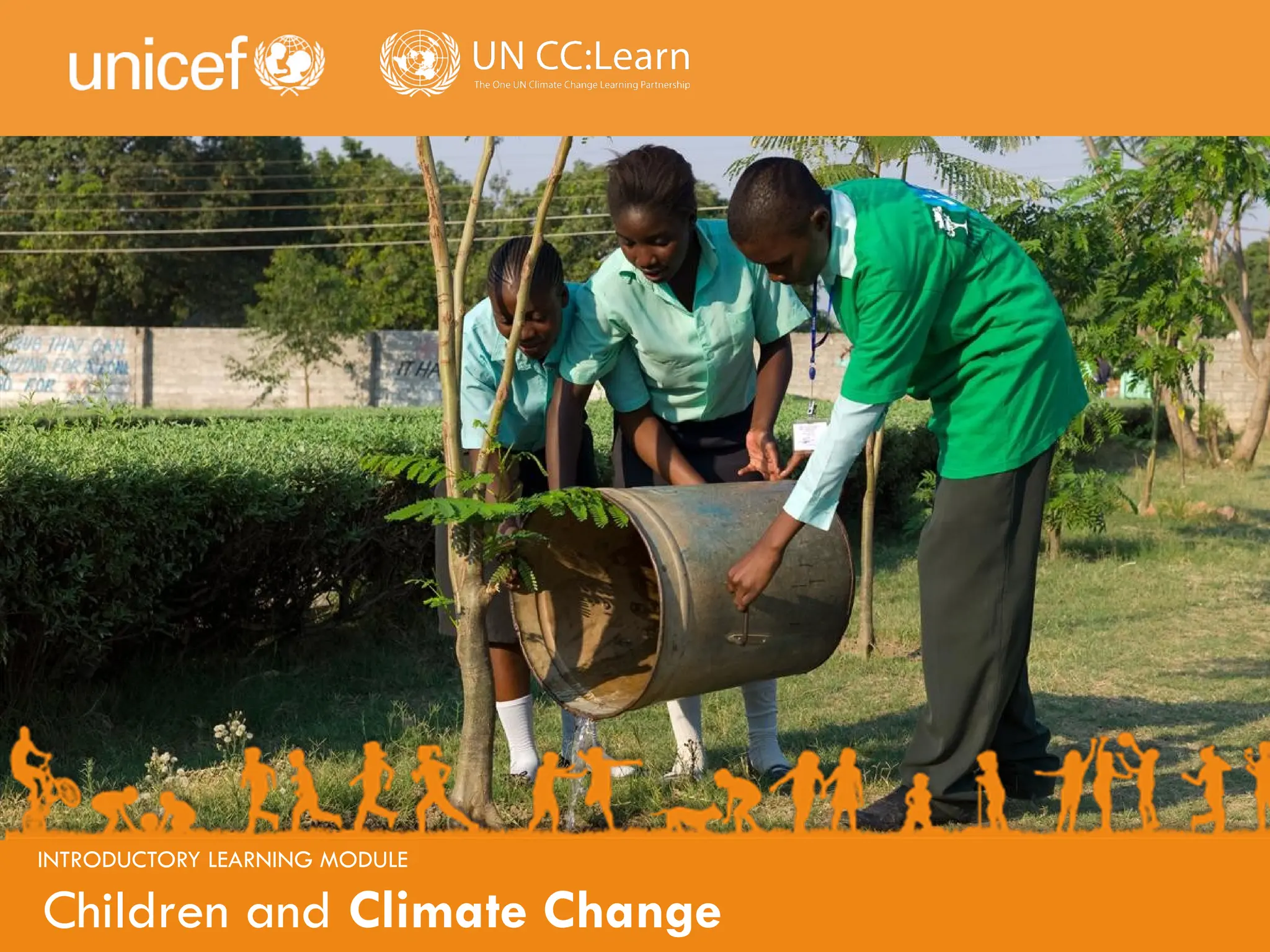
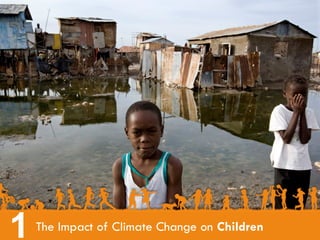
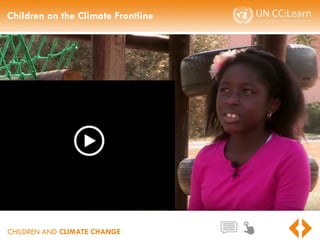
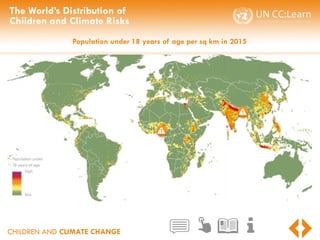
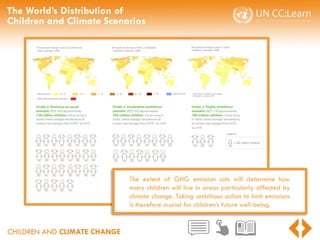
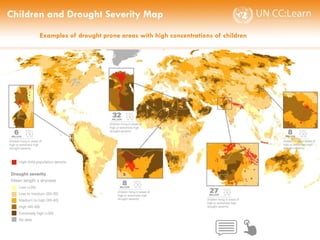
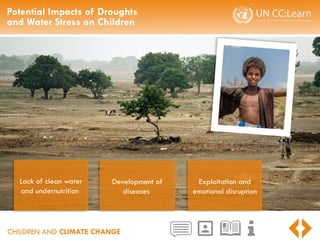
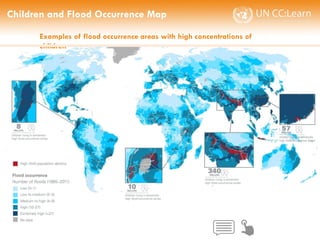
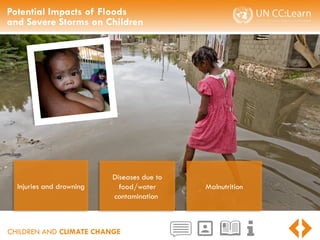
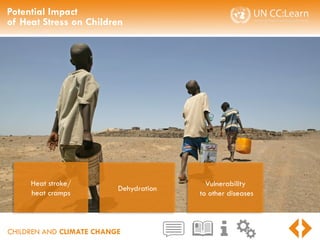
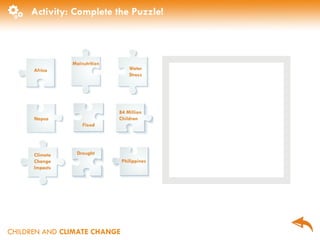
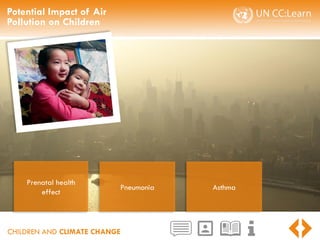
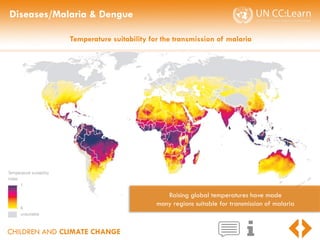
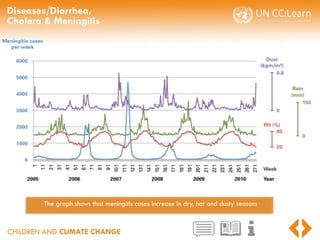
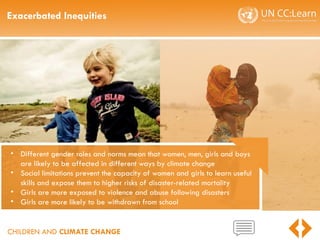
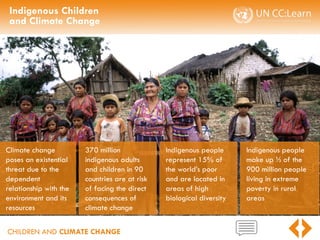
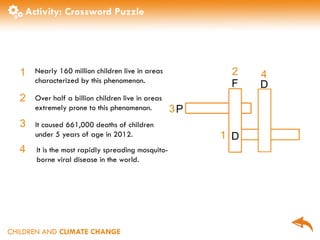
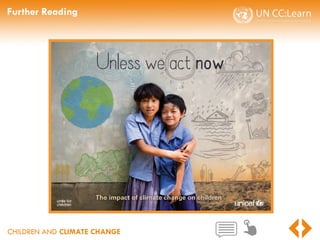
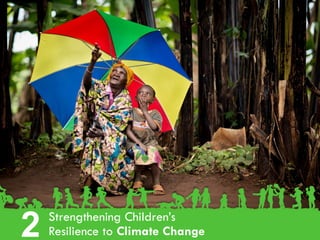
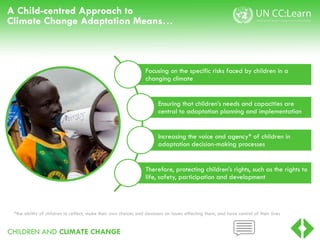
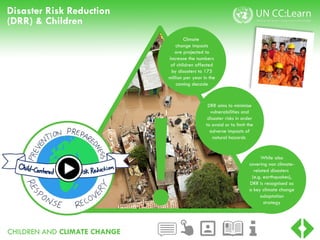
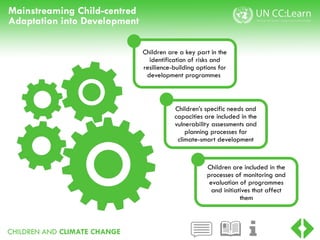
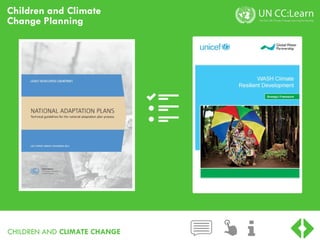
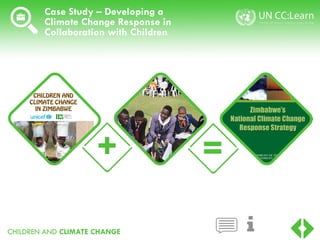
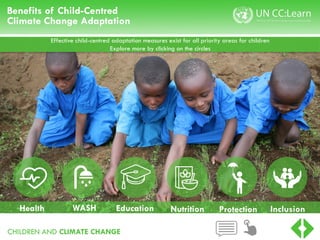
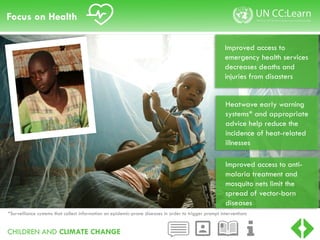
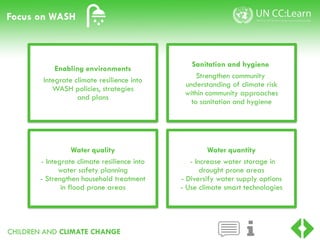
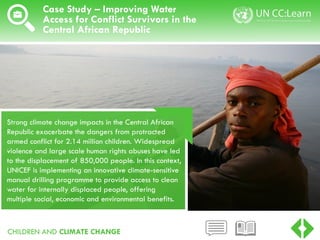
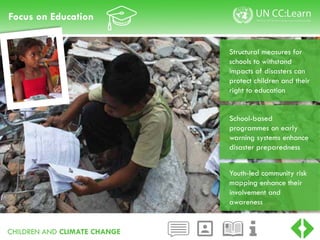
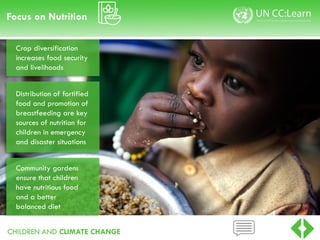
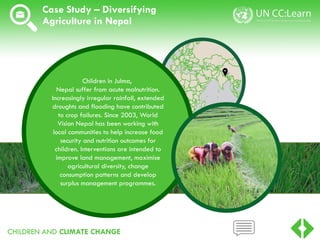
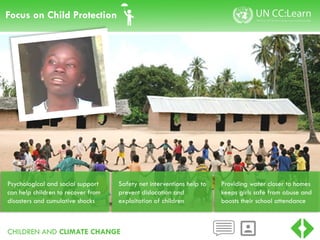
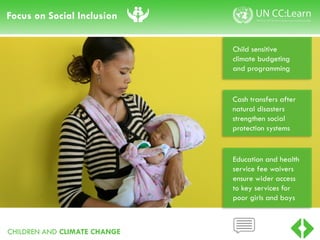
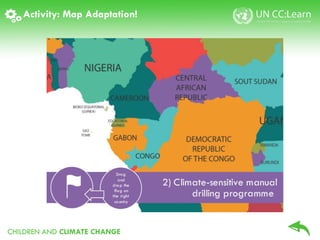
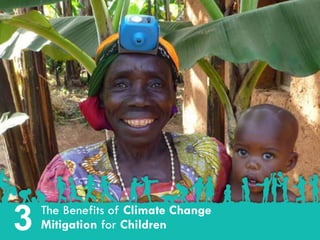
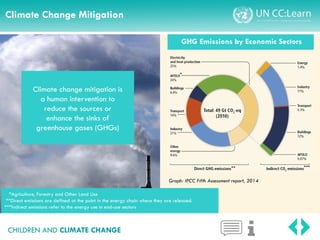
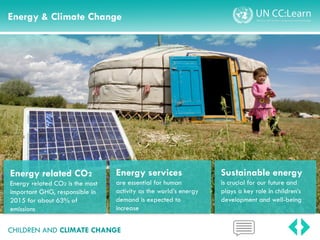
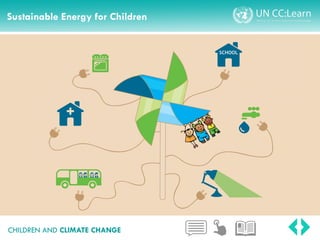
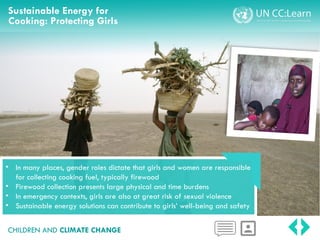
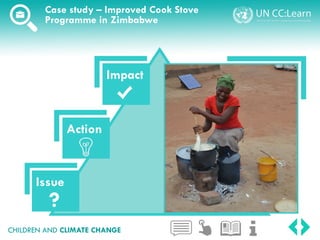
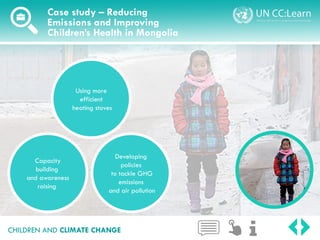
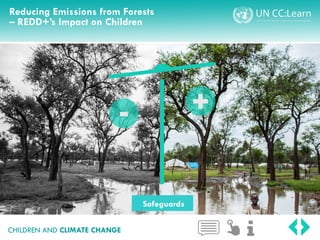
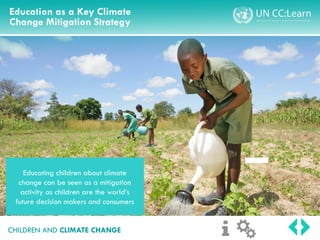
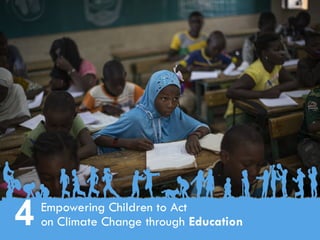
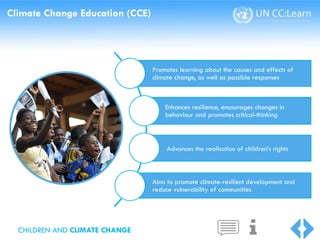
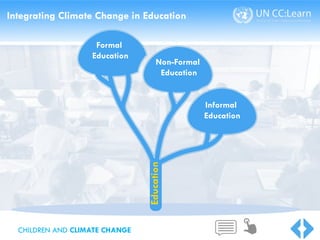
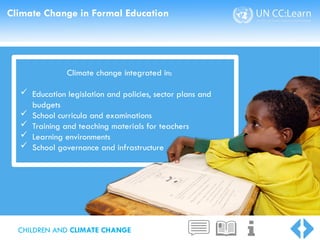
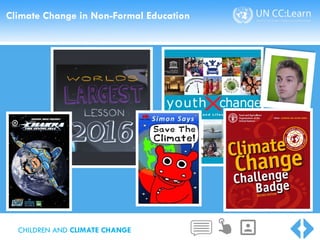
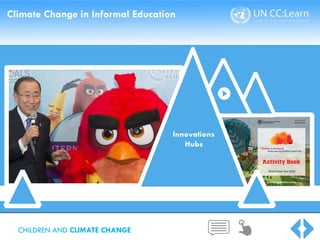
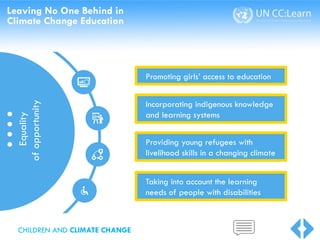
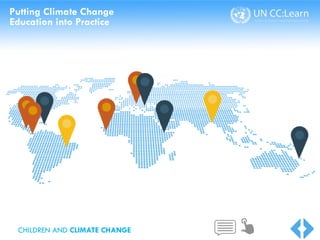
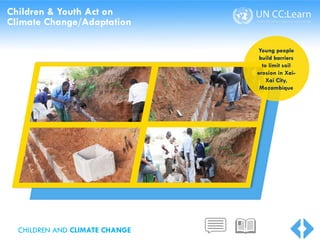
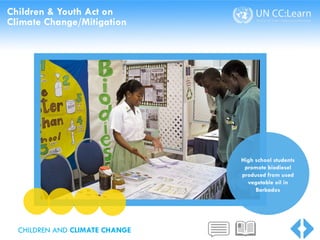
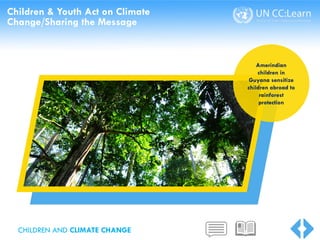
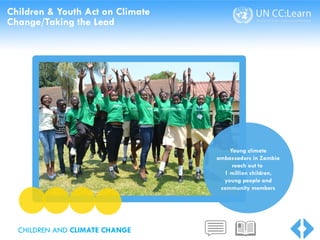
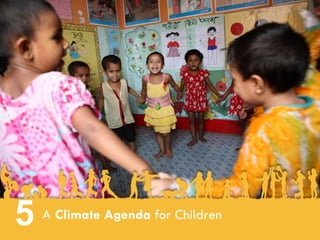
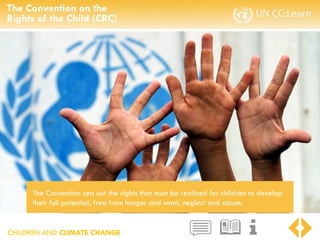
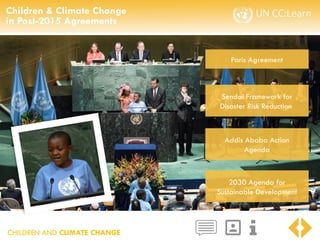
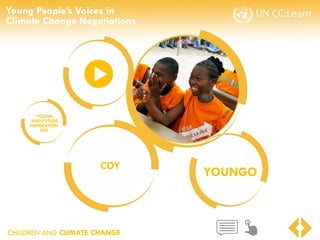
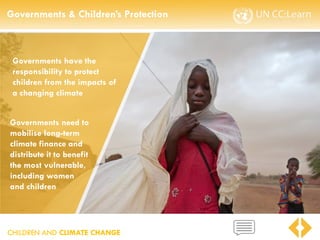
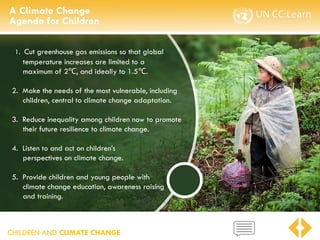
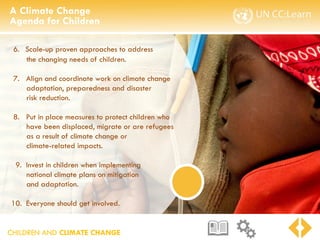


![[Challenge:Future] Climate change ,21st Century Disaster](https://cdn.slidesharecdn.com/ss_thumbnails/challengefuture-climate-change-21st-century-disaster4050-111129110212-phpapp01-thumbnail.jpg?width=640&height=640&fit=bounds)


