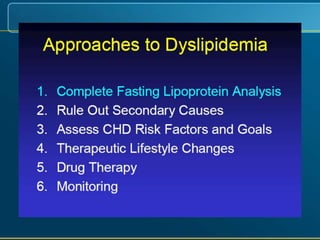
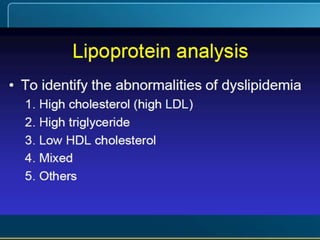
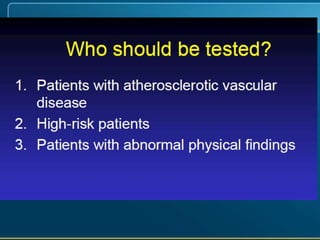
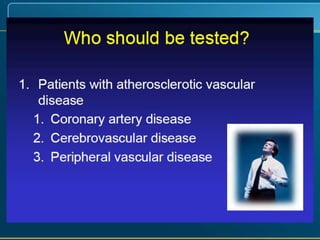
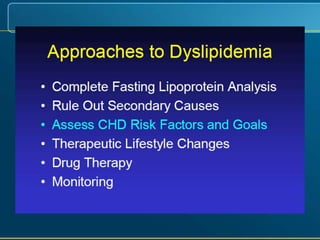
Dyslipidemia and
management
นพ.ณัฐพล เลาหเจริญยศ
ศูนย์ศรีพัฒน์ คณะแพทยศาสตร์
มหาวิทยาลัยเชียงใหม่
Slide 7
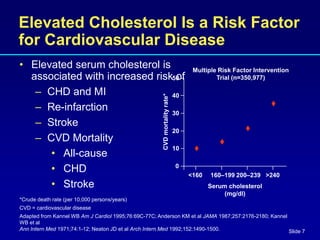
Elevated Cholesterol Is a Risk Factor
for Cardiovascular Disease
• Elevated serum cholesterol is
associated with increased risk of
– CHD and MI
– Re-infarction
– Stroke
– CVD Mortality
• All-cause
• CHD
• Stroke
*Crude death rate (per 10,000 persons/years)
CVD = cardiovascular disease
Adapted from Kannel WB Am J Cardiol 1995;76:69C-77C; Anderson KM et al JAMA 1987;257:2176-2180; Kannel
WB et al
Ann Intern Med 1971;74:1-12; Neaton JD et al Arch Intern Med 1992;152:1490-1500.
0
10
20
30
40
50
<160 160–199 200–239 >240
CVD
mortality
rate*
Multiple Risk Factor Intervention
Trial (n=350,977)
Serum cholesterol
(mg/dl)
For discussion only
17
 First diagnosis of DM,
 And/or at age 40 years
 And periodically (e.g., every 1–2 years)
 Level E [ expert opinion ]
Screening lipid profile
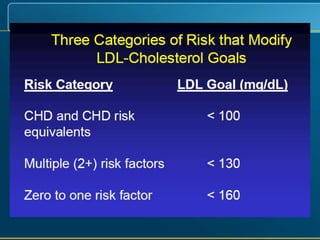
GOAL of LDL ?
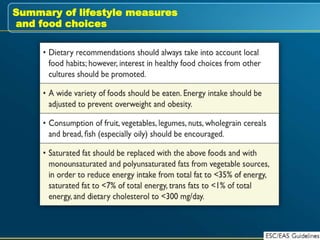
Summary of lifestyle measures
and food choices
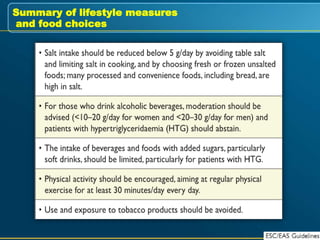
Summary of lifestyle measures
and food choices
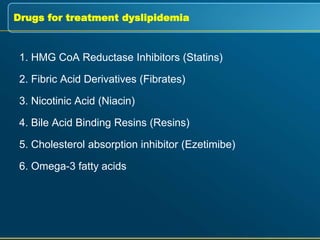
Drugs for treatment dyslipidemia
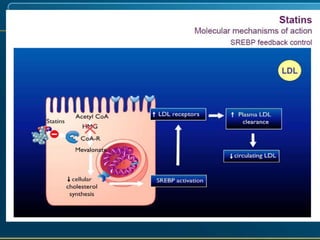
1. HMG CoA Reductase Inhibitors (Statins)
2. Fibric Acid Derivatives (Fibrates)
3. Nicotinic Acid (Niacin)
4. Bile Acid Binding Resins (Resins)
5. Cholesterol absorption inhibitor (Ezetimibe)
6. Omega-3 fatty acids
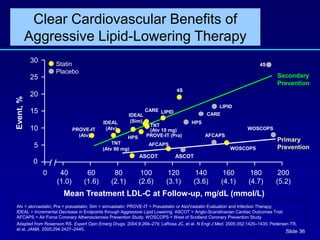
Slide 36
Relationship Between LDL-C
and CV Incidence
Atv = atorvastatin; Pra = pravastatin; Sim = simvastatin; PROVE-IT = Pravastatin or AtorVastatin Evaluation and Infection Therapy;
IDEAL = Incremental Decrease in Endpoints through Aggressive Lipid Lowering; ASCOT = Anglo-Scandinavian Cardiac Outcomes Trial;
AFCAPS = Air Force Coronary Atherosclerosis Prevention Study; WOSCOPS = West of Scotland Coronary Prevention Study
Adapted from Rosenson RS. Expert Opin Emerg Drugs. 2004;9:269–279; LaRosa JC, et al. N Engl J Med. 2005;352:1425–1435; Pedersen TR,
et al. JAMA. 2005;294:2437–2445.
Mean Treatment LDL-C at Follow-up, mg/dL (mmol/L)
Event,
%
0
30
0 80
(2.1)
140
(3.6)
200
(5.2)
25
20
15
10
5
100
(2.6)
40
(1.0)
120
(3.1)
180
(4.7)
4S
4S
CARE
HPS
60
(1.6)
LIPID
Statin
Placebo
HPS
CARE
LIPID
160
(4.1)
PROVE-IT
(Atv) PROVE-IT (Pra)
ASCOT
AFCAPS
ASCOT
AFCAPS
WOSCOPS
WOSCOPS
Secondary
Prevention
Primary
Prevention
IDEAL
(Atv)
IDEAL
(Sim)
TNT
(Atv 80 mg)
TNT
(Atv 10 mg)
Clear Cardiovascular Benefits of
Aggressive Lipid-Lowering Therapy
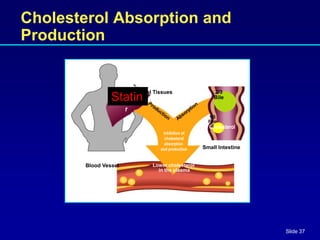
Slide 37
Cholesterol Absorption and
Production
Peripheral Tissues
Live
r
Cholesterol
Inhibition of
cholesterol
absorption
and production
Blood Vessel
Small Intestine
2/3
Bile
1/3
Foo
d
Lower cholesterol
in the plasma
Statin
Slide 38
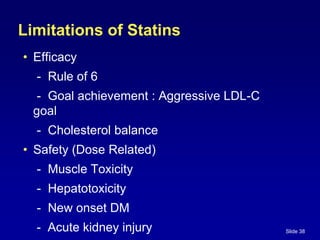
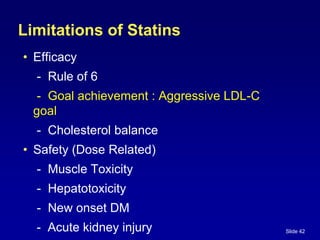
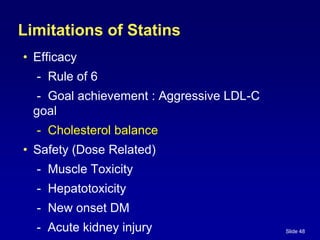
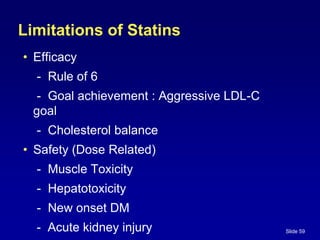
Limitations of Statins
• Efficacy
- Rule of 6
- Goal achievement : Aggressive LDL-C
goal
- Cholesterol balance
• Safety (Dose Related)
- Muscle Toxicity
- Hepatotoxicity
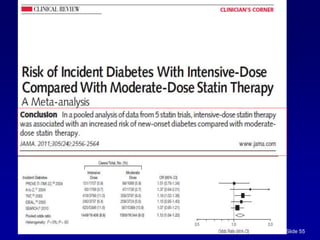
- New onset DM
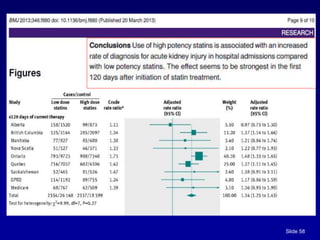
- Acute kidney injury
Slide 39
Limitations of Statins
• Efficacy
- Rule of 6
- Goal achievement : Aggressive LDL-C
goal
- Cholesterol balance
• Safety (Dose Related)
- Muscle Toxicity
- Hepatotoxicity
- New onset DM
- Acute kidney injury
Slide 40
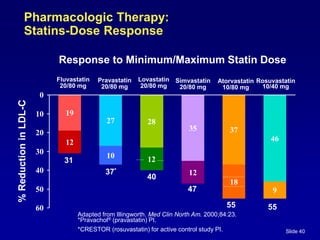
Pharmacologic Therapy:
Statins-Dose Response
%
Reduction
in
LDL-C
19
27 28
35
46
12
10 12
12
18
9
37
0
10
20
30
40
50
60
Lovastatin
20/80 mg
Fluvastatin
20/80 mg
Simvastatin
20/80 mg
Pravastatin
20/80 mg
Atorvastatin
10/80 mg
Response to Minimum/Maximum Statin Dose
31
37*
40
47
55
Adapted from Illingworth. Med Clin North Am. 2000;84:23.
*Pravachol® (pravastatin) PI.
*CRESTOR (rosuvastatin) for active control study PI.
Rosuvastatin
10/40 mg
55
Slide 41
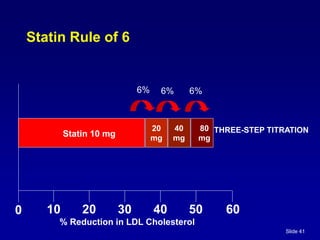
THREE-STEP TITRATION
10 20 30 40 50 60
% Reduction in LDL Cholesterol
0
Statin 10 mg
20
mg
40
mg
80
mg
Statin Rule of 6
6% 6% 6%
Slide 42
Limitations of Statins
• Efficacy
- Rule of 6
- Goal achievement : Aggressive LDL-C
goal
- Cholesterol balance
• Safety (Dose Related)
- Muscle Toxicity
- Hepatotoxicity
- New onset DM
- Acute kidney injury
Slide 43
ESC/EAS guideline 2011
Slide 45
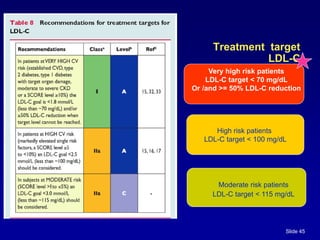
Treatment target
LDL-C
High risk patients
LDL-C target < 100 mg/dL
Moderate risk patients
LDL-C target < 115 mg/dL
Very high risk patients
LDL-C target < 70 mg/dL
Or /and >= 50% LDL-C reduction
Slide 46
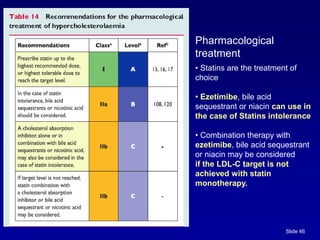
• Statins are the treatment of
choice
• Ezetimibe, bile acid
sequestrant or niacin can use in
the case of Statins intolerance
• Combination therapy with
ezetimibe, bile acid sequestrant
or niacin may be considered
if the LDL-C target is not
achieved with statin
monotherapy.
Pharmacological
treatment
Slide 47
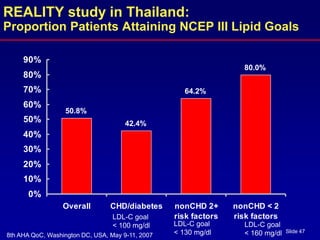
8th AHA QoC, Washington DC, USA, May 9-11, 2007
REALITY study in Thailand:
Proportion Patients Attaining NCEP III Lipid Goals
50.8%
42.4%
64.2%
80.0%
0%
10%
20%
30%
40%
50%
60%
70%
80%
90%
Overall CHD/diabetes nonCHD 2+
risk factors
nonCHD < 2
risk factors
LDL-C goal
< 100 mg/dl LDL-C goal
< 130 mg/dl
LDL-C goal
< 160 mg/dl
Slide 48
Limitations of Statins
• Efficacy
- Rule of 6
- Goal achievement : Aggressive LDL-C
goal
- Cholesterol balance
• Safety (Dose Related)
- Muscle Toxicity
- Hepatotoxicity
- New onset DM
- Acute kidney injury
Slide 49
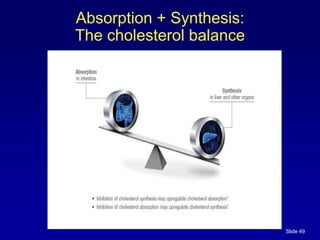
Absorption + Synthesis:
The cholesterol balance
Slide 50
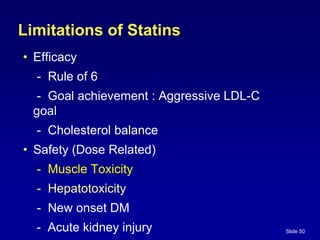
Limitations of Statins
• Efficacy
- Rule of 6
- Goal achievement : Aggressive LDL-C
goal
- Cholesterol balance
• Safety (Dose Related)
- Muscle Toxicity
- Hepatotoxicity
- New onset DM
- Acute kidney injury
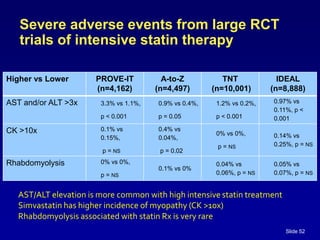
Slide 52
Severe adverse events from large RCT
trials of intensive statin therapy
Higher vs Lower PROVE-IT
(n=4,162)
A-to-Z
(n=4,497)
TNT
(n=10,001)
IDEAL
(n=8,888)
AST and/or ALT >3x 3.3% vs 1.1%,
p < 0.001
0.9% vs 0.4%,
p = 0.05
1.2% vs 0.2%,
p < 0.001
0.97% vs
0.11%, p <
0.001
CK >10x 0.1% vs
0.15%,
p = NS
0.4% vs
0.04%,
p = 0.02
0% vs 0%,
p = NS
0.14% vs
0.25%, p = NS
Rhabdomyolysis 0% vs 0%,
p = NS
0.1% vs 0%
0.04% vs
0.06%, p = NS
0.05% vs
0.07%, p = NS
AST/ALT elevation is more common with high intensive statin treatment
Simvastatin has higher incidence of myopathy (CK >10x)
Rhabdomyolysis associated with statin Rx is very rare
Slide 53
Limitations of Statins
• Efficacy
- Rule of 6
- Goal achievement : Aggressive LDL-C
goal
- Cholesterol balance
• Safety (Dose Related)
- Muscle Toxicity
- Hepatotoxicity
- New onset DM
- Acute kidney injury
Slide 55
Slide 56
Limitations of Statins
• Efficacy
- Rule of 6
- Goal achievement : Aggressive LDL-C
goal
- Cholesterol balance
• Safety (Dose Related)
- Muscle Toxicity
- Hepatotoxicity
- New onset DM
- Acute kidney injury
Slide 58
Slide 59
Limitations of Statins
• Efficacy
- Rule of 6
- Goal achievement : Aggressive LDL-C
goal
- Cholesterol balance
• Safety (Dose Related)
- Muscle Toxicity
- Hepatotoxicity
- New onset DM
- Acute kidney injury
Slide 60
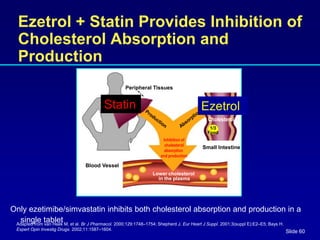
Ezetrol + Statin Provides Inhibition of
Cholesterol Absorption and
Production
Only ezetimibe/simvastatin inhibits both cholesterol absorption and production in a
single tablet
Adapted from van Heek M, et al. Br J Pharmacol. 2000;129:1748–1754; Shepherd J. Eur Heart J Suppl. 2001;3(suppl E):E2–E5; Bays H.
Expert Opin Investig Drugs. 2002;11:1587–1604.
Peripheral Tissues
Liver
Cholesterol
Inhibition of
cholesterol
absorption
and production
Blood Vessel
Small Intestine
2/3
Bile
1/3
Food
Lower cholesterol
in the plasma
Statin Ezetrol
61
Atheroma
Liver
Blood
Cholesterol
Pool (Micelles)
NPC1L1 Remnant
Receptors
LDL Receptor
Expression
Cholesterol
HMG-CoA
CMR
CM
Ezetimibe
X
1
3
5
4
2
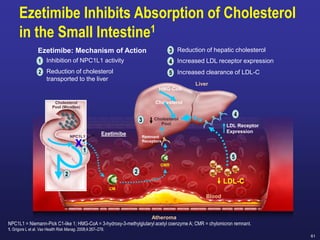
1 Inhibition of NPC1L1 activity
2 Reduction of cholesterol
transported to the liver
3 Reduction of hepatic cholesterol
4 Increased LDL receptor expression
5 Increased clearance of LDL-C
2
Ezetimibe: Mechanism of Action
LDL-C
NPC1L1 = Niemann-Pick C1-like 1; HMG-CoA = 3-hydroxy-3-methylglutaryl acetyl coenzyme A; CMR = chylomicron remnant.
1. Grigore L et al. Vas Health Risk Manag. 2008;4:267–278.
Cholesterol
Pool
Ezetimibe Inhibits Absorption of Cholesterol
in the Small Intestine1
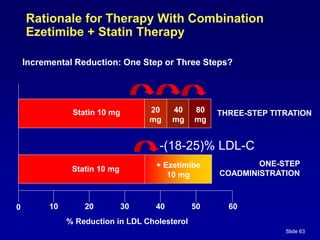
Slide 63
ONE-STEP
COADMINISTRATION
THREE-STEP TITRATION
10 20 30 40 50 60
% Reduction in LDL Cholesterol
0
Statin 10 mg 20
mg
40
mg
80
mg
Statin 10 mg + Ezetimibe
10 mg
Incremental Reduction: One Step or Three Steps?
Rationale for Therapy With Combination
Ezetimibe + Statin Therapy
-(18-25)% LDL-C
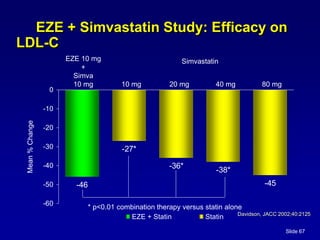
Slide 67
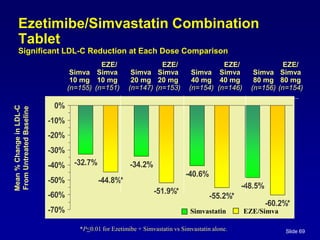
EZE + Simvastatin Study: Efficacy on
LDL-C
-46 -45
-27*
-36* -38*
-60
-50
-40
-30
-20
-10
0
EZE + Statin Statin
Mean
%
Change
10 mg
EZE 10 mg
+
Simva
10 mg 80 mg
40 mg
20 mg
Simvastatin
* p<0.01 combination therapy versus statin alone
Davidson, JACC 2002;40:2125
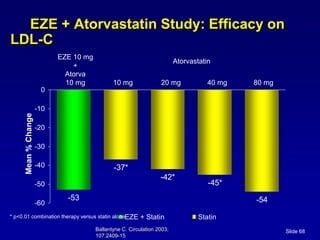
Slide 68
Mean
%
Change
-54
-45*
-42*
-37*
-53
-60
-50
-40
-30
-20
-10
0
EZE + Statin Statin
10 mg
EZE 10 mg
+
Atorva
10 mg 80 mg
40 mg
20 mg
Atorvastatin
* p<0.01 combination therapy versus statin alone
EZE + Atorvastatin Study: Efficacy on
LDL-C
Ballantyne C. Circulation 2003;
107:2409-15
Slide 69
-48.5%
-40.6%
-34.2%
-32.7%
-60.2%*
-55.2%*
-51.9%*
-44.8%*
-70%
-60%
-50%
-40%
-30%
-20%
-10%
0%
Ezetimibe/Simvastatin Combination
Tablet
Significant LDL-C Reduction at Each Dose Comparison
Simva
80 mg
(n=156)
EZE/
Simva
80 mg
(n=154)
Simva
40 mg
(n=154)
EZE/
Simva
40 mg
(n=146)
Simva
20 mg
(n=147)
EZE/
Simva
20 mg
(n=153)
Simva
10 mg
(n=155)
EZE/
Simva
10 mg
(n=151)
Mean
%
Change
in
LDL-C
From
Untreated
Baseline
Simvastatin EZE/Simva
*P<0.01 for Ezetimibe + Simvastatin vs Simvastatin alone.
70
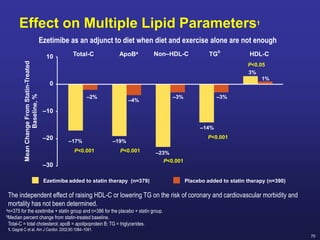
The independent effect of raising HDL-C or lowering TG on the risk of coronary and cardiovascular morbidity and
mortality has not been determined.
an=375 for the ezetimibe + statin group and n=386 for the placebo + statin group.
bMedian percent change from statin-treated baseline.
Total-C = total cholesterol; apoB = apolipoprotein B; TG = triglycerides.
1. Gagné C et al. Am J Cardiol. 2002;90:1084–1091.
Mean
Change
From
Statin-Treated
Baseline,
%
–23%
–3%
–17%
–2%
–19%
–4%
3%
1%
–14%
–3%
Non–HDL-C
Total-C ApoBa HDL-C
TGb
Placebo added to statin therapy (n=390)
Ezetimibe added to statin therapy (n=379)
Ezetimibe as an adjunct to diet when diet and exercise alone are not enough
P<0.001
P<0.001 P<0.001
P<0.05
P<0.001
–10
–20
–30
0
10
Effect on Multiple Lipid Parameters1
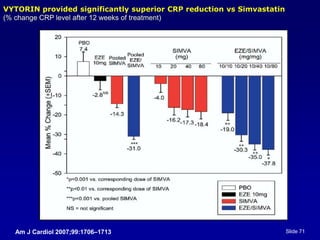
Slide 71
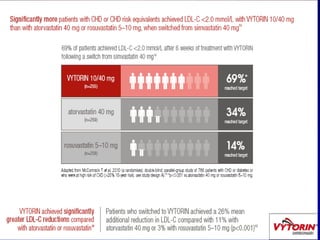
VYTORIN provided significantly superior CRP reduction vs Simvastatin
(% change CRP level after 12 weeks of treatment)
Am J Cardiol 2007;99:1706–1713
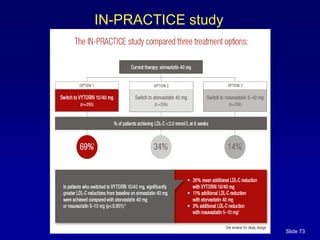
Slide 73
IN-PRACTICE study
Slide 74
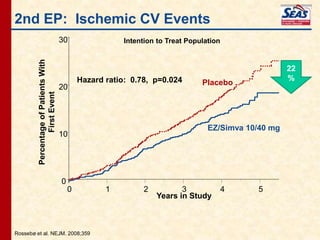
Rossebø et al. NEJM. 2008;359
2nd EP: Ischemic CV Events
Percentage
of
Patients
With
First
Event
Intention to Treat Population
Years in Study
Hazard ratio: 0.78, p=0.024
EZ/Simva 10/40 mg
Placebo
0 1 2 3 4 5
0
10
20
30
22
%
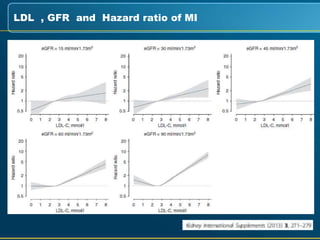
LDL , GFR and Hazard ratio of MI
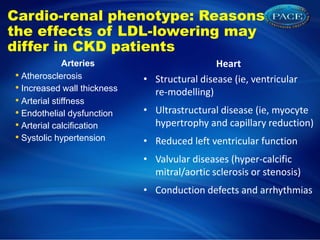
Cardio-renal phenotype: Reasons
the effects of LDL-lowering may
differ in CKD patients
Arteries
• Atherosclerosis
• Increased wall thickness
• Arterial stiffness
• Endothelial dysfunction
• Arterial calcification
• Systolic hypertension
Heart
• Structural disease (ie, ventricular
re-modelling)
• Ultrastructural disease (ie, myocyte
hypertrophy and capillary reduction)
• Reduced left ventricular function
• Valvular diseases (hyper-calcific
mitral/aortic sclerosis or stenosis)
• Conduction defects and arrhythmias
79
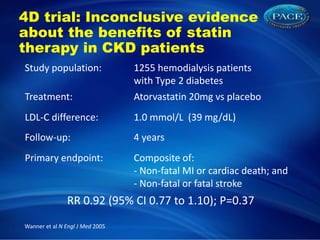
4D trial: Inconclusive evidence
about the benefits of statin
therapy in CKD patients
Study population: 1255 hemodialysis patients
with Type 2 diabetes
Treatment: Atorvastatin 20mg vs placebo
LDL-C difference: 1.0 mmol/L (39 mg/dL)
Follow-up: 4 years
Primary endpoint: Composite of:
- Non-fatal MI or cardiac death; and
- Non-fatal or fatal stroke
RR 0.92 (95% CI 0.77 to 1.10); P=0.37
Wanner et al N Engl J Med 2005
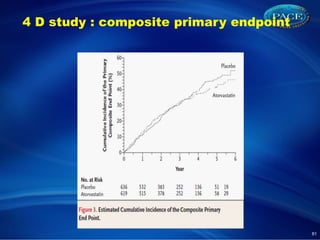
4 D study : composite primary endpoint
81
82
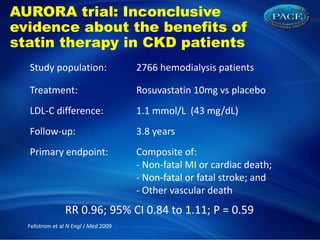
AURORA trial: Inconclusive
evidence about the benefits of
statin therapy in CKD patients
Study population: 2766 hemodialysis patients
Treatment: Rosuvastatin 10mg vs placebo
LDL-C difference: 1.1 mmol/L (43 mg/dL)
Follow-up: 3.8 years
Primary endpoint: Composite of:
- Non-fatal MI or cardiac death;
- Non-fatal or fatal stroke; and
- Other vascular death
Fellstrom et al N Engl J Med 2009
RR 0.96; 95% CI 0.84 to 1.11; P = 0.59
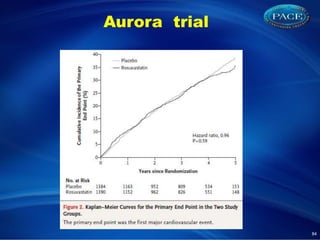
Aurora trial
84
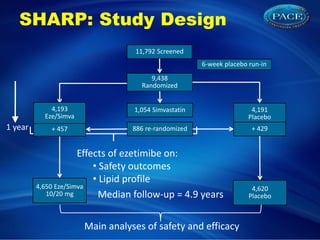
SHARP: Study Design
9,438
Randomized
11,792 Screened
6-week placebo run-in
4,191
Placebo
Effects of ezetimibe on:
• Safety outcomes
• Lipid profile
1 year + 429
886 re-randomized
4,650 Eze/Simva
10/20 mg
4,620
Placebo
Median follow-up = 4.9 years
+ 457
Main analyses of safety and efficacy
4,193
Eze/Simva
1,054 Simvastatin
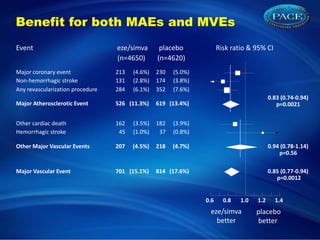
Other cardiac death 162 (3.5%) 182 (3.9%)
Hemorrhagic stroke 45 (1.0%) 37 (0.8%)
Other Major Vascular Events 207 (4.5%) 218 (4.7%) 0.94 (0.78-1.14)
p=0.56
Risk ratio & 95% CI
Event placebo
eze/simva
eze/simva
better
placebo
better
(n=4620)
(n=4650)
Major coronary event 213 (4.6%) 230 (5.0%)
Non-hemorrhagic stroke 131 (2.8%) 174 (3.8%)
Any revascularization procedure 284 (6.1%) 352 (7.6%)
Major Atherosclerotic Event 526 (11.3%) 619 (13.4%)
0.83 (0.74-0.94)
p=0.0021
Major Vascular Event 701 (15.1%) 814 (17.6%) 0.85 (0.77-0.94)
p=0.0012
1.0 1.2 1.4
0.8
0.6
Benefit for both MAEs and MVEs
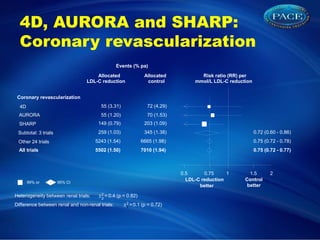
4D, AURORA and SHARP:
Coronary revascularization
0.5 0.75 1 1.5 2
Events (% pa)
Allocated
LDL-C reduction
Allocated
control
Risk ratio (RR) per
mmol/L LDL-C reduction
LDL-C reduction
better
Control
better
99% or 95% CI
Coronary revascularization
4D 55 (3.31) 72 (4.29)
AURORA 55 (1.20) 70 (1.53)
SHARP 149 (0.79) 203 (1.09)
Heterogeneity between renal trials: c
2
2 = 0.4 (p = 0.82)
Subtotal: 3 trials 259 (1.03) 345 (1.38) 0.72 (0.60 - 0.86)
Other 24 trials 5243 (1.54) 6665 (1.98) 0.75 (0.72 - 0.78)
All trials 5502 (1.50) 7010 (1.94) 0.75 (0.72 - 0.77)
Difference between renal and non-renal trials: c
1
2 =0.1 (p = 0.72)
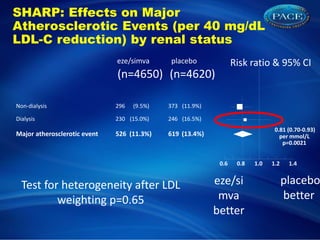
Risk ratio & 95% CI
placebo
eze/simva
eze/si
mva
better
placebo
better
(n=4620)
(n=4650)
Non-dialysis 296 (9.5%) 373 (11.9%)
Dialysis 230 (15.0%) 246 (16.5%)
Major atherosclerotic event 526 (11.3%) 619 (13.4%)
0.81 (0.70-0.93)
per mmol/L
1.0 1.2 1.4
0.8
0.6
SHARP: Effects on Major
Atherosclerotic Events (per 40 mg/dL
LDL-C reduction) by renal status
Test for heterogeneity after LDL
weighting p=0.65
p=0.0021
Slide 89
Slide 92
92
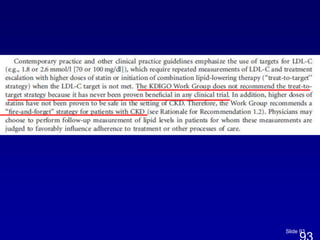
Slide 93
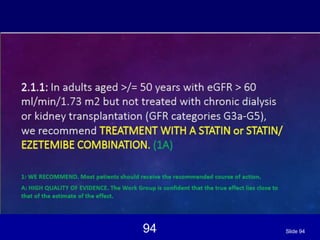
Slide 94
94
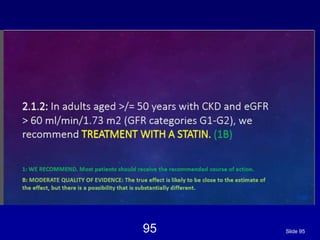
Slide 95
95
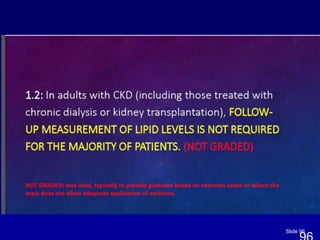
Slide 96
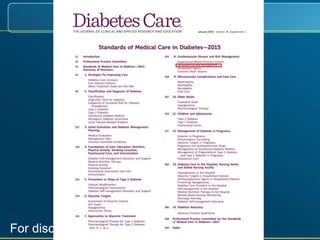
Standards of Medical Care in
Diabetes-2015 by ADA
dyslipidemia
For discussion only 97
For discussion only 98
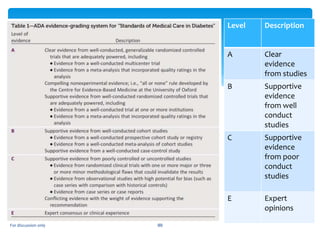
Level Description
A Clear
evidence
from studies
B Supportive
evidence
from well
conduct
studies
C Supportive
evidence
from poor
conduct
studies
E Expert
opinions
For discussion only 99
DYSLIPIDEMIA/LIPID
MANAGEMENT
For discussion only 100
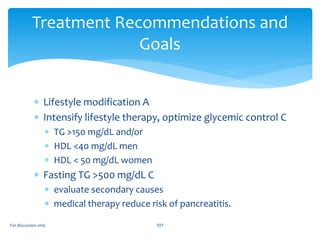
 Lifestyle modification A
 Intensify lifestyle therapy, optimize glycemic control C
 TG >150 mg/dL and/or
 HDL <40 mg/dL men
 HDL < 50 mg/dL women
 Fasting TG >500 mg/dL C
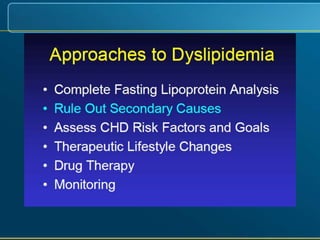
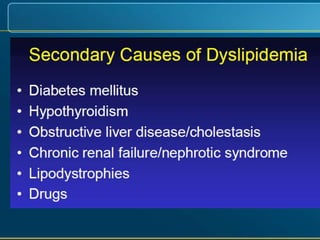
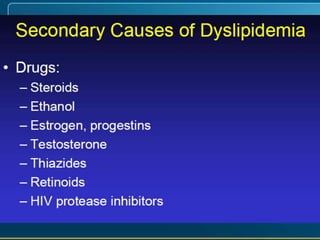
 evaluate secondary causes
 medical therapy reduce risk of pancreatitis.
Treatment Recommendations and
Goals
For discussion only 101
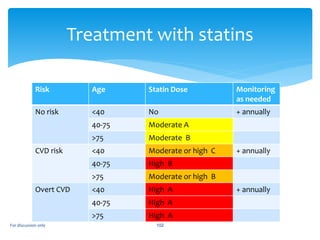
Risk Age Statin Dose Monitoring
as needed
No risk <40 No + annually
40-75 Moderate A
>75 Moderate B
CVD risk <40 Moderate or high C + annually
40-75 High B
>75 Moderate or high B
Overt CVD <40 High A + annually
40-75 High A
>75 High A
Treatment with statins
For discussion only 102
For discussion only 103
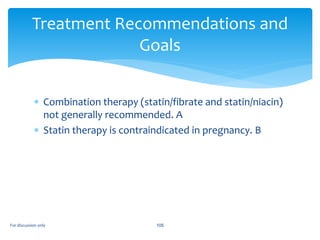
 Combination therapy (statin/fibrate and statin/niacin)
not generally recommended. A
 Statin therapy is contraindicated in pregnancy. B
For discussion only 105
Treatment Recommendations and
Goals
ACC/AHA 2013 2
For discussion only 106
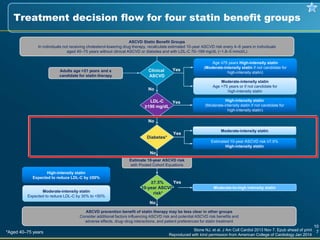
Treatment decision flow for four statin benefit groups
Estimate 10-year ASCVD risk
with Pooled Cohort Equations
ASCVD prevention benefit of statin therapy may be less clear in other groups
Consider additional factors influencing ASCVD risk and potential ASCVD risk benefits and
adverse effects, drug–drug interactions, and patient preferences for statin treatment
Clinical
ASCVD
Age ≤75 years High-intensity statin
(Moderate-intensity statin if not candidate for
high-intensity statin)
Moderate-intensity statin
Age >75 years or if not candidate for
high-intensity statin
Adults age >21 years and a
candidate for statin therapy
Moderate-to-high intensity statin
Yes
No
High-intensity statin
(Moderate-intensity statin if not candidate for
high-intensity statin)
Yes
Moderate-intensity statin
Estimated 10-year ASCVD risk ≥7.5%
High-intensity statin
No
No
Yes
No
High-intensity statin
Expected to reduce LDL-C by ≥50%
Moderate-intensity statin
Expected to reduce LDL-C by 30% to <50%
LDL-C
≥190 mg/dL
Diabetes*
≥7.5%
10-year ASCVD
risk*
Yes
*Aged 40–75 years
ASCVD Statin Benefit Groups
In individuals not receiving cholesterol-lowering drug therapy, recalculate estimated 10-year ASCVD risk every 4–6 years in individuals
aged 40–75 years without clinical ASCVD or diabetes and with LDL-C 70–189 mg/dL (~1.8–5 mmol/L)
Stone NJ, et al. J Am Coll Cardiol 2013 Nov 7. Epub ahead of print
Reproduced with kind permission from American College of Cardiology Jan 2014
10
7
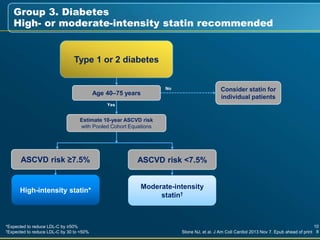
*Expected to reduce LDL-C by ≥50%
†Expected to reduce LDL-C by 30 to <50%
Type 1 or 2 diabetes
Age 40–75 years
ASCVD risk ≥7.5%
High-intensity statin*
ASCVD risk <7.5%
Moderate-intensity
statin†
Consider statin for
individual patients
No
Yes
Estimate 10-year ASCVD risk
with Pooled Cohort Equations
Group 3. Diabetes
High- or moderate-intensity statin recommended
Stone NJ, et al. J Am Coll Cardiol 2013 Nov 7. Epub ahead of print
10
8
NICE 2014 3
109
For discussion only
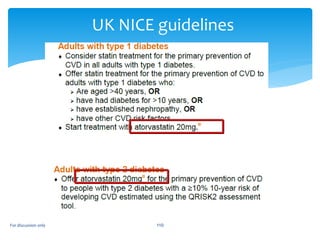
UK NICE guidelines
For discussion only 110
Comparing ADA 2015,
ACC/AHA2013 and NICE2014
For discussion only 111
For discussion only 112
Risk Age ADA2015
1
ACC/AHA2013
2
NICE2014
3
type1 type2
No risk <40 No individualize *
40-75 Moderate A Moderate Atorva 20
>75 Moderate B individualize Atorva 20
CVD risk <40 Moderate or high individualize Atorva 20 Atova
20 on
10 year
risk
>10%
40-75 High B <7.5% mod Atorva 20
>7.5% high Atorva 20
>75 Moderate or high individualize Atorva 20
Overt CVD <40 High A High Atorva 80
40-75 High A High Atorva 80
>75 High A Moderate Atorva 80
*Atorvastatin 20 mg on
DM>10 years or DN
Fire and forget ???
No target LDL level
For discussion only 113
IMProved Reduction of
Outcomes: Vytorin Efficacy
International Trial
A Multicenter, Double-Blind, Randomized Study to
Establish the Clinical Benefit and Safety of Vytorin
(Ezetimibe/Simvastatin Tablet) vs Simvastatin
Monotherapy in High-Risk Subjects Presenting
With Acute Coronary Syndrome
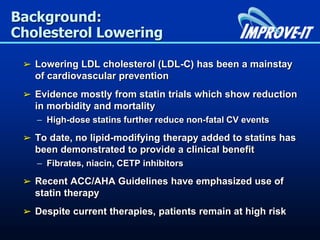
Background:
Cholesterol Lowering
➢ Lowering LDL cholesterol (LDL-C) has been a mainstay
of cardiovascular prevention
➢ Evidence mostly from statin trials which show reduction
in morbidity and mortality
– High-dose statins further reduce non-fatal CV events
➢ To date, no lipid-modifying therapy added to statins has
been demonstrated to provide a clinical benefit
– Fibrates, niacin, CETP inhibitors
➢ Recent ACC/AHA Guidelines have emphasized use of
statin therapy
➢ Despite current therapies, patients remain at high risk
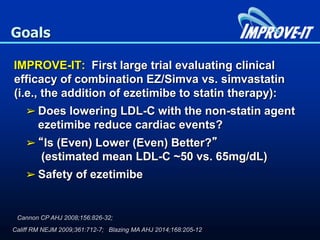
Goals
IMPROVE-IT: First large trial evaluating clinical
efficacy of combination EZ/Simva vs. simvastatin
(i.e., the addition of ezetimibe to statin therapy):
➢ Does lowering LDL-C with the non-statin agent
ezetimibe reduce cardiac events?
➢ “Is (Even) Lower (Even) Better?”
(estimated mean LDL-C ~50 vs. 65mg/dL)
➢ Safety of ezetimibe
Cannon CP AHJ 2008;156:826-32;
Califf RM NEJM 2009;361:712-7; Blazing MA AHJ 2014;168:205-12
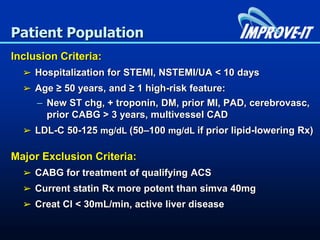
Patient Population
Inclusion Criteria:
➢ Hospitalization for STEMI, NSTEMI/UA < 10 days
➢ Age ≥ 50 years, and ≥ 1 high-risk feature:
– New ST chg, + troponin, DM, prior MI, PAD, cerebrovasc,
prior CABG > 3 years, multivessel CAD
➢ LDL-C 50-125 mg/dL (50–100 mg/dL if prior lipid-lowering Rx)
Major Exclusion Criteria:
➢ CABG for treatment of qualifying ACS
➢ Current statin Rx more potent than simva 40mg
➢ Creat Cl < 30mL/min, active liver disease
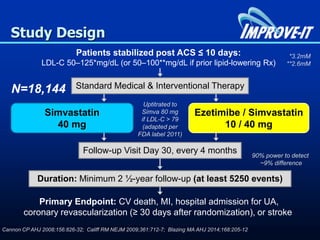
Patients stabilized post ACS ≤ 10 days:
LDL-C 50–125*mg/dL (or 50–100**mg/dL if prior lipid-lowering Rx)
Standard Medical & Interventional Therapy
Ezetimibe / Simvastatin
10 / 40 mg
Simvastatin
40 mg
Follow-up Visit Day 30, every 4 months
Duration: Minimum 2 ½-year follow-up (at least 5250 events)
Primary Endpoint: CV death, MI, hospital admission for UA,
coronary revascularization (≥ 30 days after randomization), or stroke
N=18,144
Uptitrated to
Simva 80 mg
if LDL-C > 79
(adapted per
FDA label 2011)
Study Design
*3.2mM
**2.6mM
Cannon CP AHJ 2008;156:826-32; Califf RM NEJM 2009;361:712-7; Blazing MA AHJ 2014;168:205-12
90% power to detect
~9% difference
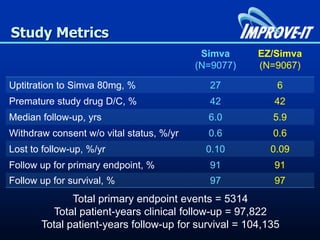
Study Metrics
Simva
(N=9077)
EZ/Simva
(N=9067)
Uptitration to Simva 80mg, % 27 6
Premature study drug D/C, % 42 42
Median follow-up, yrs 6.0 5.9
Withdraw consent w/o vital status, %/yr 0.6 0.6
Lost to follow-up, %/yr 0.10 0.09
Follow up for primary endpoint, % 91 91
Follow up for survival, % 97 97
Total primary endpoint events = 5314
Total patient-years clinical follow-up = 97,822
Total patient-years follow-up for survival = 104,135
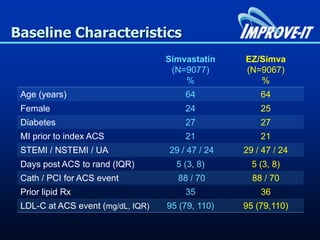
Baseline Characteristics
Simvastatin
(N=9077)
%
EZ/Simva
(N=9067)
%
Age (years) 64 64
Female 24 25
Diabetes 27 27
MI prior to index ACS 21 21
STEMI / NSTEMI / UA 29 / 47 / 24 29 / 47 / 24
Days post ACS to rand (IQR) 5 (3, 8) 5 (3, 8)
Cath / PCI for ACS event 88 / 70 88 / 70
Prior lipid Rx 35 36
LDL-C at ACS event (mg/dL, IQR) 95 (79, 110) 95 (79,110)
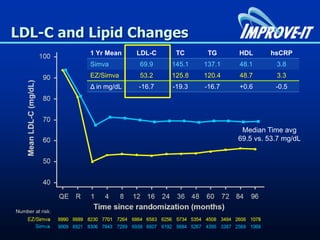
LDL-C and Lipid Changes
1 Yr Mean LDL-C TC TG HDL hsCRP
Simva 69.9 145.1 137.1 48.1 3.8
EZ/Simva 53.2 125.8 120.4 48.7 3.3
Δ in mg/dL -16.7 -19.3 -16.7 +0.6 -0.5
Median Time avg
69.5 vs. 53.7 mg/dL
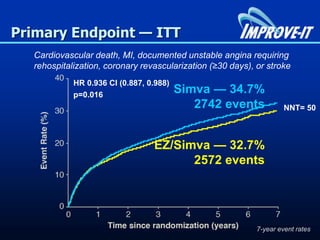
Primary Endpoint — ITT
Simva — 34.7%
2742 events
EZ/Simva — 32.7%
2572 events
HR 0.936 CI (0.887, 0.988)
p=0.016
Cardiovascular death, MI, documented unstable angina requiring
rehospitalization, coronary revascularization (≥30 days), or stroke
7-year event rates
NNT= 50
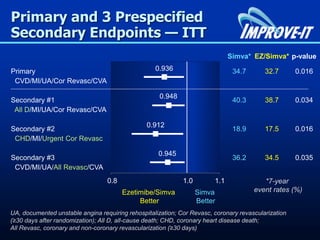
Simva* EZ/Simva* p-value
Primary 34.7 32.7 0.016
CVD/MI/UA/Cor Revasc/CVA
Secondary #1 40.3 38.7 0.034
All D/MI/UA/Cor Revasc/CVA
Secondary #2 18.9 17.5 0.016
CHD/MI/Urgent Cor Revasc
Secondary #3 36.2 34.5 0.035
CVD/MI/UA/All Revasc/CVA
0.936
Ezetimibe/Simva
Better
Simva
Better
UA, documented unstable angina requiring rehospitalization; Cor Revasc, coronary revascularization
(≥30 days after randomization); All D, all-cause death; CHD, coronary heart disease death;
All Revasc, coronary and non-coronary revascularization (≥30 days)
*7-year
event rates (%)
Primary and 3 Prespecified
Secondary Endpoints — ITT
0.8 1.0 1.1
0.948
0.912
0.945
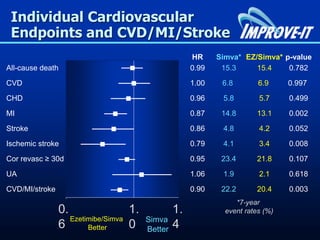
HR Simva* EZ/Simva* p-value
All-cause death 0.99 15.3 15.4 0.782
CVD 1.00 6.8 6.9 0.997
CHD 0.96 5.8 5.7 0.499
MI 0.87 14.8 13.1 0.002
Stroke 0.86 4.8 4.2 0.052
Ischemic stroke 0.79 4.1 3.4 0.008
Cor revasc ≥ 30d 0.95 23.4 21.8 0.107
UA 1.06 1.9 2.1 0.618
CVD/MI/stroke 0.90 22.2 20.4 0.003
Ezetimibe/Simva
Better
Simva
Better
Individual Cardiovascular
Endpoints and CVD/MI/Stroke
0.
6
1.
0
1.
4
*7-year
event rates (%)
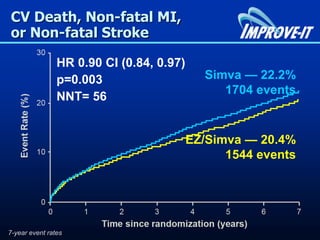
Simva — 22.2%
1704 events
EZ/Simva — 20.4%
1544 events
HR 0.90 CI (0.84, 0.97)
p=0.003
NNT= 56
CV Death, Non-fatal MI,
or Non-fatal Stroke
7-year event rates
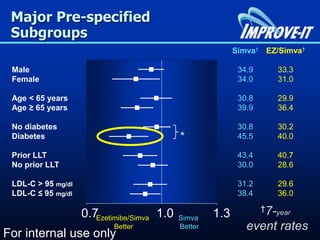
Simva† EZ/Simva†
Male 34.9 33.3
Female 34.0 31.0
Age < 65 years 30.8 29.9
Age ≥ 65 years 39.9 36.4
No diabetes 30.8 30.2
Diabetes 45.5 40.0
Prior LLT 43.4 40.7
No prior LLT 30.0 28.6
LDL-C > 95 mg/dl 31.2 29.6
LDL-C ≤ 95 mg/dl 38.4 36.0
Major Pre-specified
Subgroups
Ezetimibe/Simva
Better
Simva
Better
0.7 1.0 1.3 †7-year
event rates
*
For internal use only
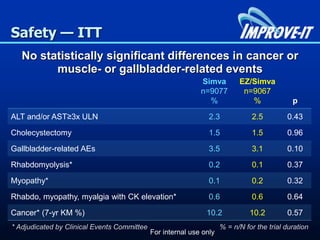
Safety — ITT
No statistically significant differences in cancer or
muscle- or gallbladder-related events
Simva
n=9077
%
EZ/Simva
n=9067
% p
ALT and/or AST≥3x ULN 2.3 2.5 0.43
Cholecystectomy 1.5 1.5 0.96
Gallbladder-related AEs 3.5 3.1 0.10
Rhabdomyolysis* 0.2 0.1 0.37
Myopathy* 0.1 0.2 0.32
Rhabdo, myopathy, myalgia with CK elevation* 0.6 0.6 0.64
Cancer* (7-yr KM %) 10.2 10.2 0.57
* Adjudicated by Clinical Events Committee % = n/N for the trial duration
For internal use only
Conclusions
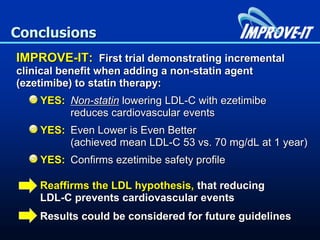
IMPROVE-IT: First trial demonstrating incremental
clinical benefit when adding a non-statin agent
(ezetimibe) to statin therapy:
YES: Non-statin lowering LDL-C with ezetimibe
reduces cardiovascular events
YES: Even Lower is Even Better
(achieved mean LDL-C 53 vs. 70 mg/dL at 1 year)
YES: Confirms ezetimibe safety profile
Reaffirms the LDL hypothesis, that reducing
LDL-C prevents cardiovascular events
Results could be considered for future guidelines
Treat to target ?
The lower LDL  the better outcome ?
WHAT’S NEW IN THE LASTEST
DIABETES AND DYSLIPIDEMIA
GUIDELINE?
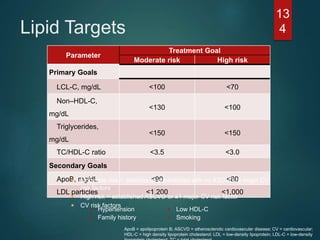
Lipid Targets
13
4
Parameter
Treatment Goal
Moderate risk High risk
Primary Goals
LCL-C, mg/dL <100 <70
Non–HDL-C,
mg/dL
<130 <100
Triglycerides,
mg/dL
<150 <150
TC/HDL-C ratio <3.5 <3.0
Secondary Goals
ApoB, mg/dL <90 <80
LDL particles <1,200 <1,000
 Moderate risk = diabetes or prediabetes with no ASCVD or major CV
risk factors
 High risk = established ASCVD or ≥1 major CV risk factor
 CV risk factors
 Hypertension
 Family history
 Low HDL-C
 Smoking
ApoB = apolipoprotein B; ASCVD = atherosclerotic cardiovascular disease; CV = cardiovascular;
HDL-C = high density lipoprotein cholesterol; LDL = low-density lipoprotein; LDL-C = low-density
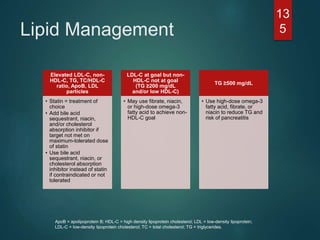
Lipid Management
Elevated LDL-C, non-
HDL-C, TG, TC/HDL-C
ratio, ApoB, LDL
particles
• Statin = treatment of
choice
• Add bile acid
sequestrant, niacin,
and/or cholesterol
absorption inhibitor if
target not met on
maximum-tolerated dose
of statin
• Use bile acid
sequestrant, niacin, or
cholesterol absorption
inhibitor instead of statin
if contraindicated or not
tolerated
LDL-C at goal but non-
HDL-C not at goal
(TG ≥200 mg/dL
and/or low HDL-C)
• May use fibrate, niacin,
or high-dose omega-3
fatty acid to achieve non-
HDL-C goal
TG ≥500 mg/dL
• Use high-dose omega-3
fatty acid, fibrate, or
niacin to reduce TG and
risk of pancreatitis
13
5
ApoB = apolipoprotein B; HDL-C = high density lipoprotein cholesterol; LDL = low-density lipoprotein;
LDL-C = low-density lipoprotein cholesterol; TC = total cholesterol; TG = triglycerides.
Thai Guideline
2545
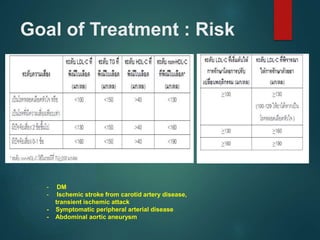
Goal of Treatment : Risk
- DM
- Ischemic stroke from carotid artery disease,
transient ischemic attack
- Symptomatic peripheral arterial disease
- Abdominal aortic aneurysm
13
9
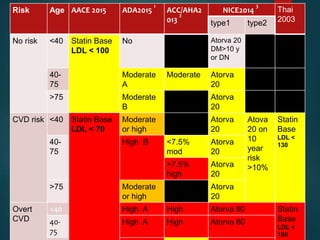
Risk Age AACE 2015 ADA2015
1
ACC/AHA2
013
2
NICE2014
3
Thai
2003
type1 type2
No risk <40 Statin Base
LDL < 100
No individualize Atorva 20
DM>10 y
or DN
40-
75
Moderate
A
Moderate Atorva
20
>75 Moderate
B
individualiz
e
Atorva
20
CVD risk <40 Statin Base
LDL < 70
Moderate
or high
individualiz
e
Atorva
20
Atova
20 on
10
year
risk
>10%
Statin
Base
LDL <
130
40-
75
High B <7.5%
mod
Atorva
20
>7.5%
high
Atorva
20
>75 Moderate
or high
individualiz
e
Atorva
20
Overt
CVD
<40 High A High Atorva 80 Statin
Base
LDL <
100
40-
75
High A High Atorva 80
THANK YOU

dyslipidemia [ ezetrol].pptx

  • 1.
    Dyslipidemia and management นพ.ณัฐพล เลาหเจริญยศ ศูนย์ศรีพัฒน์คณะแพทยศาสตร์ มหาวิทยาลัยเชียงใหม่
  • 6.
    Slide 7 Elevated CholesterolIs a Risk Factor for Cardiovascular Disease • Elevated serum cholesterol is associated with increased risk of – CHD and MI – Re-infarction – Stroke – CVD Mortality • All-cause • CHD • Stroke *Crude death rate (per 10,000 persons/years) CVD = cardiovascular disease Adapted from Kannel WB Am J Cardiol 1995;76:69C-77C; Anderson KM et al JAMA 1987;257:2176-2180; Kannel WB et al Ann Intern Med 1971;74:1-12; Neaton JD et al Arch Intern Med 1992;152:1490-1500. 0 10 20 30 40 50 <160 160–199 200–239 >240 CVD mortality rate* Multiple Risk Factor Intervention Trial (n=350,977) Serum cholesterol (mg/dl)
  • 16.
  • 17.
     First diagnosisof DM,  And/or at age 40 years  And periodically (e.g., every 1–2 years)  Level E [ expert opinion ] Screening lipid profile
  • 22.
  • 31.
    Summary of lifestylemeasures and food choices
  • 32.
    Summary of lifestylemeasures and food choices
  • 33.
    Drugs for treatmentdyslipidemia 1. HMG CoA Reductase Inhibitors (Statins) 2. Fibric Acid Derivatives (Fibrates) 3. Nicotinic Acid (Niacin) 4. Bile Acid Binding Resins (Resins) 5. Cholesterol absorption inhibitor (Ezetimibe) 6. Omega-3 fatty acids
  • 35.
    Slide 36 Relationship BetweenLDL-C and CV Incidence Atv = atorvastatin; Pra = pravastatin; Sim = simvastatin; PROVE-IT = Pravastatin or AtorVastatin Evaluation and Infection Therapy; IDEAL = Incremental Decrease in Endpoints through Aggressive Lipid Lowering; ASCOT = Anglo-Scandinavian Cardiac Outcomes Trial; AFCAPS = Air Force Coronary Atherosclerosis Prevention Study; WOSCOPS = West of Scotland Coronary Prevention Study Adapted from Rosenson RS. Expert Opin Emerg Drugs. 2004;9:269–279; LaRosa JC, et al. N Engl J Med. 2005;352:1425–1435; Pedersen TR, et al. JAMA. 2005;294:2437–2445. Mean Treatment LDL-C at Follow-up, mg/dL (mmol/L) Event, % 0 30 0 80 (2.1) 140 (3.6) 200 (5.2) 25 20 15 10 5 100 (2.6) 40 (1.0) 120 (3.1) 180 (4.7) 4S 4S CARE HPS 60 (1.6) LIPID Statin Placebo HPS CARE LIPID 160 (4.1) PROVE-IT (Atv) PROVE-IT (Pra) ASCOT AFCAPS ASCOT AFCAPS WOSCOPS WOSCOPS Secondary Prevention Primary Prevention IDEAL (Atv) IDEAL (Sim) TNT (Atv 80 mg) TNT (Atv 10 mg) Clear Cardiovascular Benefits of Aggressive Lipid-Lowering Therapy
  • 36.
    Slide 37 Cholesterol Absorptionand Production Peripheral Tissues Live r Cholesterol Inhibition of cholesterol absorption and production Blood Vessel Small Intestine 2/3 Bile 1/3 Foo d Lower cholesterol in the plasma Statin
  • 37.
    Slide 38 Limitations ofStatins • Efficacy - Rule of 6 - Goal achievement : Aggressive LDL-C goal - Cholesterol balance • Safety (Dose Related) - Muscle Toxicity - Hepatotoxicity - New onset DM - Acute kidney injury
  • 38.
    Slide 39 Limitations ofStatins • Efficacy - Rule of 6 - Goal achievement : Aggressive LDL-C goal - Cholesterol balance • Safety (Dose Related) - Muscle Toxicity - Hepatotoxicity - New onset DM - Acute kidney injury
  • 39.
    Slide 40 Pharmacologic Therapy: Statins-DoseResponse % Reduction in LDL-C 19 27 28 35 46 12 10 12 12 18 9 37 0 10 20 30 40 50 60 Lovastatin 20/80 mg Fluvastatin 20/80 mg Simvastatin 20/80 mg Pravastatin 20/80 mg Atorvastatin 10/80 mg Response to Minimum/Maximum Statin Dose 31 37* 40 47 55 Adapted from Illingworth. Med Clin North Am. 2000;84:23. *Pravachol® (pravastatin) PI. *CRESTOR (rosuvastatin) for active control study PI. Rosuvastatin 10/40 mg 55
  • 40.
    Slide 41 THREE-STEP TITRATION 1020 30 40 50 60 % Reduction in LDL Cholesterol 0 Statin 10 mg 20 mg 40 mg 80 mg Statin Rule of 6 6% 6% 6%
  • 41.
    Slide 42 Limitations ofStatins • Efficacy - Rule of 6 - Goal achievement : Aggressive LDL-C goal - Cholesterol balance • Safety (Dose Related) - Muscle Toxicity - Hepatotoxicity - New onset DM - Acute kidney injury
  • 42.
  • 43.
    Slide 45 Treatment target LDL-C Highrisk patients LDL-C target < 100 mg/dL Moderate risk patients LDL-C target < 115 mg/dL Very high risk patients LDL-C target < 70 mg/dL Or /and >= 50% LDL-C reduction
  • 44.
    Slide 46 • Statinsare the treatment of choice • Ezetimibe, bile acid sequestrant or niacin can use in the case of Statins intolerance • Combination therapy with ezetimibe, bile acid sequestrant or niacin may be considered if the LDL-C target is not achieved with statin monotherapy. Pharmacological treatment
  • 45.
    Slide 47 8th AHAQoC, Washington DC, USA, May 9-11, 2007 REALITY study in Thailand: Proportion Patients Attaining NCEP III Lipid Goals 50.8% 42.4% 64.2% 80.0% 0% 10% 20% 30% 40% 50% 60% 70% 80% 90% Overall CHD/diabetes nonCHD 2+ risk factors nonCHD < 2 risk factors LDL-C goal < 100 mg/dl LDL-C goal < 130 mg/dl LDL-C goal < 160 mg/dl
  • 46.
    Slide 48 Limitations ofStatins • Efficacy - Rule of 6 - Goal achievement : Aggressive LDL-C goal - Cholesterol balance • Safety (Dose Related) - Muscle Toxicity - Hepatotoxicity - New onset DM - Acute kidney injury
  • 47.
    Slide 49 Absorption +Synthesis: The cholesterol balance
  • 48.
    Slide 50 Limitations ofStatins • Efficacy - Rule of 6 - Goal achievement : Aggressive LDL-C goal - Cholesterol balance • Safety (Dose Related) - Muscle Toxicity - Hepatotoxicity - New onset DM - Acute kidney injury
  • 49.
    Slide 52 Severe adverseevents from large RCT trials of intensive statin therapy Higher vs Lower PROVE-IT (n=4,162) A-to-Z (n=4,497) TNT (n=10,001) IDEAL (n=8,888) AST and/or ALT >3x 3.3% vs 1.1%, p < 0.001 0.9% vs 0.4%, p = 0.05 1.2% vs 0.2%, p < 0.001 0.97% vs 0.11%, p < 0.001 CK >10x 0.1% vs 0.15%, p = NS 0.4% vs 0.04%, p = 0.02 0% vs 0%, p = NS 0.14% vs 0.25%, p = NS Rhabdomyolysis 0% vs 0%, p = NS 0.1% vs 0% 0.04% vs 0.06%, p = NS 0.05% vs 0.07%, p = NS AST/ALT elevation is more common with high intensive statin treatment Simvastatin has higher incidence of myopathy (CK >10x) Rhabdomyolysis associated with statin Rx is very rare
  • 50.
    Slide 53 Limitations ofStatins • Efficacy - Rule of 6 - Goal achievement : Aggressive LDL-C goal - Cholesterol balance • Safety (Dose Related) - Muscle Toxicity - Hepatotoxicity - New onset DM - Acute kidney injury
  • 51.
  • 52.
    Slide 56 Limitations ofStatins • Efficacy - Rule of 6 - Goal achievement : Aggressive LDL-C goal - Cholesterol balance • Safety (Dose Related) - Muscle Toxicity - Hepatotoxicity - New onset DM - Acute kidney injury
  • 53.
  • 54.
    Slide 59 Limitations ofStatins • Efficacy - Rule of 6 - Goal achievement : Aggressive LDL-C goal - Cholesterol balance • Safety (Dose Related) - Muscle Toxicity - Hepatotoxicity - New onset DM - Acute kidney injury
  • 55.
    Slide 60 Ezetrol +Statin Provides Inhibition of Cholesterol Absorption and Production Only ezetimibe/simvastatin inhibits both cholesterol absorption and production in a single tablet Adapted from van Heek M, et al. Br J Pharmacol. 2000;129:1748–1754; Shepherd J. Eur Heart J Suppl. 2001;3(suppl E):E2–E5; Bays H. Expert Opin Investig Drugs. 2002;11:1587–1604. Peripheral Tissues Liver Cholesterol Inhibition of cholesterol absorption and production Blood Vessel Small Intestine 2/3 Bile 1/3 Food Lower cholesterol in the plasma Statin Ezetrol
  • 56.
    61 Atheroma Liver Blood Cholesterol Pool (Micelles) NPC1L1 Remnant Receptors LDLReceptor Expression Cholesterol HMG-CoA CMR CM Ezetimibe X 1 3 5 4 2 1 Inhibition of NPC1L1 activity 2 Reduction of cholesterol transported to the liver 3 Reduction of hepatic cholesterol 4 Increased LDL receptor expression 5 Increased clearance of LDL-C 2 Ezetimibe: Mechanism of Action LDL-C NPC1L1 = Niemann-Pick C1-like 1; HMG-CoA = 3-hydroxy-3-methylglutaryl acetyl coenzyme A; CMR = chylomicron remnant. 1. Grigore L et al. Vas Health Risk Manag. 2008;4:267–278. Cholesterol Pool Ezetimibe Inhibits Absorption of Cholesterol in the Small Intestine1
  • 57.
    Slide 63 ONE-STEP COADMINISTRATION THREE-STEP TITRATION 1020 30 40 50 60 % Reduction in LDL Cholesterol 0 Statin 10 mg 20 mg 40 mg 80 mg Statin 10 mg + Ezetimibe 10 mg Incremental Reduction: One Step or Three Steps? Rationale for Therapy With Combination Ezetimibe + Statin Therapy -(18-25)% LDL-C
  • 58.
    Slide 67 EZE +Simvastatin Study: Efficacy on LDL-C -46 -45 -27* -36* -38* -60 -50 -40 -30 -20 -10 0 EZE + Statin Statin Mean % Change 10 mg EZE 10 mg + Simva 10 mg 80 mg 40 mg 20 mg Simvastatin * p<0.01 combination therapy versus statin alone Davidson, JACC 2002;40:2125
  • 59.
    Slide 68 Mean % Change -54 -45* -42* -37* -53 -60 -50 -40 -30 -20 -10 0 EZE +Statin Statin 10 mg EZE 10 mg + Atorva 10 mg 80 mg 40 mg 20 mg Atorvastatin * p<0.01 combination therapy versus statin alone EZE + Atorvastatin Study: Efficacy on LDL-C Ballantyne C. Circulation 2003; 107:2409-15
  • 60.
    Slide 69 -48.5% -40.6% -34.2% -32.7% -60.2%* -55.2%* -51.9%* -44.8%* -70% -60% -50% -40% -30% -20% -10% 0% Ezetimibe/Simvastatin Combination Tablet SignificantLDL-C Reduction at Each Dose Comparison Simva 80 mg (n=156) EZE/ Simva 80 mg (n=154) Simva 40 mg (n=154) EZE/ Simva 40 mg (n=146) Simva 20 mg (n=147) EZE/ Simva 20 mg (n=153) Simva 10 mg (n=155) EZE/ Simva 10 mg (n=151) Mean % Change in LDL-C From Untreated Baseline Simvastatin EZE/Simva *P<0.01 for Ezetimibe + Simvastatin vs Simvastatin alone.
  • 61.
    70 The independent effectof raising HDL-C or lowering TG on the risk of coronary and cardiovascular morbidity and mortality has not been determined. an=375 for the ezetimibe + statin group and n=386 for the placebo + statin group. bMedian percent change from statin-treated baseline. Total-C = total cholesterol; apoB = apolipoprotein B; TG = triglycerides. 1. Gagné C et al. Am J Cardiol. 2002;90:1084–1091. Mean Change From Statin-Treated Baseline, % –23% –3% –17% –2% –19% –4% 3% 1% –14% –3% Non–HDL-C Total-C ApoBa HDL-C TGb Placebo added to statin therapy (n=390) Ezetimibe added to statin therapy (n=379) Ezetimibe as an adjunct to diet when diet and exercise alone are not enough P<0.001 P<0.001 P<0.001 P<0.05 P<0.001 –10 –20 –30 0 10 Effect on Multiple Lipid Parameters1
  • 62.
    Slide 71 VYTORIN providedsignificantly superior CRP reduction vs Simvastatin (% change CRP level after 12 weeks of treatment) Am J Cardiol 2007;99:1706–1713
  • 63.
  • 64.
  • 65.
    Rossebø et al.NEJM. 2008;359 2nd EP: Ischemic CV Events Percentage of Patients With First Event Intention to Treat Population Years in Study Hazard ratio: 0.78, p=0.024 EZ/Simva 10/40 mg Placebo 0 1 2 3 4 5 0 10 20 30 22 %
  • 66.
    LDL , GFRand Hazard ratio of MI
  • 67.
    Cardio-renal phenotype: Reasons theeffects of LDL-lowering may differ in CKD patients Arteries • Atherosclerosis • Increased wall thickness • Arterial stiffness • Endothelial dysfunction • Arterial calcification • Systolic hypertension Heart • Structural disease (ie, ventricular re-modelling) • Ultrastructural disease (ie, myocyte hypertrophy and capillary reduction) • Reduced left ventricular function • Valvular diseases (hyper-calcific mitral/aortic sclerosis or stenosis) • Conduction defects and arrhythmias
  • 68.
  • 69.
    4D trial: Inconclusiveevidence about the benefits of statin therapy in CKD patients Study population: 1255 hemodialysis patients with Type 2 diabetes Treatment: Atorvastatin 20mg vs placebo LDL-C difference: 1.0 mmol/L (39 mg/dL) Follow-up: 4 years Primary endpoint: Composite of: - Non-fatal MI or cardiac death; and - Non-fatal or fatal stroke RR 0.92 (95% CI 0.77 to 1.10); P=0.37 Wanner et al N Engl J Med 2005
  • 70.
    4 D study: composite primary endpoint 81
  • 71.
  • 72.
    AURORA trial: Inconclusive evidenceabout the benefits of statin therapy in CKD patients Study population: 2766 hemodialysis patients Treatment: Rosuvastatin 10mg vs placebo LDL-C difference: 1.1 mmol/L (43 mg/dL) Follow-up: 3.8 years Primary endpoint: Composite of: - Non-fatal MI or cardiac death; - Non-fatal or fatal stroke; and - Other vascular death Fellstrom et al N Engl J Med 2009 RR 0.96; 95% CI 0.84 to 1.11; P = 0.59
  • 73.
  • 74.
    SHARP: Study Design 9,438 Randomized 11,792Screened 6-week placebo run-in 4,191 Placebo Effects of ezetimibe on: • Safety outcomes • Lipid profile 1 year + 429 886 re-randomized 4,650 Eze/Simva 10/20 mg 4,620 Placebo Median follow-up = 4.9 years + 457 Main analyses of safety and efficacy 4,193 Eze/Simva 1,054 Simvastatin
  • 75.
    Other cardiac death162 (3.5%) 182 (3.9%) Hemorrhagic stroke 45 (1.0%) 37 (0.8%) Other Major Vascular Events 207 (4.5%) 218 (4.7%) 0.94 (0.78-1.14) p=0.56 Risk ratio & 95% CI Event placebo eze/simva eze/simva better placebo better (n=4620) (n=4650) Major coronary event 213 (4.6%) 230 (5.0%) Non-hemorrhagic stroke 131 (2.8%) 174 (3.8%) Any revascularization procedure 284 (6.1%) 352 (7.6%) Major Atherosclerotic Event 526 (11.3%) 619 (13.4%) 0.83 (0.74-0.94) p=0.0021 Major Vascular Event 701 (15.1%) 814 (17.6%) 0.85 (0.77-0.94) p=0.0012 1.0 1.2 1.4 0.8 0.6 Benefit for both MAEs and MVEs
  • 76.
    4D, AURORA andSHARP: Coronary revascularization 0.5 0.75 1 1.5 2 Events (% pa) Allocated LDL-C reduction Allocated control Risk ratio (RR) per mmol/L LDL-C reduction LDL-C reduction better Control better 99% or 95% CI Coronary revascularization 4D 55 (3.31) 72 (4.29) AURORA 55 (1.20) 70 (1.53) SHARP 149 (0.79) 203 (1.09) Heterogeneity between renal trials: c 2 2 = 0.4 (p = 0.82) Subtotal: 3 trials 259 (1.03) 345 (1.38) 0.72 (0.60 - 0.86) Other 24 trials 5243 (1.54) 6665 (1.98) 0.75 (0.72 - 0.78) All trials 5502 (1.50) 7010 (1.94) 0.75 (0.72 - 0.77) Difference between renal and non-renal trials: c 1 2 =0.1 (p = 0.72)
  • 77.
    Risk ratio &95% CI placebo eze/simva eze/si mva better placebo better (n=4620) (n=4650) Non-dialysis 296 (9.5%) 373 (11.9%) Dialysis 230 (15.0%) 246 (16.5%) Major atherosclerotic event 526 (11.3%) 619 (13.4%) 0.81 (0.70-0.93) per mmol/L 1.0 1.2 1.4 0.8 0.6 SHARP: Effects on Major Atherosclerotic Events (per 40 mg/dL LDL-C reduction) by renal status Test for heterogeneity after LDL weighting p=0.65 p=0.0021
  • 78.
  • 79.
  • 80.
  • 81.
  • 82.
  • 83.
  • 84.
    Standards of MedicalCare in Diabetes-2015 by ADA dyslipidemia For discussion only 97
  • 85.
  • 86.
    Level Description A Clear evidence fromstudies B Supportive evidence from well conduct studies C Supportive evidence from poor conduct studies E Expert opinions For discussion only 99
  • 87.
  • 88.
     Lifestyle modificationA  Intensify lifestyle therapy, optimize glycemic control C  TG >150 mg/dL and/or  HDL <40 mg/dL men  HDL < 50 mg/dL women  Fasting TG >500 mg/dL C  evaluate secondary causes  medical therapy reduce risk of pancreatitis. Treatment Recommendations and Goals For discussion only 101
  • 89.
    Risk Age StatinDose Monitoring as needed No risk <40 No + annually 40-75 Moderate A >75 Moderate B CVD risk <40 Moderate or high C + annually 40-75 High B >75 Moderate or high B Overt CVD <40 High A + annually 40-75 High A >75 High A Treatment with statins For discussion only 102
  • 90.
  • 91.
     Combination therapy(statin/fibrate and statin/niacin) not generally recommended. A  Statin therapy is contraindicated in pregnancy. B For discussion only 105 Treatment Recommendations and Goals
  • 92.
    ACC/AHA 2013 2 Fordiscussion only 106
  • 93.
    Treatment decision flowfor four statin benefit groups Estimate 10-year ASCVD risk with Pooled Cohort Equations ASCVD prevention benefit of statin therapy may be less clear in other groups Consider additional factors influencing ASCVD risk and potential ASCVD risk benefits and adverse effects, drug–drug interactions, and patient preferences for statin treatment Clinical ASCVD Age ≤75 years High-intensity statin (Moderate-intensity statin if not candidate for high-intensity statin) Moderate-intensity statin Age >75 years or if not candidate for high-intensity statin Adults age >21 years and a candidate for statin therapy Moderate-to-high intensity statin Yes No High-intensity statin (Moderate-intensity statin if not candidate for high-intensity statin) Yes Moderate-intensity statin Estimated 10-year ASCVD risk ≥7.5% High-intensity statin No No Yes No High-intensity statin Expected to reduce LDL-C by ≥50% Moderate-intensity statin Expected to reduce LDL-C by 30% to <50% LDL-C ≥190 mg/dL Diabetes* ≥7.5% 10-year ASCVD risk* Yes *Aged 40–75 years ASCVD Statin Benefit Groups In individuals not receiving cholesterol-lowering drug therapy, recalculate estimated 10-year ASCVD risk every 4–6 years in individuals aged 40–75 years without clinical ASCVD or diabetes and with LDL-C 70–189 mg/dL (~1.8–5 mmol/L) Stone NJ, et al. J Am Coll Cardiol 2013 Nov 7. Epub ahead of print Reproduced with kind permission from American College of Cardiology Jan 2014 10 7
  • 94.
    *Expected to reduceLDL-C by ≥50% †Expected to reduce LDL-C by 30 to <50% Type 1 or 2 diabetes Age 40–75 years ASCVD risk ≥7.5% High-intensity statin* ASCVD risk <7.5% Moderate-intensity statin† Consider statin for individual patients No Yes Estimate 10-year ASCVD risk with Pooled Cohort Equations Group 3. Diabetes High- or moderate-intensity statin recommended Stone NJ, et al. J Am Coll Cardiol 2013 Nov 7. Epub ahead of print 10 8
  • 95.
    NICE 2014 3 109 Fordiscussion only
  • 96.
    UK NICE guidelines Fordiscussion only 110
  • 97.
    Comparing ADA 2015, ACC/AHA2013and NICE2014 For discussion only 111
  • 98.
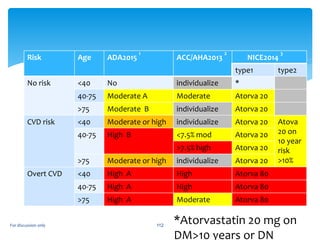
    For discussion only112 Risk Age ADA2015 1 ACC/AHA2013 2 NICE2014 3 type1 type2 No risk <40 No individualize * 40-75 Moderate A Moderate Atorva 20 >75 Moderate B individualize Atorva 20 CVD risk <40 Moderate or high individualize Atorva 20 Atova 20 on 10 year risk >10% 40-75 High B <7.5% mod Atorva 20 >7.5% high Atorva 20 >75 Moderate or high individualize Atorva 20 Overt CVD <40 High A High Atorva 80 40-75 High A High Atorva 80 >75 High A Moderate Atorva 80 *Atorvastatin 20 mg on DM>10 years or DN
  • 99.
    Fire and forget??? No target LDL level For discussion only 113
  • 100.
    IMProved Reduction of Outcomes:Vytorin Efficacy International Trial A Multicenter, Double-Blind, Randomized Study to Establish the Clinical Benefit and Safety of Vytorin (Ezetimibe/Simvastatin Tablet) vs Simvastatin Monotherapy in High-Risk Subjects Presenting With Acute Coronary Syndrome
  • 101.
    Background: Cholesterol Lowering ➢ LoweringLDL cholesterol (LDL-C) has been a mainstay of cardiovascular prevention ➢ Evidence mostly from statin trials which show reduction in morbidity and mortality – High-dose statins further reduce non-fatal CV events ➢ To date, no lipid-modifying therapy added to statins has been demonstrated to provide a clinical benefit – Fibrates, niacin, CETP inhibitors ➢ Recent ACC/AHA Guidelines have emphasized use of statin therapy ➢ Despite current therapies, patients remain at high risk
  • 102.
    Goals IMPROVE-IT: First largetrial evaluating clinical efficacy of combination EZ/Simva vs. simvastatin (i.e., the addition of ezetimibe to statin therapy): ➢ Does lowering LDL-C with the non-statin agent ezetimibe reduce cardiac events? ➢ “Is (Even) Lower (Even) Better?” (estimated mean LDL-C ~50 vs. 65mg/dL) ➢ Safety of ezetimibe Cannon CP AHJ 2008;156:826-32; Califf RM NEJM 2009;361:712-7; Blazing MA AHJ 2014;168:205-12
  • 103.
    Patient Population Inclusion Criteria: ➢Hospitalization for STEMI, NSTEMI/UA < 10 days ➢ Age ≥ 50 years, and ≥ 1 high-risk feature: – New ST chg, + troponin, DM, prior MI, PAD, cerebrovasc, prior CABG > 3 years, multivessel CAD ➢ LDL-C 50-125 mg/dL (50–100 mg/dL if prior lipid-lowering Rx) Major Exclusion Criteria: ➢ CABG for treatment of qualifying ACS ➢ Current statin Rx more potent than simva 40mg ➢ Creat Cl < 30mL/min, active liver disease
  • 104.
    Patients stabilized postACS ≤ 10 days: LDL-C 50–125*mg/dL (or 50–100**mg/dL if prior lipid-lowering Rx) Standard Medical & Interventional Therapy Ezetimibe / Simvastatin 10 / 40 mg Simvastatin 40 mg Follow-up Visit Day 30, every 4 months Duration: Minimum 2 ½-year follow-up (at least 5250 events) Primary Endpoint: CV death, MI, hospital admission for UA, coronary revascularization (≥ 30 days after randomization), or stroke N=18,144 Uptitrated to Simva 80 mg if LDL-C > 79 (adapted per FDA label 2011) Study Design *3.2mM **2.6mM Cannon CP AHJ 2008;156:826-32; Califf RM NEJM 2009;361:712-7; Blazing MA AHJ 2014;168:205-12 90% power to detect ~9% difference
  • 105.
    Study Metrics Simva (N=9077) EZ/Simva (N=9067) Uptitration toSimva 80mg, % 27 6 Premature study drug D/C, % 42 42 Median follow-up, yrs 6.0 5.9 Withdraw consent w/o vital status, %/yr 0.6 0.6 Lost to follow-up, %/yr 0.10 0.09 Follow up for primary endpoint, % 91 91 Follow up for survival, % 97 97 Total primary endpoint events = 5314 Total patient-years clinical follow-up = 97,822 Total patient-years follow-up for survival = 104,135
  • 106.
    Baseline Characteristics Simvastatin (N=9077) % EZ/Simva (N=9067) % Age (years)64 64 Female 24 25 Diabetes 27 27 MI prior to index ACS 21 21 STEMI / NSTEMI / UA 29 / 47 / 24 29 / 47 / 24 Days post ACS to rand (IQR) 5 (3, 8) 5 (3, 8) Cath / PCI for ACS event 88 / 70 88 / 70 Prior lipid Rx 35 36 LDL-C at ACS event (mg/dL, IQR) 95 (79, 110) 95 (79,110)
  • 107.
    LDL-C and LipidChanges 1 Yr Mean LDL-C TC TG HDL hsCRP Simva 69.9 145.1 137.1 48.1 3.8 EZ/Simva 53.2 125.8 120.4 48.7 3.3 Δ in mg/dL -16.7 -19.3 -16.7 +0.6 -0.5 Median Time avg 69.5 vs. 53.7 mg/dL
  • 108.
    Primary Endpoint —ITT Simva — 34.7% 2742 events EZ/Simva — 32.7% 2572 events HR 0.936 CI (0.887, 0.988) p=0.016 Cardiovascular death, MI, documented unstable angina requiring rehospitalization, coronary revascularization (≥30 days), or stroke 7-year event rates NNT= 50
  • 109.
    Simva* EZ/Simva* p-value Primary34.7 32.7 0.016 CVD/MI/UA/Cor Revasc/CVA Secondary #1 40.3 38.7 0.034 All D/MI/UA/Cor Revasc/CVA Secondary #2 18.9 17.5 0.016 CHD/MI/Urgent Cor Revasc Secondary #3 36.2 34.5 0.035 CVD/MI/UA/All Revasc/CVA 0.936 Ezetimibe/Simva Better Simva Better UA, documented unstable angina requiring rehospitalization; Cor Revasc, coronary revascularization (≥30 days after randomization); All D, all-cause death; CHD, coronary heart disease death; All Revasc, coronary and non-coronary revascularization (≥30 days) *7-year event rates (%) Primary and 3 Prespecified Secondary Endpoints — ITT 0.8 1.0 1.1 0.948 0.912 0.945
  • 110.
    HR Simva* EZ/Simva*p-value All-cause death 0.99 15.3 15.4 0.782 CVD 1.00 6.8 6.9 0.997 CHD 0.96 5.8 5.7 0.499 MI 0.87 14.8 13.1 0.002 Stroke 0.86 4.8 4.2 0.052 Ischemic stroke 0.79 4.1 3.4 0.008 Cor revasc ≥ 30d 0.95 23.4 21.8 0.107 UA 1.06 1.9 2.1 0.618 CVD/MI/stroke 0.90 22.2 20.4 0.003 Ezetimibe/Simva Better Simva Better Individual Cardiovascular Endpoints and CVD/MI/Stroke 0. 6 1. 0 1. 4 *7-year event rates (%)
  • 111.
    Simva — 22.2% 1704events EZ/Simva — 20.4% 1544 events HR 0.90 CI (0.84, 0.97) p=0.003 NNT= 56 CV Death, Non-fatal MI, or Non-fatal Stroke 7-year event rates
  • 112.
    Simva† EZ/Simva† Male 34.933.3 Female 34.0 31.0 Age < 65 years 30.8 29.9 Age ≥ 65 years 39.9 36.4 No diabetes 30.8 30.2 Diabetes 45.5 40.0 Prior LLT 43.4 40.7 No prior LLT 30.0 28.6 LDL-C > 95 mg/dl 31.2 29.6 LDL-C ≤ 95 mg/dl 38.4 36.0 Major Pre-specified Subgroups Ezetimibe/Simva Better Simva Better 0.7 1.0 1.3 †7-year event rates * For internal use only
  • 113.
    Safety — ITT Nostatistically significant differences in cancer or muscle- or gallbladder-related events Simva n=9077 % EZ/Simva n=9067 % p ALT and/or AST≥3x ULN 2.3 2.5 0.43 Cholecystectomy 1.5 1.5 0.96 Gallbladder-related AEs 3.5 3.1 0.10 Rhabdomyolysis* 0.2 0.1 0.37 Myopathy* 0.1 0.2 0.32 Rhabdo, myopathy, myalgia with CK elevation* 0.6 0.6 0.64 Cancer* (7-yr KM %) 10.2 10.2 0.57 * Adjudicated by Clinical Events Committee % = n/N for the trial duration For internal use only
  • 114.
    Conclusions IMPROVE-IT: First trialdemonstrating incremental clinical benefit when adding a non-statin agent (ezetimibe) to statin therapy: YES: Non-statin lowering LDL-C with ezetimibe reduces cardiovascular events YES: Even Lower is Even Better (achieved mean LDL-C 53 vs. 70 mg/dL at 1 year) YES: Confirms ezetimibe safety profile Reaffirms the LDL hypothesis, that reducing LDL-C prevents cardiovascular events Results could be considered for future guidelines
  • 115.
    Treat to target? The lower LDL  the better outcome ?
  • 116.
    WHAT’S NEW INTHE LASTEST DIABETES AND DYSLIPIDEMIA GUIDELINE?
  • 118.
    Lipid Targets 13 4 Parameter Treatment Goal Moderaterisk High risk Primary Goals LCL-C, mg/dL <100 <70 Non–HDL-C, mg/dL <130 <100 Triglycerides, mg/dL <150 <150 TC/HDL-C ratio <3.5 <3.0 Secondary Goals ApoB, mg/dL <90 <80 LDL particles <1,200 <1,000  Moderate risk = diabetes or prediabetes with no ASCVD or major CV risk factors  High risk = established ASCVD or ≥1 major CV risk factor  CV risk factors  Hypertension  Family history  Low HDL-C  Smoking ApoB = apolipoprotein B; ASCVD = atherosclerotic cardiovascular disease; CV = cardiovascular; HDL-C = high density lipoprotein cholesterol; LDL = low-density lipoprotein; LDL-C = low-density
  • 119.
    Lipid Management Elevated LDL-C,non- HDL-C, TG, TC/HDL-C ratio, ApoB, LDL particles • Statin = treatment of choice • Add bile acid sequestrant, niacin, and/or cholesterol absorption inhibitor if target not met on maximum-tolerated dose of statin • Use bile acid sequestrant, niacin, or cholesterol absorption inhibitor instead of statin if contraindicated or not tolerated LDL-C at goal but non- HDL-C not at goal (TG ≥200 mg/dL and/or low HDL-C) • May use fibrate, niacin, or high-dose omega-3 fatty acid to achieve non- HDL-C goal TG ≥500 mg/dL • Use high-dose omega-3 fatty acid, fibrate, or niacin to reduce TG and risk of pancreatitis 13 5 ApoB = apolipoprotein B; HDL-C = high density lipoprotein cholesterol; LDL = low-density lipoprotein; LDL-C = low-density lipoprotein cholesterol; TC = total cholesterol; TG = triglycerides.
  • 120.
  • 121.
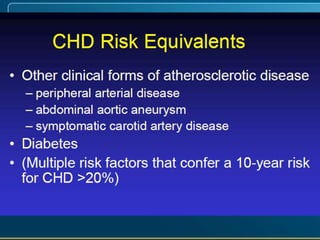
    Goal of Treatment: Risk - DM - Ischemic stroke from carotid artery disease, transient ischemic attack - Symptomatic peripheral arterial disease - Abdominal aortic aneurysm
  • 122.
    13 9 Risk Age AACE2015 ADA2015 1 ACC/AHA2 013 2 NICE2014 3 Thai 2003 type1 type2 No risk <40 Statin Base LDL < 100 No individualize Atorva 20 DM>10 y or DN 40- 75 Moderate A Moderate Atorva 20 >75 Moderate B individualiz e Atorva 20 CVD risk <40 Statin Base LDL < 70 Moderate or high individualiz e Atorva 20 Atova 20 on 10 year risk >10% Statin Base LDL < 130 40- 75 High B <7.5% mod Atorva 20 >7.5% high Atorva 20 >75 Moderate or high individualiz e Atorva 20 Overt CVD <40 High A High Atorva 80 Statin Base LDL < 100 40- 75 High A High Atorva 80
  • 123.