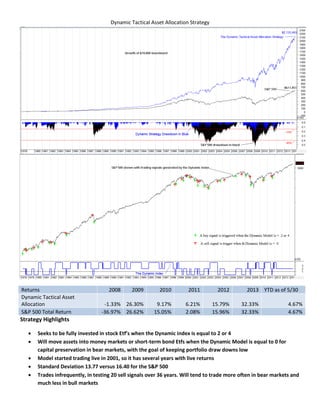
Dynamic Tactical Asset Allocation Strategy
Returns 2008 2009 2010 2011 2012 2013 YTD as of 5/30
Dynamic Tactical Asset
Allocation -1.33% 26.30% 9.17% 6.21% 15.79% 32.33% 4.67%
S&P 500 Total Return -36.97% 26.62% 15.05% 2.08% 15.96% 32.33% 4.67%
Strategy Highlights
 Seeks to be fully invested in stock Etf’s when the Dynamic index is equal to 2 or 4
 Will move assets into money markets or short-term bond Etfs when the Dynamic Model is equal to 0 for
capital preservation in bear markets, with the goal of keeping portfolio draw downs low
 Model started trading live in 2001, so it has several years with live returns
 Standard Deviation 13.77 versus 16.40 for the S&P 500
 Trades infrequently, in testing 20 sell signals over 36 years. Will tend to trade more often in bear markets and
much less in bull markets
The Dynamic Tactical Asset Allocation Model is a composite model which is made up of nine
indicators which are comprised of monetary indicators (federal Reserve Actions), Interest rates,
sentiment indicators , corporate bond market momentum, market internals, and market technicals.
These indicators are then consolidated to form the Dynamic Index which will give readings of either
0, 2, or 4. When the Dynamic model is equal to 2 or 4, the portfolio will be fully invested in the stock
market by the use of equity etf’s. However when the Dynamic index is equal to 0, the portfolio will
then be moved out of equities and into money markets or short-term bonds to preserve capital with
the goal of keeping portfolio drawdowns low.

Dynamic Tactical Asset Allocation Strategy

  • 1.
    Dynamic Tactical AssetAllocation Strategy Returns 2008 2009 2010 2011 2012 2013 YTD as of 5/30 Dynamic Tactical Asset Allocation -1.33% 26.30% 9.17% 6.21% 15.79% 32.33% 4.67% S&P 500 Total Return -36.97% 26.62% 15.05% 2.08% 15.96% 32.33% 4.67% Strategy Highlights  Seeks to be fully invested in stock Etf’s when the Dynamic index is equal to 2 or 4  Will move assets into money markets or short-term bond Etfs when the Dynamic Model is equal to 0 for capital preservation in bear markets, with the goal of keeping portfolio draw downs low  Model started trading live in 2001, so it has several years with live returns  Standard Deviation 13.77 versus 16.40 for the S&P 500  Trades infrequently, in testing 20 sell signals over 36 years. Will tend to trade more often in bear markets and much less in bull markets
  • 2.
    The Dynamic TacticalAsset Allocation Model is a composite model which is made up of nine indicators which are comprised of monetary indicators (federal Reserve Actions), Interest rates, sentiment indicators , corporate bond market momentum, market internals, and market technicals. These indicators are then consolidated to form the Dynamic Index which will give readings of either 0, 2, or 4. When the Dynamic model is equal to 2 or 4, the portfolio will be fully invested in the stock market by the use of equity etf’s. However when the Dynamic index is equal to 0, the portfolio will then be moved out of equities and into money markets or short-term bonds to preserve capital with the goal of keeping portfolio drawdowns low.