Chapter 13: Dynamic
Programming
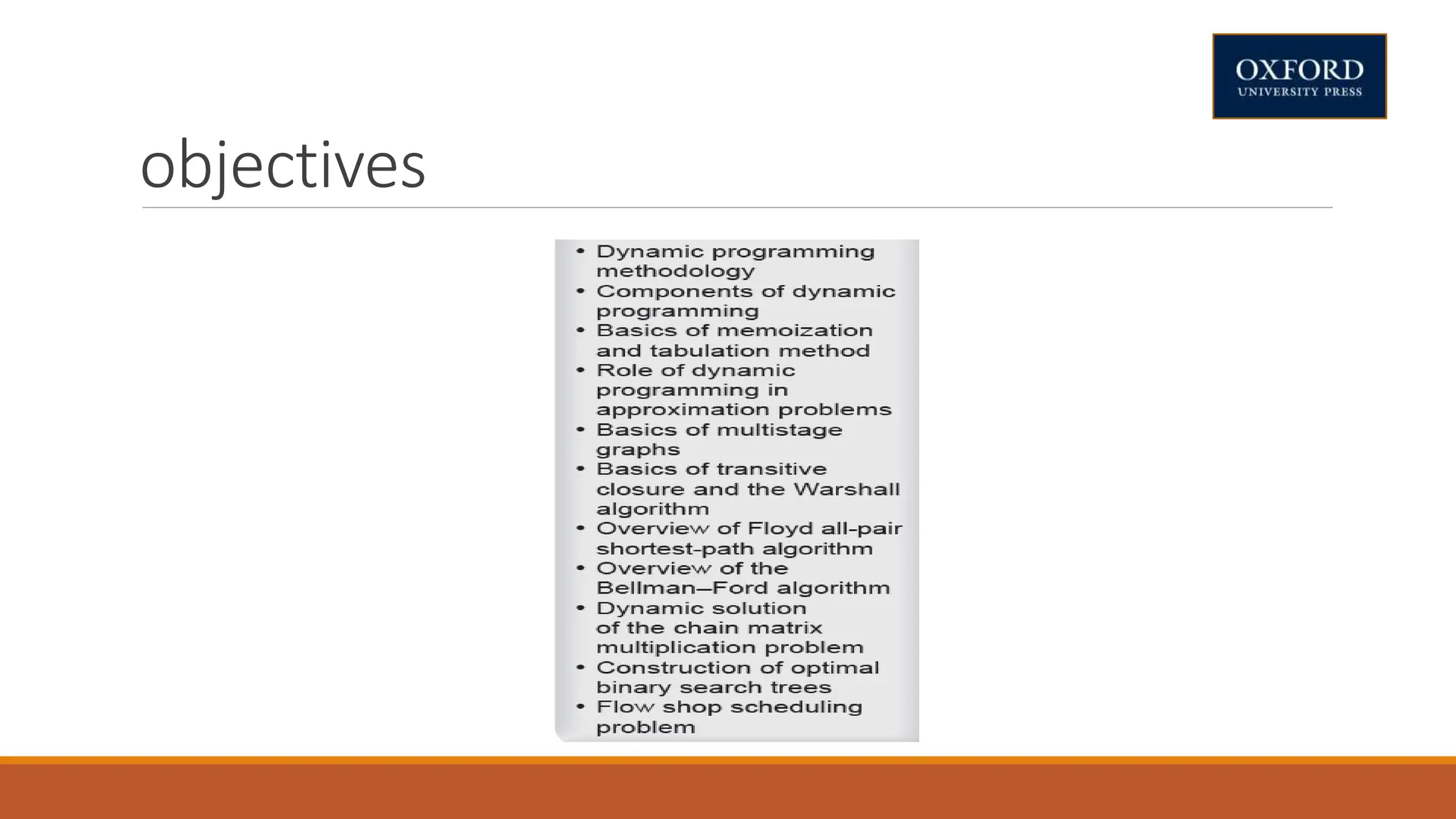
objectives
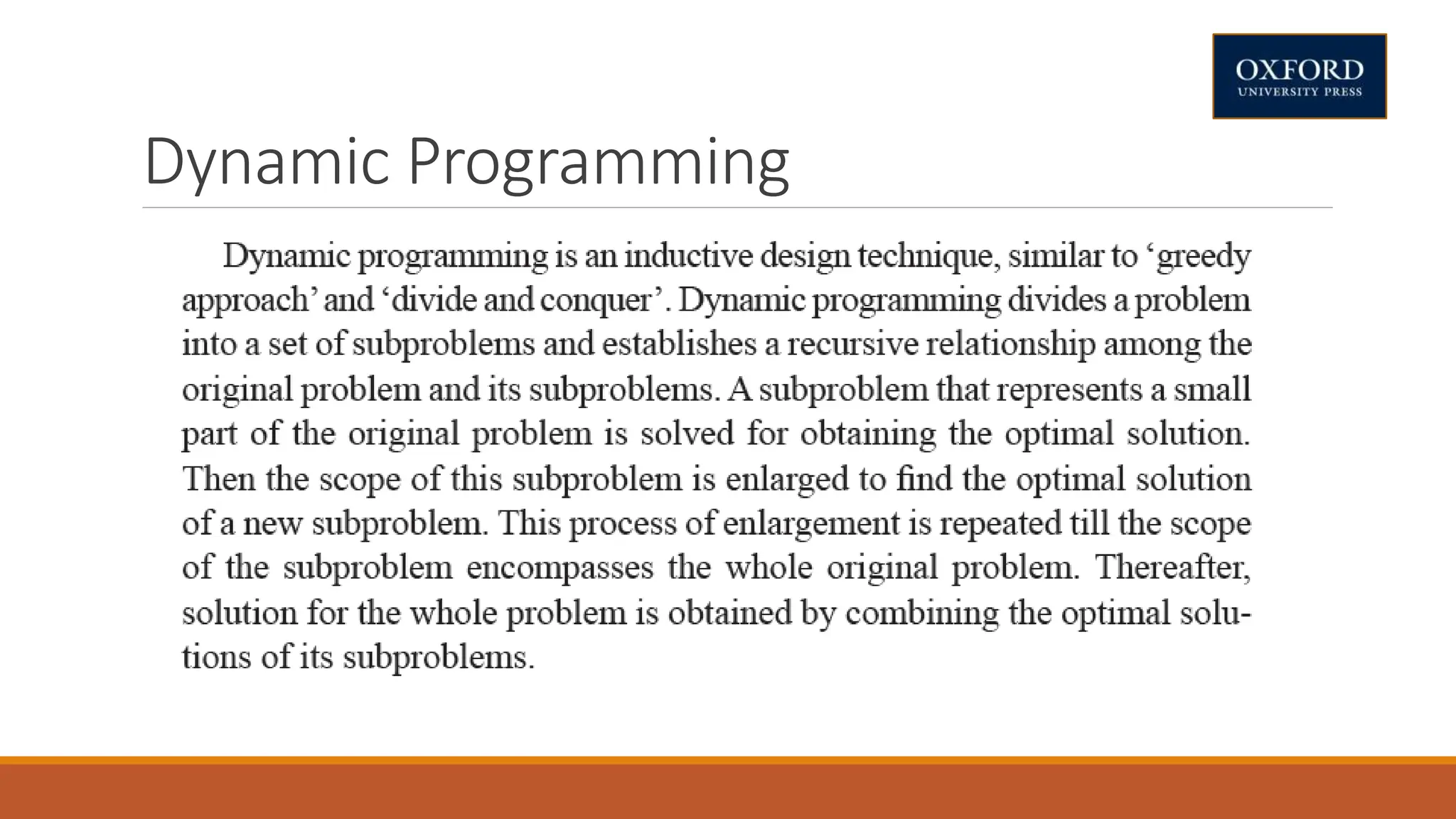
Dynamic Programming
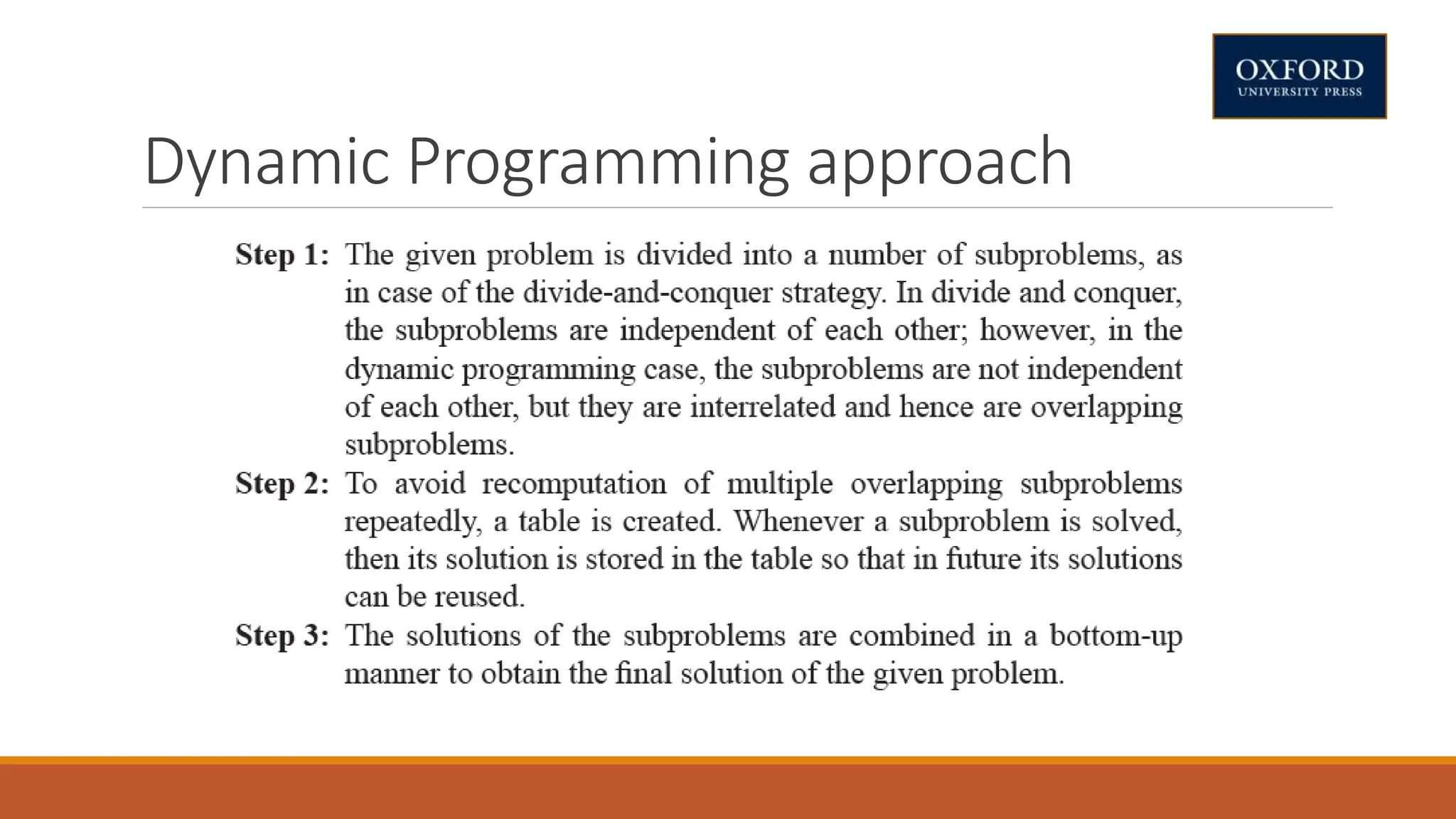
Dynamic Programming approach
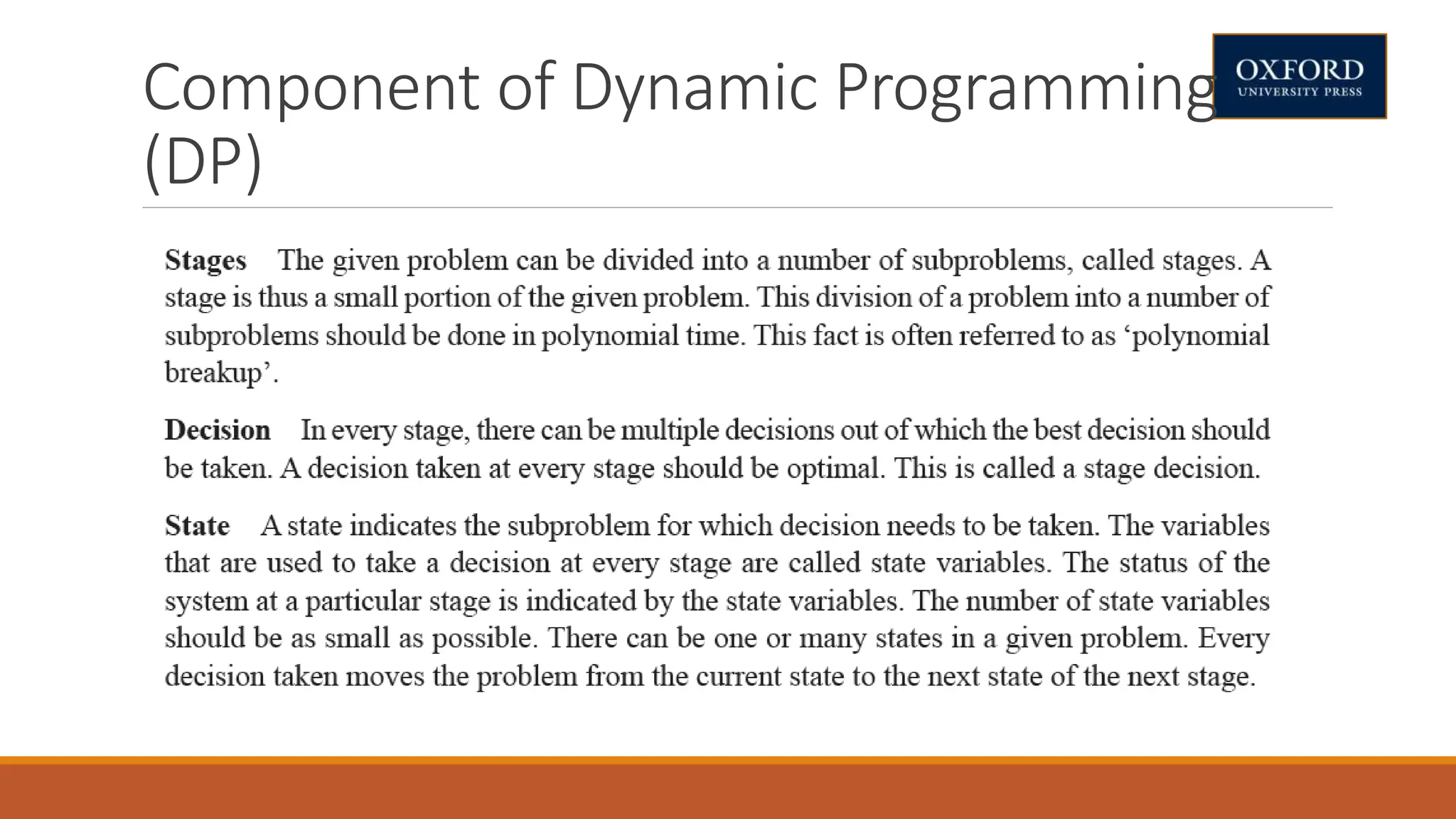
Component of Dynamic Programming
(DP)
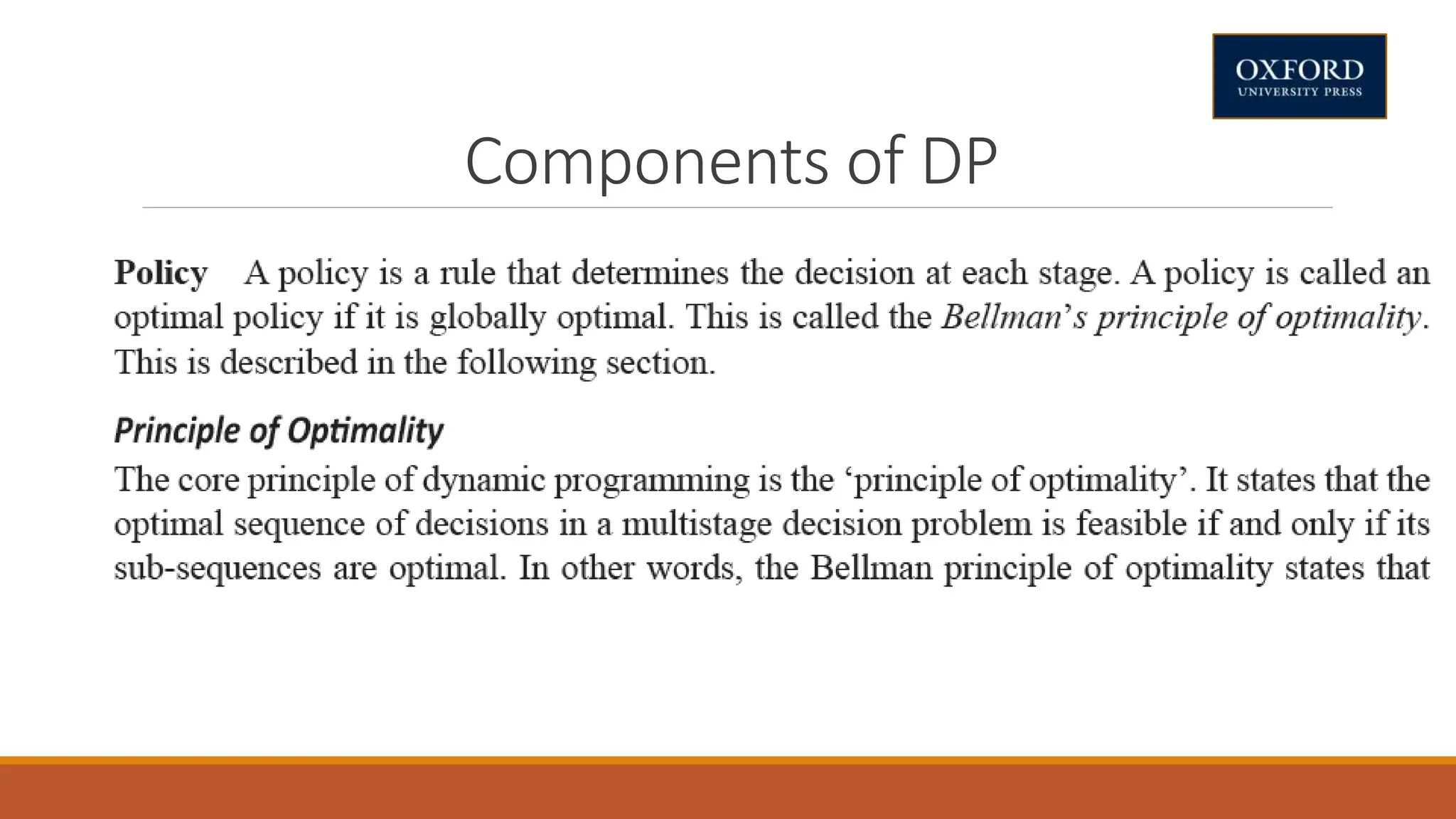
Components of DP
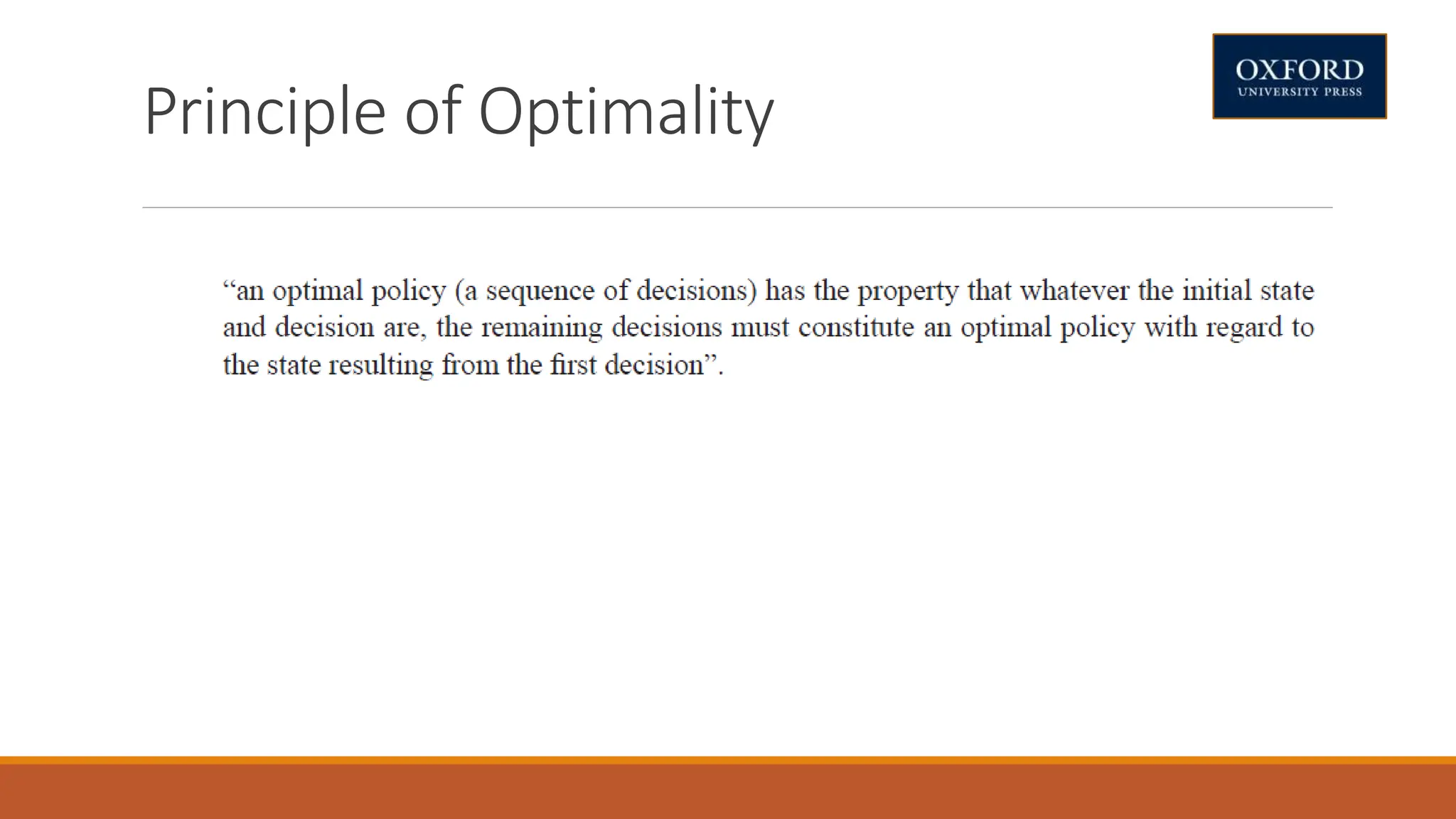
Principle of Optimality
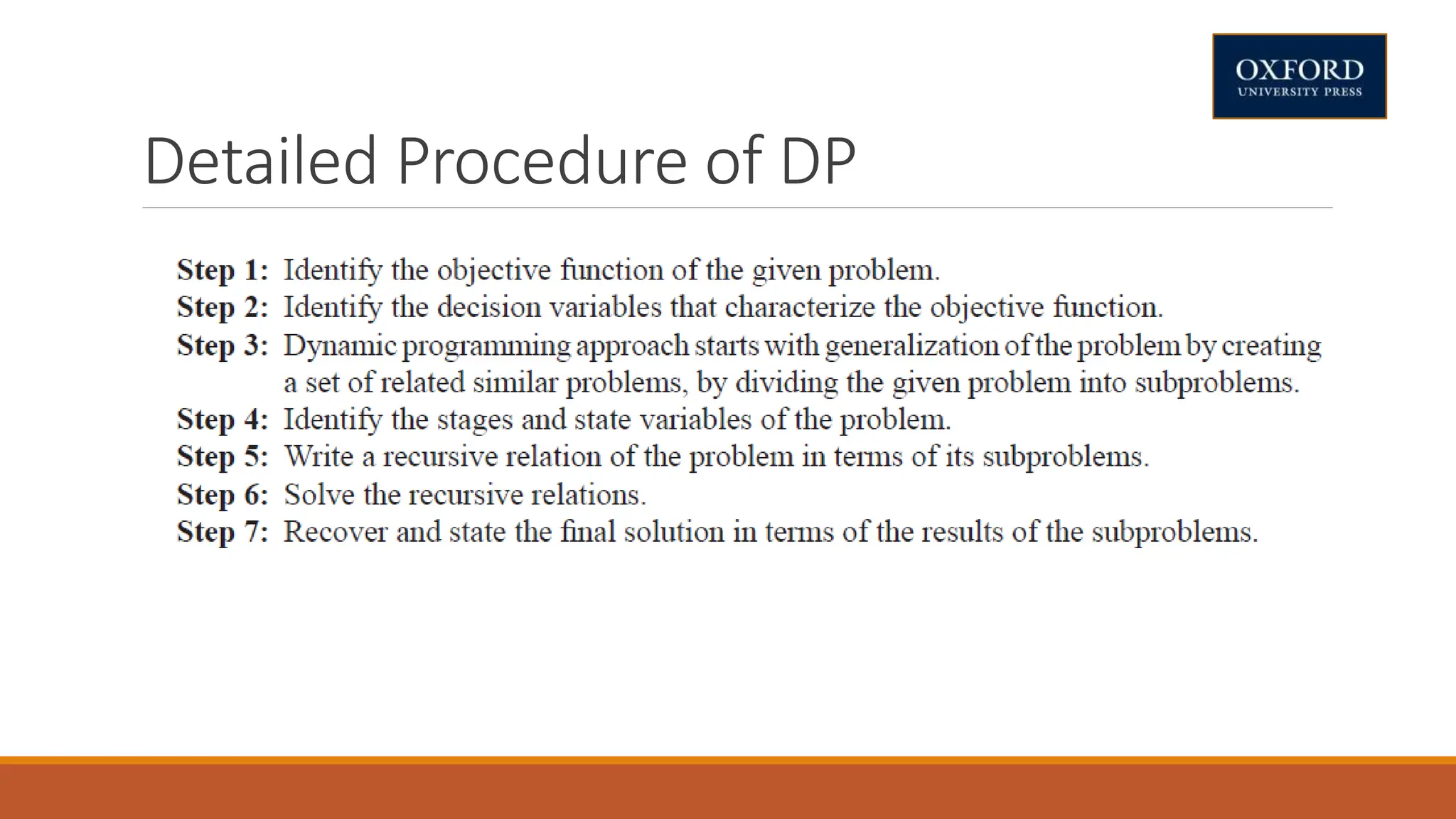
Detailed Procedure of DP
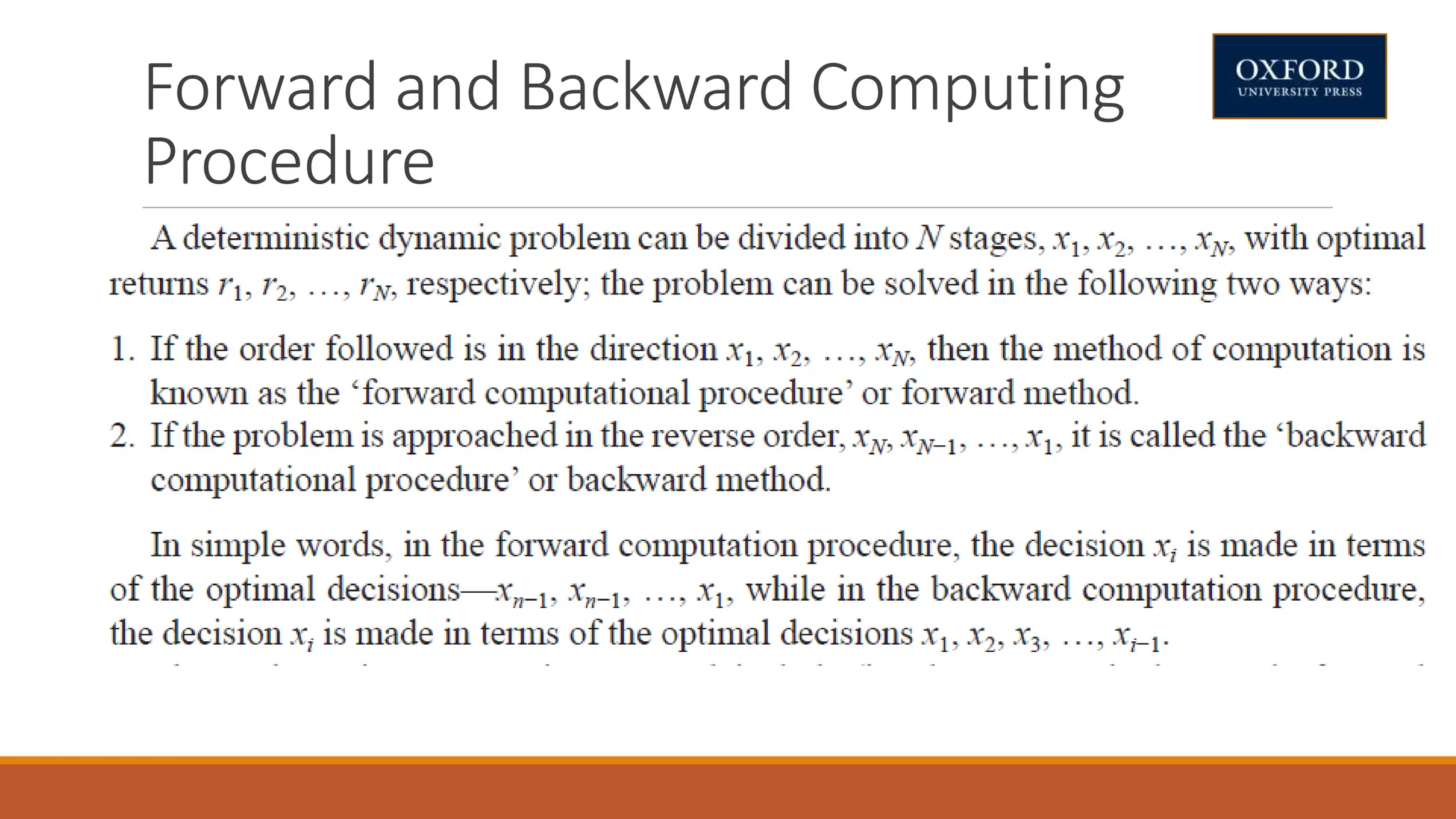
Forward and Backward Computing
Procedure
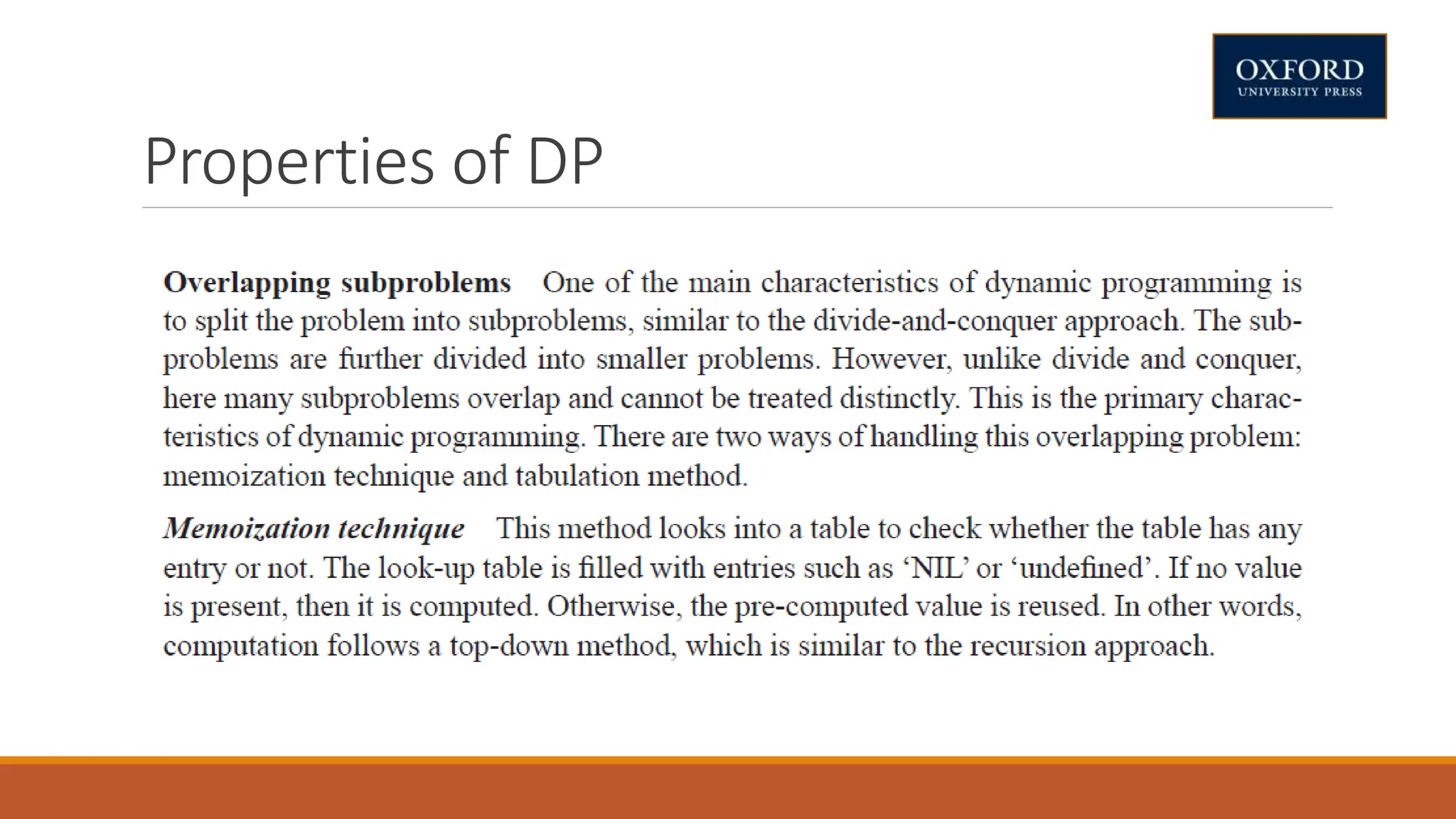
Properties of DP
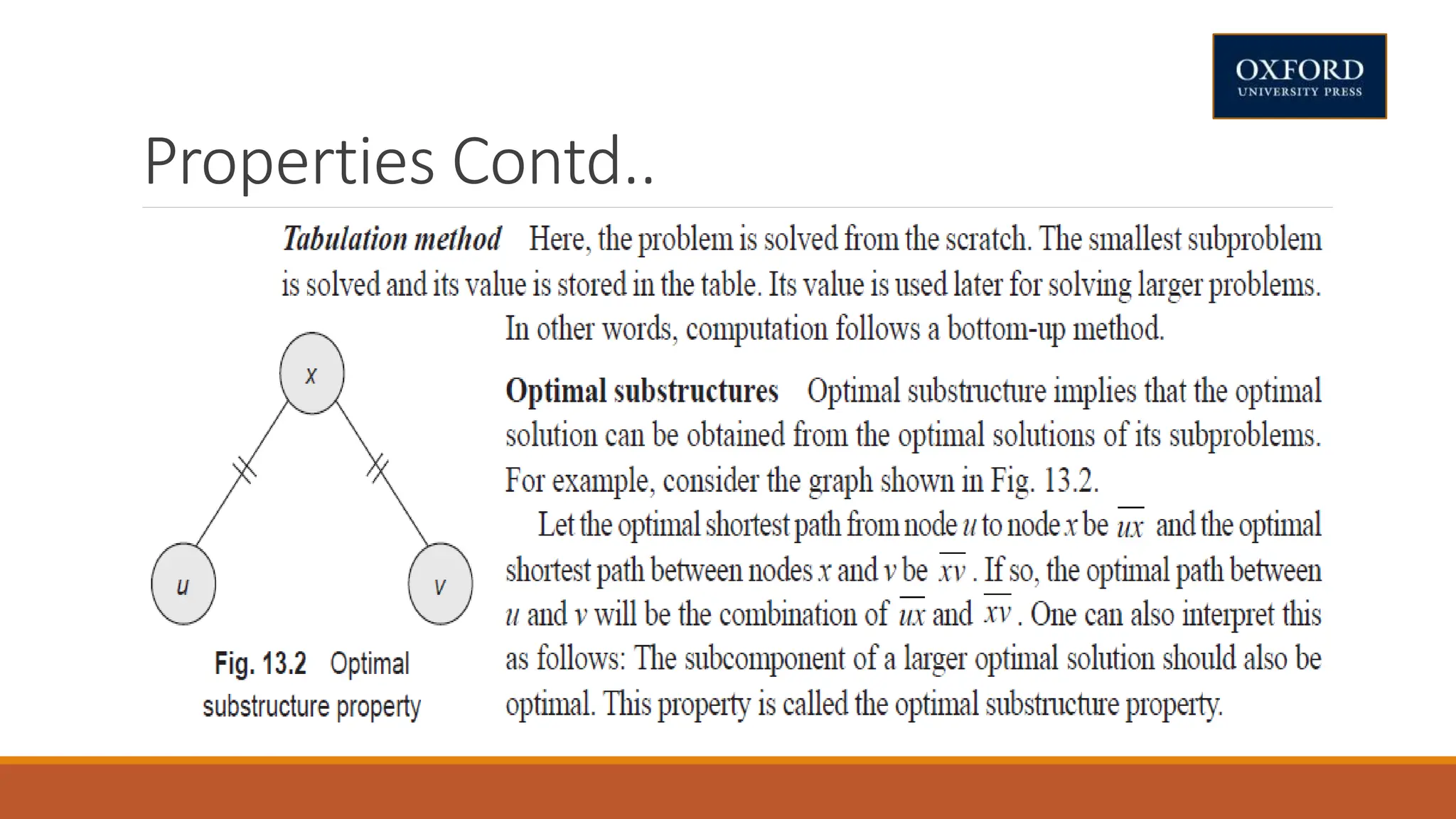
Properties Contd..
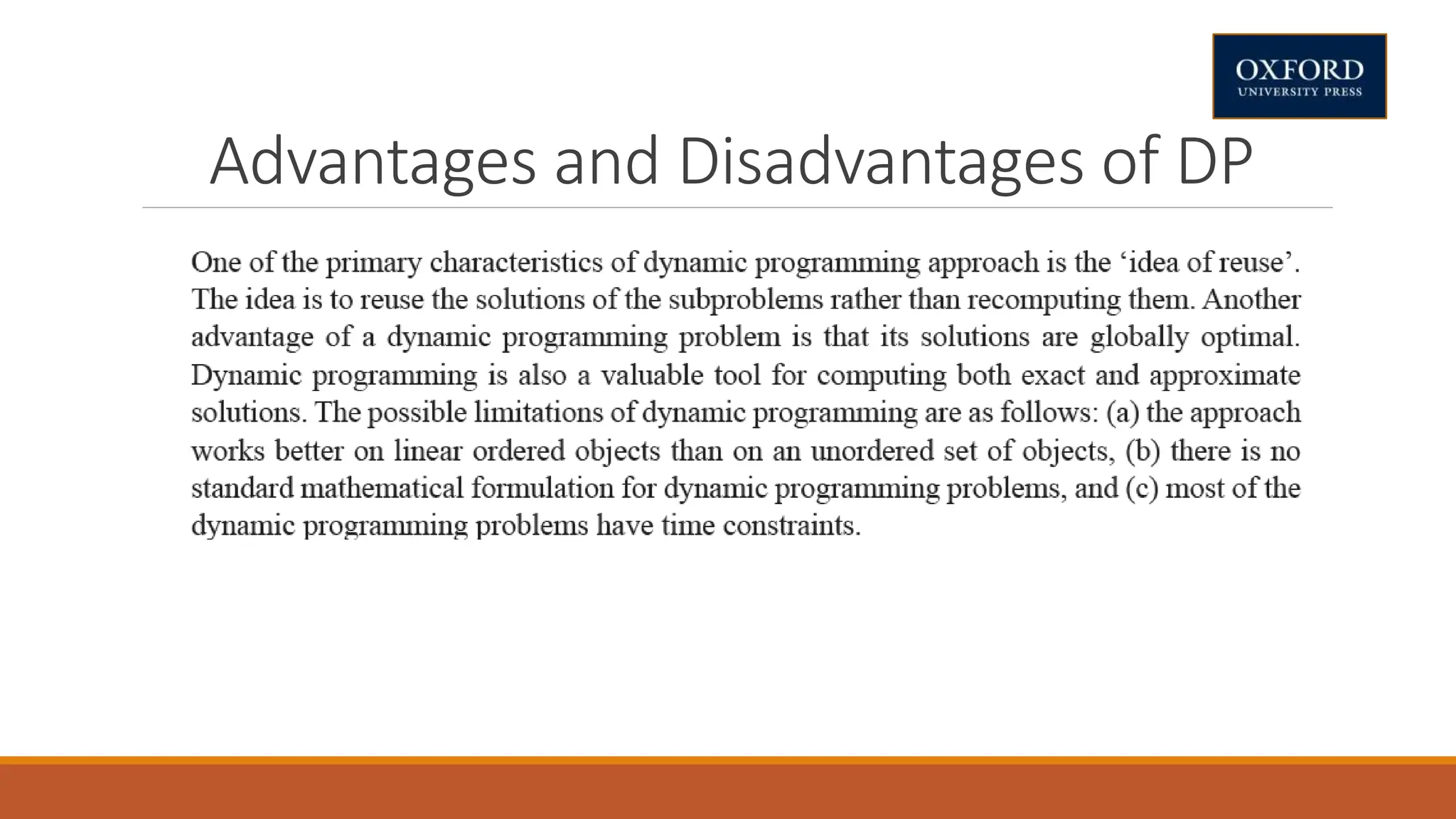
Advantages and Disadvantages of DP
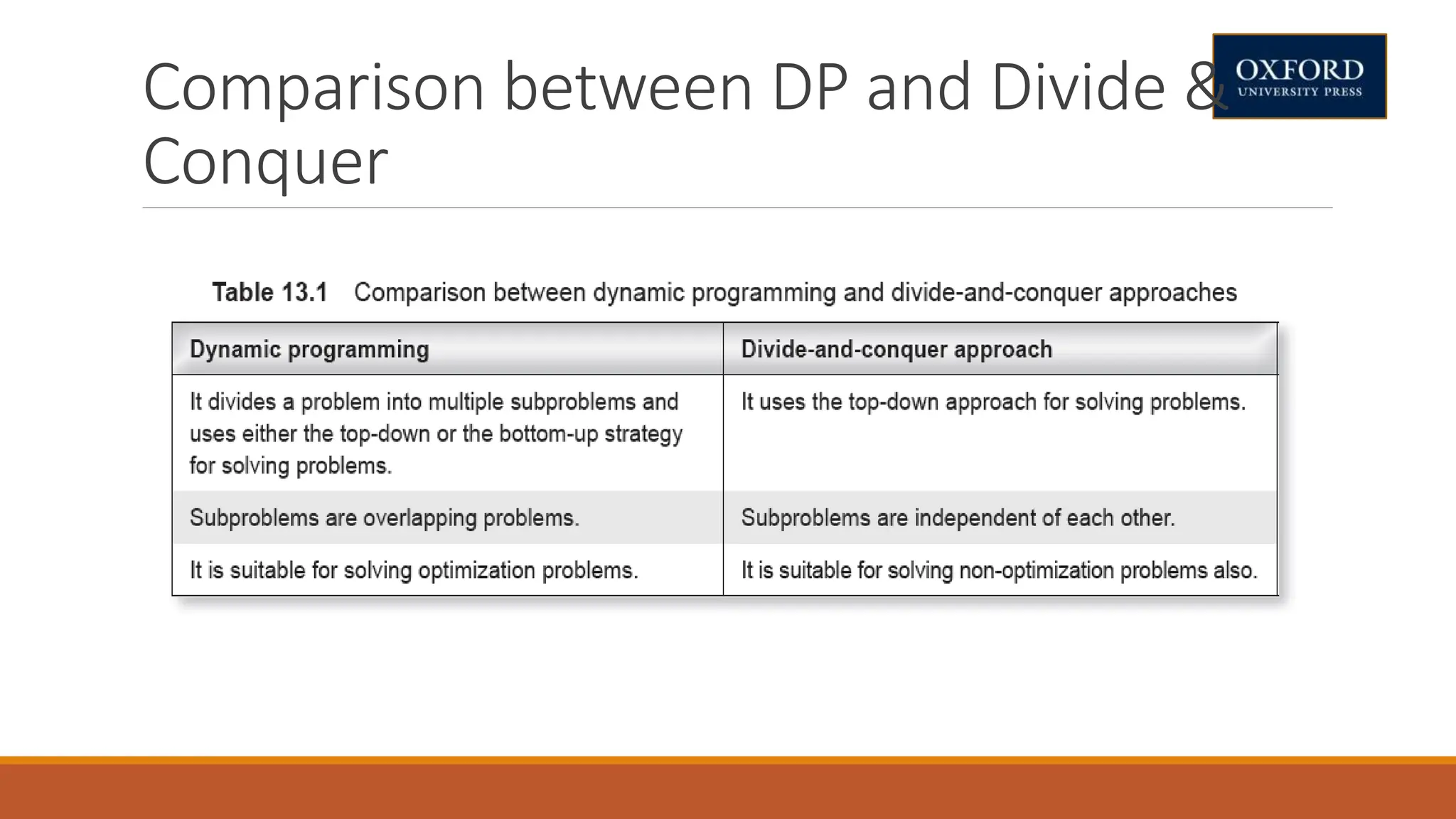
Comparison between DP and Divide &
Conquer
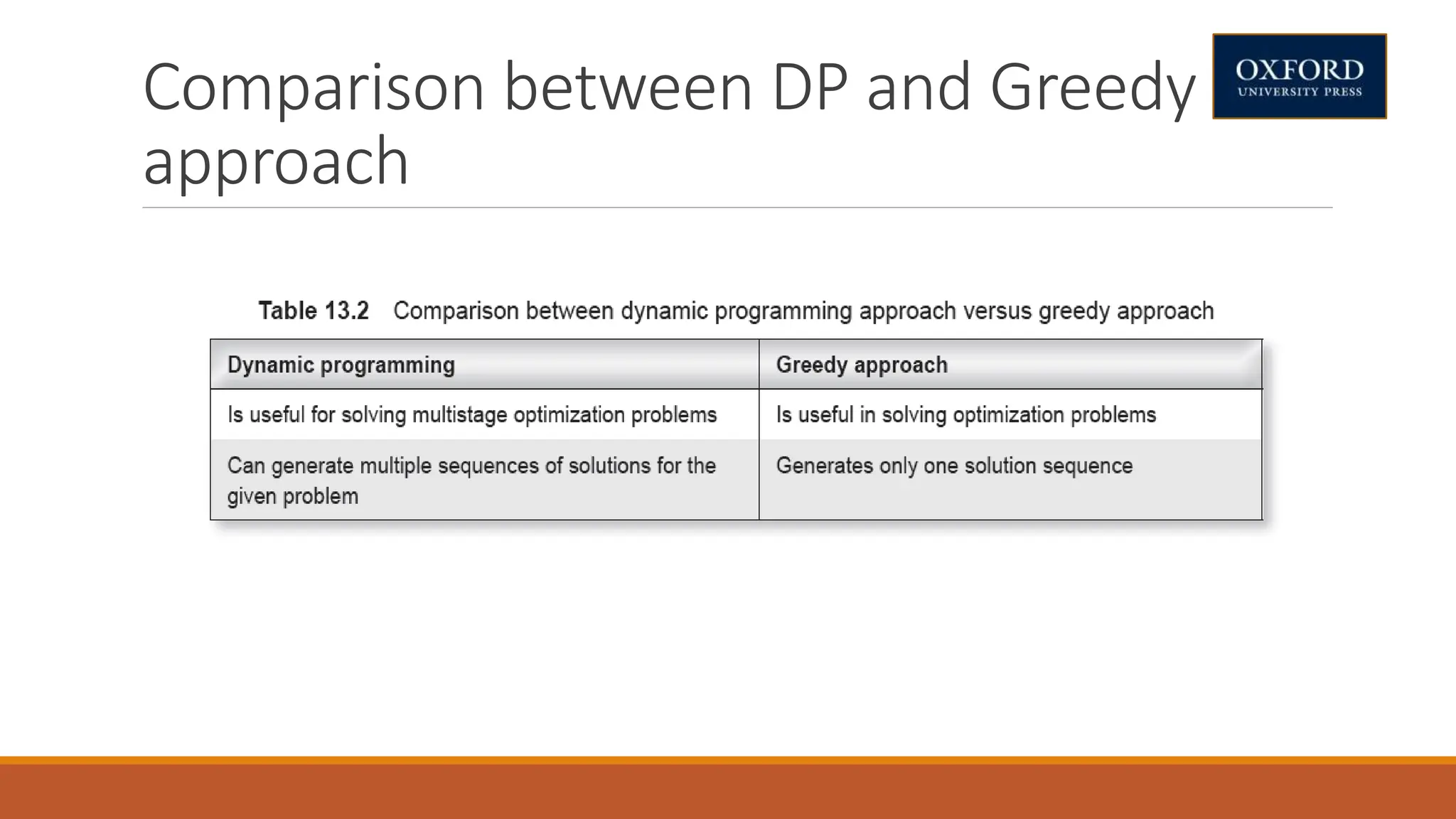
Comparison between DP and Greedy
approach
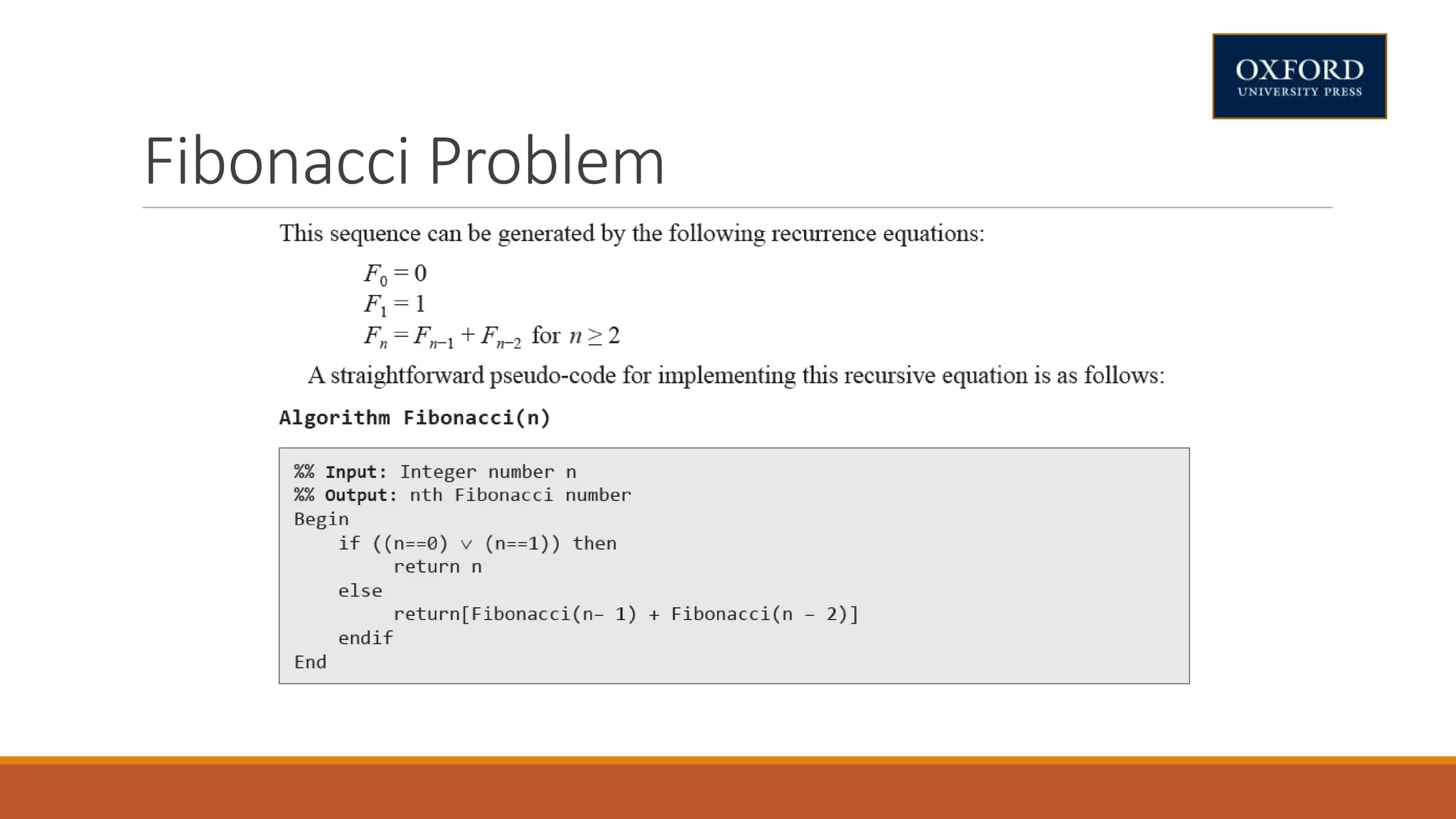
Fibonacci Problem
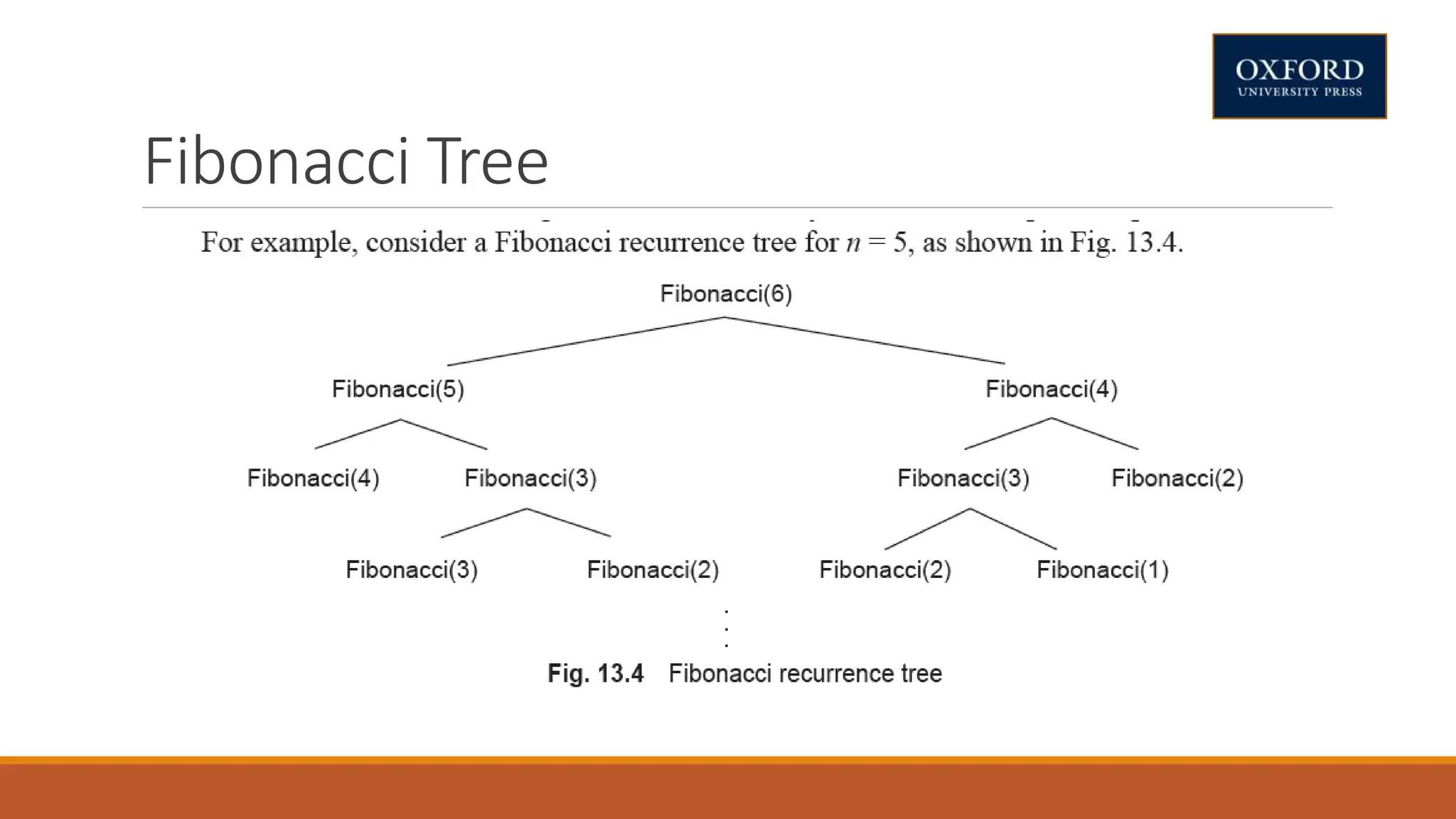
Fibonacci Tree
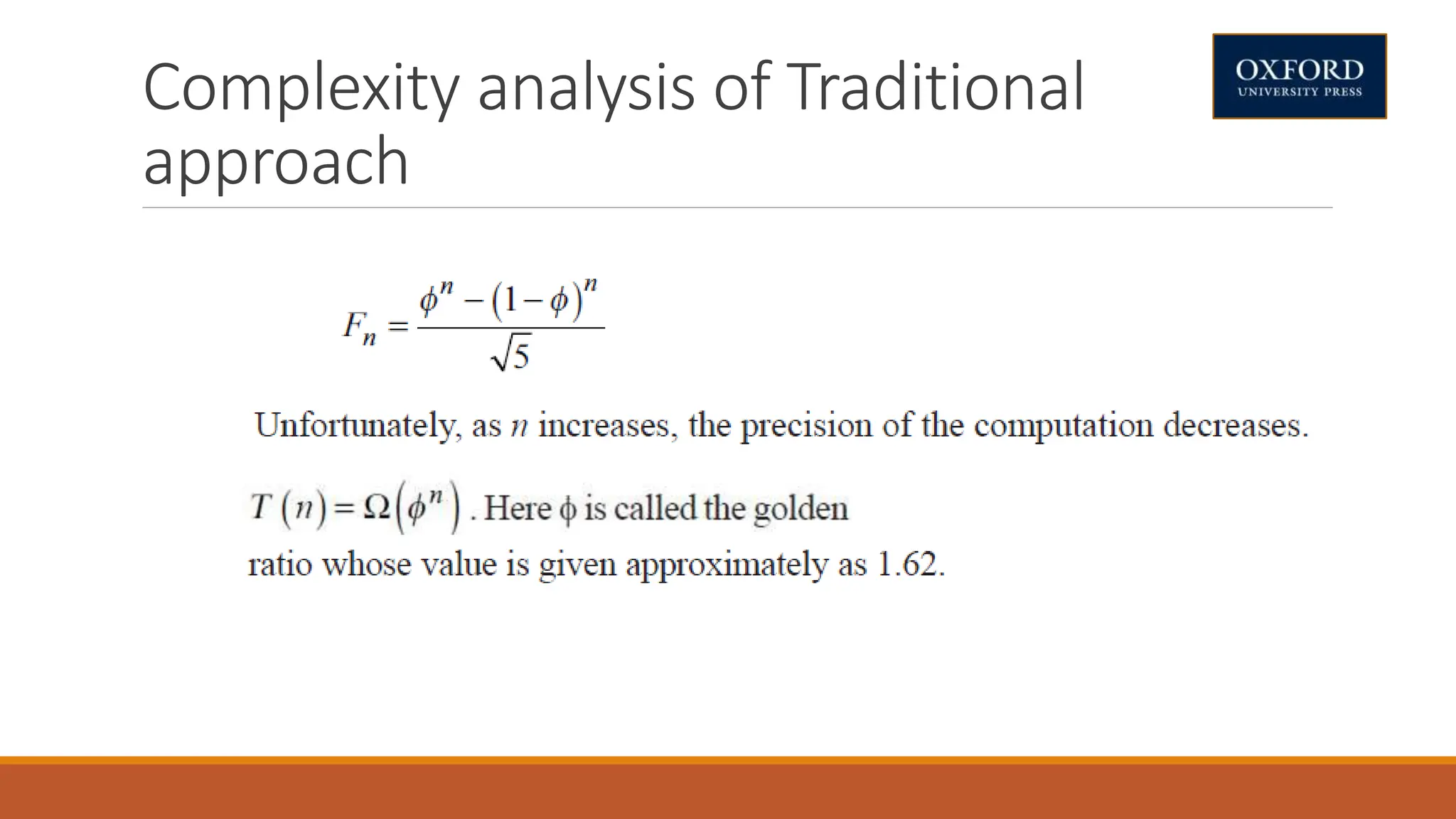
Complexity analysis of Traditional
approach
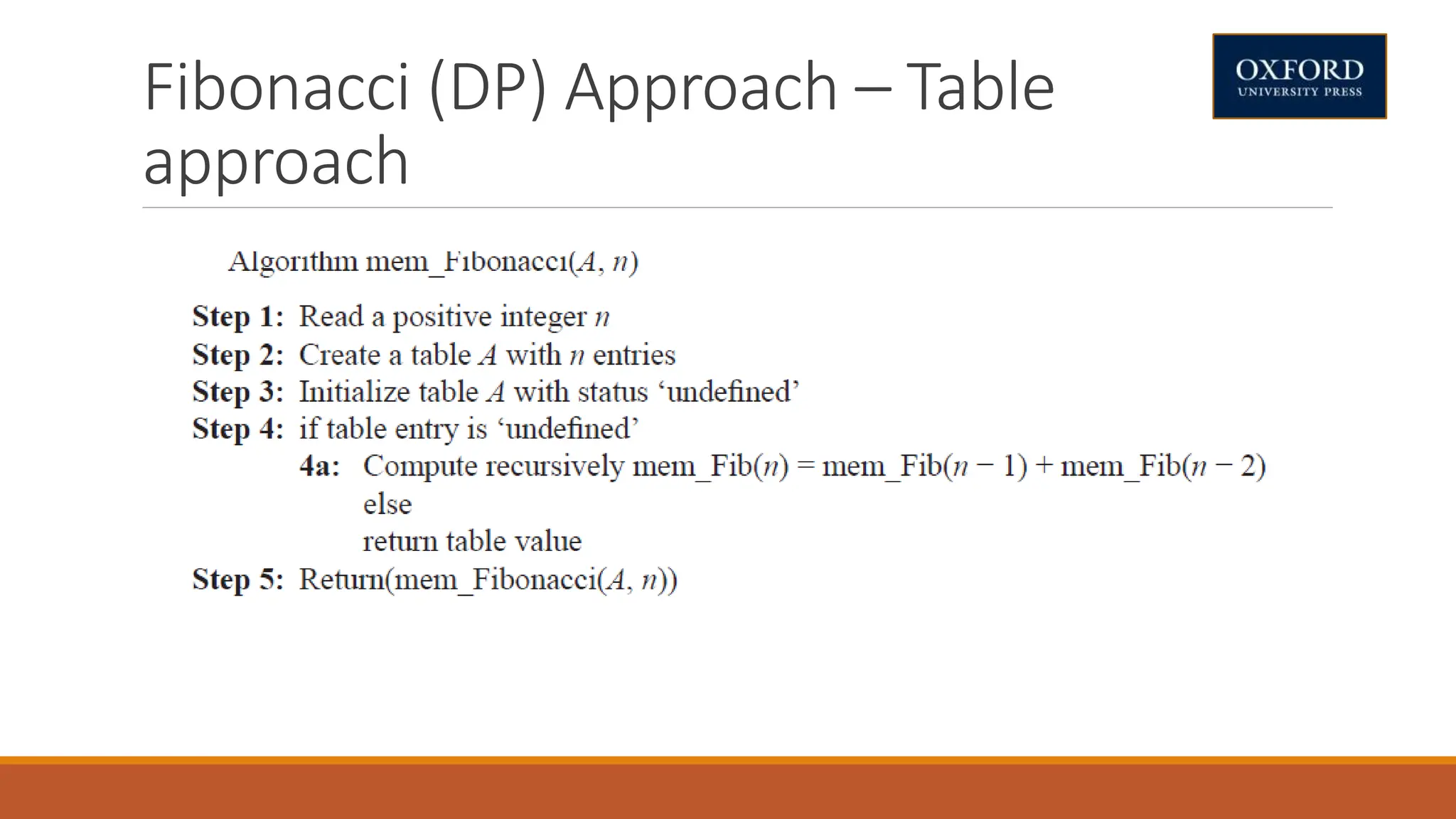
Fibonacci (DP) Approach – Table
approach
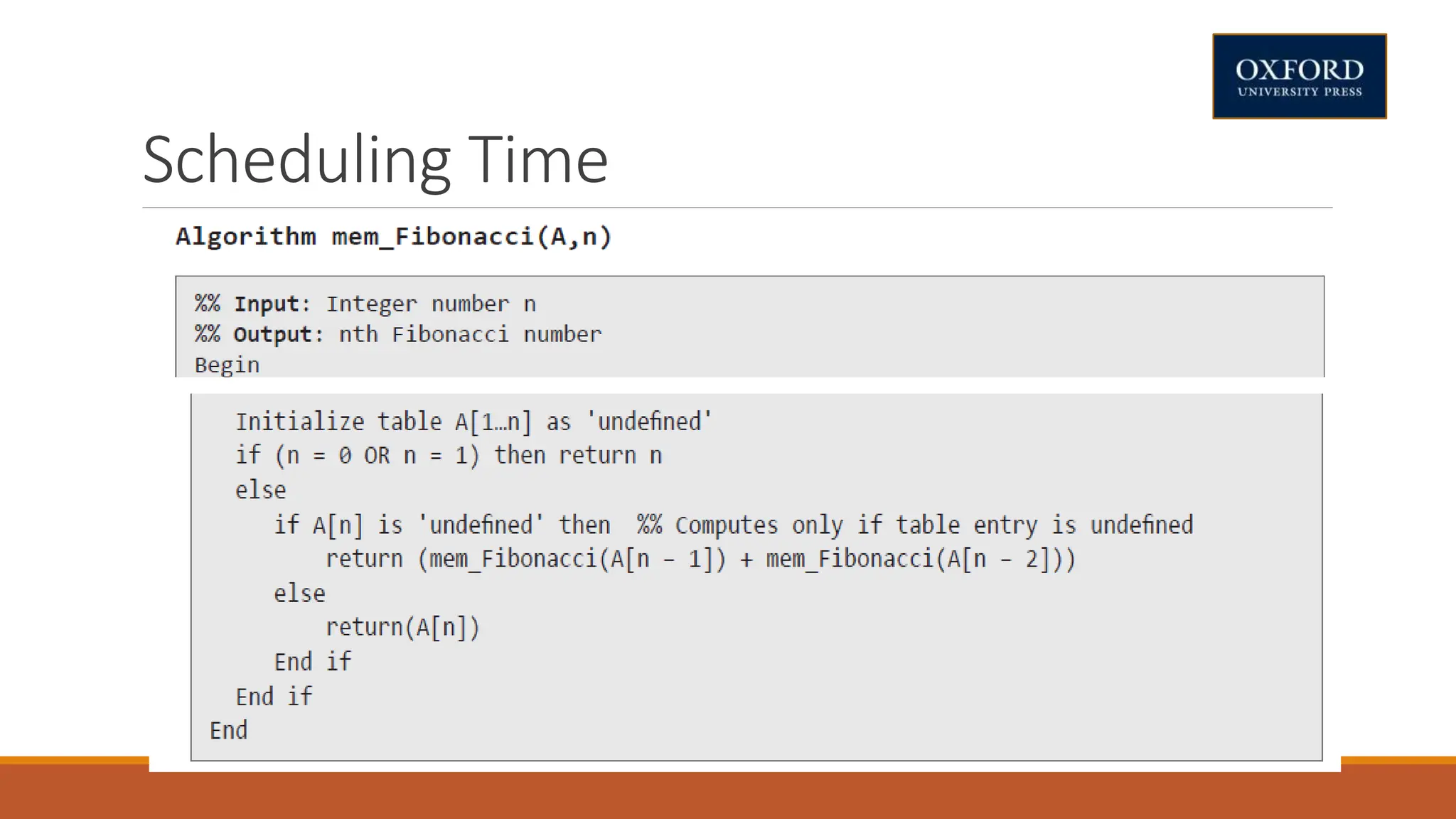
Scheduling Time
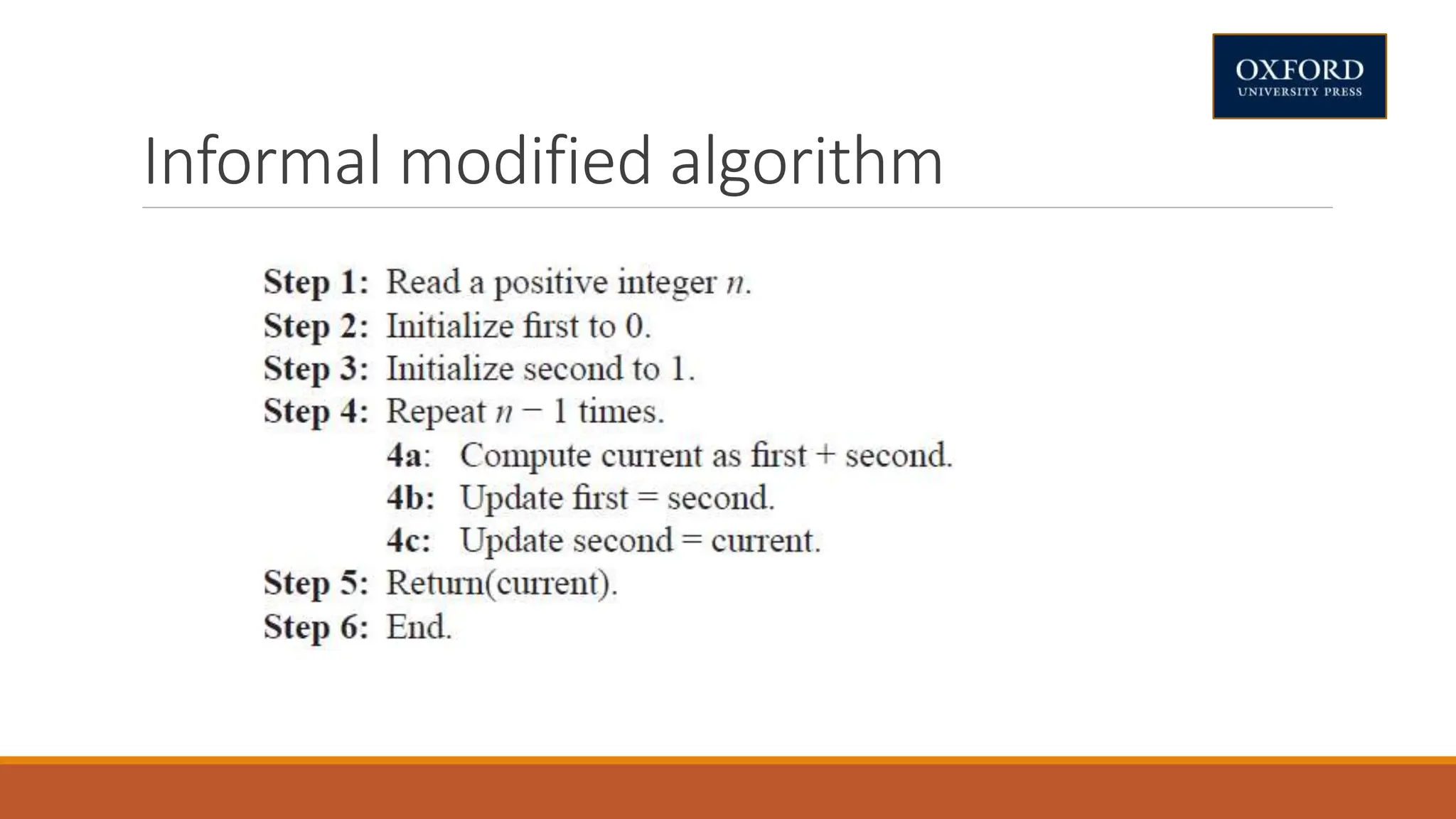
Informal modified algorithm
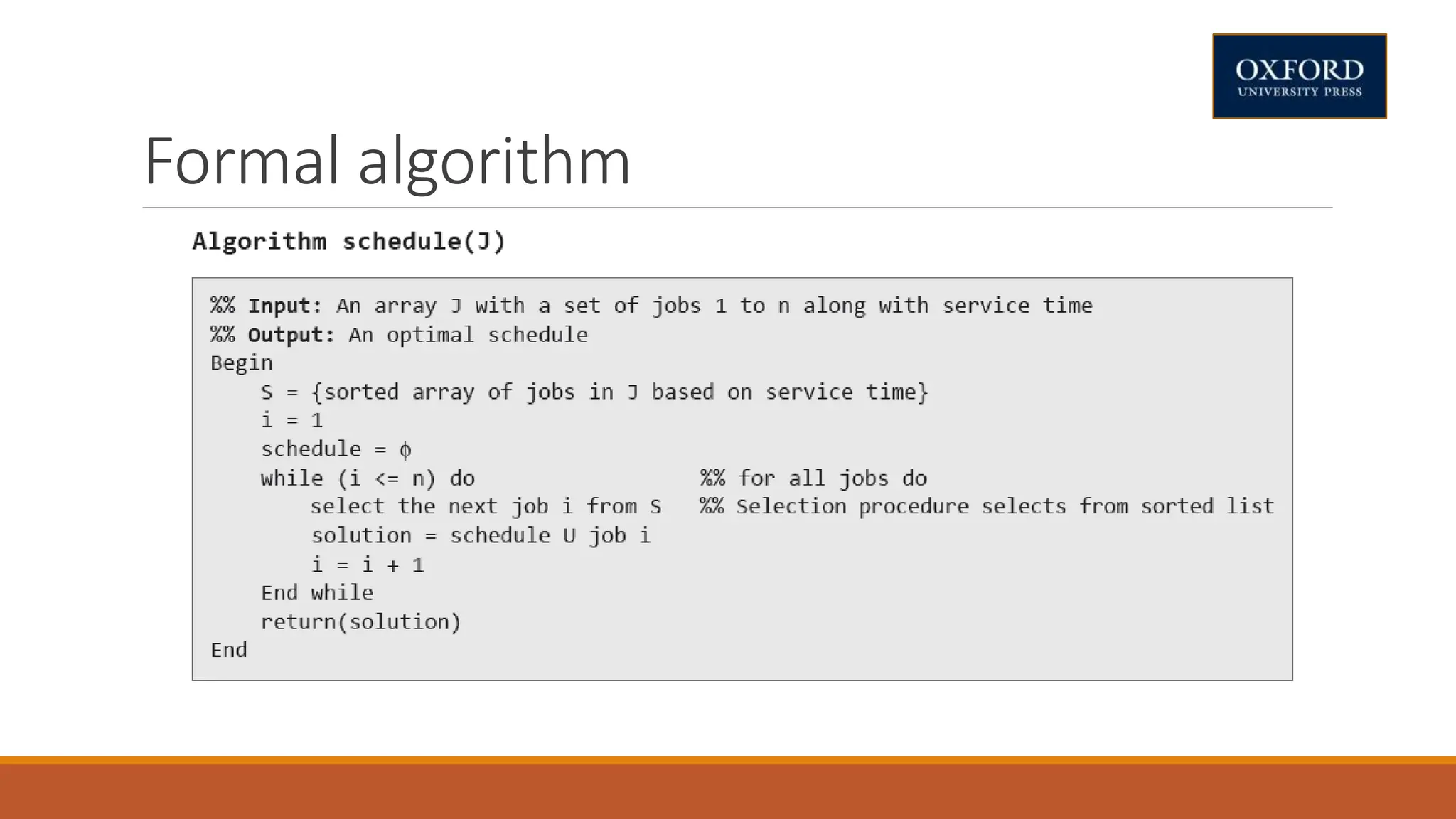
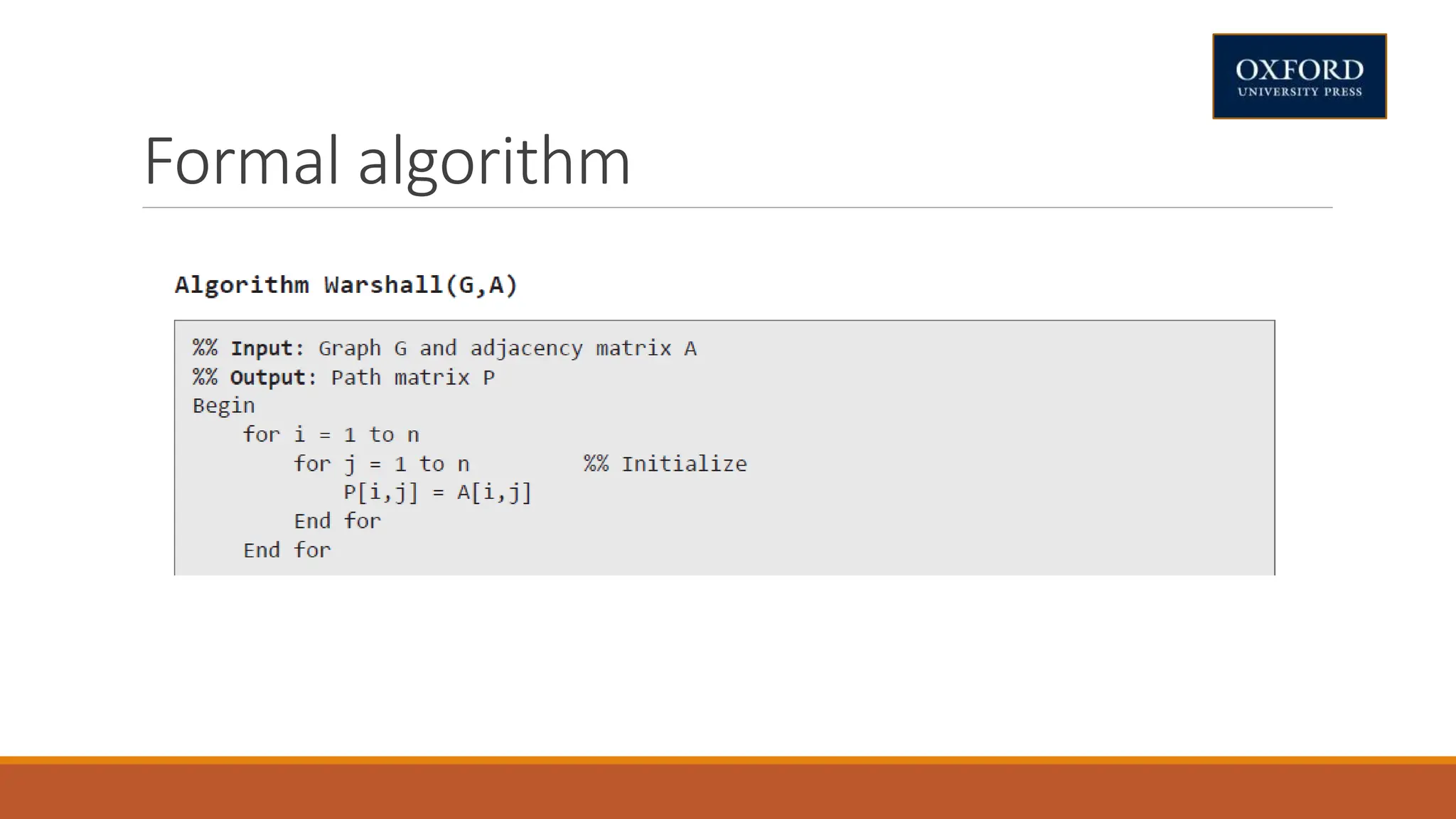
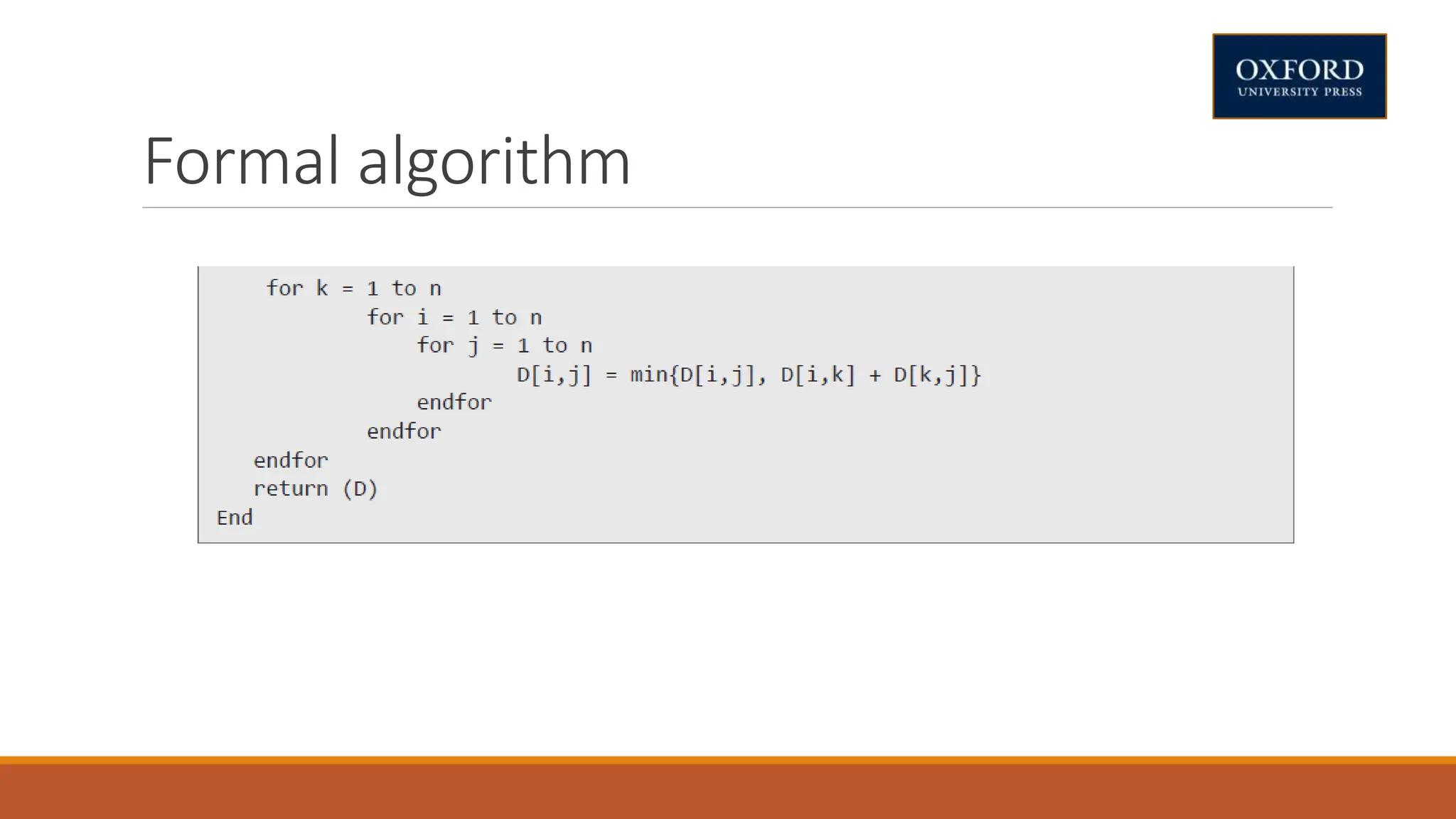
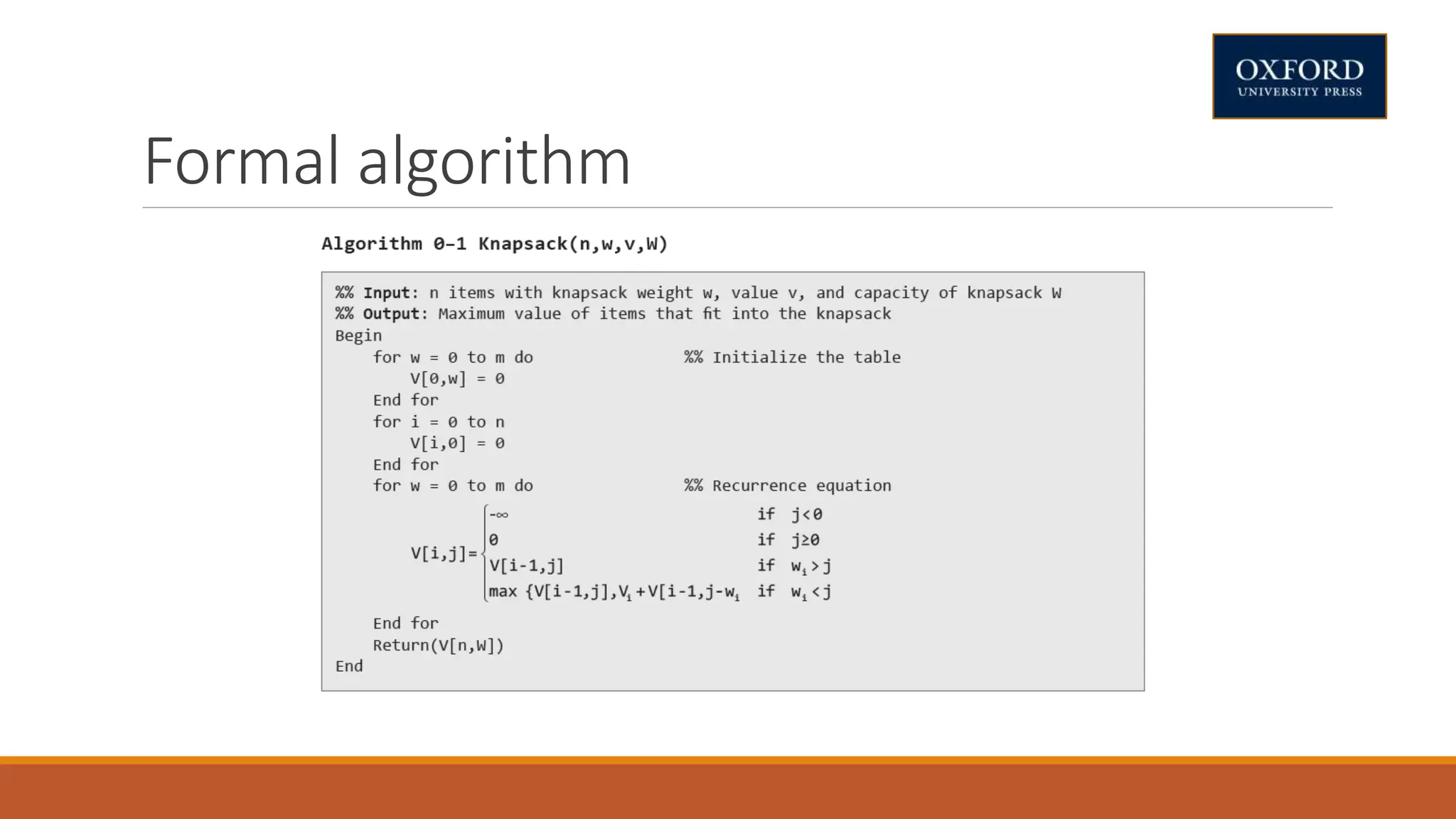
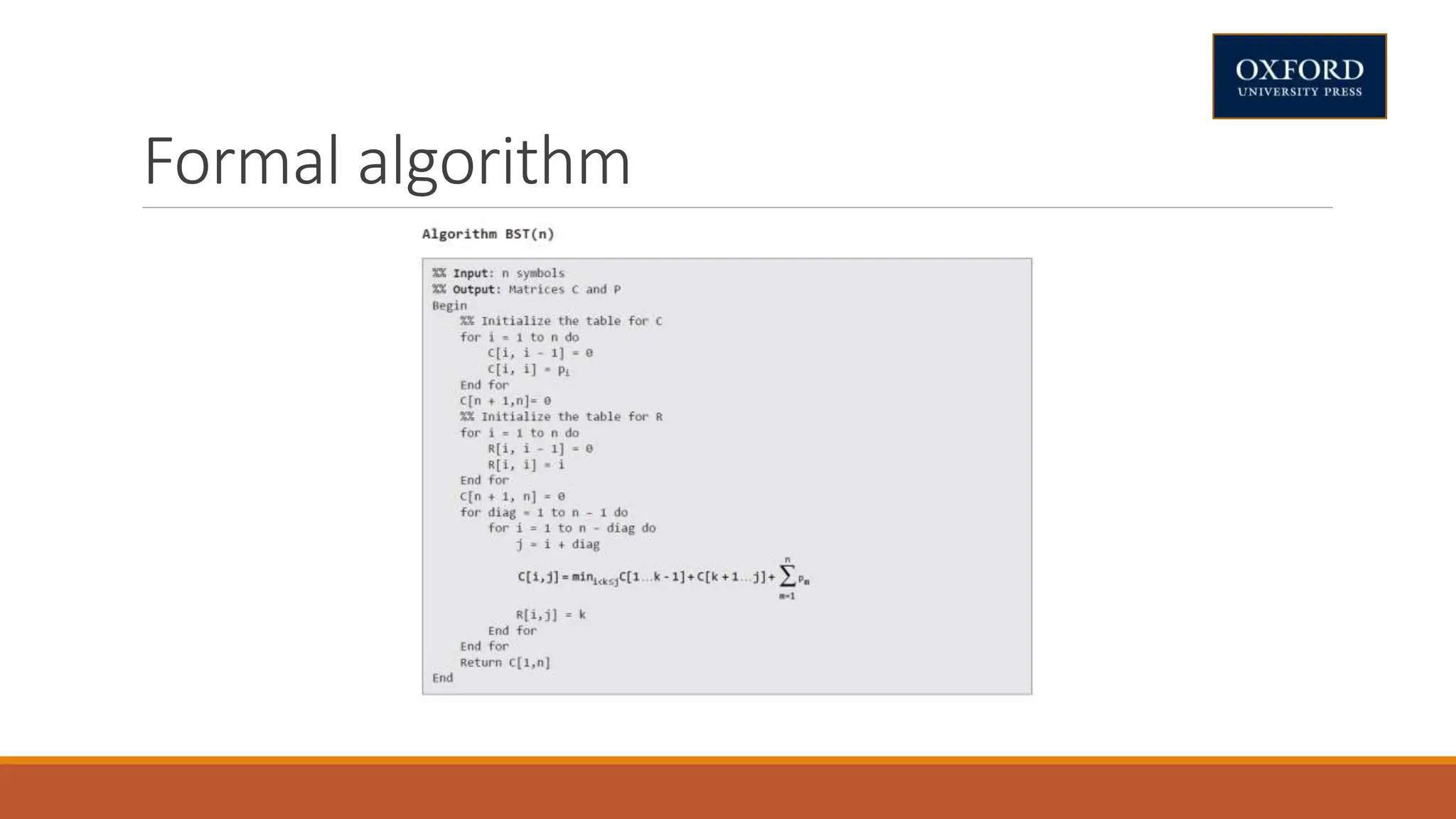
Formal algorithm
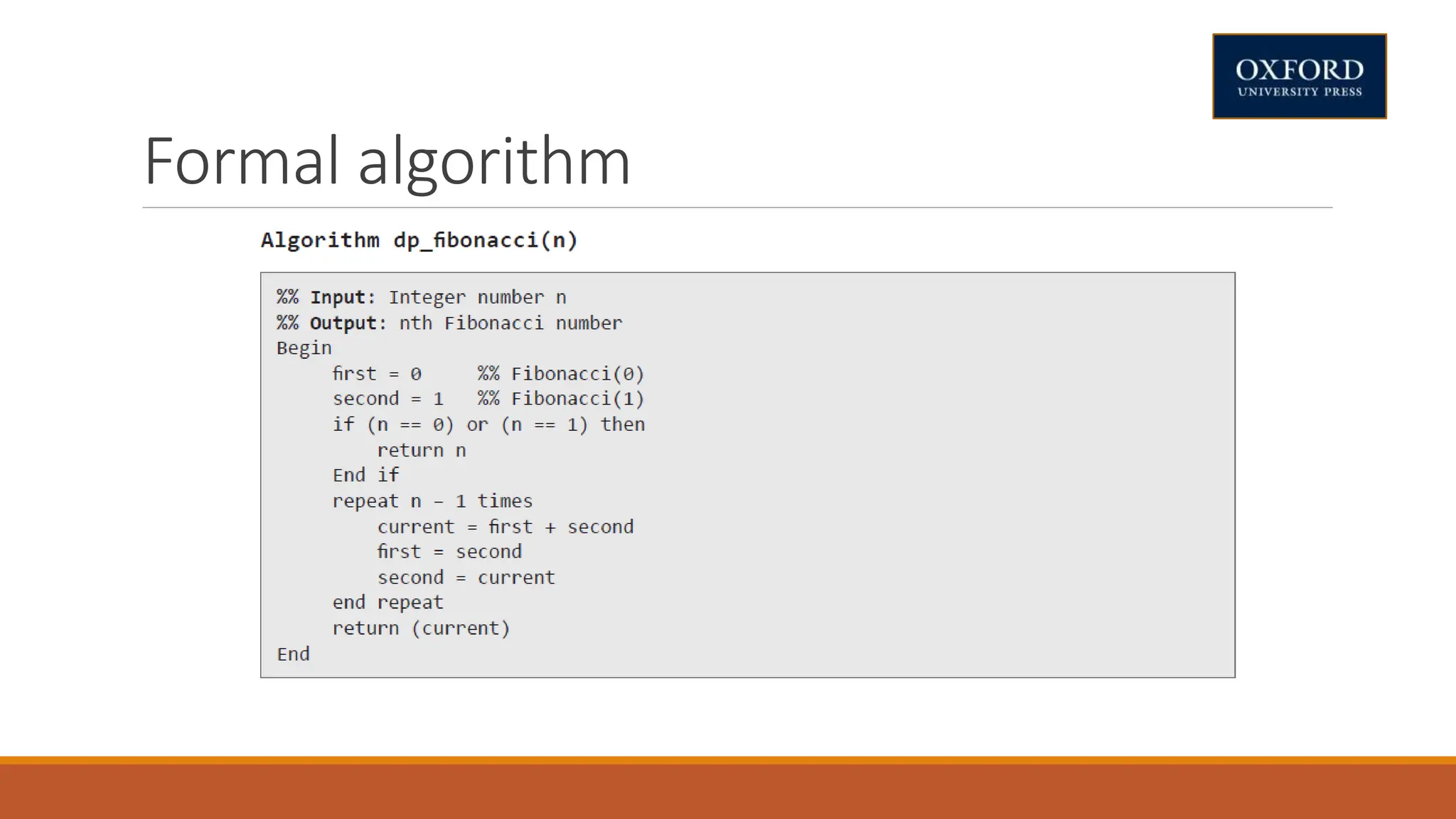
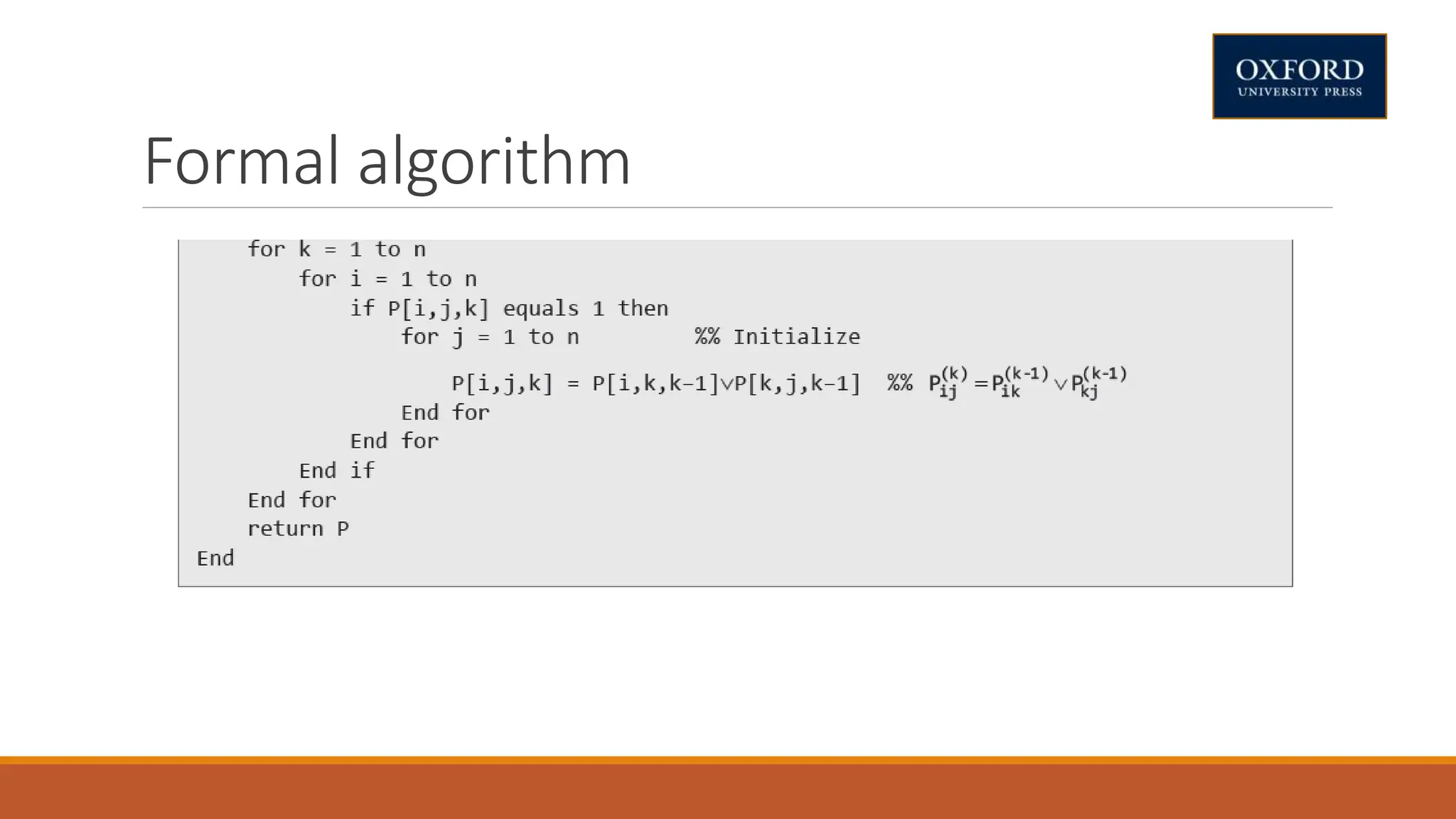
Formal algorithm
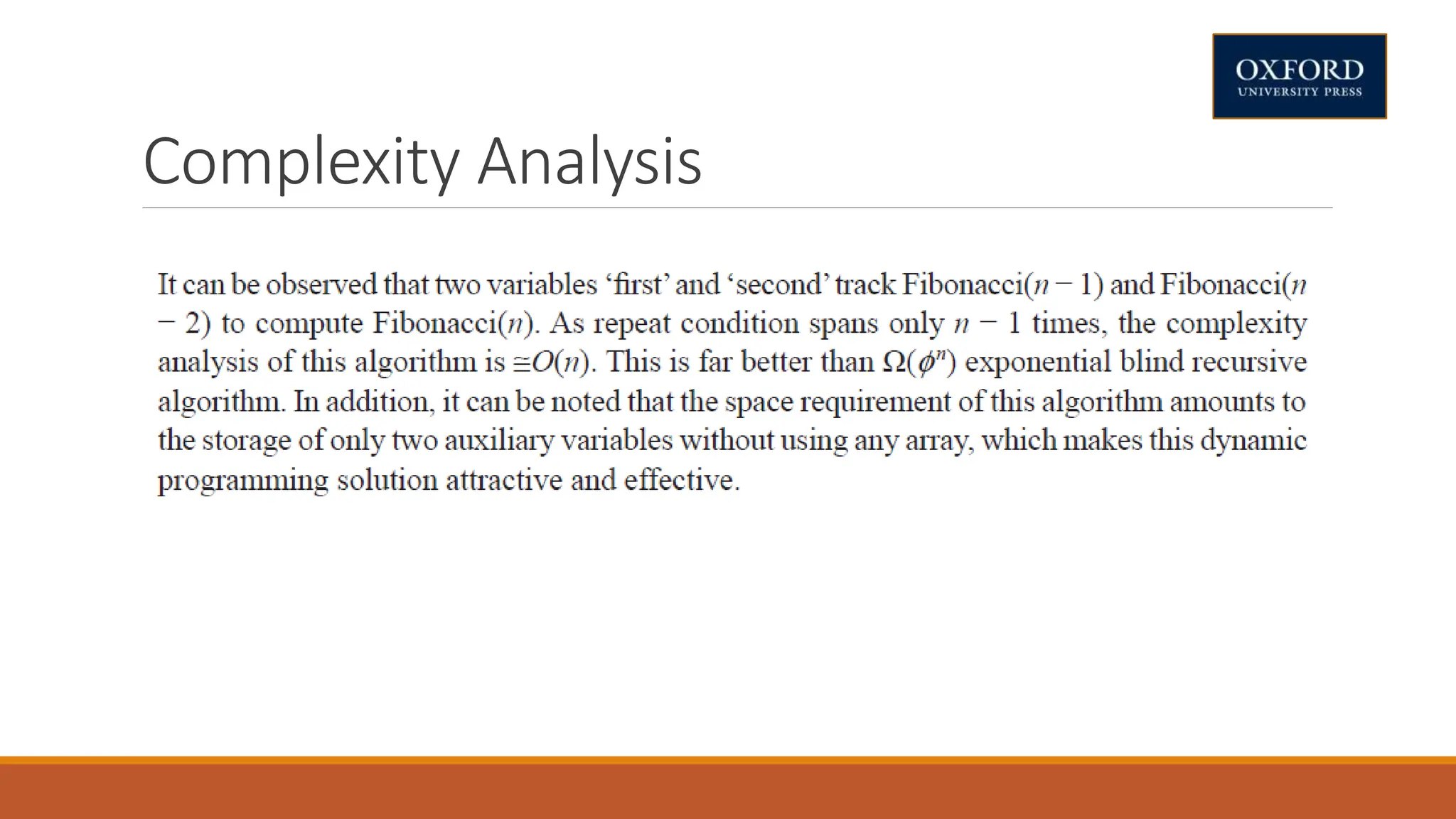
Complexity Analysis
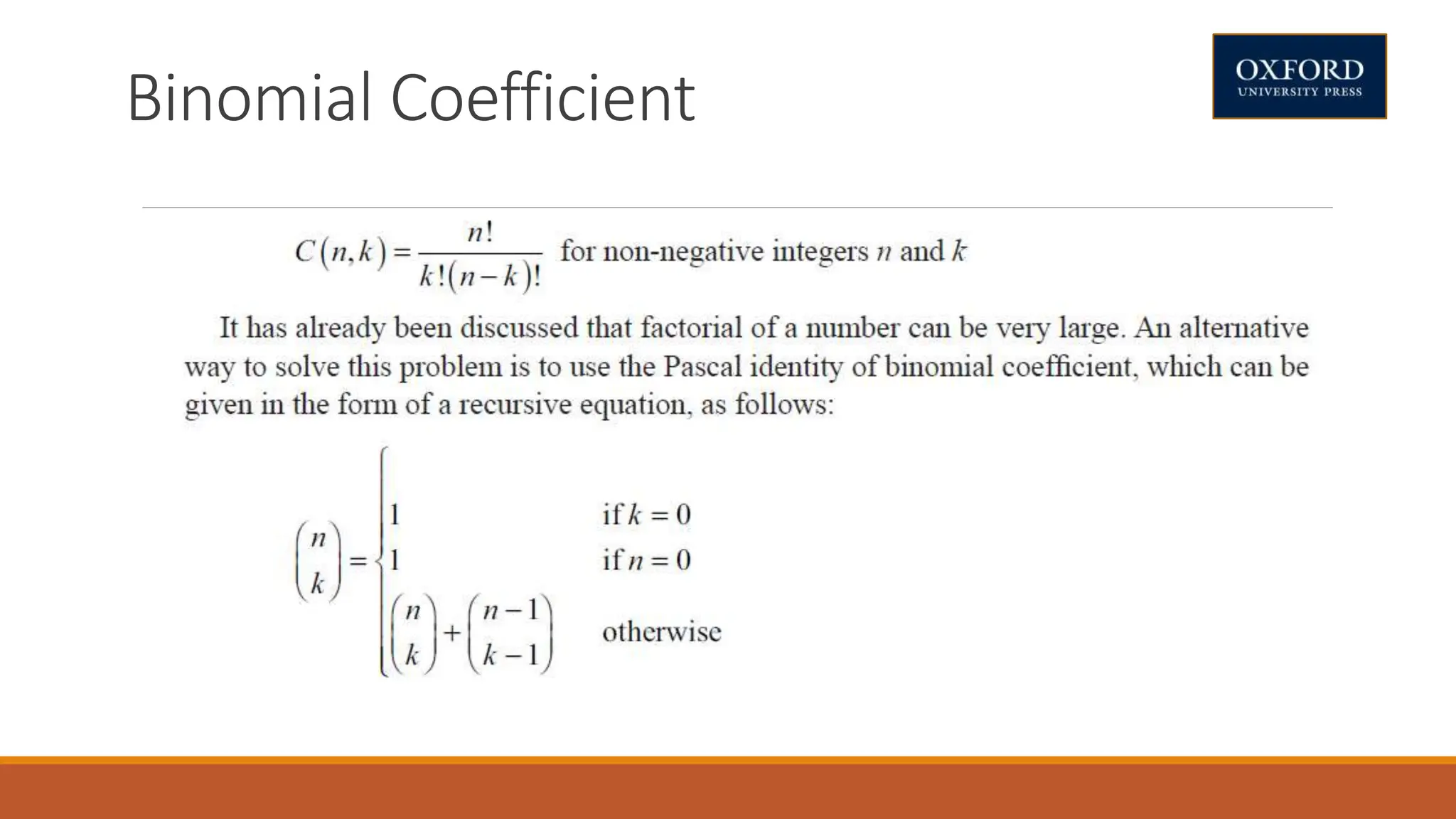
Binomial Coefficient
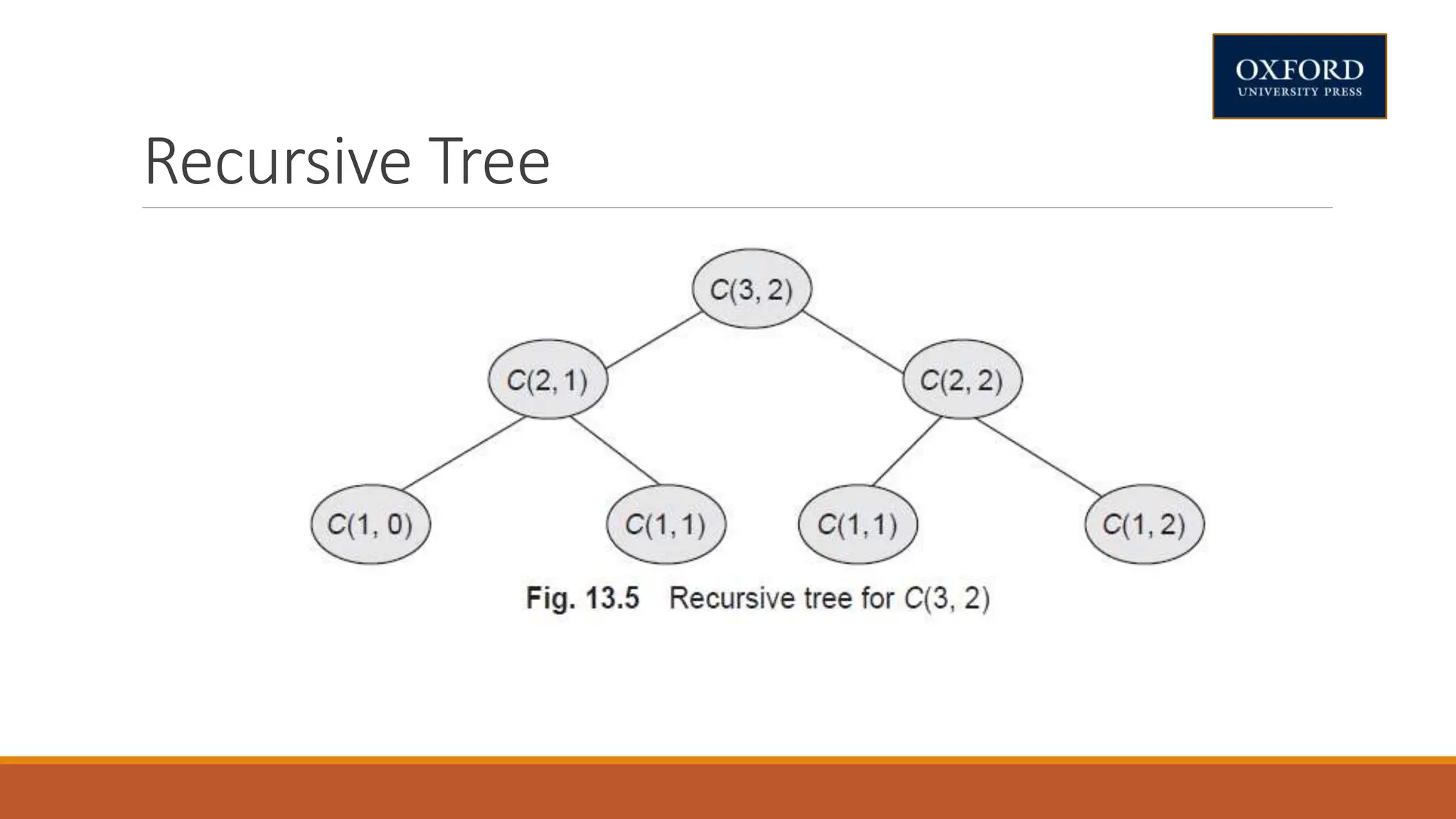
Recursive Tree
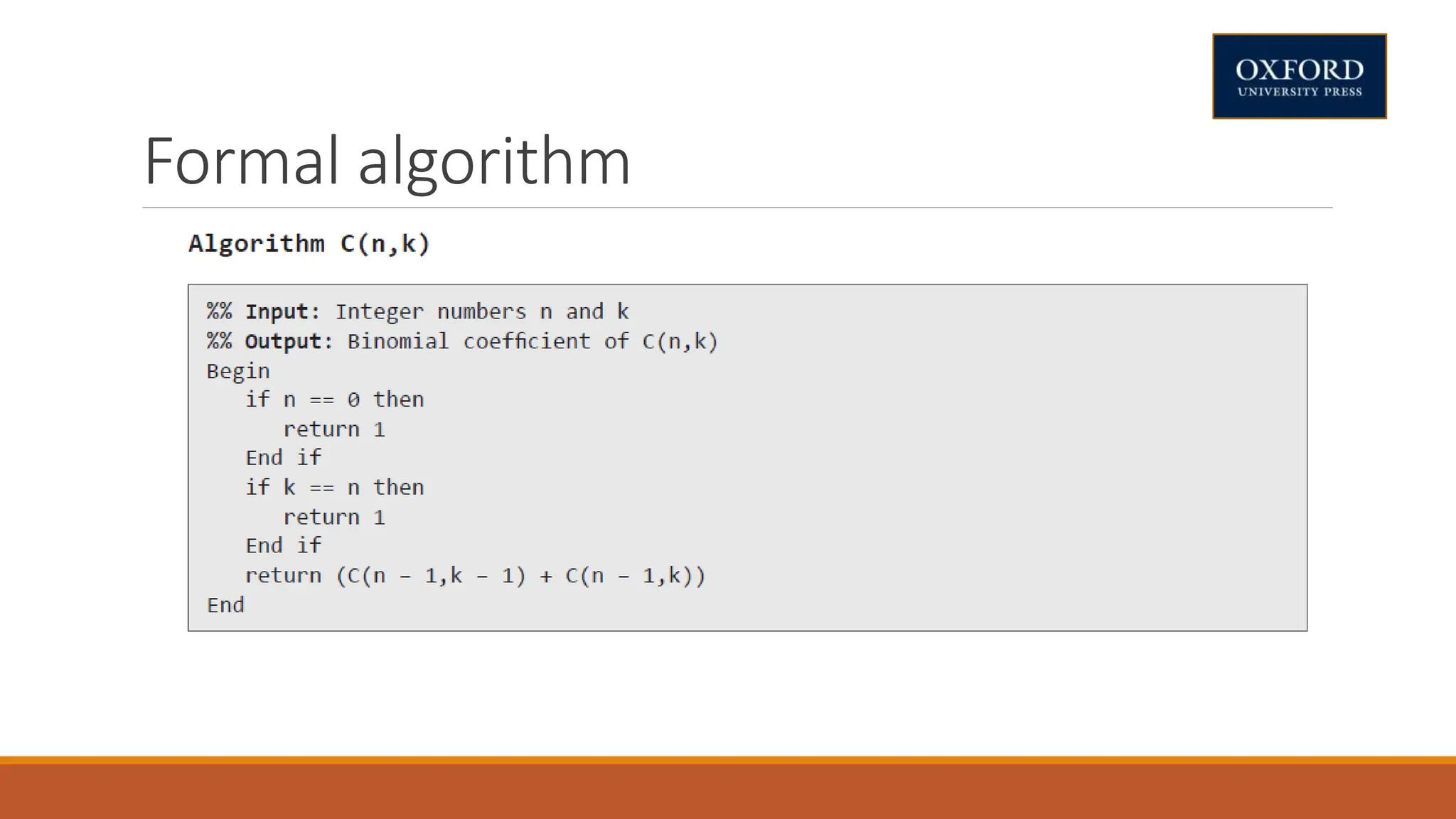
Formal algorithm
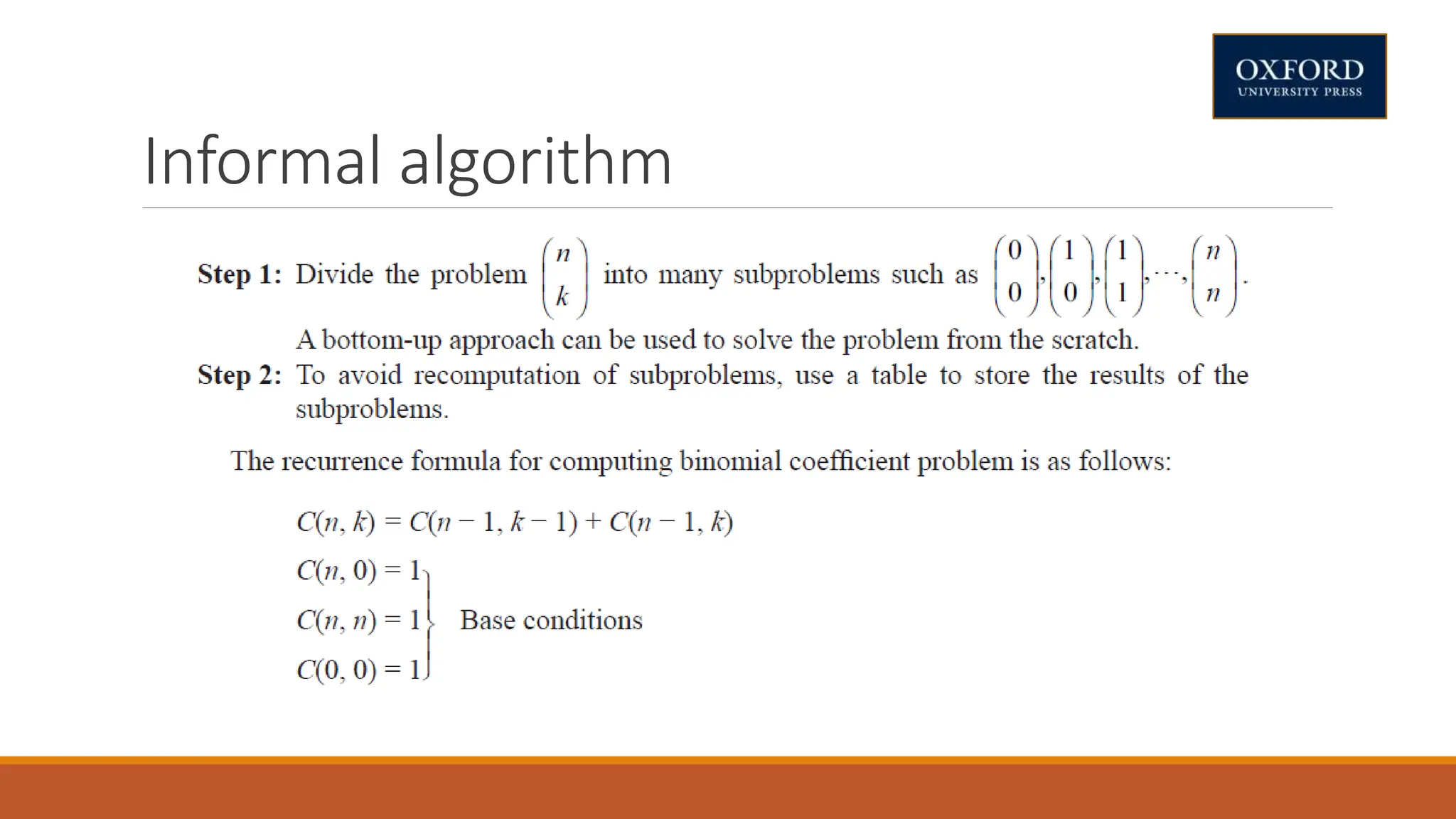
Informal algorithm
Table
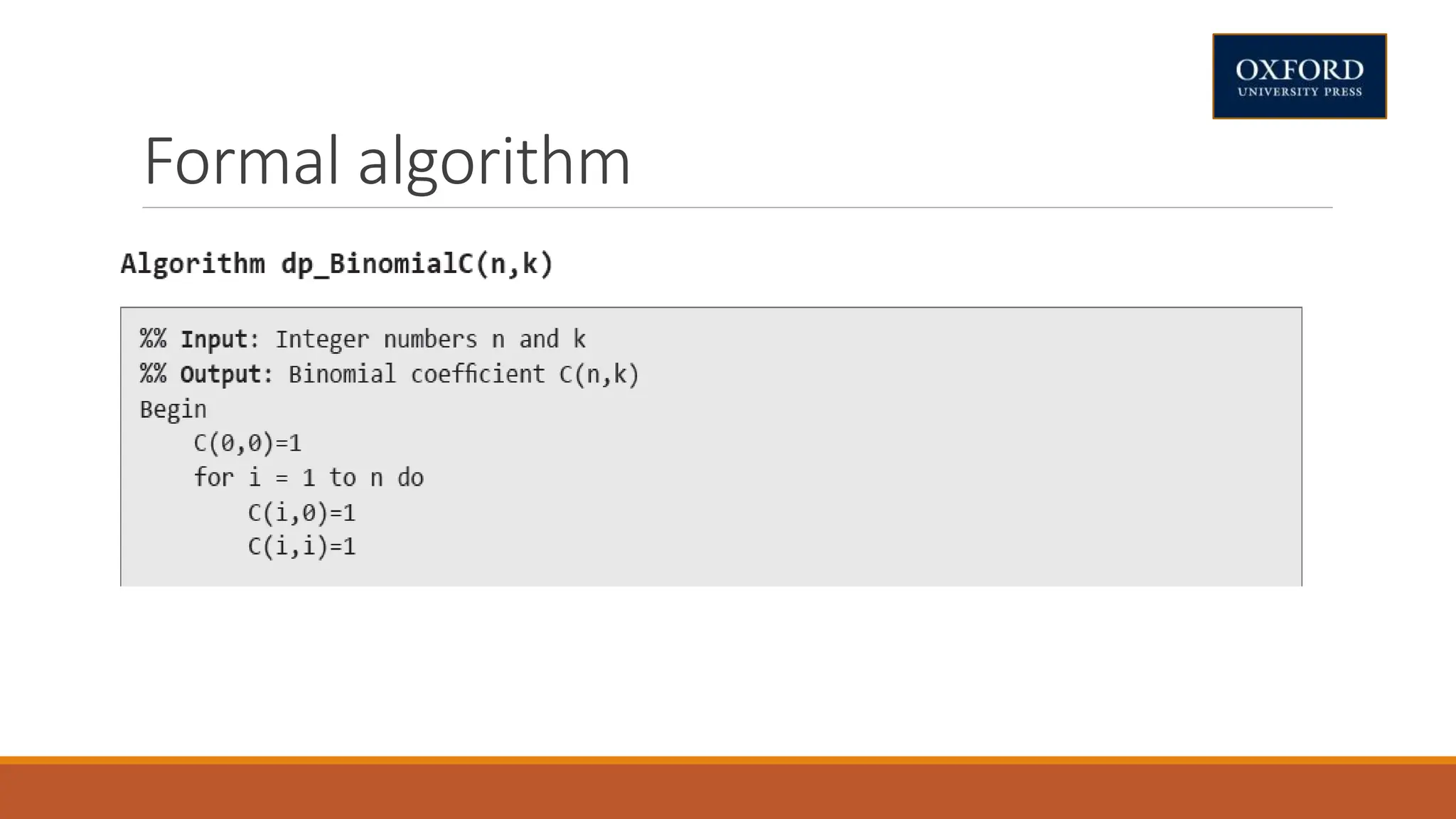
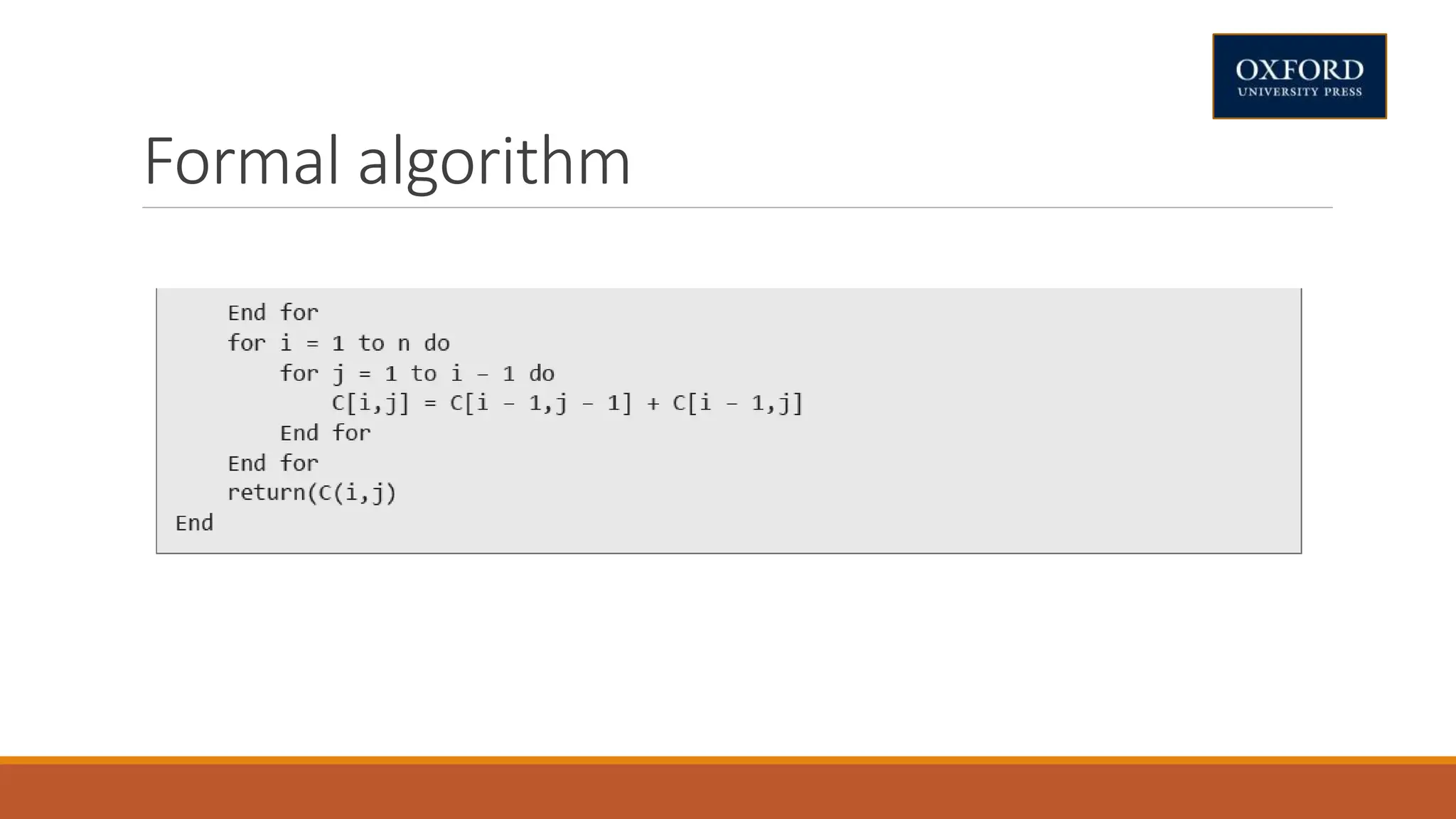
Formal algorithm
Formal algorithm
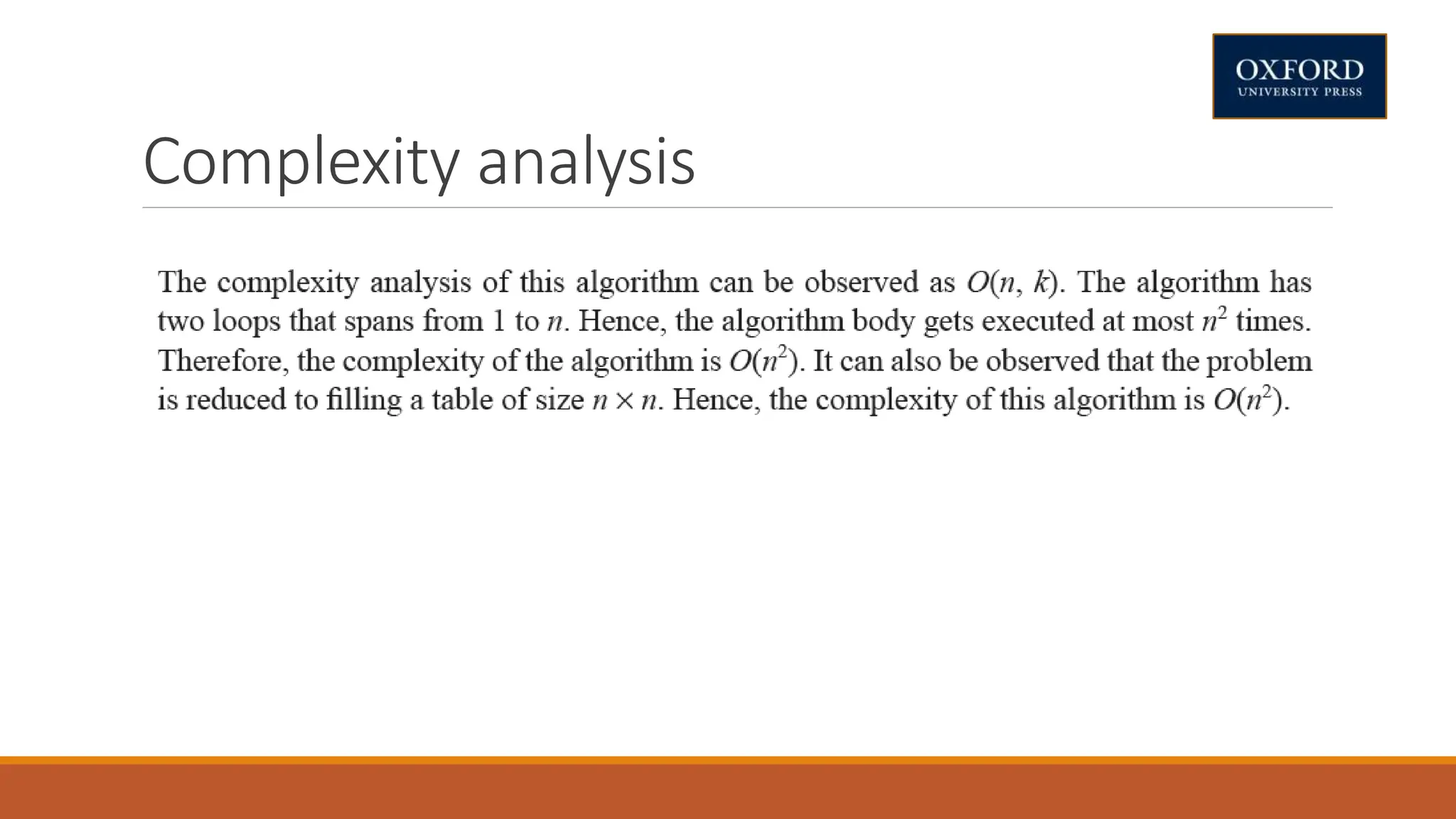
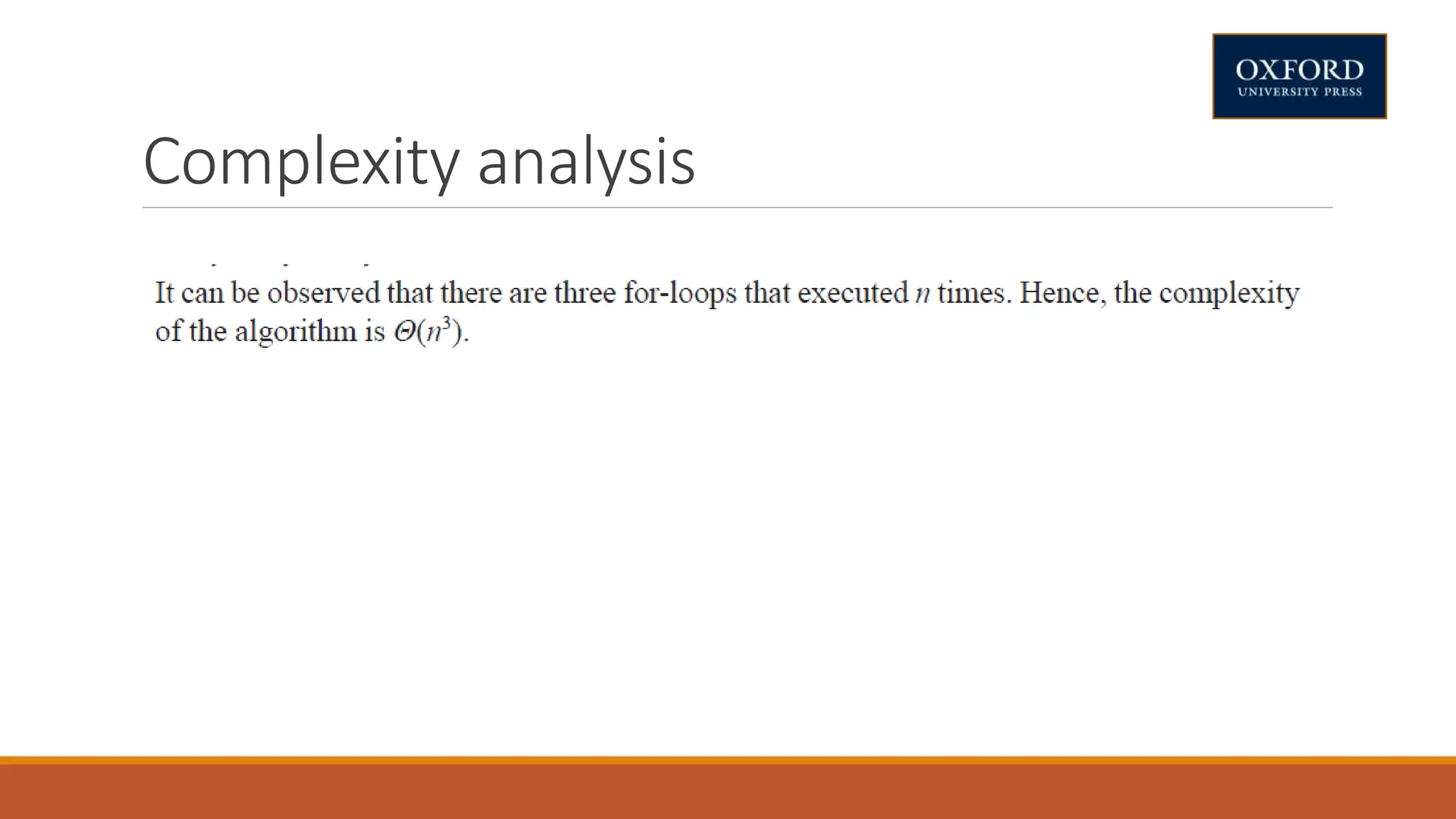
Complexity analysis
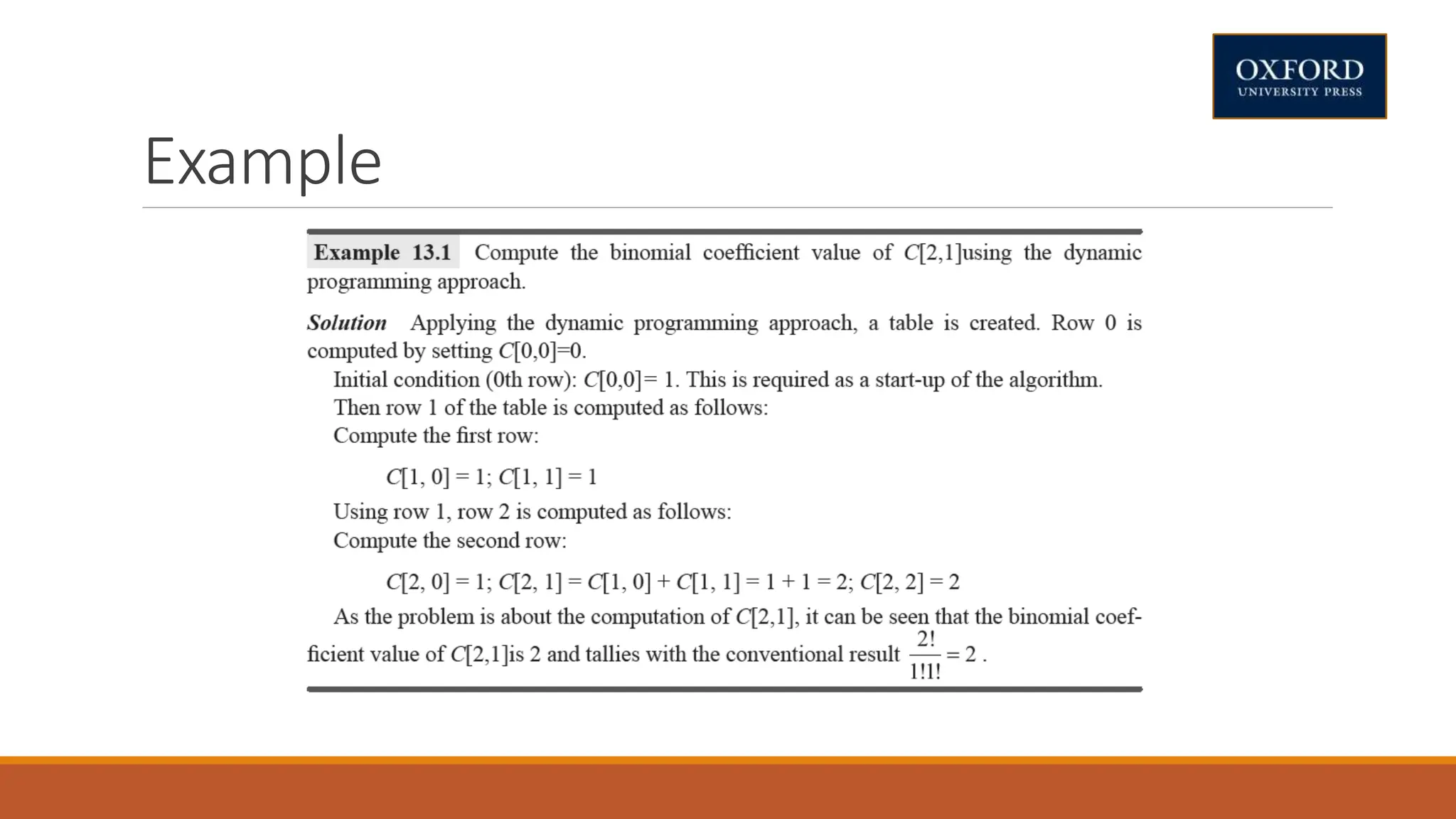
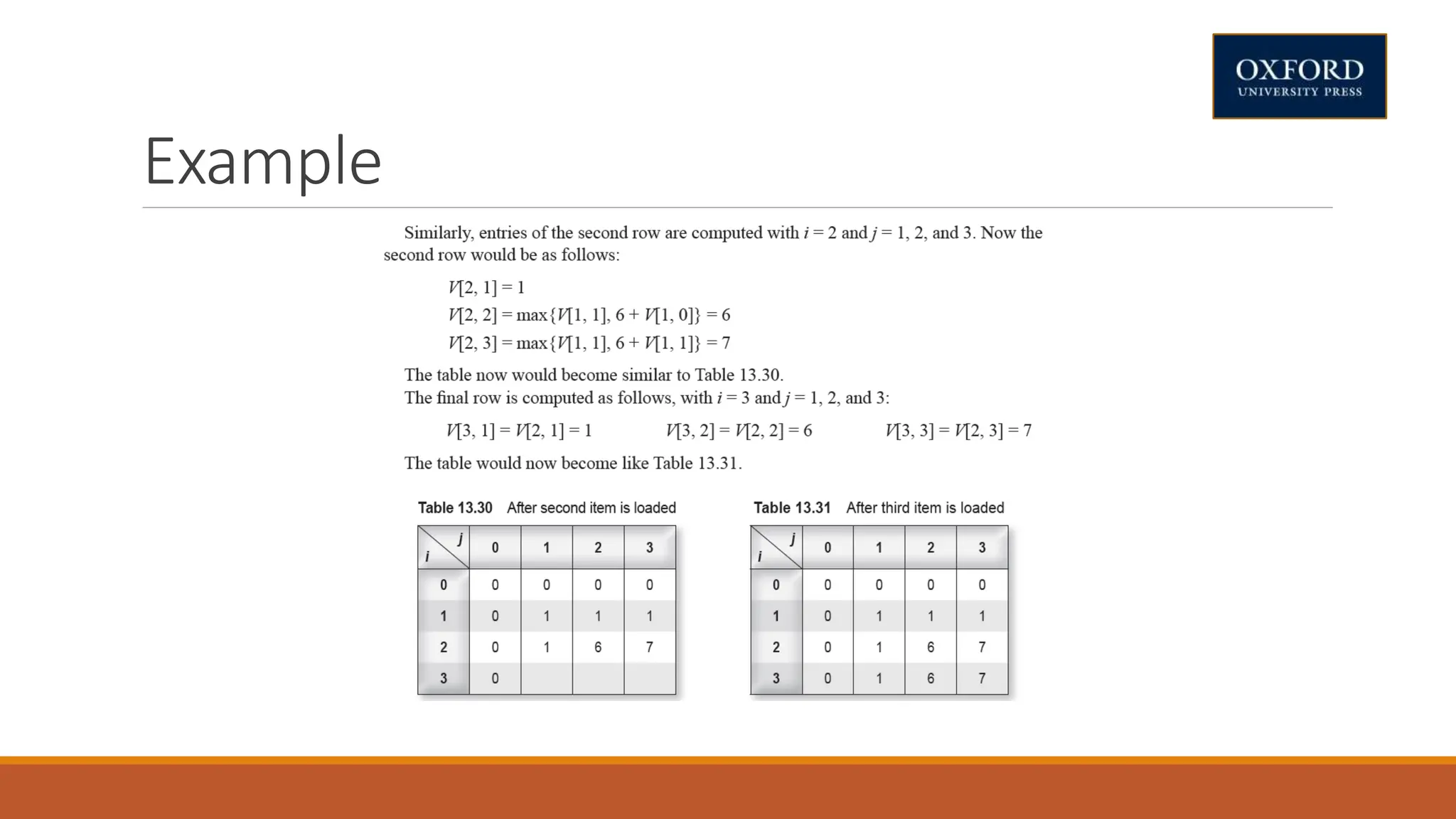
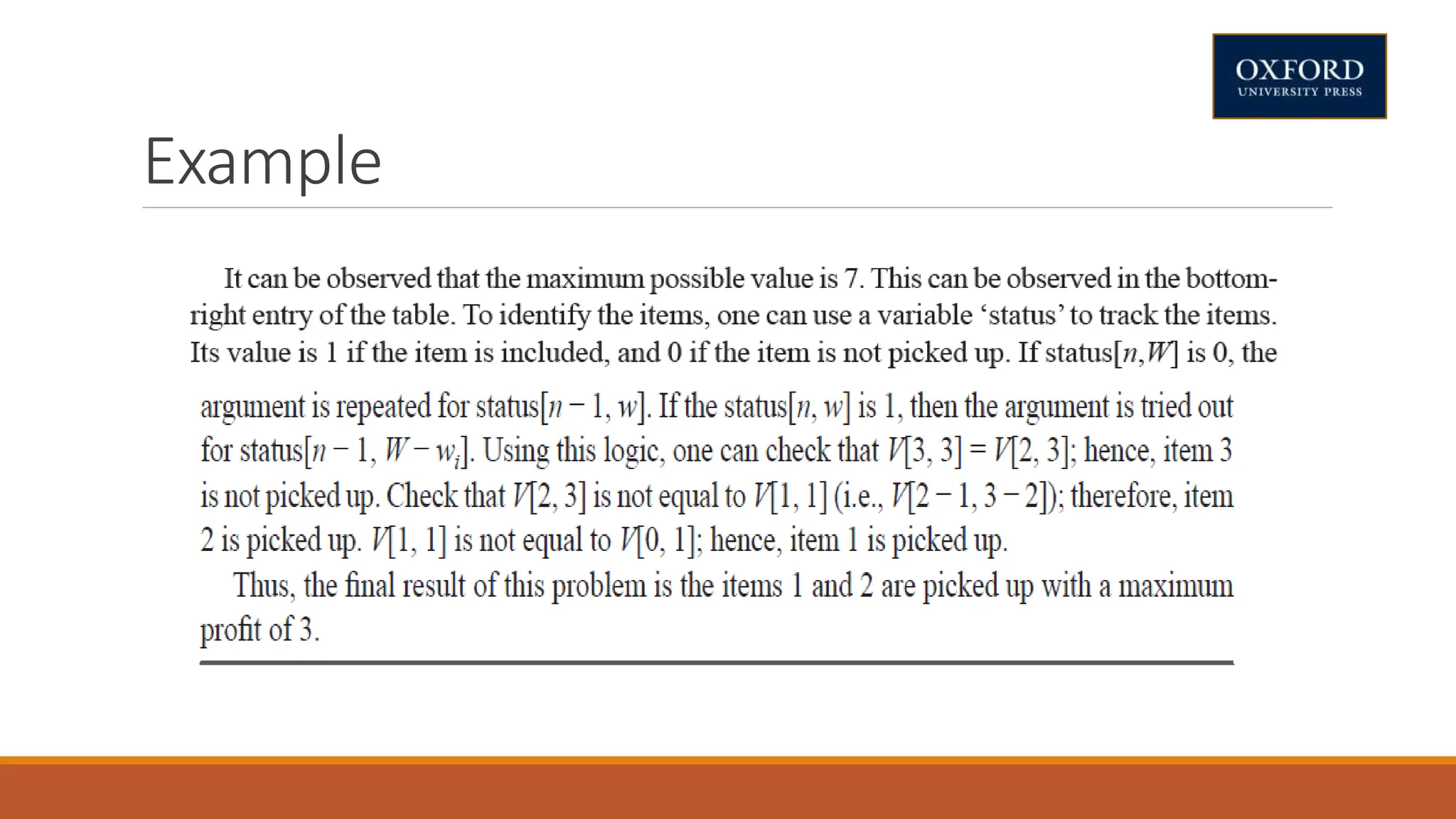
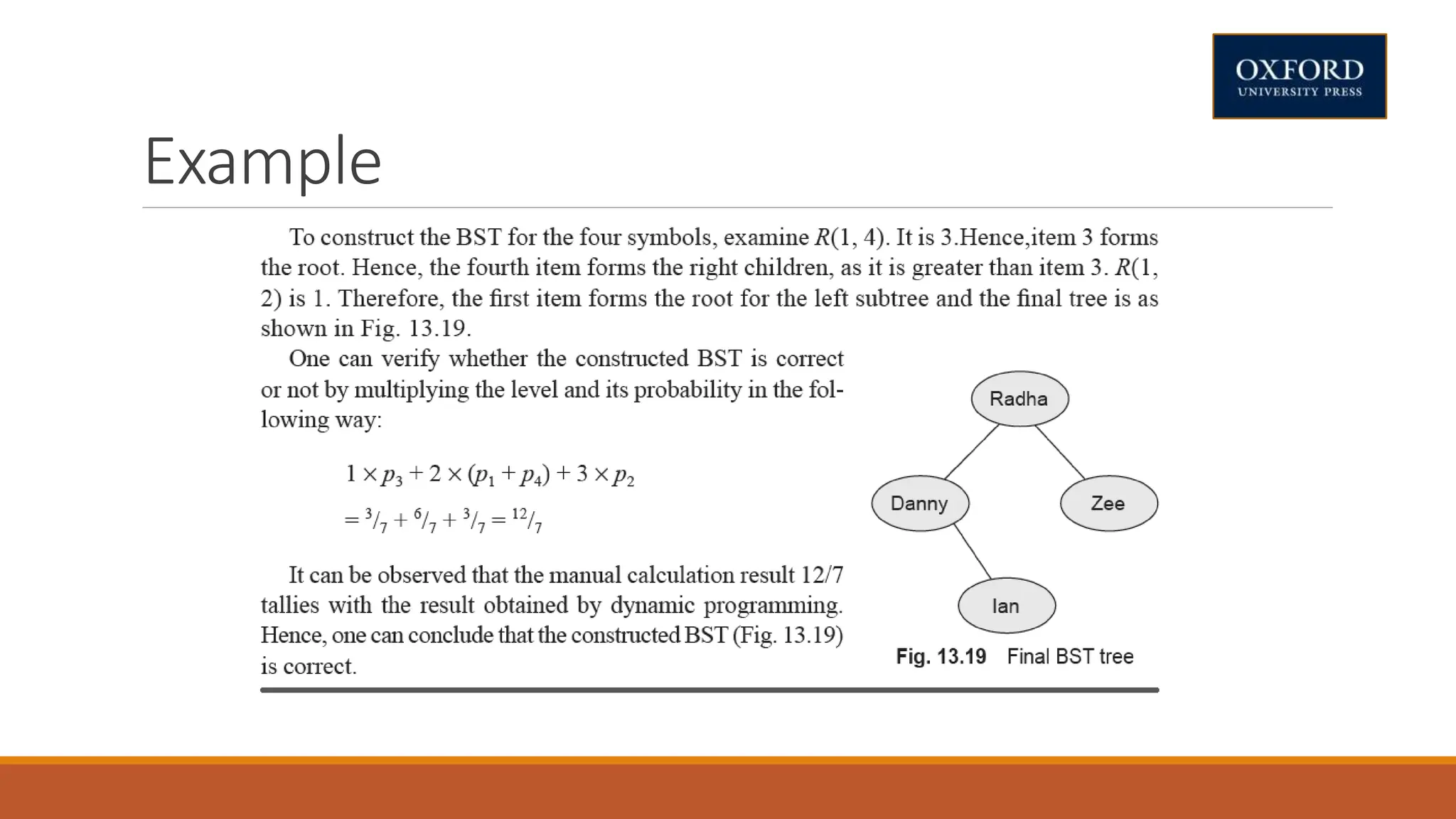
Example
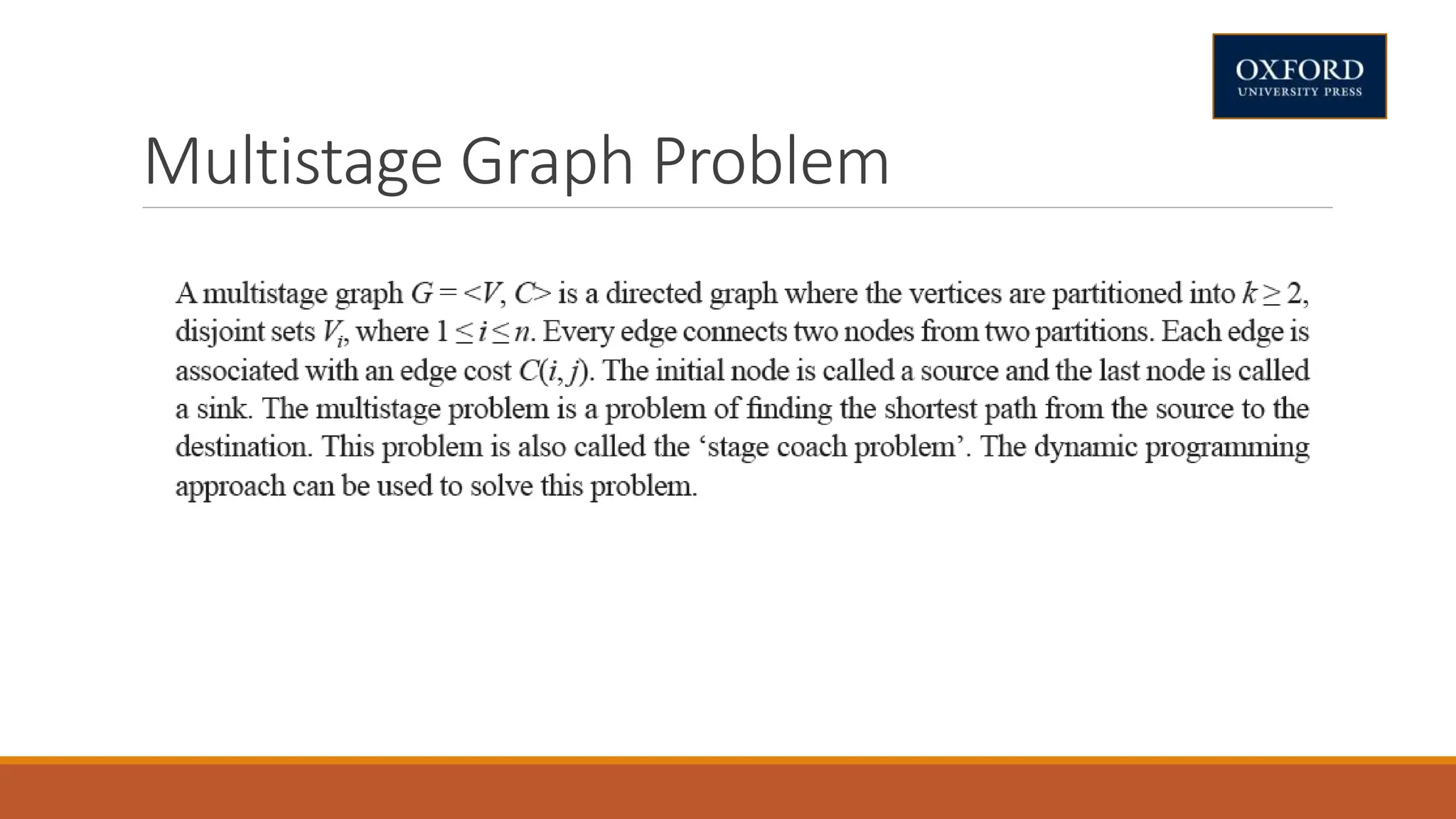
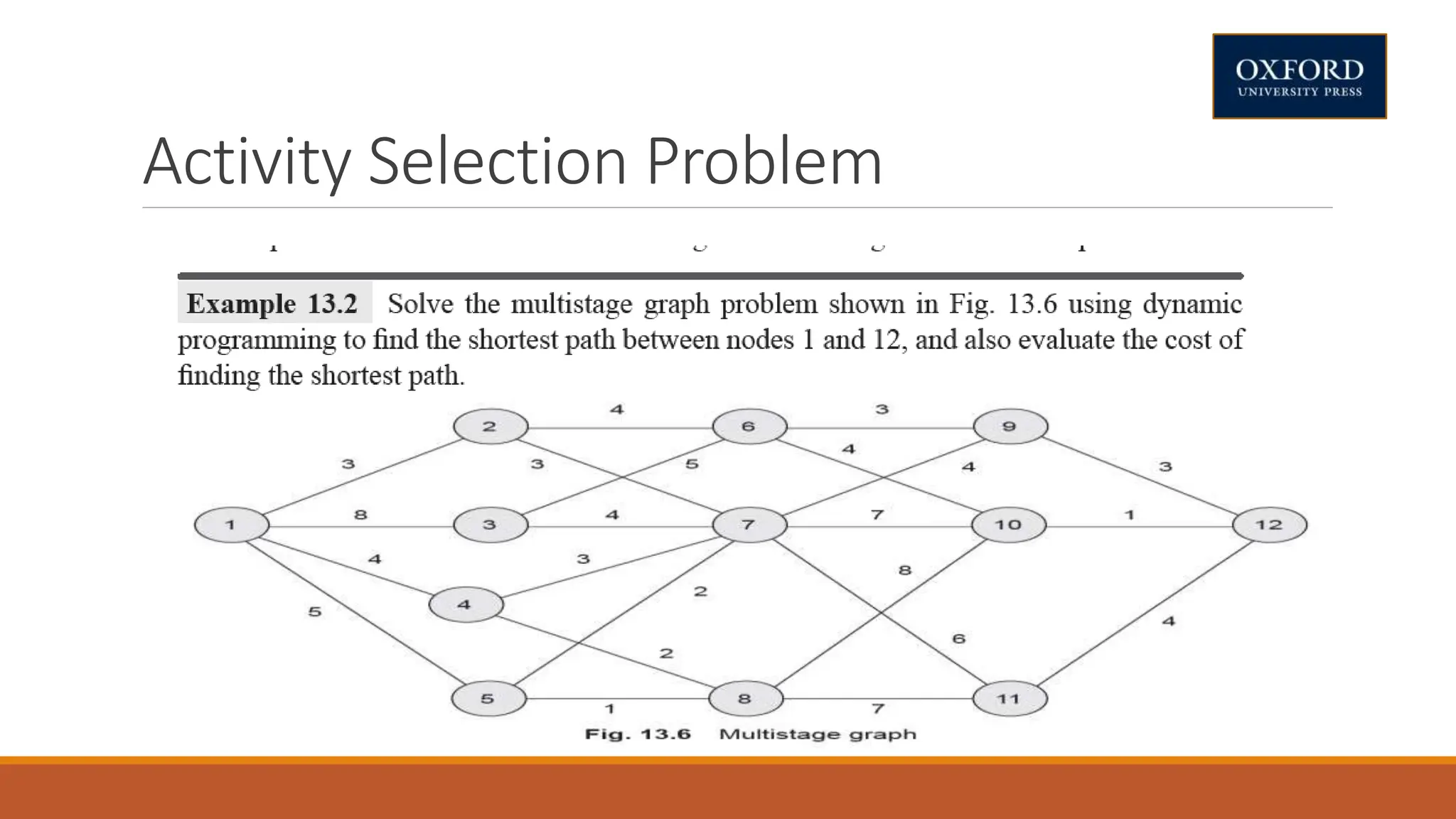
Multistage Graph Problem
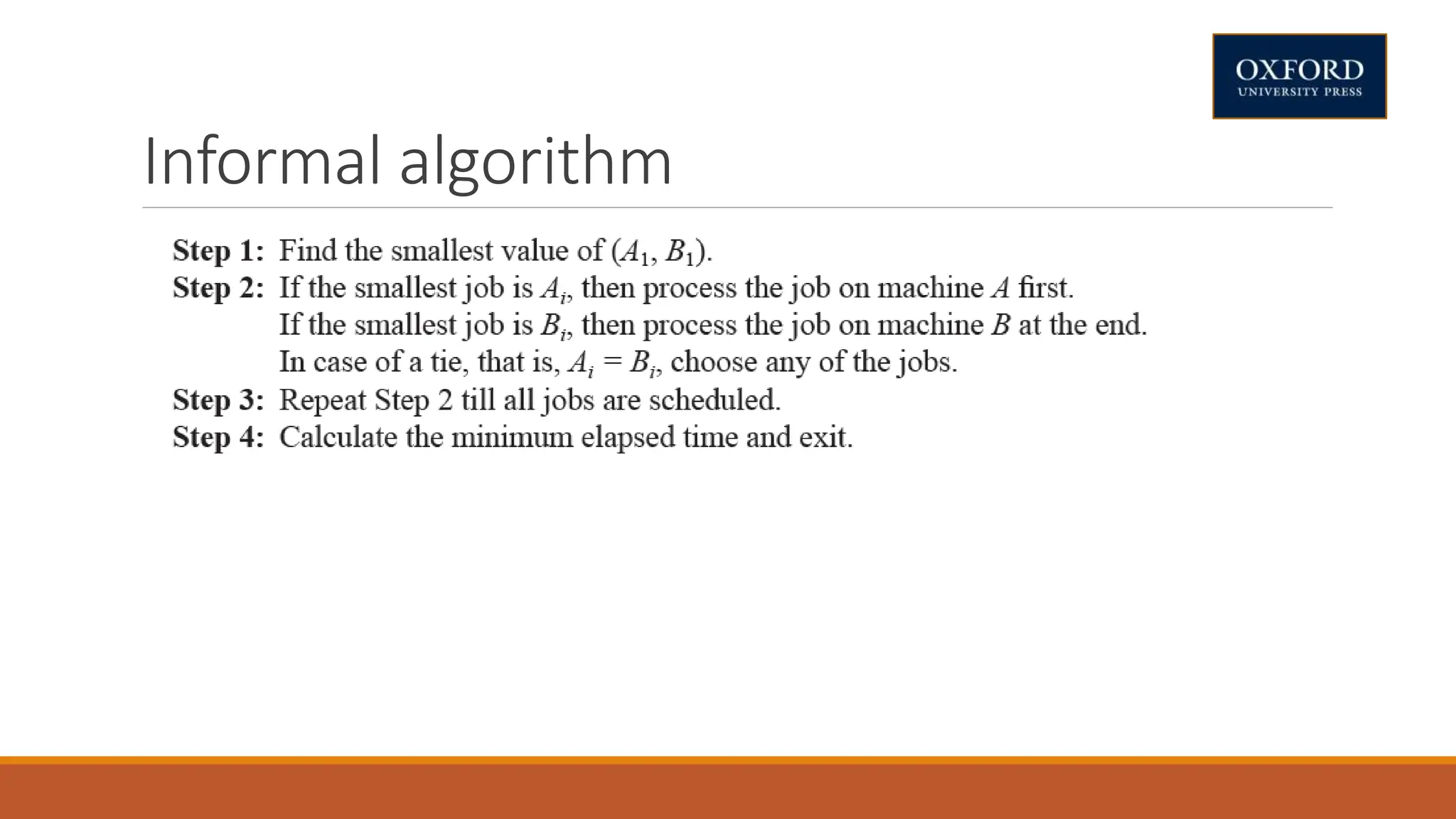
Informal algorithm
Activity Selection Problem
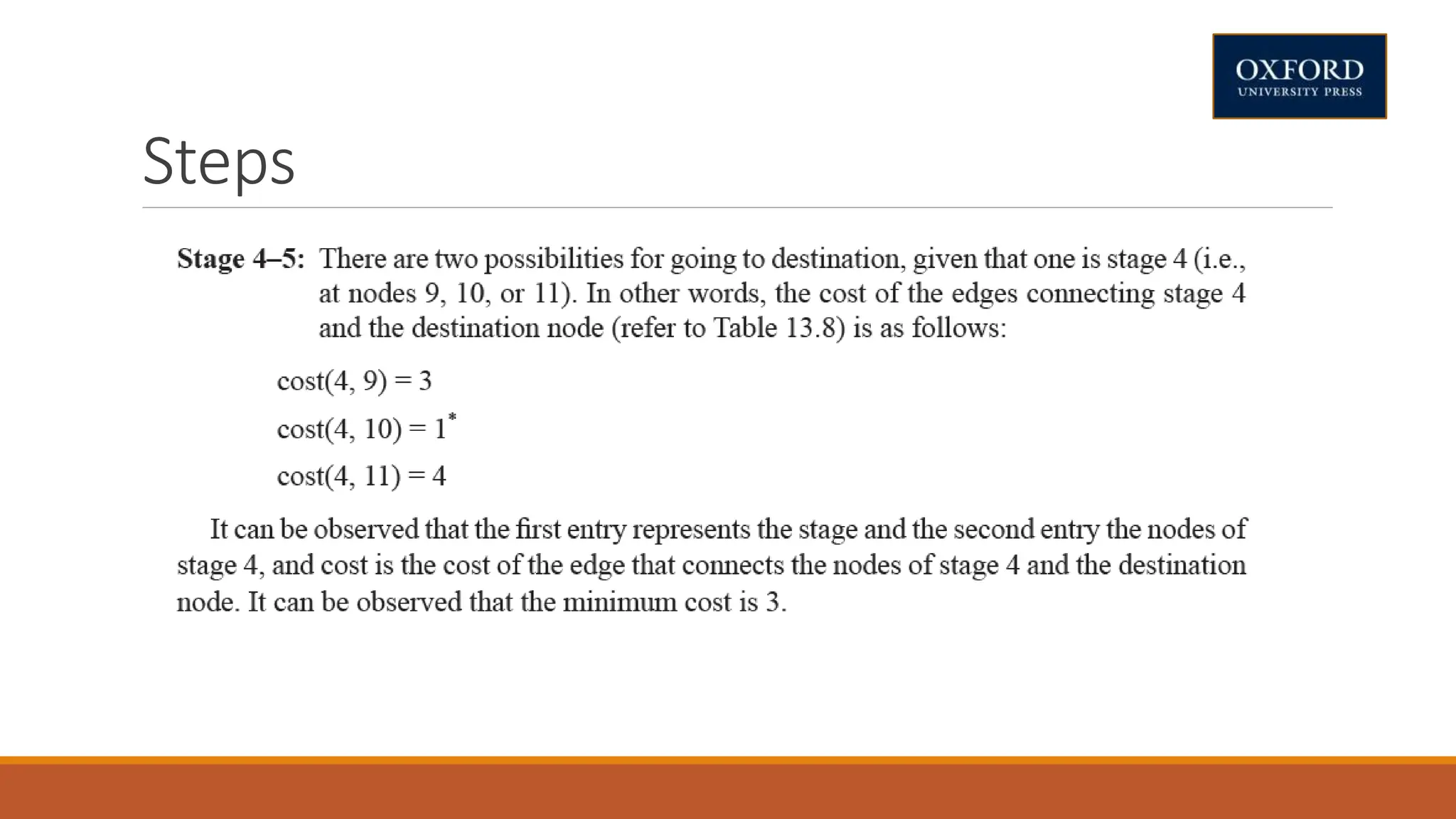
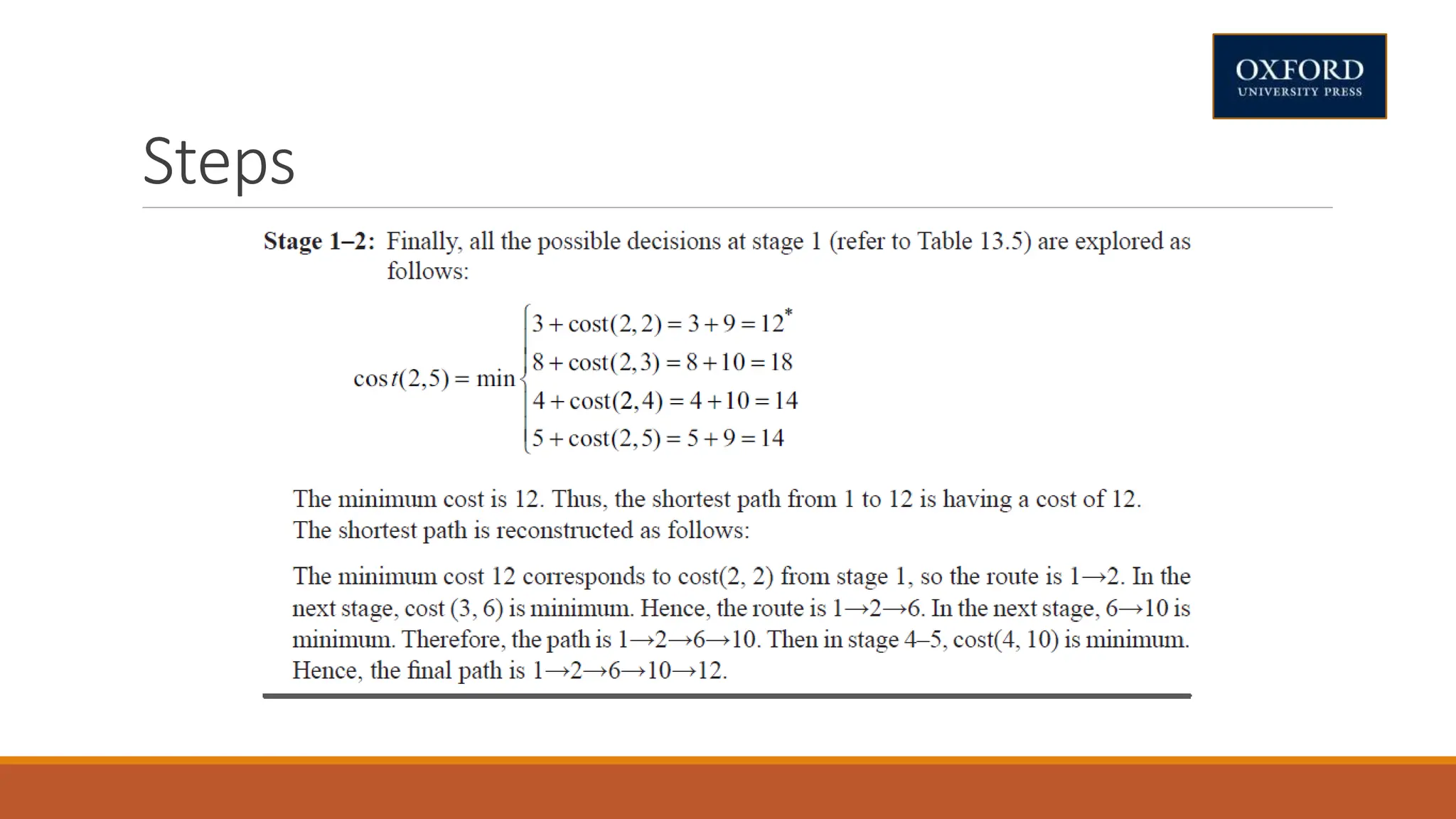
Steps
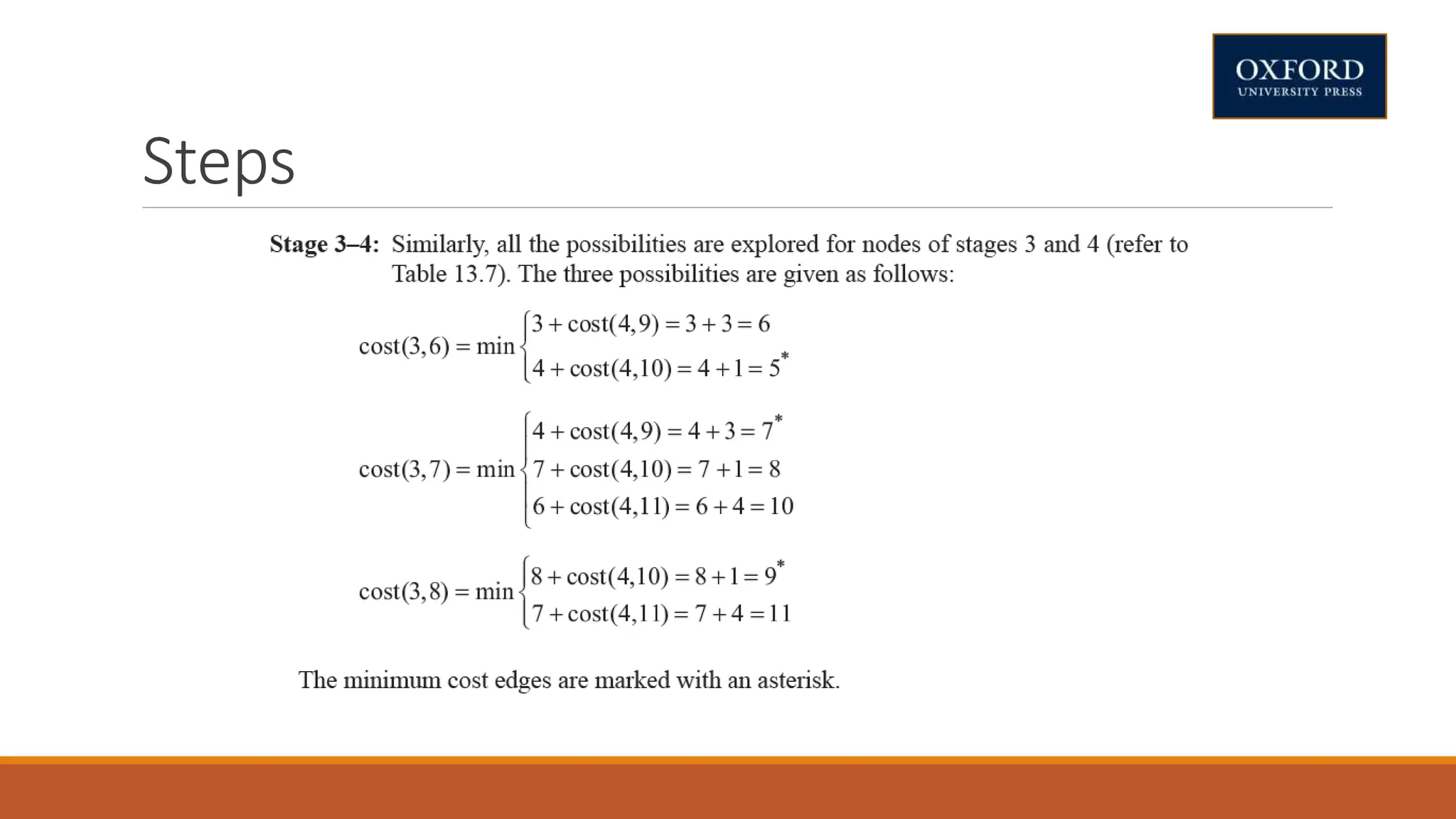
Steps
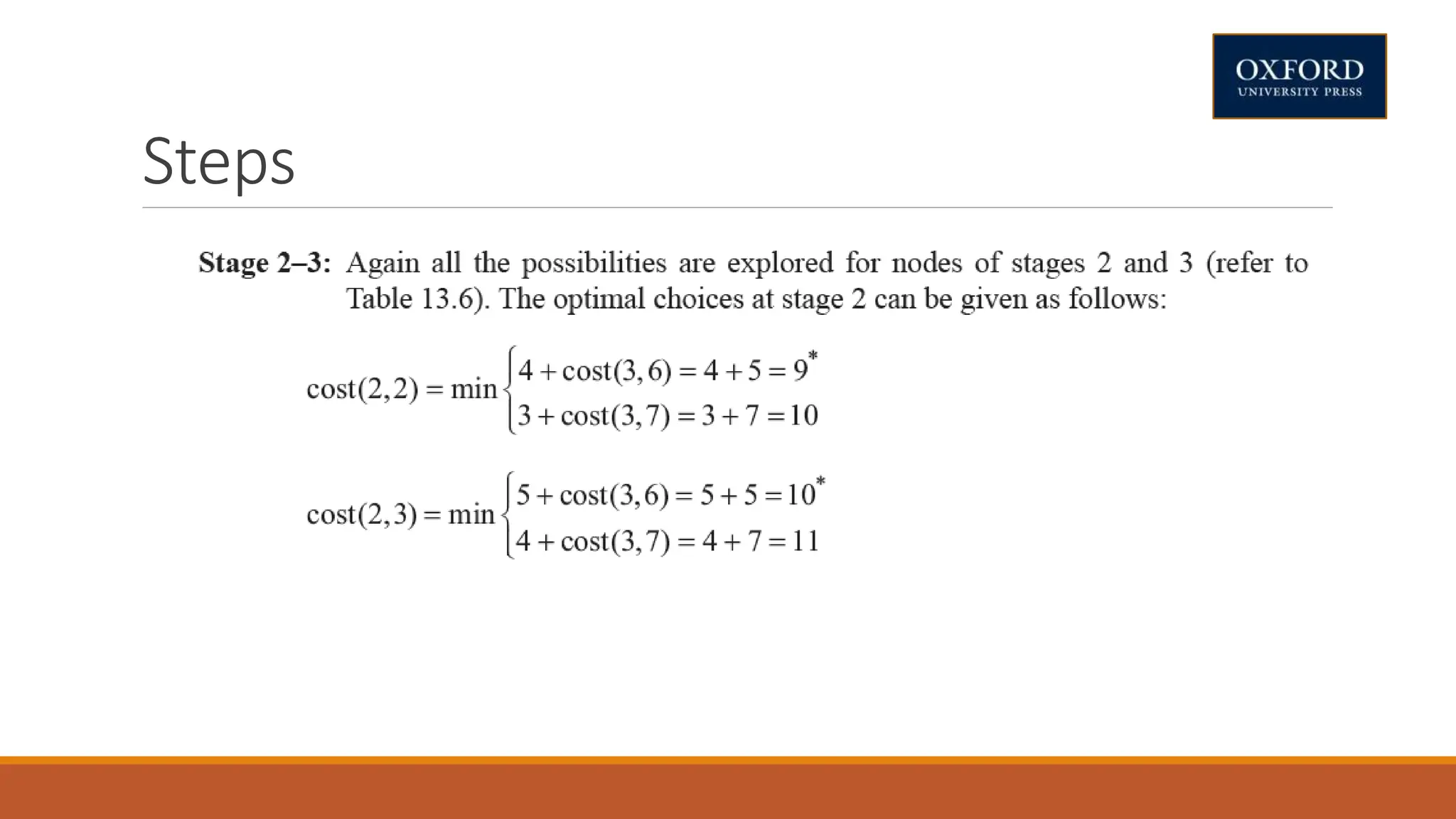
Steps
Steps
Steps
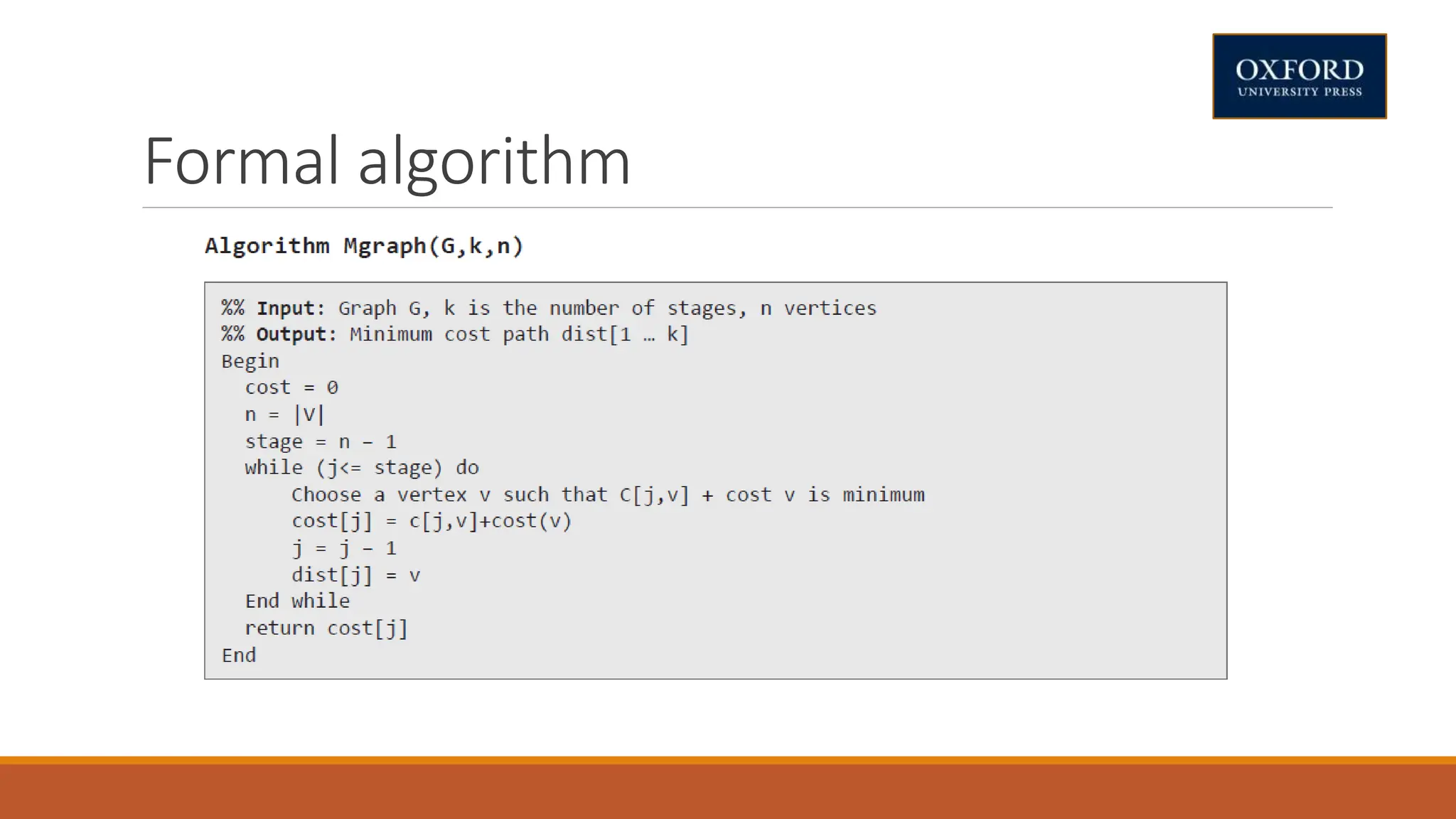
Formal algorithm
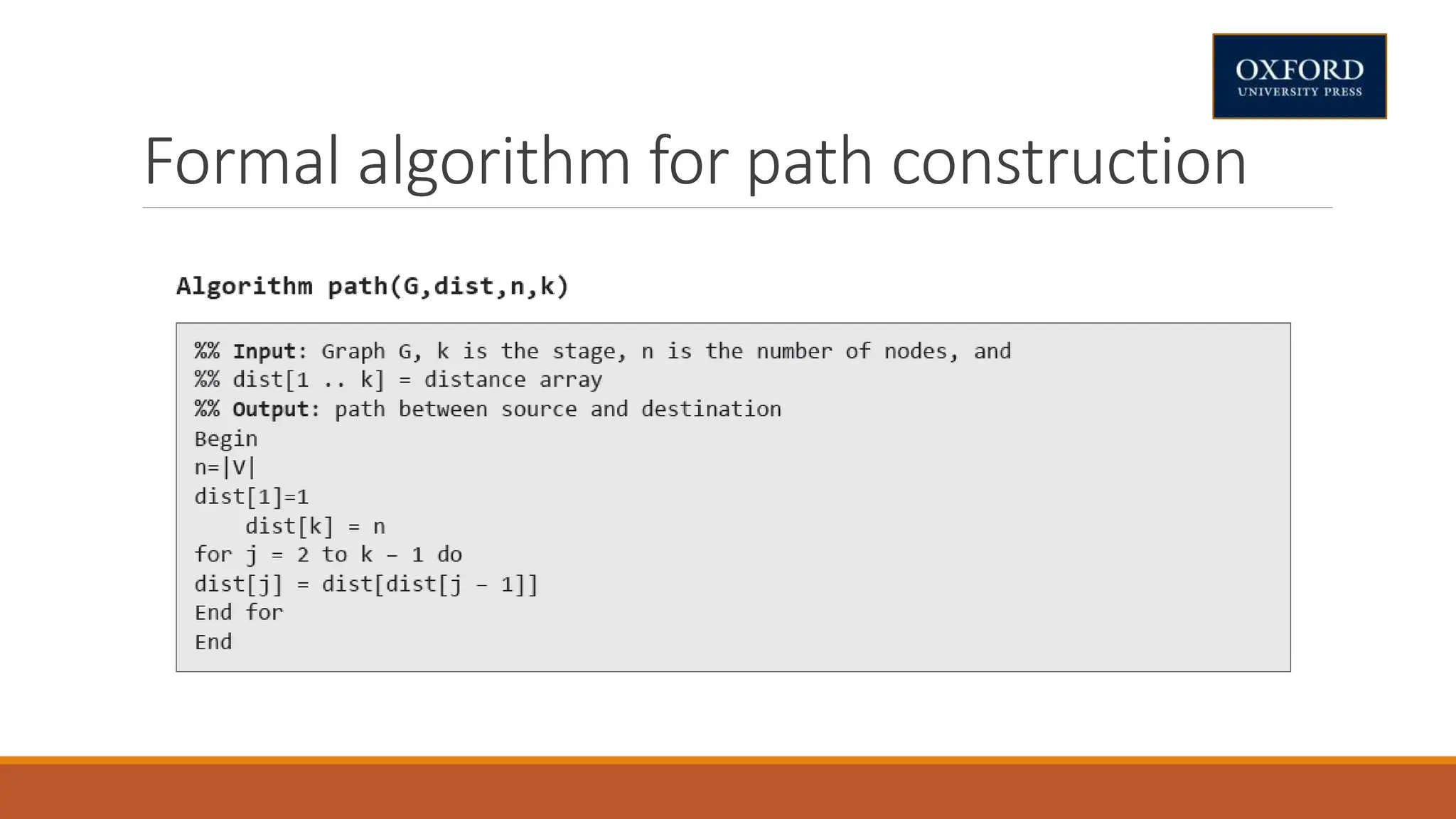
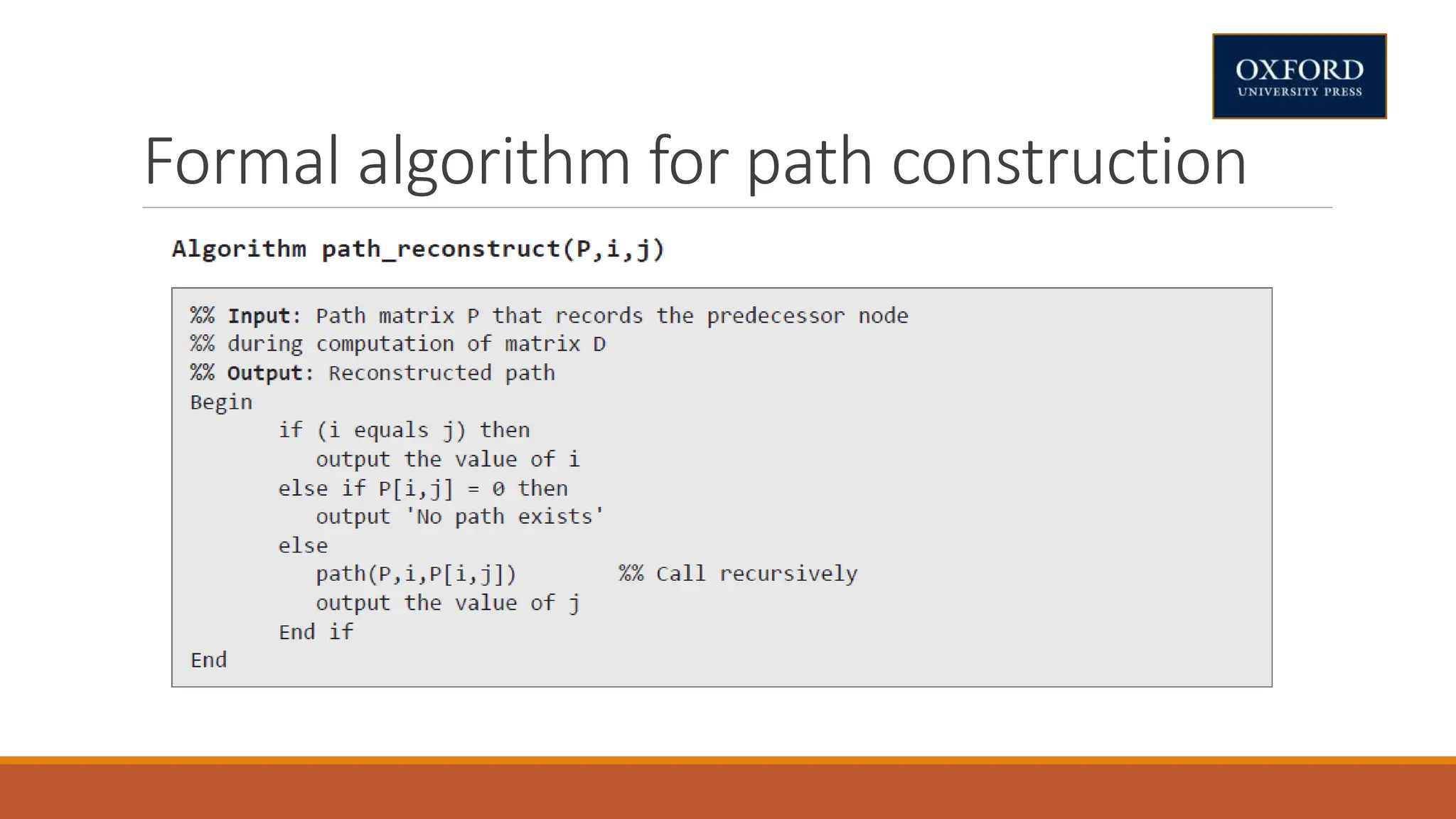
Formal algorithm for path construction
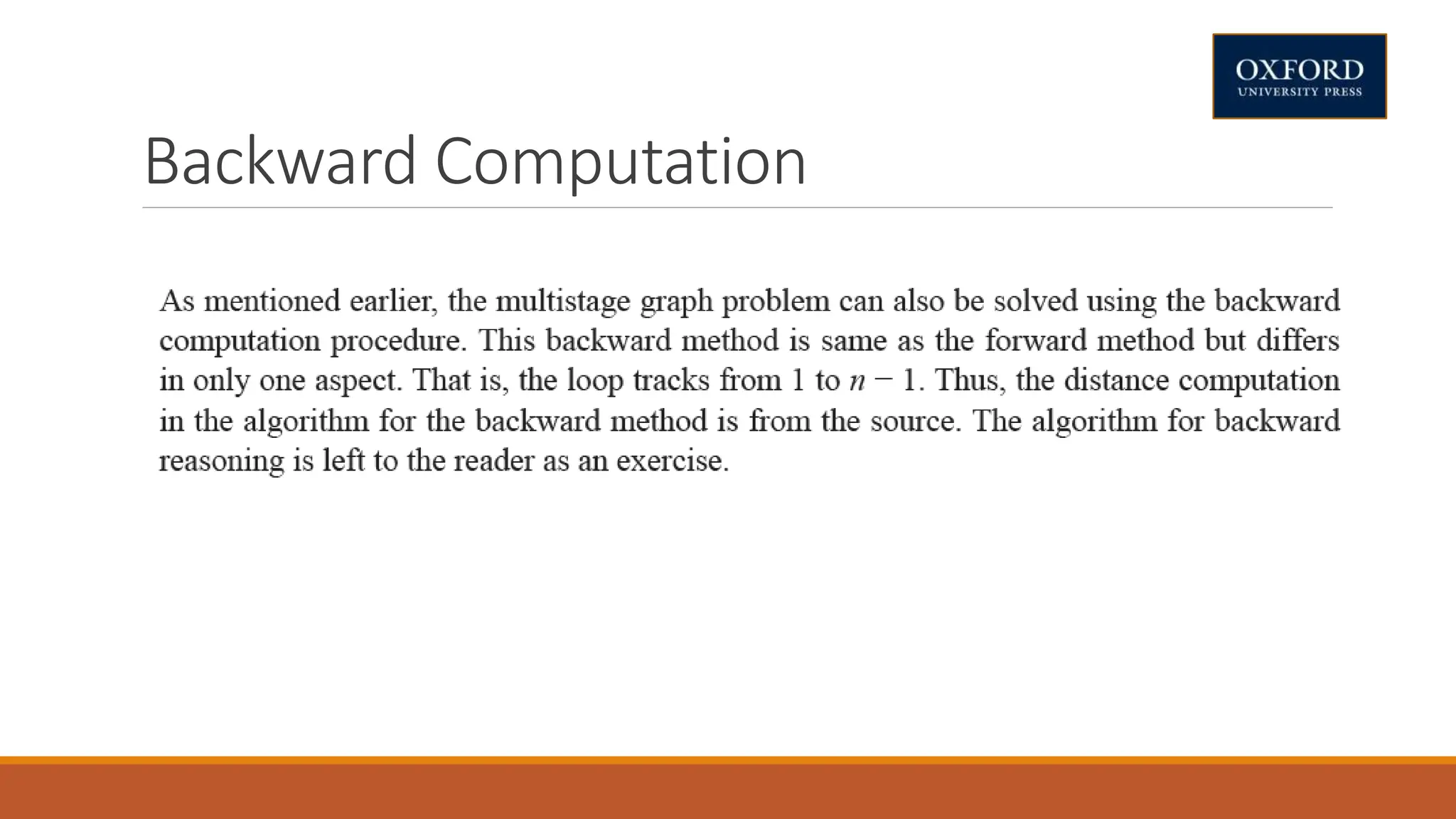
Backward Computation
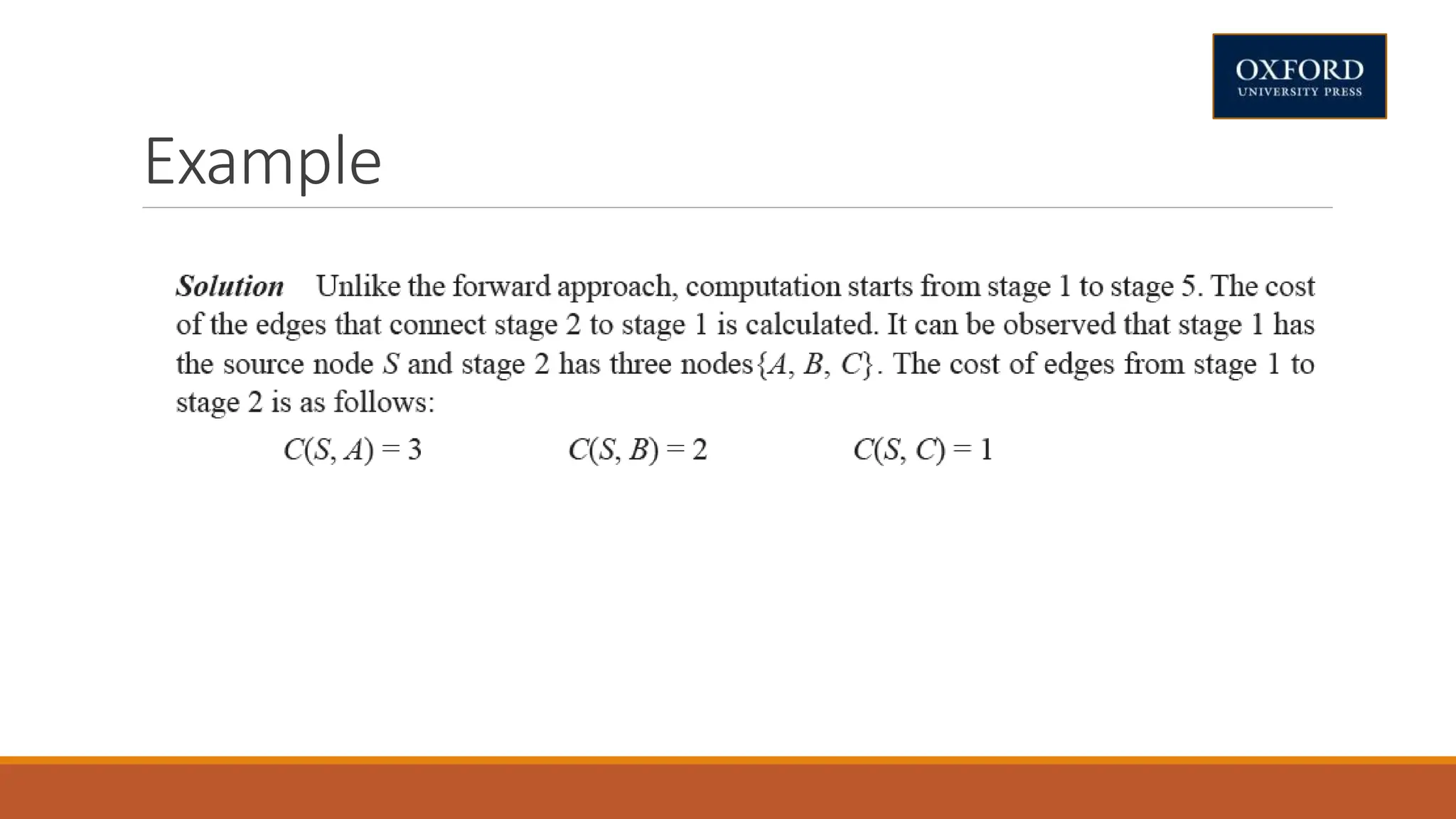
Example
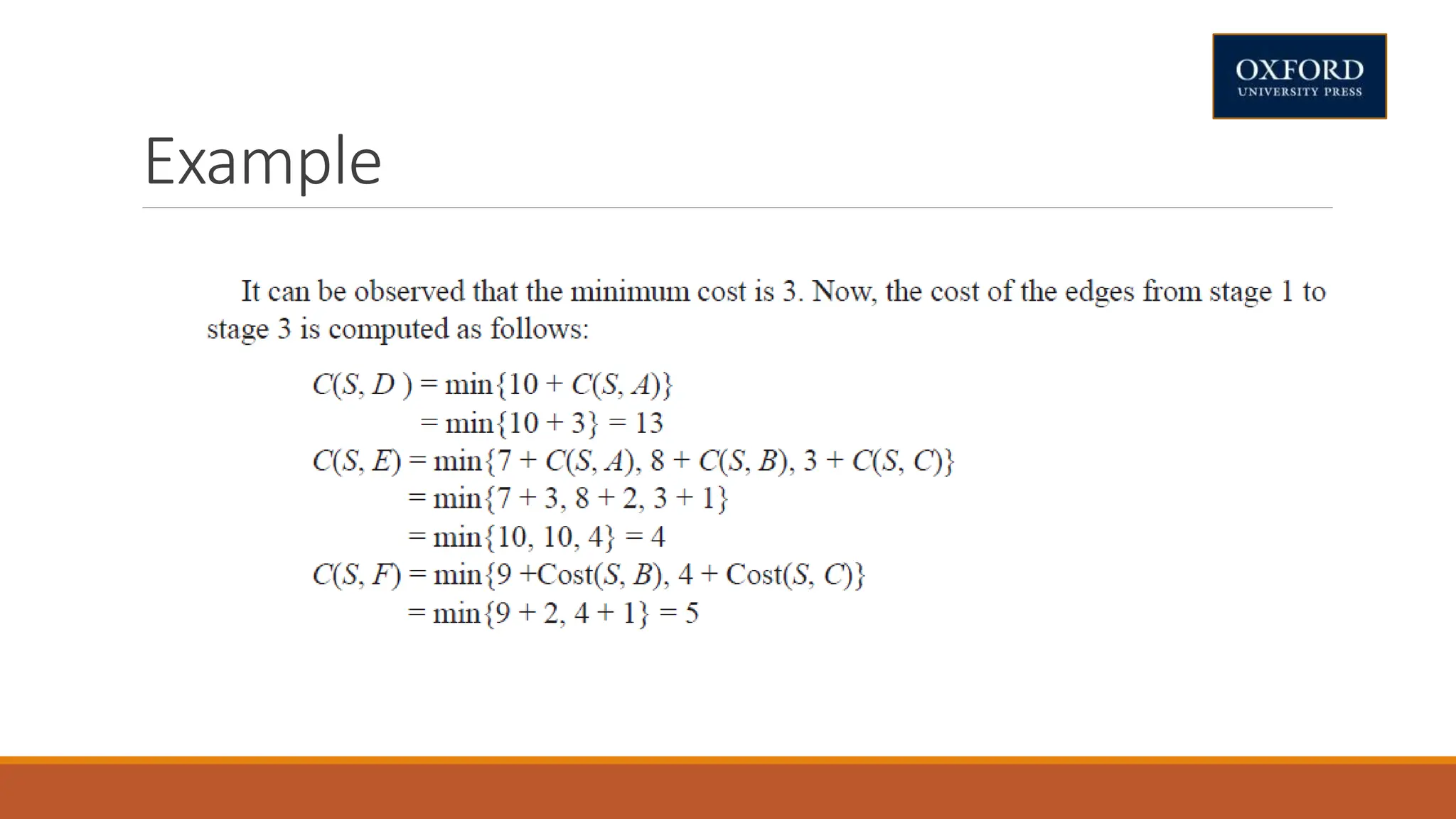
Example
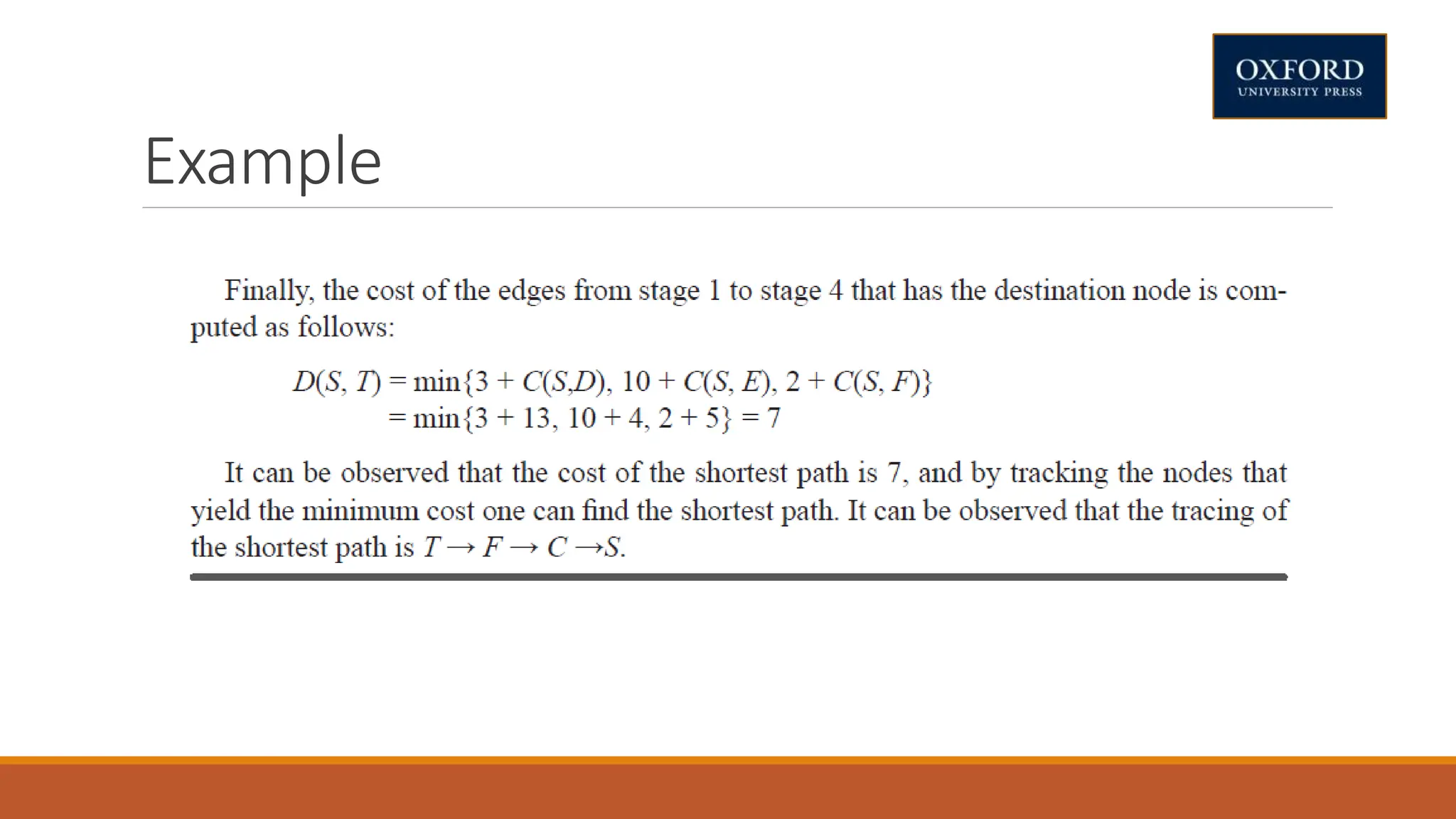
Example
Example
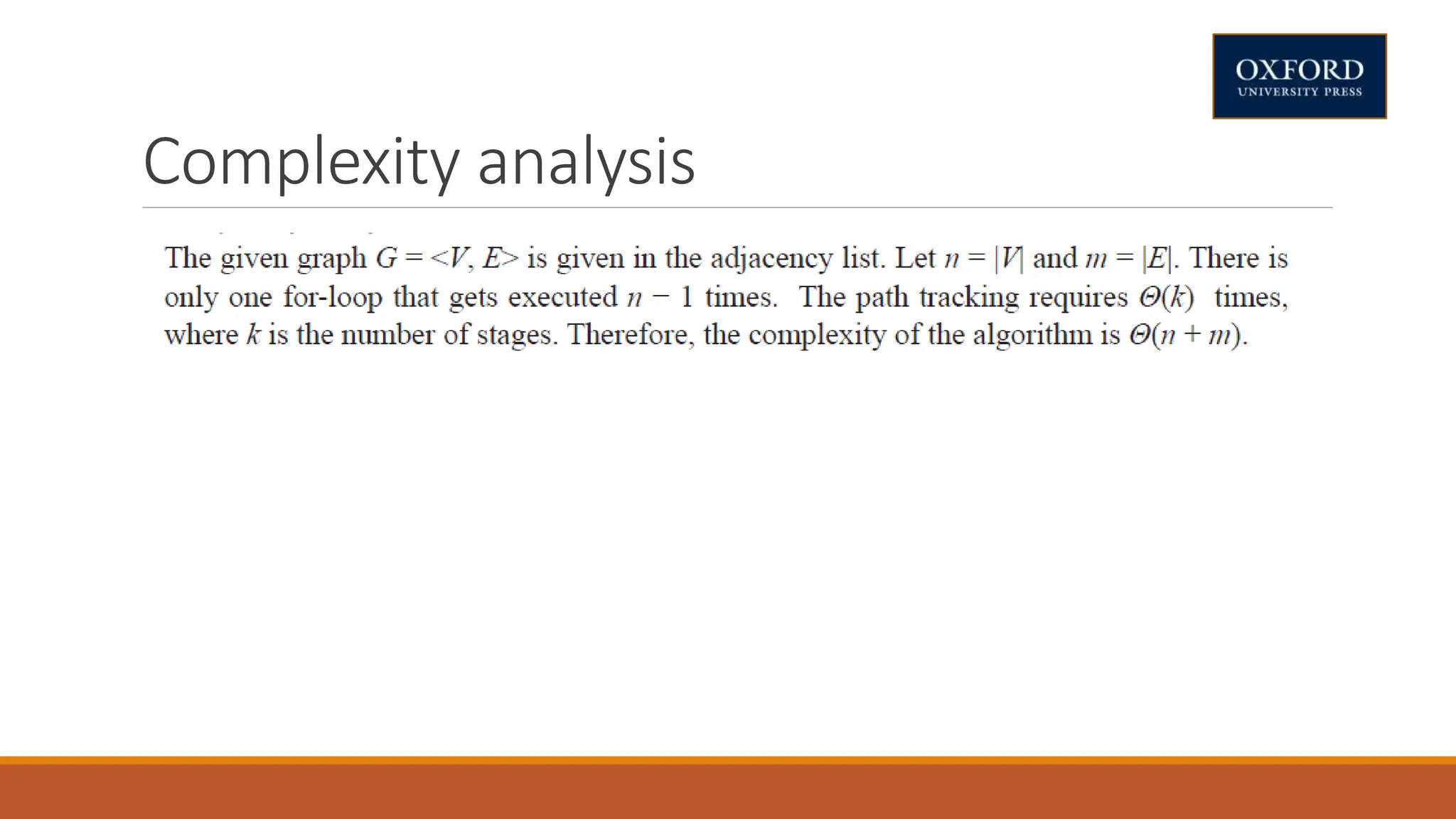
Complexity analysis
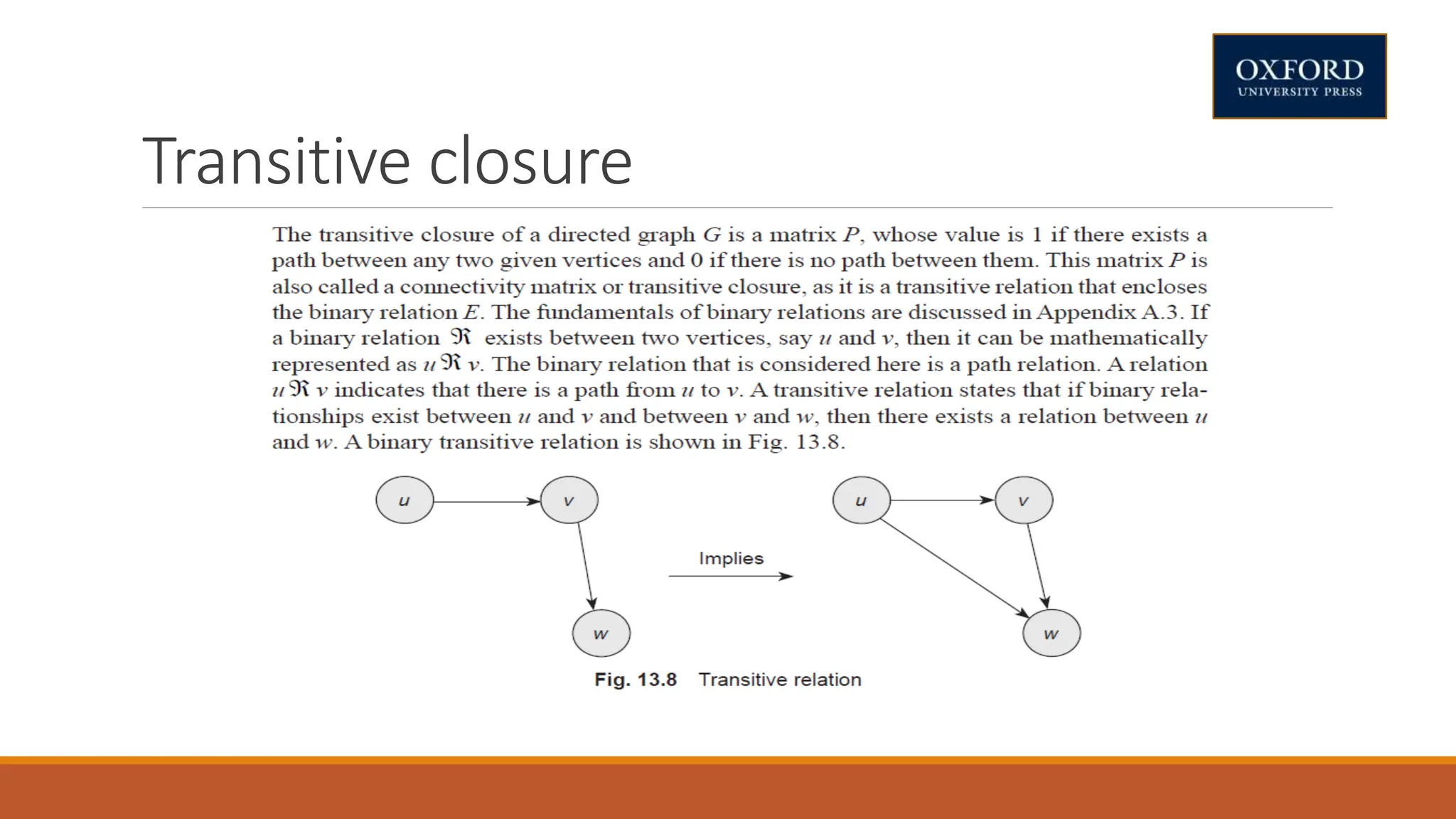
Transitive closure
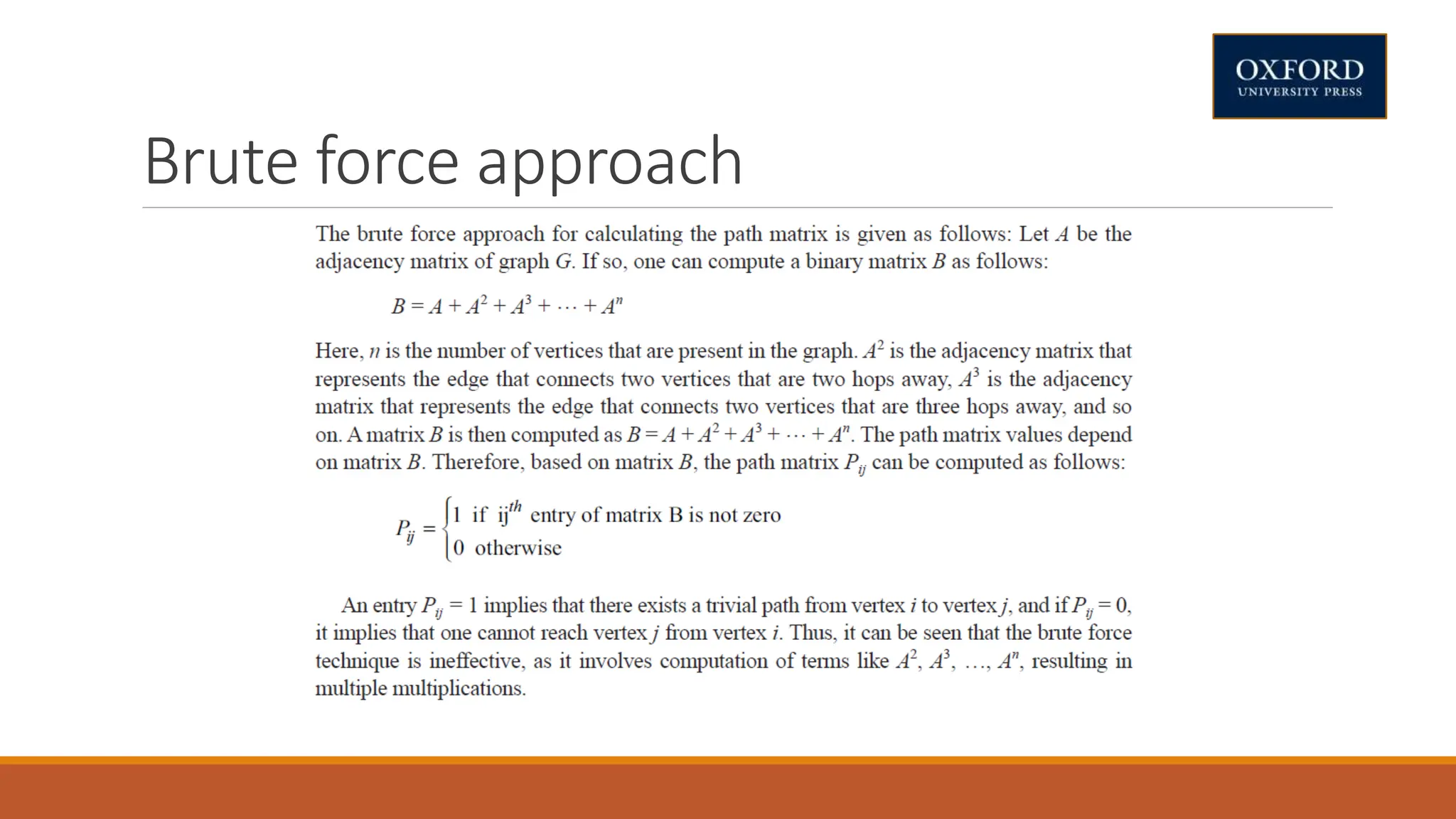
Brute force approach
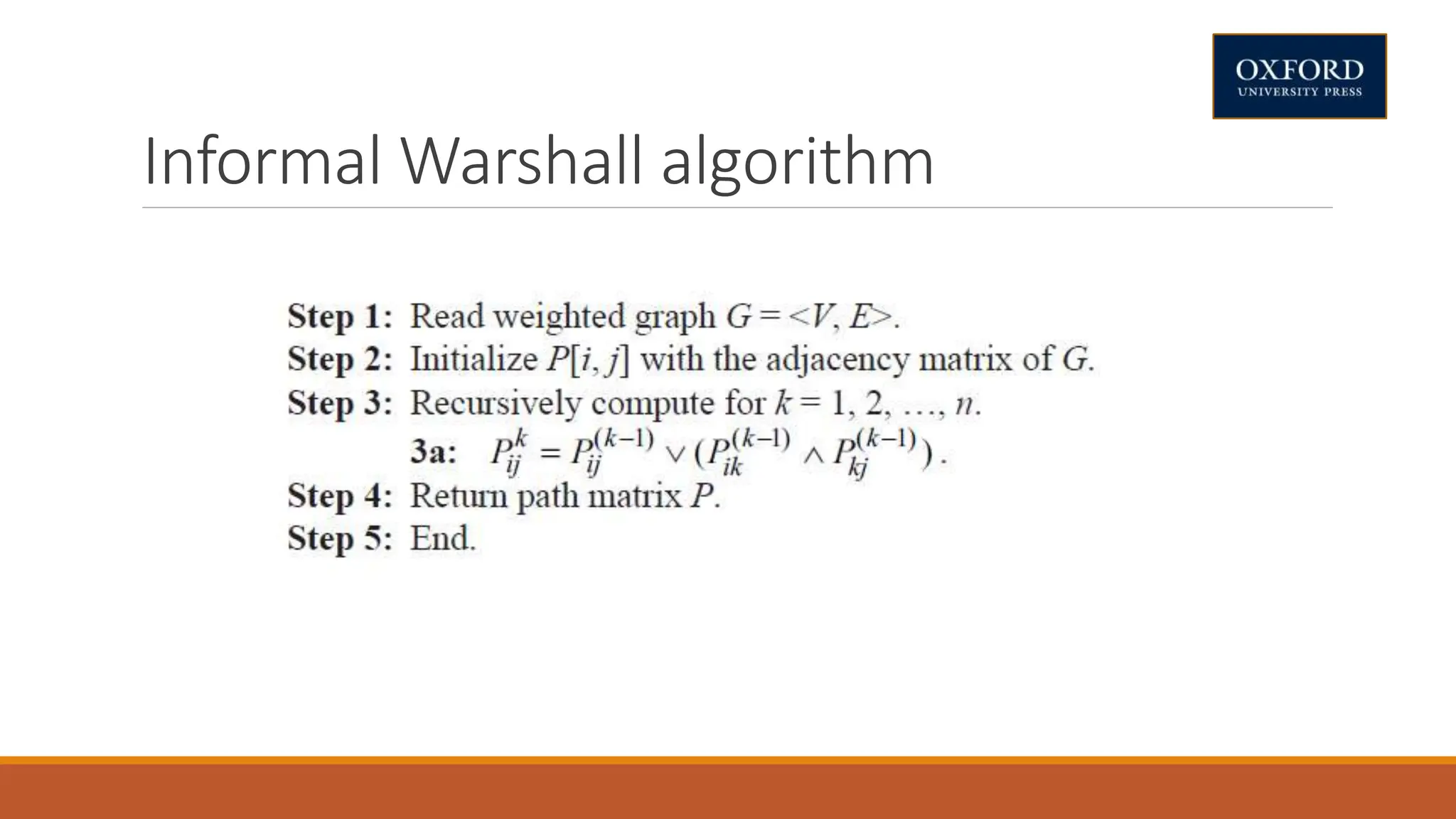
Informal Warshall algorithm
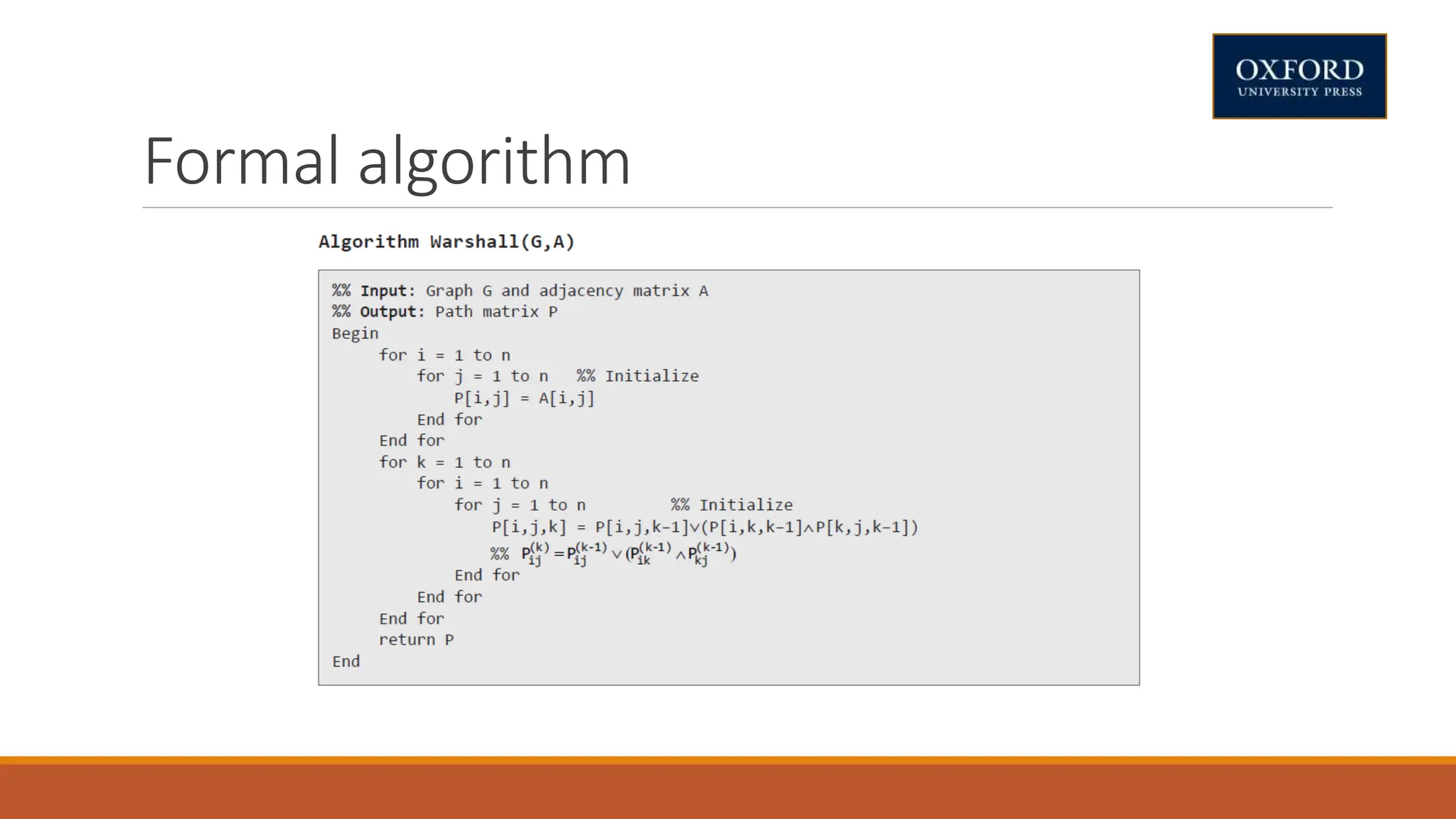
Formal algorithm
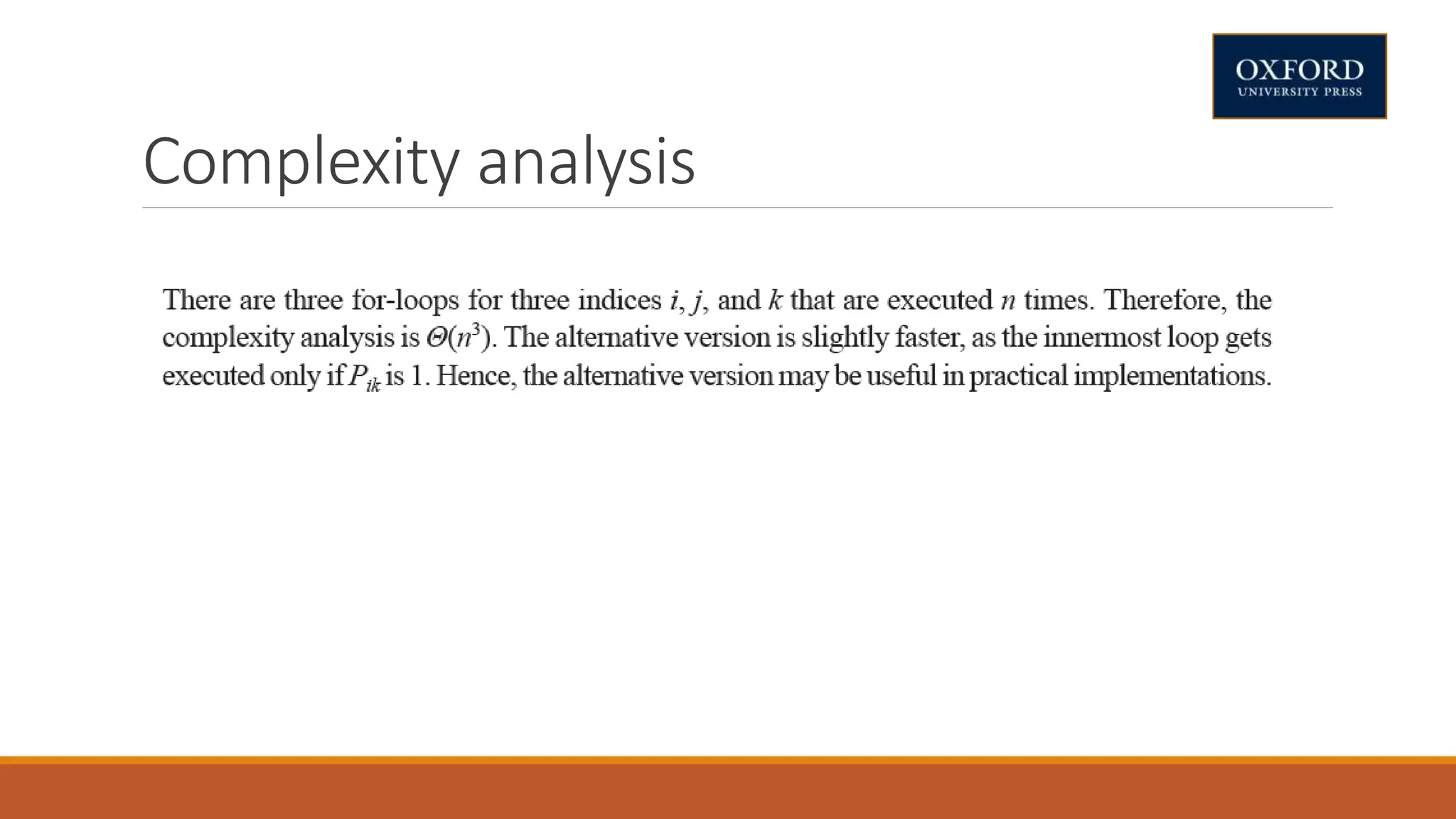
Complexity analysis
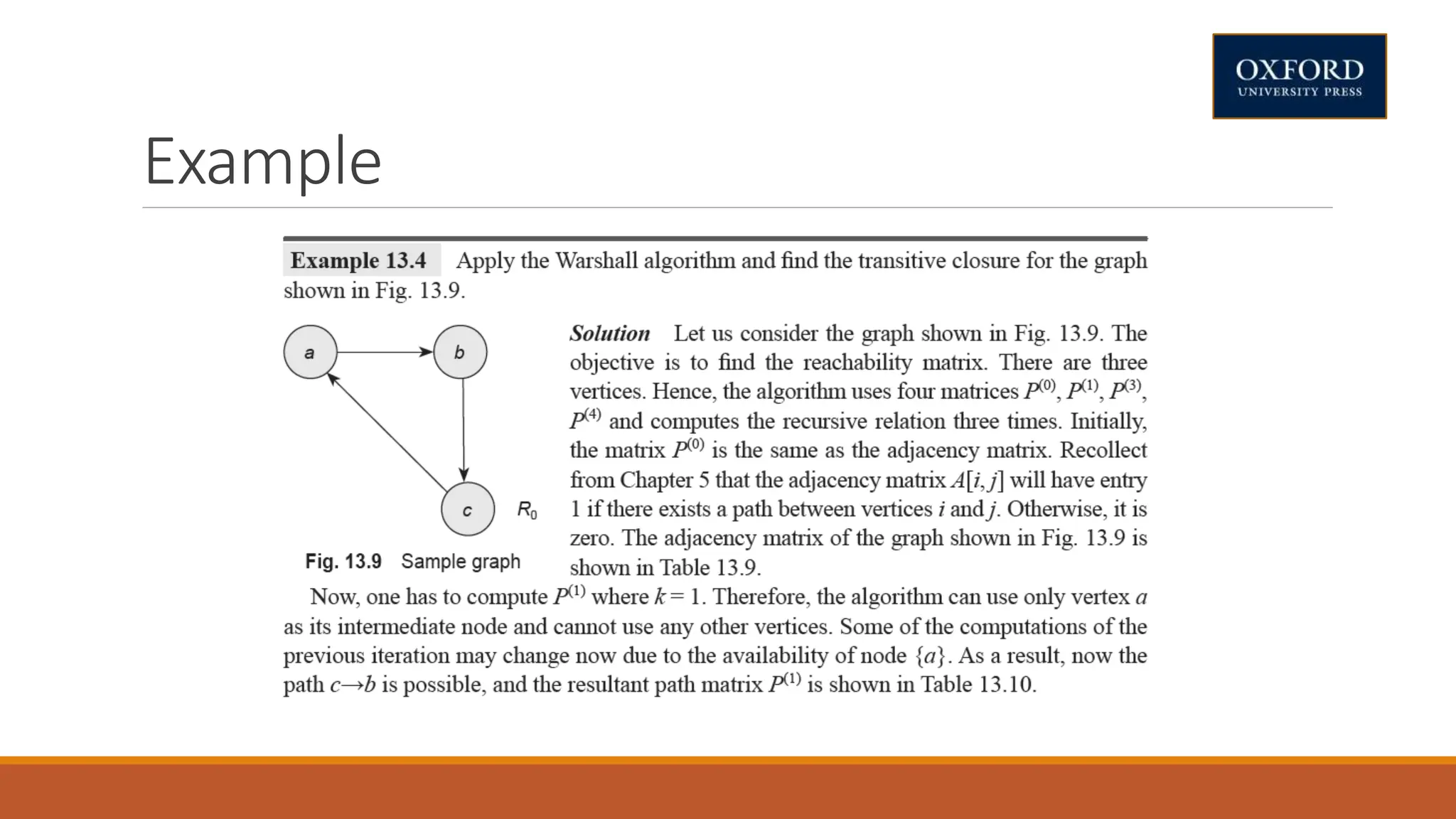
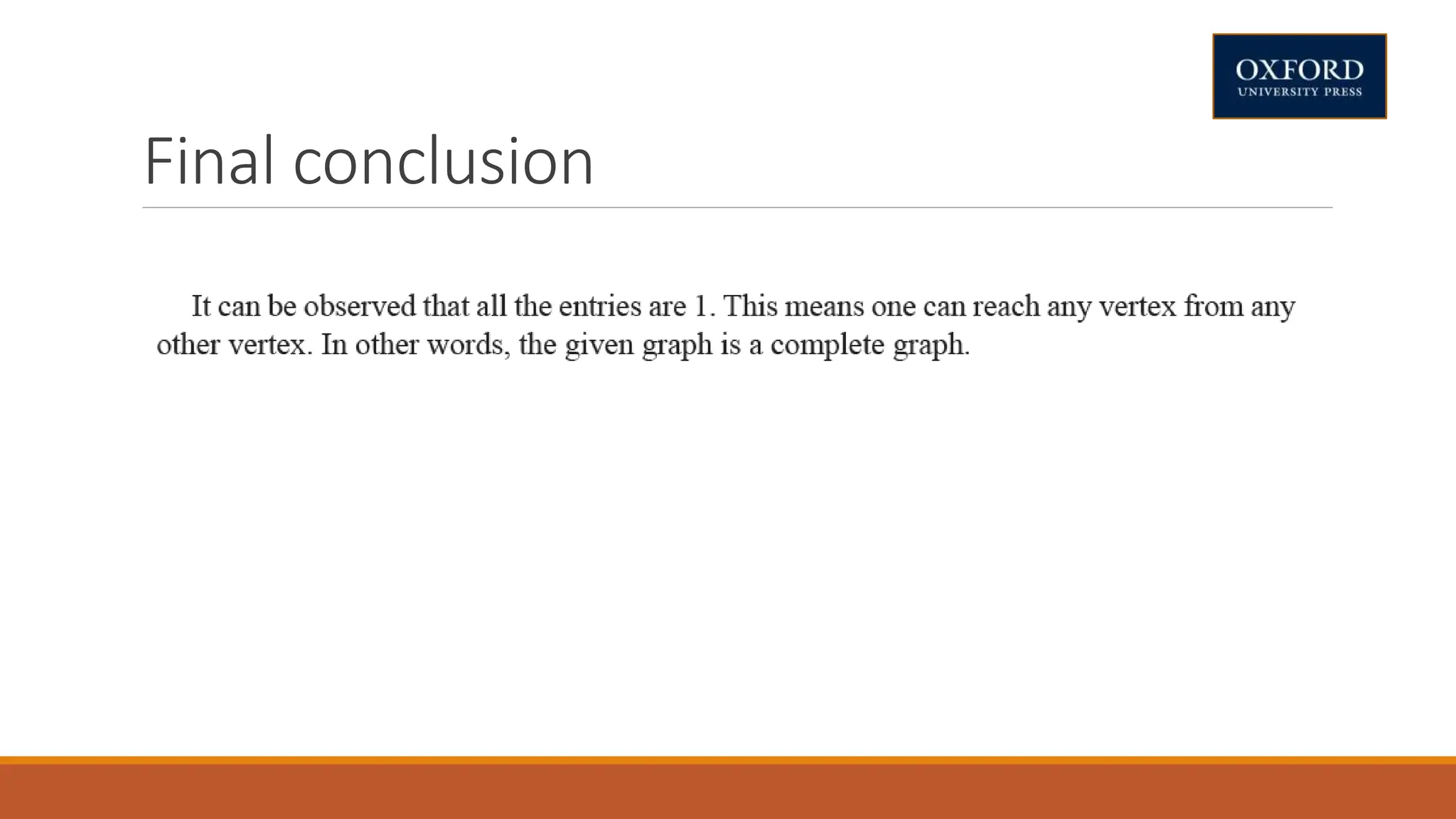
Example
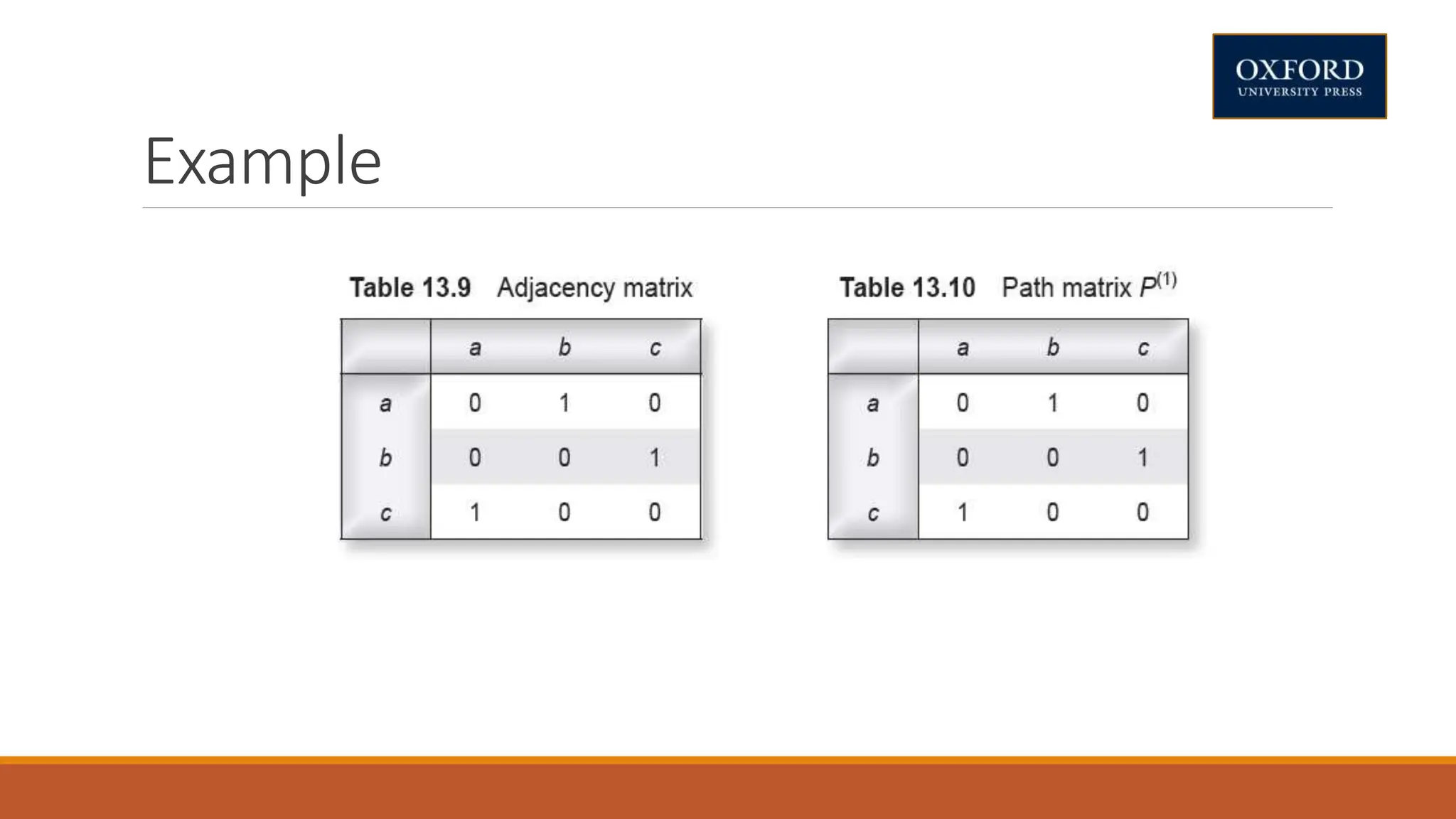
Example
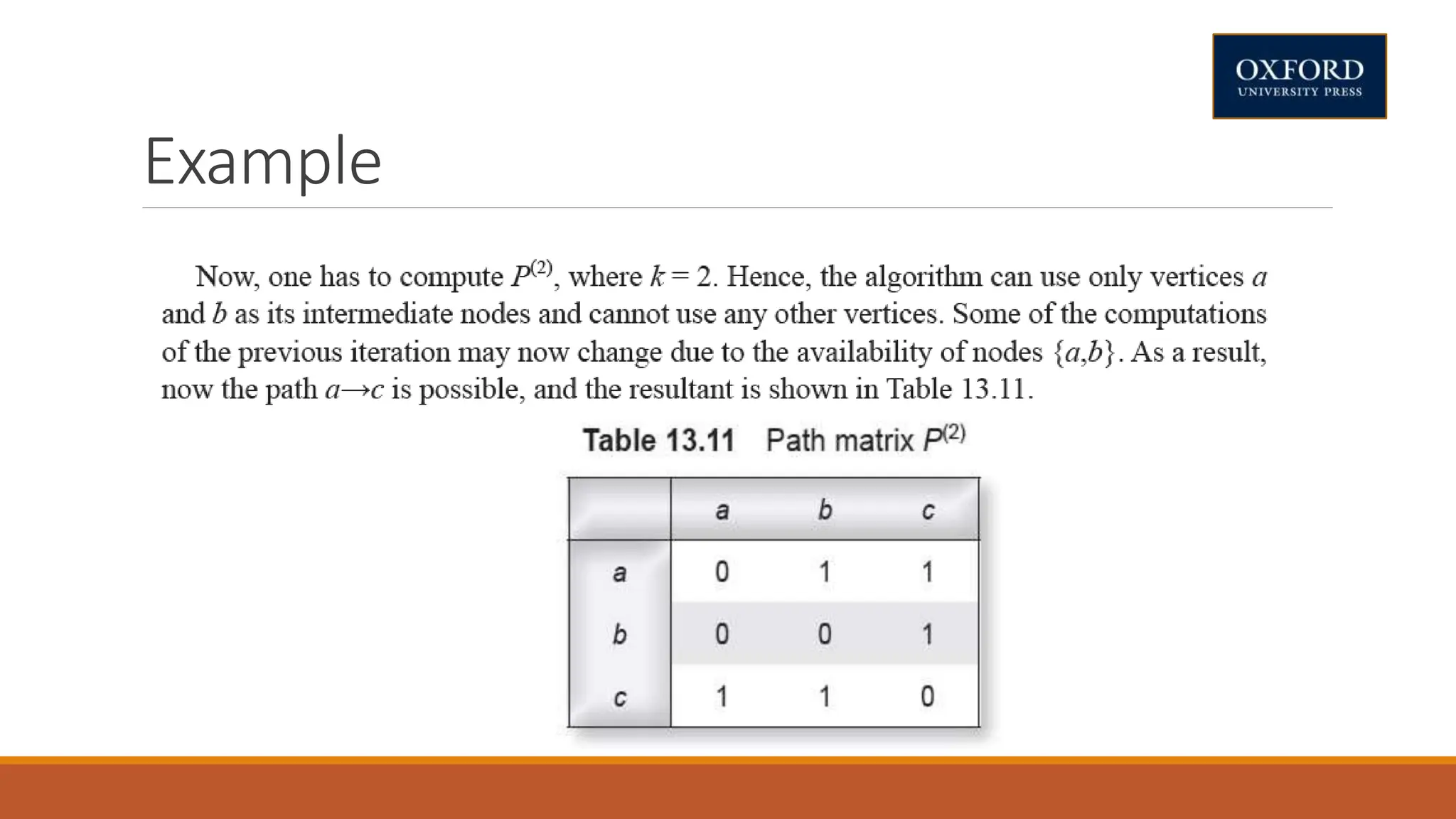
Example
Example
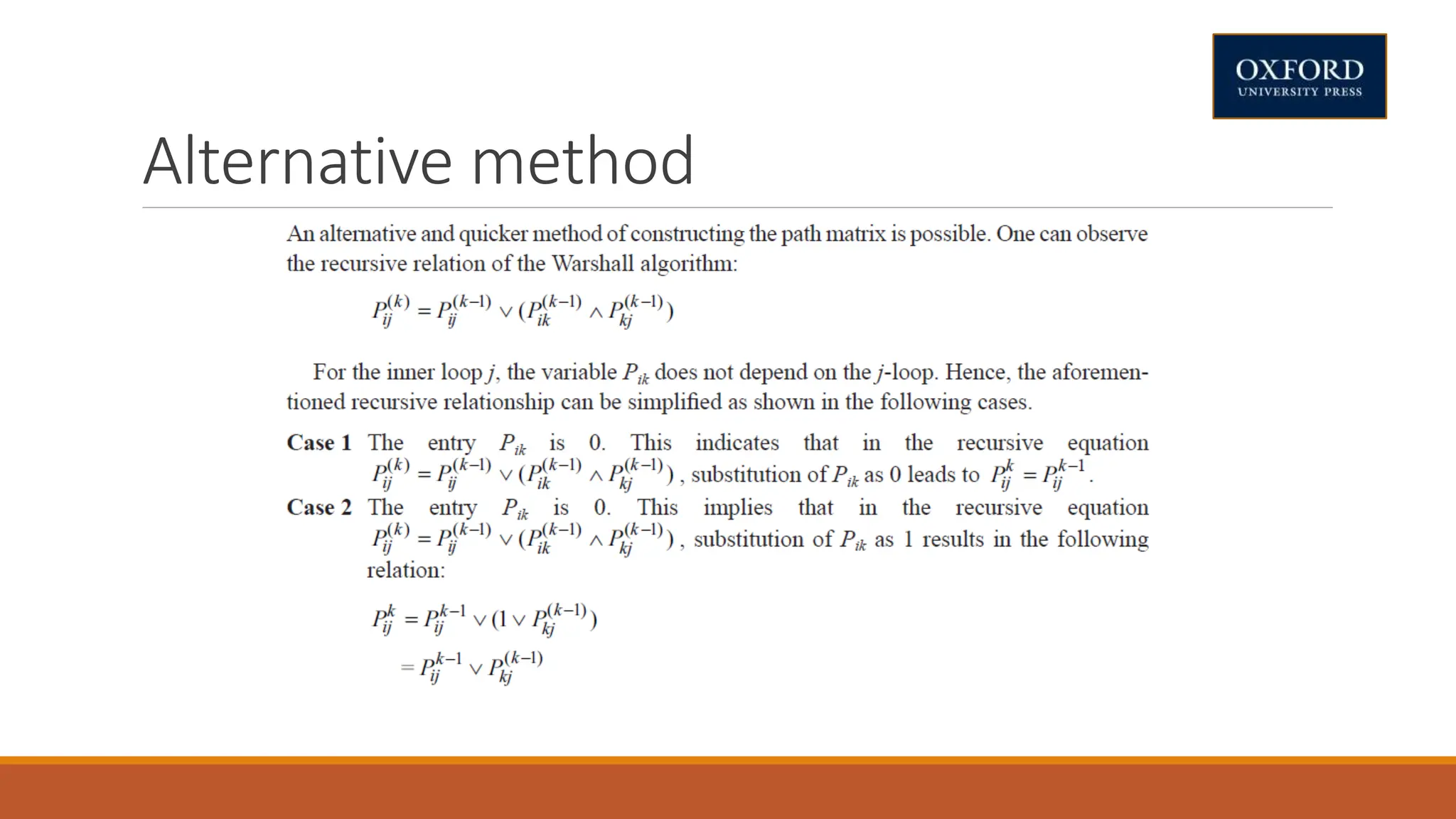
Final conclusion
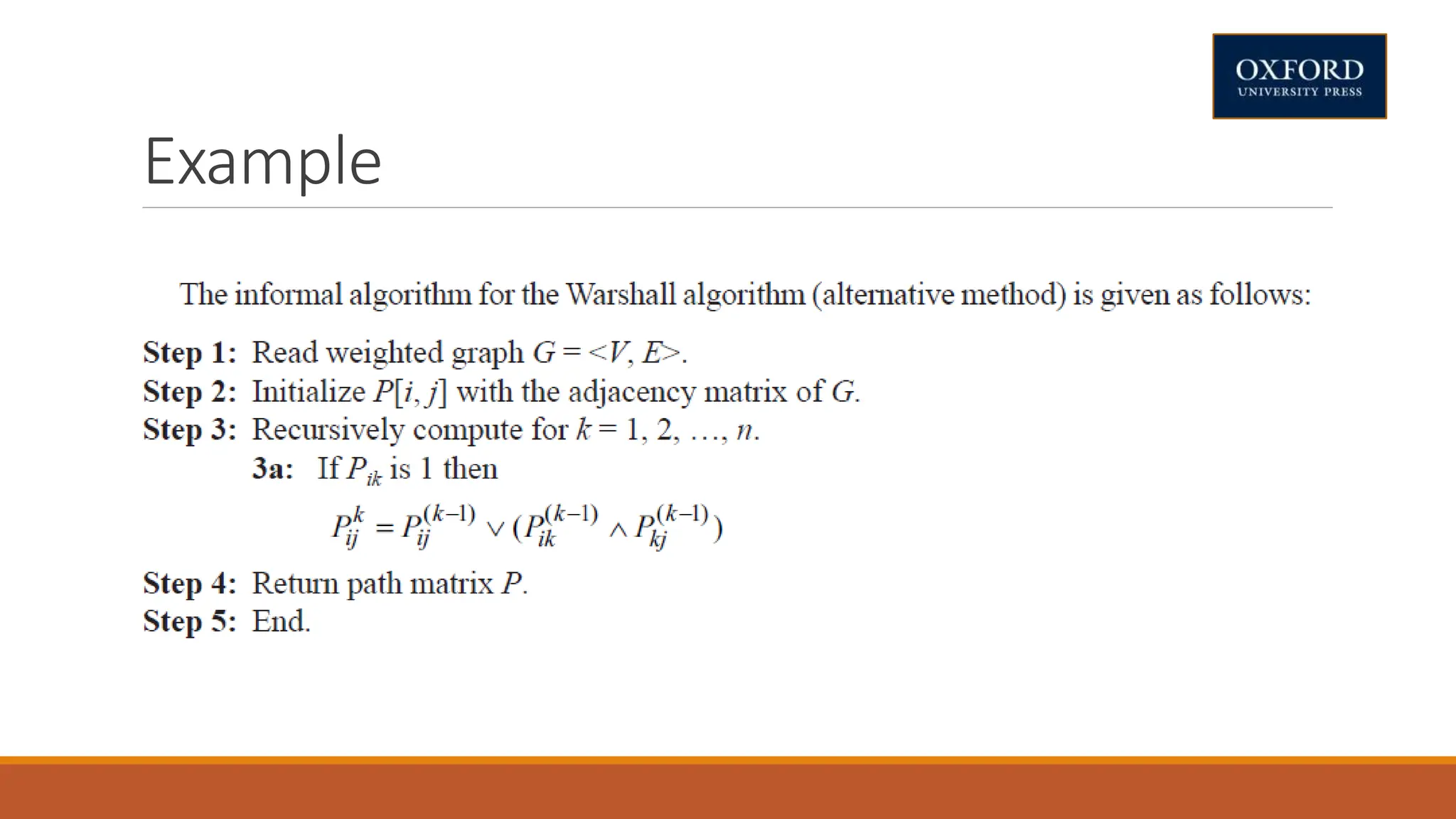
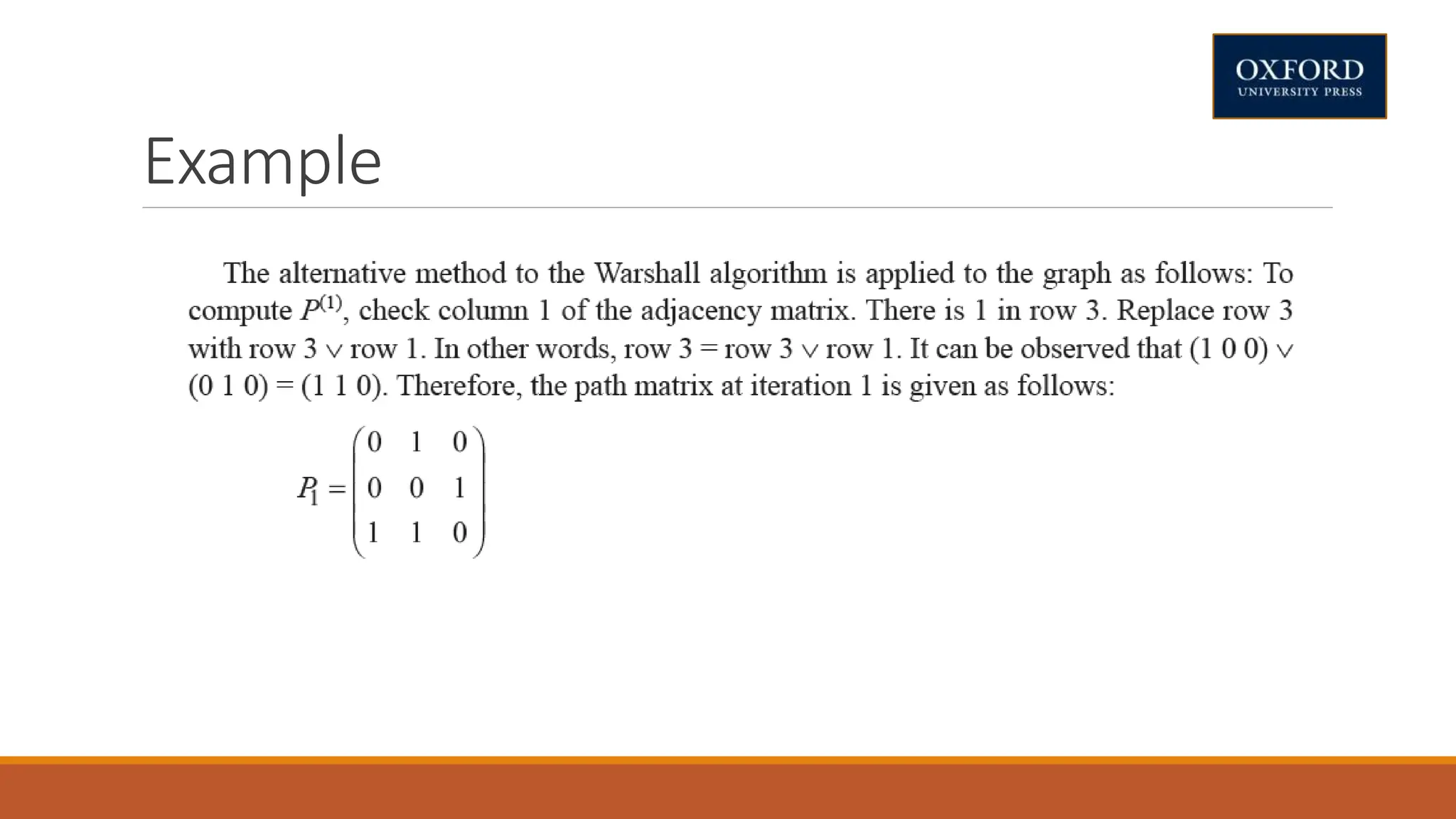
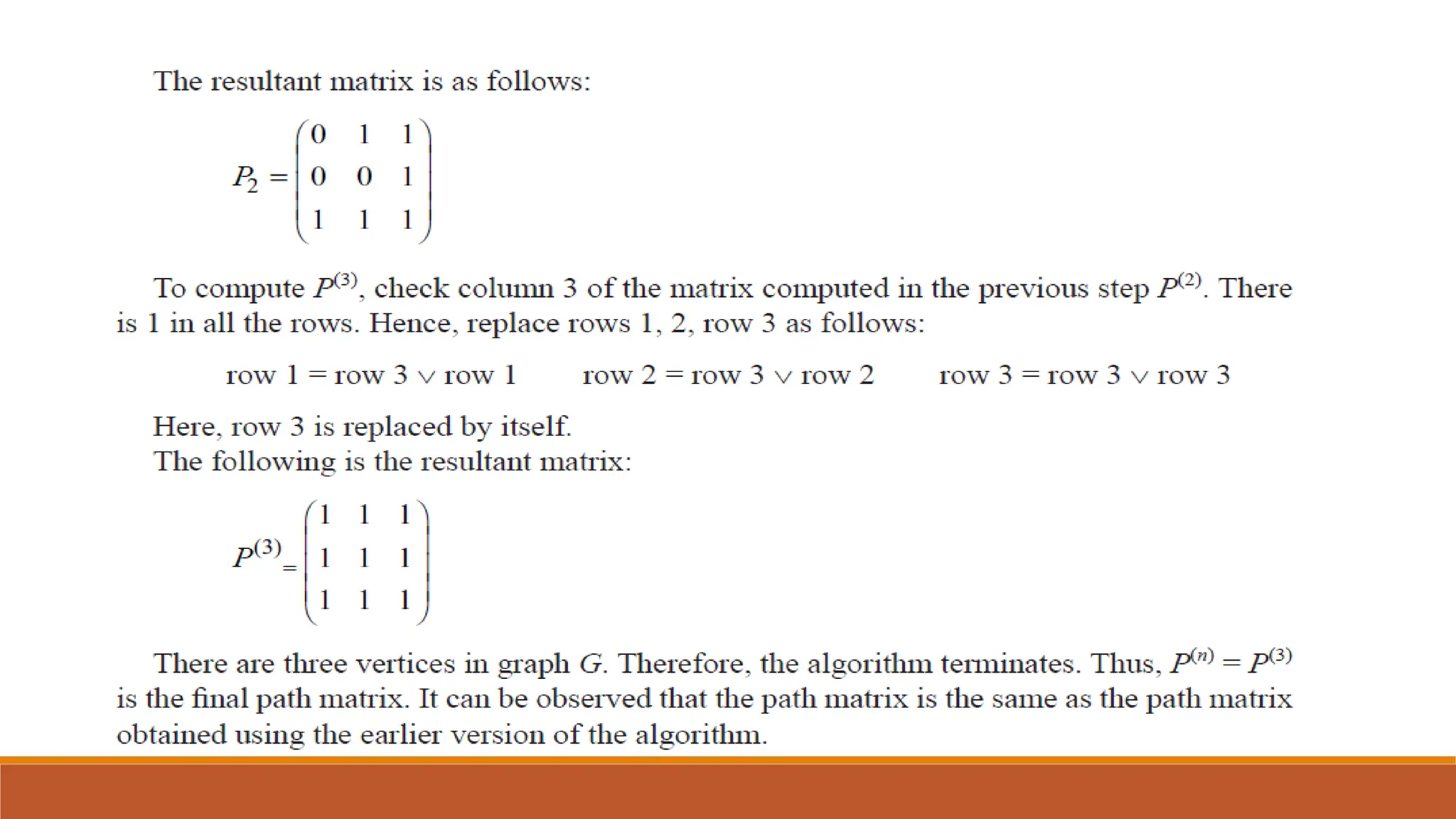
Alternative method
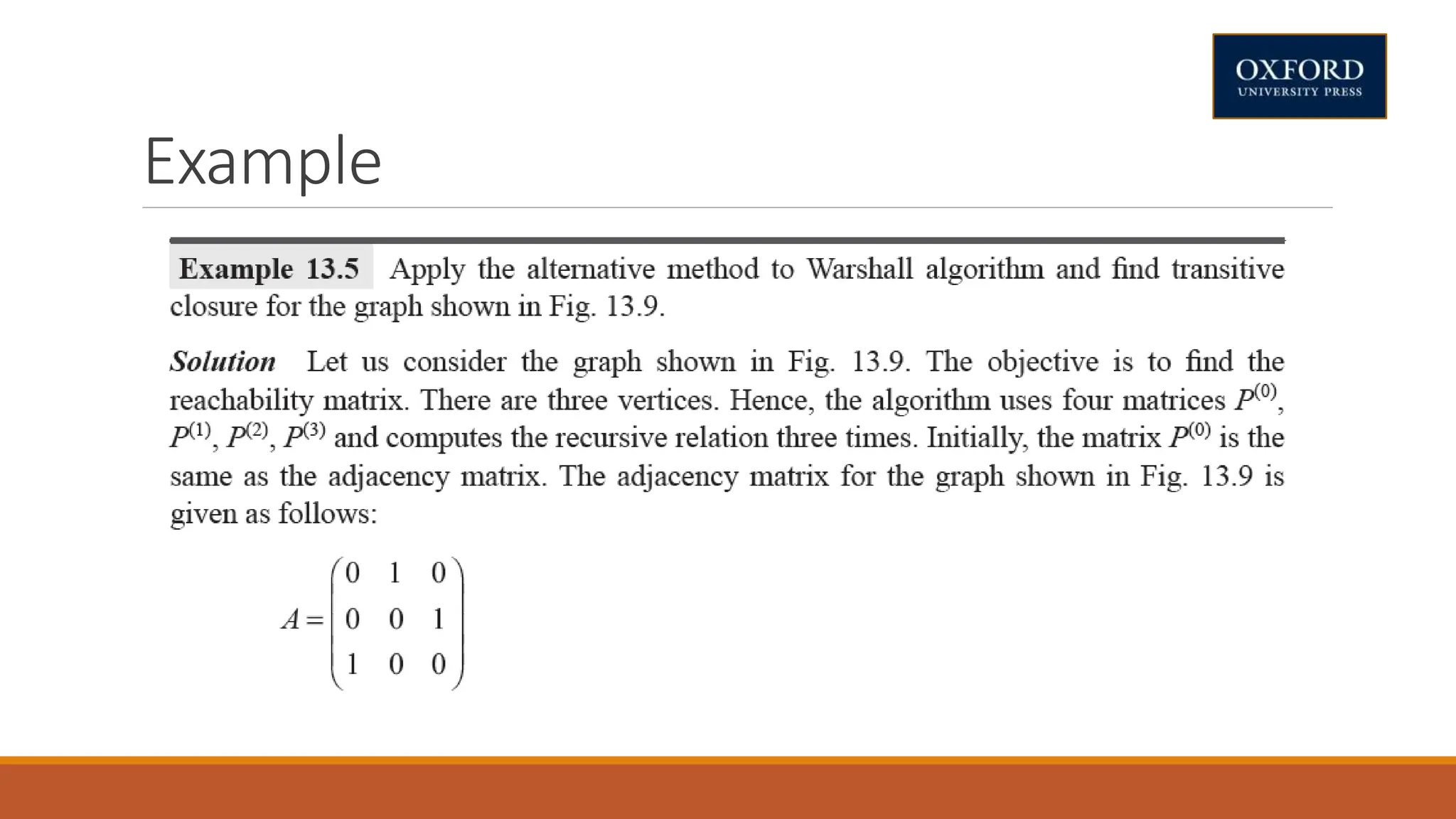
Example
Formal algorithm
Formal algorithm
Complexity analysis
Example
Example
Optimal Storage Problem
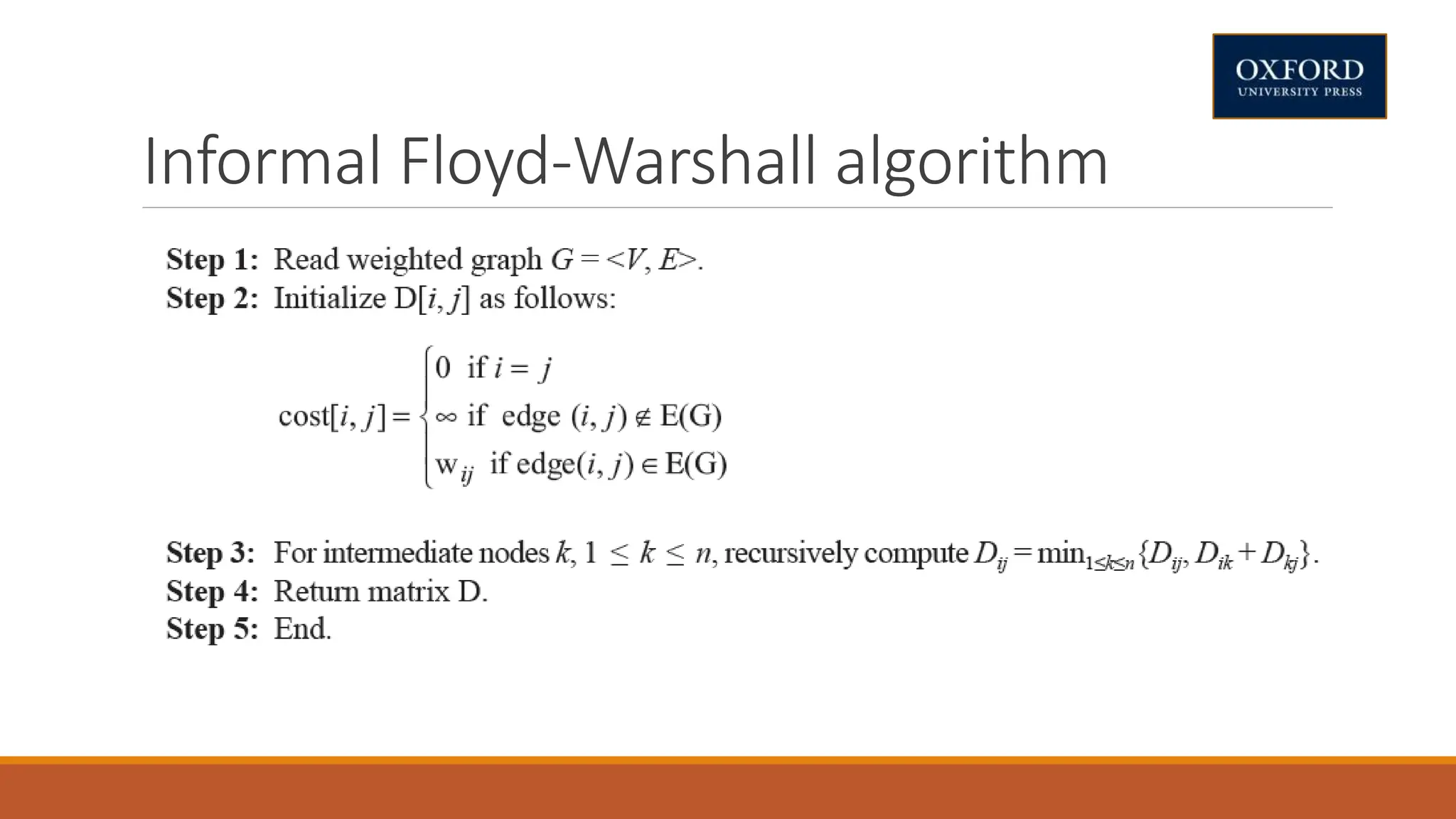
Informal Floyd-Warshall algorithm
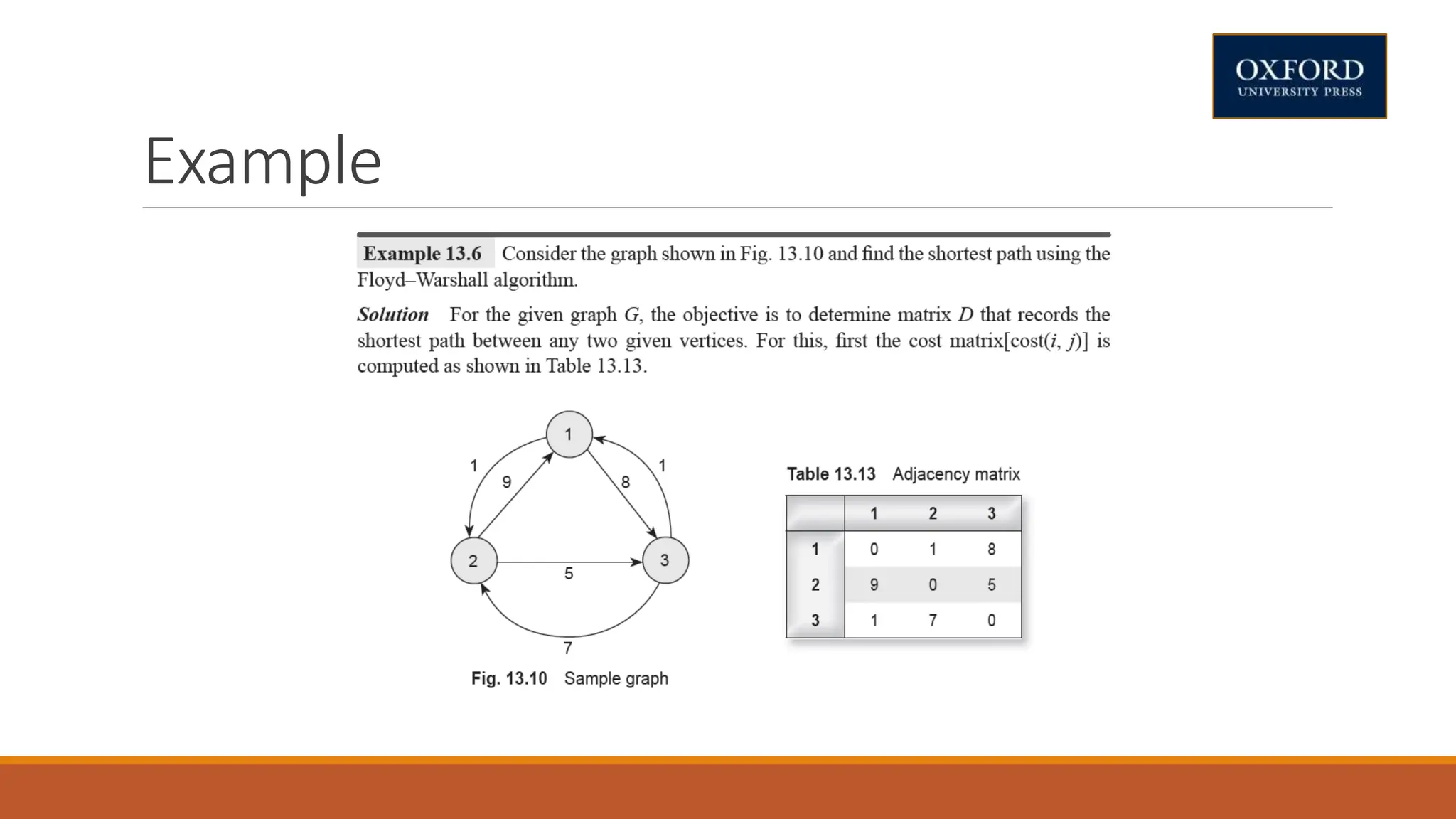
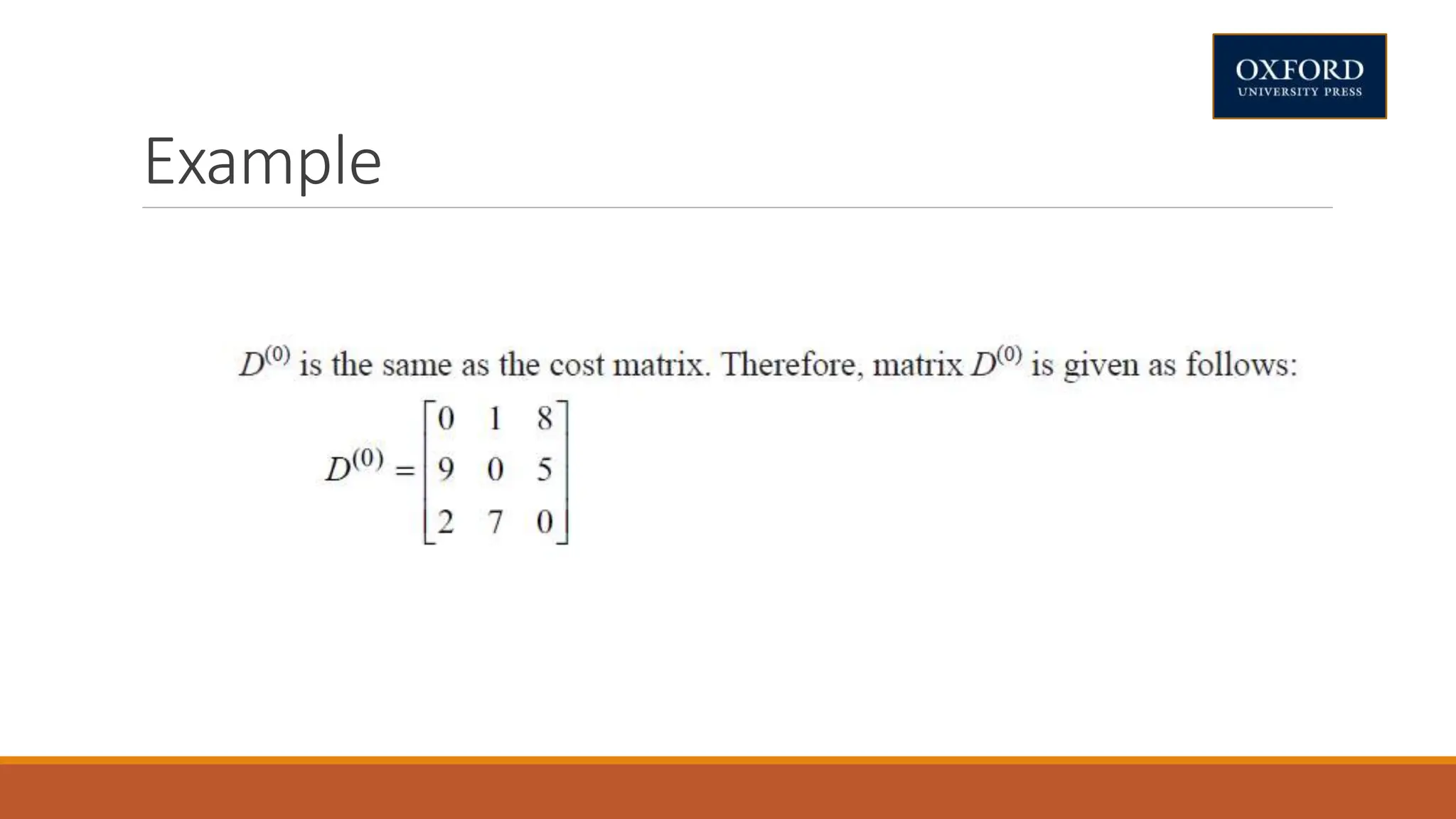
Example
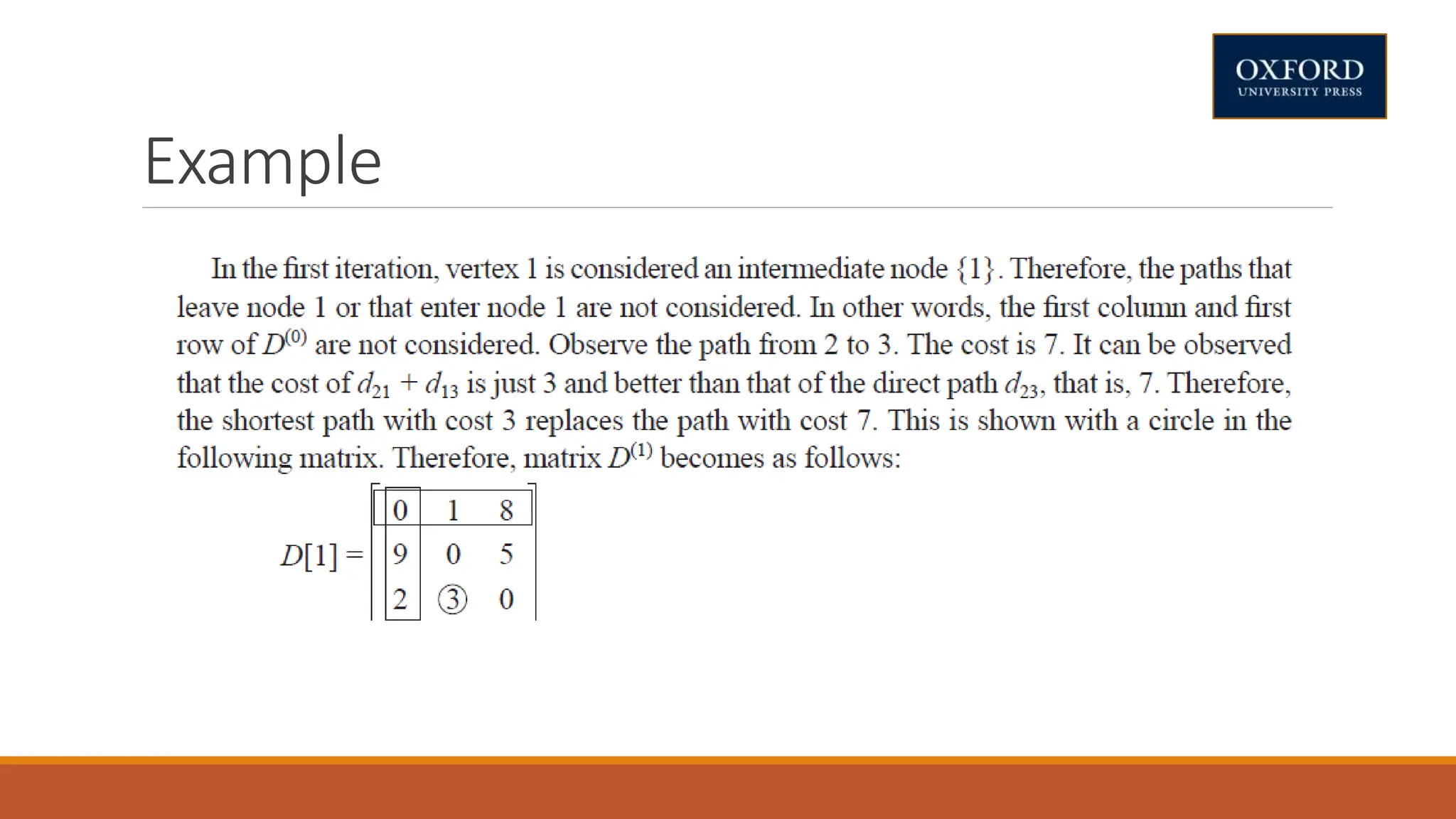
Example
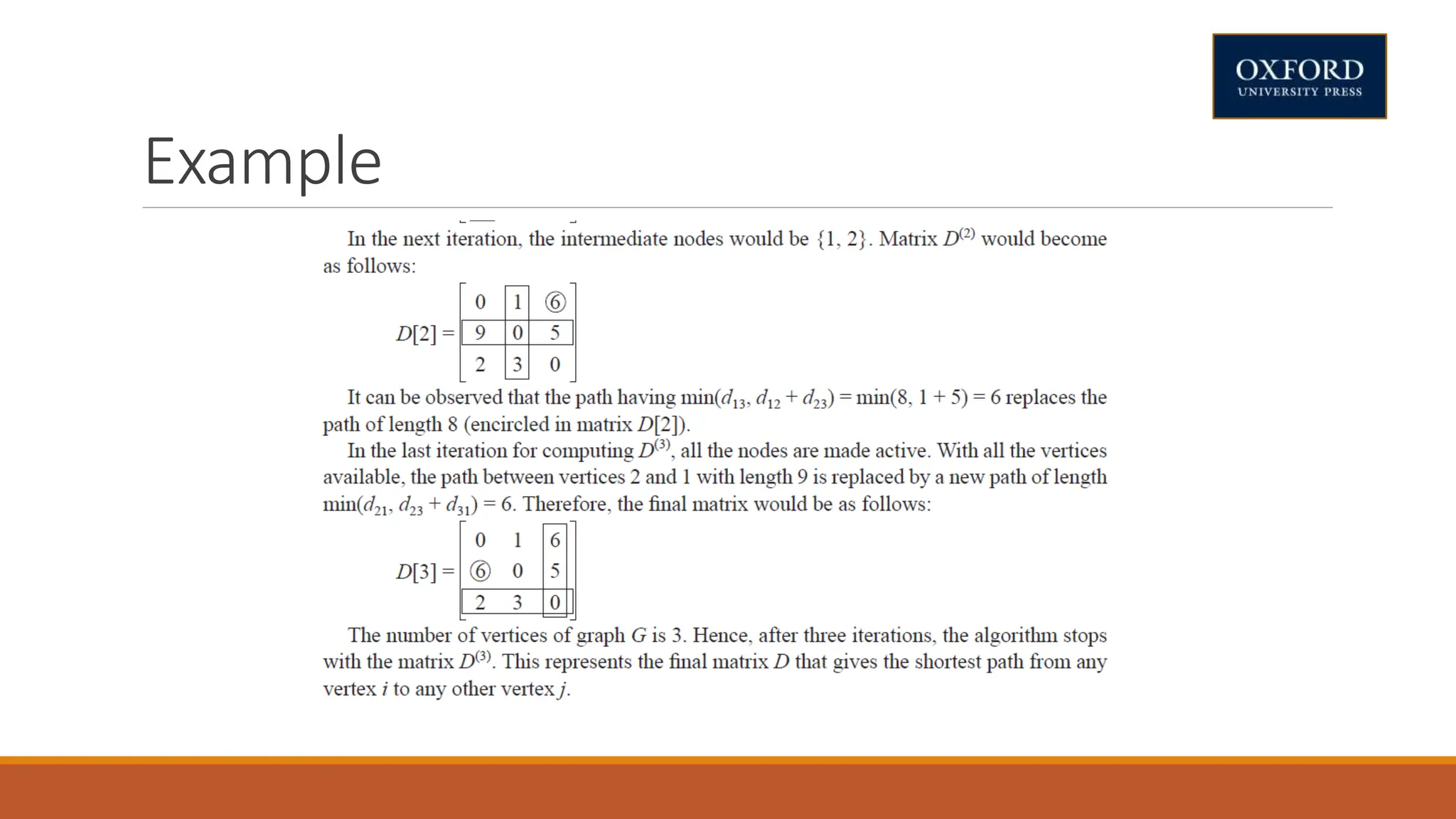
Example
Example
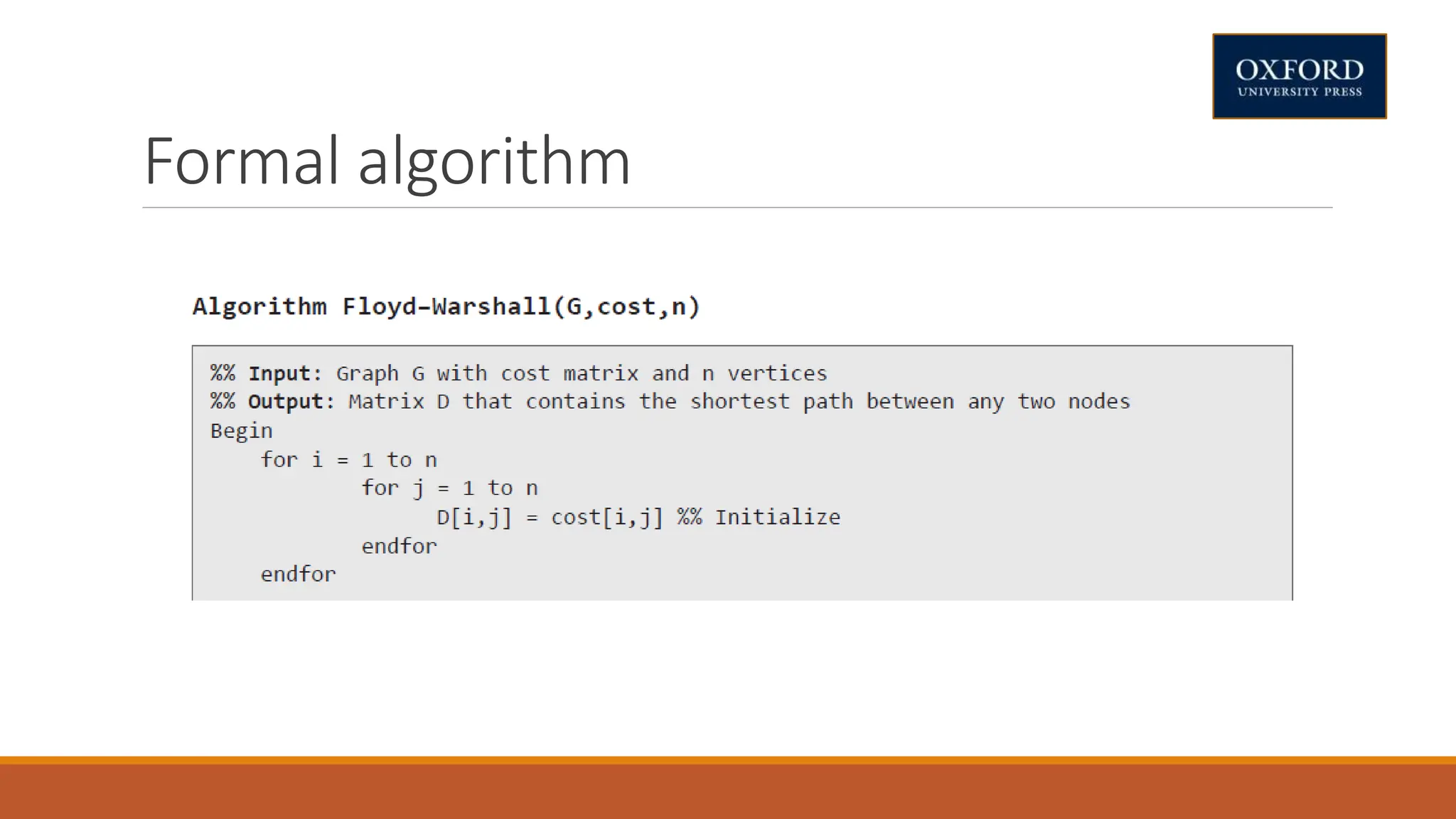
Formal algorithm
Formal algorithm
Formal algorithm for path construction
Complexity Analysis
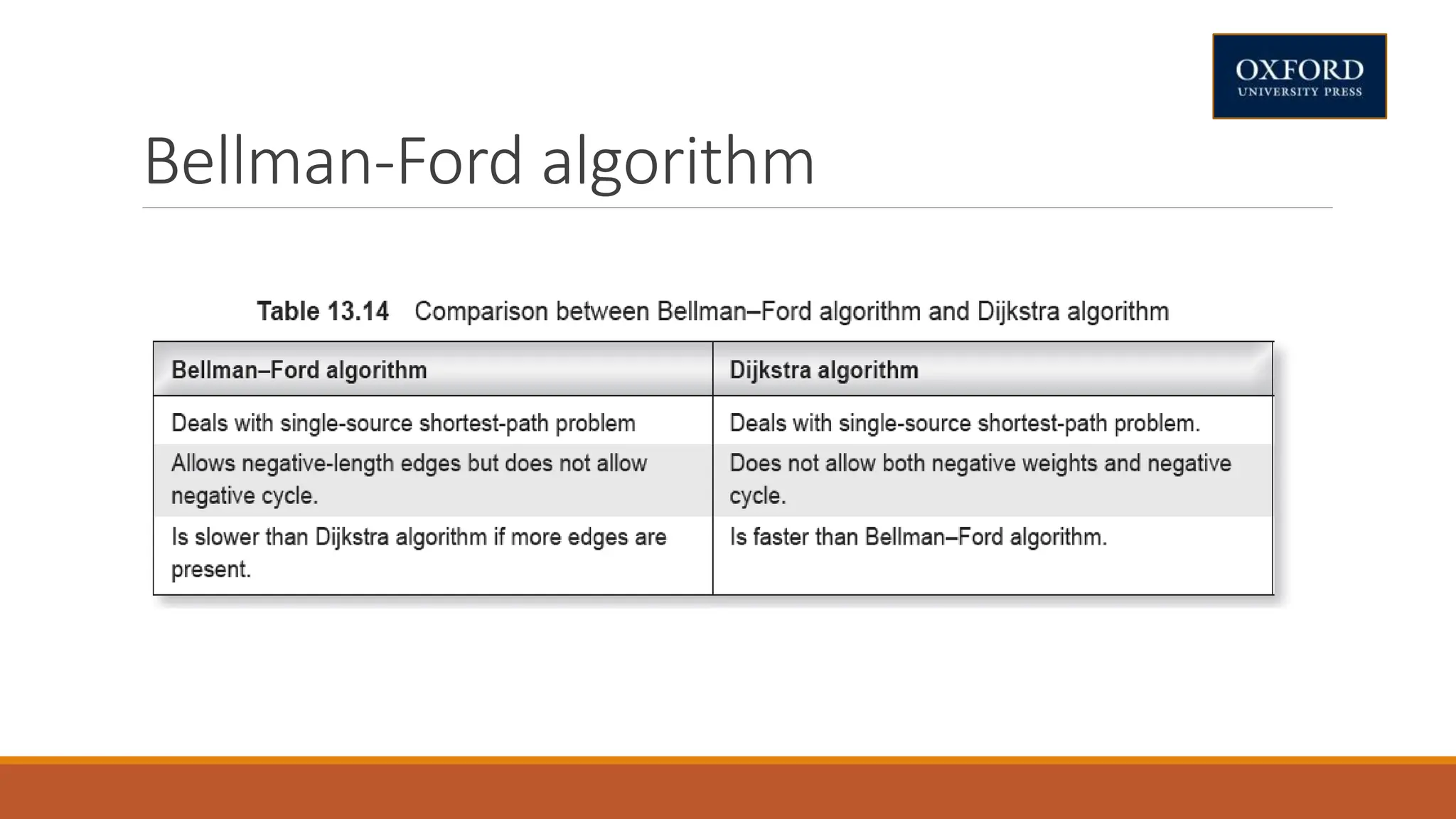
Bellman-Ford algorithm
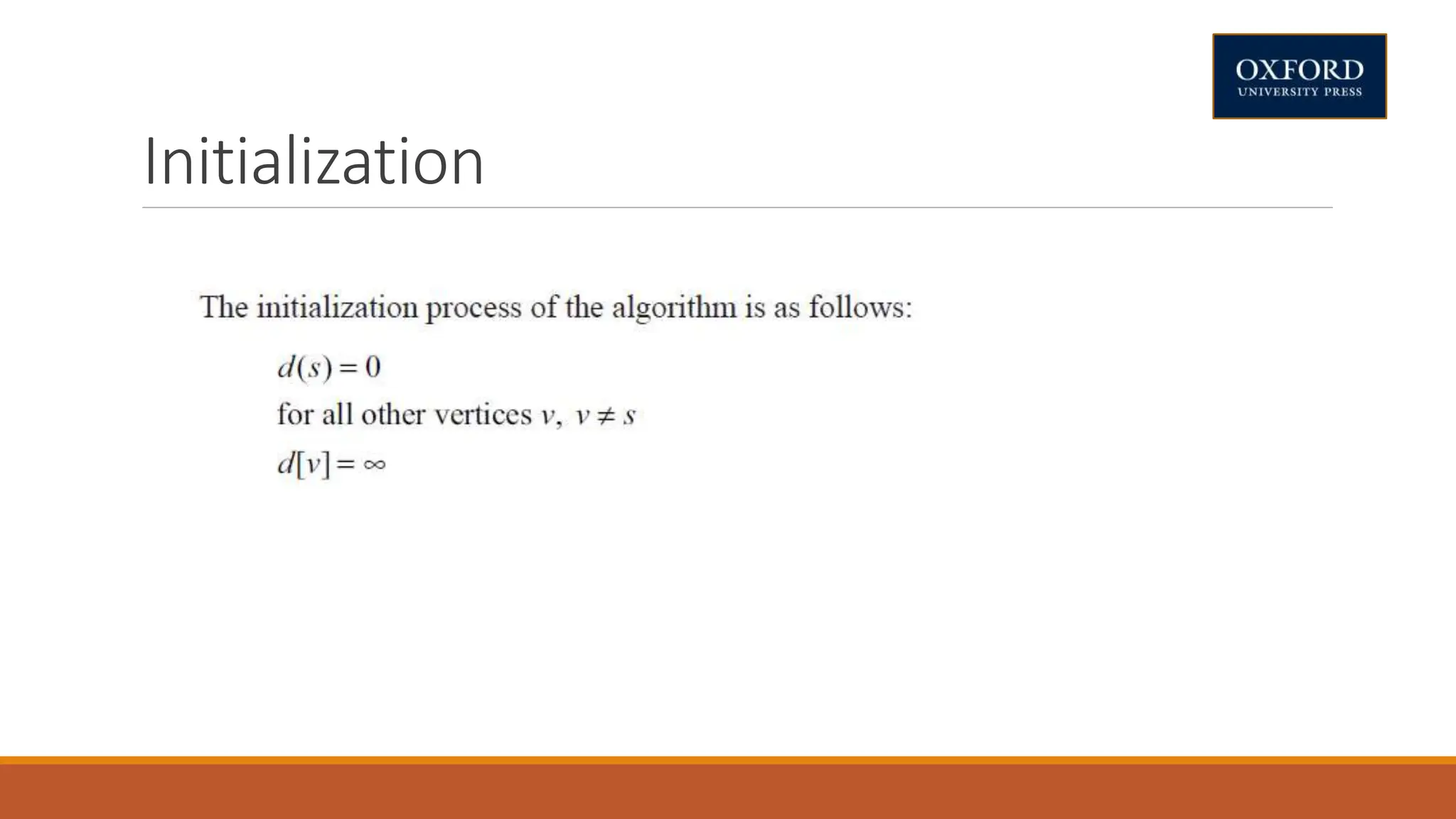
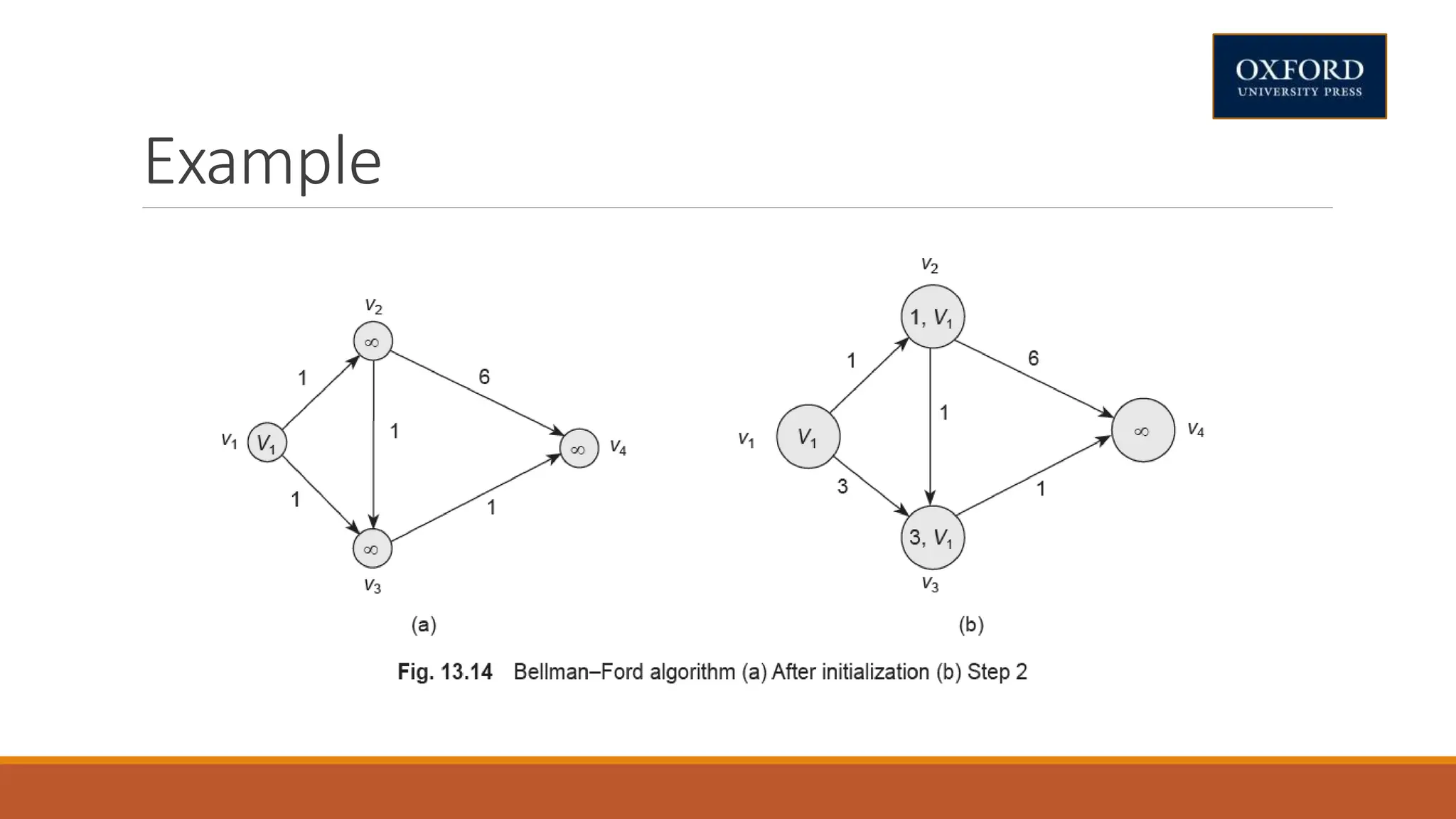
Initialization
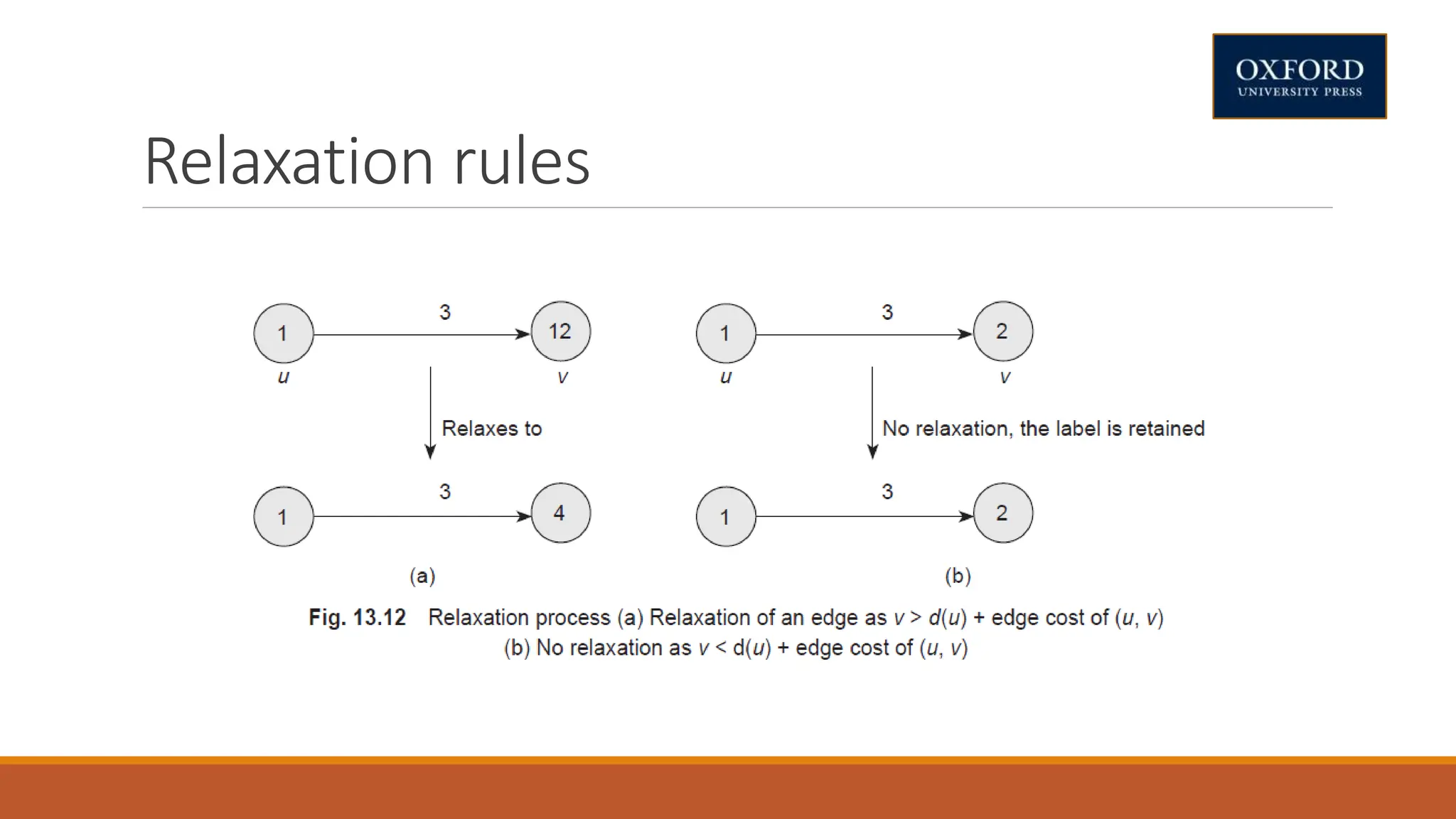
Relaxation rules
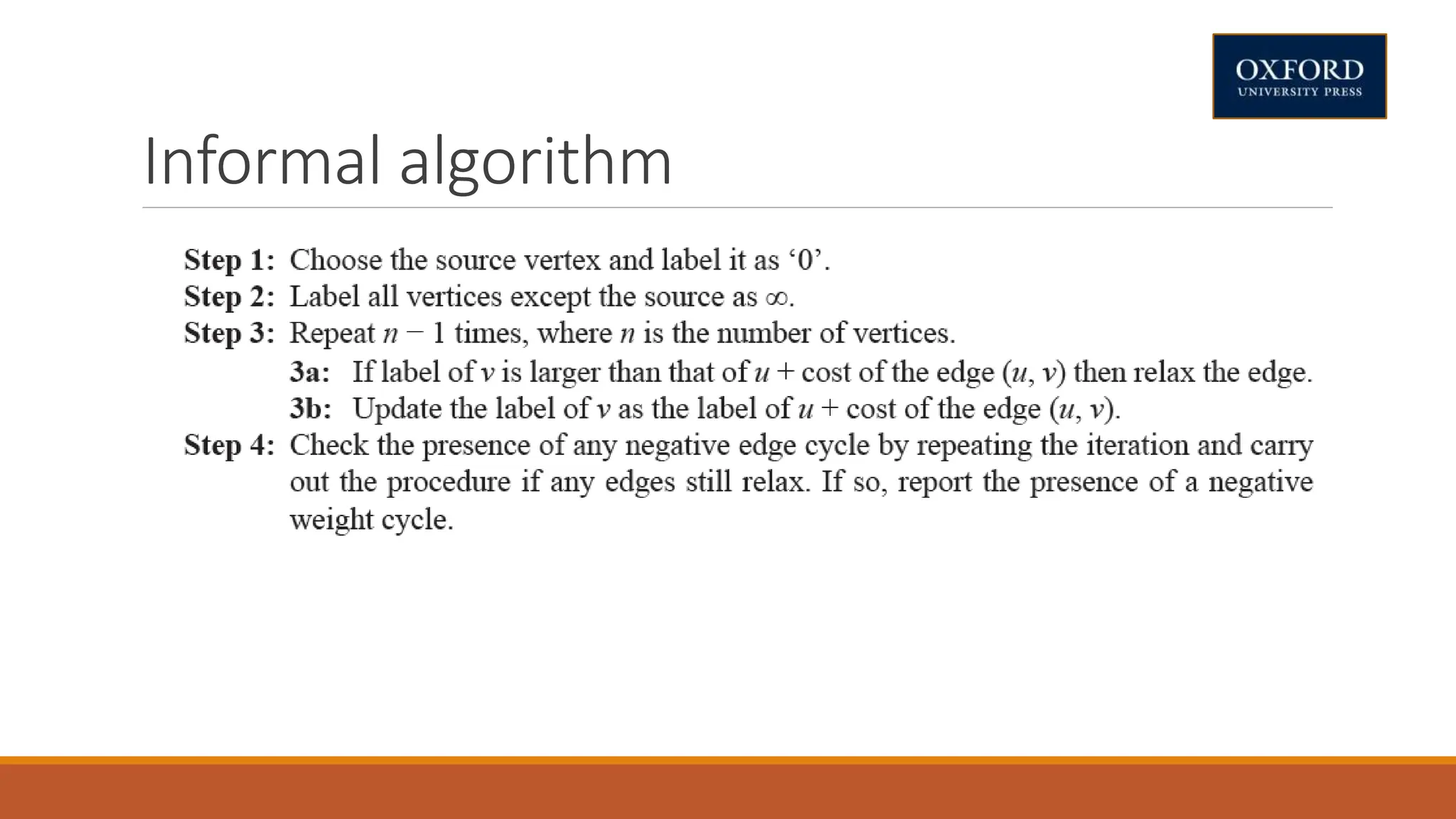
Informal algorithm
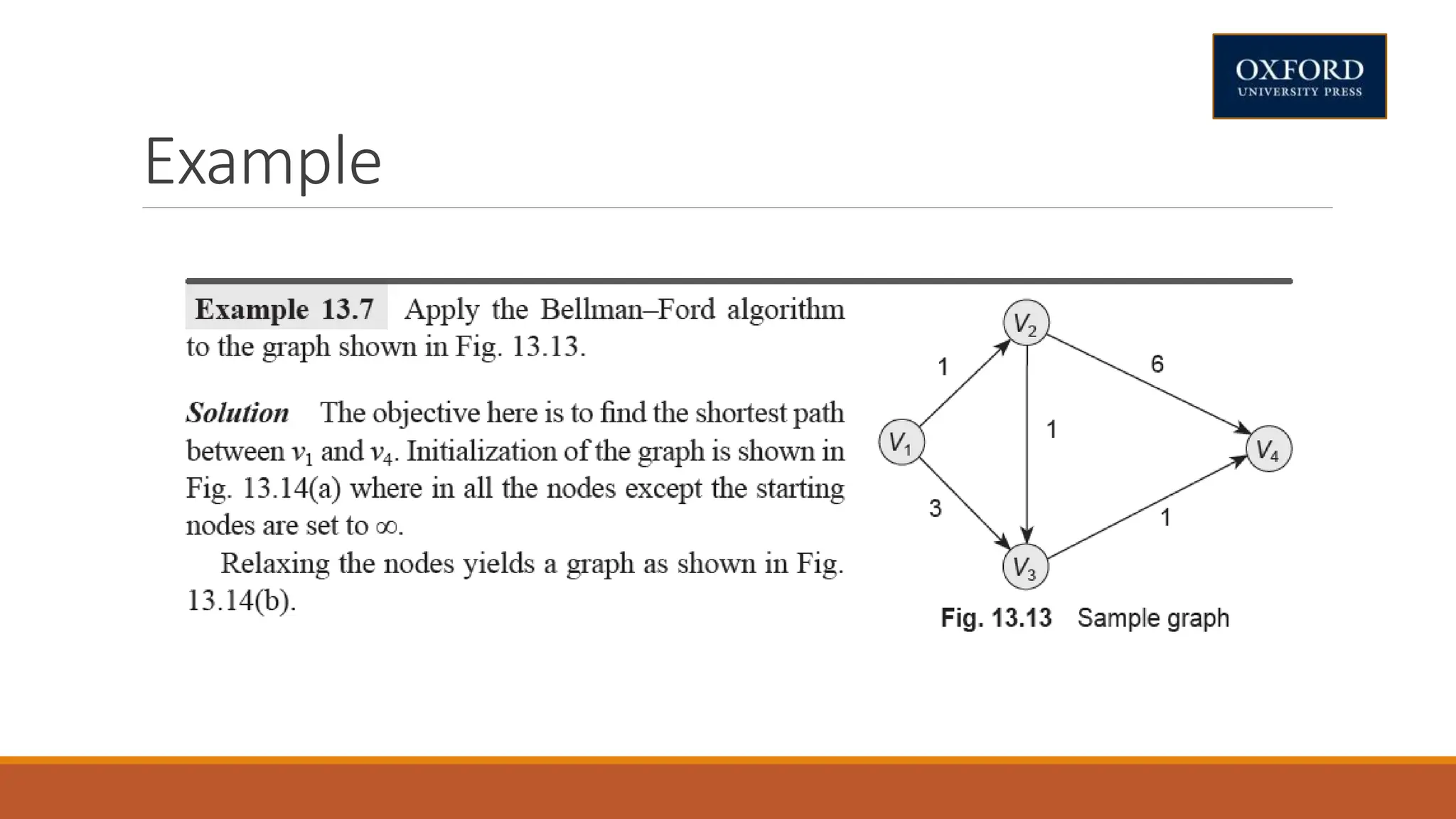
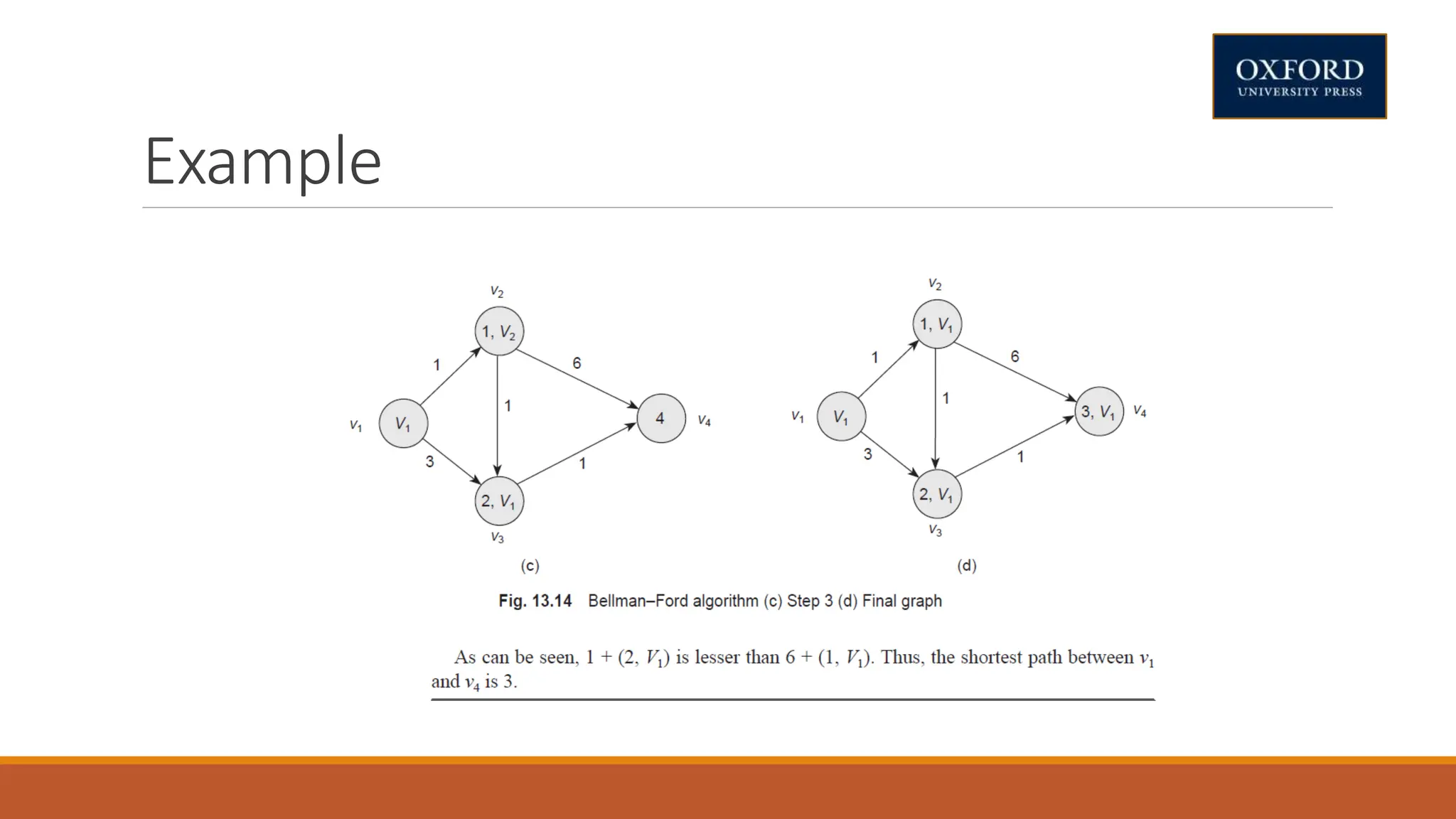
Example
Example
Example
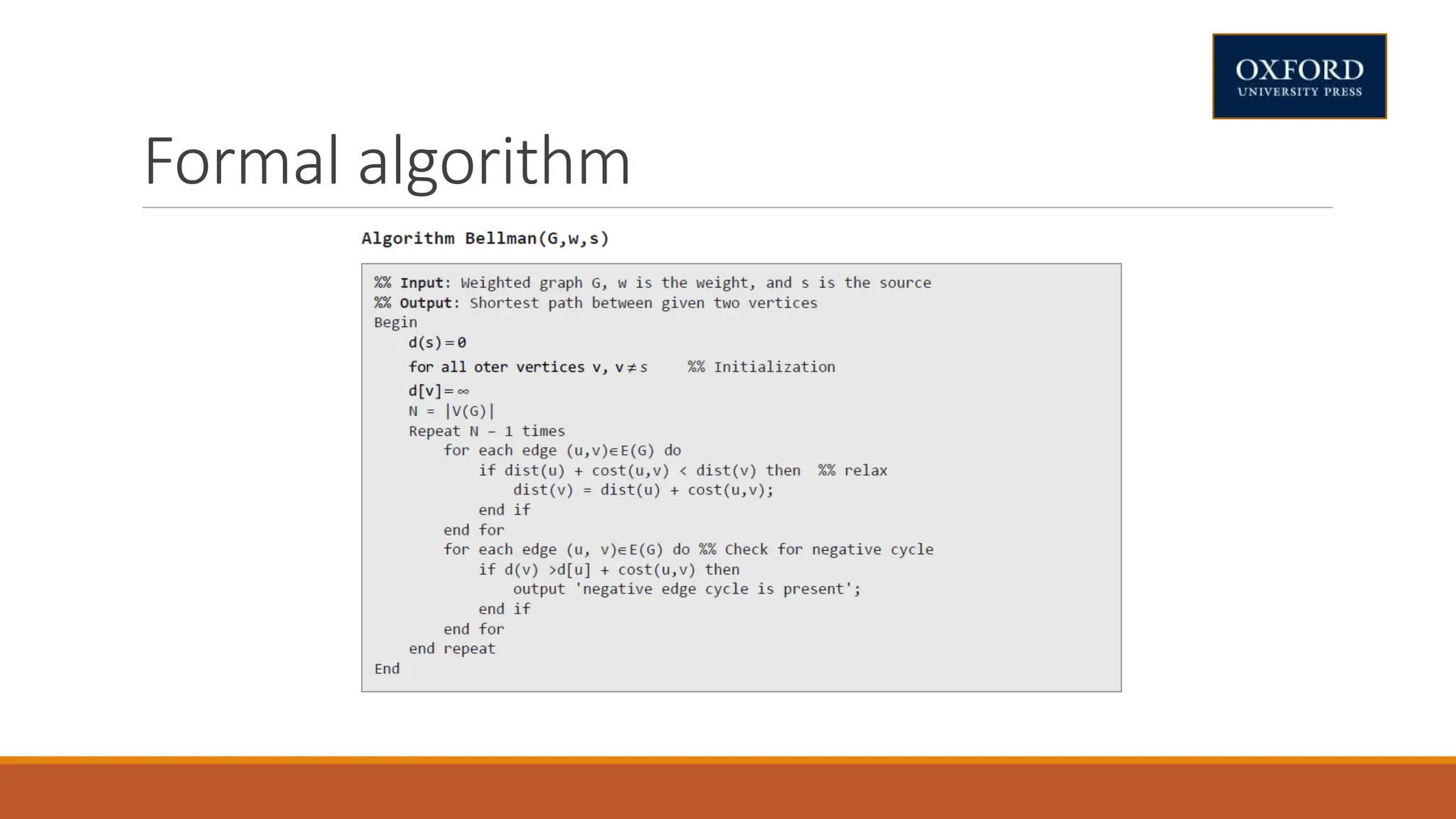
Formal algorithm
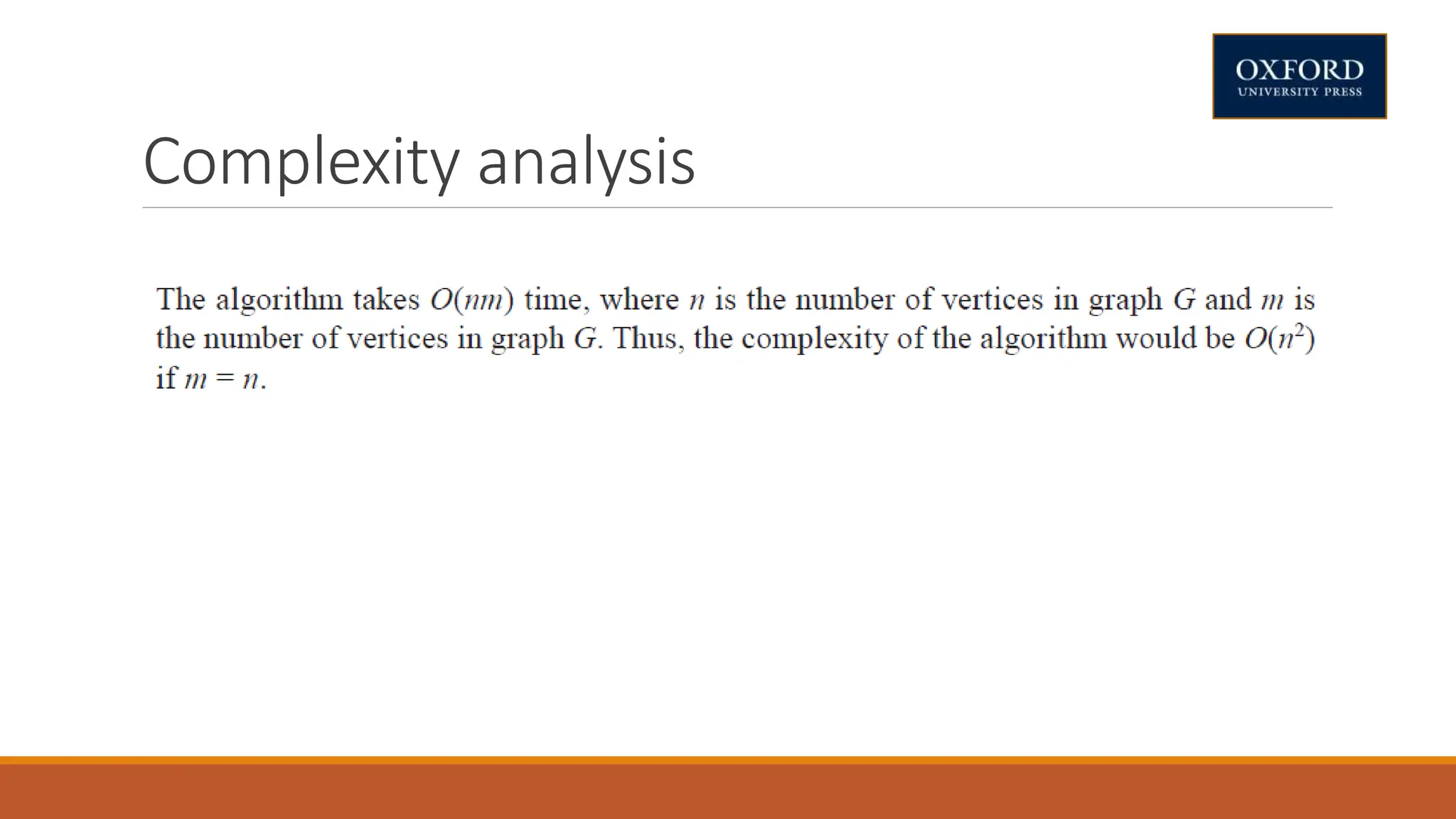
Complexity analysis
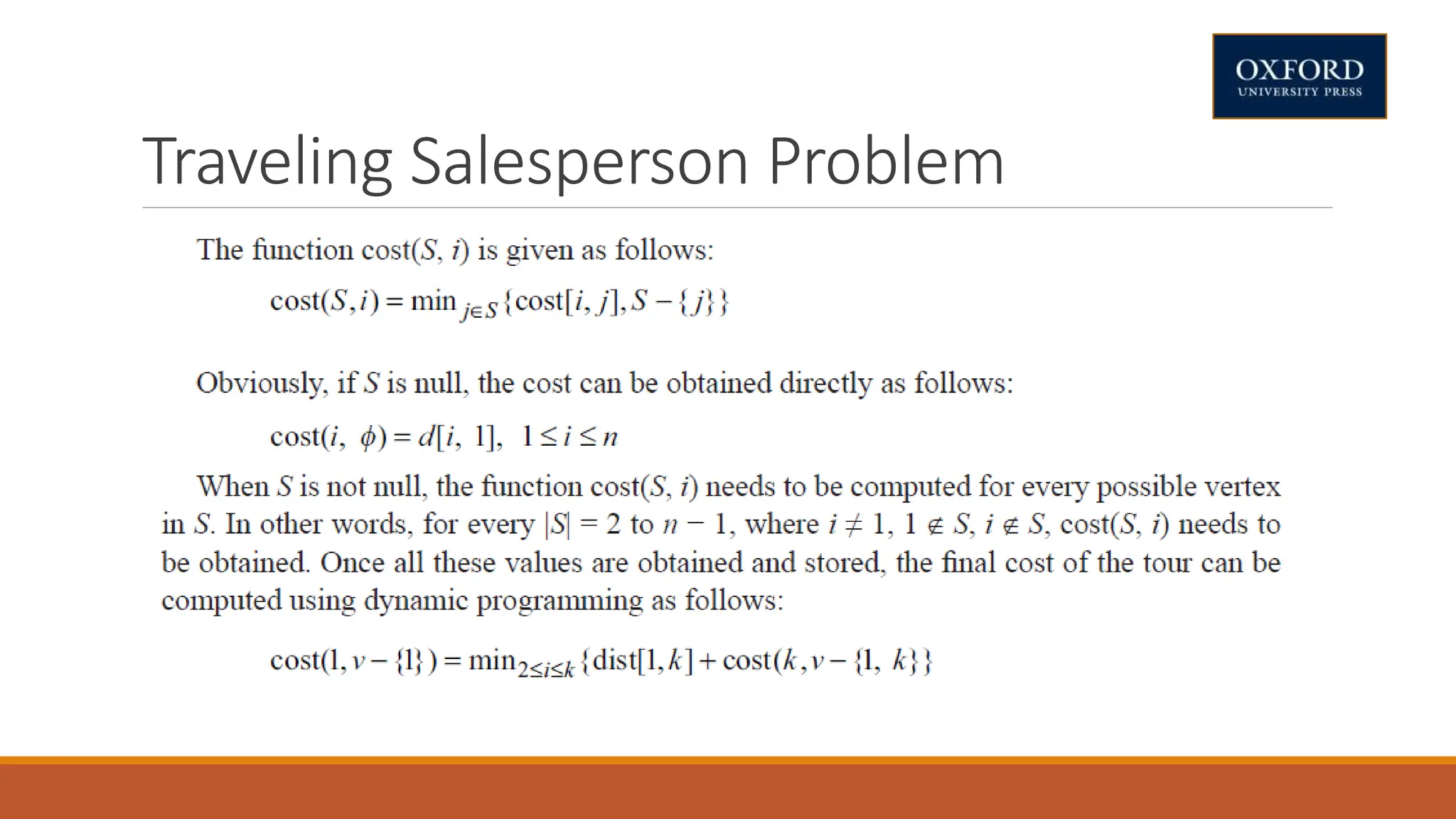
Traveling Salesperson Problem
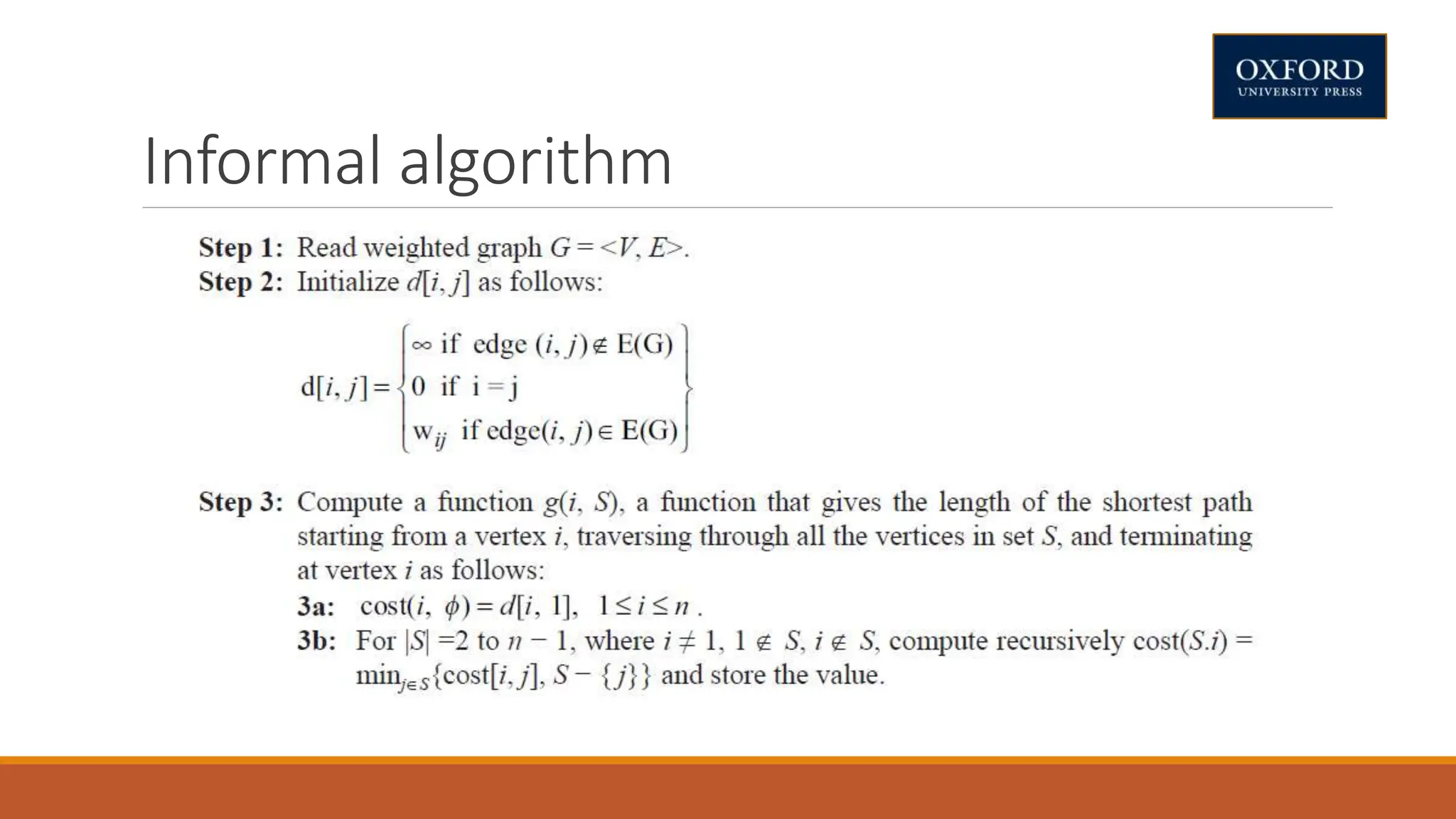
Informal algorithm
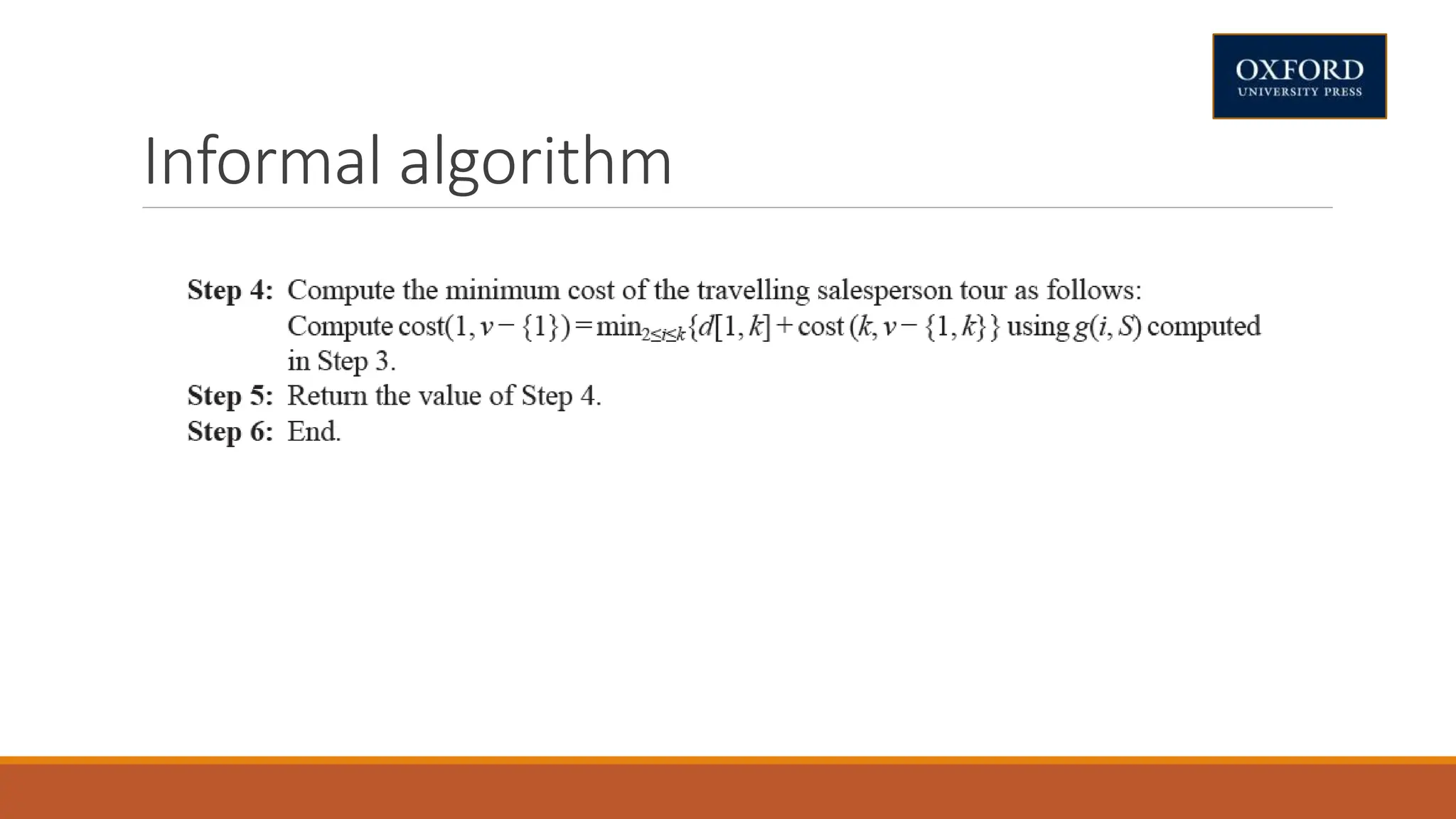
Informal algorithm
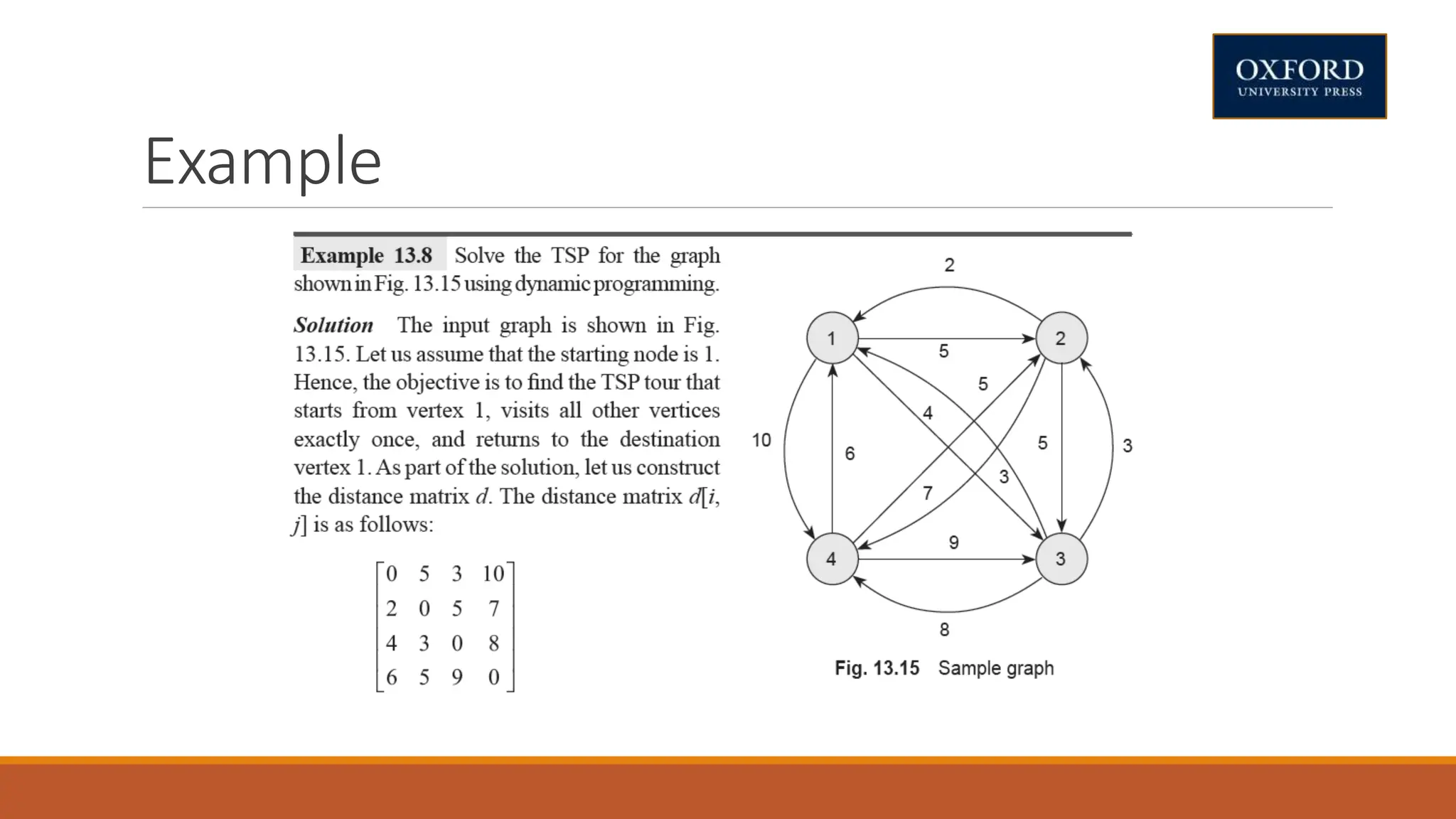
Example
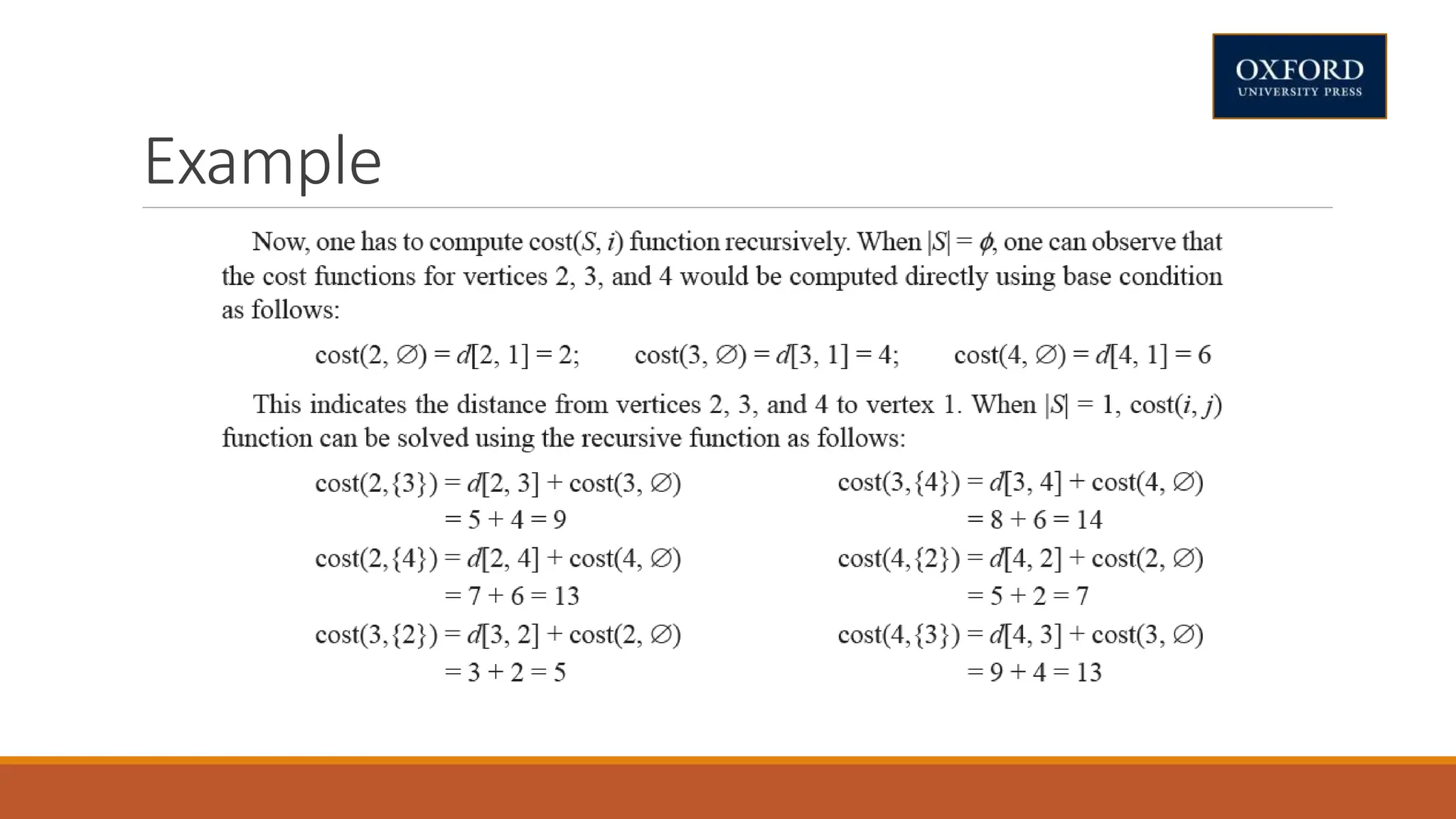
Example
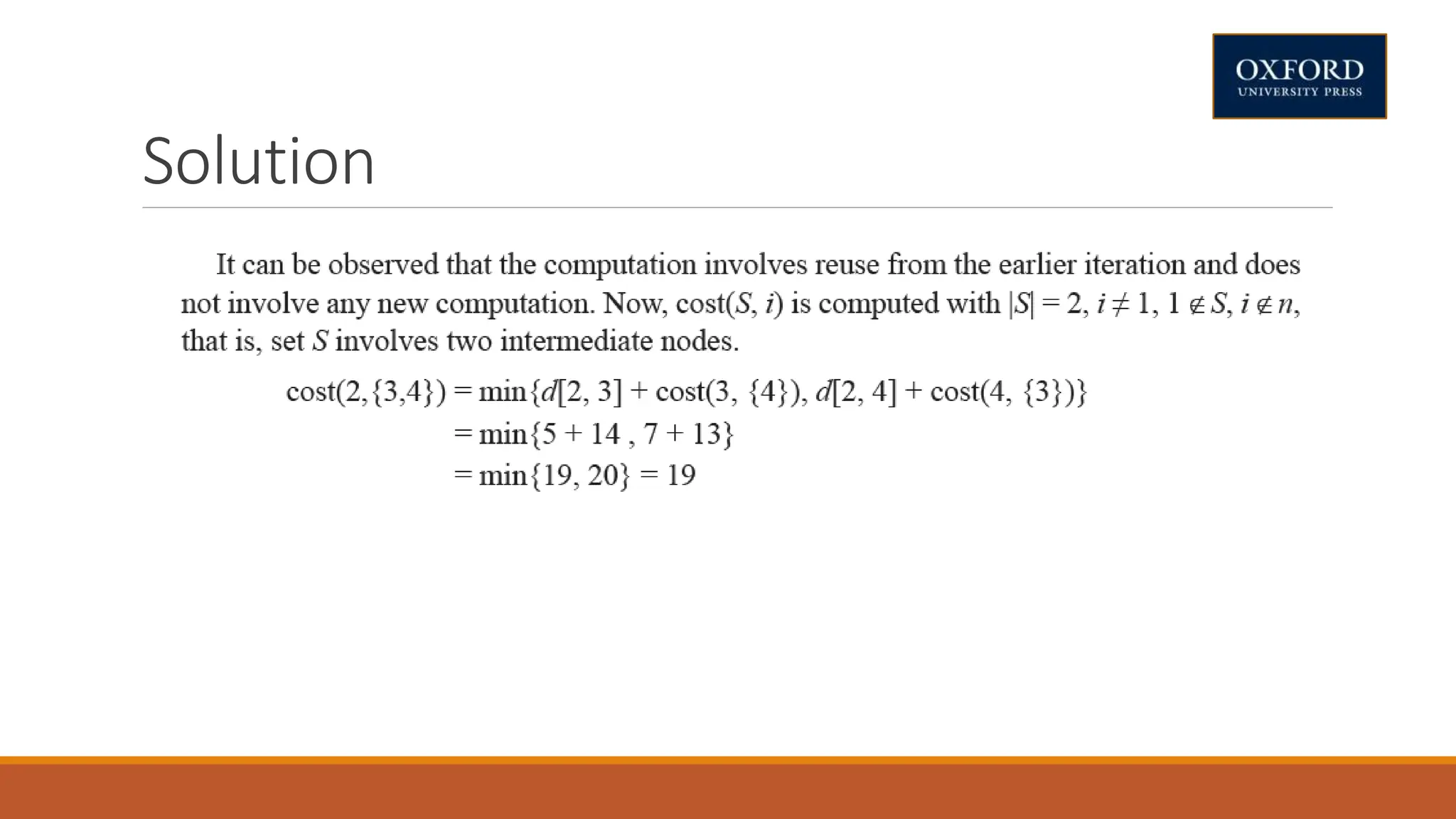
Solution
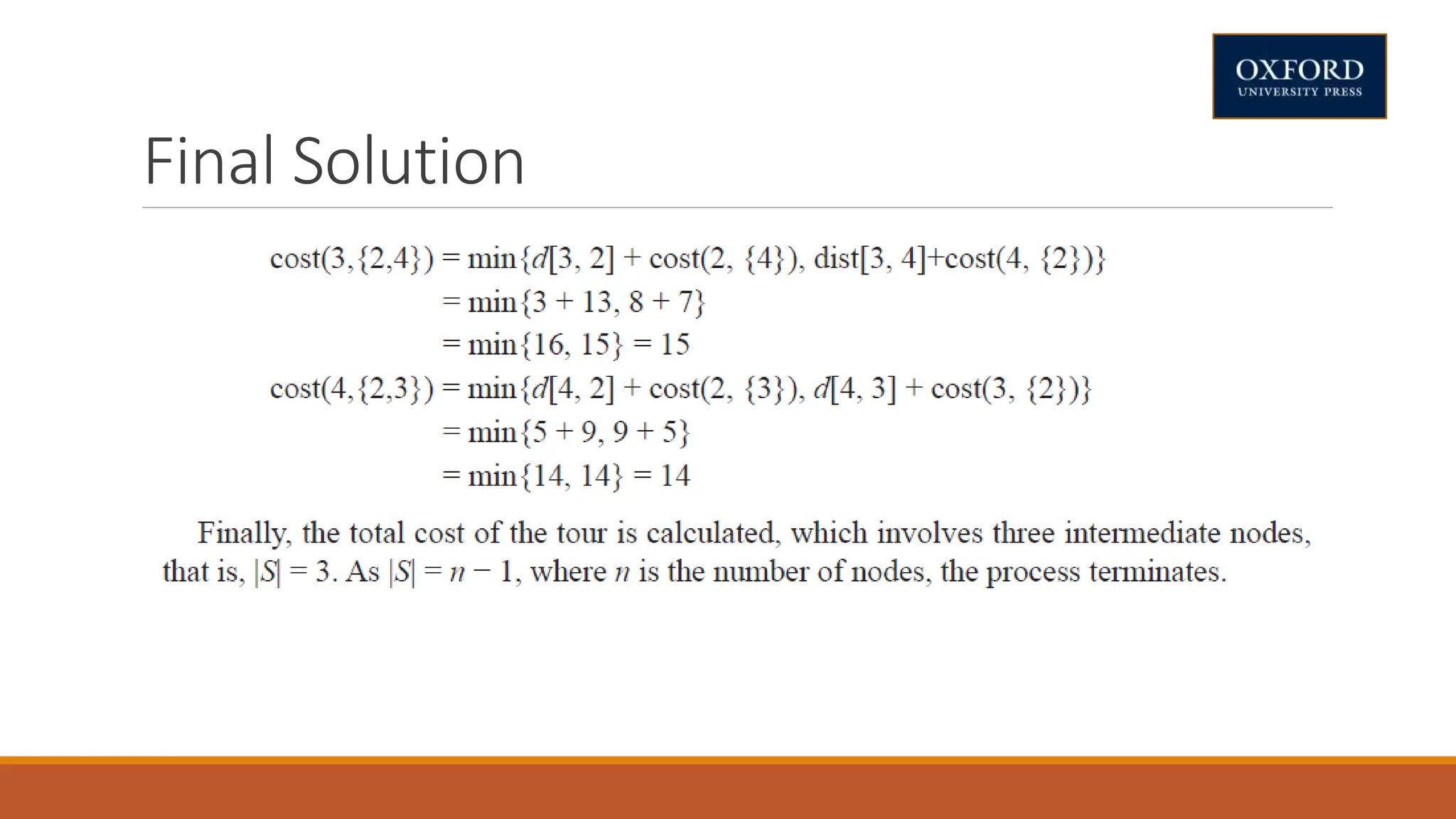
Final Solution
Final Solution
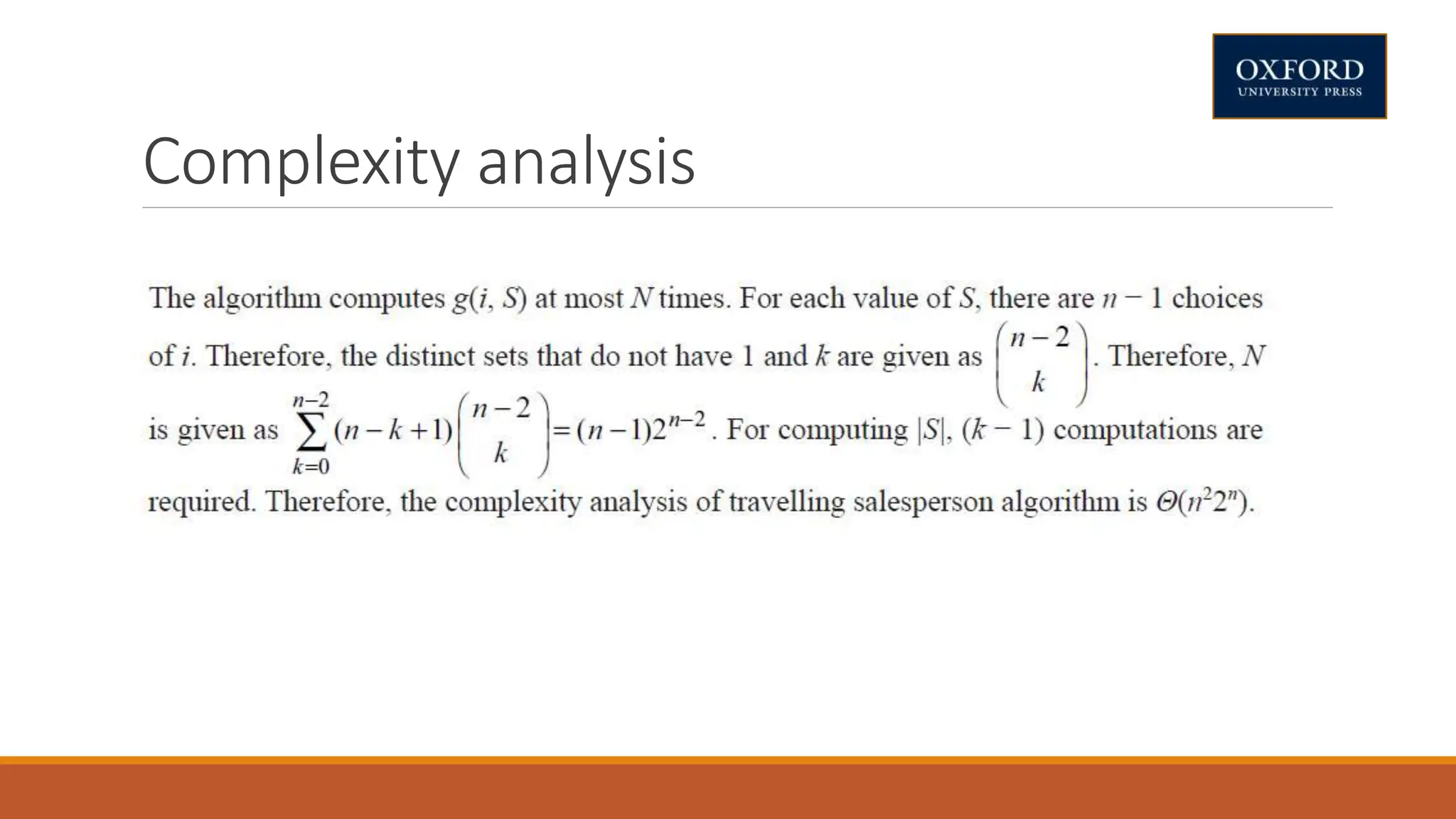
Complexity analysis
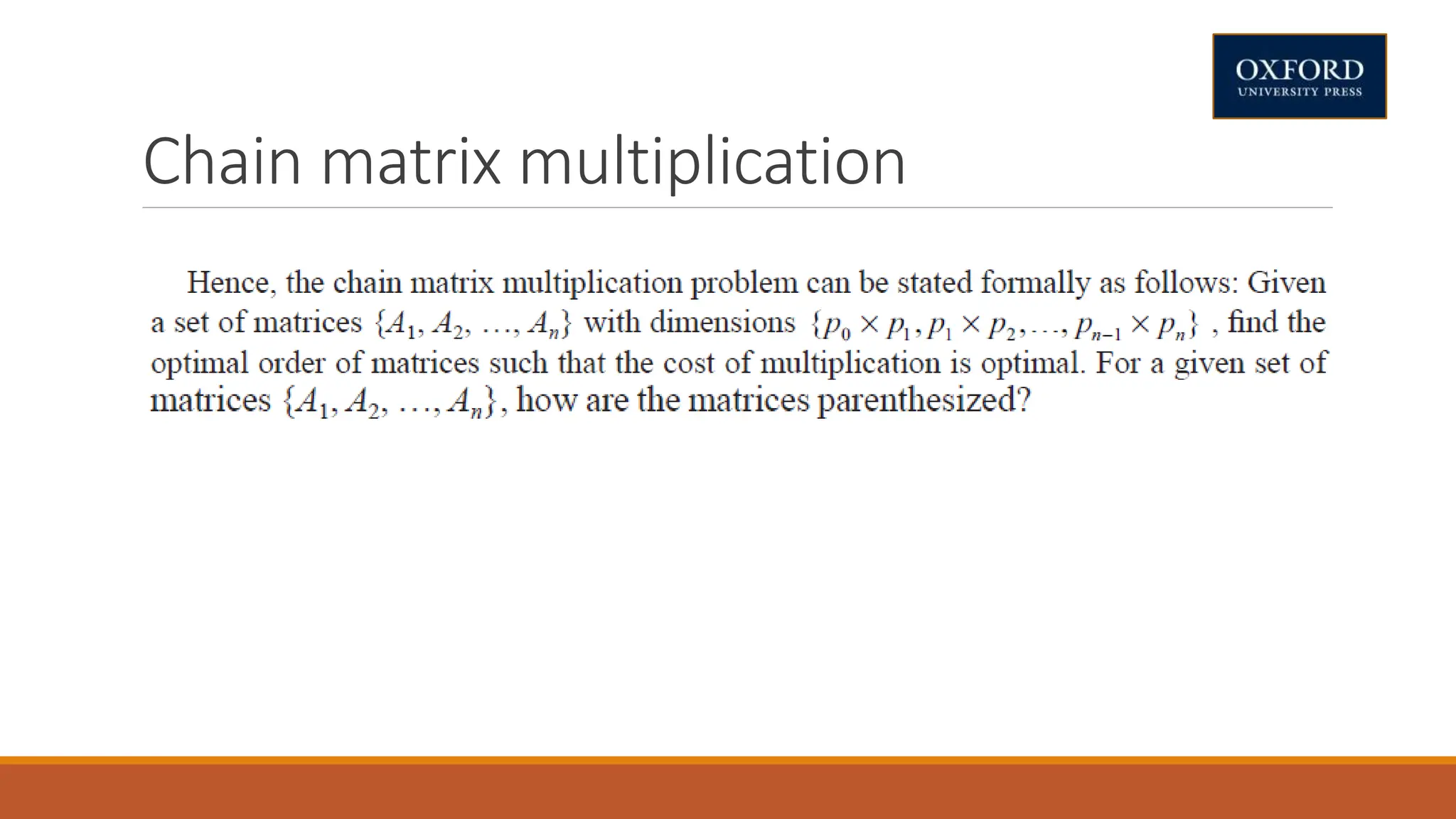
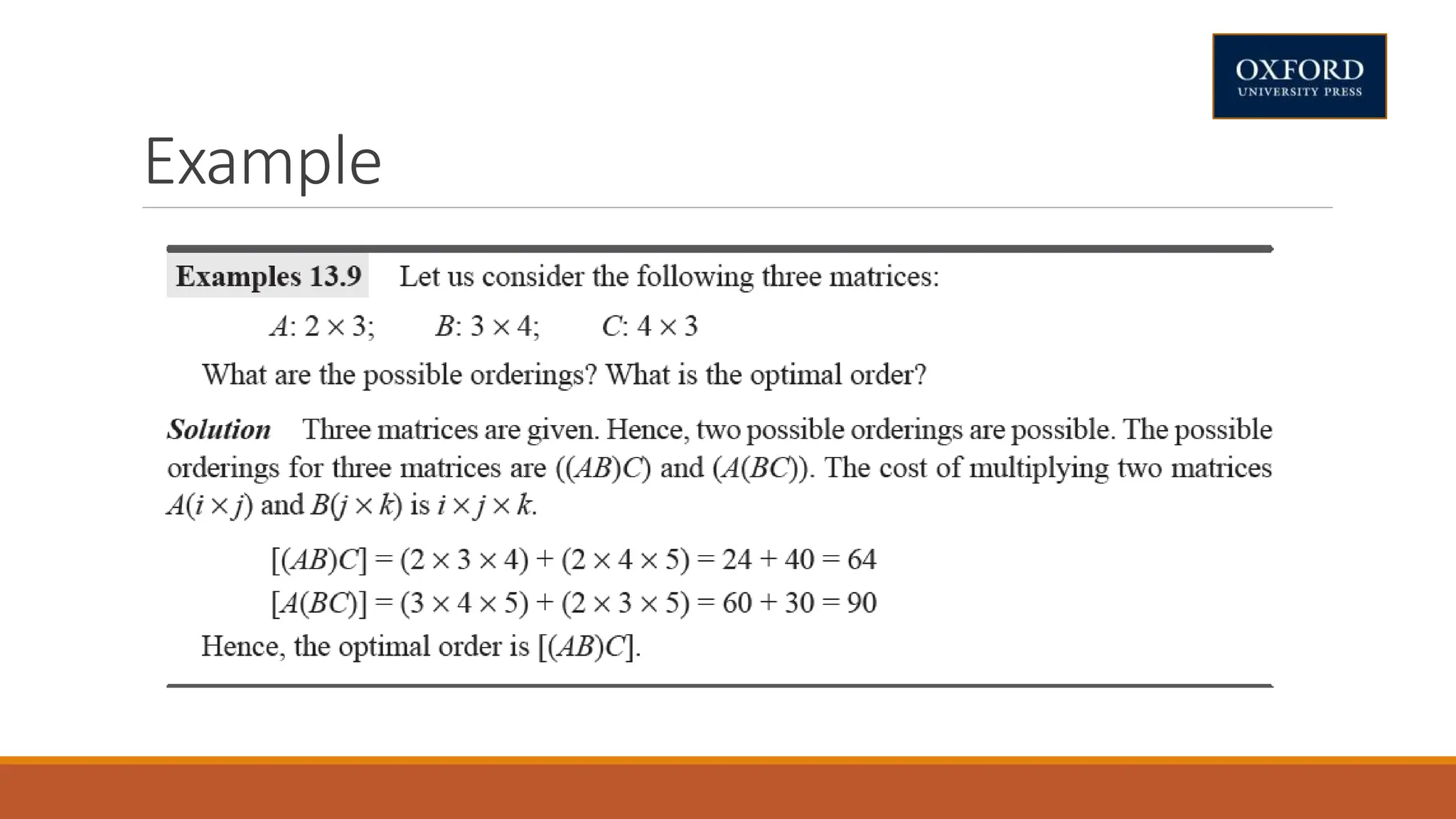
Chain matrix multiplication
Example
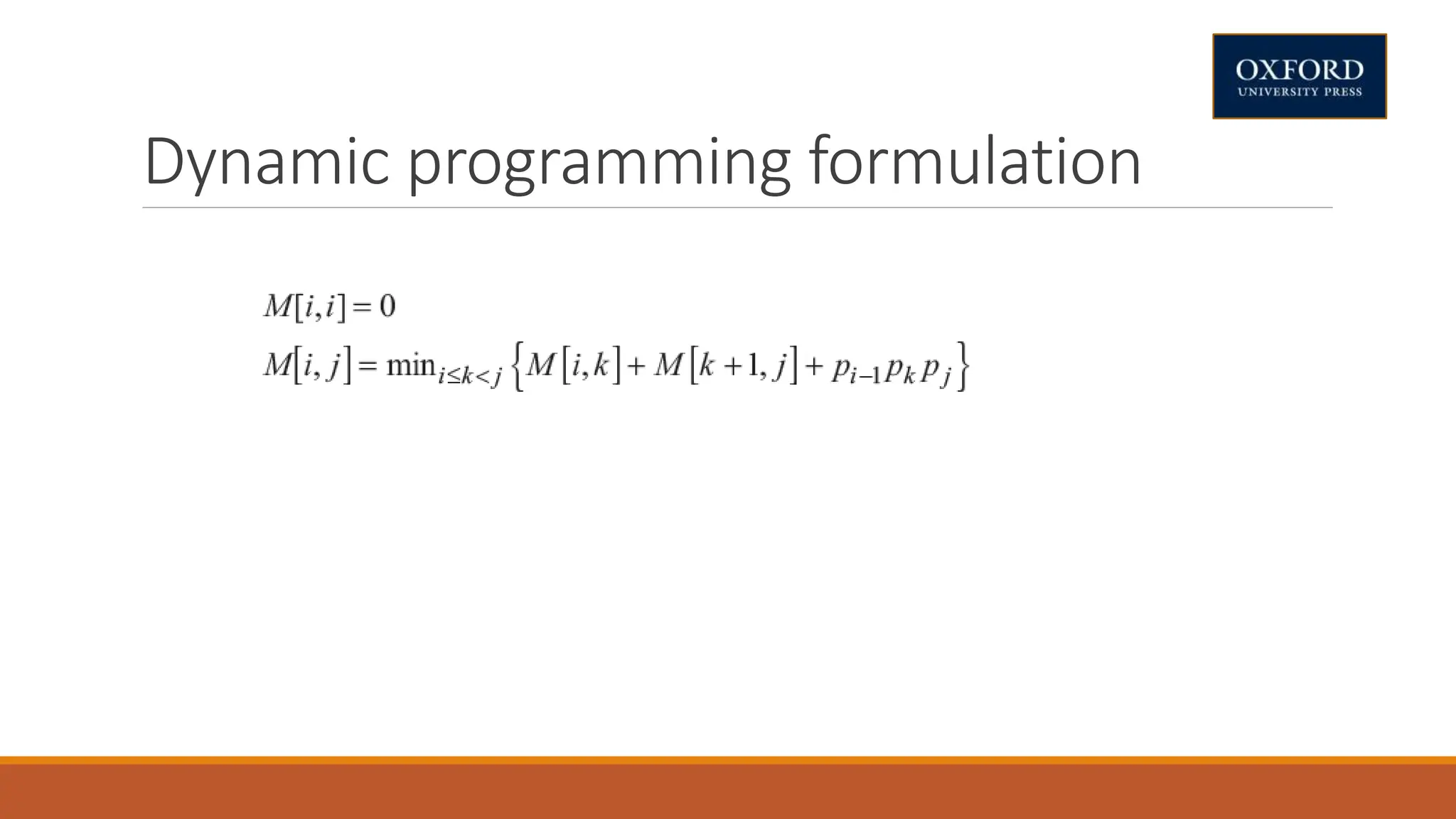
Dynamic programming formulation
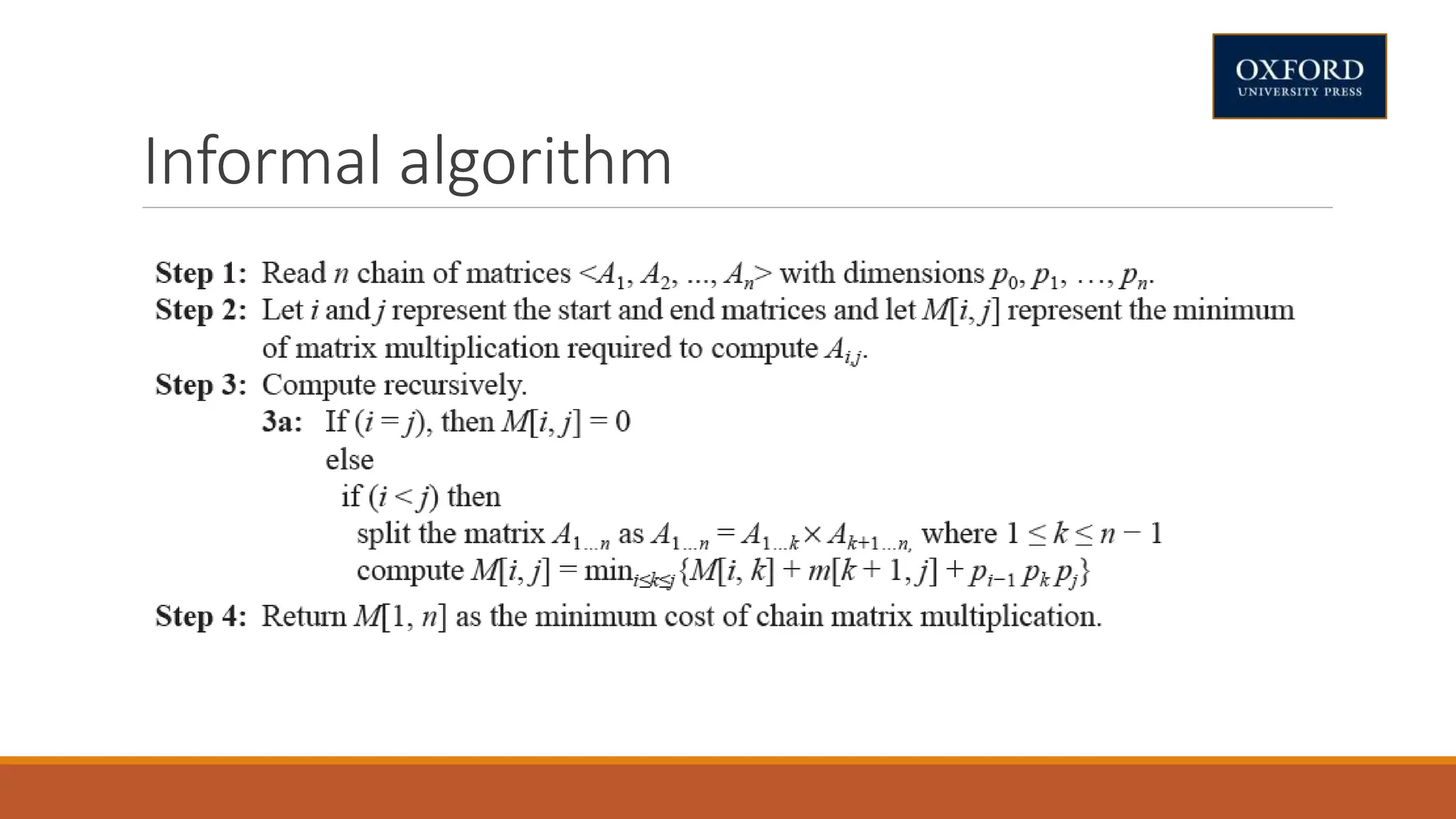
Informal algorithm
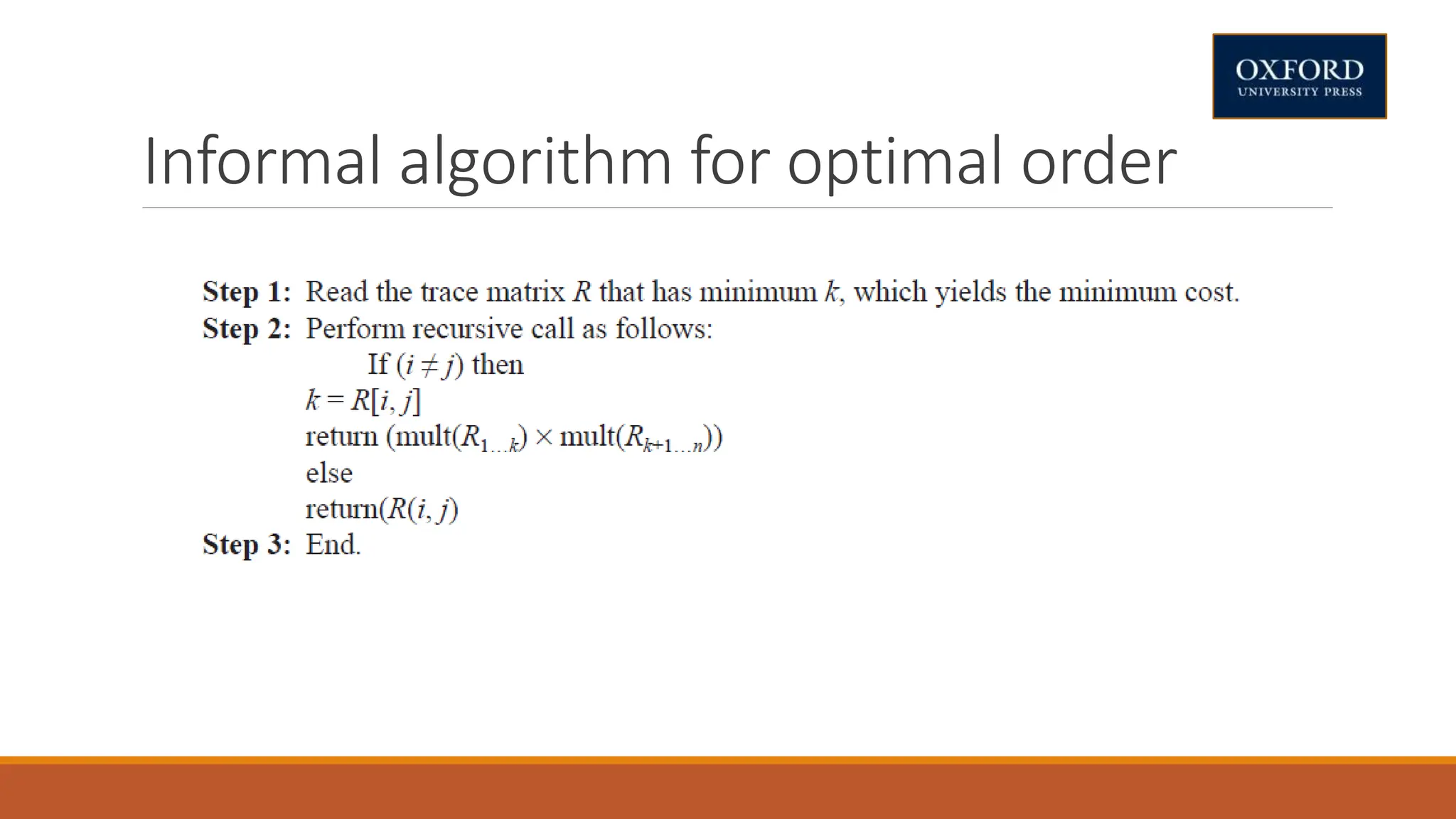
Informal algorithm for optimal order
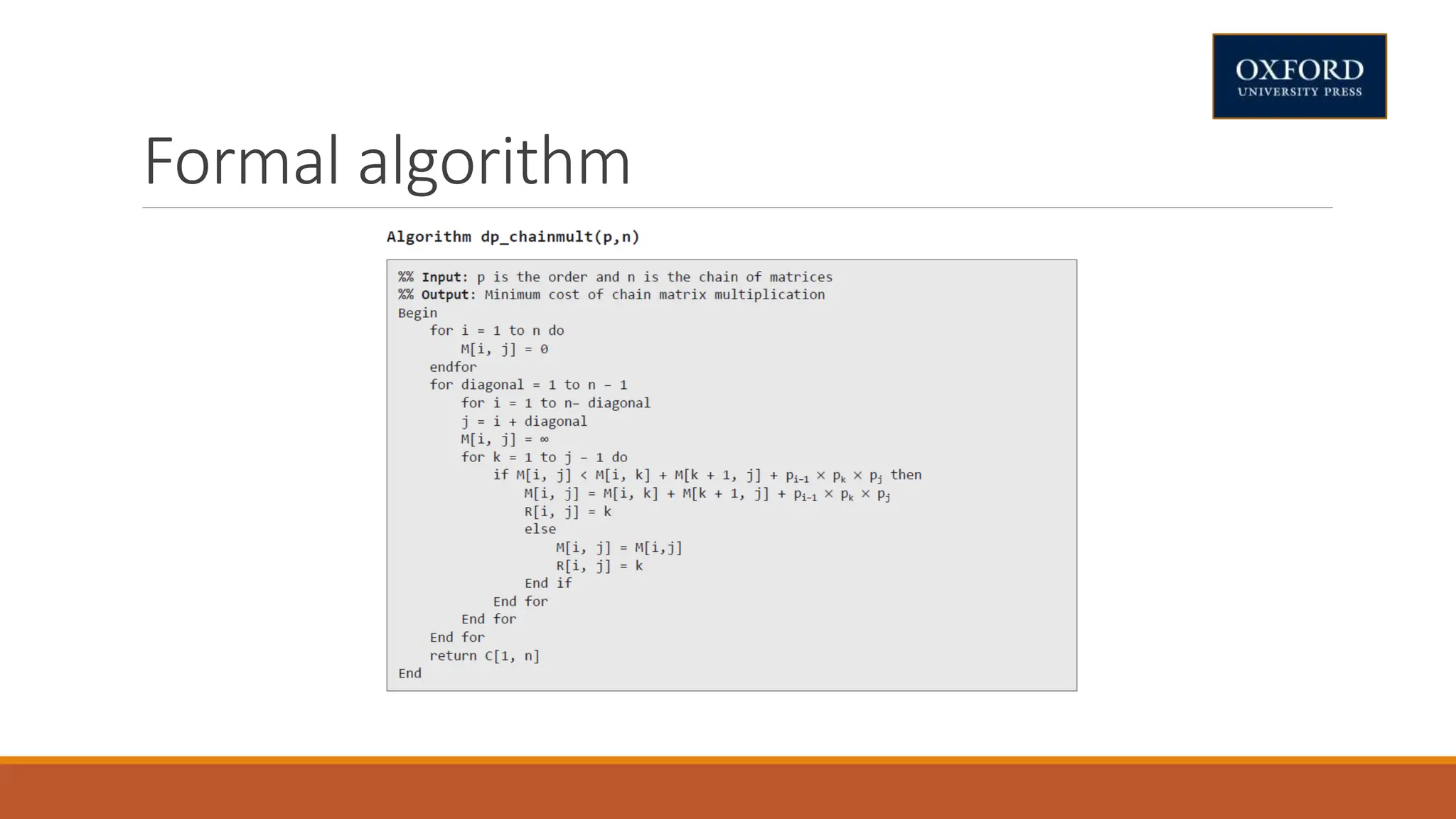
Formal algorithm
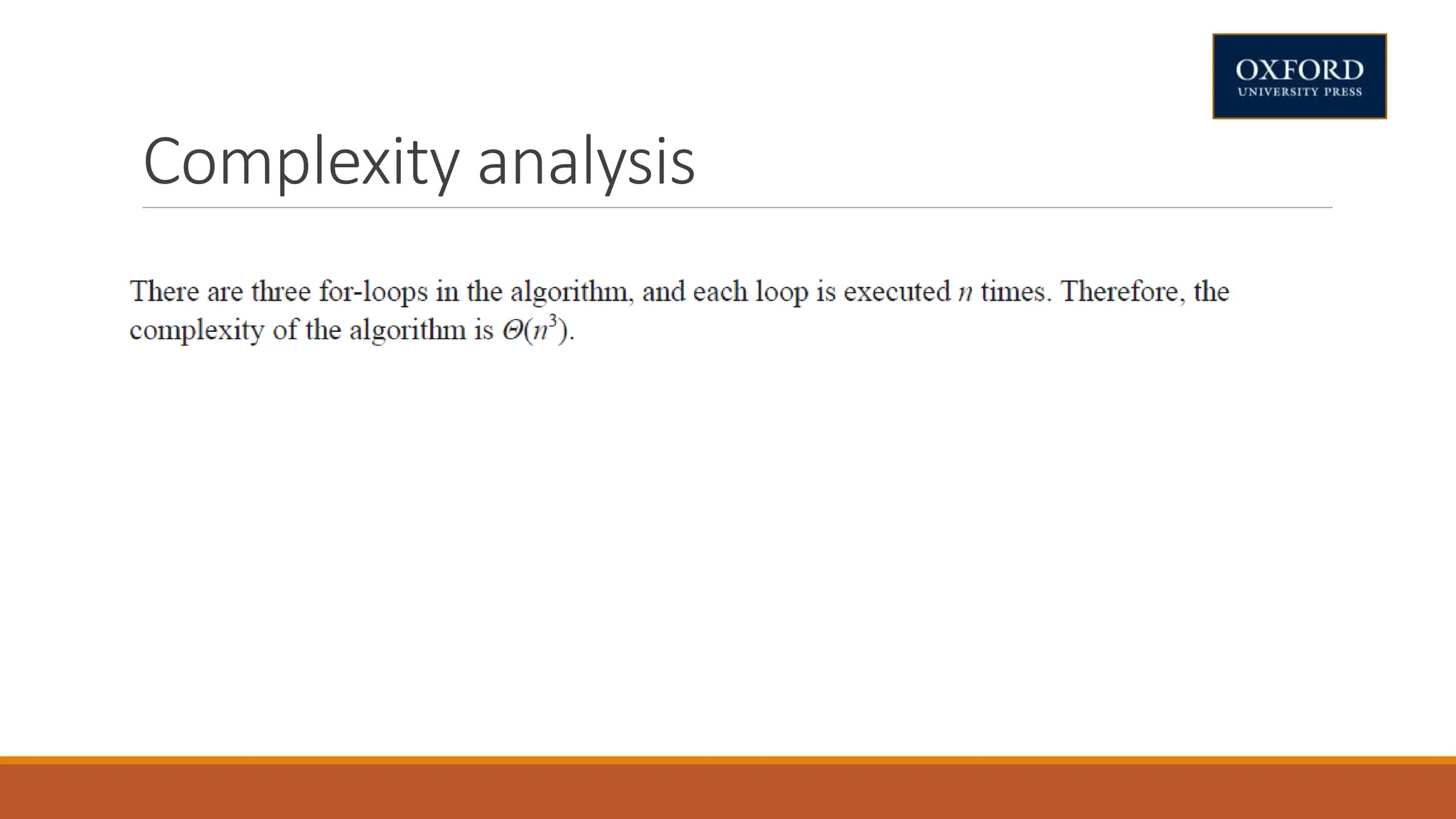
Complexity analysis
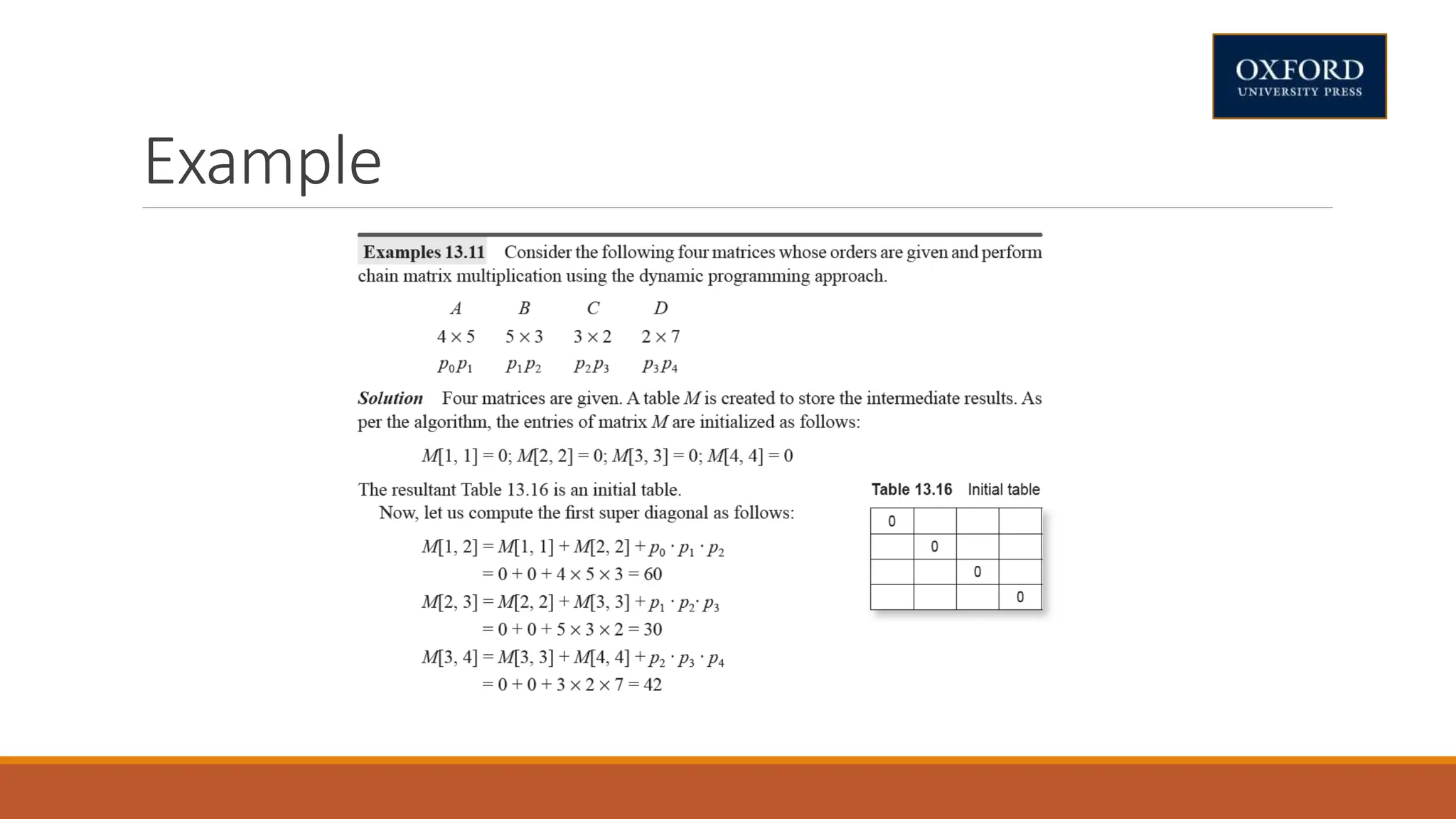
Example
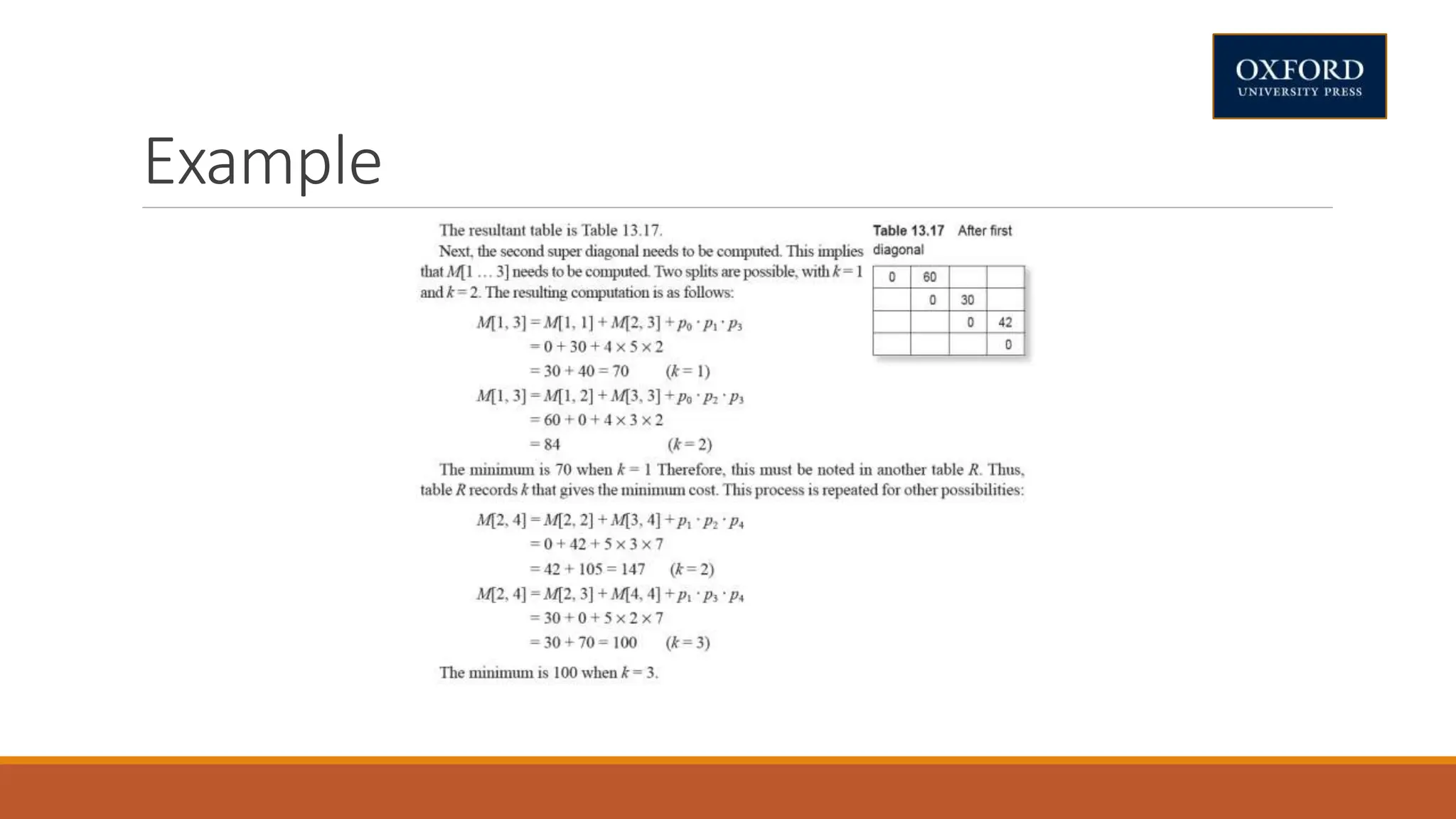
Example
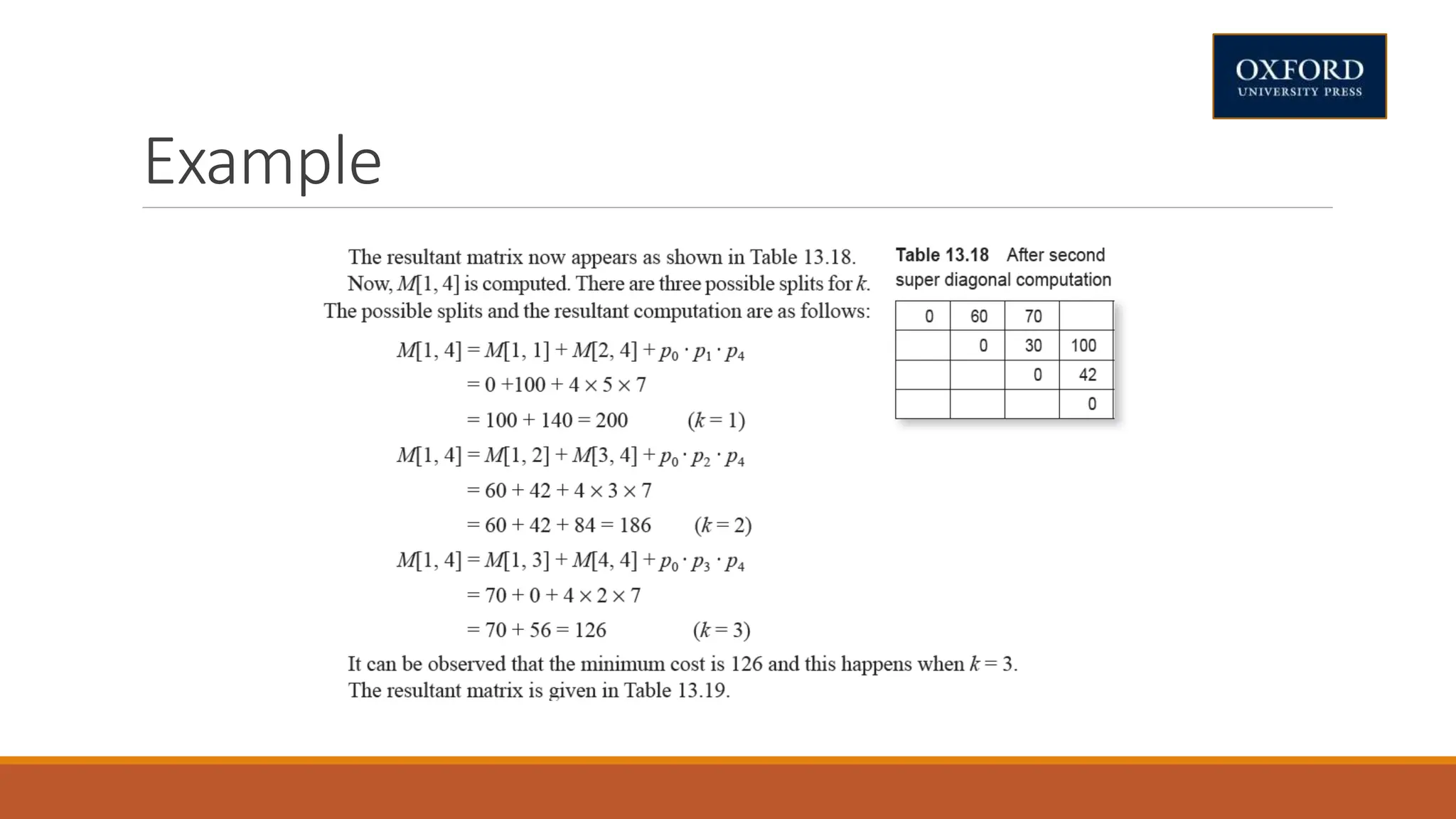
Example
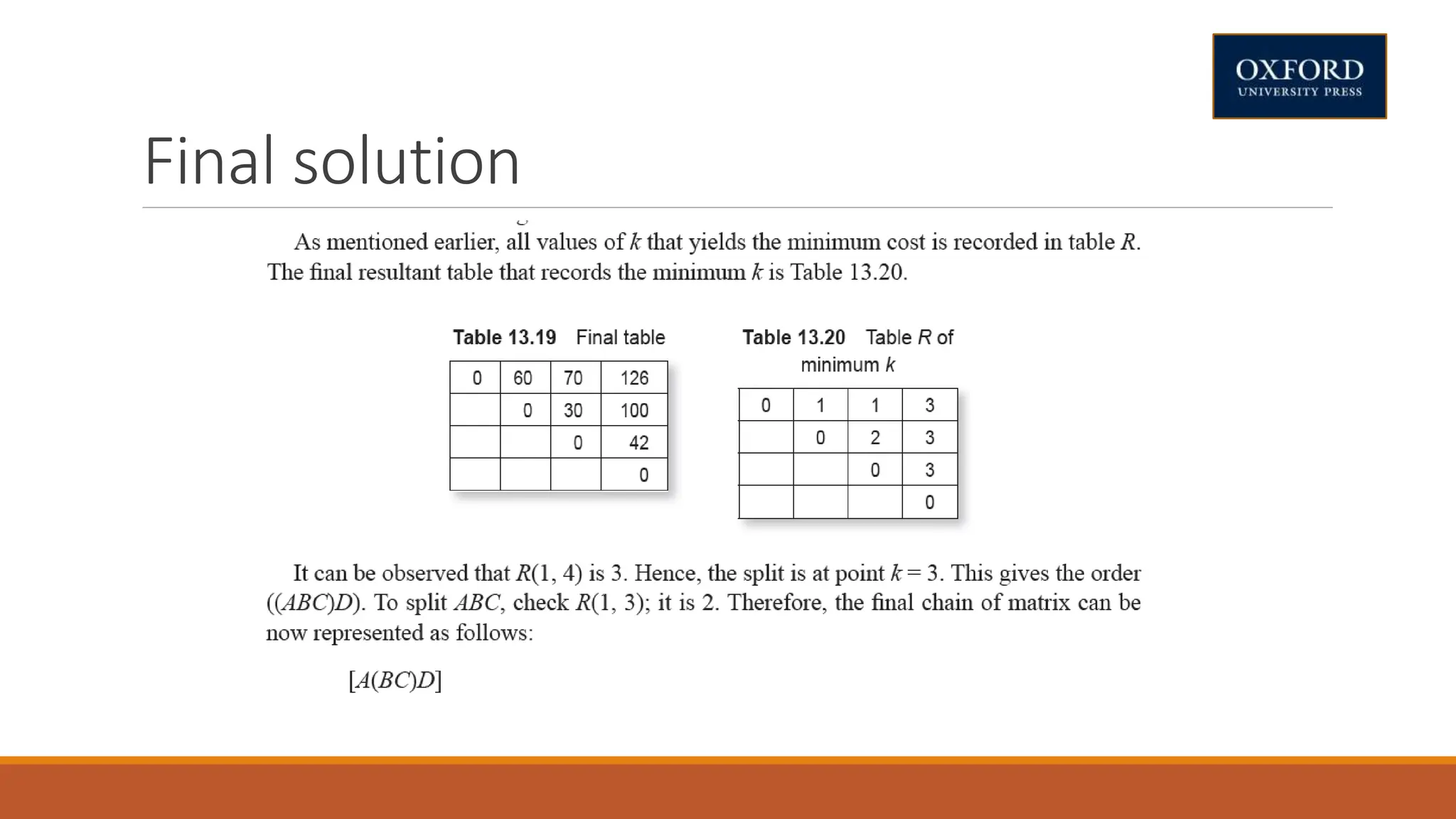
Final solution
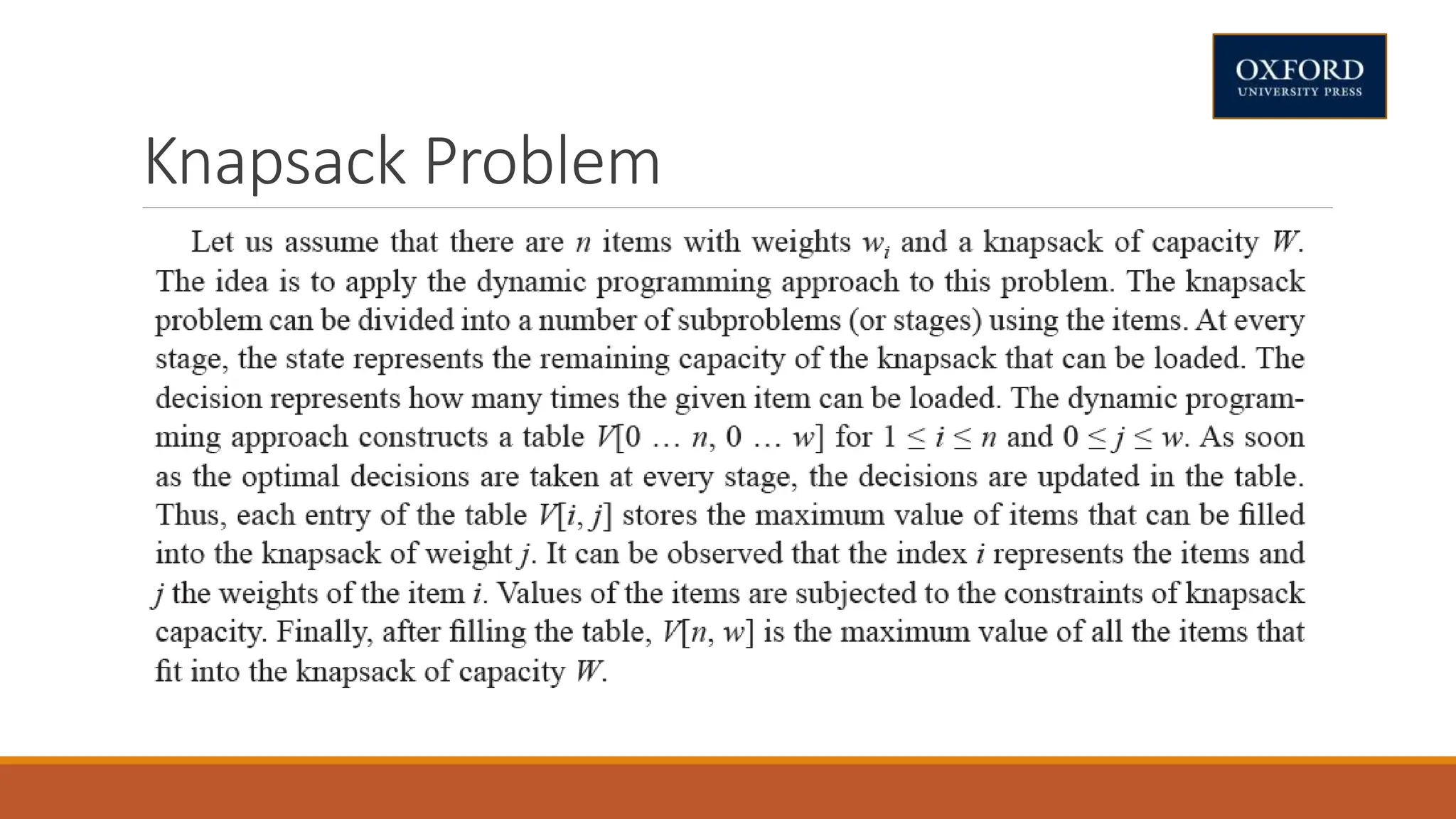
Knapsack Problem
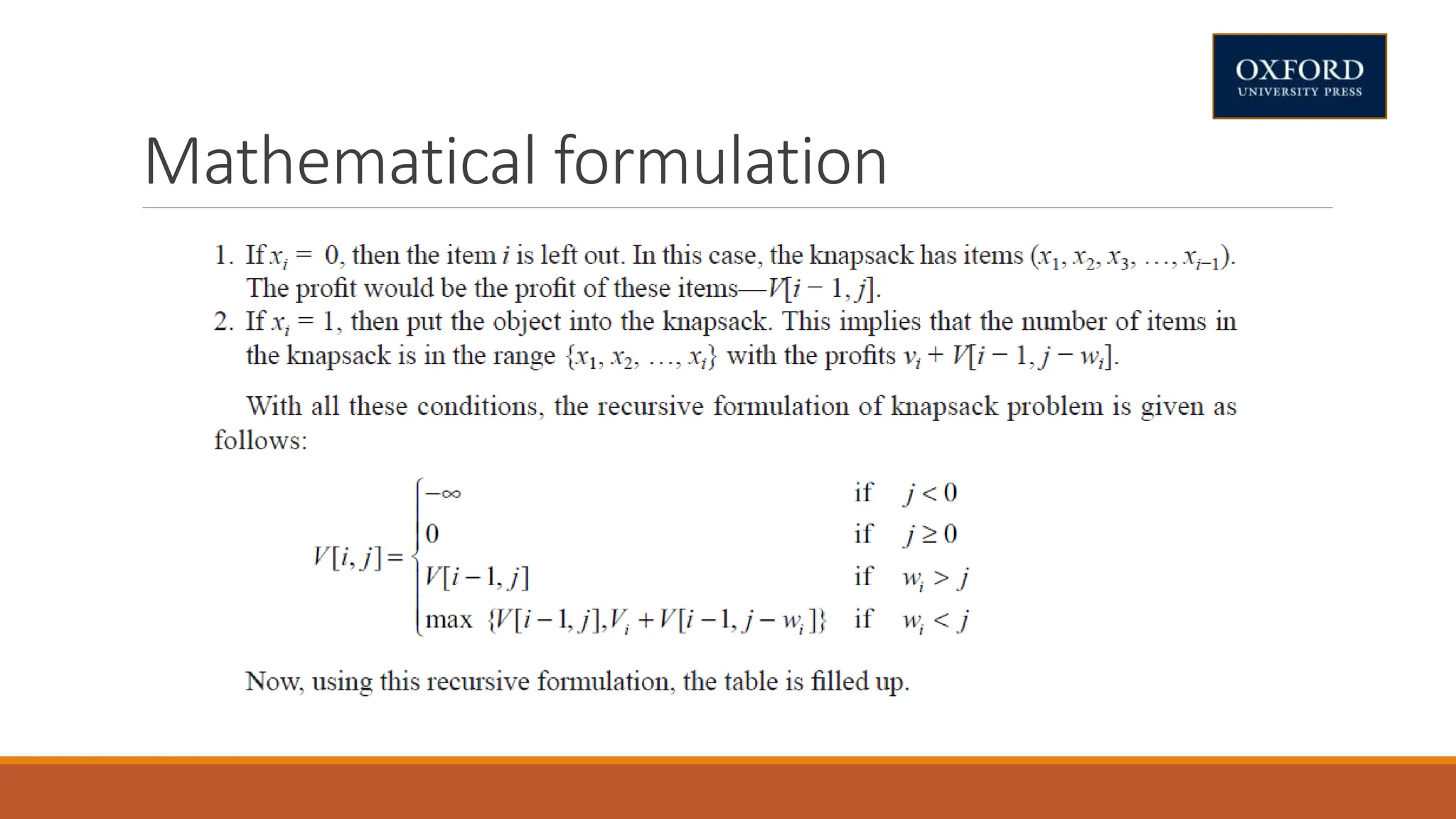
Mathematical formulation
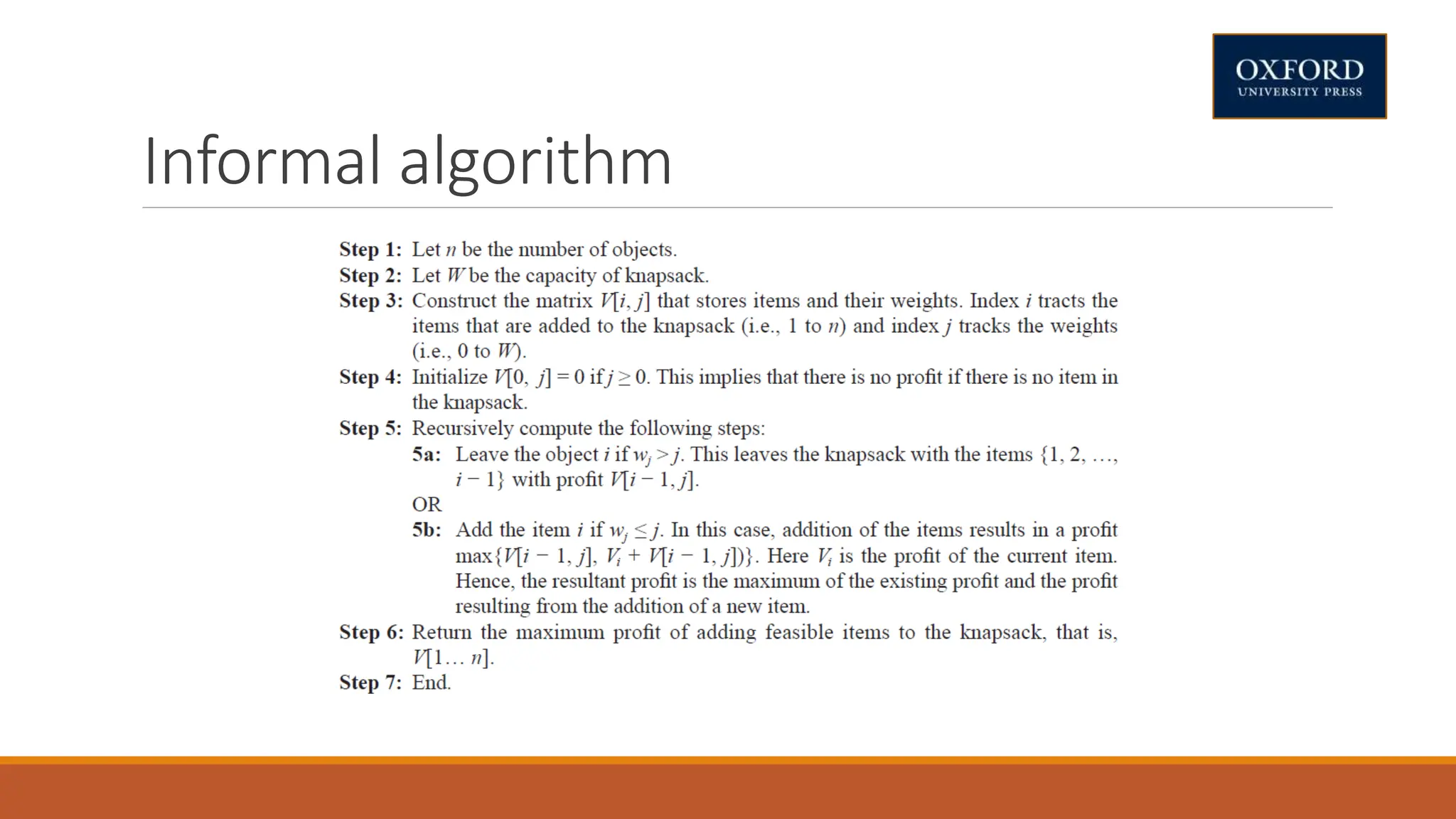
Informal algorithm
Formal algorithm
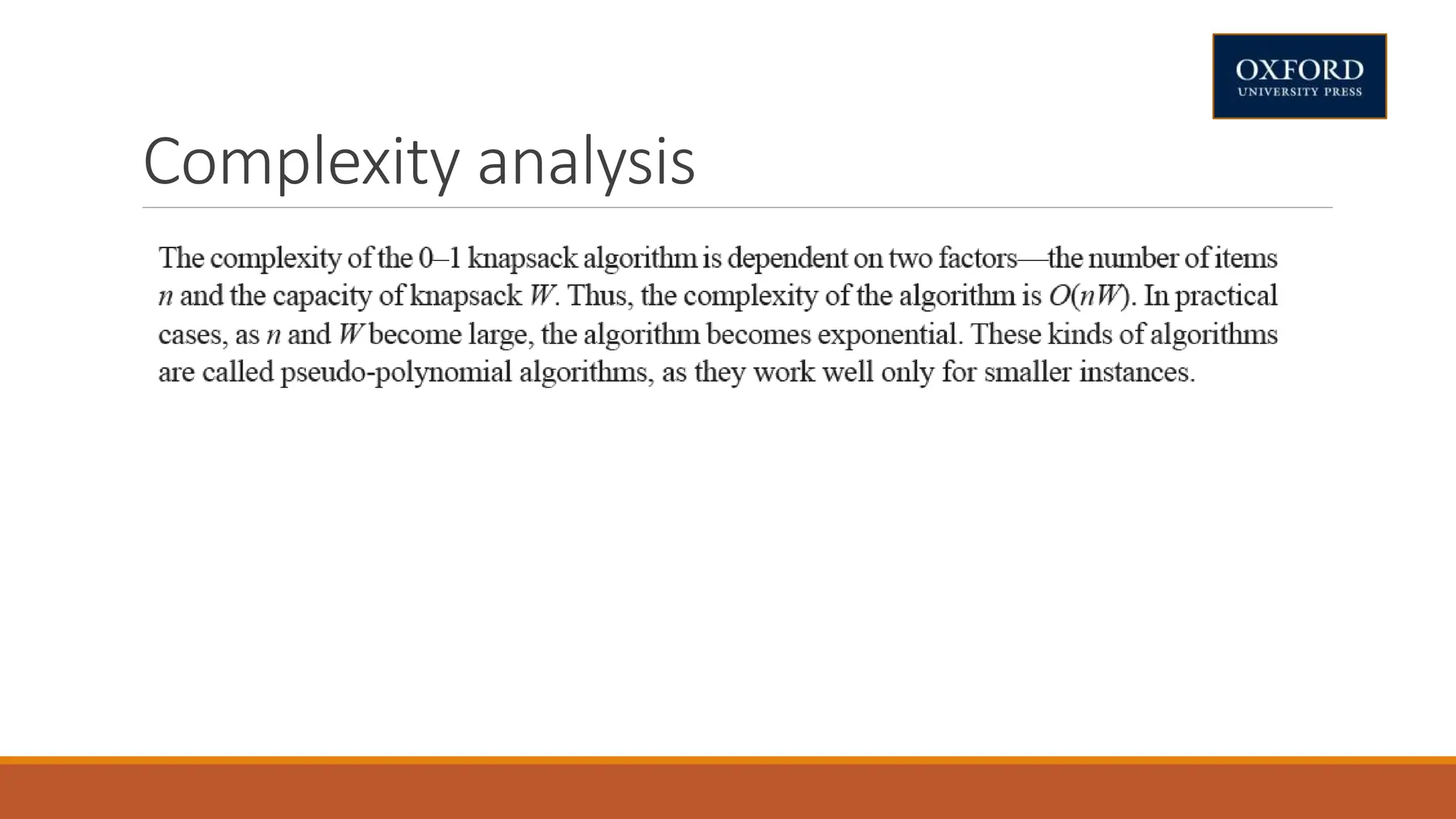
Complexity analysis
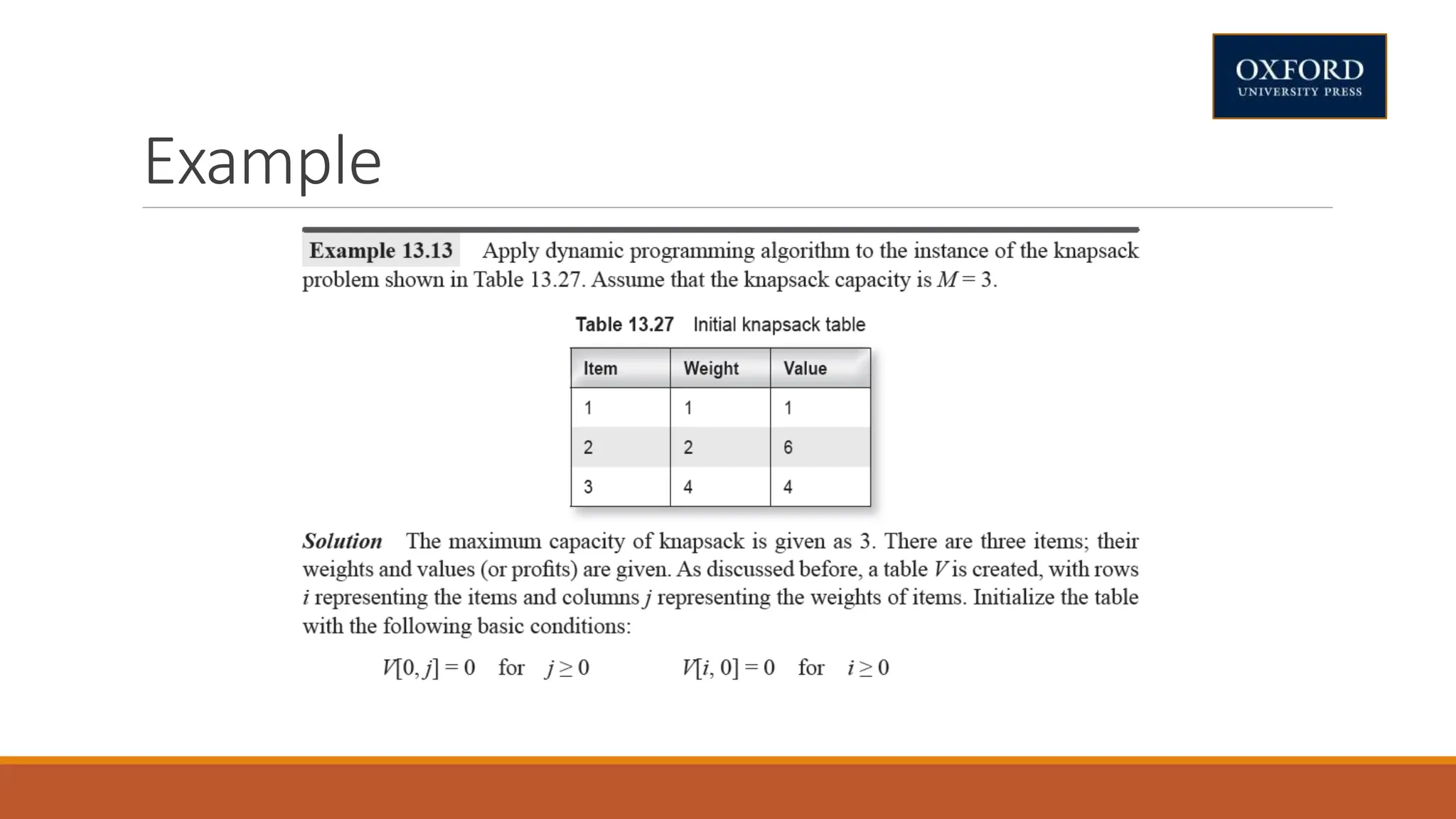
Example
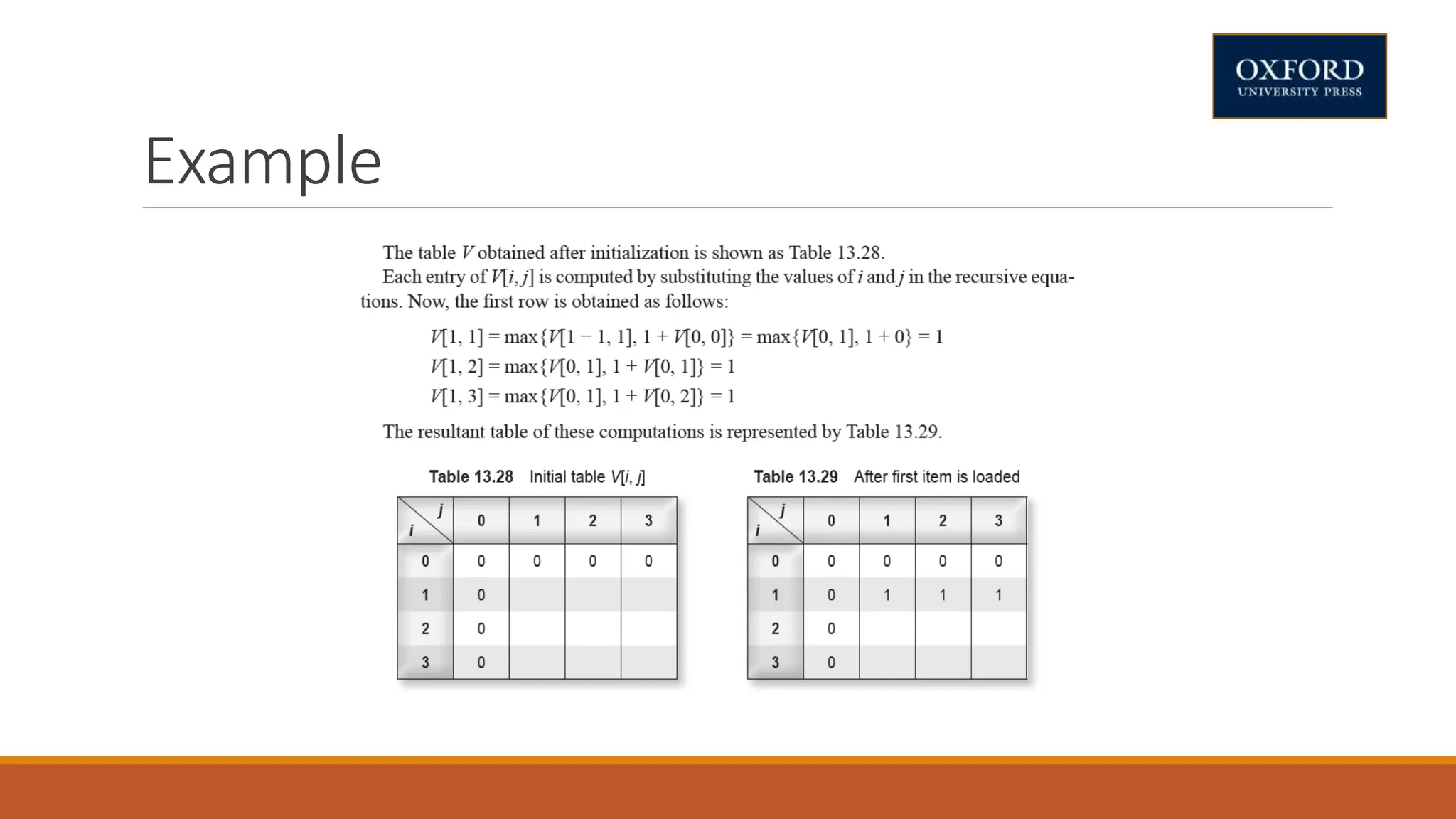
Example
Example
Example
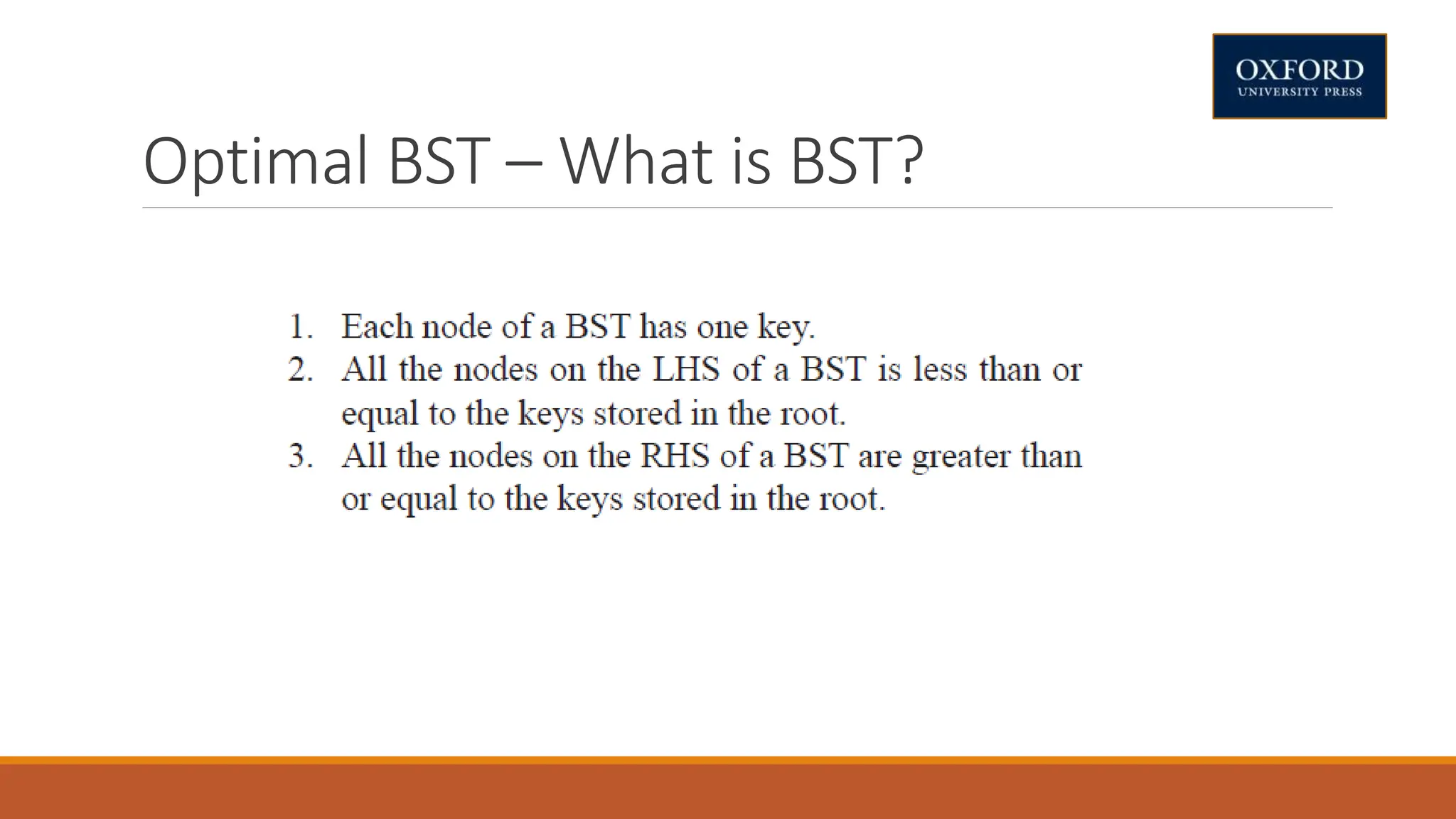
Optimal BST – What is BST?
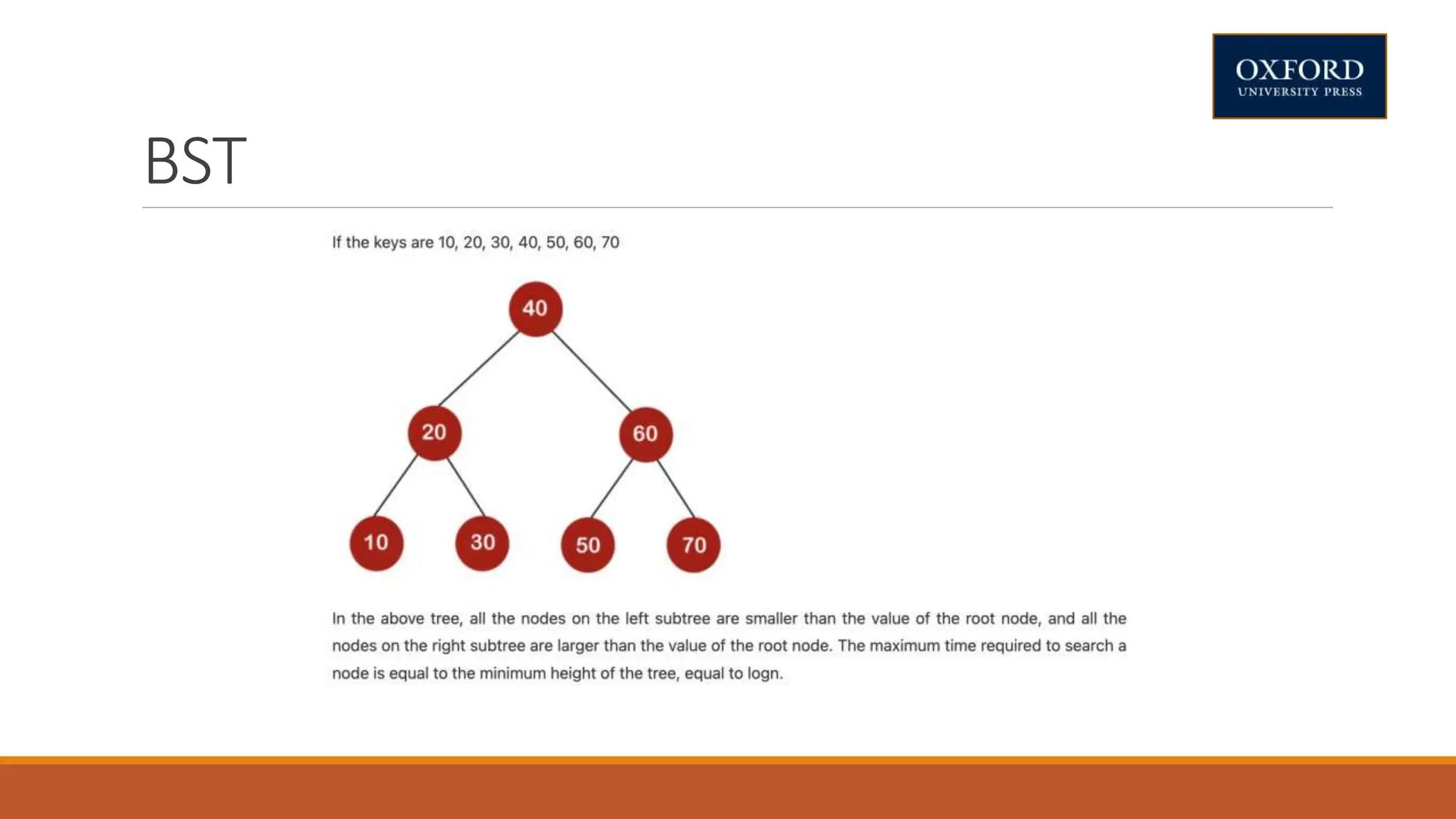
BST
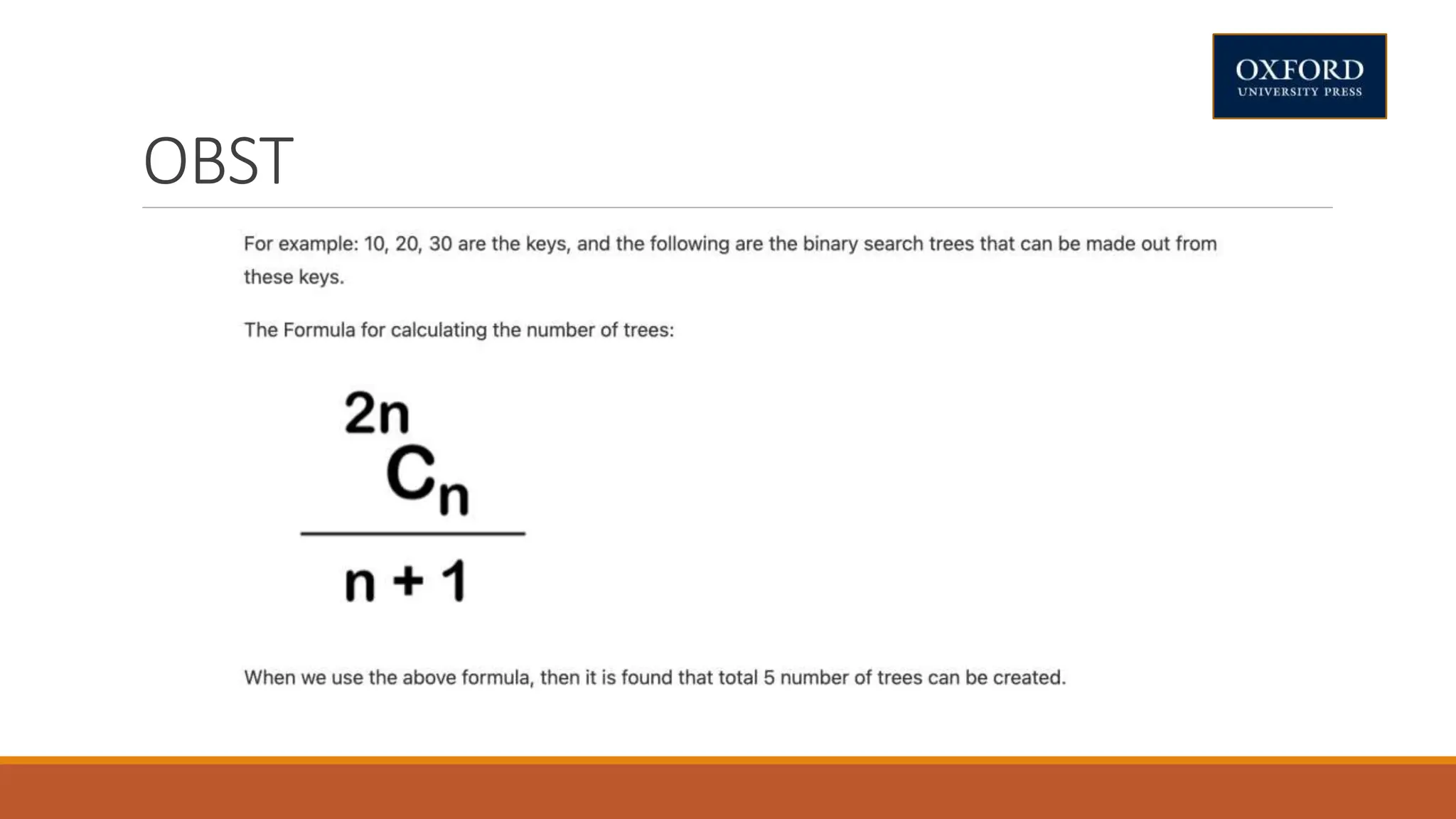
OBST
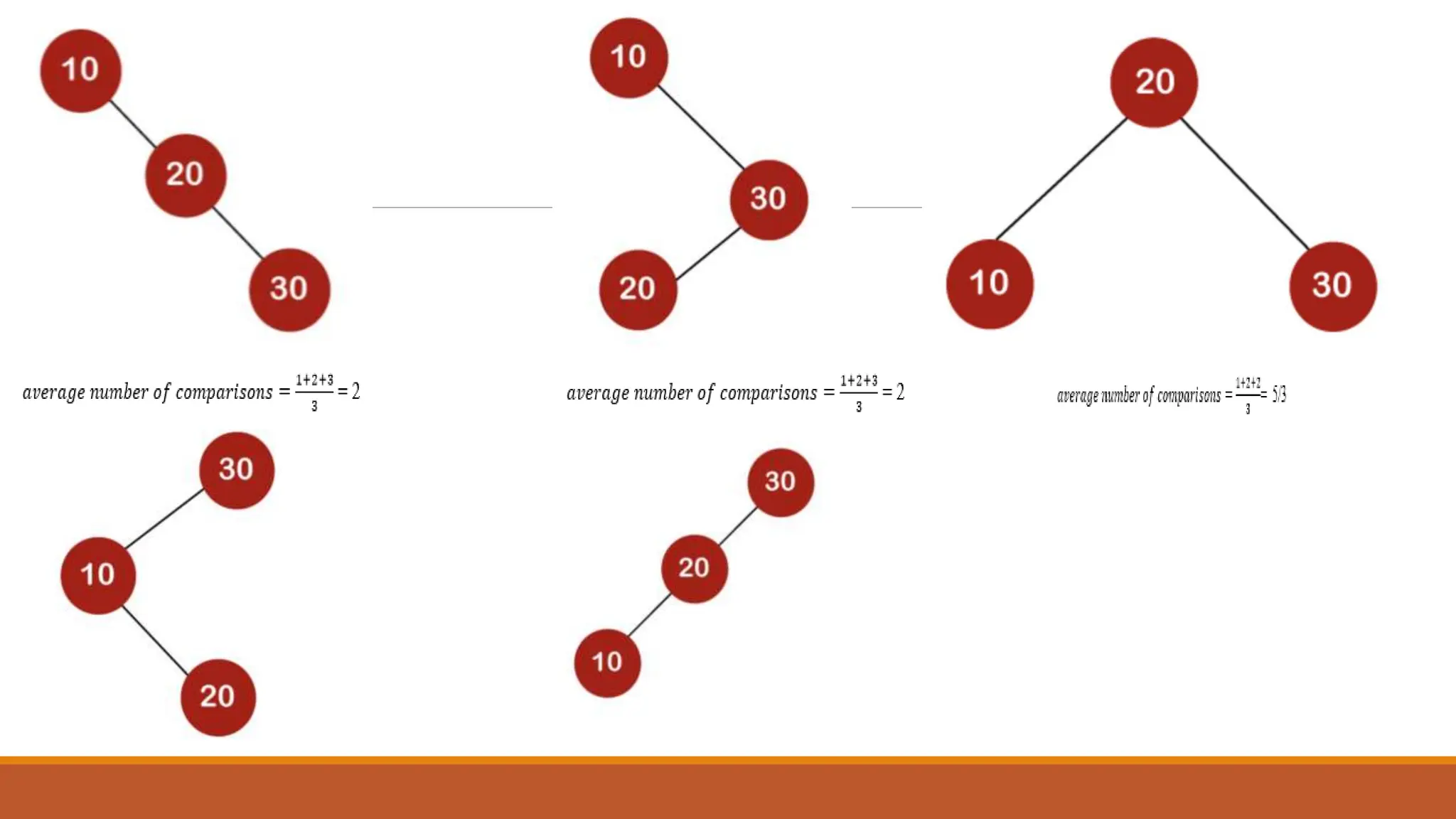
Let's assume that frequencies associated with the keys 10, 20, 30 are 3, 2, 5.
The above trees have different frequencies. The tree with the lowest frequency would be considered the
optimal binary search tree. The tree with the frequency 17 is the lowest, so it would be considered as the
optimal binary search tree.
1*3+2*2+3*5=22 1*3+2*5+3*2=19 1*2+2*3+2*5=18
5+6+6=17 5+4+9=18
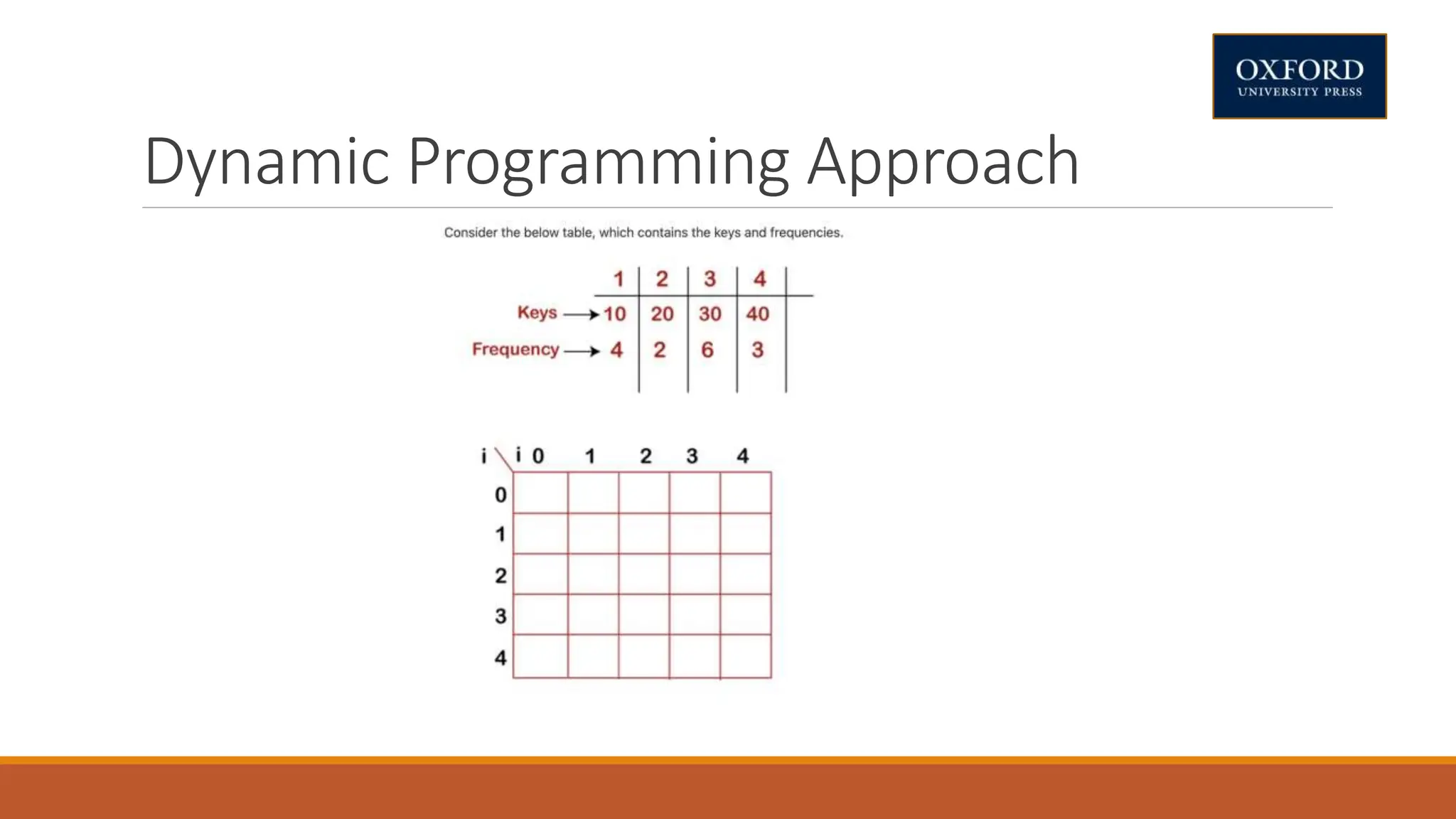
Dynamic Programming Approach
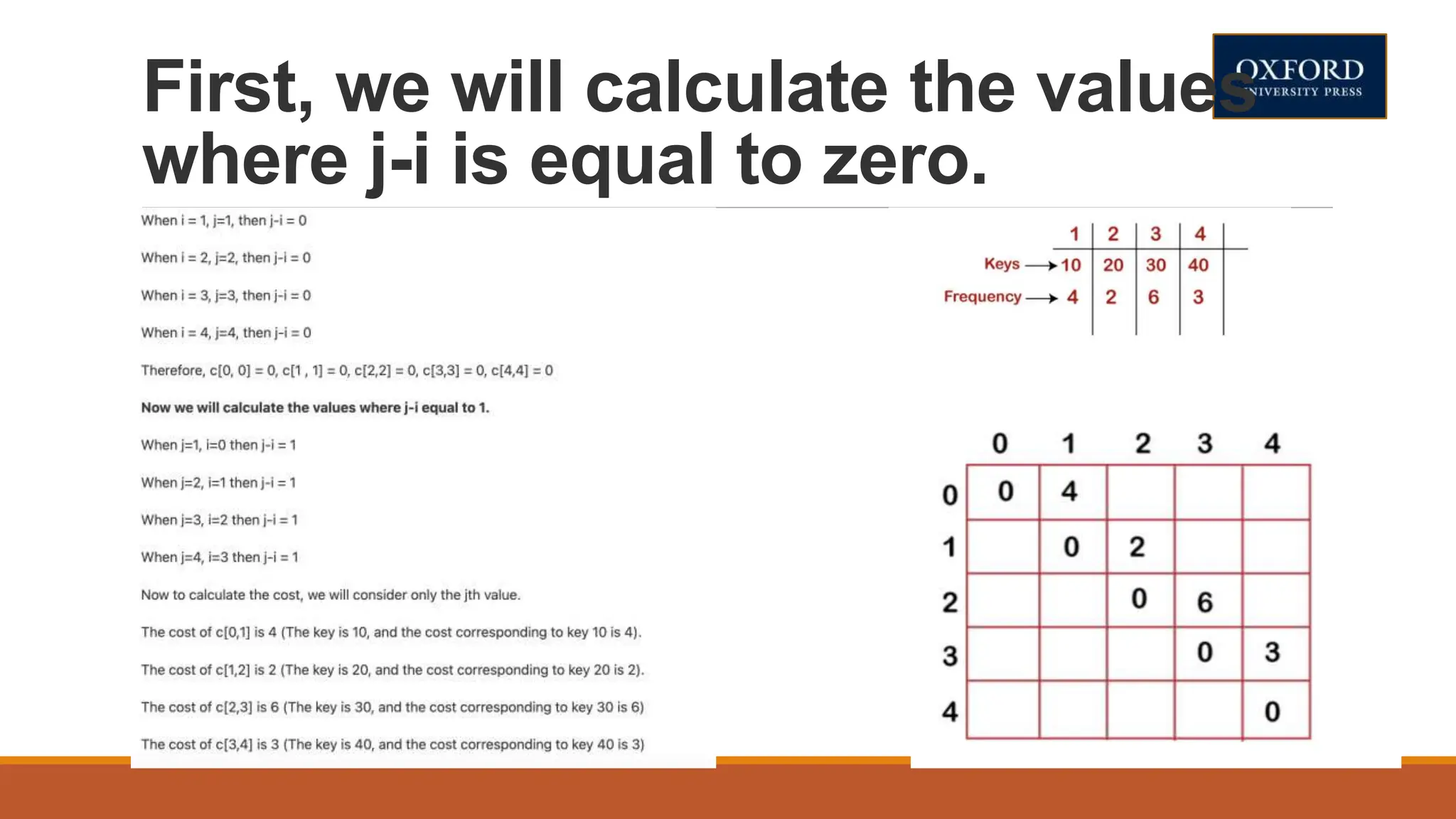
First, we will calculate the values
where j-i is equal to zero.
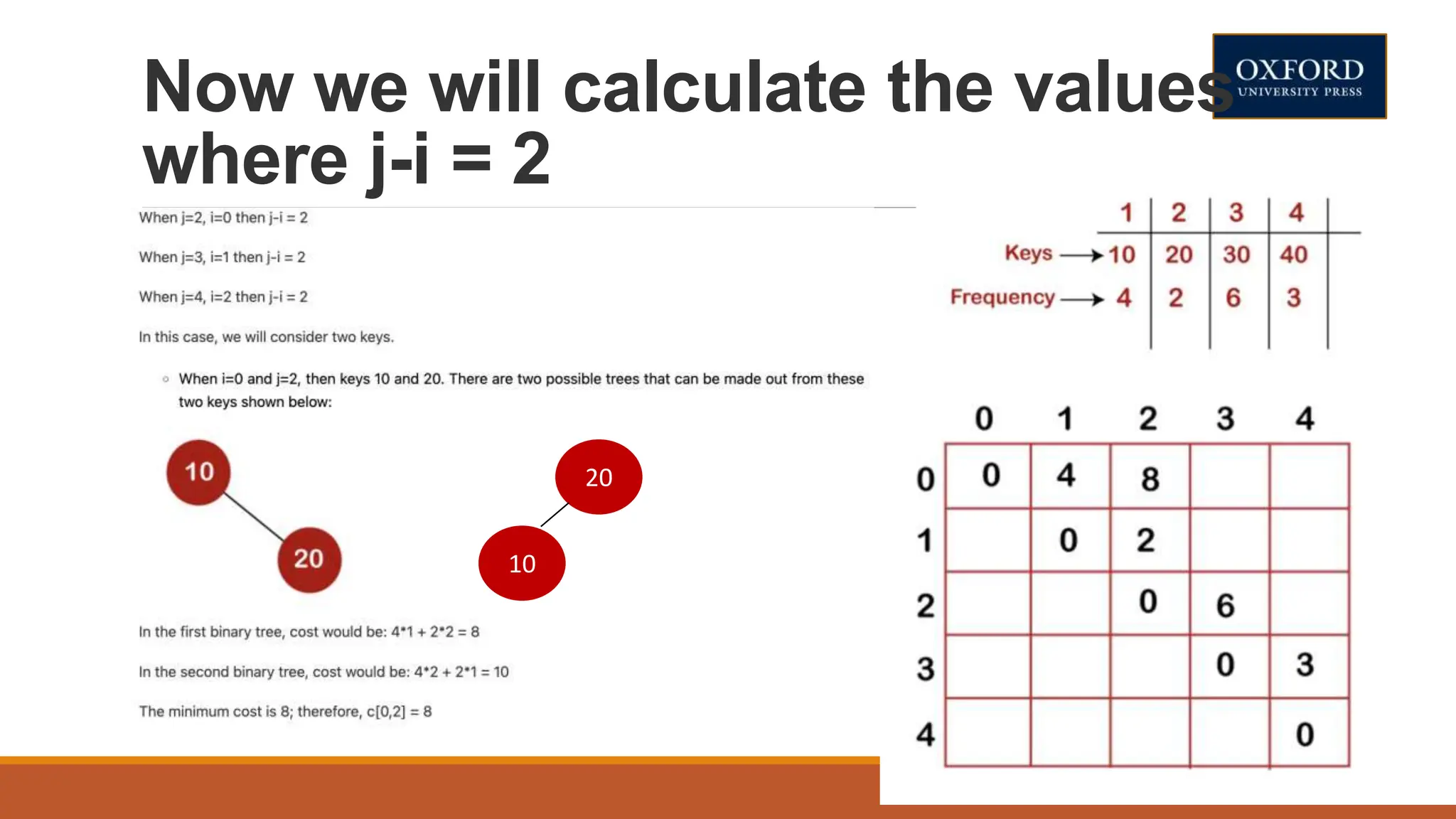
Now we will calculate the values
where j-i = 2
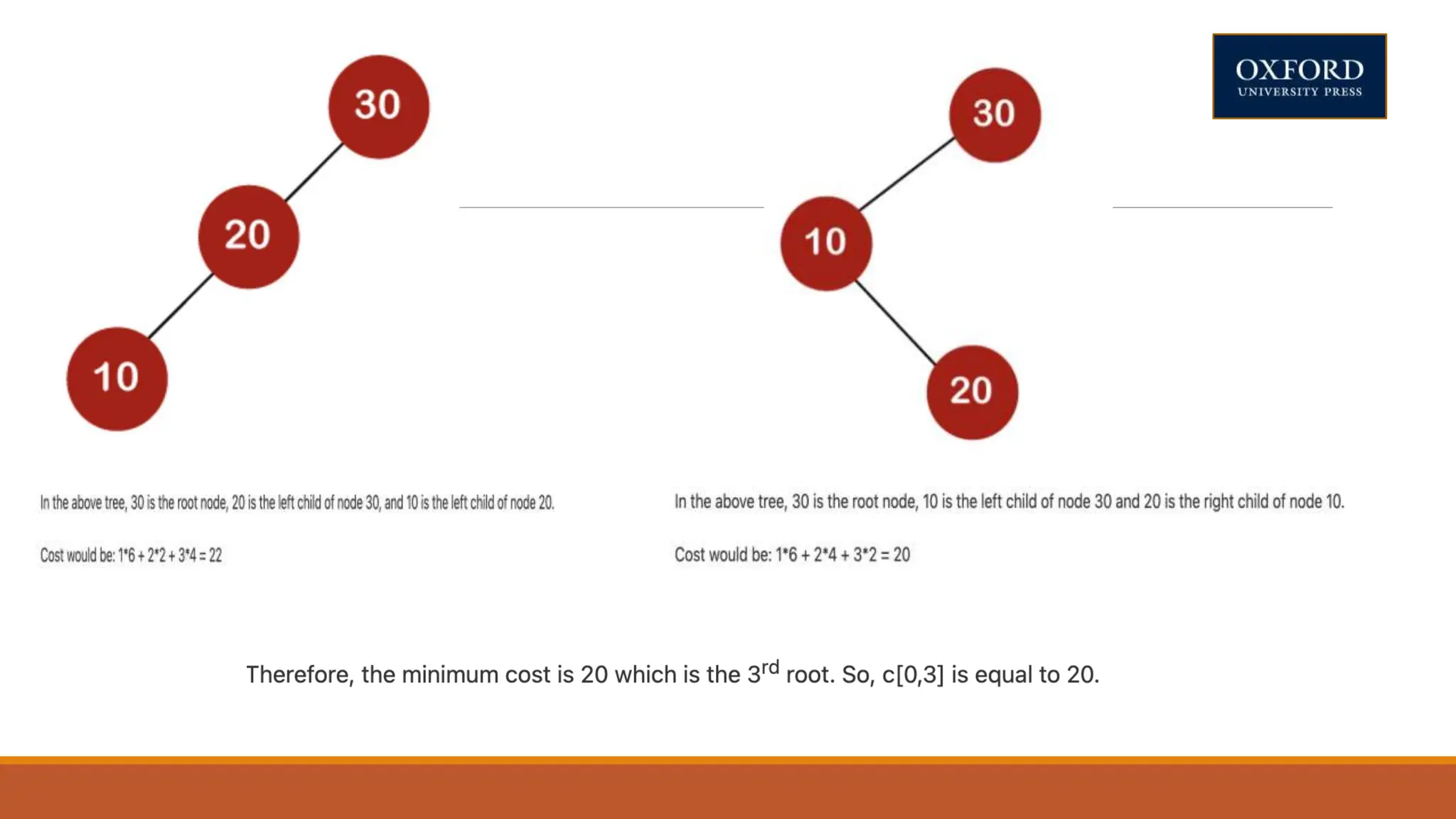
20
10
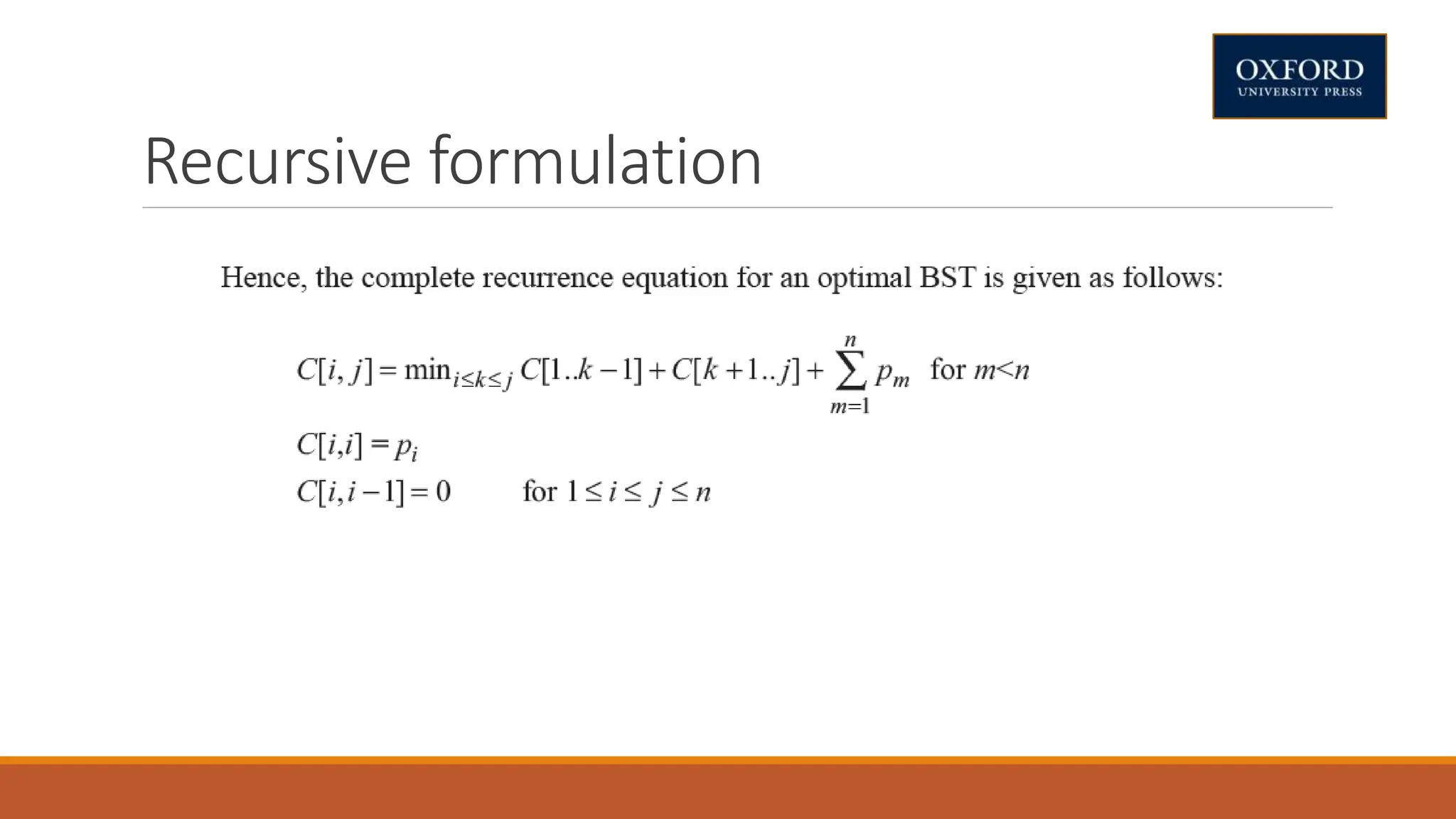
Recursive formulation
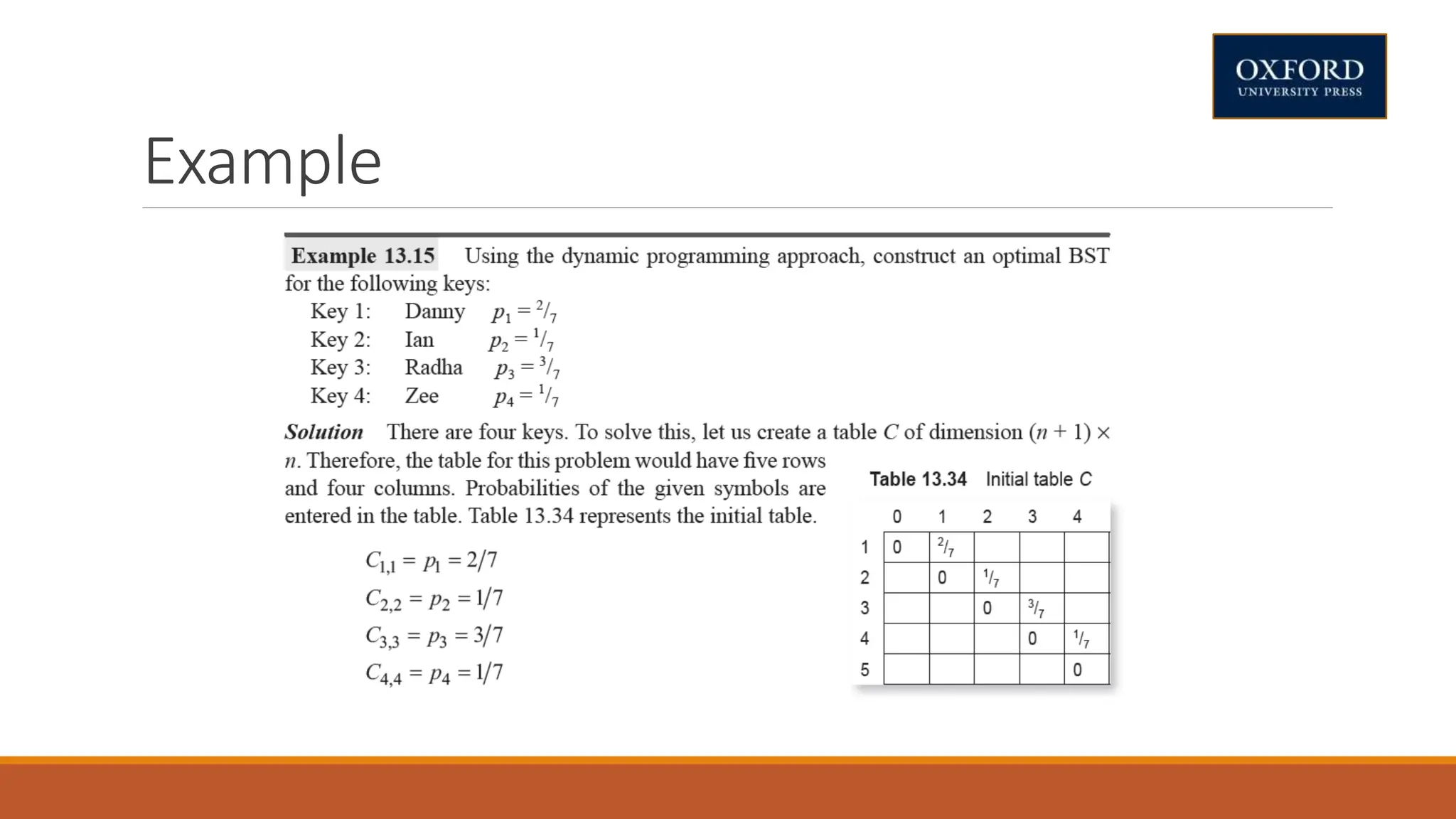
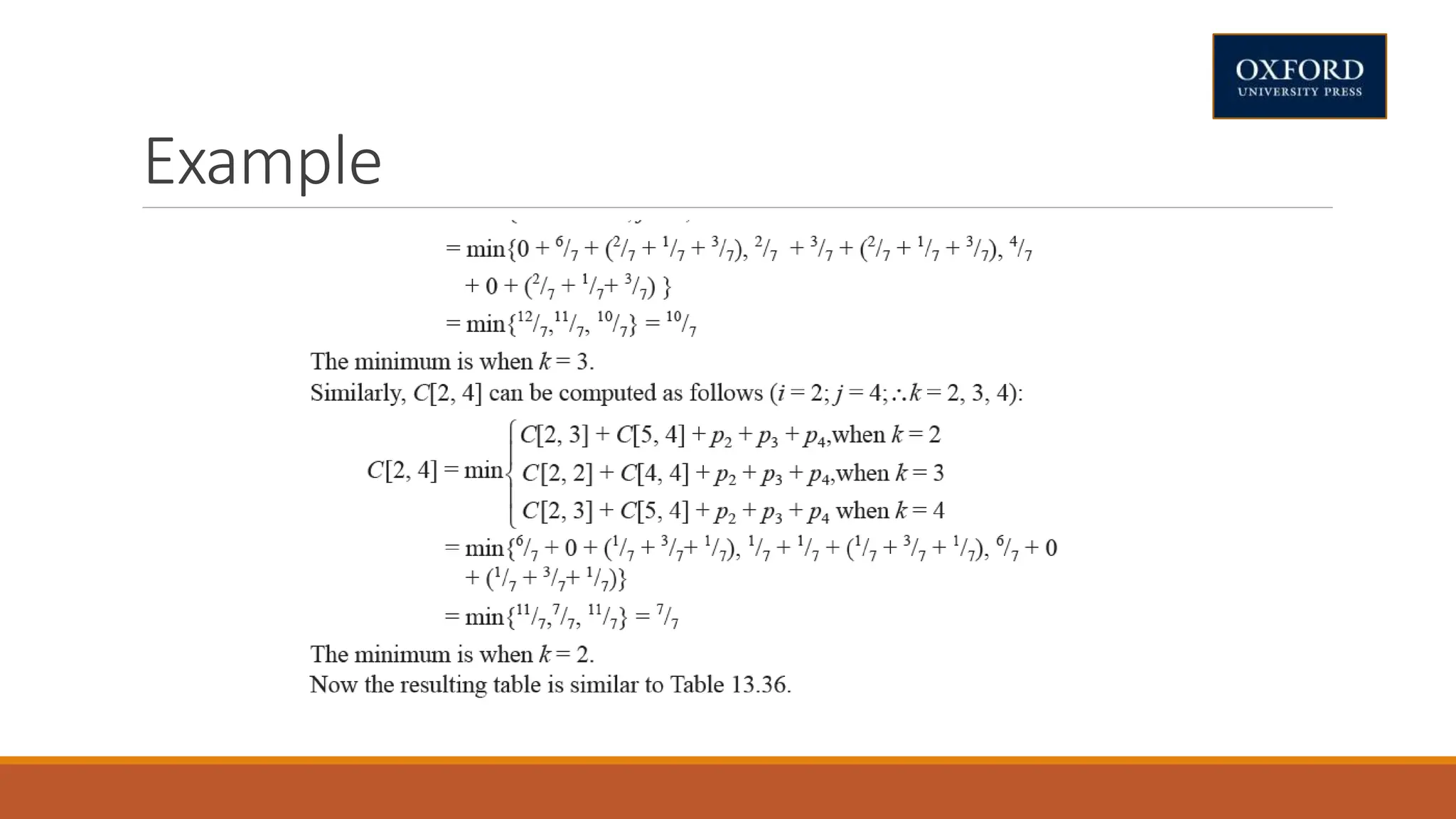
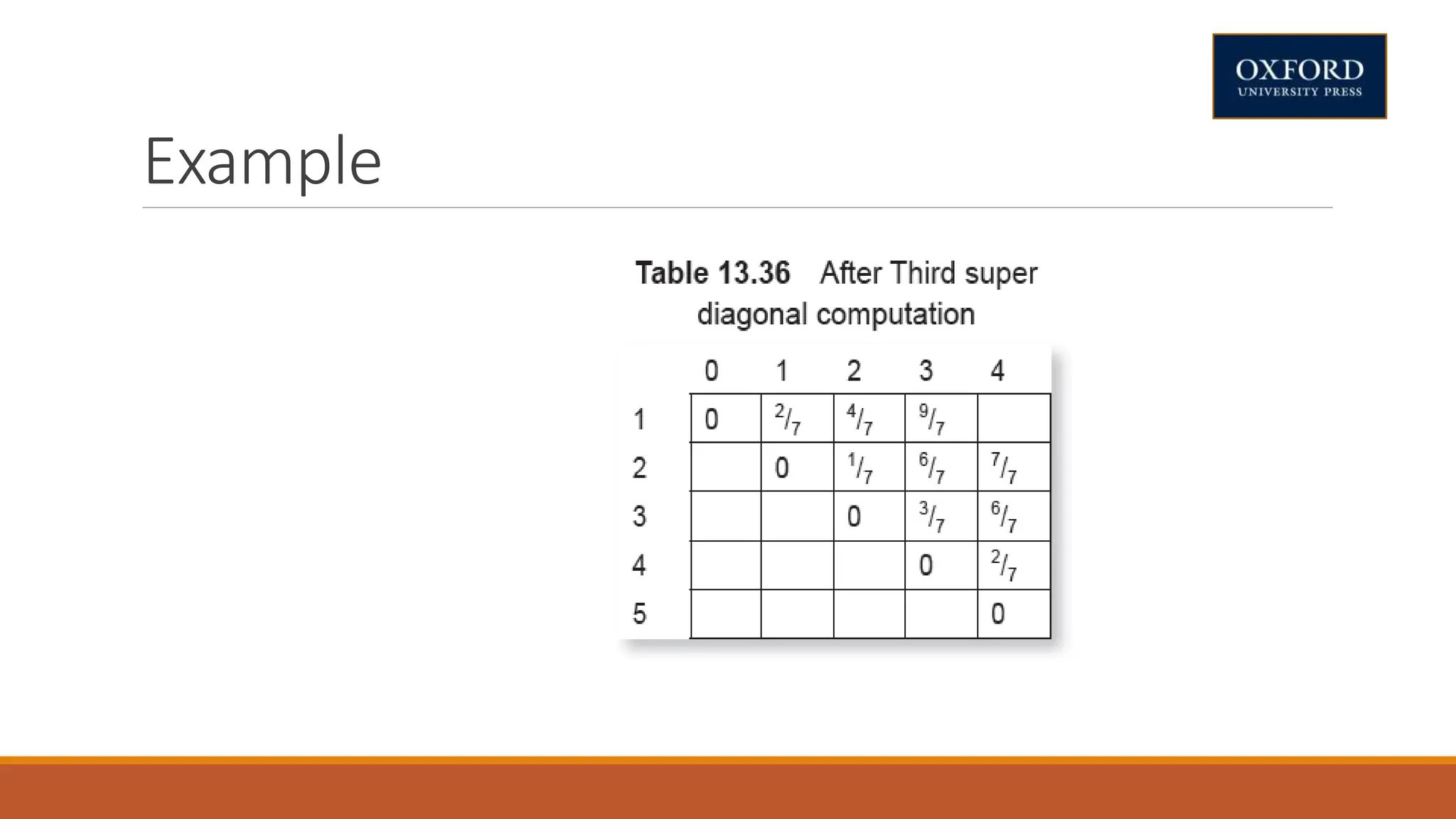
Example
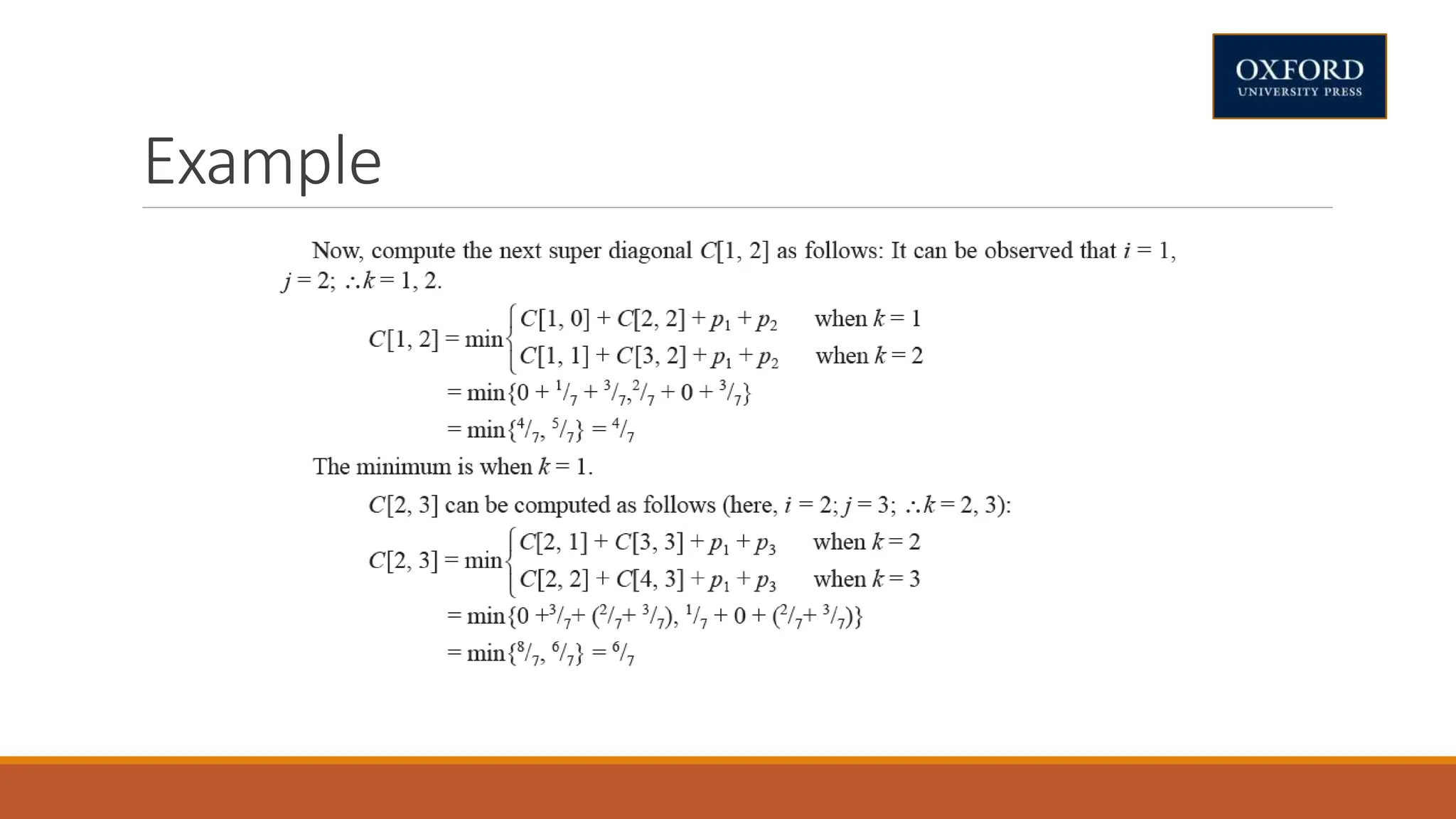
Example
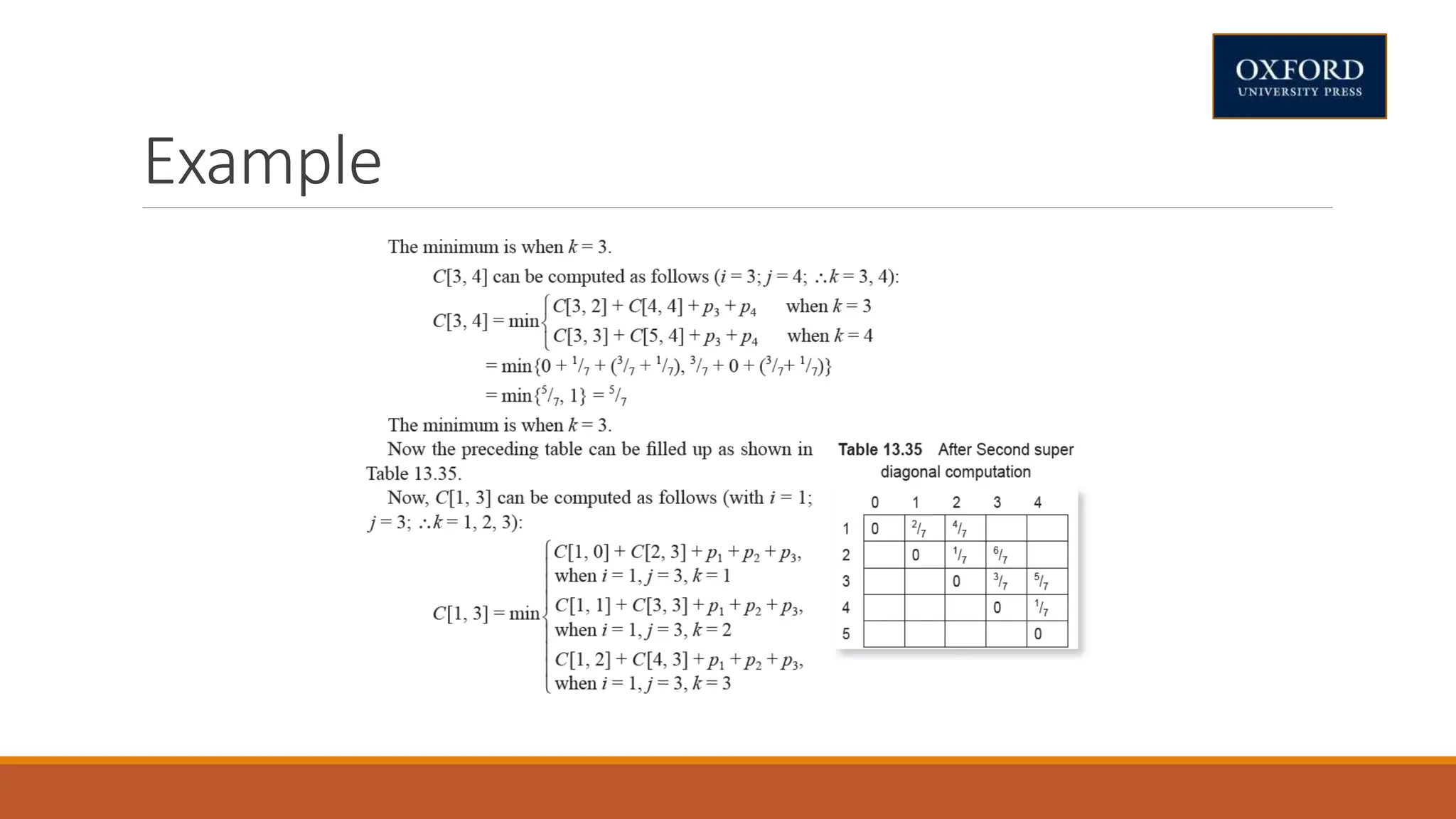
Example
Example
Example
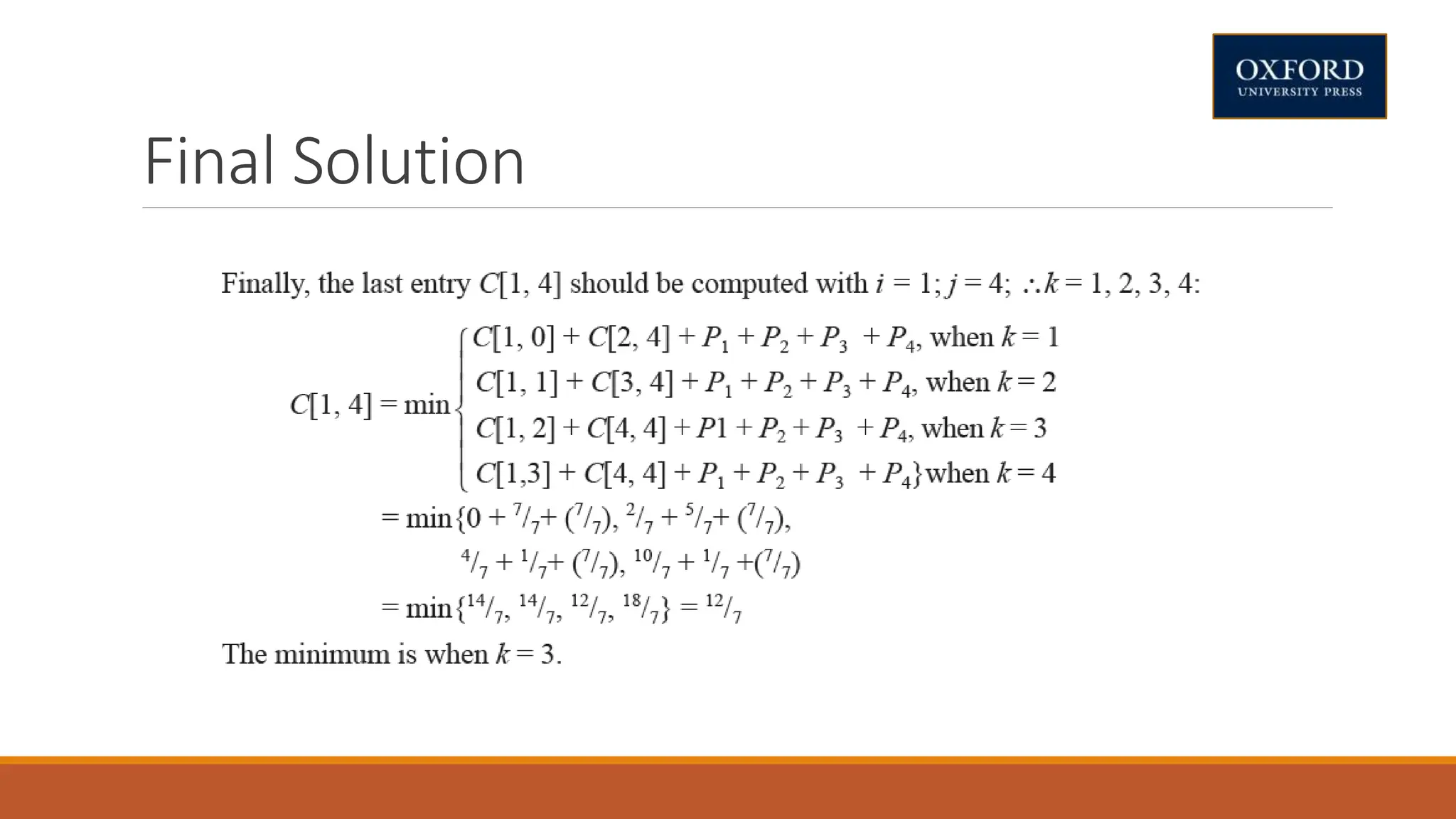
Final Solution
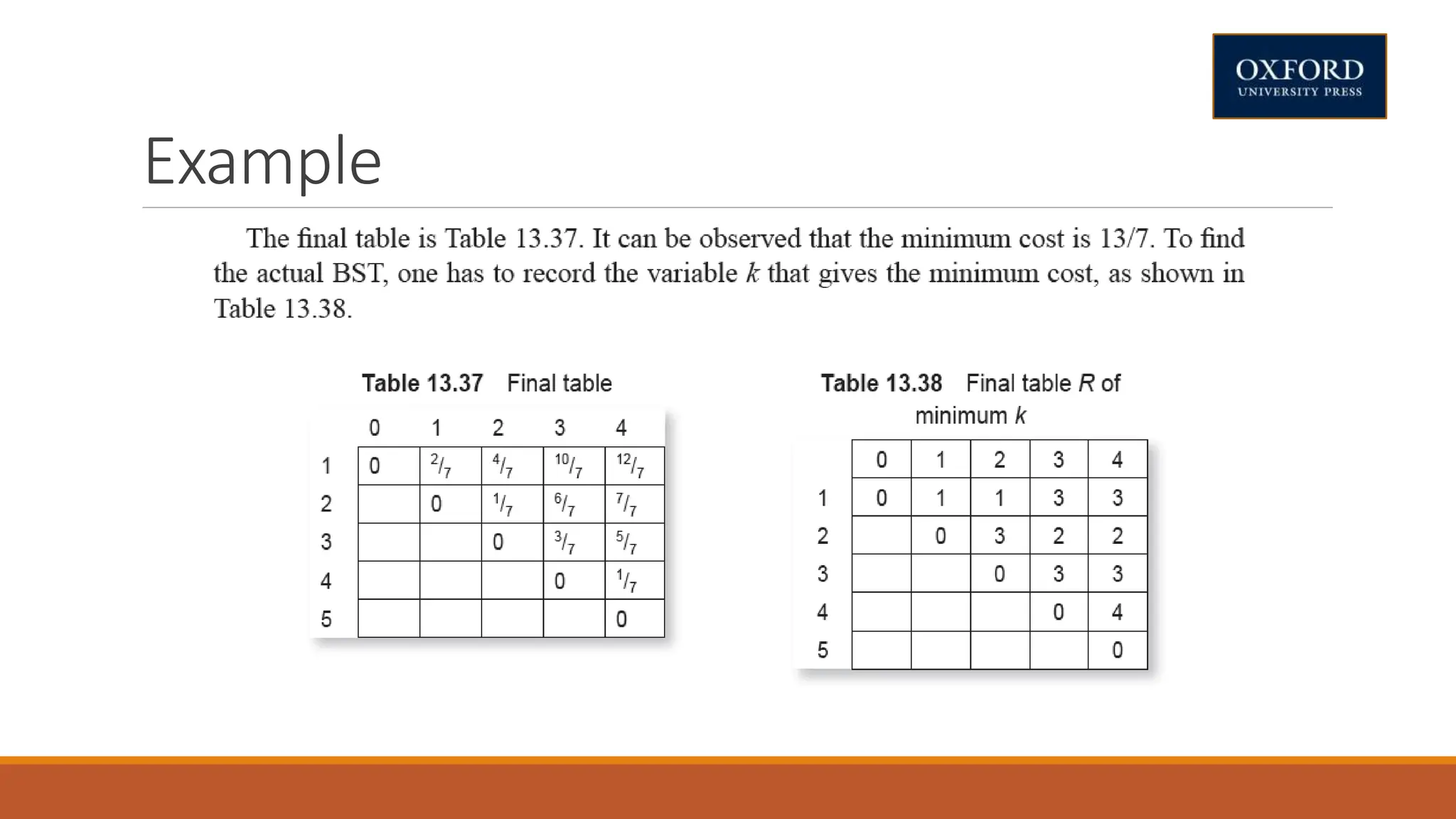
Example
Example
Formal algorithm
Complexity analysis
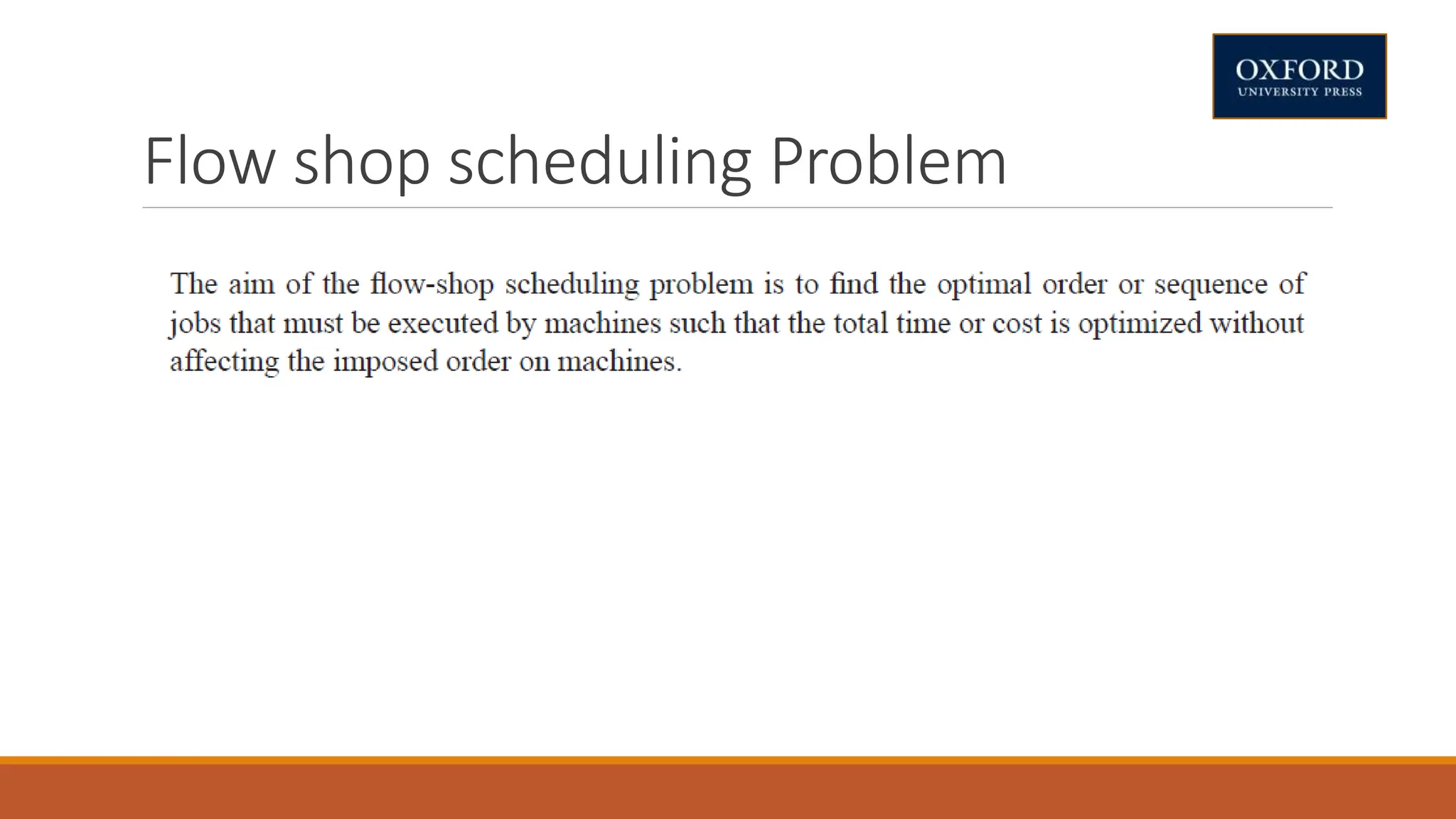
Flow shop scheduling Problem
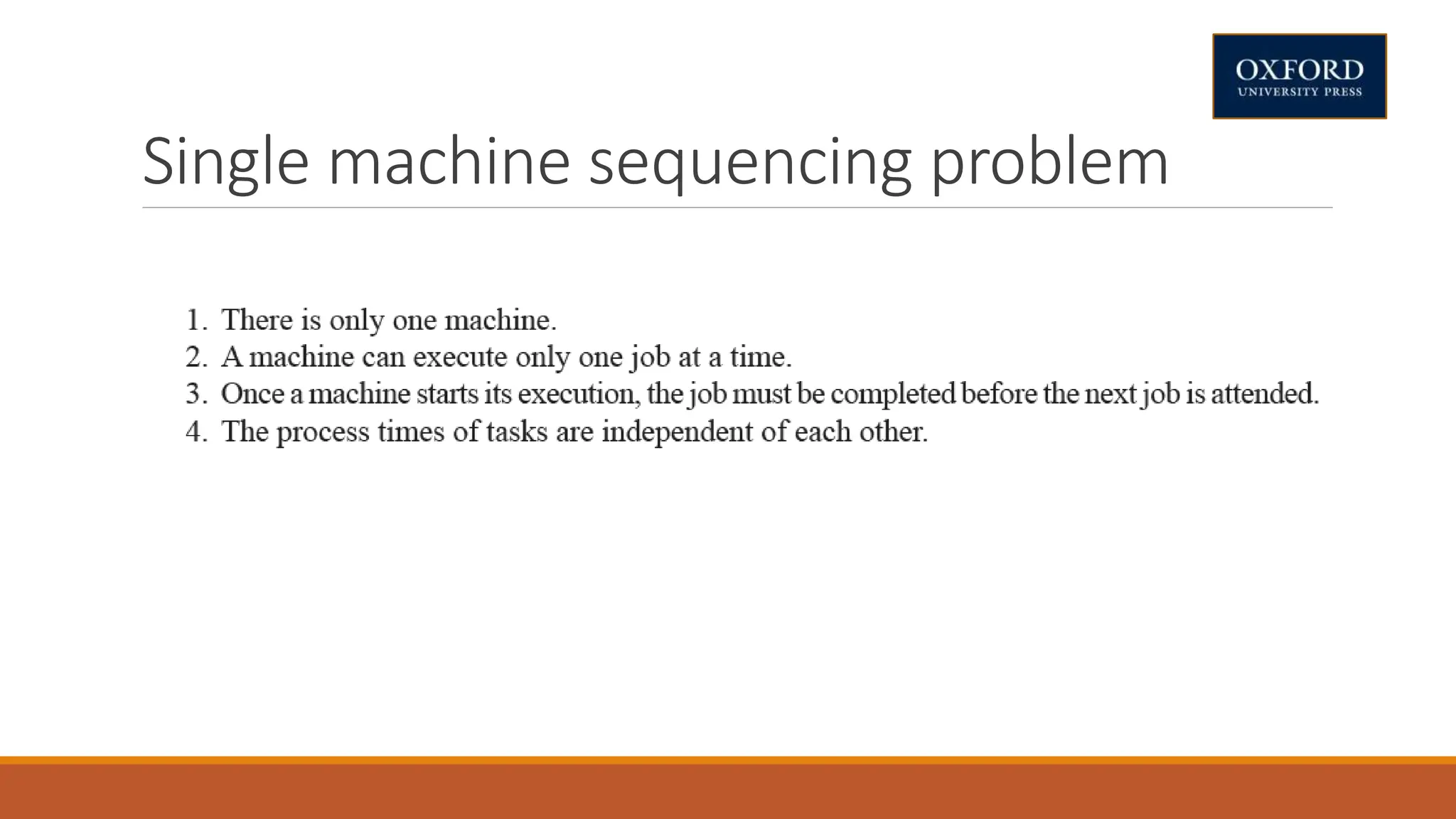
Single machine sequencing problem
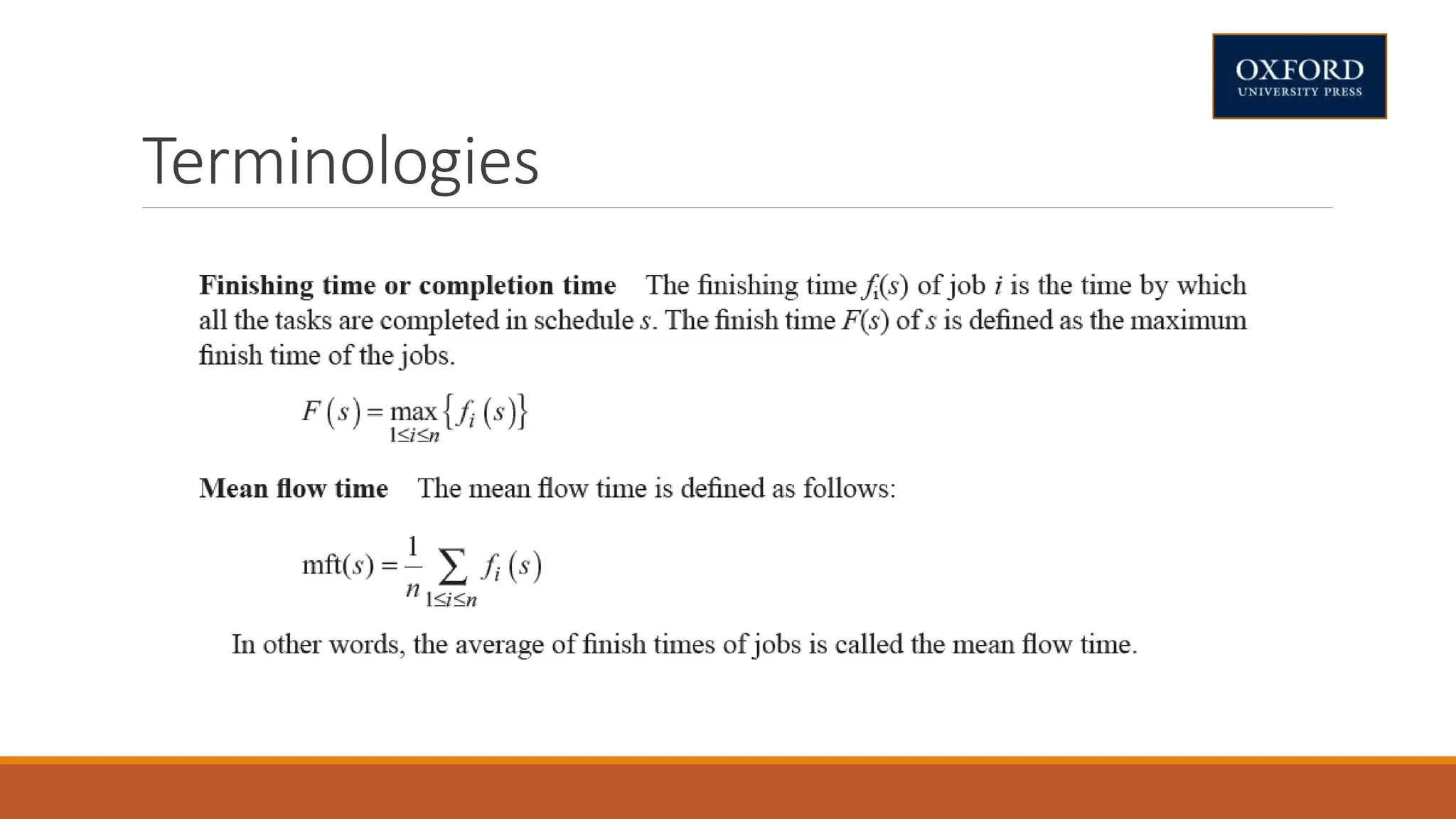
Terminologies
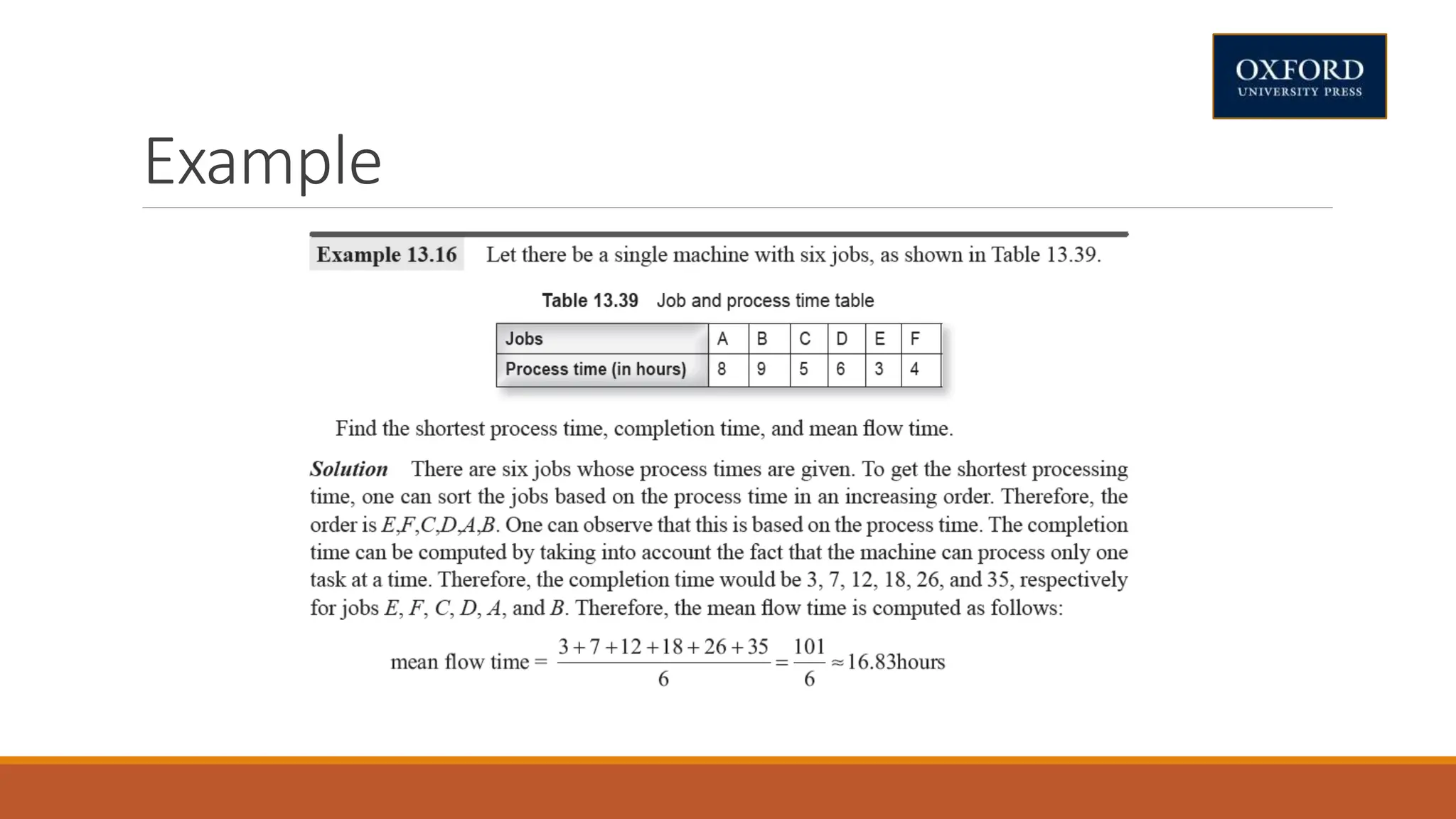
Example
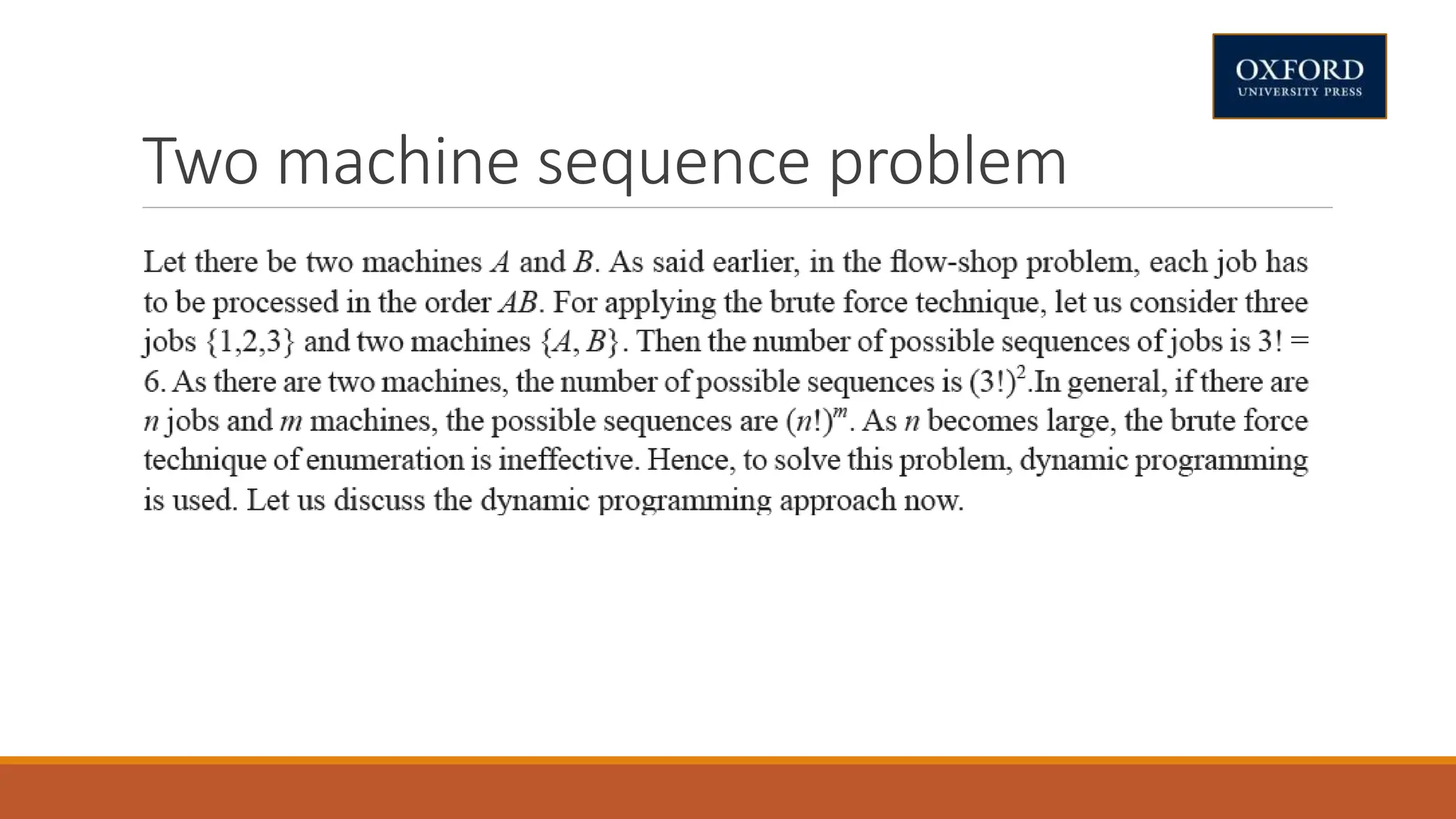
Two machine sequence problem
Informal algorithm
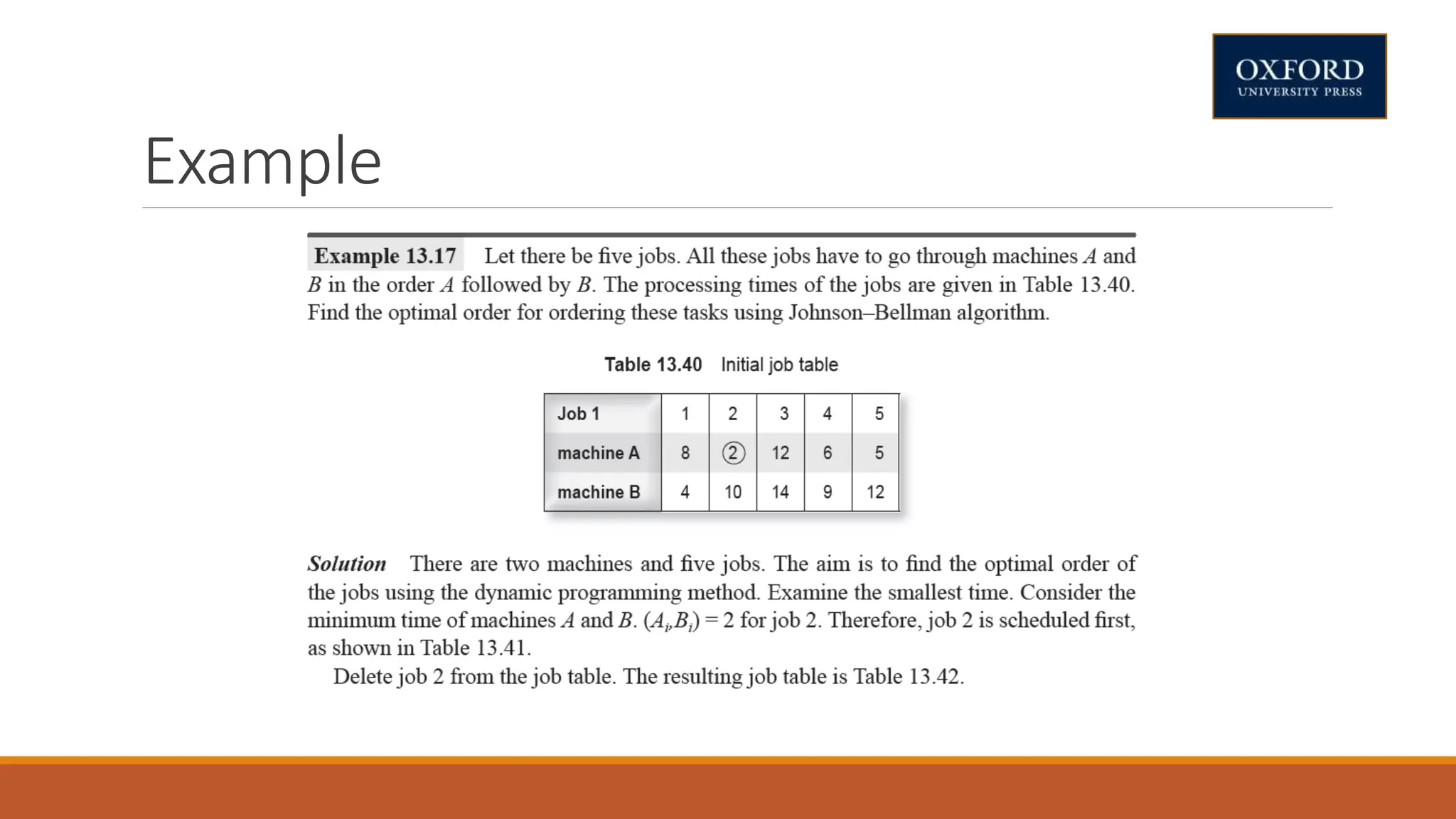
Example
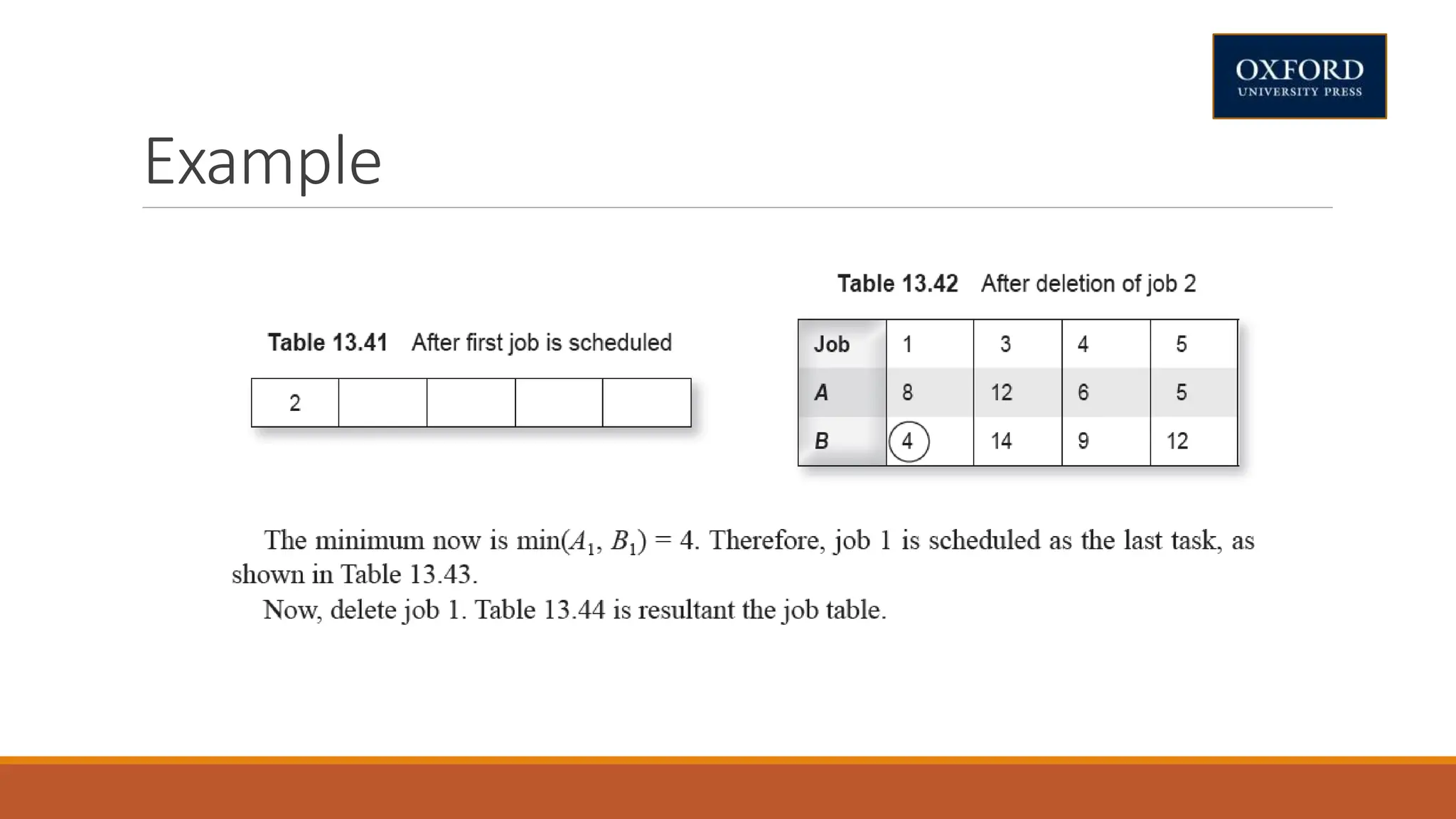
Example
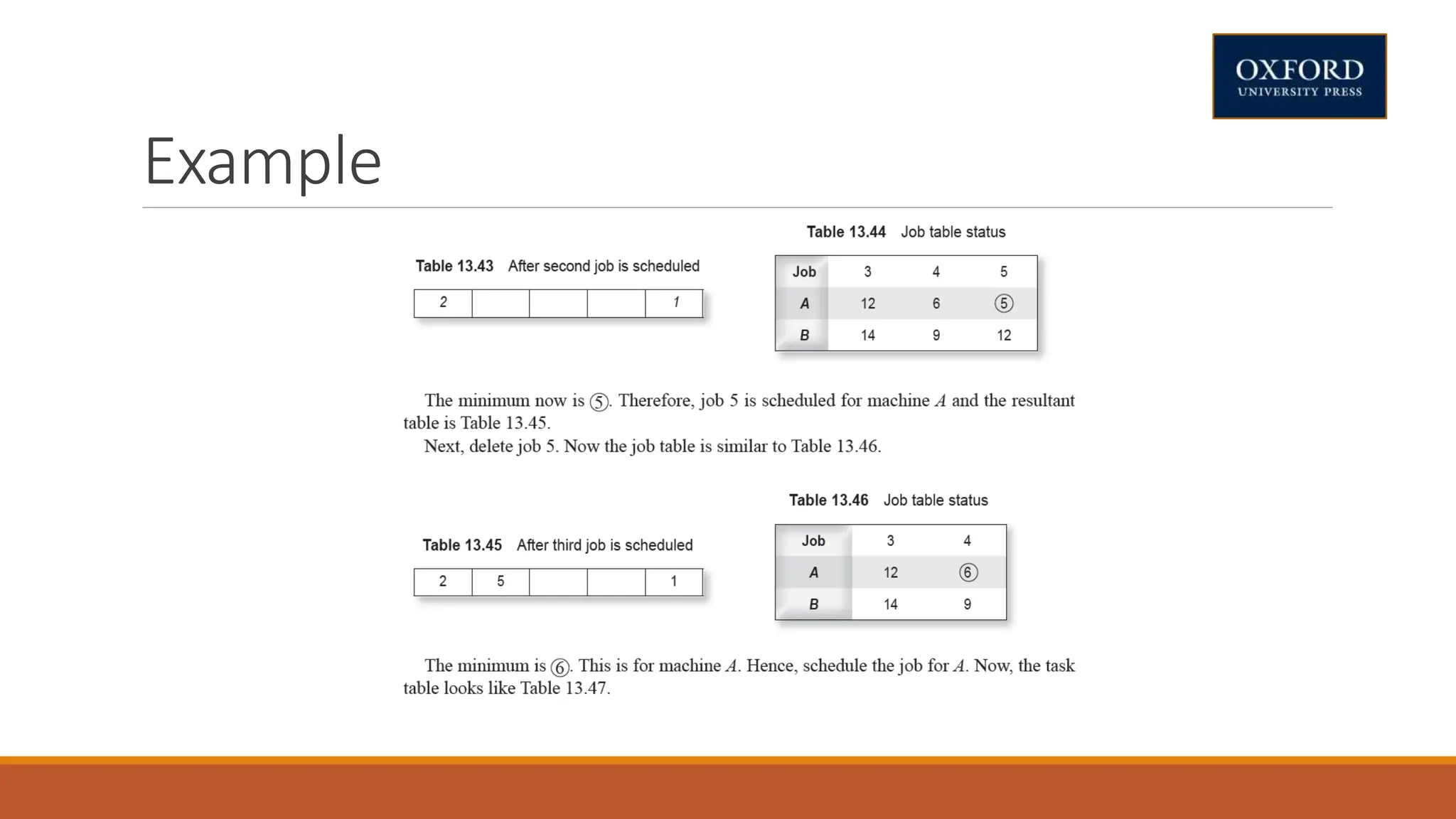
Example
Example
Final solution
Complexity Analysis
Glossary

Dynamic programming full notes.pptx