DHCP
( Dynamic Host
Configuration Protocol )
 DHCP is an abbreviation for the Dynamic Host Configuration Protocol.
 o DHCP is a client server protocol that automatically provides an IP to hosts.
 o DHCP also provide IP, subnet mask, default gateway, DNS server & other config.
 o DHCP allows a network device to dynamically receive the IP address parameters.
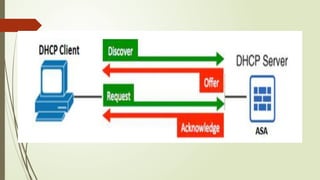
 o DHCP process follows DORA process, Discover, Offer, Request & Acknowledgement.
 o DHCP is app layer protocol used by hosts for obtaining network setup information.
 o DHCP Server dynamically configures the host or the Network device in the network.
 o DHCP is Client server protocol, which uses User Datagram Protocol (UDP) services.
 o DHCP port number for server is UDP port 67 and for the client is UDP port no 68.
 o DHCP assigned Internet Protocol (IP) address from a pool (range) of addresses.
 o Dynamic Host Configuration Protocol (DHCP) is an application Layer (7) protocol.
 o Cisco ASA Firewall can provide DHCP services for multiple interfaces simultaneously.
 o DHCP server supports configuration options that sufficient for nearly any environment.
 o This includes the ability to assign all the expected values to a client such as IP Address.
 o Also, includes, domain name, gateway, subnet mask, WINS servers and DNS servers.
 o In Cisco ASA Firewall First create DHCP Pool and then enable DHCP Services to work.
Advantages of DHCP:
 o Primary advantage of DHCP is easier management of IP addresses etc.
 o Another advantage of DHCP is centralized the network client configuration.
 o DHCP greatly reduce the time required to configure & reconfigure computers.
 o DHCP Server assigning IP addresses automatically avoid configuration errors.
 o Dynamic Host Configuration Protocol use ease of adding new clients to network.
 o The DHCP sever, reuse of IP addresses reducing the total number of IP addresses.
 o In Dynamic Host Configuration Protocol, no need to reconfigure each client separately.
 o Dynamic Host Configuration Protocol configure the network from a centralized area.
 o Using DHCP sever, easy handling of new users and reuse of IP address can be achieved.
 DHCP Operation:
 o DHCP important messages exchanged between a DHCP client and DHCP Server.
 o Four phases are required in DHCP operations between DHCP server & DHCP client.
 o The DHCP operation process for Internet Protocol (IPv4) is called the DORA process.
 DHCP Discover Message:
 o First message generated in the communication process between server & client.
 o Client host generated this message to discover DHCP server in the network.
 o This message is broadcasted to all devices present in a network to find DHCP server.
 o Incase no respond from a DHCP server, MS Windows client assigns itself, an APIPA.
 o The DHCP Discover message use broadcast IP address and broadcast MAC address.
 o This message is 342 or 576 bytes long & Destination MAC address is FFFFFFFFFFFF.
 o Source IP address is 0.0.0.0 because DHCP client has no IP address until this time now.
 o In DHCP Discover Message, the Destination IP address is broadcast 255.255.255.255.
DHCP Offer Message:
o DHCP servers receive a DHCP Discover message respond with a DHCP Offer message.
o The DHCP Server response to the client and offers the client an IPv4 address lease.
o DHCP Offer message is broadcasted by Dynamic Host Configuration Protocol server.
o Dynamic Host Configuration Protocol server DHCP Offer size of message is 342 bytes.
o If more than, one DHCP servers then client will accept the first DHCP OFFER message.
o The DHCP Server ID is specified in the packet in order to identify the DHCP server.
o DHCP Offer message is broadcast by the Dynamic Host Configuration Protocol server.
o In DHCP Offer Message destination Internet Protocol address is broadcast IP address.
o In DHCP Offer Message the destination MAC address is broadcast FFFFFFFFFFFF.
o The source IP address is server IP address and MAC address is server MAC address.
DHCP Request Message:
o The clients accept first offer received by broadcasting a DHCP Request message.
o Client receives an offer message & responds by broadcasting a DHCP request message.
o Client produce a gratuitous ARP to find any other host in network with same IP address.
o If there is no reply by other host, then there is no host with same TCP configuration.
o The Broadcast message is send to the server showing the acceptance of IP address.
o In DHCP Request Message source IP address is 0.0.0.0, as the client has no IP right now.
o In DHCP Request Message destination IP address is 255.255.255.255 broadcast IP address.
o Source MAC address is client MAC address & destination MAC address is FFFFFFFFFFFF.
DHCP Acknowledgment Message:
o The Server accepts the client request and DHCP Acknowledgment message send to it.
o Server make entry with specified client ID & bind the IP address offered with lease time.
o Finally, the client have the Internet Protocol (IP) address provided by the DHCP server.
o The DHCP Server will not provide this Internet Protocol (IP) address to any other host.
DHCP Server Configuration
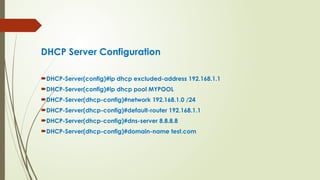
DHCP-Server(config)#ip dhcp excluded-address 192.168.1.1
DHCP-Server(config)#ip dhcp pool MYPOOL
DHCP-Server(dhcp-config)#network 192.168.1.0 /24
DHCP-Server(dhcp-config)#default-router 192.168.1.1
DHCP-Server(dhcp-config)#dns-server 8.8.8.8
DHCP-Server(dhcp-config)#domain-name test.com
Thank you

Dynamic Host Configuration Protocol (DHCP) is a network protocol that automatically

  • 1.
  • 3.
     DHCP isan abbreviation for the Dynamic Host Configuration Protocol.  o DHCP is a client server protocol that automatically provides an IP to hosts.  o DHCP also provide IP, subnet mask, default gateway, DNS server & other config.  o DHCP allows a network device to dynamically receive the IP address parameters.  o DHCP process follows DORA process, Discover, Offer, Request & Acknowledgement.  o DHCP is app layer protocol used by hosts for obtaining network setup information.  o DHCP Server dynamically configures the host or the Network device in the network.  o DHCP is Client server protocol, which uses User Datagram Protocol (UDP) services.  o DHCP port number for server is UDP port 67 and for the client is UDP port no 68.  o DHCP assigned Internet Protocol (IP) address from a pool (range) of addresses.
  • 4.
     o DynamicHost Configuration Protocol (DHCP) is an application Layer (7) protocol.  o Cisco ASA Firewall can provide DHCP services for multiple interfaces simultaneously.  o DHCP server supports configuration options that sufficient for nearly any environment.  o This includes the ability to assign all the expected values to a client such as IP Address.  o Also, includes, domain name, gateway, subnet mask, WINS servers and DNS servers.  o In Cisco ASA Firewall First create DHCP Pool and then enable DHCP Services to work.
  • 5.
    Advantages of DHCP: o Primary advantage of DHCP is easier management of IP addresses etc.  o Another advantage of DHCP is centralized the network client configuration.  o DHCP greatly reduce the time required to configure & reconfigure computers.  o DHCP Server assigning IP addresses automatically avoid configuration errors.  o Dynamic Host Configuration Protocol use ease of adding new clients to network.  o The DHCP sever, reuse of IP addresses reducing the total number of IP addresses.  o In Dynamic Host Configuration Protocol, no need to reconfigure each client separately.  o Dynamic Host Configuration Protocol configure the network from a centralized area.  o Using DHCP sever, easy handling of new users and reuse of IP address can be achieved.
  • 6.
     DHCP Operation: o DHCP important messages exchanged between a DHCP client and DHCP Server.  o Four phases are required in DHCP operations between DHCP server & DHCP client.  o The DHCP operation process for Internet Protocol (IPv4) is called the DORA process.  DHCP Discover Message:  o First message generated in the communication process between server & client.  o Client host generated this message to discover DHCP server in the network.  o This message is broadcasted to all devices present in a network to find DHCP server.  o Incase no respond from a DHCP server, MS Windows client assigns itself, an APIPA.  o The DHCP Discover message use broadcast IP address and broadcast MAC address.  o This message is 342 or 576 bytes long & Destination MAC address is FFFFFFFFFFFF.  o Source IP address is 0.0.0.0 because DHCP client has no IP address until this time now.  o In DHCP Discover Message, the Destination IP address is broadcast 255.255.255.255.
  • 7.
    DHCP Offer Message: oDHCP servers receive a DHCP Discover message respond with a DHCP Offer message. o The DHCP Server response to the client and offers the client an IPv4 address lease. o DHCP Offer message is broadcasted by Dynamic Host Configuration Protocol server. o Dynamic Host Configuration Protocol server DHCP Offer size of message is 342 bytes. o If more than, one DHCP servers then client will accept the first DHCP OFFER message. o The DHCP Server ID is specified in the packet in order to identify the DHCP server. o DHCP Offer message is broadcast by the Dynamic Host Configuration Protocol server. o In DHCP Offer Message destination Internet Protocol address is broadcast IP address. o In DHCP Offer Message the destination MAC address is broadcast FFFFFFFFFFFF. o The source IP address is server IP address and MAC address is server MAC address.
  • 8.
    DHCP Request Message: oThe clients accept first offer received by broadcasting a DHCP Request message. o Client receives an offer message & responds by broadcasting a DHCP request message. o Client produce a gratuitous ARP to find any other host in network with same IP address. o If there is no reply by other host, then there is no host with same TCP configuration. o The Broadcast message is send to the server showing the acceptance of IP address. o In DHCP Request Message source IP address is 0.0.0.0, as the client has no IP right now. o In DHCP Request Message destination IP address is 255.255.255.255 broadcast IP address. o Source MAC address is client MAC address & destination MAC address is FFFFFFFFFFFF. DHCP Acknowledgment Message: o The Server accepts the client request and DHCP Acknowledgment message send to it. o Server make entry with specified client ID & bind the IP address offered with lease time. o Finally, the client have the Internet Protocol (IP) address provided by the DHCP server. o The DHCP Server will not provide this Internet Protocol (IP) address to any other host.
  • 9.
    DHCP Server Configuration DHCP-Server(config)#ipdhcp excluded-address 192.168.1.1 DHCP-Server(config)#ip dhcp pool MYPOOL DHCP-Server(dhcp-config)#network 192.168.1.0 /24 DHCP-Server(dhcp-config)#default-router 192.168.1.1 DHCP-Server(dhcp-config)#dns-server 8.8.8.8 DHCP-Server(dhcp-config)#domain-name test.com
  • 10.