Surgical Management Of 
the Duplicated Thumb 
Dr Steve Carter 
Congenital Hand Surgery 
Red Cross War Memorial Childrens Hospital
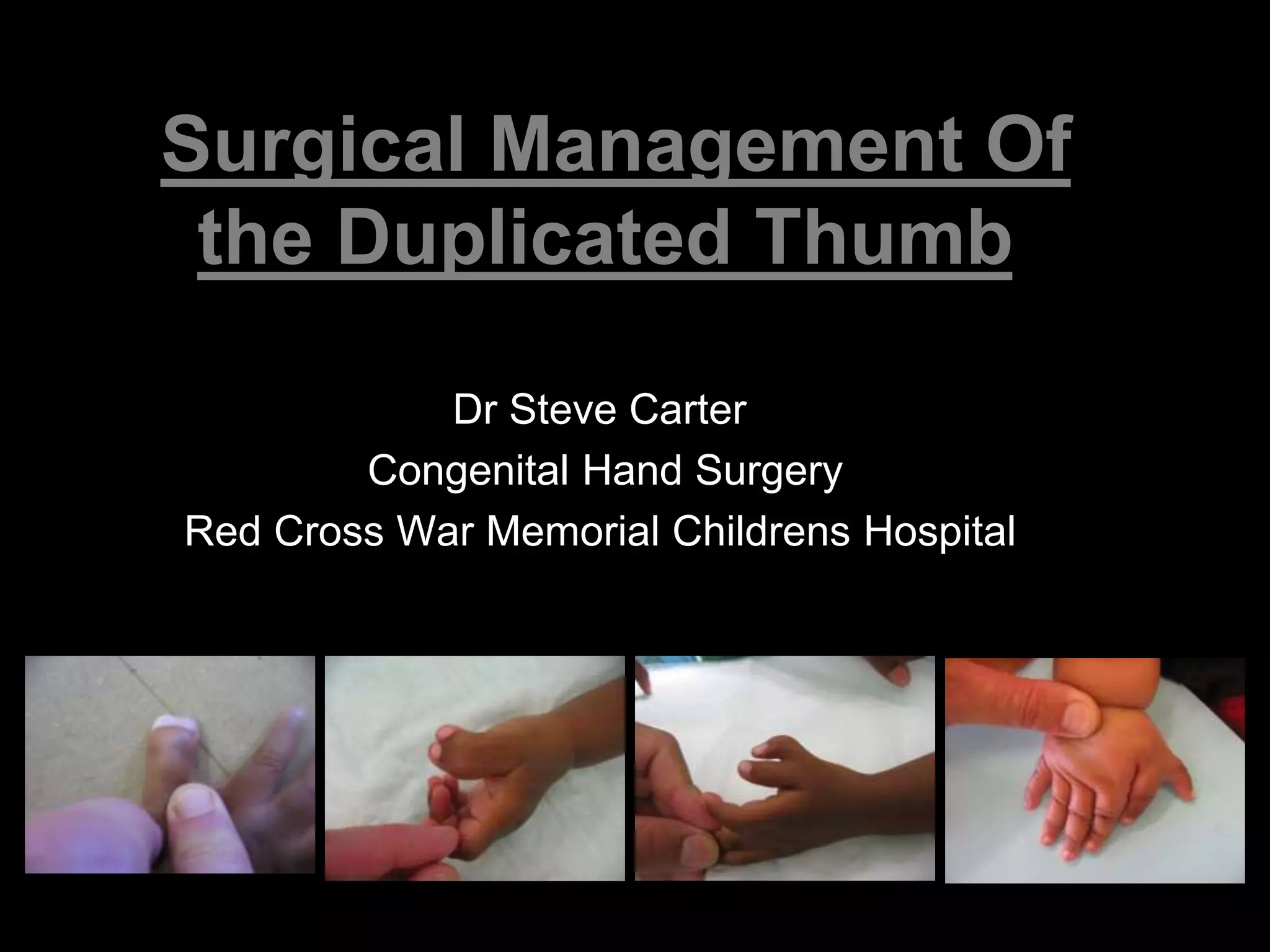
Radial Polydactyly 
• Group 3 Duplication disorder 
• Genetically most occur sporadically 
• Occasionally AD 
• Males > females , Right > Left 
• Associated syndromes and anomalies
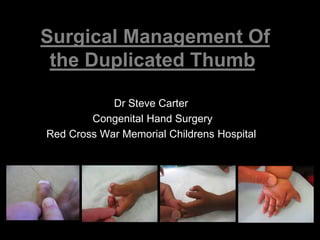
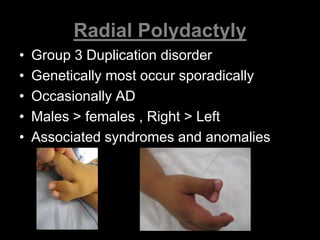
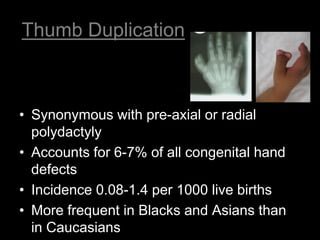
Thumb Duplication 
• Synonymous with pre-axial or radial 
polydactyly 
• Accounts for 6-7% of all congenital hand 
defects 
• Incidence 0.08-1.4 per 1000 live births 
• More frequent in Blacks and Asians than 
in Caucasians
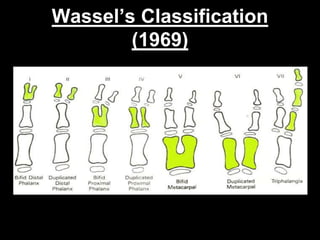
Wassel’s Classification 
(1969)
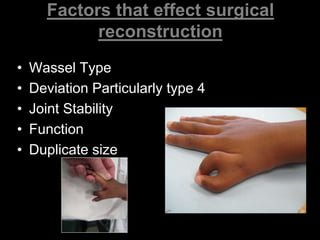
Factors that effect surgical 
reconstruction 
• Wassel Type 
• Deviation Particularly type 4 
• Joint Stability 
• Function 
• Duplicate size
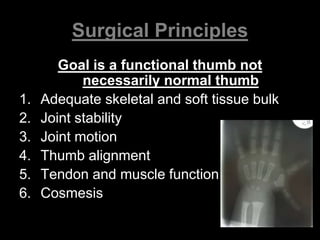
Surgical Principles 
Goal is a functional thumb not 
necessarily normal thumb 
1. Adequate skeletal and soft tissue bulk 
2. Joint stability 
3. Joint motion 
4. Thumb alignment 
5. Tendon and muscle function 
6. Cosmesis
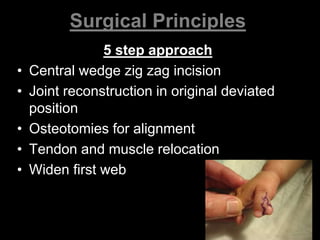
Surgical Principles 
5 step approach 
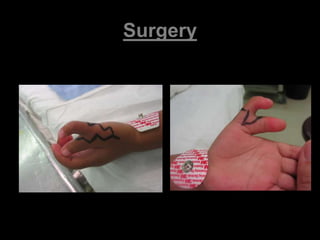
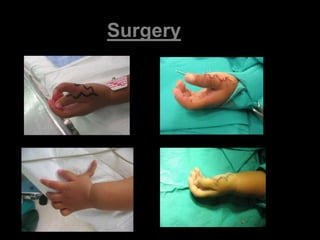
• Central wedge zig zag incision 
• Joint reconstruction in original deviated 
position 
• Osteotomies for alignment 
• Tendon and muscle relocation 
• Widen first web
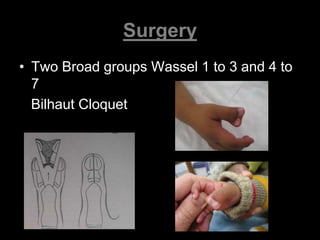
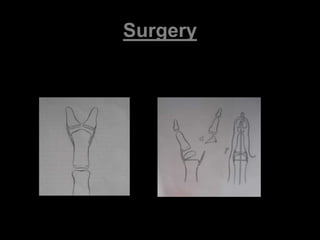
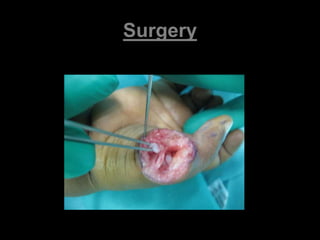
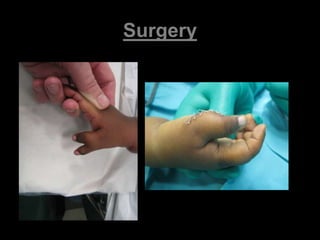
Surgery 
• Two Broad groups Wassel 1 to 3 and 4 to 
7 
Bilhaut Cloquet
Surgery
Surgery
Surgery
Surgery
Surgery
Surgery
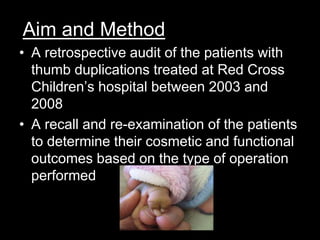
Aim and Method 
• A retrospective audit of the patients with 
thumb duplications treated at Red Cross 
Children’s hospital between 2003 and 
2008 
• A recall and re-examination of the patients 
to determine their cosmetic and functional 
outcomes based on the type of operation 
performed
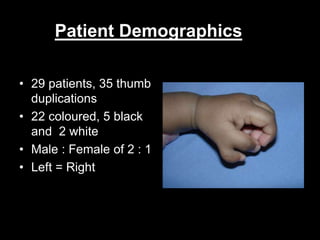
Patient Demographics 
• 29 patients, 35 thumb 
duplications 
• 22 coloured, 5 black 
and 2 white 
• Male : Female of 2 : 1 
• Left = Right
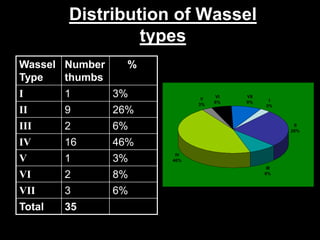
Distribution of Wassel 
types 
Wassel 
Type 
Number 
thumbs 
% 
I 1 3% 
II 9 26% 
III 2 6% 
IV 16 46% 
V 1 3% 
VI 2 8% 
VII 3 6% 
Total 35 
I 
3% 
II 
26% 
III 
8% 
V 
3% 
VI 
6% 
VII 
9% 
IV 
46%
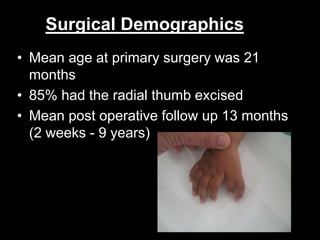
Surgical Demographics 
• Mean age at primary surgery was 21 
months 
• 85% had the radial thumb excised 
• Mean post operative follow up 13 months 
(2 weeks - 9 years)
Discussion 
• Despite our average age at surgery being 
21 months, this didn’t seem to affect the 
outcome (ideally 12-18 months surgery) 
• Kanavel’s statement in 1932 that “ablation 
of one of the thumbs requires no ingenuity 
and creates no problem“ is incorrect 
• Simple excision high rate of complications 
if joint involvement
Discussion 
• Overall functional results were good 
• Patients who had residual deviation were 
not markedly functionally impaired 
• Cosmesis questionable….despite high 
patient and parent satisfaction 
– Scarring was prominent in most patients 
despite varying the incision between linear 
and non-linear at the glabrous-dorsal skin 
interface
Conclusions 
• Stability at the IPJ and MCP is essential for 
functional outcome 
• Priority for a good functional and cosmetic 
outcome is excision and collateral ligament 
reconstruction 
• Judicious use of osteotomies does not seem to 
improve outcome 
• We only do osteotomies if the presurgery 
deviation at the affected level is >35o

Duplicated thumb

  • 1.
    Surgical Management Of the Duplicated Thumb Dr Steve Carter Congenital Hand Surgery Red Cross War Memorial Childrens Hospital
  • 2.
    Radial Polydactyly •Group 3 Duplication disorder • Genetically most occur sporadically • Occasionally AD • Males > females , Right > Left • Associated syndromes and anomalies
  • 3.
    Thumb Duplication •Synonymous with pre-axial or radial polydactyly • Accounts for 6-7% of all congenital hand defects • Incidence 0.08-1.4 per 1000 live births • More frequent in Blacks and Asians than in Caucasians
  • 4.
  • 5.
    Factors that effectsurgical reconstruction • Wassel Type • Deviation Particularly type 4 • Joint Stability • Function • Duplicate size
  • 6.
    Surgical Principles Goalis a functional thumb not necessarily normal thumb 1. Adequate skeletal and soft tissue bulk 2. Joint stability 3. Joint motion 4. Thumb alignment 5. Tendon and muscle function 6. Cosmesis
  • 7.
    Surgical Principles 5step approach • Central wedge zig zag incision • Joint reconstruction in original deviated position • Osteotomies for alignment • Tendon and muscle relocation • Widen first web
  • 8.
    Surgery • TwoBroad groups Wassel 1 to 3 and 4 to 7 Bilhaut Cloquet
  • 9.
  • 10.
  • 11.
  • 12.
  • 13.
  • 14.
  • 15.
    Aim and Method • A retrospective audit of the patients with thumb duplications treated at Red Cross Children’s hospital between 2003 and 2008 • A recall and re-examination of the patients to determine their cosmetic and functional outcomes based on the type of operation performed
  • 16.
    Patient Demographics •29 patients, 35 thumb duplications • 22 coloured, 5 black and 2 white • Male : Female of 2 : 1 • Left = Right
  • 17.
    Distribution of Wassel types Wassel Type Number thumbs % I 1 3% II 9 26% III 2 6% IV 16 46% V 1 3% VI 2 8% VII 3 6% Total 35 I 3% II 26% III 8% V 3% VI 6% VII 9% IV 46%
  • 18.
    Surgical Demographics •Mean age at primary surgery was 21 months • 85% had the radial thumb excised • Mean post operative follow up 13 months (2 weeks - 9 years)
  • 19.
    Discussion • Despiteour average age at surgery being 21 months, this didn’t seem to affect the outcome (ideally 12-18 months surgery) • Kanavel’s statement in 1932 that “ablation of one of the thumbs requires no ingenuity and creates no problem“ is incorrect • Simple excision high rate of complications if joint involvement
  • 20.
    Discussion • Overallfunctional results were good • Patients who had residual deviation were not markedly functionally impaired • Cosmesis questionable….despite high patient and parent satisfaction – Scarring was prominent in most patients despite varying the incision between linear and non-linear at the glabrous-dorsal skin interface
  • 21.
    Conclusions • Stabilityat the IPJ and MCP is essential for functional outcome • Priority for a good functional and cosmetic outcome is excision and collateral ligament reconstruction • Judicious use of osteotomies does not seem to improve outcome • We only do osteotomies if the presurgery deviation at the affected level is >35o