DRUGS USED IN ICU
DR.PARUL MRIGPURI
DEPTT OF CHEST & TB
POLICY OF DRUG USE IN ICU
• Patients admitted to the ICU must
have a complete drug history
documented:
a) Premorbid and current medications.
b) Previous adverse drug reactions and
allergies.
c) Note potential drug interactions.
• All drugs, infusions and fluids are
reviewed and transcribed at least
daily.
• Drugs should be prescribed
according to Unit protocols and
guidelines.
• Where possible:
a) Use drugs that can be measured
to monitor therapeutic drug levels.
b) Avoid drugs with narrow
therapeutic indices (e.g. digoxin,
theophylline), particularly in
patients with associated hepatic or
renal dysfunction.
c) Cease a drug if there is no apparent
benefit.
d) If two drugs are of equal efficacy,
choose the cheaper drug as the cost
of drugs in ICU is significant
DRUGS USED
1. Cardiovascular drugs
2. Respiratory drugs
3. Sedation, analgesia & muscle
relaxants
4. Anticoagulation
5. Endocrine drugs
6. Renal drugs
7. G I drugs
8. Antibiotics
9. Fluid & Electrolytes
CARDIOVASCULAR DRUGS
• Inotropic Agents
• Vasopressors
• Antihypertensive & Vasodilator Agents
• Antiarrhythmic Agents
• Antiplatelet Agents
Inotropes
a) General principles:
i) Defence of blood pressure in critically
ill patients forms the basis of
haemodynamic resuscitation and
organ perfusion
ii) Hypovolaemia is the most common
cause of hypotension and low cardiac
output in ICU
iii) The main indications for the use of
inotropes are to increase myocardial
contractility, heart rate and/or vascular
tone.
iv) The use of inotropes requires regular
haemodynamic monitoring.
v) No single inotrope has been shown to
be superior to another.
vi) There is marked inter-individual variation
in the response to inotropes.
CVS EFFECTS OF INOTROPIC DRUGS
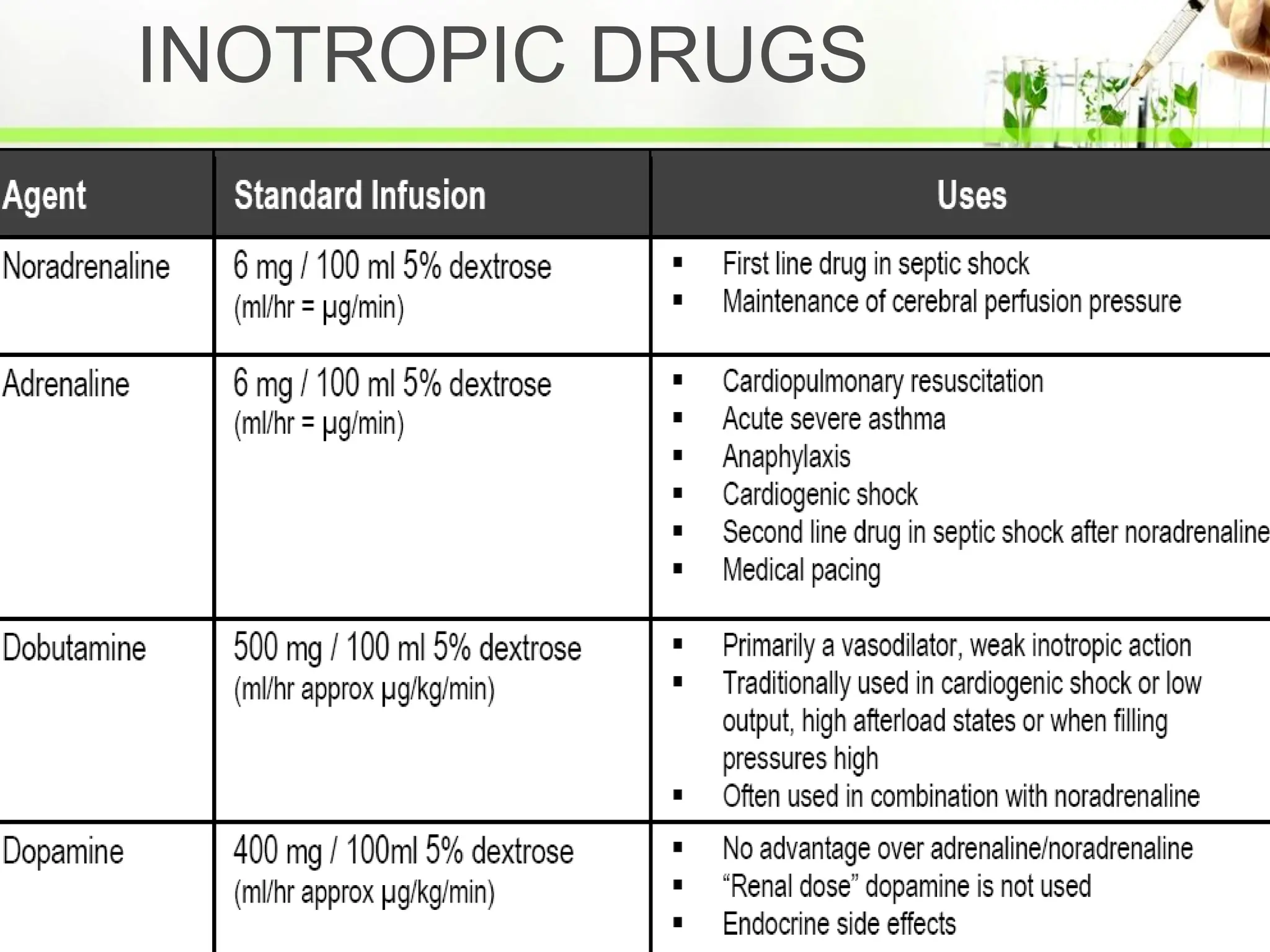
INOTROPIC DRUGS
VASOPRESSOR AGENTS
General principles
i) Vasopressors usually act directly on
the peripheral vasculature and are
primarily used to acutely elevate blood
pressure
ii) The catecholamines have variable
effects on the peripheral vasculature.
iii) The most common cause of
hypotension in ICU patients is
hypovolaemia.
iv) Pressor agents should not be used
as an alternative to fluid resuscitation
Indications (In ICU)
i) Tissue infiltration with local
anaesthesia.
ii) Topically prior to nasal intubation.
iii) Hypotension following sympathetic
block (e.g. epidural anaesthesia).
iv) Hypotension refractory to large
doses of catecholamines
(vasoplegia):
♦ Consider relative hypoadrenalism
♦ Consider use of vasopressin
VASOPRESSORS
Complications
i) Rebound hypertension
ii) Vagal reflex bradycardia
iii) Tachyphylaxis
ANTIHYPERTENSIVE AGENTS
General principles
i) The most common cause of
hypertension in ICU patients is
sympathetic drive due to pain,
agitation or delirium.
ii) Patients in the recovery phase of
acute renal failure are often
hypertensive.
.
iii) Hypertension following an
intracranial event (haemorrhagic or
ischaemic) is common and the
underlying mechanism dictates
therapy
iv) Target therapy should be titrated
against the patient’s premorbid BP.
v) In the absence of adverse effects,
the maximal therapeutic dose of a
selected agent should be used prior to
commencing a second or third agent.
Indications
ACUTE
♦ Acute perioperative
control of hypertension
♦ Hypertensive crisis
♦ Pre-eclampsia / eclampsia
♦ Phaeochromocytoma
♦ Untreated aneurysm or
vascular injury
CHRONIC
♦ Sustained essential
hypertension
♦ Ischaemic heart disease
♦ Cerebrovascular disease
ANTIHYPERTENSIVE AGENTS&VASODILATORS
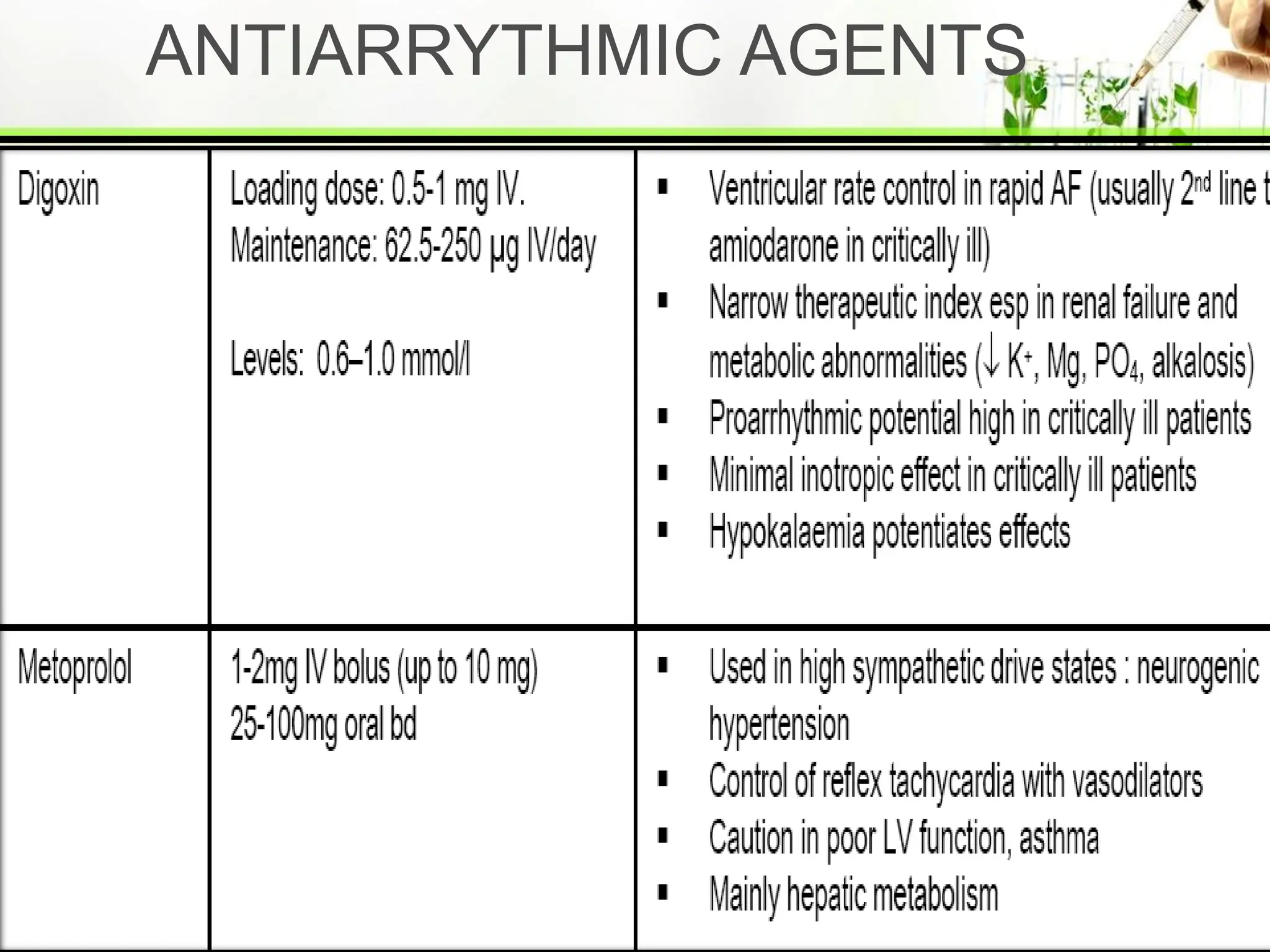
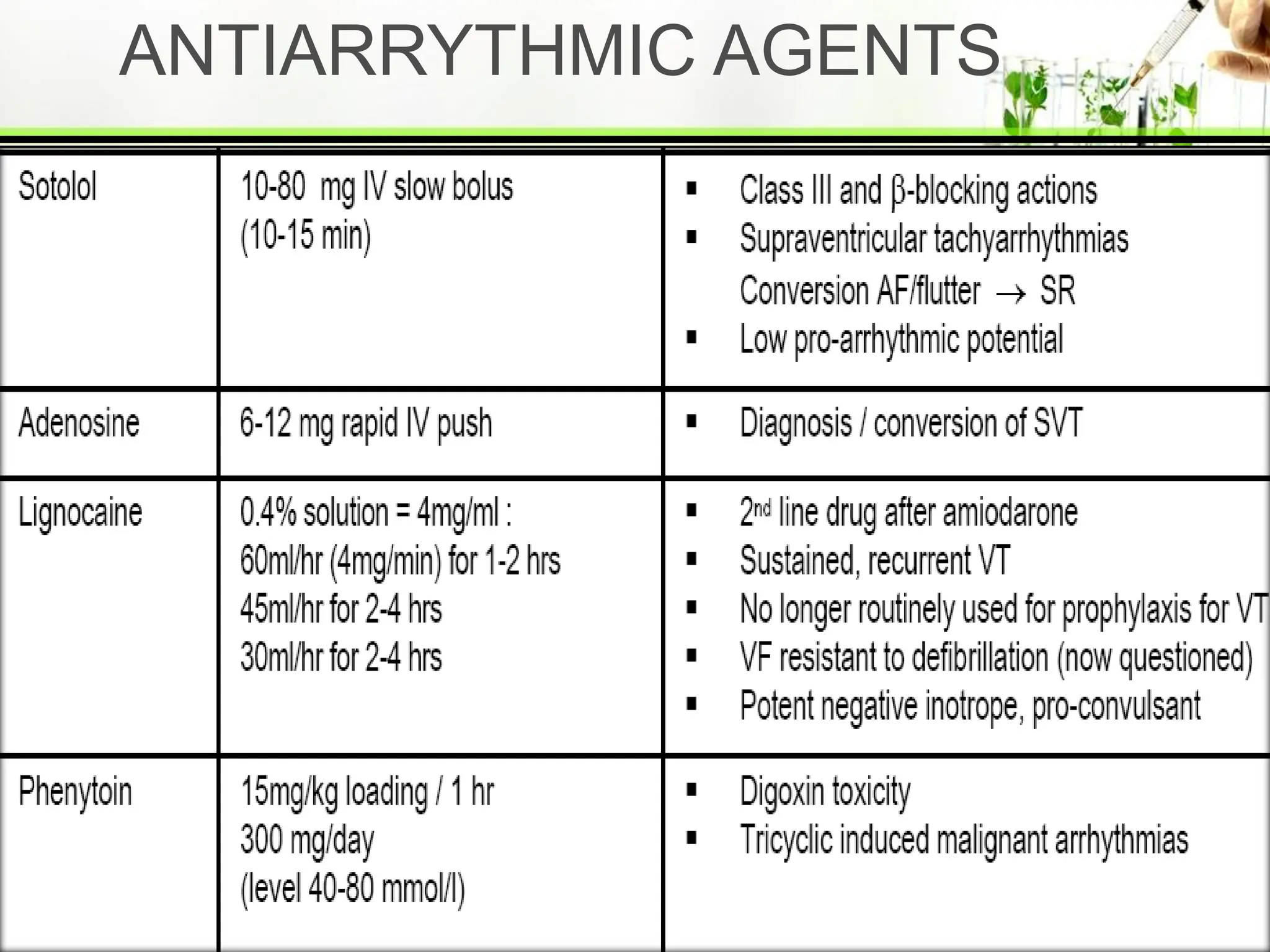
ANTIARRYTHMIC AGENTS
General principles
i) Prior to administration of
antiarrhythmic agents, optimise
correction of the following:
♦ Hypovolaemia
♦ Metabolic abnormalities
♦ Myocardial ischaemia
♦ Sepsis
♦ Pain and agitation.
ii) All antiarrhythmic drugs are
potentially arrhythmogenic.
iii) Virtually all depress myocardial
contractility
Indications
i) Termination of an acute arrhythmia
ii) Prophylaxis against recurrence
iii) Rate control
ANTIARRYTHMIC AGENTS
ANTI PLATELET AGENTS
ANTI PLATELET AGENTS(CONT.)
RESPIRATORY DRUGS
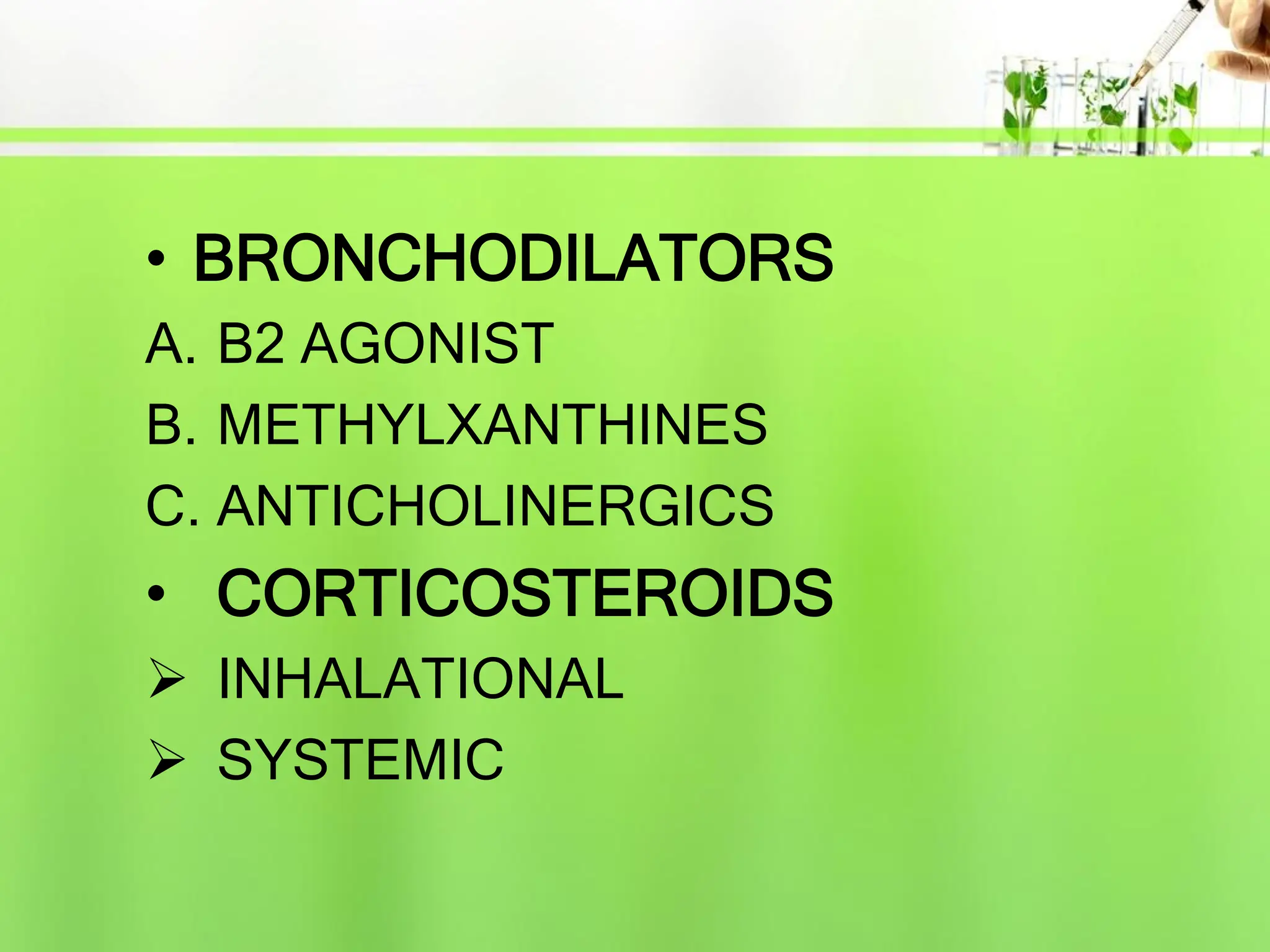
• BRONCHODILATORS
A. B2 AGONIST
B. METHYLXANTHINES
C. ANTICHOLINERGICS
• CORTICOSTEROIDS
 INHALATIONAL
 SYSTEMIC
General Principles:
i) Treatment of bronchospasm in ICU .
ii) They are not routinely used in all
ventilated patients.
iii) Once commenced, they must be
reviewed frequently regarding
efficacy:
♦ Audible wheeze, respiratory rate
♦ Subjective and objective work of
breathing
♦ Lung compliance
♦ Blood gases.
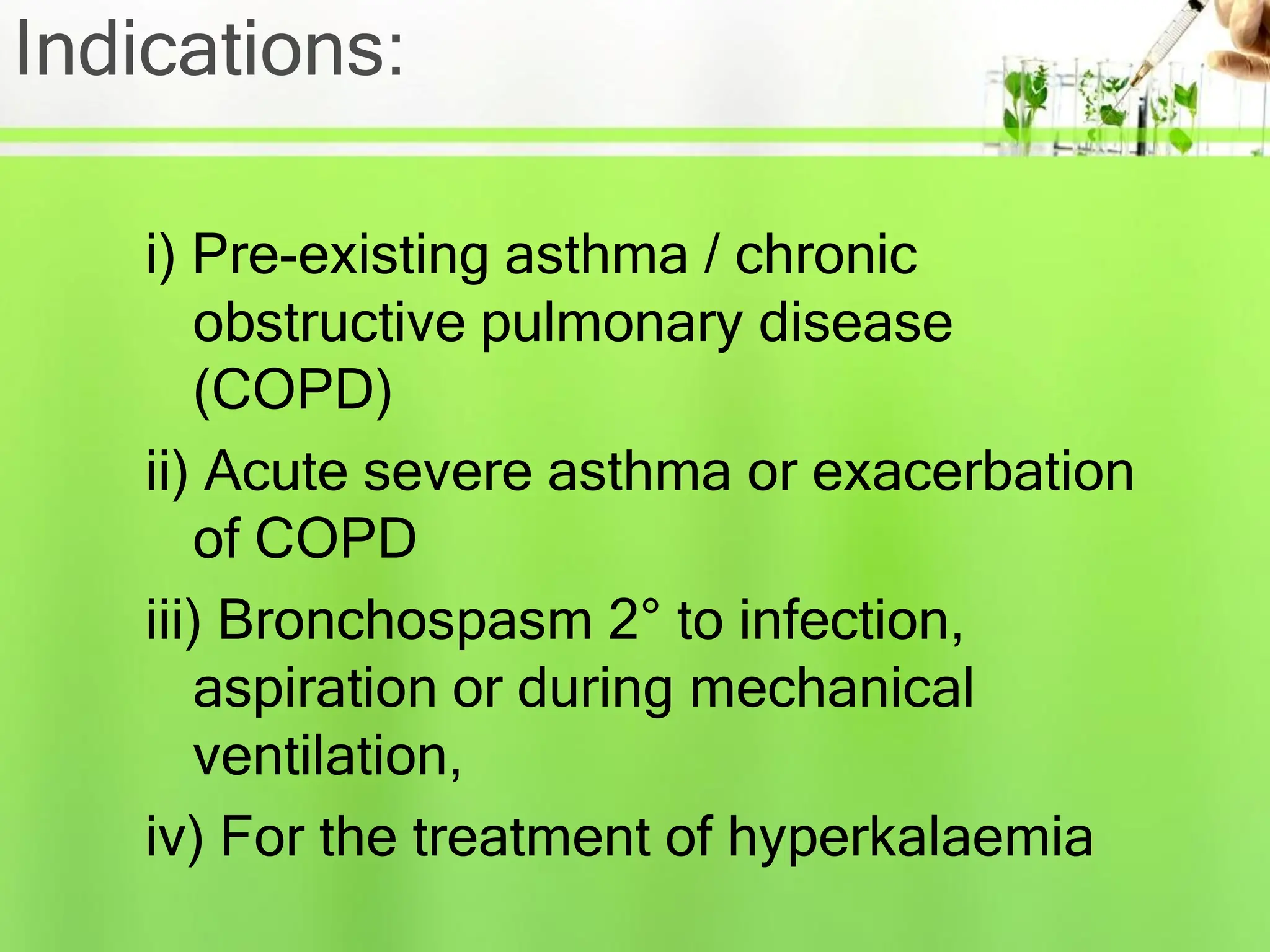
Indications:
i) Pre-existing asthma / chronic
obstructive pulmonary disease
(COPD)
ii) Acute severe asthma or exacerbation
of COPD
iii) Bronchospasm 2° to infection,
aspiration or during mechanical
ventilation,
iv) For the treatment of hyperkalaemia
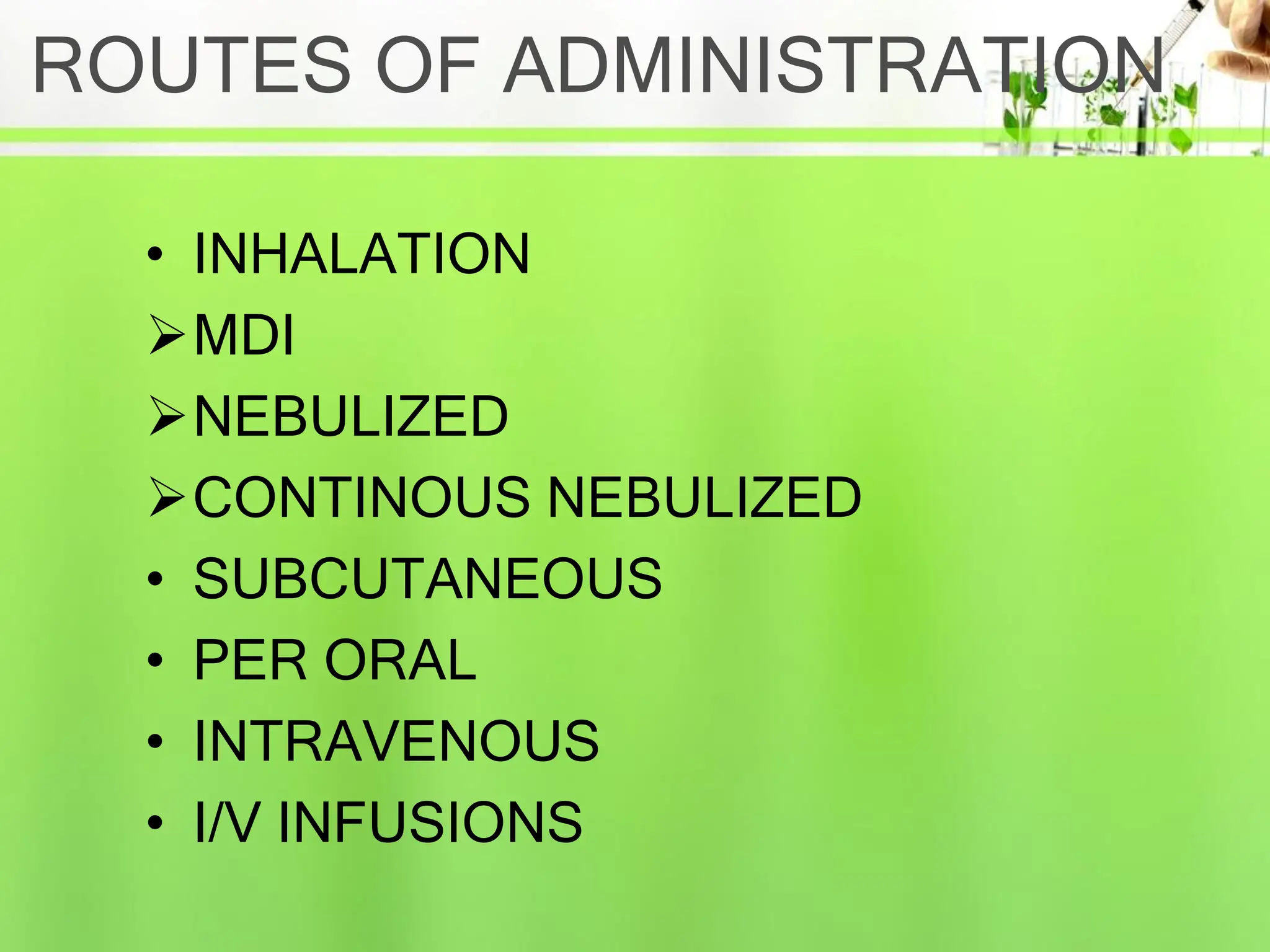
ROUTES OF ADMINISTRATION
• INHALATION
MDI
NEBULIZED
CONTINOUS NEBULIZED
• SUBCUTANEOUS
• PER ORAL
• INTRAVENOUS
• I/V INFUSIONS
B-2 agonist & Anticholinergics
The frequency of intermittent B² agonist administration vary with
the severity of illness of the patient; in severely ill patients, the
initial interval may be hourly
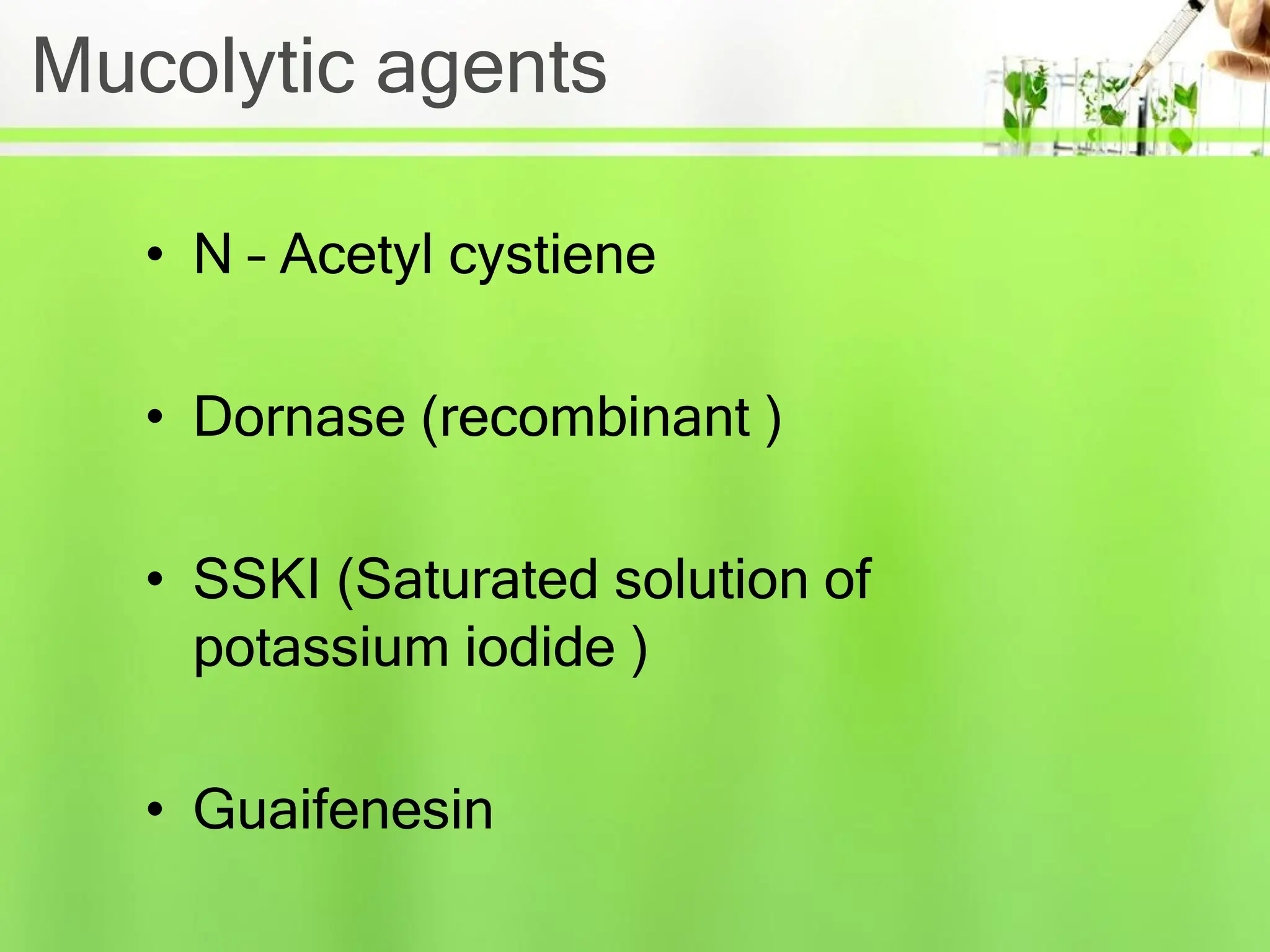
Mucolytic agents
• N – Acetyl cystiene
• Dornase (recombinant )
• SSKI (Saturated solution of
potassium iodide )
• Guaifenesin
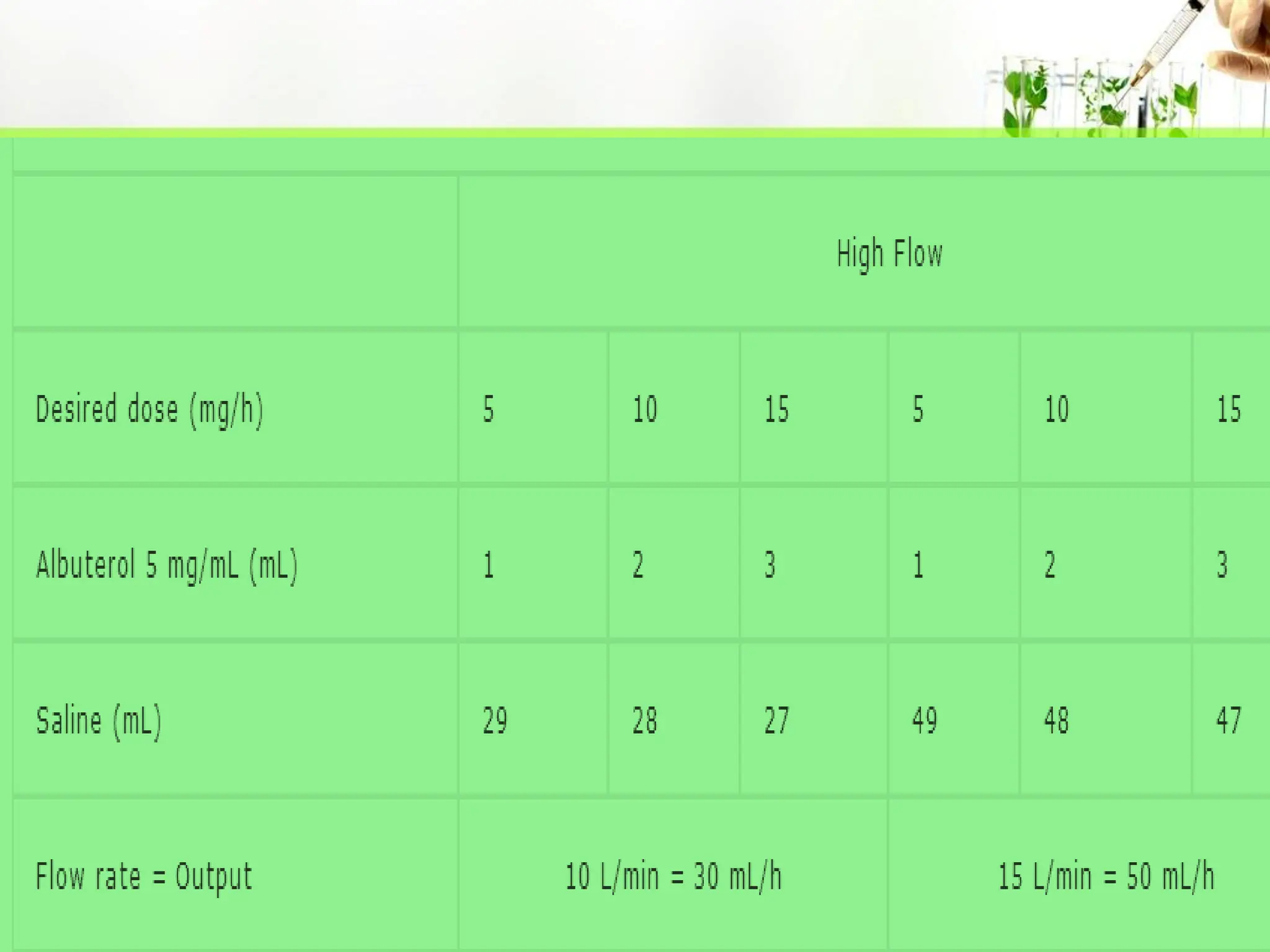
Continous nebulization
The following guidelines are used for 1
hour of nebulization. For prescribed
dose of 10 mg/h at 15 L/min flow, add
2 mL salbutamol (5 mg/mL) to 48 mL
saline for 50 mL/h output. For multiple
hours of operation, multiply by the
number of hours desired.
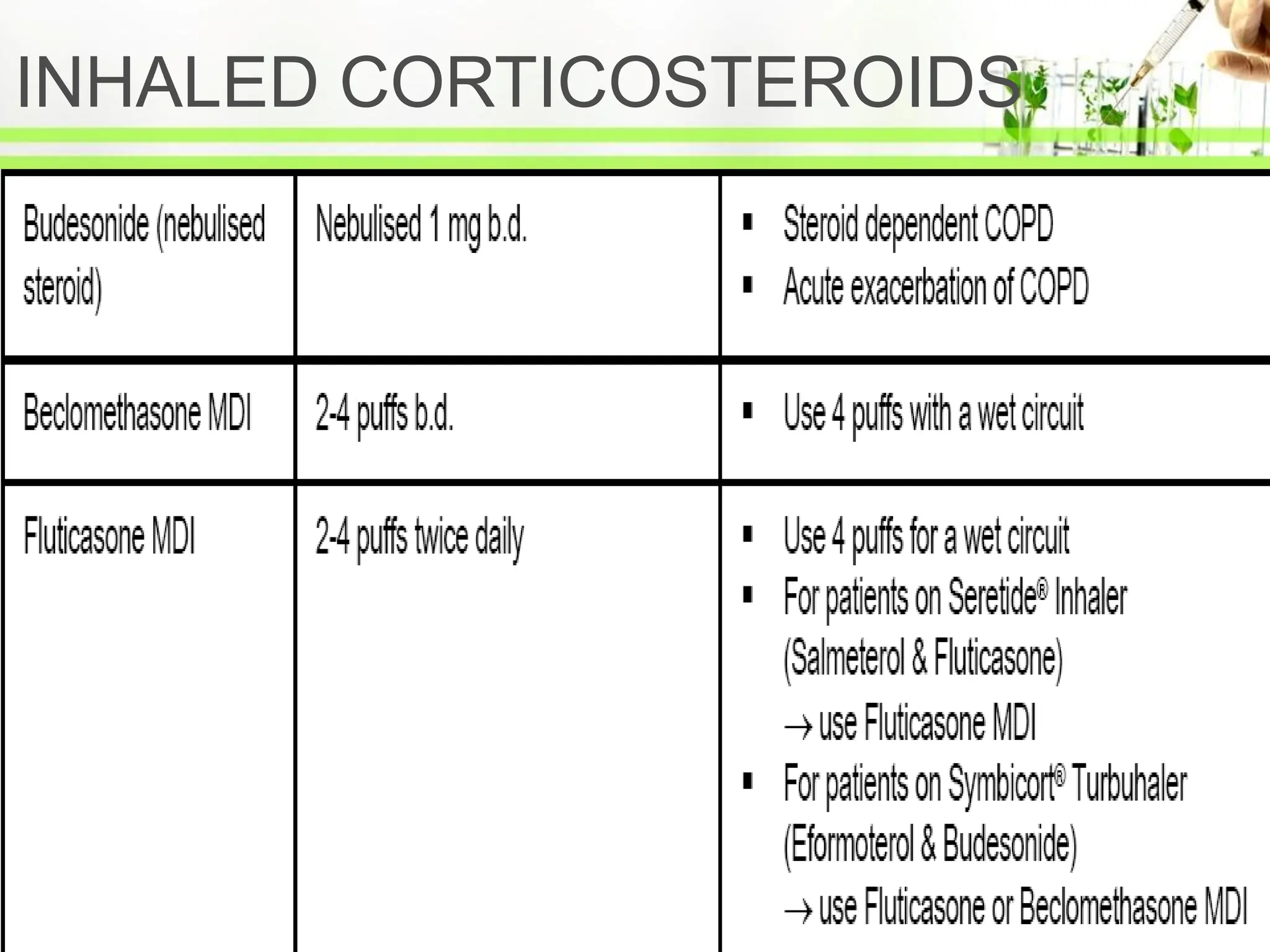
INHALED CORTICOSTEROIDS
Subcutaneous Agents
• Epinepherine
• Terbutaline
Parenteral therapy
Indications:
i) Adjunctive therapy for patients with
acute severe asthma or COPD not
responding to nebulised agents
ii) Selected patients who are difficult to
wean from ventilation
(due to COPD)
iii) Maintenance therapy in patients with
COPD
BRONCHODILATORS
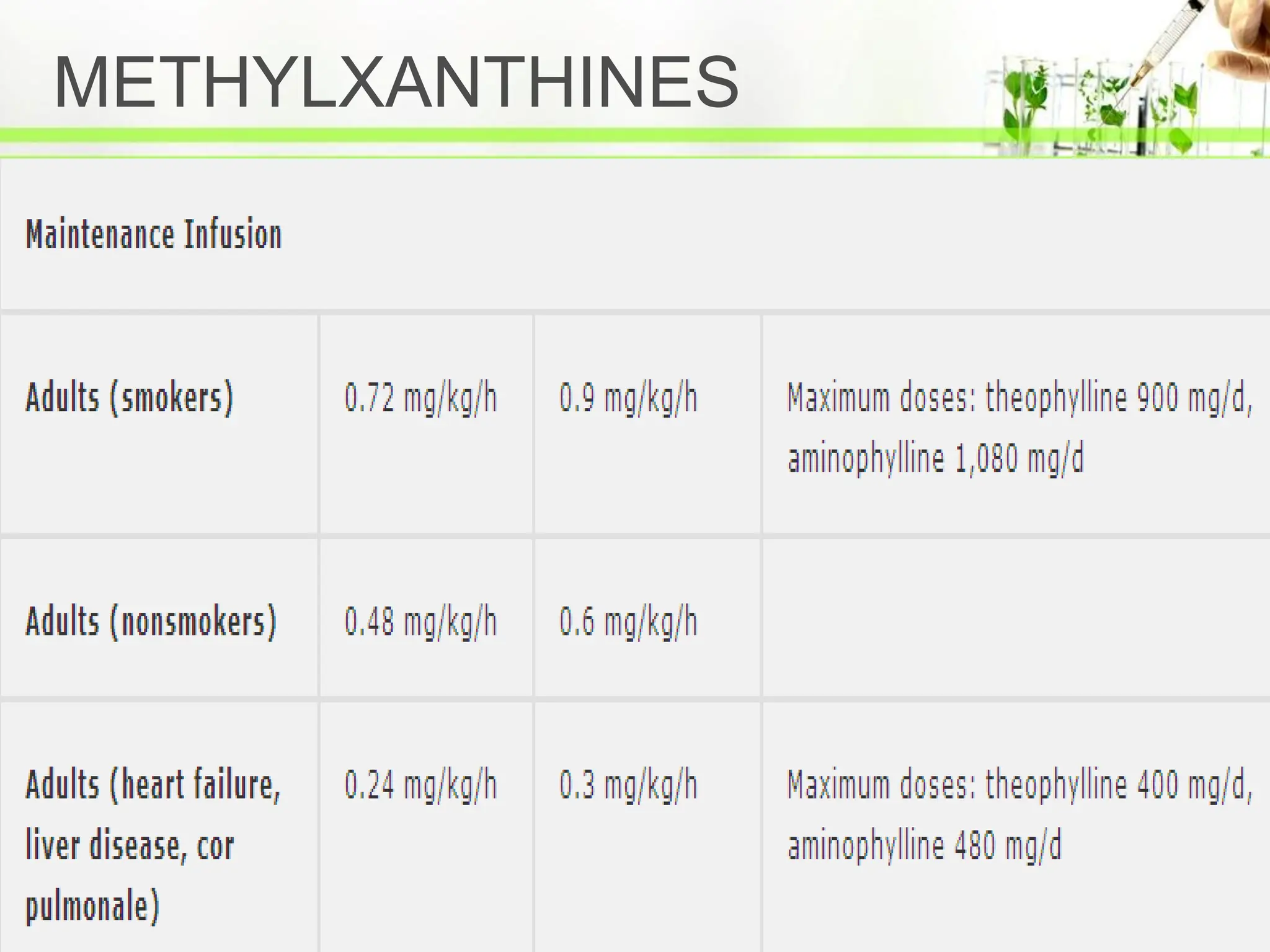
METHYLXANTHINES
METHYLXANTHINES
Corticosteroids
• Methylprednisolone
• Hydrocortisone
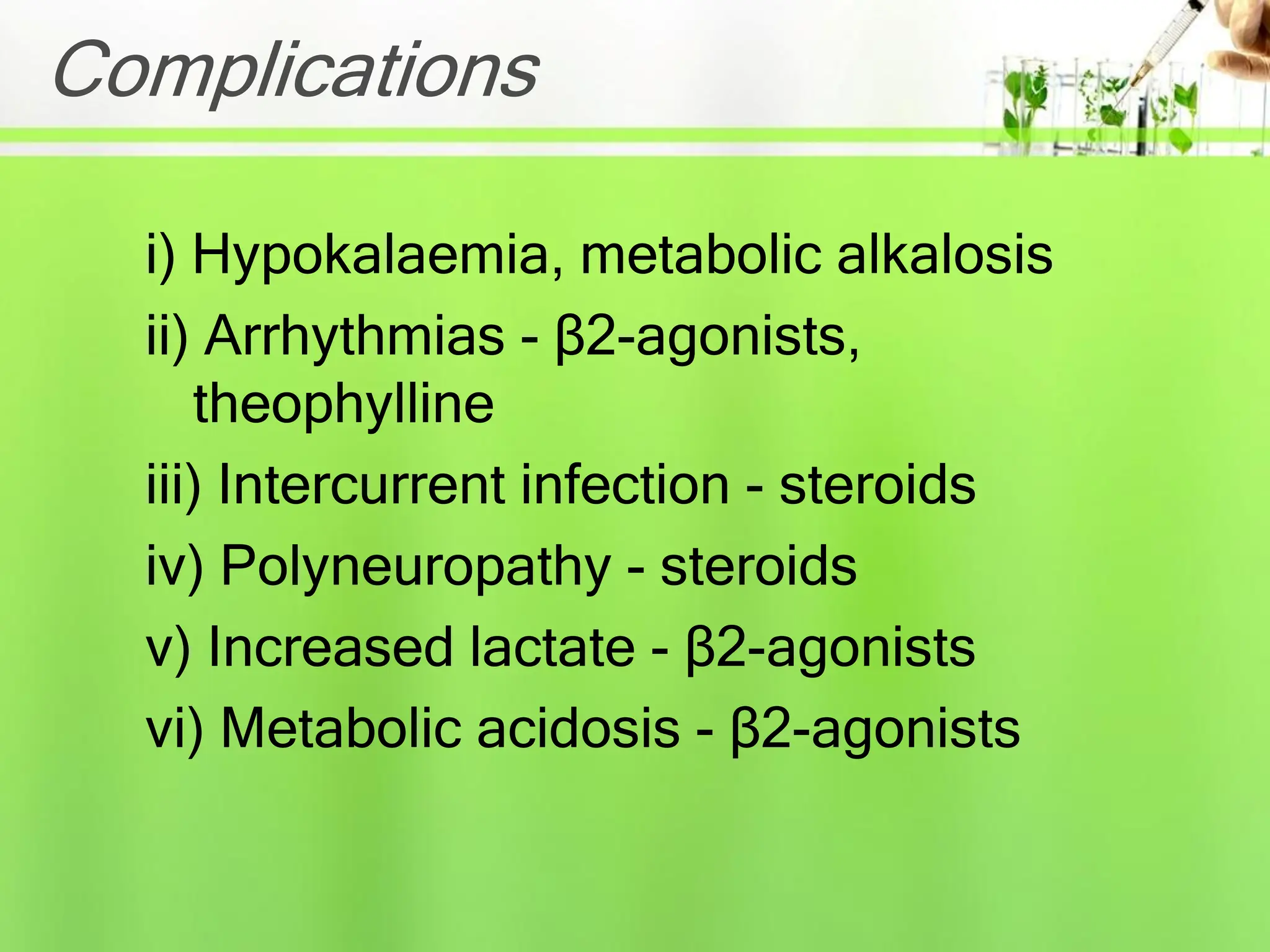
Complications
i) Hypokalaemia, metabolic alkalosis
ii) Arrhythmias - β2-agonists,
theophylline
iii) Intercurrent infection - steroids
iv) Polyneuropathy - steroids
v) Increased lactate - β2-agonists
vi) Metabolic acidosis - β2-agonists
SEDATION ,ANALGESIA &
MUSCLE RELAXANTS
Predisposing
Conditions
Underlying
Medical
Condition
Acute
Medical/Surgical
Condition
Mechanical
Ventilation
Invasive
Procedures
Medications
INTERVENTIONS
Agitation
(anxiety, pain, delirium)
ICU
Environmental
Influences
MEDICATIONS
Sedatives, Analgesics
Antipsychotic
Management of predisposing
& Causative Conditions
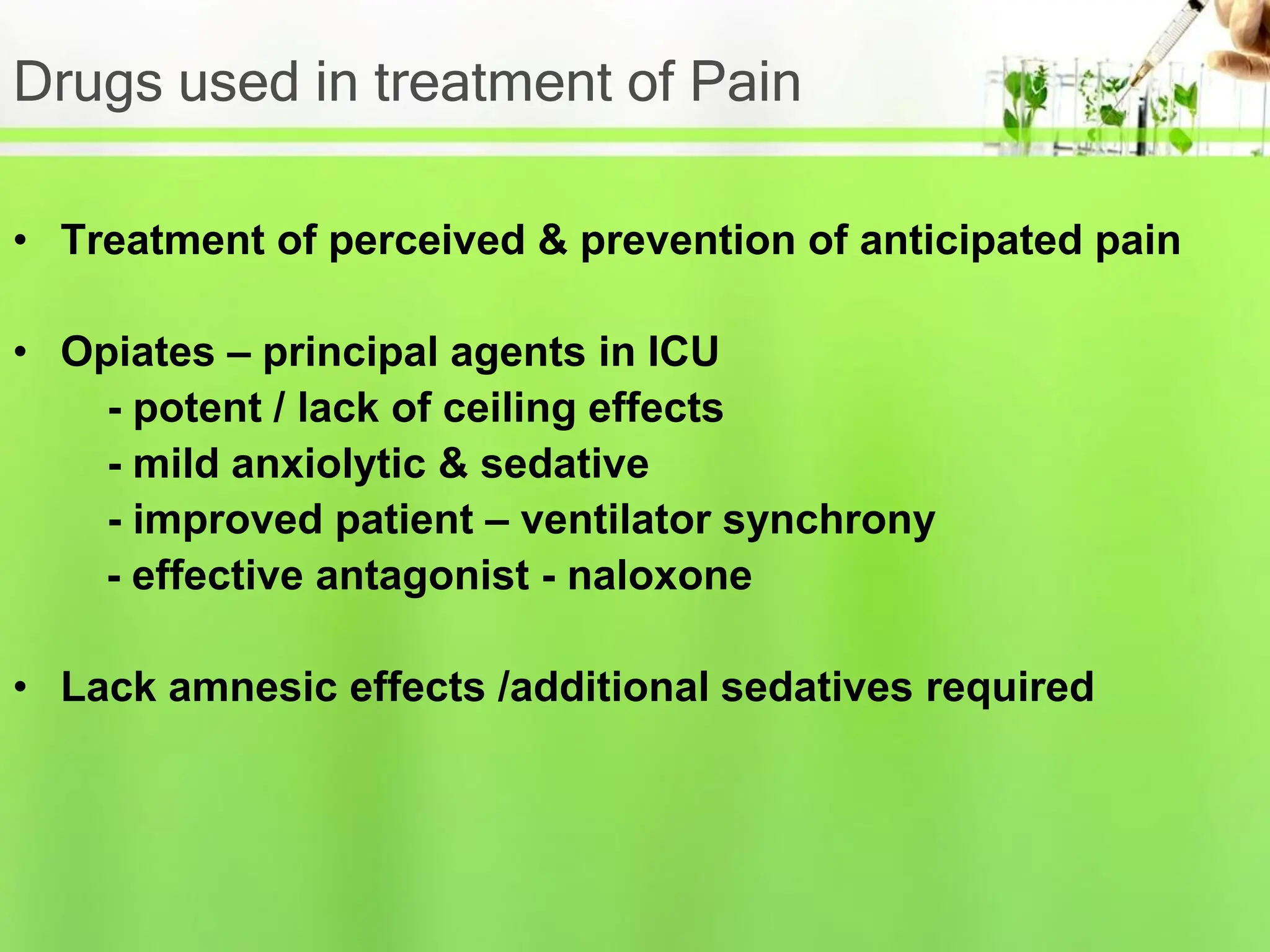
Drugs used in treatment of Pain
• Treatment of perceived & prevention of anticipated pain
• Opiates – principal agents in ICU
- potent / lack of ceiling effects
- mild anxiolytic & sedative
- improved patient – ventilator synchrony
- effective antagonist - naloxone
• Lack amnesic effects /additional sedatives required
Routes of administration
• I/V infusions / scheduled doses
• S/C when I/v route fails – infusions / bolus
• Oral, rectal, sublingual transdermal – unpredictable
• Epidural/ intrathecal routes for surgical patients
• PCA via any route - PCEA / nerve blocks/ oral/ nasogastric
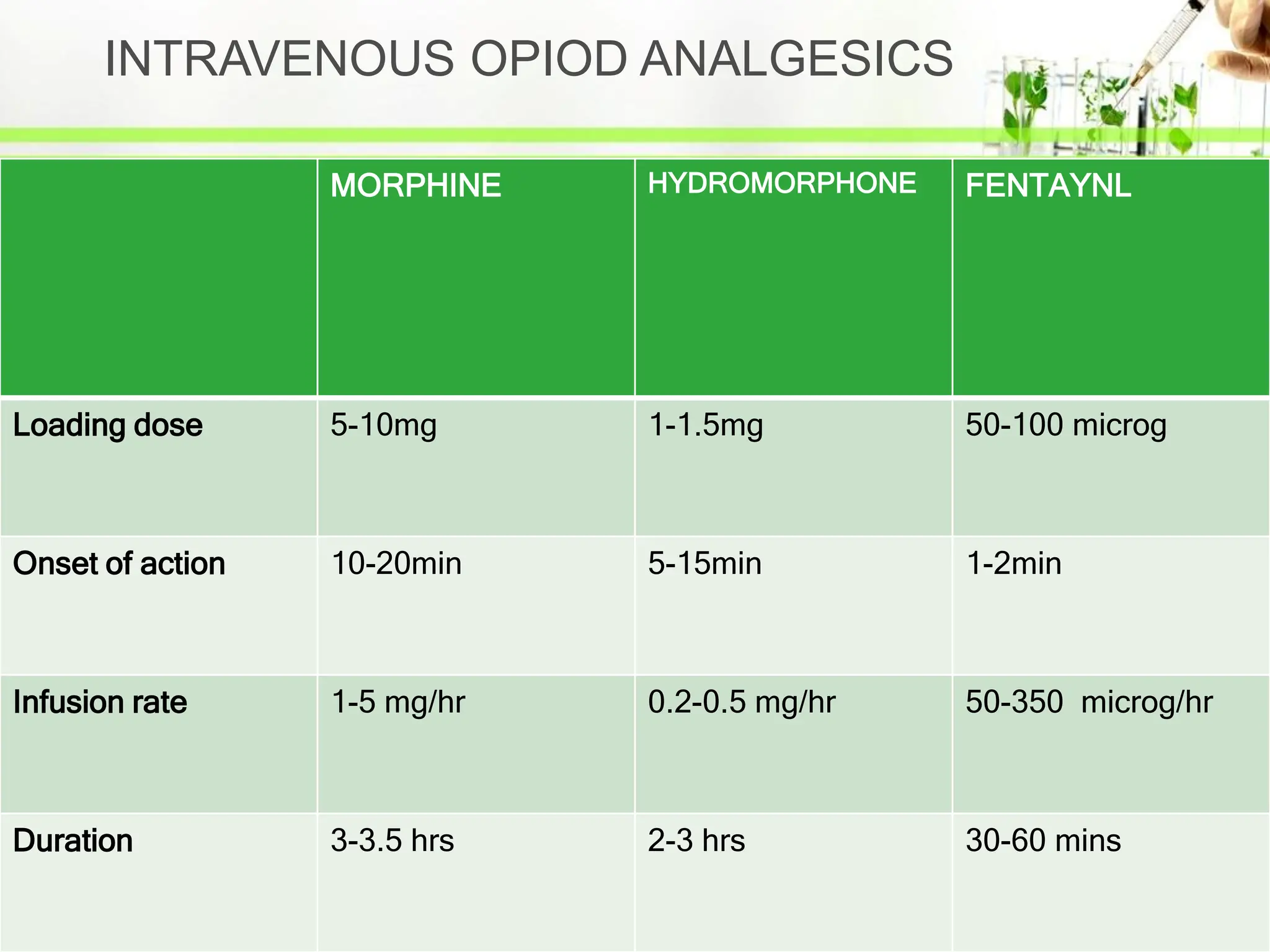
MORPHINE HYDROMORPHONE FENTAYNL
Loading dose 5-10mg 1-1.5mg 50-100 microg
Onset of action 10-20min 5-15min 1-2min
Infusion rate 1-5 mg/hr 0.2-0.5 mg/hr 50-350 microg/hr
Duration 3-3.5 hrs 2-3 hrs 30-60 mins
INTRAVENOUS OPIOD ANALGESICS
• FENTANYL IS PREFFERED OVER
MORPHINE
Faster acting & quicker onset of
action.
No dose adjustment in RF.
Suitable in patients with
hemodynamic compromise
AGENT CONCENTRATION
OPIODS
Fentanyl 2-5 microg/ml
Morphine 20-100 microg/ml
LOCAL ANAESTHETIC
Bupivacaine 0.06-0.125 %
Ropivacaine 0.1-0.2%
EPIDURAL ANALGESIA
Sedation in ICU
• In the agitated, ventilated & for procedure discomfort
• To avoid self extubation & removal of catheters
• NM blockade mandates analgesia & sedation
• Control of pain before sedation
• All have side effects – dose dependent
•
• Analgesics are not sedatives/ Sedatives are not analgesics
SCCM RECOMMENDATIONS
• Midazolam or Propofol are the
preferred agents for short term (under
24 hours) treatment of anxiety in
critically ill patients.
• Lorazepam is the preferred agent for
prolonged (over 24 hours) treatment
of anxiety in critically ill patients.
• Haloperidol is the preferred agent for
treatment of (true delirium) in critically
ill patients
Medications for Sedation
Benzodiazepines
• Onset
– midazolam<diazepam<lorazepam
• Duration
– diazepam>lorazepam>midazolam
• Elimination
– renal failure: active metabolites accumulate for
midazolam and diazepam
– cirrhosis: prolongation of metabolism to active
metabolites for midazolam & diazepam
Medications for Sedation
Dosing for Benzodiazepines
– Begin with 1-2 mg bolus Lorazepam
– if goal not met, give 2nd dose (1-2 x 1st dose) in 5-
10 min
– if goal still not met, give 3rd dose (1-2x2nd dose)
in 5-10min
– Once sedated give dosing at the level of last dose
given
– If goal still not met, consider continuous infusion at
0.5-8mg/hr
Medications for Sedation
Propofol
• Sedative hypnotic with mild amnestic properties,
NO analgesia
• Rapid induction (30-40sec), rapid recovery
• Dosing:
– Start dose at 5mcg/kg/min
– Titration by 5-10mcg/kg/min q5 min
• Side Effects:
– Hypotension 1/3 of all patients, Bradycardia, arrhythmia, Lipemia,
hypertriglycerdemia, Pancreatitis, Infection Risk
– Propofol Infusion Syndrome: acute refractory bradycardia and
metabolic acidosis, rhabdomyolysis, hyperlipidemia or an
enlarged fatty liver
– Limit 2-3 days sedation therapy
Medications for Sedation
Dexmedatomidine
• Short acting alpha 2 agonist(8-10x increased binding
than clonidine)
• Anxiolytic, anesthetic, hypnotic and analgesic
• Rapid onset: 6 min Elimination: 2 hours
• Pts can be arousable/alert with stimulation
• Sedation with less lethargy
• Dose:
loading infusion for 1mg/kg for 10 min
maintenance of 0.2 to 0.7 mcg/kg/hr
• Side effects:
– Hypotension
– Bradycardia
– High doses can have alpha 1 agonist effect
Daily Wake-Ups
• Allows patients to “wake up” by stopping drug infusion
– Clinicians are able to assess neurological status &
examine patient while awake (calm or agitated)
– Sedative doses are subsequently decreased
• Daily interruption of sedative drug infusions result in:
– Decrease duration of mechanical ventilation
– Decrease length of ICU stay
– Less nosocomial infections/VAP
– Improves hemodynamics/allows weaning of
vasopressos and fluids Kress JB et al NEJM 2006;1471-1477
Sessler CN. CCM 2004; 1413-1414.
Schweickert WD et al CCM 2004; 1272-1276
Kollef M et al Chest 1998; 541-548
drugs_used_in_icu1_by_dr_parul.pdf124456

drugs_used_in_icu1_by_dr_parul.pdf124456

  • 1.
    DRUGS USED INICU DR.PARUL MRIGPURI DEPTT OF CHEST & TB
  • 2.
    POLICY OF DRUGUSE IN ICU • Patients admitted to the ICU must have a complete drug history documented: a) Premorbid and current medications. b) Previous adverse drug reactions and allergies. c) Note potential drug interactions.
  • 3.
    • All drugs,infusions and fluids are reviewed and transcribed at least daily. • Drugs should be prescribed according to Unit protocols and guidelines.
  • 4.
    • Where possible: a)Use drugs that can be measured to monitor therapeutic drug levels. b) Avoid drugs with narrow therapeutic indices (e.g. digoxin, theophylline), particularly in patients with associated hepatic or renal dysfunction.
  • 5.
    c) Cease adrug if there is no apparent benefit. d) If two drugs are of equal efficacy, choose the cheaper drug as the cost of drugs in ICU is significant
  • 6.
    DRUGS USED 1. Cardiovasculardrugs 2. Respiratory drugs 3. Sedation, analgesia & muscle relaxants 4. Anticoagulation 5. Endocrine drugs 6. Renal drugs 7. G I drugs 8. Antibiotics 9. Fluid & Electrolytes
  • 7.
  • 8.
    • Inotropic Agents •Vasopressors • Antihypertensive & Vasodilator Agents • Antiarrhythmic Agents • Antiplatelet Agents
  • 9.
    Inotropes a) General principles: i)Defence of blood pressure in critically ill patients forms the basis of haemodynamic resuscitation and organ perfusion ii) Hypovolaemia is the most common cause of hypotension and low cardiac output in ICU
  • 10.
    iii) The mainindications for the use of inotropes are to increase myocardial contractility, heart rate and/or vascular tone. iv) The use of inotropes requires regular haemodynamic monitoring. v) No single inotrope has been shown to be superior to another. vi) There is marked inter-individual variation in the response to inotropes.
  • 11.
    CVS EFFECTS OFINOTROPIC DRUGS
  • 12.
  • 13.
    VASOPRESSOR AGENTS General principles i)Vasopressors usually act directly on the peripheral vasculature and are primarily used to acutely elevate blood pressure ii) The catecholamines have variable effects on the peripheral vasculature.
  • 14.
    iii) The mostcommon cause of hypotension in ICU patients is hypovolaemia. iv) Pressor agents should not be used as an alternative to fluid resuscitation
  • 15.
    Indications (In ICU) i)Tissue infiltration with local anaesthesia. ii) Topically prior to nasal intubation. iii) Hypotension following sympathetic block (e.g. epidural anaesthesia).
  • 16.
    iv) Hypotension refractoryto large doses of catecholamines (vasoplegia): ♦ Consider relative hypoadrenalism ♦ Consider use of vasopressin
  • 17.
  • 18.
    Complications i) Rebound hypertension ii)Vagal reflex bradycardia iii) Tachyphylaxis
  • 19.
    ANTIHYPERTENSIVE AGENTS General principles i)The most common cause of hypertension in ICU patients is sympathetic drive due to pain, agitation or delirium. ii) Patients in the recovery phase of acute renal failure are often hypertensive. .
  • 20.
    iii) Hypertension followingan intracranial event (haemorrhagic or ischaemic) is common and the underlying mechanism dictates therapy iv) Target therapy should be titrated against the patient’s premorbid BP.
  • 21.
    v) In theabsence of adverse effects, the maximal therapeutic dose of a selected agent should be used prior to commencing a second or third agent.
  • 22.
    Indications ACUTE ♦ Acute perioperative controlof hypertension ♦ Hypertensive crisis ♦ Pre-eclampsia / eclampsia ♦ Phaeochromocytoma ♦ Untreated aneurysm or vascular injury CHRONIC ♦ Sustained essential hypertension ♦ Ischaemic heart disease ♦ Cerebrovascular disease
  • 23.
  • 24.
  • 25.
  • 26.
    ANTIARRYTHMIC AGENTS General principles i)Prior to administration of antiarrhythmic agents, optimise correction of the following: ♦ Hypovolaemia ♦ Metabolic abnormalities ♦ Myocardial ischaemia ♦ Sepsis ♦ Pain and agitation.
  • 27.
    ii) All antiarrhythmicdrugs are potentially arrhythmogenic. iii) Virtually all depress myocardial contractility
  • 28.
    Indications i) Termination ofan acute arrhythmia ii) Prophylaxis against recurrence iii) Rate control
  • 29.
  • 30.
  • 31.
  • 32.
  • 33.
  • 34.
  • 35.
    • BRONCHODILATORS A. B2AGONIST B. METHYLXANTHINES C. ANTICHOLINERGICS • CORTICOSTEROIDS  INHALATIONAL  SYSTEMIC
  • 36.
    General Principles: i) Treatmentof bronchospasm in ICU . ii) They are not routinely used in all ventilated patients.
  • 37.
    iii) Once commenced,they must be reviewed frequently regarding efficacy: ♦ Audible wheeze, respiratory rate ♦ Subjective and objective work of breathing ♦ Lung compliance ♦ Blood gases.
  • 38.
    Indications: i) Pre-existing asthma/ chronic obstructive pulmonary disease (COPD) ii) Acute severe asthma or exacerbation of COPD iii) Bronchospasm 2° to infection, aspiration or during mechanical ventilation, iv) For the treatment of hyperkalaemia
  • 39.
    ROUTES OF ADMINISTRATION •INHALATION MDI NEBULIZED CONTINOUS NEBULIZED • SUBCUTANEOUS • PER ORAL • INTRAVENOUS • I/V INFUSIONS
  • 40.
    B-2 agonist &Anticholinergics The frequency of intermittent B² agonist administration vary with the severity of illness of the patient; in severely ill patients, the initial interval may be hourly
  • 41.
    Mucolytic agents • N– Acetyl cystiene • Dornase (recombinant ) • SSKI (Saturated solution of potassium iodide ) • Guaifenesin
  • 42.
    Continous nebulization The followingguidelines are used for 1 hour of nebulization. For prescribed dose of 10 mg/h at 15 L/min flow, add 2 mL salbutamol (5 mg/mL) to 48 mL saline for 50 mL/h output. For multiple hours of operation, multiply by the number of hours desired.
  • 46.
  • 47.
  • 48.
    Parenteral therapy Indications: i) Adjunctivetherapy for patients with acute severe asthma or COPD not responding to nebulised agents ii) Selected patients who are difficult to wean from ventilation (due to COPD) iii) Maintenance therapy in patients with COPD
  • 49.
  • 50.
  • 51.
  • 52.
  • 53.
    Complications i) Hypokalaemia, metabolicalkalosis ii) Arrhythmias - β2-agonists, theophylline iii) Intercurrent infection - steroids iv) Polyneuropathy - steroids v) Increased lactate - β2-agonists vi) Metabolic acidosis - β2-agonists
  • 54.
  • 55.
  • 56.
    Drugs used intreatment of Pain • Treatment of perceived & prevention of anticipated pain • Opiates – principal agents in ICU - potent / lack of ceiling effects - mild anxiolytic & sedative - improved patient – ventilator synchrony - effective antagonist - naloxone • Lack amnesic effects /additional sedatives required
  • 57.
    Routes of administration •I/V infusions / scheduled doses • S/C when I/v route fails – infusions / bolus • Oral, rectal, sublingual transdermal – unpredictable • Epidural/ intrathecal routes for surgical patients • PCA via any route - PCEA / nerve blocks/ oral/ nasogastric
  • 58.
    MORPHINE HYDROMORPHONE FENTAYNL Loadingdose 5-10mg 1-1.5mg 50-100 microg Onset of action 10-20min 5-15min 1-2min Infusion rate 1-5 mg/hr 0.2-0.5 mg/hr 50-350 microg/hr Duration 3-3.5 hrs 2-3 hrs 30-60 mins INTRAVENOUS OPIOD ANALGESICS
  • 59.
    • FENTANYL ISPREFFERED OVER MORPHINE Faster acting & quicker onset of action. No dose adjustment in RF. Suitable in patients with hemodynamic compromise
  • 60.
    AGENT CONCENTRATION OPIODS Fentanyl 2-5microg/ml Morphine 20-100 microg/ml LOCAL ANAESTHETIC Bupivacaine 0.06-0.125 % Ropivacaine 0.1-0.2% EPIDURAL ANALGESIA
  • 61.
    Sedation in ICU •In the agitated, ventilated & for procedure discomfort • To avoid self extubation & removal of catheters • NM blockade mandates analgesia & sedation • Control of pain before sedation • All have side effects – dose dependent • • Analgesics are not sedatives/ Sedatives are not analgesics
  • 62.
    SCCM RECOMMENDATIONS • Midazolamor Propofol are the preferred agents for short term (under 24 hours) treatment of anxiety in critically ill patients. • Lorazepam is the preferred agent for prolonged (over 24 hours) treatment of anxiety in critically ill patients. • Haloperidol is the preferred agent for treatment of (true delirium) in critically ill patients
  • 63.
    Medications for Sedation Benzodiazepines •Onset – midazolam<diazepam<lorazepam • Duration – diazepam>lorazepam>midazolam • Elimination – renal failure: active metabolites accumulate for midazolam and diazepam – cirrhosis: prolongation of metabolism to active metabolites for midazolam & diazepam
  • 64.
    Medications for Sedation Dosingfor Benzodiazepines – Begin with 1-2 mg bolus Lorazepam – if goal not met, give 2nd dose (1-2 x 1st dose) in 5- 10 min – if goal still not met, give 3rd dose (1-2x2nd dose) in 5-10min – Once sedated give dosing at the level of last dose given – If goal still not met, consider continuous infusion at 0.5-8mg/hr
  • 65.
    Medications for Sedation Propofol •Sedative hypnotic with mild amnestic properties, NO analgesia • Rapid induction (30-40sec), rapid recovery • Dosing: – Start dose at 5mcg/kg/min – Titration by 5-10mcg/kg/min q5 min • Side Effects: – Hypotension 1/3 of all patients, Bradycardia, arrhythmia, Lipemia, hypertriglycerdemia, Pancreatitis, Infection Risk – Propofol Infusion Syndrome: acute refractory bradycardia and metabolic acidosis, rhabdomyolysis, hyperlipidemia or an enlarged fatty liver – Limit 2-3 days sedation therapy
  • 66.
    Medications for Sedation Dexmedatomidine •Short acting alpha 2 agonist(8-10x increased binding than clonidine) • Anxiolytic, anesthetic, hypnotic and analgesic • Rapid onset: 6 min Elimination: 2 hours • Pts can be arousable/alert with stimulation • Sedation with less lethargy • Dose: loading infusion for 1mg/kg for 10 min maintenance of 0.2 to 0.7 mcg/kg/hr • Side effects: – Hypotension – Bradycardia – High doses can have alpha 1 agonist effect
  • 67.
    Daily Wake-Ups • Allowspatients to “wake up” by stopping drug infusion – Clinicians are able to assess neurological status & examine patient while awake (calm or agitated) – Sedative doses are subsequently decreased • Daily interruption of sedative drug infusions result in: – Decrease duration of mechanical ventilation – Decrease length of ICU stay – Less nosocomial infections/VAP – Improves hemodynamics/allows weaning of vasopressos and fluids Kress JB et al NEJM 2006;1471-1477 Sessler CN. CCM 2004; 1413-1414. Schweickert WD et al CCM 2004; 1272-1276 Kollef M et al Chest 1998; 541-548