Drug Dosage
Calculation Using
Measurements
A Glance at Measurements and
Conversions
Dosage calculations involve measurements and
conversions of the formulation, ingredients and
components of drugs. Measurements and conversions
must be calculated accurately to ensure that we will be
able to give the correct dosage to our patience.
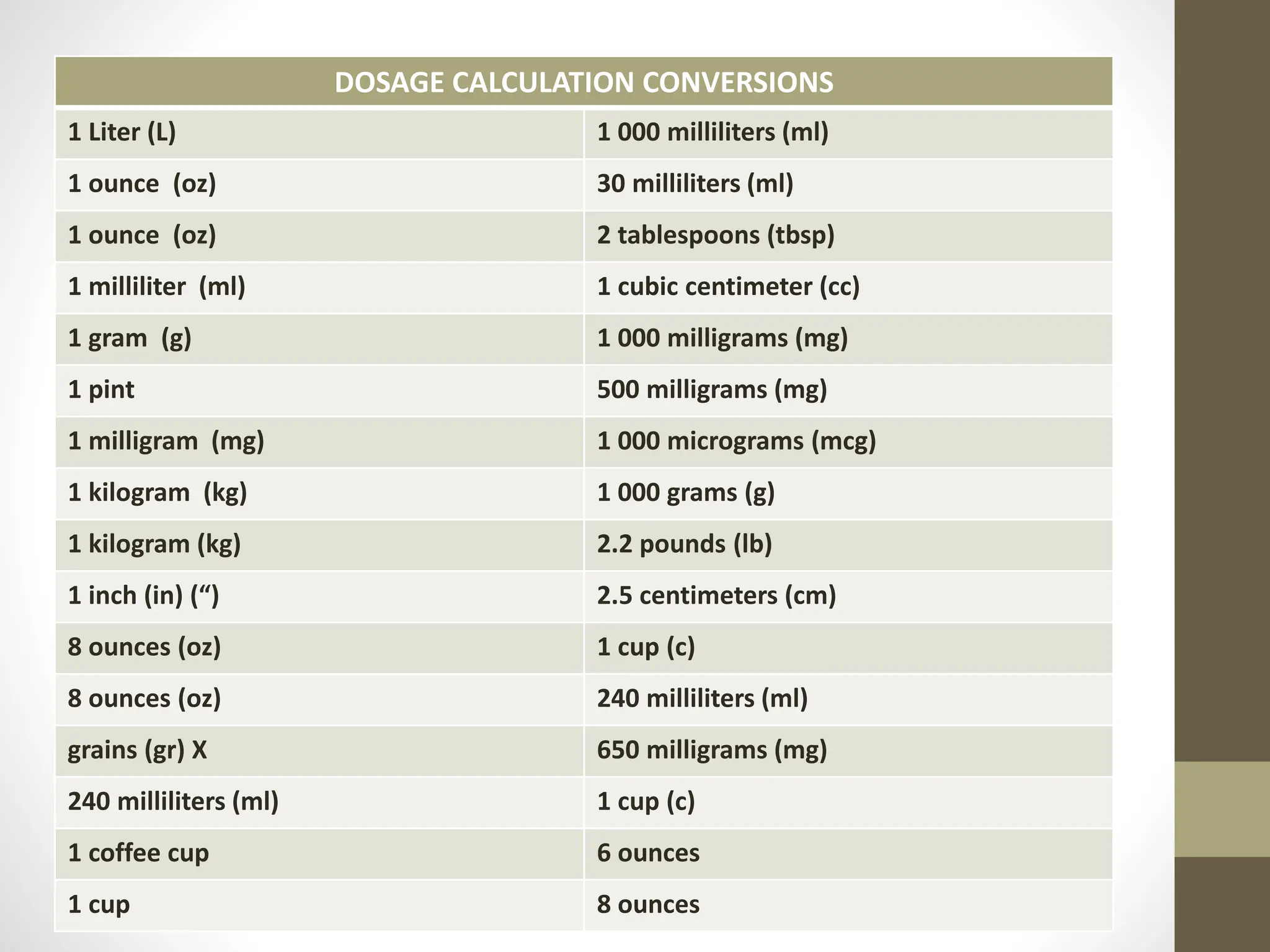
DOSAGE CALCULATION CONVERSIONS
1 Liter (L) 1 000 milliliters (ml)
1 ounce (oz) 30 milliliters (ml)
1 ounce (oz) 2 tablespoons (tbsp)
1 milliliter (ml) 1 cubic centimeter (cc)
1 gram (g) 1 000 milligrams (mg)
1 pint 500 milligrams (mg)
1 milligram (mg) 1 000 micrograms (mcg)
1 kilogram (kg) 1 000 grams (g)
1 kilogram (kg) 2.2 pounds (lb)
1 inch (in) (“) 2.5 centimeters (cm)
8 ounces (oz) 1 cup (c)
8 ounces (oz) 240 milliliters (ml)
grains (gr) X 650 milligrams (mg)
240 milliliters (ml) 1 cup (c)
1 coffee cup 6 ounces
1 cup 8 ounces
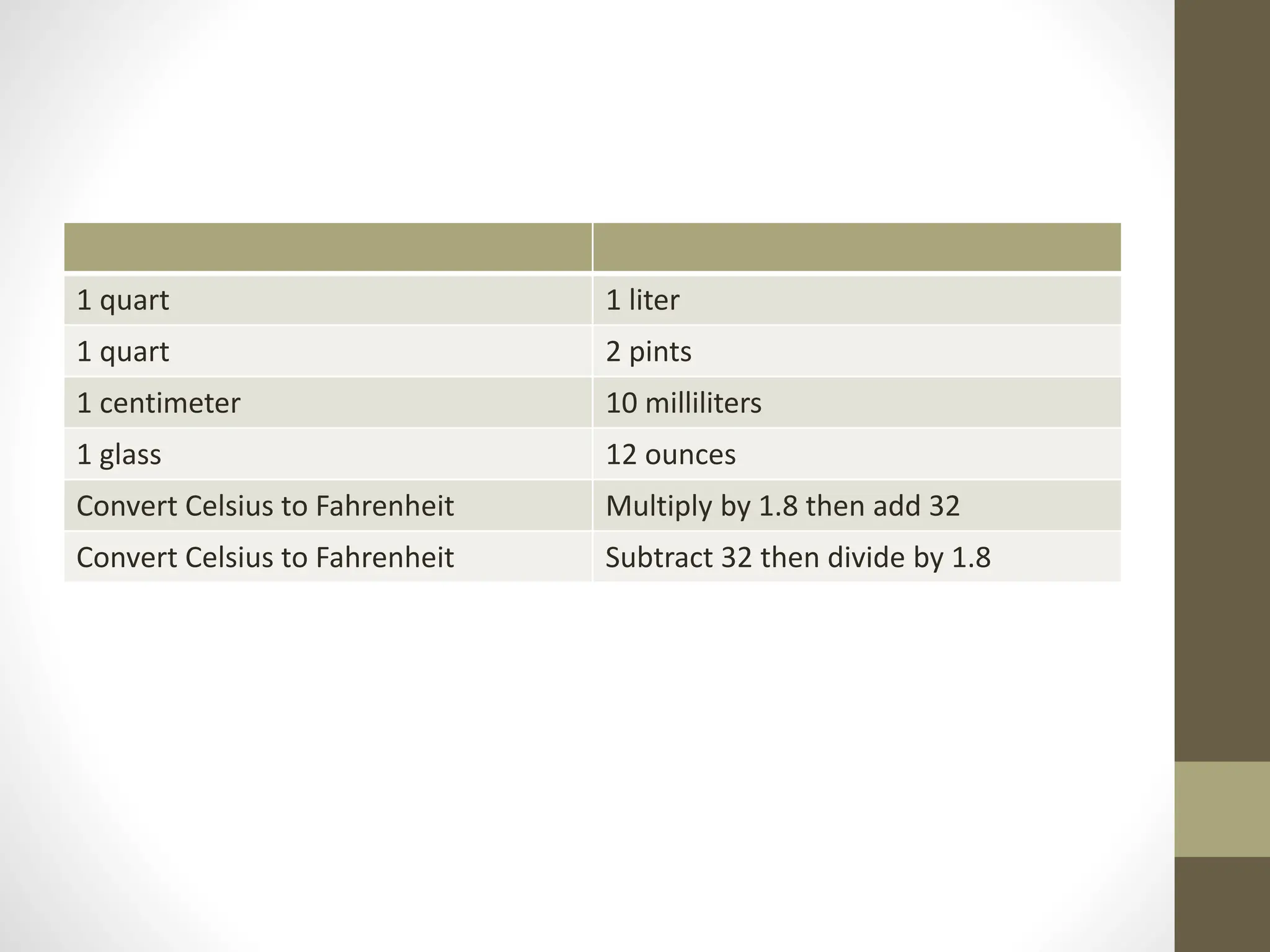
1 quart 1 liter
1 quart 2 pints
1 centimeter 10 milliliters
1 glass 12 ounces
Convert Celsius to Fahrenheit Multiply by 1.8 then add 32
Convert Celsius to Fahrenheit Subtract 32 then divide by 1.8
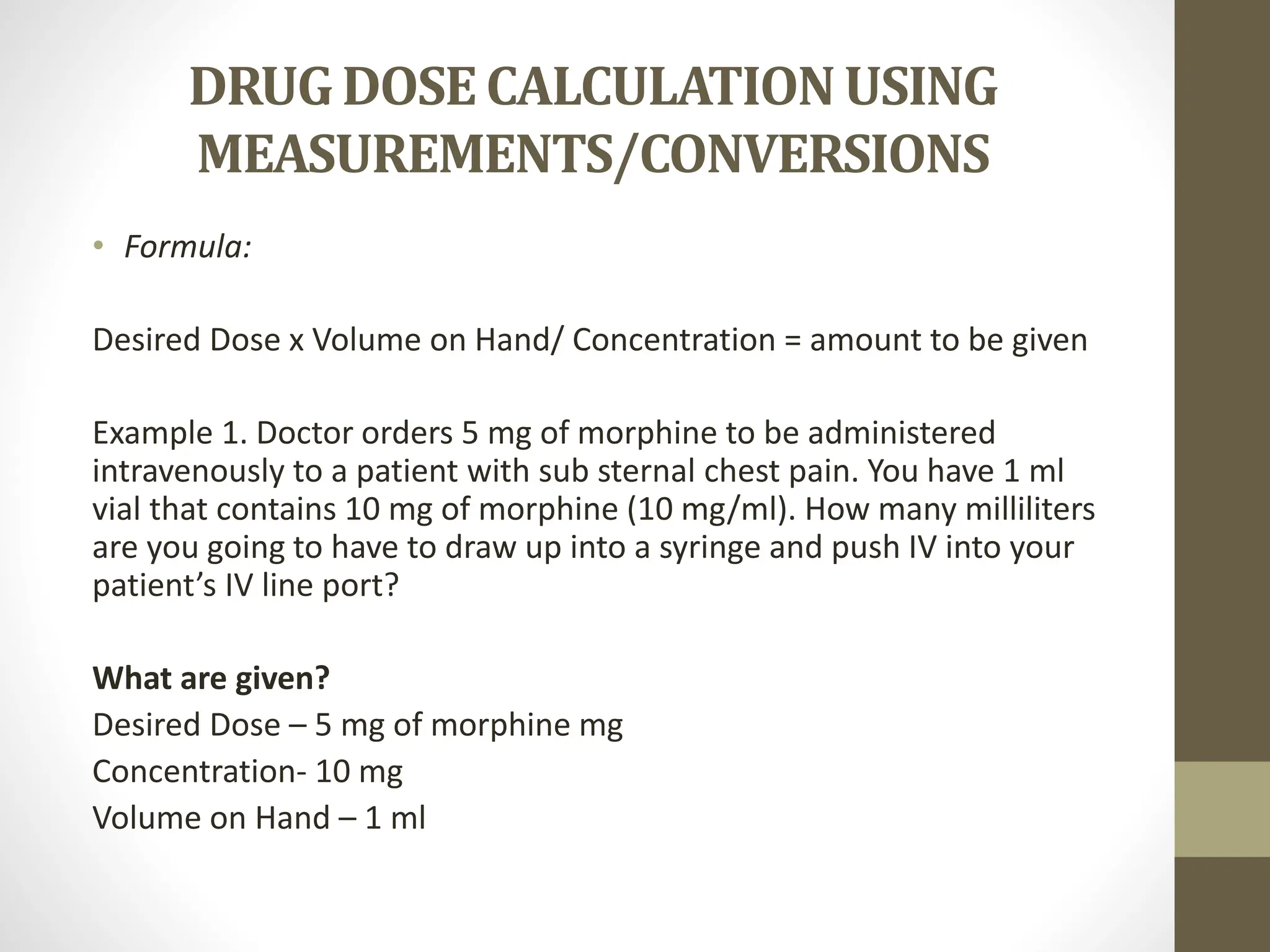
DRUGDOSECALCULATIONUSING
MEASUREMENTS/CONVERSIONS
• Formula:
Desired Dose x Volume on Hand/ Concentration = amount to be given
Example 1. Doctor orders 5 mg of morphine to be administered
intravenously to a patient with sub sternal chest pain. You have 1 ml
vial that contains 10 mg of morphine (10 mg/ml). How many milliliters
are you going to have to draw up into a syringe and push IV into your
patient’s IV line port?
What are given?
Desired Dose – 5 mg of morphine mg
Concentration- 10 mg
Volume on Hand – 1 ml
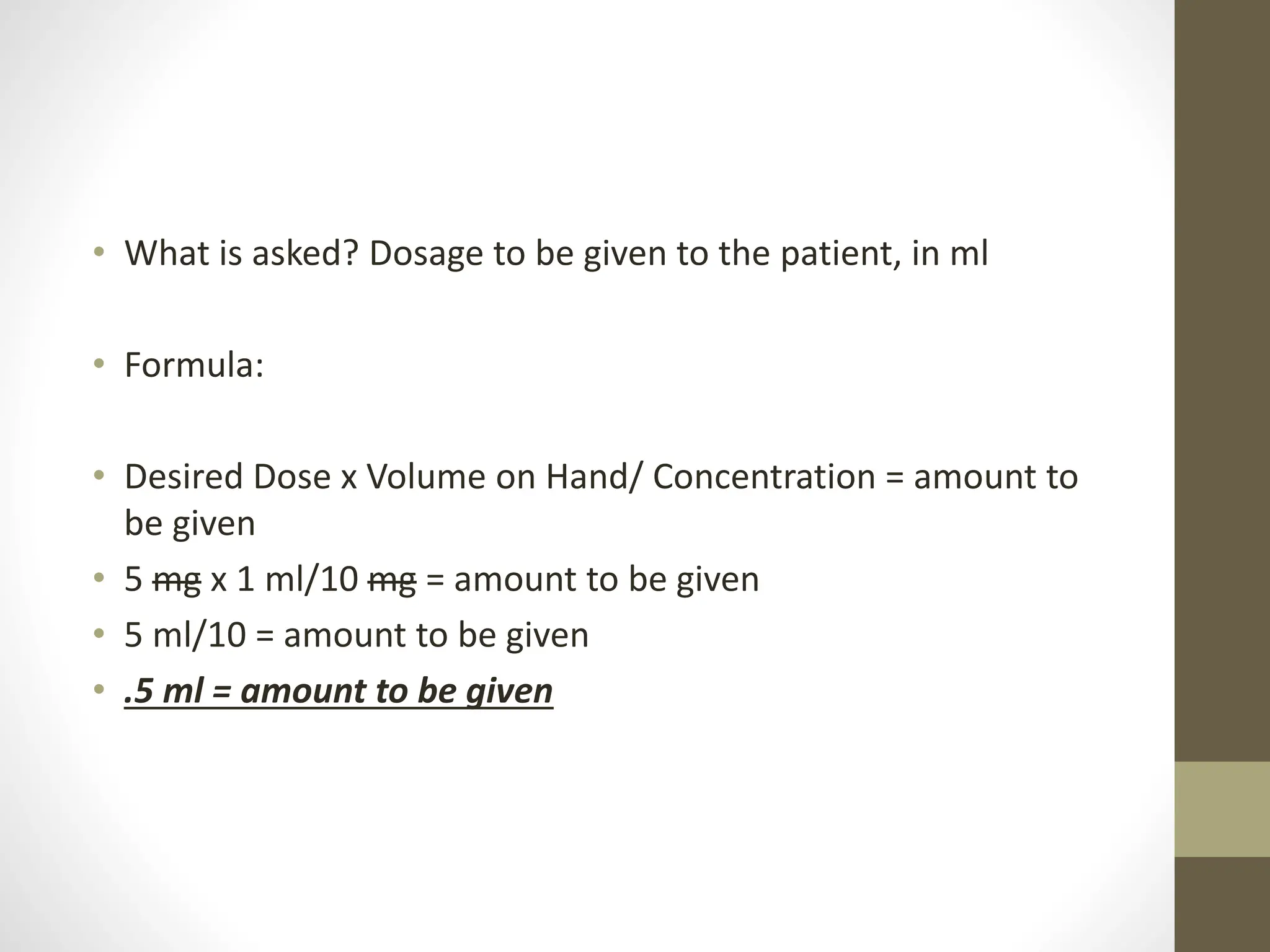
• What is asked? Dosage to be given to the patient, in ml
• Formula:
• Desired Dose x Volume on Hand/ Concentration = amount to
be given
• 5 mg x 1 ml/10 mg = amount to be given
• 5 ml/10 = amount to be given
• .5 ml = amount to be given
METRIC CONVERSIONS
There are instances when we need to convert a unit of
measurement to another when calculating for drug usages.
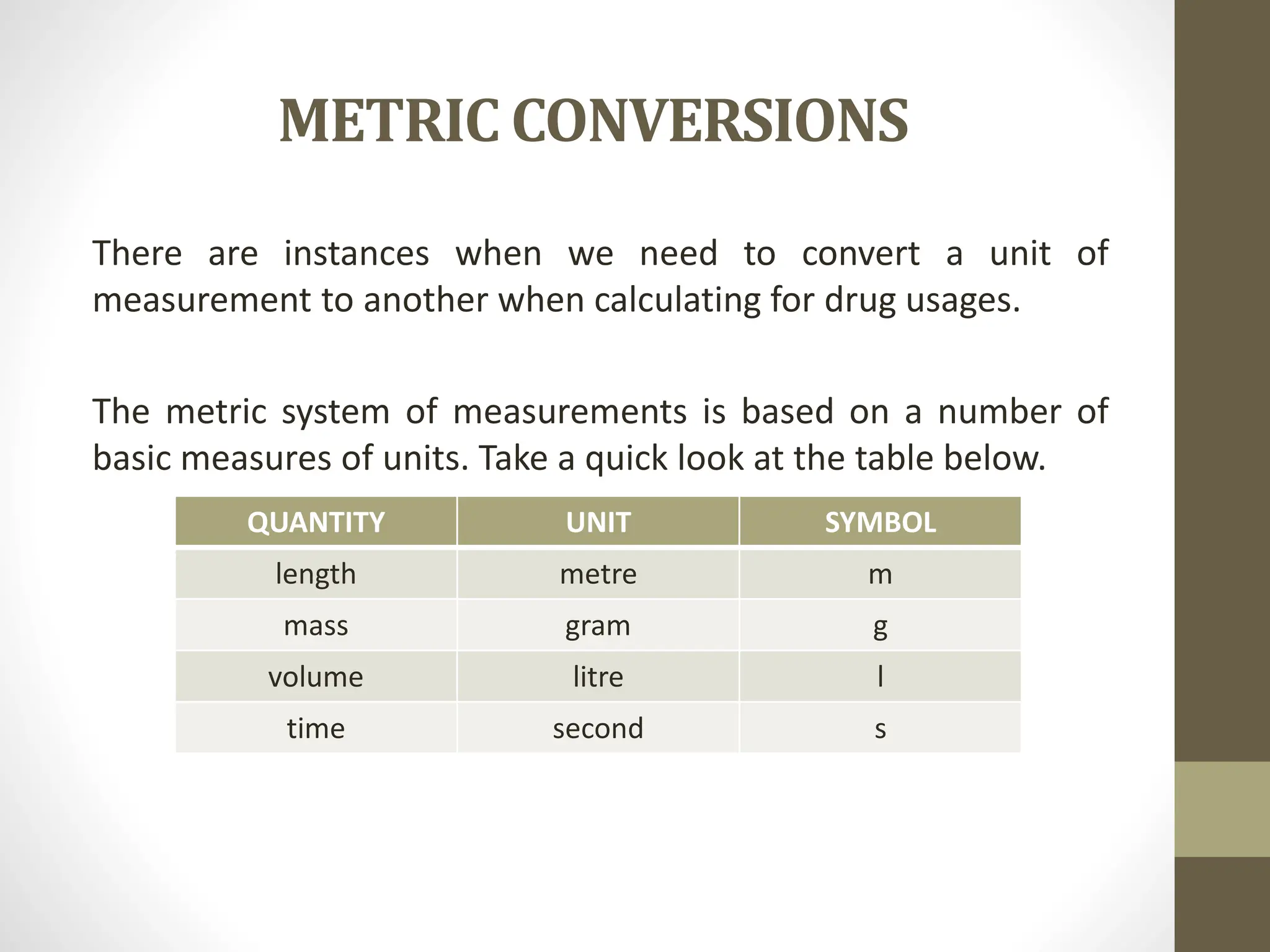
The metric system of measurements is based on a number of
basic measures of units. Take a quick look at the table below.
QUANTITY UNIT SYMBOL
length metre m
mass gram g
volume litre l
time second s
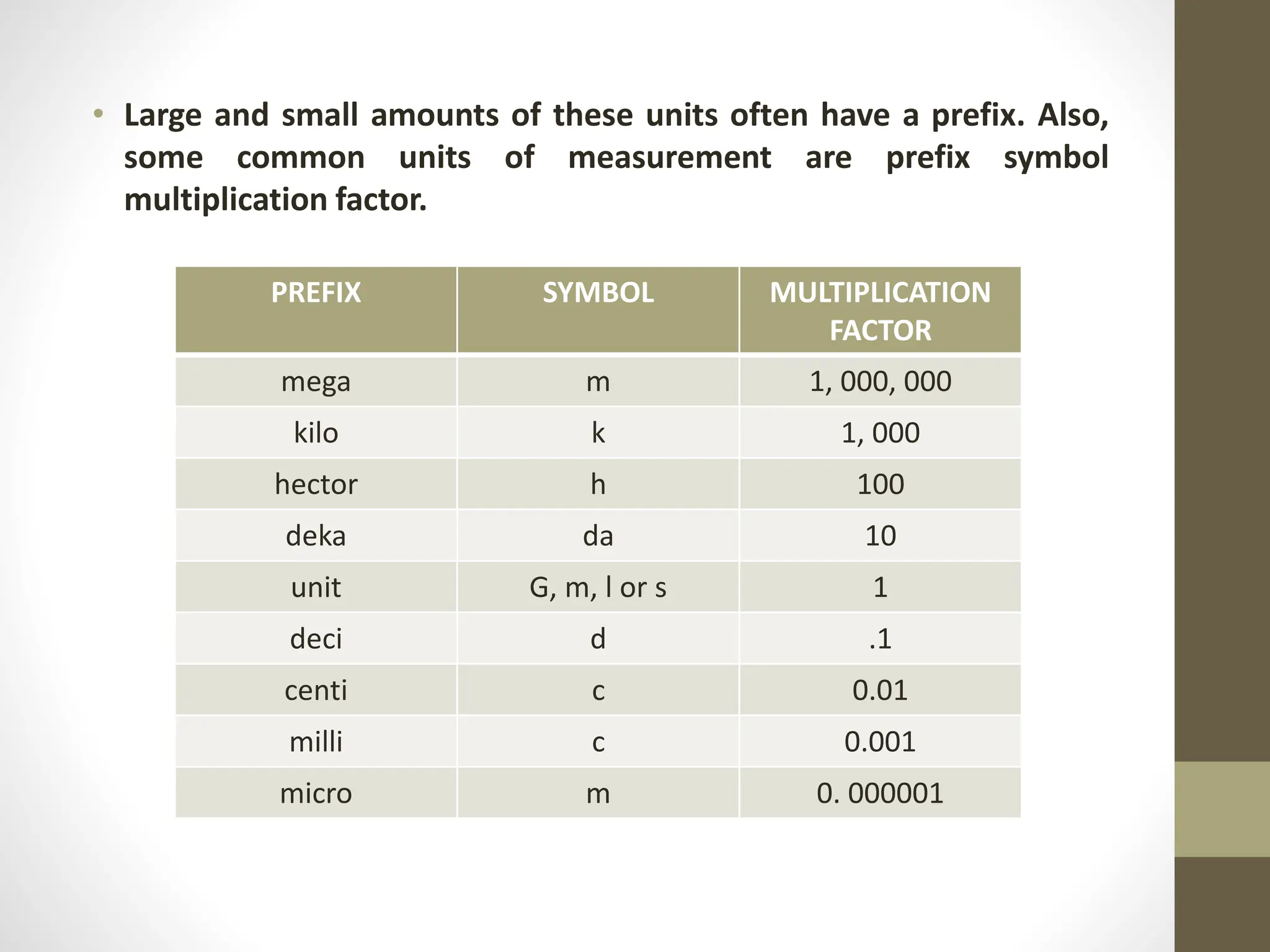
• Large and small amounts of these units often have a prefix. Also,
some common units of measurement are prefix symbol
multiplication factor.
PREFIX SYMBOL MULTIPLICATION
FACTOR
mega m 1, 000, 000
kilo k 1, 000
hector h 100
deka da 10
unit G, m, l or s 1
deci d .1
centi c 0.01
milli c 0.001
micro m 0. 000001
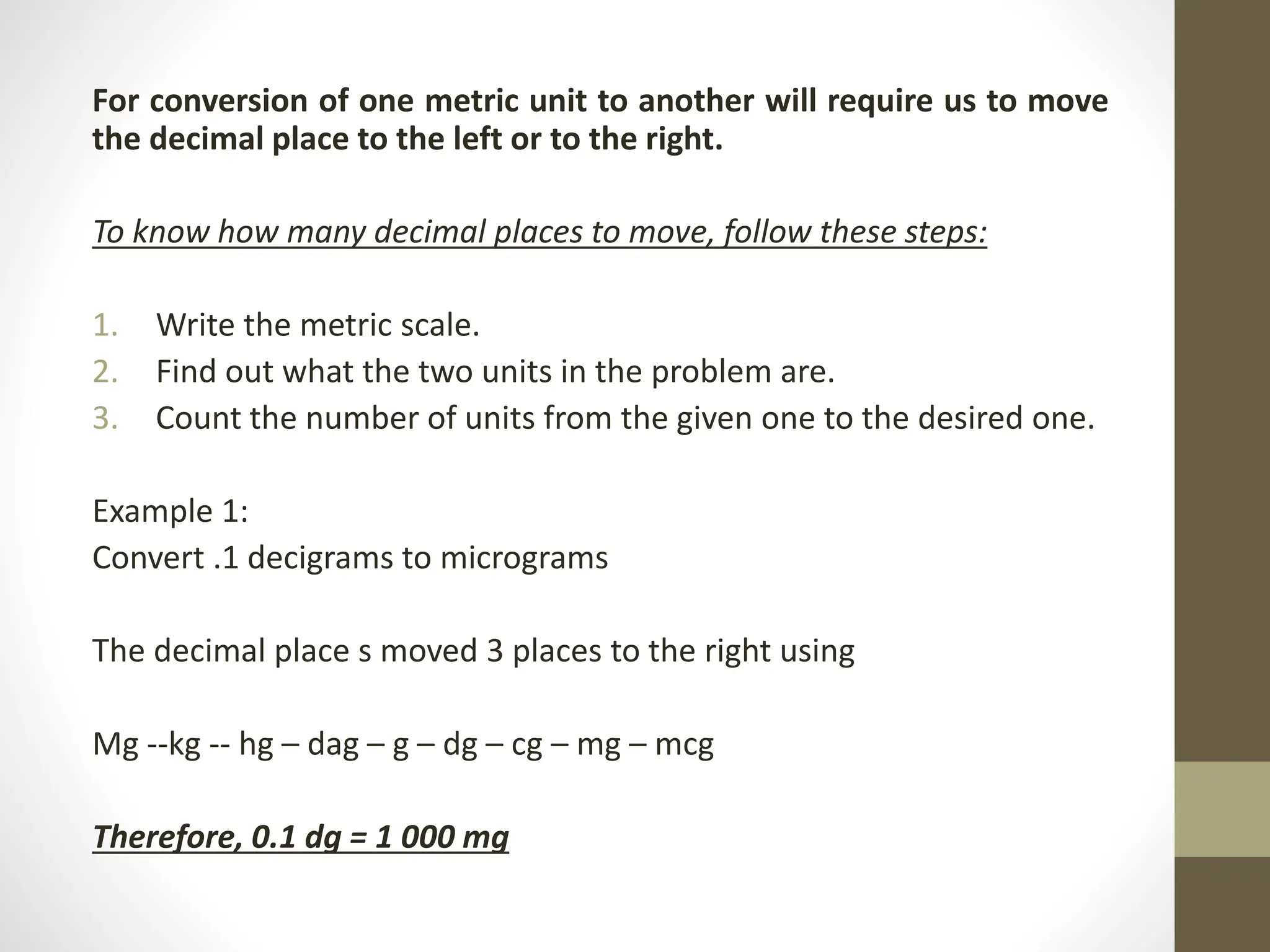
For conversion of one metric unit to another will require us to move
the decimal place to the left or to the right.
To know how many decimal places to move, follow these steps:
1. Write the metric scale.
2. Find out what the two units in the problem are.
3. Count the number of units from the given one to the desired one.
Example 1:
Convert .1 decigrams to micrograms
The decimal place s moved 3 places to the right using
Mg --kg -- hg – dag – g – dg – cg – mg – mcg
Therefore, 0.1 dg = 1 000 mg
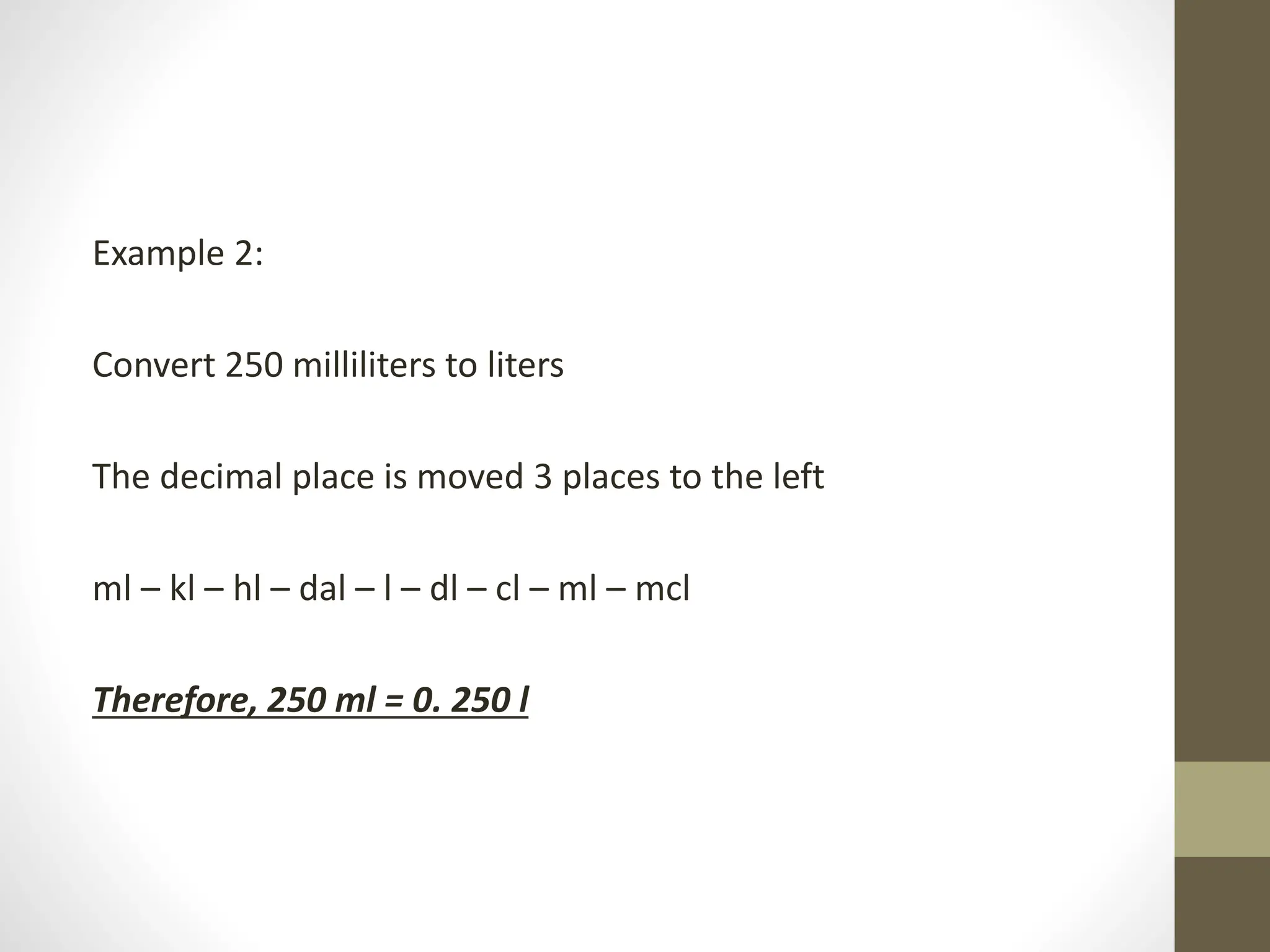
Example 2:
Convert 250 milliliters to liters
The decimal place is moved 3 places to the left
ml – kl – hl – dal – l – dl – cl – ml – mcl
Therefore, 250 ml = 0. 250 l
THANK YOU FOR LISTENING
MY DEAR STUDENTS! 
Drug dosage calculation using measurements.pptx

Drug dosage calculation using measurements.pptx

  • 1.
  • 2.
    A Glance atMeasurements and Conversions Dosage calculations involve measurements and conversions of the formulation, ingredients and components of drugs. Measurements and conversions must be calculated accurately to ensure that we will be able to give the correct dosage to our patience.
  • 3.
    DOSAGE CALCULATION CONVERSIONS 1Liter (L) 1 000 milliliters (ml) 1 ounce (oz) 30 milliliters (ml) 1 ounce (oz) 2 tablespoons (tbsp) 1 milliliter (ml) 1 cubic centimeter (cc) 1 gram (g) 1 000 milligrams (mg) 1 pint 500 milligrams (mg) 1 milligram (mg) 1 000 micrograms (mcg) 1 kilogram (kg) 1 000 grams (g) 1 kilogram (kg) 2.2 pounds (lb) 1 inch (in) (“) 2.5 centimeters (cm) 8 ounces (oz) 1 cup (c) 8 ounces (oz) 240 milliliters (ml) grains (gr) X 650 milligrams (mg) 240 milliliters (ml) 1 cup (c) 1 coffee cup 6 ounces 1 cup 8 ounces
  • 4.
    1 quart 1liter 1 quart 2 pints 1 centimeter 10 milliliters 1 glass 12 ounces Convert Celsius to Fahrenheit Multiply by 1.8 then add 32 Convert Celsius to Fahrenheit Subtract 32 then divide by 1.8
  • 5.
    DRUGDOSECALCULATIONUSING MEASUREMENTS/CONVERSIONS • Formula: Desired Dosex Volume on Hand/ Concentration = amount to be given Example 1. Doctor orders 5 mg of morphine to be administered intravenously to a patient with sub sternal chest pain. You have 1 ml vial that contains 10 mg of morphine (10 mg/ml). How many milliliters are you going to have to draw up into a syringe and push IV into your patient’s IV line port? What are given? Desired Dose – 5 mg of morphine mg Concentration- 10 mg Volume on Hand – 1 ml
  • 6.
    • What isasked? Dosage to be given to the patient, in ml • Formula: • Desired Dose x Volume on Hand/ Concentration = amount to be given • 5 mg x 1 ml/10 mg = amount to be given • 5 ml/10 = amount to be given • .5 ml = amount to be given
  • 7.
    METRIC CONVERSIONS There areinstances when we need to convert a unit of measurement to another when calculating for drug usages. The metric system of measurements is based on a number of basic measures of units. Take a quick look at the table below. QUANTITY UNIT SYMBOL length metre m mass gram g volume litre l time second s
  • 8.
    • Large andsmall amounts of these units often have a prefix. Also, some common units of measurement are prefix symbol multiplication factor. PREFIX SYMBOL MULTIPLICATION FACTOR mega m 1, 000, 000 kilo k 1, 000 hector h 100 deka da 10 unit G, m, l or s 1 deci d .1 centi c 0.01 milli c 0.001 micro m 0. 000001
  • 9.
    For conversion ofone metric unit to another will require us to move the decimal place to the left or to the right. To know how many decimal places to move, follow these steps: 1. Write the metric scale. 2. Find out what the two units in the problem are. 3. Count the number of units from the given one to the desired one. Example 1: Convert .1 decigrams to micrograms The decimal place s moved 3 places to the right using Mg --kg -- hg – dag – g – dg – cg – mg – mcg Therefore, 0.1 dg = 1 000 mg
  • 10.
    Example 2: Convert 250milliliters to liters The decimal place is moved 3 places to the left ml – kl – hl – dal – l – dl – cl – ml – mcl Therefore, 250 ml = 0. 250 l
  • 11.
    THANK YOU FORLISTENING MY DEAR STUDENTS! 