


Strategies in Mantle cell lymphoma: Chemotherapy Jorge E. Romaguera, M.D. Professor of Medicine Department of Lymphoma/Myeloma U.of Texas M. D. Anderson Cancer Center
Disclosures Millenium – research Celgene - research
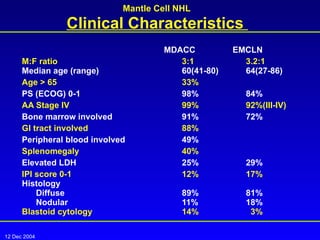
Mantle Cell NHL   Clinical Characteristics    MDACC   EMCLN M:F ratio 3:1 3.2:1 Median age (range) 60(41-80) 64(27-86) Age > 65 33% PS (ECOG) 0-1 98% 84% AA Stage IV 99% 92%(III-IV) Bone marrow involved 91% 72% GI tract involved 88% Peripheral blood involved 49% Splenomegaly 40% Elevated LDH 25% 29% IPI score 0-1 12% 17% Histology Diffuse 89% 81% Nodular 11% 18% Blastoid cytology 14%   3% 12 Dec 2004
Strategies in the Treatment of Mantle cell lymphoma 1- When to treat a- Stratify 2- What to treat with
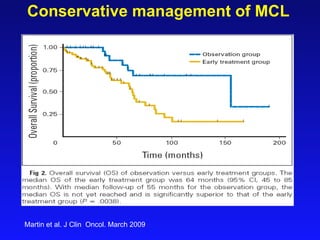
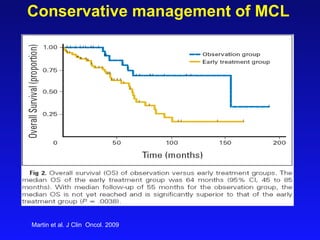
Conservative management of MCL Martin  et al. J Clin  Oncol. 2009 95 patients 1997-2007; median follow up 4.5 years Retrospective, single institution, known date of Diagnosis and date of first Tx   Observed X 3 months to define 2 groups: observation Vs. early treatment Median time to treatment 1 yr in observation group Mostly treated with CHOP (5 with HCVAD or SCT)
Conservative management of MCL Martin et al. J Clin  Oncol. March 2009
Strategies in the Treatment of Mantle cell lymphoma 1- When to treat a- Stratify 3- What to treat with
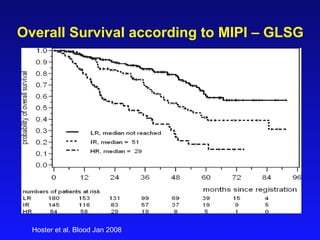
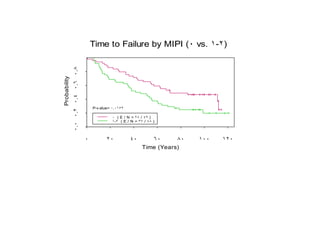
Mantle cell International Prognostic Index (MIPI) GLSG 1996 CHOP, MCP GLSG CHOP  +  R, Ifn Vs ASCT 438 patients CHOP  – 56% R-CHOP – 31% MCP  -  11% Other   -  2% ASCT – 80 pts IFN maintenance – 199 pts No therapy in remission – 72 pts Hoster et al. Blood Jan 2008
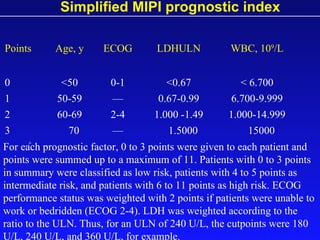
Simplified MIPI prognostic index   For each prognostic factor, 0 to 3 points were given to each patient and points were summed up to a maximum of 11. Patients with 0 to 3 points in summary were classified as low risk, patients with 4 to 5 points as intermediate risk, and patients with 6 to 11 points as high risk. ECOG performance status was weighted with 2 points if patients were unable to work or bedridden (ECOG 2-4). LDH was weighted according to the ratio to the ULN. Thus, for an ULN of 240 U/L, the cutpoints were 180 U/L, 240 U/L, and 360 U/L, for example.   Points     Age, y     ECOG     LDHULN     WBC, 10 9 /L     0     <50     0-1     <0.67     < 6.700     1     50-59     —     0.67-0.99     6.700-9.999     2     60-69     2-4     1.000 -1.49     1.000-14.999     3           70     —           1.5000           15000  
Hoster et al. Blood Jan 2008 Overall Survival according to MIPI – GLSG
Conservative management of MCL Martin et al. J Clin  Oncol. 2009
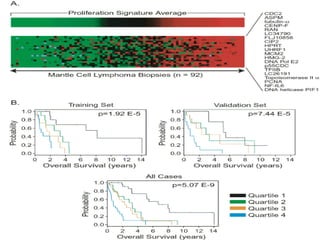
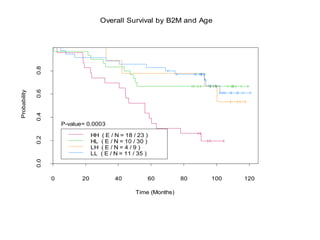
  Other prognostic variables Pre- Treatment 1- Lack of adenopathy 2- Early stage 3- Proliferation, Blastoid cytology  4- Other Molecular, SOX-11 5- b2 microglobulin   Post- Treatment 1-  MRD
  Other prognostic variables Pre- Treatment 1-   Lack of adenopathy 2- Early stage 3- Proliferation, Blastoid cytology  4- Other Molecular, SOX-11 5- b2 microglobulin   Post- Treatment 1-  MRD
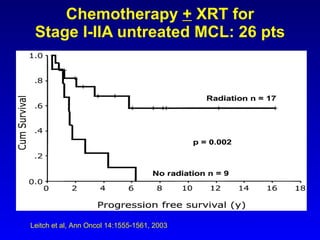
Chemotherapy  +  XRT for Stage I-IIA untreated MCL: 26 pts Leitch et al, Ann Oncol 14:1555-1561, 2003
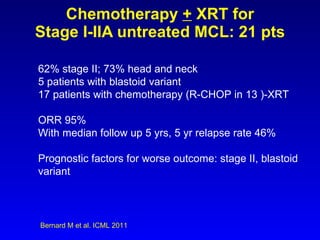
Chemotherapy  +  XRT for Stage I-IIA untreated MCL: 21 pts Bernard M et al. ICML 2011 62% stage II; 73% head and neck 5 patients with blastoid variant 17 patients with chemotherapy (R-CHOP in 13 )-XRT ORR 95% With median follow up 5 yrs, 5 yr relapse rate 46% Prognostic factors for worse outcome: stage II, blastoid variant
  Other prognostic variables Pre- Treatment 1-   Lack of adenopathy 2- Early stage 3-  Proliferation, Blastoid cytology   4- Other Molecular, SOX-11 5- b2 microglobulin   Post- Treatment 1-  MRD
 
  Other prognostic variables Pre- Treatment 1-   Lack of adenopathy 2- Early stage 3- Proliferation, Blastoid cytology  4- Other Molecular, SOX-11 5-  b2 microglobulin   Post- Treatment 1-  MRD
 
  Other prognostic variables Pre- Treatment 1-   Lack of adenopathy 2- Early stage 3- Proliferation, Blastoid cytology  4- Other Molecular, SOX-11 5- b2 microglobulin   Post- Treatment 1-  MRD
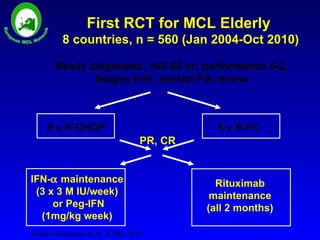
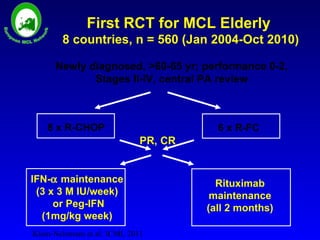
8 x R-CHOP IFN-   maintenance (3 x 3 M IU/week) or Peg-IFN (1mg/kg week) PR, CR 6 x R-FC Rituximab maintenance (all 2 months) First RCT for MCL Elderly  8 countries, n = 560 (Jan 2004-Oct 2010) Newly diagnosed, >60-65 yr; performance 0-2, Stages II-IV, central PA review Kluin-Nelemans et al: ICML 2011 European MCL Network
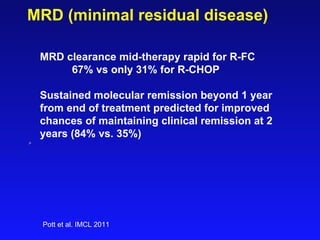
MRD (minimal residual disease) MRD clearance mid-therapy rapid for R-FC  67% vs only 31% for R-CHOP Sustained molecular remission beyond 1 year from end of treatment predicted for improved chances of maintaining clinical remission at 2 years (84% vs. 35%) Pott et al. IMCL 2011
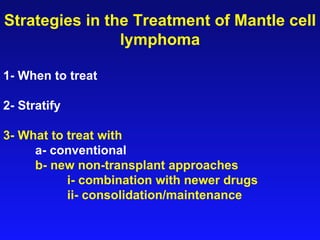
Strategies in the Treatment of Mantle cell lymphoma 1- When to treat a- Stratify 3- What to treat with a- conventional b- new non-transplant approaches i- combination with newer drugs ii- consolidation/maintenance
Should treatment include Rituximab?
Rituximab in Overall Survival of MCL Schultz et al. J Natl Can Inst. 2007 Meta-analysis of seven randomized controlled trials   1990-2005, 1943 patients R- chemotherapy improved OS in MCL But heterogeneity made data less reliable (p = .07)
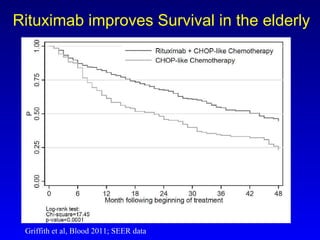
Griffith et al, Blood 2011; SEER data  Rituximab improves Survival in the elderly
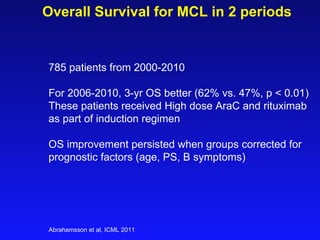
Overall Survival for MCL in 2 periods Abrahamsson et al, ICML 2011 785 patients from 2000-2010 For 2006-2010, 3-yr OS better (62% vs. 47%, p < 0.01) These patients received High dose AraC and rituximab as part of induction regimen OS improvement persisted when groups corrected for prognostic factors (age, PS, B symptoms)
Should it be more intense?
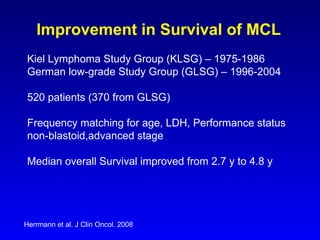
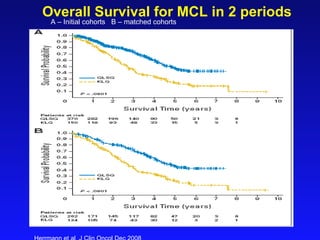
Improvement in Survival of MCL Herrmann et al. J Clin Oncol. 2008 Kiel Lymphoma Study Group (KLSG) – 1975-1986 German low-grade Study Group (GLSG) – 1996-2004 520 patients (370 from GLSG) Frequency matching for age, LDH, Performance status non-blastoid,advanced stage Median overall Survival improved from 2.7 y to 4.8 y
Overall Survival for MCL in 2 periods Herrmann et al  J Clin Oncol Dec 2008 A – Initial cohorts  B – matched cohorts
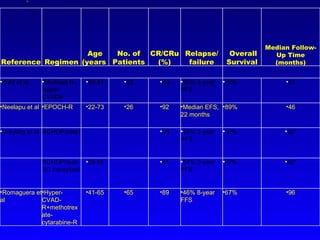
Reference Regimen Age (years ) No. of Patients CR/CRu (%) Relapse/ failure Overall Survival Median Follow-Up Time (months) Kahl et al  Modified R-Hyper-CVAD¥ 40-81 22 64 50% 3-year PFS 73% 37 Neelapu et al EPOCH-R 22-73 26 92 Median EFS, 22 months 89% 46 Dreyling et al RCHOP/interf 28 25% 3-year PFS 52% 60* RCHOP/autoSC transplant 35-65 81 54% 3-year PFS 67% 60* Romaguera et al Hyper-CVAD-R+methotrexate-cytarabine-R 41-65 65 89 46% 8-year FFS 67% 96
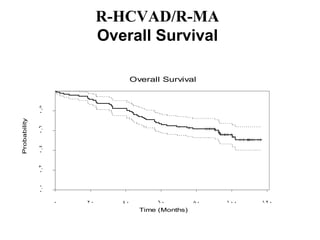
R-HCVAD/R-MA Overall Survival
 
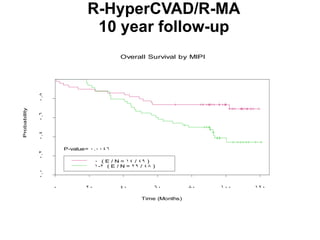
R-HyperCVAD/R-MA 10 year follow-up
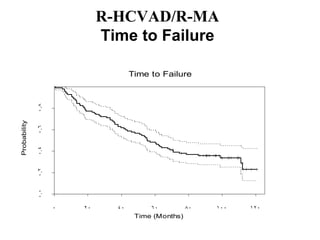
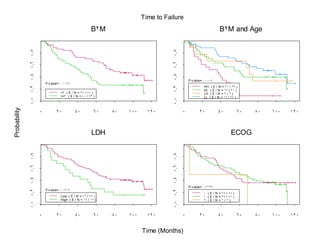
R-HCVAD/R-MA Time to Failure
 
 
Strategies in the Treatment of Mantle cell lymphoma 1- When to treat 2- Stratify 3- What to treat with a- conventional b- new non-transplant approaches i- combination with newer drugs ii- consolidation/maintenance
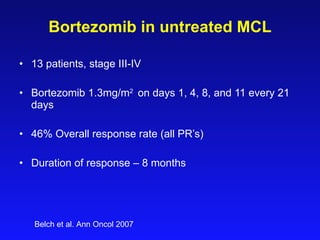
Bortezomib in  untreated  MCL 13   patients, stage III-IV Bortezomib  1.3 mg/m 2  on days 1 ,  4 , 8, and 11 every 21 days   46% Overall response rate (all PR’s) Duration of response – 8 months Belch et al. Ann Oncol 2007
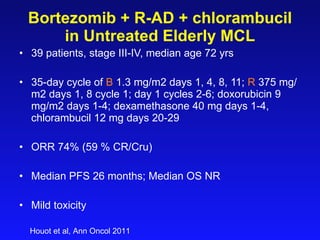
Bortezomib  + R-AD + chlorambucil  in  Untreated Elderly  MCL 39   patients, stage III-IV, median age 72 yrs 35-day cycle of  B  1.3 mg/m2 days 1, 4, 8, 11;  R  375 mg/m2 days 1, 8 cycle 1; day 1 cycles 2-6; doxorubicin 9 mg/m2 days 1-4; dexamethasone 40 mg days 1-4, chlorambucil 12 mg days 20-29 ORR 74% (59 % CR/Cru) Median PFS 26 months; Median OS NR Mild toxicity Houot et al, Ann Oncol 2011
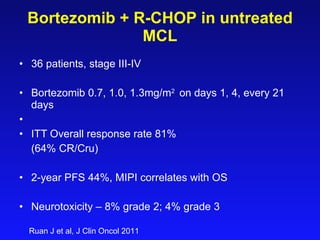
Bortezomib  + R-CHOP  in  untreated  MCL 36   patients, stage III-IV Bortezomib  0.7, 1.0, 1.3 mg/m 2  on days 1 ,  4 , every 21 days ITT Overall response rate 81%  (64% CR/Cru) 2-year PFS 44%, MIPI correlates with OS Neurotoxicity – 8% grade 2; 4% grade 3 Ruan J et al, J Clin Oncol 2011
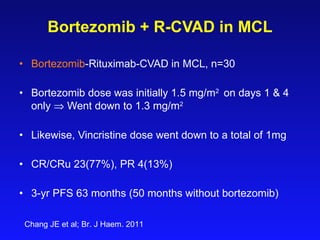
Bortezomib + R-CVAD in MCL Bortezomib -Rituximab-CVAD in MCL, n= 30   Bortezomib dose was initially 1.5 mg/m 2  on days 1 & 4 only    Went down to 1.3 mg/m 2   Likewise, Vincristine dose went down to a total of 1mg CR/CRu 23(77%), PR 4(13%) 3-yr PFS 63 months (50 months without bortezomib) Chang JE et al; Br. J Haem. 2011
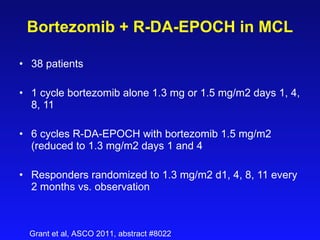
Bortezomib + R- DA-EPOCH  in MCL 38 patients   1 cycle bortezomib alone 1.3 mg or 1.5 mg/m2 days 1, 4, 8, 11   6 cycles R-DA-EPOCH with bortezomib 1.5 mg/m2 (reduced to 1.3 mg/m2 days 1 and 4 Responders randomized to 1.3 mg/m2 d1, 4, 8, 11 every 2 months vs. observation Grant et al, ASCO 2011, abstract #8022
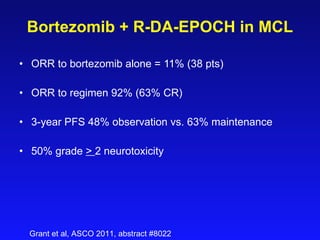
Bortezomib + R- DA-EPOCH  in MCL ORR to bortezomib alone = 11% (38 pts) ORR to regimen 92% (63% CR)   3-year PFS 48% observation vs. 63% maintenance 50% grade  >  2 neurotoxicity Grant et al, ASCO 2011, abstract #8022
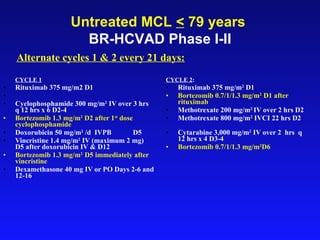
Alternate cycles 1 & 2 every 21 days: CYCLE 1 Rituximab 375 mg/m2 D1   Cyclophosphamide 300 mg/m 2  IV over 3 hrs q 12 hrs x 6 D2-4 Bortezomib 1.3 mg/m 2  D2 after 1 st  dose cyclophosphamide Doxorubicin 50 mg/m 2  /d  IVPB  D5 Vincristine 1.4 mg/m 2  IV (maximum 2 mg) D5 after doxorubicin IV & D12 Bortezomib 1.3 mg/m 2  D5 immediately after vincristine Dexamethasone 40 mg IV or PO Days 2-6 and 12-16  CYCLE 2 : Rituximab 375 mg/m 2  D1 Bortezomib 0.7/1/1.3 mg/m 2  D1 after rituximab Methotrexate 200 mg/m 2  IV over 2 hrs D2 Methotrexate 800 mg/m 2  IVCI 22 hrs D2   Cytarabine 3,000 mg/m 2  IV over 2  hrs  q 12 hrs x 4 D3-4 Bortezomib 0.7/1/1.3 mg/m 2 D6 Untreated MCL  <  79 years  BR-HCVAD Phase I-II
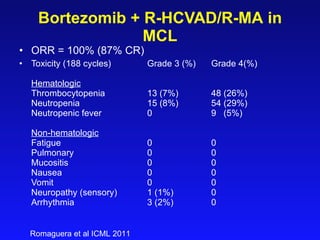
Bortezomib + R- HCVAD/R-MA  in MCL ORR = 100% (87% CR) Toxicity (188 cycles) Grade 3 (%) Grade 4(%) Hematologic Thrombocytopenia 13 (7%) 48 (26%) Neutropenia 15 (8%) 54 (29%) Neutropenic fever 0 9  (5%) Non-hematologic Fatigue 0 0 Pulmonary 0 0 Mucositis 0 0 Nausea 0 0 Vomit 0 0 Neuropathy (sensory) 1 (1%) 0 Arrhythmia 3 (2%) 0 Romaguera et al ICML 2011
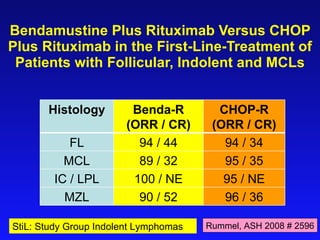
Bendamustine Plus Rituximab Versus CHOP Plus Rituximab in the First-Line-Treatment of Patients with Follicular, Indolent and MCLs Rummel, ASH 2008 # 2596 StiL: Study Group Indolent Lymphomas Histology Benda-R (ORR / CR) CHOP-R (ORR / CR) FL 94 / 44 94 / 34 MCL 89 / 32 95 / 35 IC / LPL 100 / NE 95 / NE MZL 90 / 52 96 / 36
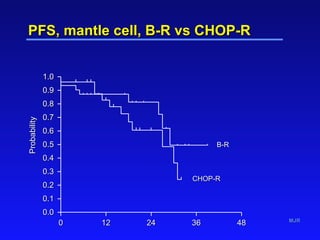
PFS, mantle cell, B-R vs CHOP-R   0 12 24 36 48 0.0 0.1 0.2 0.3 0.4 0.5 0.6 0.7 0.8 0.9 1.0 Probability CHOP-R B-R
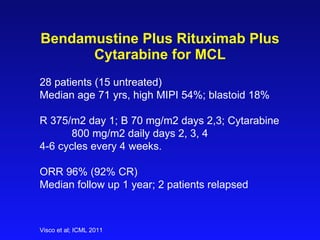
Bendamustine Plus Rituximab Plus  Cytarabine   for  MCL 28 patients (15 untreated) Median age 71 yrs, high MIPI 54%; blastoid 18% R 375/m2 day 1; B 70 mg/m2 days 2,3; Cytarabine  800 mg/m2 daily days 2, 3, 4 4-6 cycles every 4 weeks. ORR 96% (92% CR) Median follow up 1 year; 2 patients relapsed Visco et al; ICML 2011
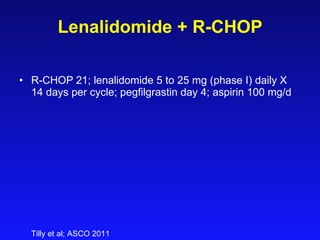
Lenalidomide + R-CHOP R-CHOP 21; lenalidomide 5 to 25 mg (phase I) daily X 14 days per cycle; pegfilgrastin day 4; aspirin 100 mg/d Tilly et al; ASCO 2011
R-CHOP and  90 Y-RIT Stages II-IV,  >  18 years old. R-CHOP 21 X 4 cycles CR/PR/SD patients get 0.4 mCi/kg  90 Y-RIT Endpoint – time to treatment failure MIPI – Low 51%, Int. 26%; high 21% Smith et al. ICML 2011
R-CHOP and  90 Y-RIT 57 patients Response after R-CHOP – 81% (56% CR/Cru) 23/57 patients with improved response after  90 Y-RIT (16 PR to CR/Cru; 3 SD to PR) Median F/U 64 months; median TTF 28 months; median OS not reached Estimated 3-yr OS 86% for  >  65 y/o; 67% for > 65 y/o Smith et al. ICML 2011
Maintenance Strategies  in MCL Modified R-HCVAD ( +  Bortezomib) + maintenance R   DA R-EPOCH + Bortezomib
R-CHOP alternating with R-Cytarabine X 5 cycles Then Cytarabine-fludarabine cycles 6-8 Then Rituximab q 2 months X 2 yrs 50 untreated patients, median age 74 yrs; high MIPI in 50% ORR 96% (86% CR/Cru) At median follow up 3 yrs, 86% OS, 70% EFS 18% patients (9) improved during cytarabine/fludarabine  Toxicity: one MDS, one gr 4 infection, 19 patient with transient gr 4 neutropenia during maintenance. More dose  reductions during fludarabine. Raty et al. ICML 2011
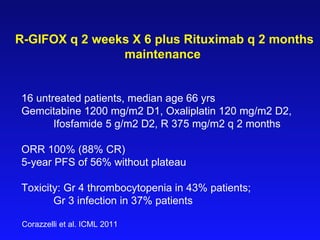
R-GIFOX q 2 weeks X 6 plus Rituximab q 2 months maintenance 16 untreated patients, median age 66 yrs Gemcitabine 1200 mg/m2 D1, Oxaliplatin 120 mg/m2 D2,  Ifosfamide 5 g/m2 D2, R 375 mg/m2 q 2 months ORR 100% (88% CR) 5-year PFS of 56% without plateau Toxicity: Gr 4 thrombocytopenia in 43% patients;  Gr 3 infection in 37% patients Corazzelli et al. ICML 2011
8 x R-CHOP IFN-   maintenance (3 x 3 M IU/week) or Peg-IFN (1mg/kg week) PR, CR 6 x R-FC Rituximab maintenance (all 2 months) First RCT for MCL Elderly  8 countries, n = 560 (Jan 2004-Oct 2010) Newly diagnosed, >60-65 yr; performance 0-2, Stages II-IV, central PA review Kluin-Nelemans et al: ICML 2011 European MCL Network
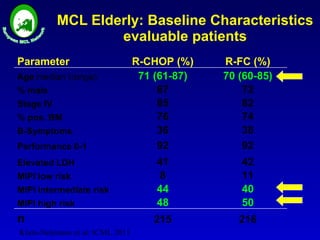
MCL Elderly: Baseline Characteristics evaluable patients Kluin-Nelemans et al: ICML 2011 Parameter R-CHOP (%) R-FC (%) Age  median (range) 71 (61-87) 70 (60-85) % male 67 72 Stage IV 85 82 % pos. BM 76 74 B-Symptoms 36 38 Performance 0-1 92 92 Elevated LDH 41 42 MIPI low risk 8 11 MIPI intermediate risk 44 40 MIPI high risk 48 50 n 215 216
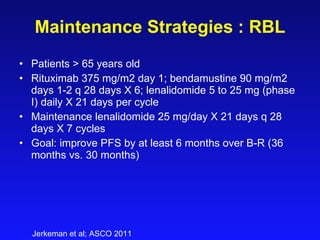
Maintenance Strategies   : RBL Patients > 65 years old Rituximab 375 mg/m2 day 1; bendamustine 90 mg/m2 days 1-2 q 28 days X 6; lenalidomide 5 to 25 mg (phase I) daily X 21 days per cycle Maintenance lenalidomide 25 mg/day X 21 days q 28 days X 7 cycles Goal: improve PFS by at least 6 months over B-R (36 months vs. 30 months) Jerkeman et al; ASCO 2011
Improvement in survival is also a measure of the  effectiveness of salvage therapy,   and over the last few years there has been marked improvement in options available.
Acknowledgements LYMPHOMA DEPARTMENT LUIS FAYAD, MD FREDERICK HAGEMEISTER, MD NEELAPU, SATTVA, M.D., PH.D. M ALMA RODRIGUEZ, MD FELIPE SAMANIEGO, MD ANAS YOUNES, MD MICHAEL WANG, MD DONNA WEBER, M.D. RAYMOND ALEXANIAN, M.D. QING YI, Ph.D . ROBERT ORLOWSKI, M.D., Ph.D. JATIN SHAH, M.D. NATHAN FOWLER, M.D. Andre Goy, M.D. LARRY KWAK, MD, Ph.D. PAMELA WEAVER, R.N. KIMBERLY HARTIG CHRISTINE SAMUEL MARIA BADILLO SANDY HOROWITZ, PHARM D KATHLEEN SHANNON-MCADAMS, RN, ANP  ELLEN MULLEN, RN, ANP MATHAI VARGHESE, PA SHAPATRA PARKER HEMATOPATHOLOGY JEFFREY L MEDEIROS, MD JOHN MANNING, MD JEFFREY JORGENSEN RICHARD FORD, M.D. Ph.D RAJA LUTHRA, MD, Ph.D. CYTOPATHOLOGY RUTH L KATZ, MD NANCY CARAWAY M.D. ABHA KHANNA AMANDA WEDGWOOD, RN, CNS AMYE MOSHIER, PA HONGYAN WANG, PA MARIA GUERRERO, ANP WENDY CHEN, PA PETER LAI, PA SHIRLEY GEORGE, APN BMT DEPARTMENT RICHARD CHAMPLIN, M.D. ISSA F.KHOURI, M.D. CHITRA HOSING, M.D.
12 Dec 2004 Thank you!

Dr. Romaguera MCL

  • 1.
    Strategies in Mantlecell lymphoma: Chemotherapy Jorge E. Romaguera, M.D. Professor of Medicine Department of Lymphoma/Myeloma U.of Texas M. D. Anderson Cancer Center
  • 2.
    Disclosures Millenium –research Celgene - research
  • 3.
    Mantle Cell NHL Clinical Characteristics MDACC EMCLN M:F ratio 3:1 3.2:1 Median age (range) 60(41-80) 64(27-86) Age > 65 33% PS (ECOG) 0-1 98% 84% AA Stage IV 99% 92%(III-IV) Bone marrow involved 91% 72% GI tract involved 88% Peripheral blood involved 49% Splenomegaly 40% Elevated LDH 25% 29% IPI score 0-1 12% 17% Histology Diffuse 89% 81% Nodular 11% 18% Blastoid cytology 14% 3% 12 Dec 2004
  • 4.
    Strategies in theTreatment of Mantle cell lymphoma 1- When to treat a- Stratify 2- What to treat with
  • 5.
    Conservative management ofMCL Martin et al. J Clin Oncol. 2009 95 patients 1997-2007; median follow up 4.5 years Retrospective, single institution, known date of Diagnosis and date of first Tx Observed X 3 months to define 2 groups: observation Vs. early treatment Median time to treatment 1 yr in observation group Mostly treated with CHOP (5 with HCVAD or SCT)
  • 6.
    Conservative management ofMCL Martin et al. J Clin Oncol. March 2009
  • 7.
    Strategies in theTreatment of Mantle cell lymphoma 1- When to treat a- Stratify 3- What to treat with
  • 8.
    Mantle cell InternationalPrognostic Index (MIPI) GLSG 1996 CHOP, MCP GLSG CHOP + R, Ifn Vs ASCT 438 patients CHOP – 56% R-CHOP – 31% MCP - 11% Other - 2% ASCT – 80 pts IFN maintenance – 199 pts No therapy in remission – 72 pts Hoster et al. Blood Jan 2008
  • 9.
    Simplified MIPI prognosticindex For each prognostic factor, 0 to 3 points were given to each patient and points were summed up to a maximum of 11. Patients with 0 to 3 points in summary were classified as low risk, patients with 4 to 5 points as intermediate risk, and patients with 6 to 11 points as high risk. ECOG performance status was weighted with 2 points if patients were unable to work or bedridden (ECOG 2-4). LDH was weighted according to the ratio to the ULN. Thus, for an ULN of 240 U/L, the cutpoints were 180 U/L, 240 U/L, and 360 U/L, for example.   Points     Age, y     ECOG     LDHULN     WBC, 10 9 /L     0     <50     0-1     <0.67     < 6.700     1     50-59     —     0.67-0.99     6.700-9.999     2     60-69     2-4     1.000 -1.49     1.000-14.999     3         70     —         1.5000         15000  
  • 10.
    Hoster et al.Blood Jan 2008 Overall Survival according to MIPI – GLSG
  • 11.
    Conservative management ofMCL Martin et al. J Clin Oncol. 2009
  • 12.
    Otherprognostic variables Pre- Treatment 1- Lack of adenopathy 2- Early stage 3- Proliferation, Blastoid cytology 4- Other Molecular, SOX-11 5- b2 microglobulin Post- Treatment 1- MRD
  • 13.
    Otherprognostic variables Pre- Treatment 1- Lack of adenopathy 2- Early stage 3- Proliferation, Blastoid cytology 4- Other Molecular, SOX-11 5- b2 microglobulin Post- Treatment 1- MRD
  • 14.
    Chemotherapy + XRT for Stage I-IIA untreated MCL: 26 pts Leitch et al, Ann Oncol 14:1555-1561, 2003
  • 15.
    Chemotherapy + XRT for Stage I-IIA untreated MCL: 21 pts Bernard M et al. ICML 2011 62% stage II; 73% head and neck 5 patients with blastoid variant 17 patients with chemotherapy (R-CHOP in 13 )-XRT ORR 95% With median follow up 5 yrs, 5 yr relapse rate 46% Prognostic factors for worse outcome: stage II, blastoid variant
  • 16.
    Otherprognostic variables Pre- Treatment 1- Lack of adenopathy 2- Early stage 3- Proliferation, Blastoid cytology 4- Other Molecular, SOX-11 5- b2 microglobulin Post- Treatment 1- MRD
  • 17.
  • 18.
    Otherprognostic variables Pre- Treatment 1- Lack of adenopathy 2- Early stage 3- Proliferation, Blastoid cytology 4- Other Molecular, SOX-11 5- b2 microglobulin Post- Treatment 1- MRD
  • 19.
  • 20.
    Otherprognostic variables Pre- Treatment 1- Lack of adenopathy 2- Early stage 3- Proliferation, Blastoid cytology 4- Other Molecular, SOX-11 5- b2 microglobulin Post- Treatment 1- MRD
  • 21.
    8 x R-CHOPIFN-  maintenance (3 x 3 M IU/week) or Peg-IFN (1mg/kg week) PR, CR 6 x R-FC Rituximab maintenance (all 2 months) First RCT for MCL Elderly 8 countries, n = 560 (Jan 2004-Oct 2010) Newly diagnosed, >60-65 yr; performance 0-2, Stages II-IV, central PA review Kluin-Nelemans et al: ICML 2011 European MCL Network
  • 22.
    MRD (minimal residualdisease) MRD clearance mid-therapy rapid for R-FC 67% vs only 31% for R-CHOP Sustained molecular remission beyond 1 year from end of treatment predicted for improved chances of maintaining clinical remission at 2 years (84% vs. 35%) Pott et al. IMCL 2011
  • 23.
    Strategies in theTreatment of Mantle cell lymphoma 1- When to treat a- Stratify 3- What to treat with a- conventional b- new non-transplant approaches i- combination with newer drugs ii- consolidation/maintenance
  • 24.
  • 25.
    Rituximab in OverallSurvival of MCL Schultz et al. J Natl Can Inst. 2007 Meta-analysis of seven randomized controlled trials 1990-2005, 1943 patients R- chemotherapy improved OS in MCL But heterogeneity made data less reliable (p = .07)
  • 26.
    Griffith et al,Blood 2011; SEER data Rituximab improves Survival in the elderly
  • 27.
    Overall Survival forMCL in 2 periods Abrahamsson et al, ICML 2011 785 patients from 2000-2010 For 2006-2010, 3-yr OS better (62% vs. 47%, p < 0.01) These patients received High dose AraC and rituximab as part of induction regimen OS improvement persisted when groups corrected for prognostic factors (age, PS, B symptoms)
  • 28.
    Should it bemore intense?
  • 29.
    Improvement in Survivalof MCL Herrmann et al. J Clin Oncol. 2008 Kiel Lymphoma Study Group (KLSG) – 1975-1986 German low-grade Study Group (GLSG) – 1996-2004 520 patients (370 from GLSG) Frequency matching for age, LDH, Performance status non-blastoid,advanced stage Median overall Survival improved from 2.7 y to 4.8 y
  • 30.
    Overall Survival forMCL in 2 periods Herrmann et al J Clin Oncol Dec 2008 A – Initial cohorts B – matched cohorts
  • 31.
    Reference Regimen Age(years ) No. of Patients CR/CRu (%) Relapse/ failure Overall Survival Median Follow-Up Time (months) Kahl et al Modified R-Hyper-CVAD¥ 40-81 22 64 50% 3-year PFS 73% 37 Neelapu et al EPOCH-R 22-73 26 92 Median EFS, 22 months 89% 46 Dreyling et al RCHOP/interf 28 25% 3-year PFS 52% 60* RCHOP/autoSC transplant 35-65 81 54% 3-year PFS 67% 60* Romaguera et al Hyper-CVAD-R+methotrexate-cytarabine-R 41-65 65 89 46% 8-year FFS 67% 96
  • 32.
  • 33.
  • 34.
  • 35.
  • 36.
  • 37.
  • 38.
    Strategies in theTreatment of Mantle cell lymphoma 1- When to treat 2- Stratify 3- What to treat with a- conventional b- new non-transplant approaches i- combination with newer drugs ii- consolidation/maintenance
  • 39.
    Bortezomib in untreated MCL 13 patients, stage III-IV Bortezomib 1.3 mg/m 2 on days 1 , 4 , 8, and 11 every 21 days 46% Overall response rate (all PR’s) Duration of response – 8 months Belch et al. Ann Oncol 2007
  • 40.
    Bortezomib +R-AD + chlorambucil in Untreated Elderly MCL 39 patients, stage III-IV, median age 72 yrs 35-day cycle of B 1.3 mg/m2 days 1, 4, 8, 11; R 375 mg/m2 days 1, 8 cycle 1; day 1 cycles 2-6; doxorubicin 9 mg/m2 days 1-4; dexamethasone 40 mg days 1-4, chlorambucil 12 mg days 20-29 ORR 74% (59 % CR/Cru) Median PFS 26 months; Median OS NR Mild toxicity Houot et al, Ann Oncol 2011
  • 41.
    Bortezomib +R-CHOP in untreated MCL 36 patients, stage III-IV Bortezomib 0.7, 1.0, 1.3 mg/m 2 on days 1 , 4 , every 21 days ITT Overall response rate 81% (64% CR/Cru) 2-year PFS 44%, MIPI correlates with OS Neurotoxicity – 8% grade 2; 4% grade 3 Ruan J et al, J Clin Oncol 2011
  • 42.
    Bortezomib + R-CVADin MCL Bortezomib -Rituximab-CVAD in MCL, n= 30 Bortezomib dose was initially 1.5 mg/m 2 on days 1 & 4 only  Went down to 1.3 mg/m 2 Likewise, Vincristine dose went down to a total of 1mg CR/CRu 23(77%), PR 4(13%) 3-yr PFS 63 months (50 months without bortezomib) Chang JE et al; Br. J Haem. 2011
  • 43.
    Bortezomib + R-DA-EPOCH in MCL 38 patients 1 cycle bortezomib alone 1.3 mg or 1.5 mg/m2 days 1, 4, 8, 11 6 cycles R-DA-EPOCH with bortezomib 1.5 mg/m2 (reduced to 1.3 mg/m2 days 1 and 4 Responders randomized to 1.3 mg/m2 d1, 4, 8, 11 every 2 months vs. observation Grant et al, ASCO 2011, abstract #8022
  • 44.
    Bortezomib + R-DA-EPOCH in MCL ORR to bortezomib alone = 11% (38 pts) ORR to regimen 92% (63% CR) 3-year PFS 48% observation vs. 63% maintenance 50% grade > 2 neurotoxicity Grant et al, ASCO 2011, abstract #8022
  • 45.
    Alternate cycles 1& 2 every 21 days: CYCLE 1 Rituximab 375 mg/m2 D1 Cyclophosphamide 300 mg/m 2 IV over 3 hrs q 12 hrs x 6 D2-4 Bortezomib 1.3 mg/m 2 D2 after 1 st dose cyclophosphamide Doxorubicin 50 mg/m 2 /d IVPB D5 Vincristine 1.4 mg/m 2 IV (maximum 2 mg) D5 after doxorubicin IV & D12 Bortezomib 1.3 mg/m 2 D5 immediately after vincristine Dexamethasone 40 mg IV or PO Days 2-6 and 12-16 CYCLE 2 : Rituximab 375 mg/m 2 D1 Bortezomib 0.7/1/1.3 mg/m 2 D1 after rituximab Methotrexate 200 mg/m 2 IV over 2 hrs D2 Methotrexate 800 mg/m 2 IVCI 22 hrs D2 Cytarabine 3,000 mg/m 2 IV over 2 hrs q 12 hrs x 4 D3-4 Bortezomib 0.7/1/1.3 mg/m 2 D6 Untreated MCL < 79 years BR-HCVAD Phase I-II
  • 46.
    Bortezomib + R-HCVAD/R-MA in MCL ORR = 100% (87% CR) Toxicity (188 cycles) Grade 3 (%) Grade 4(%) Hematologic Thrombocytopenia 13 (7%) 48 (26%) Neutropenia 15 (8%) 54 (29%) Neutropenic fever 0 9 (5%) Non-hematologic Fatigue 0 0 Pulmonary 0 0 Mucositis 0 0 Nausea 0 0 Vomit 0 0 Neuropathy (sensory) 1 (1%) 0 Arrhythmia 3 (2%) 0 Romaguera et al ICML 2011
  • 47.
    Bendamustine Plus RituximabVersus CHOP Plus Rituximab in the First-Line-Treatment of Patients with Follicular, Indolent and MCLs Rummel, ASH 2008 # 2596 StiL: Study Group Indolent Lymphomas Histology Benda-R (ORR / CR) CHOP-R (ORR / CR) FL 94 / 44 94 / 34 MCL 89 / 32 95 / 35 IC / LPL 100 / NE 95 / NE MZL 90 / 52 96 / 36
  • 48.
    PFS, mantle cell,B-R vs CHOP-R 0 12 24 36 48 0.0 0.1 0.2 0.3 0.4 0.5 0.6 0.7 0.8 0.9 1.0 Probability CHOP-R B-R
  • 49.
    Bendamustine Plus RituximabPlus Cytarabine for MCL 28 patients (15 untreated) Median age 71 yrs, high MIPI 54%; blastoid 18% R 375/m2 day 1; B 70 mg/m2 days 2,3; Cytarabine 800 mg/m2 daily days 2, 3, 4 4-6 cycles every 4 weeks. ORR 96% (92% CR) Median follow up 1 year; 2 patients relapsed Visco et al; ICML 2011
  • 50.
    Lenalidomide + R-CHOPR-CHOP 21; lenalidomide 5 to 25 mg (phase I) daily X 14 days per cycle; pegfilgrastin day 4; aspirin 100 mg/d Tilly et al; ASCO 2011
  • 51.
    R-CHOP and 90 Y-RIT Stages II-IV, > 18 years old. R-CHOP 21 X 4 cycles CR/PR/SD patients get 0.4 mCi/kg 90 Y-RIT Endpoint – time to treatment failure MIPI – Low 51%, Int. 26%; high 21% Smith et al. ICML 2011
  • 52.
    R-CHOP and 90 Y-RIT 57 patients Response after R-CHOP – 81% (56% CR/Cru) 23/57 patients with improved response after 90 Y-RIT (16 PR to CR/Cru; 3 SD to PR) Median F/U 64 months; median TTF 28 months; median OS not reached Estimated 3-yr OS 86% for > 65 y/o; 67% for > 65 y/o Smith et al. ICML 2011
  • 53.
    Maintenance Strategies in MCL Modified R-HCVAD ( + Bortezomib) + maintenance R DA R-EPOCH + Bortezomib
  • 54.
    R-CHOP alternating withR-Cytarabine X 5 cycles Then Cytarabine-fludarabine cycles 6-8 Then Rituximab q 2 months X 2 yrs 50 untreated patients, median age 74 yrs; high MIPI in 50% ORR 96% (86% CR/Cru) At median follow up 3 yrs, 86% OS, 70% EFS 18% patients (9) improved during cytarabine/fludarabine Toxicity: one MDS, one gr 4 infection, 19 patient with transient gr 4 neutropenia during maintenance. More dose reductions during fludarabine. Raty et al. ICML 2011
  • 55.
    R-GIFOX q 2weeks X 6 plus Rituximab q 2 months maintenance 16 untreated patients, median age 66 yrs Gemcitabine 1200 mg/m2 D1, Oxaliplatin 120 mg/m2 D2, Ifosfamide 5 g/m2 D2, R 375 mg/m2 q 2 months ORR 100% (88% CR) 5-year PFS of 56% without plateau Toxicity: Gr 4 thrombocytopenia in 43% patients; Gr 3 infection in 37% patients Corazzelli et al. ICML 2011
  • 56.
    8 x R-CHOPIFN-  maintenance (3 x 3 M IU/week) or Peg-IFN (1mg/kg week) PR, CR 6 x R-FC Rituximab maintenance (all 2 months) First RCT for MCL Elderly 8 countries, n = 560 (Jan 2004-Oct 2010) Newly diagnosed, >60-65 yr; performance 0-2, Stages II-IV, central PA review Kluin-Nelemans et al: ICML 2011 European MCL Network
  • 57.
    MCL Elderly: BaselineCharacteristics evaluable patients Kluin-Nelemans et al: ICML 2011 Parameter R-CHOP (%) R-FC (%) Age median (range) 71 (61-87) 70 (60-85) % male 67 72 Stage IV 85 82 % pos. BM 76 74 B-Symptoms 36 38 Performance 0-1 92 92 Elevated LDH 41 42 MIPI low risk 8 11 MIPI intermediate risk 44 40 MIPI high risk 48 50 n 215 216
  • 58.
    Maintenance Strategies : RBL Patients > 65 years old Rituximab 375 mg/m2 day 1; bendamustine 90 mg/m2 days 1-2 q 28 days X 6; lenalidomide 5 to 25 mg (phase I) daily X 21 days per cycle Maintenance lenalidomide 25 mg/day X 21 days q 28 days X 7 cycles Goal: improve PFS by at least 6 months over B-R (36 months vs. 30 months) Jerkeman et al; ASCO 2011
  • 59.
    Improvement in survivalis also a measure of the effectiveness of salvage therapy, and over the last few years there has been marked improvement in options available.
  • 60.
    Acknowledgements LYMPHOMA DEPARTMENTLUIS FAYAD, MD FREDERICK HAGEMEISTER, MD NEELAPU, SATTVA, M.D., PH.D. M ALMA RODRIGUEZ, MD FELIPE SAMANIEGO, MD ANAS YOUNES, MD MICHAEL WANG, MD DONNA WEBER, M.D. RAYMOND ALEXANIAN, M.D. QING YI, Ph.D . ROBERT ORLOWSKI, M.D., Ph.D. JATIN SHAH, M.D. NATHAN FOWLER, M.D. Andre Goy, M.D. LARRY KWAK, MD, Ph.D. PAMELA WEAVER, R.N. KIMBERLY HARTIG CHRISTINE SAMUEL MARIA BADILLO SANDY HOROWITZ, PHARM D KATHLEEN SHANNON-MCADAMS, RN, ANP ELLEN MULLEN, RN, ANP MATHAI VARGHESE, PA SHAPATRA PARKER HEMATOPATHOLOGY JEFFREY L MEDEIROS, MD JOHN MANNING, MD JEFFREY JORGENSEN RICHARD FORD, M.D. Ph.D RAJA LUTHRA, MD, Ph.D. CYTOPATHOLOGY RUTH L KATZ, MD NANCY CARAWAY M.D. ABHA KHANNA AMANDA WEDGWOOD, RN, CNS AMYE MOSHIER, PA HONGYAN WANG, PA MARIA GUERRERO, ANP WENDY CHEN, PA PETER LAI, PA SHIRLEY GEORGE, APN BMT DEPARTMENT RICHARD CHAMPLIN, M.D. ISSA F.KHOURI, M.D. CHITRA HOSING, M.D.
  • 61.
    12 Dec 2004Thank you!

Editor's Notes

  • #35 tabelle 1
  • #49 2 2 We kno from basic studies in the early 80´s, that 2-CdA is inducing apoptosos in dividing but also in resting cells independent from cell cycle. This observation lead to the idea, that this could be an advantage in the therapy of indolent lymphomas. It is well known that 2-CdA is very effective in the treatment of HCL, inducing very long lasting complete remissions. But 2-Cda has also been demonstrated to be effective in other indolent lymphoproliferative disorders like low-grade NHL, CLL and cutaneous lymphomas and also in relapsed ALL. It was in 1992, that the Group from the Scripps-Clinic in San Diego, and in 1995 also Liliemark and Juliusson demonstrated the efficacy of cladribine in pretreated patients with NHL. However, in these heavily pretreated patients a high rate of severe infectious problems was reported in the range of about 20-40%, probably due to the extensive pretreatment. In 1995, again Saven and Piro from the Scripps Clinic, demonstrated the activity of Cladribine for the first time in untreated indolent NHL. They used the 7-day continous infusion regimen with 0,1 mg/kg/d, which is the approved schedule in the USA using 2-CdA.