Domestic
Abuse
Sabbir ahmed
1521113633
What is domestic
Abuse
?
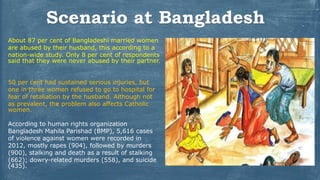
About 87 per cent of Bangladeshi married women
are abused by their husband, this according to a
nation-wide study. Only 8 per cent of respondents
said that they were never abused by their partner.
50 per cent had sustained serious injuries, but
one in three women refused to go to hospital for
fear of retaliation by the husband. Although not
as prevalent, the problem also affects Catholic
women.
According to human rights organization
Bangladesh Mahila Parishad (BMP), 5,616 cases
of violence against women were recorded in
2012, mostly rapes (904), followed by murders
(900), stalking and death as a result of stalking
(662); dowry-related murders (558), and suicide
(435).
Scenario at Bangladesh
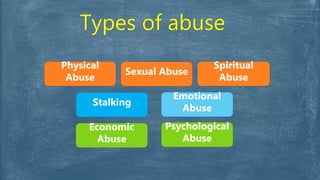
Types of abuse
Physical
Abuse
Stalking
Emotional
Abuse
Economic
Abuse
Sexual Abuse
Psychological
Abuse
Spiritual
Abuse
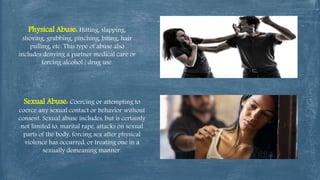
Physical Abuse: Hitting, slapping,
shoving, grabbing, pinching, biting, hair
pulling, etc. This type of abuse also
includes denying a partner medical care or
forcing alcohol / drug use.
Sexual Abuse: Coercing or attempting to
coerce any sexual contact or behavior without
consent. Sexual abuse includes, but is certainly
not limited to, marital rape, attacks on sexual
parts of the body, forcing sex after physical
violence has occurred, or treating one in a
sexually demeaning manner.
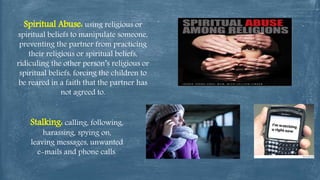
Spiritual Abuse: using religious or
spiritual beliefs to manipulate someone,
preventing the partner from practicing
their religious or spiritual beliefs,
ridiculing the other person’s religious or
spiritual beliefs, forcing the children to
be reared in a faith that the partner has
not agreed to.
Stalking: calling, following,
harassing, spying on,
leaving messages, unwanted
e-mails and phone calls.
Emotional Abuse: Undermining an
individual's sense of self-worth or self-
esteem. This may include, but is not
limited to constant criticism,
diminishing one's abilities, name-
calling, or damaging one's relationship
with his or her children.
Economic Abuse: Is defined as making
or attempting to make an individual
financially dependent by maintaining
total control over financial resources,
withholding one's access to money, or
forbidding one's attendance at school or
employment.
1.Drug or Alcohol
2.Dowry
3.Gambling
4.Economic problem
6.Phychological problem
Psychosocial Concerns
• Low self esteem
• Emotional and economic dependency
• Continued faith and hope abuser will "stop"
• Depression and Stress disorders and/or psychosomatic complaints
• Accepts blame and guilt for violence
• Socially isolated
• Believes social myths about battering, believes in stereotypical sex roles
• Has poor self-image
• Contemplates or attempts suicide or self-harms
• Appears nervous or anxious
• May defend any criticism of abuser. May have repeatedly left or
considered leaving the relationship.
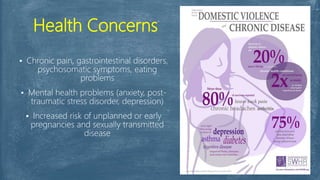
Health Concerns
▪ Chronic pain, gastrointestinal disorders,
psychosomatic symptoms, eating
problems
▪ Mental health problems (anxiety, post-
traumatic stress disorder, depression)
▪ Increased risk of unplanned or early
pregnancies and sexually transmitted
disease
Prevention and Control
▪ Primary – educational outreach to community groups, mosque, schools.
▪ Secondary – routine assessments for domestic violence at standard medical visits (in
pregnancy, especially).
▪ Tertiary – increase levels of services required by battered women (shelters, legal
protection, emergency hotlines, etc.)
Reference
https://www.linkedin.com/pulse/legal-protection-women-
bangladesh-languishing-want-law-digest
https://www.google.com/
http://infoweb.newsbank.com/iw-
search/we/InfoWeb?p_product=AWNSE
www.stopvaw.org/health_effects_of_domestic_violence
Domestic Violence. (n.d.). Orange County Sheriff's
Department. Retrieved July 27, 2014, from
http://media.ocgov.com/gov/sheriff/about/in
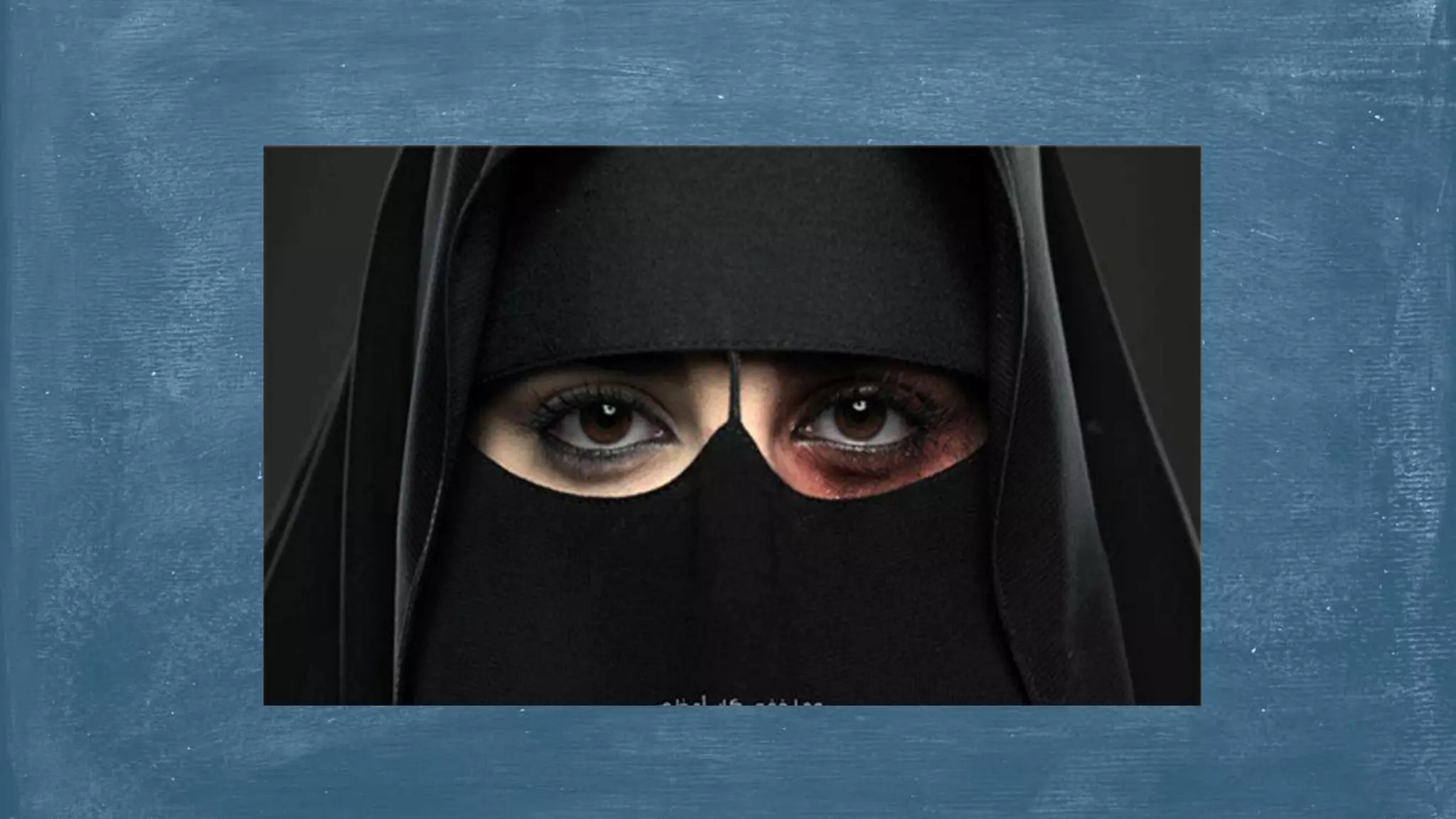
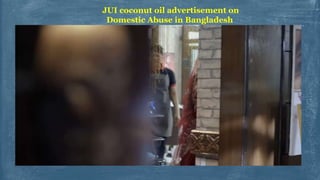
JUI coconut oil advertisement on
Domestic Abuse in Bangladesh
Domestic abuse

Domestic abuse

  • 2.
  • 3.
  • 5.
    About 87 percent of Bangladeshi married women are abused by their husband, this according to a nation-wide study. Only 8 per cent of respondents said that they were never abused by their partner. 50 per cent had sustained serious injuries, but one in three women refused to go to hospital for fear of retaliation by the husband. Although not as prevalent, the problem also affects Catholic women. According to human rights organization Bangladesh Mahila Parishad (BMP), 5,616 cases of violence against women were recorded in 2012, mostly rapes (904), followed by murders (900), stalking and death as a result of stalking (662); dowry-related murders (558), and suicide (435). Scenario at Bangladesh
  • 6.
  • 7.
    Physical Abuse: Hitting,slapping, shoving, grabbing, pinching, biting, hair pulling, etc. This type of abuse also includes denying a partner medical care or forcing alcohol / drug use. Sexual Abuse: Coercing or attempting to coerce any sexual contact or behavior without consent. Sexual abuse includes, but is certainly not limited to, marital rape, attacks on sexual parts of the body, forcing sex after physical violence has occurred, or treating one in a sexually demeaning manner.
  • 8.
    Spiritual Abuse: usingreligious or spiritual beliefs to manipulate someone, preventing the partner from practicing their religious or spiritual beliefs, ridiculing the other person’s religious or spiritual beliefs, forcing the children to be reared in a faith that the partner has not agreed to. Stalking: calling, following, harassing, spying on, leaving messages, unwanted e-mails and phone calls.
  • 9.
    Emotional Abuse: Underminingan individual's sense of self-worth or self- esteem. This may include, but is not limited to constant criticism, diminishing one's abilities, name- calling, or damaging one's relationship with his or her children. Economic Abuse: Is defined as making or attempting to make an individual financially dependent by maintaining total control over financial resources, withholding one's access to money, or forbidding one's attendance at school or employment.
  • 10.
    1.Drug or Alcohol 2.Dowry 3.Gambling 4.Economicproblem 6.Phychological problem
  • 11.
    Psychosocial Concerns • Lowself esteem • Emotional and economic dependency • Continued faith and hope abuser will "stop" • Depression and Stress disorders and/or psychosomatic complaints • Accepts blame and guilt for violence • Socially isolated • Believes social myths about battering, believes in stereotypical sex roles • Has poor self-image • Contemplates or attempts suicide or self-harms • Appears nervous or anxious • May defend any criticism of abuser. May have repeatedly left or considered leaving the relationship.
  • 12.
    Health Concerns ▪ Chronicpain, gastrointestinal disorders, psychosomatic symptoms, eating problems ▪ Mental health problems (anxiety, post- traumatic stress disorder, depression) ▪ Increased risk of unplanned or early pregnancies and sexually transmitted disease
  • 13.
    Prevention and Control ▪Primary – educational outreach to community groups, mosque, schools. ▪ Secondary – routine assessments for domestic violence at standard medical visits (in pregnancy, especially). ▪ Tertiary – increase levels of services required by battered women (shelters, legal protection, emergency hotlines, etc.)
  • 14.
  • 15.
    JUI coconut oiladvertisement on Domestic Abuse in Bangladesh