


Does Sexual Harassment Training Work?
Bernie McCann, PhD, CEAP
Mary-Ellen Rogers, BSW
CEO, Excellere Human Capital Management
2018 EAPA Annual Conference
Minneapolis, MN
Revisiting Best Practices
for Today’s Workplaces
Statement of the Problem:
Where We Are Now
 Employers have often assumed
that providing a minimum of
effort is sufficient
 Criticism of workplace status
quo is reaching critical mass
 EAPs (and others) have been
part of a delivery system for an
ineffective approach
What’s the Future Look Like?
 New understandings of how
pervasive workplace harassment
is and the clear need for changes
 Increased willingness of
employers to do the right thing
 Potential to provide an authentic,
value-added service
Historic Context
of Workplace
Sexual Harassment
Current Context of
Workplace Sexual Harassment
The ‘Normalization’ of Sexualized Behavior
Risk Factors for Workplace Harassment
• Homogeneous workgroups with little diversity
• Workgroups with high percentages of young workers
• Workgroups of high-value, “emboldened” employees
• Workgroups with significant power disparities
• Isolated workgroups and workspaces
• Workplaces with vague or unenforced HR policies
• Work settings which tolerate liberal alcohol consumption
• Workplaces which value client satisfaction over employee well-being
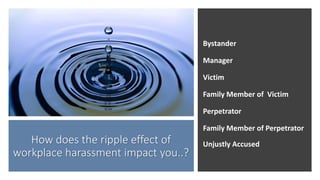
How does the ripple effect of
workplace harassment impact you..?
Bystander
Manager
Victim
Family Member of Victim
Perpetrator
Family Member of Perpetrator
Unjustly Accused
THE IMPORTANCE OF
AN ORGANIZATIONAL
NEEDS ASSESSMENT
Mounting a customized SH prevention effort can be a complex
process. To be effective, customized training efforts will
benefit from gathering multiple perspectives, data points, and
review of a variety of approaches and actions.
An organizational needs assessment will:
1) Identify the gap between current & desired knowledge/attitudes;
2) Help formulate appropriate, relevant training content;
3) Provide a baseline for evaluation;
4) Ensure requisite & efficacious training is delivered; and
5) Maximize use of resources to achieve organizational objectives.
Stages of Change Model & Sexual Harassment
Precontemplation: Hears
about sexual harassment,
but doesn’t think it
applies to them
Contemplation: During
training – considers
behavior -weighs
benefits/costs of change
Preparation for Change:
Experiments with small
changes (coaching)
Action: Taking definitive
action (coaching)
Maintenance: Continues
new behavior – (associated
training – communications
skills, emotional
intelligence, etc.)
Relapse: Normal part of
process – may benefit
from more coaching
Adapting the
Behavioral
Coaching
Model
• Long-held biases and behaviors can be
deeply engrained; similar to lifestyle
behaviors that contribute to chronic
disease states
• Successfully eradicating behaviors
associated with chronic diseases
requires education combined with
ongoing behavioral coaching
• Clinical research finds behavioral
change coaching can be effective even
in cases of long-held negative behaviors
Roles for EAPs & Workplace Professionals
 Educating work organizations about SH risks and needs
 Consultation to develop or revise policies and processes,
gain management support for updating prevention efforts
 Creating training materials and delivering training programs
 Measuring and evaluating outcomes of efforts
 Recommendations for subsequent efforts and ongoing activities
Why Revisit
Sexual
Harassment
Training?
 Has been too narrowly focused on simply
avoiding legal liability
 Has been delivered in a vacuum; rather
than integrated as part of a holistic culture
 Has not been tailored to the specific
workplace/workforce
 Has not included behavioral change
component at any level
 Has typically been less than effective when
management fails to champion the effort
How do we know that
current training
paradigms are not
optimal to prevent
workplace sexual
harassment?
1) Lack of Empirical Research
Concerns that historical
methods of sexual
harassment training
programs are actually
successful in reducing
prohibited behavior.
*Some research even suggests that this type of training may be counterproductive.
2) Confusion
about the purpose
and goals of
workplace sexual
harassment
training…
Too often workplace training
programs simply aim to
educate employees about
sexual harassment policies or
specifically prohibited conduct.
This approach primarily serves
to limit employer liability,
rather than impact behavior.
Alternative Training Approaches
 Promoting Civility, Equality & Respect
 Bystander Intervention Training
 Identifying Unconscious Bias
 Increasing Emotional Intelligence
 Effective Communication Skills
(Not an exhaustive list!)
Promoting
Workplace
Civility,
Equality,
& Respect
Bystander
Intervention
Training
Unconscious Bias Training
Using exercises in
interactive behavioral
effectiveness, this
approach helps individuals
become better at exploring
differing opinions, points of
view, and to be more open
to others’ ideas and
suggestions.
Increasing
Emotional
Intelligence
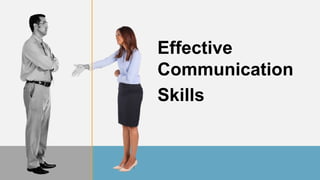
Effective
Communication
Skills
Do Training Methods Matter?
Suggestions to Increase Impact
Push content beyond predictable, familiar scenarios to real life
 More nuanced discussions of changing context, blurred lines between
professional & social roles, definitions of consent, etc.
Use of face-to-face group vs. individualized online modes..?
 Customize content & delivery platforms for diverse groups & worksites
Linking training with outcome reporting procedures
 Use of pre- & post surveys to measure initial & subsequent outcomes
Steps for Successful Behavioral Training
• Seek to fully understand the organization’s commitment and
culture before embarking on training
• Training materials should consider principles of adult learning and
multiple intelligences
• Training should support and encourage empowerment for victims
and bystanders
• Training should include an inventory of feelings of different
perspectives: victims, bystanders and perpetrators
• Training approach must engage – role plays, case studies, self-
assessments and other exercises that seek to eliminate unconscious
bias
• Training efforts cannot be a single episode but must be sustained
A New Sustainable Paradigm
COACHING
EFFECTIVE POLICY
COMMUNICATIONS
HR AND EAP
COLLABORATION
CONTINUOUS
MESSAGING
THOUGHTFUL
STRATEGY
ACCOUNTABILITY
Best Practices for Workplace Culture Change
 Training cannot simply state policies and examples, rather it helps
participants authentically examine their own behaviors and reactions
to objectionable behaviors of others
 Training cannot be merely a single session, to be effective, messaging
needs to be reinforced frequently
 Management unequivocally supports (with high visibility) training and
ongoing, uniform policy application
 Training and coaching are aligned with organizational culture and
worksite environments
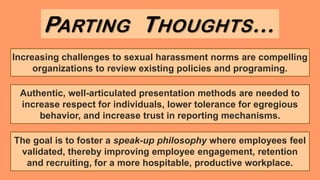
Increasing challenges to sexual harassment norms are compelling
organizations to review existing policies and programing.
PARTING THOUGHTS…
The goal is to foster a speak-up philosophy where employees feel
validated, thereby improving employee engagement, retention
and recruiting, for a more hospitable, productive workplace.
Authentic, well-articulated presentation methods are needed to
increase respect for individuals, lower tolerance for egregious
behavior, and increase trust in reporting mechanisms.
Remember!!

Does Sexual Harassment Prevention Training Work?

  • 1.
    Does Sexual HarassmentTraining Work? Bernie McCann, PhD, CEAP Mary-Ellen Rogers, BSW CEO, Excellere Human Capital Management 2018 EAPA Annual Conference Minneapolis, MN Revisiting Best Practices for Today’s Workplaces
  • 2.
    Statement of theProblem: Where We Are Now  Employers have often assumed that providing a minimum of effort is sufficient  Criticism of workplace status quo is reaching critical mass  EAPs (and others) have been part of a delivery system for an ineffective approach What’s the Future Look Like?  New understandings of how pervasive workplace harassment is and the clear need for changes  Increased willingness of employers to do the right thing  Potential to provide an authentic, value-added service
  • 3.
  • 4.
  • 5.
    The ‘Normalization’ ofSexualized Behavior
  • 6.
    Risk Factors forWorkplace Harassment • Homogeneous workgroups with little diversity • Workgroups with high percentages of young workers • Workgroups of high-value, “emboldened” employees • Workgroups with significant power disparities • Isolated workgroups and workspaces • Workplaces with vague or unenforced HR policies • Work settings which tolerate liberal alcohol consumption • Workplaces which value client satisfaction over employee well-being
  • 7.
    How does theripple effect of workplace harassment impact you..? Bystander Manager Victim Family Member of Victim Perpetrator Family Member of Perpetrator Unjustly Accused
  • 8.
    THE IMPORTANCE OF ANORGANIZATIONAL NEEDS ASSESSMENT Mounting a customized SH prevention effort can be a complex process. To be effective, customized training efforts will benefit from gathering multiple perspectives, data points, and review of a variety of approaches and actions. An organizational needs assessment will: 1) Identify the gap between current & desired knowledge/attitudes; 2) Help formulate appropriate, relevant training content; 3) Provide a baseline for evaluation; 4) Ensure requisite & efficacious training is delivered; and 5) Maximize use of resources to achieve organizational objectives.
  • 9.
    Stages of ChangeModel & Sexual Harassment Precontemplation: Hears about sexual harassment, but doesn’t think it applies to them Contemplation: During training – considers behavior -weighs benefits/costs of change Preparation for Change: Experiments with small changes (coaching) Action: Taking definitive action (coaching) Maintenance: Continues new behavior – (associated training – communications skills, emotional intelligence, etc.) Relapse: Normal part of process – may benefit from more coaching
  • 10.
    Adapting the Behavioral Coaching Model • Long-heldbiases and behaviors can be deeply engrained; similar to lifestyle behaviors that contribute to chronic disease states • Successfully eradicating behaviors associated with chronic diseases requires education combined with ongoing behavioral coaching • Clinical research finds behavioral change coaching can be effective even in cases of long-held negative behaviors
  • 11.
    Roles for EAPs& Workplace Professionals  Educating work organizations about SH risks and needs  Consultation to develop or revise policies and processes, gain management support for updating prevention efforts  Creating training materials and delivering training programs  Measuring and evaluating outcomes of efforts  Recommendations for subsequent efforts and ongoing activities
  • 12.
    Why Revisit Sexual Harassment Training?  Hasbeen too narrowly focused on simply avoiding legal liability  Has been delivered in a vacuum; rather than integrated as part of a holistic culture  Has not been tailored to the specific workplace/workforce  Has not included behavioral change component at any level  Has typically been less than effective when management fails to champion the effort
  • 13.
    How do weknow that current training paradigms are not optimal to prevent workplace sexual harassment?
  • 14.
    1) Lack ofEmpirical Research Concerns that historical methods of sexual harassment training programs are actually successful in reducing prohibited behavior. *Some research even suggests that this type of training may be counterproductive.
  • 15.
    2) Confusion about thepurpose and goals of workplace sexual harassment training…
  • 16.
    Too often workplacetraining programs simply aim to educate employees about sexual harassment policies or specifically prohibited conduct. This approach primarily serves to limit employer liability, rather than impact behavior.
  • 17.
    Alternative Training Approaches Promoting Civility, Equality & Respect  Bystander Intervention Training  Identifying Unconscious Bias  Increasing Emotional Intelligence  Effective Communication Skills (Not an exhaustive list!)
  • 18.
  • 19.
  • 20.
    Unconscious Bias Training Usingexercises in interactive behavioral effectiveness, this approach helps individuals become better at exploring differing opinions, points of view, and to be more open to others’ ideas and suggestions.
  • 21.
  • 22.
  • 23.
    Do Training MethodsMatter? Suggestions to Increase Impact Push content beyond predictable, familiar scenarios to real life  More nuanced discussions of changing context, blurred lines between professional & social roles, definitions of consent, etc. Use of face-to-face group vs. individualized online modes..?  Customize content & delivery platforms for diverse groups & worksites Linking training with outcome reporting procedures  Use of pre- & post surveys to measure initial & subsequent outcomes
  • 24.
    Steps for SuccessfulBehavioral Training • Seek to fully understand the organization’s commitment and culture before embarking on training • Training materials should consider principles of adult learning and multiple intelligences • Training should support and encourage empowerment for victims and bystanders • Training should include an inventory of feelings of different perspectives: victims, bystanders and perpetrators • Training approach must engage – role plays, case studies, self- assessments and other exercises that seek to eliminate unconscious bias • Training efforts cannot be a single episode but must be sustained
  • 25.
    A New SustainableParadigm COACHING EFFECTIVE POLICY COMMUNICATIONS HR AND EAP COLLABORATION CONTINUOUS MESSAGING THOUGHTFUL STRATEGY ACCOUNTABILITY
  • 26.
    Best Practices forWorkplace Culture Change  Training cannot simply state policies and examples, rather it helps participants authentically examine their own behaviors and reactions to objectionable behaviors of others  Training cannot be merely a single session, to be effective, messaging needs to be reinforced frequently  Management unequivocally supports (with high visibility) training and ongoing, uniform policy application  Training and coaching are aligned with organizational culture and worksite environments
  • 27.
    Increasing challenges tosexual harassment norms are compelling organizations to review existing policies and programing. PARTING THOUGHTS… The goal is to foster a speak-up philosophy where employees feel validated, thereby improving employee engagement, retention and recruiting, for a more hospitable, productive workplace. Authentic, well-articulated presentation methods are needed to increase respect for individuals, lower tolerance for egregious behavior, and increase trust in reporting mechanisms.
  • 28.