Ace Leaders: Visioning Social Transformation for Gender Equality and Women’s Rights
Monday, May 6, 2012 – Documentation of Afternoon Process
Visioning social transformation for gender
equality and women's rights.

Exercise: “The world we want to see”

3-step exercise in country groups using pictures,
not words in order to push people to think in
concrete terms rather than fall back on vague
generalisations and familiar jargon.

Markers, Flip Chart Paper, Tape
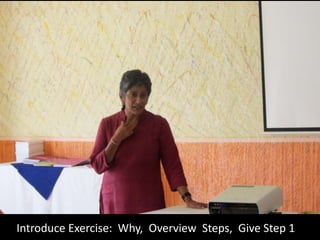
Introduce Exercise: Why, Overview Steps, Give Step 1
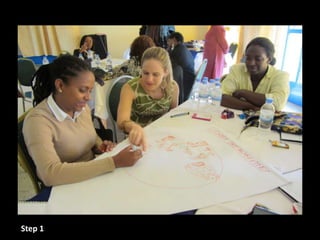
Step 1. On a big sheet of paper, draw a circle representing the
world/Africa/your country as it is at present. Inside the circle,
draw pictures of the 5 major issues/problems faced by
women (or 5 main barriers to gender equality in your
country). No words allowed!
(30 minutes).

The pictures are put up on the walls for everyone to see,
explanations only if asked for.


.
Step 1
Step 2. Draw another big circle on a fresh sheet of
paper, representing the world/Africa as you would
like to see it in 5 (or 10?) years. Inside the circle,
draw pictures of 5 things that would show that this
future world is better for women (“more gender-
equal”) than the first one. Again, no words allowed.
(20 minutes)

The pictures are again displayed and explained if
needed.
Step 2
Ethiopia
Kenya
Uganda
Rewanda
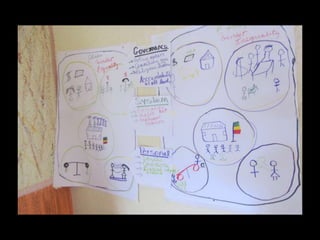
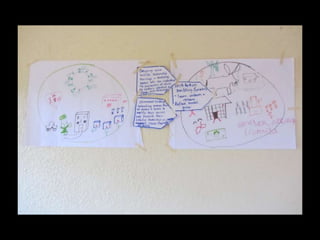
Step 3. Place the two worlds side by side and connect them with the arrow cut-
outs provided. Use at least 5 arrows. These arrows represent what you/your
organisation are doing and can do to move from the present situation to the
desired situation. Write a key word or phrase on each arrow to describe each
intervention. You can number the arrows if you wish to show the sequence of
interventions.
(30 minutes)
The completed pictures are displayed on the walls. Beth will document for the
wiki. After the tea break we can display on the projector
Uganda - Debrief
Discussion in Plenary

Facilitator does pattern analysis of drawings
Leads discussion/reflection
Introduces new idea/change/why – speaks
from point of passion/advocate for change
Documentation of the Visioning Process

Documentation of the Visioning Process

  • 1.
    Ace Leaders: VisioningSocial Transformation for Gender Equality and Women’s Rights Monday, May 6, 2012 – Documentation of Afternoon Process
  • 2.
    Visioning social transformationfor gender equality and women's rights. Exercise: “The world we want to see” 3-step exercise in country groups using pictures, not words in order to push people to think in concrete terms rather than fall back on vague generalisations and familiar jargon. Markers, Flip Chart Paper, Tape
  • 3.
    Introduce Exercise: Why,Overview Steps, Give Step 1
  • 4.
    Step 1. Ona big sheet of paper, draw a circle representing the world/Africa/your country as it is at present. Inside the circle, draw pictures of the 5 major issues/problems faced by women (or 5 main barriers to gender equality in your country). No words allowed! (30 minutes). The pictures are put up on the walls for everyone to see, explanations only if asked for. .
  • 5.
  • 10.
    Step 2. Drawanother big circle on a fresh sheet of paper, representing the world/Africa as you would like to see it in 5 (or 10?) years. Inside the circle, draw pictures of 5 things that would show that this future world is better for women (“more gender- equal”) than the first one. Again, no words allowed. (20 minutes) The pictures are again displayed and explained if needed.
  • 11.
  • 12.
  • 13.
  • 14.
  • 15.
  • 16.
    Step 3. Placethe two worlds side by side and connect them with the arrow cut- outs provided. Use at least 5 arrows. These arrows represent what you/your organisation are doing and can do to move from the present situation to the desired situation. Write a key word or phrase on each arrow to describe each intervention. You can number the arrows if you wish to show the sequence of interventions. (30 minutes) The completed pictures are displayed on the walls. Beth will document for the wiki. After the tea break we can display on the projector
  • 17.
  • 23.
    Discussion in Plenary Facilitatordoes pattern analysis of drawings Leads discussion/reflection Introduces new idea/change/why – speaks from point of passion/advocate for change

Editor's Notes

  • #2 Visioning social transformation for gender equality and women's rights. (KM-S)Exercise: “The world we want to see” 3-step exercise in country groups using pictures, not words in order to push people to think in concrete terms rather than fall back on vague generalisations and familiar jargon.Step 1. On a big sheet of paper, draw a circle representing the world/Africa/your country as it is at present. Inside the circle, draw pictures of the 5 major issues/problems faced by women (or 5 main barriers to gender equality in your country). No words allowed!(30 minutes).The pictures are put up on the walls for everyone to see, explanations only if asked for.Step 2. Draw another big circle on a fresh sheet of paper, representing the world/Africa as you would like to see it in 5 (or 10?) years. Inside the circle, draw pictures of 5 things that would show that this future world is better for women (“more gender-equal”) than the first one. Again, no words allowed.(20 minutes)The pictures are again displayed and explained if needed.Step 3. Place the two worlds side by side and connect them with the arrow cut-outs provided. Use at least 5 arrows. These arrows represent what you/your organisation are doing and can do to move from the present situation to the desired situation. Write a key word or phrase on each arrow to describe each intervention. You can number the arrows if you wish to show the sequence of interventions.(30 minutes)The completed pictures are displayed on the walls. Beth will document for the wiki. After the tea break we can display on the projector.