This document provides an overview of basic computer organization and structure. It discusses:
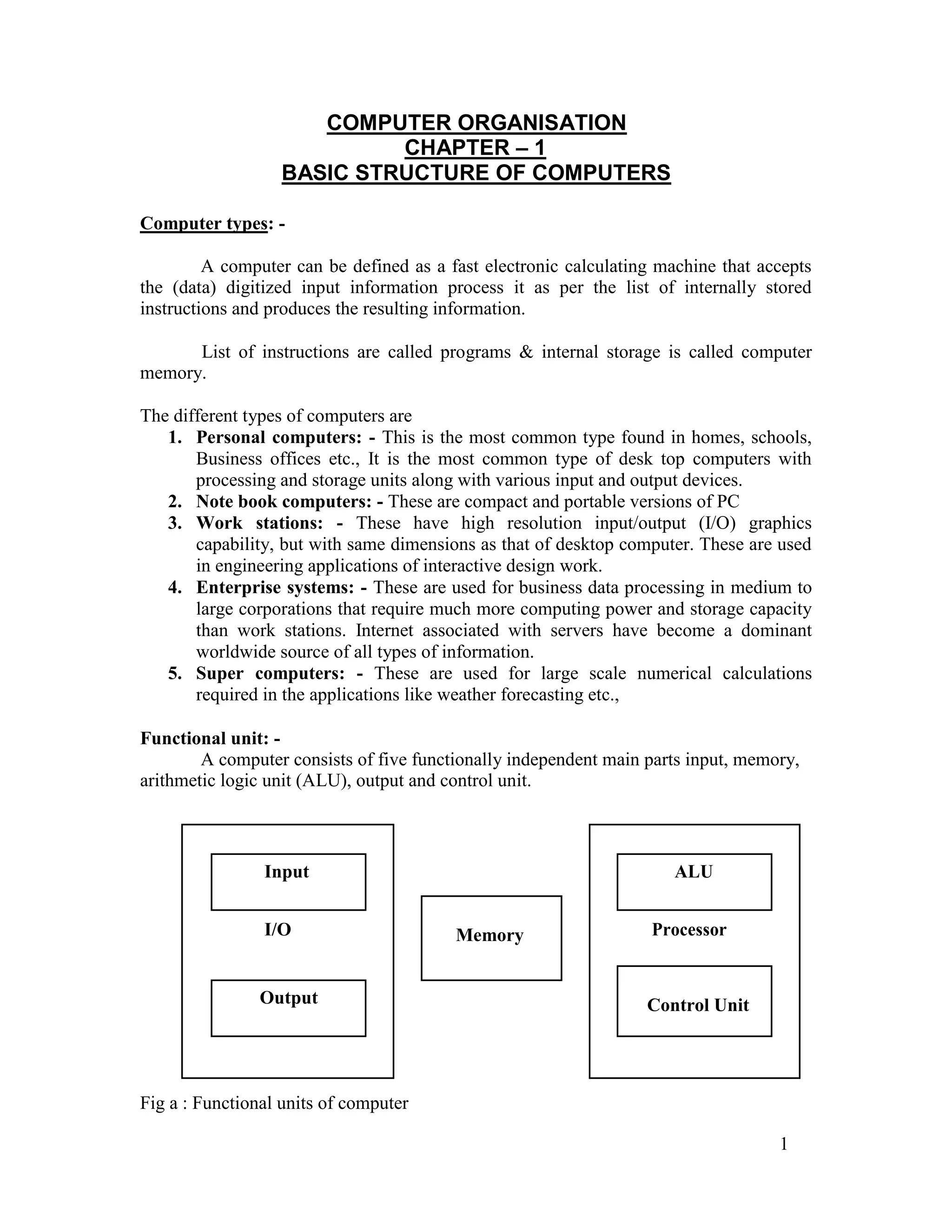
1. The five main functional units of a computer: input, memory, arithmetic logic unit (ALU), output, and control unit. Memory can be primary or secondary.
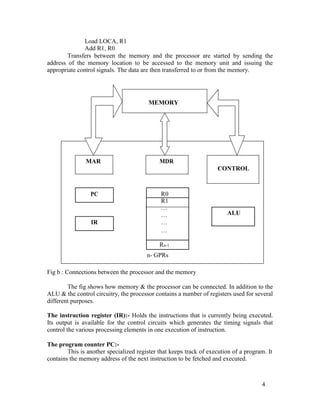
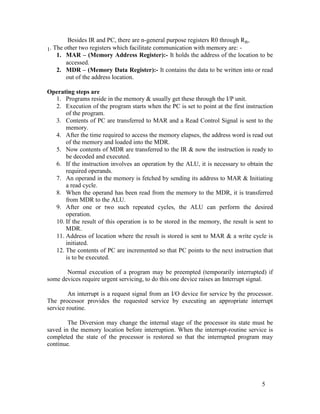
2. How instructions and data are processed by fetching from memory to the instruction register and ALU for execution before storing results back in memory.
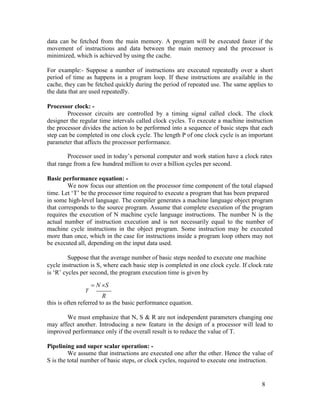
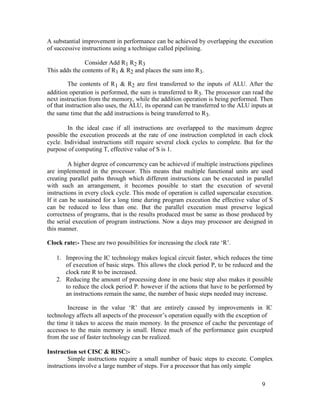
3. Performance considerations like clock rate, pipelining, and instruction set design (CISC vs RISC) that influence the number of clock cycles needed per instruction.


![Ise iv-computer organization [10 cs46]-notes new](https://cdn.slidesharecdn.com/ss_thumbnails/ise-iv-computerorganization10cs46-notesnew-140624013827-phpapp01-thumbnail.jpg?width=640&height=640&fit=bounds)


