Colleen M. Farrelly
 Many recent articles lamenting lack
of diversity in the field.
 Most articles focus on changing the
“Bro culture” and changing hiring
practices.
 The evidence suggests other possible
avenues to understand lack of
diversity and address its root
causes.
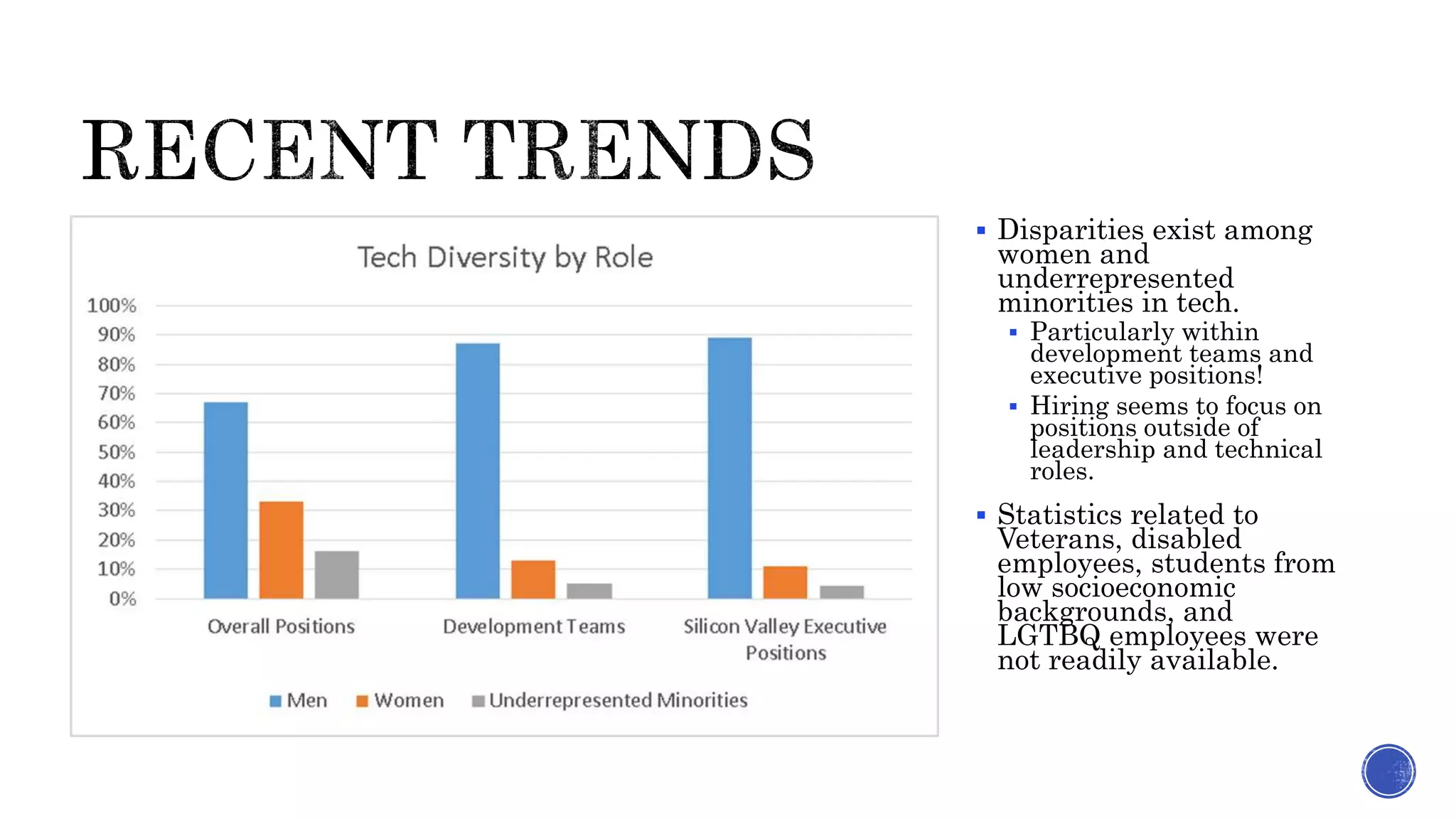
 Disparities exist among
women and
underrepresented
minorities in tech.
 Particularly within
development teams and
executive positions!
 Hiring seems to focus on
positions outside of
leadership and technical
roles.
 Statistics related to
Veterans, disabled
employees, students from
low socioeconomic
backgrounds, and
LGTBQ employees were
not readily available.
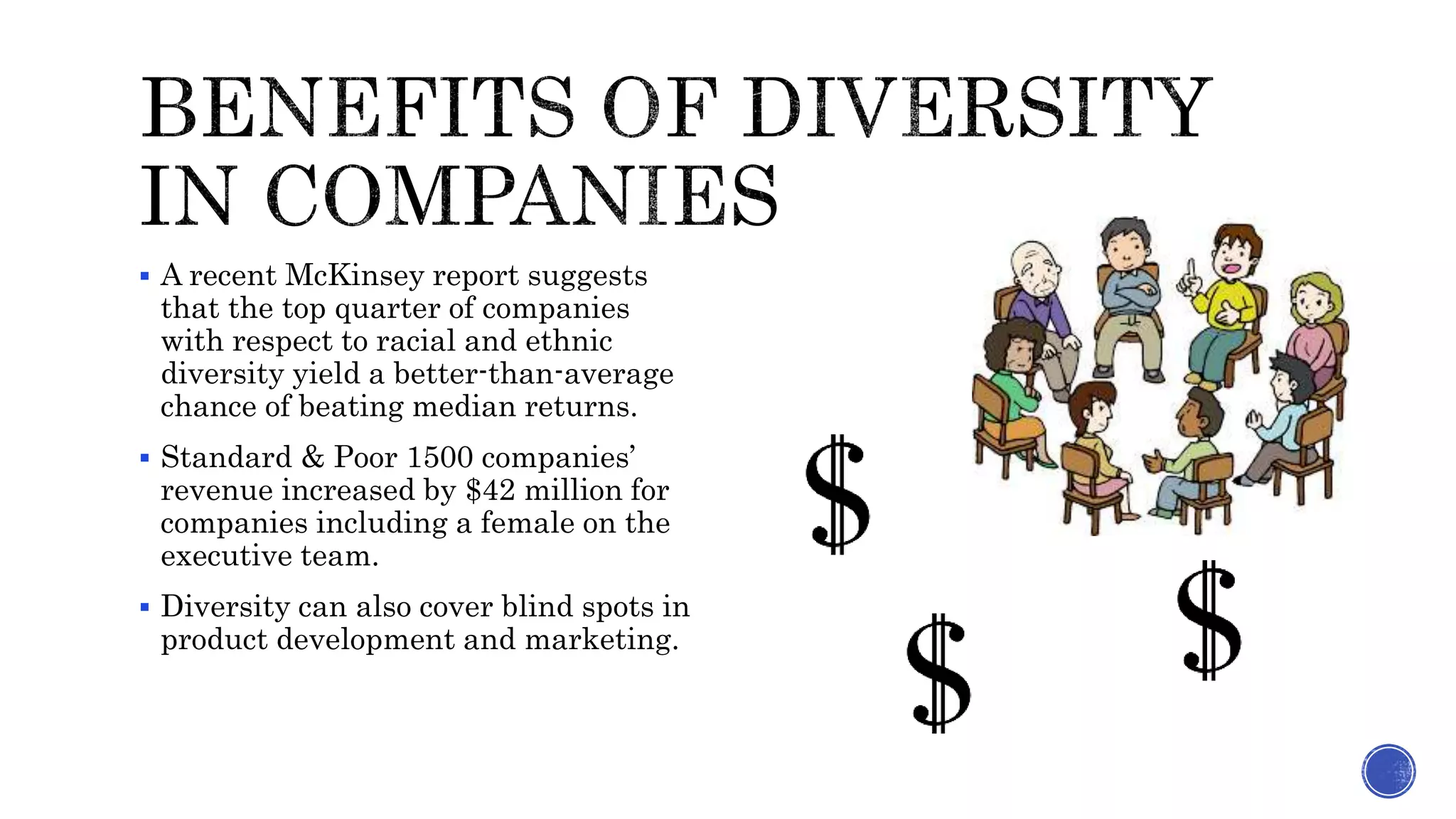
 A recent McKinsey report suggests
that the top quarter of companies
with respect to racial and ethnic
diversity yield a better-than-average
chance of beating median returns.
 Standard & Poor 1500 companies’
revenue increased by $42 million for
companies including a female on the
executive team.
 Diversity can also cover blind spots in
product development and marketing.
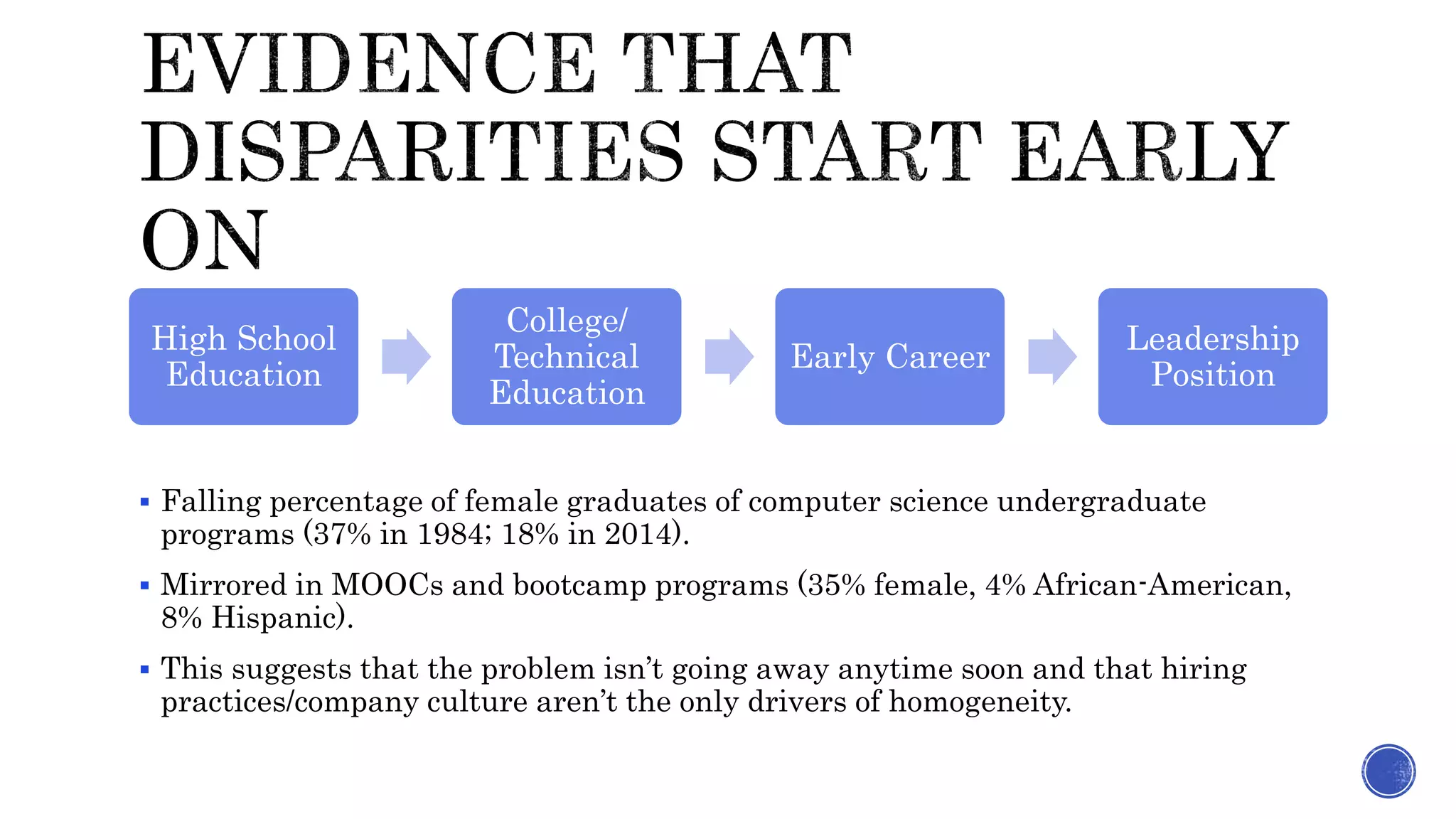
 Falling percentage of female graduates of computer science undergraduate
programs (37% in 1984; 18% in 2014).
 Mirrored in MOOCs and bootcamp programs (35% female, 4% African-American,
8% Hispanic).
 This suggests that the problem isn’t going away anytime soon and that hiring
practices/company culture aren’t the only drivers of homogeneity.
High School
Education
College/
Technical
Education
Early Career
Leadership
Position
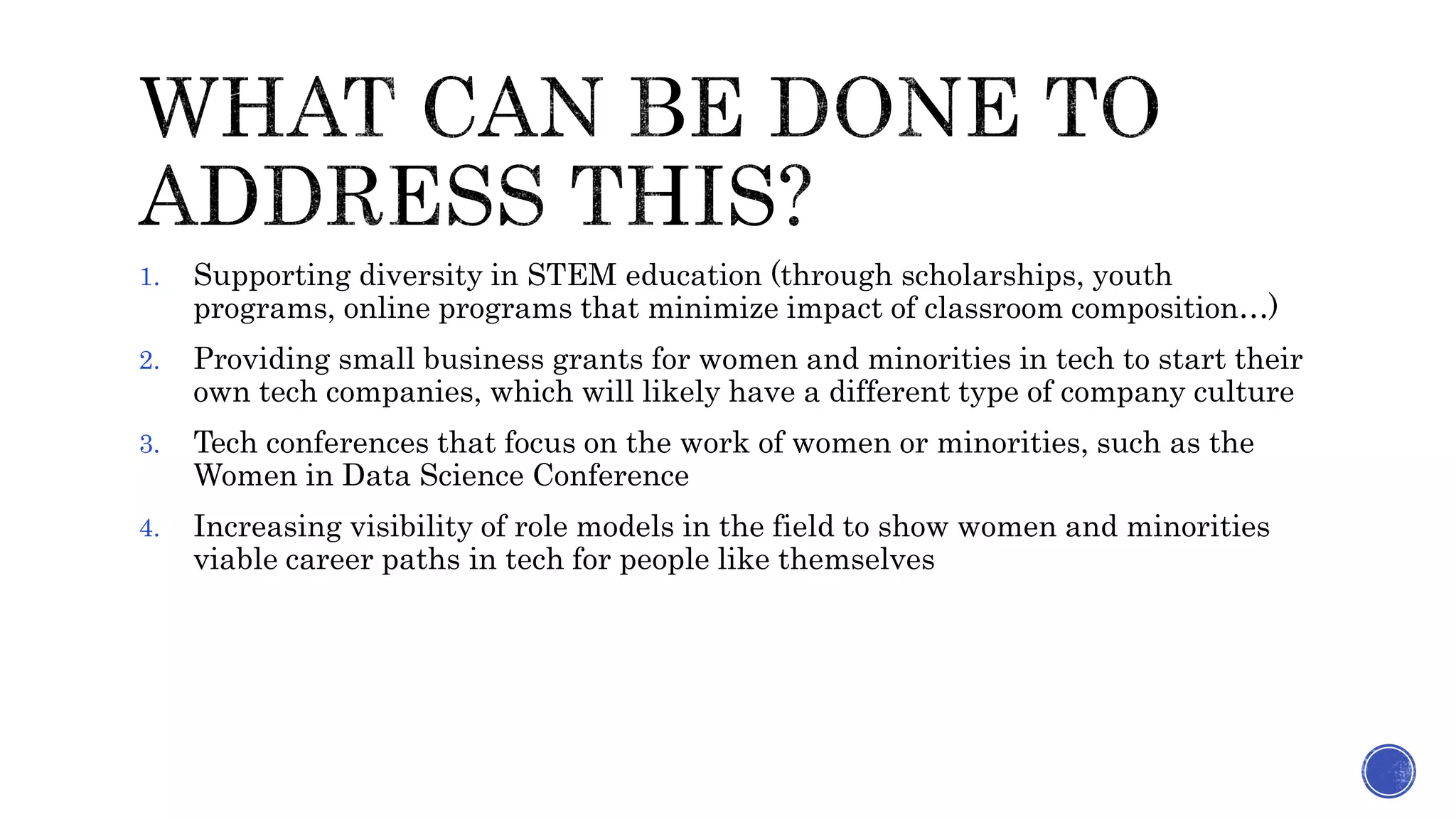
1. Supporting diversity in STEM education (through scholarships, youth
programs, online programs that minimize impact of classroom composition…)
2. Providing small business grants for women and minorities in tech to start their
own tech companies, which will likely have a different type of company culture
3. Tech conferences that focus on the work of women or minorities, such as the
Women in Data Science Conference
4. Increasing visibility of role models in the field to show women and minorities
viable career paths in tech for people like themselves
 Scholarships
 For women in bootcamps:
https://www.switchup.org/blog/women-in-tech-a-
comprehensive-scholarship-guide
 For women in academic programs:
https://www.scholarshipsforwomen.net/engineering/
 For African-American and Hispanic students in academic
programs: http://www.nacme.org/
 Campaigns and outreach programs for youth
 UK’s WISE initiative
 Miami’s Women in Biomedical Science
 Online opportunities
 Catering to women with children, career switchers, and those
in related roles hoping for a promotion
 Some evidence of increased sense of belonging among low-
income students and minorities in programs that have either
more diversity in classes or less face-to-face interactions within
a classroom low in diversity
 Small business grants exist focused on companies headed by
minorities or women:
 https://startupnation.com/start-your-business/small-business-
grants-women-minorities/
 https://www.fundera.com/blog/where-to-find-small-business-
grants-for-women
 https://www.nerdwallet.com/blog/small-business/small-business-
grants-minorities/
 https://www.federalgrantswire.com/minority-federal-government-
grants.html#.W47QKYeouK8,
https://www.allamericangrantguide.com/minority-business-
grants.php
 Small business grants increase diversity at
leadership/founder levels of tech companies, encouraging a
trickle-down effect and diverse company culture.
 Specialty conferences like Women in Data
Science can:
 Promote visibility of prominent women or
minorities in tech at the local and national
level
 Connect women/minorities with local mentors
who are like them
 Help local companies connect with diverse
talent.
 Very few currently exist.
 Success of Women in Data Science suggests
that minority-specific conferences might be a
good start.
 Other groups may want to start their own
conferences, as well, to highlight work within
the group.
 Articles and awards can highlight to work of top
women/minorities/other groups in data
science/tech.
 Professional meet-ups, LinkedIn groups, and other
groups can connect individuals at different stages
of their careers to match mentors with mentees.
 Minority and women faculty members in STEM
can serve as mentors/advisors to students who are
minorities/women.
 Community outreach programs can be developed
to show young women and minorities that people
like them have entered the industry.
 Lack of diversity in tech continues to be a problem, and its impacts are
widespread on company performance and culture.
 Addressing root causes involves more than changing of hiring practices or
changing a homogenous office culture.
 Potential solutions involve targeting education, entrepreneurship, mentorship,
and visibility of women and minorities in STEM.
 However, with effort, it is possible to address this issue, and companies will
benefit from doing so.
 https://www.kdnuggets.com/2018/09/diversity-data-science.html
 https://www.techrepublic.com/article/5-eye-opening-statistics-about-minorities-in-tech/
 https://www.eeoc.gov/eeoc/statistics/reports/hightech/
 https://www.forbes.com/sites/mnewlands/2016/08/29/why-diversity-matters-in-
tech/#7080726c8614
 https://www.mckinsey.com/business-functions/organization/our-insights/why-diversity-matters
 https://papers.ssrn.com/sol3/papers.cfm?abstract_id=1088182
 https://www.forbes.com/sites/lisawinning/2018/03/13/its-time-to-prioritize-diversity-across-
tech/#6155ac5616f8
 http://rethinkimpact.com/
 https://www.betterbuys.com/bi/women-in-data-science/
 https://www.forbes.com/sites/priceonomics/2017/09/28/the-data-science-diversity-
gap/#52f389b5f58b
 https://www.politico.com/story/2017/09/25/trump-stem-technology-grants-women-minorities-
243115

Diversity in data science

  • 1.
  • 2.
     Many recentarticles lamenting lack of diversity in the field.  Most articles focus on changing the “Bro culture” and changing hiring practices.  The evidence suggests other possible avenues to understand lack of diversity and address its root causes.
  • 3.
     Disparities existamong women and underrepresented minorities in tech.  Particularly within development teams and executive positions!  Hiring seems to focus on positions outside of leadership and technical roles.  Statistics related to Veterans, disabled employees, students from low socioeconomic backgrounds, and LGTBQ employees were not readily available.
  • 4.
     A recentMcKinsey report suggests that the top quarter of companies with respect to racial and ethnic diversity yield a better-than-average chance of beating median returns.  Standard & Poor 1500 companies’ revenue increased by $42 million for companies including a female on the executive team.  Diversity can also cover blind spots in product development and marketing.
  • 5.
     Falling percentageof female graduates of computer science undergraduate programs (37% in 1984; 18% in 2014).  Mirrored in MOOCs and bootcamp programs (35% female, 4% African-American, 8% Hispanic).  This suggests that the problem isn’t going away anytime soon and that hiring practices/company culture aren’t the only drivers of homogeneity. High School Education College/ Technical Education Early Career Leadership Position
  • 6.
    1. Supporting diversityin STEM education (through scholarships, youth programs, online programs that minimize impact of classroom composition…) 2. Providing small business grants for women and minorities in tech to start their own tech companies, which will likely have a different type of company culture 3. Tech conferences that focus on the work of women or minorities, such as the Women in Data Science Conference 4. Increasing visibility of role models in the field to show women and minorities viable career paths in tech for people like themselves
  • 7.
     Scholarships  Forwomen in bootcamps: https://www.switchup.org/blog/women-in-tech-a- comprehensive-scholarship-guide  For women in academic programs: https://www.scholarshipsforwomen.net/engineering/  For African-American and Hispanic students in academic programs: http://www.nacme.org/  Campaigns and outreach programs for youth  UK’s WISE initiative  Miami’s Women in Biomedical Science  Online opportunities  Catering to women with children, career switchers, and those in related roles hoping for a promotion  Some evidence of increased sense of belonging among low- income students and minorities in programs that have either more diversity in classes or less face-to-face interactions within a classroom low in diversity
  • 8.
     Small businessgrants exist focused on companies headed by minorities or women:  https://startupnation.com/start-your-business/small-business- grants-women-minorities/  https://www.fundera.com/blog/where-to-find-small-business- grants-for-women  https://www.nerdwallet.com/blog/small-business/small-business- grants-minorities/  https://www.federalgrantswire.com/minority-federal-government- grants.html#.W47QKYeouK8, https://www.allamericangrantguide.com/minority-business- grants.php  Small business grants increase diversity at leadership/founder levels of tech companies, encouraging a trickle-down effect and diverse company culture.
  • 9.
     Specialty conferenceslike Women in Data Science can:  Promote visibility of prominent women or minorities in tech at the local and national level  Connect women/minorities with local mentors who are like them  Help local companies connect with diverse talent.  Very few currently exist.  Success of Women in Data Science suggests that minority-specific conferences might be a good start.  Other groups may want to start their own conferences, as well, to highlight work within the group.
  • 10.
     Articles andawards can highlight to work of top women/minorities/other groups in data science/tech.  Professional meet-ups, LinkedIn groups, and other groups can connect individuals at different stages of their careers to match mentors with mentees.  Minority and women faculty members in STEM can serve as mentors/advisors to students who are minorities/women.  Community outreach programs can be developed to show young women and minorities that people like them have entered the industry.
  • 11.
     Lack ofdiversity in tech continues to be a problem, and its impacts are widespread on company performance and culture.  Addressing root causes involves more than changing of hiring practices or changing a homogenous office culture.  Potential solutions involve targeting education, entrepreneurship, mentorship, and visibility of women and minorities in STEM.  However, with effort, it is possible to address this issue, and companies will benefit from doing so.
  • 12.
     https://www.kdnuggets.com/2018/09/diversity-data-science.html  https://www.techrepublic.com/article/5-eye-opening-statistics-about-minorities-in-tech/ https://www.eeoc.gov/eeoc/statistics/reports/hightech/  https://www.forbes.com/sites/mnewlands/2016/08/29/why-diversity-matters-in- tech/#7080726c8614  https://www.mckinsey.com/business-functions/organization/our-insights/why-diversity-matters  https://papers.ssrn.com/sol3/papers.cfm?abstract_id=1088182  https://www.forbes.com/sites/lisawinning/2018/03/13/its-time-to-prioritize-diversity-across- tech/#6155ac5616f8  http://rethinkimpact.com/  https://www.betterbuys.com/bi/women-in-data-science/  https://www.forbes.com/sites/priceonomics/2017/09/28/the-data-science-diversity- gap/#52f389b5f58b  https://www.politico.com/story/2017/09/25/trump-stem-technology-grants-women-minorities- 243115