Diuretics
Diuretics
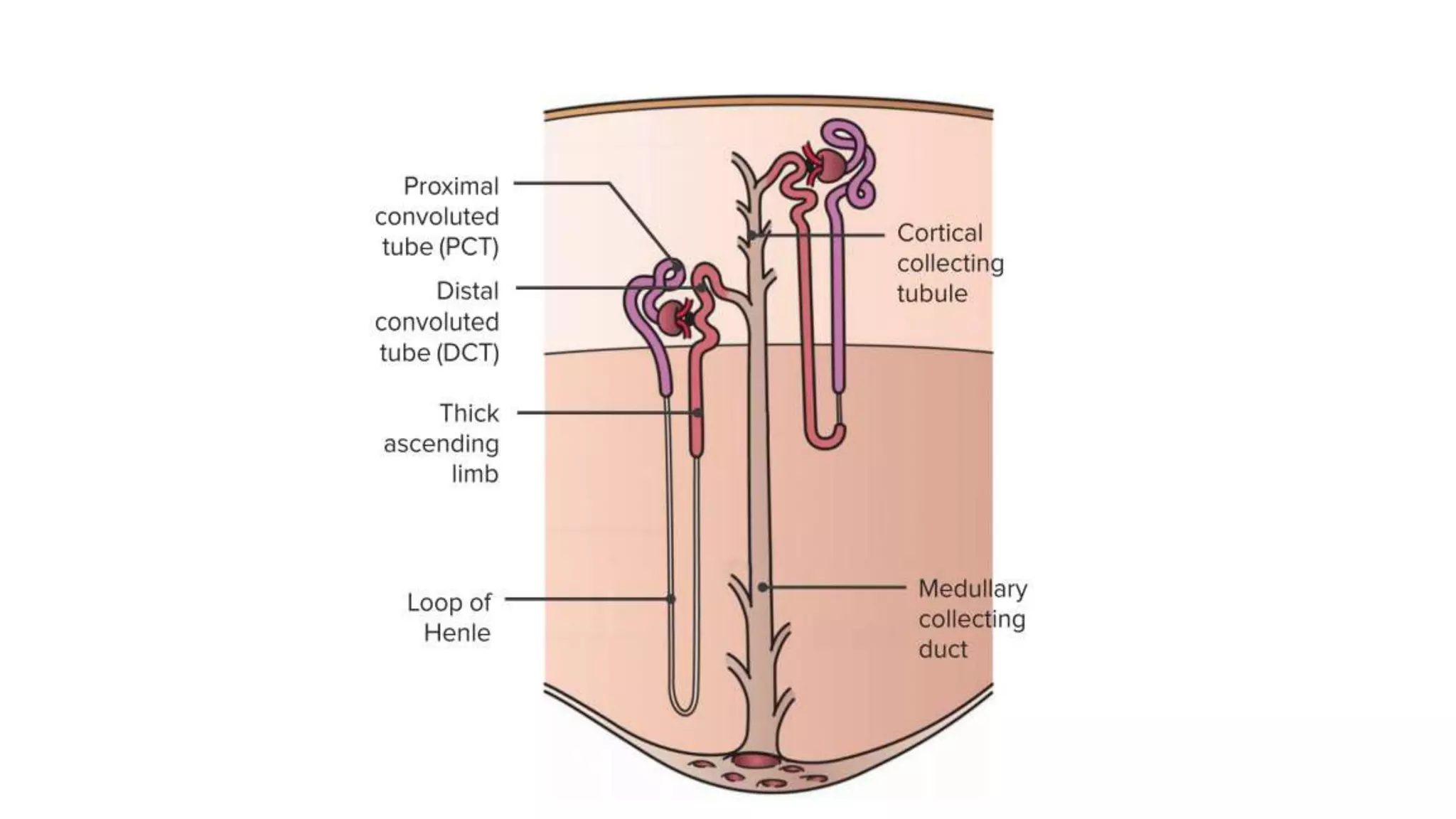
• Physiology of nephron - renal tubular function
• Mechanisms of action of particular type of diuretics
Classification of diuretics:
• Inhibitors of Na+/K+/Cl- symport (loop diuretics, high-ceilling
diuretics)
• Inhibitors of Na+/Cl- symport (thiazides and thiazide-like diuretics)
• Inhibitors of carbonic anhydrase
• Osmotic diuretics
• Inhibitors of renal epithelial Na+ channels (K+ - sparing diuretics)
• Antagonists of mineralocorticoid receptors (aldosterone antagonists,
K+ - sparing diuretics)
Presentation plan
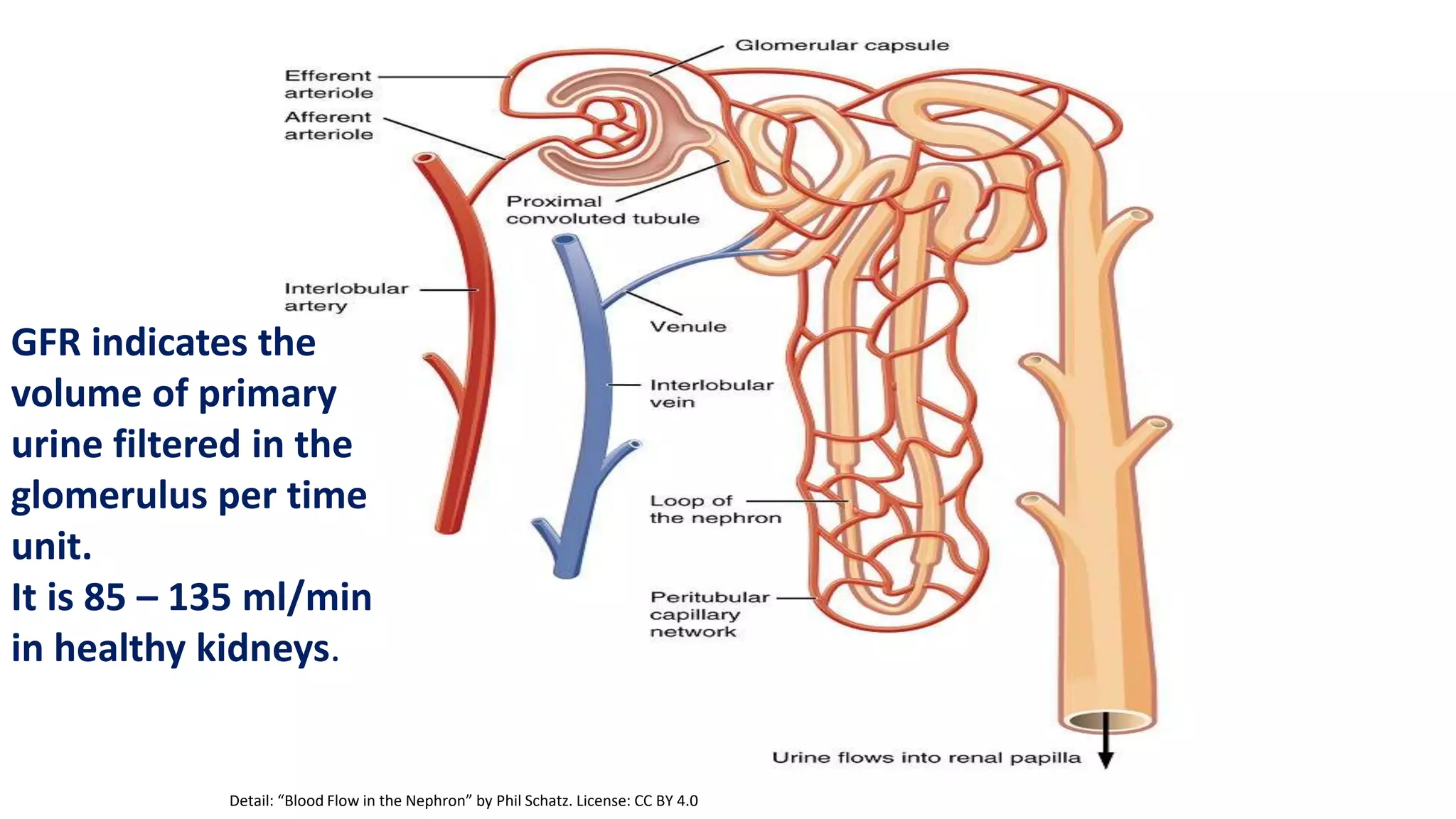
Detail: “Blood Flow in the Nephron” by Phil Schatz. License: CC BY 4.0
GFR indicates the
volume of primary
urine filtered in the
glomerulus per time
unit.
It is 85 – 135 ml/min
in healthy kidneys.
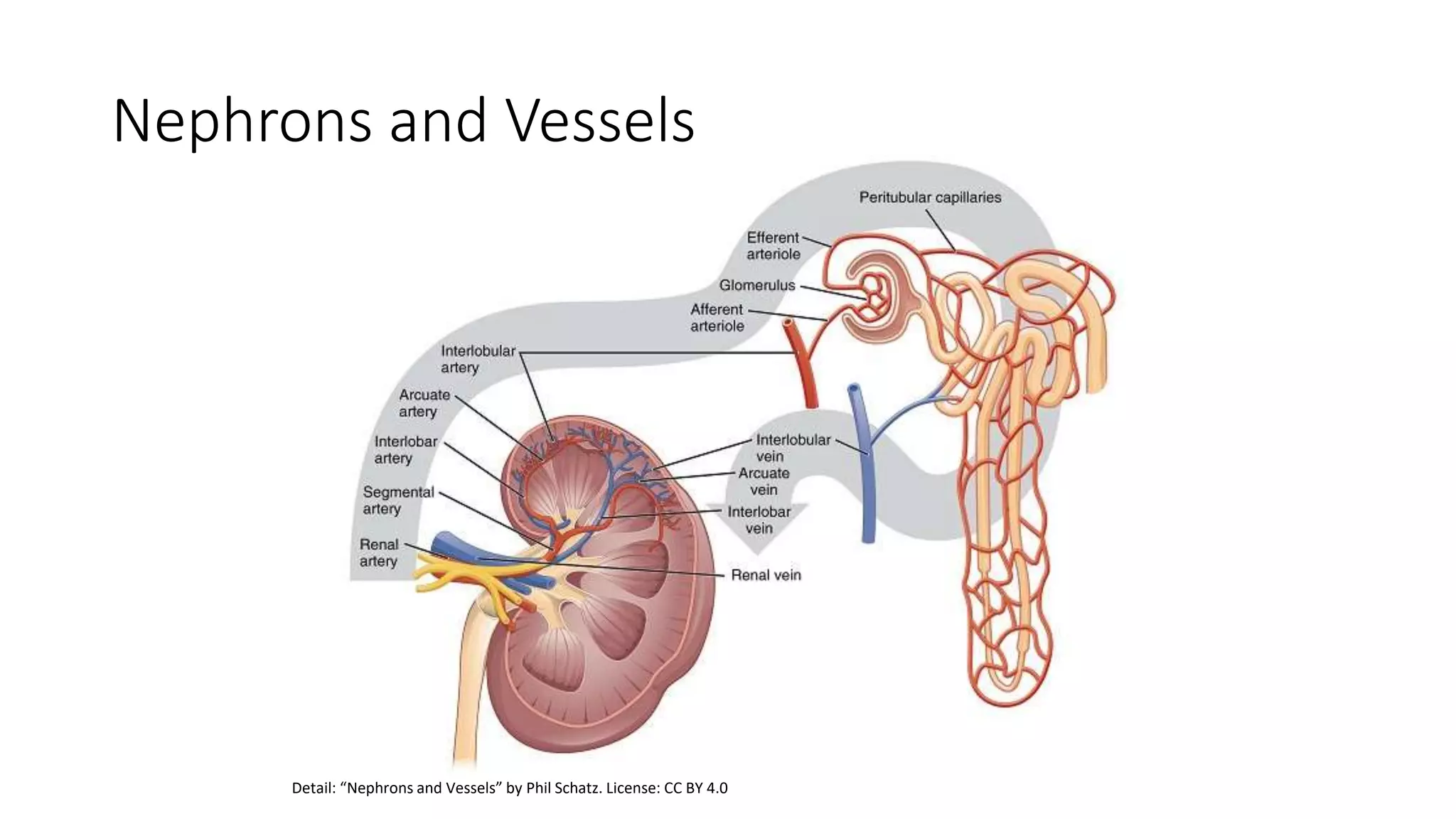
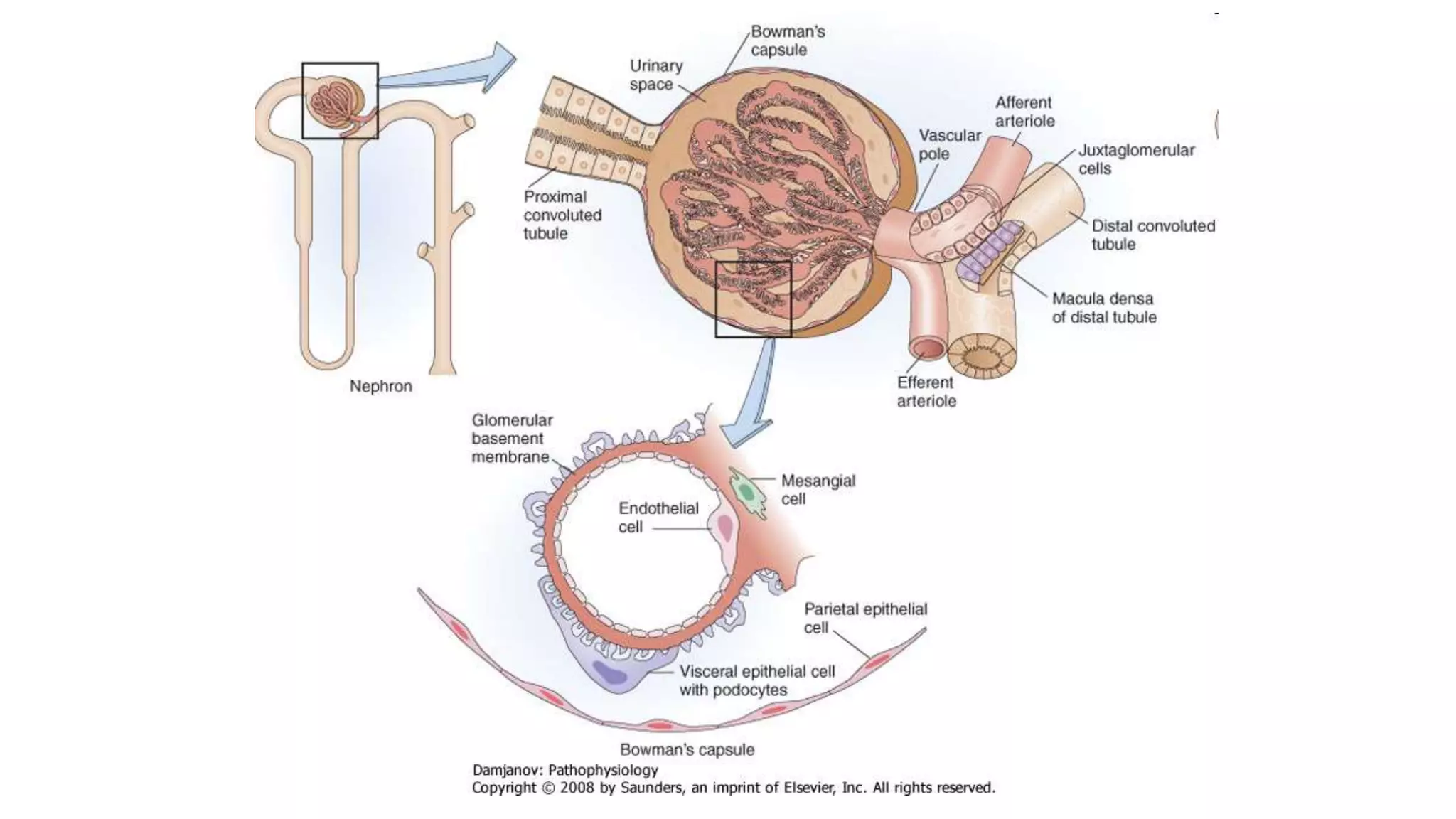
Nephrons and Vessels
Detail: “Nephrons and Vessels” by Phil Schatz. License: CC BY 4.0
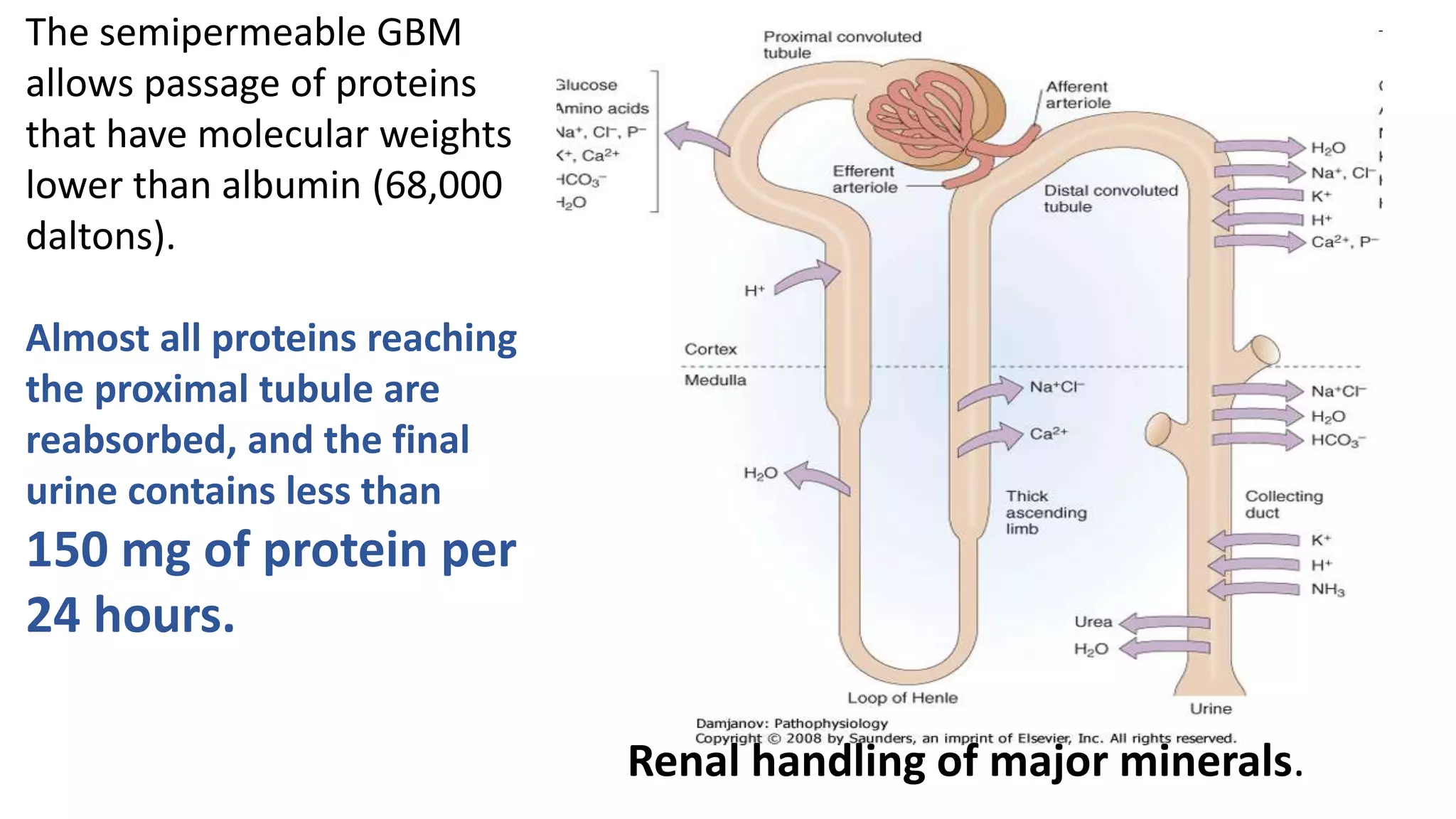
Renal handling of major minerals.
The semipermeable GBM
allows passage of proteins
that have molecular weights
lower than albumin (68,000
daltons).
Almost all proteins reaching
the proximal tubule are
reabsorbed, and the final
urine contains less than
150 mg of protein per
24 hours.
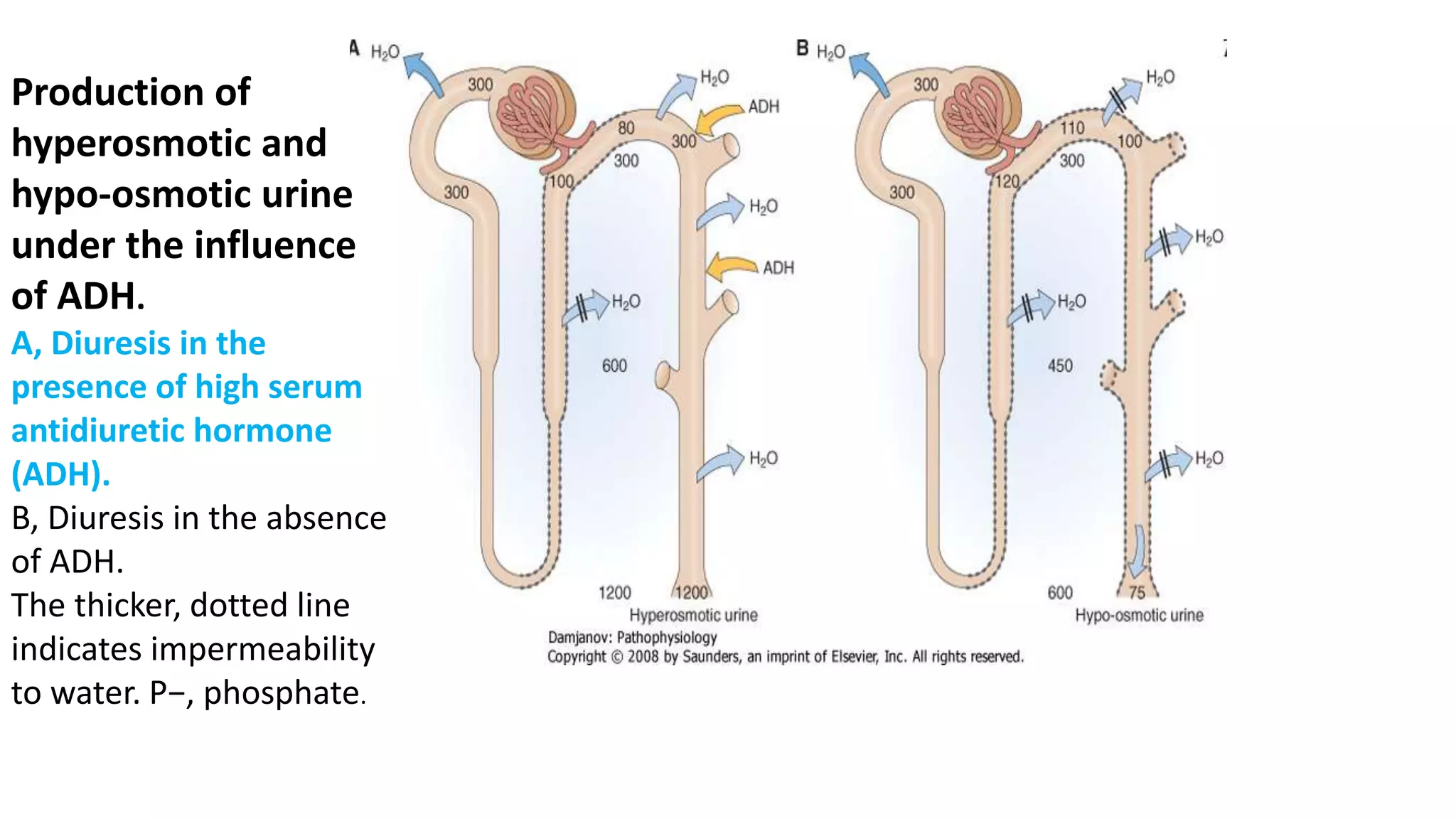
Production of
hyperosmotic and
hypo-osmotic urine
under the influence
of ADH.
A, Diuresis in the
presence of high serum
antidiuretic hormone
(ADH).
B, Diuresis in the absence
of ADH.
The thicker, dotted line
indicates impermeability
to water. P−, phosphate.
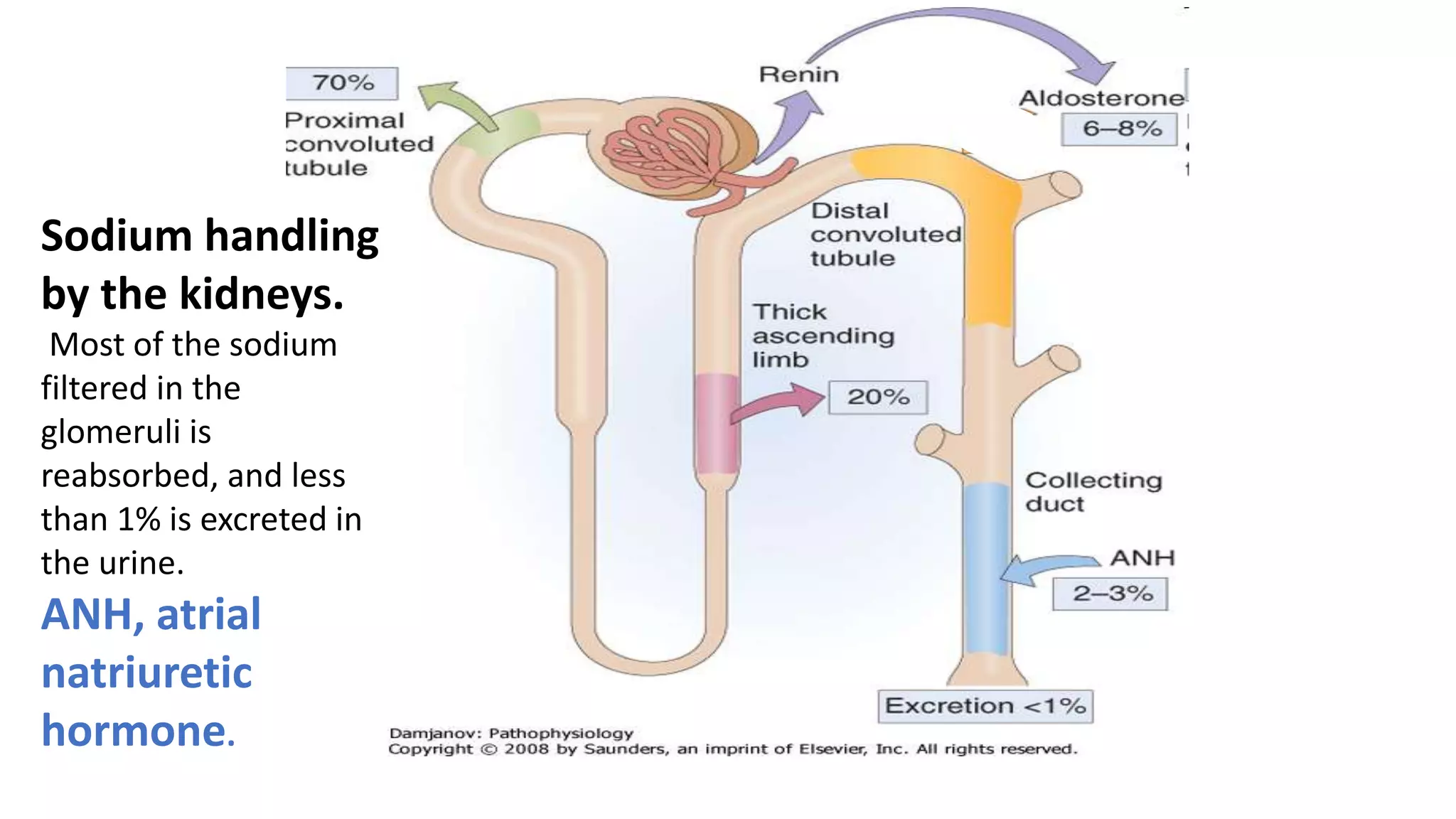
Sodium handling
by the kidneys.
Most of the sodium
filtered in the
glomeruli is
reabsorbed, and less
than 1% is excreted in
the urine.
ANH, atrial
natriuretic
hormone.
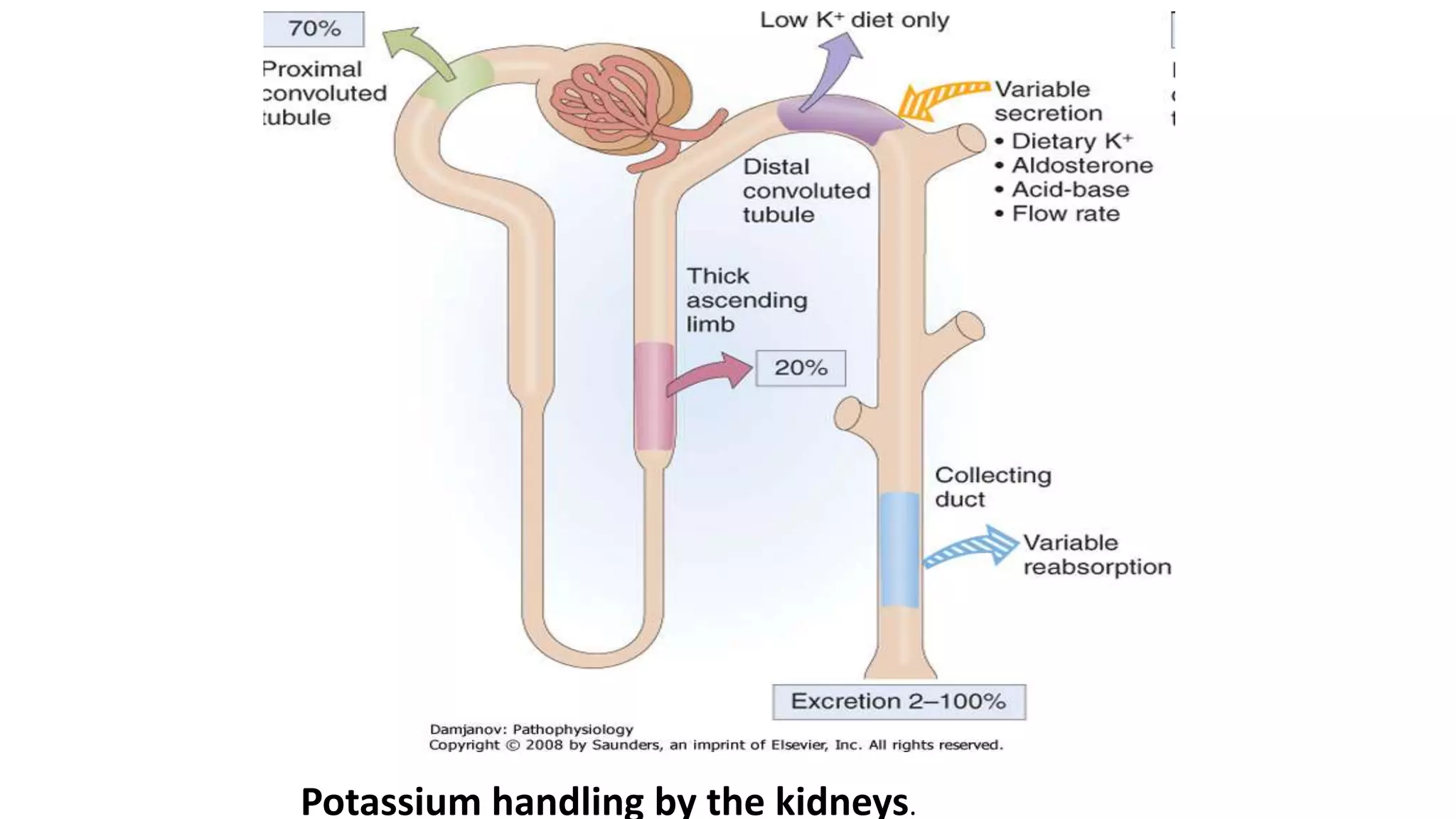
Potassium handling by the kidneys.
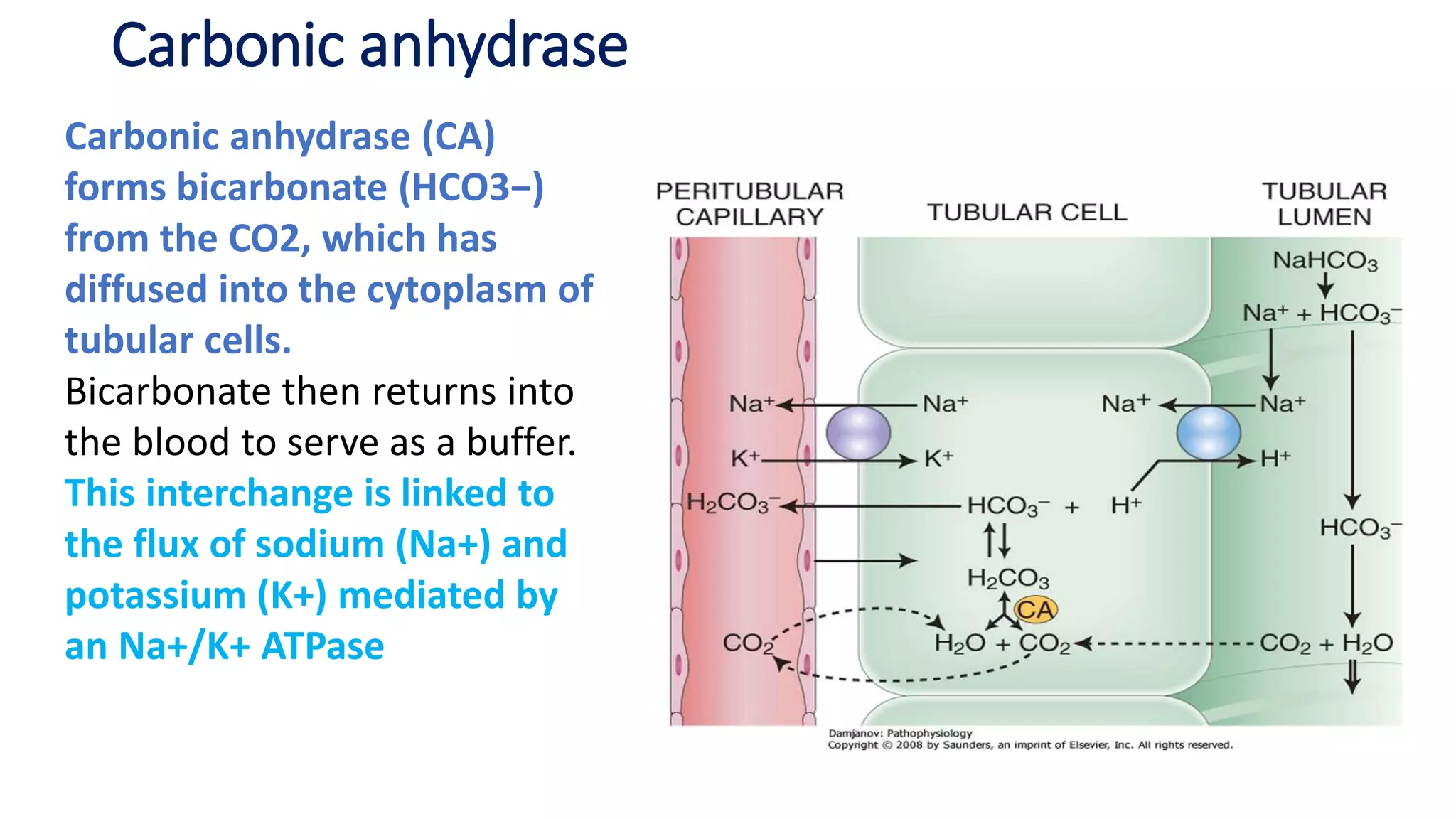
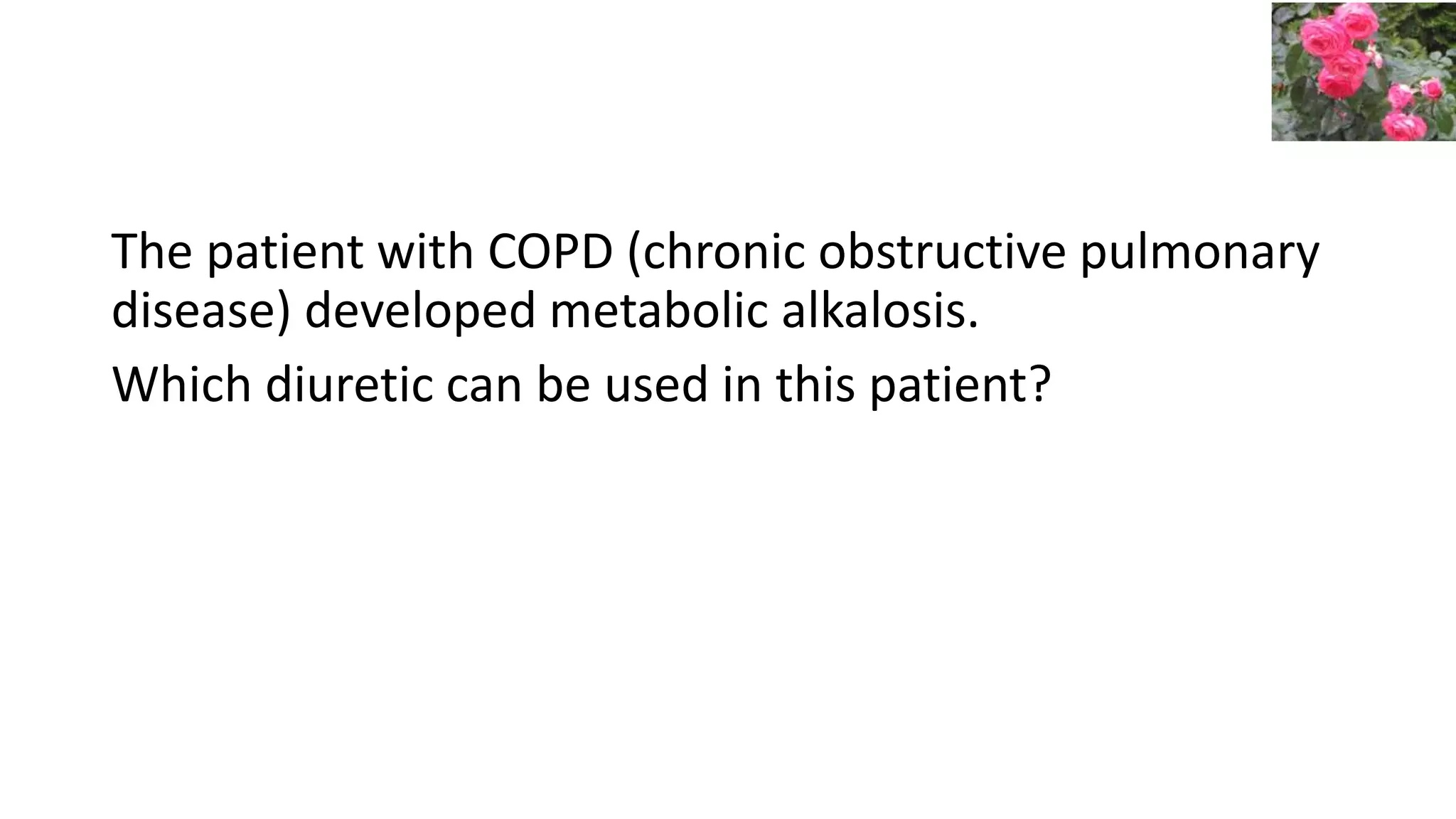
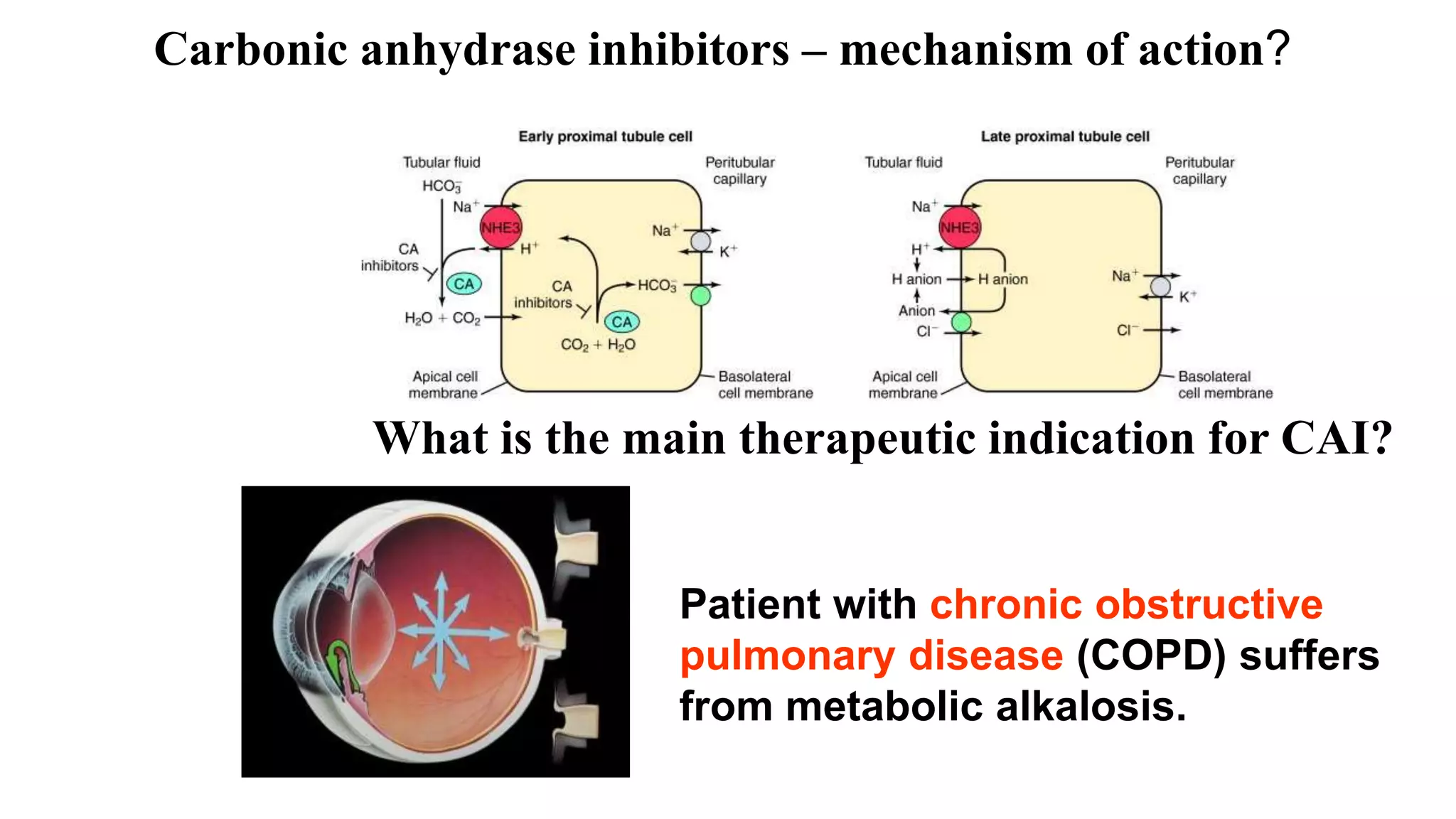
Carbonic anhydrase
Carbonic anhydrase (CA)
forms bicarbonate (HCO3−)
from the CO2, which has
diffused into the cytoplasm of
tubular cells.
Bicarbonate then returns into
the blood to serve as a buffer.
This interchange is linked to
the flux of sodium (Na+) and
potassium (K+) mediated by
an Na+/K+ ATPase
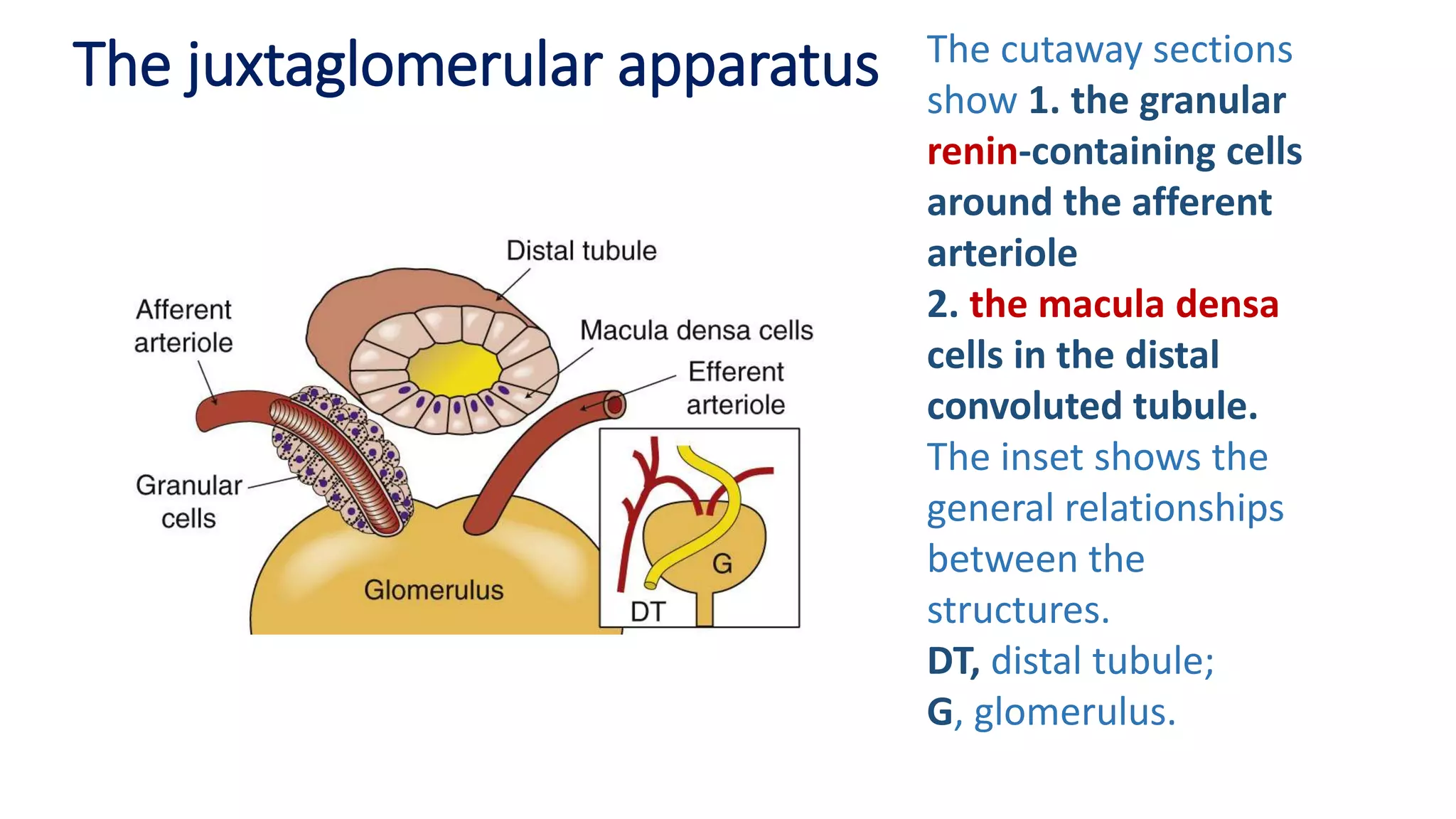
The juxtaglomerular apparatus The cutaway sections
show 1. the granular
renin-containing cells
around the afferent
arteriole
2. the macula densa
cells in the distal
convoluted tubule.
The inset shows the
general relationships
between the
structures.
DT, distal tubule;
G, glomerulus.
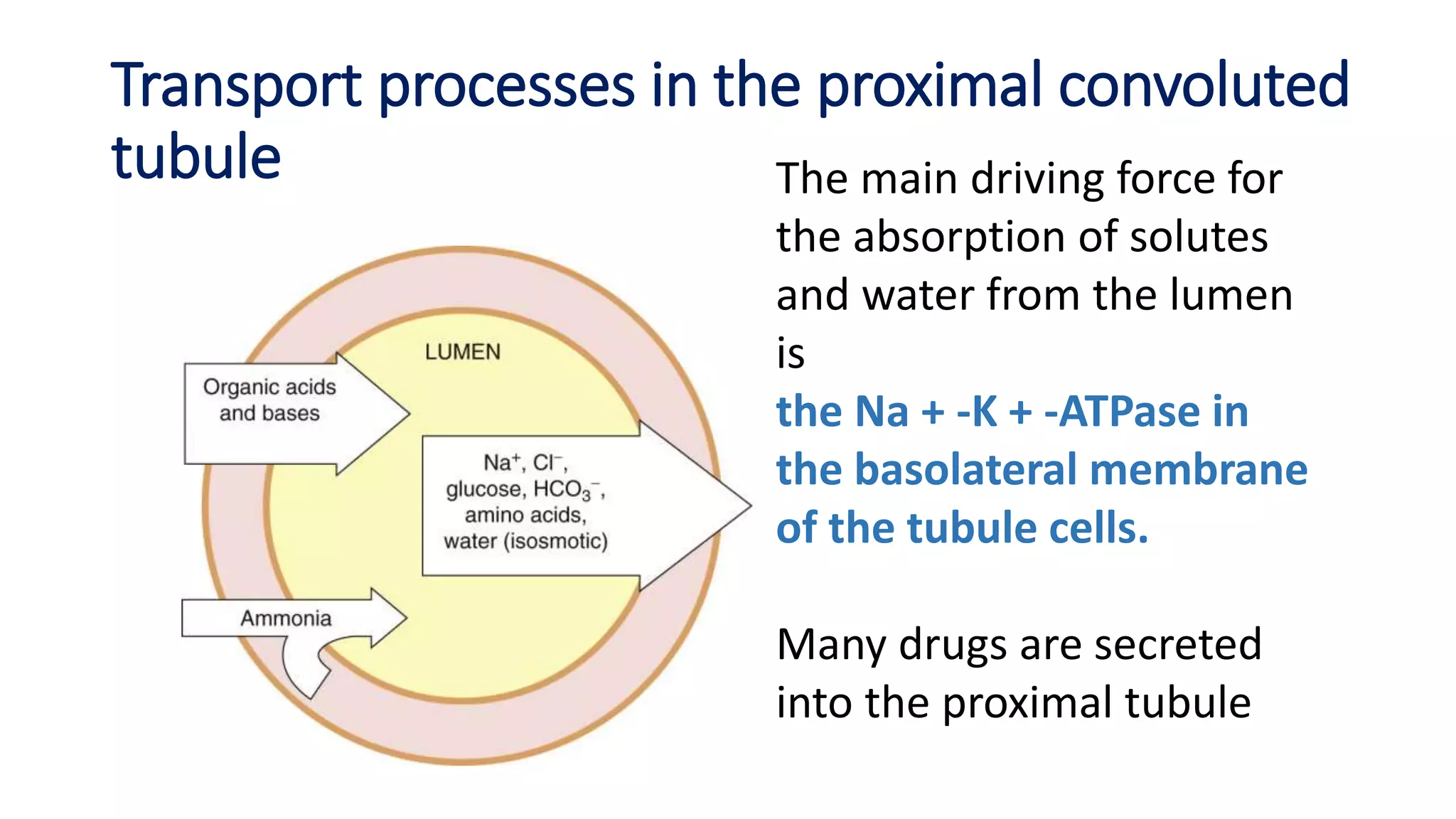
Transport processes in the proximal convoluted
tubule The main driving force for
the absorption of solutes
and water from the lumen
is
the Na + -K + -ATPase in
the basolateral membrane
of the tubule cells.
Many drugs are secreted
into the proximal tubule
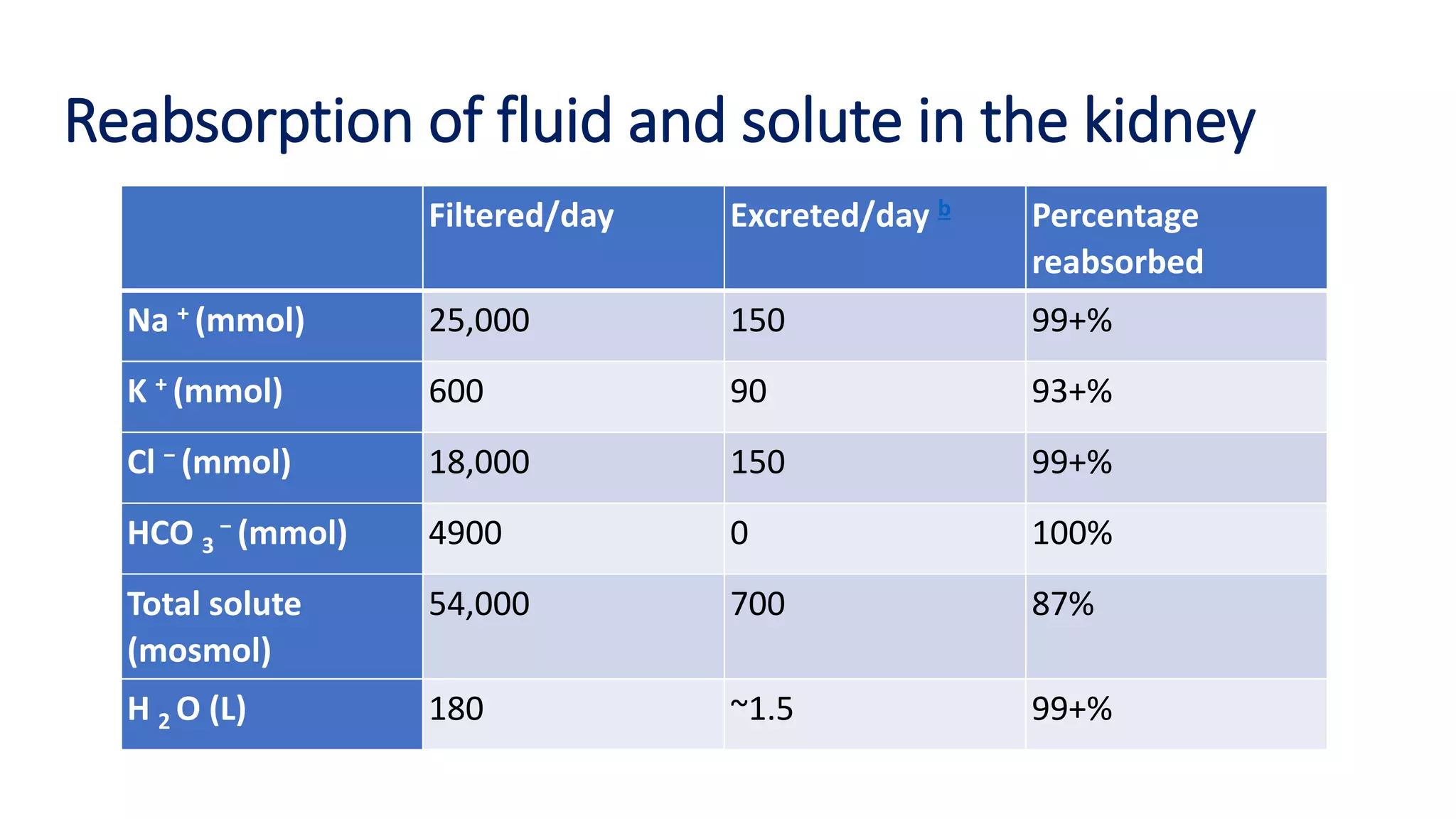
Reabsorption of fluid and solute in the kidney
Filtered/day Excreted/day b Percentage
reabsorbed
Na + (mmol) 25,000 150 99+%
K + (mmol) 600 90 93+%
Cl − (mmol) 18,000 150 99+%
HCO 3
− (mmol) 4900 0 100%
Total solute
(mosmol)
54,000 700 87%
H 2 O (L) 180 ~1.5 99+%
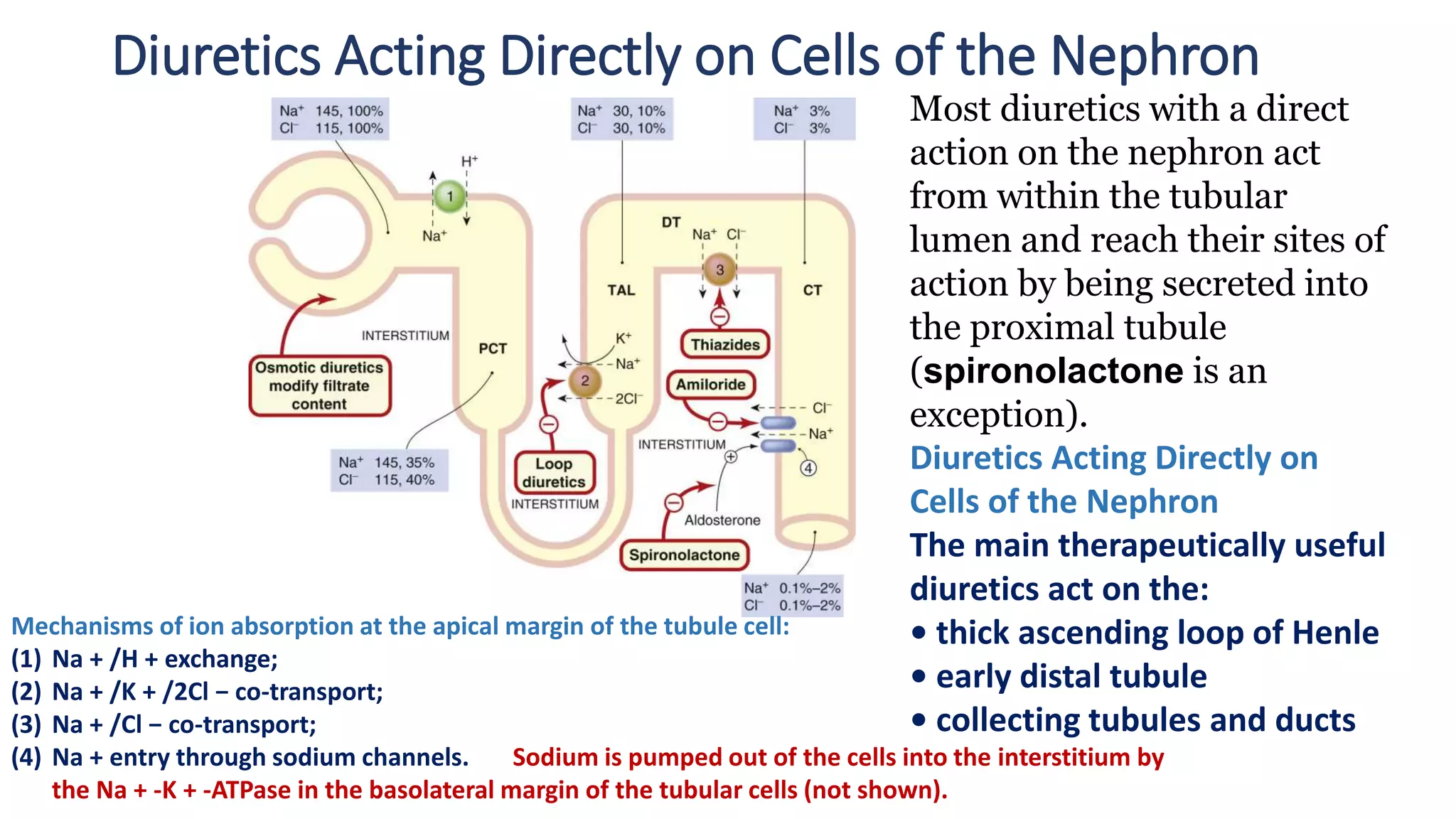
Diuretics Acting Directly on Cells of the Nephron
Most diuretics with a direct
action on the nephron act
from within the tubular
lumen and reach their sites of
action by being secreted into
the proximal tubule
(spironolactone is an
exception).
Diuretics Acting Directly on
Cells of the Nephron
The main therapeutically useful
diuretics act on the:
• thick ascending loop of Henle
• early distal tubule
• collecting tubules and ducts
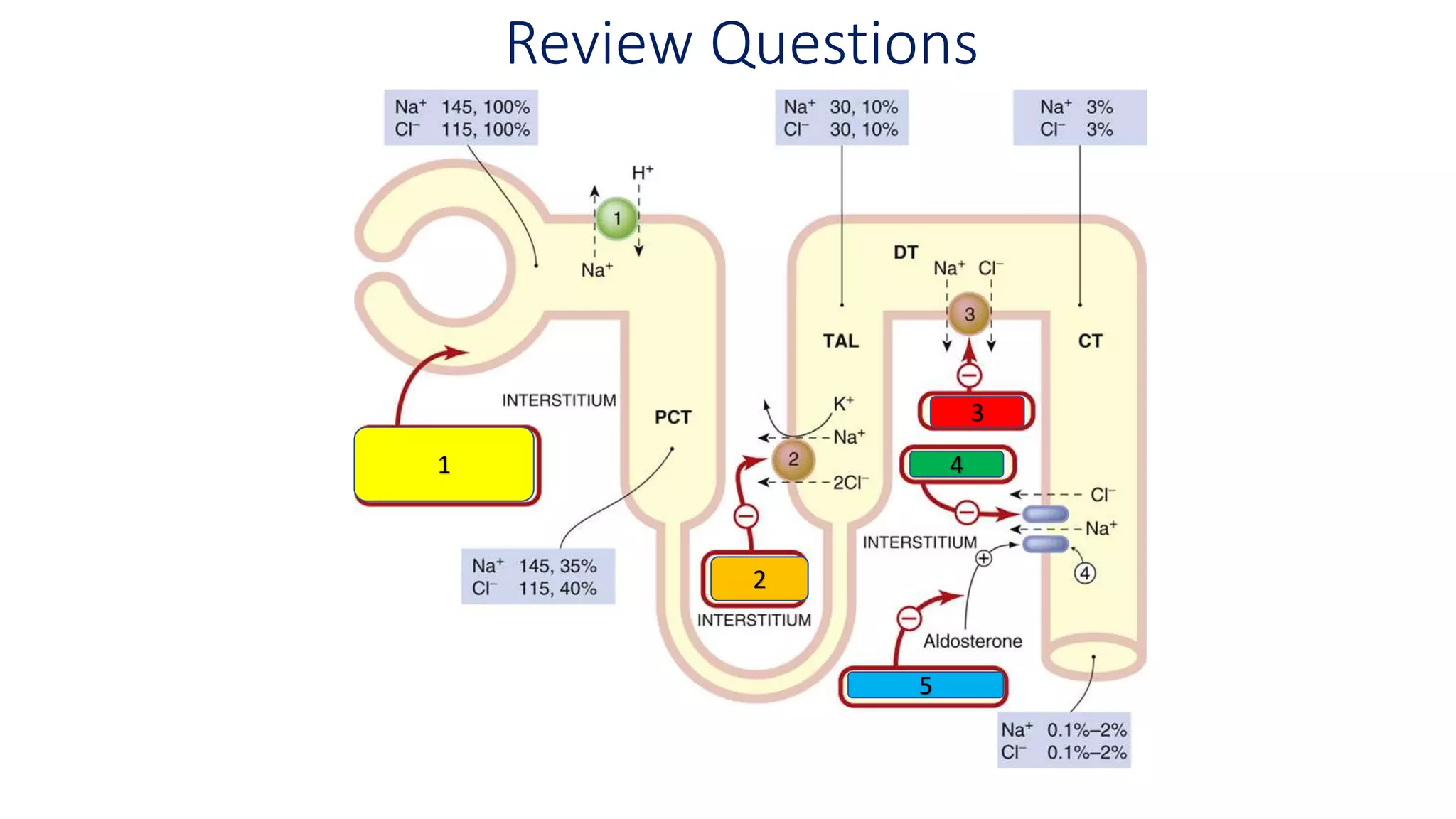
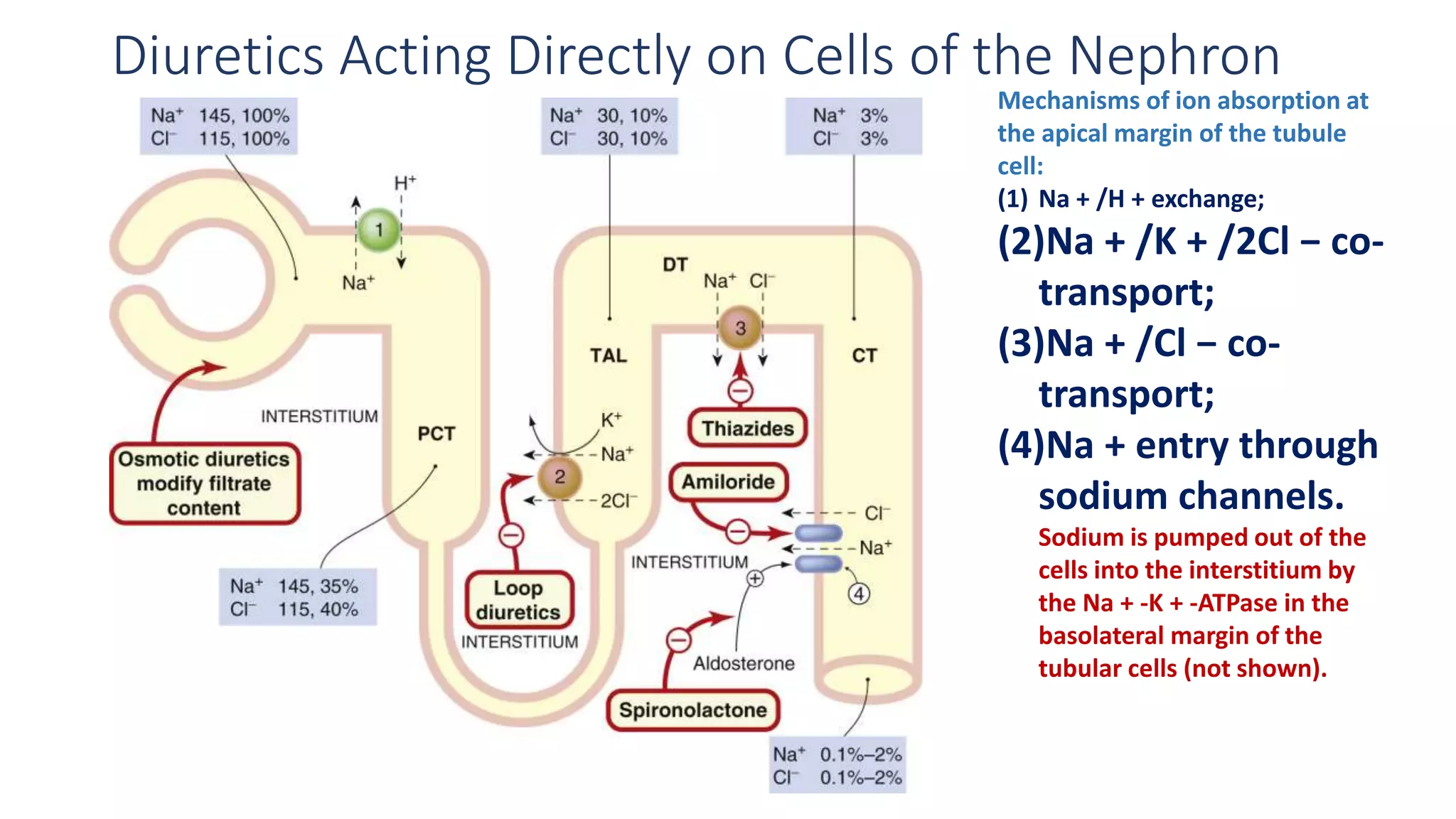
Mechanisms of ion absorption at the apical margin of the tubule cell:
(1) Na + /H + exchange;
(2) Na + /K + /2Cl − co-transport;
(3) Na + /Cl − co-transport;
(4) Na + entry through sodium channels. Sodium is pumped out of the cells into the interstitium by
the Na + -K + -ATPase in the basolateral margin of the tubular cells (not shown).
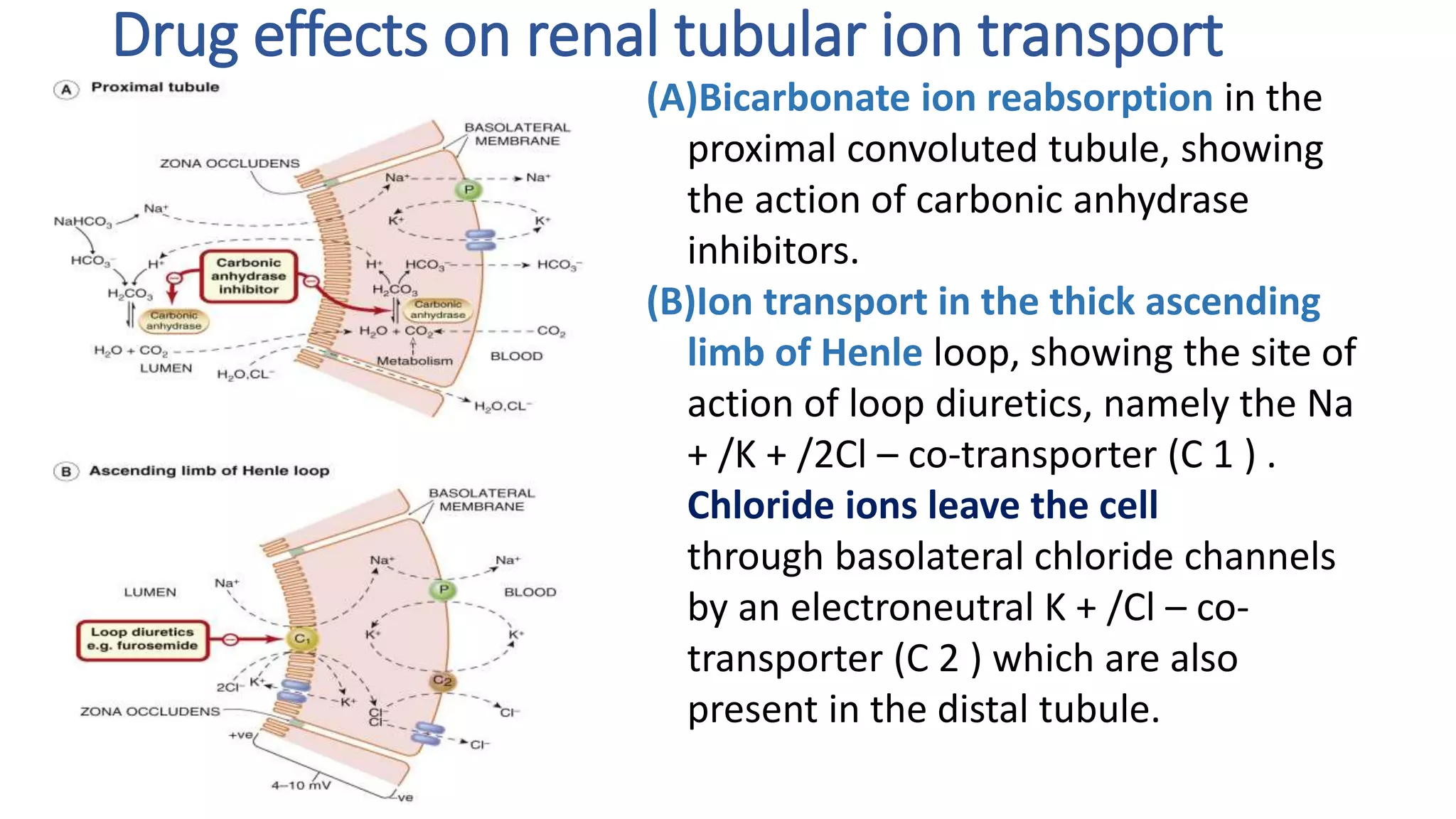
Drug effects on renal tubular ion transport
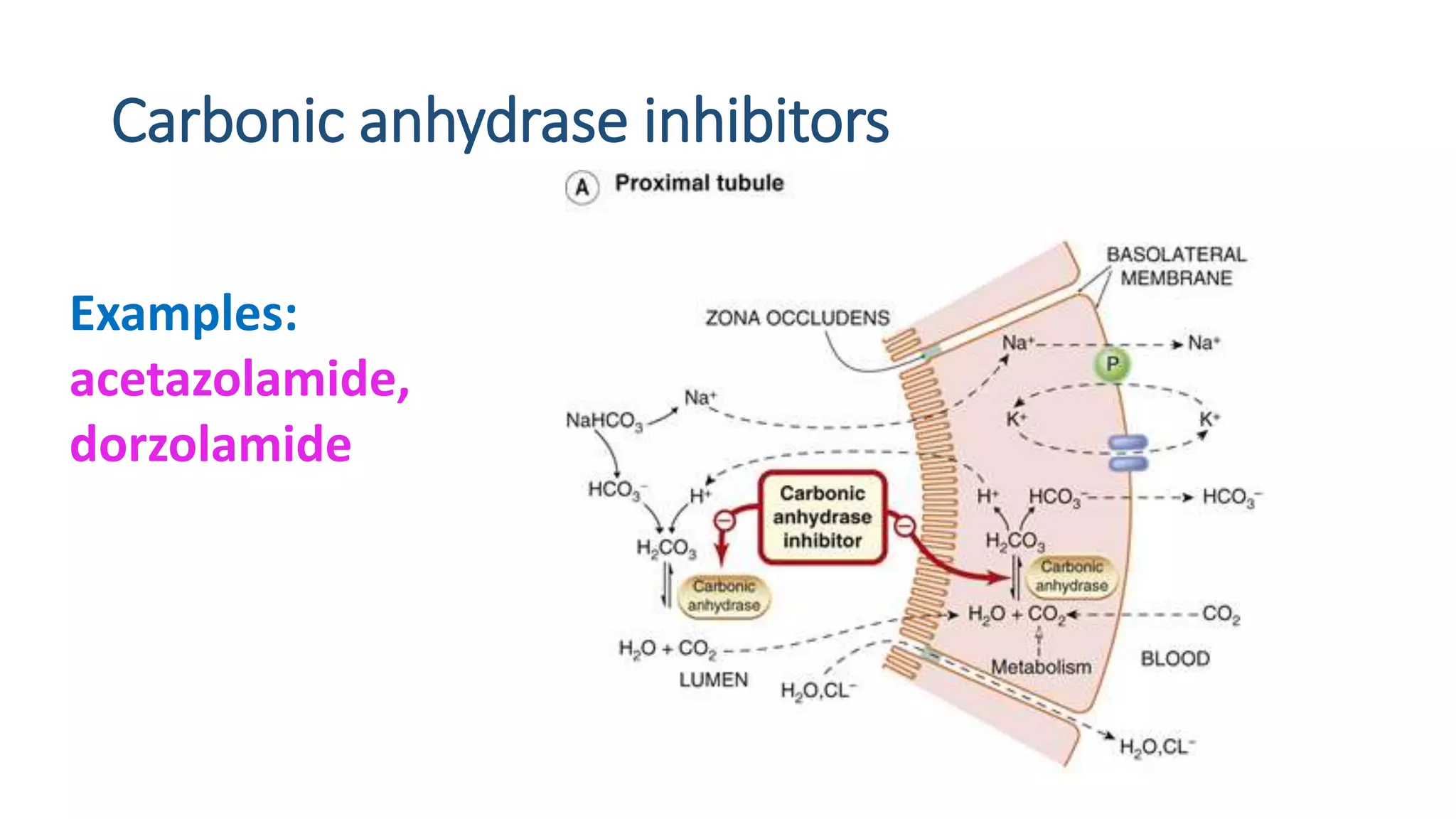
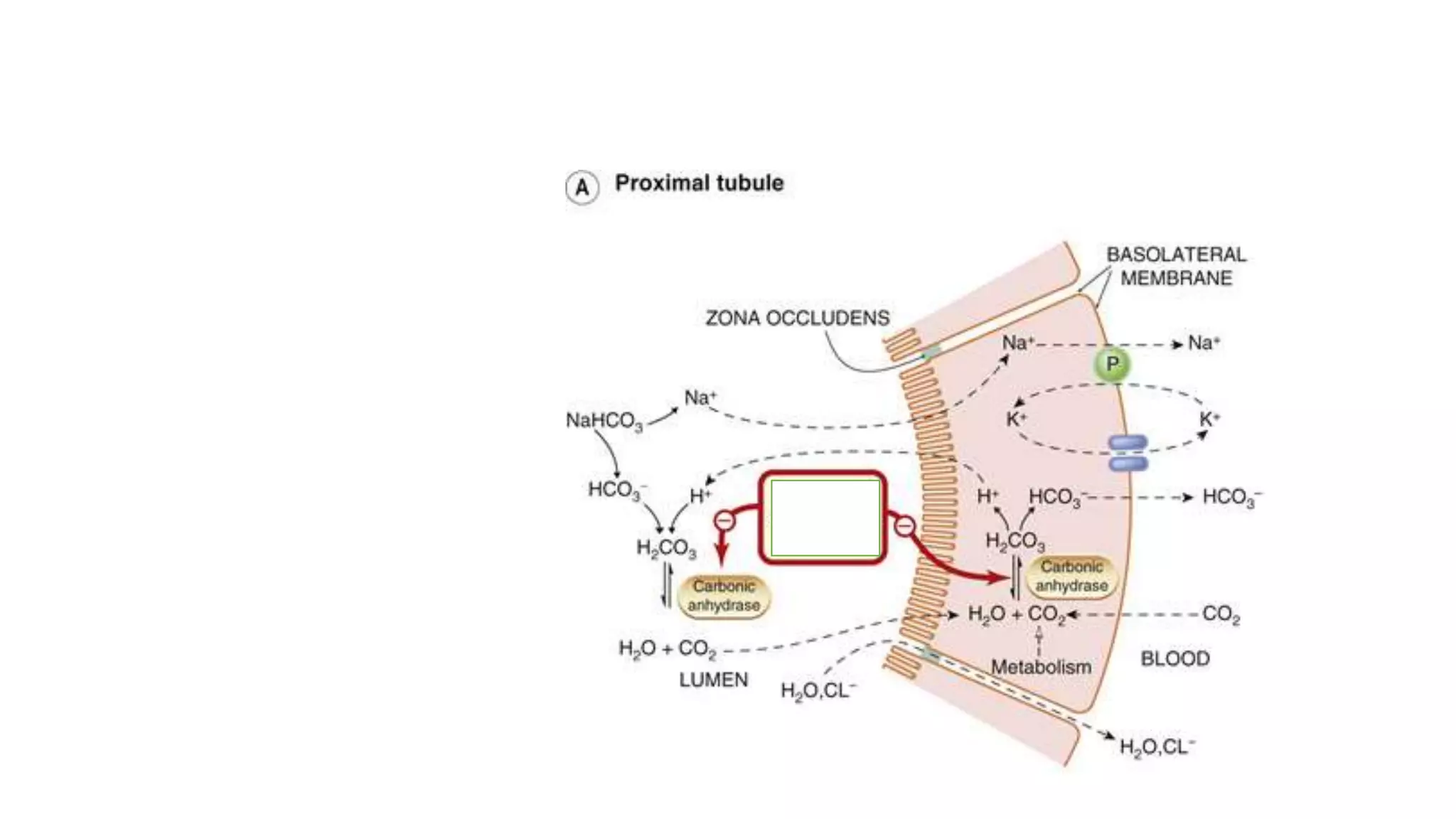
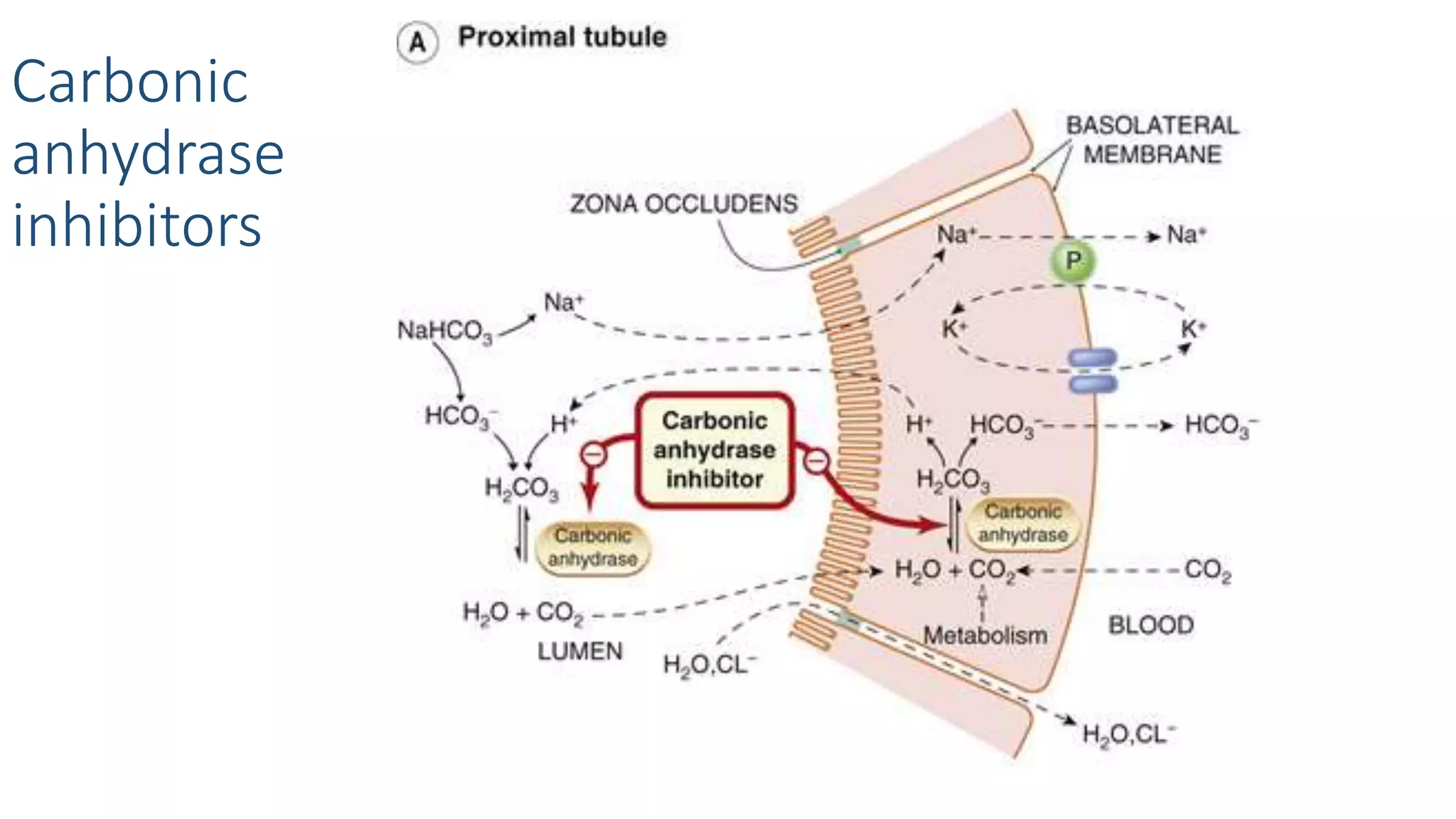
(A)Bicarbonate ion reabsorption in the
proximal convoluted tubule, showing
the action of carbonic anhydrase
inhibitors.
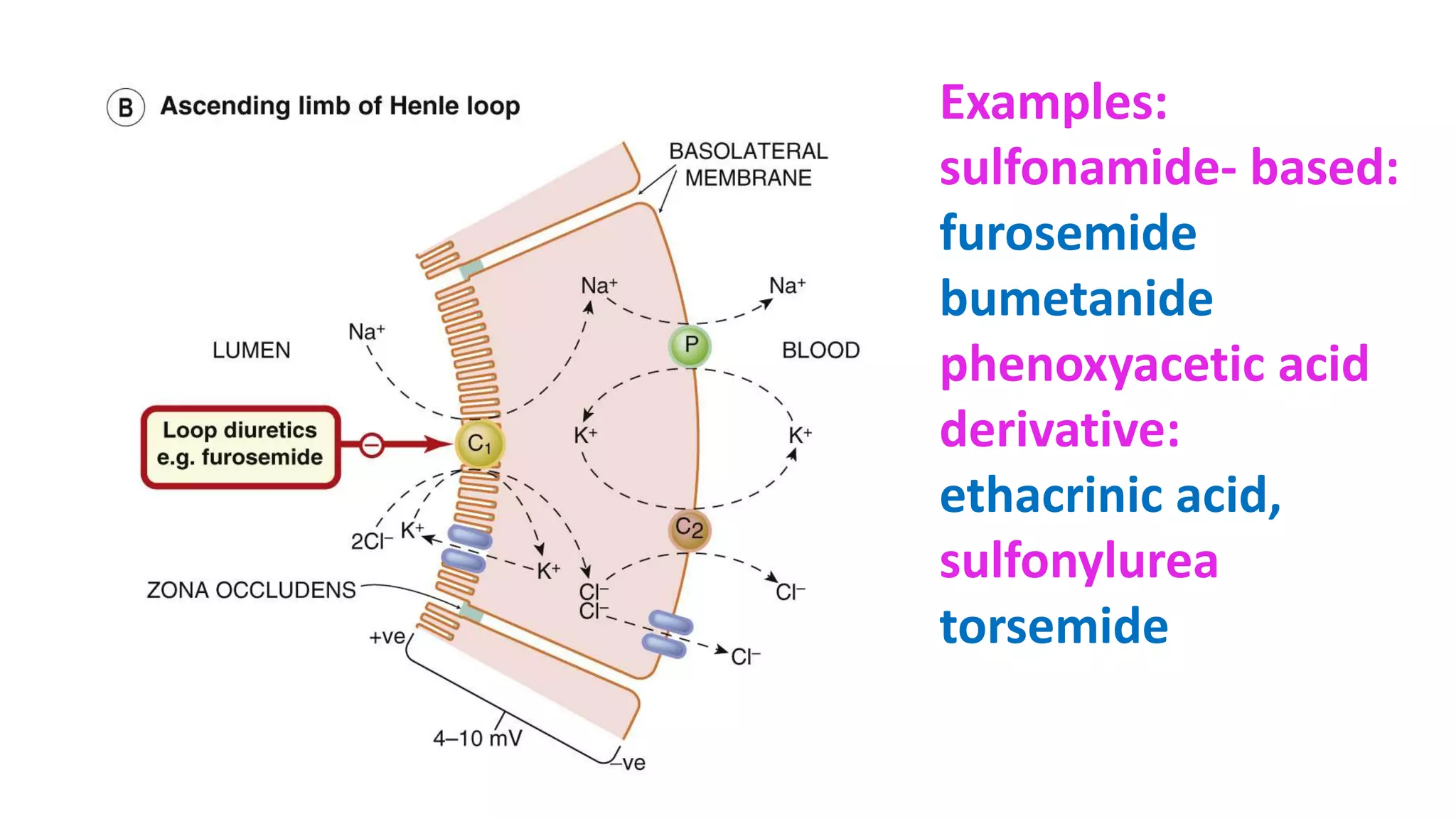
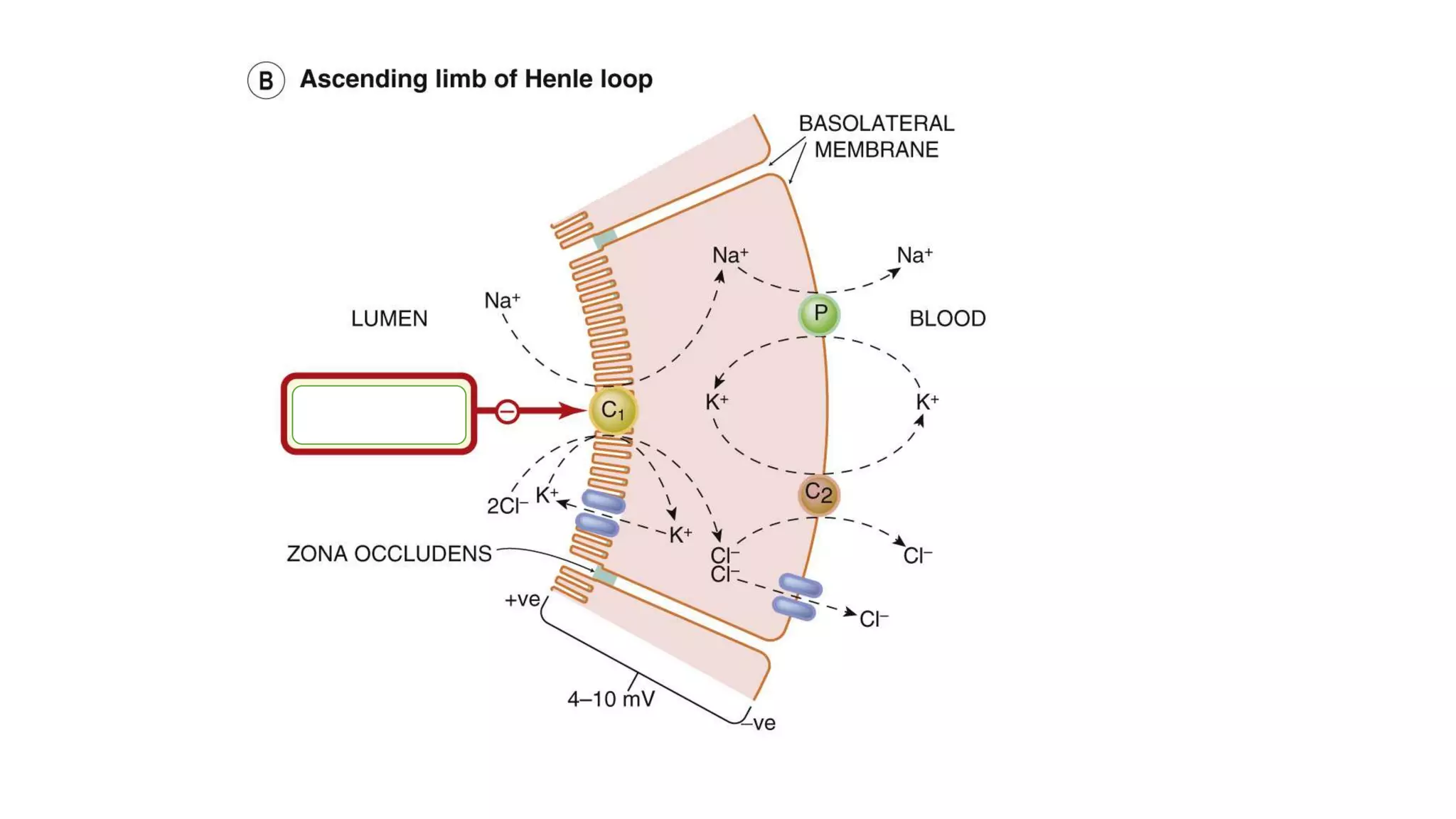
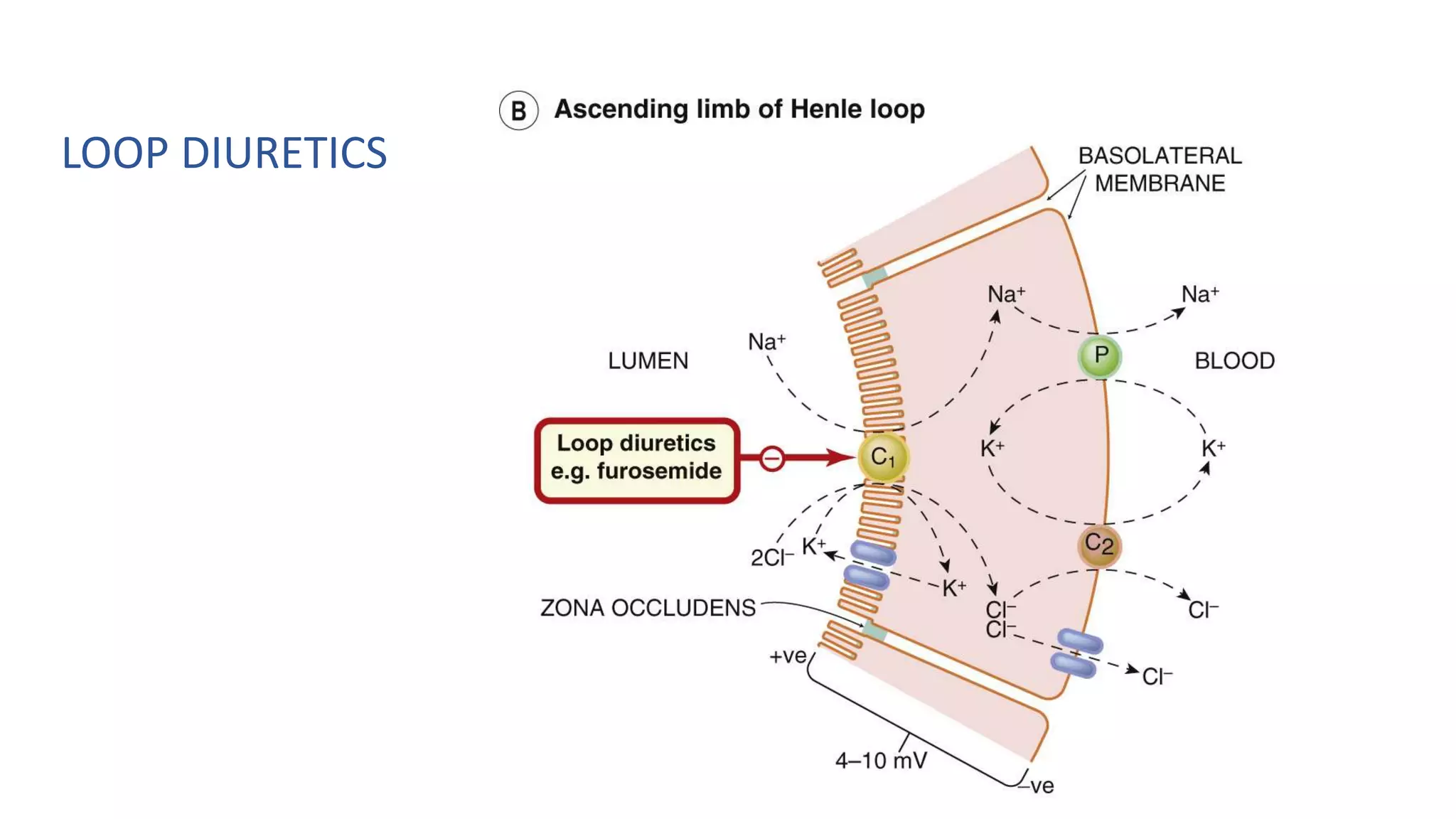
(B)Ion transport in the thick ascending
limb of Henle loop, showing the site of
action of loop diuretics, namely the Na
+ /K + /2Cl – co-transporter (C 1 ) .
Chloride ions leave the cell
through basolateral chloride channels
by an electroneutral K + /Cl – co-
transporter (C 2 ) which are also
present in the distal tubule.
Drug effects on renal tubular ion transport
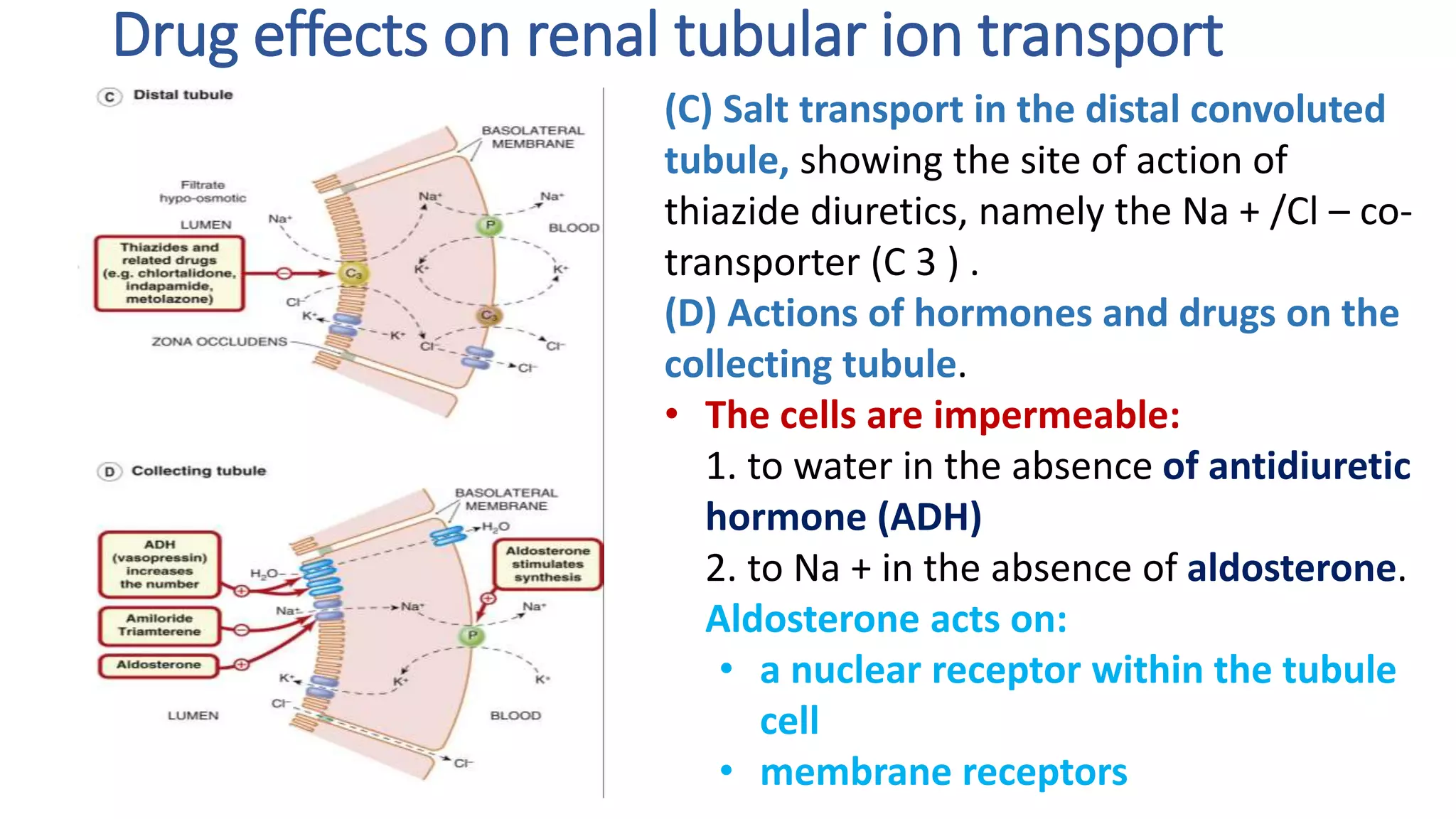
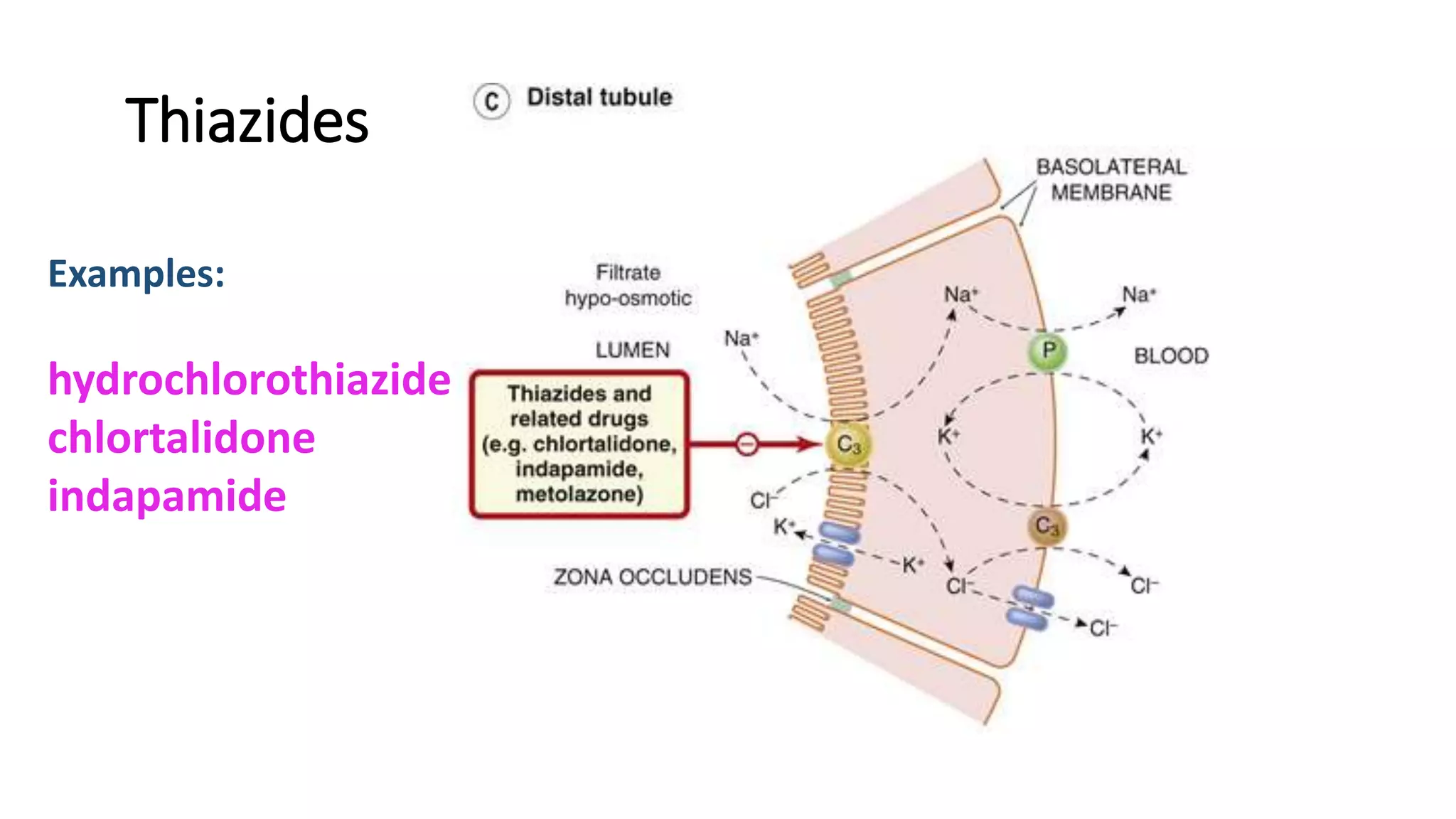
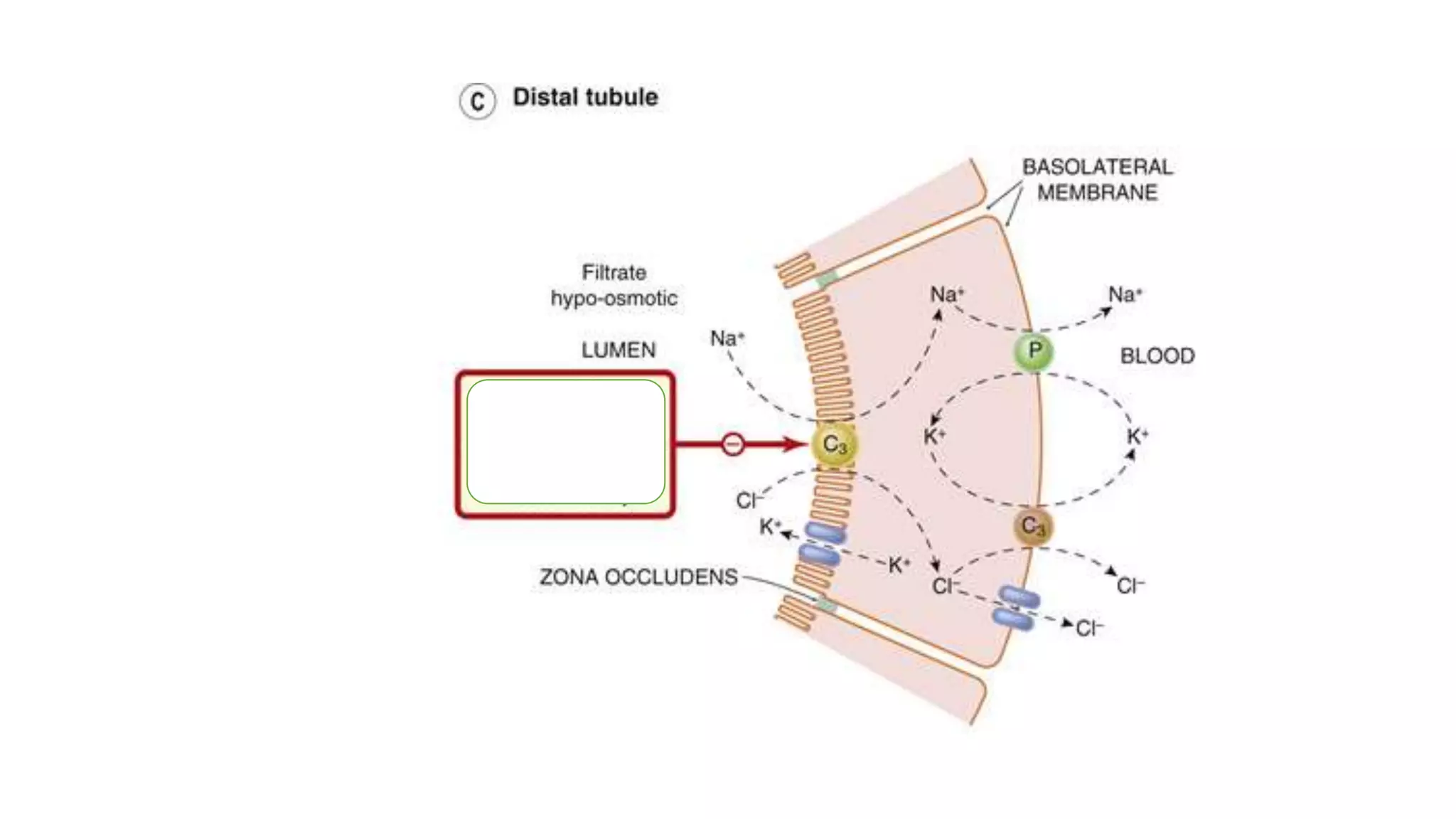
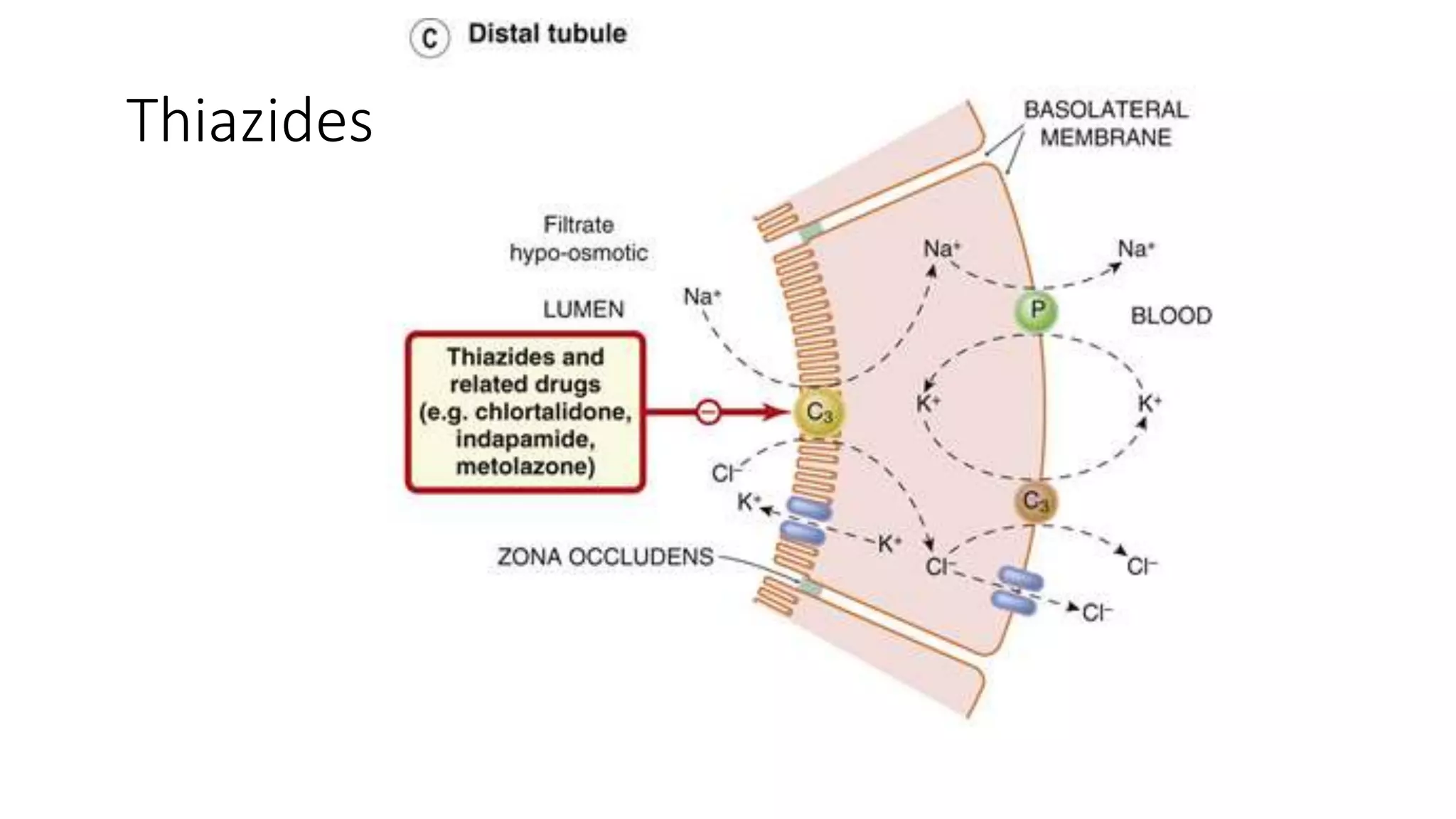
(C) Salt transport in the distal convoluted
tubule, showing the site of action of
thiazide diuretics, namely the Na + /Cl – co-
transporter (C 3 ) .
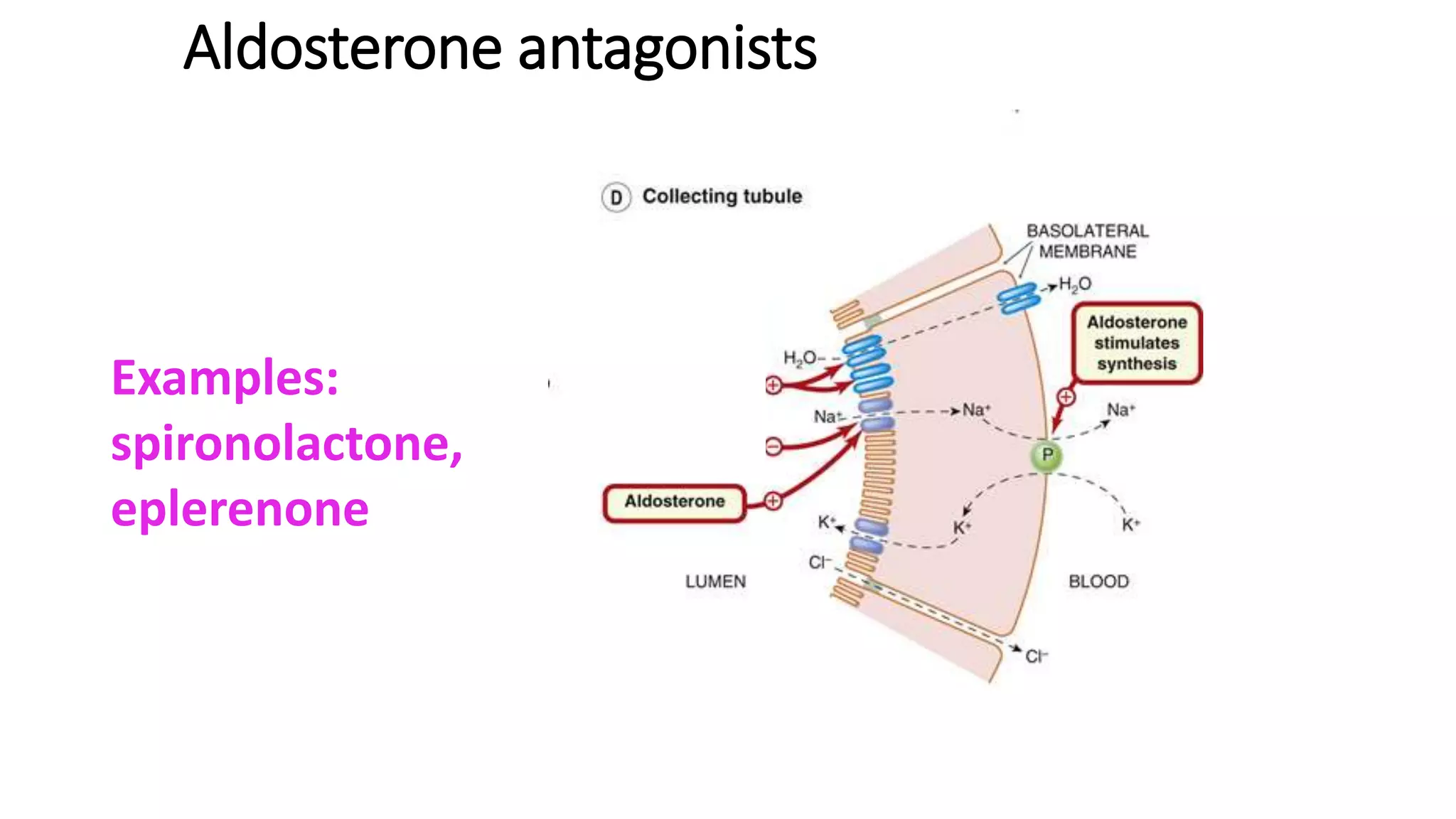
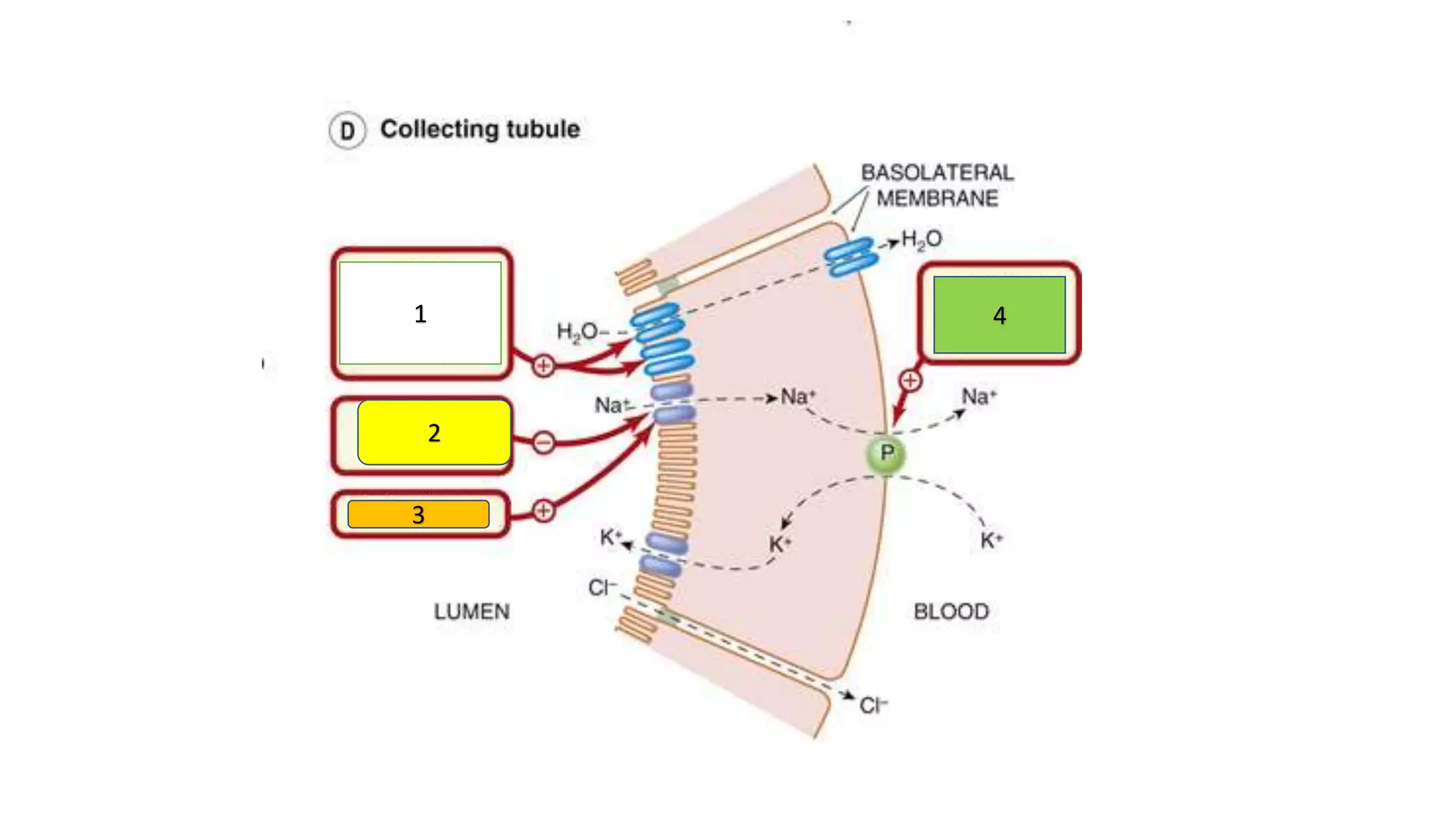
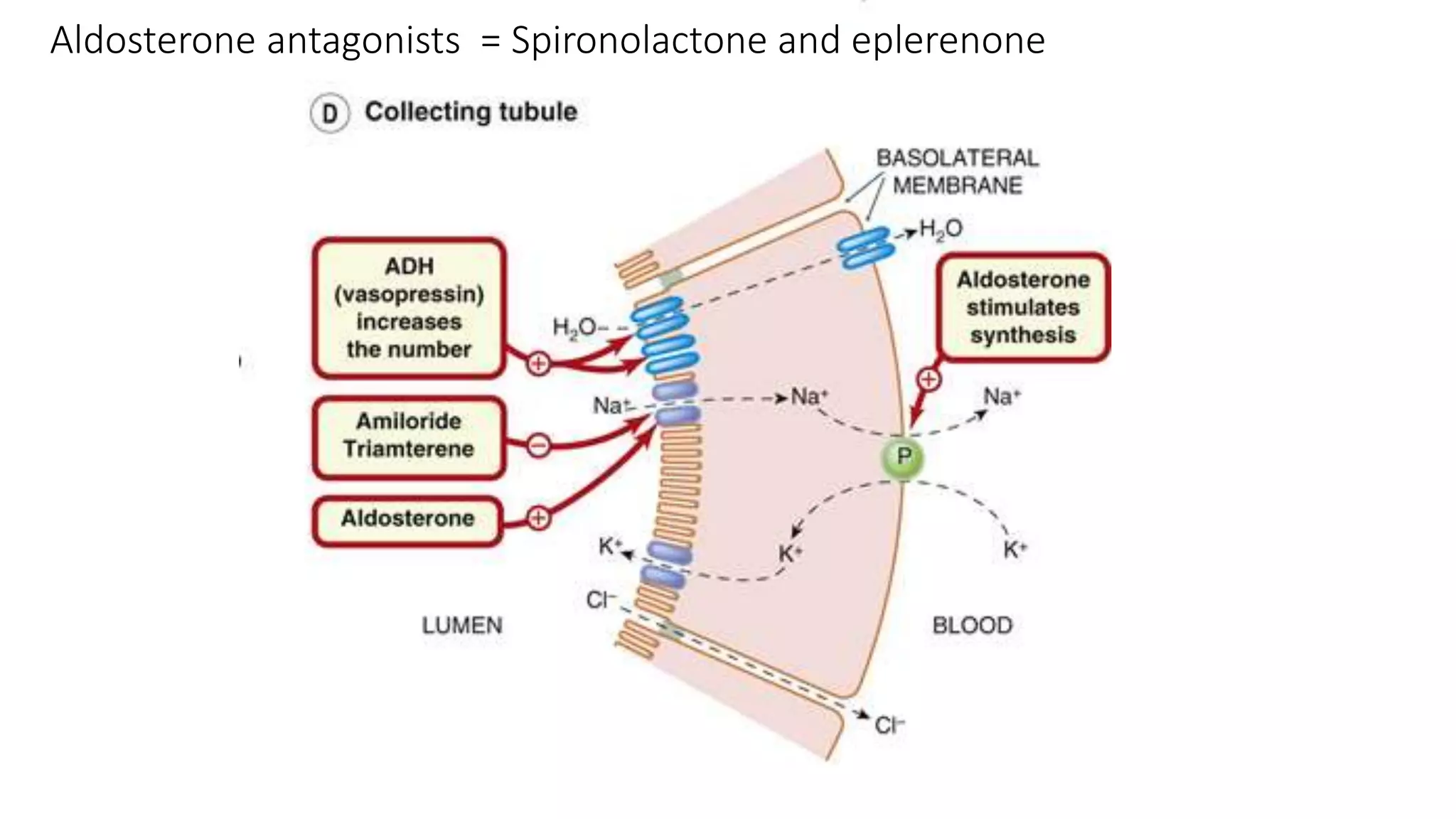
(D) Actions of hormones and drugs on the
collecting tubule.
• The cells are impermeable:
1. to water in the absence of antidiuretic
hormone (ADH)
2. to Na + in the absence of aldosterone.
Aldosterone acts on:
• a nuclear receptor within the tubule
cell
• membrane receptors
Diuretic X causes:
•Hyponatriemia, hypokaliemia
Hypokaliemia
Hypokalemia manifests as
• severe cardiac arrhythmias (e.g.
torsade de pointes),
• skeletal muscle weakness,
• constipation, and even intestinal
paralysis,
• urinary retention (due to
weakening of the bladder muscles)
• neurological disorders
(paraesthesia, nervous
hyperactivity or apathy)
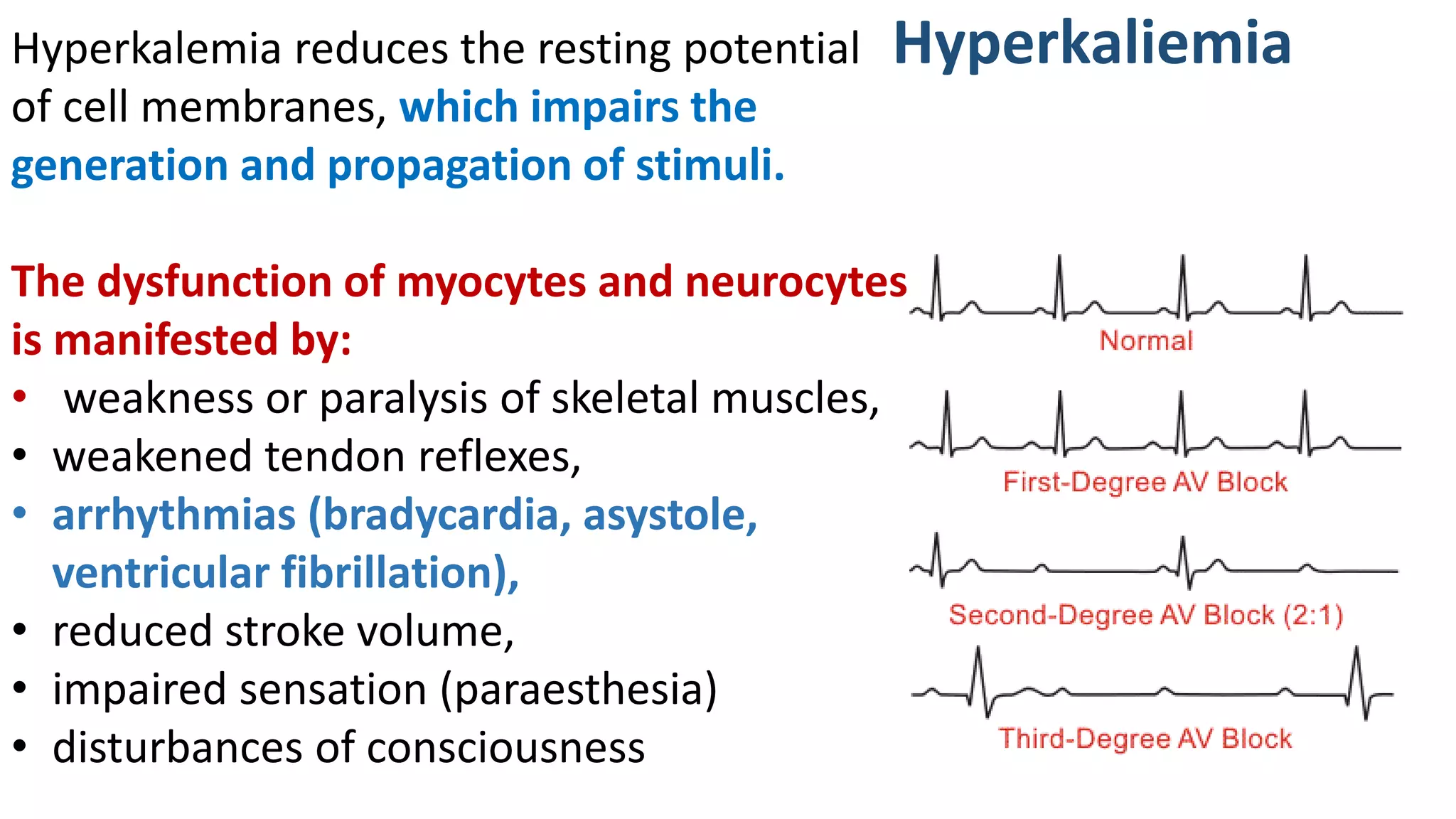
Hyperkaliemia
Hyperkalemia reduces the resting potential
of cell membranes, which impairs the
generation and propagation of stimuli.
The dysfunction of myocytes and neurocytes
is manifested by:
• weakness or paralysis of skeletal muscles,
• weakened tendon reflexes,
• arrhythmias (bradycardia, asystole,
ventricular fibrillation),
• reduced stroke volume,
• impaired sensation (paraesthesia)
• disturbances of consciousness
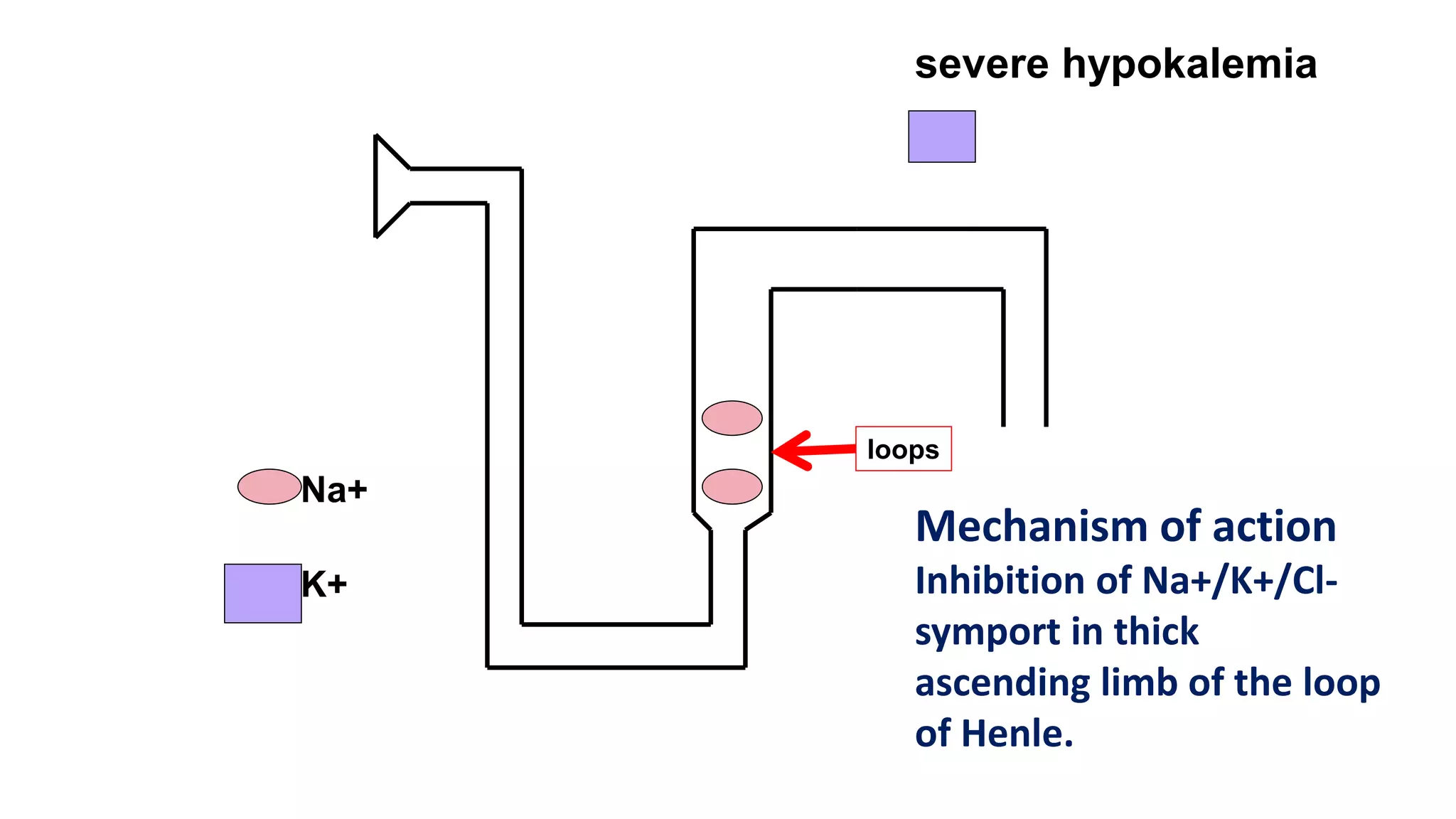
Na+
K+
loops
severe hypokalemia
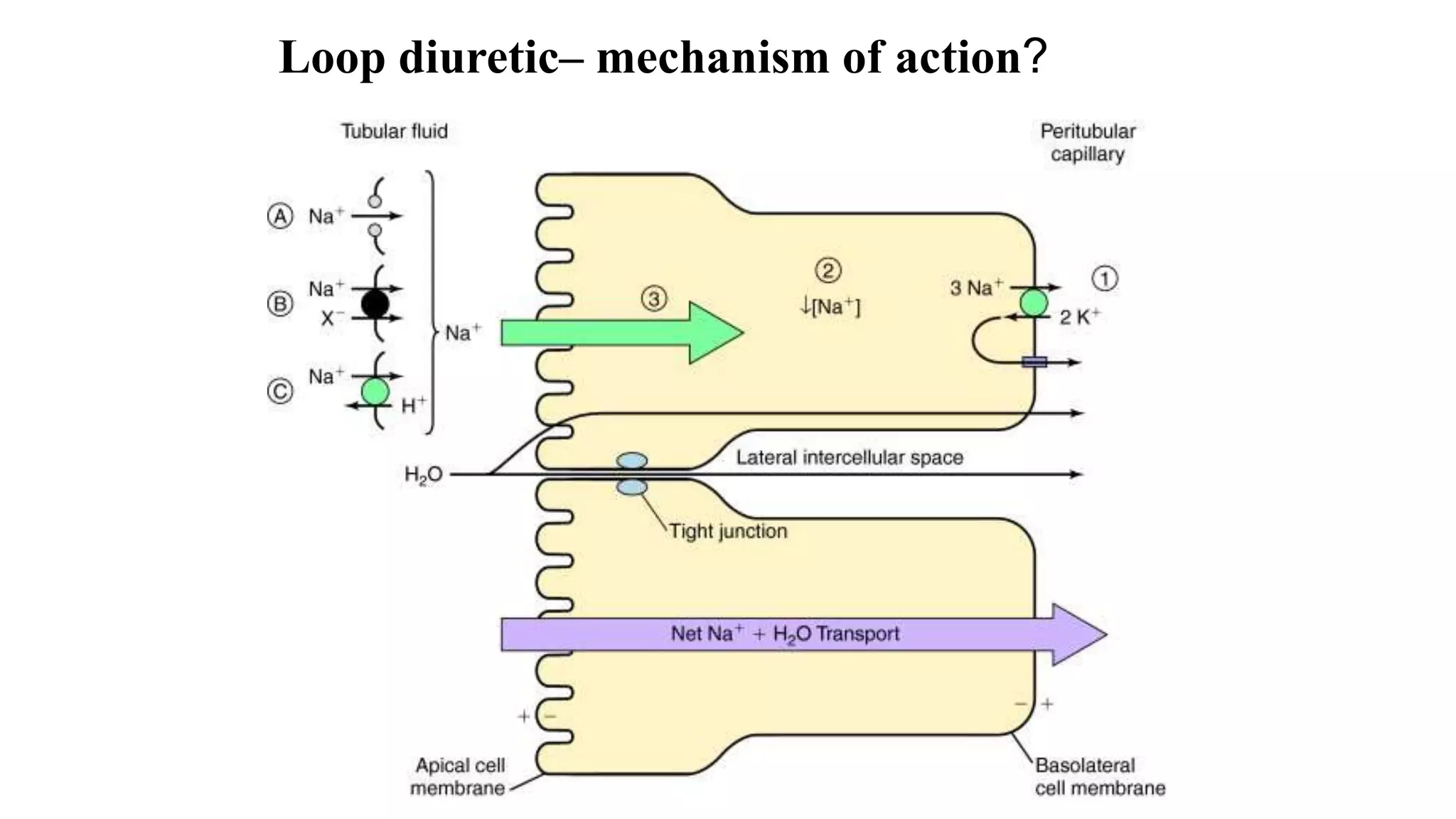
Mechanism of action
Inhibition of Na+/K+/Cl-
symport in thick
ascending limb of the loop
of Henle.
Pharmacological actions:
• ↑ excretion of Na + (diuretic effect up to 35%), Cl-, K
+, Ca2 +, Mg2 +, HCO3-, phosphates
•  excretion of uric acid
• ↑ RBF and GFR
• ↑ renin release
• ↑ the volume of the venous capacitance
LOOP DIURETICS
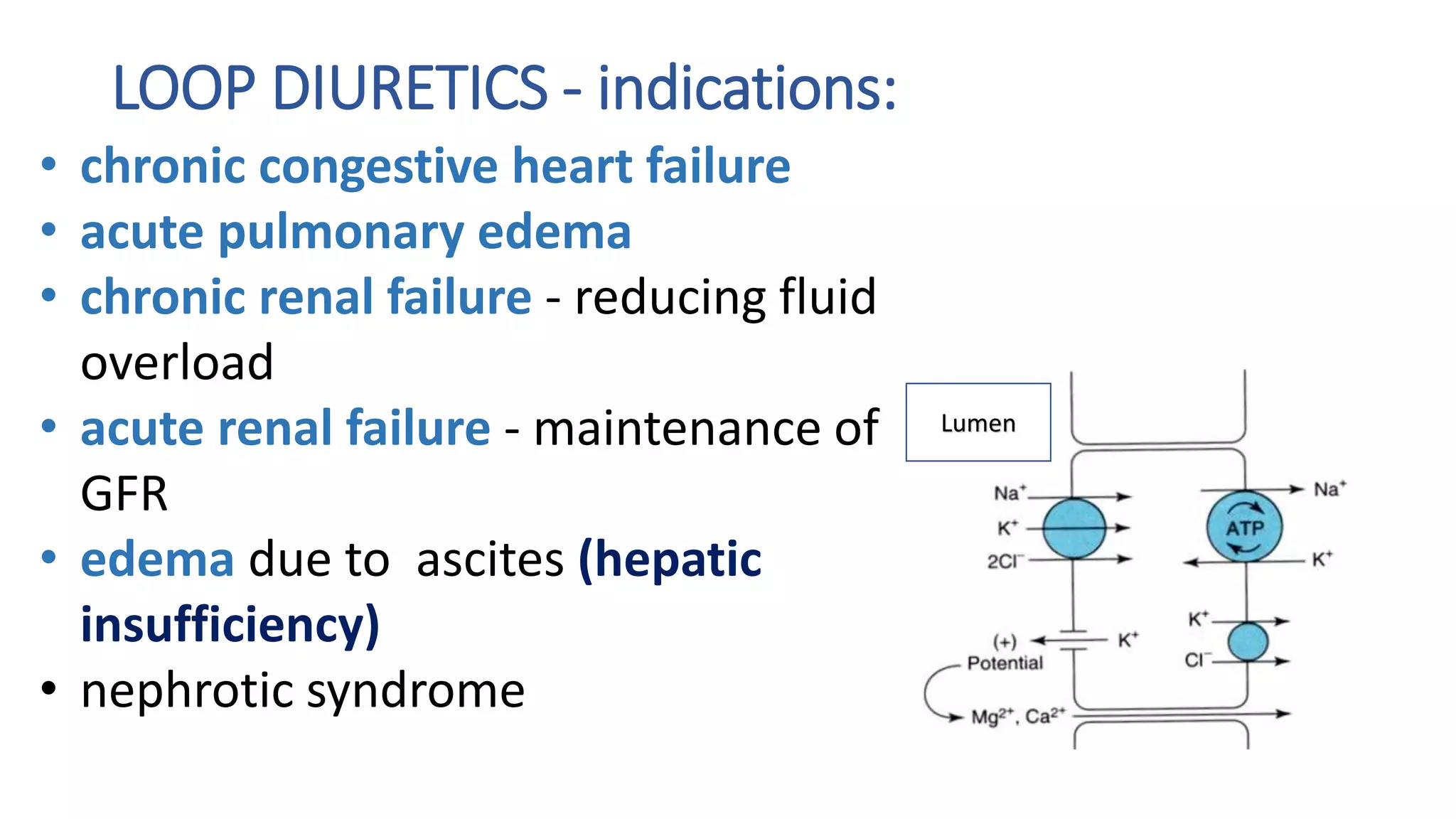
LOOP DIURETICS - indications:
• chronic congestive heart failure
• acute pulmonary edema
• chronic renal failure - reducing fluid
overload
• acute renal failure - maintenance of
GFR
• edema due to ascites (hepatic
insufficiency)
• nephrotic syndrome
Lumen
LOOP DIURETICS - indications
• treatment of arterial hypertension
- acute and chronic
• forced diuresis (poisoning with substances excreted
by the kidneys)
• hypercalcemia - a constant infusion of NaCl is
necessary to maintain the increased excretion of Ca
• hyperkalemia
• life-threatening hyponatremia
Examples:
sulfonamide- based:
furosemide
bumetanide
phenoxyacetic acid
derivative:
ethacrinic acid,
sulfonylurea
torsemide
Loop diuretics
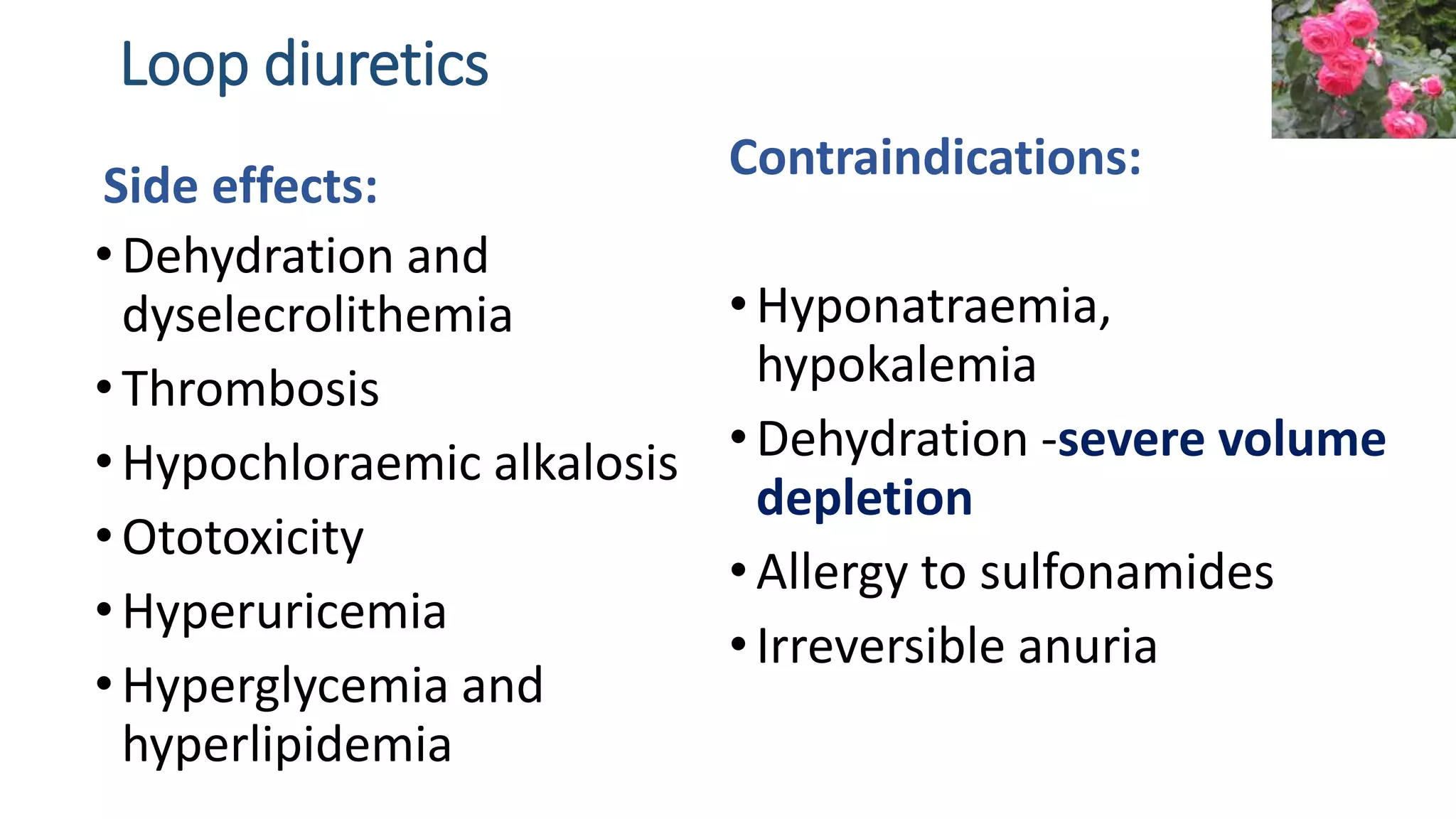
•Dehydration and
dyselecrolithemia
•Thrombosis
•Hypochloraemic alkalosis
•Ototoxicity
•Hyperuricemia
•Hyperglycemia and
hyperlipidemia
Contraindications:
•Hyponatraemia,
hypokalemia
•Dehydration -severe volume
depletion
•Allergy to sulfonamides
•Irreversible anuria
Side effects:
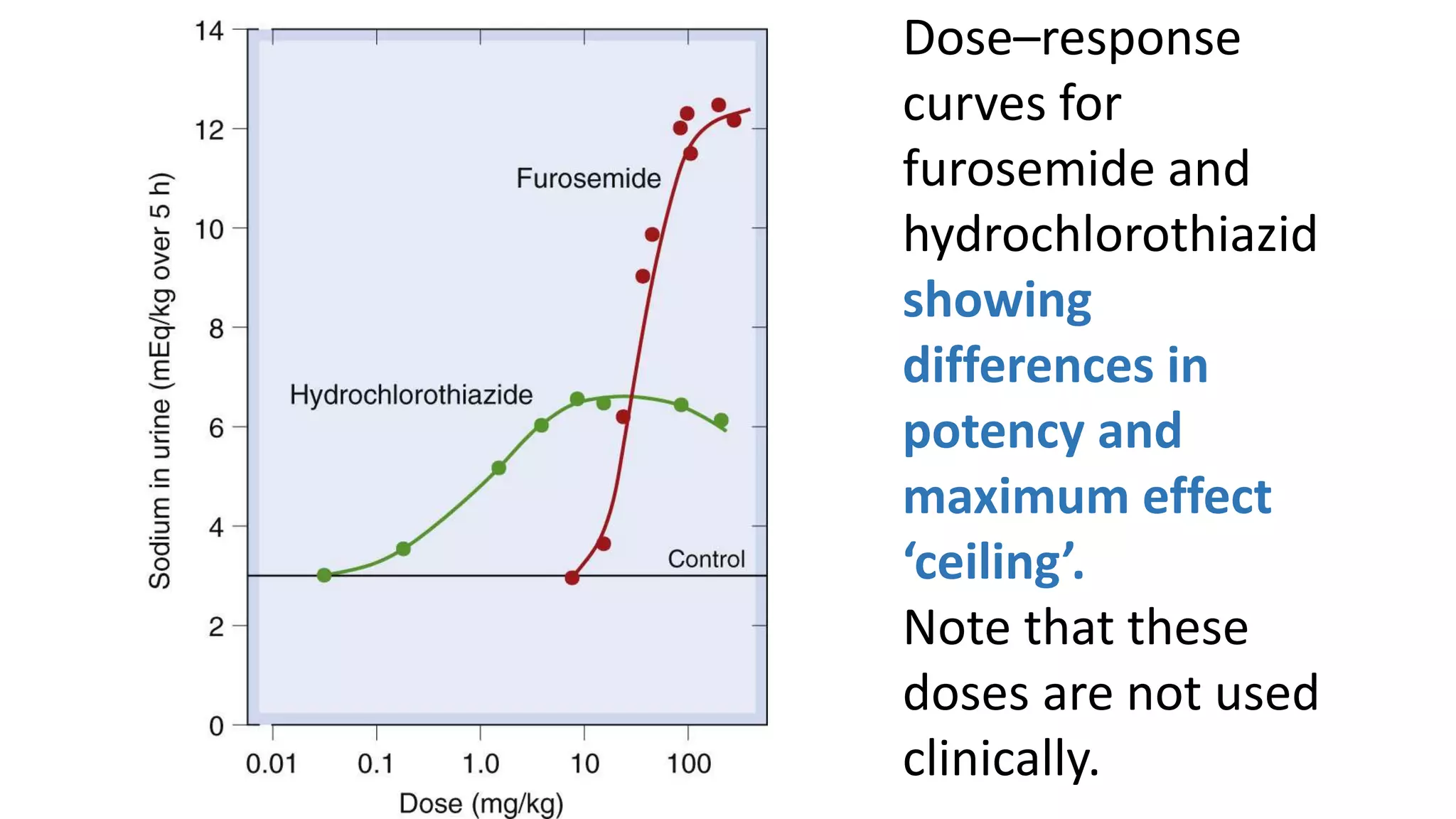
Dose–response
curves for
furosemide and
hydrochlorothiazid
showing
differences in
potency and
maximum effect
‘ceiling’.
Note that these
doses are not used
clinically.
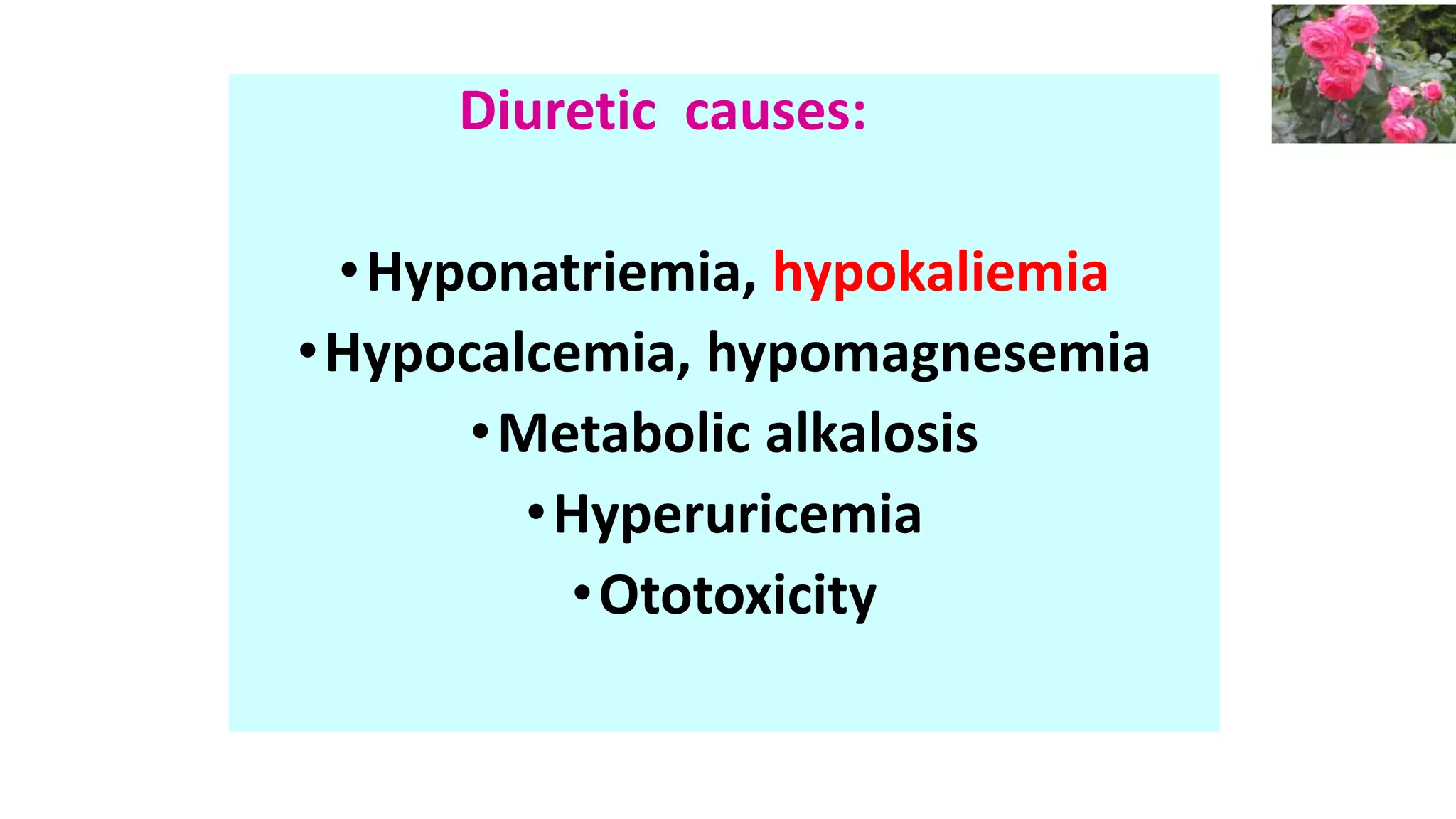
Diuretic causes:
•Hyponatriemia, hypokaliemia
•Hypocalcemia, hypomagnesemia
•Metabolic alkalosis
•Hyperuricemia
•Ototoxicity
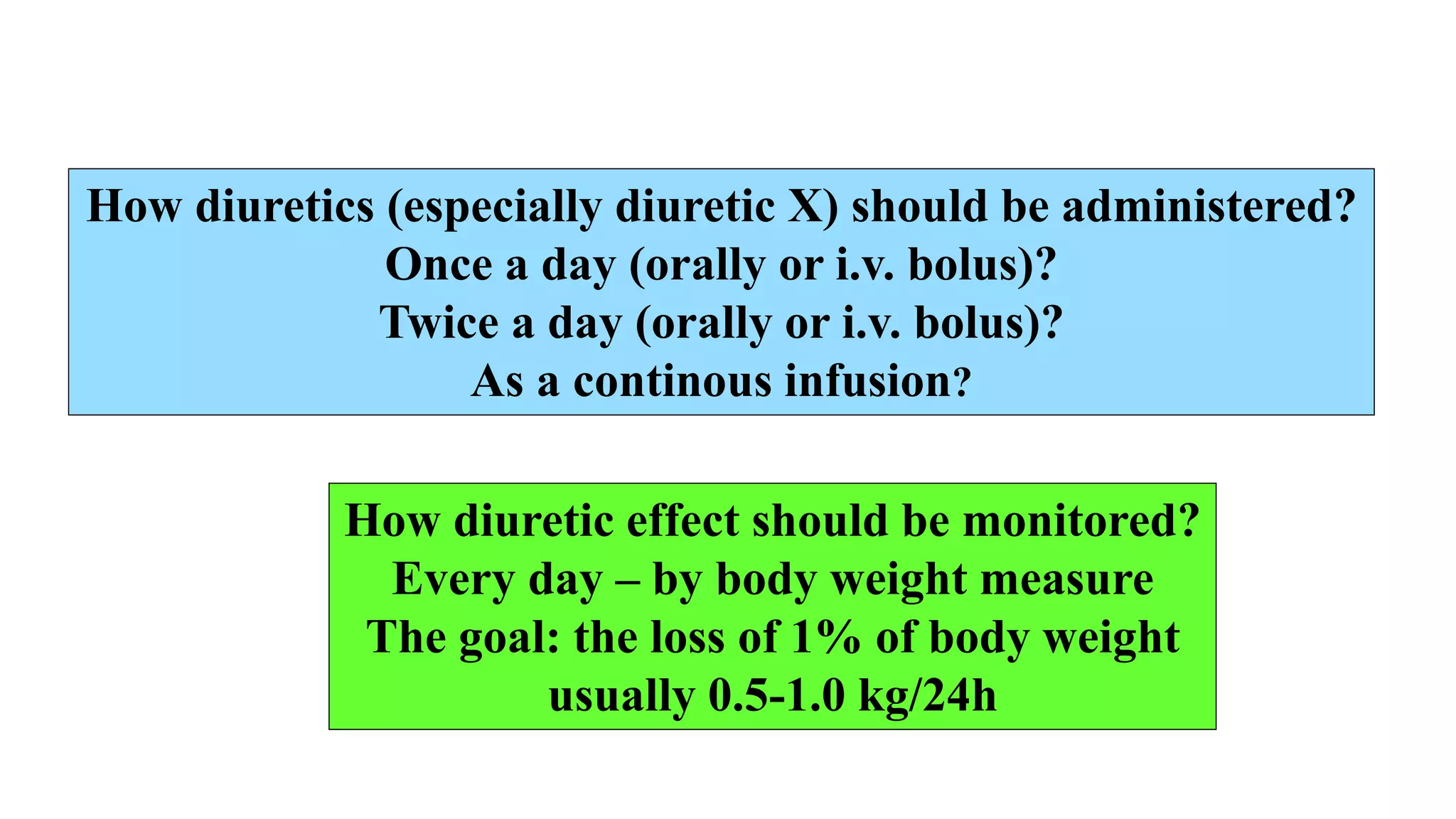
How diuretic effect should be monitored?
Every day – by body weight measure
The goal: the loss of 1% of body weight
usually 0.5-1.0 kg/24h
How diuretics (especially diuretic X) should be administered?
Once a day (orally or i.v. bolus)?
Twice a day (orally or i.v. bolus)?
As a continous infusion?
Loop diuretic– mechanism of action?
• A 56-year-old patient suffered from recurring
headaches accompanied by increased blood pressure
(mean 170/100). The doctor diagnosed arterial
hypertension and decided to start treatment with a
diuretic.
• Which diuretic did he choose?
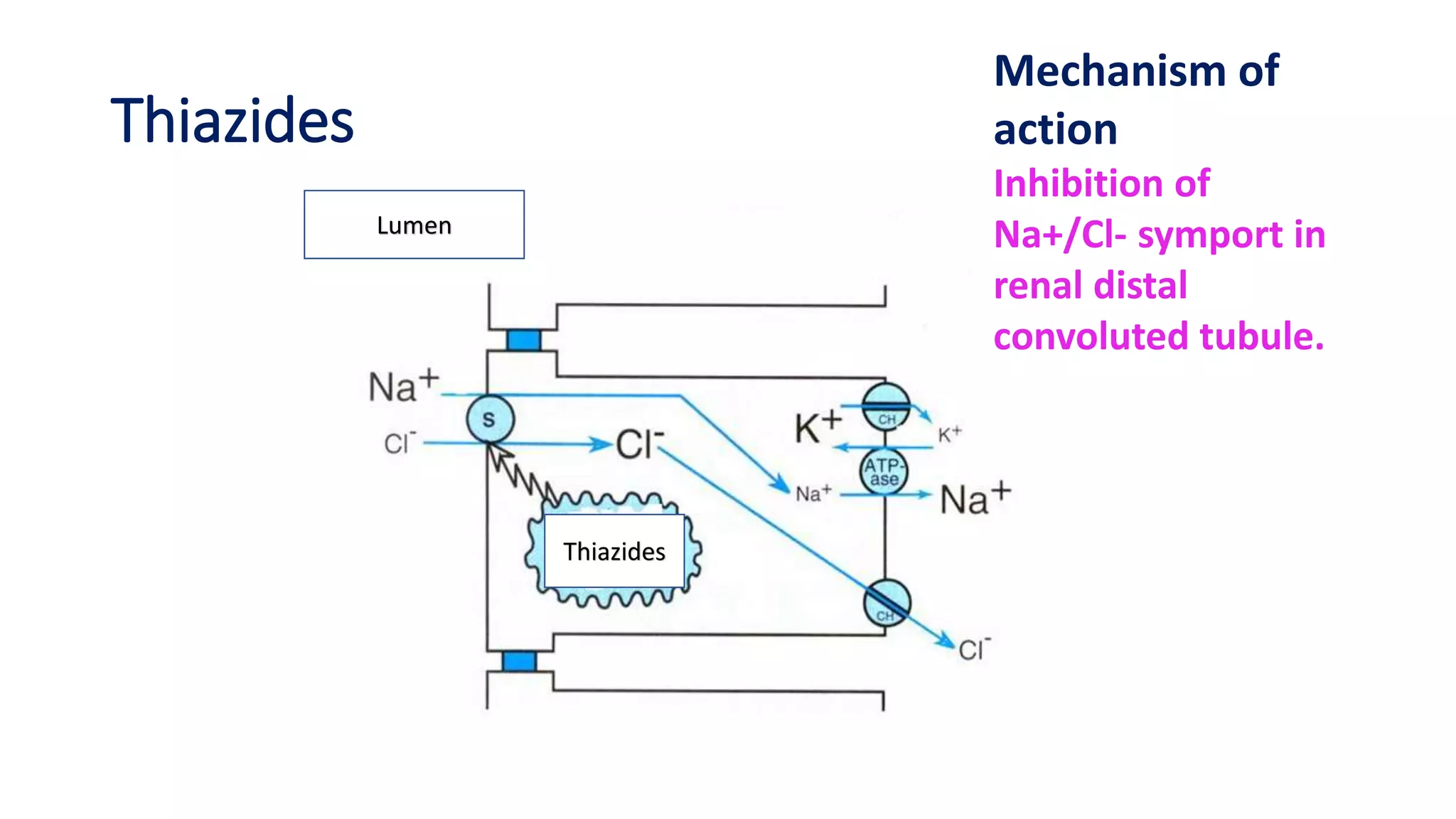
Thiazides
Lumen
Thiazides
Mechanism of
action
Inhibition of
Na+/Cl- symport in
renal distal
convoluted tubule.
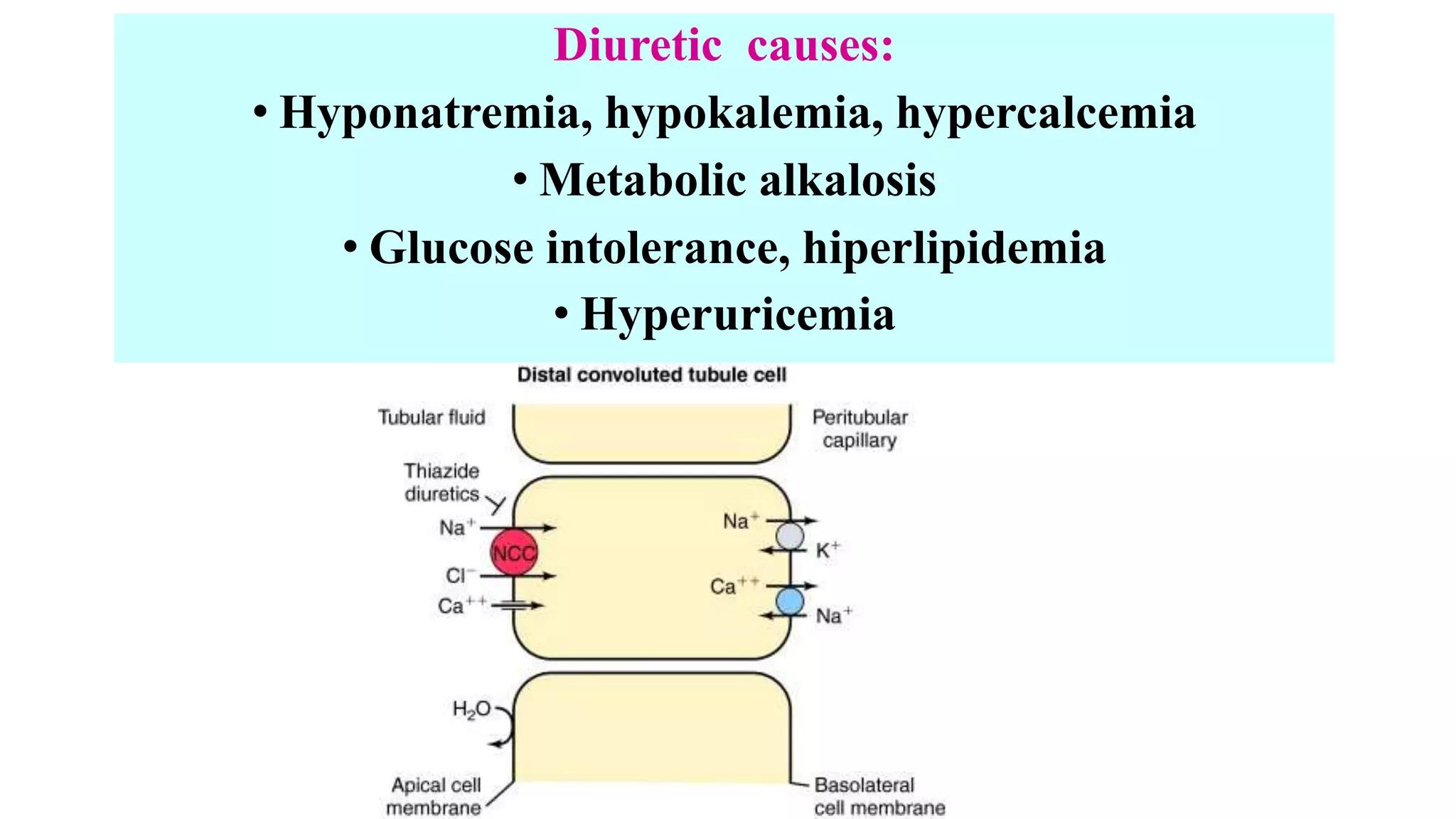
Diuretic causes:
• Hyponatremia, hypokalemia, hypercalcemia
• Metabolic alkalosis
• Glucose intolerance, hiperlipidemia
• Hyperuricemia
Thiazides
Examples:
hydrochlorothiazide
chlortalidone
indapamide
Thiazides
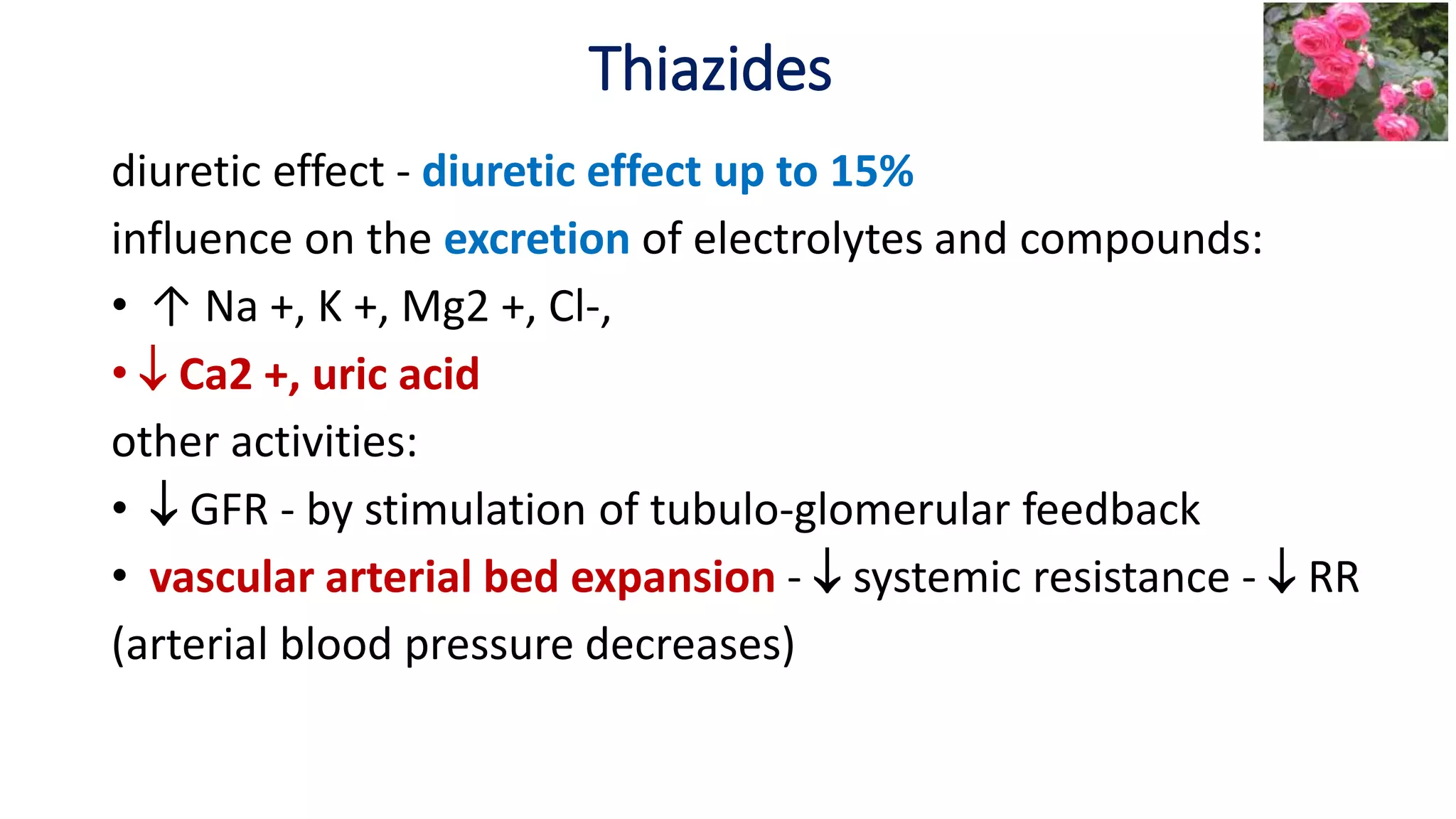
diuretic effect - diuretic effect up to 15%
influence on the excretion of electrolytes and compounds:
• ↑ Na +, K +, Mg2 +, Cl-,
•  Ca2 +, uric acid
other activities:
•  GFR - by stimulation of tubulo-glomerular feedback
• vascular arterial bed expansion -  systemic resistance -  RR
(arterial blood pressure decreases)
Thiazides
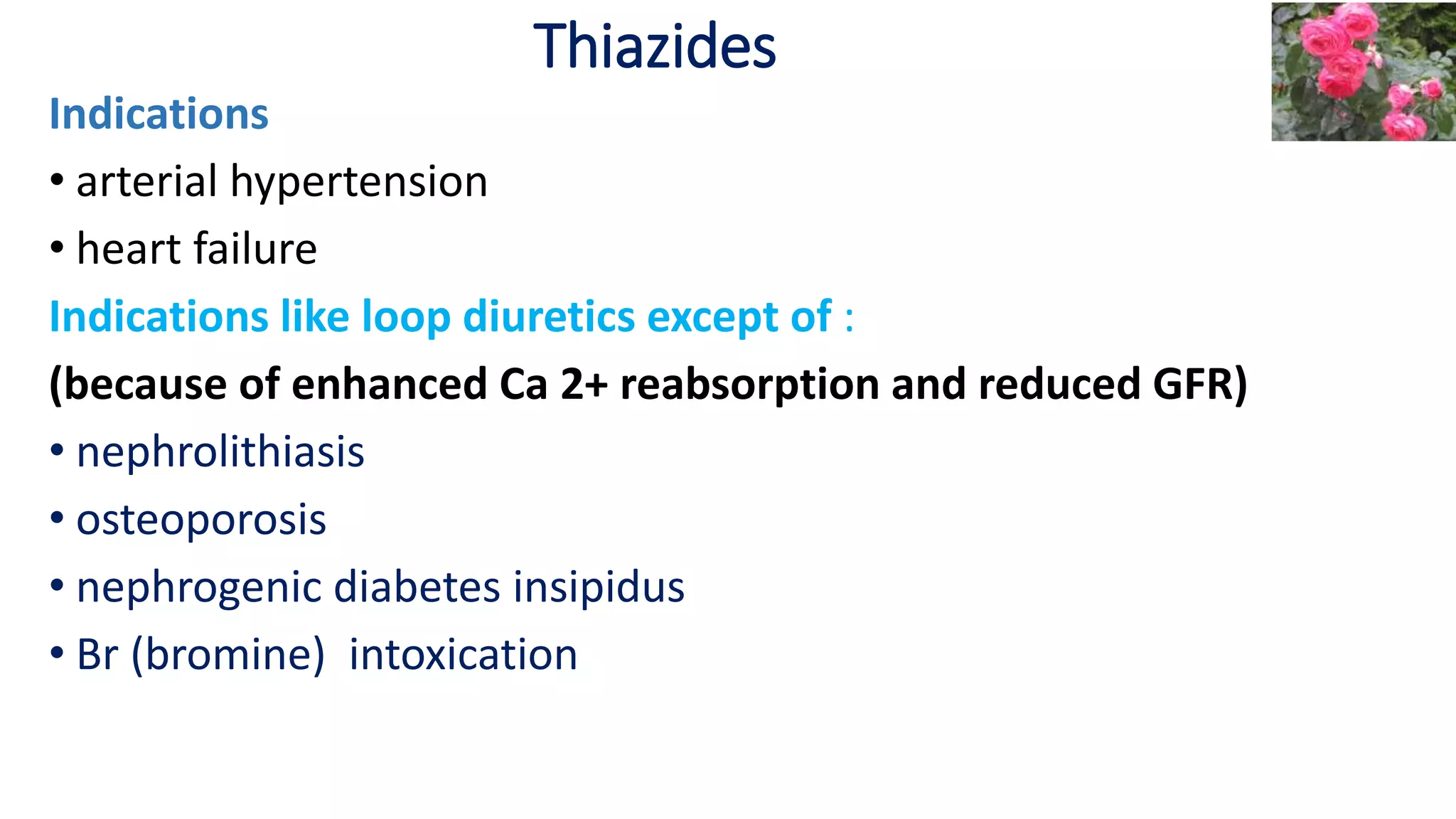
Indications
• arterial hypertension
• heart failure
Indications like loop diuretics except of :
(because of enhanced Ca 2+ reabsorption and reduced GFR)
• nephrolithiasis
• osteoporosis
• nephrogenic diabetes insipidus
• Br (bromine) intoxication
Thiazides
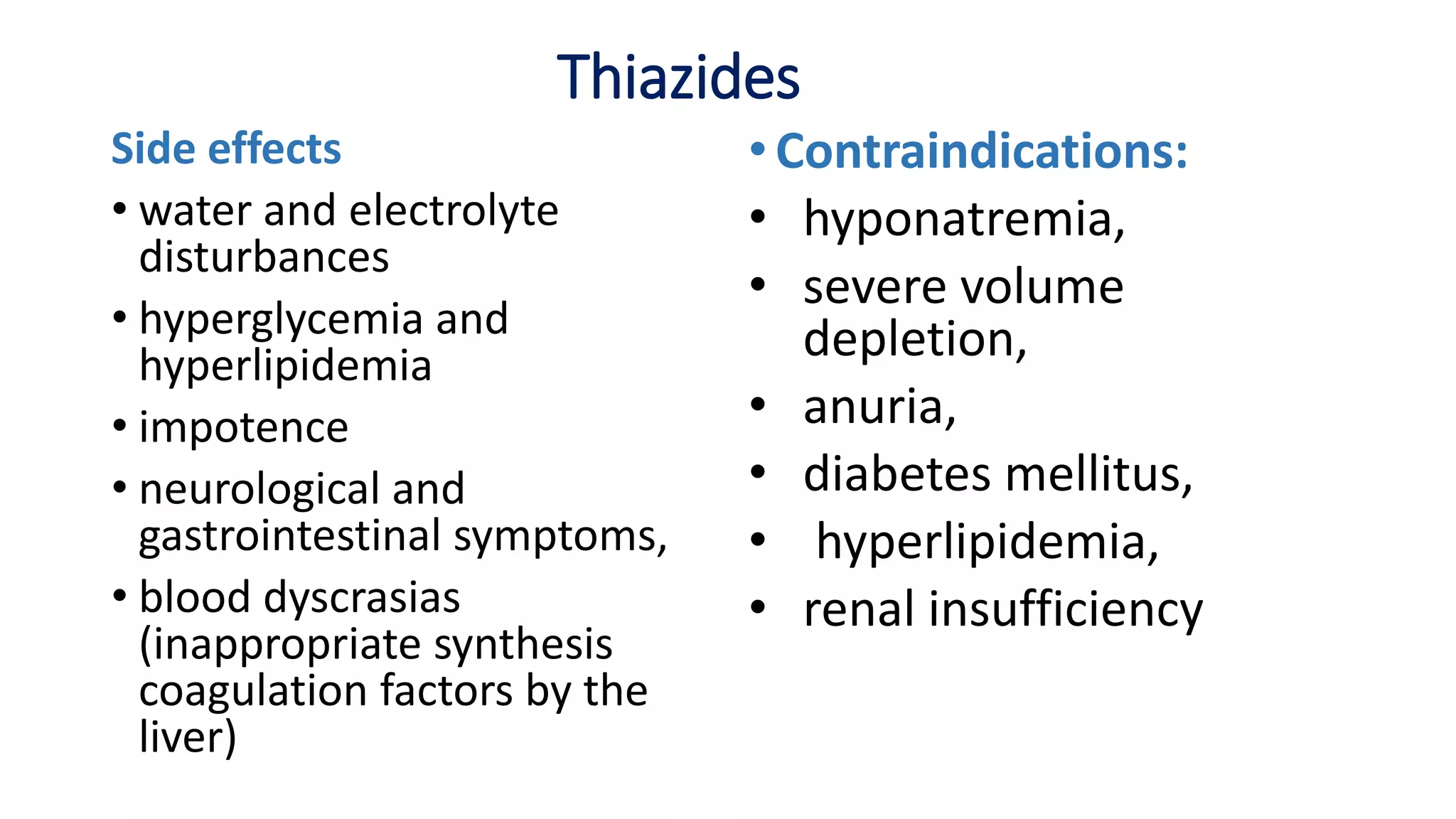
Side effects
• water and electrolyte
disturbances
• hyperglycemia and
hyperlipidemia
• impotence
• neurological and
gastrointestinal symptoms,
• blood dyscrasias
(inappropriate synthesis
coagulation factors by the
liver)
•Contraindications:
• hyponatremia,
• severe volume
depletion,
• anuria,
• diabetes mellitus,
• hyperlipidemia,
• renal insufficiency
The patient with COPD (chronic obstructive pulmonary
disease) developed metabolic alkalosis.
Which diuretic can be used in this patient?
Carbonic anhydrase inhibitors – mechanism of action?
What is the main therapeutic indication for CAI?
Patient with chronic obstructive
pulmonary disease (COPD) suffers
from metabolic alkalosis.
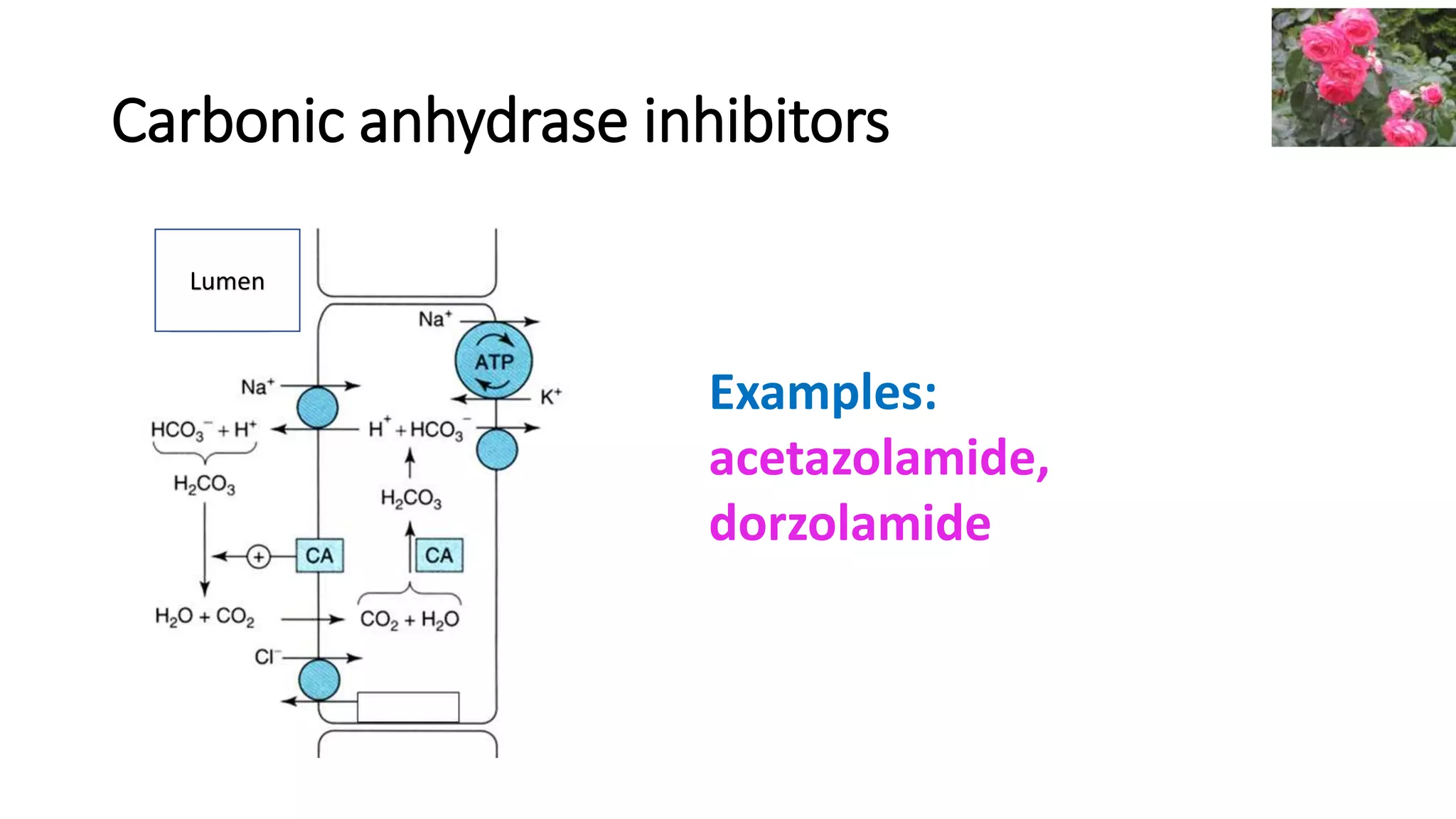
Carbonic anhydrase inhibitors
Lumen
Examples:
acetazolamide,
dorzolamide
Diuretic causes:
•Metabolic acidosis
•Hyponatremia, hypokalemia,
hypophosphatemia
Carbonic anhydrase inhibitors
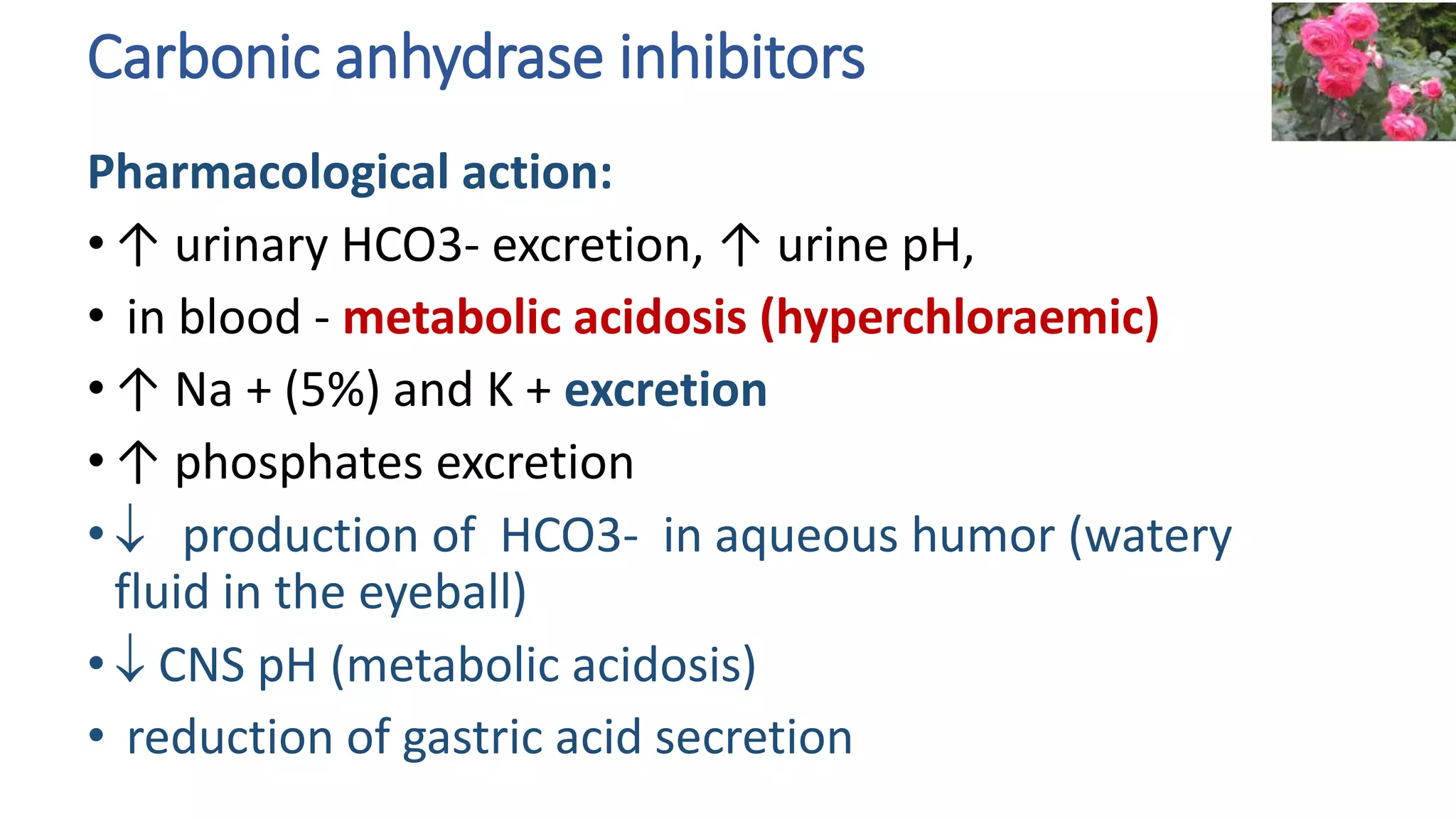
Pharmacological action:
• ↑ urinary HCO3- excretion, ↑ urine pH,
• in blood - metabolic acidosis (hyperchloraemic)
• ↑ Na + (5%) and K + excretion
• ↑ phosphates excretion
•  production of HCO3- in aqueous humor (watery
fluid in the eyeball)
•  CNS pH (metabolic acidosis)
• reduction of gastric acid secretion
Carbonic anhydrase inhibitors
Examples:
acetazolamide,
dorzolamide
Carbonic anhydrase inhibitors
Indications:
•glaucoma
•urine alkalization
•metabolic alkalosis
•mountain sickness
•severe hyperphosphatemia
•hypo- and hyperkalemic periodic paralysis,
•epilepsy
Carbonic anhydrase inhibitors
Side effects:
sulfonamide-like
• allergy
• bone-marrow depression,
• renal lesions,
• drowsiness and
paresthesias,
• calculus formation
Contraindications:
•liver failure – hepatic
encephalopathy
•severe acidosis
•hyponatremia and
hypokalemia
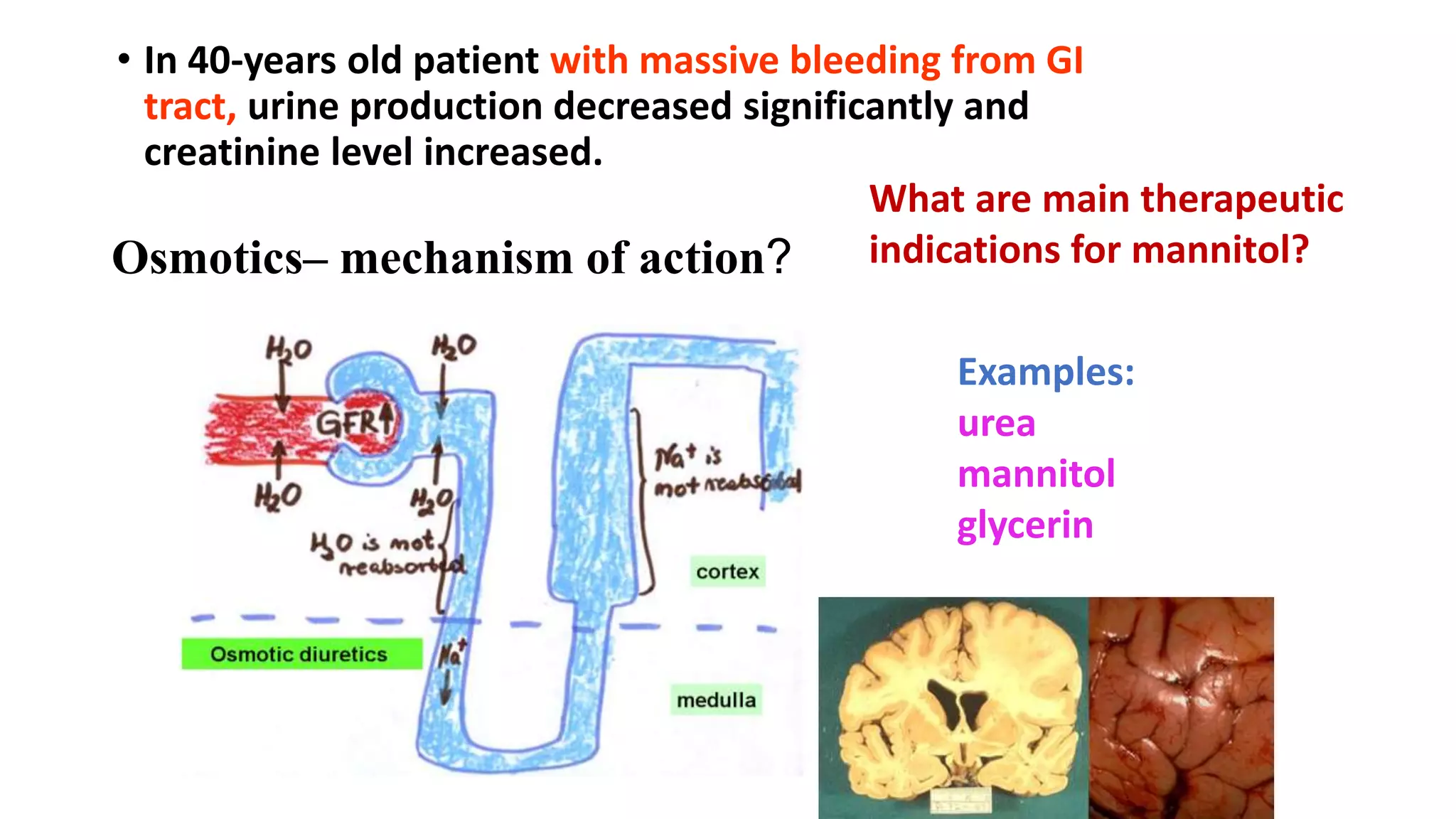
• In 40-years old patient with massive bleeding from GI
tract, urine production decreased significantly and
creatinine level increased.
What are main therapeutic
indications for mannitol?
Osmotics– mechanism of action?
Examples:
urea
mannitol
glycerin
Osmotic diuretics
Mechanism of action
• disribution of water into the vascular space due to their
osmotic effect
• the water is excreted in the urine
Activity along the whole nephron
The major sites of action are:
• the proximal tubule
• the loop of Henle
Osmotic diuretics
Pharmacological profile
General features:
• Freely filtered at the glomerulus
• Undergo limited reabsorption
Pharmacological action
• volume depletion
• increased excretion of almost all
electrolytes
• decreased blood viscosity
• increased RBF and GFR
Indications:
• acute renal insufficiency,
intoxications,
• cerebral edema – prophylaxis
Osmotic diuretics
Contraindications:
• left-ventricular cardiac
insufficiency,
• chronic renal
insufficiency,
• irreversible anuria
Adverse effects:
•dehydration and
dyselectrolitemia
• pulmonary edema
•hyponatremia
•trombosis or pain in site of
injection - urea
•hepatic failure
•hyperglycemia - glycerin
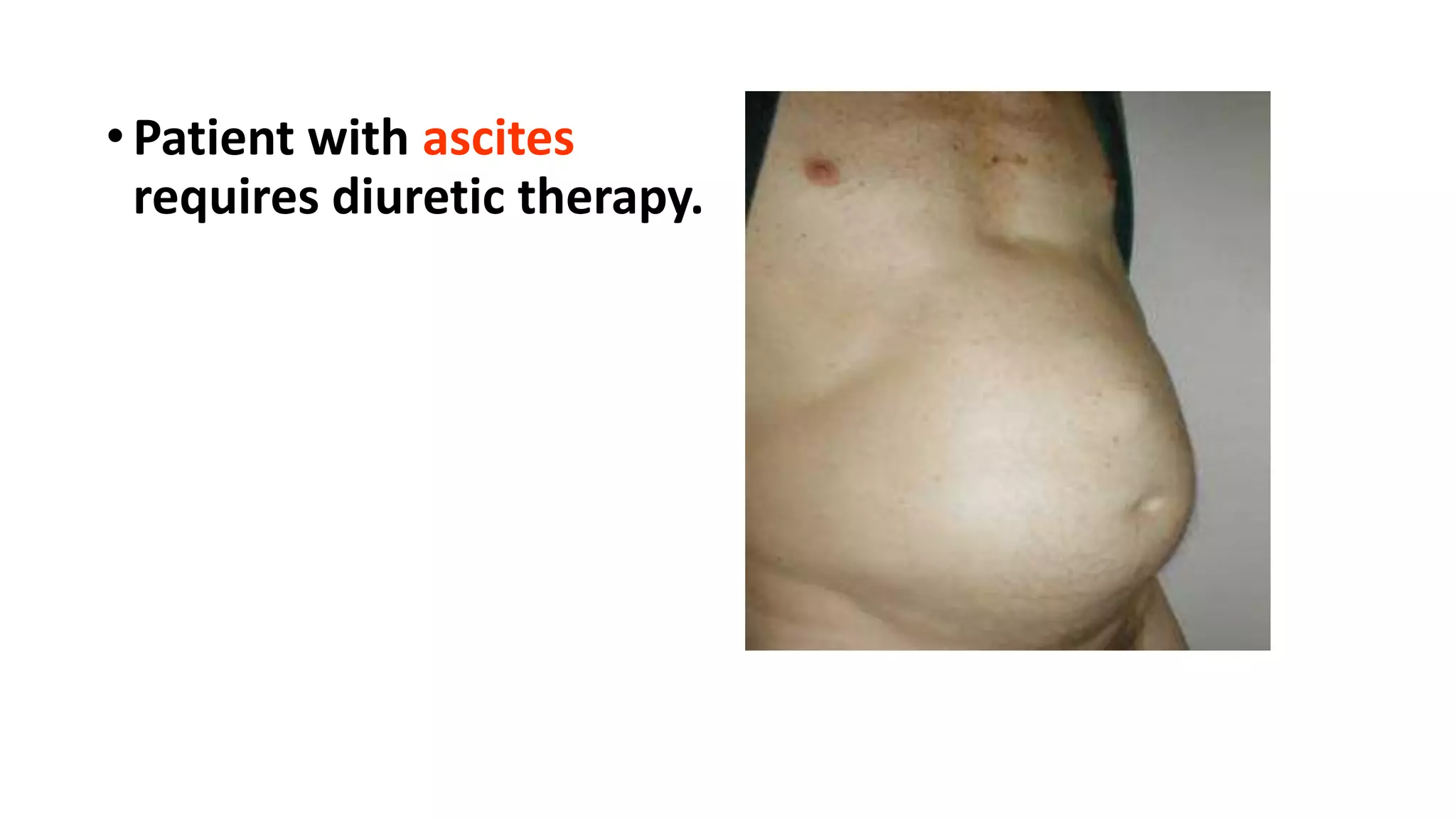
• Patient with ascites
requires diuretic therapy.
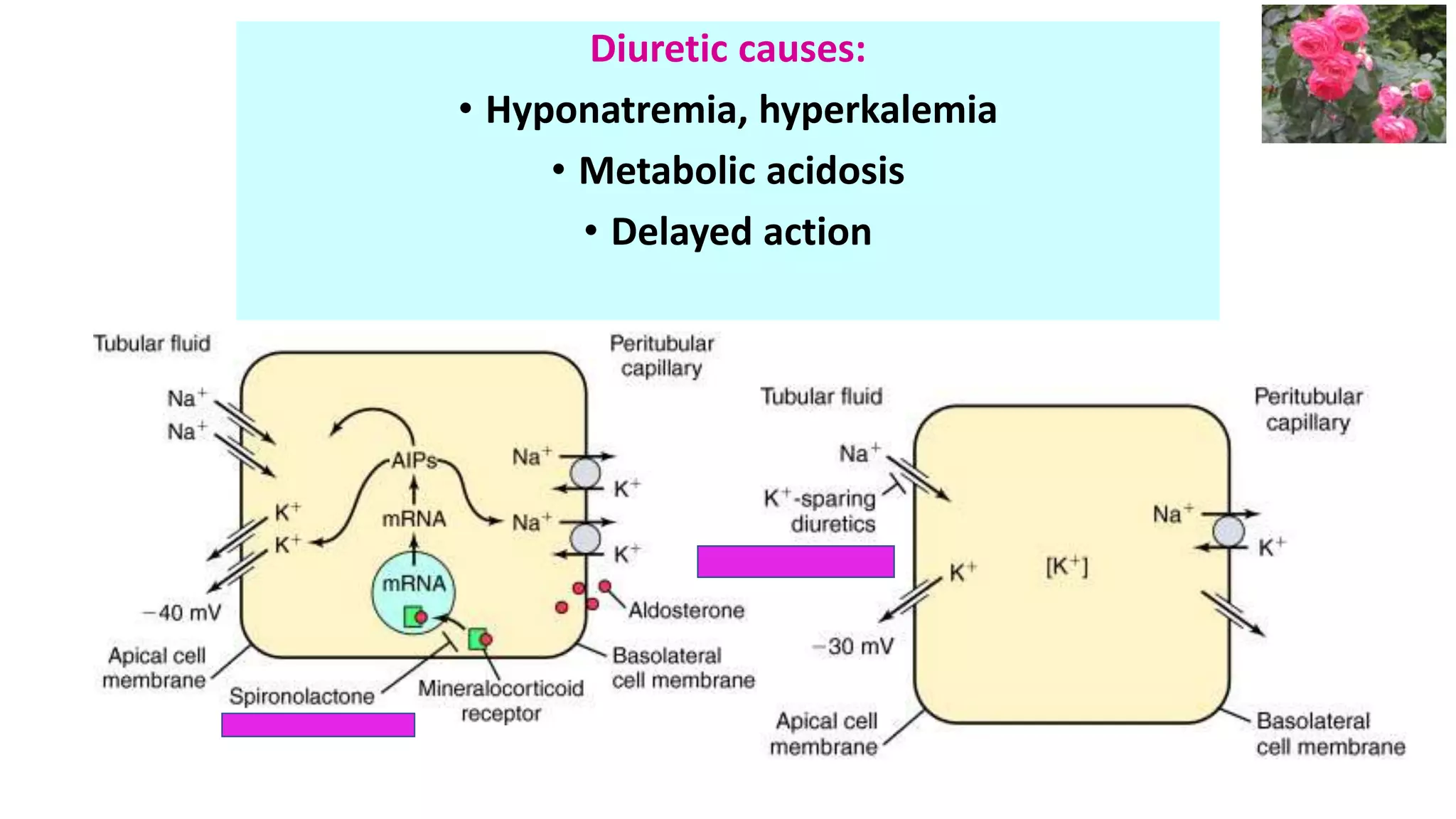
Diuretic causes:
• Hyponatremia, hyperkalemia
• Metabolic acidosis
• Delayed action
Aldosterone antagonists
Examples:
spironolactone,
eplerenone
Antagonists of mineralocorticoid receptors
K+ – sparing diuretics
Spironolactone and eplerenone
Indications:
•edema and hypertension to prevent hypokalemia
(in combination with other diuretics)
•edema associated with secondary aldosteronism
• hypertension in the course of Conn's syndrome
• prevention of left ventricular remodeling in HF
•prevention of post-infarction fibrosis
Antagonists of mineralocorticoid receptors
K+ – sparing diuretics
Pharmacological profile
•mild influence on blood
volume, ↓excretion of
K+, H+, Ca2+, Mg2+ ,
uric acid,
•metabolic acidosis
Contraindications:
•pregnancy,
•lactation
Adverse effects:
•hyperkalemia
•diarrhea
• gastric bleeding
Spironolactone
• gynecomastia,
• impotence,
•decreased libido,
•hirsutism,
• deepening of the voice,
•menstrual irregulations,
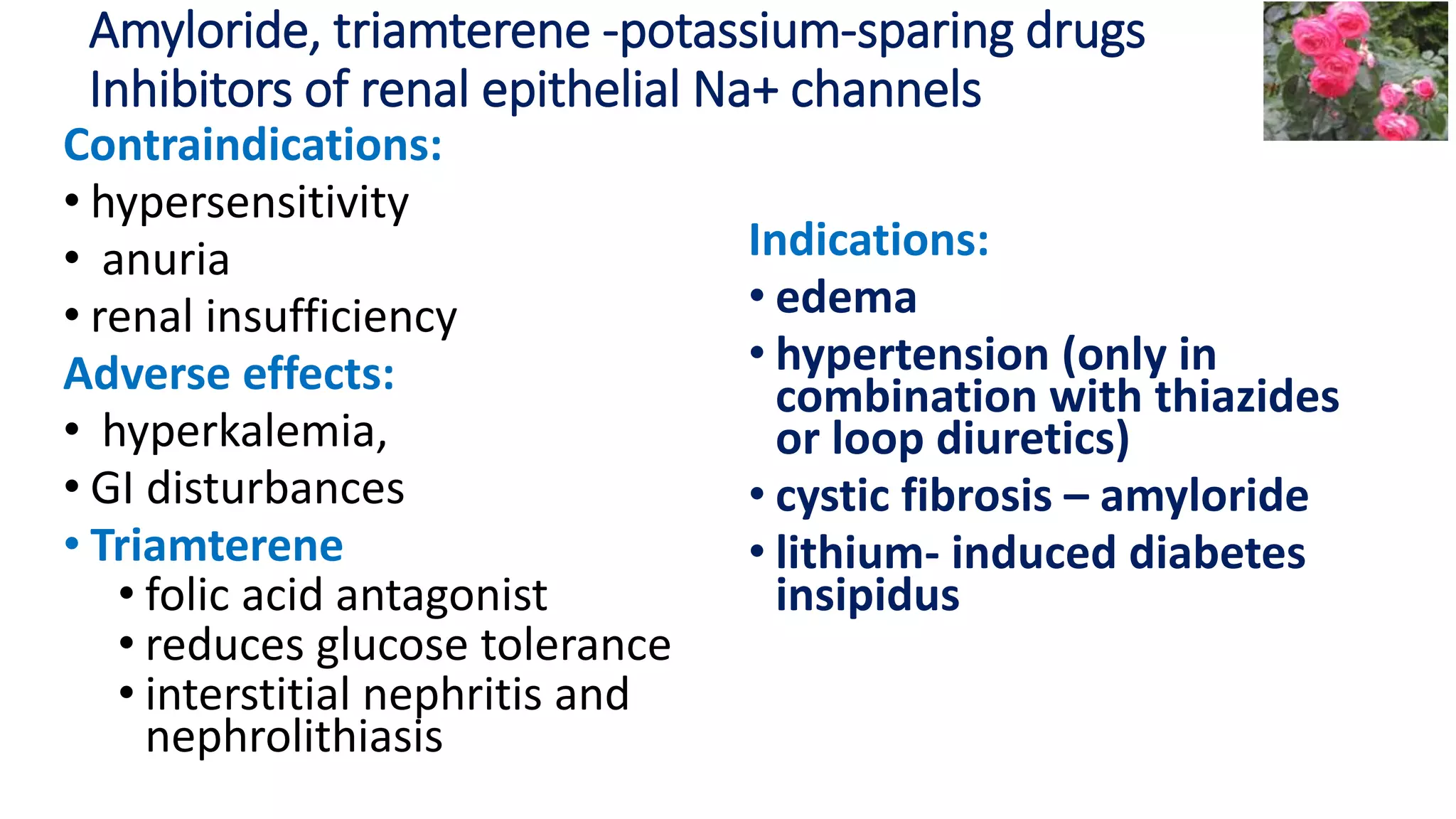
Amyloride, triamterene -potassium-sparing drugs
Inhibitors of renal epithelial Na+ channels
Mechanism of action
• Inhibition of renal epithelial Na+ channels in:
• distal convoluted tubule
• collecting duct system
Pharmacological profile
• slight effect on fluid volume
• ↓excretion of :
K+, H+, Ca2+, Mg2+, uric acid
• metabolic acidosis
Amyloride, triamterene -potassium-sparing drugs
Inhibitors of renal epithelial Na+ channels
Contraindications:
• hypersensitivity
• anuria
• renal insufficiency
Adverse effects:
• hyperkalemia,
• GI disturbances
• Triamterene
• folic acid antagonist
• reduces glucose tolerance
• interstitial nephritis and
nephrolithiasis
Indications:
• edema
• hypertension (only in
combination with thiazides
or loop diuretics)
• cystic fibrosis – amyloride
• lithium- induced diabetes
insipidus
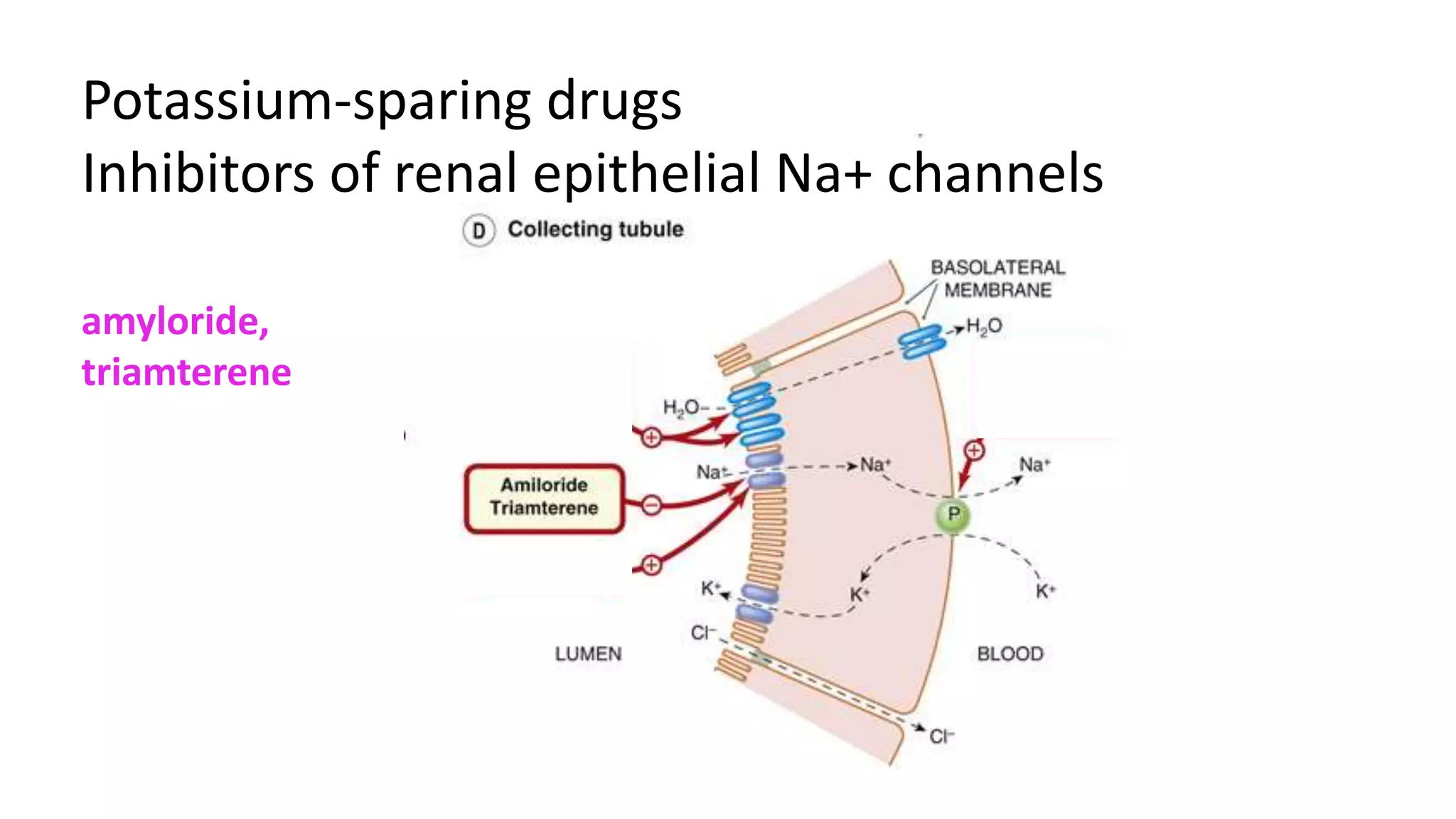
Potassium-sparing drugs
Inhibitors of renal epithelial Na+ channels
amyloride,
triamterene
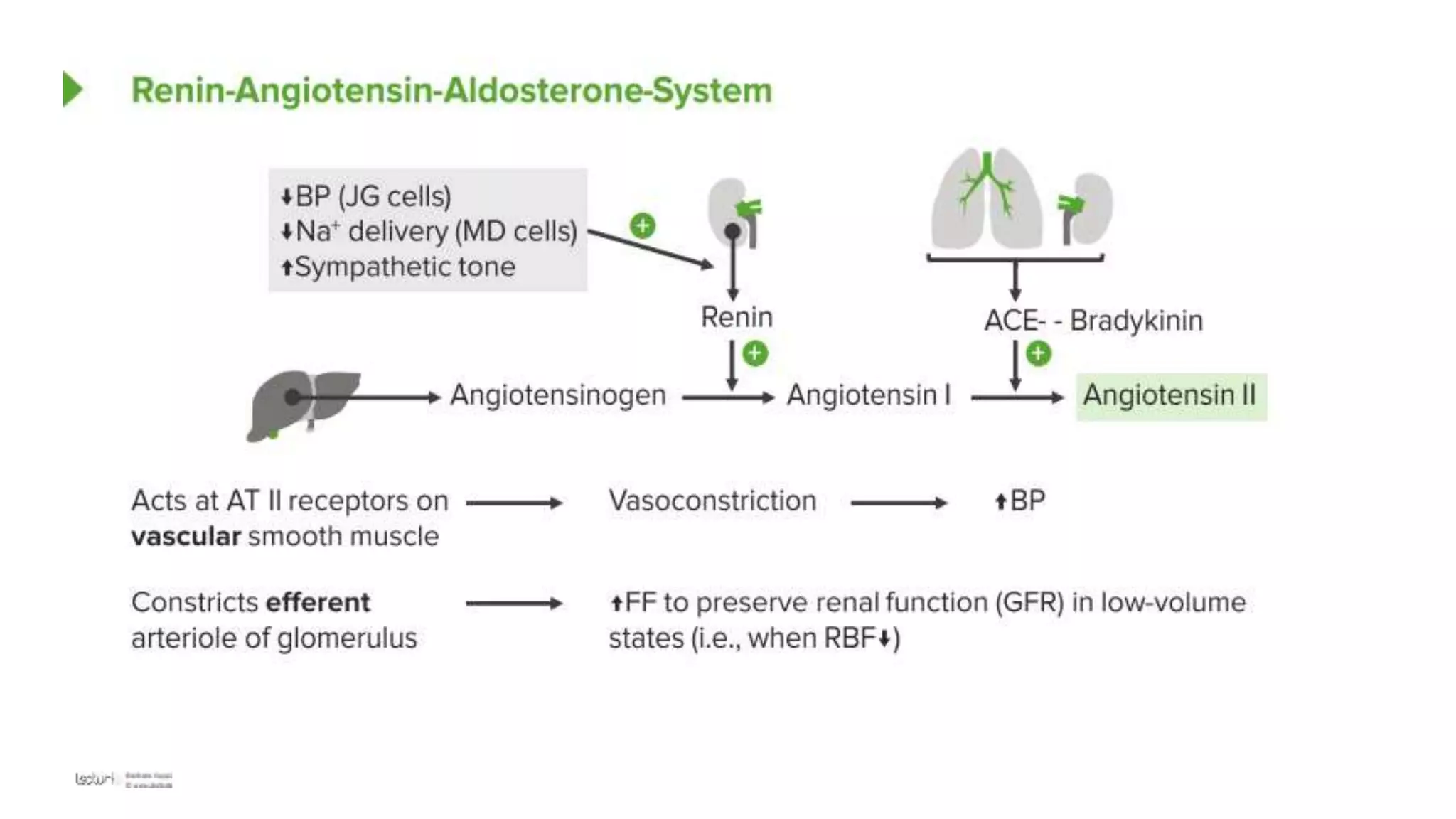
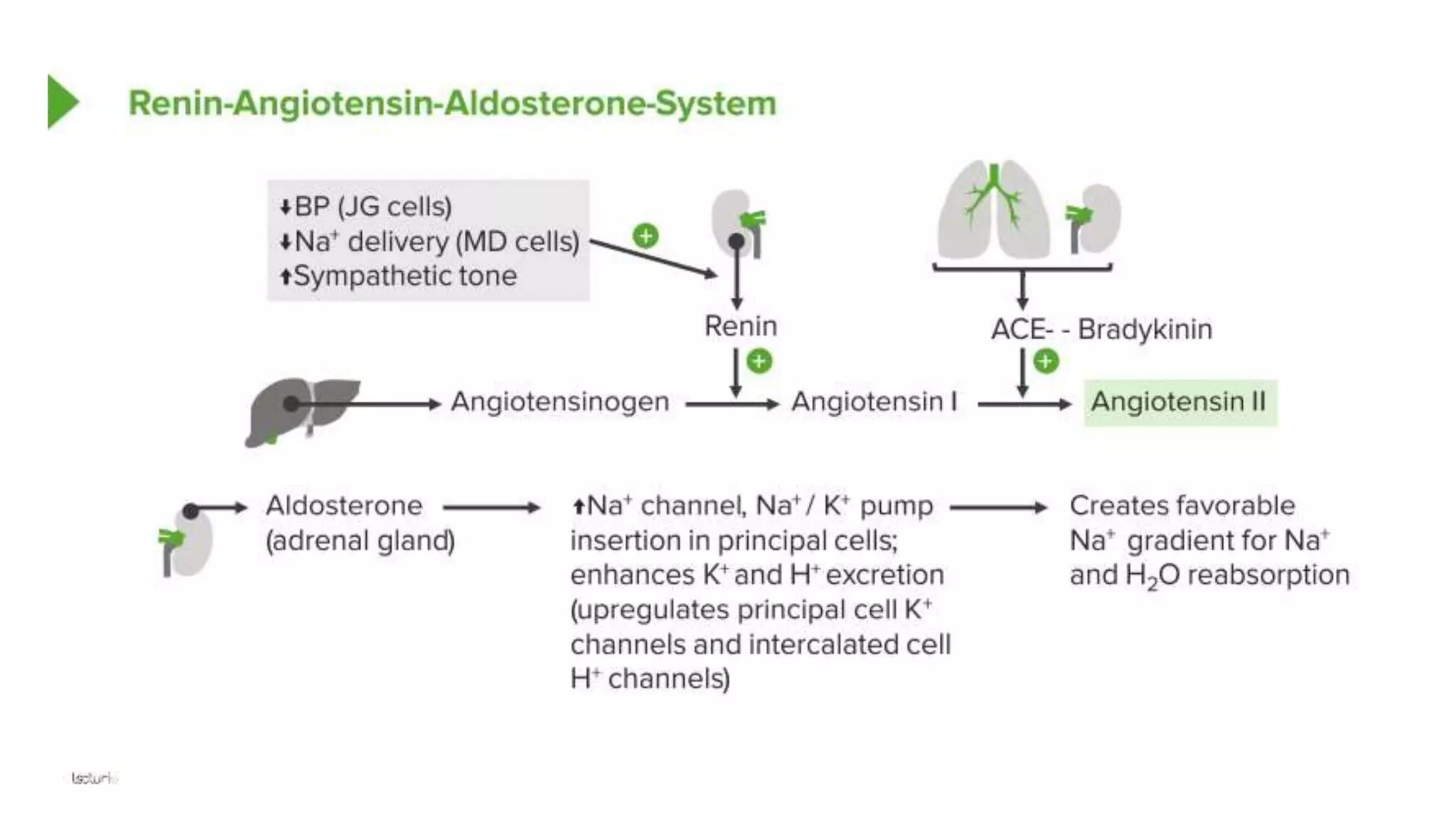
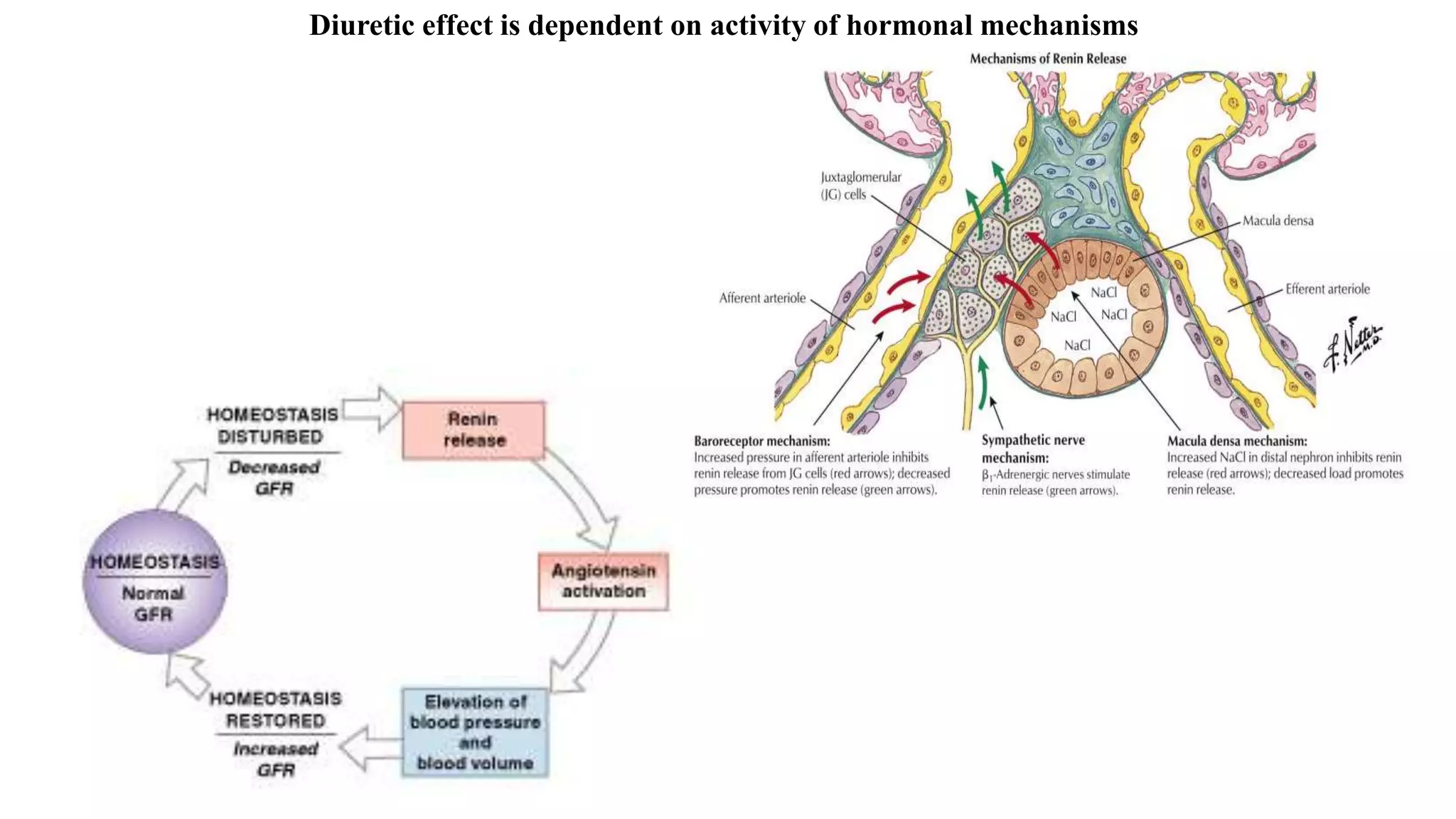
Diuretic effect is dependent on activity of hormonal mechanisms
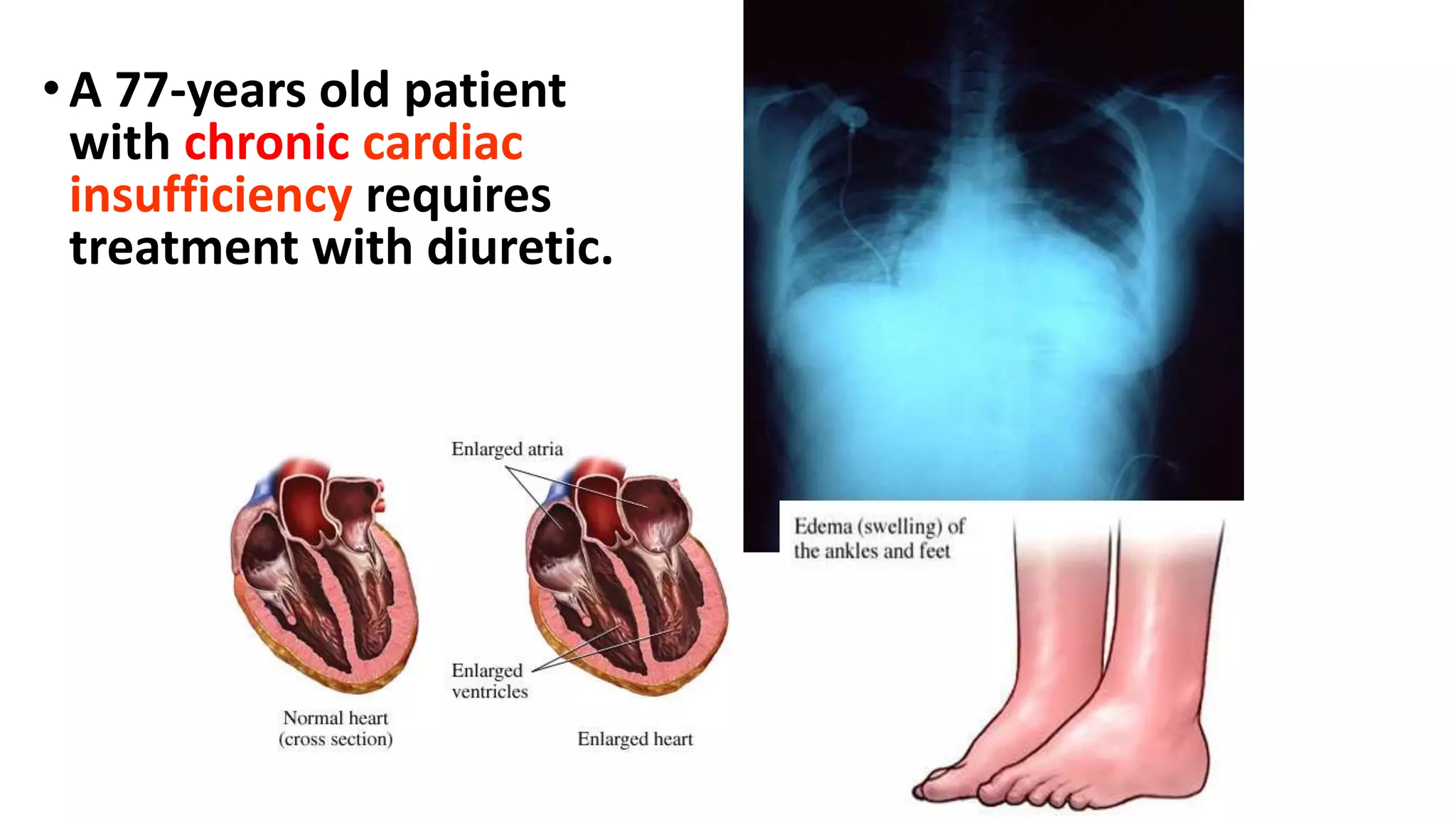
•A 77-years old patient
with chronic cardiac
insufficiency requires
treatment with diuretic.
Resistance to diuretics e.g in the course of HF
•GI edema decreases diuretics absorption in about 70%
- administer higher doses orally or give diuretic i.v.
- combine furosemide with thiazide to promote diuretic
effect (thiazide 1h before furosemide)
-combine furosemide with spironolactone to prolonge
furosemide activity, to prevent hypokalemia and to
inhibit myocardium remodeling
-check albumins concentration – hypoalbuminemia
decreases diuretics secretion into the tubules
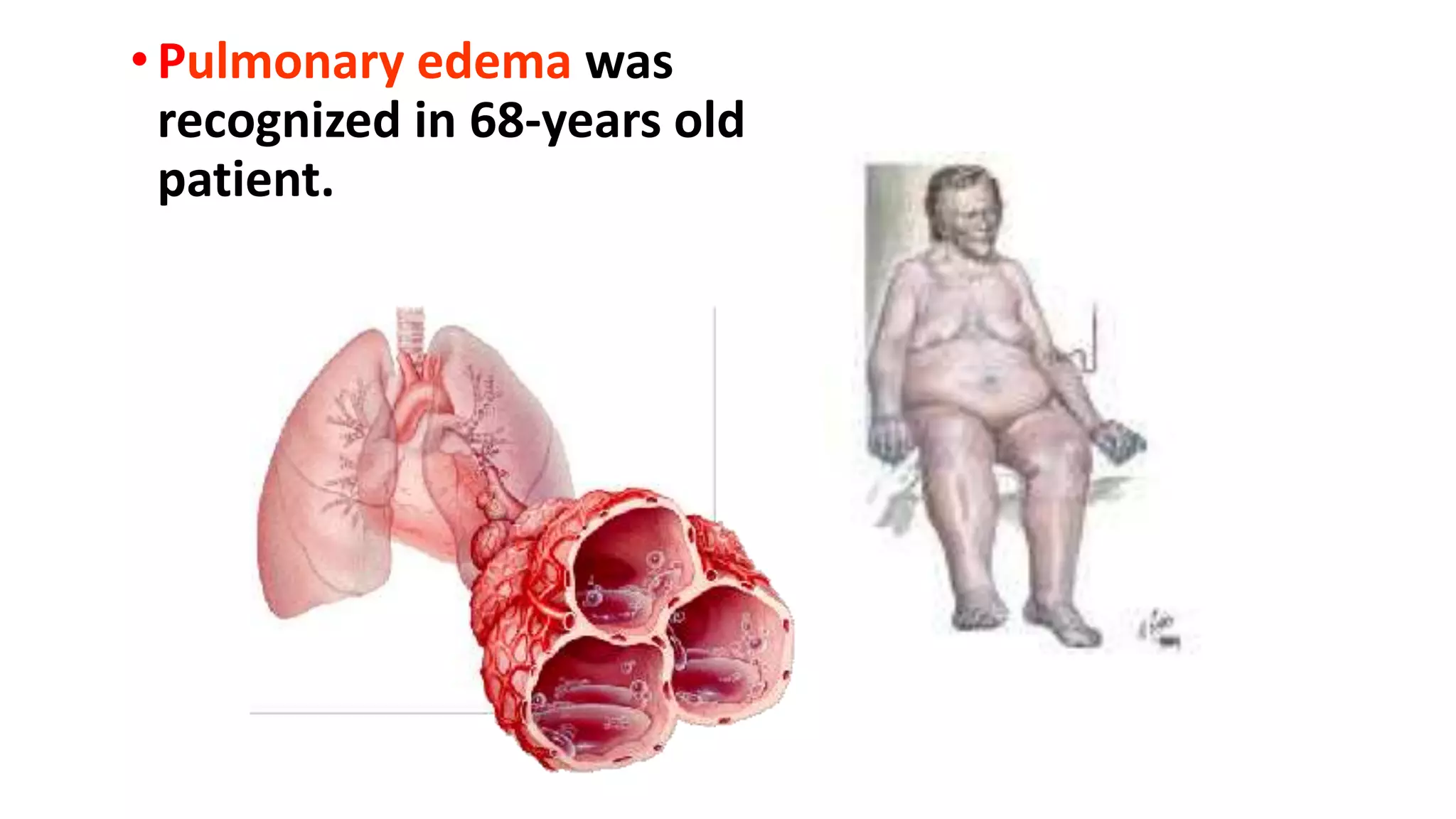
• Pulmonary edema was
recognized in 68-years old
patient.
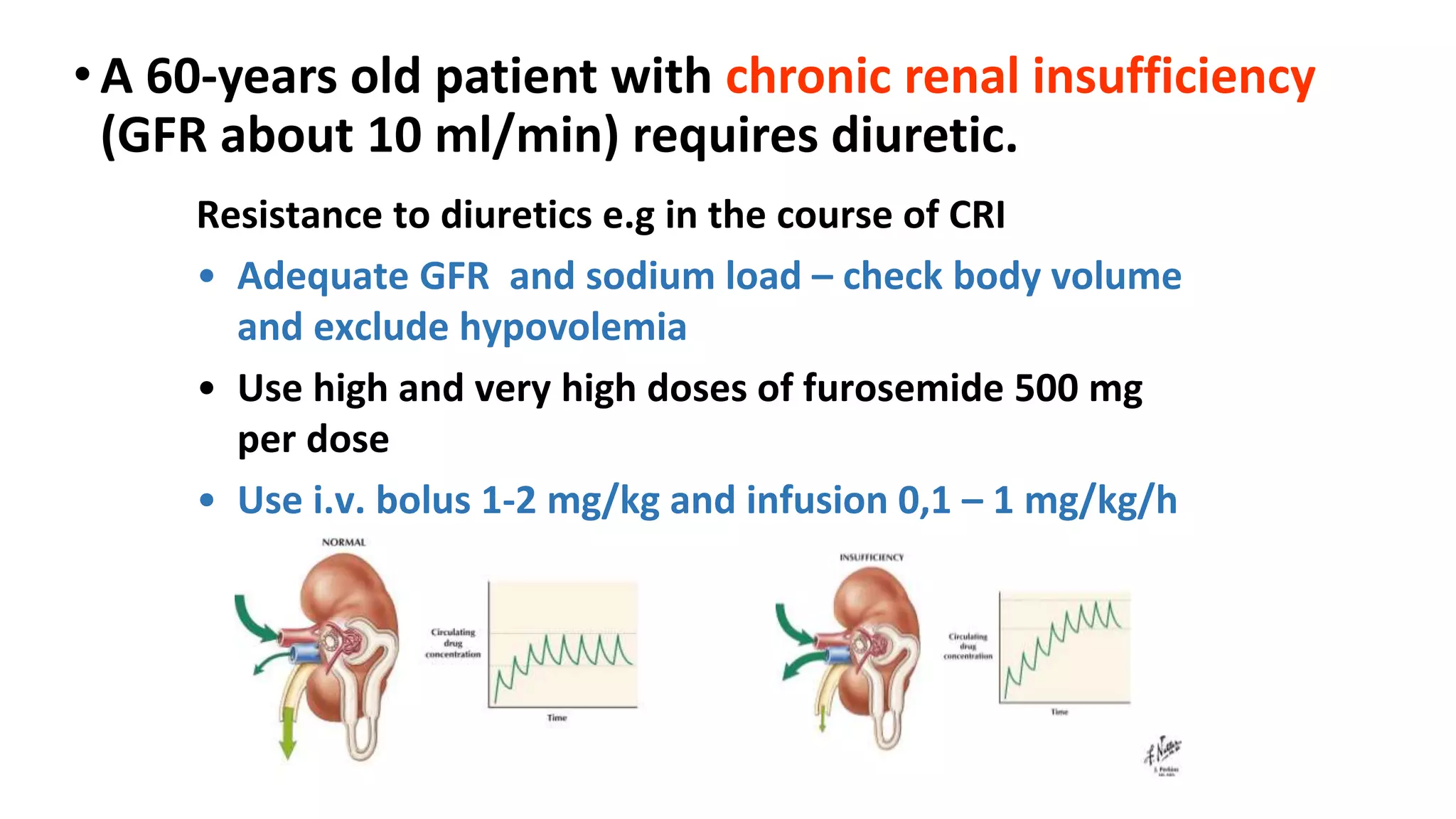
•A 60-years old patient with chronic renal insufficiency
(GFR about 10 ml/min) requires diuretic.
Resistance to diuretics e.g in the course of CRI
• Adequate GFR and sodium load – check body volume
and exclude hypovolemia
• Use high and very high doses of furosemide 500 mg
per dose
• Use i.v. bolus 1-2 mg/kg and infusion 0,1 – 1 mg/kg/h
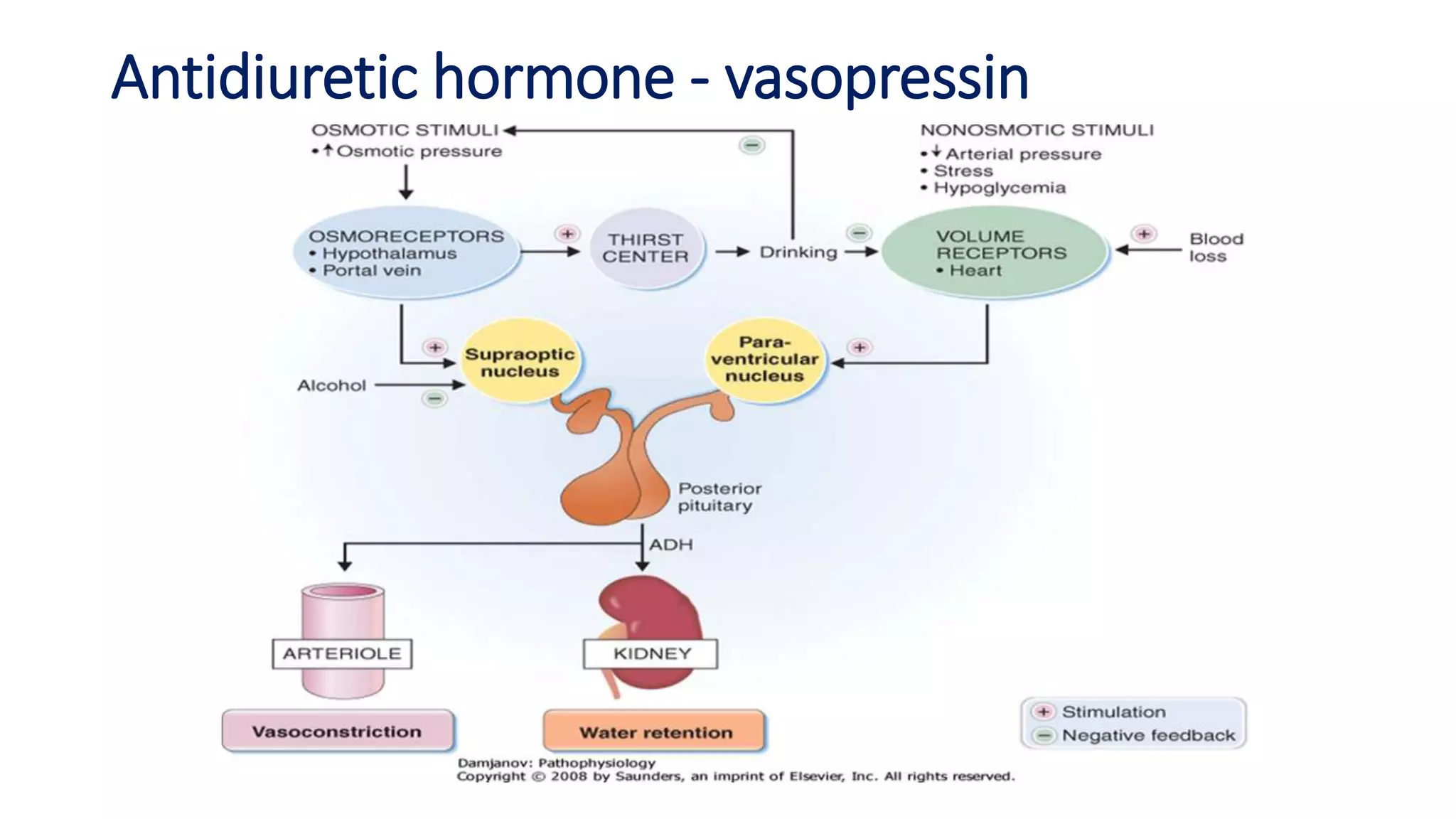
Antidiuretic hormone - vasopressin
Syndrome of inapropriate ADH secretion - SIDAH
A complex of symptoms caused by an excessive amount of
vasopressin (ADH) in the blood in relation to plasma osmolality, with
a normal circulating blood volume.
Causes:
• brain damage (injuries, tumors, operations, inflammations,
psychoses),
• lung diseases (inflammations, tuberculosis, pleural empyema,
asthma),
• neoplasms (lung cancer, gastrointestinal cancer, prostate cancer;
thymomas, serotonin-secreting neuroendocrine neoplasms),
• right heart failure,
• drugs (painkillers, psychotropic, diuretic, cytostatic)
Syndrome of inapropriate ADH secretion - SIDAH
The pathomechanism of SIADH is complex;
• tumors can induce ectopic ADH production,
• in non-neoplastic diseases (eg, lungs), ADH secretion is
stimulated by hypoxia.
Excess ADH causes
increased water retention with normal Na + excretion,
resulting in :
• hyponatraemia,
• plasma hypoosmolality
• high urine osmolality
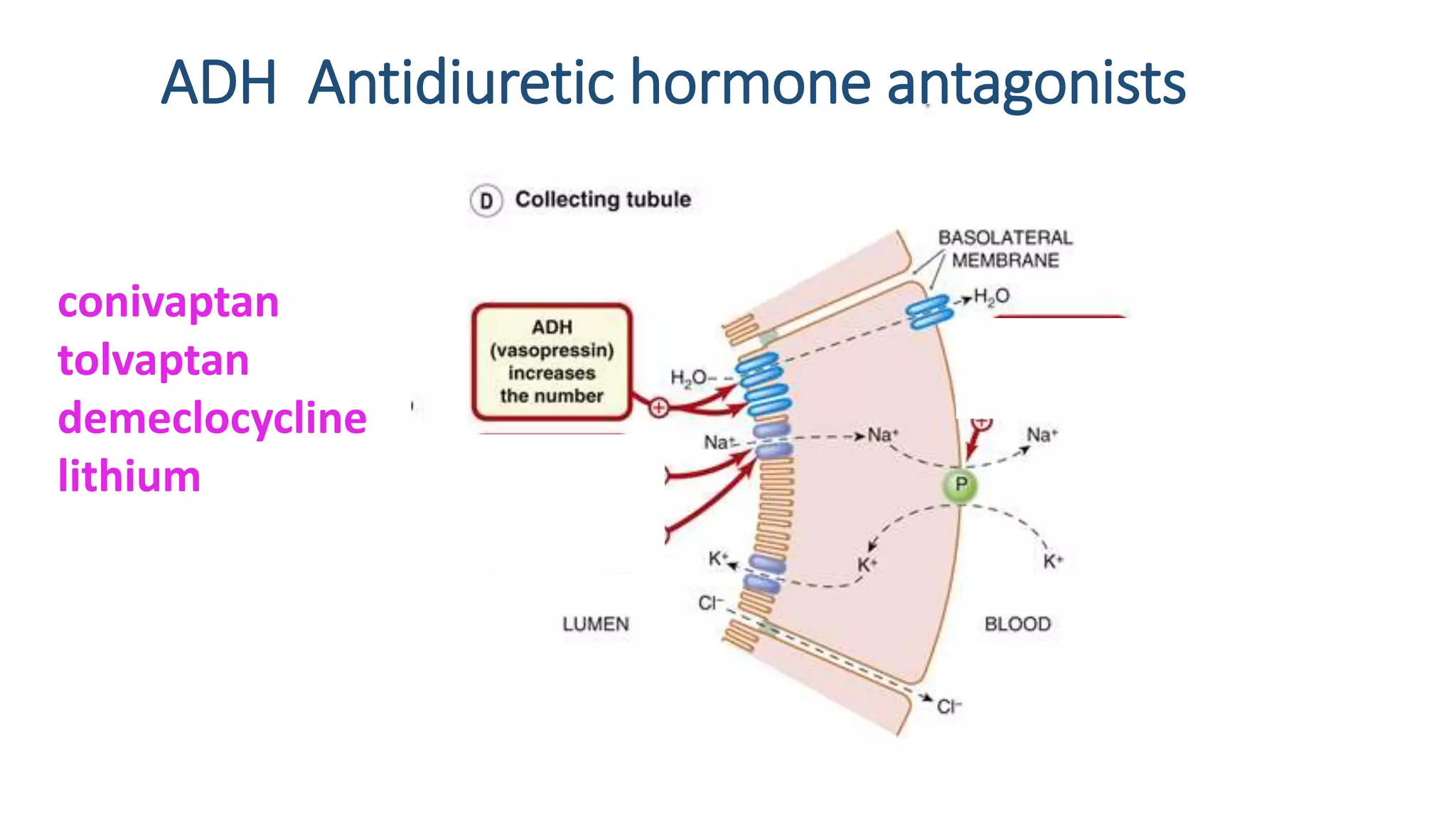
ADH Antidiuretic hormone antagonists
conivaptan
tolvaptan
demeclocycline
lithium
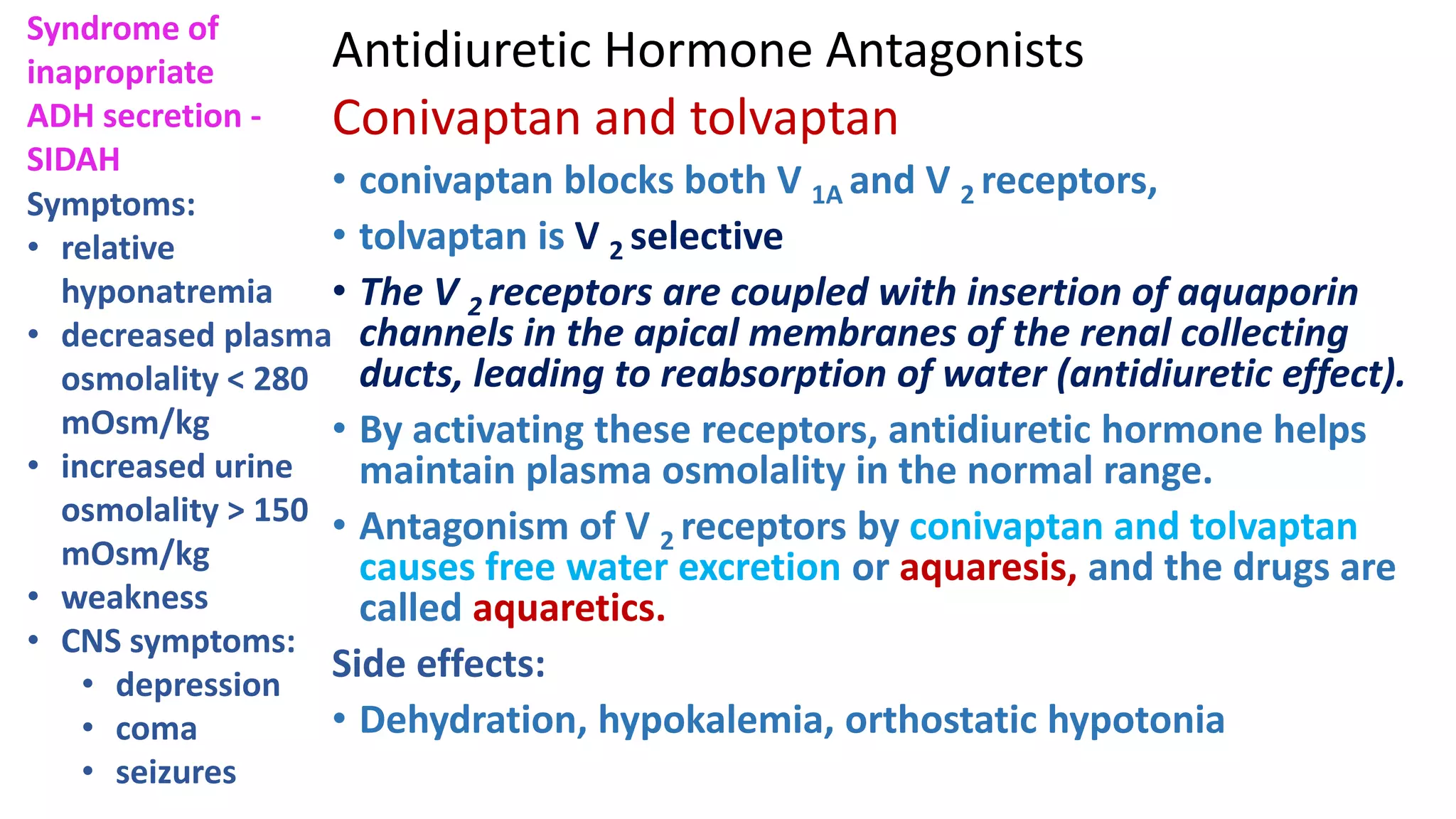
Antidiuretic Hormone Antagonists
Conivaptan and tolvaptan
• conivaptan blocks both V 1A and V 2 receptors,
• tolvaptan is V 2 selective
• The V 2 receptors are coupled with insertion of aquaporin
channels in the apical membranes of the renal collecting
ducts, leading to reabsorption of water (antidiuretic effect).
• By activating these receptors, antidiuretic hormone helps
maintain plasma osmolality in the normal range.
• Antagonism of V 2 receptors by conivaptan and tolvaptan
causes free water excretion or aquaresis, and the drugs are
called aquaretics.
Side effects:
• Dehydration, hypokalemia, orthostatic hypotonia
Symptoms:
• relative
hyponatremia
• decreased plasma
osmolality < 280
mOsm/kg
• increased urine
osmolality > 150
mOsm/kg
• weakness
• CNS symptoms:
• depression
• coma
• seizures
Syndrome of
inapropriate
ADH secretion -
SIDAH
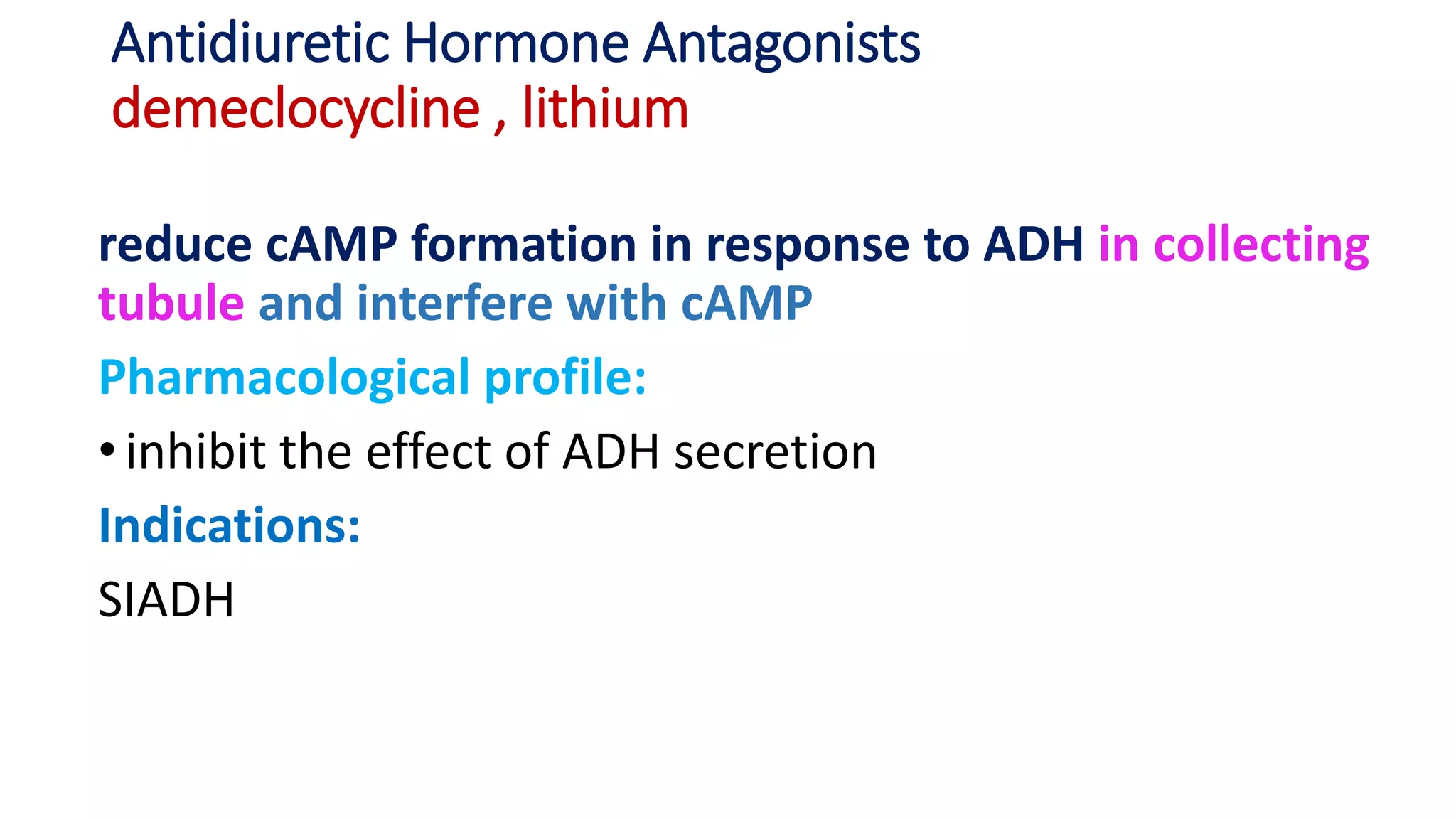
Antidiuretic Hormone Antagonists
demeclocycline , lithium
reduce cAMP formation in response to ADH in collecting
tubule and interfere with cAMP
Pharmacological profile:
•inhibit the effect of ADH secretion
Indications:
SIADH
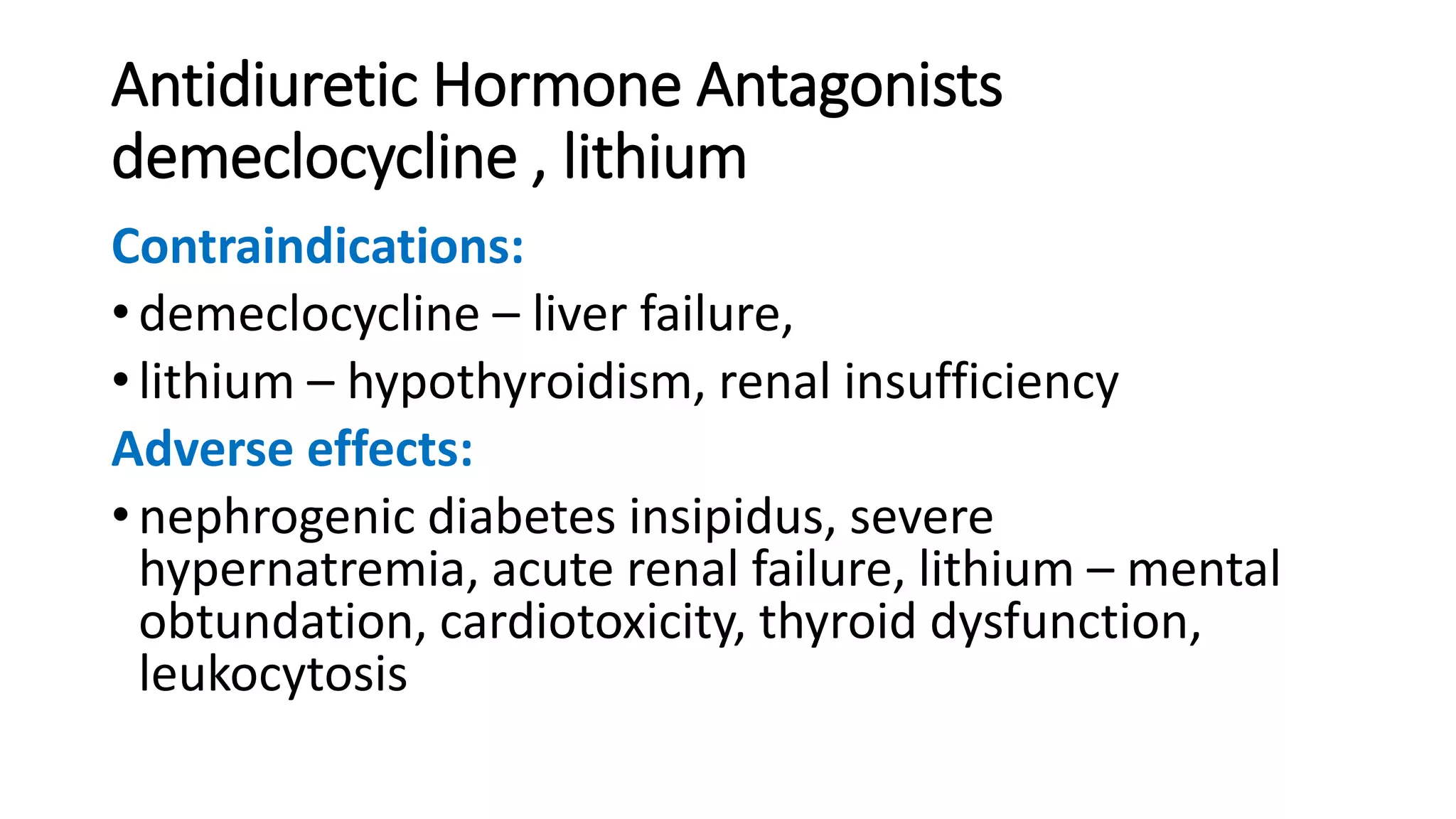
Antidiuretic Hormone Antagonists
demeclocycline , lithium
Contraindications:
• demeclocycline – liver failure,
• lithium – hypothyroidism, renal insufficiency
Adverse effects:
• nephrogenic diabetes insipidus, severe
hypernatremia, acute renal failure, lithium – mental
obtundation, cardiotoxicity, thyroid dysfunction,
leukocytosis
Summary
DIURETICS
• Normally <1% of filtered Na + is excreted.
• Diuretics increase the excretion of salt (NaCl or NaHCO 3-) and water.
• Loop diuretics, thiazides and K + -sparing diuretics are the main
therapeutic drugs.
• Loop diuretics (e.g. furosemide ) cause copious urine production.
They inhibit the Na + /K + /2Cl − co-transporter in the thick ascending
loop of Henle. They are used to treat heart failure and other diseases
complicated by salt and water retention.
Hypovolaemia and hypokalaemia are important unwanted effects.
Summary
Thiazides have a smaller diuretic effect than loop diuretics.
• They inhibit the Na + /Cl − co-transporter in the distal convoluted
tubule.
• They are used to treat hypertension, working partly through an
indirect vasodilator action.
• Erectile dysfunction is an important adverse effect.
• Hypokalaemia and other metabolic effects (e.g. hyperuricaemia,
hyperglycaemia) can occur, especially with high doses.
Summary
Potassium-sparing diuretics:
• act in the distal nephron and collecting tubules;
• they are
• weak diuretics but effective in some forms of
hypertension and heart failure
• can prevent hypokalaemia caused by loop diuretics or
thiazides
• canrenone, the active metabolite of spironolactone and
eplerenone compete with aldosterone for its receptor.
• amiloride and triamterene act by blocking the sodium
channels controlled by aldosterone's protein mediator.
Review Questions
1
2
3
4
5
Diuretics Acting Directly on Cells of the Nephron
Mechanisms of ion absorption at
the apical margin of the tubule
cell:
(1) Na + /H + exchange;
(2)Na + /K + /2Cl − co-
transport;
(3)Na + /Cl − co-
transport;
(4)Na + entry through
sodium channels.
Sodium is pumped out of the
cells into the interstitium by
the Na + -K + -ATPase in the
basolateral margin of the
tubular cells (not shown).
Review Questions
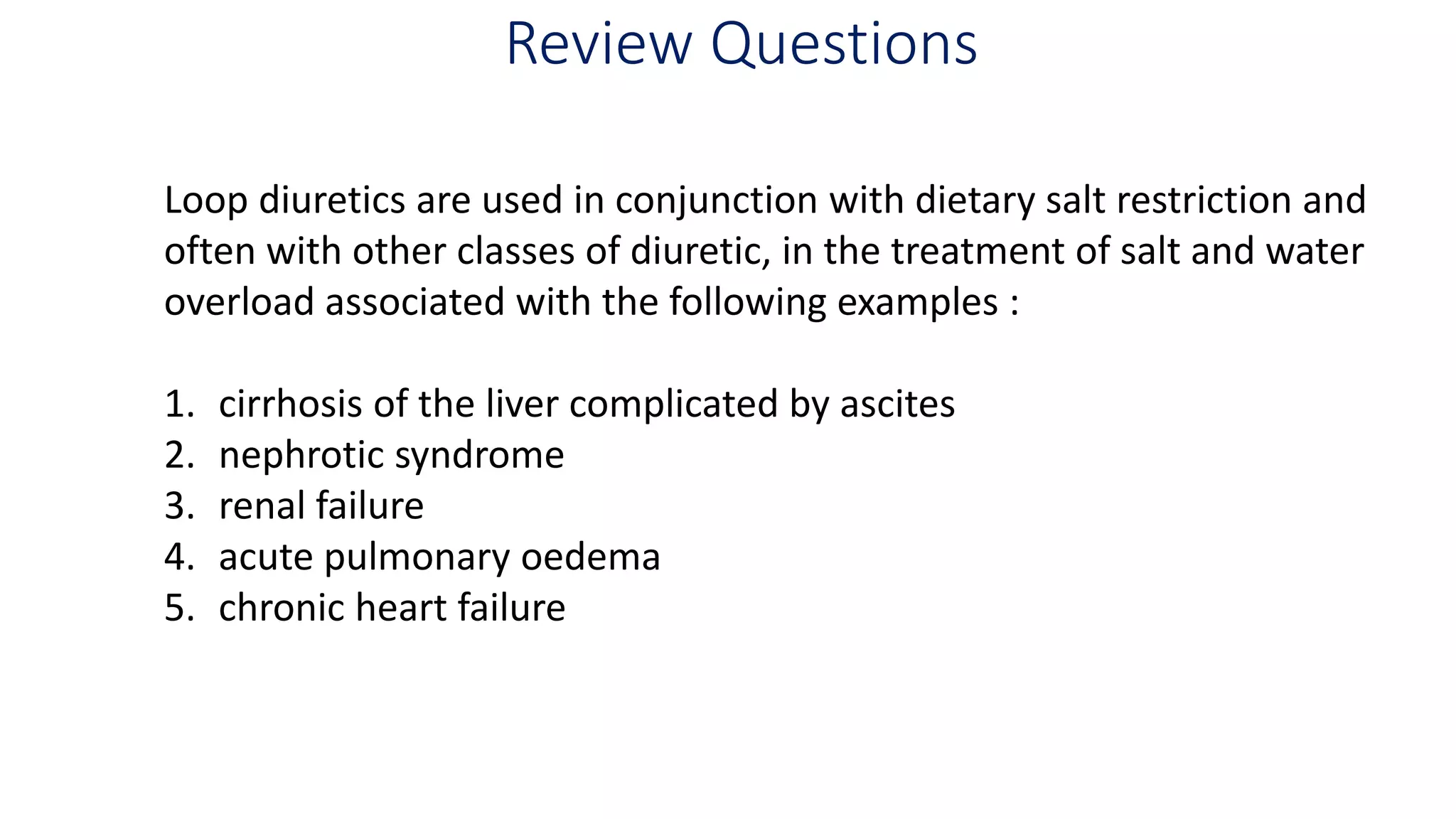
Loop diuretics are used in conjunction with dietary salt restriction and
often with other classes of diuretic, in the treatment of salt and water
overload associated with the following examples :
1. cirrhosis of the liver complicated by ascites
2. nephrotic syndrome
3. renal failure
4. acute pulmonary oedema
5. chronic heart failure
Review Questions
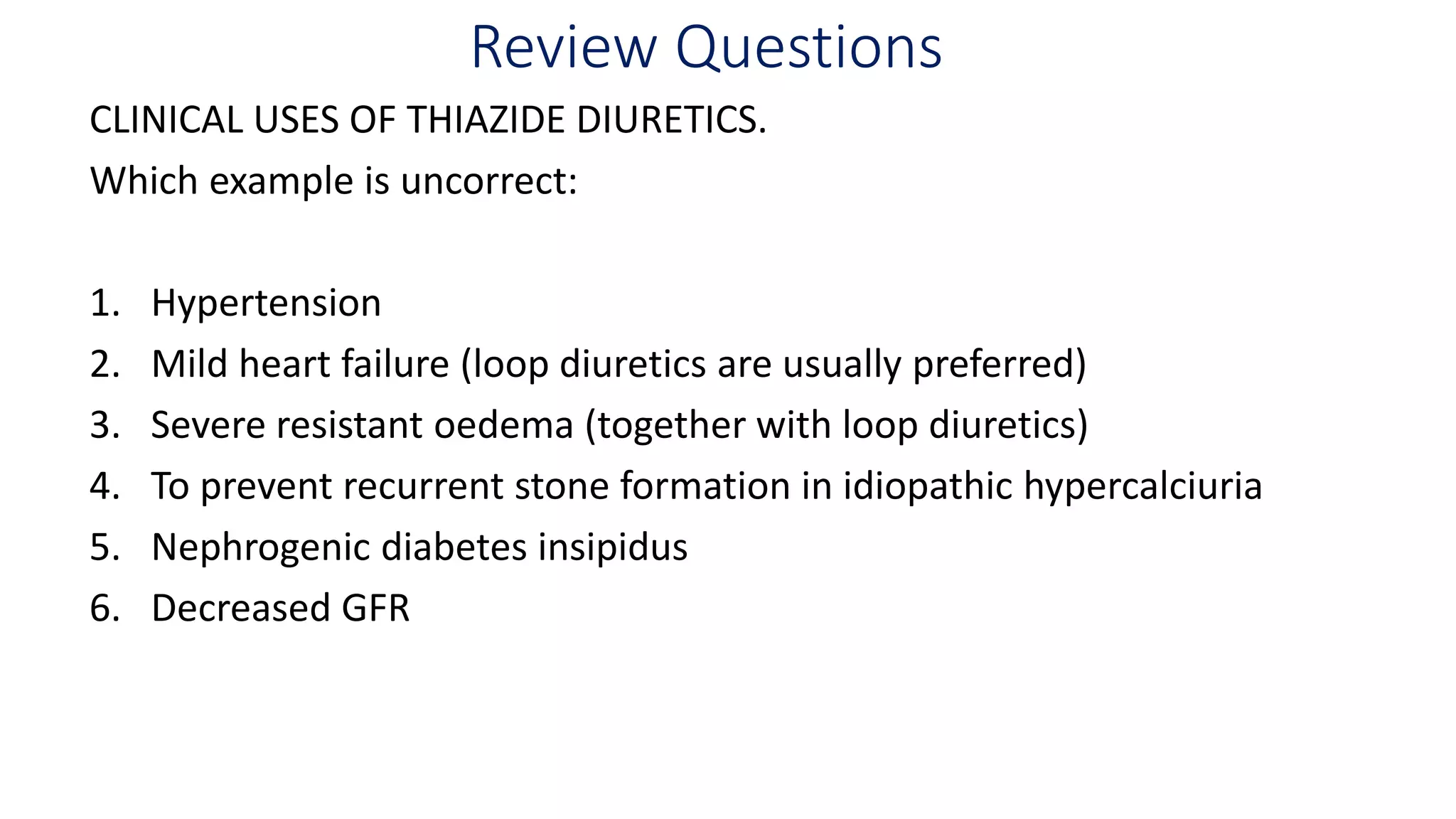
CLINICAL USES OF THIAZIDE DIURETICS.
Which example is uncorrect:
1. Hypertension
2. Mild heart failure (loop diuretics are usually preferred)
3. Severe resistant oedema (together with loop diuretics)
4. To prevent recurrent stone formation in idiopathic hypercalciuria
5. Nephrogenic diabetes insipidus
6. Decreased GFR
Review Questions
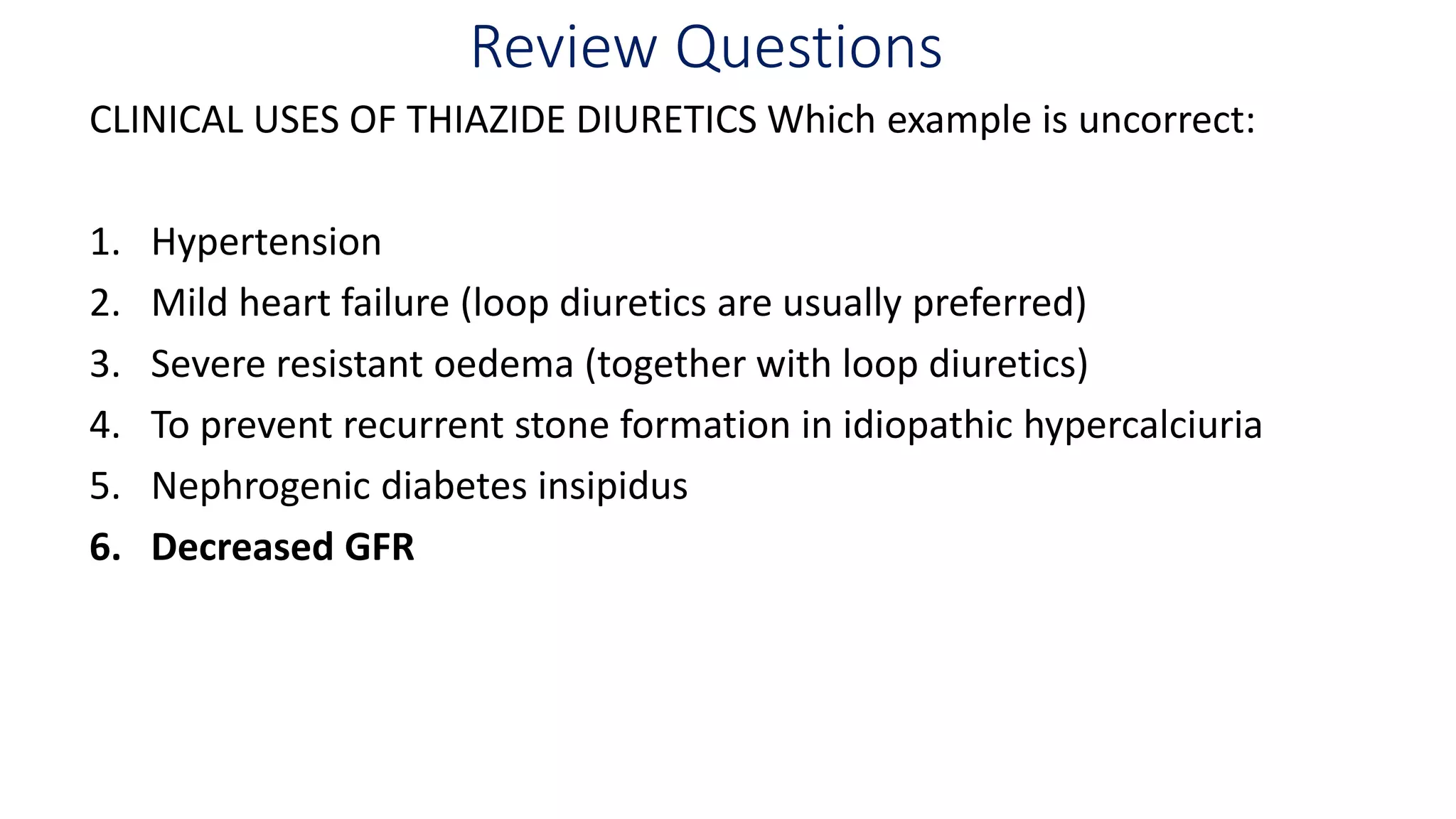
CLINICAL USES OF THIAZIDE DIURETICS Which example is uncorrect:
1. Hypertension
2. Mild heart failure (loop diuretics are usually preferred)
3. Severe resistant oedema (together with loop diuretics)
4. To prevent recurrent stone formation in idiopathic hypercalciuria
5. Nephrogenic diabetes insipidus
6. Decreased GFR
Review Questions
Spironolactone or eplerenone is used in the following situations
except of:
• heart failure , to improve survival
• primary hyperaldosteronism (Conn’s syndrome)
• resistant essential hypertension
• secondary hyperaldosteronism caused by hepatic cirrhosis
complicated by ascites
• the only one diuretic in pulmonary edema
Review Questions
Spironolactone or eplerenone is used in the following situations
except of:
• heart failure , to improve survival
• primary hyperaldosteronism (Conn’s syndrome)
• resistant essential hypertension
• secondary hyperaldosteronism caused by hepatic cirrhosis
complicated by ascites
• as the only one diuretic in pulmonary edema
1
2
3
4
Aldosterone antagonists = Spironolactone and eplerenone
Thiazides
Carbonic
anhydrase
inhibitors
LOOP DIURETICS
References
1. Rang & Dale's Pharmacology, 9th Edition2020, Elsevier Books
2. Brenner and Stevens' Pharmacology, Elsevier Books, 2017

DIURETICS.pptx

  • 1.
  • 2.
    Diuretics • Physiology ofnephron - renal tubular function • Mechanisms of action of particular type of diuretics Classification of diuretics: • Inhibitors of Na+/K+/Cl- symport (loop diuretics, high-ceilling diuretics) • Inhibitors of Na+/Cl- symport (thiazides and thiazide-like diuretics) • Inhibitors of carbonic anhydrase • Osmotic diuretics • Inhibitors of renal epithelial Na+ channels (K+ - sparing diuretics) • Antagonists of mineralocorticoid receptors (aldosterone antagonists, K+ - sparing diuretics) Presentation plan
  • 3.
    Detail: “Blood Flowin the Nephron” by Phil Schatz. License: CC BY 4.0 GFR indicates the volume of primary urine filtered in the glomerulus per time unit. It is 85 – 135 ml/min in healthy kidneys.
  • 4.
    Nephrons and Vessels Detail:“Nephrons and Vessels” by Phil Schatz. License: CC BY 4.0
  • 7.
    Renal handling ofmajor minerals. The semipermeable GBM allows passage of proteins that have molecular weights lower than albumin (68,000 daltons). Almost all proteins reaching the proximal tubule are reabsorbed, and the final urine contains less than 150 mg of protein per 24 hours.
  • 8.
    Production of hyperosmotic and hypo-osmoticurine under the influence of ADH. A, Diuresis in the presence of high serum antidiuretic hormone (ADH). B, Diuresis in the absence of ADH. The thicker, dotted line indicates impermeability to water. P−, phosphate.
  • 9.
    Sodium handling by thekidneys. Most of the sodium filtered in the glomeruli is reabsorbed, and less than 1% is excreted in the urine. ANH, atrial natriuretic hormone.
  • 10.
  • 11.
    Carbonic anhydrase Carbonic anhydrase(CA) forms bicarbonate (HCO3−) from the CO2, which has diffused into the cytoplasm of tubular cells. Bicarbonate then returns into the blood to serve as a buffer. This interchange is linked to the flux of sodium (Na+) and potassium (K+) mediated by an Na+/K+ ATPase
  • 12.
    The juxtaglomerular apparatusThe cutaway sections show 1. the granular renin-containing cells around the afferent arteriole 2. the macula densa cells in the distal convoluted tubule. The inset shows the general relationships between the structures. DT, distal tubule; G, glomerulus.
  • 13.
    Transport processes inthe proximal convoluted tubule The main driving force for the absorption of solutes and water from the lumen is the Na + -K + -ATPase in the basolateral membrane of the tubule cells. Many drugs are secreted into the proximal tubule
  • 14.
    Reabsorption of fluidand solute in the kidney Filtered/day Excreted/day b Percentage reabsorbed Na + (mmol) 25,000 150 99+% K + (mmol) 600 90 93+% Cl − (mmol) 18,000 150 99+% HCO 3 − (mmol) 4900 0 100% Total solute (mosmol) 54,000 700 87% H 2 O (L) 180 ~1.5 99+%
  • 15.
    Diuretics Acting Directlyon Cells of the Nephron Most diuretics with a direct action on the nephron act from within the tubular lumen and reach their sites of action by being secreted into the proximal tubule (spironolactone is an exception). Diuretics Acting Directly on Cells of the Nephron The main therapeutically useful diuretics act on the: • thick ascending loop of Henle • early distal tubule • collecting tubules and ducts Mechanisms of ion absorption at the apical margin of the tubule cell: (1) Na + /H + exchange; (2) Na + /K + /2Cl − co-transport; (3) Na + /Cl − co-transport; (4) Na + entry through sodium channels. Sodium is pumped out of the cells into the interstitium by the Na + -K + -ATPase in the basolateral margin of the tubular cells (not shown).
  • 16.
    Drug effects onrenal tubular ion transport (A)Bicarbonate ion reabsorption in the proximal convoluted tubule, showing the action of carbonic anhydrase inhibitors. (B)Ion transport in the thick ascending limb of Henle loop, showing the site of action of loop diuretics, namely the Na + /K + /2Cl – co-transporter (C 1 ) . Chloride ions leave the cell through basolateral chloride channels by an electroneutral K + /Cl – co- transporter (C 2 ) which are also present in the distal tubule.
  • 17.
    Drug effects onrenal tubular ion transport (C) Salt transport in the distal convoluted tubule, showing the site of action of thiazide diuretics, namely the Na + /Cl – co- transporter (C 3 ) . (D) Actions of hormones and drugs on the collecting tubule. • The cells are impermeable: 1. to water in the absence of antidiuretic hormone (ADH) 2. to Na + in the absence of aldosterone. Aldosterone acts on: • a nuclear receptor within the tubule cell • membrane receptors
  • 18.
  • 19.
    Hypokaliemia Hypokalemia manifests as •severe cardiac arrhythmias (e.g. torsade de pointes), • skeletal muscle weakness, • constipation, and even intestinal paralysis, • urinary retention (due to weakening of the bladder muscles) • neurological disorders (paraesthesia, nervous hyperactivity or apathy)
  • 20.
    Hyperkaliemia Hyperkalemia reduces theresting potential of cell membranes, which impairs the generation and propagation of stimuli. The dysfunction of myocytes and neurocytes is manifested by: • weakness or paralysis of skeletal muscles, • weakened tendon reflexes, • arrhythmias (bradycardia, asystole, ventricular fibrillation), • reduced stroke volume, • impaired sensation (paraesthesia) • disturbances of consciousness
  • 21.
    Na+ K+ loops severe hypokalemia Mechanism ofaction Inhibition of Na+/K+/Cl- symport in thick ascending limb of the loop of Henle.
  • 22.
    Pharmacological actions: • ↑excretion of Na + (diuretic effect up to 35%), Cl-, K +, Ca2 +, Mg2 +, HCO3-, phosphates •  excretion of uric acid • ↑ RBF and GFR • ↑ renin release • ↑ the volume of the venous capacitance LOOP DIURETICS
  • 23.
    LOOP DIURETICS -indications: • chronic congestive heart failure • acute pulmonary edema • chronic renal failure - reducing fluid overload • acute renal failure - maintenance of GFR • edema due to ascites (hepatic insufficiency) • nephrotic syndrome Lumen
  • 24.
    LOOP DIURETICS -indications • treatment of arterial hypertension - acute and chronic • forced diuresis (poisoning with substances excreted by the kidneys) • hypercalcemia - a constant infusion of NaCl is necessary to maintain the increased excretion of Ca • hyperkalemia • life-threatening hyponatremia
  • 25.
  • 26.
    Loop diuretics •Dehydration and dyselecrolithemia •Thrombosis •Hypochloraemicalkalosis •Ototoxicity •Hyperuricemia •Hyperglycemia and hyperlipidemia Contraindications: •Hyponatraemia, hypokalemia •Dehydration -severe volume depletion •Allergy to sulfonamides •Irreversible anuria Side effects:
  • 27.
    Dose–response curves for furosemide and hydrochlorothiazid showing differencesin potency and maximum effect ‘ceiling’. Note that these doses are not used clinically.
  • 28.
    Diuretic causes: •Hyponatriemia, hypokaliemia •Hypocalcemia,hypomagnesemia •Metabolic alkalosis •Hyperuricemia •Ototoxicity
  • 29.
    How diuretic effectshould be monitored? Every day – by body weight measure The goal: the loss of 1% of body weight usually 0.5-1.0 kg/24h How diuretics (especially diuretic X) should be administered? Once a day (orally or i.v. bolus)? Twice a day (orally or i.v. bolus)? As a continous infusion?
  • 30.
  • 31.
    • A 56-year-oldpatient suffered from recurring headaches accompanied by increased blood pressure (mean 170/100). The doctor diagnosed arterial hypertension and decided to start treatment with a diuretic. • Which diuretic did he choose?
  • 32.
  • 33.
    Diuretic causes: • Hyponatremia,hypokalemia, hypercalcemia • Metabolic alkalosis • Glucose intolerance, hiperlipidemia • Hyperuricemia
  • 34.
  • 35.
    Thiazides diuretic effect -diuretic effect up to 15% influence on the excretion of electrolytes and compounds: • ↑ Na +, K +, Mg2 +, Cl-, •  Ca2 +, uric acid other activities: •  GFR - by stimulation of tubulo-glomerular feedback • vascular arterial bed expansion -  systemic resistance -  RR (arterial blood pressure decreases)
  • 36.
    Thiazides Indications • arterial hypertension •heart failure Indications like loop diuretics except of : (because of enhanced Ca 2+ reabsorption and reduced GFR) • nephrolithiasis • osteoporosis • nephrogenic diabetes insipidus • Br (bromine) intoxication
  • 37.
    Thiazides Side effects • waterand electrolyte disturbances • hyperglycemia and hyperlipidemia • impotence • neurological and gastrointestinal symptoms, • blood dyscrasias (inappropriate synthesis coagulation factors by the liver) •Contraindications: • hyponatremia, • severe volume depletion, • anuria, • diabetes mellitus, • hyperlipidemia, • renal insufficiency
  • 38.
    The patient withCOPD (chronic obstructive pulmonary disease) developed metabolic alkalosis. Which diuretic can be used in this patient?
  • 39.
    Carbonic anhydrase inhibitors– mechanism of action? What is the main therapeutic indication for CAI? Patient with chronic obstructive pulmonary disease (COPD) suffers from metabolic alkalosis.
  • 40.
  • 41.
  • 42.
    Carbonic anhydrase inhibitors Pharmacologicalaction: • ↑ urinary HCO3- excretion, ↑ urine pH, • in blood - metabolic acidosis (hyperchloraemic) • ↑ Na + (5%) and K + excretion • ↑ phosphates excretion •  production of HCO3- in aqueous humor (watery fluid in the eyeball) •  CNS pH (metabolic acidosis) • reduction of gastric acid secretion
  • 43.
  • 44.
    Carbonic anhydrase inhibitors Indications: •glaucoma •urinealkalization •metabolic alkalosis •mountain sickness •severe hyperphosphatemia •hypo- and hyperkalemic periodic paralysis, •epilepsy
  • 45.
    Carbonic anhydrase inhibitors Sideeffects: sulfonamide-like • allergy • bone-marrow depression, • renal lesions, • drowsiness and paresthesias, • calculus formation Contraindications: •liver failure – hepatic encephalopathy •severe acidosis •hyponatremia and hypokalemia
  • 46.
    • In 40-yearsold patient with massive bleeding from GI tract, urine production decreased significantly and creatinine level increased. What are main therapeutic indications for mannitol? Osmotics– mechanism of action? Examples: urea mannitol glycerin
  • 47.
    Osmotic diuretics Mechanism ofaction • disribution of water into the vascular space due to their osmotic effect • the water is excreted in the urine Activity along the whole nephron The major sites of action are: • the proximal tubule • the loop of Henle
  • 48.
    Osmotic diuretics Pharmacological profile Generalfeatures: • Freely filtered at the glomerulus • Undergo limited reabsorption Pharmacological action • volume depletion • increased excretion of almost all electrolytes • decreased blood viscosity • increased RBF and GFR Indications: • acute renal insufficiency, intoxications, • cerebral edema – prophylaxis
  • 49.
    Osmotic diuretics Contraindications: • left-ventricularcardiac insufficiency, • chronic renal insufficiency, • irreversible anuria Adverse effects: •dehydration and dyselectrolitemia • pulmonary edema •hyponatremia •trombosis or pain in site of injection - urea •hepatic failure •hyperglycemia - glycerin
  • 50.
    • Patient withascites requires diuretic therapy.
  • 51.
    Diuretic causes: • Hyponatremia,hyperkalemia • Metabolic acidosis • Delayed action
  • 52.
  • 53.
    Antagonists of mineralocorticoidreceptors K+ – sparing diuretics Spironolactone and eplerenone Indications: •edema and hypertension to prevent hypokalemia (in combination with other diuretics) •edema associated with secondary aldosteronism • hypertension in the course of Conn's syndrome • prevention of left ventricular remodeling in HF •prevention of post-infarction fibrosis
  • 54.
    Antagonists of mineralocorticoidreceptors K+ – sparing diuretics Pharmacological profile •mild influence on blood volume, ↓excretion of K+, H+, Ca2+, Mg2+ , uric acid, •metabolic acidosis Contraindications: •pregnancy, •lactation Adverse effects: •hyperkalemia •diarrhea • gastric bleeding Spironolactone • gynecomastia, • impotence, •decreased libido, •hirsutism, • deepening of the voice, •menstrual irregulations,
  • 55.
    Amyloride, triamterene -potassium-sparingdrugs Inhibitors of renal epithelial Na+ channels Mechanism of action • Inhibition of renal epithelial Na+ channels in: • distal convoluted tubule • collecting duct system Pharmacological profile • slight effect on fluid volume • ↓excretion of : K+, H+, Ca2+, Mg2+, uric acid • metabolic acidosis
  • 56.
    Amyloride, triamterene -potassium-sparingdrugs Inhibitors of renal epithelial Na+ channels Contraindications: • hypersensitivity • anuria • renal insufficiency Adverse effects: • hyperkalemia, • GI disturbances • Triamterene • folic acid antagonist • reduces glucose tolerance • interstitial nephritis and nephrolithiasis Indications: • edema • hypertension (only in combination with thiazides or loop diuretics) • cystic fibrosis – amyloride • lithium- induced diabetes insipidus
  • 57.
    Potassium-sparing drugs Inhibitors ofrenal epithelial Na+ channels amyloride, triamterene
  • 60.
    Diuretic effect isdependent on activity of hormonal mechanisms
  • 62.
    •A 77-years oldpatient with chronic cardiac insufficiency requires treatment with diuretic.
  • 63.
    Resistance to diureticse.g in the course of HF •GI edema decreases diuretics absorption in about 70% - administer higher doses orally or give diuretic i.v. - combine furosemide with thiazide to promote diuretic effect (thiazide 1h before furosemide) -combine furosemide with spironolactone to prolonge furosemide activity, to prevent hypokalemia and to inhibit myocardium remodeling -check albumins concentration – hypoalbuminemia decreases diuretics secretion into the tubules
  • 64.
    • Pulmonary edemawas recognized in 68-years old patient.
  • 65.
    •A 60-years oldpatient with chronic renal insufficiency (GFR about 10 ml/min) requires diuretic. Resistance to diuretics e.g in the course of CRI • Adequate GFR and sodium load – check body volume and exclude hypovolemia • Use high and very high doses of furosemide 500 mg per dose • Use i.v. bolus 1-2 mg/kg and infusion 0,1 – 1 mg/kg/h
  • 66.
  • 67.
    Syndrome of inapropriateADH secretion - SIDAH A complex of symptoms caused by an excessive amount of vasopressin (ADH) in the blood in relation to plasma osmolality, with a normal circulating blood volume. Causes: • brain damage (injuries, tumors, operations, inflammations, psychoses), • lung diseases (inflammations, tuberculosis, pleural empyema, asthma), • neoplasms (lung cancer, gastrointestinal cancer, prostate cancer; thymomas, serotonin-secreting neuroendocrine neoplasms), • right heart failure, • drugs (painkillers, psychotropic, diuretic, cytostatic)
  • 68.
    Syndrome of inapropriateADH secretion - SIDAH The pathomechanism of SIADH is complex; • tumors can induce ectopic ADH production, • in non-neoplastic diseases (eg, lungs), ADH secretion is stimulated by hypoxia. Excess ADH causes increased water retention with normal Na + excretion, resulting in : • hyponatraemia, • plasma hypoosmolality • high urine osmolality
  • 69.
    ADH Antidiuretic hormoneantagonists conivaptan tolvaptan demeclocycline lithium
  • 70.
    Antidiuretic Hormone Antagonists Conivaptanand tolvaptan • conivaptan blocks both V 1A and V 2 receptors, • tolvaptan is V 2 selective • The V 2 receptors are coupled with insertion of aquaporin channels in the apical membranes of the renal collecting ducts, leading to reabsorption of water (antidiuretic effect). • By activating these receptors, antidiuretic hormone helps maintain plasma osmolality in the normal range. • Antagonism of V 2 receptors by conivaptan and tolvaptan causes free water excretion or aquaresis, and the drugs are called aquaretics. Side effects: • Dehydration, hypokalemia, orthostatic hypotonia Symptoms: • relative hyponatremia • decreased plasma osmolality < 280 mOsm/kg • increased urine osmolality > 150 mOsm/kg • weakness • CNS symptoms: • depression • coma • seizures Syndrome of inapropriate ADH secretion - SIDAH
  • 71.
    Antidiuretic Hormone Antagonists demeclocycline, lithium reduce cAMP formation in response to ADH in collecting tubule and interfere with cAMP Pharmacological profile: •inhibit the effect of ADH secretion Indications: SIADH
  • 72.
    Antidiuretic Hormone Antagonists demeclocycline, lithium Contraindications: • demeclocycline – liver failure, • lithium – hypothyroidism, renal insufficiency Adverse effects: • nephrogenic diabetes insipidus, severe hypernatremia, acute renal failure, lithium – mental obtundation, cardiotoxicity, thyroid dysfunction, leukocytosis
  • 73.
    Summary DIURETICS • Normally <1%of filtered Na + is excreted. • Diuretics increase the excretion of salt (NaCl or NaHCO 3-) and water. • Loop diuretics, thiazides and K + -sparing diuretics are the main therapeutic drugs. • Loop diuretics (e.g. furosemide ) cause copious urine production. They inhibit the Na + /K + /2Cl − co-transporter in the thick ascending loop of Henle. They are used to treat heart failure and other diseases complicated by salt and water retention. Hypovolaemia and hypokalaemia are important unwanted effects.
  • 74.
    Summary Thiazides have asmaller diuretic effect than loop diuretics. • They inhibit the Na + /Cl − co-transporter in the distal convoluted tubule. • They are used to treat hypertension, working partly through an indirect vasodilator action. • Erectile dysfunction is an important adverse effect. • Hypokalaemia and other metabolic effects (e.g. hyperuricaemia, hyperglycaemia) can occur, especially with high doses.
  • 75.
    Summary Potassium-sparing diuretics: • actin the distal nephron and collecting tubules; • they are • weak diuretics but effective in some forms of hypertension and heart failure • can prevent hypokalaemia caused by loop diuretics or thiazides • canrenone, the active metabolite of spironolactone and eplerenone compete with aldosterone for its receptor. • amiloride and triamterene act by blocking the sodium channels controlled by aldosterone's protein mediator.
  • 76.
  • 77.
    Diuretics Acting Directlyon Cells of the Nephron Mechanisms of ion absorption at the apical margin of the tubule cell: (1) Na + /H + exchange; (2)Na + /K + /2Cl − co- transport; (3)Na + /Cl − co- transport; (4)Na + entry through sodium channels. Sodium is pumped out of the cells into the interstitium by the Na + -K + -ATPase in the basolateral margin of the tubular cells (not shown).
  • 78.
    Review Questions Loop diureticsare used in conjunction with dietary salt restriction and often with other classes of diuretic, in the treatment of salt and water overload associated with the following examples : 1. cirrhosis of the liver complicated by ascites 2. nephrotic syndrome 3. renal failure 4. acute pulmonary oedema 5. chronic heart failure
  • 79.
    Review Questions CLINICAL USESOF THIAZIDE DIURETICS. Which example is uncorrect: 1. Hypertension 2. Mild heart failure (loop diuretics are usually preferred) 3. Severe resistant oedema (together with loop diuretics) 4. To prevent recurrent stone formation in idiopathic hypercalciuria 5. Nephrogenic diabetes insipidus 6. Decreased GFR
  • 80.
    Review Questions CLINICAL USESOF THIAZIDE DIURETICS Which example is uncorrect: 1. Hypertension 2. Mild heart failure (loop diuretics are usually preferred) 3. Severe resistant oedema (together with loop diuretics) 4. To prevent recurrent stone formation in idiopathic hypercalciuria 5. Nephrogenic diabetes insipidus 6. Decreased GFR
  • 81.
    Review Questions Spironolactone oreplerenone is used in the following situations except of: • heart failure , to improve survival • primary hyperaldosteronism (Conn’s syndrome) • resistant essential hypertension • secondary hyperaldosteronism caused by hepatic cirrhosis complicated by ascites • the only one diuretic in pulmonary edema
  • 82.
    Review Questions Spironolactone oreplerenone is used in the following situations except of: • heart failure , to improve survival • primary hyperaldosteronism (Conn’s syndrome) • resistant essential hypertension • secondary hyperaldosteronism caused by hepatic cirrhosis complicated by ascites • as the only one diuretic in pulmonary edema
  • 83.
  • 84.
    Aldosterone antagonists =Spironolactone and eplerenone
  • 86.
  • 88.
  • 90.
  • 91.
    References 1. Rang &Dale's Pharmacology, 9th Edition2020, Elsevier Books 2. Brenner and Stevens' Pharmacology, Elsevier Books, 2017

Editor's Notes

  • #13 The juxtaglomerular apparatus. The cutaway sections show the granular renin-containing cells around the afferent arteriole, and the macula densa cells in the distal convoluted tubule. The inset shows the general relationships between the structures. DT, distal tubule; G, glomerulus.
  • #14 Transport processes in the proximal convoluted tubule. The main driving force for the absorption of solutes and water from the lumen is the Na + -K + -ATPase in the basolateral membrane of the tubule cells. Many drugs are secreted into the proximal tubule (see Ch. 10 ). (Redrawn from Burg, 1985. Brenner, B.M., Rector, F.C. (eds). In: The Kidney, third ed., Philadelphia: WB Saunders, pp 145–175.)
  • #19 Loop diuretics Loop diuretics are the most powerful diuretics , capable of causing the excretion of 15%–25% of filtered Na + . Their action is often described – in a phrase that conjures up a rather uncomfortable picture – as causing ‘torrential urine flow’. The main example is furosemide ; bumetanide and torasemide are alternative agents. These drugs act on the thick ascending limb, inhibiting the Na + /K + /2Cl − carrier in the lumenal membrane by combining with its Cl − binding site.
  • #71 Antidiuretic Hormone Antagonists Conivaptan and tolvaptan are nonpeptide antagonists of antidiuretic hormone (arginine vasopressin). Conivaptan blocks both V 1A and V 2 receptors, whereas tolvaptan is V 2 selective. The V 2 receptors are coupled with insertion of aquaporin channels in the apical membranes of the renal collecting ducts, leading to reabsorption of water (antidiuretic effect). By activating these receptors, antidiuretic hormone helps maintain plasma osmolality in the normal range. Antagonism of V 2 receptors by conivaptan and tolvaptan causes free water excretion or aquaresis, and the drugs are called aquaretics. Conivaptan and tolvaptan are approved for treating euvolemic and hypervolemic hyponatremia (low serum sodium concentration) in hospitalized patients, but they are contraindicated in hypovolemic hyponatremia. Conivaptan is given as an intravenous infusion, usually for 4 days, and typically increases free water clearance by 3800 mL and serum sodium concentration by 6.5 mEq/L. Almost 70% of patients achieve a normal serum sodium concentration of 135 mEq/L after 4 days of conivaptan therapy. Tolvaptan is a newer orally administered drug for treating hyponatremia. Conivaptan and tolvaptan are extensively metabolized by CYP3A4 and should not be given with potent 3A4 inhibitors. Conivaptan and tolvaptan may increase serum levels of midazolam, simvastatin, and other drugs metabolized by 3A4. The most common adverse reactions reported with conivaptan are infusion site reactions.
  • #75 DIURETICS  • Normally <1% of filtered Na + is excreted. • Diuretics increase the excretion of salt (NaCl or NaHCO 3 ) and water. • Loop diuretics, thiazides and K + -sparing diuretics are the main therapeutic drugs. • Loop diuretics (e.g. furosemide ) cause copious urine production. They inhibit the Na + /K + /2Cl − co-transporter in the thick ascending loop of Henle. They are used to treat heart failure and other diseases complicated by salt and water retention. Hypovolaemia and hypokalaemia are important unwanted effects. • Thiazides (e.g. bendroflumethiazide ) have a smaller diuretic effect than loop diuretics. They inhibit the Na + /Cl − co-transporter in the distal convoluted tubule. They are used to treat hypertension, working partly through an indirect vasodilator action. Erectile dysfunction is an important adverse effect. Hypokalaemia and other metabolic effects (e.g. hyperuricaemia, hyperglycaemia) can occur, especially with high doses. • Potassium-sparing diuretics: – act in the distal nephron and collecting tubules; they are weak diuretics but effective in some forms of hypertension and heart failure, and they can prevent hypokalaemia caused by loop diuretics or thiazides. – canrenone, the active metabolite of spironolactone and eplerenone compete with aldosterone for its receptor. – amiloride and triamterene act by blocking the sodium channels controlled by aldosterone's protein mediator.