

©2008 Improving Enterprises, Inc. 
Agile with Distributed Teams and Dependencies 
By: Nirmaljeet Malhotra 
Agile Coach
©2008 Improving Enterprises, Inc. 
Intro 
Distributed family 
15 years in IT 
7+ years in Agile 
Twitter: #mnirmaljeet www.nirmaljeet.com 
Agile coach and trainer
©2008 Improving Enterprises, Inc. 
Wanna be Agile? 
Distributed Teams 
Dependencies
©2008 Improving Enterprises, Inc. 
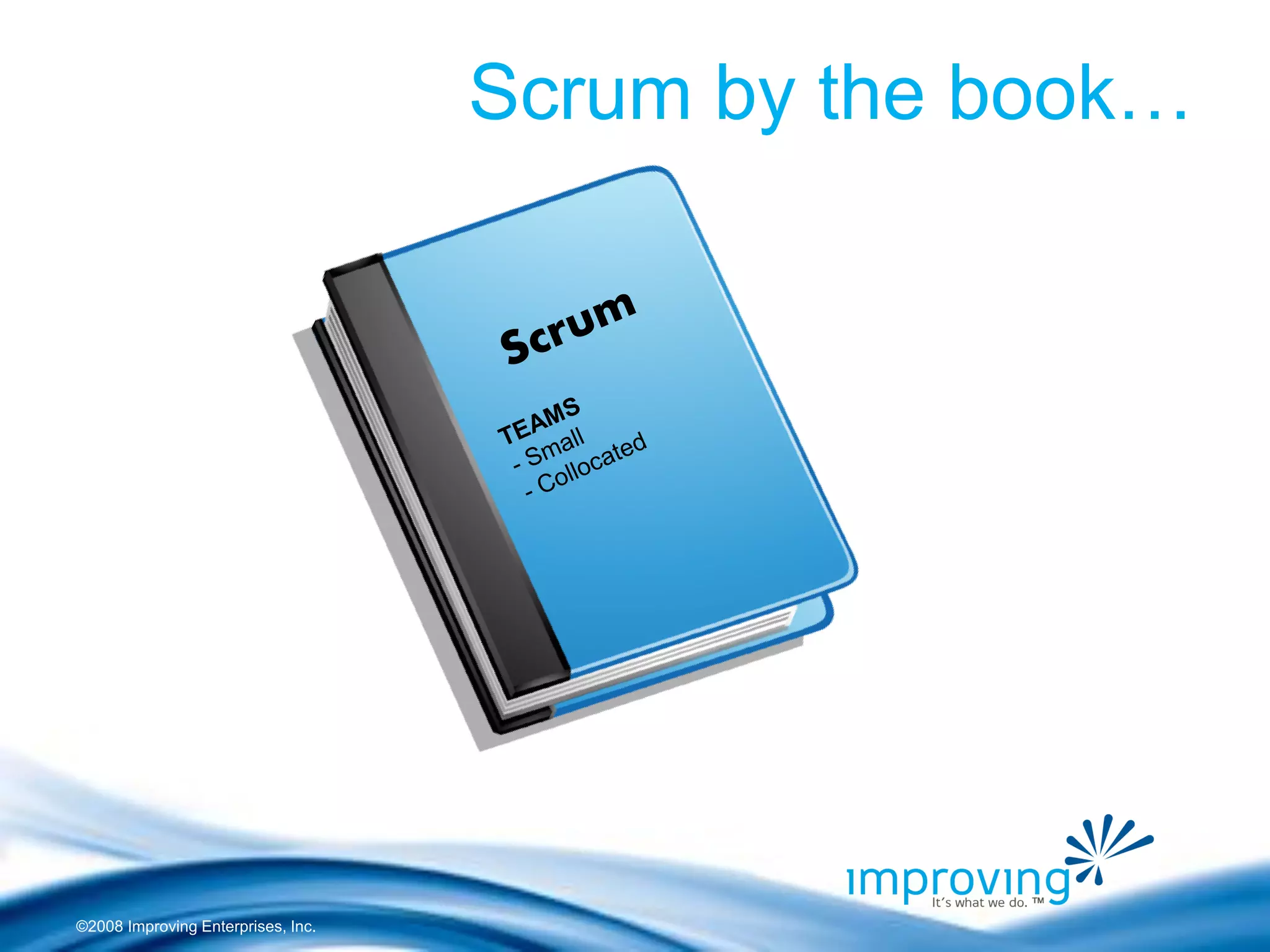
Scrum by the book…
©2008 Improving Enterprises, Inc. 
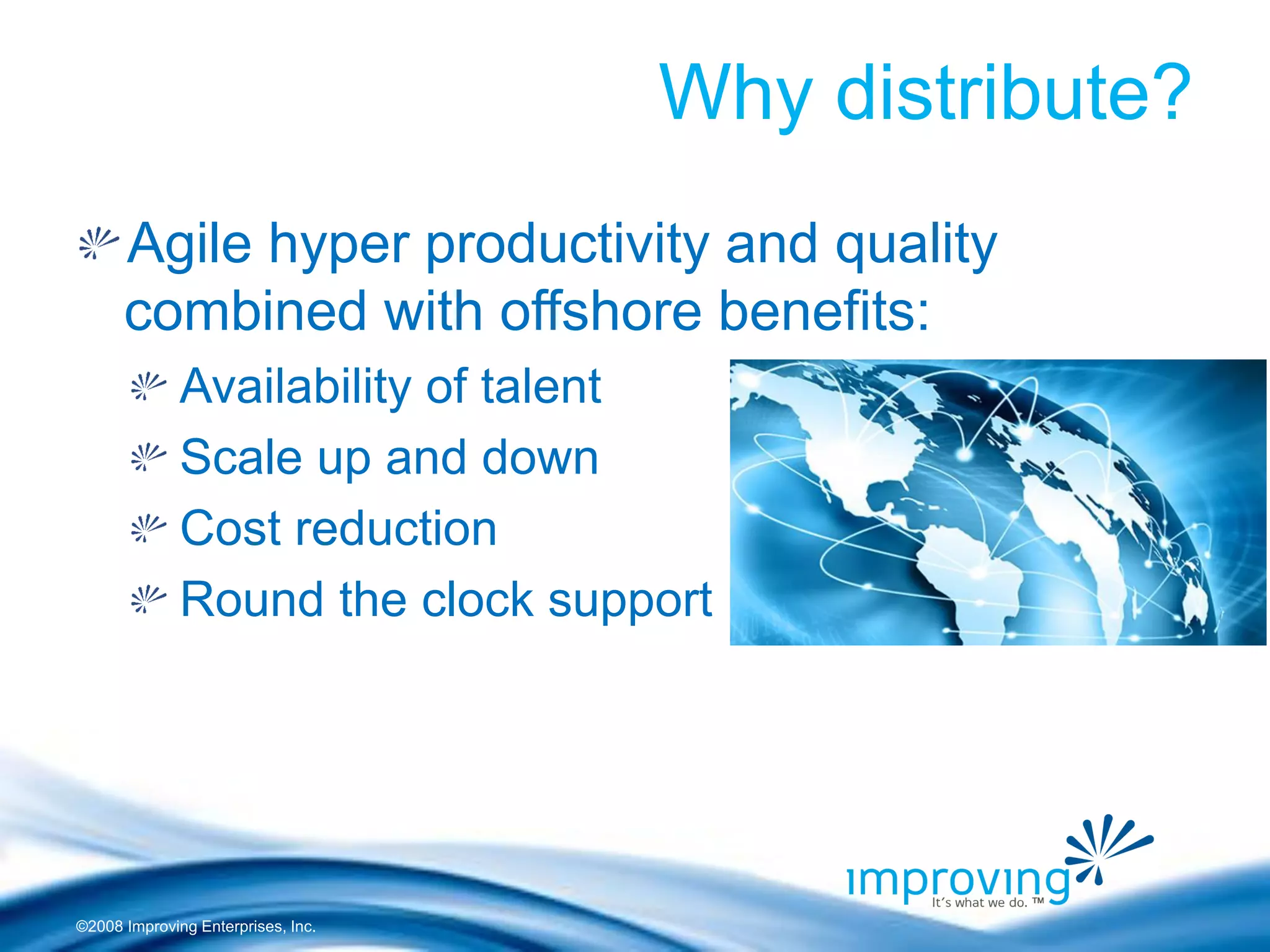
Why distribute? Agile hyper productivity and quality combined with offshore benefits: Availability of talent Scale up and down Cost reduction Round the clock support
©2008 Improving Enterprises, Inc. 
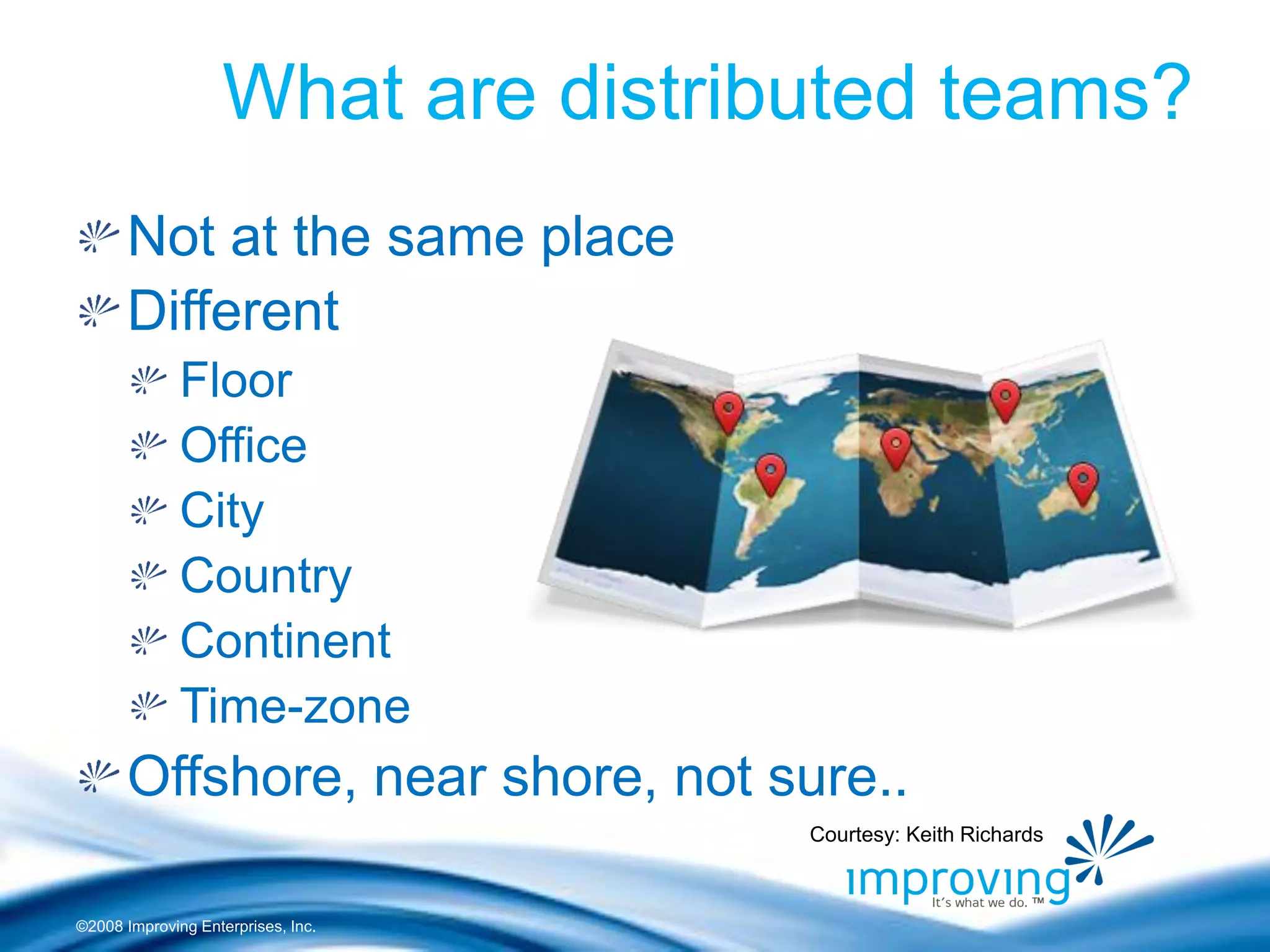
What are distributed teams? Not at the same place Different Floor Office City Country Continent Time-zone Offshore, near shore, not sure.. 
Courtesy: Keith Richards
©2008 Improving Enterprises, Inc. 
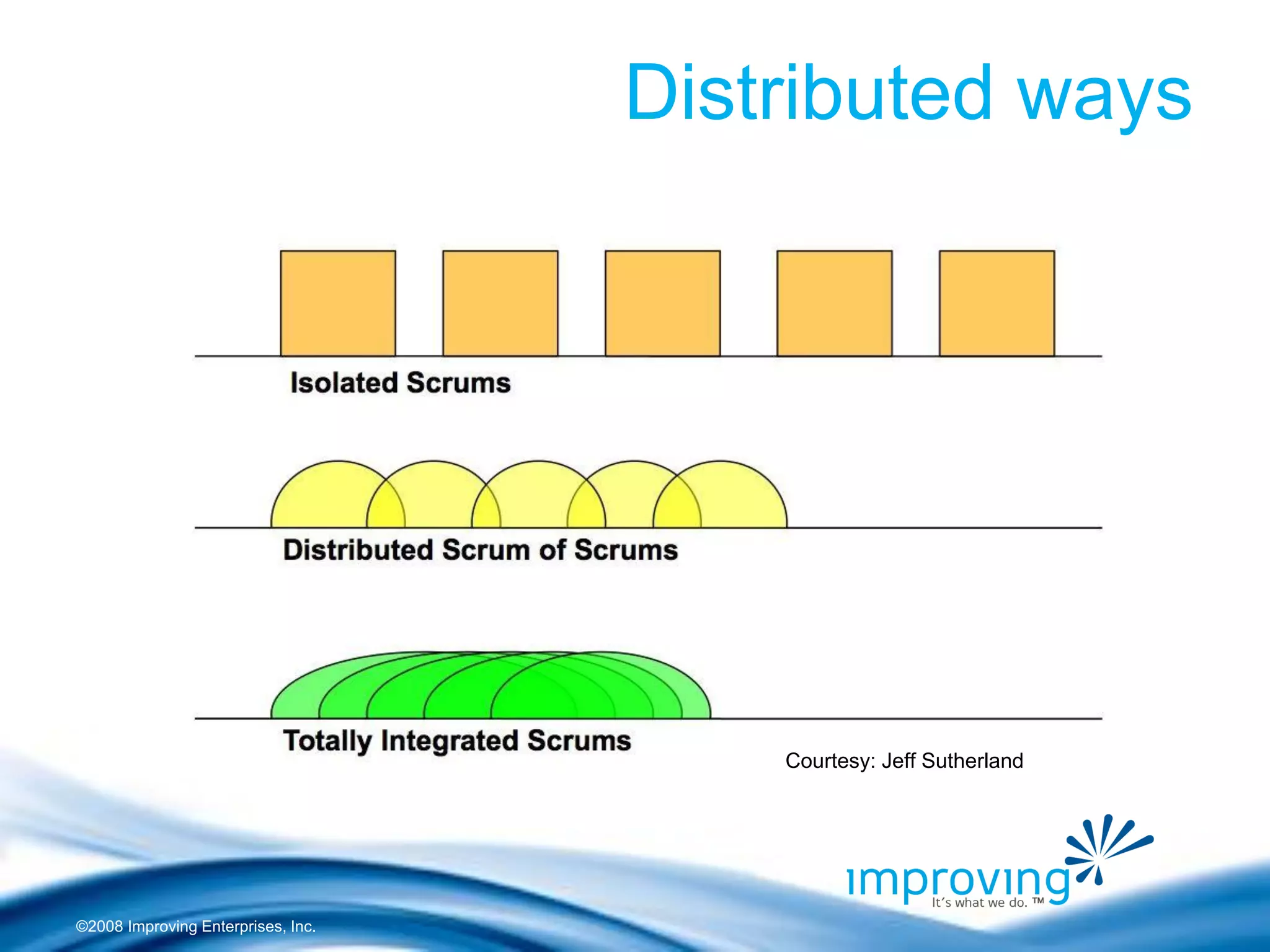
Distributed ways 
Courtesy: Jeff Sutherland
©2008 Improving Enterprises, Inc. 
Survey 1 
In one word, share your number 1 problem with distributed teams across countries/continents
©2008 Improving Enterprises, Inc. 
Survey 2 
In one word, share your number 1 problem with distributed teams in the same building/floor
©2008 Improving Enterprises, Inc. 
Question? 
So where is the problem?
©2008 Improving Enterprises, Inc. 
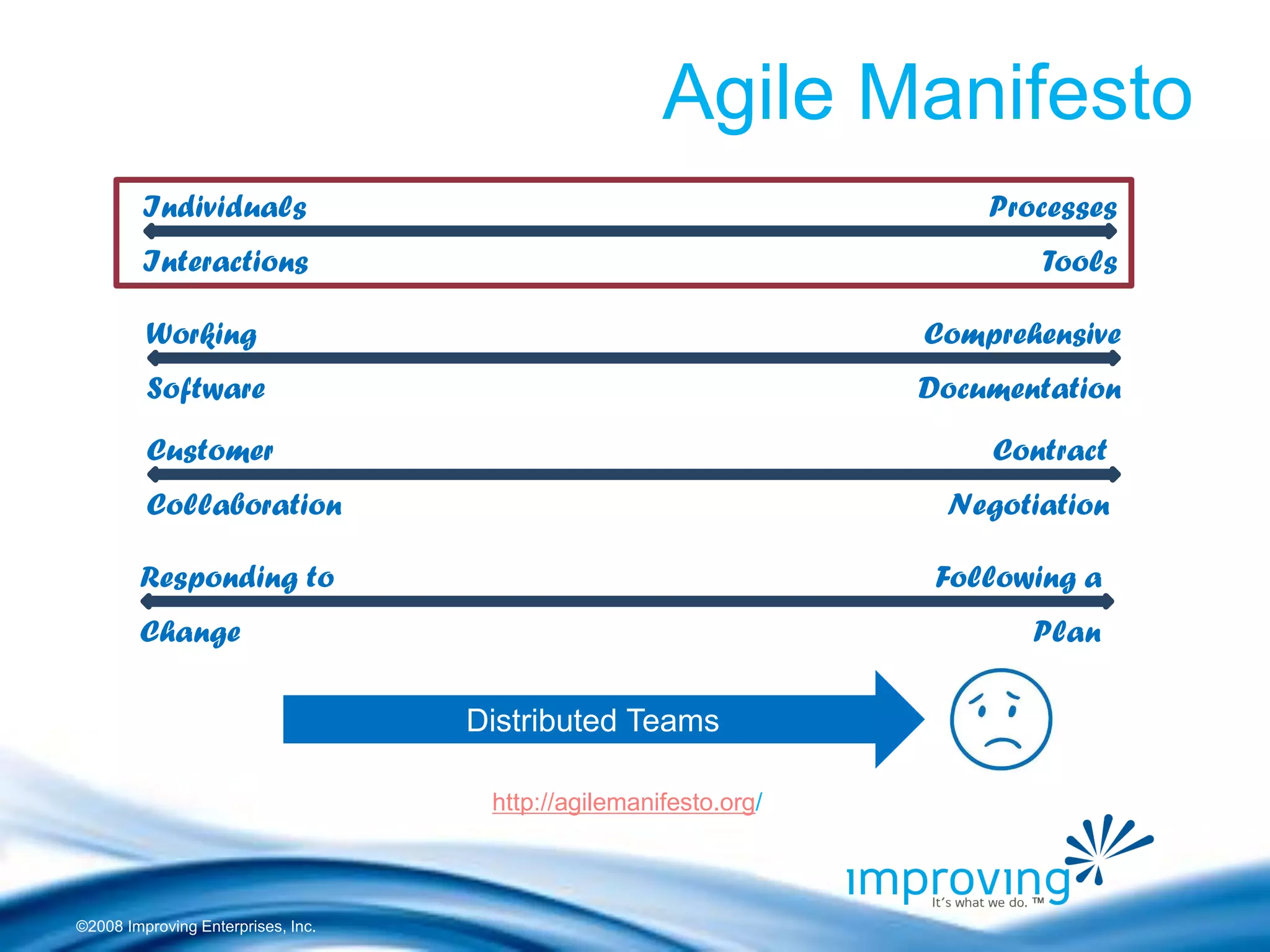
Agile Manifesto 
http://agilemanifesto.org/ 
Individuals 
Interactions 
Processes 
Tools 
Working 
Software 
Comprehensive 
Documentation 
Customer 
Collaboration 
Contract 
Negotiation 
Responding to 
Change 
Following a 
Plan 
Distributed Teams
©2008 Improving Enterprises, Inc. 
Distributed teams | Key issues Communication tax Accessibility Information lost in translation Language and cultural differences Motivation drop Cost Compromise on personal time
©2008 Improving Enterprises, Inc. 
“Project costs increase in proportion to the time it takes for people to understand each other” 
- Alistair Cockburn
©2008 Improving Enterprises, Inc. 
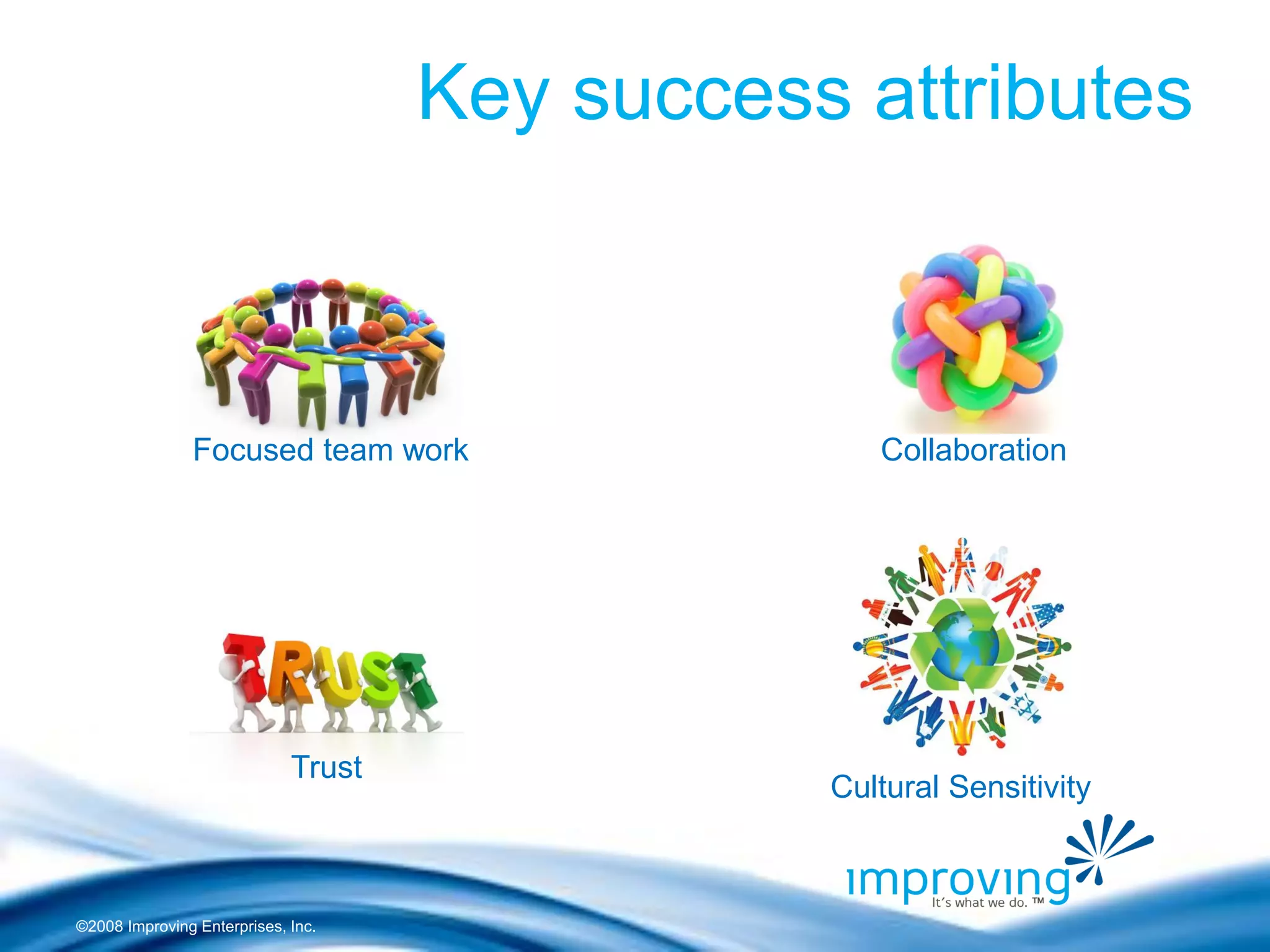
Key success attributes 
Focused team work 
Collaboration 
Trust 
Cultural Sensitivity
©2008 Improving Enterprises, Inc. Communication Face to face Use WebEx, Skype etc… whatever it takes Phone and IM is better than documents and mails Go visual Travel - create a bond Collaboration Digital scrum boards / dash boards Wiki Avoid/reduce emails Share the pain 
Communication and Collaboration
©2008 Improving Enterprises, Inc. 
Development and Tracking Tools Where is the code and how do we manage it? How much TDD and CI? What other tools are we using to: Manage requirements Manage project
©2008 Improving Enterprises, Inc. 
What’s important.. What is the vision? Don’t allow tools to drive the process Leverage creativity
©2008 Improving Enterprises, Inc. 
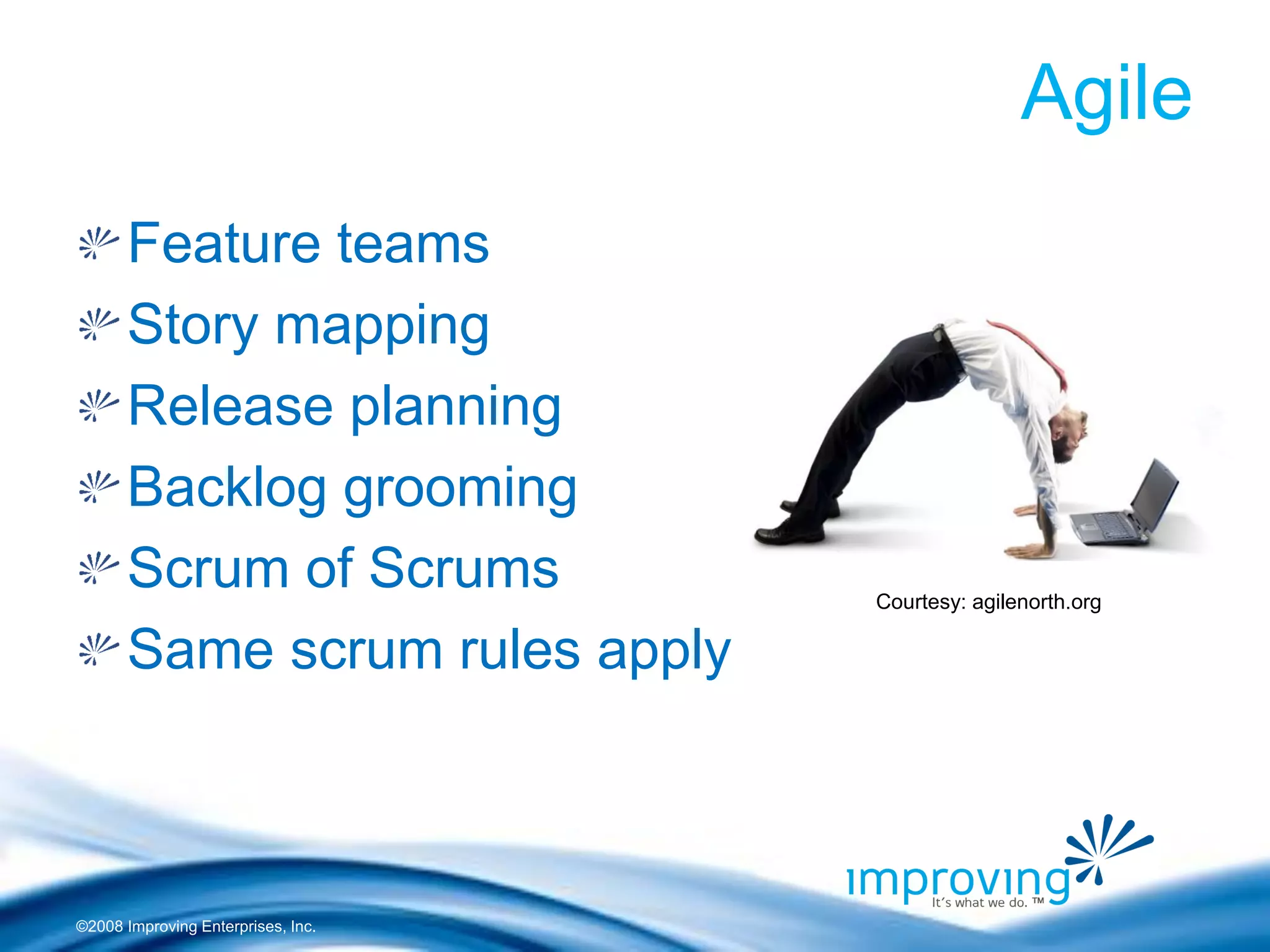
Agile Feature teams Story mapping Release planning Backlog grooming Scrum of Scrums Same scrum rules apply 
Courtesy: agilenorth.org
©2008 Improving Enterprises, Inc. 
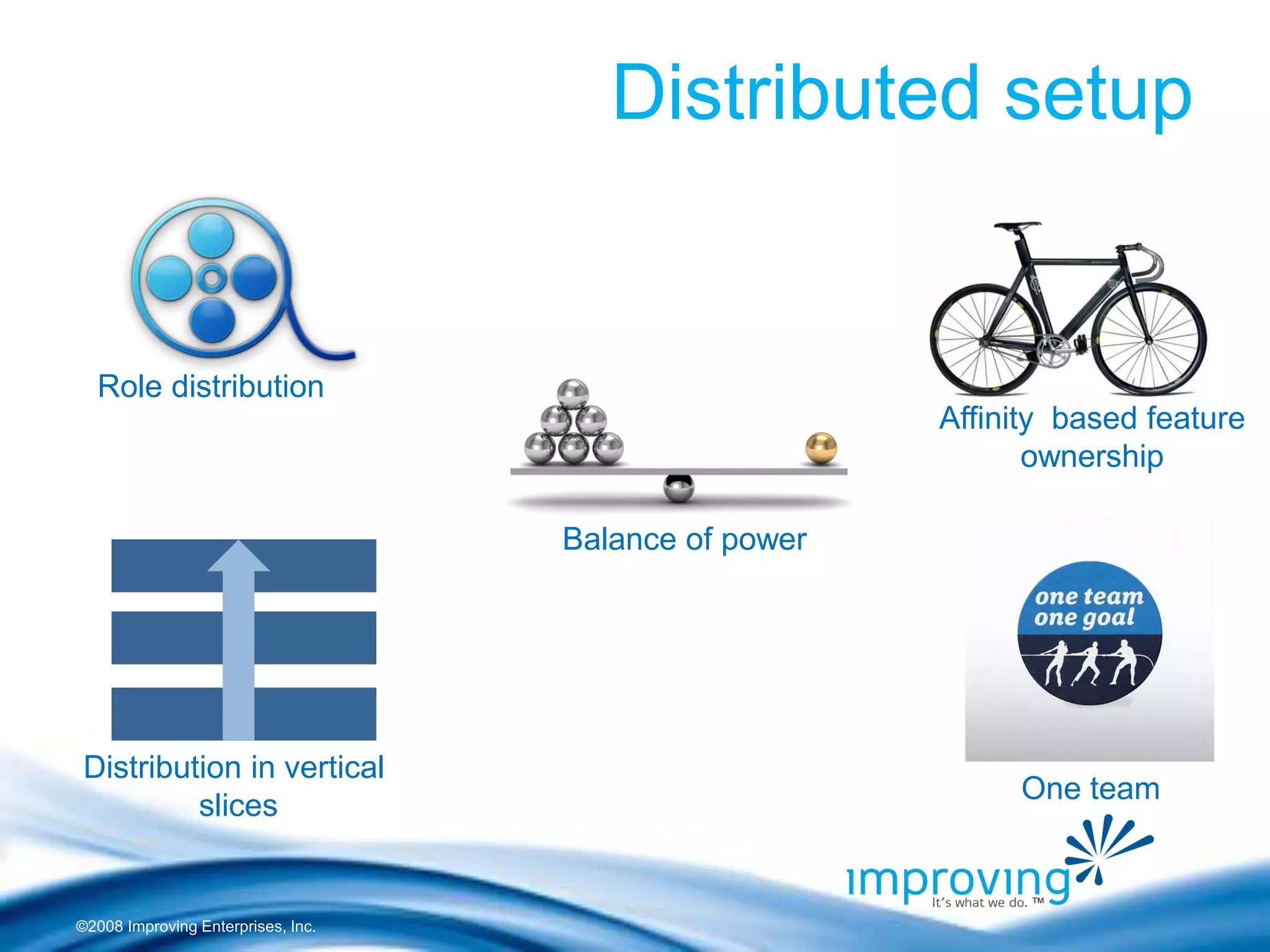
Distributed setup 
Role distribution 
Balance of power 
Distribution in vertical slices 
Affinity based feature 
ownership 
One team
©2008 Improving Enterprises, Inc. 
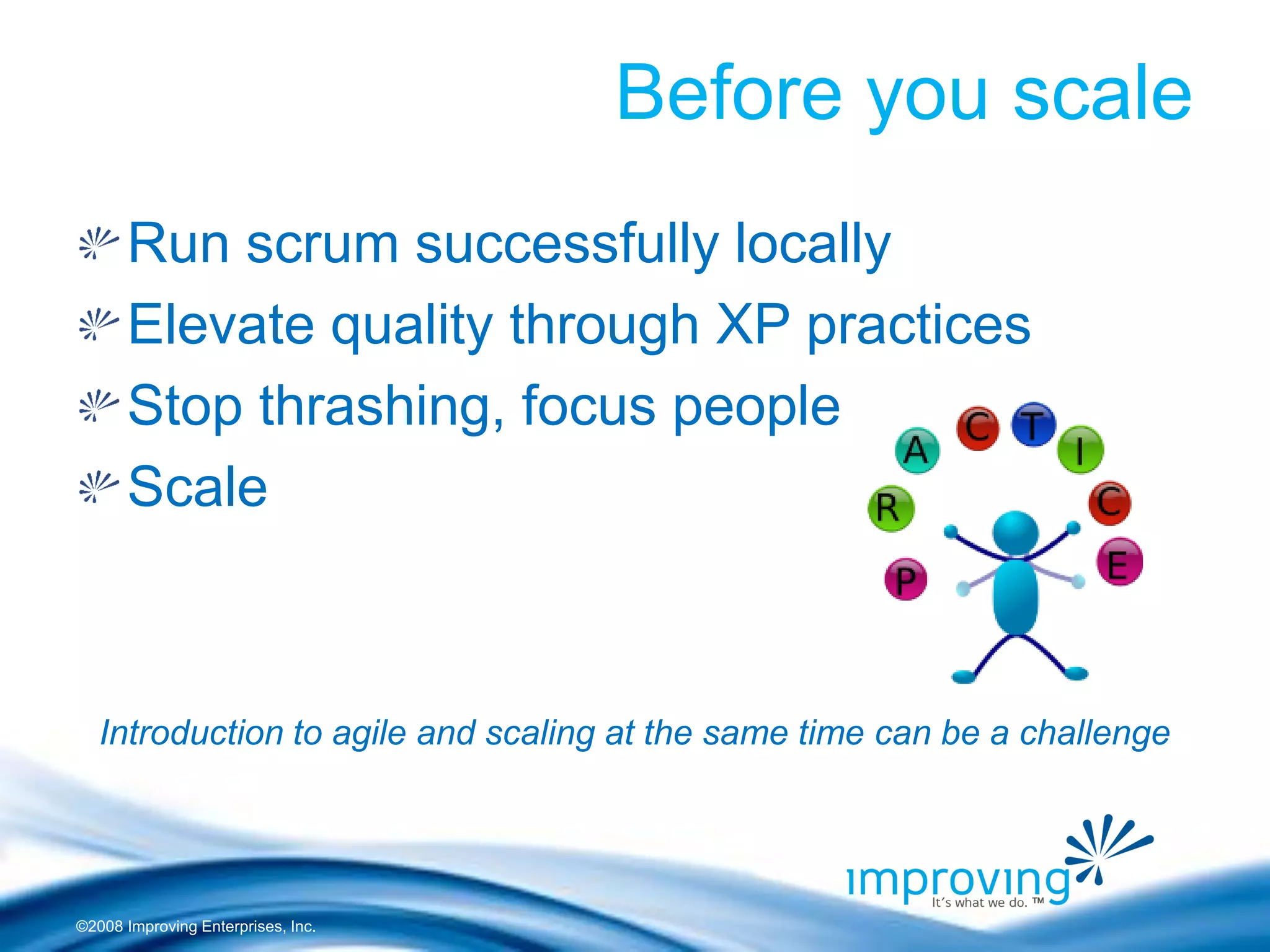
Before you scale Run scrum successfully locally Elevate quality through XP practices Stop thrashing, focus people Scale 
Introduction to agile and scaling at the same time can be a challenge
©2008 Improving Enterprises, Inc. 
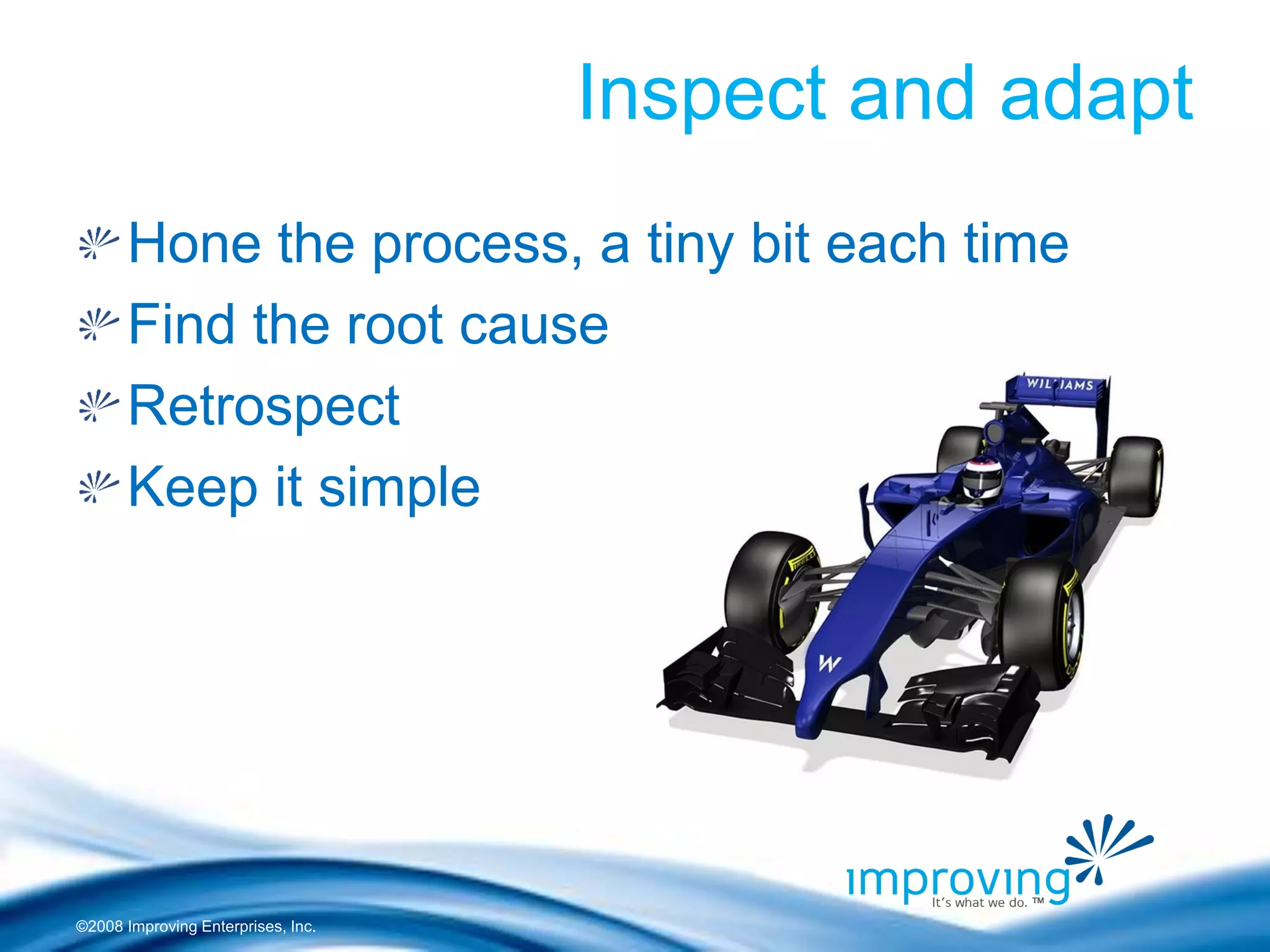
Inspect and adapt Hone the process, a tiny bit each time Find the root cause Retrospect Keep it simple
©2008 Improving Enterprises, Inc. 
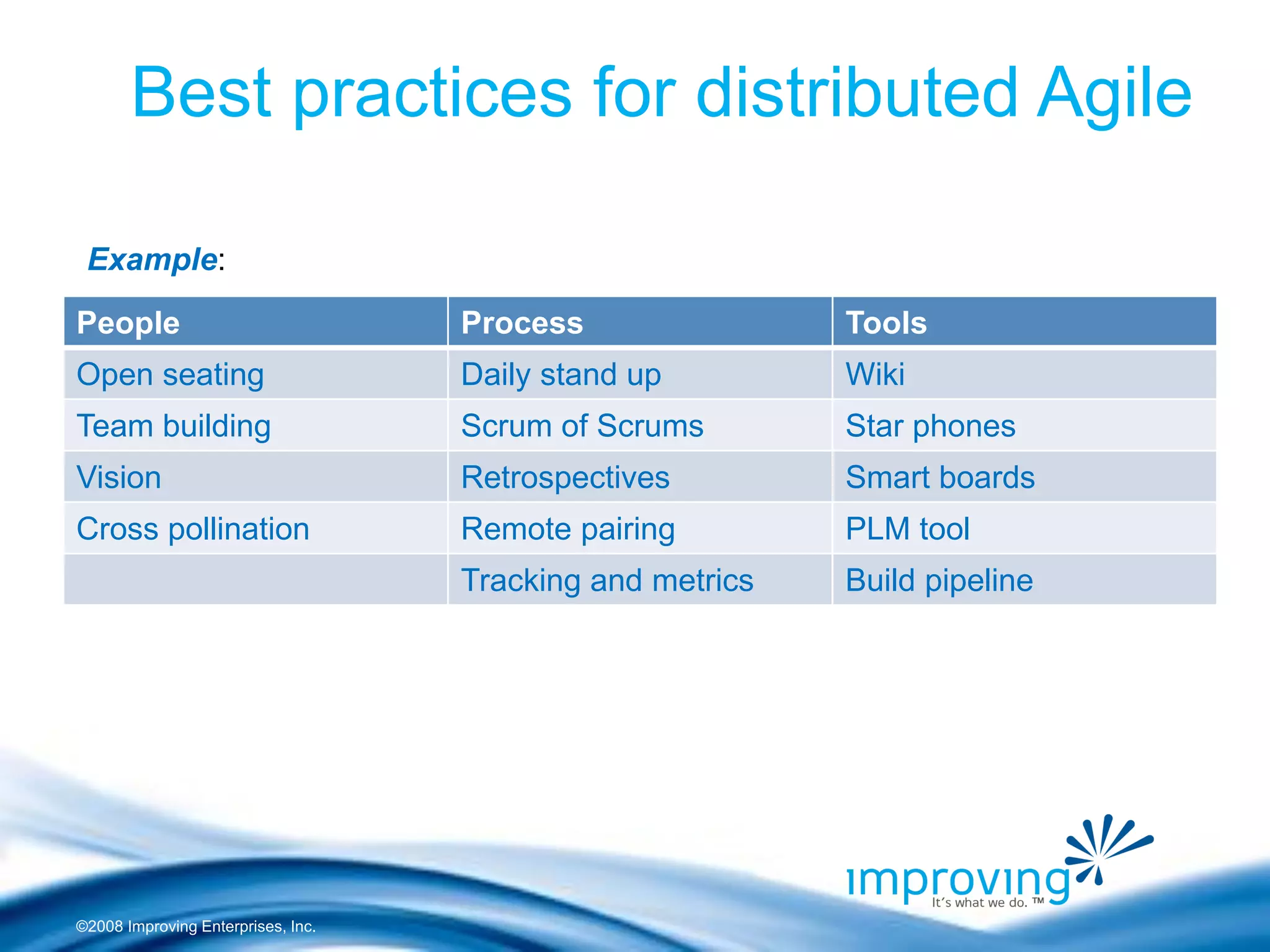
Best practices for distributed Agile 
People 
Process 
Tools 
Open seating 
Daily stand up 
Wiki 
Team building 
Scrum of Scrums 
Star phones 
Vision 
Retrospectives 
Smart boards 
Cross pollination 
Remote pairing 
PLM tool 
Tracking and metrics 
Build pipeline 
Example:
©2008 Improving Enterprises, Inc. 
Manage distance
©2008 Improving Enterprises, Inc. 
Dependencies
©2008 Improving Enterprises, Inc. 
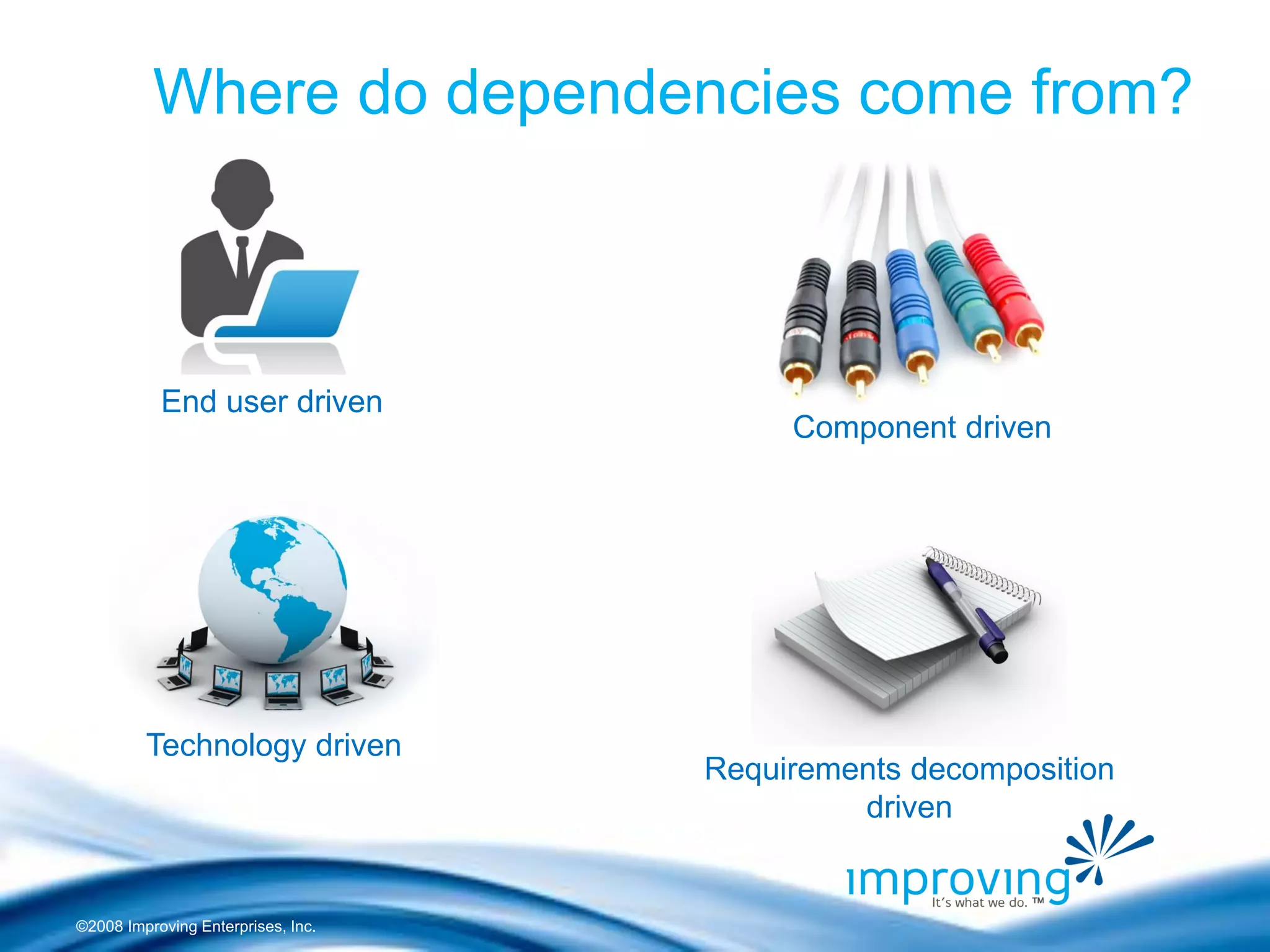
Where do dependencies come from? 
End user driven 
Requirements decomposition driven 
Component driven 
Technology driven
©2008 Improving Enterprises, Inc. 
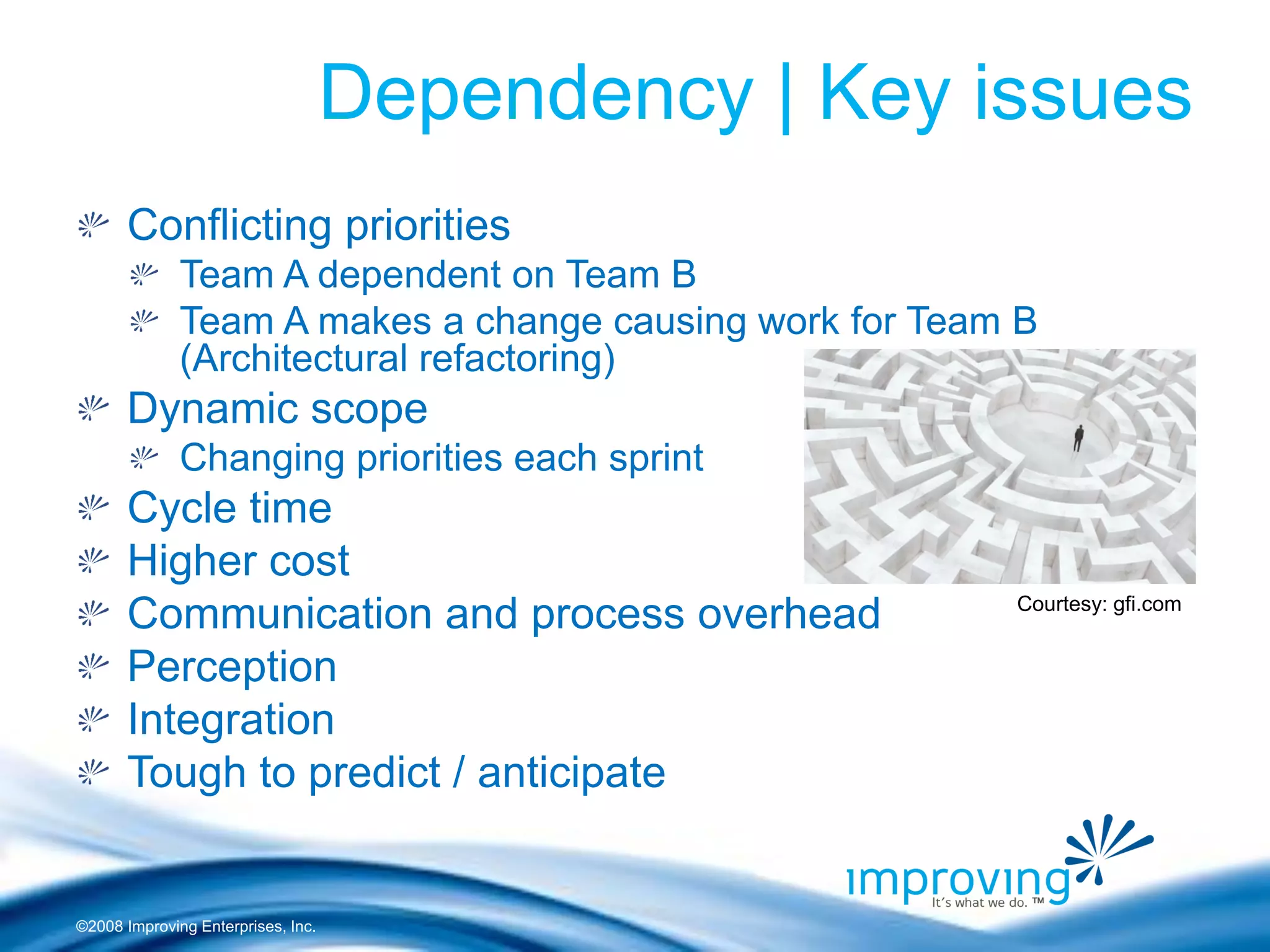
Dependency | Key issues Conflicting priorities Team A dependent on Team B Team A makes a change causing work for Team B (Architectural refactoring) Dynamic scope Changing priorities each sprint Cycle time Higher cost Communication and process overhead Perception Integration Tough to predict / anticipate 
Courtesy: gfi.com
©2008 Improving Enterprises, Inc. 
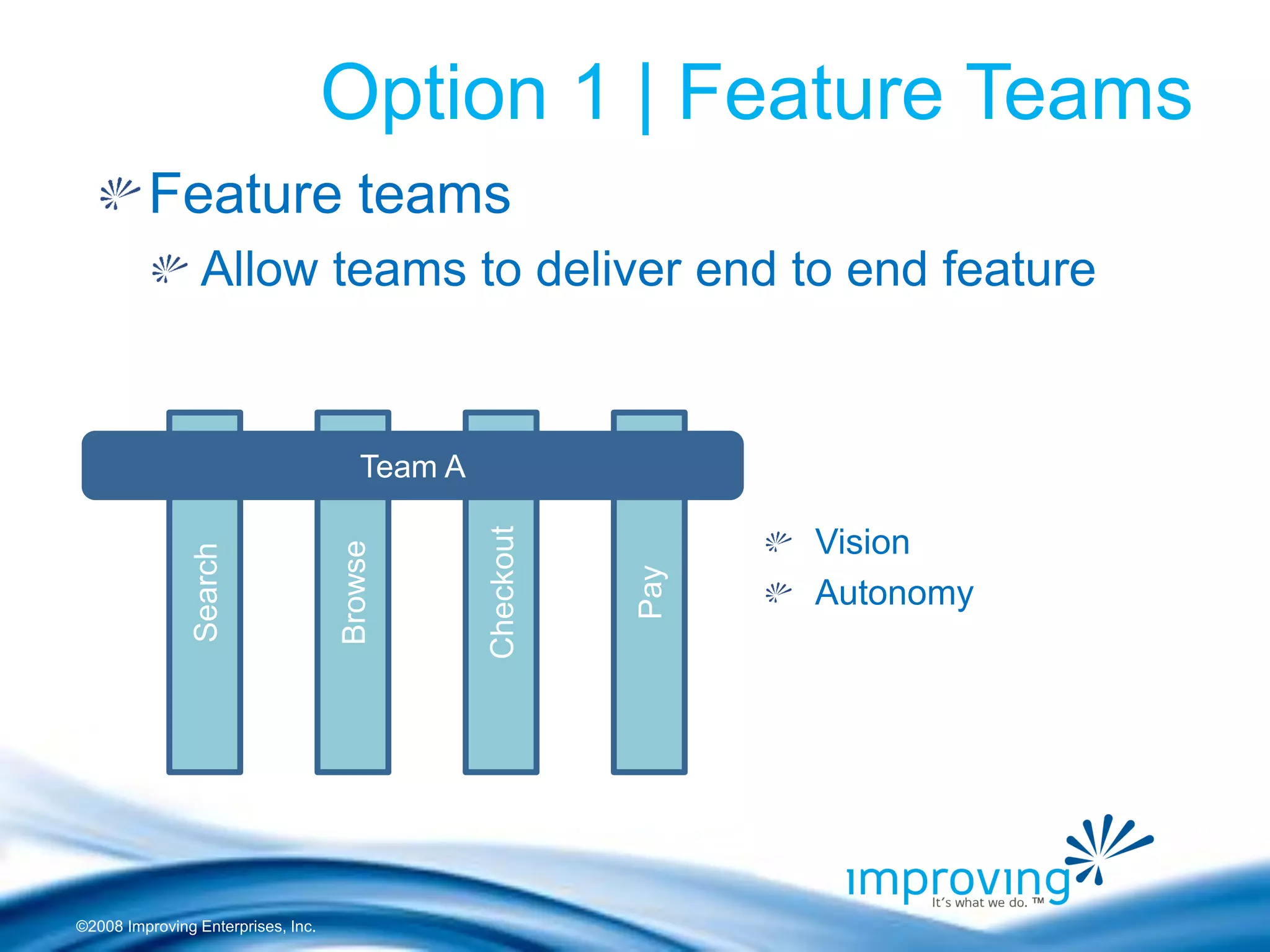
Option 1 | Feature Teams Feature teams Allow teams to deliver end to end feature 
Search 
Browse 
Checkout 
Pay 
Team A Vision Autonomy
©2008 Improving Enterprises, Inc. 
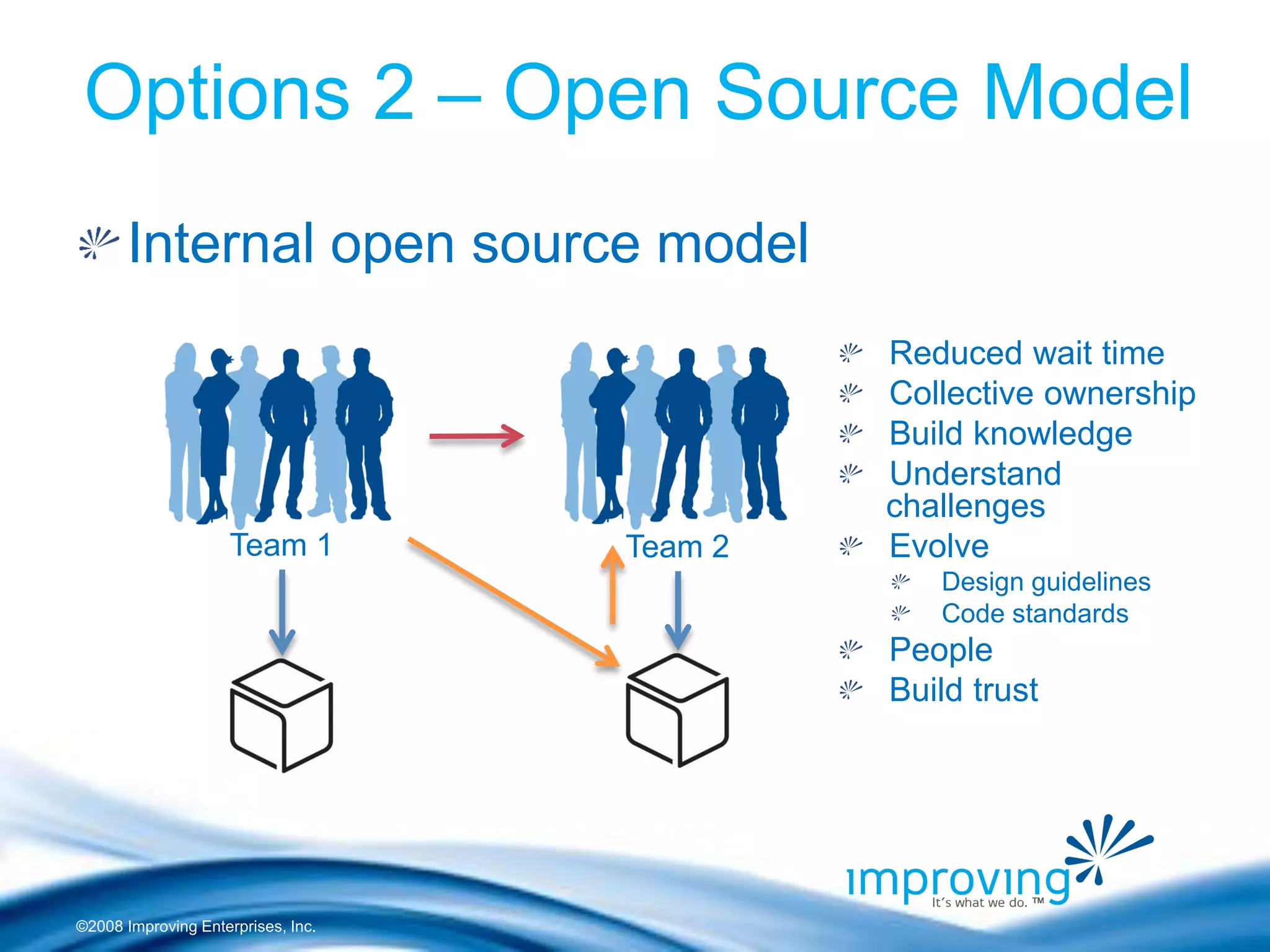
Options 2 – Open Source Model Internal open source model 
Team 1 
Team 2 Reduced wait time Collective ownership Build knowledge Understand challenges Evolve Design guidelines Code standards People Build trust
©2008 Improving Enterprises, Inc. 
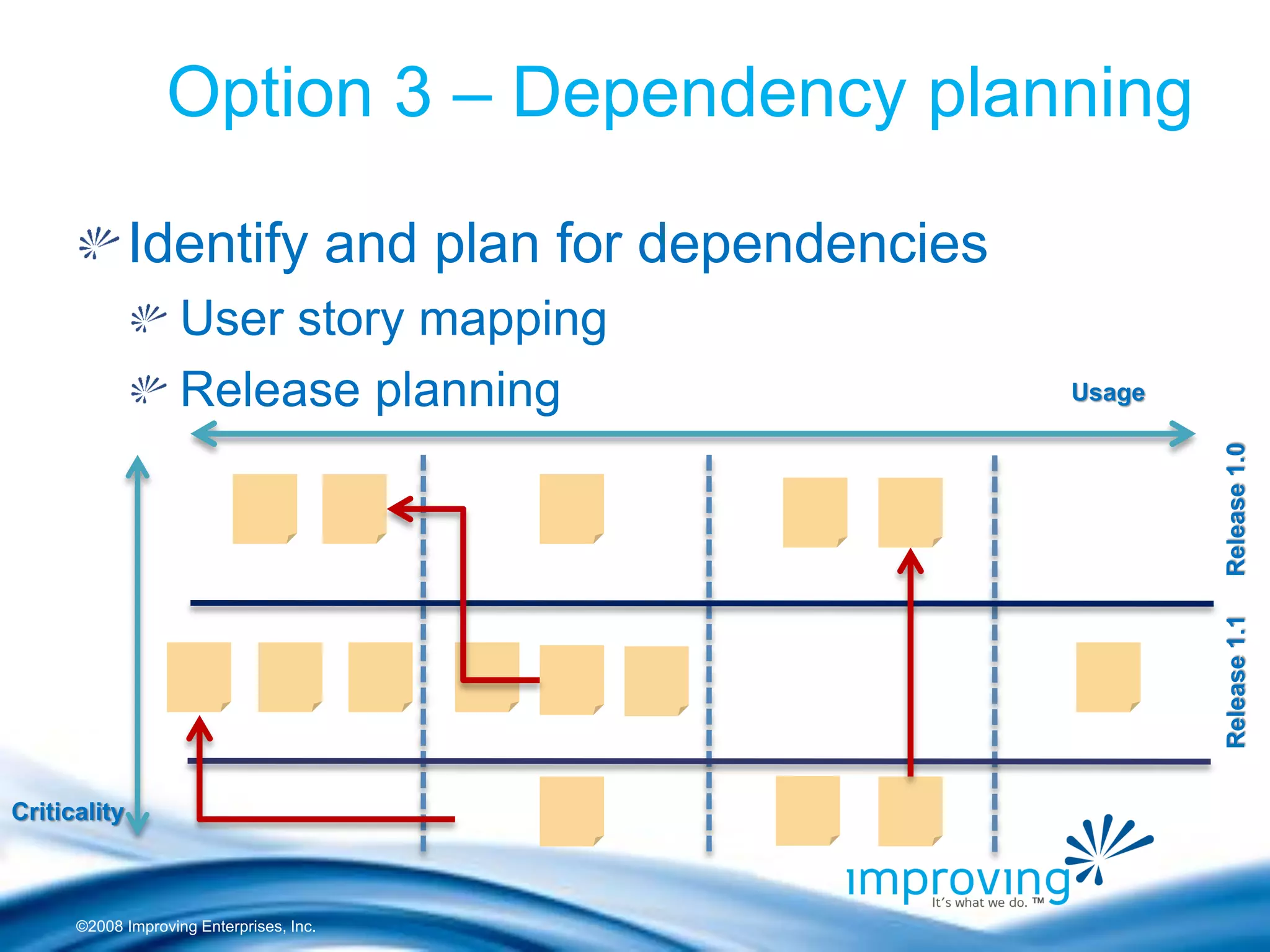
Option 3 – Dependency planning Identify and plan for dependencies User story mapping Release planning 
Usage 
Criticality 
Release 1.0 
Release 1.1
©2008 Improving Enterprises, Inc. 
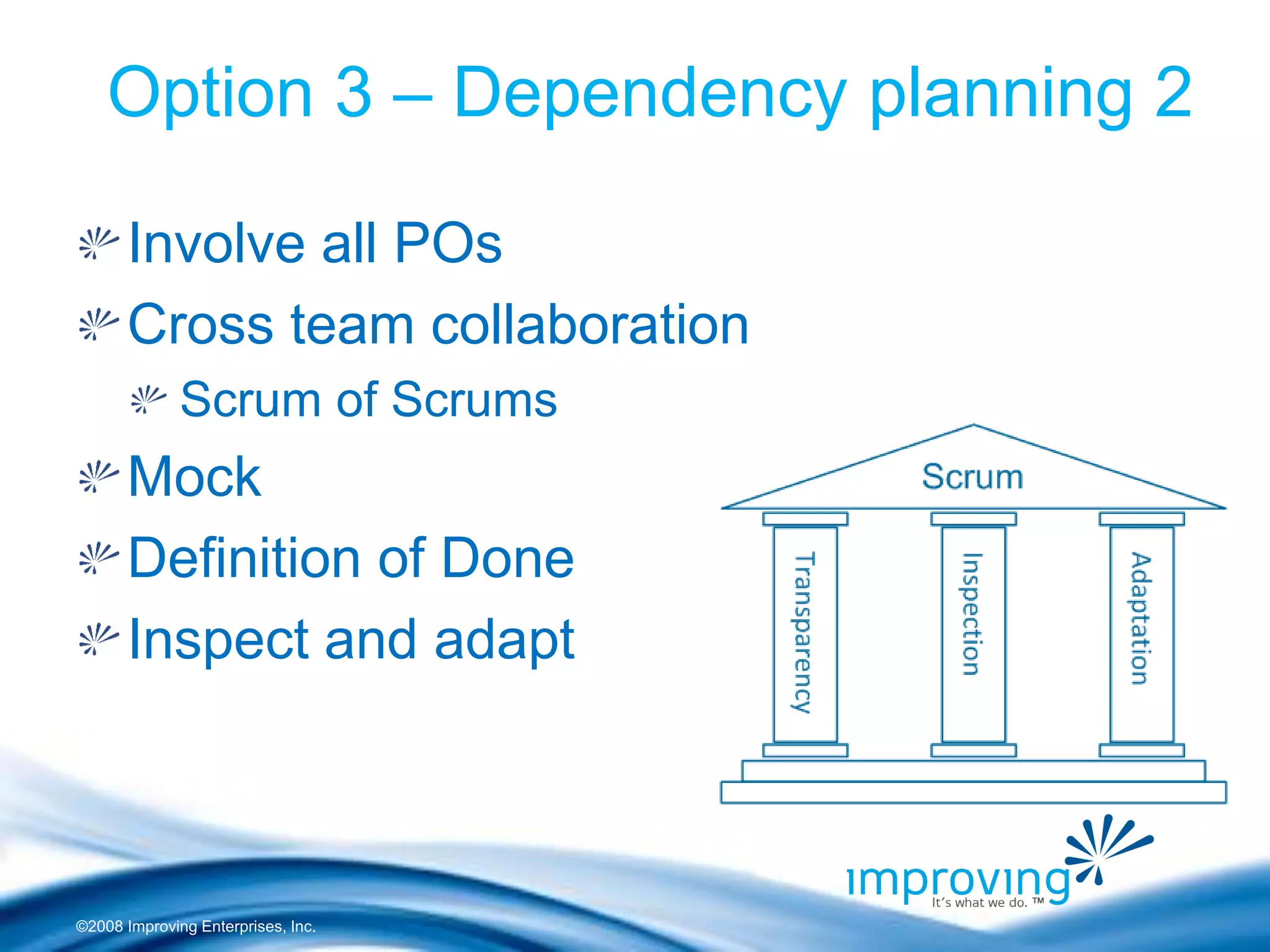
Option 3 – Dependency planning 2 Involve all POs Cross team collaboration Scrum of Scrums Mock Definition of Done Inspect and adapt
©2008 Improving Enterprises, Inc. 
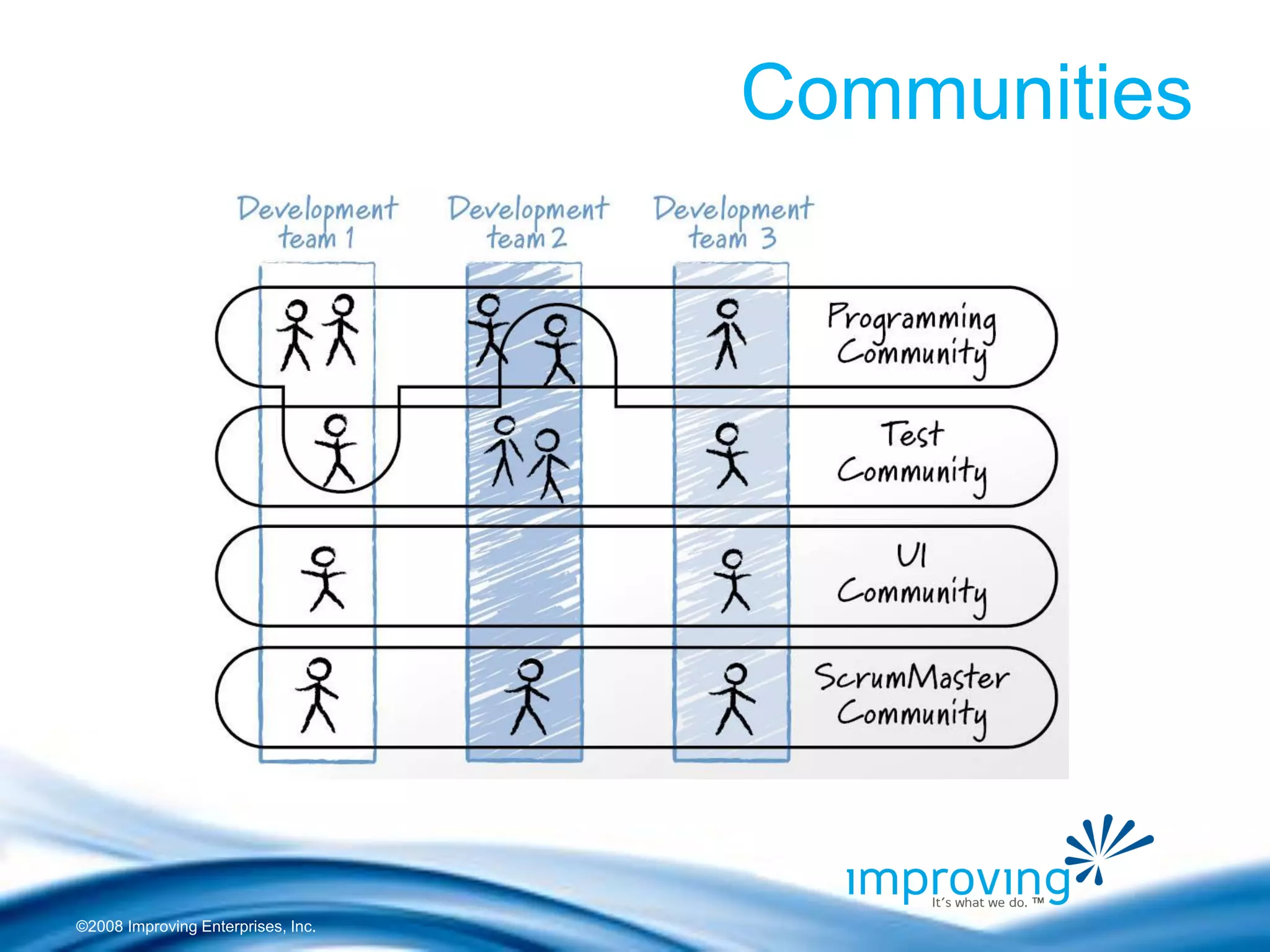
Communities
©2008 Improving Enterprises, Inc. 
Finally 
Having right structure and tools is important 
But… 
How you practice Agile values is critical
©2008 Improving Enterprises, Inc.
©2008 Improving Enterprises, Inc. 
Improving builds custom software for other companies and provides advanced technology training 
Dallas, TX | Houston, TX | Columbus, OH | Minneapolis, MN | Calgary, AB 
www.improving.com 
Featured Agile Training *Professional Scrum Master Certification *Professional Scrum Developer Certification (.NET & Java) *Agile Scrum Immersion 
About Improving

Agile | Distributed teams and dependencies

  • 1.
    ©2008 Improving Enterprises,Inc. Agile with Distributed Teams and Dependencies By: Nirmaljeet Malhotra Agile Coach
  • 2.
    ©2008 Improving Enterprises,Inc. Intro Distributed family 15 years in IT 7+ years in Agile Twitter: #mnirmaljeet www.nirmaljeet.com Agile coach and trainer
  • 3.
    ©2008 Improving Enterprises,Inc. Wanna be Agile? Distributed Teams Dependencies
  • 4.
    ©2008 Improving Enterprises,Inc. Scrum by the book…
  • 5.
    ©2008 Improving Enterprises,Inc. Why distribute? Agile hyper productivity and quality combined with offshore benefits: Availability of talent Scale up and down Cost reduction Round the clock support
  • 6.
    ©2008 Improving Enterprises,Inc. What are distributed teams? Not at the same place Different Floor Office City Country Continent Time-zone Offshore, near shore, not sure.. Courtesy: Keith Richards
  • 7.
    ©2008 Improving Enterprises,Inc. Distributed ways Courtesy: Jeff Sutherland
  • 8.
    ©2008 Improving Enterprises,Inc. Survey 1 In one word, share your number 1 problem with distributed teams across countries/continents
  • 9.
    ©2008 Improving Enterprises,Inc. Survey 2 In one word, share your number 1 problem with distributed teams in the same building/floor
  • 10.
    ©2008 Improving Enterprises,Inc. Question? So where is the problem?
  • 11.
    ©2008 Improving Enterprises,Inc. Agile Manifesto http://agilemanifesto.org/ Individuals Interactions Processes Tools Working Software Comprehensive Documentation Customer Collaboration Contract Negotiation Responding to Change Following a Plan Distributed Teams
  • 12.
    ©2008 Improving Enterprises,Inc. Distributed teams | Key issues Communication tax Accessibility Information lost in translation Language and cultural differences Motivation drop Cost Compromise on personal time
  • 13.
    ©2008 Improving Enterprises,Inc. “Project costs increase in proportion to the time it takes for people to understand each other” - Alistair Cockburn
  • 14.
    ©2008 Improving Enterprises,Inc. Key success attributes Focused team work Collaboration Trust Cultural Sensitivity
  • 15.
    ©2008 Improving Enterprises,Inc. Communication Face to face Use WebEx, Skype etc… whatever it takes Phone and IM is better than documents and mails Go visual Travel - create a bond Collaboration Digital scrum boards / dash boards Wiki Avoid/reduce emails Share the pain Communication and Collaboration
  • 16.
    ©2008 Improving Enterprises,Inc. Development and Tracking Tools Where is the code and how do we manage it? How much TDD and CI? What other tools are we using to: Manage requirements Manage project
  • 17.
    ©2008 Improving Enterprises,Inc. What’s important.. What is the vision? Don’t allow tools to drive the process Leverage creativity
  • 18.
    ©2008 Improving Enterprises,Inc. Agile Feature teams Story mapping Release planning Backlog grooming Scrum of Scrums Same scrum rules apply Courtesy: agilenorth.org
  • 19.
    ©2008 Improving Enterprises,Inc. Distributed setup Role distribution Balance of power Distribution in vertical slices Affinity based feature ownership One team
  • 20.
    ©2008 Improving Enterprises,Inc. Before you scale Run scrum successfully locally Elevate quality through XP practices Stop thrashing, focus people Scale Introduction to agile and scaling at the same time can be a challenge
  • 21.
    ©2008 Improving Enterprises,Inc. Inspect and adapt Hone the process, a tiny bit each time Find the root cause Retrospect Keep it simple
  • 22.
    ©2008 Improving Enterprises,Inc. Best practices for distributed Agile People Process Tools Open seating Daily stand up Wiki Team building Scrum of Scrums Star phones Vision Retrospectives Smart boards Cross pollination Remote pairing PLM tool Tracking and metrics Build pipeline Example:
  • 23.
    ©2008 Improving Enterprises,Inc. Manage distance
  • 24.
  • 25.
    ©2008 Improving Enterprises,Inc. Where do dependencies come from? End user driven Requirements decomposition driven Component driven Technology driven
  • 26.
    ©2008 Improving Enterprises,Inc. Dependency | Key issues Conflicting priorities Team A dependent on Team B Team A makes a change causing work for Team B (Architectural refactoring) Dynamic scope Changing priorities each sprint Cycle time Higher cost Communication and process overhead Perception Integration Tough to predict / anticipate Courtesy: gfi.com
  • 27.
    ©2008 Improving Enterprises,Inc. Option 1 | Feature Teams Feature teams Allow teams to deliver end to end feature Search Browse Checkout Pay Team A Vision Autonomy
  • 28.
    ©2008 Improving Enterprises,Inc. Options 2 – Open Source Model Internal open source model Team 1 Team 2 Reduced wait time Collective ownership Build knowledge Understand challenges Evolve Design guidelines Code standards People Build trust
  • 29.
    ©2008 Improving Enterprises,Inc. Option 3 – Dependency planning Identify and plan for dependencies User story mapping Release planning Usage Criticality Release 1.0 Release 1.1
  • 30.
    ©2008 Improving Enterprises,Inc. Option 3 – Dependency planning 2 Involve all POs Cross team collaboration Scrum of Scrums Mock Definition of Done Inspect and adapt
  • 31.
  • 32.
    ©2008 Improving Enterprises,Inc. Finally Having right structure and tools is important But… How you practice Agile values is critical
  • 33.
  • 34.
    ©2008 Improving Enterprises,Inc. Improving builds custom software for other companies and provides advanced technology training Dallas, TX | Houston, TX | Columbus, OH | Minneapolis, MN | Calgary, AB www.improving.com Featured Agile Training *Professional Scrum Master Certification *Professional Scrum Developer Certification (.NET & Java) *Agile Scrum Immersion About Improving