Downloaded 28 times
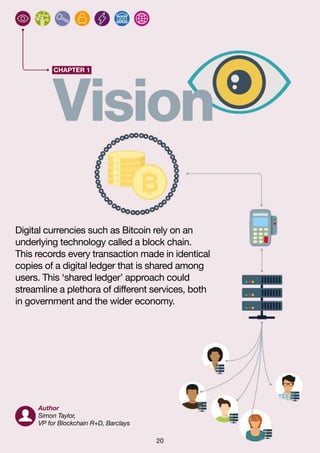
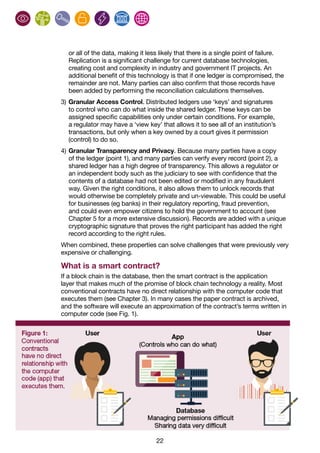
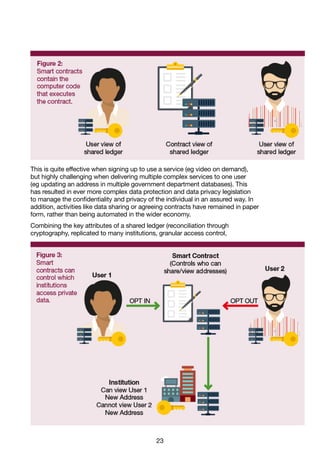





This document provides an overview of distributed ledger technology and its potential applications. Some key points: - Distributed ledgers allow for shared, identical copies of asset databases across networks, with updates reflected quickly. They use cryptography to control access and ensure security and accuracy. - The technology underpinning cryptocurrencies like Bitcoin, known as the blockchain, has broader applications. It allows distributed, collaborative recording of transactions according to agreed rules. - Distributed ledgers could transform many government services by facilitating tax collection, benefits delivery, passports, land registries, supply chains, and ensuring integrity of records. They also offer potential in healthcare by improving record sharing and authentication of services. - The technology is more resistant


