Diseases
 A genetic disorder is a health problem caused by one or more abnormalities
in the genome. It can be caused by a mutation in a single gene (monogenic)
or multiple genes (polygenic) or by a chromosomal abnormality.
 Developmental disorders comprise a group of psychiatric conditions
originating in childhood that involve serious impairment in different areas.
There are several ways of using this term.[1] The most narrow concept is used
in the category "Specific Disorders of Psychological Development" in the ICD-
10.[1] These disorders comprise developmental language disorder, learning
disorders, motor disorders, and autism spectrum disorders.[2] In broader
definitions ADHD is included, and the term used is neurodevelopmental
disorders.[1] Yet others include antisocial behavior and schizophrenia that
begins in childhood and continues through life.[1] However, these two latter
conditions are not as stable as the other developmental disorders, and there
is not the same evidence of a shared genetic liability.[1]
 Developmental disorders are present from early life onward. Most improve as
the child grows older, but some entail impairments that continue throughout
life.
 What Is Down Syndrome?
 Down syndrome is a genetic condition that causes mild to serious physical and
developmental problems.
 People with Down syndrome are born with an extra chromosome.
Chromosomes are bundles of genes, and your body relies on having just the
right number of them. With Down syndrome, this extra chromosome leads to
a range of issues that affect you both mentally and physically.
 Down syndrome is a lifelong condition. Although it can’t be cured, doctors
know more about it now than ever. If your child has it, getting the right care
early on can make a big difference in helping them live a full and meaningful
life.
 Down syndrome can have many effects, and it’s different for each person.
Some will grow up to live almost entirely on their own, while others will need
more help taking care of themselves.
 Mental abilities vary, but most people with Down syndrome have mild to
moderate issues with thinking, reasoning, and understanding. They’ll learn
and pick up new skills their whole lives, but they may take longer to reach
important goals like walking, talking, and developing social skills.
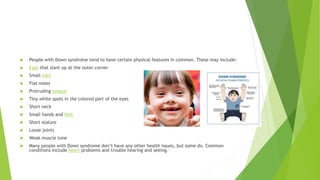
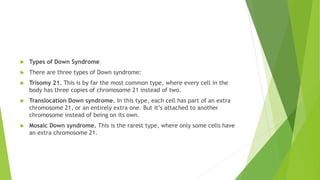
 People with Down syndrome tend to have certain physical features in common. These may include:
 Eyes that slant up at the outer corner
 Small ears
 Flat noses
 Protruding tongue
 Tiny white spots in the colored part of the eyes
 Short neck
 Small hands and feet
 Short stature
 Loose joints
 Weak muscle tone
 Many people with Down syndrome don’t have any other health issues, but some do. Common
conditions include heart problems and trouble hearing and seeing.
 Types of Down Syndrome
 There are three types of Down syndrome:
 Trisomy 21. This is by far the most common type, where every cell in the
body has three copies of chromosome 21 instead of two.
 Translocation Down syndrome. In this type, each cell has part of an extra
chromosome 21, or an entirely extra one. But it’s attached to another
chromosome instead of being on its own.
 Mosaic Down syndrome. This is the rarest type, where only some cells have
an extra chromosome 21.
 Down Syndrome Diagnosis
 A doctor may suspect Down syndrome in a newborn based on the baby’s
appearance. That can be confirmed by a blood test called a karyotype test
that lines up the chromosomes and will show if there’s an extra chromosome
21
 Down Syndrome Screening in Pregnancy
 Routine tests done during pregnancy can check if it’s likely your baby has
Down syndrome. If those results are positive, or if you’re at high risk, you
may choose to have additional, more invasive tests to be certain.
 In the first trimester, you may have:
 Blood tests. Your doctor will measure the levels of a protein called PAPP-A
and a hormone called hCG in your blood. Anything out of the normal range
could mean a problem with the baby. If you're at high risk for Down syndrome,
they may also look for DNA from the baby in your blood, which they can
examine for chromosome abnormalities.
 Ultrasound. Your doctor will look at a picture of your baby and measure the
folds of tissue at the back of their neck. Babies with Down syndrome tend to
have extra fluid there.
 In the second trimester, you may have:
 Blood tests. Either a triple or quad-screen test measures other substances in your blood, including
the protein AFP and the hormone estriol. Those levels, combined with the results from the first
trimester tests, give your doctor a good estimate of the chances your baby has Down syndrome.
 Ultrasound. When your baby is more developed, an enhanced ultrasound can show some of the
physical features of Down syndrome.
 Other kinds of tests can diagnose Down syndrome before your baby is born by checking a sample of
their DNA for an extra chromosome 21:
 Chorionic villus sampling (CVS). This can be done during the first trimester, using cells taken from
the placenta.
 Amniocentesis. Fluid is taken from the amniotic sac surrounding the baby, usually during the second
trimester.
 Percutaneous umbilical blood sampling (PUBS). This is also done in the second trimester using
blood removed from the umbilical cord.

 Down Syndrome Treatments
 There’s no specific treatment for Down syndrome. But there is a wide range
of physical and developmental therapies designed to help people with Down
syndrome reach their full potential. The earlier you start them, the better.
Each child will have different needs. Yours may benefit from:
 Physical, occupational, and speech therapy
 Specialized education services
 Social and recreation activities
 Programs that offer job training and teach self-care skills
 You’ll also work closely with your child’s doctor to watch for and manage any
health problems associated with the condition.
 Down Syndrome Complications
 Babies with Down syndrome may be born with other physical problems, and they’re at higher risk for
certain health issues later in life.
 Possible complications of Down syndrome include:
 Heart problems. About half of babies with Down syndrome are born with a heart defect that may
need surgery.
 Hearing and vision problems, including crossed eyes and cataracts
 Gastrointestinal disorders, like blockages, reflux, and celiac disease
 Obesity
 Breathing issues, including sleep apnea, asthma, and pulmonary hypertension
 Underactive thyroid
 Seizures
 Childhood leukemia
 Early-onset dementia
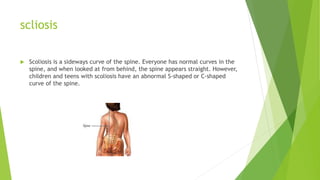
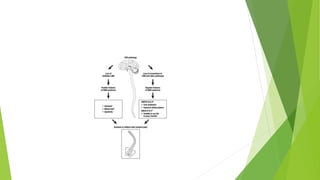
scliosis
 Scoliosis is a sideways curve of the spine. Everyone has normal curves in the
spine, and when looked at from behind, the spine appears straight. However,
children and teens with scoliosis have an abnormal S-shaped or C-shaped
curve of the spine.
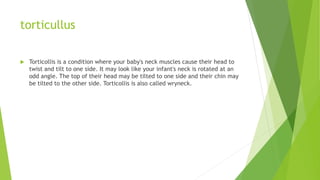
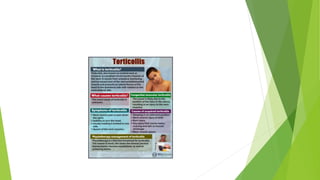
torticullus
 Torticollis is a condition where your baby's neck muscles cause their head to
twist and tilt to one side. It may look like your infant's neck is rotated at an
odd angle. The top of their head may be tilted to one side and their chin may
be tilted to the other side. Torticollis is also called wryneck.
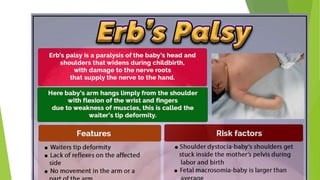
 What is Erb's Palsy? Erb's palsy is a condition characterized by arm weakness
and loss of motion. It can occur in both infants and adults. It's typically
caused by a physical injury during newborn delivery or by traumatic force
downward on the upper arm and shoulder, damaging the brachial plexus.
osteogenesis imperfecta
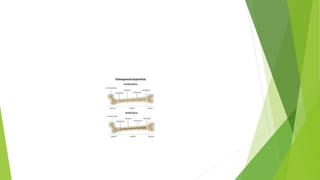
 Osteogenesis imperfecta (OI) is a genetic or heritable disease in which bones
fracture (break) easily, often with no obvious cause or minimal injury. OI is
also known as brittle bone disease, and the symptoms can range from mild
with only a few fractures to severe with many medical complications.
Diseases.pptx
Diseases.pptx

Diseases.pptx

  • 1.
  • 2.
     A geneticdisorder is a health problem caused by one or more abnormalities in the genome. It can be caused by a mutation in a single gene (monogenic) or multiple genes (polygenic) or by a chromosomal abnormality.
  • 3.
     Developmental disorderscomprise a group of psychiatric conditions originating in childhood that involve serious impairment in different areas. There are several ways of using this term.[1] The most narrow concept is used in the category "Specific Disorders of Psychological Development" in the ICD- 10.[1] These disorders comprise developmental language disorder, learning disorders, motor disorders, and autism spectrum disorders.[2] In broader definitions ADHD is included, and the term used is neurodevelopmental disorders.[1] Yet others include antisocial behavior and schizophrenia that begins in childhood and continues through life.[1] However, these two latter conditions are not as stable as the other developmental disorders, and there is not the same evidence of a shared genetic liability.[1]  Developmental disorders are present from early life onward. Most improve as the child grows older, but some entail impairments that continue throughout life.
  • 4.
     What IsDown Syndrome?  Down syndrome is a genetic condition that causes mild to serious physical and developmental problems.  People with Down syndrome are born with an extra chromosome. Chromosomes are bundles of genes, and your body relies on having just the right number of them. With Down syndrome, this extra chromosome leads to a range of issues that affect you both mentally and physically.  Down syndrome is a lifelong condition. Although it can’t be cured, doctors know more about it now than ever. If your child has it, getting the right care early on can make a big difference in helping them live a full and meaningful life.
  • 5.
     Down syndromecan have many effects, and it’s different for each person. Some will grow up to live almost entirely on their own, while others will need more help taking care of themselves.  Mental abilities vary, but most people with Down syndrome have mild to moderate issues with thinking, reasoning, and understanding. They’ll learn and pick up new skills their whole lives, but they may take longer to reach important goals like walking, talking, and developing social skills.
  • 6.
     People withDown syndrome tend to have certain physical features in common. These may include:  Eyes that slant up at the outer corner  Small ears  Flat noses  Protruding tongue  Tiny white spots in the colored part of the eyes  Short neck  Small hands and feet  Short stature  Loose joints  Weak muscle tone  Many people with Down syndrome don’t have any other health issues, but some do. Common conditions include heart problems and trouble hearing and seeing.
  • 7.
     Types ofDown Syndrome  There are three types of Down syndrome:  Trisomy 21. This is by far the most common type, where every cell in the body has three copies of chromosome 21 instead of two.  Translocation Down syndrome. In this type, each cell has part of an extra chromosome 21, or an entirely extra one. But it’s attached to another chromosome instead of being on its own.  Mosaic Down syndrome. This is the rarest type, where only some cells have an extra chromosome 21.
  • 8.
     Down SyndromeDiagnosis  A doctor may suspect Down syndrome in a newborn based on the baby’s appearance. That can be confirmed by a blood test called a karyotype test that lines up the chromosomes and will show if there’s an extra chromosome 21
  • 9.
     Down SyndromeScreening in Pregnancy  Routine tests done during pregnancy can check if it’s likely your baby has Down syndrome. If those results are positive, or if you’re at high risk, you may choose to have additional, more invasive tests to be certain.
  • 10.
     In thefirst trimester, you may have:  Blood tests. Your doctor will measure the levels of a protein called PAPP-A and a hormone called hCG in your blood. Anything out of the normal range could mean a problem with the baby. If you're at high risk for Down syndrome, they may also look for DNA from the baby in your blood, which they can examine for chromosome abnormalities.  Ultrasound. Your doctor will look at a picture of your baby and measure the folds of tissue at the back of their neck. Babies with Down syndrome tend to have extra fluid there.
  • 11.
     In thesecond trimester, you may have:  Blood tests. Either a triple or quad-screen test measures other substances in your blood, including the protein AFP and the hormone estriol. Those levels, combined with the results from the first trimester tests, give your doctor a good estimate of the chances your baby has Down syndrome.  Ultrasound. When your baby is more developed, an enhanced ultrasound can show some of the physical features of Down syndrome.  Other kinds of tests can diagnose Down syndrome before your baby is born by checking a sample of their DNA for an extra chromosome 21:  Chorionic villus sampling (CVS). This can be done during the first trimester, using cells taken from the placenta.  Amniocentesis. Fluid is taken from the amniotic sac surrounding the baby, usually during the second trimester.  Percutaneous umbilical blood sampling (PUBS). This is also done in the second trimester using blood removed from the umbilical cord. 
  • 12.
     Down SyndromeTreatments  There’s no specific treatment for Down syndrome. But there is a wide range of physical and developmental therapies designed to help people with Down syndrome reach their full potential. The earlier you start them, the better. Each child will have different needs. Yours may benefit from:  Physical, occupational, and speech therapy  Specialized education services  Social and recreation activities  Programs that offer job training and teach self-care skills  You’ll also work closely with your child’s doctor to watch for and manage any health problems associated with the condition.
  • 13.
     Down SyndromeComplications  Babies with Down syndrome may be born with other physical problems, and they’re at higher risk for certain health issues later in life.  Possible complications of Down syndrome include:  Heart problems. About half of babies with Down syndrome are born with a heart defect that may need surgery.  Hearing and vision problems, including crossed eyes and cataracts  Gastrointestinal disorders, like blockages, reflux, and celiac disease  Obesity  Breathing issues, including sleep apnea, asthma, and pulmonary hypertension  Underactive thyroid  Seizures  Childhood leukemia  Early-onset dementia
  • 14.
    scliosis  Scoliosis isa sideways curve of the spine. Everyone has normal curves in the spine, and when looked at from behind, the spine appears straight. However, children and teens with scoliosis have an abnormal S-shaped or C-shaped curve of the spine.
  • 16.
    torticullus  Torticollis isa condition where your baby's neck muscles cause their head to twist and tilt to one side. It may look like your infant's neck is rotated at an odd angle. The top of their head may be tilted to one side and their chin may be tilted to the other side. Torticollis is also called wryneck.
  • 18.
     What isErb's Palsy? Erb's palsy is a condition characterized by arm weakness and loss of motion. It can occur in both infants and adults. It's typically caused by a physical injury during newborn delivery or by traumatic force downward on the upper arm and shoulder, damaging the brachial plexus.
  • 20.
    osteogenesis imperfecta  Osteogenesisimperfecta (OI) is a genetic or heritable disease in which bones fracture (break) easily, often with no obvious cause or minimal injury. OI is also known as brittle bone disease, and the symptoms can range from mild with only a few fractures to severe with many medical complications.