Diseases of
Digestive
system
Dr Pallav Shekhar
Assistant Professor
Department of Veterinary Medicine
Bihar Veterinary College
Bihar Animal Sciences University, Patna
Unit-2
Introduction
Pharyngitis
Pharyngeal Obstruction
Pharyngeal Paralysis
Small Animal Nutrition TM 2
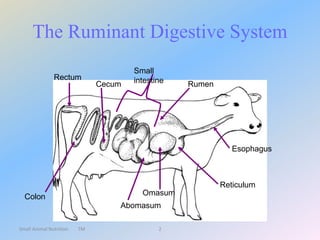
The Ruminant Digestive System
Esophagus
Rumen
Reticulum
Omasum
Abomasum
Small
intestine
Cecum
Colon
Rectum
Small Animal Nutrition TM 3
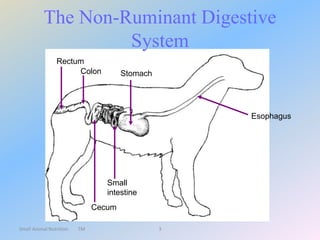
The Non-Ruminant Digestive
System
Esophagus
Stomach
Small
intestine
Cecum
Colon
Rectum
Small Animal Nutrition TM 4
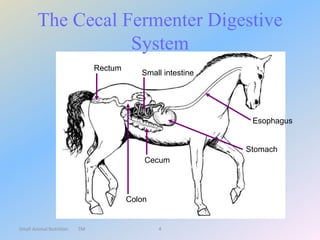
The Cecal Fermenter Digestive
System
Esophagus
Stomach
Small intestine
Cecum
Colon
Rectum
Ruminant Digestive Systems
• Functions of the digestive system of animals
include:
–ingestion (eating)
–chewing (mastication)
–swallowing (deglutition)
–absorption of nutrients
–elimination of solid wastes (defecation)
Ruminant Digestive Systems
• Ruminants are those animals that contain a
multi-chambered digestive system
(polygastric) that allows the animal to gain
the majority of their nutritional needs from
forages and other roughages.
– cattle, sheep/goats, deer and elk
• Forage refers to grasses, roughages refers to
other high-fiber food sources.
Ruminant Digestive Systems
• The digestive tract extends from the lips to
the anus. It includes the mouth, pharynx,
esophagus, stomach, and the small and large
intestines.
• Accessory glands include the salivary glands,
the liver, and the pancreas.
PHARYNGITIS
• It is Inflammation of pharynx.
• It is characterized by- coughing, painful
swallowing, variable appetite, regurgitation
through nostril & drooling of saliva in severe
cases
Etiology
• Physical causes- Injury through balling or
drenching gun, During treatment or during
endotracheal intubation. Accidental ingestion or
administration of irritant or hot/cold substance.
Foreign body like grass cereal, awns, wire, bone
& gelatin capsules in pharynx.
• II. Infectious cause-Oral necrobacillosis,
Actinobacillosis , IBR, Pharyngeal phlegmon
• And Intramandibular cellulitis ( due to
Fusobacterium necrophorum).
Clinical Finding
• Refusal to eat/drink, Swallow with pain,
Pharyngeal coughing on compression,
Mucopurulent nasal discharge sometimes
bloody.
• In severe case regurgitation of fluid and food
via nostrils.
• Drooling of saliva with tentative jaw
movement.
• Diagnosis-By manifestation of acute pain in
local region and by endoscopic examination.
• Treatment- Primary disease should be treated
with antibiotics & sulphonamides
PHARYNGEAL OBSTRUCTION
• It is obstruction of pharynx accompanied by
stertorous respiration, coughing and difficult
swallowing.
• Etiology: Foreign body or swelling
(retropharngeal lymph nodes).
• Pathogenesis: Difficulty in swelling and
respiration.
• Clinical findings:
• Coughing of food through mouth
• Little and no regurgitation through nostril.
• Drinking is usually normal
• Snoring respiration.
• Treatment:
• Removal of foreign body
• Reduction of swelling
• Parentral treatment
PHARYNGEAL PARALYSIS:
• Pharyngeal paralysis is manifested by inability to
swallow and respiratory obstruction.
• Etiology:
• Peripheral Nerve injury
• Guttaral pouch infection in horses
• Trauma
• Rabies
• Botulism
• AHS
• Central lesion.
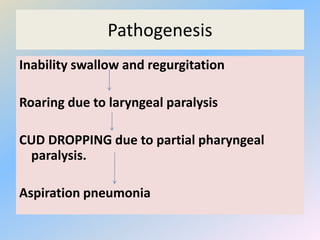
Pathogenesis
Inability swallow and regurgitation
Roaring due to laryngeal paralysis
CUD DROPPING due to partial pharyngeal
paralysis.
Aspiration pneumonia
• Clinical findings:
• Hungry
• Coughing
• Dropping of food from mouth
• Regurgiation through nostril
• Salivation
• Swallowing cannot be stimulated by external
compression.
• Treatment: Not very successful
• Nervine tonic
• Local application of heat
• Parentral administration of food
THANK YOU

Diseases_of_Digestive_system in animals.

  • 1.
    Diseases of Digestive system Dr PallavShekhar Assistant Professor Department of Veterinary Medicine Bihar Veterinary College Bihar Animal Sciences University, Patna Unit-2 Introduction Pharyngitis Pharyngeal Obstruction Pharyngeal Paralysis
  • 2.
    Small Animal NutritionTM 2 The Ruminant Digestive System Esophagus Rumen Reticulum Omasum Abomasum Small intestine Cecum Colon Rectum
  • 3.
    Small Animal NutritionTM 3 The Non-Ruminant Digestive System Esophagus Stomach Small intestine Cecum Colon Rectum
  • 4.
    Small Animal NutritionTM 4 The Cecal Fermenter Digestive System Esophagus Stomach Small intestine Cecum Colon Rectum
  • 5.
    Ruminant Digestive Systems •Functions of the digestive system of animals include: –ingestion (eating) –chewing (mastication) –swallowing (deglutition) –absorption of nutrients –elimination of solid wastes (defecation)
  • 6.
    Ruminant Digestive Systems •Ruminants are those animals that contain a multi-chambered digestive system (polygastric) that allows the animal to gain the majority of their nutritional needs from forages and other roughages. – cattle, sheep/goats, deer and elk • Forage refers to grasses, roughages refers to other high-fiber food sources.
  • 7.
    Ruminant Digestive Systems •The digestive tract extends from the lips to the anus. It includes the mouth, pharynx, esophagus, stomach, and the small and large intestines. • Accessory glands include the salivary glands, the liver, and the pancreas.
  • 8.
    PHARYNGITIS • It isInflammation of pharynx. • It is characterized by- coughing, painful swallowing, variable appetite, regurgitation through nostril & drooling of saliva in severe cases
  • 9.
    Etiology • Physical causes-Injury through balling or drenching gun, During treatment or during endotracheal intubation. Accidental ingestion or administration of irritant or hot/cold substance. Foreign body like grass cereal, awns, wire, bone & gelatin capsules in pharynx. • II. Infectious cause-Oral necrobacillosis, Actinobacillosis , IBR, Pharyngeal phlegmon • And Intramandibular cellulitis ( due to Fusobacterium necrophorum).
  • 10.
    Clinical Finding • Refusalto eat/drink, Swallow with pain, Pharyngeal coughing on compression, Mucopurulent nasal discharge sometimes bloody. • In severe case regurgitation of fluid and food via nostrils. • Drooling of saliva with tentative jaw movement.
  • 11.
    • Diagnosis-By manifestationof acute pain in local region and by endoscopic examination. • Treatment- Primary disease should be treated with antibiotics & sulphonamides
  • 12.
    PHARYNGEAL OBSTRUCTION • Itis obstruction of pharynx accompanied by stertorous respiration, coughing and difficult swallowing.
  • 13.
    • Etiology: Foreignbody or swelling (retropharngeal lymph nodes). • Pathogenesis: Difficulty in swelling and respiration.
  • 14.
    • Clinical findings: •Coughing of food through mouth • Little and no regurgitation through nostril. • Drinking is usually normal • Snoring respiration. • Treatment: • Removal of foreign body • Reduction of swelling • Parentral treatment
  • 15.
    PHARYNGEAL PARALYSIS: • Pharyngealparalysis is manifested by inability to swallow and respiratory obstruction. • Etiology: • Peripheral Nerve injury • Guttaral pouch infection in horses • Trauma • Rabies • Botulism • AHS • Central lesion.
  • 16.
    Pathogenesis Inability swallow andregurgitation Roaring due to laryngeal paralysis CUD DROPPING due to partial pharyngeal paralysis. Aspiration pneumonia
  • 17.
    • Clinical findings: •Hungry • Coughing • Dropping of food from mouth • Regurgiation through nostril • Salivation • Swallowing cannot be stimulated by external compression. • Treatment: Not very successful • Nervine tonic • Local application of heat • Parentral administration of food
  • 18.