Disease
Prevention and
Control:
Safeguarding
Public Health
Introduction to Disease
Prevention and Control
● What is disease prevention and control?
● Why is it important for public health?
● Key components:
● 1. Prevention strategies
● 2. Early detection
● 3. Rapid response
● 4. Ongoing management
● How does it impact your daily life?
Types of Disease
Prevention
● Primary prevention: Avoiding disease
occurrence
● Example: Vaccinations, health education
● Secondary prevention: Early detection
and treatment
● Example: Cancer screenings, blood
pressure checks
● Tertiary prevention: Managing existing
diseases
● Example: Rehabilitation programs,
chronic disease management
● Can you think of examples for each type
in your own life?
The Role of Vaccines in Disease Prevention
● How vaccines work: Stimulating immune response
● Herd immunity concept
● Success stories: Smallpox eradication, polio near-elimination
● Ongoing challenges: Vaccine hesitancy, new disease strains
● What vaccines have you received? How do they protect you
and others?
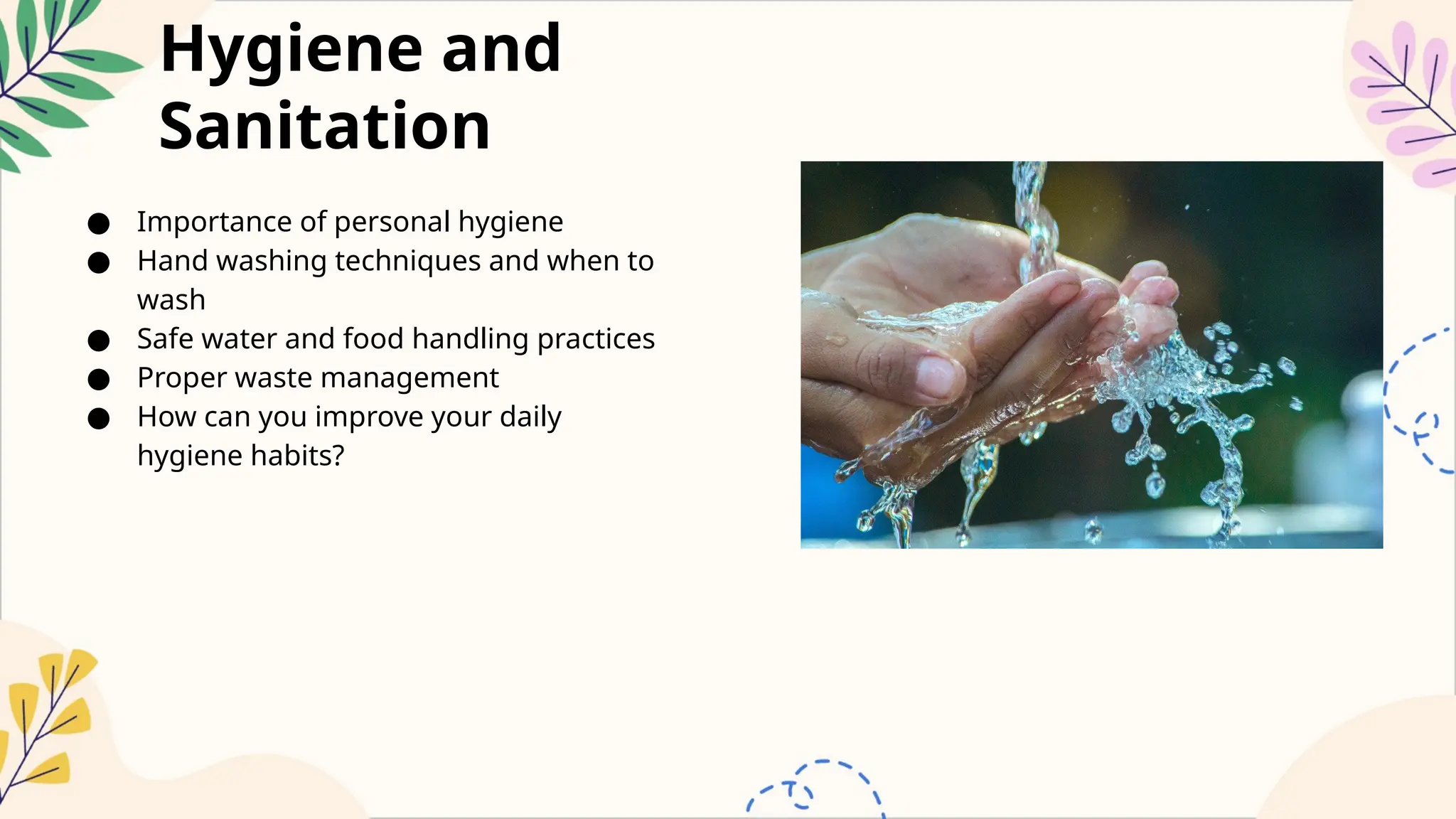
Hygiene and
Sanitation
● Importance of personal hygiene
● Hand washing techniques and when to
wash
● Safe water and food handling practices
● Proper waste management
● How can you improve your daily
hygiene habits?
Environmental
Control Measures
● Vector control (e.g., mosquito nets,
insecticide spraying)
● Water source protection
● Air quality management
● Built environment design for health
● What environmental factors in your
community affect disease spread?
Nutrition and Disease Prevention
● Role of nutrition in immune system function
● Dietary guidelines for disease prevention
● Micronutrients and their importance
● Malnutrition and increased disease susceptibility
● How can you improve your diet to boost your immune
system?
Physical Activity
and Health
● Benefits of regular physical activity
● Recommended activity levels for
different age groups
● Exercise and chronic disease prevention
● Incorporating movement into daily
routine
● What are your favorite ways to stay
physically active?
Stress
Management and
Mental Health
● Link between stress and physical health
● Stress reduction techniques:
● Meditation
● Deep breathing
● Time management
● Importance of sleep and relaxation
● How do you manage stress in your life?
Screening and Early Detection
● Importance of regular health check-ups
● Common screening tests by age and gender
● Self-examination techniques
● When to seek medical attention
● What screening tests are appropriate for your age group?
Infectious
Disease Control
● Understanding disease transmission
● Isolation and quarantine procedures
● Contact tracing methods
● Personal protective equipment (PPE)
● How has your behavior changed during
recent disease outbreaks?
Chronic Disease
Management
● Common chronic diseases: Diabetes,
heart disease, cancer
● Lifestyle modifications for prevention
and management
● Medication adherence
● Regular monitoring and follow-up
● How can you support friends or family
with chronic conditions?
Global Health and Disease Control
● Role of international organizations (WHO, CDC)
● Global health initiatives and campaigns
● Cross-border disease control challenges
● Importance of global cooperation
● How do global health issues affect your local community?
Technology in Disease
Prevention and Control
● Telemedicine and remote health
monitoring
● Health apps and wearable devices
● Big data in epidemiology
● AI in disease prediction and diagnosis
● What health technologies do you use or
are interested in trying?
Community-Based Prevention Programs
● Health education initiatives
● Community screening events
● Support groups and peer education
● School-based health programs
● How can you contribute to health promotion in your
community?
Occupational
Health and Safety
● Identifying workplace health hazards
● Ergonomics and injury prevention
● Occupational disease screening
● Safety regulations and compliance
● What health risks are present in your
work or study environment?
Antibiotic Resistance and Stewardship
● Causes of antibiotic resistance
● Consequences for disease control
● Proper use of antibiotics
● Alternative approaches to infection management
● How can you practice antibiotic stewardship?
Emergency
Preparedness and
Response
● Types of health emergencies
● Personal and family preparedness plans
● Community response systems
● Role of healthcare workers in
emergencies
● What's in your emergency
preparedness kit?
Health Literacy
and
Communication
● Importance of understanding health
information
● Evaluating health claims and
misinformation
● Communicating with healthcare
providers
● Health advocacy skills
● How can you improve your health
literacy?
Future Trends in Disease Prevention
● Personalized medicine and genetic screening
● Nanotechnology in disease detection and treatment
● Global climate change and emerging diseases
● One Health approach (human-animal-environment)
● What future developments in disease prevention excite or
concern you?
Conclusion: Your Role in
Disease Prevention
● Recap of key prevention strategies
● Importance of individual actions in
public health
● Continuing education and staying
informed
● Advocating for health in your
community
● What steps will you take to improve
disease prevention in your life?

Disease Prevention and Control: Safegaurd

  • 1.
  • 2.
    Introduction to Disease Preventionand Control ● What is disease prevention and control? ● Why is it important for public health? ● Key components: ● 1. Prevention strategies ● 2. Early detection ● 3. Rapid response ● 4. Ongoing management ● How does it impact your daily life?
  • 3.
    Types of Disease Prevention ●Primary prevention: Avoiding disease occurrence ● Example: Vaccinations, health education ● Secondary prevention: Early detection and treatment ● Example: Cancer screenings, blood pressure checks ● Tertiary prevention: Managing existing diseases ● Example: Rehabilitation programs, chronic disease management ● Can you think of examples for each type in your own life?
  • 4.
    The Role ofVaccines in Disease Prevention ● How vaccines work: Stimulating immune response ● Herd immunity concept ● Success stories: Smallpox eradication, polio near-elimination ● Ongoing challenges: Vaccine hesitancy, new disease strains ● What vaccines have you received? How do they protect you and others?
  • 5.
    Hygiene and Sanitation ● Importanceof personal hygiene ● Hand washing techniques and when to wash ● Safe water and food handling practices ● Proper waste management ● How can you improve your daily hygiene habits?
  • 6.
    Environmental Control Measures ● Vectorcontrol (e.g., mosquito nets, insecticide spraying) ● Water source protection ● Air quality management ● Built environment design for health ● What environmental factors in your community affect disease spread?
  • 7.
    Nutrition and DiseasePrevention ● Role of nutrition in immune system function ● Dietary guidelines for disease prevention ● Micronutrients and their importance ● Malnutrition and increased disease susceptibility ● How can you improve your diet to boost your immune system?
  • 8.
    Physical Activity and Health ●Benefits of regular physical activity ● Recommended activity levels for different age groups ● Exercise and chronic disease prevention ● Incorporating movement into daily routine ● What are your favorite ways to stay physically active?
  • 9.
    Stress Management and Mental Health ●Link between stress and physical health ● Stress reduction techniques: ● Meditation ● Deep breathing ● Time management ● Importance of sleep and relaxation ● How do you manage stress in your life?
  • 10.
    Screening and EarlyDetection ● Importance of regular health check-ups ● Common screening tests by age and gender ● Self-examination techniques ● When to seek medical attention ● What screening tests are appropriate for your age group?
  • 11.
    Infectious Disease Control ● Understandingdisease transmission ● Isolation and quarantine procedures ● Contact tracing methods ● Personal protective equipment (PPE) ● How has your behavior changed during recent disease outbreaks?
  • 12.
    Chronic Disease Management ● Commonchronic diseases: Diabetes, heart disease, cancer ● Lifestyle modifications for prevention and management ● Medication adherence ● Regular monitoring and follow-up ● How can you support friends or family with chronic conditions?
  • 13.
    Global Health andDisease Control ● Role of international organizations (WHO, CDC) ● Global health initiatives and campaigns ● Cross-border disease control challenges ● Importance of global cooperation ● How do global health issues affect your local community?
  • 14.
    Technology in Disease Preventionand Control ● Telemedicine and remote health monitoring ● Health apps and wearable devices ● Big data in epidemiology ● AI in disease prediction and diagnosis ● What health technologies do you use or are interested in trying?
  • 15.
    Community-Based Prevention Programs ●Health education initiatives ● Community screening events ● Support groups and peer education ● School-based health programs ● How can you contribute to health promotion in your community?
  • 16.
    Occupational Health and Safety ●Identifying workplace health hazards ● Ergonomics and injury prevention ● Occupational disease screening ● Safety regulations and compliance ● What health risks are present in your work or study environment?
  • 17.
    Antibiotic Resistance andStewardship ● Causes of antibiotic resistance ● Consequences for disease control ● Proper use of antibiotics ● Alternative approaches to infection management ● How can you practice antibiotic stewardship?
  • 18.
    Emergency Preparedness and Response ● Typesof health emergencies ● Personal and family preparedness plans ● Community response systems ● Role of healthcare workers in emergencies ● What's in your emergency preparedness kit?
  • 19.
    Health Literacy and Communication ● Importanceof understanding health information ● Evaluating health claims and misinformation ● Communicating with healthcare providers ● Health advocacy skills ● How can you improve your health literacy?
  • 20.
    Future Trends inDisease Prevention ● Personalized medicine and genetic screening ● Nanotechnology in disease detection and treatment ● Global climate change and emerging diseases ● One Health approach (human-animal-environment) ● What future developments in disease prevention excite or concern you?
  • 21.
    Conclusion: Your Rolein Disease Prevention ● Recap of key prevention strategies ● Importance of individual actions in public health ● Continuing education and staying informed ● Advocating for health in your community ● What steps will you take to improve disease prevention in your life?

Editor's Notes

  • #1 Created from: https://docs.google.com/presentation/d/1s4ZQIySwN5dOylanxITuVu3IWs5EUC_sG9abQhbhb1E/edit#slide=id.p