
大数据创新联盟线下分享二
Bin Zhu
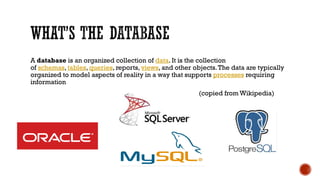
A database is an organized collection of data. It is the collection
of schemas, tables, queries, reports, views, and other objects.The data are typically
organized to model aspects of reality in a way that supports processes requiring
information
(copied from Wikipedia)
 Tables
 View
 Materialized View
 Index
 Procedure
 Sequence
 Trigger
 DB Link
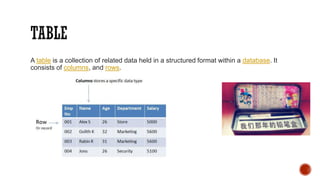
A table is a collection of related data held in a structured format within a database. It
consists of columns, and rows.
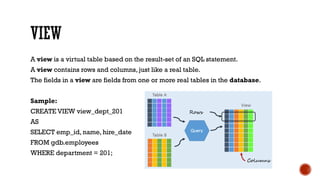
A view is a virtual table based on the result-set of an SQL statement.
A view contains rows and columns, just like a real table.
The fields in a view are fields from one or more real tables in the database.
Sample:
CREATE VIEW view_dept_201
AS
SELECT emp_id, name, hire_date
FROM gdb.employees
WHERE department = 201;
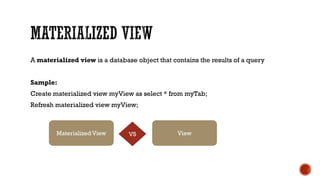
A materialized view is a database object that contains the results of a query
Sample:
Create materialized view myView as select * from myTab;
Refresh materialized view myView;
Materialized View ViewVS
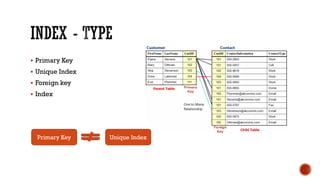
 Primary Key
 Unique Index
 Foreign key
 Index
Primary Key Unique Index
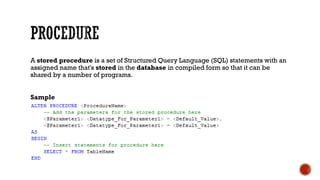
A stored procedure is a set of Structured Query Language (SQL) statements with an
assigned name that's stored in the database in compiled form so that it can be
shared by a number of programs.
Sample
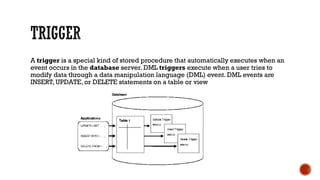
A trigger is a special kind of stored procedure that automatically executes when an
event occurs in the database server. DML triggers execute when a user tries to
modify data through a data manipulation language (DML) event. DML events are
INSERT, UPDATE, or DELETE statements on a table or view
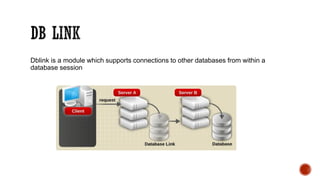
Dblink is a module which supports connections to other databases from within a
database session
 ACID
 Transaction
 Distributed Transaction
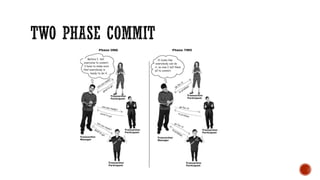
 Two Phase Commit
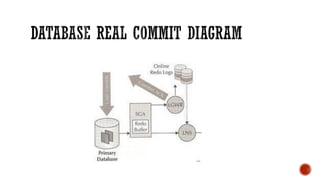
 Real Commit Diagram
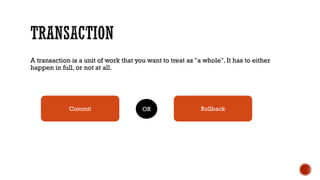
A transaction is a unit of work that you want to treat as "a whole". It has to either
happen in full, or not at all.
Commit RollbackOR
A distributed transaction is a database transaction in which two or more network
hosts are involved
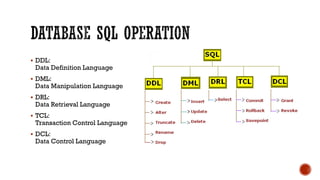
 DDL:
Data Definition Language
 DML:
Data Manipulation Language
 DRL:
Data Retrieval Language
 TCL:
Transaction Control Language
 DCL:
Data Control Language
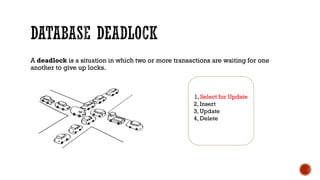
A deadlock is a situation in which two or more transactions are waiting for one
another to give up locks.
1, Select for Update
2, Insert
3, Update
4, Delete
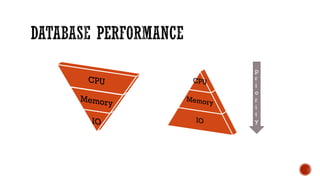
p
r
i
o
r
i
t
y
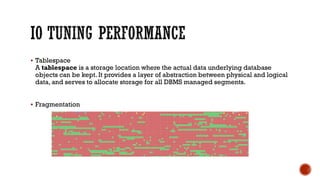
 Tablespace
A tablespace is a storage location where the actual data underlying database
objects can be kept. It provides a layer of abstraction between physical and logical
data, and serves to allocate storage for all DBMS managed segments.
 Fragmentation
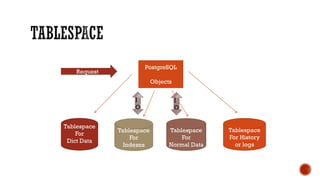
Tablespace
For
Dict Data
Tablespace
For
Indexes
Tablespace
For
Normal Data
Tablespace
For History
or logs
PostgreSQL
Objects
Request
I
O
I
O
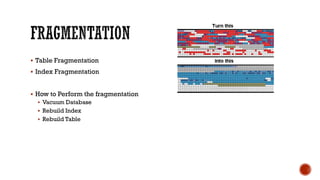
 Table Fragmentation
 Index Fragmentation
 How to Perform the fragmentation
 Vacuum Database
 Rebuild Index
 Rebuild Table
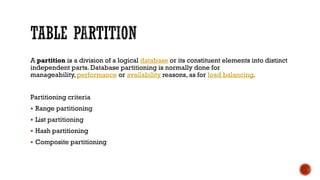
A partition is a division of a logical database or its constituent elements into distinct
independent parts. Database partitioning is normally done for
manageability, performance or availability reasons, as for load balancing.
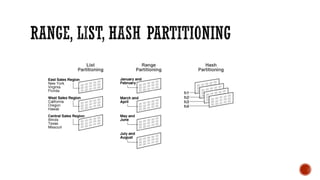
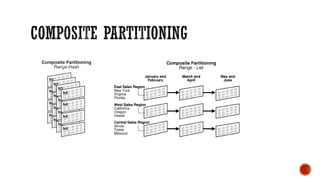
Partitioning criteria
 Range partitioning
 List partitioning
 Hash partitioning
 Composite partitioning
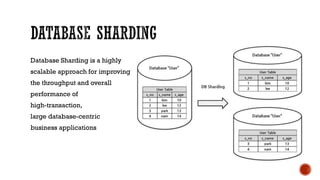
Database Sharding is a highly
scalable approach for improving
the throughput and overall
performance of
high-transaction,
large database-centric
business applications
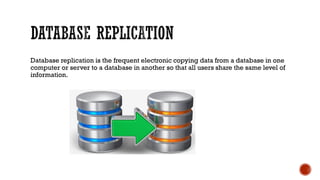
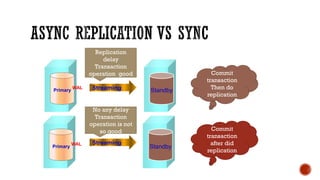
Database replication is the frequent electronic copying data from a database in one
computer or server to a database in another so that all users share the same level of
information.
Primary StandbyStreamingWAL
Primary Standby
StreamingWAL
Commit
transaction
Then do
replication
Commit
transaction
after did
replication
Replication
delay
Transaction
operation good
No any delay
Transaction
operation is not
so good
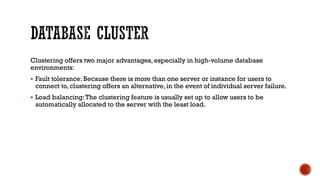
Clustering offers two major advantages, especially in high-volume database
environments:
 Fault tolerance: Because there is more than one server or instance for users to
connect to, clustering offers an alternative, in the event of individual server failure.
 Load balancing:The clustering feature is usually set up to allow users to be
automatically allocated to the server with the least load.
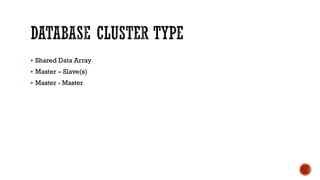
 Shared Data Array
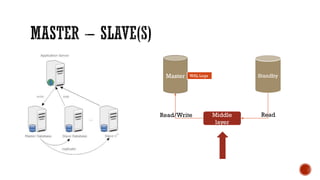
 Master – Slave(s)
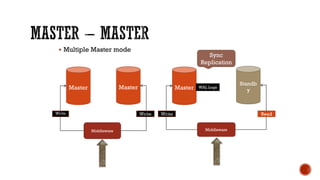
 Master - Master
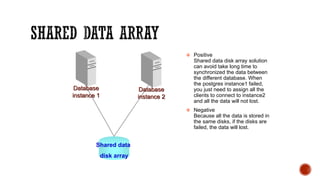
Shared data
disk array
Database
instance 1
Database
instance 2
 Positive
Shared data disk array solution
can avoid take long time to
synchronized the data between
the different database. When
the postgres instance1 failed,
you just need to assign all the
clients to connect to instance2
and all the data will not lost.
 Negative
Because all the data is stored in
the same disks, if the disks are
failed, the data will lost.
Master StandbyWAL Logs
Middle
layer
Read/Write Read
 Multiple Master mode
Master Master
Middleware
Master
Standb
y
WAL Logs
Middleware
Sync
Replication
Write Write ReadWrite
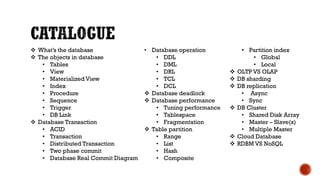
 What’s the database
 The objects in database
• Tables
• View
• Materialized View
• Index
• Procedure
• Sequence
• Trigger
• DB Link
 Database Transaction
• ACID
• Transaction
• Distributed Transaction
• Two phase commit
• Database Real Commit Diagram
• Database operation
• DDL
• DML
• DRL
• TCL
• DCL
 Database deadlock
 Database performance
• Tuning performance
• Tablespace
• Fragmentation
 Table partition
• Range
• List
• Hash
• Composite
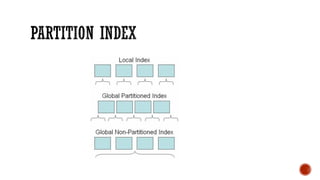
• Partition index
• Global
• Local
 OLTP VS OLAP
 DB sharding
 DB replication
• Async
• Sync
 DB Cluster
• Shared Disk Array
• Master – Slave(s)
• Multiple Master
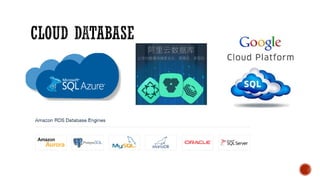
 Cloud Database
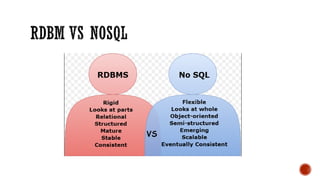
 RDBM VS NoSQL
Discover Database

Discover Database

  • 1.
  • 3.
    A database isan organized collection of data. It is the collection of schemas, tables, queries, reports, views, and other objects.The data are typically organized to model aspects of reality in a way that supports processes requiring information (copied from Wikipedia)
  • 4.
     Tables  View Materialized View  Index  Procedure  Sequence  Trigger  DB Link
  • 5.
    A table isa collection of related data held in a structured format within a database. It consists of columns, and rows.
  • 6.
    A view isa virtual table based on the result-set of an SQL statement. A view contains rows and columns, just like a real table. The fields in a view are fields from one or more real tables in the database. Sample: CREATE VIEW view_dept_201 AS SELECT emp_id, name, hire_date FROM gdb.employees WHERE department = 201;
  • 7.
    A materialized viewis a database object that contains the results of a query Sample: Create materialized view myView as select * from myTab; Refresh materialized view myView; Materialized View ViewVS
  • 11.
     Primary Key Unique Index  Foreign key  Index Primary Key Unique Index
  • 12.
    A stored procedureis a set of Structured Query Language (SQL) statements with an assigned name that's stored in the database in compiled form so that it can be shared by a number of programs. Sample
  • 14.
    A trigger isa special kind of stored procedure that automatically executes when an event occurs in the database server. DML triggers execute when a user tries to modify data through a data manipulation language (DML) event. DML events are INSERT, UPDATE, or DELETE statements on a table or view
  • 15.
    Dblink is amodule which supports connections to other databases from within a database session
  • 16.
     ACID  Transaction Distributed Transaction  Two Phase Commit  Real Commit Diagram
  • 18.
    A transaction isa unit of work that you want to treat as "a whole". It has to either happen in full, or not at all. Commit RollbackOR
  • 19.
    A distributed transactionis a database transaction in which two or more network hosts are involved
  • 22.
     DDL: Data DefinitionLanguage  DML: Data Manipulation Language  DRL: Data Retrieval Language  TCL: Transaction Control Language  DCL: Data Control Language
  • 23.
    A deadlock isa situation in which two or more transactions are waiting for one another to give up locks. 1, Select for Update 2, Insert 3, Update 4, Delete
  • 24.
  • 25.
     Tablespace A tablespaceis a storage location where the actual data underlying database objects can be kept. It provides a layer of abstraction between physical and logical data, and serves to allocate storage for all DBMS managed segments.  Fragmentation
  • 26.
  • 27.
     Table Fragmentation Index Fragmentation  How to Perform the fragmentation  Vacuum Database  Rebuild Index  Rebuild Table
  • 28.
    A partition isa division of a logical database or its constituent elements into distinct independent parts. Database partitioning is normally done for manageability, performance or availability reasons, as for load balancing. Partitioning criteria  Range partitioning  List partitioning  Hash partitioning  Composite partitioning
  • 33.
    Database Sharding isa highly scalable approach for improving the throughput and overall performance of high-transaction, large database-centric business applications
  • 35.
    Database replication isthe frequent electronic copying data from a database in one computer or server to a database in another so that all users share the same level of information.
  • 36.
    Primary StandbyStreamingWAL Primary Standby StreamingWAL Commit transaction Thendo replication Commit transaction after did replication Replication delay Transaction operation good No any delay Transaction operation is not so good
  • 37.
    Clustering offers twomajor advantages, especially in high-volume database environments:  Fault tolerance: Because there is more than one server or instance for users to connect to, clustering offers an alternative, in the event of individual server failure.  Load balancing:The clustering feature is usually set up to allow users to be automatically allocated to the server with the least load.
  • 38.
     Shared DataArray  Master – Slave(s)  Master - Master
  • 39.
    Shared data disk array Database instance1 Database instance 2  Positive Shared data disk array solution can avoid take long time to synchronized the data between the different database. When the postgres instance1 failed, you just need to assign all the clients to connect to instance2 and all the data will not lost.  Negative Because all the data is stored in the same disks, if the disks are failed, the data will lost.
  • 40.
  • 41.
     Multiple Mastermode Master Master Middleware Master Standb y WAL Logs Middleware Sync Replication Write Write ReadWrite
  • 46.
     What’s thedatabase  The objects in database • Tables • View • Materialized View • Index • Procedure • Sequence • Trigger • DB Link  Database Transaction • ACID • Transaction • Distributed Transaction • Two phase commit • Database Real Commit Diagram • Database operation • DDL • DML • DRL • TCL • DCL  Database deadlock  Database performance • Tuning performance • Tablespace • Fragmentation  Table partition • Range • List • Hash • Composite • Partition index • Global • Local  OLTP VS OLAP  DB sharding  DB replication • Async • Sync  DB Cluster • Shared Disk Array • Master – Slave(s) • Multiple Master  Cloud Database  RDBM VS NoSQL