Disaster Response 101:Recovering water-damaged collectionsA brief overview of Cause, Response, and PreparationMay Day 2010
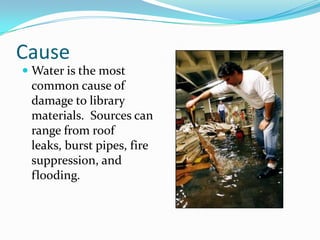
CauseWater is the most common cause of damage to library materials.  Sources can range from roof leaks, burst pipes, fire suppression, and flooding.
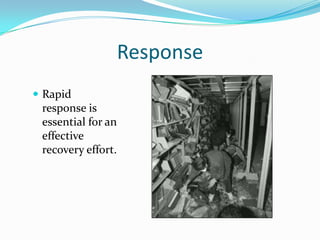
ResponseRapid response is essential for an effective recovery effort.
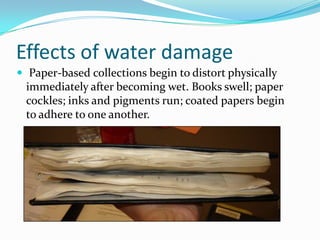
Effects of water damage Paper-based collections begin to distort physically immediately after becoming wet. Books swell; paper cockles; inks and pigments run; coated papers begin to adhere to one another.
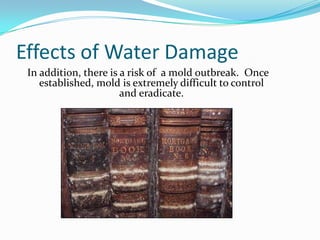
Effects of Water Damage In addition, there is a risk of  a mold outbreak.  Once established, mold is extremely difficult to control and eradicate.
First stepsIn the event of a water-related emergency :Remove standing water Assess/survey damageFreeze or air dry wet materialsIdentify shelf location when removing items
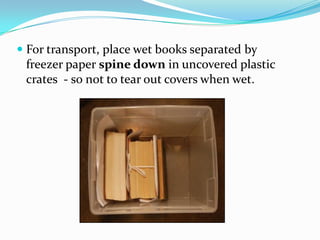
For transport, place wet books separated by freezer paper spine down in uncovered plastic crates  - so not to tear out covers when wet.
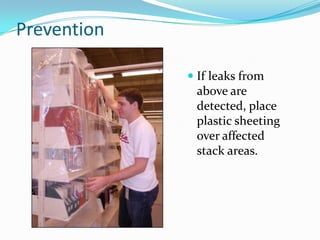
PreventionIf leaks from above are detected, place plastic sheeting over affected stack areas.
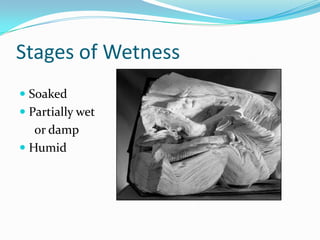
Stages of WetnessSoakedPartially wet     or dampHumid
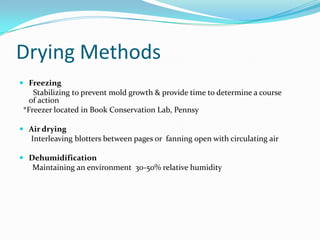
Drying MethodsFreezing        Stabilizing to prevent mold growth & provide time to determine a course of action  *Freezer located in Book Conservation Lab, PennsyAir drying      Interleaving blotters between pages or  fanning open with circulating airDehumidificationMaintaining an environment  30-50% relative humidity
Care should be taken when handling wet materials  as paper becomes extremely fragile and can suffer further damage
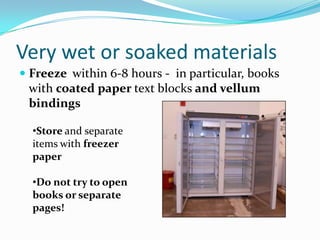
Very wet or soaked materialsFreeze  within 6-8 hours -  in particular, books with coated paper text blocks and vellum bindingsStore and separate items with freezer paper
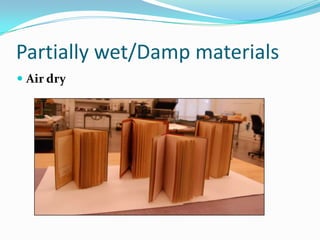
Do not try to open books or separate pages!Partially wet/Damp materialsAir dry
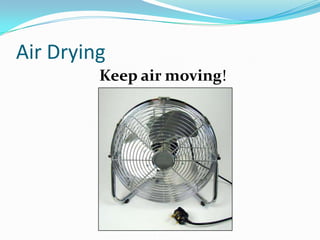
Air DryingKeep air moving!
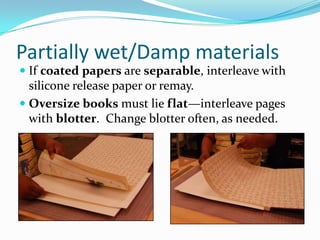
Partially wet/Damp materialsIf coated papers are separable, interleave with silicone release paper or remay.Oversize books must lie flat—interleave pages with blotter.  Change blotter often, as needed.
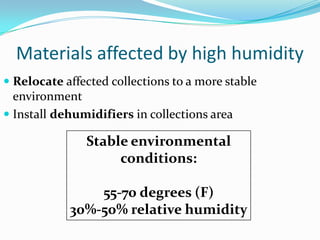
Materials affected by high humidityRelocate affected collections to a more stable environmentInstall dehumidifiers in collections areaStable environmental conditions:55-70 degrees (F)30%-50% relative humidity
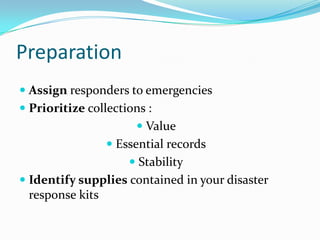
PreparationAssign responders to emergenciesPrioritize collections :Value Essential recordsStabilityIdentify supplies contained in your disaster response kits
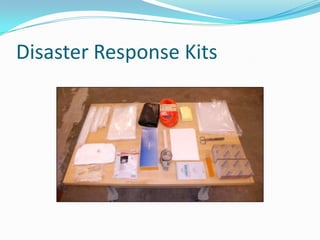
Disaster Response Kits
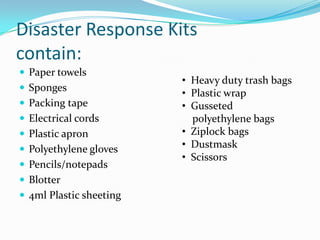
Disaster Response Kits contain:Paper towelsSpongesPacking tapeElectrical cordsPlastic apronPolyethylene glovesPencils/notepadsBlotter4ml Plastic sheeting  Heavy duty trash bags
  Plastic wrap
  Gusseted    polyethylene bagsZiplock bags
Dustmask
  ScissorsEvaluate RiskKnow the materials in your collectionsUnderstand the risk factorsBe prepared!

Disaster response 101

  • 1.
    Disaster Response 101:Recoveringwater-damaged collectionsA brief overview of Cause, Response, and PreparationMay Day 2010
  • 2.
    CauseWater is themost common cause of damage to library materials. Sources can range from roof leaks, burst pipes, fire suppression, and flooding.
  • 3.
    ResponseRapid response isessential for an effective recovery effort.
  • 4.
    Effects of waterdamage Paper-based collections begin to distort physically immediately after becoming wet. Books swell; paper cockles; inks and pigments run; coated papers begin to adhere to one another.
  • 5.
    Effects of WaterDamage In addition, there is a risk of a mold outbreak. Once established, mold is extremely difficult to control and eradicate.
  • 6.
    First stepsIn theevent of a water-related emergency :Remove standing water Assess/survey damageFreeze or air dry wet materialsIdentify shelf location when removing items
  • 7.
    For transport, placewet books separated by freezer paper spine down in uncovered plastic crates - so not to tear out covers when wet.
  • 8.
    PreventionIf leaks fromabove are detected, place plastic sheeting over affected stack areas.
  • 9.
  • 10.
    Drying MethodsFreezing Stabilizing to prevent mold growth & provide time to determine a course of action *Freezer located in Book Conservation Lab, PennsyAir drying Interleaving blotters between pages or fanning open with circulating airDehumidificationMaintaining an environment 30-50% relative humidity
  • 11.
    Care should betaken when handling wet materials as paper becomes extremely fragile and can suffer further damage
  • 12.
    Very wet orsoaked materialsFreeze within 6-8 hours - in particular, books with coated paper text blocks and vellum bindingsStore and separate items with freezer paper
  • 13.
    Do not tryto open books or separate pages!Partially wet/Damp materialsAir dry
  • 14.
  • 15.
    Partially wet/Damp materialsIfcoated papers are separable, interleave with silicone release paper or remay.Oversize books must lie flat—interleave pages with blotter. Change blotter often, as needed.
  • 16.
    Materials affected byhigh humidityRelocate affected collections to a more stable environmentInstall dehumidifiers in collections areaStable environmental conditions:55-70 degrees (F)30%-50% relative humidity
  • 17.
    PreparationAssign responders toemergenciesPrioritize collections :Value Essential recordsStabilityIdentify supplies contained in your disaster response kits
  • 18.
  • 19.
    Disaster Response Kitscontain:Paper towelsSpongesPacking tapeElectrical cordsPlastic apronPolyethylene glovesPencils/notepadsBlotter4ml Plastic sheeting Heavy duty trash bags
  • 20.
  • 21.
    Gusseted polyethylene bagsZiplock bags
  • 22.
  • 23.
    ScissorsEvaluateRiskKnow the materials in your collectionsUnderstand the risk factorsBe prepared!