Disability Awareness History 1990 Americans with Disabilities Act passed in Congress Ensures equal opportunity and prohibits discrimination People First www.disabilityisnatural.com/people firstlanguage.htm
What is a disability? A body function that operates differently than expected Caused by an accident, trauma, heredity, or disease May limit mobility, hearing, vision, speech, cognitive or mental function May have more than one
What is a handicap? Attitudinal or physical constraint  imposed upon a person with or without a disability e.g  Stairs are a handicap to a person   who needs to use a wheelchair
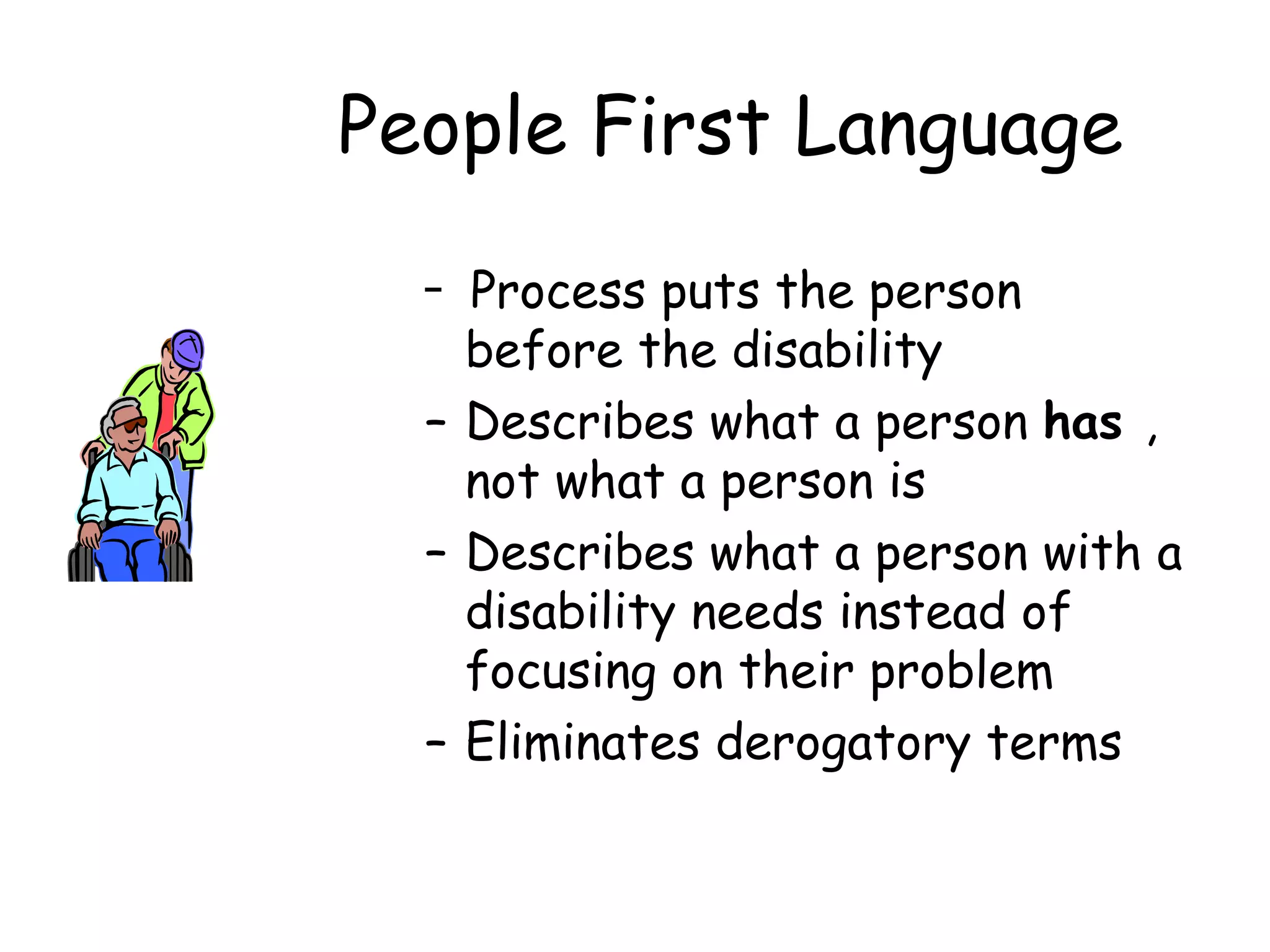
People First Language Process puts the person before the disability Describes what a person  has  , not what a person is Describes what a person with a disability needs instead of focusing on their problem Eliminates derogatory terms
Points to Remember! Look at and speak directly to an individual with a disability, not their companion Call a person with a disability by his/her first name  only  when extending that familiarity to all others present Place yourself at eye level in front of the person, when speaking with a person who uses a wheelchair or crutches
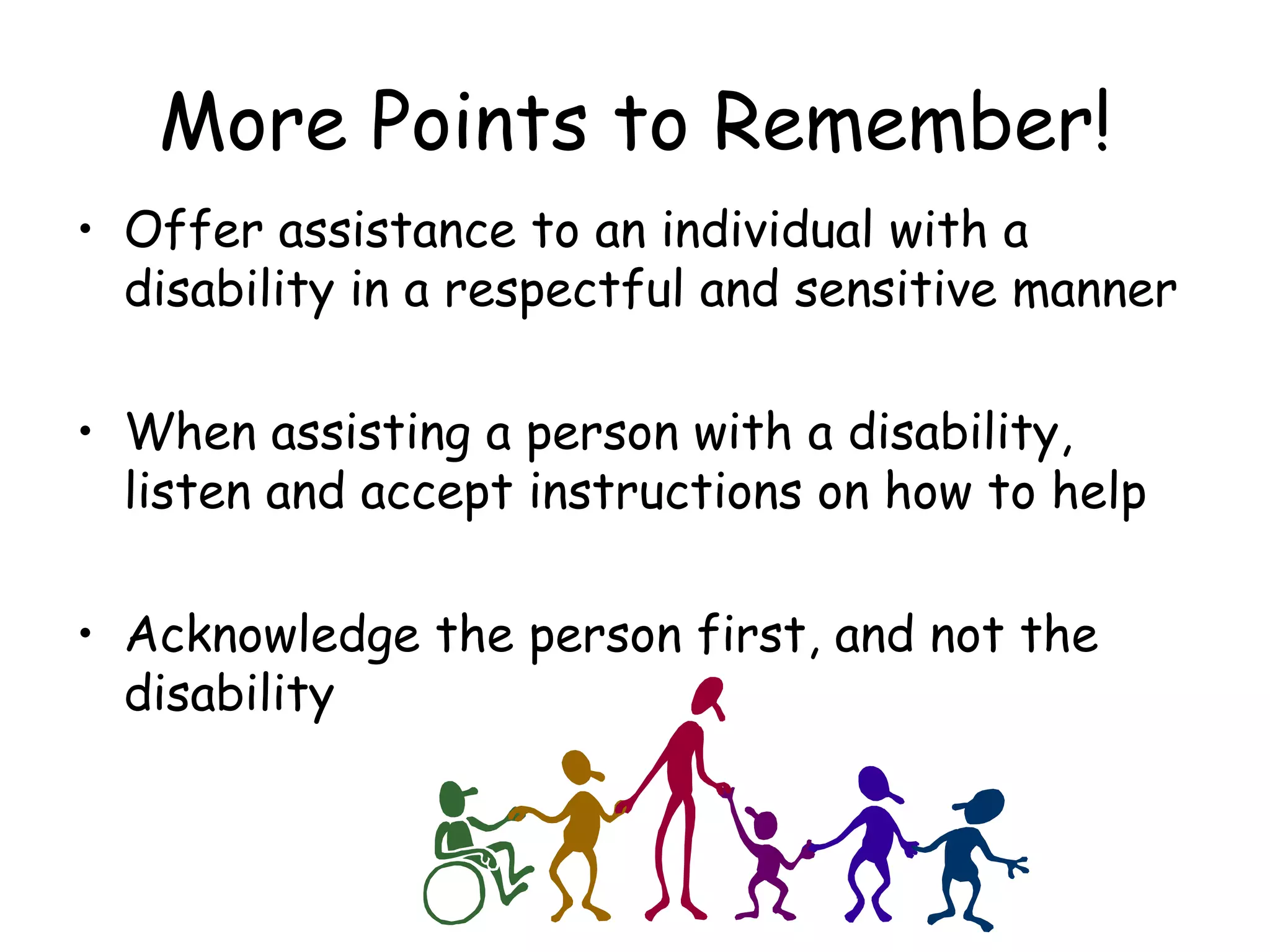
More Points to Remember! Offer assistance to an individual with a disability in a respectful and sensitive manner When assisting a person with a disability, listen and accept instructions on how to help Acknowledge the person first, and not the disability

Disability awareness-training

  • 1.
    Disability Awareness History1990 Americans with Disabilities Act passed in Congress Ensures equal opportunity and prohibits discrimination People First www.disabilityisnatural.com/people firstlanguage.htm
  • 2.
    What is adisability? A body function that operates differently than expected Caused by an accident, trauma, heredity, or disease May limit mobility, hearing, vision, speech, cognitive or mental function May have more than one
  • 3.
    What is ahandicap? Attitudinal or physical constraint imposed upon a person with or without a disability e.g Stairs are a handicap to a person who needs to use a wheelchair
  • 4.
    People First LanguageProcess puts the person before the disability Describes what a person has , not what a person is Describes what a person with a disability needs instead of focusing on their problem Eliminates derogatory terms
  • 5.
    Points to Remember!Look at and speak directly to an individual with a disability, not their companion Call a person with a disability by his/her first name only when extending that familiarity to all others present Place yourself at eye level in front of the person, when speaking with a person who uses a wheelchair or crutches
  • 6.
    More Points toRemember! Offer assistance to an individual with a disability in a respectful and sensitive manner When assisting a person with a disability, listen and accept instructions on how to help Acknowledge the person first, and not the disability

Editor's Notes

  • #2 For persons with disabilities in employment, state and local government services, public accommodations, commercial facilities and transportation