Drug Induced Renal Injury (DIRI): Alarming indication towards the
catastrophic behavior of drugs
Abstract
The intervening target of the patient’s treatment must be effective along with its safety. It is
unfortunate that all medicines associated with toxic pharmaceutical reactions, which could be
either accidental or predictable outcome of pharmacodynamic and pharmacokinetic. Nephron
is the basic unit of Kidney which is the fate of all administered xenobiotics. Highly exposure
of the chemical elements makes it more susceptible for the impairment during their
biotransformation from the body. Furthermore, aminoglycosides antibiotics, cyclosporin A,
cisplatin, amphotericin B, acetaminophen, ciprofloxacin are the candidate of causing
calamitous nephrotoxicity potential, and accelerates the kidney impairment. Sometime herbal
medicine viz. also accounting for the nephrotoxicity. Drug causing renal injury is complicated
occurrence because reliable treatment and diagnosis is not still available globally. This review
highlights the occurrence and biomarkers of drug-induced nephrotoxicity and exemplifies its
pathophysiology. Authors also assess the prevalent drugs caused nephrotoxicity in the recent
years.
Keywords: Renal, Injury, Drugs, Dialysis, Mortality.
Introduction
More than 60% population in hospital and terrestrial surrounding are victims of Drug Induced
Renal Injury (DIRI) either reported as acute renal disease (ARD) or chronic renal disease
(CRD) and it is expanding in the recent decades 1,2
due to frequently consumption of medicine
account of renal toxicity, advanced age, chronic disease, diabetes mellitus and many more.3,4
The kidneys are bean shaped tiny organs; situated retroperitoneally on the posterior
abdominal wall and located between the transverse processes of T12 and L3. Our kidneys put
for only about 0.2–0.5% of total body weight, but capable to have as much as 20% of the
cardiac output.5,6
Renal system is responsible for the evacuation of drug; metabolite and
xenobiotics; therefore, cascade of these events requires high energy (glomeruli and tubules)
to produce the high concentration of exogenous products. It is unfortunate that more than
20% of medicine accounts for renal toxicity.7,8
However, clinical safety investigation is the
essential criterion before release of the drug in marketing surveillance, but side effects are
identified when it is kept on the market for the population. DIRI can be defined as the
malfunction of kidney due to the exposure of medicine either directly or indirectly. 9
Nonetheless, the renal system also associated with a metabolic cytochrome capacity viz. CYP
2B6 and 3A5, abundantly in the proximal convoluted tubule (PCT) while CYP 1A1, 1A2,
1B1, 2A6, 2C19, 2D6, and 2E1 are not reported in the substantial amounts. Although CYP
2C8, 2C9, and 3A4 is being researched yet in the human kidney. However, other studies have
confirmed the activity of CYP1A1, CYP2C8, CYP2C11, CYP2E1, and CYP3A5 in human
kidneys. 10,11
Moreover, CYP2J subclass isoenzyme and flavin monooxygenases are also
present account for the catalyse the biomodification of drugs having nitrogen, sulfur, and
phosphorus atoms moiety, as well as others enzyme i.e., Monoamine oxidases (MAO) both A
and B, alcohol and aldehyde dehydrogenases, and prostaglandin H complex synthases etc.12,13
Glucuronosyltransferases (UGTs), glutathione S-transferase, and N-acetyltransferase enzyme
have also been found in the kidneys and executed conjugation reaction to increase their
hydrophilic characteristics of biomodification. The most abundantly expressed renal UGTs
are 1A9 and 2B7, responsible for the glucuronidation of arachidonic acid, prostaglandins,
leukotrienes, and P450-derived arachidonic acid metabolites and many more.14,15
It is earlier reported that renal disorders substantially affecting the pharmacokinetic fate of
drugs, particularly at the elimination phase. Apart from that, drugs and their metabolites
eliminated by the kidneys could impaired the normal functioning of renal, particularly
proximal tubules responsible for the maximum metabolic activity. 16,17
Mehta et.al offered the clinical classification of DIRI lies on time course and duration of
kidney malfunctioning as per the Kidney Disease Improving Global Outcomes (KDIGO) for
Acute Kidney Disease (AKI). These are Acute occurs for 24hrs to 1 week, subacute occurs
for 1 week to three months; and chronic persists more than three months and developed as
long term kidney disorder . 18
Glomerular filtration rate (GFR) reduction is the resultant of glomerular impairment and,
hydro electrolytic disorders (HED) caused due to tubule impairments. Reduction of GFR
diagnosed at delay stage but some biomarker could be helpful to identify the renal injury
initially. Although to the till date, 100% reliable candidate is not known to prognosis of DIRI.
Diagnosis and treatment strategies are very tedious of DIRI. Consider this aspects Awdishu
and Mehta offered a “6R’s” i.e., novel outline for the same. This one is comprised by risk
assessment, early recognition, targeted response, timely renal support and rehabilitation, and
research into the epidemiology and pathophysiology. 19
Fig.1
Therapeutic drug monitoring
(TDM) in the blood
Risk factors
“6R's” in DIRI
Aging (more than 60 years),Female is
more sensitive
Alteration in pharmacogenetics in hepatic
CYP450 system and kidney transporters
Pharmacokinetic and pharmacodynamic
incompatibility between drugs and their
metabolite
Comorbidities: Cirrhosis, Hyperglycaemia,
hy pe r t e nsi o n, c a r di a c f a i l ur e ,
hypercalcaemia, hypermagnesemia, urine
pH imbalance, cancer
Malfunction of GFR, kidney hypoperfusion,
Nephrotoxic metabolite, PCT reabsorption
Exposure of nephrotoxic drugs
Recognition
Acute kidney injury, Glomerular
dysfunction, Tubular disturbances
,Nephrolithiasis
Response
Renal support
Renal
rehabilitation
Research
Severity of DIRI of the particular
drug
Kidney replacement therapy and
hemodialysis
Unidentified risk factors for renal toxicity,
peculiar for the individual drug
Experimental studies targeted to the
pathogenesis of DIRI
Pharmacovigilance of currently marketed drugs
Figure 1. “6R’s” to treat the DIRI
Bartoli’s also proposed distinctive ten kind of DIRI viz. immunologic reactions caused by
drugs involving the kidney. Most of the drug which caused renal injuries are Nonsteroidal
Anti-inflammatory drug, Angiotensin-converting enzyme inhibitors (ACEI), bactericidal,
anti-neoplastic agents, anticonvulsant, viricidal, diuretics, antiallergic drugs, steroidal agents,
antidepressants, inhalation anaesthetics, statins, antiplatelets, immuno inhibitor etc. and so
many more.20
Table 1.
Identification of renal toxicity potential of the drug could be key factor to ignore this
calamitous occurrence and offers the fast treatment, the withdrawal of the drug used so far
and satisfactory outcomes in kidney dysfunction. It can be identified like other renal
dysfunction viz. haematology, urine test, creatinine level, urea nitrogen measure, GFR
estimation through biomarkers.21,22
Numerous biomarkers are discussed in the Table 3.
Table 1: The potential biomarkers of DIRI
Biomarker Target Clinical report
KIM - 1 (Kidney Injury
Molecule - V1)
It is produced in the PCT and raised the
urine concentration in case of ischemia
and drug toxicity
Cisplatin, gentamicin, and
cyclosporine23,24
β-2 microglobulin It is produced by lymphocytes that raises
in urinary concentration in inflammatory
diseases, infections, and autoimmune
diseases.
Calcineurin inhibitor (CNi)
toxicity. It is prognosed in
renal tubular injury. 25,26
Clusterin It is produced during apoptosis and anti-
apoptosis in kidney and other various
organs.
Cisplatin, vancomycin,
tacrolimus, and gentamicin.
27,28
Cystatin C It is a protein produced by all nucleated
cells and filtered freely. It is biomarker to
estimate of the GFR in conditions under
stable kidney function conditions, in
which the creatinine clearance is less
reliable, such as in cirrhotic patients.
Amphotericin B,
polymyxin, vancomycin,
and cisplatin.29,30
Materials and Methods
This comprehensive review was done in August 2023 to extract the published work related to
DIRI for last five years. The published work relevant to the topic was gathered from
numerous databases including PubMed, ScienceDirect, Frontiers, Scopus, Research Gate and
AHA journals in the previous years. This period displayed incline of the prevalence of DIRI
in the population globally. The keywords used for searching included Drug induced, Renal
injury, Toxicity, Mortality etc.
Insertion standards
 Literature published on DIRI for last five years.
 Applicable only for standard semantic
Elimination standards
 Literature reported before 2019.
 Only abstract available and Media reports.
All authors were the part of reviewing the published literature data. Selected studies lie on
chronic and acute renal injury due to drug consumption. During the initial search for articles
in the databases, forty studies were extracted. A total of twenty articles were finally used after
applying the exclusion standards. The study opted for comprehensive review consisted of
various study patterns, such as review articles, systematic reviews, meta-analytic studies,
cross sectional studies, instrumental evaluation, and experimental studies. The information
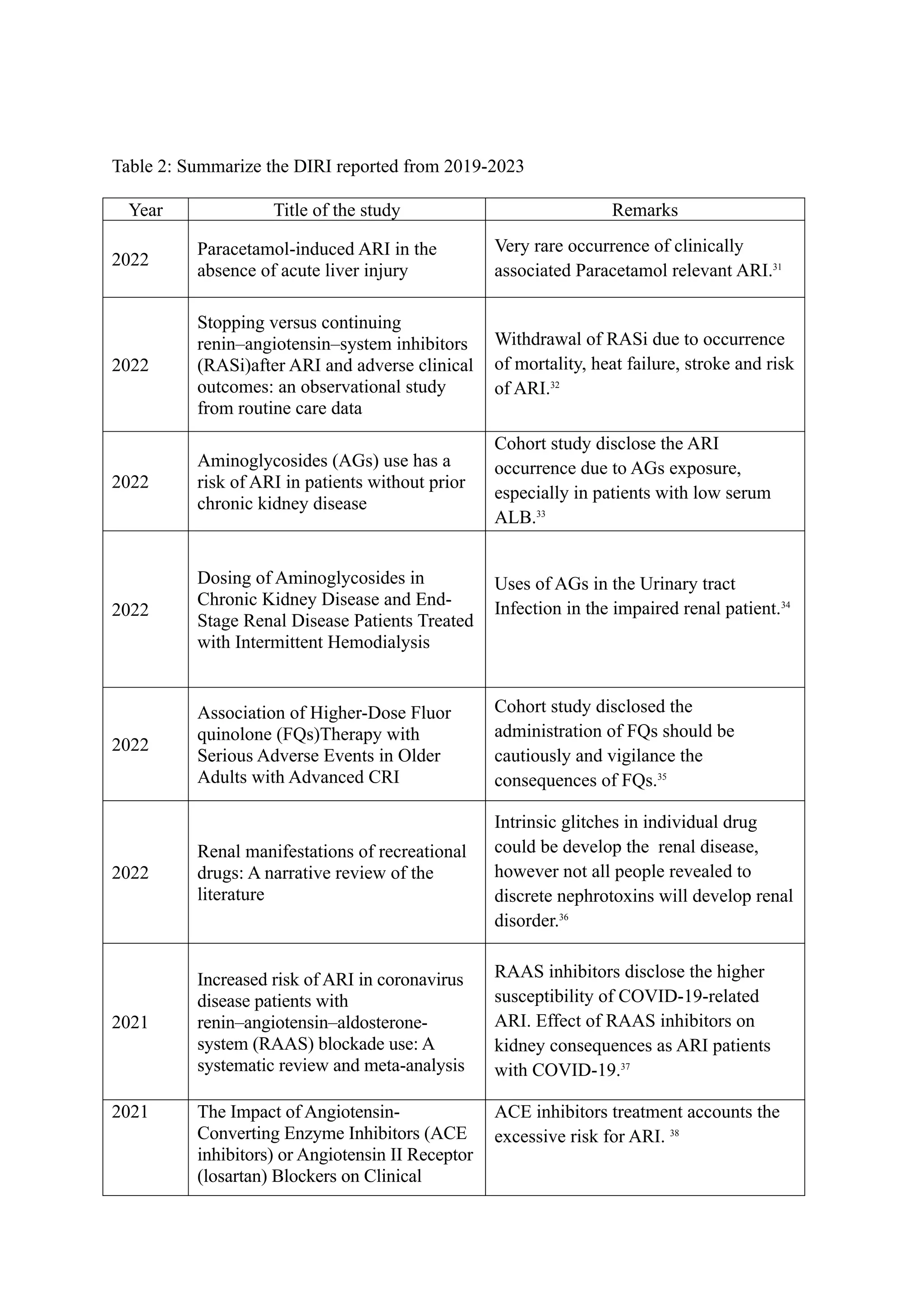
obtained from each publication was abstracted. Table 2.
Table 2: Summarize the DIRI reported from 2019-2023
Year Title of the study Remarks
2022
Paracetamol-induced ARI in the
absence of acute liver injury
Very rare occurrence of clinically
associated Paracetamol relevant ARI.31
2022
Stopping versus continuing
renin–angiotensin–system inhibitors
(RASi)after ARI and adverse clinical
outcomes: an observational study
from routine care data
Withdrawal of RASi due to occurrence
of mortality, heat failure, stroke and risk
of ARI.32
2022
Aminoglycosides (AGs) use has a
risk of ARI in patients without prior
chronic kidney disease
Cohort study disclose the ARI
occurrence due to AGs exposure,
especially in patients with low serum
ALB.33
2022
Dosing of Aminoglycosides in
Chronic Kidney Disease and End-
Stage Renal Disease Patients Treated
with Intermittent Hemodialysis
Uses of AGs in the Urinary tract
Infection in the impaired renal patient.34
2022
Association of Higher-Dose Fluor
quinolone (FQs)Therapy with
Serious Adverse Events in Older
Adults with Advanced CRI
Cohort study disclosed the
administration of FQs should be
cautiously and vigilance the
consequences of FQs.35
2022
Renal manifestations of recreational
drugs: A narrative review of the
literature
Intrinsic glitches in individual drug
could be develop the renal disease,
however not all people revealed to
discrete nephrotoxins will develop renal
disorder.36
2021
Increased risk of ARI in coronavirus
disease patients with
renin–angiotensin–aldosterone-
system (RAAS) blockade use: A
systematic review and meta-analysis
RAAS inhibitors disclose the higher
susceptibility of COVID-19-related
ARI. Effect of RAAS inhibitors on
kidney consequences as ARI patients
with COVID-19.37
2021 The Impact of Angiotensin-
Converting Enzyme Inhibitors (ACE
inhibitors) or Angiotensin II Receptor
(losartan) Blockers on Clinical
ACE inhibitors treatment accounts the
excessive risk for ARI. 38
Outcomes of ARI victims
2021
Treatment of Iron Deficiency
Anemia in CKD and End-Stage
Kidney Disease
Iron supplementation viz. ferumoxytol,
ferric carboxymaltose appears to have a
more protective effect against the
outcome before the occurrence of
dialysis. 39
2021
Editorial: Applications of Herbal
Medicine to Control CRI
Herbal medicine viz. Hypericum
perforatum and Aristolochic acid (AA)
used in the prevention and treatment of
ailments caused the CRD. 40,41
2021
Acute Renal Impairment in Patients
Due to Paracetamol Overdose in the
Absence of Hepatic Impairment
ARI without hepatic impairment in
should be appropriately treated to
prevent them from improving chronic
renal failure. 42
2020
Acetaminophen use and risk of renal
impairment: A systematic review
and meta-analysis
Longitudinal study of acetaminophen
discloses the susceptibility of newly
emerging kidney injury in adults. 43
2020 Nephrotoxicity of Ciprofloxacin
Discussed the nephrotoxicity of
ciprofloxacin due to overdose. 44
2019 Herbal Nephropathy (Cranberry)
Contemporary scenarios indulge in the
consumption of plant product. But
reported nephrotoxicity growing
parallel with the expansion of the herbal
medicine industry globally. 45
Discussion
Previous studies elaborated the etiologies associated with the consumption of drugs. It is the
most important step to escape the more victim of DIRI, if mechanism of DIRI will be
identified. Certainly, it helps to provide the alternate medicine in place of them.
Inflammation, immunity altering mechanism account for the acute or chronic
glomerulonephritis or interstitial nephritis; while affecting the intraglomerular hemodynamic,
prompting ARI; tubular cell toxicity with the risk of acute tubular necrosis; crystal
nephropathy; and rhabdomyolysis or thrombotic microangiopathy.
While acetaminophen is recommended as the safest candidate in the prescribed doses, liver
toxicity frequently associated with the acetaminophen consumption. Zahid Khan et.al
reported the rare occurrence of reversible ARI associated with acute tubular necrosis (ATN)
due to acetaminophen overdose, when there was no hepatic impairment. Clinical entity of the
DIRI depends upon the dosage regimen of acetaminophen. 22 years old patient who was
victim of depression but lacking regular treatment. He ingested the 30gm of acetaminophen
tablet and admitted in the emergency with the lower abdomen pain and back pain in both
kidneys coupled with vomiting events. Initial blood test investigation exhibited the ARI with
incline level of creatinine protein and high C-reactive protein. He was treated by N-acetyl
cysteine (NAC) against the acetaminophen overdose and subjected to CT KUB
(Computerized tomography scan of kidneys, ureters, and bladder). However, CT KUB was
about the normal but after 48hrs severe abdominal pain and deteriorating renal performance.
Magnetic resonance imaging of abdominal- pelvic (MRI AP) region reported coronal/axial
wedge in both kidneys. Eight-day treatment cured him well. The pharmacology of renal
injury in patient could be account acetaminophen consumption, yet no other reason
unidentified for renal injury. 42
Cohort investigation was carried out in the patient of the Capital Region of Denmark for
seven years to find the ARI without hepatic impairment due to the acetaminophen as per the
STROBE statement. 6gm consumption were done by the patients with a suspected intake of
more than 6 gram/day. The lower limit of detection (LLOD) of plasma acetaminophen is
specified a 19.65 µg/ml. ARI was associated with acetaminophen as both patients with a
plasma paracetamol concentration below and above the LLOD at admission were included.
Furthermore, follow-up of kidney function after discharge was assessed when possible.46
Corona virus disease (COVID-19) is the catastrophic pandemic in front of human being. ARI
with decline the GFR is the terrible consequences of COVID-19 treatment, dysfunction of
renin–angiotensin–aldosterone system (RAAS). Reni splits the angiotensinogen into
Angiotensin I inactive hormone (octapeptide) while Angiotensin-converting enzyme 2
(ACE2) is a key functional receptor protein for SARS-CoV-2 enters lung cells which activate
the Angiotensinogen I into Angiotensin -II (decapeptide) active hormone; indirectly
population being more susceptible towards the COVID-19. However, it is assumed that
RAAS dysfunction could trigger virus entrance into cells by repairing ACE1/ACE2
imbalance. There is alternate theory that there are still lack of clarity between RAAS inhibitor
consumption and the occurrence of either COVID-19 or death. It is the subject of concern
that safety regimen of RAAS antagonist with COVID-19 under the suspicious and
calamitous. Angiotensin-converting-enzyme inhibitor (ACEI) and angiotensin receptor
blocker (ARB) is the candidate of antihypertensive agents prescribed in the elderly and
chronic kidney disease patients, who suppose to the highly susceptible for the COVID-19-
related deaths and multiple organ injury.
Newcastle–Ottawa Scale (NOS) based retrospective study was done on the increasing risk of
ARI in COVID-19 victims with RAAS blockers. This study concluded that present
incidences of RAAS blockade in COVID-19 patients, however reason is still unidentified.
Hines et al. exhibited that RAAS inhibition during ARI did not interfere in renal normal
functioning following ARI. Even though ACE-2 imparts a significant role in SARS-CoV-2
virus entry, numerous researchers have proposed that ACE2 could regulate an organo-
protective role by negatively regulating the RAAS system, mediating vasodilatory, anti-
inflammatory, and anti-fibrotic roles. 47
ARI is the consequences of blood poisoning(sepsis), diarrhea and heart failure, especially
those who were consuming RAAS blockers viz. ACE inhibitors and ARB. Between June and
July 2018, total 339 patient observational study was carried out through the Emergency
Room (ER) at a University General Hospital in Athens, Greece. Out of 339 objects, 86
patients treated in the ER with AKI while rest patients were identified as without AKI.
Patients in the ARI Group were more mostly men suffered from diarrhea, edema and lower
systolic blood pressure. Enigmatically, AKI was often reported in patients treated with the
target or above target dosage of ACEi/ARB, but not in those receiving lower than the
recommended dosage. Investigator concluded that RAAS blockers is accounting for the
susceptibility of ARI.48
Another study was done in 165 individuals for the ACE inhibitors causing ARI in Stockholm
and Sweden between 2007 to 2018. Individual was taking ACE inhibitors for three months
and stop to consumed it. Consequences of this were death, heart failure and stroke while ARI
was secondary occurrence. 32
Contemporary era is surrounding by the numerous microbes which accounting the calamitous
infectious disease. To eradicate such infection treated by the antimicrobial agents,
aminoglycoside (AGs) is one of them. The consequence of ARI due to AGs consumption still
unidentified in patients who were not victim of chronic kidney disease (CRD).
Safety profile of AGs is still uncertain and account for the ARI due to nephrotoxicity. Kidney
Disease Improving Global Outcomes (KDIGO) issue ARI guidelines that avoid the
consumption of AGs in patients at risk of ARI; less nephrotoxic agents could be the
alternatives to AGs. Between 2008 to 2019; ChuLin Chou et.al. targeted the consequences of
AGs during ARI occurrences during cohort study in patients not suffering from CRD in the
Taipei Medical University Research Database. This finding concluded that AGs is associated
with the ARI depends on multiple variable and subgroup analyses. Furthermore, patients
consuming AGs were substantially exposed to either development to all ARD stages. Decline
level of albumin was highlighted as the was a risk indicator in initially ARD. 49
Additionally, Ong et al. described that AGs-induced AKI occurrence are more frequent in the
elderly, especially those receiving furosemide and those in shock more than in those taking
only AGs. Deposition of AGs in the kidney could account for the ARI occurrence, which are
frequency dependent and increase with accumulated doses.
Nephrotoxicity is unfortunately associated with the fluoroquinolone’s (FQs)consumption;
however, it is offering safe dosage regimen with minimum adverse action. From 2010-2015;
a prospective study was conducted regarding the impact of Ciprofloxacin; example of FQ in
at La Rabta Hospital. Five patients were observed for the study causing ARI due to
ciprofloxacin ingestion and need emergency of instant haemodialysis. Ultrasound was clear
and proteinuria for one day was reported, microscopic haematuria was reported in only single
patient. It was concluded that four patients regained normal kidney function within 21 days
and rest one suffered from chronic kidney failure.50
Another investigation of the kidney injury associate with the cognitive disorder, low level of
blood glucose, collagen-relevant occurrence in patients prescribed a FQs dosage regimen
fluoroquinolone at a higher vs a lower dose was done in Ontario, Canada between 2008 to
2020. A new prescription for a higher-dose FQs viz. ciprofloxacin, 501-1000 mg/d;
levofloxacin, 501-750 mg/d; and norfloxacin, 401-800 mg/d vs a lower-dose FQs viz.
ciprofloxacin, 500 mg/d; levofloxacin, 250-500 mg/d; and norfloxacin, 400 mg/d). Cognitive
disorder, low level of blood glucose, collagen-relevant occurrence was the primary
consequence while sepsis, retinal detachment, death, and sudden cardiac death were the
secondary consequences. This studied concluded that aged patients suffering from advanced
CRD who were consumed overdose of FQs.35
St. John's wort (Hypericum perforatum) is phytomedicinal plant to treat depression. It
triggers the cytochrome p450 (cyp450) cascade and influence the biotransformation.
Ciclosporin and Prograf are immunosuppressant which prescribed posttransplant of organ and
concurrent use of Hypericum perforatum in renal transplant affected people has been stated to
result in decline serum levels of such medication and called the more susceptible for
denunciation. Additionally, consumption of grape citrous fruit and camomile tea supress the
cyp450 enzymes, thereby increasing ciclosporin systemic circulation and kidney injury.
Tubular apoptosis and necrosis in Kidney interstitial fibrosis associated with AA
consumption for the Chinese herbal weight reducing medication. Clinical report observed the
incline level of creatinine, extreme anaemia, insignificant proteinuria, glycosuria, and sterile
pyuria; however still identified reason. Development of such sytomf leads the consequences
of complete resolution, acute kidney injury (AKI) with subsequent slow progression about
1–7 years to end-stage renal disease (ESRD), and CRI with relatively faster progression (< 2
years) to ESRD. 40,41
Chromium and geranium are the trace elements present in natural food viz. mushroom, cape
aloe, djenkol bean, and cat's claw which caused direct kidney injury nephrotoxicity. Table 3 is
the sum up of the numerous drug candidate of kidney injury.51-53
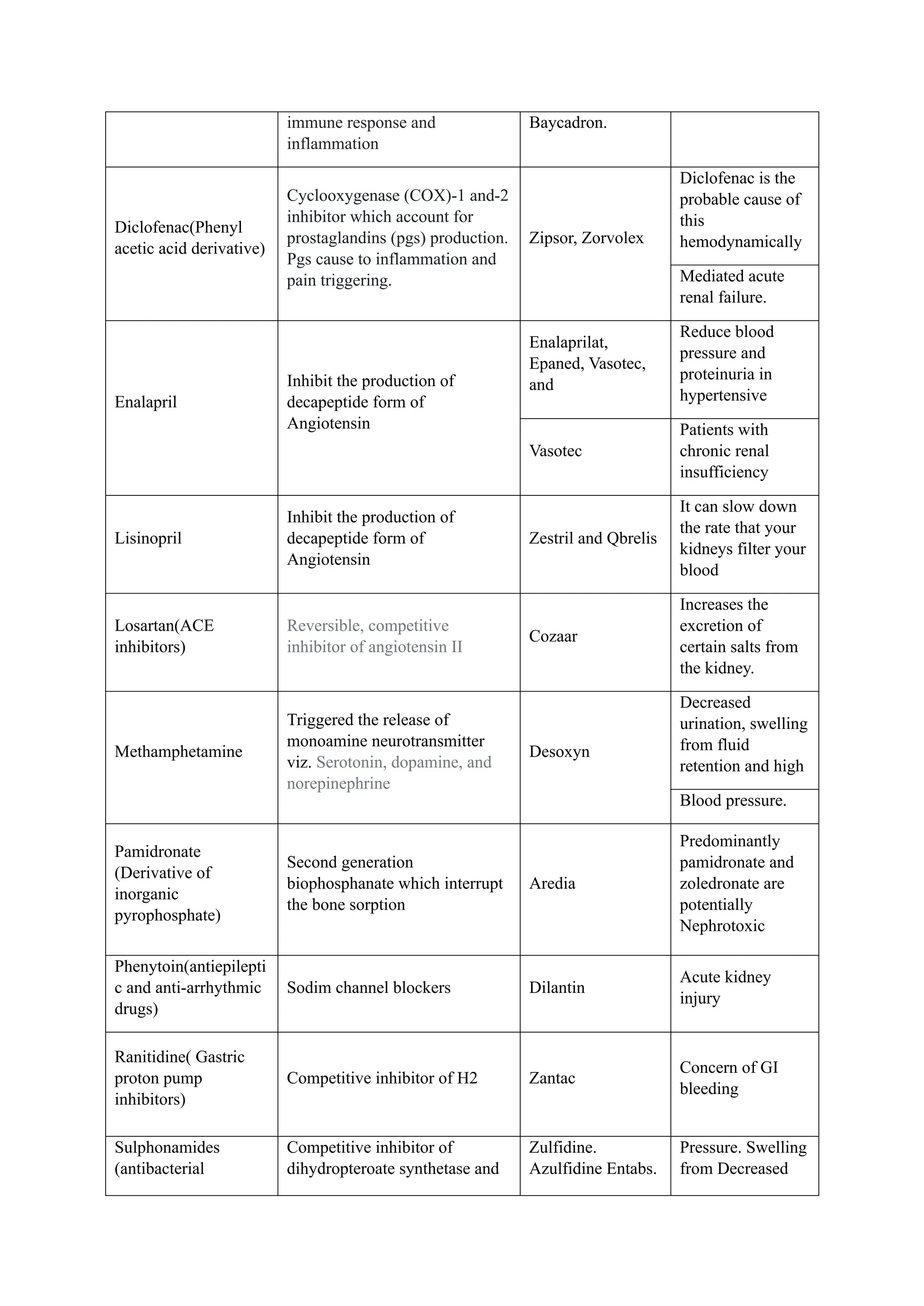
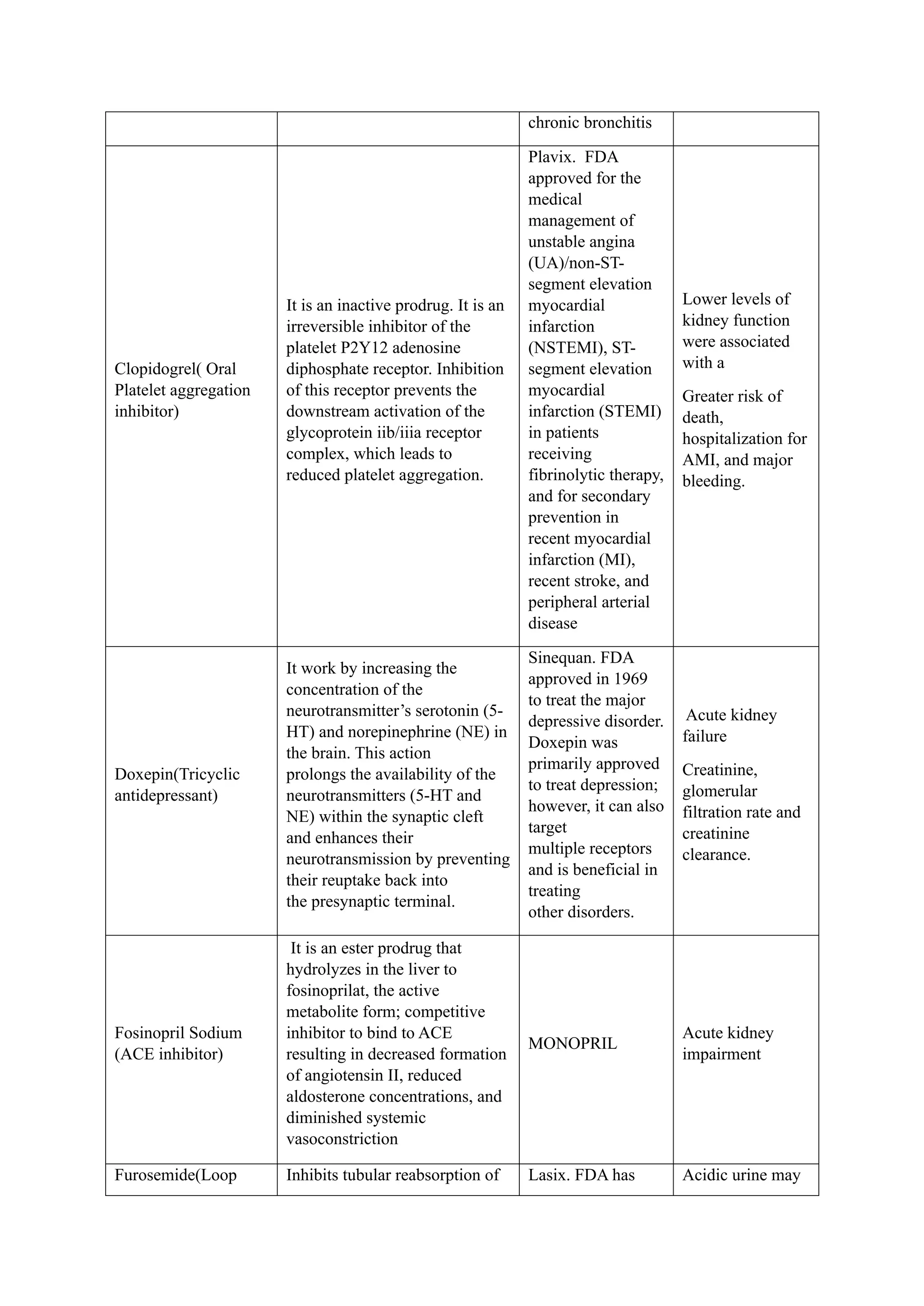
Table 3: Enlist of the reported drugs caused kidney injury54
Name of drugs MOA Brand name
Clinical
outcome
Amitriptyline(Tricycli
c antidepressant)
Interrupt the 5-hydroxy
tryptamine and noradrenaline
between brain cells
Elavil® and Van
trip
Acute Kidney
Injury
Aristocholic
acid(Toxins)
Unidentified especially in
reference to kidney injury
Rheumixx
Include any form
of toxic interstitial
nephropathy
Benazepril (ACE
inhibitors)
Inhibit the production of
decapeptide form of
Angiotensin
Lotensin
Chronic kidney
disease
Cidofovir(Antiviral
agents)
It is prodrug of Cidofovir
diphosphate which interfere in
the viral replication by
selectively inhibiting viral DNA
polymerases
Vistide Acute renal failure
Dexamethasone(
Glucocorticocoid)
It suppress the neutrophil
relocation, decline the
inflammatory mediators, and
reversal of enhanced capillary
permeability; suppresses normal
Decadron,
Dexamethasone
Intensol,
Dexasone,
Solurex, and
Acute kidney
failure and Blood
pressure
immune response and
inflammation
Baycadron.
Diclofenac(Phenyl
acetic acid derivative)
Cyclooxygenase (COX)-1 and-2
inhibitor which account for
prostaglandins (pgs) production.
Pgs cause to inflammation and
pain triggering.
Zipsor, Zorvolex
Diclofenac is the
probable cause of
this
hemodynamically
Mediated acute
renal failure.
Enalapril
Inhibit the production of
decapeptide form of
Angiotensin
Enalaprilat,
Epaned, Vasotec,
and
Reduce blood
pressure and
proteinuria in
hypertensive
Vasotec
Patients with
chronic renal
insufficiency
Lisinopril
Inhibit the production of
decapeptide form of
Angiotensin
Zestril and Qbrelis
It can slow down
the rate that your
kidneys filter your
blood
Losartan(ACE
inhibitors)
Reversible, competitive
inhibitor of angiotensin II
Cozaar
Increases the
excretion of
certain salts from
the kidney.
Methamphetamine
Triggered the release of
monoamine neurotransmitter
viz. Serotonin, dopamine, and
norepinephrine
Desoxyn
Decreased
urination, swelling
from fluid
retention and high
Blood pressure.
Pamidronate
(Derivative of
inorganic
pyrophosphate)
Second generation
biophosphanate which interrupt
the bone sorption
Aredia
Predominantly
pamidronate and
zoledronate are
potentially
Nephrotoxic
Phenytoin(antiepilepti
c and anti-arrhythmic
drugs)
Sodim channel blockers Dilantin
Acute kidney
injury
Ranitidine( Gastric
proton pump
inhibitors)
Competitive inhibitor of H2 Zantac
Concern of GI
bleeding
Sulphonamides
(antibacterial
Competitive inhibitor of
dihydropteroate synthetase and
Zulfidine.
Azulfidine Entabs.
Pressure. Swelling
from Decreased
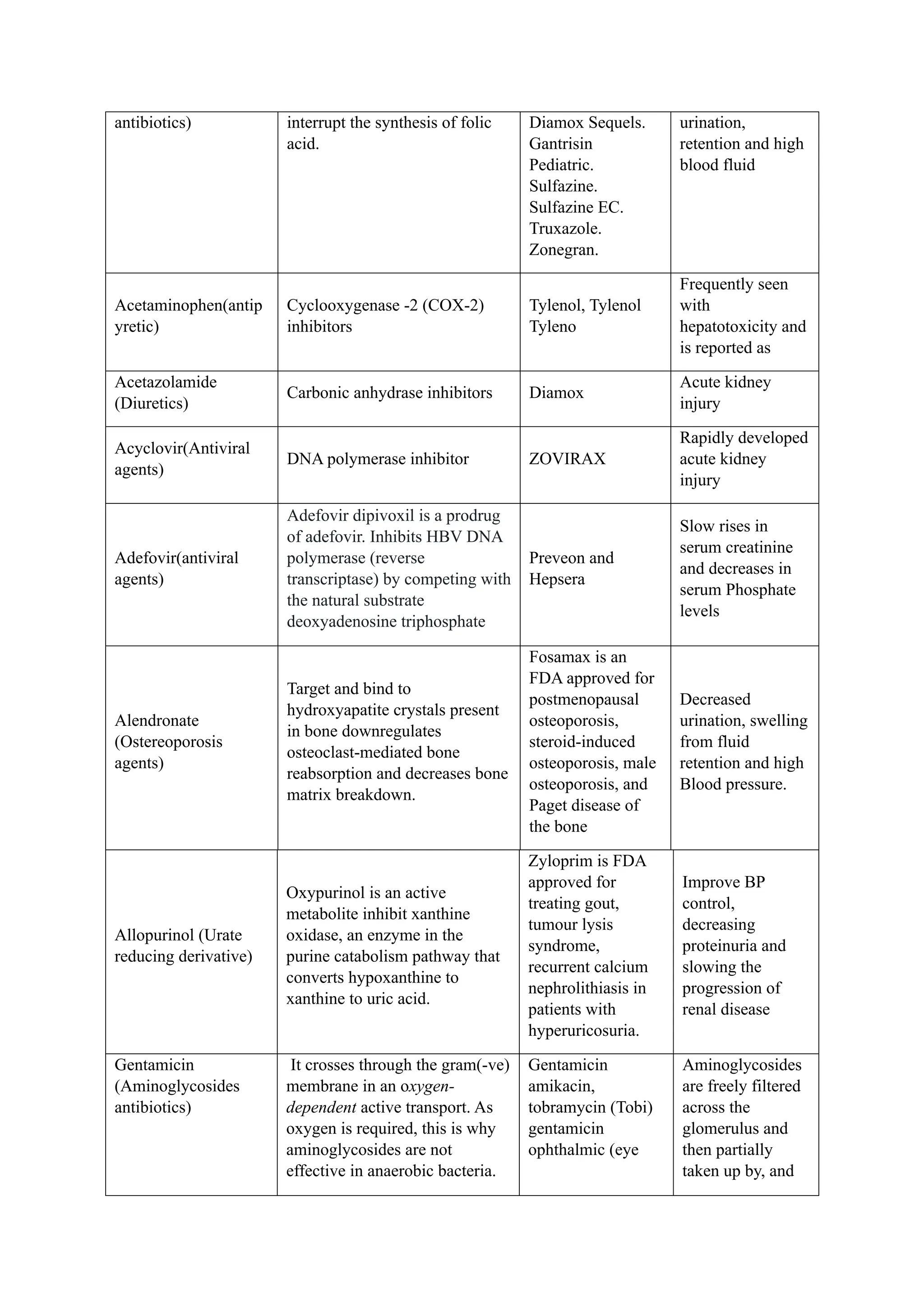
antibiotics) interrupt the synthesis of folic
acid.
Diamox Sequels.
Gantrisin
Pediatric.
Sulfazine.
Sulfazine EC.
Truxazole.
Zonegran.
urination,
retention and high
blood fluid
Acetaminophen(antip
yretic)
Cyclooxygenase -2 (COX-2)
inhibitors
Tylenol, Tylenol
Tyleno
Frequently seen
with
hepatotoxicity and
is reported as
Acetazolamide
(Diuretics)
Carbonic anhydrase inhibitors Diamox
Acute kidney
injury
Acyclovir(Antiviral
agents)
DNA polymerase inhibitor ZOVIRAX
Rapidly developed
acute kidney
injury
Adefovir(antiviral
agents)
Adefovir dipivoxil is a prodrug
of adefovir. Inhibits HBV DNA
polymerase (reverse
transcriptase) by competing with
the natural substrate
deoxyadenosine triphosphate
Preveon and
Hepsera
Slow rises in
serum creatinine
and decreases in
serum Phosphate
levels
Alendronate
(Ostereoporosis
agents)
Target and bind to
hydroxyapatite crystals present
in bone downregulates
osteoclast-mediated bone
reabsorption and decreases bone
matrix breakdown.
Fosamax is an
FDA approved for
postmenopausal
osteoporosis,
steroid-induced
osteoporosis, male
osteoporosis, and
Paget disease of
the bone
Decreased
urination, swelling
from fluid
retention and high
Blood pressure.
Allopurinol (Urate
reducing derivative)
Oxypurinol is an active
metabolite inhibit xanthine
oxidase, an enzyme in the
purine catabolism pathway that
converts hypoxanthine to
xanthine to uric acid.
Zyloprim is FDA
approved for
treating gout,
tumour lysis
syndrome,
recurrent calcium
nephrolithiasis in
patients with
hyperuricosuria.
Improve BP
control,
decreasing
proteinuria and
slowing the
progression of
renal disease
Gentamicin
(Aminoglycosides
antibiotics)
It crosses through the gram(-ve)
membrane in an oxygen-
dependent active transport. As
oxygen is required, this is why
aminoglycosides are not
effective in anaerobic bacteria.
Gentamicin
amikacin,
tobramycin (Tobi)
gentamicin
ophthalmic (eye
Aminoglycosides
are freely filtered
across the
glomerulus and
then partially
taken up by, and
concentrated in,
cortical proximal
tubule cells
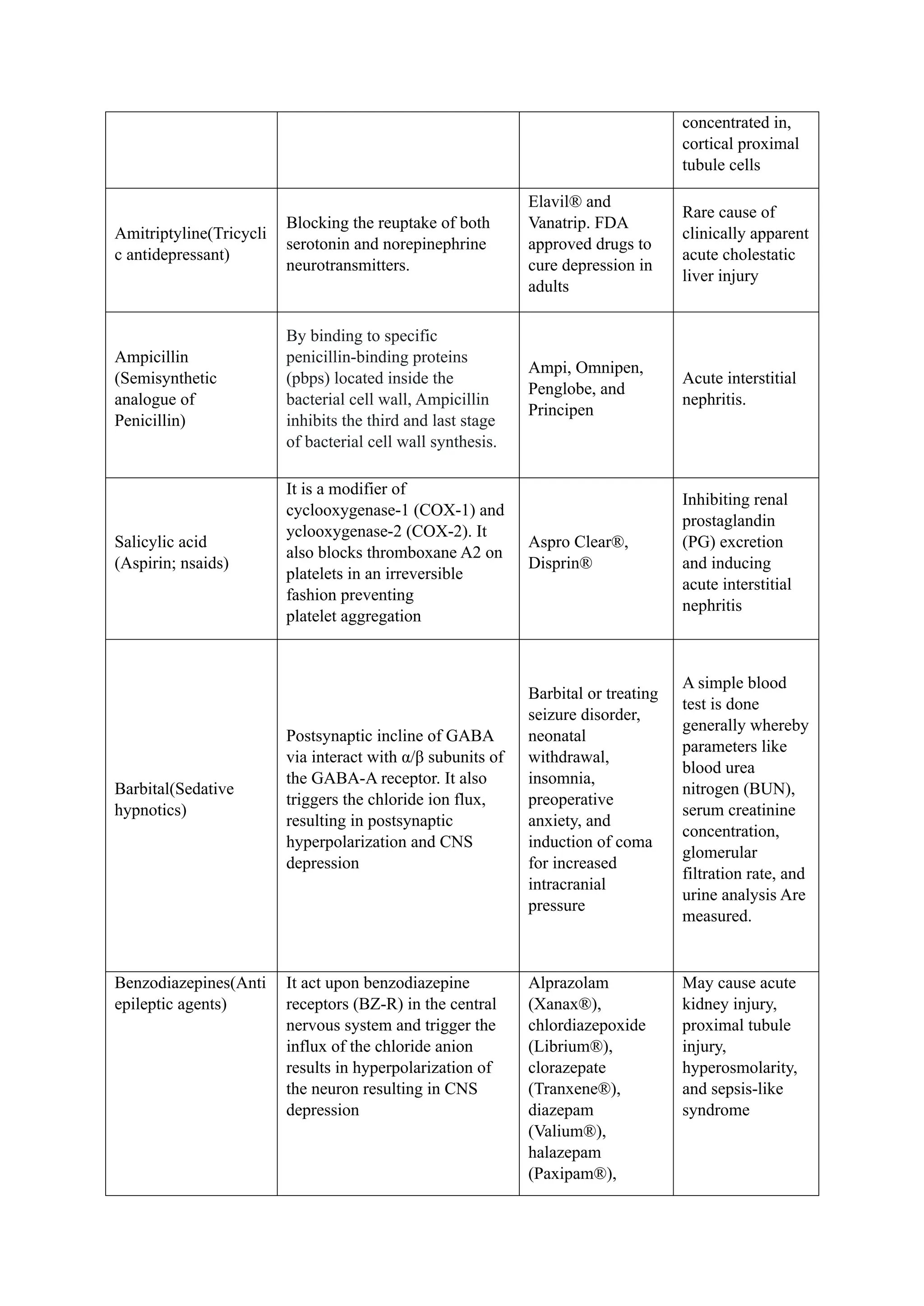
Amitriptyline(Tricycli
c antidepressant)
Blocking the reuptake of both
serotonin and norepinephrine
neurotransmitters.
Elavil® and
Vanatrip. FDA
approved drugs to
cure depression in
adults
Rare cause of
clinically apparent
acute cholestatic
liver injury
Ampicillin
(Semisynthetic
analogue of
Penicillin)
By binding to specific
penicillin-binding proteins
(pbps) located inside the
bacterial cell wall, Ampicillin
inhibits the third and last stage
of bacterial cell wall synthesis.
Ampi, Omnipen,
Penglobe, and
Principen
Acute interstitial
nephritis.
Salicylic acid
(Aspirin; nsaids)
It is a modifier of
cyclooxygenase-1 (COX-1) and
yclooxygenase-2 (COX-2). It
also blocks thromboxane A2 on
platelets in an irreversible
fashion preventing
platelet aggregation
Aspro Clear®,
Disprin®
Inhibiting renal
prostaglandin
(PG) excretion
and inducing
acute interstitial
nephritis
Barbital(Sedative
hypnotics)
Postsynaptic incline of GABA
via interact with α/β subunits of
the GABA-A receptor. It also
triggers the chloride ion flux,
resulting in postsynaptic
hyperpolarization and CNS
depression
Barbital or treating
seizure disorder,
neonatal
withdrawal,
insomnia,
preoperative
anxiety, and
induction of coma
for increased
intracranial
pressure
A simple blood
test is done
generally whereby
parameters like
blood urea
nitrogen (BUN),
serum creatinine
concentration,
glomerular
filtration rate, and
urine analysis Are
measured.
Benzodiazepines(Anti
epileptic agents)
It act upon benzodiazepine
receptors (BZ-R) in the central
nervous system and trigger the
influx of the chloride anion
results in hyperpolarization of
the neuron resulting in CNS
depression
Alprazolam
(Xanax®),
chlordiazepoxide
(Librium®),
clorazepate
(Tranxene®),
diazepam
(Valium®),
halazepam
(Paxipam®),
May cause acute
kidney injury,
proximal tubule
injury,
hyperosmolarity,
and sepsis-like
syndrome
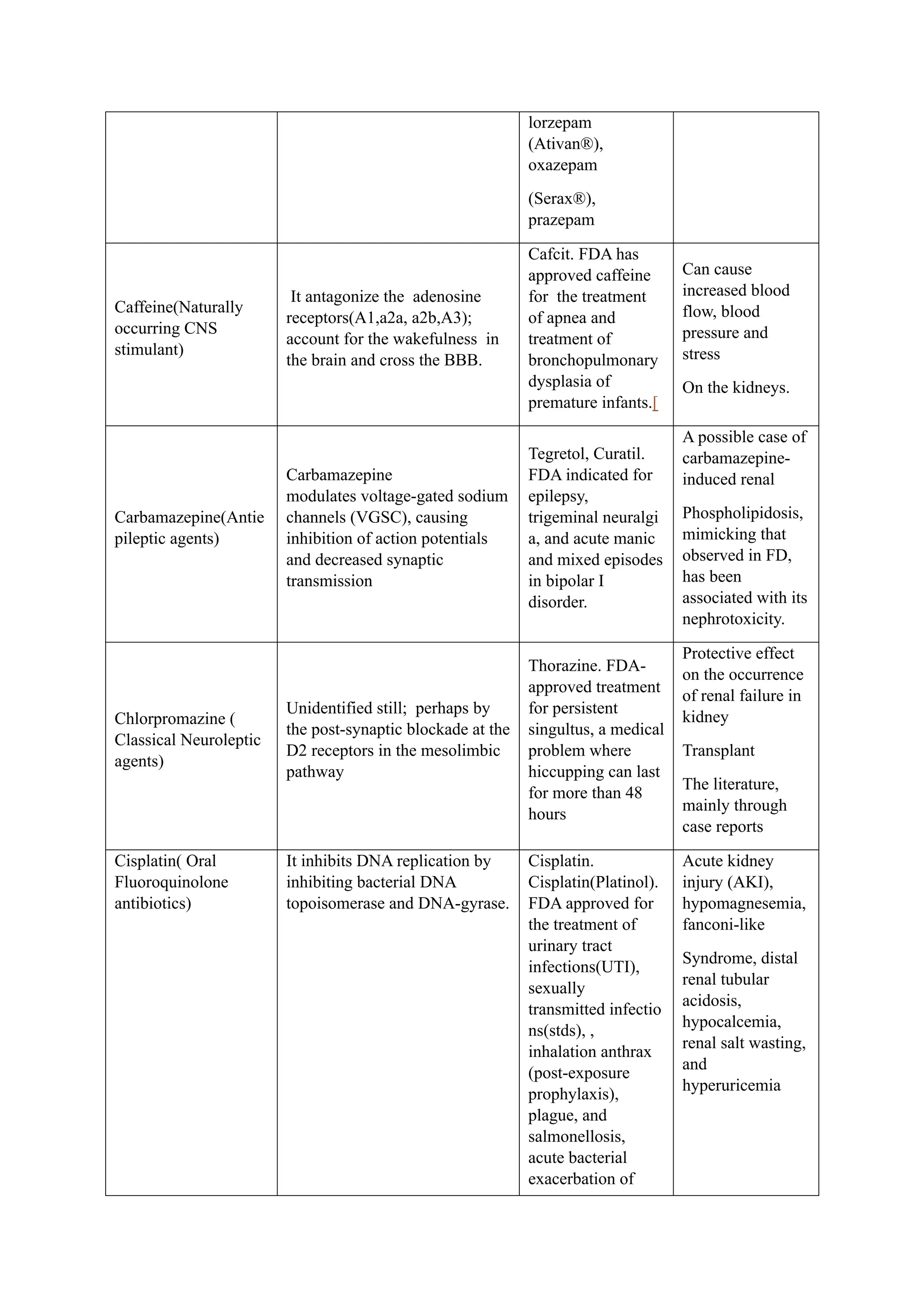
lorzepam
(Ativan®),
oxazepam
(Serax®),
prazepam
Caffeine(Naturally
occurring CNS
stimulant)
It antagonize the adenosine
receptors(A1,a2a, a2b,A3);
account for the wakefulness in
the brain and cross the BBB.
Cafcit. FDA has
approved caffeine
for the treatment
of apnea and
treatment of
bronchopulmonary
dysplasia of
premature infants.[
Can cause
increased blood
flow, blood
pressure and
stress
On the kidneys.
Carbamazepine(Antie
pileptic agents)
Carbamazepine
modulates voltage-gated sodium
channels (VGSC), causing
inhibition of action potentials
and decreased synaptic
transmission
Tegretol, Curatil.
FDA indicated for
epilepsy,
trigeminal neuralgi
a, and acute manic
and mixed episodes
in bipolar I
disorder.
A possible case of
carbamazepine-
induced renal
Phospholipidosis,
mimicking that
observed in FD,
has been
associated with its
nephrotoxicity.
Chlorpromazine (
Classical Neuroleptic
agents)
Unidentified still; perhaps by
the post-synaptic blockade at the
D2 receptors in the mesolimbic
pathway
Thorazine. FDA-
approved treatment
for persistent
singultus, a medical
problem where
hiccupping can last
for more than 48
hours
Protective effect
on the occurrence
of renal failure in
kidney
Transplant
The literature,
mainly through
case reports
Cisplatin( Oral
Fluoroquinolone
antibiotics)
It inhibits DNA replication by
inhibiting bacterial DNA
topoisomerase and DNA-gyrase.
Cisplatin.
Cisplatin(Platinol).
FDA approved for
the treatment of
urinary tract
infections(UTI),
sexually
transmitted infectio
ns(stds), ,
inhalation anthrax
(post-exposure
prophylaxis),
plague, and
salmonellosis,
acute bacterial
exacerbation of
Acute kidney
injury (AKI),
hypomagnesemia,
fanconi-like
Syndrome, distal
renal tubular
acidosis,
hypocalcemia,
renal salt wasting,
and
hyperuricemia
chronic bronchitis
Clopidogrel( Oral
Platelet aggregation
inhibitor)
It is an inactive prodrug. It is an
irreversible inhibitor of the
platelet P2Y12 adenosine
diphosphate receptor. Inhibition
of this receptor prevents the
downstream activation of the
glycoprotein iib/iiia receptor
complex, which leads to
reduced platelet aggregation.
Plavix. FDA
approved for the
medical
management of
unstable angina
(UA)/non-ST-
segment elevation
myocardial
infarction
(NSTEMI), ST-
segment elevation
myocardial
infarction (STEMI)
in patients
receiving
fibrinolytic therapy,
and for secondary
prevention in
recent myocardial
infarction (MI),
recent stroke, and
peripheral arterial
disease
Lower levels of
kidney function
were associated
with a
Greater risk of
death,
hospitalization for
AMI, and major
bleeding.
Doxepin(Tricyclic
antidepressant)
It work by increasing the
concentration of the
neurotransmitter’s serotonin (5-
HT) and norepinephrine (NE) in
the brain. This action
prolongs the availability of the
neurotransmitters (5-HT and
NE) within the synaptic cleft
and enhances their
neurotransmission by preventing
their reuptake back into
the presynaptic terminal.
Sinequan. FDA
approved in 1969
to treat the major
depressive disorder.
Doxepin was
primarily approved
to treat depression;
however, it can also
target
multiple receptors
and is beneficial in
treating
other disorders.
Acute kidney
failure
Creatinine,
glomerular
filtration rate and
creatinine
clearance.
Fosinopril Sodium
(ACE inhibitor)
It is an ester prodrug that
hydrolyzes in the liver to
fosinoprilat, the active
metabolite form; competitive
inhibitor to bind to ACE
resulting in decreased formation
of angiotensin II, reduced
aldosterone concentrations, and
diminished systemic
vasoconstriction
MONOPRIL
Acute kidney
impairment
Furosemide(Loop Inhibits tubular reabsorption of Lasix. FDA has Acidic urine may
iuretic) sodium and chloride in the
proximal and distal tubules and
the thick ascending loop of
Henle by inhibiting the sodium-
chloride cotransport system
resulting in excessive excretion
of water along with sodium,
chloride, magnesium, and
calcium
approved
furosemide to treat
conditions with
volume overload
and edema
secondary to
congestive heart
failure
potentially result
in formation of
Methemoglobin
casts in patients
with severe
intravascular
hemolysis
Gadolinium(MRI
Contrast
pharmaceutical
agents)
MRI agents
Gadavist,
Magnevist
Increase the risk
of a rare but
serious disease
called
Nephrogenic
systemic fibrosis.
Haloperidol(First
generation
antipsychotic agents)
Haloperidol is not selective for
the D2 receptor. It also
has noradrenergic, cholinergic,
and histaminergic blocking
action.
Haldol, Haldol
decanoate and
Serenace. FDA-
approved for
treating schizophre
nia, Tourette
syndrome, severe
behavioural
disorders
and hyperactivity
in children
Changes in
kidneys such as
tubular
deformations,
prominent
Dilatation of the
renal vessels and
tubul
Hydralazine(direct
arteriole vasodilator)
Inhibit inositol trisphosphate
(IP3)-induced release of calcium
from the smooth muscle cells'
sarcoplasmic reticulum and
inhibits myosin phosphorylation
within the arterial smooth
muscle
Apresoline
Increased renal
blood flow and a
maintenance of
glomerular
Filtration rate
Ibuprofen(NDAIDS)
He inhibition of prostaglandin
precursors.
Advil®, Midol®
and Motrin®.
FDA-approved for
use in the treatment
of inflammatory
diseases and
rheumatoid
disorders.
Inhibits COX
enzyme to reduce
PG production so
that the
Renal tubules
contract,
Indinavir(alpha-amino
acid amide protease
inhibitor)
Indinavir acts through a
competitive inhibition
mechanism through the active
Crixivan May cause
crystal formation
within the renal
catalytic site of HIV protease,
inhibiting the enzyme's ability
to cleave polypeptides into
active, infectious proteins.
tubules when
urine ph is above
3.5
Indomethacin (nsaids)
Inhibits the synthesis of
prostaglandins.
Indocin® and
Tivorbex. DA-
approved to manage
acute pain,
rheumatoid arthritis,
ankylosing
spondylitis,
osteoarthritis,
bursitis, gouty
arthritis, and patent
ductus arteriosus.
Induced a
temporary
sodium and water
retention and a
Decrease in
glomerular
filtration rate.
Iohexol (Contrast
agents used for X-ray
imaging)
Organic iodine compounds
block x-rays as they pass
through the body, thereby
allowing body structures
containing iodine to be
delineated in contrast to those
structures that do not contain
iodine.
Omnipaque, Oraltag
Iohexol induced
more severe
nephrotoxicity
than iodixano
Lansoprazole(Gastric
acid pump inhibitor)
Decreases acid secretion in
gastric parietal cells through
inhibition of (H+, K+)-atpase
enzyme system, blocking the
final step in gastric acid
production.
Prevacid
A 2021 study
found that
dexlansoprazole,
followed by
Lansoprazole,
had the strongest
safety signal for
both AKI and
CKD. T
Lithium (traditional
antidepressant)
Unknown
Priadel, Camcolit,
Liskonum, Li-
Liquid
Could be due to
either chronic
tubulointerstitial
or
Glomerular
injury or both.
Methotrexate( Folic
acid antagonist,
Anticancer agents)
It acts as an antifolate
antimetabolite through taken up
into the cell by carriers called
the human reduced folate
carriers and it forms
methotrexate-polyglutamate.
Both the methotrexate and the
methotrexate-polyglutamate
Otrexup, Rasuvo,
reditrex, Trexall,
And Xatmep. FDA-
approved for the
treatment of
rheumatoid arthritis,
juvenile idiopathic
arthritis
Perpetuates ARF
caused by this
drug
inhibit the enzyme
dihydrofolate reductase, which
catalyzes the conversion of
dihydrofolate into
tetrahydrofolate, the active
form of folic acid
Naproxen (nsaids)
Naproxen blocks arachidonate
binding to competitively inhibit
both cyclooxygenase (COX)
isoenzymes, COX-1 and COX-
2, resulting in analgesic and
anti-inflammatory effects.
Flanax, Inza,
Maxidol, Nalgesin,
Naposin, Naprelan,
Naprogesic,
Naprosyn, Narocin,
Pronaxen, Proxen,
and Soproxen.
FDA-approved for
treating acute gout,
ankylosing
spondylitis, bursitis,
osteoarthritis,
tendonitis,
rheumatoid arthritis,
pain, and primary
dysmenorrhea
Naproxen is
known to cause
renal failure by
renal papillary
necrosis
Omeprazole(Proton
Pump Inhibitors)
It is a substituted benzimidazole
that belongs to the antisecretory
class of compounds. It inhibits
the parietal cell H+ / K+ ATP
pump, the final step of acid
production.
Prilosec and
Losec,pan-d
Recent clinical
data point to a
subtle nephrotoxic
effect of
Omeprazole, but
the cellular and
molecular
mechanisms are
unknown
Penicillin-
G(Antibacterial
antibiotics)
Penicillin inhibits the cross-
linking of peptidoglycan in the
cell wall.[5] The catalyst for
this reaction is penicillin-
binding proteins, such as the
enzyme DD-transpeptidase.
Bicillin LA,
Permapen
Renal toxicity,
Pravastatin(Antihyper
lipidemic agents)
Competitive
hydroxymethylglutaryl
coenzyme-A (HMG Co-A)
reductase inhibitors.
Pravachol®
Reduced the rate
of kidney
function loss
Rifampicin(Antibacte
rial agents)
Rifampin produces bactericidal
antimicrobial activity by
inhibiting DNA-dependent
RNA polymerase (RNAP)
either by sterically blocking the
Rifadin® and
Rimactane®.
Reversible renal
failure
path of the elongating RNA at
the 5′ end or by decreasing the
affinity of the RNAP for short
RNA transcripts.
Tacrolimus(Macrolide
antibiotics)
Calcineurin-inhibitor class of
medications
Astagraf XL,
Envarsus XR,
Prograf, and
Protopic. Valuable
agent in preventing
solid-organ
transplant rejection
Nephrotoxicity
episodes were
associated with
elevated plasma
or whole blood in
tacrolimus levels
in 82% patients.
Tenofovir Disoproxil
Fumarate
(antiretroviral agents)
Tenofovir disoproxil fumarate
(TDF), a nucleotide reverse
transcriptase inhibitor, is an
analog of adenosine 5'-
monophosphate; it interferes
with the HIV viral RNA
dependent DNA polymerase
resulting in inhibition of viral
replication.
Viread
Several cases of
renal failure
associated with
tenofovir
Therapy recently
have been
reported.
Tetracycline(Broad
spectrum
bacteriostatic
antibiotic)
Tetracyclines specifically
inhibit the 30S ribosomal
subunit, hindering the binding
of the aminoacyl-trna to the
acceptor site on the mrna-
ribosome complex.
Resteclin, Linemett,
Nicocycline,
Terapal
Acute renal
failure
Thiazides (Diuetics) Diuretic effect via blockage of
the sodium-chloride (Na/Cl)
channel in the proximal
segment of the distal
convoluted tubule (DCT).
When the Na/Cl channel is
blocked, decreased levels of
sodium cross the luminal
membrane, thus decreasing the
action of the sodium-
potassium (Na/K) pump and
decreasing Na and water
passage to the interstitium
Chlorothiazide
(Diuril)
Chlorthalidone
(Chlorthalid,
Hygroton,
Thalitone)
Hydrochlorothiazide
(Oretic, Microzide,
hydrodiuril, Hydro,
HCTZ, Esidrix)1.
DA-approved class
of drugs that inhibit
the reabsorption of
3% to 5% of
luminal sodium in
Higher incidence
of kidney failure
requiring kidney
replacement
therapy or rapid
decline in GFR
the distal
convoluted tubule of
the nephron.
Ticlopidine(Platelet
antiaggregatory
agents)
Inhibitor of adenosine
diphosphate (ADP)-induced
platelet aggregation
Ticlid
Kidney function
abnormalities
Triamcinolone
(corticosteroid drug)
It exhibits anti-inflammatory
and immunosuppressant
activity via inhibiting the
phospholipase A2 enzyme on
the cell membrane phospholipid
layer, thereby hindering the
breakdown of leukocyte
lysosomal membranes and
preventing the formation of
arachidonic acid
Kenalog IV,
Aristospan, and
Trivaris. FDA
approved for atopic
dermatitis, contact
dermatitis, eczema,
bullous dermatitis
herpetiformis, psori
asis, lichen planus,
lichen sclerosis,
subacute cutaneous
lupus
erythematosus,
dermatomyositis,
seasonal or allergic
rhinitis
Decreased
urination,
swelling from
fluid retention
and high Blood
pressure.
Triamterene
(Pottasium sparing
diuretics)
It is an aldosterone receptor
antagonist operating at the late
distal tubule and collecting
tubules of the nephron on the
apical aspect of these sites, but
specifically target at the
epithelial sodium channels,
which are on the luminal side.
These channels are
transmembrane channels that
operate to increase sodium
uptake in exchange for
secreting potassium.
Dyrenium. FDA
approve-d for CHF,
nephrotic kidney
disease, liver
cirrhosis, secondary
hyperaldosteronism
Acute renal
failure
Conclusion
This is the priority of the medicine to provide the effective treatment for the patient but must
be safe regimen. Renal impairment could be an accidental but probable adverse effect due to
kidney being favorably exposed to injury due to highly exposure to drugs and their
xenobiotics during their evacuation. Therefore, the incident of DIRI is a probable hurdle,
especially in patients already kidney dysfunction and other risk factors. DIRI associated
toxicity substantially raises in patients with either primary kidney diseases or numerous
diseases outside the kidneys and undertaking polypharmacy with plentiful intermingling
drugs. Handling of drug must be individualized, with detailed dosage selection based on the
functional position of the patient’s kidneys and liver, and enclosed by the incessant
supervising of kidney function, exclusively in the circumstance of administering drugs with
established nephrotoxic occurrence. It should be highlighted that some drugs may stimulate a
DIRI using numerous corresponding mechanisms viz. Acetaminophen may exert a
nephrotoxic effect by influencing kidney perfusion, glomerulonephritis, or chronic
tubulointerstitial inflammation development while iodinated and gadolinium, lithium salts,
cis platinum, cyclosporin A, aminoglycosides, and amphotericin B, are considered by an
extreme intrinsic DIRI, required continuous attentiveness and supervising of kidney function.
References
1. Khan S, Loi V, Rosner MH. Drug-induced kidney injury in the elderly. Drugs &
aging. 2017 Oct;34:729-41.
2. Perazella MA, Rosner MH. Drug-induced acute kidney injury. Clinical Journal of the
American Society of Nephrology. 2022 Aug 1;17(8):1220-33.
3. Kane-Gill SL, Goldstein SL. Drug-induced acute kidney injury: a focus on risk
assessment for prevention. Critical care clinics. 2015 Oct 1;31(4):675-84.
4. Rayego-Mateos S, Marquez-Expósito L, Rodrigues-Diez R, Sanz AB, Guiteras R,
Doladé N, Rubio-Soto I, Manonelles A, Codina S, Ortiz A, Cruzado JM. Molecular
mechanisms of kidney injury and repair. International Journal of Molecular Sciences.
2022 Jan 28;23(3):1542.
5. Moinuddin Z, Dhanda R. Anatomy of the kidney and ureter. Anaesthesia & Intensive
Care Medicine. 2015 Jun 1;16(6):247-52.
6. McBride JM. Embryology, anatomy, and histology of the kidney. The Kidney: A
Comprehensive Guide to Pathologic Diagnosis and Management. 2016:1-8.
7. Jourde-Chiche N, Fakhouri F, Dou L, Bellien J, Burtey S, Frimat M, Jarrot PA,
Kaplanski G, Le Quintrec M, Pernin V, Rigothier C. Endothelium structure and
function in kidney health and disease. Nature Reviews Nephrology. 2019
Feb;15(2):87-108.
8. Ariza Heredia EJ, Beam EN, Lesnick TG, Cosio FG, Kremers WK, Razonable RR.
Impact of urinary tract infection on allograft function after kidney transplantation.
Clinical transplantation. 2014 Jun;28(6):683-90.
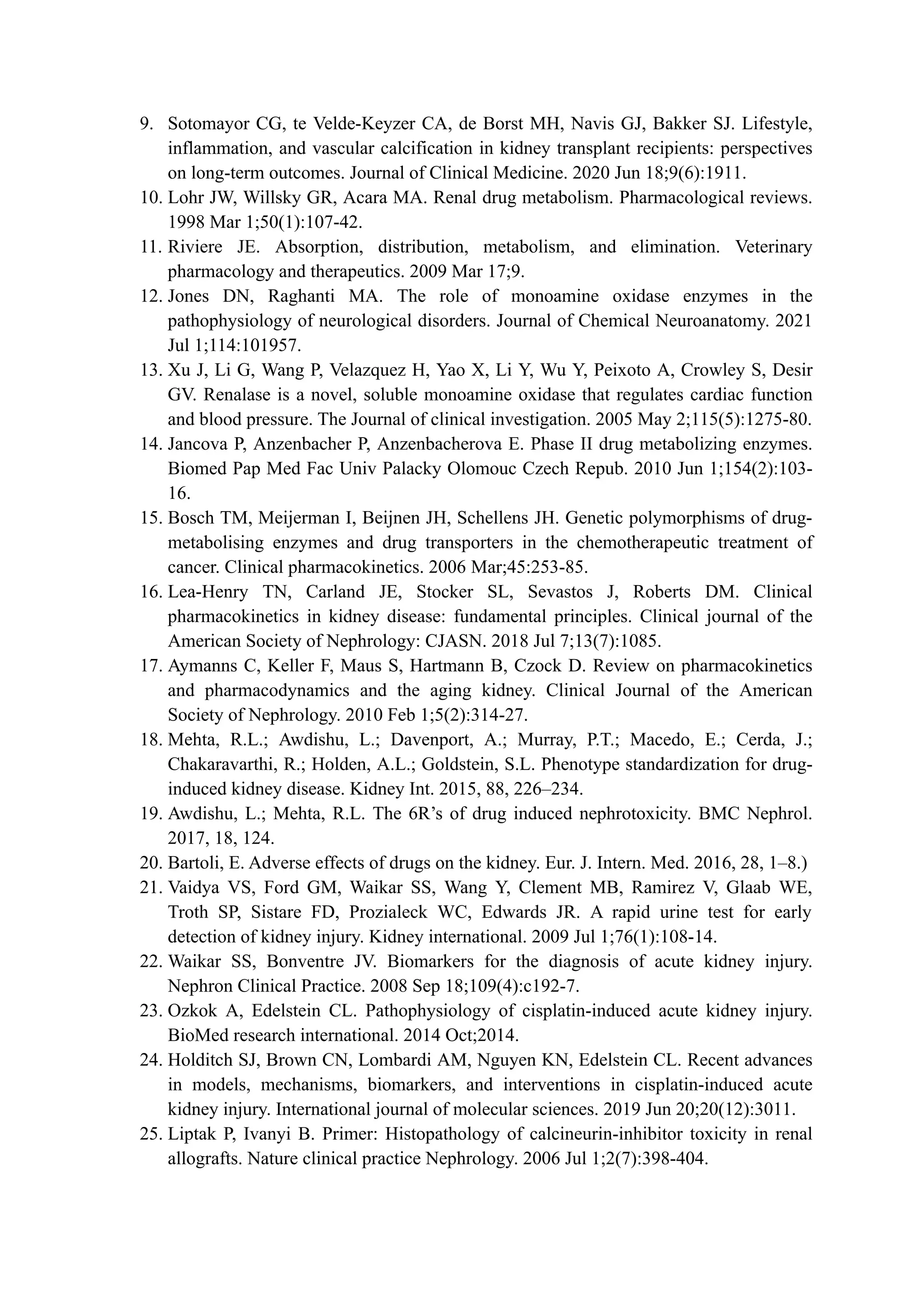
9. Sotomayor CG, te Velde-Keyzer CA, de Borst MH, Navis GJ, Bakker SJ. Lifestyle,
inflammation, and vascular calcification in kidney transplant recipients: perspectives
on long-term outcomes. Journal of Clinical Medicine. 2020 Jun 18;9(6):1911.
10. Lohr JW, Willsky GR, Acara MA. Renal drug metabolism. Pharmacological reviews.
1998 Mar 1;50(1):107-42.
11. Riviere JE. Absorption, distribution, metabolism, and elimination. Veterinary
pharmacology and therapeutics. 2009 Mar 17;9.
12. Jones DN, Raghanti MA. The role of monoamine oxidase enzymes in the
pathophysiology of neurological disorders. Journal of Chemical Neuroanatomy. 2021
Jul 1;114:101957.
13. Xu J, Li G, Wang P, Velazquez H, Yao X, Li Y, Wu Y, Peixoto A, Crowley S, Desir
GV. Renalase is a novel, soluble monoamine oxidase that regulates cardiac function
and blood pressure. The Journal of clinical investigation. 2005 May 2;115(5):1275-80.
14. Jancova P, Anzenbacher P, Anzenbacherova E. Phase II drug metabolizing enzymes.
Biomed Pap Med Fac Univ Palacky Olomouc Czech Repub. 2010 Jun 1;154(2):103-
16.
15. Bosch TM, Meijerman I, Beijnen JH, Schellens JH. Genetic polymorphisms of drug-
metabolising enzymes and drug transporters in the chemotherapeutic treatment of
cancer. Clinical pharmacokinetics. 2006 Mar;45:253-85.
16. Lea-Henry TN, Carland JE, Stocker SL, Sevastos J, Roberts DM. Clinical
pharmacokinetics in kidney disease: fundamental principles. Clinical journal of the
American Society of Nephrology: CJASN. 2018 Jul 7;13(7):1085.
17. Aymanns C, Keller F, Maus S, Hartmann B, Czock D. Review on pharmacokinetics
and pharmacodynamics and the aging kidney. Clinical Journal of the American
Society of Nephrology. 2010 Feb 1;5(2):314-27.
18. Mehta, R.L.; Awdishu, L.; Davenport, A.; Murray, P.T.; Macedo, E.; Cerda, J.;
Chakaravarthi, R.; Holden, A.L.; Goldstein, S.L. Phenotype standardization for drug-
induced kidney disease. Kidney Int. 2015, 88, 226–234.
19. Awdishu, L.; Mehta, R.L. The 6R’s of drug induced nephrotoxicity. BMC Nephrol.
2017, 18, 124.
20. Bartoli, E. Adverse effects of drugs on the kidney. Eur. J. Intern. Med. 2016, 28, 1–8.)
21. Vaidya VS, Ford GM, Waikar SS, Wang Y, Clement MB, Ramirez V, Glaab WE,
Troth SP, Sistare FD, Prozialeck WC, Edwards JR. A rapid urine test for early
detection of kidney injury. Kidney international. 2009 Jul 1;76(1):108-14.
22. Waikar SS, Bonventre JV. Biomarkers for the diagnosis of acute kidney injury.
Nephron Clinical Practice. 2008 Sep 18;109(4):c192-7.
23. Ozkok A, Edelstein CL. Pathophysiology of cisplatin-induced acute kidney injury.
BioMed research international. 2014 Oct;2014.
24. Holditch SJ, Brown CN, Lombardi AM, Nguyen KN, Edelstein CL. Recent advances
in models, mechanisms, biomarkers, and interventions in cisplatin-induced acute
kidney injury. International journal of molecular sciences. 2019 Jun 20;20(12):3011.
25. Liptak P, Ivanyi B. Primer: Histopathology of calcineurin-inhibitor toxicity in renal
allografts. Nature clinical practice Nephrology. 2006 Jul 1;2(7):398-404.
26. Ume AC, Wenegieme TY, Williams CR. Calcineurin inhibitors: a double-edged
sword. American Journal of Physiology-Renal Physiology. 2021 Mar 1;320(3):F336-
41.
27. Weng X, Zhao H, Guan Q, Shi G, Feng S, Gleave ME, Nguan CC, Du C. Clusterin
regulates macrophage expansion, polarization and phagocytic activity in response to
inflammation in the kidneys. Immunology and cell biology. 2021 Mar;99(3):274-87.
28. Musiał K, Augustynowicz M, Miśkiewicz-Migoń I, Kałwak K, Ussowicz M,
Zwolińska D. Clusterin as a new marker of kidney injury in children undergoing
allogeneic hematopoietic stem cell transplantation—A pilot study. Journal of Clinical
Medicine. 2020 Aug 11;9(8):2599.
29. Bell M, Granath F, Mårtensson J, Löfberg E, Ekbom A, Martling CR, KING
(Karolinska Intensive care Nephrology Group). Cystatin C is correlated with mortality
in patients with and without acute kidney injury. Nephrology Dialysis
Transplantation. 2009 Oct 1;24(10):3096-102.
30. Murty MS, Sharma UK, Pandey VB, Kankare SB. Serum cystatin C as a marker of
renal function in detection of early acute kidney injury. Indian journal of Nephrology.
2013 May;23(3):180.
31. Jiang SX, Hussaini T, Yoshida EM. N-acetylcysteine for non-acetaminophen induced
acute liver failure: A review. Saudi Journal of Gastroenterology: Official Journal of
the Saudi Gastroenterology Association. 2022 Mar;28(2):85.
32. Janse RJ, Fu EL, Clase CM, Tomlinson L, Lindholm B, Van Diepen M, Dekker FW,
Carrero JJ. Stopping versus continuing renin–angiotensin–system inhibitors after
acute kidney injury and adverse clinical outcomes: an observational study from
routine care data. Clinical Kidney Journal. 2022 Jun;15(6):1109-19.
33. Huang X, Liu YX, Lao JH, Cao J, Li X, Yao WB. The incidence of acute kidney
injury in hospitalized patients receiving aminoglycoside antibiotics: a retrospective
study. European Review for Medical & Pharmacological Sciences. 2022 May
15;26(10).
34. Halouzková BA, Hartinger JM, Krátký V, Tesař V, Slanař O. Dosing of
Aminoglycosides in Chronic Kidney Disease and End-Stage Renal Disease Patients
Treated with Intermittent Hemodialysis. Kidney and Blood Pressure Research. 2022
Apr 20;47(7):448-58.
35. Muanda FT, Sood MM, Weir MA, Sontrop JM, Ahmadi F, Yoo E, Kim RB, Silverman
MS, Knoll GA, Garg AX. Association of Higher-Dose Fluoroquinolone TherapyWith
Serious Adverse Events in Older Adults With Advanced Chronic Kidney Disease.
JAMA Netw Open. 2022 Aug 1;5(8):e2224892. doi:
10.1001/jamanetworkopen.2022.24892. PMID: 35917124; PMCID: PMC9346548.
36. Kannan L. Renal manifestations of recreational drugs: A narrative review of the
literature. Medicine. 2022 Dec 12;101(50).
37. Baral R, Tsampasian V, Debski M, Moran B, Garg P, Clark A, Vassiliou VS.
Association between renin-angiotensin-aldosterone system inhibitors and clinical
outcomes in patients with COVID-19: a systematic review and meta-analysis. JAMA
network Open. 2021 Mar 1;4(3):e213594-.
38. Alam S, Kamal TB, Sarker MM, Zhou JR, Rahman SA, Mohamed IN. Therapeutic
effectiveness and safety of repurposing drugs for the treatment of COVID-19:
position standing in 2021. Frontiers in pharmacology. 2021 Jun 14;12:659577.
39. Gutiérrez OM. Treatment of iron deficiency anemia in CKD and end-stage kidney
disease. Kidney International Reports. 2021 Sep 1;6(9):2261-9.
40. Chen J, Tsim KW, Zhao YY. Applications of Herbal Medicine to Control Chronic
Kidney Disease. Frontiers in Pharmacology. 2021 Sep 7;12:742407.
41. Chen J, Tsim KW, Zhao YY. Applications of herbal medicine to control chronic
kidney disease: Volume II. Frontiers in Pharmacology. 2022 Nov 28;13:1086049.
42. Khan Z, Abumedian M, Ibekwe M, Musa K, Mlawa G. Acute renal impairment in
patients due to paracetamol overdose in the absence of hepatic impairment. Cureus.
2021 Dec 27;13(12).
43. Kanchanasurakit S, Arsu A, Siriplabpla W, Duangjai A, Saokaew S. Acetaminophen
use and risk of renal impairment: A systematic review and meta-analysis. Kidney
research and clinical practice. 2020 Mar 3;39(1):81.
44. Morales-Alvarez MC. Nephrotoxicity of antimicrobials and antibiotics. Advances in
chronic kidney disease. 2020 Jan 1;27(1):31-7.
45. Jain A, Olivero JJ. Herbal nephropathy. Methodist DeBakey Cardiovascular Journal.
2019 Jul;15(3):228.
46. Daoud A, Dalhoff KP, Petersen TS. Paracetamol-induced acute kidney injury in the
absence of acute liver injury: a retrospective cohort study. Toxicology
Communications. 2022 Dec 31;6(1):97-100.
47. Lee SA, Park R, Yang JH, Min IK, Park JT, Han SH, Kang SW, Yoo TH. Increased
risk of acute kidney injury in coronavirus disease patients with
renin–angiotensin–aldosterone-system blockade use: a systematic review and meta-
analysis. Scientific reports. 2021 Jun 30;11(1):13588.
48. Feidakis A, Panagiotou MR, Tsoukakis E, Bacharaki D, Gounari P, Nikolopoulos P,
Marathias KP, Lionaki S, Vlahakos D. Impact of angiotensin-converting enzyme
inhibitors or angiotensin receptor blockers on acute kidney injury in emergency
medical admissions. Journal of Clinical Medicine. 2021 Jan 22;10(3):412.
49. Chou CL, Chuang NC, Chiu HW, Liao CT, Hsu YH, Chang TH. Aminoglycosides use
has a risk of acute kidney injury in patients without prior chronic kidney disease. Sci
Rep. 2022 Oct 14;12(1):17212. doi: 10.1038/s41598-022-21074-x. PMID: 36241669;
PMCID: PMC9568559.
50. Hajji M, Jebali H, Mrad A, Blel Y, Brahmi N, Kheder R, Beji S, Fatma LB, Smaoui
W, Krid M, Hmida FB. Nephrotoxicity of ciprofloxacin: five cases and a review of the
literature. Drug Safety-Case Reports. 2018 Dec;5:1-5.
51. Mishra B, Chandra M. Evaluation of phytoremediation potential of aromatic plants: A
systematic review. Journal of Applied Research on Medicinal and Aromatic Plants.
2022 Dec 1;31:100405.
52. Prasad S, Yadav KK, Kumar S, Gupta N, Cabral-Pinto MM, Rezania S, Radwan N,
Alam J. Chromium contamination and effect on environmental health and its
remediation: A sustainable approaches. Journal of Environmental Management. 2021
May 1;285:112174.
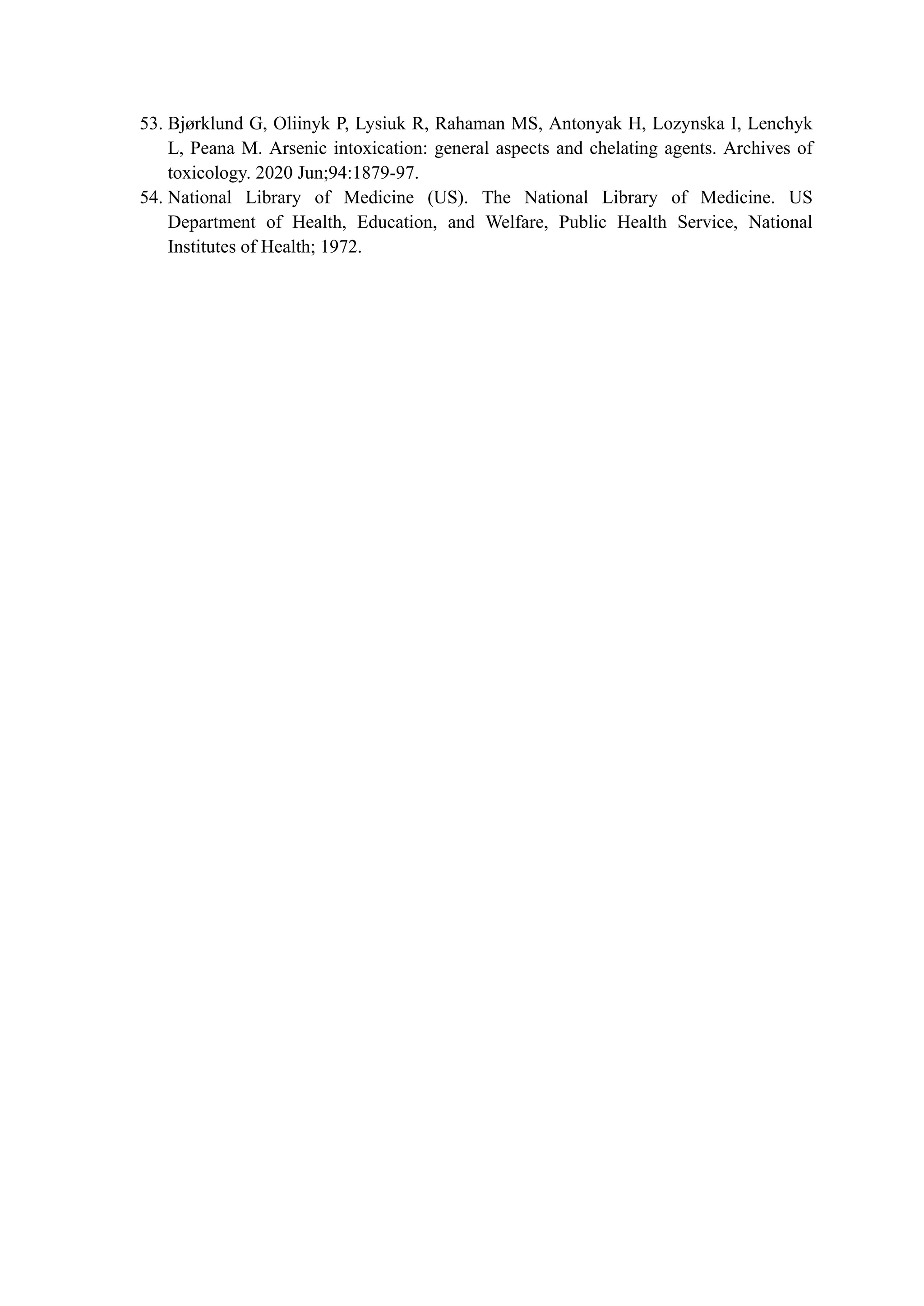
53. Bjørklund G, Oliinyk P, Lysiuk R, Rahaman MS, Antonyak H, Lozynska I, Lenchyk
L, Peana M. Arsenic intoxication: general aspects and chelating agents. Archives of
toxicology. 2020 Jun;94:1879-97.
54. National Library of Medicine (US). The National Library of Medicine. US
Department of Health, Education, and Welfare, Public Health Service, National
Institutes of Health; 1972.

DIRI with commercial available agents ,,,.pdf

  • 1.
    Drug Induced RenalInjury (DIRI): Alarming indication towards the catastrophic behavior of drugs Abstract The intervening target of the patient’s treatment must be effective along with its safety. It is unfortunate that all medicines associated with toxic pharmaceutical reactions, which could be either accidental or predictable outcome of pharmacodynamic and pharmacokinetic. Nephron is the basic unit of Kidney which is the fate of all administered xenobiotics. Highly exposure of the chemical elements makes it more susceptible for the impairment during their biotransformation from the body. Furthermore, aminoglycosides antibiotics, cyclosporin A, cisplatin, amphotericin B, acetaminophen, ciprofloxacin are the candidate of causing calamitous nephrotoxicity potential, and accelerates the kidney impairment. Sometime herbal medicine viz. also accounting for the nephrotoxicity. Drug causing renal injury is complicated occurrence because reliable treatment and diagnosis is not still available globally. This review highlights the occurrence and biomarkers of drug-induced nephrotoxicity and exemplifies its pathophysiology. Authors also assess the prevalent drugs caused nephrotoxicity in the recent years. Keywords: Renal, Injury, Drugs, Dialysis, Mortality.
  • 2.
    Introduction More than 60%population in hospital and terrestrial surrounding are victims of Drug Induced Renal Injury (DIRI) either reported as acute renal disease (ARD) or chronic renal disease (CRD) and it is expanding in the recent decades 1,2 due to frequently consumption of medicine account of renal toxicity, advanced age, chronic disease, diabetes mellitus and many more.3,4 The kidneys are bean shaped tiny organs; situated retroperitoneally on the posterior abdominal wall and located between the transverse processes of T12 and L3. Our kidneys put for only about 0.2–0.5% of total body weight, but capable to have as much as 20% of the cardiac output.5,6 Renal system is responsible for the evacuation of drug; metabolite and xenobiotics; therefore, cascade of these events requires high energy (glomeruli and tubules) to produce the high concentration of exogenous products. It is unfortunate that more than 20% of medicine accounts for renal toxicity.7,8 However, clinical safety investigation is the essential criterion before release of the drug in marketing surveillance, but side effects are identified when it is kept on the market for the population. DIRI can be defined as the malfunction of kidney due to the exposure of medicine either directly or indirectly. 9 Nonetheless, the renal system also associated with a metabolic cytochrome capacity viz. CYP 2B6 and 3A5, abundantly in the proximal convoluted tubule (PCT) while CYP 1A1, 1A2, 1B1, 2A6, 2C19, 2D6, and 2E1 are not reported in the substantial amounts. Although CYP 2C8, 2C9, and 3A4 is being researched yet in the human kidney. However, other studies have confirmed the activity of CYP1A1, CYP2C8, CYP2C11, CYP2E1, and CYP3A5 in human kidneys. 10,11 Moreover, CYP2J subclass isoenzyme and flavin monooxygenases are also present account for the catalyse the biomodification of drugs having nitrogen, sulfur, and phosphorus atoms moiety, as well as others enzyme i.e., Monoamine oxidases (MAO) both A and B, alcohol and aldehyde dehydrogenases, and prostaglandin H complex synthases etc.12,13 Glucuronosyltransferases (UGTs), glutathione S-transferase, and N-acetyltransferase enzyme have also been found in the kidneys and executed conjugation reaction to increase their hydrophilic characteristics of biomodification. The most abundantly expressed renal UGTs are 1A9 and 2B7, responsible for the glucuronidation of arachidonic acid, prostaglandins, leukotrienes, and P450-derived arachidonic acid metabolites and many more.14,15 It is earlier reported that renal disorders substantially affecting the pharmacokinetic fate of drugs, particularly at the elimination phase. Apart from that, drugs and their metabolites eliminated by the kidneys could impaired the normal functioning of renal, particularly proximal tubules responsible for the maximum metabolic activity. 16,17 Mehta et.al offered the clinical classification of DIRI lies on time course and duration of kidney malfunctioning as per the Kidney Disease Improving Global Outcomes (KDIGO) for Acute Kidney Disease (AKI). These are Acute occurs for 24hrs to 1 week, subacute occurs for 1 week to three months; and chronic persists more than three months and developed as long term kidney disorder . 18
  • 3.
    Glomerular filtration rate(GFR) reduction is the resultant of glomerular impairment and, hydro electrolytic disorders (HED) caused due to tubule impairments. Reduction of GFR diagnosed at delay stage but some biomarker could be helpful to identify the renal injury initially. Although to the till date, 100% reliable candidate is not known to prognosis of DIRI. Diagnosis and treatment strategies are very tedious of DIRI. Consider this aspects Awdishu and Mehta offered a “6R’s” i.e., novel outline for the same. This one is comprised by risk assessment, early recognition, targeted response, timely renal support and rehabilitation, and research into the epidemiology and pathophysiology. 19 Fig.1 Therapeutic drug monitoring (TDM) in the blood Risk factors “6R's” in DIRI Aging (more than 60 years),Female is more sensitive Alteration in pharmacogenetics in hepatic CYP450 system and kidney transporters Pharmacokinetic and pharmacodynamic incompatibility between drugs and their metabolite Comorbidities: Cirrhosis, Hyperglycaemia, hy pe r t e nsi o n, c a r di a c f a i l ur e , hypercalcaemia, hypermagnesemia, urine pH imbalance, cancer Malfunction of GFR, kidney hypoperfusion, Nephrotoxic metabolite, PCT reabsorption Exposure of nephrotoxic drugs Recognition Acute kidney injury, Glomerular dysfunction, Tubular disturbances ,Nephrolithiasis Response Renal support Renal rehabilitation Research Severity of DIRI of the particular drug Kidney replacement therapy and hemodialysis Unidentified risk factors for renal toxicity, peculiar for the individual drug Experimental studies targeted to the pathogenesis of DIRI Pharmacovigilance of currently marketed drugs Figure 1. “6R’s” to treat the DIRI Bartoli’s also proposed distinctive ten kind of DIRI viz. immunologic reactions caused by drugs involving the kidney. Most of the drug which caused renal injuries are Nonsteroidal Anti-inflammatory drug, Angiotensin-converting enzyme inhibitors (ACEI), bactericidal, anti-neoplastic agents, anticonvulsant, viricidal, diuretics, antiallergic drugs, steroidal agents, antidepressants, inhalation anaesthetics, statins, antiplatelets, immuno inhibitor etc. and so many more.20 Table 1. Identification of renal toxicity potential of the drug could be key factor to ignore this calamitous occurrence and offers the fast treatment, the withdrawal of the drug used so far and satisfactory outcomes in kidney dysfunction. It can be identified like other renal dysfunction viz. haematology, urine test, creatinine level, urea nitrogen measure, GFR estimation through biomarkers.21,22 Numerous biomarkers are discussed in the Table 3. Table 1: The potential biomarkers of DIRI
  • 4.
    Biomarker Target Clinicalreport KIM - 1 (Kidney Injury Molecule - V1) It is produced in the PCT and raised the urine concentration in case of ischemia and drug toxicity Cisplatin, gentamicin, and cyclosporine23,24 β-2 microglobulin It is produced by lymphocytes that raises in urinary concentration in inflammatory diseases, infections, and autoimmune diseases. Calcineurin inhibitor (CNi) toxicity. It is prognosed in renal tubular injury. 25,26 Clusterin It is produced during apoptosis and anti- apoptosis in kidney and other various organs. Cisplatin, vancomycin, tacrolimus, and gentamicin. 27,28 Cystatin C It is a protein produced by all nucleated cells and filtered freely. It is biomarker to estimate of the GFR in conditions under stable kidney function conditions, in which the creatinine clearance is less reliable, such as in cirrhotic patients. Amphotericin B, polymyxin, vancomycin, and cisplatin.29,30 Materials and Methods This comprehensive review was done in August 2023 to extract the published work related to DIRI for last five years. The published work relevant to the topic was gathered from numerous databases including PubMed, ScienceDirect, Frontiers, Scopus, Research Gate and AHA journals in the previous years. This period displayed incline of the prevalence of DIRI in the population globally. The keywords used for searching included Drug induced, Renal injury, Toxicity, Mortality etc. Insertion standards  Literature published on DIRI for last five years.  Applicable only for standard semantic Elimination standards  Literature reported before 2019.  Only abstract available and Media reports. All authors were the part of reviewing the published literature data. Selected studies lie on chronic and acute renal injury due to drug consumption. During the initial search for articles in the databases, forty studies were extracted. A total of twenty articles were finally used after applying the exclusion standards. The study opted for comprehensive review consisted of various study patterns, such as review articles, systematic reviews, meta-analytic studies, cross sectional studies, instrumental evaluation, and experimental studies. The information obtained from each publication was abstracted. Table 2.
  • 5.
    Table 2: Summarizethe DIRI reported from 2019-2023 Year Title of the study Remarks 2022 Paracetamol-induced ARI in the absence of acute liver injury Very rare occurrence of clinically associated Paracetamol relevant ARI.31 2022 Stopping versus continuing renin–angiotensin–system inhibitors (RASi)after ARI and adverse clinical outcomes: an observational study from routine care data Withdrawal of RASi due to occurrence of mortality, heat failure, stroke and risk of ARI.32 2022 Aminoglycosides (AGs) use has a risk of ARI in patients without prior chronic kidney disease Cohort study disclose the ARI occurrence due to AGs exposure, especially in patients with low serum ALB.33 2022 Dosing of Aminoglycosides in Chronic Kidney Disease and End- Stage Renal Disease Patients Treated with Intermittent Hemodialysis Uses of AGs in the Urinary tract Infection in the impaired renal patient.34 2022 Association of Higher-Dose Fluor quinolone (FQs)Therapy with Serious Adverse Events in Older Adults with Advanced CRI Cohort study disclosed the administration of FQs should be cautiously and vigilance the consequences of FQs.35 2022 Renal manifestations of recreational drugs: A narrative review of the literature Intrinsic glitches in individual drug could be develop the renal disease, however not all people revealed to discrete nephrotoxins will develop renal disorder.36 2021 Increased risk of ARI in coronavirus disease patients with renin–angiotensin–aldosterone- system (RAAS) blockade use: A systematic review and meta-analysis RAAS inhibitors disclose the higher susceptibility of COVID-19-related ARI. Effect of RAAS inhibitors on kidney consequences as ARI patients with COVID-19.37 2021 The Impact of Angiotensin- Converting Enzyme Inhibitors (ACE inhibitors) or Angiotensin II Receptor (losartan) Blockers on Clinical ACE inhibitors treatment accounts the excessive risk for ARI. 38
  • 6.
    Outcomes of ARIvictims 2021 Treatment of Iron Deficiency Anemia in CKD and End-Stage Kidney Disease Iron supplementation viz. ferumoxytol, ferric carboxymaltose appears to have a more protective effect against the outcome before the occurrence of dialysis. 39 2021 Editorial: Applications of Herbal Medicine to Control CRI Herbal medicine viz. Hypericum perforatum and Aristolochic acid (AA) used in the prevention and treatment of ailments caused the CRD. 40,41 2021 Acute Renal Impairment in Patients Due to Paracetamol Overdose in the Absence of Hepatic Impairment ARI without hepatic impairment in should be appropriately treated to prevent them from improving chronic renal failure. 42 2020 Acetaminophen use and risk of renal impairment: A systematic review and meta-analysis Longitudinal study of acetaminophen discloses the susceptibility of newly emerging kidney injury in adults. 43 2020 Nephrotoxicity of Ciprofloxacin Discussed the nephrotoxicity of ciprofloxacin due to overdose. 44 2019 Herbal Nephropathy (Cranberry) Contemporary scenarios indulge in the consumption of plant product. But reported nephrotoxicity growing parallel with the expansion of the herbal medicine industry globally. 45 Discussion Previous studies elaborated the etiologies associated with the consumption of drugs. It is the most important step to escape the more victim of DIRI, if mechanism of DIRI will be identified. Certainly, it helps to provide the alternate medicine in place of them. Inflammation, immunity altering mechanism account for the acute or chronic glomerulonephritis or interstitial nephritis; while affecting the intraglomerular hemodynamic, prompting ARI; tubular cell toxicity with the risk of acute tubular necrosis; crystal nephropathy; and rhabdomyolysis or thrombotic microangiopathy. While acetaminophen is recommended as the safest candidate in the prescribed doses, liver toxicity frequently associated with the acetaminophen consumption. Zahid Khan et.al reported the rare occurrence of reversible ARI associated with acute tubular necrosis (ATN) due to acetaminophen overdose, when there was no hepatic impairment. Clinical entity of the DIRI depends upon the dosage regimen of acetaminophen. 22 years old patient who was victim of depression but lacking regular treatment. He ingested the 30gm of acetaminophen tablet and admitted in the emergency with the lower abdomen pain and back pain in both
  • 7.
    kidneys coupled withvomiting events. Initial blood test investigation exhibited the ARI with incline level of creatinine protein and high C-reactive protein. He was treated by N-acetyl cysteine (NAC) against the acetaminophen overdose and subjected to CT KUB (Computerized tomography scan of kidneys, ureters, and bladder). However, CT KUB was about the normal but after 48hrs severe abdominal pain and deteriorating renal performance. Magnetic resonance imaging of abdominal- pelvic (MRI AP) region reported coronal/axial wedge in both kidneys. Eight-day treatment cured him well. The pharmacology of renal injury in patient could be account acetaminophen consumption, yet no other reason unidentified for renal injury. 42 Cohort investigation was carried out in the patient of the Capital Region of Denmark for seven years to find the ARI without hepatic impairment due to the acetaminophen as per the STROBE statement. 6gm consumption were done by the patients with a suspected intake of more than 6 gram/day. The lower limit of detection (LLOD) of plasma acetaminophen is specified a 19.65 µg/ml. ARI was associated with acetaminophen as both patients with a plasma paracetamol concentration below and above the LLOD at admission were included. Furthermore, follow-up of kidney function after discharge was assessed when possible.46 Corona virus disease (COVID-19) is the catastrophic pandemic in front of human being. ARI with decline the GFR is the terrible consequences of COVID-19 treatment, dysfunction of renin–angiotensin–aldosterone system (RAAS). Reni splits the angiotensinogen into Angiotensin I inactive hormone (octapeptide) while Angiotensin-converting enzyme 2 (ACE2) is a key functional receptor protein for SARS-CoV-2 enters lung cells which activate the Angiotensinogen I into Angiotensin -II (decapeptide) active hormone; indirectly population being more susceptible towards the COVID-19. However, it is assumed that RAAS dysfunction could trigger virus entrance into cells by repairing ACE1/ACE2 imbalance. There is alternate theory that there are still lack of clarity between RAAS inhibitor consumption and the occurrence of either COVID-19 or death. It is the subject of concern that safety regimen of RAAS antagonist with COVID-19 under the suspicious and calamitous. Angiotensin-converting-enzyme inhibitor (ACEI) and angiotensin receptor blocker (ARB) is the candidate of antihypertensive agents prescribed in the elderly and chronic kidney disease patients, who suppose to the highly susceptible for the COVID-19- related deaths and multiple organ injury. Newcastle–Ottawa Scale (NOS) based retrospective study was done on the increasing risk of ARI in COVID-19 victims with RAAS blockers. This study concluded that present incidences of RAAS blockade in COVID-19 patients, however reason is still unidentified. Hines et al. exhibited that RAAS inhibition during ARI did not interfere in renal normal functioning following ARI. Even though ACE-2 imparts a significant role in SARS-CoV-2 virus entry, numerous researchers have proposed that ACE2 could regulate an organo- protective role by negatively regulating the RAAS system, mediating vasodilatory, anti- inflammatory, and anti-fibrotic roles. 47 ARI is the consequences of blood poisoning(sepsis), diarrhea and heart failure, especially those who were consuming RAAS blockers viz. ACE inhibitors and ARB. Between June and July 2018, total 339 patient observational study was carried out through the Emergency Room (ER) at a University General Hospital in Athens, Greece. Out of 339 objects, 86 patients treated in the ER with AKI while rest patients were identified as without AKI.
  • 8.
    Patients in theARI Group were more mostly men suffered from diarrhea, edema and lower systolic blood pressure. Enigmatically, AKI was often reported in patients treated with the target or above target dosage of ACEi/ARB, but not in those receiving lower than the recommended dosage. Investigator concluded that RAAS blockers is accounting for the susceptibility of ARI.48 Another study was done in 165 individuals for the ACE inhibitors causing ARI in Stockholm and Sweden between 2007 to 2018. Individual was taking ACE inhibitors for three months and stop to consumed it. Consequences of this were death, heart failure and stroke while ARI was secondary occurrence. 32 Contemporary era is surrounding by the numerous microbes which accounting the calamitous infectious disease. To eradicate such infection treated by the antimicrobial agents, aminoglycoside (AGs) is one of them. The consequence of ARI due to AGs consumption still unidentified in patients who were not victim of chronic kidney disease (CRD). Safety profile of AGs is still uncertain and account for the ARI due to nephrotoxicity. Kidney Disease Improving Global Outcomes (KDIGO) issue ARI guidelines that avoid the consumption of AGs in patients at risk of ARI; less nephrotoxic agents could be the alternatives to AGs. Between 2008 to 2019; ChuLin Chou et.al. targeted the consequences of AGs during ARI occurrences during cohort study in patients not suffering from CRD in the Taipei Medical University Research Database. This finding concluded that AGs is associated with the ARI depends on multiple variable and subgroup analyses. Furthermore, patients consuming AGs were substantially exposed to either development to all ARD stages. Decline level of albumin was highlighted as the was a risk indicator in initially ARD. 49 Additionally, Ong et al. described that AGs-induced AKI occurrence are more frequent in the elderly, especially those receiving furosemide and those in shock more than in those taking only AGs. Deposition of AGs in the kidney could account for the ARI occurrence, which are frequency dependent and increase with accumulated doses. Nephrotoxicity is unfortunately associated with the fluoroquinolone’s (FQs)consumption; however, it is offering safe dosage regimen with minimum adverse action. From 2010-2015; a prospective study was conducted regarding the impact of Ciprofloxacin; example of FQ in at La Rabta Hospital. Five patients were observed for the study causing ARI due to ciprofloxacin ingestion and need emergency of instant haemodialysis. Ultrasound was clear and proteinuria for one day was reported, microscopic haematuria was reported in only single patient. It was concluded that four patients regained normal kidney function within 21 days and rest one suffered from chronic kidney failure.50 Another investigation of the kidney injury associate with the cognitive disorder, low level of blood glucose, collagen-relevant occurrence in patients prescribed a FQs dosage regimen fluoroquinolone at a higher vs a lower dose was done in Ontario, Canada between 2008 to 2020. A new prescription for a higher-dose FQs viz. ciprofloxacin, 501-1000 mg/d; levofloxacin, 501-750 mg/d; and norfloxacin, 401-800 mg/d vs a lower-dose FQs viz. ciprofloxacin, 500 mg/d; levofloxacin, 250-500 mg/d; and norfloxacin, 400 mg/d). Cognitive disorder, low level of blood glucose, collagen-relevant occurrence was the primary consequence while sepsis, retinal detachment, death, and sudden cardiac death were the
  • 9.
    secondary consequences. Thisstudied concluded that aged patients suffering from advanced CRD who were consumed overdose of FQs.35 St. John's wort (Hypericum perforatum) is phytomedicinal plant to treat depression. It triggers the cytochrome p450 (cyp450) cascade and influence the biotransformation. Ciclosporin and Prograf are immunosuppressant which prescribed posttransplant of organ and concurrent use of Hypericum perforatum in renal transplant affected people has been stated to result in decline serum levels of such medication and called the more susceptible for denunciation. Additionally, consumption of grape citrous fruit and camomile tea supress the cyp450 enzymes, thereby increasing ciclosporin systemic circulation and kidney injury. Tubular apoptosis and necrosis in Kidney interstitial fibrosis associated with AA consumption for the Chinese herbal weight reducing medication. Clinical report observed the incline level of creatinine, extreme anaemia, insignificant proteinuria, glycosuria, and sterile pyuria; however still identified reason. Development of such sytomf leads the consequences of complete resolution, acute kidney injury (AKI) with subsequent slow progression about 1–7 years to end-stage renal disease (ESRD), and CRI with relatively faster progression (< 2 years) to ESRD. 40,41 Chromium and geranium are the trace elements present in natural food viz. mushroom, cape aloe, djenkol bean, and cat's claw which caused direct kidney injury nephrotoxicity. Table 3 is the sum up of the numerous drug candidate of kidney injury.51-53 Table 3: Enlist of the reported drugs caused kidney injury54 Name of drugs MOA Brand name Clinical outcome Amitriptyline(Tricycli c antidepressant) Interrupt the 5-hydroxy tryptamine and noradrenaline between brain cells Elavil® and Van trip Acute Kidney Injury Aristocholic acid(Toxins) Unidentified especially in reference to kidney injury Rheumixx Include any form of toxic interstitial nephropathy Benazepril (ACE inhibitors) Inhibit the production of decapeptide form of Angiotensin Lotensin Chronic kidney disease Cidofovir(Antiviral agents) It is prodrug of Cidofovir diphosphate which interfere in the viral replication by selectively inhibiting viral DNA polymerases Vistide Acute renal failure Dexamethasone( Glucocorticocoid) It suppress the neutrophil relocation, decline the inflammatory mediators, and reversal of enhanced capillary permeability; suppresses normal Decadron, Dexamethasone Intensol, Dexasone, Solurex, and Acute kidney failure and Blood pressure
  • 10.
    immune response and inflammation Baycadron. Diclofenac(Phenyl aceticacid derivative) Cyclooxygenase (COX)-1 and-2 inhibitor which account for prostaglandins (pgs) production. Pgs cause to inflammation and pain triggering. Zipsor, Zorvolex Diclofenac is the probable cause of this hemodynamically Mediated acute renal failure. Enalapril Inhibit the production of decapeptide form of Angiotensin Enalaprilat, Epaned, Vasotec, and Reduce blood pressure and proteinuria in hypertensive Vasotec Patients with chronic renal insufficiency Lisinopril Inhibit the production of decapeptide form of Angiotensin Zestril and Qbrelis It can slow down the rate that your kidneys filter your blood Losartan(ACE inhibitors) Reversible, competitive inhibitor of angiotensin II Cozaar Increases the excretion of certain salts from the kidney. Methamphetamine Triggered the release of monoamine neurotransmitter viz. Serotonin, dopamine, and norepinephrine Desoxyn Decreased urination, swelling from fluid retention and high Blood pressure. Pamidronate (Derivative of inorganic pyrophosphate) Second generation biophosphanate which interrupt the bone sorption Aredia Predominantly pamidronate and zoledronate are potentially Nephrotoxic Phenytoin(antiepilepti c and anti-arrhythmic drugs) Sodim channel blockers Dilantin Acute kidney injury Ranitidine( Gastric proton pump inhibitors) Competitive inhibitor of H2 Zantac Concern of GI bleeding Sulphonamides (antibacterial Competitive inhibitor of dihydropteroate synthetase and Zulfidine. Azulfidine Entabs. Pressure. Swelling from Decreased
  • 11.
    antibiotics) interrupt thesynthesis of folic acid. Diamox Sequels. Gantrisin Pediatric. Sulfazine. Sulfazine EC. Truxazole. Zonegran. urination, retention and high blood fluid Acetaminophen(antip yretic) Cyclooxygenase -2 (COX-2) inhibitors Tylenol, Tylenol Tyleno Frequently seen with hepatotoxicity and is reported as Acetazolamide (Diuretics) Carbonic anhydrase inhibitors Diamox Acute kidney injury Acyclovir(Antiviral agents) DNA polymerase inhibitor ZOVIRAX Rapidly developed acute kidney injury Adefovir(antiviral agents) Adefovir dipivoxil is a prodrug of adefovir. Inhibits HBV DNA polymerase (reverse transcriptase) by competing with the natural substrate deoxyadenosine triphosphate Preveon and Hepsera Slow rises in serum creatinine and decreases in serum Phosphate levels Alendronate (Ostereoporosis agents) Target and bind to hydroxyapatite crystals present in bone downregulates osteoclast-mediated bone reabsorption and decreases bone matrix breakdown. Fosamax is an FDA approved for postmenopausal osteoporosis, steroid-induced osteoporosis, male osteoporosis, and Paget disease of the bone Decreased urination, swelling from fluid retention and high Blood pressure. Allopurinol (Urate reducing derivative) Oxypurinol is an active metabolite inhibit xanthine oxidase, an enzyme in the purine catabolism pathway that converts hypoxanthine to xanthine to uric acid. Zyloprim is FDA approved for treating gout, tumour lysis syndrome, recurrent calcium nephrolithiasis in patients with hyperuricosuria. Improve BP control, decreasing proteinuria and slowing the progression of renal disease Gentamicin (Aminoglycosides antibiotics) It crosses through the gram(-ve) membrane in an oxygen- dependent active transport. As oxygen is required, this is why aminoglycosides are not effective in anaerobic bacteria. Gentamicin amikacin, tobramycin (Tobi) gentamicin ophthalmic (eye Aminoglycosides are freely filtered across the glomerulus and then partially taken up by, and
  • 12.
    concentrated in, cortical proximal tubulecells Amitriptyline(Tricycli c antidepressant) Blocking the reuptake of both serotonin and norepinephrine neurotransmitters. Elavil® and Vanatrip. FDA approved drugs to cure depression in adults Rare cause of clinically apparent acute cholestatic liver injury Ampicillin (Semisynthetic analogue of Penicillin) By binding to specific penicillin-binding proteins (pbps) located inside the bacterial cell wall, Ampicillin inhibits the third and last stage of bacterial cell wall synthesis. Ampi, Omnipen, Penglobe, and Principen Acute interstitial nephritis. Salicylic acid (Aspirin; nsaids) It is a modifier of cyclooxygenase-1 (COX-1) and yclooxygenase-2 (COX-2). It also blocks thromboxane A2 on platelets in an irreversible fashion preventing platelet aggregation Aspro Clear®, Disprin® Inhibiting renal prostaglandin (PG) excretion and inducing acute interstitial nephritis Barbital(Sedative hypnotics) Postsynaptic incline of GABA via interact with α/β subunits of the GABA-A receptor. It also triggers the chloride ion flux, resulting in postsynaptic hyperpolarization and CNS depression Barbital or treating seizure disorder, neonatal withdrawal, insomnia, preoperative anxiety, and induction of coma for increased intracranial pressure A simple blood test is done generally whereby parameters like blood urea nitrogen (BUN), serum creatinine concentration, glomerular filtration rate, and urine analysis Are measured. Benzodiazepines(Anti epileptic agents) It act upon benzodiazepine receptors (BZ-R) in the central nervous system and trigger the influx of the chloride anion results in hyperpolarization of the neuron resulting in CNS depression Alprazolam (Xanax®), chlordiazepoxide (Librium®), clorazepate (Tranxene®), diazepam (Valium®), halazepam (Paxipam®), May cause acute kidney injury, proximal tubule injury, hyperosmolarity, and sepsis-like syndrome
  • 13.
    lorzepam (Ativan®), oxazepam (Serax®), prazepam Caffeine(Naturally occurring CNS stimulant) It antagonizethe adenosine receptors(A1,a2a, a2b,A3); account for the wakefulness in the brain and cross the BBB. Cafcit. FDA has approved caffeine for the treatment of apnea and treatment of bronchopulmonary dysplasia of premature infants.[ Can cause increased blood flow, blood pressure and stress On the kidneys. Carbamazepine(Antie pileptic agents) Carbamazepine modulates voltage-gated sodium channels (VGSC), causing inhibition of action potentials and decreased synaptic transmission Tegretol, Curatil. FDA indicated for epilepsy, trigeminal neuralgi a, and acute manic and mixed episodes in bipolar I disorder. A possible case of carbamazepine- induced renal Phospholipidosis, mimicking that observed in FD, has been associated with its nephrotoxicity. Chlorpromazine ( Classical Neuroleptic agents) Unidentified still; perhaps by the post-synaptic blockade at the D2 receptors in the mesolimbic pathway Thorazine. FDA- approved treatment for persistent singultus, a medical problem where hiccupping can last for more than 48 hours Protective effect on the occurrence of renal failure in kidney Transplant The literature, mainly through case reports Cisplatin( Oral Fluoroquinolone antibiotics) It inhibits DNA replication by inhibiting bacterial DNA topoisomerase and DNA-gyrase. Cisplatin. Cisplatin(Platinol). FDA approved for the treatment of urinary tract infections(UTI), sexually transmitted infectio ns(stds), , inhalation anthrax (post-exposure prophylaxis), plague, and salmonellosis, acute bacterial exacerbation of Acute kidney injury (AKI), hypomagnesemia, fanconi-like Syndrome, distal renal tubular acidosis, hypocalcemia, renal salt wasting, and hyperuricemia
  • 14.
    chronic bronchitis Clopidogrel( Oral Plateletaggregation inhibitor) It is an inactive prodrug. It is an irreversible inhibitor of the platelet P2Y12 adenosine diphosphate receptor. Inhibition of this receptor prevents the downstream activation of the glycoprotein iib/iiia receptor complex, which leads to reduced platelet aggregation. Plavix. FDA approved for the medical management of unstable angina (UA)/non-ST- segment elevation myocardial infarction (NSTEMI), ST- segment elevation myocardial infarction (STEMI) in patients receiving fibrinolytic therapy, and for secondary prevention in recent myocardial infarction (MI), recent stroke, and peripheral arterial disease Lower levels of kidney function were associated with a Greater risk of death, hospitalization for AMI, and major bleeding. Doxepin(Tricyclic antidepressant) It work by increasing the concentration of the neurotransmitter’s serotonin (5- HT) and norepinephrine (NE) in the brain. This action prolongs the availability of the neurotransmitters (5-HT and NE) within the synaptic cleft and enhances their neurotransmission by preventing their reuptake back into the presynaptic terminal. Sinequan. FDA approved in 1969 to treat the major depressive disorder. Doxepin was primarily approved to treat depression; however, it can also target multiple receptors and is beneficial in treating other disorders. Acute kidney failure Creatinine, glomerular filtration rate and creatinine clearance. Fosinopril Sodium (ACE inhibitor) It is an ester prodrug that hydrolyzes in the liver to fosinoprilat, the active metabolite form; competitive inhibitor to bind to ACE resulting in decreased formation of angiotensin II, reduced aldosterone concentrations, and diminished systemic vasoconstriction MONOPRIL Acute kidney impairment Furosemide(Loop Inhibits tubular reabsorption of Lasix. FDA has Acidic urine may
  • 15.
    iuretic) sodium andchloride in the proximal and distal tubules and the thick ascending loop of Henle by inhibiting the sodium- chloride cotransport system resulting in excessive excretion of water along with sodium, chloride, magnesium, and calcium approved furosemide to treat conditions with volume overload and edema secondary to congestive heart failure potentially result in formation of Methemoglobin casts in patients with severe intravascular hemolysis Gadolinium(MRI Contrast pharmaceutical agents) MRI agents Gadavist, Magnevist Increase the risk of a rare but serious disease called Nephrogenic systemic fibrosis. Haloperidol(First generation antipsychotic agents) Haloperidol is not selective for the D2 receptor. It also has noradrenergic, cholinergic, and histaminergic blocking action. Haldol, Haldol decanoate and Serenace. FDA- approved for treating schizophre nia, Tourette syndrome, severe behavioural disorders and hyperactivity in children Changes in kidneys such as tubular deformations, prominent Dilatation of the renal vessels and tubul Hydralazine(direct arteriole vasodilator) Inhibit inositol trisphosphate (IP3)-induced release of calcium from the smooth muscle cells' sarcoplasmic reticulum and inhibits myosin phosphorylation within the arterial smooth muscle Apresoline Increased renal blood flow and a maintenance of glomerular Filtration rate Ibuprofen(NDAIDS) He inhibition of prostaglandin precursors. Advil®, Midol® and Motrin®. FDA-approved for use in the treatment of inflammatory diseases and rheumatoid disorders. Inhibits COX enzyme to reduce PG production so that the Renal tubules contract, Indinavir(alpha-amino acid amide protease inhibitor) Indinavir acts through a competitive inhibition mechanism through the active Crixivan May cause crystal formation within the renal
  • 16.
    catalytic site ofHIV protease, inhibiting the enzyme's ability to cleave polypeptides into active, infectious proteins. tubules when urine ph is above 3.5 Indomethacin (nsaids) Inhibits the synthesis of prostaglandins. Indocin® and Tivorbex. DA- approved to manage acute pain, rheumatoid arthritis, ankylosing spondylitis, osteoarthritis, bursitis, gouty arthritis, and patent ductus arteriosus. Induced a temporary sodium and water retention and a Decrease in glomerular filtration rate. Iohexol (Contrast agents used for X-ray imaging) Organic iodine compounds block x-rays as they pass through the body, thereby allowing body structures containing iodine to be delineated in contrast to those structures that do not contain iodine. Omnipaque, Oraltag Iohexol induced more severe nephrotoxicity than iodixano Lansoprazole(Gastric acid pump inhibitor) Decreases acid secretion in gastric parietal cells through inhibition of (H+, K+)-atpase enzyme system, blocking the final step in gastric acid production. Prevacid A 2021 study found that dexlansoprazole, followed by Lansoprazole, had the strongest safety signal for both AKI and CKD. T Lithium (traditional antidepressant) Unknown Priadel, Camcolit, Liskonum, Li- Liquid Could be due to either chronic tubulointerstitial or Glomerular injury or both. Methotrexate( Folic acid antagonist, Anticancer agents) It acts as an antifolate antimetabolite through taken up into the cell by carriers called the human reduced folate carriers and it forms methotrexate-polyglutamate. Both the methotrexate and the methotrexate-polyglutamate Otrexup, Rasuvo, reditrex, Trexall, And Xatmep. FDA- approved for the treatment of rheumatoid arthritis, juvenile idiopathic arthritis Perpetuates ARF caused by this drug
  • 17.
    inhibit the enzyme dihydrofolatereductase, which catalyzes the conversion of dihydrofolate into tetrahydrofolate, the active form of folic acid Naproxen (nsaids) Naproxen blocks arachidonate binding to competitively inhibit both cyclooxygenase (COX) isoenzymes, COX-1 and COX- 2, resulting in analgesic and anti-inflammatory effects. Flanax, Inza, Maxidol, Nalgesin, Naposin, Naprelan, Naprogesic, Naprosyn, Narocin, Pronaxen, Proxen, and Soproxen. FDA-approved for treating acute gout, ankylosing spondylitis, bursitis, osteoarthritis, tendonitis, rheumatoid arthritis, pain, and primary dysmenorrhea Naproxen is known to cause renal failure by renal papillary necrosis Omeprazole(Proton Pump Inhibitors) It is a substituted benzimidazole that belongs to the antisecretory class of compounds. It inhibits the parietal cell H+ / K+ ATP pump, the final step of acid production. Prilosec and Losec,pan-d Recent clinical data point to a subtle nephrotoxic effect of Omeprazole, but the cellular and molecular mechanisms are unknown Penicillin- G(Antibacterial antibiotics) Penicillin inhibits the cross- linking of peptidoglycan in the cell wall.[5] The catalyst for this reaction is penicillin- binding proteins, such as the enzyme DD-transpeptidase. Bicillin LA, Permapen Renal toxicity, Pravastatin(Antihyper lipidemic agents) Competitive hydroxymethylglutaryl coenzyme-A (HMG Co-A) reductase inhibitors. Pravachol® Reduced the rate of kidney function loss Rifampicin(Antibacte rial agents) Rifampin produces bactericidal antimicrobial activity by inhibiting DNA-dependent RNA polymerase (RNAP) either by sterically blocking the Rifadin® and Rimactane®. Reversible renal failure
  • 18.
    path of theelongating RNA at the 5′ end or by decreasing the affinity of the RNAP for short RNA transcripts. Tacrolimus(Macrolide antibiotics) Calcineurin-inhibitor class of medications Astagraf XL, Envarsus XR, Prograf, and Protopic. Valuable agent in preventing solid-organ transplant rejection Nephrotoxicity episodes were associated with elevated plasma or whole blood in tacrolimus levels in 82% patients. Tenofovir Disoproxil Fumarate (antiretroviral agents) Tenofovir disoproxil fumarate (TDF), a nucleotide reverse transcriptase inhibitor, is an analog of adenosine 5'- monophosphate; it interferes with the HIV viral RNA dependent DNA polymerase resulting in inhibition of viral replication. Viread Several cases of renal failure associated with tenofovir Therapy recently have been reported. Tetracycline(Broad spectrum bacteriostatic antibiotic) Tetracyclines specifically inhibit the 30S ribosomal subunit, hindering the binding of the aminoacyl-trna to the acceptor site on the mrna- ribosome complex. Resteclin, Linemett, Nicocycline, Terapal Acute renal failure Thiazides (Diuetics) Diuretic effect via blockage of the sodium-chloride (Na/Cl) channel in the proximal segment of the distal convoluted tubule (DCT). When the Na/Cl channel is blocked, decreased levels of sodium cross the luminal membrane, thus decreasing the action of the sodium- potassium (Na/K) pump and decreasing Na and water passage to the interstitium Chlorothiazide (Diuril) Chlorthalidone (Chlorthalid, Hygroton, Thalitone) Hydrochlorothiazide (Oretic, Microzide, hydrodiuril, Hydro, HCTZ, Esidrix)1. DA-approved class of drugs that inhibit the reabsorption of 3% to 5% of luminal sodium in Higher incidence of kidney failure requiring kidney replacement therapy or rapid decline in GFR
  • 19.
    the distal convoluted tubuleof the nephron. Ticlopidine(Platelet antiaggregatory agents) Inhibitor of adenosine diphosphate (ADP)-induced platelet aggregation Ticlid Kidney function abnormalities Triamcinolone (corticosteroid drug) It exhibits anti-inflammatory and immunosuppressant activity via inhibiting the phospholipase A2 enzyme on the cell membrane phospholipid layer, thereby hindering the breakdown of leukocyte lysosomal membranes and preventing the formation of arachidonic acid Kenalog IV, Aristospan, and Trivaris. FDA approved for atopic dermatitis, contact dermatitis, eczema, bullous dermatitis herpetiformis, psori asis, lichen planus, lichen sclerosis, subacute cutaneous lupus erythematosus, dermatomyositis, seasonal or allergic rhinitis Decreased urination, swelling from fluid retention and high Blood pressure. Triamterene (Pottasium sparing diuretics) It is an aldosterone receptor antagonist operating at the late distal tubule and collecting tubules of the nephron on the apical aspect of these sites, but specifically target at the epithelial sodium channels, which are on the luminal side. These channels are transmembrane channels that operate to increase sodium uptake in exchange for secreting potassium. Dyrenium. FDA approve-d for CHF, nephrotic kidney disease, liver cirrhosis, secondary hyperaldosteronism Acute renal failure Conclusion This is the priority of the medicine to provide the effective treatment for the patient but must be safe regimen. Renal impairment could be an accidental but probable adverse effect due to kidney being favorably exposed to injury due to highly exposure to drugs and their xenobiotics during their evacuation. Therefore, the incident of DIRI is a probable hurdle, especially in patients already kidney dysfunction and other risk factors. DIRI associated toxicity substantially raises in patients with either primary kidney diseases or numerous diseases outside the kidneys and undertaking polypharmacy with plentiful intermingling drugs. Handling of drug must be individualized, with detailed dosage selection based on the
  • 20.
    functional position ofthe patient’s kidneys and liver, and enclosed by the incessant supervising of kidney function, exclusively in the circumstance of administering drugs with established nephrotoxic occurrence. It should be highlighted that some drugs may stimulate a DIRI using numerous corresponding mechanisms viz. Acetaminophen may exert a nephrotoxic effect by influencing kidney perfusion, glomerulonephritis, or chronic tubulointerstitial inflammation development while iodinated and gadolinium, lithium salts, cis platinum, cyclosporin A, aminoglycosides, and amphotericin B, are considered by an extreme intrinsic DIRI, required continuous attentiveness and supervising of kidney function. References 1. Khan S, Loi V, Rosner MH. Drug-induced kidney injury in the elderly. Drugs & aging. 2017 Oct;34:729-41. 2. Perazella MA, Rosner MH. Drug-induced acute kidney injury. Clinical Journal of the American Society of Nephrology. 2022 Aug 1;17(8):1220-33. 3. Kane-Gill SL, Goldstein SL. Drug-induced acute kidney injury: a focus on risk assessment for prevention. Critical care clinics. 2015 Oct 1;31(4):675-84. 4. Rayego-Mateos S, Marquez-Expósito L, Rodrigues-Diez R, Sanz AB, Guiteras R, Doladé N, Rubio-Soto I, Manonelles A, Codina S, Ortiz A, Cruzado JM. Molecular mechanisms of kidney injury and repair. International Journal of Molecular Sciences. 2022 Jan 28;23(3):1542. 5. Moinuddin Z, Dhanda R. Anatomy of the kidney and ureter. Anaesthesia & Intensive Care Medicine. 2015 Jun 1;16(6):247-52. 6. McBride JM. Embryology, anatomy, and histology of the kidney. The Kidney: A Comprehensive Guide to Pathologic Diagnosis and Management. 2016:1-8. 7. Jourde-Chiche N, Fakhouri F, Dou L, Bellien J, Burtey S, Frimat M, Jarrot PA, Kaplanski G, Le Quintrec M, Pernin V, Rigothier C. Endothelium structure and function in kidney health and disease. Nature Reviews Nephrology. 2019 Feb;15(2):87-108. 8. Ariza Heredia EJ, Beam EN, Lesnick TG, Cosio FG, Kremers WK, Razonable RR. Impact of urinary tract infection on allograft function after kidney transplantation. Clinical transplantation. 2014 Jun;28(6):683-90.
  • 21.
    9. Sotomayor CG,te Velde-Keyzer CA, de Borst MH, Navis GJ, Bakker SJ. Lifestyle, inflammation, and vascular calcification in kidney transplant recipients: perspectives on long-term outcomes. Journal of Clinical Medicine. 2020 Jun 18;9(6):1911. 10. Lohr JW, Willsky GR, Acara MA. Renal drug metabolism. Pharmacological reviews. 1998 Mar 1;50(1):107-42. 11. Riviere JE. Absorption, distribution, metabolism, and elimination. Veterinary pharmacology and therapeutics. 2009 Mar 17;9. 12. Jones DN, Raghanti MA. The role of monoamine oxidase enzymes in the pathophysiology of neurological disorders. Journal of Chemical Neuroanatomy. 2021 Jul 1;114:101957. 13. Xu J, Li G, Wang P, Velazquez H, Yao X, Li Y, Wu Y, Peixoto A, Crowley S, Desir GV. Renalase is a novel, soluble monoamine oxidase that regulates cardiac function and blood pressure. The Journal of clinical investigation. 2005 May 2;115(5):1275-80. 14. Jancova P, Anzenbacher P, Anzenbacherova E. Phase II drug metabolizing enzymes. Biomed Pap Med Fac Univ Palacky Olomouc Czech Repub. 2010 Jun 1;154(2):103- 16. 15. Bosch TM, Meijerman I, Beijnen JH, Schellens JH. Genetic polymorphisms of drug- metabolising enzymes and drug transporters in the chemotherapeutic treatment of cancer. Clinical pharmacokinetics. 2006 Mar;45:253-85. 16. Lea-Henry TN, Carland JE, Stocker SL, Sevastos J, Roberts DM. Clinical pharmacokinetics in kidney disease: fundamental principles. Clinical journal of the American Society of Nephrology: CJASN. 2018 Jul 7;13(7):1085. 17. Aymanns C, Keller F, Maus S, Hartmann B, Czock D. Review on pharmacokinetics and pharmacodynamics and the aging kidney. Clinical Journal of the American Society of Nephrology. 2010 Feb 1;5(2):314-27. 18. Mehta, R.L.; Awdishu, L.; Davenport, A.; Murray, P.T.; Macedo, E.; Cerda, J.; Chakaravarthi, R.; Holden, A.L.; Goldstein, S.L. Phenotype standardization for drug- induced kidney disease. Kidney Int. 2015, 88, 226–234. 19. Awdishu, L.; Mehta, R.L. The 6R’s of drug induced nephrotoxicity. BMC Nephrol. 2017, 18, 124. 20. Bartoli, E. Adverse effects of drugs on the kidney. Eur. J. Intern. Med. 2016, 28, 1–8.) 21. Vaidya VS, Ford GM, Waikar SS, Wang Y, Clement MB, Ramirez V, Glaab WE, Troth SP, Sistare FD, Prozialeck WC, Edwards JR. A rapid urine test for early detection of kidney injury. Kidney international. 2009 Jul 1;76(1):108-14. 22. Waikar SS, Bonventre JV. Biomarkers for the diagnosis of acute kidney injury. Nephron Clinical Practice. 2008 Sep 18;109(4):c192-7. 23. Ozkok A, Edelstein CL. Pathophysiology of cisplatin-induced acute kidney injury. BioMed research international. 2014 Oct;2014. 24. Holditch SJ, Brown CN, Lombardi AM, Nguyen KN, Edelstein CL. Recent advances in models, mechanisms, biomarkers, and interventions in cisplatin-induced acute kidney injury. International journal of molecular sciences. 2019 Jun 20;20(12):3011. 25. Liptak P, Ivanyi B. Primer: Histopathology of calcineurin-inhibitor toxicity in renal allografts. Nature clinical practice Nephrology. 2006 Jul 1;2(7):398-404.
  • 22.
    26. Ume AC,Wenegieme TY, Williams CR. Calcineurin inhibitors: a double-edged sword. American Journal of Physiology-Renal Physiology. 2021 Mar 1;320(3):F336- 41. 27. Weng X, Zhao H, Guan Q, Shi G, Feng S, Gleave ME, Nguan CC, Du C. Clusterin regulates macrophage expansion, polarization and phagocytic activity in response to inflammation in the kidneys. Immunology and cell biology. 2021 Mar;99(3):274-87. 28. Musiał K, Augustynowicz M, Miśkiewicz-Migoń I, Kałwak K, Ussowicz M, Zwolińska D. Clusterin as a new marker of kidney injury in children undergoing allogeneic hematopoietic stem cell transplantation—A pilot study. Journal of Clinical Medicine. 2020 Aug 11;9(8):2599. 29. Bell M, Granath F, Mårtensson J, Löfberg E, Ekbom A, Martling CR, KING (Karolinska Intensive care Nephrology Group). Cystatin C is correlated with mortality in patients with and without acute kidney injury. Nephrology Dialysis Transplantation. 2009 Oct 1;24(10):3096-102. 30. Murty MS, Sharma UK, Pandey VB, Kankare SB. Serum cystatin C as a marker of renal function in detection of early acute kidney injury. Indian journal of Nephrology. 2013 May;23(3):180. 31. Jiang SX, Hussaini T, Yoshida EM. N-acetylcysteine for non-acetaminophen induced acute liver failure: A review. Saudi Journal of Gastroenterology: Official Journal of the Saudi Gastroenterology Association. 2022 Mar;28(2):85. 32. Janse RJ, Fu EL, Clase CM, Tomlinson L, Lindholm B, Van Diepen M, Dekker FW, Carrero JJ. Stopping versus continuing renin–angiotensin–system inhibitors after acute kidney injury and adverse clinical outcomes: an observational study from routine care data. Clinical Kidney Journal. 2022 Jun;15(6):1109-19. 33. Huang X, Liu YX, Lao JH, Cao J, Li X, Yao WB. The incidence of acute kidney injury in hospitalized patients receiving aminoglycoside antibiotics: a retrospective study. European Review for Medical & Pharmacological Sciences. 2022 May 15;26(10). 34. Halouzková BA, Hartinger JM, Krátký V, Tesař V, Slanař O. Dosing of Aminoglycosides in Chronic Kidney Disease and End-Stage Renal Disease Patients Treated with Intermittent Hemodialysis. Kidney and Blood Pressure Research. 2022 Apr 20;47(7):448-58. 35. Muanda FT, Sood MM, Weir MA, Sontrop JM, Ahmadi F, Yoo E, Kim RB, Silverman MS, Knoll GA, Garg AX. Association of Higher-Dose Fluoroquinolone TherapyWith Serious Adverse Events in Older Adults With Advanced Chronic Kidney Disease. JAMA Netw Open. 2022 Aug 1;5(8):e2224892. doi: 10.1001/jamanetworkopen.2022.24892. PMID: 35917124; PMCID: PMC9346548. 36. Kannan L. Renal manifestations of recreational drugs: A narrative review of the literature. Medicine. 2022 Dec 12;101(50). 37. Baral R, Tsampasian V, Debski M, Moran B, Garg P, Clark A, Vassiliou VS. Association between renin-angiotensin-aldosterone system inhibitors and clinical outcomes in patients with COVID-19: a systematic review and meta-analysis. JAMA network Open. 2021 Mar 1;4(3):e213594-.
  • 23.
    38. Alam S,Kamal TB, Sarker MM, Zhou JR, Rahman SA, Mohamed IN. Therapeutic effectiveness and safety of repurposing drugs for the treatment of COVID-19: position standing in 2021. Frontiers in pharmacology. 2021 Jun 14;12:659577. 39. Gutiérrez OM. Treatment of iron deficiency anemia in CKD and end-stage kidney disease. Kidney International Reports. 2021 Sep 1;6(9):2261-9. 40. Chen J, Tsim KW, Zhao YY. Applications of Herbal Medicine to Control Chronic Kidney Disease. Frontiers in Pharmacology. 2021 Sep 7;12:742407. 41. Chen J, Tsim KW, Zhao YY. Applications of herbal medicine to control chronic kidney disease: Volume II. Frontiers in Pharmacology. 2022 Nov 28;13:1086049. 42. Khan Z, Abumedian M, Ibekwe M, Musa K, Mlawa G. Acute renal impairment in patients due to paracetamol overdose in the absence of hepatic impairment. Cureus. 2021 Dec 27;13(12). 43. Kanchanasurakit S, Arsu A, Siriplabpla W, Duangjai A, Saokaew S. Acetaminophen use and risk of renal impairment: A systematic review and meta-analysis. Kidney research and clinical practice. 2020 Mar 3;39(1):81. 44. Morales-Alvarez MC. Nephrotoxicity of antimicrobials and antibiotics. Advances in chronic kidney disease. 2020 Jan 1;27(1):31-7. 45. Jain A, Olivero JJ. Herbal nephropathy. Methodist DeBakey Cardiovascular Journal. 2019 Jul;15(3):228. 46. Daoud A, Dalhoff KP, Petersen TS. Paracetamol-induced acute kidney injury in the absence of acute liver injury: a retrospective cohort study. Toxicology Communications. 2022 Dec 31;6(1):97-100. 47. Lee SA, Park R, Yang JH, Min IK, Park JT, Han SH, Kang SW, Yoo TH. Increased risk of acute kidney injury in coronavirus disease patients with renin–angiotensin–aldosterone-system blockade use: a systematic review and meta- analysis. Scientific reports. 2021 Jun 30;11(1):13588. 48. Feidakis A, Panagiotou MR, Tsoukakis E, Bacharaki D, Gounari P, Nikolopoulos P, Marathias KP, Lionaki S, Vlahakos D. Impact of angiotensin-converting enzyme inhibitors or angiotensin receptor blockers on acute kidney injury in emergency medical admissions. Journal of Clinical Medicine. 2021 Jan 22;10(3):412. 49. Chou CL, Chuang NC, Chiu HW, Liao CT, Hsu YH, Chang TH. Aminoglycosides use has a risk of acute kidney injury in patients without prior chronic kidney disease. Sci Rep. 2022 Oct 14;12(1):17212. doi: 10.1038/s41598-022-21074-x. PMID: 36241669; PMCID: PMC9568559. 50. Hajji M, Jebali H, Mrad A, Blel Y, Brahmi N, Kheder R, Beji S, Fatma LB, Smaoui W, Krid M, Hmida FB. Nephrotoxicity of ciprofloxacin: five cases and a review of the literature. Drug Safety-Case Reports. 2018 Dec;5:1-5. 51. Mishra B, Chandra M. Evaluation of phytoremediation potential of aromatic plants: A systematic review. Journal of Applied Research on Medicinal and Aromatic Plants. 2022 Dec 1;31:100405. 52. Prasad S, Yadav KK, Kumar S, Gupta N, Cabral-Pinto MM, Rezania S, Radwan N, Alam J. Chromium contamination and effect on environmental health and its remediation: A sustainable approaches. Journal of Environmental Management. 2021 May 1;285:112174.
  • 24.
    53. Bjørklund G,Oliinyk P, Lysiuk R, Rahaman MS, Antonyak H, Lozynska I, Lenchyk L, Peana M. Arsenic intoxication: general aspects and chelating agents. Archives of toxicology. 2020 Jun;94:1879-97. 54. National Library of Medicine (US). The National Library of Medicine. US Department of Health, Education, and Welfare, Public Health Service, National Institutes of Health; 1972.