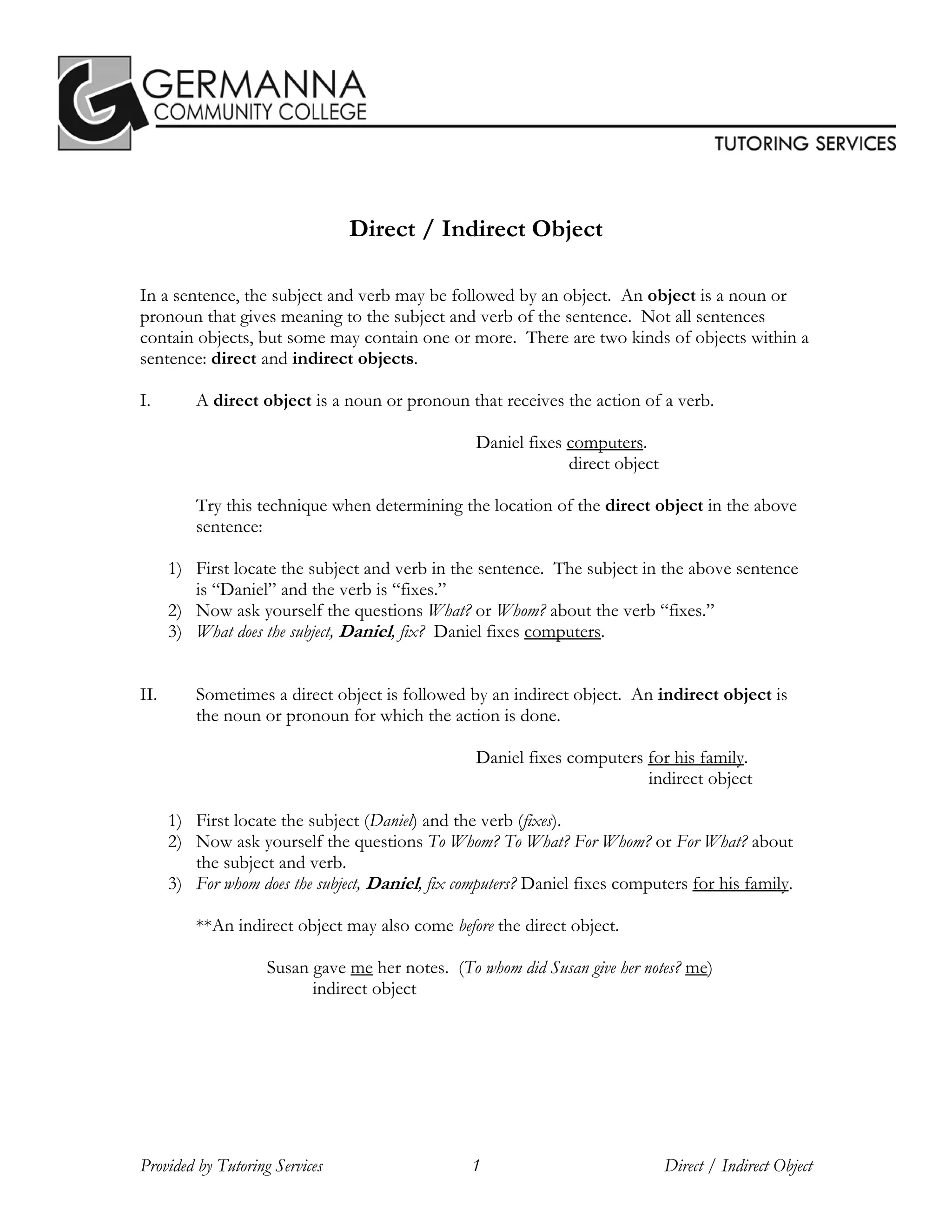
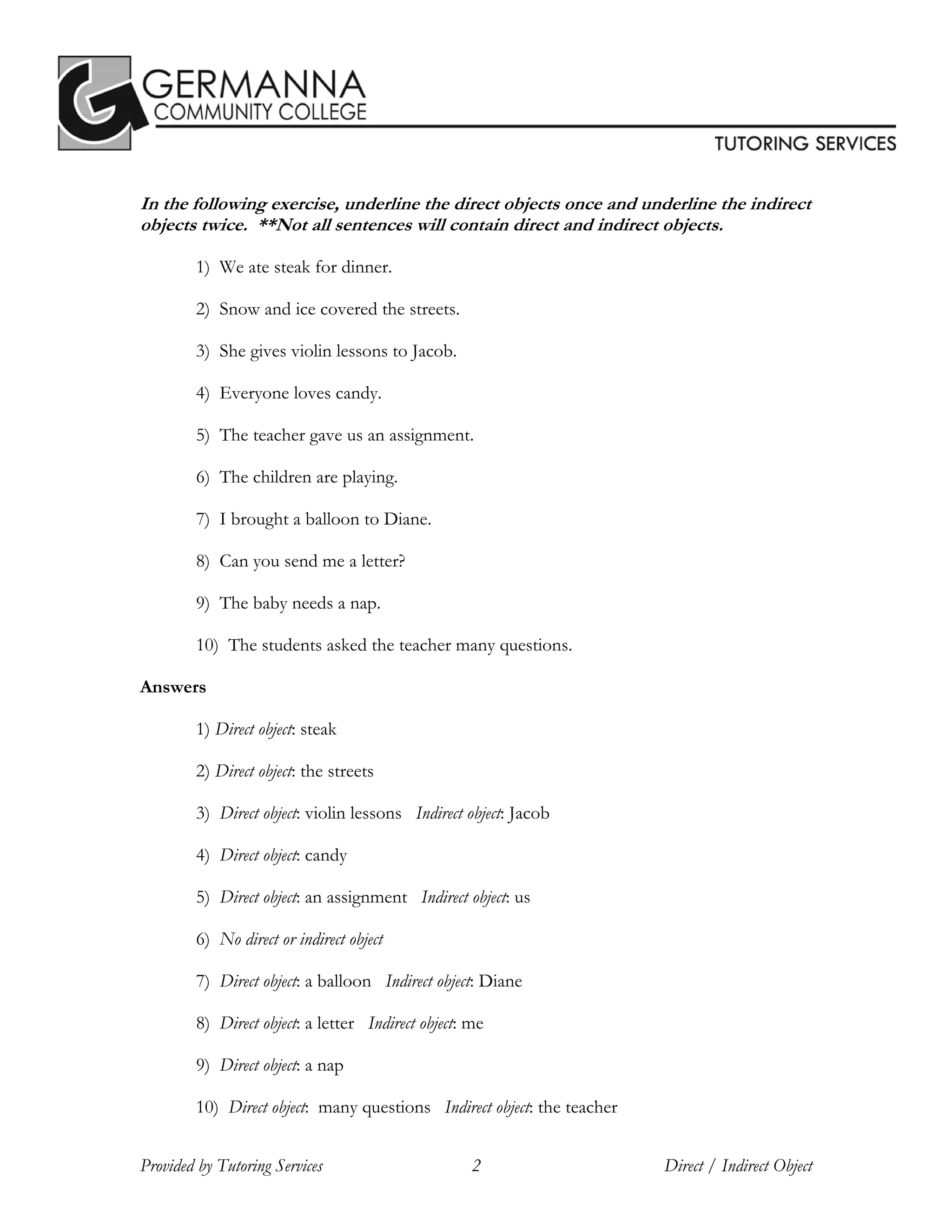
Direct objects receive the action of the verb, while indirect objects are for whom or what the action is performed. A sentence may contain a direct object, an indirect object, both, or neither. For example, in "Daniel fixes computers for his family", "computers" is the direct object that receives the action of fixing, while "his family" is the indirect object for whom the fixing is done. An indirect object sometimes comes before the direct object, as in "Susan gave me her notes" where "me" is the indirect object and "her notes" is the direct object.