DINNERWARE
CATEGORIES Types and
Characteristics
CHINAWARES
HPC 103
BY: CCNUEZ 2024
Chinawares
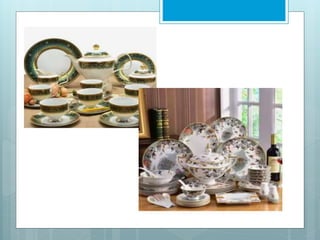
This is a collection of fine dishes,
bowls, food platters, section
dishes, ramekins, cups and
saucers, soup spoons, vases, and
ash trays made using a
translucent ceramic material.
CHINA
China is a term used for crockery
whether bone china Chinaware is
made of silica, soda ash, and china
clay, glazed to give a fine finish.
Chinaware is more resistant to heat
than glassware. There is various
classification of catering china.
PORCELAIN
 Porcelain is a ceramic material made by
heating selected and refined materials, which
often includes clay of kaolinite clay, to high
temperatures. The raw materials for porcelain,
when mixed with water, form aplastic body
that can be worked to a required shape before
firing in a kiln at temperatures between
1200°Cand 1400°C.
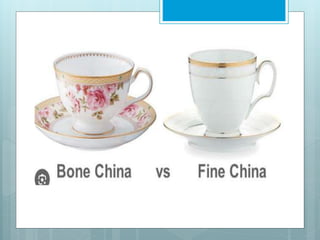
Bone China:
 Bone china is porcelain made of clay mixed
with bone ash. This is very fine, hard china
that is very expensive. The decorations are to
be found under the glaze only. The price of
bone china puts it out of reach of the majority
of everyday caterers, and only a few of the top
class hotels and restaurants would use it. The
range of design, pattern and color is very wide
and there is something to suit all occasions
and situations.
Classification:Chinaware/Crockery
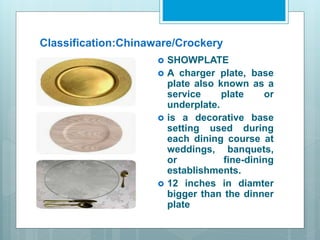
 SHOWPLATE
 A charger plate, base
plate also known as a
service plate or
underplate.
 is a decorative base
setting used during
each dining course at
weddings, banquets,
or fine-dining
establishments.
 12 inches in diamter
bigger than the dinner
plate
Classification:Chinaware/Crockery
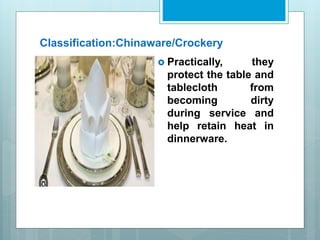
 Practically, they
protect the table and
tablecloth from
becoming dirty
during service and
help retain heat in
dinnerware.
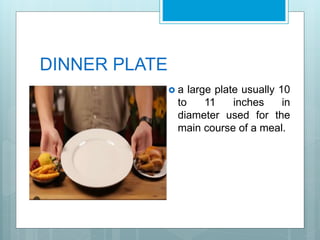
DINNER PLATE
 a large plate usually 10
to 11 inches in
diameter used for the
main course of a meal.
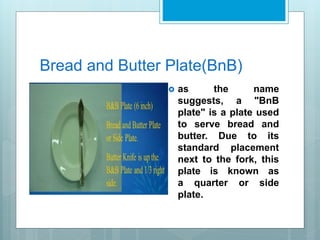
Bread and Butter Plate(BnB)
 as the name
suggests, a "BnB
plate" is a plate used
to serve bread and
butter. Due to its
standard placement
next to the fork, this
plate is known as
a quarter or side
plate.
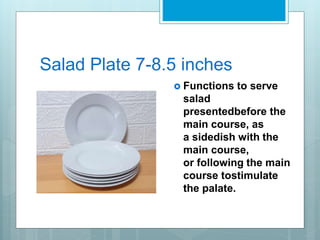
Salad Plate 7-8.5 inches
 Functions to serve
salad
presentedbefore the
main course, as
a sidedish with the
main course,
or following the main
course tostimulate
the palate.
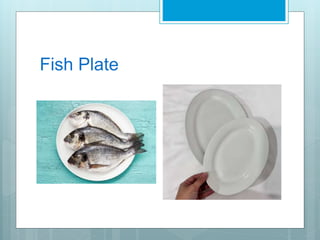
Fish Plate
Fish Plate 8.5 inches
 Serving the fish
recipes and sea food
in the fish shaped
plate
 Entrée plate (also half
plate, dessert plate,
fish plate) has a
diameter of 8.5
inches (22 cm) and is
used for hors
d'oeuvre, fish.
Dessert plate 8 inches
 a small plate on
which dessert can
be served. type of:
plate. dish on
which food is
served or from
which food is
eaten.
 or cake plates used
for enjoying a
sweet treat during
tea for two,
afternoon tea, or
after-dinner dessert
are generally sized
8in/20cm.
Soup bowl with underliner 6-8
inches
 A soup bowl is a
bowl, usually wider
and more shallow
than a cereal bowl,
in which soup is
served.
 Soup served in a
soup bowl is eaten
with the soup
spoon. There
should be a plate
under the soup
bowl to rest the
spoon.
Soup Bowl
 Soup plate
Consomme
Cup
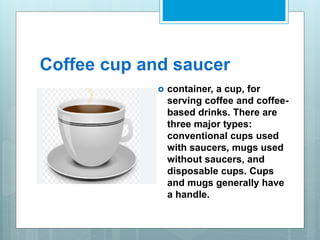
Coffee cup and saucer
 container, a cup, for
serving coffee and coffee-
based drinks. There are
three major types:
conventional cups used
with saucers, mugs used
without saucers, and
disposable cups. Cups
and mugs generally have
a handle.
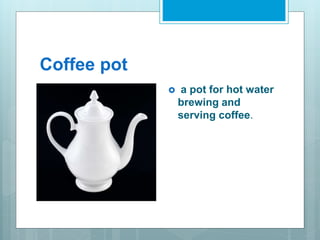
Coffee pot
 a pot for hot water
brewing and
serving coffee.
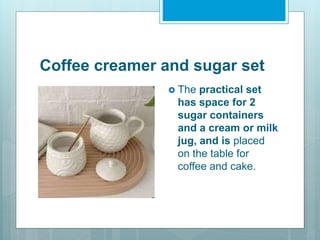
Coffee creamer and sugar set
 The practical set
has space for 2
sugar containers
and a cream or milk
jug, and is placed
on the table for
coffee and cake.
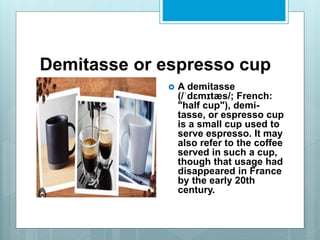
Demitasse or espresso cup
 A demitasse
(/ˈdɛmɪtæs/; French:
"half cup"), demi-
tasse, or espresso cup
is a small cup used to
serve espresso. It may
also refer to the coffee
served in such a cup,
though that usage had
disappeared in France
by the early 20th
century.
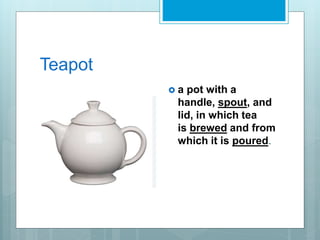
Teapot
 a pot with a
handle, spout, and
lid, in which tea
is brewed and from
which it is poured.
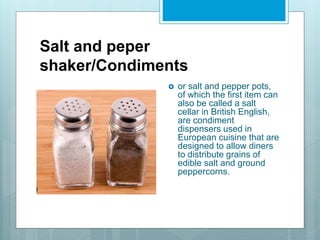
Salt and peper
shaker/Condiments
 or salt and pepper pots,
of which the first item can
also be called a salt
cellar in British English,
are condiment
dispensers used in
European cuisine that are
designed to allow diners
to distribute grains of
edible salt and ground
peppercorns.
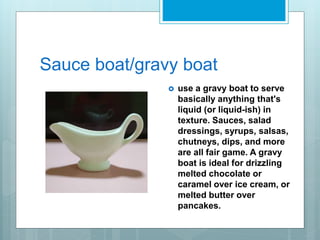
Sauce boat/gravy boat
 use a gravy boat to serve
basically anything that's
liquid (or liquid-ish) in
texture. Sauces, salad
dressings, syrups, salsas,
chutneys, dips, and more
are all fair game. A gravy
boat is ideal for drizzling
melted chocolate or
caramel over ice cream, or
melted butter over
pancakes.
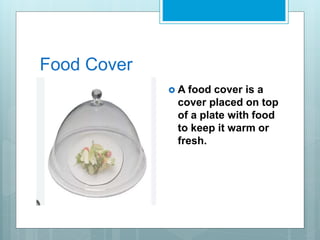
Food Cover
 A food cover is a
cover placed on top
of a plate with food
to keep it warm or
fresh.
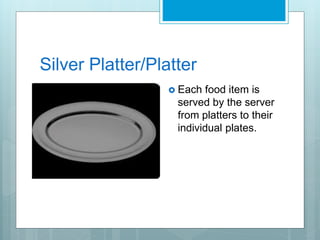
Silver Platter/Platter
 Each food item is
served by the server
from platters to their
individual plates.
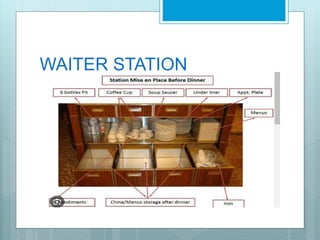
WAITER STATION
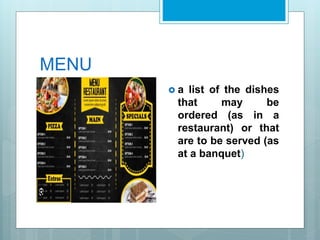
MENU
 a list of the dishes
that may be
ordered (as in a
restaurant) or that
are to be served (as
at a banquet)
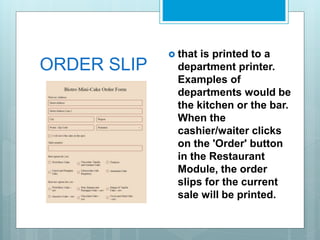
ORDER SLIP
 that is printed to a
department printer.
Examples of
departments would be
the kitchen or the bar.
When the
cashier/waiter clicks
on the 'Order' button
in the Restaurant
Module, the order
slips for the current
sale will be printed.
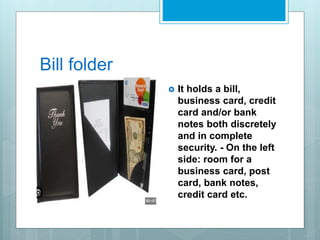
Bill folder
 It holds a bill,
business card, credit
card and/or bank
notes both discretely
and in complete
security. - On the left
side: room for a
business card, post
card, bank notes,
credit card etc.
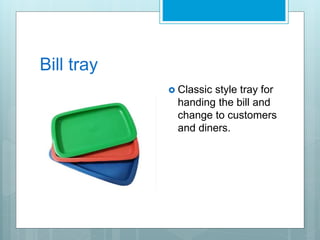
Bill tray
 Classic style tray for
handing the bill and
change to customers
and diners.
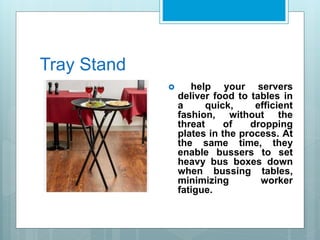
Tray Stand
 help your servers
deliver food to tables in
a quick, efficient
fashion, without the
threat of dropping
plates in the process. At
the same time, they
enable bussers to set
heavy bus boxes down
when bussing tables,
minimizing worker
fatigue.

DINNERWARE CATEGORIES Types and Characteristics.pptx

  • 1.
  • 2.
    Chinawares This is acollection of fine dishes, bowls, food platters, section dishes, ramekins, cups and saucers, soup spoons, vases, and ash trays made using a translucent ceramic material.
  • 3.
    CHINA China is aterm used for crockery whether bone china Chinaware is made of silica, soda ash, and china clay, glazed to give a fine finish. Chinaware is more resistant to heat than glassware. There is various classification of catering china.
  • 4.
    PORCELAIN  Porcelain isa ceramic material made by heating selected and refined materials, which often includes clay of kaolinite clay, to high temperatures. The raw materials for porcelain, when mixed with water, form aplastic body that can be worked to a required shape before firing in a kiln at temperatures between 1200°Cand 1400°C.
  • 5.
    Bone China:  Bonechina is porcelain made of clay mixed with bone ash. This is very fine, hard china that is very expensive. The decorations are to be found under the glaze only. The price of bone china puts it out of reach of the majority of everyday caterers, and only a few of the top class hotels and restaurants would use it. The range of design, pattern and color is very wide and there is something to suit all occasions and situations.
  • 8.
    Classification:Chinaware/Crockery  SHOWPLATE  Acharger plate, base plate also known as a service plate or underplate.  is a decorative base setting used during each dining course at weddings, banquets, or fine-dining establishments.  12 inches in diamter bigger than the dinner plate
  • 9.
    Classification:Chinaware/Crockery  Practically, they protectthe table and tablecloth from becoming dirty during service and help retain heat in dinnerware.
  • 10.
    DINNER PLATE  alarge plate usually 10 to 11 inches in diameter used for the main course of a meal.
  • 11.
    Bread and ButterPlate(BnB)  as the name suggests, a "BnB plate" is a plate used to serve bread and butter. Due to its standard placement next to the fork, this plate is known as a quarter or side plate.
  • 12.
    Salad Plate 7-8.5inches  Functions to serve salad presentedbefore the main course, as a sidedish with the main course, or following the main course tostimulate the palate.
  • 13.
  • 14.
    Fish Plate 8.5inches  Serving the fish recipes and sea food in the fish shaped plate  Entrée plate (also half plate, dessert plate, fish plate) has a diameter of 8.5 inches (22 cm) and is used for hors d'oeuvre, fish.
  • 15.
    Dessert plate 8inches  a small plate on which dessert can be served. type of: plate. dish on which food is served or from which food is eaten.  or cake plates used for enjoying a sweet treat during tea for two, afternoon tea, or after-dinner dessert are generally sized 8in/20cm.
  • 16.
    Soup bowl withunderliner 6-8 inches  A soup bowl is a bowl, usually wider and more shallow than a cereal bowl, in which soup is served.  Soup served in a soup bowl is eaten with the soup spoon. There should be a plate under the soup bowl to rest the spoon.
  • 17.
    Soup Bowl  Soupplate Consomme Cup
  • 18.
    Coffee cup andsaucer  container, a cup, for serving coffee and coffee- based drinks. There are three major types: conventional cups used with saucers, mugs used without saucers, and disposable cups. Cups and mugs generally have a handle.
  • 19.
    Coffee pot  apot for hot water brewing and serving coffee.
  • 20.
    Coffee creamer andsugar set  The practical set has space for 2 sugar containers and a cream or milk jug, and is placed on the table for coffee and cake.
  • 21.
    Demitasse or espressocup  A demitasse (/ˈdɛmɪtæs/; French: "half cup"), demi- tasse, or espresso cup is a small cup used to serve espresso. It may also refer to the coffee served in such a cup, though that usage had disappeared in France by the early 20th century.
  • 22.
    Teapot  a potwith a handle, spout, and lid, in which tea is brewed and from which it is poured.
  • 23.
    Salt and peper shaker/Condiments or salt and pepper pots, of which the first item can also be called a salt cellar in British English, are condiment dispensers used in European cuisine that are designed to allow diners to distribute grains of edible salt and ground peppercorns.
  • 24.
    Sauce boat/gravy boat use a gravy boat to serve basically anything that's liquid (or liquid-ish) in texture. Sauces, salad dressings, syrups, salsas, chutneys, dips, and more are all fair game. A gravy boat is ideal for drizzling melted chocolate or caramel over ice cream, or melted butter over pancakes.
  • 25.
    Food Cover  Afood cover is a cover placed on top of a plate with food to keep it warm or fresh.
  • 26.
    Silver Platter/Platter  Eachfood item is served by the server from platters to their individual plates.
  • 27.
  • 28.
    MENU  a listof the dishes that may be ordered (as in a restaurant) or that are to be served (as at a banquet)
  • 29.
    ORDER SLIP  thatis printed to a department printer. Examples of departments would be the kitchen or the bar. When the cashier/waiter clicks on the 'Order' button in the Restaurant Module, the order slips for the current sale will be printed.
  • 30.
    Bill folder  Itholds a bill, business card, credit card and/or bank notes both discretely and in complete security. - On the left side: room for a business card, post card, bank notes, credit card etc.
  • 31.
    Bill tray  Classicstyle tray for handing the bill and change to customers and diners.
  • 32.
    Tray Stand  helpyour servers deliver food to tables in a quick, efficient fashion, without the threat of dropping plates in the process. At the same time, they enable bussers to set heavy bus boxes down when bussing tables, minimizing worker fatigue.