Digital vs. Traditional
Crafting: Balancing Screen
Time and Hands-On Creativity
Introduction
Considering the fact that the children of this generation are surrounded by
screens, it is more important than ever to encourage creativity within children
and take note of how children engage in creative activities. It has been seen that
both the methods of crafting through digital as well as traditional ways have some
pros and some cons but most of the cons are related to the problem of excess
screen time. This article aims at discussing the effects of both digital and
conventional crafting on children and how they can strike a balance while
engaging in creativity.
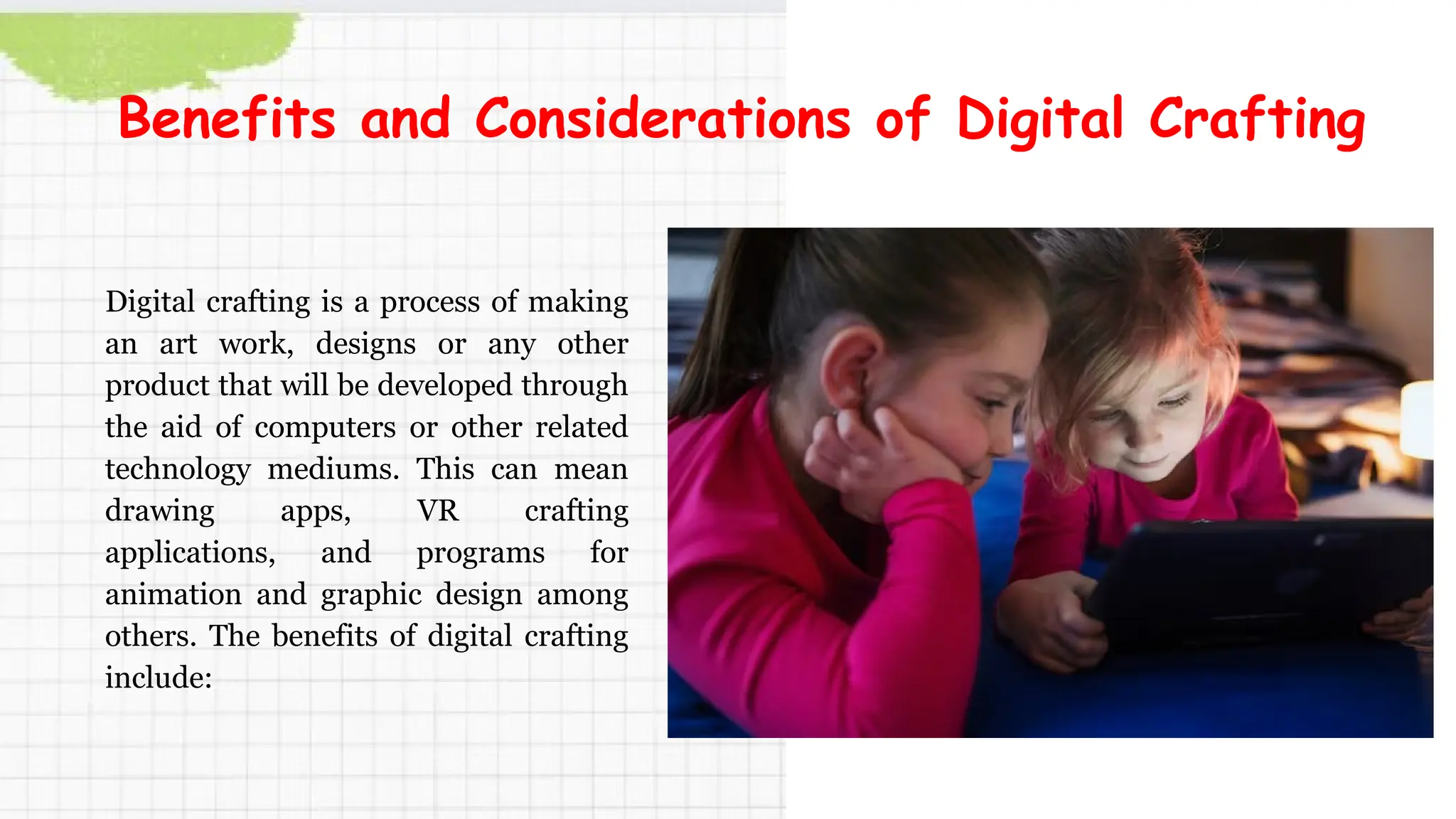
Digital crafting is a process of making
an art work, designs or any other
product that will be developed through
the aid of computers or other related
technology mediums. This can mean
drawing apps, VR crafting
applications, and programs for
animation and graphic design among
others. The benefits of digital crafting
include:
Benefits and Considerations of Digital Crafting
● Accessibility: The Internet has become a rich source of free and inexpensive
means to exercise and explore various forms of art and design which in turn put
children in a position where they are likely to try new technologies.
● Skill Development: It is important for children to use technology products in
their learning since we live in a society where technical skills are assets when it
comes to education and job opportunities.
● Variety: The choices are enormous as the digital applications extend from the
basic drawing and kids craft to the most advanced applications suitable for
animation enthusiasts.
However, the same use of digital crafting leads to new questions about the amount of
time children spend in front of screens, which is linked to their health and social and
emotional development.
Another form of crafting is crafting that directly involves the use of paper, glue, and paint, and the
benefits of such crafting are fundamentally different including:
Tactile Learning: It is well known that dealing with objects develops certain aspects of
children’s development, such as the fine motor skills, hand-eye coordination, and spatial
awareness which come into special significance during the age of early childhood.
Sensory Experience: Traditional crafting like a perfume making kit also uses all forms of
recognition such as touch, feel, taste, sight and hearing while digital activities do not.
Creativity and Problem-Solving: Doing activities with real kids craft kits supports
exploration and thinking, in part because children are manipulating physical objects with their
hands and are experiencing various textures, forms, and colors of objects.
Benefits of Traditional Crafting
To foster a well-rounded creative experience for
children, it's important to
integrate both digital and traditional crafting i
nto their routine
. Here are some strategies to achieve this balance:
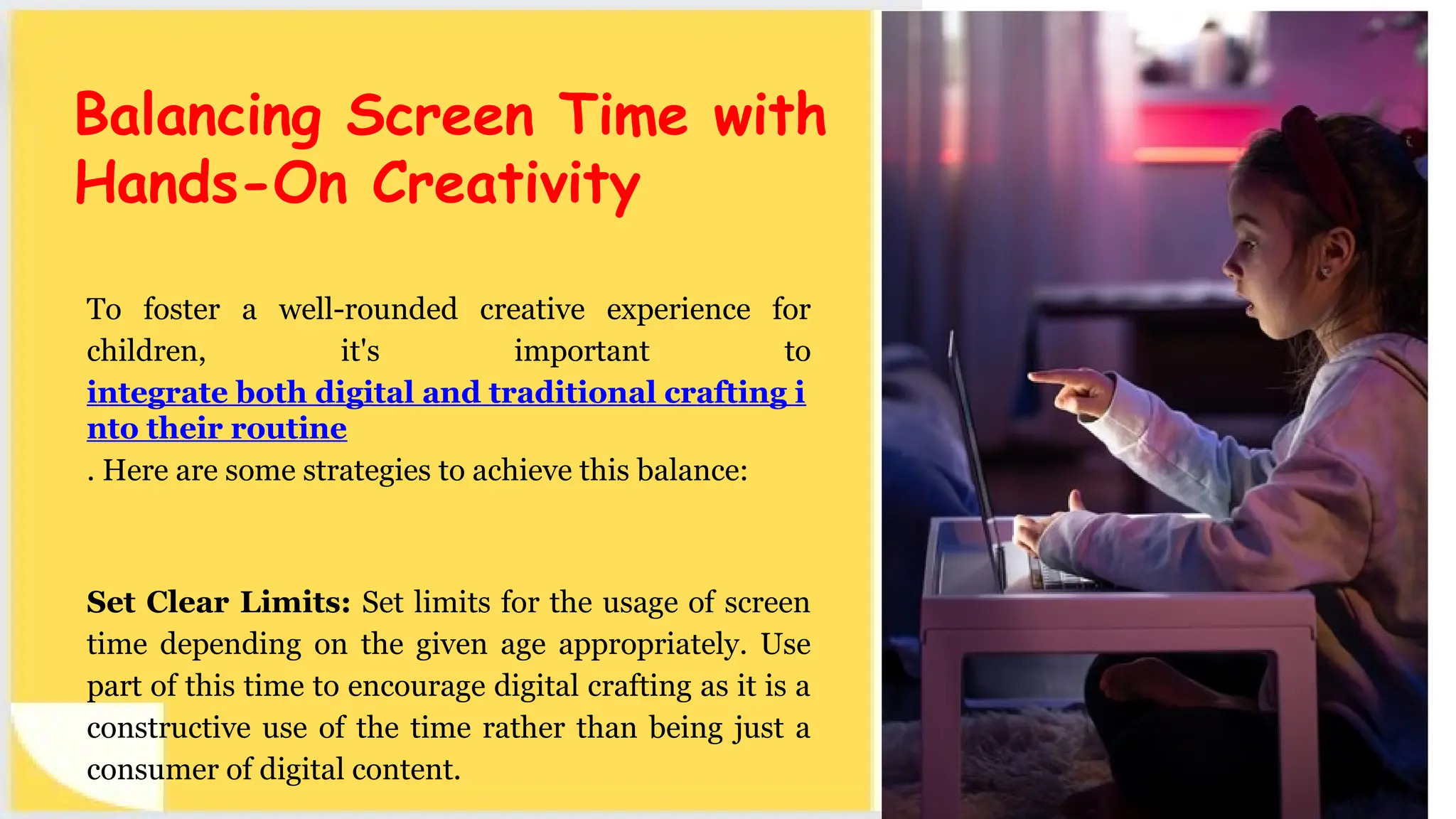
Set Clear Limits: Set limits for the usage of screen
time depending on the given age appropriately. Use
part of this time to encourage digital crafting as it is a
constructive use of the time rather than being just a
consumer of digital content.
Balancing Screen Time with
Hands-On Creativity
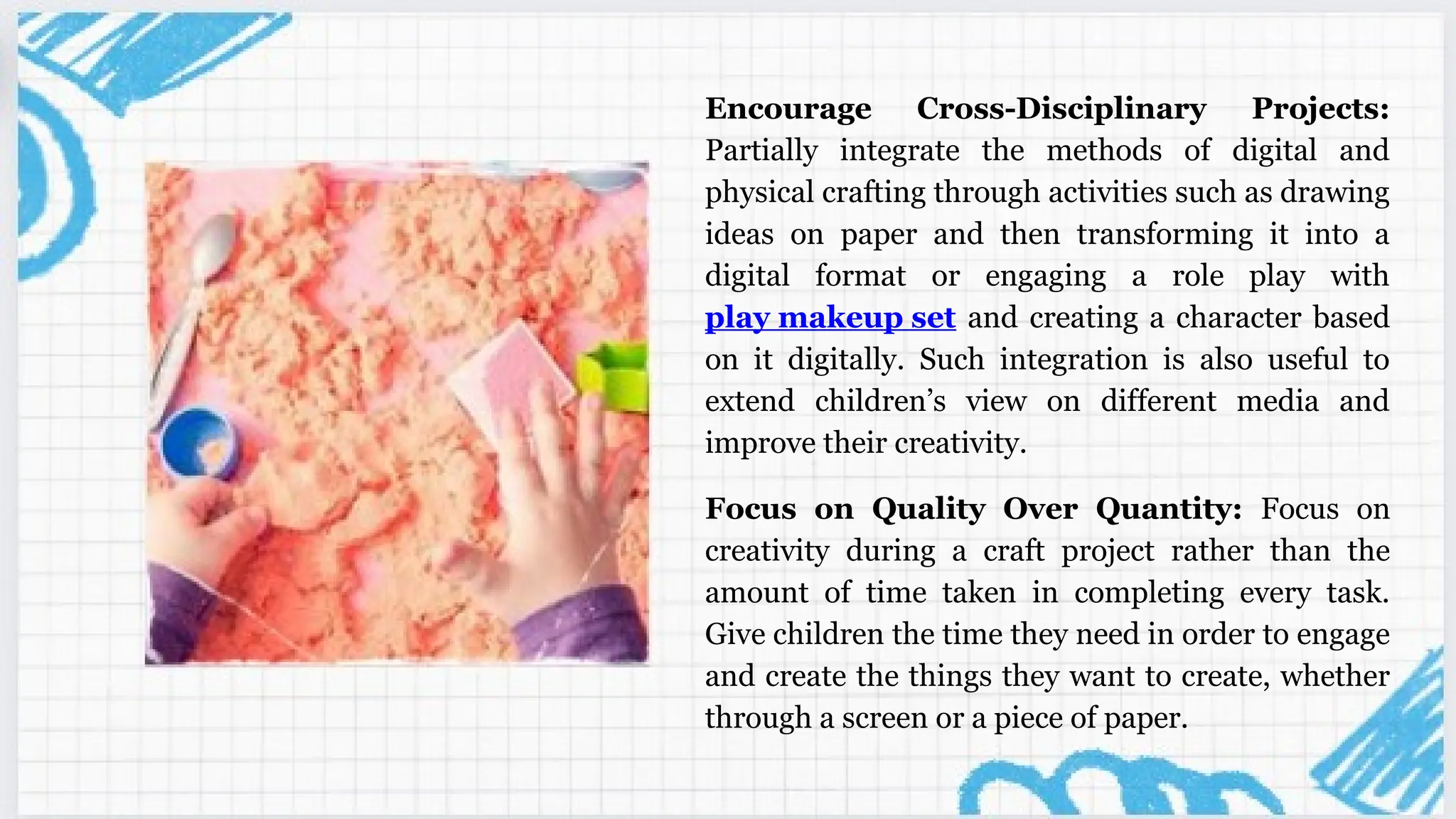
Encourage Cross-Disciplinary Projects:
Partially integrate the methods of digital and
physical crafting through activities such as drawing
ideas on paper and then transforming it into a
digital format or engaging a role play with
play makeup set and creating a character based
on it digitally. Such integration is also useful to
extend children’s view on different media and
improve their creativity.
Focus on Quality Over Quantity: Focus on
creativity during a craft project rather than the
amount of time taken in completing every task.
Give children the time they need in order to engage
and create the things they want to create, whether
through a screen or a piece of paper.
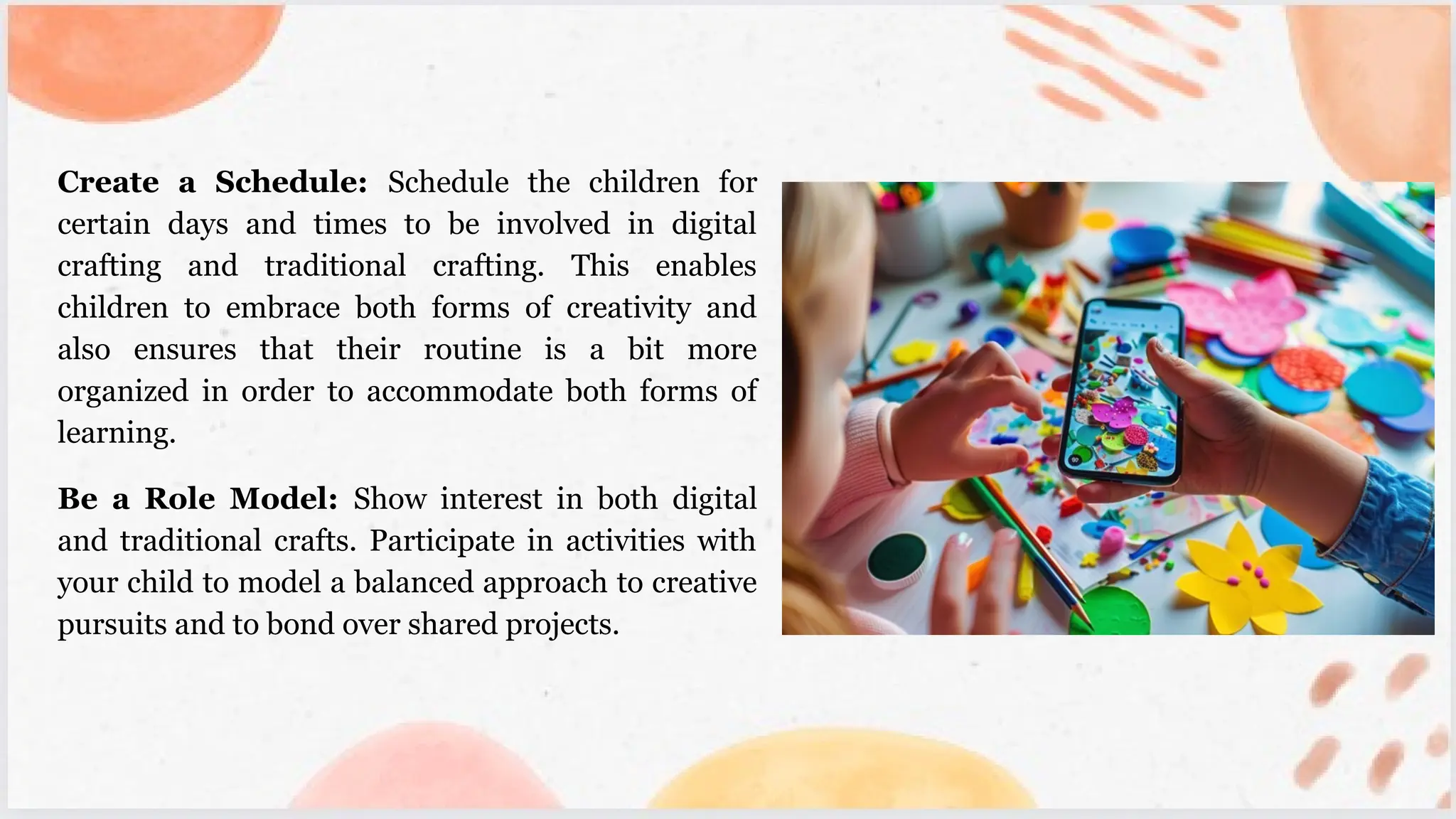
Create a Schedule: Schedule the children for
certain days and times to be involved in digital
crafting and traditional crafting. This enables
children to embrace both forms of creativity and
also ensures that their routine is a bit more
organized in order to accommodate both forms of
learning.
Be a Role Model: Show interest in both digital
and traditional crafts. Participate in activities with
your child to model a balanced approach to creative
pursuits and to bond over shared projects.
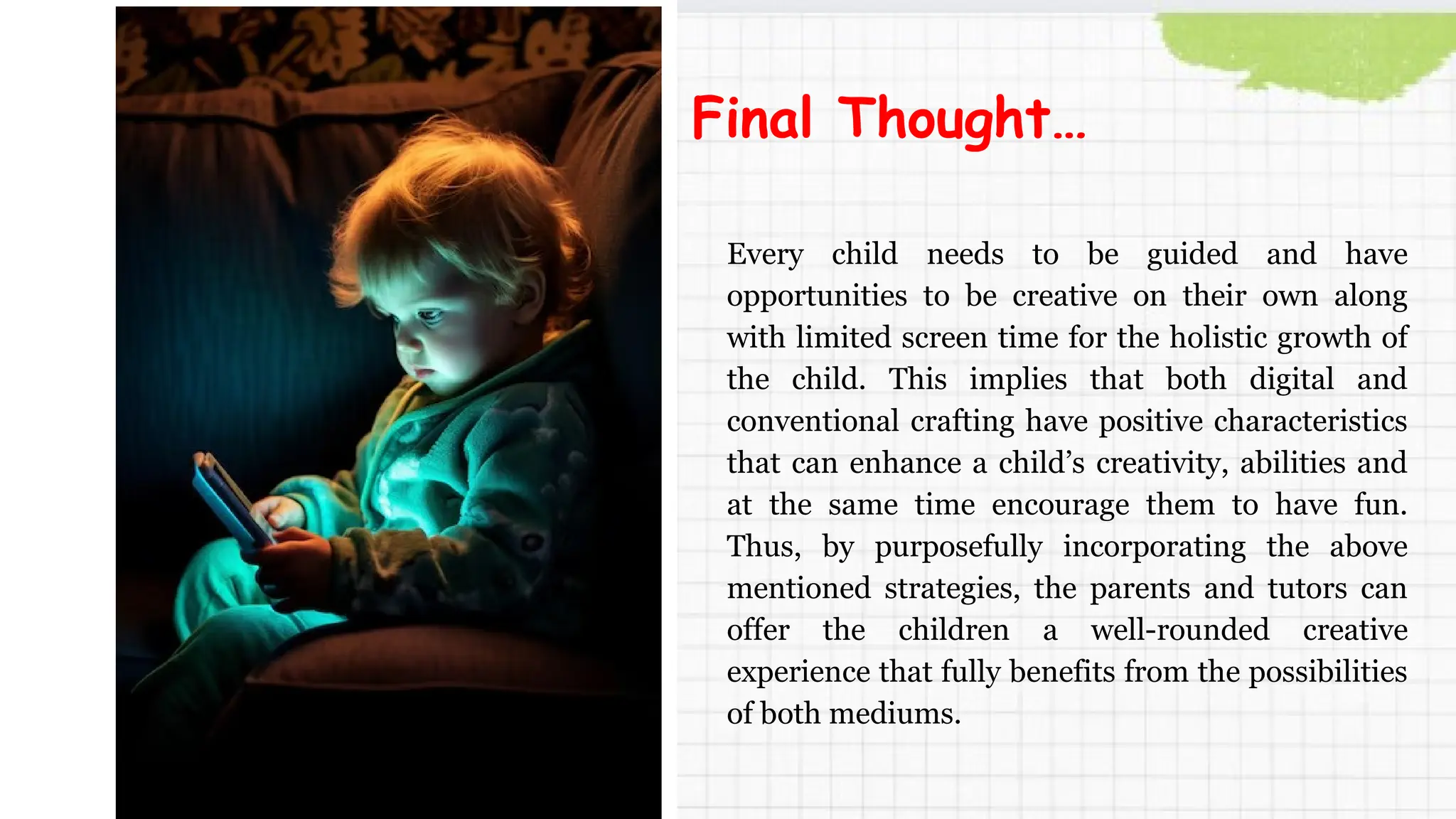
Every child needs to be guided and have
opportunities to be creative on their own along
with limited screen time for the holistic growth of
the child. This implies that both digital and
conventional crafting have positive characteristics
that can enhance a child’s creativity, abilities and
at the same time encourage them to have fun.
Thus, by purposefully incorporating the above
mentioned strategies, the parents and tutors can
offer the children a well-rounded creative
experience that fully benefits from the possibilities
of both mediums.
Final Thought…

Digital vs. Traditional Crafting: Balancing Screen Time and Hands-On Creativity

  • 1.
    Digital vs. Traditional Crafting:Balancing Screen Time and Hands-On Creativity
  • 2.
    Introduction Considering the factthat the children of this generation are surrounded by screens, it is more important than ever to encourage creativity within children and take note of how children engage in creative activities. It has been seen that both the methods of crafting through digital as well as traditional ways have some pros and some cons but most of the cons are related to the problem of excess screen time. This article aims at discussing the effects of both digital and conventional crafting on children and how they can strike a balance while engaging in creativity.
  • 3.
    Digital crafting isa process of making an art work, designs or any other product that will be developed through the aid of computers or other related technology mediums. This can mean drawing apps, VR crafting applications, and programs for animation and graphic design among others. The benefits of digital crafting include: Benefits and Considerations of Digital Crafting
  • 4.
    ● Accessibility: TheInternet has become a rich source of free and inexpensive means to exercise and explore various forms of art and design which in turn put children in a position where they are likely to try new technologies. ● Skill Development: It is important for children to use technology products in their learning since we live in a society where technical skills are assets when it comes to education and job opportunities. ● Variety: The choices are enormous as the digital applications extend from the basic drawing and kids craft to the most advanced applications suitable for animation enthusiasts. However, the same use of digital crafting leads to new questions about the amount of time children spend in front of screens, which is linked to their health and social and emotional development.
  • 5.
    Another form ofcrafting is crafting that directly involves the use of paper, glue, and paint, and the benefits of such crafting are fundamentally different including: Tactile Learning: It is well known that dealing with objects develops certain aspects of children’s development, such as the fine motor skills, hand-eye coordination, and spatial awareness which come into special significance during the age of early childhood. Sensory Experience: Traditional crafting like a perfume making kit also uses all forms of recognition such as touch, feel, taste, sight and hearing while digital activities do not. Creativity and Problem-Solving: Doing activities with real kids craft kits supports exploration and thinking, in part because children are manipulating physical objects with their hands and are experiencing various textures, forms, and colors of objects. Benefits of Traditional Crafting
  • 6.
    To foster awell-rounded creative experience for children, it's important to integrate both digital and traditional crafting i nto their routine . Here are some strategies to achieve this balance: Set Clear Limits: Set limits for the usage of screen time depending on the given age appropriately. Use part of this time to encourage digital crafting as it is a constructive use of the time rather than being just a consumer of digital content. Balancing Screen Time with Hands-On Creativity
  • 7.
    Encourage Cross-Disciplinary Projects: Partiallyintegrate the methods of digital and physical crafting through activities such as drawing ideas on paper and then transforming it into a digital format or engaging a role play with play makeup set and creating a character based on it digitally. Such integration is also useful to extend children’s view on different media and improve their creativity. Focus on Quality Over Quantity: Focus on creativity during a craft project rather than the amount of time taken in completing every task. Give children the time they need in order to engage and create the things they want to create, whether through a screen or a piece of paper.
  • 8.
    Create a Schedule:Schedule the children for certain days and times to be involved in digital crafting and traditional crafting. This enables children to embrace both forms of creativity and also ensures that their routine is a bit more organized in order to accommodate both forms of learning. Be a Role Model: Show interest in both digital and traditional crafts. Participate in activities with your child to model a balanced approach to creative pursuits and to bond over shared projects.
  • 9.
    Every child needsto be guided and have opportunities to be creative on their own along with limited screen time for the holistic growth of the child. This implies that both digital and conventional crafting have positive characteristics that can enhance a child’s creativity, abilities and at the same time encourage them to have fun. Thus, by purposefully incorporating the above mentioned strategies, the parents and tutors can offer the children a well-rounded creative experience that fully benefits from the possibilities of both mediums. Final Thought…