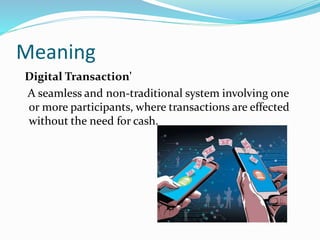
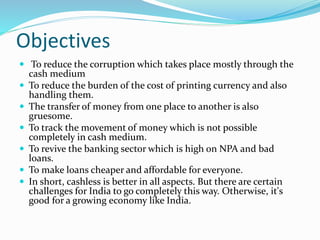
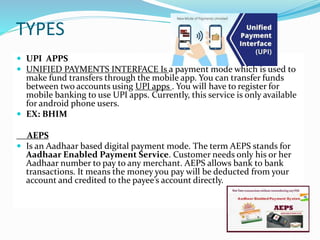
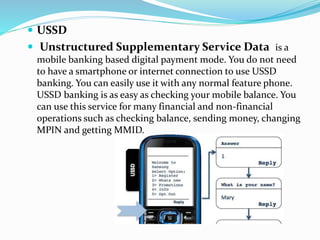
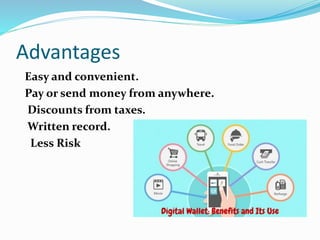
This document discusses digital transactions in India. It defines digital transactions as seamless, non-cash systems involving multiple participants. The objectives of digital transactions are outlined as reducing corruption, costs of printing currency, and transaction burdens while improving tracking of money flows and reviving the banking sector. Common digital payment methods in India like UPI apps, AEPS, USSD, debit/credit cards, e-wallets are described. Advantages include convenience, discounts and records while disadvantages are technical challenges and security/spending risks.