Digital Citizenship:
Health & Wellbeing
Introduction to
Digital Citizenship
An essential aspect of modern life, digital citizenship encompasses the
responsible use of technology, engaging positively in online
communities, and understanding the impact of digital footprints. It
involves promoting healthy and respectful digital interactions, fostering
inclusive online spaces, and safeguarding individual and collective well-
being.
Definition of Digital Citizenship
Digital citizenship refers to the responsible use of technology to engage in society, politics, and
government. It involves understanding digital literacy, ethics, and online safety. Digital citizens respect
others' privacy, intellectual property, and contribute positively to the digital community. Embracing
digital citizenship fosters a safe and inclusive online environment.
Importance of Health and
Wellbeing in the Digital World
Physical Health
It's crucial to address issues of
sedentary behaviour and screen
time.
Mental Wellbeing
Balance is essential to mitigate the
impact of digital technologies on
mental health.
Social Connection
Highlighting the importance of nurturing meaningful relationships in the digital
space.
Understanding the Impact of
Digital Technology on Mental
Health
Negative Effects
Excessive screen time and digital dependency
can lead to anxiety and sleep disturbances.
Constant exposure to social media can
contribute to feelings of inadequacy and low
self-esteem.
Positive Influence
Access to mental health resources and online
support communities can offer valuable
assistance.
Digital technology provides platforms for
expressing emotions and seeking professional
help.
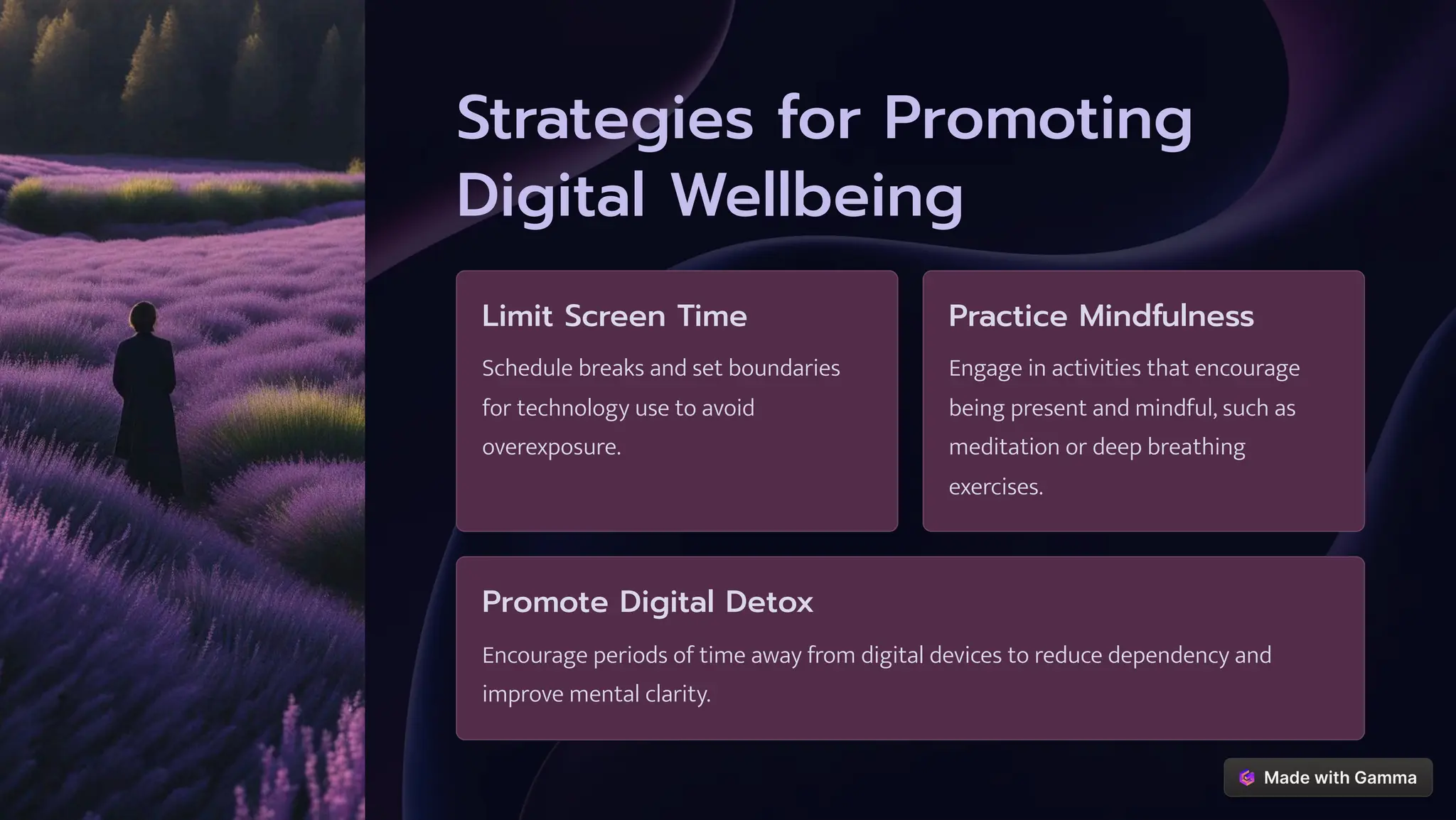
Strategies for Promoting
Digital Wellbeing
Limit Screen Time
Schedule breaks and set boundaries
for technology use to avoid
overexposure.
Practice Mindfulness
Engage in activities that encourage
being present and mindful, such as
meditation or deep breathing
exercises.
Promote Digital Detox
Encourage periods of time away from digital devices to reduce dependency and
improve mental clarity.
Building Resilience and Managing
Stress in the Digital Age
1 Recognizing Stressors
Identify digital stress triggers such as information overload and social comparison.
2 Healthy Coping Mechanisms
Develop strategies like mindfulness, digital detox, and limiting screen time.
3 Seeking Support
Encourage seeking help from peers, mental health professionals, and support groups.
Navigating Online Relationships
and Building Positive Connections
Building Trust
Establishing trust is crucial for
nurturing positive online
relationships. It involves
honesty, transparency, and
empathy.
Effective
Communication
Clear and respectful
communication is key to
fostering genuine connections
and understanding in the digital
space.
Creating Community
Building a sense of community
online involves active
participation, collaboration, and
mutual support among
members.
Cyberbullying and Online
Harassment: Recognizing and
Addressing the Issue
1
Understanding Cyberbullying
Type and impact of online harassment
2
Recognizing Warning Signs
Identifying behavioural changes
3
Support and Intervention
Guidance for victims and bystanders
Promoting Physical Health and
Balancing Screen Time
It's crucial to find a balance between screen time
and physical activity. Engaging in outdoor sports,
yoga, or simply taking a walk can help maintain
physical health.
Setting limits on screen time for children and
encouraging breaks for both adults and children
can contribute to a healthy lifestyle.
Conclusion:
Empowering
Responsible and
Healthy Digital Citizens
Integrating mindfulness: Encouraging regular breaks and digital
detox to promote mental balance
Embracing digital literacy: Equipping individuals with skills to
critically assess digital content
Cultivating empathy: Fostering an online environment based on
respect and understanding
THE END

Digital Citizenship_Health & Wellbeing.pdf

  • 1.
  • 2.
    Introduction to Digital Citizenship Anessential aspect of modern life, digital citizenship encompasses the responsible use of technology, engaging positively in online communities, and understanding the impact of digital footprints. It involves promoting healthy and respectful digital interactions, fostering inclusive online spaces, and safeguarding individual and collective well- being.
  • 3.
    Definition of DigitalCitizenship Digital citizenship refers to the responsible use of technology to engage in society, politics, and government. It involves understanding digital literacy, ethics, and online safety. Digital citizens respect others' privacy, intellectual property, and contribute positively to the digital community. Embracing digital citizenship fosters a safe and inclusive online environment.
  • 4.
    Importance of Healthand Wellbeing in the Digital World Physical Health It's crucial to address issues of sedentary behaviour and screen time. Mental Wellbeing Balance is essential to mitigate the impact of digital technologies on mental health. Social Connection Highlighting the importance of nurturing meaningful relationships in the digital space.
  • 5.
    Understanding the Impactof Digital Technology on Mental Health Negative Effects Excessive screen time and digital dependency can lead to anxiety and sleep disturbances. Constant exposure to social media can contribute to feelings of inadequacy and low self-esteem. Positive Influence Access to mental health resources and online support communities can offer valuable assistance. Digital technology provides platforms for expressing emotions and seeking professional help.
  • 6.
    Strategies for Promoting DigitalWellbeing Limit Screen Time Schedule breaks and set boundaries for technology use to avoid overexposure. Practice Mindfulness Engage in activities that encourage being present and mindful, such as meditation or deep breathing exercises. Promote Digital Detox Encourage periods of time away from digital devices to reduce dependency and improve mental clarity.
  • 7.
    Building Resilience andManaging Stress in the Digital Age 1 Recognizing Stressors Identify digital stress triggers such as information overload and social comparison. 2 Healthy Coping Mechanisms Develop strategies like mindfulness, digital detox, and limiting screen time. 3 Seeking Support Encourage seeking help from peers, mental health professionals, and support groups.
  • 8.
    Navigating Online Relationships andBuilding Positive Connections Building Trust Establishing trust is crucial for nurturing positive online relationships. It involves honesty, transparency, and empathy. Effective Communication Clear and respectful communication is key to fostering genuine connections and understanding in the digital space. Creating Community Building a sense of community online involves active participation, collaboration, and mutual support among members.
  • 9.
    Cyberbullying and Online Harassment:Recognizing and Addressing the Issue 1 Understanding Cyberbullying Type and impact of online harassment 2 Recognizing Warning Signs Identifying behavioural changes 3 Support and Intervention Guidance for victims and bystanders
  • 10.
    Promoting Physical Healthand Balancing Screen Time It's crucial to find a balance between screen time and physical activity. Engaging in outdoor sports, yoga, or simply taking a walk can help maintain physical health. Setting limits on screen time for children and encouraging breaks for both adults and children can contribute to a healthy lifestyle.
  • 11.
    Conclusion: Empowering Responsible and Healthy DigitalCitizens Integrating mindfulness: Encouraging regular breaks and digital detox to promote mental balance Embracing digital literacy: Equipping individuals with skills to critically assess digital content Cultivating empathy: Fostering an online environment based on respect and understanding
  • 12.